 | asheville business & community directory |
|


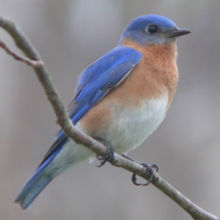 �The bluebird is like a speck of clear blue sky seen near the end of a storm, reminding us of an ethereal region and a heaven which we had forgotten.� �The bluebird is like a speck of clear blue sky seen near the end of a storm, reminding us of an ethereal region and a heaven which we had forgotten.� Henry David Thoreau, 1859. Eastern Bluebirds are small, charming, non-aggressive birds that are a conservation success story. With their bright blue wings and heads, rust-colored breasts, and delightful array of songs and calls, they are about as appealing to the Southern summer garden as hummingbirds and butterflies. Now is the very best time of year to attract these diminutive flyers; March is the beginning of their nesting season, yet still early for the more aggressive Sparrows and European Starlings that are so likely to push bluebirds out of a birdhouse. Anyone who is lucky enough to attract bluebirds to their garden can be assured that they (and their offspring) will stay around for years to come. The future was not always so bright for the bluebird. In the late 1800s, an amateur ornithologist and Shakespeare aficionado, Eugene Schieffelin, had the ill-advised idea to introduce to the United States every bird that was ever mentioned in a Shakespearean play. For the bluebird, the results were tragic. The European Starling was one of Schieffelin�s introductions; this very aggressive cavity-nesting bird rapidly multiplied, almost eliminating nesting opportunities for bluebirds. This bird, combined with the ill effects of the equally aggressive House Sparrow (introduced in 1851), reduced the bluebird population by as much as ninety percent by some estimates. But there is a happy ending for the bluebird. With a huge number of staunch and determined bluebird-loving devotees, the bluebird population has been stable and generally increasing since the 1980s. Anyone who is interested in attracting bluebirds into the garden or backyard should know a few �bluebird basics.� Bluebirds live in the North Carolina mountains year-round � it does not get so cold here that they migrate to areas further south. Their breeding period is from March through July, so they are looking for a place to nest right now. They lay four to five clear blue eggs at a time, and may have up to three nestings per breeding period, so lucky bird-lovers might have several rounds of baby birds before mid-summer. Incubation time is 13-14 days. While bluebirds prefer bugs to any other food, people who are familiar with bluebirds say they will also eat from bird feeders � they like sunflower hearts or sunflower chips. They will also eat raisins, fresh or baked apples, frozen or canned berries, pecan meats, and dried fruits; in other words, they aren�t real picky. People who are trying to attract bluebirds can set out any of these foods in a small, plastic lid on a deck rail, tree stump, or post. Bluebirds avoid wooded areas � they are drawn to open expanses (pastures, golf courses, wide lawns) because it lessens their chances of being attacked by predators, so look for the wide, open spaces when considering a good spot for either a birdhouse or feeder. While there are several good stores in the area with wild bird supplies, Wild Birds Unlimited (1997 Hendersonville Road, Skyland, 828-687-9433) has a very knowledgeable staff and a wide selection of feeders, nesting boxes, suet (which they also like), and sunflower hearts and chips. (Image provided by Wikipedia.) |

