
This event is a free event, but registration is required. Click here to register. The link required to attend will be emailed to registrants prior to the event.
If you decide to attend and purchase the authors’ books, we ask that you purchase from Malaprop’s. When you do this you make it possible for us to continue hosting author events and you keep more dollars in our community. You may also support our work by purchasing a gift card or making a donation of any amount below. Thank you!
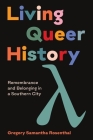
Queer history is a living practice. Talk to any group of LGBTQ people today, and they will not agree on what story should be told. Many people desire to celebrate the past by erecting plaques and painting rainbow crosswalks, but queer and trans people in the twenty-first century need more than just symbols–they need access to power, justice for marginalized people, spaces of belonging. Approaching the past through a lens of queer and trans survival and world-building transforms history itself into a tool for imagining and realizing a better future.
Living Queer History tells the story of an LGBTQ community in Roanoke, Virginia, a small city on the edge of Appalachia. Interweaving historical analysis, theory, and memoir, Gregory Samantha Rosenthal tells the story of their own journey–coming out and transitioning as a transgender woman–in the midst of working on a community-based history project that documented a multigenerational southern LGBTQ community. Based on over forty interviews with LGBTQ elders, Living Queer History explores how queer people today think about the past and how history lives on in the present.
Gregory Samantha Rosenthal is Associate Professor of History at Roanoke College and co-founder of the Southwest Virginia LGBTQ+ History Project.
Samantha Allen is the author of Real Queer America: LGBT Stories from Red States (Little, Brown; 2019), a travelogue that the New York Times Book Review called “a powerful book of memoir and reportage” and that the Los Angeles Times dubbed “a book necessary for anyone in or allied with the queer community.”