

Calendar of Events
Upcoming events and things to do in Asheville, NC. Below is a list of events for festivals, concerts, art exhibitions, group meetups and more.
Interested in adding an event to our calendar? Please click the green “Post Your Event” button below.
Extension Master GardenerSM Volunteers of Buncombe County are happy to announce that for the fifteenth year we are offering School Garden Grants to Asheville City and Buncombe County public schools, including state charter schools.

Student learns vegetable gardening
We provide a notice of the application period along with instructions to all school principals, elementary through senior high. Additional information is available on our website page, 2022 School Garden Grants, where you can learn more about the guidelines for receiving a grant and get online access to the 2022 School Garden Grants Application.
All applications must be completed online. Completed applications will be accepted beginning January 7, 2022, and must be submitted no later than 9 p.m. on February 5, 2022. If you have any questions, please call the Extension Office at 828-255-5522.
We are proud of our partnership with Asheville City and Buncombe County Schools. Since 2007, we have awarded 44 School Garden Grants totaling over $45,000. These grants have involved more than 16,500 students and hundreds of teachers, parents, and community volunteers.
School gardens grow more than plants. They grow imagination and creativity. They make math and science come alive, and they build community. We hope your school will join us in 2022.
Guidelines for 2022 School Garden Grants can be found at 2022 School Garden Grants (buncombemastergardener.org)
Check out the latest gardening video on the Buncombe County Master Gardener website. This presentation will outline the use of natural and organic pesticides including soaps and oils, botanicals, minerals, and biopesticides (microbials). Pests are any unwanted living organism found in your home, garden or landscape. While a good pest management plan will start with preventative, cultural and other non-chemical methods, a pesticide may also be considered. Selection guidelines, proper use and reasons for pesticide failures will be discussed.
|
|
|
Volunteer at Spring Conference!
We work hard to make the Spring conference available to all. We’re excited to offer the opportunity to volunteer in exchange for a weekend and/or pre-conference pass. We truly couldn’t do this without our spectacular volunteers! Nearly 200 of you will make this conference a success.
We are still finalizing the volunteer opportunities available at the 2022 Spring Conference & Market and will be updating our volunteer page as soon as possible! In the meantime, please reach out to our Spring Conference Volunteer Coordinator at [email protected].
|

Extension Master GardenerSM Volunteers of Buncombe County are happy to announce that for the fifteenth year we are offering School Garden Grants to Asheville City and Buncombe County public schools, including state charter schools.
Student learns vegetable gardening
We provide a notice of the application period along with instructions to all school principals, elementary through senior high. Additional information is available on our website page, 2022 School Garden Grants, where you can learn more about the guidelines for receiving a grant and get online access to the 2022 School Garden Grants Application.
All applications must be completed online. Completed applications will be accepted beginning January 7, 2022, and must be submitted no later than 9 p.m. on February 5, 2022. If you have any questions, please call the Extension Office at 828-255-5522.
We are proud of our partnership with Asheville City and Buncombe County Schools. Since 2007, we have awarded 44 School Garden Grants totaling over $45,000. These grants have involved more than 16,500 students and hundreds of teachers, parents, and community volunteers.
School gardens grow more than plants. They grow imagination and creativity. They make math and science come alive, and they build community. We hope your school will join us in 2022.
Guidelines for 2022 School Garden Grants can be found at 2022 School Garden Grants (buncombemastergardener.org)
Check out the latest gardening video on the Buncombe County Master Gardener website. This presentation will outline the use of natural and organic pesticides including soaps and oils, botanicals, minerals, and biopesticides (microbials). Pests are any unwanted living organism found in your home, garden or landscape. While a good pest management plan will start with preventative, cultural and other non-chemical methods, a pesticide may also be considered. Selection guidelines, proper use and reasons for pesticide failures will be discussed.
|
|
|
Volunteer at Spring Conference!
We work hard to make the Spring conference available to all. We’re excited to offer the opportunity to volunteer in exchange for a weekend and/or pre-conference pass. We truly couldn’t do this without our spectacular volunteers! Nearly 200 of you will make this conference a success.
We are still finalizing the volunteer opportunities available at the 2022 Spring Conference & Market and will be updating our volunteer page as soon as possible! In the meantime, please reach out to our Spring Conference Volunteer Coordinator at [email protected].
|

This class will cover the basics of planning out your garden for the year, including how to choose your plants, budgeting, and beneficial placements and timing. Please note this class will be taking place over Zoom.
Extension Master GardenerSM Volunteers of Buncombe County are happy to announce that for the fifteenth year we are offering School Garden Grants to Asheville City and Buncombe County public schools, including state charter schools.
Student learns vegetable gardening
We provide a notice of the application period along with instructions to all school principals, elementary through senior high. Additional information is available on our website page, 2022 School Garden Grants, where you can learn more about the guidelines for receiving a grant and get online access to the 2022 School Garden Grants Application.
All applications must be completed online. Completed applications will be accepted beginning January 7, 2022, and must be submitted no later than 9 p.m. on February 5, 2022. If you have any questions, please call the Extension Office at 828-255-5522.
We are proud of our partnership with Asheville City and Buncombe County Schools. Since 2007, we have awarded 44 School Garden Grants totaling over $45,000. These grants have involved more than 16,500 students and hundreds of teachers, parents, and community volunteers.
School gardens grow more than plants. They grow imagination and creativity. They make math and science come alive, and they build community. We hope your school will join us in 2022.
Guidelines for 2022 School Garden Grants can be found at 2022 School Garden Grants (buncombemastergardener.org)
Check out the latest gardening video on the Buncombe County Master Gardener website. This presentation will outline the use of natural and organic pesticides including soaps and oils, botanicals, minerals, and biopesticides (microbials). Pests are any unwanted living organism found in your home, garden or landscape. While a good pest management plan will start with preventative, cultural and other non-chemical methods, a pesticide may also be considered. Selection guidelines, proper use and reasons for pesticide failures will be discussed.
|
|
|
Volunteer at Spring Conference!
We work hard to make the Spring conference available to all. We’re excited to offer the opportunity to volunteer in exchange for a weekend and/or pre-conference pass. We truly couldn’t do this without our spectacular volunteers! Nearly 200 of you will make this conference a success.
We are still finalizing the volunteer opportunities available at the 2022 Spring Conference & Market and will be updating our volunteer page as soon as possible! In the meantime, please reach out to our Spring Conference Volunteer Coordinator at [email protected].
|
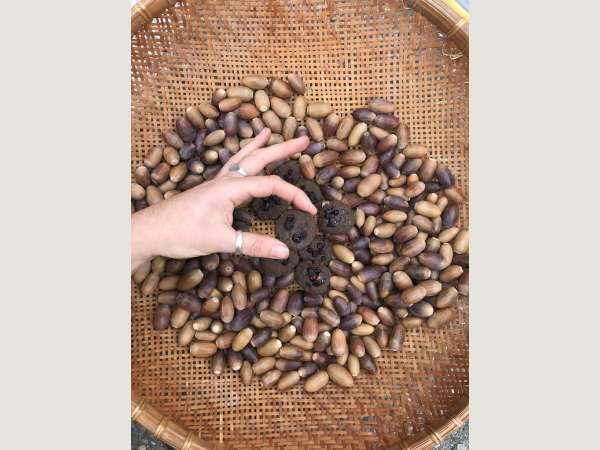
Join us for an acorn processing adventure. Learn the ins & outs of one of the oldest traditions of food acquisition. * This is an in-person class happening in Asheville, NC. Due to location policies, participants will be asked to wear a mask indoors. If you’re feeling ill, please stay home & contact us as soon as possible to request a refund so your ticket can be made available to others. We will be on a nutty ride together in this class. Learn the ins & outs of one of the oldest traditions of food acquisition. You will obtain a clear understanding of all the steps involved in this somewhat complex & incredibly rewarding process. Plus, you can process & taste an ancient food which is basically impossible to buy. This class will have hands-on opportunities for those interested. 🌳 Our presentation covers: 1) Oak identification 2) Acorn selection 3) Storage 4) Cracking & shelling 5) Winnowing + grinding 6) Cold & hot leaching 7) Recipes 🐿 This is a slightly advanced food to forage, but anyone can do it. You will definitely be feeling more connected with Oaks by the end of it. Looking forward to connecting over one of the most abundant and delicious foods on the planet. 🍄 About your instructor: Bryan is an avid forager and permaculturist who leads events on wild food foraging, land stewardship and ecotherapy. He holds a master’s degree in counseling psychology which he fuses with his passion for Earth-care to facilitate therapeutic nature-connection experiences. He has practiced & studied foraging extensively with many top-level teachers across the country. His mission is to build healing ecosystems to bring communities into a balanced relationship with the Earth and one another.
Extension Master GardenerSM Volunteers of Buncombe County are happy to announce that for the fifteenth year we are offering School Garden Grants to Asheville City and Buncombe County public schools, including state charter schools.
Student learns vegetable gardening
We provide a notice of the application period along with instructions to all school principals, elementary through senior high. Additional information is available on our website page, 2022 School Garden Grants, where you can learn more about the guidelines for receiving a grant and get online access to the 2022 School Garden Grants Application.
All applications must be completed online. Completed applications will be accepted beginning January 7, 2022, and must be submitted no later than 9 p.m. on February 5, 2022. If you have any questions, please call the Extension Office at 828-255-5522.
We are proud of our partnership with Asheville City and Buncombe County Schools. Since 2007, we have awarded 44 School Garden Grants totaling over $45,000. These grants have involved more than 16,500 students and hundreds of teachers, parents, and community volunteers.
School gardens grow more than plants. They grow imagination and creativity. They make math and science come alive, and they build community. We hope your school will join us in 2022.
Guidelines for 2022 School Garden Grants can be found at 2022 School Garden Grants (buncombemastergardener.org)
Extension Master GardenerSM Volunteers of Buncombe County are happy to announce that for the fifteenth year we are offering School Garden Grants to Asheville City and Buncombe County public schools, including state charter schools.
Student learns vegetable gardening
We provide a notice of the application period along with instructions to all school principals, elementary through senior high. Additional information is available on our website page, 2022 School Garden Grants, where you can learn more about the guidelines for receiving a grant and get online access to the 2022 School Garden Grants Application.
All applications must be completed online. Completed applications will be accepted beginning January 7, 2022, and must be submitted no later than 9 p.m. on February 5, 2022. If you have any questions, please call the Extension Office at 828-255-5522.
We are proud of our partnership with Asheville City and Buncombe County Schools. Since 2007, we have awarded 44 School Garden Grants totaling over $45,000. These grants have involved more than 16,500 students and hundreds of teachers, parents, and community volunteers.
School gardens grow more than plants. They grow imagination and creativity. They make math and science come alive, and they build community. We hope your school will join us in 2022.
Guidelines for 2022 School Garden Grants can be found at 2022 School Garden Grants (buncombemastergardener.org)
Extension Master GardenerSM Volunteers of Buncombe County are happy to announce that for the fifteenth year we are offering School Garden Grants to Asheville City and Buncombe County public schools, including state charter schools.
Student learns vegetable gardening
We provide a notice of the application period along with instructions to all school principals, elementary through senior high. Additional information is available on our website page, 2022 School Garden Grants, where you can learn more about the guidelines for receiving a grant and get online access to the 2022 School Garden Grants Application.
All applications must be completed online. Completed applications will be accepted beginning January 7, 2022, and must be submitted no later than 9 p.m. on February 5, 2022. If you have any questions, please call the Extension Office at 828-255-5522.
We are proud of our partnership with Asheville City and Buncombe County Schools. Since 2007, we have awarded 44 School Garden Grants totaling over $45,000. These grants have involved more than 16,500 students and hundreds of teachers, parents, and community volunteers.
School gardens grow more than plants. They grow imagination and creativity. They make math and science come alive, and they build community. We hope your school will join us in 2022.
Guidelines for 2022 School Garden Grants can be found at 2022 School Garden Grants (buncombemastergardener.org)
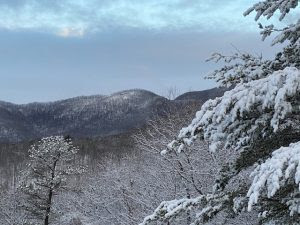
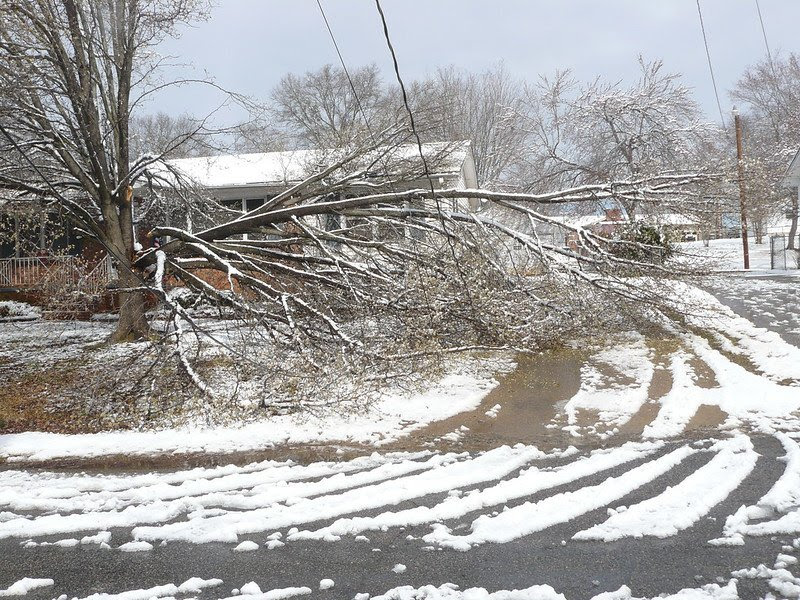
When it snows, gardeners may rejoice that a blanket of the cold stuff serves as welcome insulation during frosty weather, protecting plants from wind damage and moderating soil temperature. Of course, snow—and ice—are sometimes more destructive than helpful. Plan how to take advantage of snow’s benefits and minimize potential damage.

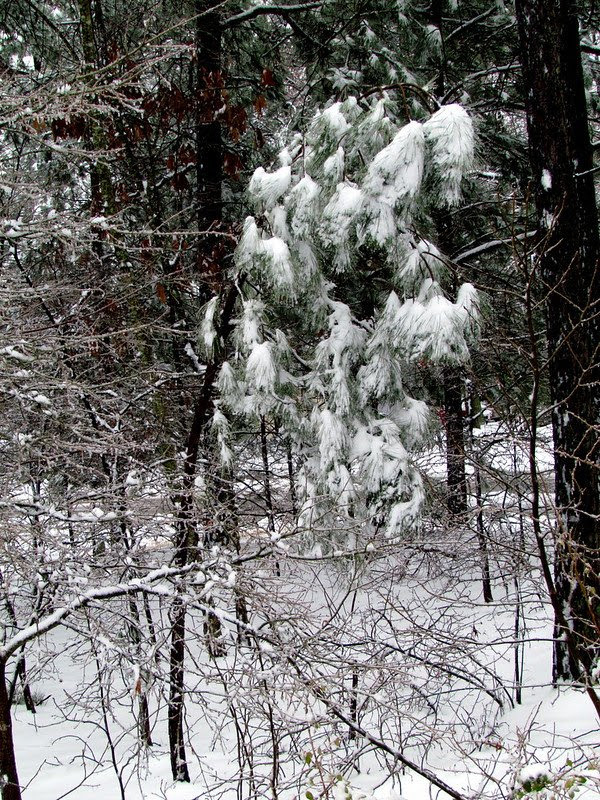
Tie up branches of evergreens with multiple leaders to prevent this kind of damage!
Things to do before a storm
If forecasters predict several inches of snow, preventing harm to your landscaping is easier than dealing with the aftermath.
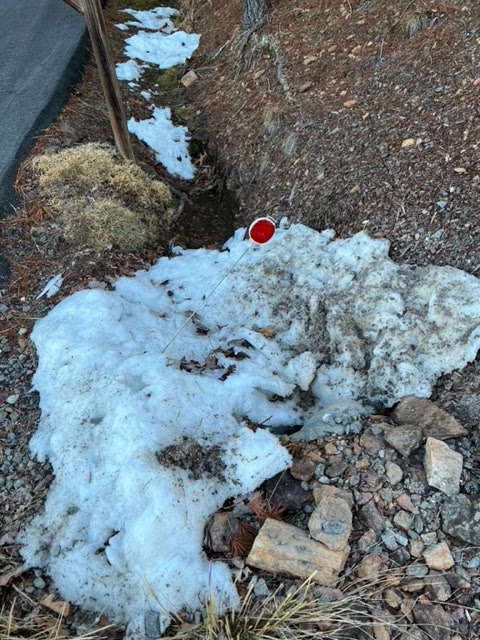
- Mark where your yard ends and the street begins. Putting up snow stakes may prevent snowplow damage to your street-side plantings. You can purchase commercial stakes or make your own from rebar or pressure-treated 1-inch by 1-inch wooden stakes painted orange. For our area, stakes 3 feet tall are tall enough—bury them 8- to 12-inches deep.
- You may want to mark the location of garden paths or sidewalks to facilitate clearing them after the storm and to avoid inadvertently treading on your plantings.
- If you have particularly vulnerable shrubs or trees, tying up branches or constructing shelters may help prevent breakage. Better yet, consider resistance to snow and ice damage when selecting trees and shrubs for your landscape (see list of more and less resistant tree species, below).
- Think twice about using deicers before or after a storm—particularly salt-based ones—to avoid poisoning plants (see additional information about the benefits and risks of specific ice melters, below).
Minimizing damage after a storm
Your landscape may come through a storm unscathed but if not, take care to avoid causing even more damage to your plants or yourself!
- Be careful about trying to remove snow or ice from trees and shrubs.
- Often it is best to leave snow or ice to melt on its own.
- Never stand under a snow or ice laden tree—branches may break unexpectedly!
- Shaking a tree to remove snow can do more harm than good.
- Don’t try to remove snow using downward brushing. Rather, try reaching underneath branches from a distance with a broom or pole to dislodge snow.
- Avoid shoveling snow onto your plantings. In addition to the weight of the snow, you may be adding soil, grit, and/or gravel to your beds.
- Consult an arborist about whether you can save severely damaged trees: https://www.treesaregood.org/findanarborist/arboristsearch
- Use proper pruning techniques to remove damaged branches on trees and shrubs; see first link below for more resources about pruning and other management issues.
Take time to dream!
Be sure to survey your landscape during and after a storm, not only to prevent or repair winter damage, but to evaluate where you might add winter interest in future years, and what new projects you’ll undertake this spring, summer, and fall. Happy year-round gardening!
Article by Buncombe County Extension Master GardenerSMVolunteers
Extension Master GardenerSM Volunteers of Buncombe County are happy to announce that for the fifteenth year we are offering School Garden Grants to Asheville City and Buncombe County public schools, including state charter schools.
Student learns vegetable gardening
We provide a notice of the application period along with instructions to all school principals, elementary through senior high. Additional information is available on our website page, 2022 School Garden Grants, where you can learn more about the guidelines for receiving a grant and get online access to the 2022 School Garden Grants Application.
All applications must be completed online. Completed applications will be accepted beginning January 7, 2022, and must be submitted no later than 9 p.m. on February 5, 2022. If you have any questions, please call the Extension Office at 828-255-5522.
We are proud of our partnership with Asheville City and Buncombe County Schools. Since 2007, we have awarded 44 School Garden Grants totaling over $45,000. These grants have involved more than 16,500 students and hundreds of teachers, parents, and community volunteers.
School gardens grow more than plants. They grow imagination and creativity. They make math and science come alive, and they build community. We hope your school will join us in 2022.
Guidelines for 2022 School Garden Grants can be found at 2022 School Garden Grants (buncombemastergardener.org)
When it snows, gardeners may rejoice that a blanket of the cold stuff serves as welcome insulation during frosty weather, protecting plants from wind damage and moderating soil temperature. Of course, snow—and ice—are sometimes more destructive than helpful. Plan how to take advantage of snow’s benefits and minimize potential damage.
Tie up branches of evergreens with multiple leaders to prevent this kind of damage!
Things to do before a storm
If forecasters predict several inches of snow, preventing harm to your landscaping is easier than dealing with the aftermath.
- Mark where your yard ends and the street begins. Putting up snow stakes may prevent snowplow damage to your street-side plantings. You can purchase commercial stakes or make your own from rebar or pressure-treated 1-inch by 1-inch wooden stakes painted orange. For our area, stakes 3 feet tall are tall enough—bury them 8- to 12-inches deep.
- You may want to mark the location of garden paths or sidewalks to facilitate clearing them after the storm and to avoid inadvertently treading on your plantings.
- If you have particularly vulnerable shrubs or trees, tying up branches or constructing shelters may help prevent breakage. Better yet, consider resistance to snow and ice damage when selecting trees and shrubs for your landscape (see list of more and less resistant tree species, below).
- Think twice about using deicers before or after a storm—particularly salt-based ones—to avoid poisoning plants (see additional information about the benefits and risks of specific ice melters, below).
Minimizing damage after a storm
Your landscape may come through a storm unscathed but if not, take care to avoid causing even more damage to your plants or yourself!
- Be careful about trying to remove snow or ice from trees and shrubs.
- Often it is best to leave snow or ice to melt on its own.
- Never stand under a snow or ice laden tree—branches may break unexpectedly!
- Shaking a tree to remove snow can do more harm than good.
- Don’t try to remove snow using downward brushing. Rather, try reaching underneath branches from a distance with a broom or pole to dislodge snow.
- Avoid shoveling snow onto your plantings. In addition to the weight of the snow, you may be adding soil, grit, and/or gravel to your beds.
- Consult an arborist about whether you can save severely damaged trees: https://www.treesaregood.org/findanarborist/arboristsearch
- Use proper pruning techniques to remove damaged branches on trees and shrubs; see first link below for more resources about pruning and other management issues.
Take time to dream!
Be sure to survey your landscape during and after a storm, not only to prevent or repair winter damage, but to evaluate where you might add winter interest in future years, and what new projects you’ll undertake this spring, summer, and fall. Happy year-round gardening!
Article by Buncombe County Extension Master GardenerSMVolunteers
Kickoff 2022 with the Western Regional SBCN and EmPOWERing Mountain Food Systems as we present a virtual series on enhancing your farming business. Convenient online classes for you to attend and hear from speakers with information, tips, and more. Registration is FREE!
Join us at 6 pm on Thursdays, January through March, to hear from EmPOWERING Mountain Food Systems. We encourage you to take this time to engage with fellow agribusinesses, entrepreneurs and resource providers while learning new skills and the power of collaboration along the way.
Kickoff 2022 with the Western Regional SBCN and EmPOWERing Mountain Food Systems as we present a virtual series on enhancing your farming business. Convenient online classes for you to attend and hear from speakers with information, tips, and more. Registration is FREE!
Join us at 6 pm on Thursdays, January through March, to hear from EmPOWERING Mountain Food Systems. We encourage you to take this time to engage with fellow agribusinesses, entrepreneurs and resource providers while learning new skills and the power of collaboration along the way.
January 20- Online Farm Taxes Explained: Property, Equipment and Sales. Dive deeper into farm taxes as they pertain to the many different sides of your farming business. Ask a local farmer about their experience navigating taxes and learn some tips of your own.
January 27- Online Sales Platforms for Direct to Consumer Sales: There are many choices to consider! Hear what works for some regional farmers and determine which platform may be a good fit for your operation.
February 3- Agritourism in Southwestern NC Trends and Storytelling: NCSU researchers spent a year learning from regional providers. What are their findings and recommendations? February 10- Airbnb, HipCamp and Harvest Host: Exploring farm visit options for lodging on your farm. Hear farmer success stories
February 17- Using Social Media to Promote your Farm Business: Facebook, Insta, and Twitter how to get followers and keep them!
February 24- Liability for On Farm Visits: Protect your visitors, your farm and home.
March 10- Making Value Added Products at Home: Regulations for a Home Certified Kitchen & Marketing Options
March 17- Food Safety: Good practices and Regulations for the farm
and market
March 24- Farm Service Agency and Natural Resource Management: Services and Cost Share for your Farming Operations
Extension Master GardenerSM Volunteers of Buncombe County are happy to announce that for the fifteenth year we are offering School Garden Grants to Asheville City and Buncombe County public schools, including state charter schools.
Student learns vegetable gardening
We provide a notice of the application period along with instructions to all school principals, elementary through senior high. Additional information is available on our website page, 2022 School Garden Grants, where you can learn more about the guidelines for receiving a grant and get online access to the 2022 School Garden Grants Application.
All applications must be completed online. Completed applications will be accepted beginning January 7, 2022, and must be submitted no later than 9 p.m. on February 5, 2022. If you have any questions, please call the Extension Office at 828-255-5522.
We are proud of our partnership with Asheville City and Buncombe County Schools. Since 2007, we have awarded 44 School Garden Grants totaling over $45,000. These grants have involved more than 16,500 students and hundreds of teachers, parents, and community volunteers.
School gardens grow more than plants. They grow imagination and creativity. They make math and science come alive, and they build community. We hope your school will join us in 2022.
Guidelines for 2022 School Garden Grants can be found at 2022 School Garden Grants (buncombemastergardener.org)
When it snows, gardeners may rejoice that a blanket of the cold stuff serves as welcome insulation during frosty weather, protecting plants from wind damage and moderating soil temperature. Of course, snow—and ice—are sometimes more destructive than helpful. Plan how to take advantage of snow’s benefits and minimize potential damage.
Tie up branches of evergreens with multiple leaders to prevent this kind of damage!
Things to do before a storm
If forecasters predict several inches of snow, preventing harm to your landscaping is easier than dealing with the aftermath.
- Mark where your yard ends and the street begins. Putting up snow stakes may prevent snowplow damage to your street-side plantings. You can purchase commercial stakes or make your own from rebar or pressure-treated 1-inch by 1-inch wooden stakes painted orange. For our area, stakes 3 feet tall are tall enough—bury them 8- to 12-inches deep.
- You may want to mark the location of garden paths or sidewalks to facilitate clearing them after the storm and to avoid inadvertently treading on your plantings.
- If you have particularly vulnerable shrubs or trees, tying up branches or constructing shelters may help prevent breakage. Better yet, consider resistance to snow and ice damage when selecting trees and shrubs for your landscape (see list of more and less resistant tree species, below).
- Think twice about using deicers before or after a storm—particularly salt-based ones—to avoid poisoning plants (see additional information about the benefits and risks of specific ice melters, below).
Minimizing damage after a storm
Your landscape may come through a storm unscathed but if not, take care to avoid causing even more damage to your plants or yourself!
- Be careful about trying to remove snow or ice from trees and shrubs.
- Often it is best to leave snow or ice to melt on its own.
- Never stand under a snow or ice laden tree—branches may break unexpectedly!
- Shaking a tree to remove snow can do more harm than good.
- Don’t try to remove snow using downward brushing. Rather, try reaching underneath branches from a distance with a broom or pole to dislodge snow.
- Avoid shoveling snow onto your plantings. In addition to the weight of the snow, you may be adding soil, grit, and/or gravel to your beds.
- Consult an arborist about whether you can save severely damaged trees: https://www.treesaregood.org/findanarborist/arboristsearch
- Use proper pruning techniques to remove damaged branches on trees and shrubs; see first link below for more resources about pruning and other management issues.
Take time to dream!
Be sure to survey your landscape during and after a storm, not only to prevent or repair winter damage, but to evaluate where you might add winter interest in future years, and what new projects you’ll undertake this spring, summer, and fall. Happy year-round gardening!
Article by Buncombe County Extension Master GardenerSMVolunteers
|
|
|
Volunteer at Spring Conference!
We work hard to make the Spring conference available to all. We’re excited to offer the opportunity to volunteer in exchange for a weekend and/or pre-conference pass. We truly couldn’t do this without our spectacular volunteers! Nearly 200 of you will make this conference a success.
We are still finalizing the volunteer opportunities available at the 2022 Spring Conference & Market and will be updating our volunteer page as soon as possible! In the meantime, please reach out to our Spring Conference Volunteer Coordinator at [email protected].
|
Extension Master GardenerSM Volunteers of Buncombe County are happy to announce that for the fifteenth year we are offering School Garden Grants to Asheville City and Buncombe County public schools, including state charter schools.
Student learns vegetable gardening
We provide a notice of the application period along with instructions to all school principals, elementary through senior high. Additional information is available on our website page, 2022 School Garden Grants, where you can learn more about the guidelines for receiving a grant and get online access to the 2022 School Garden Grants Application.
All applications must be completed online. Completed applications will be accepted beginning January 7, 2022, and must be submitted no later than 9 p.m. on February 5, 2022. If you have any questions, please call the Extension Office at 828-255-5522.
We are proud of our partnership with Asheville City and Buncombe County Schools. Since 2007, we have awarded 44 School Garden Grants totaling over $45,000. These grants have involved more than 16,500 students and hundreds of teachers, parents, and community volunteers.
School gardens grow more than plants. They grow imagination and creativity. They make math and science come alive, and they build community. We hope your school will join us in 2022.
Guidelines for 2022 School Garden Grants can be found at 2022 School Garden Grants (buncombemastergardener.org)
When it snows, gardeners may rejoice that a blanket of the cold stuff serves as welcome insulation during frosty weather, protecting plants from wind damage and moderating soil temperature. Of course, snow—and ice—are sometimes more destructive than helpful. Plan how to take advantage of snow’s benefits and minimize potential damage.
Tie up branches of evergreens with multiple leaders to prevent this kind of damage!
Things to do before a storm
If forecasters predict several inches of snow, preventing harm to your landscaping is easier than dealing with the aftermath.
- Mark where your yard ends and the street begins. Putting up snow stakes may prevent snowplow damage to your street-side plantings. You can purchase commercial stakes or make your own from rebar or pressure-treated 1-inch by 1-inch wooden stakes painted orange. For our area, stakes 3 feet tall are tall enough—bury them 8- to 12-inches deep.
- You may want to mark the location of garden paths or sidewalks to facilitate clearing them after the storm and to avoid inadvertently treading on your plantings.
- If you have particularly vulnerable shrubs or trees, tying up branches or constructing shelters may help prevent breakage. Better yet, consider resistance to snow and ice damage when selecting trees and shrubs for your landscape (see list of more and less resistant tree species, below).
- Think twice about using deicers before or after a storm—particularly salt-based ones—to avoid poisoning plants (see additional information about the benefits and risks of specific ice melters, below).
Minimizing damage after a storm
Your landscape may come through a storm unscathed but if not, take care to avoid causing even more damage to your plants or yourself!
- Be careful about trying to remove snow or ice from trees and shrubs.
- Often it is best to leave snow or ice to melt on its own.
- Never stand under a snow or ice laden tree—branches may break unexpectedly!
- Shaking a tree to remove snow can do more harm than good.
- Don’t try to remove snow using downward brushing. Rather, try reaching underneath branches from a distance with a broom or pole to dislodge snow.
- Avoid shoveling snow onto your plantings. In addition to the weight of the snow, you may be adding soil, grit, and/or gravel to your beds.
- Consult an arborist about whether you can save severely damaged trees: https://www.treesaregood.org/findanarborist/arboristsearch
- Use proper pruning techniques to remove damaged branches on trees and shrubs; see first link below for more resources about pruning and other management issues.
Take time to dream!
Be sure to survey your landscape during and after a storm, not only to prevent or repair winter damage, but to evaluate where you might add winter interest in future years, and what new projects you’ll undertake this spring, summer, and fall. Happy year-round gardening!
Article by Buncombe County Extension Master GardenerSMVolunteers


|
|
|
Volunteer at Spring Conference!
We work hard to make the Spring conference available to all. We’re excited to offer the opportunity to volunteer in exchange for a weekend and/or pre-conference pass. We truly couldn’t do this without our spectacular volunteers! Nearly 200 of you will make this conference a success.
We are still finalizing the volunteer opportunities available at the 2022 Spring Conference & Market and will be updating our volunteer page as soon as possible! In the meantime, please reach out to our Spring Conference Volunteer Coordinator at [email protected].
|
Extension Master GardenerSM Volunteers of Buncombe County are happy to announce that for the fifteenth year we are offering School Garden Grants to Asheville City and Buncombe County public schools, including state charter schools.
Student learns vegetable gardening
We provide a notice of the application period along with instructions to all school principals, elementary through senior high. Additional information is available on our website page, 2022 School Garden Grants, where you can learn more about the guidelines for receiving a grant and get online access to the 2022 School Garden Grants Application.
All applications must be completed online. Completed applications will be accepted beginning January 7, 2022, and must be submitted no later than 9 p.m. on February 5, 2022. If you have any questions, please call the Extension Office at 828-255-5522.
We are proud of our partnership with Asheville City and Buncombe County Schools. Since 2007, we have awarded 44 School Garden Grants totaling over $45,000. These grants have involved more than 16,500 students and hundreds of teachers, parents, and community volunteers.
School gardens grow more than plants. They grow imagination and creativity. They make math and science come alive, and they build community. We hope your school will join us in 2022.
Guidelines for 2022 School Garden Grants can be found at 2022 School Garden Grants (buncombemastergardener.org)
When it snows, gardeners may rejoice that a blanket of the cold stuff serves as welcome insulation during frosty weather, protecting plants from wind damage and moderating soil temperature. Of course, snow—and ice—are sometimes more destructive than helpful. Plan how to take advantage of snow’s benefits and minimize potential damage.
Tie up branches of evergreens with multiple leaders to prevent this kind of damage!
Things to do before a storm
If forecasters predict several inches of snow, preventing harm to your landscaping is easier than dealing with the aftermath.
- Mark where your yard ends and the street begins. Putting up snow stakes may prevent snowplow damage to your street-side plantings. You can purchase commercial stakes or make your own from rebar or pressure-treated 1-inch by 1-inch wooden stakes painted orange. For our area, stakes 3 feet tall are tall enough—bury them 8- to 12-inches deep.
- You may want to mark the location of garden paths or sidewalks to facilitate clearing them after the storm and to avoid inadvertently treading on your plantings.
- If you have particularly vulnerable shrubs or trees, tying up branches or constructing shelters may help prevent breakage. Better yet, consider resistance to snow and ice damage when selecting trees and shrubs for your landscape (see list of more and less resistant tree species, below).
- Think twice about using deicers before or after a storm—particularly salt-based ones—to avoid poisoning plants (see additional information about the benefits and risks of specific ice melters, below).
Minimizing damage after a storm
Your landscape may come through a storm unscathed but if not, take care to avoid causing even more damage to your plants or yourself!
- Be careful about trying to remove snow or ice from trees and shrubs.
- Often it is best to leave snow or ice to melt on its own.
- Never stand under a snow or ice laden tree—branches may break unexpectedly!
- Shaking a tree to remove snow can do more harm than good.
- Don’t try to remove snow using downward brushing. Rather, try reaching underneath branches from a distance with a broom or pole to dislodge snow.
- Avoid shoveling snow onto your plantings. In addition to the weight of the snow, you may be adding soil, grit, and/or gravel to your beds.
- Consult an arborist about whether you can save severely damaged trees: https://www.treesaregood.org/findanarborist/arboristsearch
- Use proper pruning techniques to remove damaged branches on trees and shrubs; see first link below for more resources about pruning and other management issues.
Take time to dream!
Be sure to survey your landscape during and after a storm, not only to prevent or repair winter damage, but to evaluate where you might add winter interest in future years, and what new projects you’ll undertake this spring, summer, and fall. Happy year-round gardening!
Article by Buncombe County Extension Master GardenerSMVolunteers
|
|
|
Volunteer at Spring Conference!
We work hard to make the Spring conference available to all. We’re excited to offer the opportunity to volunteer in exchange for a weekend and/or pre-conference pass. We truly couldn’t do this without our spectacular volunteers! Nearly 200 of you will make this conference a success.
We are still finalizing the volunteer opportunities available at the 2022 Spring Conference & Market and will be updating our volunteer page as soon as possible! In the meantime, please reach out to our Spring Conference Volunteer Coordinator at [email protected].
|
Extension Master GardenerSM Volunteers of Buncombe County are happy to announce that for the fifteenth year we are offering School Garden Grants to Asheville City and Buncombe County public schools, including state charter schools.
Student learns vegetable gardening
We provide a notice of the application period along with instructions to all school principals, elementary through senior high. Additional information is available on our website page, 2022 School Garden Grants, where you can learn more about the guidelines for receiving a grant and get online access to the 2022 School Garden Grants Application.
All applications must be completed online. Completed applications will be accepted beginning January 7, 2022, and must be submitted no later than 9 p.m. on February 5, 2022. If you have any questions, please call the Extension Office at 828-255-5522.
We are proud of our partnership with Asheville City and Buncombe County Schools. Since 2007, we have awarded 44 School Garden Grants totaling over $45,000. These grants have involved more than 16,500 students and hundreds of teachers, parents, and community volunteers.
School gardens grow more than plants. They grow imagination and creativity. They make math and science come alive, and they build community. We hope your school will join us in 2022.
Guidelines for 2022 School Garden Grants can be found at 2022 School Garden Grants (buncombemastergardener.org)