

Calendar of Events
Upcoming events and things to do in Asheville, NC. Below is a list of events for festivals, concerts, art exhibitions, group meetups and more.
Interested in adding an event to our calendar? Please click the green “Post Your Event” button below.

In February 2021, Buncombe County received an additional $1.75 million grant from the John D. and Catherine T. MacArthur Foundation to continue building on efforts in collaboration with local leaders and the community to rethink the local criminal justice system, safely reduce Buncombe County’s jail population, and eliminate racial inequities. Community engagement is an essential component of justice system reform, and the Safety Justice Challenge (SJC) is seeking 10 community members to serve on a workgroup. This is a paid opportunity.
Community Members Needed
Community engagement for the Safety Justice Challenge is about involving people who are directly and indirectly affected by government policies and practices. The SJC Community Engagement Workgroup is seeking 10 community members to serve on the workgroup. For this workgroup, a community member is someone who is impacted by the justice system and is not affiliated with, or being paid by an organization to participate in the workgroup. Community members will receive a stipend funded by the MacArthur Foundation grant.
Please see the attachment for a complete timeline and application information. The application deadline has been extended until May 28, 2021.
Workgroup activities will include:
- Continuing to plan, facilitate, and host activities such as town halls, focus groups, listening session, criminal justice info sessions, and community meetings
- Reviewing content and material related to public education campaigns, information sessions, and community meetings
- Developing communication strategies between community and criminal justice system organizations
About the John D. and Catherine T. MacArthur Foundation
The current grant brings the John D. and Catherine T. MacArthur Foundation’s total investment in Buncombe County to $3.55 million to date, and is part of the Safety and Justice Challenge, a $246 million national initiative to reduce over-incarceration and advance racial equity in local criminal justice systems by changing the way America thinks about and uses jails.
Visit buncombecounty.org/justiceservices to learn more about the Safety Justice Challenge in Buncombe County.

May 31: Application Deadline
June 1 – June 11: Interviews Scheduled
June 14 – June 25: Interviews Conducted
June 28 – July 2: Offers Made
September 1: First Day of Service
Overview, Eligibility, & Compensation
Project Conserve individually places members in service with one of our host site organizations working to protect the unique natural resources of the southern Blue Ridge Mountain region. Full-time (1700-hour) positions will serve 11-months from September through July. During their terms of service, members will promote conservation through education, volunteerism and direct environmental service. Members participate in required trainings and service days each month with the full Project Conserve team. Trainings may cover a broad range of topics including conflict resolution, forest management, trail construction, invasive plant identification, environmental education, volunteer management, and disaster preparedness.

The City of Asheville has partnered with Asheville GreenWorks to launch the Adopt-A-Spot program. Businesses, organizations, or individuals can choose a City-owned piece of property that they wish to adopt. The responsibility of the adopter will be to maintain either an edible or pollinator garden in this location. The program provides recognition of adopters through dedicated signage at the site. Make a positive impact on Asheville by promoting stewardship of publicly owned places.
Types of Spots to Adopt
As the inaugural Bee City, Asheville is an ideal location for planting pollinator habitats. Pollinators are responsible for ¾ of the world’s food supply and are vitally important to the health of our local urban forest. Pollinator plantings are both beautiful and ecologically sound features of the landscape, attracting butterflies, birds and bees into urban areas. A list of pollinator-friendly plants and local nurseries where they can be purchased can be found at www.beecityusa.org.
Establishing & Maintaining Orchards and Edibles
Fruit producing trees and shrubs growing in neighborhoods, parks and greenways provide fresh, accessible food to Ashevilleans. Through the Adopt-a-Spot program, your group can play a role in developing the urban food forest in Asheville. Projects can range from planting a small patch of blueberries or an entire orchard of fruit trees. The list of recommended edible trees and shrubs and local nurseries where they can be purchased can be found at www.ashevillegreenworks.org
Invasive Plant Removal
Invasive exotic plants disrupt the ecology of natural ecosystems, displace native plant and animal species, and degrade our biological resources. Aggressive invaders reduce the amount of light, water, nutrients and space available to native species. Some cause increased erosion along stream banks, shorelines and roadsides. Common invasive species in this area include kudzu, knotweed, English ivy and privet. Many Adopt-a-Spot projects will require invasive plant removal to prepare the land for planting and to prevent invasives from taking over existing and new plantings.
Planting in Bulb-Outs
Bulb-outs are areas that extend from the sidewalk along the sides of the street. They are typically in place at cross walks or on street parking. These areas can typically be accessed from the adjacent sidewalk. Through Asheville’s Adopt-a-Spot program, bulb-outs can be used for planting edible and/or pollinator gardens. Volunteers must use extra caution when working along streets and roadways.
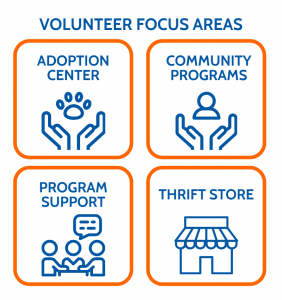
Our volunteers:
- Improve the quality of living for animals in Henderson County.
- Make a difference in their community through our community programs like our Spay/Neuter Incentive Program and Meals on Wheels Pet Pals.
- Provide support for all departments and serve on our board and committees.
- Help raise crucial funds in our Thrift Store.
It’s easy to get started!
- Fill out the Volunteer Application.
- Attend a Virtual Volunteer Information Session to learn more about Blue Ridge Humane Society and current volunteer opportunities.
- Pick a Volunteer Assignment! Decide what volunteer position works best for you! Some assignments can get started right away and some require prior orientation and training such as animal handling training that you can get started on.
- Start Volunteering! Get started in your position. Our volunteers make a huge impact in Henderson County to ensure both pets and their people are happy, healthy, and thriving. We wouldn’t be able to accomplish all we do without them.
May 31: Application Deadline
June 1 – June 11: Interviews Scheduled
June 14 – June 25: Interviews Conducted
June 28 – July 2: Offers Made
September 1: First Day of Service
Overview, Eligibility, & Compensation
Project Conserve individually places members in service with one of our host site organizations working to protect the unique natural resources of the southern Blue Ridge Mountain region. Full-time (1700-hour) positions will serve 11-months from September through July. During their terms of service, members will promote conservation through education, volunteerism and direct environmental service. Members participate in required trainings and service days each month with the full Project Conserve team. Trainings may cover a broad range of topics including conflict resolution, forest management, trail construction, invasive plant identification, environmental education, volunteer management, and disaster preparedness.
The City of Asheville has partnered with Asheville GreenWorks to launch the Adopt-A-Spot program. Businesses, organizations, or individuals can choose a City-owned piece of property that they wish to adopt. The responsibility of the adopter will be to maintain either an edible or pollinator garden in this location. The program provides recognition of adopters through dedicated signage at the site. Make a positive impact on Asheville by promoting stewardship of publicly owned places.
Types of Spots to Adopt
As the inaugural Bee City, Asheville is an ideal location for planting pollinator habitats. Pollinators are responsible for ¾ of the world’s food supply and are vitally important to the health of our local urban forest. Pollinator plantings are both beautiful and ecologically sound features of the landscape, attracting butterflies, birds and bees into urban areas. A list of pollinator-friendly plants and local nurseries where they can be purchased can be found at www.beecityusa.org.
Establishing & Maintaining Orchards and Edibles
Fruit producing trees and shrubs growing in neighborhoods, parks and greenways provide fresh, accessible food to Ashevilleans. Through the Adopt-a-Spot program, your group can play a role in developing the urban food forest in Asheville. Projects can range from planting a small patch of blueberries or an entire orchard of fruit trees. The list of recommended edible trees and shrubs and local nurseries where they can be purchased can be found at www.ashevillegreenworks.org
Invasive Plant Removal
Invasive exotic plants disrupt the ecology of natural ecosystems, displace native plant and animal species, and degrade our biological resources. Aggressive invaders reduce the amount of light, water, nutrients and space available to native species. Some cause increased erosion along stream banks, shorelines and roadsides. Common invasive species in this area include kudzu, knotweed, English ivy and privet. Many Adopt-a-Spot projects will require invasive plant removal to prepare the land for planting and to prevent invasives from taking over existing and new plantings.
Planting in Bulb-Outs
Bulb-outs are areas that extend from the sidewalk along the sides of the street. They are typically in place at cross walks or on street parking. These areas can typically be accessed from the adjacent sidewalk. Through Asheville’s Adopt-a-Spot program, bulb-outs can be used for planting edible and/or pollinator gardens. Volunteers must use extra caution when working along streets and roadways.
In February 2021, Buncombe County received an additional $1.75 million grant from the John D. and Catherine T. MacArthur Foundation to continue building on efforts in collaboration with local leaders and the community to rethink the local criminal justice system, safely reduce Buncombe County’s jail population, and eliminate racial inequities. Community engagement is an essential component of justice system reform, and the Safety Justice Challenge (SJC) is seeking 10 community members to serve on a workgroup. This is a paid opportunity.
Community Members Needed
Community engagement for the Safety Justice Challenge is about involving people who are directly and indirectly affected by government policies and practices. The SJC Community Engagement Workgroup is seeking 10 community members to serve on the workgroup. For this workgroup, a community member is someone who is impacted by the justice system and is not affiliated with, or being paid by an organization to participate in the workgroup. Community members will receive a stipend funded by the MacArthur Foundation grant.
Please see the attachment for a complete timeline and application information. The application deadline has been extended until May 28, 2021.
Workgroup activities will include:
- Continuing to plan, facilitate, and host activities such as town halls, focus groups, listening session, criminal justice info sessions, and community meetings
- Reviewing content and material related to public education campaigns, information sessions, and community meetings
- Developing communication strategies between community and criminal justice system organizations
About the John D. and Catherine T. MacArthur Foundation
The current grant brings the John D. and Catherine T. MacArthur Foundation’s total investment in Buncombe County to $3.55 million to date, and is part of the Safety and Justice Challenge, a $246 million national initiative to reduce over-incarceration and advance racial equity in local criminal justice systems by changing the way America thinks about and uses jails.
Visit buncombecounty.org/justiceservices to learn more about the Safety Justice Challenge in Buncombe County.
May 31: Application Deadline
June 1 – June 11: Interviews Scheduled
June 14 – June 25: Interviews Conducted
June 28 – July 2: Offers Made
September 1: First Day of Service
Overview, Eligibility, & Compensation
Project Conserve individually places members in service with one of our host site organizations working to protect the unique natural resources of the southern Blue Ridge Mountain region. Full-time (1700-hour) positions will serve 11-months from September through July. During their terms of service, members will promote conservation through education, volunteerism and direct environmental service. Members participate in required trainings and service days each month with the full Project Conserve team. Trainings may cover a broad range of topics including conflict resolution, forest management, trail construction, invasive plant identification, environmental education, volunteer management, and disaster preparedness.
The City of Asheville has partnered with Asheville GreenWorks to launch the Adopt-A-Spot program. Businesses, organizations, or individuals can choose a City-owned piece of property that they wish to adopt. The responsibility of the adopter will be to maintain either an edible or pollinator garden in this location. The program provides recognition of adopters through dedicated signage at the site. Make a positive impact on Asheville by promoting stewardship of publicly owned places.
Types of Spots to Adopt
As the inaugural Bee City, Asheville is an ideal location for planting pollinator habitats. Pollinators are responsible for ¾ of the world’s food supply and are vitally important to the health of our local urban forest. Pollinator plantings are both beautiful and ecologically sound features of the landscape, attracting butterflies, birds and bees into urban areas. A list of pollinator-friendly plants and local nurseries where they can be purchased can be found at www.beecityusa.org.
Establishing & Maintaining Orchards and Edibles
Fruit producing trees and shrubs growing in neighborhoods, parks and greenways provide fresh, accessible food to Ashevilleans. Through the Adopt-a-Spot program, your group can play a role in developing the urban food forest in Asheville. Projects can range from planting a small patch of blueberries or an entire orchard of fruit trees. The list of recommended edible trees and shrubs and local nurseries where they can be purchased can be found at www.ashevillegreenworks.org
Invasive Plant Removal
Invasive exotic plants disrupt the ecology of natural ecosystems, displace native plant and animal species, and degrade our biological resources. Aggressive invaders reduce the amount of light, water, nutrients and space available to native species. Some cause increased erosion along stream banks, shorelines and roadsides. Common invasive species in this area include kudzu, knotweed, English ivy and privet. Many Adopt-a-Spot projects will require invasive plant removal to prepare the land for planting and to prevent invasives from taking over existing and new plantings.
Planting in Bulb-Outs
Bulb-outs are areas that extend from the sidewalk along the sides of the street. They are typically in place at cross walks or on street parking. These areas can typically be accessed from the adjacent sidewalk. Through Asheville’s Adopt-a-Spot program, bulb-outs can be used for planting edible and/or pollinator gardens. Volunteers must use extra caution when working along streets and roadways.

Click here to RSVP for this event. On the day of the event, we will send a reminder email with the link required to attend.
Like most of our events, this event is free. If you decide to attend and to purchase the authors’ books, we ask that you purchase from Malaprop’s. When you do this you make it possible for us to continue hosting author events and you keep more dollars in our community. You may also support our work by purchasing a gift card or making a donation of any amount below. Thank you!
Across the Blue Ridge Mountains stretches a world both charming and complicated.
Jeremy Jones and his wife move into a small house above the creek where his family had settled 200 years prior. He takes a job alongside his former teachers in the local elementary school and sets out on a search to understand how this ancient land has shaped its people-how it shaped him. His search sends him burrowing in the past-hunting buried treasure and POW camps, unearthing Civil War graves and family feuds, exploring gated communities and tourist traps, encountering changed accents and immigrant populations, tracing Wal-Mart’s sidewalks and carved-out mountains-and pondering the future. He meshes narrative and myth, geology and genealogy, fiddle tunes and local color about the briskly changing and oft-stigmatized world of his native southern Appalachians.
Somehow, these journeys continually lead him back to the mystical Bearwallow Mountain, a peak suddenly in flux.
Jeremy B. Jones is the author of the memoir Bearwallow, which was named the 2014 Appalachian Book of the Year in nonfiction and awarded gold in memoir in the 2015 Independent Publisher Book Awards. His essays appear in numerous literary journals and anthologies, including Oxford American, Appalachian Reckoning, and The Iowa Review. Born and raised in the mountains of North Carolina, Jeremy earned his MFA from the University of Iowa and now serves as an associate professor of English at Western Carolina University, where he teaches creative writing and directs the Spring Literary Festival. Alongside Elena Passarello, Jeremy is the series co-editor of In Place, a nonfiction book series from West Virginia University Press.
Born in Corbin, Kentucky, RONNI LUNDY has long chronicled the people of the hillbilly diaspora as a journalist and cookbook author. She is the former restaurant reviewer and music critic for The Courier-Journal in Louisville, former editor of Louisville Magazine, and has contributed to many national magazines. Her book Shuck Beans, Stack Cakes and Honest Fried Chicken was recognized by Gourmet magazine as one of six essential books on Southern cooking. In 2009, Lundy received the Southern Foodways Alliance Craig Claiborne Lifetime Achievement Award. She has contributed to Eating Well,Gourmet, Bon Appétit, Esquire, and other magazines.
In February 2021, Buncombe County received an additional $1.75 million grant from the John D. and Catherine T. MacArthur Foundation to continue building on efforts in collaboration with local leaders and the community to rethink the local criminal justice system, safely reduce Buncombe County’s jail population, and eliminate racial inequities. Community engagement is an essential component of justice system reform, and the Safety Justice Challenge (SJC) is seeking 10 community members to serve on a workgroup. This is a paid opportunity.
Community Members Needed
Community engagement for the Safety Justice Challenge is about involving people who are directly and indirectly affected by government policies and practices. The SJC Community Engagement Workgroup is seeking 10 community members to serve on the workgroup. For this workgroup, a community member is someone who is impacted by the justice system and is not affiliated with, or being paid by an organization to participate in the workgroup. Community members will receive a stipend funded by the MacArthur Foundation grant.
Please see the attachment for a complete timeline and application information. The application deadline has been extended until May 28, 2021.
Workgroup activities will include:
- Continuing to plan, facilitate, and host activities such as town halls, focus groups, listening session, criminal justice info sessions, and community meetings
- Reviewing content and material related to public education campaigns, information sessions, and community meetings
- Developing communication strategies between community and criminal justice system organizations
About the John D. and Catherine T. MacArthur Foundation
The current grant brings the John D. and Catherine T. MacArthur Foundation’s total investment in Buncombe County to $3.55 million to date, and is part of the Safety and Justice Challenge, a $246 million national initiative to reduce over-incarceration and advance racial equity in local criminal justice systems by changing the way America thinks about and uses jails.
Visit buncombecounty.org/justiceservices to learn more about the Safety Justice Challenge in Buncombe County.
May 31: Application Deadline
June 1 – June 11: Interviews Scheduled
June 14 – June 25: Interviews Conducted
June 28 – July 2: Offers Made
September 1: First Day of Service
Overview, Eligibility, & Compensation
Project Conserve individually places members in service with one of our host site organizations working to protect the unique natural resources of the southern Blue Ridge Mountain region. Full-time (1700-hour) positions will serve 11-months from September through July. During their terms of service, members will promote conservation through education, volunteerism and direct environmental service. Members participate in required trainings and service days each month with the full Project Conserve team. Trainings may cover a broad range of topics including conflict resolution, forest management, trail construction, invasive plant identification, environmental education, volunteer management, and disaster preparedness.
The City of Asheville has partnered with Asheville GreenWorks to launch the Adopt-A-Spot program. Businesses, organizations, or individuals can choose a City-owned piece of property that they wish to adopt. The responsibility of the adopter will be to maintain either an edible or pollinator garden in this location. The program provides recognition of adopters through dedicated signage at the site. Make a positive impact on Asheville by promoting stewardship of publicly owned places.
Types of Spots to Adopt
As the inaugural Bee City, Asheville is an ideal location for planting pollinator habitats. Pollinators are responsible for ¾ of the world’s food supply and are vitally important to the health of our local urban forest. Pollinator plantings are both beautiful and ecologically sound features of the landscape, attracting butterflies, birds and bees into urban areas. A list of pollinator-friendly plants and local nurseries where they can be purchased can be found at www.beecityusa.org.
Establishing & Maintaining Orchards and Edibles
Fruit producing trees and shrubs growing in neighborhoods, parks and greenways provide fresh, accessible food to Ashevilleans. Through the Adopt-a-Spot program, your group can play a role in developing the urban food forest in Asheville. Projects can range from planting a small patch of blueberries or an entire orchard of fruit trees. The list of recommended edible trees and shrubs and local nurseries where they can be purchased can be found at www.ashevillegreenworks.org
Invasive Plant Removal
Invasive exotic plants disrupt the ecology of natural ecosystems, displace native plant and animal species, and degrade our biological resources. Aggressive invaders reduce the amount of light, water, nutrients and space available to native species. Some cause increased erosion along stream banks, shorelines and roadsides. Common invasive species in this area include kudzu, knotweed, English ivy and privet. Many Adopt-a-Spot projects will require invasive plant removal to prepare the land for planting and to prevent invasives from taking over existing and new plantings.
Planting in Bulb-Outs
Bulb-outs are areas that extend from the sidewalk along the sides of the street. They are typically in place at cross walks or on street parking. These areas can typically be accessed from the adjacent sidewalk. Through Asheville’s Adopt-a-Spot program, bulb-outs can be used for planting edible and/or pollinator gardens. Volunteers must use extra caution when working along streets and roadways.

Click here to RSVP for this event. On the day of the event, we will send a reminder email with the link required to attend.
Like most of our events, this event is free. If you decide to attend and to purchase the authors’ books, we ask that you purchase from Malaprop’s. When you do this you make it possible for us to continue hosting author events and you keep more dollars in our community. You may also support our work by purchasing a gift card or making a donation of any amount below. Thank you!
Based loosely on a tragic real-life incident in 2014, One Kind Favor explores the consequences of the lynching of a young black man in rural North Carolina. After the lynching of Lincoln Lennox is discovered and subsequently covered up in the small fictional community of Cord, North Carolina, the ghosts who frequent the all-in-one bar and consignment shop take on the responsibility of unearthing the truth and acting as the memory for the town that longs to forget and continues to hate. A reimagined Kathy Acker, the groundbreaking literary icon, engages Lincoln in a love triangle and brings a transgressive post-punk esthetic to the mission. The down-the-rabbit-hole satirical storytelling of One Kind Favor, Kevin McIlvoy’s sixth novel, echoes Appalachian ghost stories in which haunting presences will, at last, have their way.
Kevin McIlvoy is the author of seven previous books: five novels, a book of short stories, and a book of prose poetry. A retired Regents Professor of Creative Writing from New Mexico State University, he teaches at the Warren Wilson College MFA Program in Creative Writing. He lives in Asheville, North Carolina. Find Kevin online at kevinmcilvoy.com;
facebook.com/kevin.mcilvoy; Twitter @KevinMcIlvoy; and Instagram @kevin.mcilvoyager.
Steve Almond is the author of eleven books, including the NYT bestsellers “Candyfreak” and “Against Football.” His work has appeared in venues ranging from the Best American Short Stories to the New York Times Magazine. https://stevealmondjoy.org/
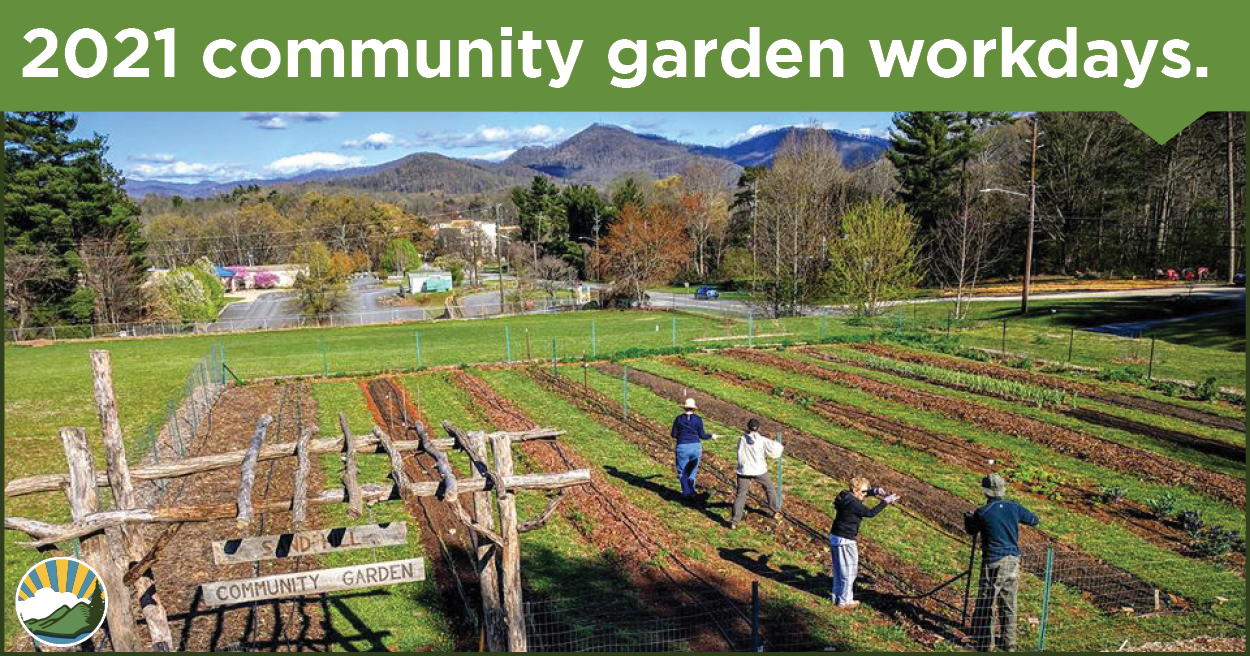
Looking to get involved, stay active, and meet some new friends? Sand Hill Community Garden workdays take place on Wednesdays (6-8 p.m.) and Saturdays (10 a.m.-noon) from Feb. 27-Oct. 30, 2021, at Buncombe County Sports Park. The garden is located on 16 Apac Dr. in West Asheville/Enka-Candler.
Join friends and neighbors as they come together on common ground to raise fresh, organic vegetables and fruits for the Enka community.
Expect to wear a mask and maintain social distance throughout. Tools and hand sanitizer are available, but any gloves, loppers, pruners, or gardening tools you can bring will decrease the amount of contact between volunteers. Please wear work clothes to get dirty and closed-toe shoes. Sunscreen, water, and a hat are also handy items to have on hand.
Sand Hill Community Garden has been growing fresh produce since 2011 and raised over 1,200 lbs. of organic produce last year.
NOTE: Community workdays are weather dependent. Please join the community garden email list (send your info to [email protected]) to stay up on workday tasks and other garden news.
To receive the I Heart Parks monthly newsletter, sign up online. Follow Buncombe County Recreation on Facebook and Instagram for the latest updates.
In February 2021, Buncombe County received an additional $1.75 million grant from the John D. and Catherine T. MacArthur Foundation to continue building on efforts in collaboration with local leaders and the community to rethink the local criminal justice system, safely reduce Buncombe County’s jail population, and eliminate racial inequities. Community engagement is an essential component of justice system reform, and the Safety Justice Challenge (SJC) is seeking 10 community members to serve on a workgroup. This is a paid opportunity.
Community Members Needed
Community engagement for the Safety Justice Challenge is about involving people who are directly and indirectly affected by government policies and practices. The SJC Community Engagement Workgroup is seeking 10 community members to serve on the workgroup. For this workgroup, a community member is someone who is impacted by the justice system and is not affiliated with, or being paid by an organization to participate in the workgroup. Community members will receive a stipend funded by the MacArthur Foundation grant.
Please see the attachment for a complete timeline and application information. The application deadline has been extended until May 28, 2021.
Workgroup activities will include:
- Continuing to plan, facilitate, and host activities such as town halls, focus groups, listening session, criminal justice info sessions, and community meetings
- Reviewing content and material related to public education campaigns, information sessions, and community meetings
- Developing communication strategies between community and criminal justice system organizations
About the John D. and Catherine T. MacArthur Foundation
The current grant brings the John D. and Catherine T. MacArthur Foundation’s total investment in Buncombe County to $3.55 million to date, and is part of the Safety and Justice Challenge, a $246 million national initiative to reduce over-incarceration and advance racial equity in local criminal justice systems by changing the way America thinks about and uses jails.
Visit buncombecounty.org/justiceservices to learn more about the Safety Justice Challenge in Buncombe County.
May 31: Application Deadline
June 1 – June 11: Interviews Scheduled
June 14 – June 25: Interviews Conducted
June 28 – July 2: Offers Made
September 1: First Day of Service
Overview, Eligibility, & Compensation
Project Conserve individually places members in service with one of our host site organizations working to protect the unique natural resources of the southern Blue Ridge Mountain region. Full-time (1700-hour) positions will serve 11-months from September through July. During their terms of service, members will promote conservation through education, volunteerism and direct environmental service. Members participate in required trainings and service days each month with the full Project Conserve team. Trainings may cover a broad range of topics including conflict resolution, forest management, trail construction, invasive plant identification, environmental education, volunteer management, and disaster preparedness.
The City of Asheville has partnered with Asheville GreenWorks to launch the Adopt-A-Spot program. Businesses, organizations, or individuals can choose a City-owned piece of property that they wish to adopt. The responsibility of the adopter will be to maintain either an edible or pollinator garden in this location. The program provides recognition of adopters through dedicated signage at the site. Make a positive impact on Asheville by promoting stewardship of publicly owned places.
Types of Spots to Adopt
As the inaugural Bee City, Asheville is an ideal location for planting pollinator habitats. Pollinators are responsible for ¾ of the world’s food supply and are vitally important to the health of our local urban forest. Pollinator plantings are both beautiful and ecologically sound features of the landscape, attracting butterflies, birds and bees into urban areas. A list of pollinator-friendly plants and local nurseries where they can be purchased can be found at www.beecityusa.org.
Establishing & Maintaining Orchards and Edibles
Fruit producing trees and shrubs growing in neighborhoods, parks and greenways provide fresh, accessible food to Ashevilleans. Through the Adopt-a-Spot program, your group can play a role in developing the urban food forest in Asheville. Projects can range from planting a small patch of blueberries or an entire orchard of fruit trees. The list of recommended edible trees and shrubs and local nurseries where they can be purchased can be found at www.ashevillegreenworks.org
Invasive Plant Removal
Invasive exotic plants disrupt the ecology of natural ecosystems, displace native plant and animal species, and degrade our biological resources. Aggressive invaders reduce the amount of light, water, nutrients and space available to native species. Some cause increased erosion along stream banks, shorelines and roadsides. Common invasive species in this area include kudzu, knotweed, English ivy and privet. Many Adopt-a-Spot projects will require invasive plant removal to prepare the land for planting and to prevent invasives from taking over existing and new plantings.
Planting in Bulb-Outs
Bulb-outs are areas that extend from the sidewalk along the sides of the street. They are typically in place at cross walks or on street parking. These areas can typically be accessed from the adjacent sidewalk. Through Asheville’s Adopt-a-Spot program, bulb-outs can be used for planting edible and/or pollinator gardens. Volunteers must use extra caution when working along streets and roadways.

Looking for a way to give back and support our mission of eliminating racism and empowering women? The YWCA is looking for volunteers. If you have a few hours here and there or would like a regular volunteer gig, we could use your help. Please follow this link to see our current openings or email our volunteer coordinator to discuss alternate opportunities.

Click here to RSVP for this event. On the day of the event, we will send a reminder email with the link required to attend.
Like most of our events, this event is free. If you decide to attend and to purchase the authors’ books, we ask that you purchase from Malaprop’s. When you do this you make it possible for us to continue hosting author events and you keep more dollars in our community. You may also support our work by purchasing a gift card or making a donation of any amount below. Thank you!
In the wake of a baffling tragedy, 13-year-old Graham moves with his family to Beirut, Lebanon, a city on the edge of the sea and cataclysmic violence. Inquisitive and restless by nature, Graham suspects his State Department father is a CIA operative, and that their family’s fragile domesticity is merely a front for American efforts along the nearby Israeli border. Over the course of one year, 1972, Graham’s life will utterly change. Two men are murdered, his parent’s marriage disintegrates, and Graham, along with his two ex-pat friends, run afoul of forces they cannot understand.
The City on the Edge is elegiac, atmospheric, and utterly authentic. It’s the story of innocents caught within the American net of espionage, of the Lebanese transformed by such interference, of the children who ran dangerously beside the churning wheel of history. One part Stephen King’s “The Body” and another John le Carre’s A Perfect Spy, it’s a transformative crime story told with heart and genuine experience.
David Swinson grew up in Washington, DC, Beirut, Mexico City and Stockholm, the son of a foreign service officer. He is a retired police detective from the Metropolitan Police Department in Washington, DC, having been assigned to Major Crimes. Swinson is the author of The Second Girl, Crime Song and Trigger. He lives with his wife and daughter in Northern Virginia.
Ryan Gattis (ryangattis.com) is the author of SAFE, KUNG FU HIGH SCHOOL, THE SYSTEM, and ALL INVOLVED, which won the American Library Association’s Alex Award and the Lire Award for Noir of the Year (France). He lives and writes in South Los Angeles, where he is a member of art collective UGLARworks and a PEN America Prison Writing Mentor.
In February 2021, Buncombe County received an additional $1.75 million grant from the John D. and Catherine T. MacArthur Foundation to continue building on efforts in collaboration with local leaders and the community to rethink the local criminal justice system, safely reduce Buncombe County’s jail population, and eliminate racial inequities. Community engagement is an essential component of justice system reform, and the Safety Justice Challenge (SJC) is seeking 10 community members to serve on a workgroup. This is a paid opportunity.
Community Members Needed
Community engagement for the Safety Justice Challenge is about involving people who are directly and indirectly affected by government policies and practices. The SJC Community Engagement Workgroup is seeking 10 community members to serve on the workgroup. For this workgroup, a community member is someone who is impacted by the justice system and is not affiliated with, or being paid by an organization to participate in the workgroup. Community members will receive a stipend funded by the MacArthur Foundation grant.
Please see the attachment for a complete timeline and application information. The application deadline has been extended until May 28, 2021.
Workgroup activities will include:
- Continuing to plan, facilitate, and host activities such as town halls, focus groups, listening session, criminal justice info sessions, and community meetings
- Reviewing content and material related to public education campaigns, information sessions, and community meetings
- Developing communication strategies between community and criminal justice system organizations
About the John D. and Catherine T. MacArthur Foundation
The current grant brings the John D. and Catherine T. MacArthur Foundation’s total investment in Buncombe County to $3.55 million to date, and is part of the Safety and Justice Challenge, a $246 million national initiative to reduce over-incarceration and advance racial equity in local criminal justice systems by changing the way America thinks about and uses jails.
Visit buncombecounty.org/justiceservices to learn more about the Safety Justice Challenge in Buncombe County.
May 31: Application Deadline
June 1 – June 11: Interviews Scheduled
June 14 – June 25: Interviews Conducted
June 28 – July 2: Offers Made
September 1: First Day of Service
Overview, Eligibility, & Compensation
Project Conserve individually places members in service with one of our host site organizations working to protect the unique natural resources of the southern Blue Ridge Mountain region. Full-time (1700-hour) positions will serve 11-months from September through July. During their terms of service, members will promote conservation through education, volunteerism and direct environmental service. Members participate in required trainings and service days each month with the full Project Conserve team. Trainings may cover a broad range of topics including conflict resolution, forest management, trail construction, invasive plant identification, environmental education, volunteer management, and disaster preparedness.
The City of Asheville has partnered with Asheville GreenWorks to launch the Adopt-A-Spot program. Businesses, organizations, or individuals can choose a City-owned piece of property that they wish to adopt. The responsibility of the adopter will be to maintain either an edible or pollinator garden in this location. The program provides recognition of adopters through dedicated signage at the site. Make a positive impact on Asheville by promoting stewardship of publicly owned places.
Types of Spots to Adopt
As the inaugural Bee City, Asheville is an ideal location for planting pollinator habitats. Pollinators are responsible for ¾ of the world’s food supply and are vitally important to the health of our local urban forest. Pollinator plantings are both beautiful and ecologically sound features of the landscape, attracting butterflies, birds and bees into urban areas. A list of pollinator-friendly plants and local nurseries where they can be purchased can be found at www.beecityusa.org.
Establishing & Maintaining Orchards and Edibles
Fruit producing trees and shrubs growing in neighborhoods, parks and greenways provide fresh, accessible food to Ashevilleans. Through the Adopt-a-Spot program, your group can play a role in developing the urban food forest in Asheville. Projects can range from planting a small patch of blueberries or an entire orchard of fruit trees. The list of recommended edible trees and shrubs and local nurseries where they can be purchased can be found at www.ashevillegreenworks.org
Invasive Plant Removal
Invasive exotic plants disrupt the ecology of natural ecosystems, displace native plant and animal species, and degrade our biological resources. Aggressive invaders reduce the amount of light, water, nutrients and space available to native species. Some cause increased erosion along stream banks, shorelines and roadsides. Common invasive species in this area include kudzu, knotweed, English ivy and privet. Many Adopt-a-Spot projects will require invasive plant removal to prepare the land for planting and to prevent invasives from taking over existing and new plantings.
Planting in Bulb-Outs
Bulb-outs are areas that extend from the sidewalk along the sides of the street. They are typically in place at cross walks or on street parking. These areas can typically be accessed from the adjacent sidewalk. Through Asheville’s Adopt-a-Spot program, bulb-outs can be used for planting edible and/or pollinator gardens. Volunteers must use extra caution when working along streets and roadways.

| Appalachian Wildlife Refuge is a registered non-profit rescuing, rehabilitating, and releasing orphaned and injured wildlife, and serving 18 counties across WNC. They provide conservation education to the community, support the wildlife rehabilitation network, and offer a Wildlife Emergency Hotline to the public. For help with wildlife in need, call 828-633-6364 ext 1 and leave a message or email [email protected], and a member of the hotline team will reach out right away. To learn more and support their cause, visit www.appalachianwild.org |
Looking for a way to give back and support our mission of eliminating racism and empowering women? The YWCA is looking for volunteers. If you have a few hours here and there or would like a regular volunteer gig, we could use your help. Please follow this link to see our current openings or email our volunteer coordinator to discuss alternate opportunities.
Our volunteers:
- Improve the quality of living for animals in Henderson County.
- Make a difference in their community through our community programs like our Spay/Neuter Incentive Program and Meals on Wheels Pet Pals.
- Provide support for all departments and serve on our board and committees.
- Help raise crucial funds in our Thrift Store.
It’s easy to get started!
- Fill out the Volunteer Application.
- Attend a Virtual Volunteer Information Session to learn more about Blue Ridge Humane Society and current volunteer opportunities.
- Pick a Volunteer Assignment! Decide what volunteer position works best for you! Some assignments can get started right away and some require prior orientation and training such as animal handling training that you can get started on.
- Start Volunteering! Get started in your position. Our volunteers make a huge impact in Henderson County to ensure both pets and their people are happy, healthy, and thriving. We wouldn’t be able to accomplish all we do without them.
May 31: Application Deadline
June 1 – June 11: Interviews Scheduled
June 14 – June 25: Interviews Conducted
June 28 – July 2: Offers Made
September 1: First Day of Service
Overview, Eligibility, & Compensation
Project Conserve individually places members in service with one of our host site organizations working to protect the unique natural resources of the southern Blue Ridge Mountain region. Full-time (1700-hour) positions will serve 11-months from September through July. During their terms of service, members will promote conservation through education, volunteerism and direct environmental service. Members participate in required trainings and service days each month with the full Project Conserve team. Trainings may cover a broad range of topics including conflict resolution, forest management, trail construction, invasive plant identification, environmental education, volunteer management, and disaster preparedness.
The City of Asheville has partnered with Asheville GreenWorks to launch the Adopt-A-Spot program. Businesses, organizations, or individuals can choose a City-owned piece of property that they wish to adopt. The responsibility of the adopter will be to maintain either an edible or pollinator garden in this location. The program provides recognition of adopters through dedicated signage at the site. Make a positive impact on Asheville by promoting stewardship of publicly owned places.
Types of Spots to Adopt
As the inaugural Bee City, Asheville is an ideal location for planting pollinator habitats. Pollinators are responsible for ¾ of the world’s food supply and are vitally important to the health of our local urban forest. Pollinator plantings are both beautiful and ecologically sound features of the landscape, attracting butterflies, birds and bees into urban areas. A list of pollinator-friendly plants and local nurseries where they can be purchased can be found at www.beecityusa.org.
Establishing & Maintaining Orchards and Edibles
Fruit producing trees and shrubs growing in neighborhoods, parks and greenways provide fresh, accessible food to Ashevilleans. Through the Adopt-a-Spot program, your group can play a role in developing the urban food forest in Asheville. Projects can range from planting a small patch of blueberries or an entire orchard of fruit trees. The list of recommended edible trees and shrubs and local nurseries where they can be purchased can be found at www.ashevillegreenworks.org
Invasive Plant Removal
Invasive exotic plants disrupt the ecology of natural ecosystems, displace native plant and animal species, and degrade our biological resources. Aggressive invaders reduce the amount of light, water, nutrients and space available to native species. Some cause increased erosion along stream banks, shorelines and roadsides. Common invasive species in this area include kudzu, knotweed, English ivy and privet. Many Adopt-a-Spot projects will require invasive plant removal to prepare the land for planting and to prevent invasives from taking over existing and new plantings.
Planting in Bulb-Outs
Bulb-outs are areas that extend from the sidewalk along the sides of the street. They are typically in place at cross walks or on street parking. These areas can typically be accessed from the adjacent sidewalk. Through Asheville’s Adopt-a-Spot program, bulb-outs can be used for planting edible and/or pollinator gardens. Volunteers must use extra caution when working along streets and roadways.
| Appalachian Wildlife Refuge is a registered non-profit rescuing, rehabilitating, and releasing orphaned and injured wildlife, and serving 18 counties across WNC. They provide conservation education to the community, support the wildlife rehabilitation network, and offer a Wildlife Emergency Hotline to the public. For help with wildlife in need, call 828-633-6364 ext 1 and leave a message or email [email protected], and a member of the hotline team will reach out right away. To learn more and support their cause, visit www.appalachianwild.org |
Looking for a way to give back and support our mission of eliminating racism and empowering women? The YWCA is looking for volunteers. If you have a few hours here and there or would like a regular volunteer gig, we could use your help. Please follow this link to see our current openings or email our volunteer coordinator to discuss alternate opportunities.