

Calendar of Events
Upcoming events and things to do in Asheville, NC. Below is a list of events for festivals, concerts, art exhibitions, group meetups and more.
Interested in adding an event to our calendar? Please click the green “Post Your Event” button below.
The Arboretum’s popular ArborEvenings summer after hours series will return this season with a special LEGO twist. Held every Thursday, Friday and Saturday, July through September, from 8 to 11 …
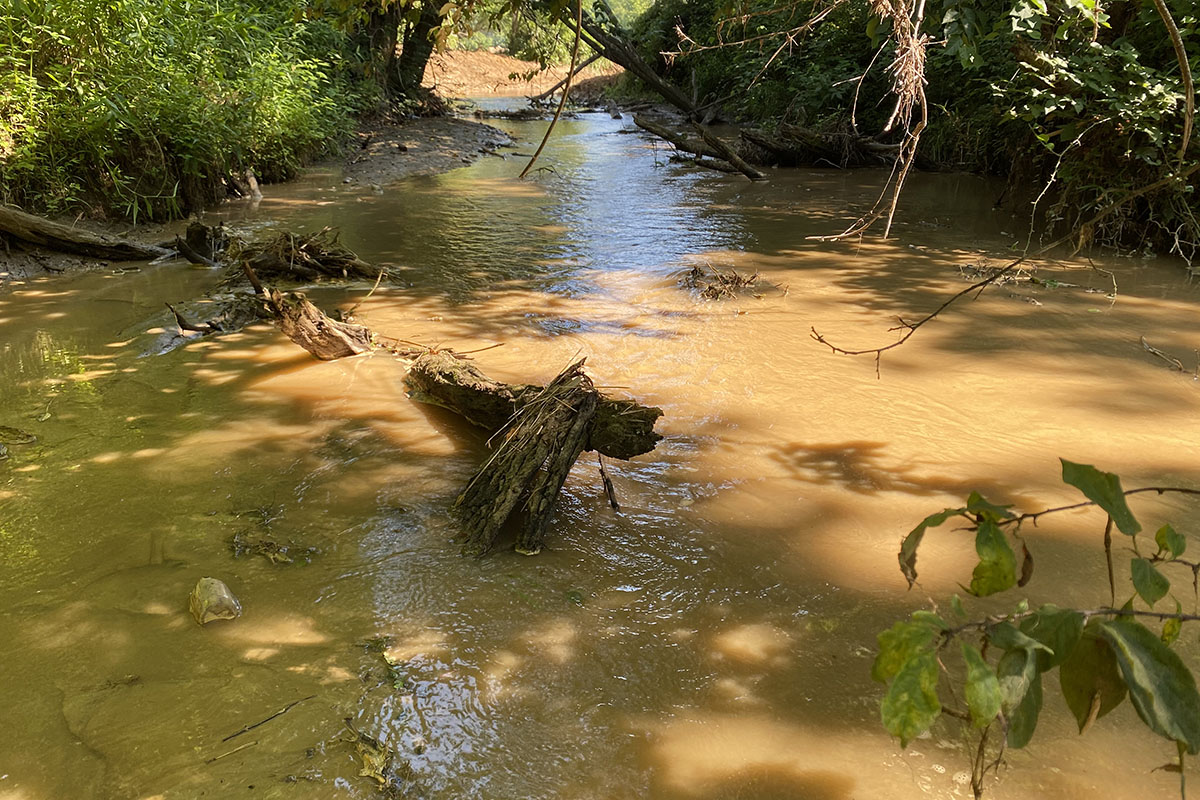
Call on Asheville City Council to do its part to clean up the French Broad River, starting with the establishment of a Stormwater Task Force to address the City’s water pollution problems. Not only does the City have a legal obligation to protect water quality, Council’s commitment to racial equity demands action to protect residents of the Southside neighborhood from the highest pollution levels in the city.
Our river is a public resource, and tens of thousands of people recreate on the French Broad every year. However, none of the testing sites within the City of Asheville pass the EPA’s safe limit on average, and the worst site that we test is Nasty Branch, which drains over half of downtown Asheville and flows through the historically African American Southside neighborhood, before discharging into the French Broad River in the River Arts District.
High levels of E. coli also indicate the presence of other, more harmful microbes, such as Cryptosporidium, Giardia, Shigella, and norovirus. Heavy rains and storms often result in spikes in E. coli contamination, increasing the risk to human health. Contact with or consumption of contaminated water can cause gastrointestinal illness and skin, ear, respiratory, eye, neurologic and wound infections. The most commonly reported symptoms are stomach cramps, diarrhea, nausea, vomiting and low-grade fever.
Asheville City Council has a moral and legal responsibility under the Clean Water Act to protect our river and water quality for all city residents. Henderson County has already established a Stormwater Task Force, Asheville should too.
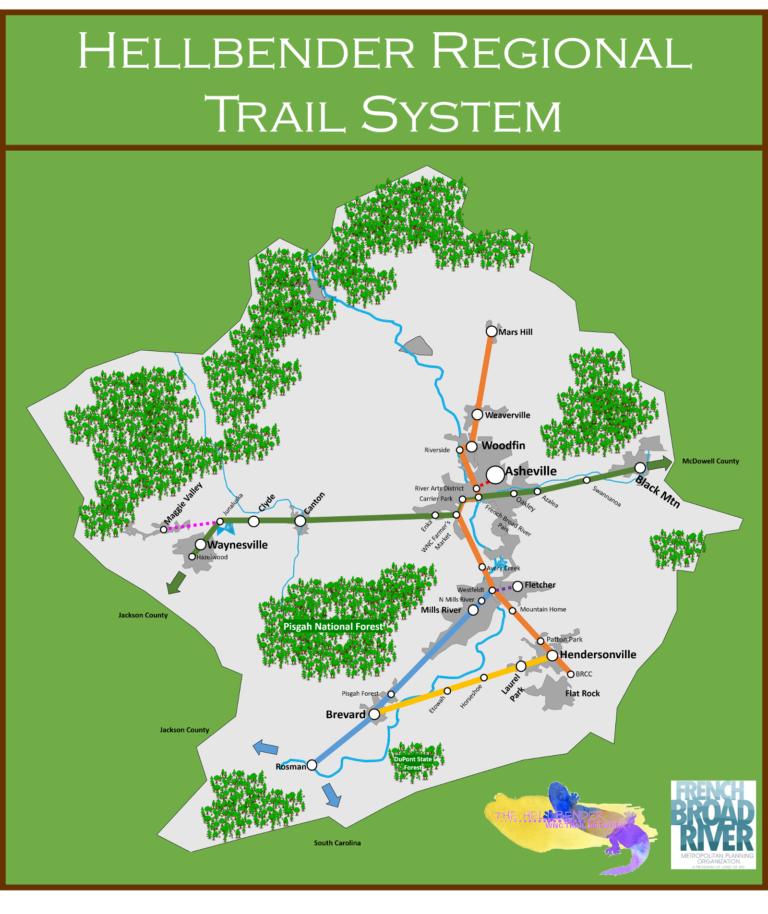
The French Broad River MPO has been working with local governments and community stakeholders in the region over the last year to develop a plan for a regional trail network, the Hellbender Regional trail. This plan connects the various bicycle, pedestrian, and greenway plans developed locally in Buncombe, Haywood, Henderson, Madison, and Transylvania counties to illustrate existing and planned trails that may someday connect to form a regional network for bicycle and pedestrian travel.
Unlike highway and roads, bicycle and pedestrian infrastructure is primarily the responsibility of the various local governments in our region so the Hellbender Regional Trail Plan does not intend to usurp local brands or mandate designs, but intends to make the various sections of planned and existing networks greater than the sum of its parts through increased coordination and partnerships. This plan focuses on regional connections, but does not deprioritize more locally-focused infrastructure. It is primarily focused on multi-use paths (paved trails, greenways, rail-to-trails, sidepaths, etc.) but may include some sections with on-street and other connections where constraints may require exceptions to a typical off-road path. This is also a long-range plan. At more than 150 miles, the full build-out of this network would reflect a nearly ten-fold increase in the miles of multi-use paths in the region- a task that will likely take a considerable amount of time at current funding levels. At this point, organizers are inviting the public to comment on the Draft Hellbender Regional Trail Plan that reflects the work of the work group and stakeholders as well as the countless hours put into developing the local plans in our region on which the Hellbender Regional Trail Plan is based.
The Draft Hellbender Regional Trail Plan is available on the MPO’s website and comments bay be sent in by Friday, August 21st via the google doc form available on the website or by emailing [email protected].
|

|

On exhibit Saturdays and Sundays from 12 – 4 p.m. (weather permitting), Rocky Cove Railroad is a G-Scale (garden scale) model train that demonstrates the coming of trains to western North Carolina at the turn of the 20th century. The exhibit is located below the Grand Garden Promenade.
Call on Asheville City Council to do its part to clean up the French Broad River, starting with the establishment of a Stormwater Task Force to address the City’s water pollution problems. Not only does the City have a legal obligation to protect water quality, Council’s commitment to racial equity demands action to protect residents of the Southside neighborhood from the highest pollution levels in the city.
Our river is a public resource, and tens of thousands of people recreate on the French Broad every year. However, none of the testing sites within the City of Asheville pass the EPA’s safe limit on average, and the worst site that we test is Nasty Branch, which drains over half of downtown Asheville and flows through the historically African American Southside neighborhood, before discharging into the French Broad River in the River Arts District.
High levels of E. coli also indicate the presence of other, more harmful microbes, such as Cryptosporidium, Giardia, Shigella, and norovirus. Heavy rains and storms often result in spikes in E. coli contamination, increasing the risk to human health. Contact with or consumption of contaminated water can cause gastrointestinal illness and skin, ear, respiratory, eye, neurologic and wound infections. The most commonly reported symptoms are stomach cramps, diarrhea, nausea, vomiting and low-grade fever.
Asheville City Council has a moral and legal responsibility under the Clean Water Act to protect our river and water quality for all city residents. Henderson County has already established a Stormwater Task Force, Asheville should too.
Call on Asheville City Council to do its part to clean up the French Broad River, starting with the establishment of a Stormwater Task Force to address the City’s water pollution problems. Not only does the City have a legal obligation to protect water quality, Council’s commitment to racial equity demands action to protect residents of the Southside neighborhood from the highest pollution levels in the city.
Our river is a public resource, and tens of thousands of people recreate on the French Broad every year. However, none of the testing sites within the City of Asheville pass the EPA’s safe limit on average, and the worst site that we test is Nasty Branch, which drains over half of downtown Asheville and flows through the historically African American Southside neighborhood, before discharging into the French Broad River in the River Arts District.
High levels of E. coli also indicate the presence of other, more harmful microbes, such as Cryptosporidium, Giardia, Shigella, and norovirus. Heavy rains and storms often result in spikes in E. coli contamination, increasing the risk to human health. Contact with or consumption of contaminated water can cause gastrointestinal illness and skin, ear, respiratory, eye, neurologic and wound infections. The most commonly reported symptoms are stomach cramps, diarrhea, nausea, vomiting and low-grade fever.
Asheville City Council has a moral and legal responsibility under the Clean Water Act to protect our river and water quality for all city residents. Henderson County has already established a Stormwater Task Force, Asheville should too.
Call on Asheville City Council to do its part to clean up the French Broad River, starting with the establishment of a Stormwater Task Force to address the City’s water pollution problems. Not only does the City have a legal obligation to protect water quality, Council’s commitment to racial equity demands action to protect residents of the Southside neighborhood from the highest pollution levels in the city.
Our river is a public resource, and tens of thousands of people recreate on the French Broad every year. However, none of the testing sites within the City of Asheville pass the EPA’s safe limit on average, and the worst site that we test is Nasty Branch, which drains over half of downtown Asheville and flows through the historically African American Southside neighborhood, before discharging into the French Broad River in the River Arts District.
High levels of E. coli also indicate the presence of other, more harmful microbes, such as Cryptosporidium, Giardia, Shigella, and norovirus. Heavy rains and storms often result in spikes in E. coli contamination, increasing the risk to human health. Contact with or consumption of contaminated water can cause gastrointestinal illness and skin, ear, respiratory, eye, neurologic and wound infections. The most commonly reported symptoms are stomach cramps, diarrhea, nausea, vomiting and low-grade fever.
Asheville City Council has a moral and legal responsibility under the Clean Water Act to protect our river and water quality for all city residents. Henderson County has already established a Stormwater Task Force, Asheville should too.
Call on Asheville City Council to do its part to clean up the French Broad River, starting with the establishment of a Stormwater Task Force to address the City’s water pollution problems. Not only does the City have a legal obligation to protect water quality, Council’s commitment to racial equity demands action to protect residents of the Southside neighborhood from the highest pollution levels in the city.
Our river is a public resource, and tens of thousands of people recreate on the French Broad every year. However, none of the testing sites within the City of Asheville pass the EPA’s safe limit on average, and the worst site that we test is Nasty Branch, which drains over half of downtown Asheville and flows through the historically African American Southside neighborhood, before discharging into the French Broad River in the River Arts District.
High levels of E. coli also indicate the presence of other, more harmful microbes, such as Cryptosporidium, Giardia, Shigella, and norovirus. Heavy rains and storms often result in spikes in E. coli contamination, increasing the risk to human health. Contact with or consumption of contaminated water can cause gastrointestinal illness and skin, ear, respiratory, eye, neurologic and wound infections. The most commonly reported symptoms are stomach cramps, diarrhea, nausea, vomiting and low-grade fever.
Asheville City Council has a moral and legal responsibility under the Clean Water Act to protect our river and water quality for all city residents. Henderson County has already established a Stormwater Task Force, Asheville should too.
The Arboretum’s popular ArborEvenings summer after hours series will return this season with a special LEGO twist. Held every Thursday, Friday and Saturday, July through September, from 8 to 11 …
Call on Asheville City Council to do its part to clean up the French Broad River, starting with the establishment of a Stormwater Task Force to address the City’s water pollution problems. Not only does the City have a legal obligation to protect water quality, Council’s commitment to racial equity demands action to protect residents of the Southside neighborhood from the highest pollution levels in the city.
Our river is a public resource, and tens of thousands of people recreate on the French Broad every year. However, none of the testing sites within the City of Asheville pass the EPA’s safe limit on average, and the worst site that we test is Nasty Branch, which drains over half of downtown Asheville and flows through the historically African American Southside neighborhood, before discharging into the French Broad River in the River Arts District.
High levels of E. coli also indicate the presence of other, more harmful microbes, such as Cryptosporidium, Giardia, Shigella, and norovirus. Heavy rains and storms often result in spikes in E. coli contamination, increasing the risk to human health. Contact with or consumption of contaminated water can cause gastrointestinal illness and skin, ear, respiratory, eye, neurologic and wound infections. The most commonly reported symptoms are stomach cramps, diarrhea, nausea, vomiting and low-grade fever.
Asheville City Council has a moral and legal responsibility under the Clean Water Act to protect our river and water quality for all city residents. Henderson County has already established a Stormwater Task Force, Asheville should too.

To help prevent the spread of COVID-19 (novel coronavirus), Grandfather Mountain is only selling tickets online.
Only a select number of tickets will be sold per day for certain time-slots to limit the number of guests in the park at one time, in accordance with the state of North Carolina’s phased “reopening” plan and social gathering guidelines.
Please check back closer to your visit for ticket availability. As of now, reservations are only available through June 21.
Each guest entering the park must have a ticket, which includes a time-slot. Prices are as follows:
Adult: $22
Senior (age 60+): $20
Child (ages 4-12): $9
AAA Adult: $20 (must present valid AAA card)
AAA Child: $8 (must present valid AAA card)
The Arboretum’s popular ArborEvenings summer after hours series will return this season with a special LEGO twist. Held every Thursday, Friday and Saturday, July through September, from 8 to 11 …
Call on Asheville City Council to do its part to clean up the French Broad River, starting with the establishment of a Stormwater Task Force to address the City’s water pollution problems. Not only does the City have a legal obligation to protect water quality, Council’s commitment to racial equity demands action to protect residents of the Southside neighborhood from the highest pollution levels in the city.
Our river is a public resource, and tens of thousands of people recreate on the French Broad every year. However, none of the testing sites within the City of Asheville pass the EPA’s safe limit on average, and the worst site that we test is Nasty Branch, which drains over half of downtown Asheville and flows through the historically African American Southside neighborhood, before discharging into the French Broad River in the River Arts District.
High levels of E. coli also indicate the presence of other, more harmful microbes, such as Cryptosporidium, Giardia, Shigella, and norovirus. Heavy rains and storms often result in spikes in E. coli contamination, increasing the risk to human health. Contact with or consumption of contaminated water can cause gastrointestinal illness and skin, ear, respiratory, eye, neurologic and wound infections. The most commonly reported symptoms are stomach cramps, diarrhea, nausea, vomiting and low-grade fever.
Asheville City Council has a moral and legal responsibility under the Clean Water Act to protect our river and water quality for all city residents. Henderson County has already established a Stormwater Task Force, Asheville should too.
To help prevent the spread of COVID-19 (novel coronavirus), Grandfather Mountain is only selling tickets online.
Only a select number of tickets will be sold per day for certain time-slots to limit the number of guests in the park at one time, in accordance with the state of North Carolina’s phased “reopening” plan and social gathering guidelines.
Please check back closer to your visit for ticket availability. As of now, reservations are only available through June 21.
Each guest entering the park must have a ticket, which includes a time-slot. Prices are as follows:
Adult: $22
Senior (age 60+): $20
Child (ages 4-12): $9
AAA Adult: $20 (must present valid AAA card)
AAA Child: $8 (must present valid AAA card)
On exhibit Saturdays and Sundays from 12 – 4 p.m. (weather permitting), Rocky Cove Railroad is a G-Scale (garden scale) model train that demonstrates the coming of trains to western North Carolina at the turn of the 20th century. The exhibit is located below the Grand Garden Promenade.
The Arboretum’s popular ArborEvenings summer after hours series will return this season with a special LEGO twist. Held every Thursday, Friday and Saturday, July through September, from 8 to 11 …
Call on Asheville City Council to do its part to clean up the French Broad River, starting with the establishment of a Stormwater Task Force to address the City’s water pollution problems. Not only does the City have a legal obligation to protect water quality, Council’s commitment to racial equity demands action to protect residents of the Southside neighborhood from the highest pollution levels in the city.
Our river is a public resource, and tens of thousands of people recreate on the French Broad every year. However, none of the testing sites within the City of Asheville pass the EPA’s safe limit on average, and the worst site that we test is Nasty Branch, which drains over half of downtown Asheville and flows through the historically African American Southside neighborhood, before discharging into the French Broad River in the River Arts District.
High levels of E. coli also indicate the presence of other, more harmful microbes, such as Cryptosporidium, Giardia, Shigella, and norovirus. Heavy rains and storms often result in spikes in E. coli contamination, increasing the risk to human health. Contact with or consumption of contaminated water can cause gastrointestinal illness and skin, ear, respiratory, eye, neurologic and wound infections. The most commonly reported symptoms are stomach cramps, diarrhea, nausea, vomiting and low-grade fever.
Asheville City Council has a moral and legal responsibility under the Clean Water Act to protect our river and water quality for all city residents. Henderson County has already established a Stormwater Task Force, Asheville should too.
On exhibit Saturdays and Sundays from 12 – 4 p.m. (weather permitting), Rocky Cove Railroad is a G-Scale (garden scale) model train that demonstrates the coming of trains to western North Carolina at the turn of the 20th century. The exhibit is located below the Grand Garden Promenade.
Call on Asheville City Council to do its part to clean up the French Broad River, starting with the establishment of a Stormwater Task Force to address the City’s water pollution problems. Not only does the City have a legal obligation to protect water quality, Council’s commitment to racial equity demands action to protect residents of the Southside neighborhood from the highest pollution levels in the city.
Our river is a public resource, and tens of thousands of people recreate on the French Broad every year. However, none of the testing sites within the City of Asheville pass the EPA’s safe limit on average, and the worst site that we test is Nasty Branch, which drains over half of downtown Asheville and flows through the historically African American Southside neighborhood, before discharging into the French Broad River in the River Arts District.
High levels of E. coli also indicate the presence of other, more harmful microbes, such as Cryptosporidium, Giardia, Shigella, and norovirus. Heavy rains and storms often result in spikes in E. coli contamination, increasing the risk to human health. Contact with or consumption of contaminated water can cause gastrointestinal illness and skin, ear, respiratory, eye, neurologic and wound infections. The most commonly reported symptoms are stomach cramps, diarrhea, nausea, vomiting and low-grade fever.
Asheville City Council has a moral and legal responsibility under the Clean Water Act to protect our river and water quality for all city residents. Henderson County has already established a Stormwater Task Force, Asheville should too.
Call on Asheville City Council to do its part to clean up the French Broad River, starting with the establishment of a Stormwater Task Force to address the City’s water pollution problems. Not only does the City have a legal obligation to protect water quality, Council’s commitment to racial equity demands action to protect residents of the Southside neighborhood from the highest pollution levels in the city.
Our river is a public resource, and tens of thousands of people recreate on the French Broad every year. However, none of the testing sites within the City of Asheville pass the EPA’s safe limit on average, and the worst site that we test is Nasty Branch, which drains over half of downtown Asheville and flows through the historically African American Southside neighborhood, before discharging into the French Broad River in the River Arts District.
High levels of E. coli also indicate the presence of other, more harmful microbes, such as Cryptosporidium, Giardia, Shigella, and norovirus. Heavy rains and storms often result in spikes in E. coli contamination, increasing the risk to human health. Contact with or consumption of contaminated water can cause gastrointestinal illness and skin, ear, respiratory, eye, neurologic and wound infections. The most commonly reported symptoms are stomach cramps, diarrhea, nausea, vomiting and low-grade fever.
Asheville City Council has a moral and legal responsibility under the Clean Water Act to protect our river and water quality for all city residents. Henderson County has already established a Stormwater Task Force, Asheville should too.
Call on Asheville City Council to do its part to clean up the French Broad River, starting with the establishment of a Stormwater Task Force to address the City’s water pollution problems. Not only does the City have a legal obligation to protect water quality, Council’s commitment to racial equity demands action to protect residents of the Southside neighborhood from the highest pollution levels in the city.
Our river is a public resource, and tens of thousands of people recreate on the French Broad every year. However, none of the testing sites within the City of Asheville pass the EPA’s safe limit on average, and the worst site that we test is Nasty Branch, which drains over half of downtown Asheville and flows through the historically African American Southside neighborhood, before discharging into the French Broad River in the River Arts District.
High levels of E. coli also indicate the presence of other, more harmful microbes, such as Cryptosporidium, Giardia, Shigella, and norovirus. Heavy rains and storms often result in spikes in E. coli contamination, increasing the risk to human health. Contact with or consumption of contaminated water can cause gastrointestinal illness and skin, ear, respiratory, eye, neurologic and wound infections. The most commonly reported symptoms are stomach cramps, diarrhea, nausea, vomiting and low-grade fever.
Asheville City Council has a moral and legal responsibility under the Clean Water Act to protect our river and water quality for all city residents. Henderson County has already established a Stormwater Task Force, Asheville should too.
Call on Asheville City Council to do its part to clean up the French Broad River, starting with the establishment of a Stormwater Task Force to address the City’s water pollution problems. Not only does the City have a legal obligation to protect water quality, Council’s commitment to racial equity demands action to protect residents of the Southside neighborhood from the highest pollution levels in the city.
Our river is a public resource, and tens of thousands of people recreate on the French Broad every year. However, none of the testing sites within the City of Asheville pass the EPA’s safe limit on average, and the worst site that we test is Nasty Branch, which drains over half of downtown Asheville and flows through the historically African American Southside neighborhood, before discharging into the French Broad River in the River Arts District.
High levels of E. coli also indicate the presence of other, more harmful microbes, such as Cryptosporidium, Giardia, Shigella, and norovirus. Heavy rains and storms often result in spikes in E. coli contamination, increasing the risk to human health. Contact with or consumption of contaminated water can cause gastrointestinal illness and skin, ear, respiratory, eye, neurologic and wound infections. The most commonly reported symptoms are stomach cramps, diarrhea, nausea, vomiting and low-grade fever.
Asheville City Council has a moral and legal responsibility under the Clean Water Act to protect our river and water quality for all city residents. Henderson County has already established a Stormwater Task Force, Asheville should too.
Beginner’s workshop lesson at 7:30 P.M., then 8-11 P.M. Contra Dance with Country Waltzing at the break and the final dance. This is a partner dance but it’s not necessary to come with a partner. We have different live bands and callers.
The Arboretum’s popular ArborEvenings summer after hours series will return this season with a special LEGO twist. Held every Thursday, Friday and Saturday, July through September, from 8 to 11 …
Call on Asheville City Council to do its part to clean up the French Broad River, starting with the establishment of a Stormwater Task Force to address the City’s water pollution problems. Not only does the City have a legal obligation to protect water quality, Council’s commitment to racial equity demands action to protect residents of the Southside neighborhood from the highest pollution levels in the city.
Our river is a public resource, and tens of thousands of people recreate on the French Broad every year. However, none of the testing sites within the City of Asheville pass the EPA’s safe limit on average, and the worst site that we test is Nasty Branch, which drains over half of downtown Asheville and flows through the historically African American Southside neighborhood, before discharging into the French Broad River in the River Arts District.
High levels of E. coli also indicate the presence of other, more harmful microbes, such as Cryptosporidium, Giardia, Shigella, and norovirus. Heavy rains and storms often result in spikes in E. coli contamination, increasing the risk to human health. Contact with or consumption of contaminated water can cause gastrointestinal illness and skin, ear, respiratory, eye, neurologic and wound infections. The most commonly reported symptoms are stomach cramps, diarrhea, nausea, vomiting and low-grade fever.
Asheville City Council has a moral and legal responsibility under the Clean Water Act to protect our river and water quality for all city residents. Henderson County has already established a Stormwater Task Force, Asheville should too.
To help prevent the spread of COVID-19 (novel coronavirus), Grandfather Mountain is only selling tickets online.
Only a select number of tickets will be sold per day for certain time-slots to limit the number of guests in the park at one time, in accordance with the state of North Carolina’s phased “reopening” plan and social gathering guidelines.
Please check back closer to your visit for ticket availability. As of now, reservations are only available through June 21.
Each guest entering the park must have a ticket, which includes a time-slot. Prices are as follows:
Adult: $22
Senior (age 60+): $20
Child (ages 4-12): $9
AAA Adult: $20 (must present valid AAA card)
AAA Child: $8 (must present valid AAA card)
The Arboretum’s popular ArborEvenings summer after hours series will return this season with a special LEGO twist. Held every Thursday, Friday and Saturday, July through September, from 8 to 11 …
Call on Asheville City Council to do its part to clean up the French Broad River, starting with the establishment of a Stormwater Task Force to address the City’s water pollution problems. Not only does the City have a legal obligation to protect water quality, Council’s commitment to racial equity demands action to protect residents of the Southside neighborhood from the highest pollution levels in the city.
Our river is a public resource, and tens of thousands of people recreate on the French Broad every year. However, none of the testing sites within the City of Asheville pass the EPA’s safe limit on average, and the worst site that we test is Nasty Branch, which drains over half of downtown Asheville and flows through the historically African American Southside neighborhood, before discharging into the French Broad River in the River Arts District.
High levels of E. coli also indicate the presence of other, more harmful microbes, such as Cryptosporidium, Giardia, Shigella, and norovirus. Heavy rains and storms often result in spikes in E. coli contamination, increasing the risk to human health. Contact with or consumption of contaminated water can cause gastrointestinal illness and skin, ear, respiratory, eye, neurologic and wound infections. The most commonly reported symptoms are stomach cramps, diarrhea, nausea, vomiting and low-grade fever.
Asheville City Council has a moral and legal responsibility under the Clean Water Act to protect our river and water quality for all city residents. Henderson County has already established a Stormwater Task Force, Asheville should too.
To help prevent the spread of COVID-19 (novel coronavirus), Grandfather Mountain is only selling tickets online.
Only a select number of tickets will be sold per day for certain time-slots to limit the number of guests in the park at one time, in accordance with the state of North Carolina’s phased “reopening” plan and social gathering guidelines.
Please check back closer to your visit for ticket availability. As of now, reservations are only available through June 21.
Each guest entering the park must have a ticket, which includes a time-slot. Prices are as follows:
Adult: $22
Senior (age 60+): $20
Child (ages 4-12): $9
AAA Adult: $20 (must present valid AAA card)
AAA Child: $8 (must present valid AAA card)
On exhibit Saturdays and Sundays from 12 – 4 p.m. (weather permitting), Rocky Cove Railroad is a G-Scale (garden scale) model train that demonstrates the coming of trains to western North Carolina at the turn of the 20th century. The exhibit is located below the Grand Garden Promenade.