

Calendar of Events
Upcoming events and things to do in Asheville, NC. Below is a list of events for festivals, concerts, art exhibitions, group meetups and more.
Interested in adding an event to our calendar? Please click the green “Post Your Event” button below.
 |
|||
|
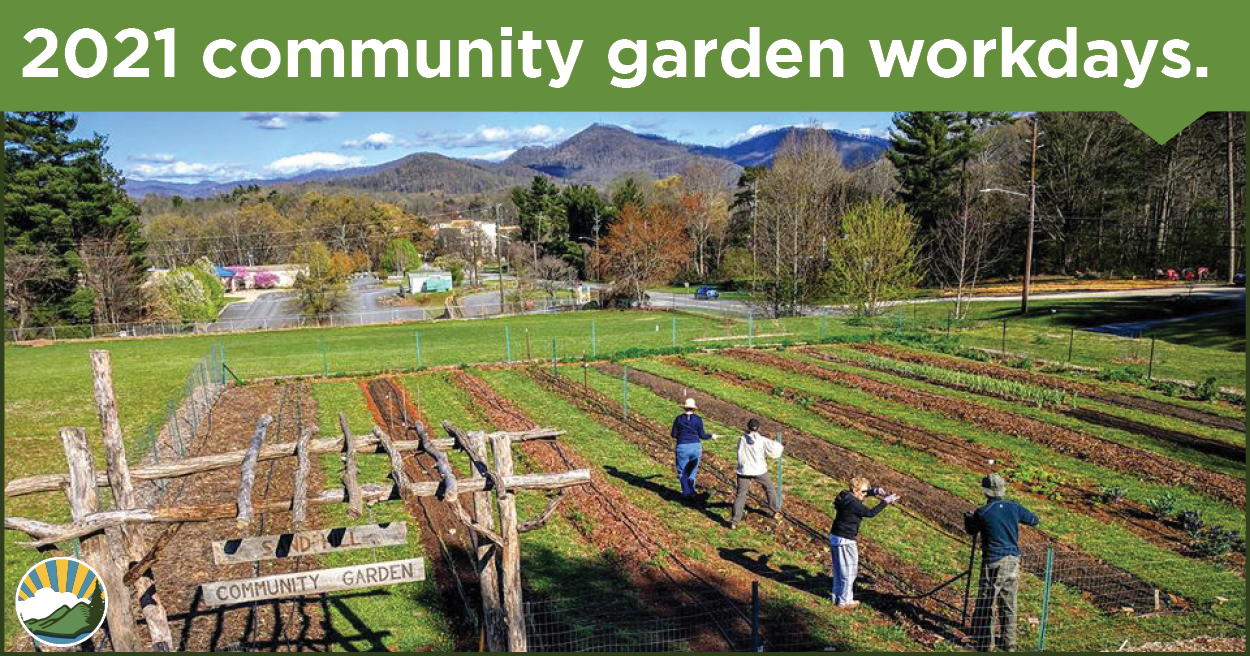
Looking to get involved, stay active, and meet some new friends? Sand Hill Community Garden workdays take place on Wednesdays (6-8 p.m.) and Saturdays (10 a.m.-noon) from Feb. 27-Oct. 30, 2021, at Buncombe County Sports Park. The garden is located on 16 Apac Dr. in West Asheville/Enka-Candler.
Join friends and neighbors as they come together on common ground to raise fresh, organic vegetables and fruits for the Enka community.
Expect to wear a mask and maintain social distance throughout. Tools and hand sanitizer are available, but any gloves, loppers, pruners, or gardening tools you can bring will decrease the amount of contact between volunteers. Please wear work clothes to get dirty and closed-toe shoes. Sunscreen, water, and a hat are also handy items to have on hand.
Sand Hill Community Garden has been growing fresh produce since 2011 and raised over 1,200 lbs. of organic produce last year.
NOTE: Community workdays are weather dependent. Please join the community garden email list (send your info to [email protected]) to stay up on workday tasks and other garden news.
To receive the I Heart Parks monthly newsletter, sign up online. Follow Buncombe County Recreation on Facebook and Instagram for the latest updates.

|
|
|||
|


The ideal volunteer tutor is someone seeking to make a one-year commitment of two hours per week to help someone else make the change of a lifetime. For our volunteer tutors, an education background is helpful, but not necessary. The most important qualities are patience, an open mind, and resourcefulness. Tutors also need to be non-judgmental and sensitive to cultural differences. A GED or high school diploma is required. Ideal tutors enjoy seeing concrete outcomes from their efforts and sharing in the life-changing successes of others. See our full tutor position description here.
Our volunteers:
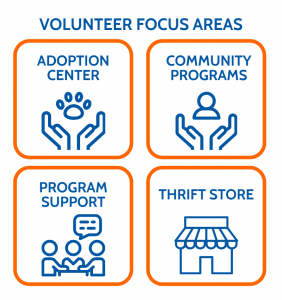
- Improve the quality of living for animals in Henderson County.
- Make a difference in their community through our community programs like our Spay/Neuter Incentive Program and Meals on Wheels Pet Pals.
- Provide support for all departments and serve on our board and committees.
- Help raise crucial funds in our Thrift Store.
It’s easy to get started!
- Fill out the Volunteer Application.
- Attend a Virtual Volunteer Information Session to learn more about Blue Ridge Humane Society and current volunteer opportunities.
- Pick a Volunteer Assignment! Decide what volunteer position works best for you! Some assignments can get started right away and some require prior orientation and training such as animal handling training that you can get started on.
- Start Volunteering! Get started in your position. Our volunteers make a huge impact in Henderson County to ensure both pets and their people are happy, healthy, and thriving. We wouldn’t be able to accomplish all we do without them.
|
|
|||
|

The City of Asheville has partnered with Asheville GreenWorks to launch the Adopt-A-Spot program. Businesses, organizations, or individuals can choose a City-owned piece of property that they wish to adopt. The responsibility of the adopter will be to maintain either an edible or pollinator garden in this location. The program provides recognition of adopters through dedicated signage at the site. Make a positive impact on Asheville by promoting stewardship of publicly owned places.
Types of Spots to Adopt
As the inaugural Bee City, Asheville is an ideal location for planting pollinator habitats. Pollinators are responsible for ¾ of the world’s food supply and are vitally important to the health of our local urban forest. Pollinator plantings are both beautiful and ecologically sound features of the landscape, attracting butterflies, birds and bees into urban areas. A list of pollinator-friendly plants and local nurseries where they can be purchased can be found at www.beecityusa.org.
Establishing & Maintaining Orchards and Edibles
Fruit producing trees and shrubs growing in neighborhoods, parks and greenways provide fresh, accessible food to Ashevilleans. Through the Adopt-a-Spot program, your group can play a role in developing the urban food forest in Asheville. Projects can range from planting a small patch of blueberries or an entire orchard of fruit trees. The list of recommended edible trees and shrubs and local nurseries where they can be purchased can be found at www.ashevillegreenworks.org
Invasive Plant Removal
Invasive exotic plants disrupt the ecology of natural ecosystems, displace native plant and animal species, and degrade our biological resources. Aggressive invaders reduce the amount of light, water, nutrients and space available to native species. Some cause increased erosion along stream banks, shorelines and roadsides. Common invasive species in this area include kudzu, knotweed, English ivy and privet. Many Adopt-a-Spot projects will require invasive plant removal to prepare the land for planting and to prevent invasives from taking over existing and new plantings.
Planting in Bulb-Outs
Bulb-outs are areas that extend from the sidewalk along the sides of the street. They are typically in place at cross walks or on street parking. These areas can typically be accessed from the adjacent sidewalk. Through Asheville’s Adopt-a-Spot program, bulb-outs can be used for planting edible and/or pollinator gardens. Volunteers must use extra caution when working along streets and roadways.
Our volunteers:
- Improve the quality of living for animals in Henderson County.
- Make a difference in their community through our community programs like our Spay/Neuter Incentive Program and Meals on Wheels Pet Pals.
- Provide support for all departments and serve on our board and committees.
- Help raise crucial funds in our Thrift Store.
It’s easy to get started!
- Fill out the Volunteer Application.
- Attend a Virtual Volunteer Information Session to learn more about Blue Ridge Humane Society and current volunteer opportunities.
- Pick a Volunteer Assignment! Decide what volunteer position works best for you! Some assignments can get started right away and some require prior orientation and training such as animal handling training that you can get started on.
- Start Volunteering! Get started in your position. Our volunteers make a huge impact in Henderson County to ensure both pets and their people are happy, healthy, and thriving. We wouldn’t be able to accomplish all we do without them.
|
|
|||
|
The City of Asheville has partnered with Asheville GreenWorks to launch the Adopt-A-Spot program. Businesses, organizations, or individuals can choose a City-owned piece of property that they wish to adopt. The responsibility of the adopter will be to maintain either an edible or pollinator garden in this location. The program provides recognition of adopters through dedicated signage at the site. Make a positive impact on Asheville by promoting stewardship of publicly owned places.
Types of Spots to Adopt
As the inaugural Bee City, Asheville is an ideal location for planting pollinator habitats. Pollinators are responsible for ¾ of the world’s food supply and are vitally important to the health of our local urban forest. Pollinator plantings are both beautiful and ecologically sound features of the landscape, attracting butterflies, birds and bees into urban areas. A list of pollinator-friendly plants and local nurseries where they can be purchased can be found at www.beecityusa.org.
Establishing & Maintaining Orchards and Edibles
Fruit producing trees and shrubs growing in neighborhoods, parks and greenways provide fresh, accessible food to Ashevilleans. Through the Adopt-a-Spot program, your group can play a role in developing the urban food forest in Asheville. Projects can range from planting a small patch of blueberries or an entire orchard of fruit trees. The list of recommended edible trees and shrubs and local nurseries where they can be purchased can be found at www.ashevillegreenworks.org
Invasive Plant Removal
Invasive exotic plants disrupt the ecology of natural ecosystems, displace native plant and animal species, and degrade our biological resources. Aggressive invaders reduce the amount of light, water, nutrients and space available to native species. Some cause increased erosion along stream banks, shorelines and roadsides. Common invasive species in this area include kudzu, knotweed, English ivy and privet. Many Adopt-a-Spot projects will require invasive plant removal to prepare the land for planting and to prevent invasives from taking over existing and new plantings.
Planting in Bulb-Outs
Bulb-outs are areas that extend from the sidewalk along the sides of the street. They are typically in place at cross walks or on street parking. These areas can typically be accessed from the adjacent sidewalk. Through Asheville’s Adopt-a-Spot program, bulb-outs can be used for planting edible and/or pollinator gardens. Volunteers must use extra caution when working along streets and roadways.
Looking to get involved, stay active, and meet some new friends? Sand Hill Community Garden workdays take place on Wednesdays (6-8 p.m.) and Saturdays (10 a.m.-noon) from Feb. 27-Oct. 30, 2021, at Buncombe County Sports Park. The garden is located on 16 Apac Dr. in West Asheville/Enka-Candler.
Join friends and neighbors as they come together on common ground to raise fresh, organic vegetables and fruits for the Enka community.
Expect to wear a mask and maintain social distance throughout. Tools and hand sanitizer are available, but any gloves, loppers, pruners, or gardening tools you can bring will decrease the amount of contact between volunteers. Please wear work clothes to get dirty and closed-toe shoes. Sunscreen, water, and a hat are also handy items to have on hand.
Sand Hill Community Garden has been growing fresh produce since 2011 and raised over 1,200 lbs. of organic produce last year.
NOTE: Community workdays are weather dependent. Please join the community garden email list (send your info to [email protected]) to stay up on workday tasks and other garden news.
To receive the I Heart Parks monthly newsletter, sign up online. Follow Buncombe County Recreation on Facebook and Instagram for the latest updates.
Our volunteers:
- Improve the quality of living for animals in Henderson County.
- Make a difference in their community through our community programs like our Spay/Neuter Incentive Program and Meals on Wheels Pet Pals.
- Provide support for all departments and serve on our board and committees.
- Help raise crucial funds in our Thrift Store.
It’s easy to get started!
- Fill out the Volunteer Application.
- Attend a Virtual Volunteer Information Session to learn more about Blue Ridge Humane Society and current volunteer opportunities.
- Pick a Volunteer Assignment! Decide what volunteer position works best for you! Some assignments can get started right away and some require prior orientation and training such as animal handling training that you can get started on.
- Start Volunteering! Get started in your position. Our volunteers make a huge impact in Henderson County to ensure both pets and their people are happy, healthy, and thriving. We wouldn’t be able to accomplish all we do without them.
|
|
|||
|
The City of Asheville has partnered with Asheville GreenWorks to launch the Adopt-A-Spot program. Businesses, organizations, or individuals can choose a City-owned piece of property that they wish to adopt. The responsibility of the adopter will be to maintain either an edible or pollinator garden in this location. The program provides recognition of adopters through dedicated signage at the site. Make a positive impact on Asheville by promoting stewardship of publicly owned places.
Types of Spots to Adopt
As the inaugural Bee City, Asheville is an ideal location for planting pollinator habitats. Pollinators are responsible for ¾ of the world’s food supply and are vitally important to the health of our local urban forest. Pollinator plantings are both beautiful and ecologically sound features of the landscape, attracting butterflies, birds and bees into urban areas. A list of pollinator-friendly plants and local nurseries where they can be purchased can be found at www.beecityusa.org.
Establishing & Maintaining Orchards and Edibles
Fruit producing trees and shrubs growing in neighborhoods, parks and greenways provide fresh, accessible food to Ashevilleans. Through the Adopt-a-Spot program, your group can play a role in developing the urban food forest in Asheville. Projects can range from planting a small patch of blueberries or an entire orchard of fruit trees. The list of recommended edible trees and shrubs and local nurseries where they can be purchased can be found at www.ashevillegreenworks.org
Invasive Plant Removal
Invasive exotic plants disrupt the ecology of natural ecosystems, displace native plant and animal species, and degrade our biological resources. Aggressive invaders reduce the amount of light, water, nutrients and space available to native species. Some cause increased erosion along stream banks, shorelines and roadsides. Common invasive species in this area include kudzu, knotweed, English ivy and privet. Many Adopt-a-Spot projects will require invasive plant removal to prepare the land for planting and to prevent invasives from taking over existing and new plantings.
Planting in Bulb-Outs
Bulb-outs are areas that extend from the sidewalk along the sides of the street. They are typically in place at cross walks or on street parking. These areas can typically be accessed from the adjacent sidewalk. Through Asheville’s Adopt-a-Spot program, bulb-outs can be used for planting edible and/or pollinator gardens. Volunteers must use extra caution when working along streets and roadways.
Our volunteers:
- Improve the quality of living for animals in Henderson County.
- Make a difference in their community through our community programs like our Spay/Neuter Incentive Program and Meals on Wheels Pet Pals.
- Provide support for all departments and serve on our board and committees.
- Help raise crucial funds in our Thrift Store.
It’s easy to get started!
- Fill out the Volunteer Application.
- Attend a Virtual Volunteer Information Session to learn more about Blue Ridge Humane Society and current volunteer opportunities.
- Pick a Volunteer Assignment! Decide what volunteer position works best for you! Some assignments can get started right away and some require prior orientation and training such as animal handling training that you can get started on.
- Start Volunteering! Get started in your position. Our volunteers make a huge impact in Henderson County to ensure both pets and their people are happy, healthy, and thriving. We wouldn’t be able to accomplish all we do without them.
|
|
|||
|
The City of Asheville has partnered with Asheville GreenWorks to launch the Adopt-A-Spot program. Businesses, organizations, or individuals can choose a City-owned piece of property that they wish to adopt. The responsibility of the adopter will be to maintain either an edible or pollinator garden in this location. The program provides recognition of adopters through dedicated signage at the site. Make a positive impact on Asheville by promoting stewardship of publicly owned places.
Types of Spots to Adopt
As the inaugural Bee City, Asheville is an ideal location for planting pollinator habitats. Pollinators are responsible for ¾ of the world’s food supply and are vitally important to the health of our local urban forest. Pollinator plantings are both beautiful and ecologically sound features of the landscape, attracting butterflies, birds and bees into urban areas. A list of pollinator-friendly plants and local nurseries where they can be purchased can be found at www.beecityusa.org.
Establishing & Maintaining Orchards and Edibles
Fruit producing trees and shrubs growing in neighborhoods, parks and greenways provide fresh, accessible food to Ashevilleans. Through the Adopt-a-Spot program, your group can play a role in developing the urban food forest in Asheville. Projects can range from planting a small patch of blueberries or an entire orchard of fruit trees. The list of recommended edible trees and shrubs and local nurseries where they can be purchased can be found at www.ashevillegreenworks.org
Invasive Plant Removal
Invasive exotic plants disrupt the ecology of natural ecosystems, displace native plant and animal species, and degrade our biological resources. Aggressive invaders reduce the amount of light, water, nutrients and space available to native species. Some cause increased erosion along stream banks, shorelines and roadsides. Common invasive species in this area include kudzu, knotweed, English ivy and privet. Many Adopt-a-Spot projects will require invasive plant removal to prepare the land for planting and to prevent invasives from taking over existing and new plantings.
Planting in Bulb-Outs
Bulb-outs are areas that extend from the sidewalk along the sides of the street. They are typically in place at cross walks or on street parking. These areas can typically be accessed from the adjacent sidewalk. Through Asheville’s Adopt-a-Spot program, bulb-outs can be used for planting edible and/or pollinator gardens. Volunteers must use extra caution when working along streets and roadways.
|
The City of Asheville has partnered with Asheville GreenWorks to launch the Adopt-A-Spot program. Businesses, organizations, or individuals can choose a City-owned piece of property that they wish to adopt. The responsibility of the adopter will be to maintain either an edible or pollinator garden in this location. The program provides recognition of adopters through dedicated signage at the site. Make a positive impact on Asheville by promoting stewardship of publicly owned places.
Types of Spots to Adopt
As the inaugural Bee City, Asheville is an ideal location for planting pollinator habitats. Pollinators are responsible for ¾ of the world’s food supply and are vitally important to the health of our local urban forest. Pollinator plantings are both beautiful and ecologically sound features of the landscape, attracting butterflies, birds and bees into urban areas. A list of pollinator-friendly plants and local nurseries where they can be purchased can be found at www.beecityusa.org.
Establishing & Maintaining Orchards and Edibles
Fruit producing trees and shrubs growing in neighborhoods, parks and greenways provide fresh, accessible food to Ashevilleans. Through the Adopt-a-Spot program, your group can play a role in developing the urban food forest in Asheville. Projects can range from planting a small patch of blueberries or an entire orchard of fruit trees. The list of recommended edible trees and shrubs and local nurseries where they can be purchased can be found at www.ashevillegreenworks.org
Invasive Plant Removal
Invasive exotic plants disrupt the ecology of natural ecosystems, displace native plant and animal species, and degrade our biological resources. Aggressive invaders reduce the amount of light, water, nutrients and space available to native species. Some cause increased erosion along stream banks, shorelines and roadsides. Common invasive species in this area include kudzu, knotweed, English ivy and privet. Many Adopt-a-Spot projects will require invasive plant removal to prepare the land for planting and to prevent invasives from taking over existing and new plantings.
Planting in Bulb-Outs
Bulb-outs are areas that extend from the sidewalk along the sides of the street. They are typically in place at cross walks or on street parking. These areas can typically be accessed from the adjacent sidewalk. Through Asheville’s Adopt-a-Spot program, bulb-outs can be used for planting edible and/or pollinator gardens. Volunteers must use extra caution when working along streets and roadways.
|
The City of Asheville has partnered with Asheville GreenWorks to launch the Adopt-A-Spot program. Businesses, organizations, or individuals can choose a City-owned piece of property that they wish to adopt. The responsibility of the adopter will be to maintain either an edible or pollinator garden in this location. The program provides recognition of adopters through dedicated signage at the site. Make a positive impact on Asheville by promoting stewardship of publicly owned places.
Types of Spots to Adopt
As the inaugural Bee City, Asheville is an ideal location for planting pollinator habitats. Pollinators are responsible for ¾ of the world’s food supply and are vitally important to the health of our local urban forest. Pollinator plantings are both beautiful and ecologically sound features of the landscape, attracting butterflies, birds and bees into urban areas. A list of pollinator-friendly plants and local nurseries where they can be purchased can be found at www.beecityusa.org.
Establishing & Maintaining Orchards and Edibles
Fruit producing trees and shrubs growing in neighborhoods, parks and greenways provide fresh, accessible food to Ashevilleans. Through the Adopt-a-Spot program, your group can play a role in developing the urban food forest in Asheville. Projects can range from planting a small patch of blueberries or an entire orchard of fruit trees. The list of recommended edible trees and shrubs and local nurseries where they can be purchased can be found at www.ashevillegreenworks.org
Invasive Plant Removal
Invasive exotic plants disrupt the ecology of natural ecosystems, displace native plant and animal species, and degrade our biological resources. Aggressive invaders reduce the amount of light, water, nutrients and space available to native species. Some cause increased erosion along stream banks, shorelines and roadsides. Common invasive species in this area include kudzu, knotweed, English ivy and privet. Many Adopt-a-Spot projects will require invasive plant removal to prepare the land for planting and to prevent invasives from taking over existing and new plantings.
Planting in Bulb-Outs
Bulb-outs are areas that extend from the sidewalk along the sides of the street. They are typically in place at cross walks or on street parking. These areas can typically be accessed from the adjacent sidewalk. Through Asheville’s Adopt-a-Spot program, bulb-outs can be used for planting edible and/or pollinator gardens. Volunteers must use extra caution when working along streets and roadways.
Looking to get involved, stay active, and meet some new friends? Sand Hill Community Garden workdays take place on Wednesdays (6-8 p.m.) and Saturdays (10 a.m.-noon) from Feb. 27-Oct. 30, 2021, at Buncombe County Sports Park. The garden is located on 16 Apac Dr. in West Asheville/Enka-Candler.
Join friends and neighbors as they come together on common ground to raise fresh, organic vegetables and fruits for the Enka community.
Expect to wear a mask and maintain social distance throughout. Tools and hand sanitizer are available, but any gloves, loppers, pruners, or gardening tools you can bring will decrease the amount of contact between volunteers. Please wear work clothes to get dirty and closed-toe shoes. Sunscreen, water, and a hat are also handy items to have on hand.
Sand Hill Community Garden has been growing fresh produce since 2011 and raised over 1,200 lbs. of organic produce last year.
NOTE: Community workdays are weather dependent. Please join the community garden email list (send your info to [email protected]) to stay up on workday tasks and other garden news.
To receive the I Heart Parks monthly newsletter, sign up online. Follow Buncombe County Recreation on Facebook and Instagram for the latest updates.
|
The City of Asheville has partnered with Asheville GreenWorks to launch the Adopt-A-Spot program. Businesses, organizations, or individuals can choose a City-owned piece of property that they wish to adopt. The responsibility of the adopter will be to maintain either an edible or pollinator garden in this location. The program provides recognition of adopters through dedicated signage at the site. Make a positive impact on Asheville by promoting stewardship of publicly owned places.
Types of Spots to Adopt
As the inaugural Bee City, Asheville is an ideal location for planting pollinator habitats. Pollinators are responsible for ¾ of the world’s food supply and are vitally important to the health of our local urban forest. Pollinator plantings are both beautiful and ecologically sound features of the landscape, attracting butterflies, birds and bees into urban areas. A list of pollinator-friendly plants and local nurseries where they can be purchased can be found at www.beecityusa.org.
Establishing & Maintaining Orchards and Edibles
Fruit producing trees and shrubs growing in neighborhoods, parks and greenways provide fresh, accessible food to Ashevilleans. Through the Adopt-a-Spot program, your group can play a role in developing the urban food forest in Asheville. Projects can range from planting a small patch of blueberries or an entire orchard of fruit trees. The list of recommended edible trees and shrubs and local nurseries where they can be purchased can be found at www.ashevillegreenworks.org
Invasive Plant Removal
Invasive exotic plants disrupt the ecology of natural ecosystems, displace native plant and animal species, and degrade our biological resources. Aggressive invaders reduce the amount of light, water, nutrients and space available to native species. Some cause increased erosion along stream banks, shorelines and roadsides. Common invasive species in this area include kudzu, knotweed, English ivy and privet. Many Adopt-a-Spot projects will require invasive plant removal to prepare the land for planting and to prevent invasives from taking over existing and new plantings.
Planting in Bulb-Outs
Bulb-outs are areas that extend from the sidewalk along the sides of the street. They are typically in place at cross walks or on street parking. These areas can typically be accessed from the adjacent sidewalk. Through Asheville’s Adopt-a-Spot program, bulb-outs can be used for planting edible and/or pollinator gardens. Volunteers must use extra caution when working along streets and roadways.
|