Upcoming events and things to do in Asheville, NC. Below is a list of events for festivals, concerts, art exhibitions, group meetups and more.

Interested in adding an event to our calendar? Please click the green “Post Your Event” button below.

Thursday, June 6, 2024
Enka-Candler Farmer’s Market
Jun 6 @ 3:30 pm – 6:30 pm
Enka-Candler Farmer’s Market

Buncombe County farmers markets are opening throughout April and May—or, for year-round markets, shifting back to regular season hours. Spring markets offer an array of produce as well as meat, cheese, eggs, bread, prepared foods, and a wide selection of plant starts.


Nine markets in Buncombe County will continue to offer ASAP’s Double SNAP for Fruits and Vegetables and Farm Fresh Produce Prescription.

Friday, June 7, 2024
Digital: ASAP’s 2024–25 Local Food Guide
Jun 7 all-day
online w/ ASAP

ASAP’s Local Food Guide, the annual free publication for finding local food and farms, is updated for the 2024–25 season. This definitive resource lists hundreds of Appalachian GrownTM certified farms, farmers markets, restaurants, groceries, artisan producers, and more throughout Western North Carolina and surrounding counties in Virginia, Tennessee, Georgia, and South Carolina. A digital version of the print Guide may be viewed at asapconnections.org/guide.


In addition to listing content, the 2024–25 edition features stories that highlight the variety of farming across the region. Delia Jovel Dubón of Tierra Fértil Coop (pictured on the cover) talks about creating a sense of belonging for the Hispanic immigrant community in Henderson County. Lyric and Noah East of Wild East Farm in McDowell County detail the journey through their first full year of farming and how they’ve arrived at “a rough draft that’s working.” Kaci Nidiffer of The Liar’s Table in Avery County shares how scaling up and opening several retail spaces have created stronger connections with customers and community. Rounding out the issue are recipes from farmers at Two Trees Farm (Sustainabillies), Lee’s One Fortune Farm, Two Stones Farm + Mill, Carringer Farms, and Terra Lingua Growers.


“The Local Food Guide is such a beautiful way to share the stories of this place,” said Sarah Hart, ASAP’s Communications and Engagement Director. “To emphasize that sense of place, listings in this year’s Guide are organized into nine subregions with a short intro on what makes local farms in each area unique.”


Look for the Guide at farmers markets, visitors centers, libraries, groceries, restaurants, and other partner businesses throughout the region. Copies of the Guide are also available to pick up in the lobby of ASAP’s office in Asheville at 306 W. Haywood St., Tuesday to Thursday, 9 a.m. to 5 p.m. Contact ASAP if you need help locating a copy in your area or if you are interested in distributing Guides at your business.


In addition to the print Guide, ASAP maintains the online Local Food Guide at appalachiangrown.org. This database, with more than 1,400 listings, is updated throughout the year and is searchable by products, location, activities, and more.


Funding for the Local Food Guide was made possible in part by the U.S. Department of Agriculture (USDA) through the Agricultural Marketing Service, National Institute of Food and Agriculture’s Beginning Farmer Rancher Development Program, Gus Schumacher Nutrition Incentive Program, and Southern Sustainable Agriculture Research and Education program. Support was also provided by Dogwood Health Trust, the Community Foundation of Western North Carolina, and Asheville Regional Airport.


Outdoor Bonsai Exhibition Garden
Jun 7 @ 9:00 am – 5:00 pm
NC Arboretum

What is Bonsai?

Bonsai is a challenging and rewarding horticultural activity, in which ordinary plants are grown in an extraordinary way. Through rigorously applied cultivation techniques, trees, shrubs, vines and even herbaceous plants are kept in a miniaturized state, developed into artistic shapes and then displayed in special containers.

What makes the Arboretum’s bonsai endeavor unique among all other public collections in the United States? Regional Interpretation. Visitors will find the Arboretum’s bonsai collection of more than 100 specimens carefully cultivated with a Southern Appalachian accent. The collection draws inspiration from the traditional roots of bonsai, but takes the form of a contemporary, Southern Appalachian influenced American garden. Plantings in the landscape include species and cultivars of American, European and Asian origin.


The Bonsai Exhibition Garden

Established in October 2005, The North Carolina Arboretum’s Bonsai Exhibition Garden is a world renowned garden that displays up to 50 bonsai specimens at a time. Represented are traditional Asian bonsai subjects such as Japanese maple and Chinese elm, tropical plants such as willow-leaf fig and bougainvillea, and American species such as bald cypress and limber pine. Of particular importance are the plants native to the Blue Ridge region, such as American hornbeam and eastern white pine, which enable the Arboretum to bring the thousand-year tradition of bonsai home to the mountains of Western North Carolina. Interpretive signage throughout the garden conveys information about the art and history of bonsai, and the Arboretum’s own creative approach to it.


Outdoor Bonsai Exhibition Garden

  • Bonsai on Display Mid May – November; 9 a.m. – 5 p.m. daily
  • Garden Open Year Round
  • Parking Fees
    • Personal/Standard Vehicle (up to 20′ long): $20
    • Large vehicles (21′-29′ long): $60
    • Busses and Oversize Vehicles (30′ long+): $125
    • Members: Free

    Apart from the parking fee, there is no other admission charge to enter the Arboretum or our facilities, except in the case of advertised ticketed events.

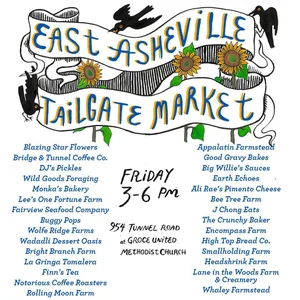
East Asheville Tailgate Market
Jun 7 @ 3:00 pm – 6:00 pm
East Asheville Tailgate Market

🖤 Vendor list drop! Welcome new vendors @blazingstarflowers @djspickles and @monkasbakery and welcome back @wildgoodsforaging!

Buncombe County will continue to offer ASAP’s Double SNAP for Fruits and Vegetables and Farm Fresh Produce Prescription.

Pollination Celebration: Protecting Our Pollinators Workshop
Jun 7 @ 4:00 pm – 5:00 pm
Pack Memorial Library


Join Buncombe County’s Environmental Educators for a workshop to learn about what we all can do to support healthy habitats for our pollinators. They will also teach us more about our native bees and butterflies.

Saturday, June 8, 2024
Digital: ASAP’s 2024–25 Local Food Guide
Jun 8 all-day
online w/ ASAP

ASAP’s Local Food Guide, the annual free publication for finding local food and farms, is updated for the 2024–25 season. This definitive resource lists hundreds of Appalachian GrownTM certified farms, farmers markets, restaurants, groceries, artisan producers, and more throughout Western North Carolina and surrounding counties in Virginia, Tennessee, Georgia, and South Carolina. A digital version of the print Guide may be viewed at asapconnections.org/guide.


In addition to listing content, the 2024–25 edition features stories that highlight the variety of farming across the region. Delia Jovel Dubón of Tierra Fértil Coop (pictured on the cover) talks about creating a sense of belonging for the Hispanic immigrant community in Henderson County. Lyric and Noah East of Wild East Farm in McDowell County detail the journey through their first full year of farming and how they’ve arrived at “a rough draft that’s working.” Kaci Nidiffer of The Liar’s Table in Avery County shares how scaling up and opening several retail spaces have created stronger connections with customers and community. Rounding out the issue are recipes from farmers at Two Trees Farm (Sustainabillies), Lee’s One Fortune Farm, Two Stones Farm + Mill, Carringer Farms, and Terra Lingua Growers.


“The Local Food Guide is such a beautiful way to share the stories of this place,” said Sarah Hart, ASAP’s Communications and Engagement Director. “To emphasize that sense of place, listings in this year’s Guide are organized into nine subregions with a short intro on what makes local farms in each area unique.”


Look for the Guide at farmers markets, visitors centers, libraries, groceries, restaurants, and other partner businesses throughout the region. Copies of the Guide are also available to pick up in the lobby of ASAP’s office in Asheville at 306 W. Haywood St., Tuesday to Thursday, 9 a.m. to 5 p.m. Contact ASAP if you need help locating a copy in your area or if you are interested in distributing Guides at your business.


In addition to the print Guide, ASAP maintains the online Local Food Guide at appalachiangrown.org. This database, with more than 1,400 listings, is updated throughout the year and is searchable by products, location, activities, and more.


Funding for the Local Food Guide was made possible in part by the U.S. Department of Agriculture (USDA) through the Agricultural Marketing Service, National Institute of Food and Agriculture’s Beginning Farmer Rancher Development Program, Gus Schumacher Nutrition Incentive Program, and Southern Sustainable Agriculture Research and Education program. Support was also provided by Dogwood Health Trust, the Community Foundation of Western North Carolina, and Asheville Regional Airport.
Henderson County Tailgate Market
Jun 8 @ 8:00 am – 12:00 pm
Henderson County Tailgate Market

Every Saturday from 8am-12pm, This is the 44th year for this
weekly tailgate market, where vendors sell fresh-picked seasonal vegetables and fruit, local honey, cut flowers, plant starts and
more, The market will be open through October. L

Hendersonville Farmers Market
Jun 8 @ 8:00 am – 1:00 pm
Historic Train Depot

Hendersonville Farmers Market in front of the Historic Train Depot, 8am-1pm, Hendersonville Farmers Market aims to be a world-class market that contributes to the success of local producers and growers, expands access to farm fresh foods, and creates a
vibrant community gathering space. With fresh produce, meats, baked goods, crafts, live entertainment, food trucks, and more,
it’s a weekly outing with something for everybody! Visitors can expect a lively atmosphere celebrating food, farm and family with
live music every Saturday! At least 30 vendors from within a 60-mile radius participate in each market, offering produce, meat,
eggs, dairy, honey, baked goods, crafts, beverages, and more. Special events such as Tomato Day, Wellness Day and
Juneteenth Celebration will occur at the market regularly throughout the season. Food trucks will also be a staple, allowing
visitors to enjoy breakfast or lunch on their farmers market adventure

North Asheville Tailgate Market
Jun 8 @ 8:00 am – 12:00 pm
North Asheville Tailgate Market

Shoppers at the market

Welcome to Western NC’s most premier farmers market!

Since 1980, we have been providing Asheville and the surrounding area with a full range of local, sustainably produced produce, meats, eggs, cheeses, breads, plants, prepared foods and crafts. Day vendors complement the members’ offerings with additional products and services.

The North Asheville Tailgate Market is a weekly, Saturday morning gathering of the best farmers, craftsmen, and bakers. With over 40 vendors and more than 40,000 annual customers, the market’s energetic and warm environment welcomes all.

Asheville City Market
Jun 8 @ 9:00 am – 12:00 pm
Asheville City Market

Visit the Market

WHEN: Saturday mornings, 9 a.m.–12 p.m., April–Dec. Winter market hours: 10 a.m.–1 p.m., Jan.–March. No market the last two weeks of the year.

WHERE: North Market Street between Woodfin and Walnut streets in downtown Asheville. The street is closed to traffic during market times.

GETTING HERE: Free parking for customers is available at the HomeTrust Bank lot and at the Family Justice Center lot across from the YMCA at 35 Woodfin Street. Handicapped parking is available. There is a bus stop on the N1 and N2 routes one block away, on Broadway. Buses stop at both Woodfin and Walnut streets.

Stay up to date on market news via FacebookInstagram, and weekly e-newsletters.

Find Out More About

Vendors

Asheville City Market is a producer-only market, which means that all farm vendors grow or raise the products they are selling themselves. For non-farm vendors (such as prepared food, seafood, coffee), preference is given to products and foods prepared or processed locally or made with locally sourced ingredients.

The list below reflects vendors for the entire season, but not all will attend market each week. Sign up for the Asheville City Market e-newsletter to see the weekly vendor schedule.

Black Mountain Tailgate Market
Jun 8 @ 9:00 am – 12:00 pm
Black Mountain Tailgate Market

Black Mountain Tailgate Market

COME CELEBRATE!

OPEN FROM MAY – NOVEMBER :: 9AM – NOON

Our market is a seasonal Saturday morning community event featuring organic and sustainably grown produce, plants, cut flowers, herbs, locally raised meats, seafood, breads, pastries, cheeses, eggs and local arts and handcrafted items. A family event every Saturday from May through November.

Visit us on Facebook!

Outdoor Bonsai Exhibition Garden
Jun 8 @ 9:00 am – 5:00 pm
NC Arboretum

What is Bonsai?

Bonsai is a challenging and rewarding horticultural activity, in which ordinary plants are grown in an extraordinary way. Through rigorously applied cultivation techniques, trees, shrubs, vines and even herbaceous plants are kept in a miniaturized state, developed into artistic shapes and then displayed in special containers.

What makes the Arboretum’s bonsai endeavor unique among all other public collections in the United States? Regional Interpretation. Visitors will find the Arboretum’s bonsai collection of more than 100 specimens carefully cultivated with a Southern Appalachian accent. The collection draws inspiration from the traditional roots of bonsai, but takes the form of a contemporary, Southern Appalachian influenced American garden. Plantings in the landscape include species and cultivars of American, European and Asian origin.


The Bonsai Exhibition Garden

Established in October 2005, The North Carolina Arboretum’s Bonsai Exhibition Garden is a world renowned garden that displays up to 50 bonsai specimens at a time. Represented are traditional Asian bonsai subjects such as Japanese maple and Chinese elm, tropical plants such as willow-leaf fig and bougainvillea, and American species such as bald cypress and limber pine. Of particular importance are the plants native to the Blue Ridge region, such as American hornbeam and eastern white pine, which enable the Arboretum to bring the thousand-year tradition of bonsai home to the mountains of Western North Carolina. Interpretive signage throughout the garden conveys information about the art and history of bonsai, and the Arboretum’s own creative approach to it.


Outdoor Bonsai Exhibition Garden

  • Bonsai on Display Mid May – November; 9 a.m. – 5 p.m. daily
  • Garden Open Year Round
  • Parking Fees
    • Personal/Standard Vehicle (up to 20′ long): $20
    • Large vehicles (21′-29′ long): $60
    • Busses and Oversize Vehicles (30′ long+): $125
    • Members: Free

    Apart from the parking fee, there is no other admission charge to enter the Arboretum or our facilities, except in the case of advertised ticketed events.

Sunday, June 9, 2024
Digital: ASAP’s 2024–25 Local Food Guide
Jun 9 all-day
online w/ ASAP

ASAP’s Local Food Guide, the annual free publication for finding local food and farms, is updated for the 2024–25 season. This definitive resource lists hundreds of Appalachian GrownTM certified farms, farmers markets, restaurants, groceries, artisan producers, and more throughout Western North Carolina and surrounding counties in Virginia, Tennessee, Georgia, and South Carolina. A digital version of the print Guide may be viewed at asapconnections.org/guide.


In addition to listing content, the 2024–25 edition features stories that highlight the variety of farming across the region. Delia Jovel Dubón of Tierra Fértil Coop (pictured on the cover) talks about creating a sense of belonging for the Hispanic immigrant community in Henderson County. Lyric and Noah East of Wild East Farm in McDowell County detail the journey through their first full year of farming and how they’ve arrived at “a rough draft that’s working.” Kaci Nidiffer of The Liar’s Table in Avery County shares how scaling up and opening several retail spaces have created stronger connections with customers and community. Rounding out the issue are recipes from farmers at Two Trees Farm (Sustainabillies), Lee’s One Fortune Farm, Two Stones Farm + Mill, Carringer Farms, and Terra Lingua Growers.


“The Local Food Guide is such a beautiful way to share the stories of this place,” said Sarah Hart, ASAP’s Communications and Engagement Director. “To emphasize that sense of place, listings in this year’s Guide are organized into nine subregions with a short intro on what makes local farms in each area unique.”


Look for the Guide at farmers markets, visitors centers, libraries, groceries, restaurants, and other partner businesses throughout the region. Copies of the Guide are also available to pick up in the lobby of ASAP’s office in Asheville at 306 W. Haywood St., Tuesday to Thursday, 9 a.m. to 5 p.m. Contact ASAP if you need help locating a copy in your area or if you are interested in distributing Guides at your business.


In addition to the print Guide, ASAP maintains the online Local Food Guide at appalachiangrown.org. This database, with more than 1,400 listings, is updated throughout the year and is searchable by products, location, activities, and more.


Funding for the Local Food Guide was made possible in part by the U.S. Department of Agriculture (USDA) through the Agricultural Marketing Service, National Institute of Food and Agriculture’s Beginning Farmer Rancher Development Program, Gus Schumacher Nutrition Incentive Program, and Southern Sustainable Agriculture Research and Education program. Support was also provided by Dogwood Health Trust, the Community Foundation of Western North Carolina, and Asheville Regional Airport.

Tools to Support Liberation
Jun 9 all-day
online w/Bountiful Cities

Liberation Tools is a cooperative subset of the 501c3 nonprofit Soul & Soil Project based in the unceded Tsalagi (Cherokee) territory of Western North Carolina.
Our mission is to build a collective that sustainably and skillfully crafts quality tools used for growing food, and freely distributes them to Black, Indigenous, and People of Color. To support these efforts, we sell these tools for twice the cost of producing one, thereby allowing people with accumulated wealth to access high quality tools by also paying for an identical tool to be sent to a BIPOC land steward.

https://www.zeffy.com/en-US/o/tickets/forms/edit?ticketingId=d65860b2-f8dc-4438-bef5-191cf74bb9dc&#advanced-parameters

Outdoor Bonsai Exhibition Garden
Jun 9 @ 9:00 am – 5:00 pm
NC Arboretum

What is Bonsai?

Bonsai is a challenging and rewarding horticultural activity, in which ordinary plants are grown in an extraordinary way. Through rigorously applied cultivation techniques, trees, shrubs, vines and even herbaceous plants are kept in a miniaturized state, developed into artistic shapes and then displayed in special containers.

What makes the Arboretum’s bonsai endeavor unique among all other public collections in the United States? Regional Interpretation. Visitors will find the Arboretum’s bonsai collection of more than 100 specimens carefully cultivated with a Southern Appalachian accent. The collection draws inspiration from the traditional roots of bonsai, but takes the form of a contemporary, Southern Appalachian influenced American garden. Plantings in the landscape include species and cultivars of American, European and Asian origin.


The Bonsai Exhibition Garden

Established in October 2005, The North Carolina Arboretum’s Bonsai Exhibition Garden is a world renowned garden that displays up to 50 bonsai specimens at a time. Represented are traditional Asian bonsai subjects such as Japanese maple and Chinese elm, tropical plants such as willow-leaf fig and bougainvillea, and American species such as bald cypress and limber pine. Of particular importance are the plants native to the Blue Ridge region, such as American hornbeam and eastern white pine, which enable the Arboretum to bring the thousand-year tradition of bonsai home to the mountains of Western North Carolina. Interpretive signage throughout the garden conveys information about the art and history of bonsai, and the Arboretum’s own creative approach to it.


Outdoor Bonsai Exhibition Garden

  • Bonsai on Display Mid May – November; 9 a.m. – 5 p.m. daily
  • Garden Open Year Round
  • Parking Fees
    • Personal/Standard Vehicle (up to 20′ long): $20
    • Large vehicles (21′-29′ long): $60
    • Busses and Oversize Vehicles (30′ long+): $125
    • Members: Free

    Apart from the parking fee, there is no other admission charge to enter the Arboretum or our facilities, except in the case of advertised ticketed events.

Southside Community Farmers Market
Jun 9 @ 12:00 pm – 3:00 pm
Southside Community Farmers Market

Listing

About Southside Community Farmers Market

Buncombe County will continue to offer ASAP’s Double SNAP for Fruits and Vegetables and Farm Fresh Produce Prescription.

Southside Community Farm hosts a farmers market featuring all BIPOC (Black, Indigenous, and people of color) vendors on the first Sunday of every month, May-Oct. from 12-3 PM. The market is EBT accessible. Come enjoy delicious patties, hot sauces, veggies, fruit, flowers, medicines, crafts and more!

Monday, June 10, 2024
Digital: ASAP’s 2024–25 Local Food Guide
Jun 10 all-day
online w/ ASAP

ASAP’s Local Food Guide, the annual free publication for finding local food and farms, is updated for the 2024–25 season. This definitive resource lists hundreds of Appalachian GrownTM certified farms, farmers markets, restaurants, groceries, artisan producers, and more throughout Western North Carolina and surrounding counties in Virginia, Tennessee, Georgia, and South Carolina. A digital version of the print Guide may be viewed at asapconnections.org/guide.


In addition to listing content, the 2024–25 edition features stories that highlight the variety of farming across the region. Delia Jovel Dubón of Tierra Fértil Coop (pictured on the cover) talks about creating a sense of belonging for the Hispanic immigrant community in Henderson County. Lyric and Noah East of Wild East Farm in McDowell County detail the journey through their first full year of farming and how they’ve arrived at “a rough draft that’s working.” Kaci Nidiffer of The Liar’s Table in Avery County shares how scaling up and opening several retail spaces have created stronger connections with customers and community. Rounding out the issue are recipes from farmers at Two Trees Farm (Sustainabillies), Lee’s One Fortune Farm, Two Stones Farm + Mill, Carringer Farms, and Terra Lingua Growers.


“The Local Food Guide is such a beautiful way to share the stories of this place,” said Sarah Hart, ASAP’s Communications and Engagement Director. “To emphasize that sense of place, listings in this year’s Guide are organized into nine subregions with a short intro on what makes local farms in each area unique.”


Look for the Guide at farmers markets, visitors centers, libraries, groceries, restaurants, and other partner businesses throughout the region. Copies of the Guide are also available to pick up in the lobby of ASAP’s office in Asheville at 306 W. Haywood St., Tuesday to Thursday, 9 a.m. to 5 p.m. Contact ASAP if you need help locating a copy in your area or if you are interested in distributing Guides at your business.


In addition to the print Guide, ASAP maintains the online Local Food Guide at appalachiangrown.org. This database, with more than 1,400 listings, is updated throughout the year and is searchable by products, location, activities, and more.


Funding for the Local Food Guide was made possible in part by the U.S. Department of Agriculture (USDA) through the Agricultural Marketing Service, National Institute of Food and Agriculture’s Beginning Farmer Rancher Development Program, Gus Schumacher Nutrition Incentive Program, and Southern Sustainable Agriculture Research and Education program. Support was also provided by Dogwood Health Trust, the Community Foundation of Western North Carolina, and Asheville Regional Airport.
Outdoor Bonsai Exhibition Garden
Jun 10 @ 9:00 am – 5:00 pm
NC Arboretum

What is Bonsai?

Bonsai is a challenging and rewarding horticultural activity, in which ordinary plants are grown in an extraordinary way. Through rigorously applied cultivation techniques, trees, shrubs, vines and even herbaceous plants are kept in a miniaturized state, developed into artistic shapes and then displayed in special containers.

What makes the Arboretum’s bonsai endeavor unique among all other public collections in the United States? Regional Interpretation. Visitors will find the Arboretum’s bonsai collection of more than 100 specimens carefully cultivated with a Southern Appalachian accent. The collection draws inspiration from the traditional roots of bonsai, but takes the form of a contemporary, Southern Appalachian influenced American garden. Plantings in the landscape include species and cultivars of American, European and Asian origin.


The Bonsai Exhibition Garden

Established in October 2005, The North Carolina Arboretum’s Bonsai Exhibition Garden is a world renowned garden that displays up to 50 bonsai specimens at a time. Represented are traditional Asian bonsai subjects such as Japanese maple and Chinese elm, tropical plants such as willow-leaf fig and bougainvillea, and American species such as bald cypress and limber pine. Of particular importance are the plants native to the Blue Ridge region, such as American hornbeam and eastern white pine, which enable the Arboretum to bring the thousand-year tradition of bonsai home to the mountains of Western North Carolina. Interpretive signage throughout the garden conveys information about the art and history of bonsai, and the Arboretum’s own creative approach to it.


Outdoor Bonsai Exhibition Garden

  • Bonsai on Display Mid May – November; 9 a.m. – 5 p.m. daily
  • Garden Open Year Round
  • Parking Fees
    • Personal/Standard Vehicle (up to 20′ long): $20
    • Large vehicles (21′-29′ long): $60
    • Busses and Oversize Vehicles (30′ long+): $125
    • Members: Free

    Apart from the parking fee, there is no other admission charge to enter the Arboretum or our facilities, except in the case of advertised ticketed events.

Tuesday, June 11, 2024
Digital: ASAP’s 2024–25 Local Food Guide
Jun 11 all-day
online w/ ASAP

ASAP’s Local Food Guide, the annual free publication for finding local food and farms, is updated for the 2024–25 season. This definitive resource lists hundreds of Appalachian GrownTM certified farms, farmers markets, restaurants, groceries, artisan producers, and more throughout Western North Carolina and surrounding counties in Virginia, Tennessee, Georgia, and South Carolina. A digital version of the print Guide may be viewed at asapconnections.org/guide.


In addition to listing content, the 2024–25 edition features stories that highlight the variety of farming across the region. Delia Jovel Dubón of Tierra Fértil Coop (pictured on the cover) talks about creating a sense of belonging for the Hispanic immigrant community in Henderson County. Lyric and Noah East of Wild East Farm in McDowell County detail the journey through their first full year of farming and how they’ve arrived at “a rough draft that’s working.” Kaci Nidiffer of The Liar’s Table in Avery County shares how scaling up and opening several retail spaces have created stronger connections with customers and community. Rounding out the issue are recipes from farmers at Two Trees Farm (Sustainabillies), Lee’s One Fortune Farm, Two Stones Farm + Mill, Carringer Farms, and Terra Lingua Growers.


“The Local Food Guide is such a beautiful way to share the stories of this place,” said Sarah Hart, ASAP’s Communications and Engagement Director. “To emphasize that sense of place, listings in this year’s Guide are organized into nine subregions with a short intro on what makes local farms in each area unique.”


Look for the Guide at farmers markets, visitors centers, libraries, groceries, restaurants, and other partner businesses throughout the region. Copies of the Guide are also available to pick up in the lobby of ASAP’s office in Asheville at 306 W. Haywood St., Tuesday to Thursday, 9 a.m. to 5 p.m. Contact ASAP if you need help locating a copy in your area or if you are interested in distributing Guides at your business.


In addition to the print Guide, ASAP maintains the online Local Food Guide at appalachiangrown.org. This database, with more than 1,400 listings, is updated throughout the year and is searchable by products, location, activities, and more.


Funding for the Local Food Guide was made possible in part by the U.S. Department of Agriculture (USDA) through the Agricultural Marketing Service, National Institute of Food and Agriculture’s Beginning Farmer Rancher Development Program, Gus Schumacher Nutrition Incentive Program, and Southern Sustainable Agriculture Research and Education program. Support was also provided by Dogwood Health Trust, the Community Foundation of Western North Carolina, and Asheville Regional Airport.

Tools to Support Liberation
Jun 11 all-day
online w/Bountiful Cities

Liberation Tools is a cooperative subset of the 501c3 nonprofit Soul & Soil Project based in the unceded Tsalagi (Cherokee) territory of Western North Carolina.
Our mission is to build a collective that sustainably and skillfully crafts quality tools used for growing food, and freely distributes them to Black, Indigenous, and People of Color. To support these efforts, we sell these tools for twice the cost of producing one, thereby allowing people with accumulated wealth to access high quality tools by also paying for an identical tool to be sent to a BIPOC land steward.

https://www.zeffy.com/en-US/o/tickets/forms/edit?ticketingId=d65860b2-f8dc-4438-bef5-191cf74bb9dc&#advanced-parameters

Outdoor Bonsai Exhibition Garden
Jun 11 @ 9:00 am – 5:00 pm
NC Arboretum

What is Bonsai?

Bonsai is a challenging and rewarding horticultural activity, in which ordinary plants are grown in an extraordinary way. Through rigorously applied cultivation techniques, trees, shrubs, vines and even herbaceous plants are kept in a miniaturized state, developed into artistic shapes and then displayed in special containers.

What makes the Arboretum’s bonsai endeavor unique among all other public collections in the United States? Regional Interpretation. Visitors will find the Arboretum’s bonsai collection of more than 100 specimens carefully cultivated with a Southern Appalachian accent. The collection draws inspiration from the traditional roots of bonsai, but takes the form of a contemporary, Southern Appalachian influenced American garden. Plantings in the landscape include species and cultivars of American, European and Asian origin.


The Bonsai Exhibition Garden

Established in October 2005, The North Carolina Arboretum’s Bonsai Exhibition Garden is a world renowned garden that displays up to 50 bonsai specimens at a time. Represented are traditional Asian bonsai subjects such as Japanese maple and Chinese elm, tropical plants such as willow-leaf fig and bougainvillea, and American species such as bald cypress and limber pine. Of particular importance are the plants native to the Blue Ridge region, such as American hornbeam and eastern white pine, which enable the Arboretum to bring the thousand-year tradition of bonsai home to the mountains of Western North Carolina. Interpretive signage throughout the garden conveys information about the art and history of bonsai, and the Arboretum’s own creative approach to it.


Outdoor Bonsai Exhibition Garden

  • Bonsai on Display Mid May – November; 9 a.m. – 5 p.m. daily
  • Garden Open Year Round
  • Parking Fees
    • Personal/Standard Vehicle (up to 20′ long): $20
    • Large vehicles (21′-29′ long): $60
    • Busses and Oversize Vehicles (30′ long+): $125
    • Members: Free

    Apart from the parking fee, there is no other admission charge to enter the Arboretum or our facilities, except in the case of advertised ticketed events.

The Learning Garden presents: Hands on Dyeing with Madder; Beautiful Red from Roots
Jun 11 @ 10:00 am – 11:30 am
Buncombe County Extension Center

Learn the best way to prepare your fiber for natural dyeing, and how to extract pigment from a plant, and how to dye your fiber. \

Madder, is one of the heritage colors used for thousands of years. The pigment comes from the roots of the plant which must grow for at least three years to be big enough to harvest. The pigment alizarin produces a range of colors from orange to red.
We have a few madder plants left for sale at 5 dollars each. Everyone will also take home a cotton bandana that they have dyed.

We request a donation of 10 dollars to cover our cost. Please bring cash.

Wear appropriate attire as some of this presentation will be held outside.
The talk is free, but seating is limited and registration is required.

Growing Culinary Herbs
Jun 11 @ 12:00 pm – 2:00 pm
Bullington Gardens

Interested in learning more about how to grow plants to use for culinary purposes? Join us in discussing plants that can be grown for kitchen creations, best growing practices for culinary herbs, and more!

Introduction to Western NC butterflies
Jun 11 @ 2:00 pm
Polk County Libraries Saluda Branch

During this presentation, participants will learn how to identify the butterflies of the western Carolinas through photographs taken by the presenter, as well as the foodplants needed to attract both the caterpillar and adult stages to your home butterfly garden.

Wednesday, June 12, 2024
Digital: ASAP’s 2024–25 Local Food Guide
Jun 12 all-day
online w/ ASAP

ASAP’s Local Food Guide, the annual free publication for finding local food and farms, is updated for the 2024–25 season. This definitive resource lists hundreds of Appalachian GrownTM certified farms, farmers markets, restaurants, groceries, artisan producers, and more throughout Western North Carolina and surrounding counties in Virginia, Tennessee, Georgia, and South Carolina. A digital version of the print Guide may be viewed at asapconnections.org/guide.


In addition to listing content, the 2024–25 edition features stories that highlight the variety of farming across the region. Delia Jovel Dubón of Tierra Fértil Coop (pictured on the cover) talks about creating a sense of belonging for the Hispanic immigrant community in Henderson County. Lyric and Noah East of Wild East Farm in McDowell County detail the journey through their first full year of farming and how they’ve arrived at “a rough draft that’s working.” Kaci Nidiffer of The Liar’s Table in Avery County shares how scaling up and opening several retail spaces have created stronger connections with customers and community. Rounding out the issue are recipes from farmers at Two Trees Farm (Sustainabillies), Lee’s One Fortune Farm, Two Stones Farm + Mill, Carringer Farms, and Terra Lingua Growers.


“The Local Food Guide is such a beautiful way to share the stories of this place,” said Sarah Hart, ASAP’s Communications and Engagement Director. “To emphasize that sense of place, listings in this year’s Guide are organized into nine subregions with a short intro on what makes local farms in each area unique.”


Look for the Guide at farmers markets, visitors centers, libraries, groceries, restaurants, and other partner businesses throughout the region. Copies of the Guide are also available to pick up in the lobby of ASAP’s office in Asheville at 306 W. Haywood St., Tuesday to Thursday, 9 a.m. to 5 p.m. Contact ASAP if you need help locating a copy in your area or if you are interested in distributing Guides at your business.


In addition to the print Guide, ASAP maintains the online Local Food Guide at appalachiangrown.org. This database, with more than 1,400 listings, is updated throughout the year and is searchable by products, location, activities, and more.


Funding for the Local Food Guide was made possible in part by the U.S. Department of Agriculture (USDA) through the Agricultural Marketing Service, National Institute of Food and Agriculture’s Beginning Farmer Rancher Development Program, Gus Schumacher Nutrition Incentive Program, and Southern Sustainable Agriculture Research and Education program. Support was also provided by Dogwood Health Trust, the Community Foundation of Western North Carolina, and Asheville Regional Airport.

Outdoor Bonsai Exhibition Garden
Jun 12 @ 9:00 am – 5:00 pm
NC Arboretum

What is Bonsai?

Bonsai is a challenging and rewarding horticultural activity, in which ordinary plants are grown in an extraordinary way. Through rigorously applied cultivation techniques, trees, shrubs, vines and even herbaceous plants are kept in a miniaturized state, developed into artistic shapes and then displayed in special containers.

What makes the Arboretum’s bonsai endeavor unique among all other public collections in the United States? Regional Interpretation. Visitors will find the Arboretum’s bonsai collection of more than 100 specimens carefully cultivated with a Southern Appalachian accent. The collection draws inspiration from the traditional roots of bonsai, but takes the form of a contemporary, Southern Appalachian influenced American garden. Plantings in the landscape include species and cultivars of American, European and Asian origin.


The Bonsai Exhibition Garden

Established in October 2005, The North Carolina Arboretum’s Bonsai Exhibition Garden is a world renowned garden that displays up to 50 bonsai specimens at a time. Represented are traditional Asian bonsai subjects such as Japanese maple and Chinese elm, tropical plants such as willow-leaf fig and bougainvillea, and American species such as bald cypress and limber pine. Of particular importance are the plants native to the Blue Ridge region, such as American hornbeam and eastern white pine, which enable the Arboretum to bring the thousand-year tradition of bonsai home to the mountains of Western North Carolina. Interpretive signage throughout the garden conveys information about the art and history of bonsai, and the Arboretum’s own creative approach to it.


Outdoor Bonsai Exhibition Garden

  • Bonsai on Display Mid May – November; 9 a.m. – 5 p.m. daily
  • Garden Open Year Round
  • Parking Fees
    • Personal/Standard Vehicle (up to 20′ long): $20
    • Large vehicles (21′-29′ long): $60
    • Busses and Oversize Vehicles (30′ long+): $125
    • Members: Free

    Apart from the parking fee, there is no other admission charge to enter the Arboretum or our facilities, except in the case of advertised ticketed events.

Etowah Lions Club Farmers Market
Jun 12 @ 3:00 pm – 6:00 pm
Etowah Lions Club Farmers Market

Etowah Lions Club Farmers Market, 3-6pm, On Wednesdays through October, check out the Etowah Lions Club Farmers Market,
which showcases local farmers, vendors and artisans and the delicious produce the area is known for, all items sold here are
made by or grown by the vendor

River Arts District Farmers Market
Jun 12 @ 3:00 pm – 6:00 pm
River Arts District Farmers Market

cutmypic.png

Located in the River Arts District, and surrounded by art galleries and breweries, come find out about Asheville’s favourite mid-week market!

 Buncombe County will continue to offer ASAP’s Double SNAP for Fruits and Vegetables and Farm Fresh Produce Prescription.

Weaverville Tailgate Market
Jun 12 @ 3:00 pm – 6:00 pm
Weaverville Tailgate Market

Weaverville Tailgate Market

 Buncombe County will continue to offer ASAP’s Double SNAP for Fruits and Vegetables and Farm Fresh Produce Prescription

Proudly serving the Weaverville community since 2009

Thursday, June 13, 2024
Digital: ASAP’s 2024–25 Local Food Guide
Jun 13 all-day
online w/ ASAP

ASAP’s Local Food Guide, the annual free publication for finding local food and farms, is updated for the 2024–25 season. This definitive resource lists hundreds of Appalachian GrownTM certified farms, farmers markets, restaurants, groceries, artisan producers, and more throughout Western North Carolina and surrounding counties in Virginia, Tennessee, Georgia, and South Carolina. A digital version of the print Guide may be viewed at asapconnections.org/guide.


In addition to listing content, the 2024–25 edition features stories that highlight the variety of farming across the region. Delia Jovel Dubón of Tierra Fértil Coop (pictured on the cover) talks about creating a sense of belonging for the Hispanic immigrant community in Henderson County. Lyric and Noah East of Wild East Farm in McDowell County detail the journey through their first full year of farming and how they’ve arrived at “a rough draft that’s working.” Kaci Nidiffer of The Liar’s Table in Avery County shares how scaling up and opening several retail spaces have created stronger connections with customers and community. Rounding out the issue are recipes from farmers at Two Trees Farm (Sustainabillies), Lee’s One Fortune Farm, Two Stones Farm + Mill, Carringer Farms, and Terra Lingua Growers.


“The Local Food Guide is such a beautiful way to share the stories of this place,” said Sarah Hart, ASAP’s Communications and Engagement Director. “To emphasize that sense of place, listings in this year’s Guide are organized into nine subregions with a short intro on what makes local farms in each area unique.”


Look for the Guide at farmers markets, visitors centers, libraries, groceries, restaurants, and other partner businesses throughout the region. Copies of the Guide are also available to pick up in the lobby of ASAP’s office in Asheville at 306 W. Haywood St., Tuesday to Thursday, 9 a.m. to 5 p.m. Contact ASAP if you need help locating a copy in your area or if you are interested in distributing Guides at your business.


In addition to the print Guide, ASAP maintains the online Local Food Guide at appalachiangrown.org. This database, with more than 1,400 listings, is updated throughout the year and is searchable by products, location, activities, and more.


Funding for the Local Food Guide was made possible in part by the U.S. Department of Agriculture (USDA) through the Agricultural Marketing Service, National Institute of Food and Agriculture’s Beginning Farmer Rancher Development Program, Gus Schumacher Nutrition Incentive Program, and Southern Sustainable Agriculture Research and Education program. Support was also provided by Dogwood Health Trust, the Community Foundation of Western North Carolina, and Asheville Regional Airport.