Upcoming events and things to do in Asheville, NC. Below is a list of events for festivals, concerts, art exhibitions, group meetups and more.

Interested in adding an event to our calendar? Please click the green “Post Your Event” button below.

Saturday, January 21, 2023
Journeyperson Program NOW FREE! 12-Month Farm Support Cohort
Jan 21 all-day
Organic Growers School

The upcoming Journeyperson course is now available AT NO COST! Due to some timely grant funding, we can offer this in-depth farmer training for farmers in years 3-7 with no associated tuition fee! The course consists of monthly cohort meet-ups and 2-3 in-depth workshops, plus mentorship!


In addition, a select number of participants will also receive matched FUNDS for your farm savings account (Savings Incentive Program) and money to spend on a professional development opportunity of your choosing! Want to attend a workshop on livestock management? OGS will contribute towards that fee! Are you saving money for a farm asset? OGS will contribute up to a certain amount to that investment.


The Journeyperson Program is for farmers who have been independently farming for three or more years and are serious about operating farm businesses in the Southern Appalachian region.

Join the Journeyperson Info Session on Zoom!

November 15th at 7:00 pm

Sign up here

Land of the Sky 101 Book Club
Jan 21 @ 10:30 am – 12:00 pm
Pack Memorial Library

Land of the Sky 101 is a community learning circle for those who are interested in an introduction to the history of Asheville, Buncombe County and Western North Carolina. A nine -part series of readings and discussions is modeled after the themes of the exhibit “An Incomplete History of Buncombe County” mounted in the BCSC reading room. From October 2022 through July 2023 (with a break in December) participants will explore the history of our region focusing on themes ranging from ancient history to the late 20th century revitalization of the Downtown area.

Read
Each month readers can choose from two selections; one light read like a novel, or groups of essays and poems, and one rigorous non-fiction read written by an expert on the subject. Pick one or both! The choice is yours!

Learn
Each session will be facilitated by a Buncombe County Special Collections librarian or special guest who will share their expert knowledge, additional resources, and set the context for the conversation.

Discuss
At least 45 minutes of each session will be set aside for group discussion. The learning circle is a place to get curious about your community and meet new friends. Come for the history, stay for the fellowship!
Click here to view a complete list of dates and titles.

Registration is limited and required. Sessions for the 2022-2023 cohort will be held at 10:30 am on the third Saturday of each month at Pack Memorial Library. Sessions run from October 2022 until July 2023. Your registration will reserve your place for all nine sessions, and we hope participants will plan to attend each meeting.  If you cannot attend a session, please let us know in advance so we may allow those on the waiting list to participate.

Sunday, January 22, 2023
2023 School Garden Grants
Jan 22 all-day
online

Extension Master GardenerSM Volunteers of Buncombe County are happy to announce for the sixteenth year we are offering School Garden Grants to Asheville City and Buncombe County public schools, including state charter schools.

Growing Vegetables at Childcare Centers_photo by NC State Extension
Learning to plant veggie seeds

We provide a notice of the application period along with instructions to all school principals, elementary through senior high. Additional information is available on our websitebuncombemastergardener.org, where you can learn more about the guidelines for receiving a grant and get online access to the 2023 School Garden Grants Application.

All applications must be completed online. Completed applications will be accepted beginning January 9, 2023, and must be submitted no later than 9 p.m. on February 3, 2023. If you have any questions, please call the Extension Office at 828-255-5522.

We are proud of our partnership with Asheville City and Buncombe County Schools. Since 2007, we have awarded 52 School Garden Grants totaling over $45,000. These grants have involved more than 16,500 students and hundreds of teachers, parents, and community volunteers.

School gardens grow more than plants. They grow imagination and creativity. They make math and science come alive, and they build community. We hope your school will join us in 2023.

Click on the link below to review the guidelines for school garden grants:
Guidelines for 2023 School Garden Grants

Journeyperson Program NOW FREE! 12-Month Farm Support Cohort
Jan 22 all-day
Organic Growers School

The upcoming Journeyperson course is now available AT NO COST! Due to some timely grant funding, we can offer this in-depth farmer training for farmers in years 3-7 with no associated tuition fee! The course consists of monthly cohort meet-ups and 2-3 in-depth workshops, plus mentorship!


In addition, a select number of participants will also receive matched FUNDS for your farm savings account (Savings Incentive Program) and money to spend on a professional development opportunity of your choosing! Want to attend a workshop on livestock management? OGS will contribute towards that fee! Are you saving money for a farm asset? OGS will contribute up to a certain amount to that investment.


The Journeyperson Program is for farmers who have been independently farming for three or more years and are serious about operating farm businesses in the Southern Appalachian region.

Join the Journeyperson Info Session on Zoom!

November 15th at 7:00 pm

Sign up here

Hybrid | Culley Holderfield presents Hemlock Hollow in conversation with Dale Neal
Jan 22 @ 5:00 pm
Malaprop's Bookstore and Virtual

Culley Holderfield discusses his debut novel, Hemlock Hollow, with fellow North Carolina writer Dale Neal, author of Appalachian Book of the Dead.

This is a hybrid event, meaning there is an option to attend virtually and a limited number of seats are available to attend the event in-store. The event is free but registration is required for both in-person and virtual attendance. 

Please click here to register for the VIRTUAL event. The link required to attend will be emailed to registrants prior to the event.

Please click here to register for the IN-PERSON event. Note the important event details on the RSVP form.

This event includes a book signing. If you would like a signed book but can’t attend in person, use the order comments field when you order below to request a signed copy and tell us to whom the book should be personalized.

If you decide to attend and to purchase books, we ask that you purchase from Malaprop’s. When you do this you make it possible for us to continue hosting author events and you keep more dollars in our community. You may also support our work by purchasing a gift card or making a donation of any amount below. Thank you!


Hemlock Hollow
“Past and present, love and loss intertwine in a magical mountain hollow. Holderfield’s love of place shines in his sensitive descriptions while his storytelling enthralls the reader.” —Vicki Lane, author of And the Crows Took Their Eyes

Caroline McAlister, college professor and life-long skeptic, is reeling from the loss of her father and her marriage. Her once promising career has come to a standstill. When her father bequeaths the family cabin to her, it comes with a ghost who haunted her childhood. When she discovers a century-old journal in the attic, she awakens the voice of Carson Quinn. The journal reveals Carson’s love for the same hollow that enthralled Caroline growing up. A little sleuthing uncovers rumors that the kind, curious boy in the journal grew up to murder his brother. Caroline plunges into the project of exonerating Carson, only to find herself in the throes of a personal past she’s spent her life trying to avoid. Hemlock Hollow is about how we forever haunt the places we love and how they haunt us in return.

Culley Holderfield learned to love storytelling on the porch of a cabin in the mountains of North Carolina. After graduating from UNC-Chapel Hill, he ventured to South America, Africa, and Europe. When not writing or working in community development finance, he spends his time hiking, paddling, and pondering in the outdoors. His short stories and poetry have appeared in a variety of publications. Hemlock Hollow is his debut novel. He lives in Durham, NC.

Dale Neal is the author of the novel Kings of Coweetsee, forthcoming from Regal House Publishing in 2024. His previous novels, Appalachian Book of the DeadThe Half-Life of Home, and Cow Across America, are each set in the storied Blue Ridge Mountains. His short fiction and essays have appeared in Arts & LettersCarolina QuarterlyMarlboro Review, and Crescent Review, among others. Previously, he was a prize-winning writer for the Asheville Citizen-Times. A graduate of the MFA Program for Writers at Warren Wilson College, he has been awarded fellowships to the Virginia Center for the Creative Arts, Hambidge Center, and the Knight Center for Specialized Journalism at the University of Maryland. He currently teaches fiction at the Lenoir-Rhyne University Graduate Center. A lifelong native of North Carolina, he now lives in Asheville.

Monday, January 23, 2023
2023 School Garden Grants
Jan 23 all-day
online

Extension Master GardenerSM Volunteers of Buncombe County are happy to announce for the sixteenth year we are offering School Garden Grants to Asheville City and Buncombe County public schools, including state charter schools.

Growing Vegetables at Childcare Centers_photo by NC State Extension
Learning to plant veggie seeds

We provide a notice of the application period along with instructions to all school principals, elementary through senior high. Additional information is available on our websitebuncombemastergardener.org, where you can learn more about the guidelines for receiving a grant and get online access to the 2023 School Garden Grants Application.

All applications must be completed online. Completed applications will be accepted beginning January 9, 2023, and must be submitted no later than 9 p.m. on February 3, 2023. If you have any questions, please call the Extension Office at 828-255-5522.

We are proud of our partnership with Asheville City and Buncombe County Schools. Since 2007, we have awarded 52 School Garden Grants totaling over $45,000. These grants have involved more than 16,500 students and hundreds of teachers, parents, and community volunteers.

School gardens grow more than plants. They grow imagination and creativity. They make math and science come alive, and they build community. We hope your school will join us in 2023.

Click on the link below to review the guidelines for school garden grants:
Guidelines for 2023 School Garden Grants

Sliding Scale Pricing for Spring Conference 2023
Jan 23 all-day
online

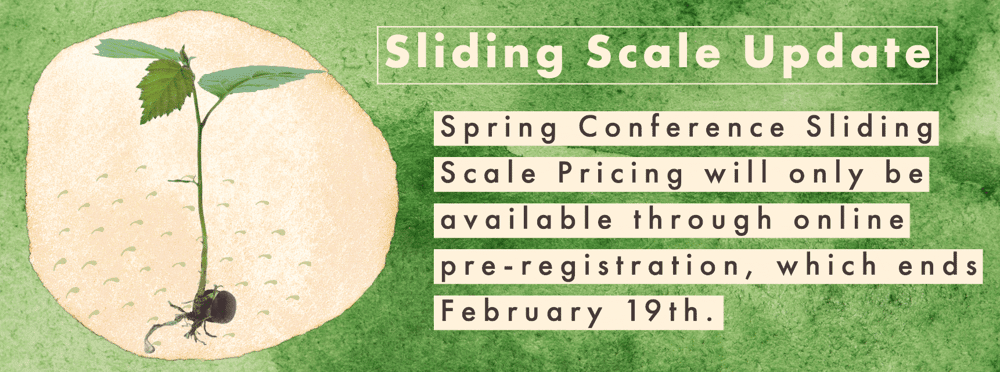
Screen Shot 2023-01-19 at 2.09.44 PM

For the past 30 years, the Organic Growers School Spring Conference has served as a gathering place for growers in Appalachia to connect, learn from one another, and deepen connections to land and community. The Spring Conference began as an entirely volunteer-run and free event and has expanded to support an organization of ten staff with year-round programming. As we have grown, we have experimented with different approaches to keeping the event affordable and accessible while also working on compensation for our speakers and supporting our growing staff. We encourage you to check out our recent blog post exploring this in more depth. This year, we are excited to be experimenting with sliding scale ticket pricing for the first time, and we wanted to take some time to explain how this works and why we decided to implement it this year.

Looking beyond scholarships

Over the past several years, we have started implementing different scholarship options. We have set aside around $3000 in our internal budget for scholarships, and we have increased our outreach to other groups in the area who have funding to support individuals to attend conferences. We also offer work-trade opportunities for people who are interested in helping out with our event in exchange for attendance. We have around 100 work-traders access the conference each year through these opportunities, but we have never used up our entire scholarship fund for the event. We know that there are many individuals in our community that we are not reaching through our scholarship opportunities. We began to wonder if scholarship applications were creating a barrier to participation and started researching other options, landing eventually on sliding scale as our preferred model.

How alternative pricing models address accessibility

The sliding scale model, which offers the opportunity for participants to select a price to pay for their ticket, meets several of the parameters we were looking for in an accessible pricing model. Most importantly, it is a seamless way for attendees to access the price that meets their needs. So many things are means-tested in our society, and it can be exhausting to justify why one needs a more affordable price point. While many of our community members need financial support, there are also members of this community who have more than enough to share and are excited about supporting their fellow co-learners. These attendees can select the higher end of the sliding scale, which will be set at a price to offset the lower price paid by other attendees. We trust our attendees to select the option that best works for them while also considering how their selection would affect the ability of other participants to access a lower price point.

Accessibility is a priority for OGS, and implementing it is a risk for us as a small non-profit, given that we rely on our large events like the Spring Conference to support our year-round programming and staff salaries. This will certainly be an experimental year, and if we are not able to secure enough income through sliding-scale registrations, we will have to rethink our approach to pricing. We trust that our community will be thoughtful in thinking about the value that this conference has to them and about what they are able to pay for at this time. Thank you for being on this journey of discovery with us!


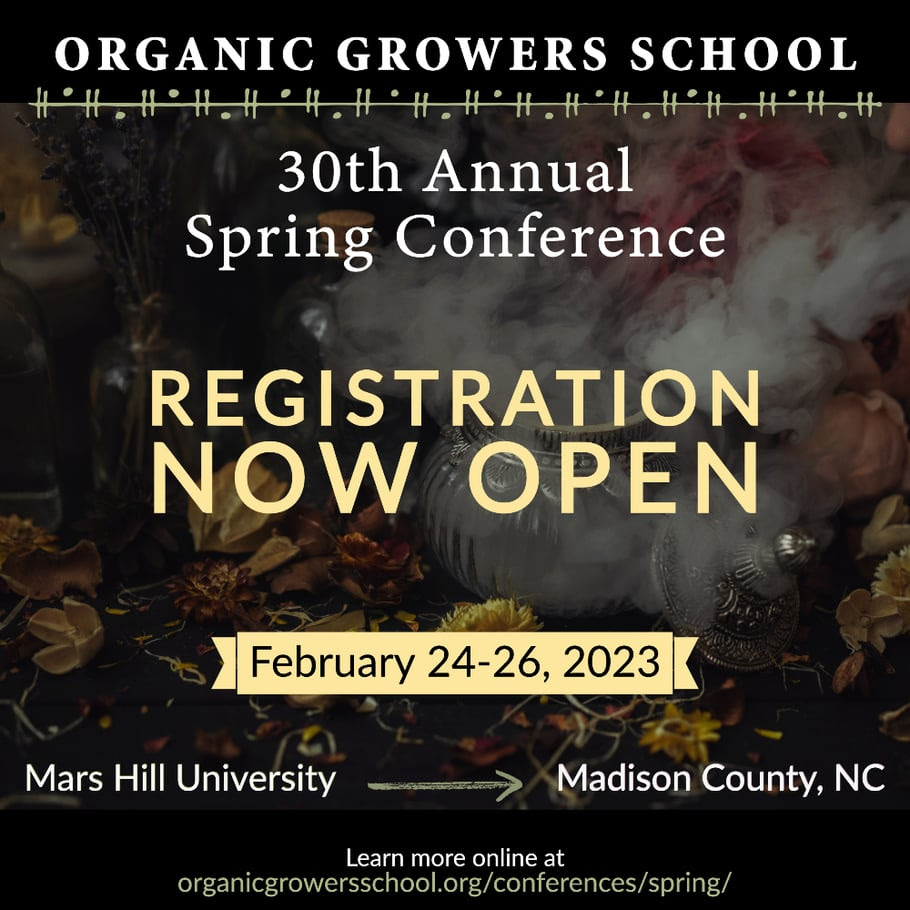
Registration is OPEN for the 30th Annual Spring Conference
Jan 23 @ 9:00 am
online
registration open SC-1 (1)-1

Registration is OPEN!

30th Annual Spring Conference at Mars Hill University
You’re in for a fun-filled weekend of learning and community building. This year our Tracks include Cooking, Food Justice, Farming Business + Production, Herbs, Mushrooms, Forest Farming, Gardening, Holistic Forestry, Livestock & Poultry, Living on the Land, Permaculture, Pests & Pollinators, Soils, & Sustainable Living!

For each Track subject, there are 4 different classes to choose from taught by expert educators. There will also be 8 half-day workshops to choose from if you want to dive deep into subjects like Fermentation, Spirulina Cultivation, Invasive Vine Basketry, and more!

View the full Spring Conference schedule here.

Sliding Scale Pricing for Spring Conference

OGS is implementing a Sliding Scale Price model for 2023

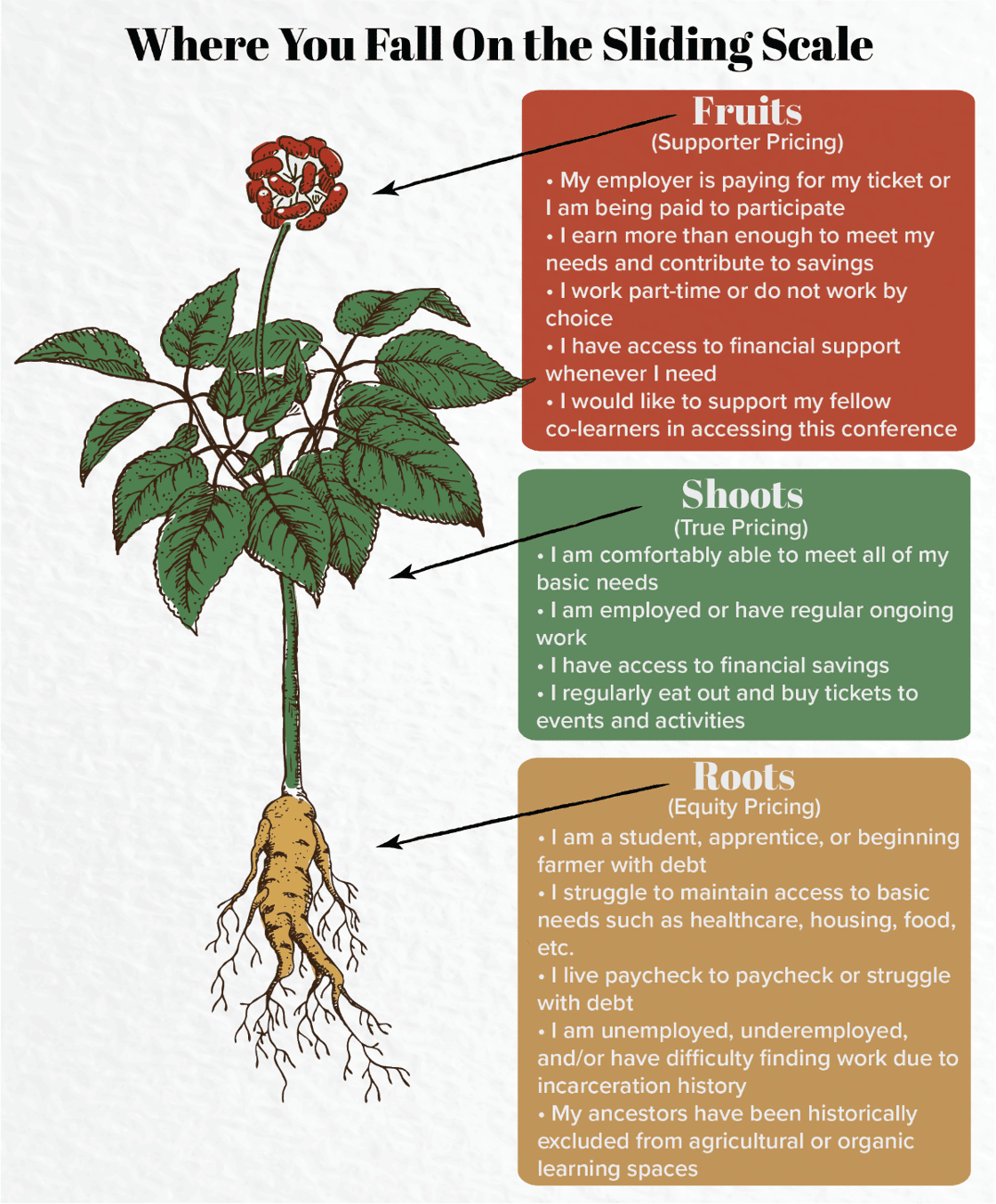
So many things are means-tested in our society, and it can be exhausting to justify why one needs a more affordable price point. The sliding scale model, which allows participants to select a price to pay for their ticket, meets several of the parameters we were looking for in an accessible pricing model.


While many of our community members need financial support, some of these community members have more than enough to share and are excited about supporting their fellow co-learners. These attendees can select the higher end of the sliding scale, which will be set at a price to offset the lower price paid by other attendees. We trust our attendees to select the option that best works for them while also considering how their selection would affect the ability of other participants to access a lower price point.


Accessibility is a priority for OGS, and implementing it is a risk for us as a small non-profit, given that we rely on our large events like the Spring Conference to support our year-round programming and staff salaries. This will certainly be an experimental year, and if we cannot secure enough income through sliding-scale registrations, we will have to rethink our approach to pricing. We trust that our community will be thoughtful in thinking about the value this conference has for them and what they can pay for at this time.

Ginseng-sliding-scale-EDIT USE THIS-1

Tuesday, January 24, 2023
2023 School Garden Grants
Jan 24 all-day
online

Extension Master GardenerSM Volunteers of Buncombe County are happy to announce for the sixteenth year we are offering School Garden Grants to Asheville City and Buncombe County public schools, including state charter schools.

Growing Vegetables at Childcare Centers_photo by NC State Extension
Learning to plant veggie seeds

We provide a notice of the application period along with instructions to all school principals, elementary through senior high. Additional information is available on our websitebuncombemastergardener.org, where you can learn more about the guidelines for receiving a grant and get online access to the 2023 School Garden Grants Application.

All applications must be completed online. Completed applications will be accepted beginning January 9, 2023, and must be submitted no later than 9 p.m. on February 3, 2023. If you have any questions, please call the Extension Office at 828-255-5522.

We are proud of our partnership with Asheville City and Buncombe County Schools. Since 2007, we have awarded 52 School Garden Grants totaling over $45,000. These grants have involved more than 16,500 students and hundreds of teachers, parents, and community volunteers.

School gardens grow more than plants. They grow imagination and creativity. They make math and science come alive, and they build community. We hope your school will join us in 2023.

Click on the link below to review the guidelines for school garden grants:
Guidelines for 2023 School Garden Grants

Journeyperson Program NOW FREE! 12-Month Farm Support Cohort
Jan 24 all-day
Organic Growers School

The upcoming Journeyperson course is now available AT NO COST! Due to some timely grant funding, we can offer this in-depth farmer training for farmers in years 3-7 with no associated tuition fee! The course consists of monthly cohort meet-ups and 2-3 in-depth workshops, plus mentorship!


In addition, a select number of participants will also receive matched FUNDS for your farm savings account (Savings Incentive Program) and money to spend on a professional development opportunity of your choosing! Want to attend a workshop on livestock management? OGS will contribute towards that fee! Are you saving money for a farm asset? OGS will contribute up to a certain amount to that investment.


The Journeyperson Program is for farmers who have been independently farming for three or more years and are serious about operating farm businesses in the Southern Appalachian region.

Join the Journeyperson Info Session on Zoom!

November 15th at 7:00 pm

Sign up here

Sliding Scale Pricing for Spring Conference 2023
Jan 24 all-day
online

Screen Shot 2023-01-19 at 2.09.44 PM

For the past 30 years, the Organic Growers School Spring Conference has served as a gathering place for growers in Appalachia to connect, learn from one another, and deepen connections to land and community. The Spring Conference began as an entirely volunteer-run and free event and has expanded to support an organization of ten staff with year-round programming. As we have grown, we have experimented with different approaches to keeping the event affordable and accessible while also working on compensation for our speakers and supporting our growing staff. We encourage you to check out our recent blog post exploring this in more depth. This year, we are excited to be experimenting with sliding scale ticket pricing for the first time, and we wanted to take some time to explain how this works and why we decided to implement it this year.

Looking beyond scholarships

Over the past several years, we have started implementing different scholarship options. We have set aside around $3000 in our internal budget for scholarships, and we have increased our outreach to other groups in the area who have funding to support individuals to attend conferences. We also offer work-trade opportunities for people who are interested in helping out with our event in exchange for attendance. We have around 100 work-traders access the conference each year through these opportunities, but we have never used up our entire scholarship fund for the event. We know that there are many individuals in our community that we are not reaching through our scholarship opportunities. We began to wonder if scholarship applications were creating a barrier to participation and started researching other options, landing eventually on sliding scale as our preferred model.

How alternative pricing models address accessibility

The sliding scale model, which offers the opportunity for participants to select a price to pay for their ticket, meets several of the parameters we were looking for in an accessible pricing model. Most importantly, it is a seamless way for attendees to access the price that meets their needs. So many things are means-tested in our society, and it can be exhausting to justify why one needs a more affordable price point. While many of our community members need financial support, there are also members of this community who have more than enough to share and are excited about supporting their fellow co-learners. These attendees can select the higher end of the sliding scale, which will be set at a price to offset the lower price paid by other attendees. We trust our attendees to select the option that best works for them while also considering how their selection would affect the ability of other participants to access a lower price point.

Accessibility is a priority for OGS, and implementing it is a risk for us as a small non-profit, given that we rely on our large events like the Spring Conference to support our year-round programming and staff salaries. This will certainly be an experimental year, and if we are not able to secure enough income through sliding-scale registrations, we will have to rethink our approach to pricing. We trust that our community will be thoughtful in thinking about the value that this conference has to them and about what they are able to pay for at this time. Thank you for being on this journey of discovery with us!


Hybrid | Local Book Club Fair at Pack Memorial Library
Jan 24 @ 6:00 pm
Pack Memorial Library - Lord Auditorium

Interested in joining a book club (or two) in the new year? This evening is for you!

This program will feature short presentations from representatives from a dozen local book clubs and some time to chat. Find the book club that best fits your interests and schedule.

Attend in-person at Pack Library or participate in an online viewing! No registration is required for the in-person session. To sign up for the online session, click here to register to receive the live stream link.

Featuring representatives from:
Asheville Art Museum
Buncombe County Public Libraries
Buncombe County Special Collections
Firestorm Bookstore & Cafe
Malaprop’s Bookstore/Cafe
North Carolina Arboretum
Thomas Wolfe House
Wilma Dykeman Legacy
and more!

The Great Buzz Gathering w/ GreenWorks
Jan 24 @ 6:00 pm – 7:00 pm
via Zoom

The Great Buzz Gathering 2023

Join us virtually for the 4th annual gathering of the Asheville area’s pollinator conservationists, advocates, and enthusiasts! Participants will be invited to celebrate their 2022 successes, share pollinator projects they’ve engaged in this year, plans for 2023, and opportunities for collaboration. Together, we can make the greatest impact for pollinators!

Everyone is welcome to attend, whether you have exciting projects to share or would just like to listen and learn.

Wednesday, January 25, 2023
2023 School Garden Grants
Jan 25 all-day
online

Extension Master GardenerSM Volunteers of Buncombe County are happy to announce for the sixteenth year we are offering School Garden Grants to Asheville City and Buncombe County public schools, including state charter schools.

Growing Vegetables at Childcare Centers_photo by NC State Extension
Learning to plant veggie seeds

We provide a notice of the application period along with instructions to all school principals, elementary through senior high. Additional information is available on our websitebuncombemastergardener.org, where you can learn more about the guidelines for receiving a grant and get online access to the 2023 School Garden Grants Application.

All applications must be completed online. Completed applications will be accepted beginning January 9, 2023, and must be submitted no later than 9 p.m. on February 3, 2023. If you have any questions, please call the Extension Office at 828-255-5522.

We are proud of our partnership with Asheville City and Buncombe County Schools. Since 2007, we have awarded 52 School Garden Grants totaling over $45,000. These grants have involved more than 16,500 students and hundreds of teachers, parents, and community volunteers.

School gardens grow more than plants. They grow imagination and creativity. They make math and science come alive, and they build community. We hope your school will join us in 2023.

Click on the link below to review the guidelines for school garden grants:
Guidelines for 2023 School Garden Grants

Sliding Scale Pricing for Spring Conference 2023
Jan 25 all-day
online

Screen Shot 2023-01-19 at 2.09.44 PM

For the past 30 years, the Organic Growers School Spring Conference has served as a gathering place for growers in Appalachia to connect, learn from one another, and deepen connections to land and community. The Spring Conference began as an entirely volunteer-run and free event and has expanded to support an organization of ten staff with year-round programming. As we have grown, we have experimented with different approaches to keeping the event affordable and accessible while also working on compensation for our speakers and supporting our growing staff. We encourage you to check out our recent blog post exploring this in more depth. This year, we are excited to be experimenting with sliding scale ticket pricing for the first time, and we wanted to take some time to explain how this works and why we decided to implement it this year.

Looking beyond scholarships

Over the past several years, we have started implementing different scholarship options. We have set aside around $3000 in our internal budget for scholarships, and we have increased our outreach to other groups in the area who have funding to support individuals to attend conferences. We also offer work-trade opportunities for people who are interested in helping out with our event in exchange for attendance. We have around 100 work-traders access the conference each year through these opportunities, but we have never used up our entire scholarship fund for the event. We know that there are many individuals in our community that we are not reaching through our scholarship opportunities. We began to wonder if scholarship applications were creating a barrier to participation and started researching other options, landing eventually on sliding scale as our preferred model.

How alternative pricing models address accessibility

The sliding scale model, which offers the opportunity for participants to select a price to pay for their ticket, meets several of the parameters we were looking for in an accessible pricing model. Most importantly, it is a seamless way for attendees to access the price that meets their needs. So many things are means-tested in our society, and it can be exhausting to justify why one needs a more affordable price point. While many of our community members need financial support, there are also members of this community who have more than enough to share and are excited about supporting their fellow co-learners. These attendees can select the higher end of the sliding scale, which will be set at a price to offset the lower price paid by other attendees. We trust our attendees to select the option that best works for them while also considering how their selection would affect the ability of other participants to access a lower price point.

Accessibility is a priority for OGS, and implementing it is a risk for us as a small non-profit, given that we rely on our large events like the Spring Conference to support our year-round programming and staff salaries. This will certainly be an experimental year, and if we are not able to secure enough income through sliding-scale registrations, we will have to rethink our approach to pricing. We trust that our community will be thoughtful in thinking about the value that this conference has to them and about what they are able to pay for at this time. Thank you for being on this journey of discovery with us!


Registration is OPEN for the 30th Annual Spring Conference
Jan 25 @ 9:00 am
online
registration open SC-1 (1)-1

Registration is OPEN!

30th Annual Spring Conference at Mars Hill University
You’re in for a fun-filled weekend of learning and community building. This year our Tracks include Cooking, Food Justice, Farming Business + Production, Herbs, Mushrooms, Forest Farming, Gardening, Holistic Forestry, Livestock & Poultry, Living on the Land, Permaculture, Pests & Pollinators, Soils, & Sustainable Living!

For each Track subject, there are 4 different classes to choose from taught by expert educators. There will also be 8 half-day workshops to choose from if you want to dive deep into subjects like Fermentation, Spirulina Cultivation, Invasive Vine Basketry, and more!

View the full Spring Conference schedule here.

Sliding Scale Pricing for Spring Conference

OGS is implementing a Sliding Scale Price model for 2023

So many things are means-tested in our society, and it can be exhausting to justify why one needs a more affordable price point. The sliding scale model, which allows participants to select a price to pay for their ticket, meets several of the parameters we were looking for in an accessible pricing model.


While many of our community members need financial support, some of these community members have more than enough to share and are excited about supporting their fellow co-learners. These attendees can select the higher end of the sliding scale, which will be set at a price to offset the lower price paid by other attendees. We trust our attendees to select the option that best works for them while also considering how their selection would affect the ability of other participants to access a lower price point.


Accessibility is a priority for OGS, and implementing it is a risk for us as a small non-profit, given that we rely on our large events like the Spring Conference to support our year-round programming and staff salaries. This will certainly be an experimental year, and if we cannot secure enough income through sliding-scale registrations, we will have to rethink our approach to pricing. We trust that our community will be thoughtful in thinking about the value this conference has for them and what they can pay for at this time.

Ginseng-sliding-scale-EDIT USE THIS-1

Virtual Lunch + Learn: Alphabet Soup – Navigating Government Farm Programs with NC Farmlink
Jan 25 @ 12:00 pm
online

USDA, Extension, FSA, NRCS, Rural Development–at times, the acronyms and jargon associated with farming programs can seem overwhelming. Hosted by our partner, Stephen Bishop NC FarmLink Western Director, this presentation will provide a brief overview of the most common government farm assistance programs, as well as tips and advice on applying for assistance and where to get started.

Live Stream | De’Shawn Charles Winslow presents Decent People in conversation with Jonathan Parks-Ramage
Jan 25 @ 6:00 pm
online

This live streamed virtual event is free but registration is required. Please click here to register. The link required to attend will be emailed to registrants prior to the event.

If you decide to attend and to purchase books, we ask that you purchase from Malaprop’s. When you do this you make it possible for us to continue hosting author events and you keep more dollars in our community. You may also support our work by purchasing a gift card or making a donation of any amount below. Thank you!


Decent People
In the still-segregated town of West Mills, North Carolina in 1976, enigmatic siblings Marian, Marva, and Lazarus Harmon are found shot to death in their home. The people of West Mills – on both sides of the canal that serves as the town’s color line – become swept up in gossip and accusations that have them taking a deeper look at their neighbors and loved ones. The crime is the first reported murder in the area in decades, but the white authorities don’t seem to have any interest in solving the case. As the case continues to go unsolved, questions swirl around the town: Why were the Harmons murdered? Was it about drugs, money or a romantic dispute? And most importantly, who killed them?

Ms. Jo Wright has just moved back to West Mills from New York City to retire and marry a childhood sweetheart, Olympus “Lymp” Seymore. When she discovers that the murder victims are Lymp’s half-siblings, and that Lymp is one of West Mills’ leading culprits, she sets out on a transformative mission to prove his innocence. As Jo begins to investigate those who might know the most about the Harmons’ deaths, she starts to discover darker secrets than she’d ever imagined, and a pattern of cover-ups of racism, homophobia, and medical misuse that could upend the reputations of many. With Decent People, Winslow has written another novel with the makings of a classic, crafting a remarkable story that covers difficult themes of shame, race, and money with compassion, insight, and grace, and making the community of West Mills come alive from the first page.

De’Shawn Charles Winslow’s first novel, In West Mills, was a finalist for the Los Angeles Times Book Prize, Lambda Literary Award, Publishing Triangle Award, and Willie Morris Award for Southern Writing. He has been featured as a “Writer to Watch” in The New York Times and one of the “Black Male Writers of Our Time” in T, The New York Times Style Magazine. He was born and raised in Elizabeth City, North Carolina, graduated from the Iowa Writers’ Workshop and now lives in Atlanta, GA.

Jonathan Parks-Ramage is a Los Angeles based novelist, screenwriter and journalist. His critically acclaimed debut novel, YES, DADDY, was named as one of the best queer books of 2021 by Entertainment Weekly, NBC News, The Advocate, Bustle, Lambda Literary, Goodreads, and more. The book is currently being adapted for television. His writing has been widely published in such outlets as VICE, Slate, OUT Magazine, W Magazine, Lit Hub, Atlas Obscura, Elle, Electric Literature and more. He is also an alumnus of the Bread Loaf Writers’ Conference.

Foodie Book Club
Jan 25 @ 7:00 pm
online

Foodie Book Club

A book club for home cooks, foodies, industry folks, and anyone in-between.  We will be focusing on all sorts of food writing. Somethemes will be (but not limited to): food critics, chef memoirs, wine, food history, and food politics.

The Foodie group meets virtually on the last Wednesday of every month at 7 p.m. (EST), beginning in June 2022.  Please email [email protected] for the Zoom meeting info.

Thursday, January 26, 2023
2023 School Garden Grants
Jan 26 all-day
online

Extension Master GardenerSM Volunteers of Buncombe County are happy to announce for the sixteenth year we are offering School Garden Grants to Asheville City and Buncombe County public schools, including state charter schools.

Growing Vegetables at Childcare Centers_photo by NC State Extension
Learning to plant veggie seeds

We provide a notice of the application period along with instructions to all school principals, elementary through senior high. Additional information is available on our websitebuncombemastergardener.org, where you can learn more about the guidelines for receiving a grant and get online access to the 2023 School Garden Grants Application.

All applications must be completed online. Completed applications will be accepted beginning January 9, 2023, and must be submitted no later than 9 p.m. on February 3, 2023. If you have any questions, please call the Extension Office at 828-255-5522.

We are proud of our partnership with Asheville City and Buncombe County Schools. Since 2007, we have awarded 52 School Garden Grants totaling over $45,000. These grants have involved more than 16,500 students and hundreds of teachers, parents, and community volunteers.

School gardens grow more than plants. They grow imagination and creativity. They make math and science come alive, and they build community. We hope your school will join us in 2023.

Click on the link below to review the guidelines for school garden grants:
Guidelines for 2023 School Garden Grants

Journeyperson Program NOW FREE! 12-Month Farm Support Cohort
Jan 26 all-day
Organic Growers School

The upcoming Journeyperson course is now available AT NO COST! Due to some timely grant funding, we can offer this in-depth farmer training for farmers in years 3-7 with no associated tuition fee! The course consists of monthly cohort meet-ups and 2-3 in-depth workshops, plus mentorship!


In addition, a select number of participants will also receive matched FUNDS for your farm savings account (Savings Incentive Program) and money to spend on a professional development opportunity of your choosing! Want to attend a workshop on livestock management? OGS will contribute towards that fee! Are you saving money for a farm asset? OGS will contribute up to a certain amount to that investment.


The Journeyperson Program is for farmers who have been independently farming for three or more years and are serious about operating farm businesses in the Southern Appalachian region.

Join the Journeyperson Info Session on Zoom!

November 15th at 7:00 pm

Sign up here

Sliding Scale Pricing for Spring Conference 2023
Jan 26 all-day
online

Screen Shot 2023-01-19 at 2.09.44 PM

For the past 30 years, the Organic Growers School Spring Conference has served as a gathering place for growers in Appalachia to connect, learn from one another, and deepen connections to land and community. The Spring Conference began as an entirely volunteer-run and free event and has expanded to support an organization of ten staff with year-round programming. As we have grown, we have experimented with different approaches to keeping the event affordable and accessible while also working on compensation for our speakers and supporting our growing staff. We encourage you to check out our recent blog post exploring this in more depth. This year, we are excited to be experimenting with sliding scale ticket pricing for the first time, and we wanted to take some time to explain how this works and why we decided to implement it this year.

Looking beyond scholarships

Over the past several years, we have started implementing different scholarship options. We have set aside around $3000 in our internal budget for scholarships, and we have increased our outreach to other groups in the area who have funding to support individuals to attend conferences. We also offer work-trade opportunities for people who are interested in helping out with our event in exchange for attendance. We have around 100 work-traders access the conference each year through these opportunities, but we have never used up our entire scholarship fund for the event. We know that there are many individuals in our community that we are not reaching through our scholarship opportunities. We began to wonder if scholarship applications were creating a barrier to participation and started researching other options, landing eventually on sliding scale as our preferred model.

How alternative pricing models address accessibility

The sliding scale model, which offers the opportunity for participants to select a price to pay for their ticket, meets several of the parameters we were looking for in an accessible pricing model. Most importantly, it is a seamless way for attendees to access the price that meets their needs. So many things are means-tested in our society, and it can be exhausting to justify why one needs a more affordable price point. While many of our community members need financial support, there are also members of this community who have more than enough to share and are excited about supporting their fellow co-learners. These attendees can select the higher end of the sliding scale, which will be set at a price to offset the lower price paid by other attendees. We trust our attendees to select the option that best works for them while also considering how their selection would affect the ability of other participants to access a lower price point.

Accessibility is a priority for OGS, and implementing it is a risk for us as a small non-profit, given that we rely on our large events like the Spring Conference to support our year-round programming and staff salaries. This will certainly be an experimental year, and if we are not able to secure enough income through sliding-scale registrations, we will have to rethink our approach to pricing. We trust that our community will be thoughtful in thinking about the value that this conference has to them and about what they are able to pay for at this time. Thank you for being on this journey of discovery with us!


Registration is OPEN for the 30th Annual Spring Conference
Jan 26 @ 9:00 am
online
registration open SC-1 (1)-1

Registration is OPEN!

30th Annual Spring Conference at Mars Hill University
You’re in for a fun-filled weekend of learning and community building. This year our Tracks include Cooking, Food Justice, Farming Business + Production, Herbs, Mushrooms, Forest Farming, Gardening, Holistic Forestry, Livestock & Poultry, Living on the Land, Permaculture, Pests & Pollinators, Soils, & Sustainable Living!

For each Track subject, there are 4 different classes to choose from taught by expert educators. There will also be 8 half-day workshops to choose from if you want to dive deep into subjects like Fermentation, Spirulina Cultivation, Invasive Vine Basketry, and more!

View the full Spring Conference schedule here.

Sliding Scale Pricing for Spring Conference

OGS is implementing a Sliding Scale Price model for 2023

So many things are means-tested in our society, and it can be exhausting to justify why one needs a more affordable price point. The sliding scale model, which allows participants to select a price to pay for their ticket, meets several of the parameters we were looking for in an accessible pricing model.


While many of our community members need financial support, some of these community members have more than enough to share and are excited about supporting their fellow co-learners. These attendees can select the higher end of the sliding scale, which will be set at a price to offset the lower price paid by other attendees. We trust our attendees to select the option that best works for them while also considering how their selection would affect the ability of other participants to access a lower price point.


Accessibility is a priority for OGS, and implementing it is a risk for us as a small non-profit, given that we rely on our large events like the Spring Conference to support our year-round programming and staff salaries. This will certainly be an experimental year, and if we cannot secure enough income through sliding-scale registrations, we will have to rethink our approach to pricing. We trust that our community will be thoughtful in thinking about the value this conference has for them and what they can pay for at this time.

Ginseng-sliding-scale-EDIT USE THIS-1

Vine and Verse: Book for January is ‘Bewilderment’ by Richard Powers
Jan 26 @ 5:30 pm – 7:30 pm
Citizen Vinyl

The Book for January is ‘Bewilderment’ by Richard Powers
The astrobiologist Theo Byrne searches for life throughout the cosmos while single-handedly raising his unusual nine-year-old, Robin, following the death of his wife. Robin is a warm, kind boy who spends hours painting elaborate pictures of endangered animals. He’s also about to be expelled from third grade for smashing his friend in the face. As his son grows more troubled, Theo hopes to keep him off psychoactive drugs. He learns of an experimental neurofeedback treatment to bolster Robin’s emotional control, one that involves training the boy on the recorded patterns of his mother’s brain…

With its soaring descriptions of the natural world, its tantalizing vision of life beyond, and its account of a father and son’s ferocious love, Bewilderment marks Richard Powers’s most intimate and moving novel. At its heart lies the question: How can we tell our children the truth about this beautiful, imperiled planet?

https://www.nytimes.com/2021/09/15/books/review-bewilderment-richard-powers.html

Hybrid | Mimi Herman presents The Kudzu Queen in conversation with Heather Newton
Jan 26 @ 6:00 pm
Malaprop's Bookstore and Virtual

This is a hybrid event, meaning there is an option to attend virtually and a limited number of seats are available to attend the event in-store. The event is free but registration is required for both in-person and virtual attendance. 

Please click here to register for the VIRTUAL event. The link required to attend will be emailed to registrants prior to the event.

Please click here to register for the IN-PERSON event. Note the important event details on the RSVP form.

This event includes a book signing. If you would like a signed book but can’t attend in person, use the order comments field when you order below to request a signed copy and tell us to whom the book should be personalized.

If you decide to attend and to purchase books, we ask that you purchase from Malaprop’s. When you do this you make it possible for us to continue hosting author events and you keep more dollars in our community. You may also support our work by purchasing a gift card or making a donation of any amount below. Thank you!


The Kudzu Queen
Fifteen-year-old Mattie Lee Watson dreams of men, not boys. So when James T. Cullowee, the Kudzu King, arrives in Cooper County, North Carolina in 1941 to spread the gospel of kudzu–claiming that it will improve the soil, feed cattle at almost no cost, even cure headaches–Mattie is ready. Mr. Cullowee is determined to sell the entire county on the future of kudzu, and organizes a kudzu festival, complete with a beauty pageant. Mattie is determined to be crowned Kudzu Queen and capture the attentions of the Kudzu King. As she learns more about Cullowee, however, she discovers that he, like the kudzu he promotes, has a dark and predatory side. When she finds she is not the only one threatened, she devises a plan to bring him down. Based on historical facts, The Kudzu Queen unravels a tangle of sexuality, power, race, and kudzu through the voice of an irresistibly delightful (and mostly honest) narrator.

Mimi Herman is the author of The Kudzu QueenLogophilia and A Field Guide to Human Emotions. Her fiction and poetry have appeared in Michigan Quarterly Review, Shenandoah, Crab Orchard Review, The Hollins Critic, Prime Number, and other journals. She has performed her fiction and poetry at Why There are Words, Symphony Space, and Raleigh Memorial Auditorium. Mimi is a member of the AWP Board of Directors, a Warren Wilson MFA alumna, a Kennedy Center Teaching Artist and a Hermitage Artist Retreat Fellow. She co-directs Writeaways writing workshops in France, Italy, Ireland and New Mexico.

Heather Newton’s short story collection McMullen Circle (Regal House 2022) was the finalist for the W.S. Porter prize. Her novel The Puppeteer’s Daughters was released by Turner Publishing in July 2022 and has been optioned by Sony Pictures Television. Her novel Under The Mercy Trees (HarperCollins 2011) won the Thomas Wolfe Memorial Literary Award, was chosen by the Women’s National Book Association as a Great Group Reads Selection and named an “Okra Pick” by the Southern Independent Booksellers Alliance. A practicing attorney, she teaches creative writing for UNC-Asheville’s Great Smokies Writing Program and is co-founder and Program Manager for the Flatiron Writers Room  writers’ center in Asheville.

Friday, January 27, 2023
2023 School Garden Grants
Jan 27 all-day
online

Extension Master GardenerSM Volunteers of Buncombe County are happy to announce for the sixteenth year we are offering School Garden Grants to Asheville City and Buncombe County public schools, including state charter schools.

Growing Vegetables at Childcare Centers_photo by NC State Extension
Learning to plant veggie seeds

We provide a notice of the application period along with instructions to all school principals, elementary through senior high. Additional information is available on our websitebuncombemastergardener.org, where you can learn more about the guidelines for receiving a grant and get online access to the 2023 School Garden Grants Application.

All applications must be completed online. Completed applications will be accepted beginning January 9, 2023, and must be submitted no later than 9 p.m. on February 3, 2023. If you have any questions, please call the Extension Office at 828-255-5522.

We are proud of our partnership with Asheville City and Buncombe County Schools. Since 2007, we have awarded 52 School Garden Grants totaling over $45,000. These grants have involved more than 16,500 students and hundreds of teachers, parents, and community volunteers.

School gardens grow more than plants. They grow imagination and creativity. They make math and science come alive, and they build community. We hope your school will join us in 2023.

Click on the link below to review the guidelines for school garden grants:
Guidelines for 2023 School Garden Grants

Sliding Scale Pricing for Spring Conference 2023
Jan 27 all-day
online

Screen Shot 2023-01-19 at 2.09.44 PM

For the past 30 years, the Organic Growers School Spring Conference has served as a gathering place for growers in Appalachia to connect, learn from one another, and deepen connections to land and community. The Spring Conference began as an entirely volunteer-run and free event and has expanded to support an organization of ten staff with year-round programming. As we have grown, we have experimented with different approaches to keeping the event affordable and accessible while also working on compensation for our speakers and supporting our growing staff. We encourage you to check out our recent blog post exploring this in more depth. This year, we are excited to be experimenting with sliding scale ticket pricing for the first time, and we wanted to take some time to explain how this works and why we decided to implement it this year.

Looking beyond scholarships

Over the past several years, we have started implementing different scholarship options. We have set aside around $3000 in our internal budget for scholarships, and we have increased our outreach to other groups in the area who have funding to support individuals to attend conferences. We also offer work-trade opportunities for people who are interested in helping out with our event in exchange for attendance. We have around 100 work-traders access the conference each year through these opportunities, but we have never used up our entire scholarship fund for the event. We know that there are many individuals in our community that we are not reaching through our scholarship opportunities. We began to wonder if scholarship applications were creating a barrier to participation and started researching other options, landing eventually on sliding scale as our preferred model.

How alternative pricing models address accessibility

The sliding scale model, which offers the opportunity for participants to select a price to pay for their ticket, meets several of the parameters we were looking for in an accessible pricing model. Most importantly, it is a seamless way for attendees to access the price that meets their needs. So many things are means-tested in our society, and it can be exhausting to justify why one needs a more affordable price point. While many of our community members need financial support, there are also members of this community who have more than enough to share and are excited about supporting their fellow co-learners. These attendees can select the higher end of the sliding scale, which will be set at a price to offset the lower price paid by other attendees. We trust our attendees to select the option that best works for them while also considering how their selection would affect the ability of other participants to access a lower price point.

Accessibility is a priority for OGS, and implementing it is a risk for us as a small non-profit, given that we rely on our large events like the Spring Conference to support our year-round programming and staff salaries. This will certainly be an experimental year, and if we are not able to secure enough income through sliding-scale registrations, we will have to rethink our approach to pricing. We trust that our community will be thoughtful in thinking about the value that this conference has to them and about what they are able to pay for at this time. Thank you for being on this journey of discovery with us!


Saturday, January 28, 2023
2023 School Garden Grants
Jan 28 all-day
online

Extension Master GardenerSM Volunteers of Buncombe County are happy to announce for the sixteenth year we are offering School Garden Grants to Asheville City and Buncombe County public schools, including state charter schools.

Growing Vegetables at Childcare Centers_photo by NC State Extension
Learning to plant veggie seeds

We provide a notice of the application period along with instructions to all school principals, elementary through senior high. Additional information is available on our websitebuncombemastergardener.org, where you can learn more about the guidelines for receiving a grant and get online access to the 2023 School Garden Grants Application.

All applications must be completed online. Completed applications will be accepted beginning January 9, 2023, and must be submitted no later than 9 p.m. on February 3, 2023. If you have any questions, please call the Extension Office at 828-255-5522.

We are proud of our partnership with Asheville City and Buncombe County Schools. Since 2007, we have awarded 52 School Garden Grants totaling over $45,000. These grants have involved more than 16,500 students and hundreds of teachers, parents, and community volunteers.

School gardens grow more than plants. They grow imagination and creativity. They make math and science come alive, and they build community. We hope your school will join us in 2023.

Click on the link below to review the guidelines for school garden grants:
Guidelines for 2023 School Garden Grants

Journeyperson Program NOW FREE! 12-Month Farm Support Cohort
Jan 28 all-day
Organic Growers School

The upcoming Journeyperson course is now available AT NO COST! Due to some timely grant funding, we can offer this in-depth farmer training for farmers in years 3-7 with no associated tuition fee! The course consists of monthly cohort meet-ups and 2-3 in-depth workshops, plus mentorship!


In addition, a select number of participants will also receive matched FUNDS for your farm savings account (Savings Incentive Program) and money to spend on a professional development opportunity of your choosing! Want to attend a workshop on livestock management? OGS will contribute towards that fee! Are you saving money for a farm asset? OGS will contribute up to a certain amount to that investment.


The Journeyperson Program is for farmers who have been independently farming for three or more years and are serious about operating farm businesses in the Southern Appalachian region.

Join the Journeyperson Info Session on Zoom!

November 15th at 7:00 pm

Sign up here

Sliding Scale Pricing for Spring Conference 2023
Jan 28 all-day
online

Screen Shot 2023-01-19 at 2.09.44 PM

For the past 30 years, the Organic Growers School Spring Conference has served as a gathering place for growers in Appalachia to connect, learn from one another, and deepen connections to land and community. The Spring Conference began as an entirely volunteer-run and free event and has expanded to support an organization of ten staff with year-round programming. As we have grown, we have experimented with different approaches to keeping the event affordable and accessible while also working on compensation for our speakers and supporting our growing staff. We encourage you to check out our recent blog post exploring this in more depth. This year, we are excited to be experimenting with sliding scale ticket pricing for the first time, and we wanted to take some time to explain how this works and why we decided to implement it this year.

Looking beyond scholarships

Over the past several years, we have started implementing different scholarship options. We have set aside around $3000 in our internal budget for scholarships, and we have increased our outreach to other groups in the area who have funding to support individuals to attend conferences. We also offer work-trade opportunities for people who are interested in helping out with our event in exchange for attendance. We have around 100 work-traders access the conference each year through these opportunities, but we have never used up our entire scholarship fund for the event. We know that there are many individuals in our community that we are not reaching through our scholarship opportunities. We began to wonder if scholarship applications were creating a barrier to participation and started researching other options, landing eventually on sliding scale as our preferred model.

How alternative pricing models address accessibility

The sliding scale model, which offers the opportunity for participants to select a price to pay for their ticket, meets several of the parameters we were looking for in an accessible pricing model. Most importantly, it is a seamless way for attendees to access the price that meets their needs. So many things are means-tested in our society, and it can be exhausting to justify why one needs a more affordable price point. While many of our community members need financial support, there are also members of this community who have more than enough to share and are excited about supporting their fellow co-learners. These attendees can select the higher end of the sliding scale, which will be set at a price to offset the lower price paid by other attendees. We trust our attendees to select the option that best works for them while also considering how their selection would affect the ability of other participants to access a lower price point.

Accessibility is a priority for OGS, and implementing it is a risk for us as a small non-profit, given that we rely on our large events like the Spring Conference to support our year-round programming and staff salaries. This will certainly be an experimental year, and if we are not able to secure enough income through sliding-scale registrations, we will have to rethink our approach to pricing. We trust that our community will be thoughtful in thinking about the value that this conference has to them and about what they are able to pay for at this time. Thank you for being on this journey of discovery with us!