Upcoming events and things to do in Asheville, NC. Below is a list of events for festivals, concerts, art exhibitions, group meetups and more.

Interested in adding an event to our calendar? Please click the green “Post Your Event” button below.

Wednesday, January 25, 2023
2023 School Garden Grants
Jan 25 all-day
online

Extension Master GardenerSM Volunteers of Buncombe County are happy to announce for the sixteenth year we are offering School Garden Grants to Asheville City and Buncombe County public schools, including state charter schools.

Growing Vegetables at Childcare Centers_photo by NC State Extension
Learning to plant veggie seeds

We provide a notice of the application period along with instructions to all school principals, elementary through senior high. Additional information is available on our websitebuncombemastergardener.org, where you can learn more about the guidelines for receiving a grant and get online access to the 2023 School Garden Grants Application.

All applications must be completed online. Completed applications will be accepted beginning January 9, 2023, and must be submitted no later than 9 p.m. on February 3, 2023. If you have any questions, please call the Extension Office at 828-255-5522.

We are proud of our partnership with Asheville City and Buncombe County Schools. Since 2007, we have awarded 52 School Garden Grants totaling over $45,000. These grants have involved more than 16,500 students and hundreds of teachers, parents, and community volunteers.

School gardens grow more than plants. They grow imagination and creativity. They make math and science come alive, and they build community. We hope your school will join us in 2023.

Click on the link below to review the guidelines for school garden grants:
Guidelines for 2023 School Garden Grants

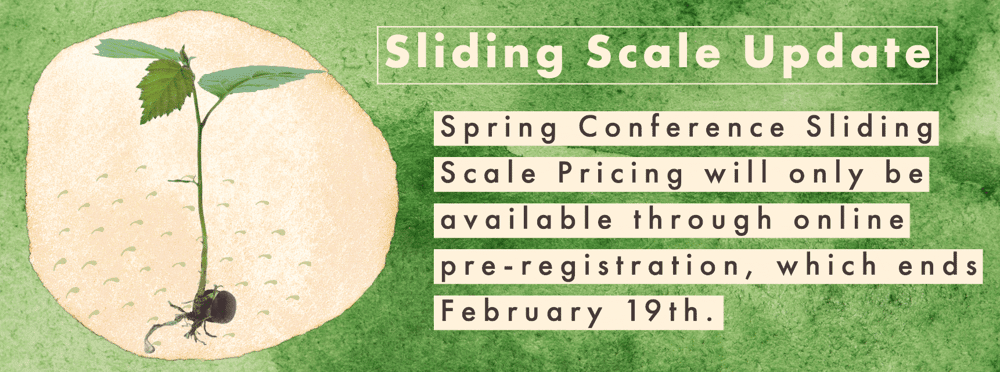
Sliding Scale Pricing for Spring Conference 2023
Jan 25 all-day
online

Screen Shot 2023-01-19 at 2.09.44 PM

For the past 30 years, the Organic Growers School Spring Conference has served as a gathering place for growers in Appalachia to connect, learn from one another, and deepen connections to land and community. The Spring Conference began as an entirely volunteer-run and free event and has expanded to support an organization of ten staff with year-round programming. As we have grown, we have experimented with different approaches to keeping the event affordable and accessible while also working on compensation for our speakers and supporting our growing staff. We encourage you to check out our recent blog post exploring this in more depth. This year, we are excited to be experimenting with sliding scale ticket pricing for the first time, and we wanted to take some time to explain how this works and why we decided to implement it this year.

Looking beyond scholarships

Over the past several years, we have started implementing different scholarship options. We have set aside around $3000 in our internal budget for scholarships, and we have increased our outreach to other groups in the area who have funding to support individuals to attend conferences. We also offer work-trade opportunities for people who are interested in helping out with our event in exchange for attendance. We have around 100 work-traders access the conference each year through these opportunities, but we have never used up our entire scholarship fund for the event. We know that there are many individuals in our community that we are not reaching through our scholarship opportunities. We began to wonder if scholarship applications were creating a barrier to participation and started researching other options, landing eventually on sliding scale as our preferred model.

How alternative pricing models address accessibility

The sliding scale model, which offers the opportunity for participants to select a price to pay for their ticket, meets several of the parameters we were looking for in an accessible pricing model. Most importantly, it is a seamless way for attendees to access the price that meets their needs. So many things are means-tested in our society, and it can be exhausting to justify why one needs a more affordable price point. While many of our community members need financial support, there are also members of this community who have more than enough to share and are excited about supporting their fellow co-learners. These attendees can select the higher end of the sliding scale, which will be set at a price to offset the lower price paid by other attendees. We trust our attendees to select the option that best works for them while also considering how their selection would affect the ability of other participants to access a lower price point.

Accessibility is a priority for OGS, and implementing it is a risk for us as a small non-profit, given that we rely on our large events like the Spring Conference to support our year-round programming and staff salaries. This will certainly be an experimental year, and if we are not able to secure enough income through sliding-scale registrations, we will have to rethink our approach to pricing. We trust that our community will be thoughtful in thinking about the value that this conference has to them and about what they are able to pay for at this time. Thank you for being on this journey of discovery with us!


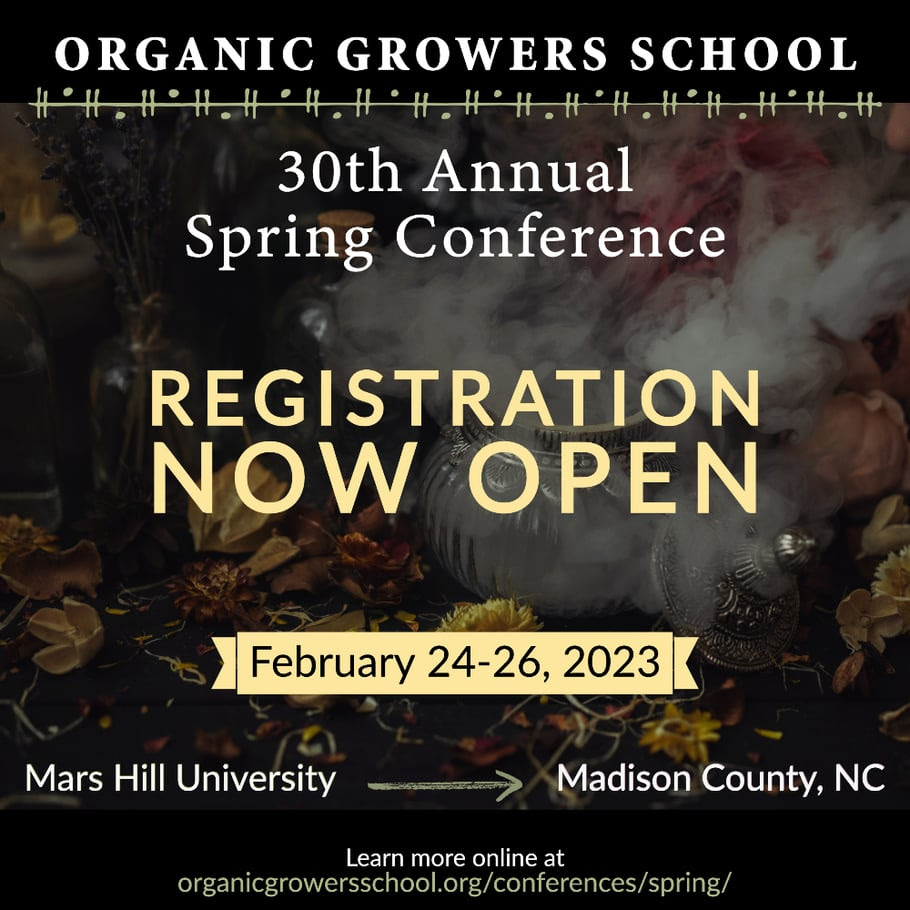
Registration is OPEN for the 30th Annual Spring Conference
Jan 25 @ 9:00 am
online
registration open SC-1 (1)-1

Registration is OPEN!

30th Annual Spring Conference at Mars Hill University
You’re in for a fun-filled weekend of learning and community building. This year our Tracks include Cooking, Food Justice, Farming Business + Production, Herbs, Mushrooms, Forest Farming, Gardening, Holistic Forestry, Livestock & Poultry, Living on the Land, Permaculture, Pests & Pollinators, Soils, & Sustainable Living!

For each Track subject, there are 4 different classes to choose from taught by expert educators. There will also be 8 half-day workshops to choose from if you want to dive deep into subjects like Fermentation, Spirulina Cultivation, Invasive Vine Basketry, and more!

View the full Spring Conference schedule here.

Sliding Scale Pricing for Spring Conference

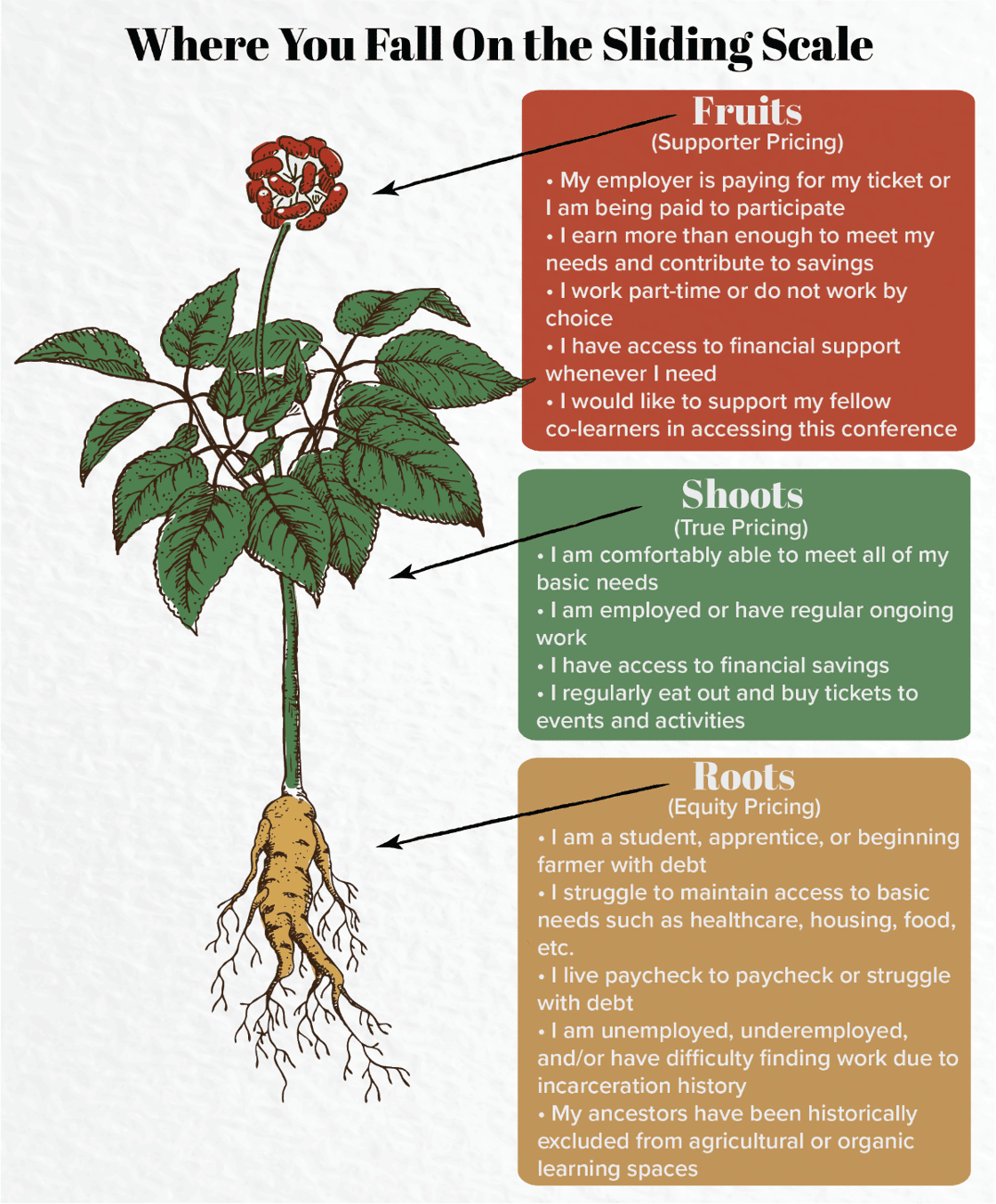
OGS is implementing a Sliding Scale Price model for 2023

So many things are means-tested in our society, and it can be exhausting to justify why one needs a more affordable price point. The sliding scale model, which allows participants to select a price to pay for their ticket, meets several of the parameters we were looking for in an accessible pricing model.


While many of our community members need financial support, some of these community members have more than enough to share and are excited about supporting their fellow co-learners. These attendees can select the higher end of the sliding scale, which will be set at a price to offset the lower price paid by other attendees. We trust our attendees to select the option that best works for them while also considering how their selection would affect the ability of other participants to access a lower price point.


Accessibility is a priority for OGS, and implementing it is a risk for us as a small non-profit, given that we rely on our large events like the Spring Conference to support our year-round programming and staff salaries. This will certainly be an experimental year, and if we cannot secure enough income through sliding-scale registrations, we will have to rethink our approach to pricing. We trust that our community will be thoughtful in thinking about the value this conference has for them and what they can pay for at this time.

Ginseng-sliding-scale-EDIT USE THIS-1

Virtual Lunch + Learn: Alphabet Soup – Navigating Government Farm Programs with NC Farmlink
Jan 25 @ 12:00 pm
online

USDA, Extension, FSA, NRCS, Rural Development–at times, the acronyms and jargon associated with farming programs can seem overwhelming. Hosted by our partner, Stephen Bishop NC FarmLink Western Director, this presentation will provide a brief overview of the most common government farm assistance programs, as well as tips and advice on applying for assistance and where to get started.

Live Stream | De’Shawn Charles Winslow presents Decent People in conversation with Jonathan Parks-Ramage
Jan 25 @ 6:00 pm
online

This live streamed virtual event is free but registration is required. Please click here to register. The link required to attend will be emailed to registrants prior to the event.

If you decide to attend and to purchase books, we ask that you purchase from Malaprop’s. When you do this you make it possible for us to continue hosting author events and you keep more dollars in our community. You may also support our work by purchasing a gift card or making a donation of any amount below. Thank you!


Decent People
In the still-segregated town of West Mills, North Carolina in 1976, enigmatic siblings Marian, Marva, and Lazarus Harmon are found shot to death in their home. The people of West Mills – on both sides of the canal that serves as the town’s color line – become swept up in gossip and accusations that have them taking a deeper look at their neighbors and loved ones. The crime is the first reported murder in the area in decades, but the white authorities don’t seem to have any interest in solving the case. As the case continues to go unsolved, questions swirl around the town: Why were the Harmons murdered? Was it about drugs, money or a romantic dispute? And most importantly, who killed them?

Ms. Jo Wright has just moved back to West Mills from New York City to retire and marry a childhood sweetheart, Olympus “Lymp” Seymore. When she discovers that the murder victims are Lymp’s half-siblings, and that Lymp is one of West Mills’ leading culprits, she sets out on a transformative mission to prove his innocence. As Jo begins to investigate those who might know the most about the Harmons’ deaths, she starts to discover darker secrets than she’d ever imagined, and a pattern of cover-ups of racism, homophobia, and medical misuse that could upend the reputations of many. With Decent People, Winslow has written another novel with the makings of a classic, crafting a remarkable story that covers difficult themes of shame, race, and money with compassion, insight, and grace, and making the community of West Mills come alive from the first page.

De’Shawn Charles Winslow’s first novel, In West Mills, was a finalist for the Los Angeles Times Book Prize, Lambda Literary Award, Publishing Triangle Award, and Willie Morris Award for Southern Writing. He has been featured as a “Writer to Watch” in The New York Times and one of the “Black Male Writers of Our Time” in T, The New York Times Style Magazine. He was born and raised in Elizabeth City, North Carolina, graduated from the Iowa Writers’ Workshop and now lives in Atlanta, GA.

Jonathan Parks-Ramage is a Los Angeles based novelist, screenwriter and journalist. His critically acclaimed debut novel, YES, DADDY, was named as one of the best queer books of 2021 by Entertainment Weekly, NBC News, The Advocate, Bustle, Lambda Literary, Goodreads, and more. The book is currently being adapted for television. His writing has been widely published in such outlets as VICE, Slate, OUT Magazine, W Magazine, Lit Hub, Atlas Obscura, Elle, Electric Literature and more. He is also an alumnus of the Bread Loaf Writers’ Conference.

Foodie Book Club
Jan 25 @ 7:00 pm
online

Foodie Book Club

A book club for home cooks, foodies, industry folks, and anyone in-between.  We will be focusing on all sorts of food writing. Somethemes will be (but not limited to): food critics, chef memoirs, wine, food history, and food politics.

The Foodie group meets virtually on the last Wednesday of every month at 7 p.m. (EST), beginning in June 2022.  Please email [email protected] for the Zoom meeting info.

Thursday, January 26, 2023
2023 School Garden Grants
Jan 26 all-day
online

Extension Master GardenerSM Volunteers of Buncombe County are happy to announce for the sixteenth year we are offering School Garden Grants to Asheville City and Buncombe County public schools, including state charter schools.

Growing Vegetables at Childcare Centers_photo by NC State Extension
Learning to plant veggie seeds

We provide a notice of the application period along with instructions to all school principals, elementary through senior high. Additional information is available on our websitebuncombemastergardener.org, where you can learn more about the guidelines for receiving a grant and get online access to the 2023 School Garden Grants Application.

All applications must be completed online. Completed applications will be accepted beginning January 9, 2023, and must be submitted no later than 9 p.m. on February 3, 2023. If you have any questions, please call the Extension Office at 828-255-5522.

We are proud of our partnership with Asheville City and Buncombe County Schools. Since 2007, we have awarded 52 School Garden Grants totaling over $45,000. These grants have involved more than 16,500 students and hundreds of teachers, parents, and community volunteers.

School gardens grow more than plants. They grow imagination and creativity. They make math and science come alive, and they build community. We hope your school will join us in 2023.

Click on the link below to review the guidelines for school garden grants:
Guidelines for 2023 School Garden Grants

Journeyperson Program NOW FREE! 12-Month Farm Support Cohort
Jan 26 all-day
Organic Growers School

The upcoming Journeyperson course is now available AT NO COST! Due to some timely grant funding, we can offer this in-depth farmer training for farmers in years 3-7 with no associated tuition fee! The course consists of monthly cohort meet-ups and 2-3 in-depth workshops, plus mentorship!


In addition, a select number of participants will also receive matched FUNDS for your farm savings account (Savings Incentive Program) and money to spend on a professional development opportunity of your choosing! Want to attend a workshop on livestock management? OGS will contribute towards that fee! Are you saving money for a farm asset? OGS will contribute up to a certain amount to that investment.


The Journeyperson Program is for farmers who have been independently farming for three or more years and are serious about operating farm businesses in the Southern Appalachian region.

Join the Journeyperson Info Session on Zoom!

November 15th at 7:00 pm

Sign up here

Sliding Scale Pricing for Spring Conference 2023
Jan 26 all-day
online

Screen Shot 2023-01-19 at 2.09.44 PM

For the past 30 years, the Organic Growers School Spring Conference has served as a gathering place for growers in Appalachia to connect, learn from one another, and deepen connections to land and community. The Spring Conference began as an entirely volunteer-run and free event and has expanded to support an organization of ten staff with year-round programming. As we have grown, we have experimented with different approaches to keeping the event affordable and accessible while also working on compensation for our speakers and supporting our growing staff. We encourage you to check out our recent blog post exploring this in more depth. This year, we are excited to be experimenting with sliding scale ticket pricing for the first time, and we wanted to take some time to explain how this works and why we decided to implement it this year.

Looking beyond scholarships

Over the past several years, we have started implementing different scholarship options. We have set aside around $3000 in our internal budget for scholarships, and we have increased our outreach to other groups in the area who have funding to support individuals to attend conferences. We also offer work-trade opportunities for people who are interested in helping out with our event in exchange for attendance. We have around 100 work-traders access the conference each year through these opportunities, but we have never used up our entire scholarship fund for the event. We know that there are many individuals in our community that we are not reaching through our scholarship opportunities. We began to wonder if scholarship applications were creating a barrier to participation and started researching other options, landing eventually on sliding scale as our preferred model.

How alternative pricing models address accessibility

The sliding scale model, which offers the opportunity for participants to select a price to pay for their ticket, meets several of the parameters we were looking for in an accessible pricing model. Most importantly, it is a seamless way for attendees to access the price that meets their needs. So many things are means-tested in our society, and it can be exhausting to justify why one needs a more affordable price point. While many of our community members need financial support, there are also members of this community who have more than enough to share and are excited about supporting their fellow co-learners. These attendees can select the higher end of the sliding scale, which will be set at a price to offset the lower price paid by other attendees. We trust our attendees to select the option that best works for them while also considering how their selection would affect the ability of other participants to access a lower price point.

Accessibility is a priority for OGS, and implementing it is a risk for us as a small non-profit, given that we rely on our large events like the Spring Conference to support our year-round programming and staff salaries. This will certainly be an experimental year, and if we are not able to secure enough income through sliding-scale registrations, we will have to rethink our approach to pricing. We trust that our community will be thoughtful in thinking about the value that this conference has to them and about what they are able to pay for at this time. Thank you for being on this journey of discovery with us!


Registration is OPEN for the 30th Annual Spring Conference
Jan 26 @ 9:00 am
online
registration open SC-1 (1)-1

Registration is OPEN!

30th Annual Spring Conference at Mars Hill University
You’re in for a fun-filled weekend of learning and community building. This year our Tracks include Cooking, Food Justice, Farming Business + Production, Herbs, Mushrooms, Forest Farming, Gardening, Holistic Forestry, Livestock & Poultry, Living on the Land, Permaculture, Pests & Pollinators, Soils, & Sustainable Living!

For each Track subject, there are 4 different classes to choose from taught by expert educators. There will also be 8 half-day workshops to choose from if you want to dive deep into subjects like Fermentation, Spirulina Cultivation, Invasive Vine Basketry, and more!

View the full Spring Conference schedule here.

Sliding Scale Pricing for Spring Conference

OGS is implementing a Sliding Scale Price model for 2023

So many things are means-tested in our society, and it can be exhausting to justify why one needs a more affordable price point. The sliding scale model, which allows participants to select a price to pay for their ticket, meets several of the parameters we were looking for in an accessible pricing model.


While many of our community members need financial support, some of these community members have more than enough to share and are excited about supporting their fellow co-learners. These attendees can select the higher end of the sliding scale, which will be set at a price to offset the lower price paid by other attendees. We trust our attendees to select the option that best works for them while also considering how their selection would affect the ability of other participants to access a lower price point.


Accessibility is a priority for OGS, and implementing it is a risk for us as a small non-profit, given that we rely on our large events like the Spring Conference to support our year-round programming and staff salaries. This will certainly be an experimental year, and if we cannot secure enough income through sliding-scale registrations, we will have to rethink our approach to pricing. We trust that our community will be thoughtful in thinking about the value this conference has for them and what they can pay for at this time.

Ginseng-sliding-scale-EDIT USE THIS-1

Vine and Verse: Book for January is ‘Bewilderment’ by Richard Powers
Jan 26 @ 5:30 pm – 7:30 pm
Citizen Vinyl

The Book for January is ‘Bewilderment’ by Richard Powers
The astrobiologist Theo Byrne searches for life throughout the cosmos while single-handedly raising his unusual nine-year-old, Robin, following the death of his wife. Robin is a warm, kind boy who spends hours painting elaborate pictures of endangered animals. He’s also about to be expelled from third grade for smashing his friend in the face. As his son grows more troubled, Theo hopes to keep him off psychoactive drugs. He learns of an experimental neurofeedback treatment to bolster Robin’s emotional control, one that involves training the boy on the recorded patterns of his mother’s brain…

With its soaring descriptions of the natural world, its tantalizing vision of life beyond, and its account of a father and son’s ferocious love, Bewilderment marks Richard Powers’s most intimate and moving novel. At its heart lies the question: How can we tell our children the truth about this beautiful, imperiled planet?

https://www.nytimes.com/2021/09/15/books/review-bewilderment-richard-powers.html

Hybrid | Mimi Herman presents The Kudzu Queen in conversation with Heather Newton
Jan 26 @ 6:00 pm
Malaprop's Bookstore and Virtual

This is a hybrid event, meaning there is an option to attend virtually and a limited number of seats are available to attend the event in-store. The event is free but registration is required for both in-person and virtual attendance. 

Please click here to register for the VIRTUAL event. The link required to attend will be emailed to registrants prior to the event.

Please click here to register for the IN-PERSON event. Note the important event details on the RSVP form.

This event includes a book signing. If you would like a signed book but can’t attend in person, use the order comments field when you order below to request a signed copy and tell us to whom the book should be personalized.

If you decide to attend and to purchase books, we ask that you purchase from Malaprop’s. When you do this you make it possible for us to continue hosting author events and you keep more dollars in our community. You may also support our work by purchasing a gift card or making a donation of any amount below. Thank you!


The Kudzu Queen
Fifteen-year-old Mattie Lee Watson dreams of men, not boys. So when James T. Cullowee, the Kudzu King, arrives in Cooper County, North Carolina in 1941 to spread the gospel of kudzu–claiming that it will improve the soil, feed cattle at almost no cost, even cure headaches–Mattie is ready. Mr. Cullowee is determined to sell the entire county on the future of kudzu, and organizes a kudzu festival, complete with a beauty pageant. Mattie is determined to be crowned Kudzu Queen and capture the attentions of the Kudzu King. As she learns more about Cullowee, however, she discovers that he, like the kudzu he promotes, has a dark and predatory side. When she finds she is not the only one threatened, she devises a plan to bring him down. Based on historical facts, The Kudzu Queen unravels a tangle of sexuality, power, race, and kudzu through the voice of an irresistibly delightful (and mostly honest) narrator.

Mimi Herman is the author of The Kudzu QueenLogophilia and A Field Guide to Human Emotions. Her fiction and poetry have appeared in Michigan Quarterly Review, Shenandoah, Crab Orchard Review, The Hollins Critic, Prime Number, and other journals. She has performed her fiction and poetry at Why There are Words, Symphony Space, and Raleigh Memorial Auditorium. Mimi is a member of the AWP Board of Directors, a Warren Wilson MFA alumna, a Kennedy Center Teaching Artist and a Hermitage Artist Retreat Fellow. She co-directs Writeaways writing workshops in France, Italy, Ireland and New Mexico.

Heather Newton’s short story collection McMullen Circle (Regal House 2022) was the finalist for the W.S. Porter prize. Her novel The Puppeteer’s Daughters was released by Turner Publishing in July 2022 and has been optioned by Sony Pictures Television. Her novel Under The Mercy Trees (HarperCollins 2011) won the Thomas Wolfe Memorial Literary Award, was chosen by the Women’s National Book Association as a Great Group Reads Selection and named an “Okra Pick” by the Southern Independent Booksellers Alliance. A practicing attorney, she teaches creative writing for UNC-Asheville’s Great Smokies Writing Program and is co-founder and Program Manager for the Flatiron Writers Room  writers’ center in Asheville.

Friday, January 27, 2023
2023 School Garden Grants
Jan 27 all-day
online

Extension Master GardenerSM Volunteers of Buncombe County are happy to announce for the sixteenth year we are offering School Garden Grants to Asheville City and Buncombe County public schools, including state charter schools.

Growing Vegetables at Childcare Centers_photo by NC State Extension
Learning to plant veggie seeds

We provide a notice of the application period along with instructions to all school principals, elementary through senior high. Additional information is available on our websitebuncombemastergardener.org, where you can learn more about the guidelines for receiving a grant and get online access to the 2023 School Garden Grants Application.

All applications must be completed online. Completed applications will be accepted beginning January 9, 2023, and must be submitted no later than 9 p.m. on February 3, 2023. If you have any questions, please call the Extension Office at 828-255-5522.

We are proud of our partnership with Asheville City and Buncombe County Schools. Since 2007, we have awarded 52 School Garden Grants totaling over $45,000. These grants have involved more than 16,500 students and hundreds of teachers, parents, and community volunteers.

School gardens grow more than plants. They grow imagination and creativity. They make math and science come alive, and they build community. We hope your school will join us in 2023.

Click on the link below to review the guidelines for school garden grants:
Guidelines for 2023 School Garden Grants

Sliding Scale Pricing for Spring Conference 2023
Jan 27 all-day
online

Screen Shot 2023-01-19 at 2.09.44 PM

For the past 30 years, the Organic Growers School Spring Conference has served as a gathering place for growers in Appalachia to connect, learn from one another, and deepen connections to land and community. The Spring Conference began as an entirely volunteer-run and free event and has expanded to support an organization of ten staff with year-round programming. As we have grown, we have experimented with different approaches to keeping the event affordable and accessible while also working on compensation for our speakers and supporting our growing staff. We encourage you to check out our recent blog post exploring this in more depth. This year, we are excited to be experimenting with sliding scale ticket pricing for the first time, and we wanted to take some time to explain how this works and why we decided to implement it this year.

Looking beyond scholarships

Over the past several years, we have started implementing different scholarship options. We have set aside around $3000 in our internal budget for scholarships, and we have increased our outreach to other groups in the area who have funding to support individuals to attend conferences. We also offer work-trade opportunities for people who are interested in helping out with our event in exchange for attendance. We have around 100 work-traders access the conference each year through these opportunities, but we have never used up our entire scholarship fund for the event. We know that there are many individuals in our community that we are not reaching through our scholarship opportunities. We began to wonder if scholarship applications were creating a barrier to participation and started researching other options, landing eventually on sliding scale as our preferred model.

How alternative pricing models address accessibility

The sliding scale model, which offers the opportunity for participants to select a price to pay for their ticket, meets several of the parameters we were looking for in an accessible pricing model. Most importantly, it is a seamless way for attendees to access the price that meets their needs. So many things are means-tested in our society, and it can be exhausting to justify why one needs a more affordable price point. While many of our community members need financial support, there are also members of this community who have more than enough to share and are excited about supporting their fellow co-learners. These attendees can select the higher end of the sliding scale, which will be set at a price to offset the lower price paid by other attendees. We trust our attendees to select the option that best works for them while also considering how their selection would affect the ability of other participants to access a lower price point.

Accessibility is a priority for OGS, and implementing it is a risk for us as a small non-profit, given that we rely on our large events like the Spring Conference to support our year-round programming and staff salaries. This will certainly be an experimental year, and if we are not able to secure enough income through sliding-scale registrations, we will have to rethink our approach to pricing. We trust that our community will be thoughtful in thinking about the value that this conference has to them and about what they are able to pay for at this time. Thank you for being on this journey of discovery with us!


Saturday, January 28, 2023
2023 School Garden Grants
Jan 28 all-day
online

Extension Master GardenerSM Volunteers of Buncombe County are happy to announce for the sixteenth year we are offering School Garden Grants to Asheville City and Buncombe County public schools, including state charter schools.

Growing Vegetables at Childcare Centers_photo by NC State Extension
Learning to plant veggie seeds

We provide a notice of the application period along with instructions to all school principals, elementary through senior high. Additional information is available on our websitebuncombemastergardener.org, where you can learn more about the guidelines for receiving a grant and get online access to the 2023 School Garden Grants Application.

All applications must be completed online. Completed applications will be accepted beginning January 9, 2023, and must be submitted no later than 9 p.m. on February 3, 2023. If you have any questions, please call the Extension Office at 828-255-5522.

We are proud of our partnership with Asheville City and Buncombe County Schools. Since 2007, we have awarded 52 School Garden Grants totaling over $45,000. These grants have involved more than 16,500 students and hundreds of teachers, parents, and community volunteers.

School gardens grow more than plants. They grow imagination and creativity. They make math and science come alive, and they build community. We hope your school will join us in 2023.

Click on the link below to review the guidelines for school garden grants:
Guidelines for 2023 School Garden Grants

Journeyperson Program NOW FREE! 12-Month Farm Support Cohort
Jan 28 all-day
Organic Growers School

The upcoming Journeyperson course is now available AT NO COST! Due to some timely grant funding, we can offer this in-depth farmer training for farmers in years 3-7 with no associated tuition fee! The course consists of monthly cohort meet-ups and 2-3 in-depth workshops, plus mentorship!


In addition, a select number of participants will also receive matched FUNDS for your farm savings account (Savings Incentive Program) and money to spend on a professional development opportunity of your choosing! Want to attend a workshop on livestock management? OGS will contribute towards that fee! Are you saving money for a farm asset? OGS will contribute up to a certain amount to that investment.


The Journeyperson Program is for farmers who have been independently farming for three or more years and are serious about operating farm businesses in the Southern Appalachian region.

Join the Journeyperson Info Session on Zoom!

November 15th at 7:00 pm

Sign up here

Sliding Scale Pricing for Spring Conference 2023
Jan 28 all-day
online

Screen Shot 2023-01-19 at 2.09.44 PM

For the past 30 years, the Organic Growers School Spring Conference has served as a gathering place for growers in Appalachia to connect, learn from one another, and deepen connections to land and community. The Spring Conference began as an entirely volunteer-run and free event and has expanded to support an organization of ten staff with year-round programming. As we have grown, we have experimented with different approaches to keeping the event affordable and accessible while also working on compensation for our speakers and supporting our growing staff. We encourage you to check out our recent blog post exploring this in more depth. This year, we are excited to be experimenting with sliding scale ticket pricing for the first time, and we wanted to take some time to explain how this works and why we decided to implement it this year.

Looking beyond scholarships

Over the past several years, we have started implementing different scholarship options. We have set aside around $3000 in our internal budget for scholarships, and we have increased our outreach to other groups in the area who have funding to support individuals to attend conferences. We also offer work-trade opportunities for people who are interested in helping out with our event in exchange for attendance. We have around 100 work-traders access the conference each year through these opportunities, but we have never used up our entire scholarship fund for the event. We know that there are many individuals in our community that we are not reaching through our scholarship opportunities. We began to wonder if scholarship applications were creating a barrier to participation and started researching other options, landing eventually on sliding scale as our preferred model.

How alternative pricing models address accessibility

The sliding scale model, which offers the opportunity for participants to select a price to pay for their ticket, meets several of the parameters we were looking for in an accessible pricing model. Most importantly, it is a seamless way for attendees to access the price that meets their needs. So many things are means-tested in our society, and it can be exhausting to justify why one needs a more affordable price point. While many of our community members need financial support, there are also members of this community who have more than enough to share and are excited about supporting their fellow co-learners. These attendees can select the higher end of the sliding scale, which will be set at a price to offset the lower price paid by other attendees. We trust our attendees to select the option that best works for them while also considering how their selection would affect the ability of other participants to access a lower price point.

Accessibility is a priority for OGS, and implementing it is a risk for us as a small non-profit, given that we rely on our large events like the Spring Conference to support our year-round programming and staff salaries. This will certainly be an experimental year, and if we are not able to secure enough income through sliding-scale registrations, we will have to rethink our approach to pricing. We trust that our community will be thoughtful in thinking about the value that this conference has to them and about what they are able to pay for at this time. Thank you for being on this journey of discovery with us!


Sunday, January 29, 2023
2023 School Garden Grants
Jan 29 all-day
online

Extension Master GardenerSM Volunteers of Buncombe County are happy to announce for the sixteenth year we are offering School Garden Grants to Asheville City and Buncombe County public schools, including state charter schools.

Growing Vegetables at Childcare Centers_photo by NC State Extension
Learning to plant veggie seeds

We provide a notice of the application period along with instructions to all school principals, elementary through senior high. Additional information is available on our websitebuncombemastergardener.org, where you can learn more about the guidelines for receiving a grant and get online access to the 2023 School Garden Grants Application.

All applications must be completed online. Completed applications will be accepted beginning January 9, 2023, and must be submitted no later than 9 p.m. on February 3, 2023. If you have any questions, please call the Extension Office at 828-255-5522.

We are proud of our partnership with Asheville City and Buncombe County Schools. Since 2007, we have awarded 52 School Garden Grants totaling over $45,000. These grants have involved more than 16,500 students and hundreds of teachers, parents, and community volunteers.

School gardens grow more than plants. They grow imagination and creativity. They make math and science come alive, and they build community. We hope your school will join us in 2023.

Click on the link below to review the guidelines for school garden grants:
Guidelines for 2023 School Garden Grants

Journeyperson Program NOW FREE! 12-Month Farm Support Cohort
Jan 29 all-day
Organic Growers School

The upcoming Journeyperson course is now available AT NO COST! Due to some timely grant funding, we can offer this in-depth farmer training for farmers in years 3-7 with no associated tuition fee! The course consists of monthly cohort meet-ups and 2-3 in-depth workshops, plus mentorship!


In addition, a select number of participants will also receive matched FUNDS for your farm savings account (Savings Incentive Program) and money to spend on a professional development opportunity of your choosing! Want to attend a workshop on livestock management? OGS will contribute towards that fee! Are you saving money for a farm asset? OGS will contribute up to a certain amount to that investment.


The Journeyperson Program is for farmers who have been independently farming for three or more years and are serious about operating farm businesses in the Southern Appalachian region.

Join the Journeyperson Info Session on Zoom!

November 15th at 7:00 pm

Sign up here

Sliding Scale Pricing for Spring Conference 2023
Jan 29 all-day
online

Screen Shot 2023-01-19 at 2.09.44 PM

For the past 30 years, the Organic Growers School Spring Conference has served as a gathering place for growers in Appalachia to connect, learn from one another, and deepen connections to land and community. The Spring Conference began as an entirely volunteer-run and free event and has expanded to support an organization of ten staff with year-round programming. As we have grown, we have experimented with different approaches to keeping the event affordable and accessible while also working on compensation for our speakers and supporting our growing staff. We encourage you to check out our recent blog post exploring this in more depth. This year, we are excited to be experimenting with sliding scale ticket pricing for the first time, and we wanted to take some time to explain how this works and why we decided to implement it this year.

Looking beyond scholarships

Over the past several years, we have started implementing different scholarship options. We have set aside around $3000 in our internal budget for scholarships, and we have increased our outreach to other groups in the area who have funding to support individuals to attend conferences. We also offer work-trade opportunities for people who are interested in helping out with our event in exchange for attendance. We have around 100 work-traders access the conference each year through these opportunities, but we have never used up our entire scholarship fund for the event. We know that there are many individuals in our community that we are not reaching through our scholarship opportunities. We began to wonder if scholarship applications were creating a barrier to participation and started researching other options, landing eventually on sliding scale as our preferred model.

How alternative pricing models address accessibility

The sliding scale model, which offers the opportunity for participants to select a price to pay for their ticket, meets several of the parameters we were looking for in an accessible pricing model. Most importantly, it is a seamless way for attendees to access the price that meets their needs. So many things are means-tested in our society, and it can be exhausting to justify why one needs a more affordable price point. While many of our community members need financial support, there are also members of this community who have more than enough to share and are excited about supporting their fellow co-learners. These attendees can select the higher end of the sliding scale, which will be set at a price to offset the lower price paid by other attendees. We trust our attendees to select the option that best works for them while also considering how their selection would affect the ability of other participants to access a lower price point.

Accessibility is a priority for OGS, and implementing it is a risk for us as a small non-profit, given that we rely on our large events like the Spring Conference to support our year-round programming and staff salaries. This will certainly be an experimental year, and if we are not able to secure enough income through sliding-scale registrations, we will have to rethink our approach to pricing. We trust that our community will be thoughtful in thinking about the value that this conference has to them and about what they are able to pay for at this time. Thank you for being on this journey of discovery with us!


Monday, January 30, 2023
2023 School Garden Grants
Jan 30 all-day
online

Extension Master GardenerSM Volunteers of Buncombe County are happy to announce for the sixteenth year we are offering School Garden Grants to Asheville City and Buncombe County public schools, including state charter schools.

Growing Vegetables at Childcare Centers_photo by NC State Extension
Learning to plant veggie seeds

We provide a notice of the application period along with instructions to all school principals, elementary through senior high. Additional information is available on our websitebuncombemastergardener.org, where you can learn more about the guidelines for receiving a grant and get online access to the 2023 School Garden Grants Application.

All applications must be completed online. Completed applications will be accepted beginning January 9, 2023, and must be submitted no later than 9 p.m. on February 3, 2023. If you have any questions, please call the Extension Office at 828-255-5522.

We are proud of our partnership with Asheville City and Buncombe County Schools. Since 2007, we have awarded 52 School Garden Grants totaling over $45,000. These grants have involved more than 16,500 students and hundreds of teachers, parents, and community volunteers.

School gardens grow more than plants. They grow imagination and creativity. They make math and science come alive, and they build community. We hope your school will join us in 2023.

Click on the link below to review the guidelines for school garden grants:
Guidelines for 2023 School Garden Grants

Sliding Scale Pricing for Spring Conference 2023
Jan 30 all-day
online

Screen Shot 2023-01-19 at 2.09.44 PM

For the past 30 years, the Organic Growers School Spring Conference has served as a gathering place for growers in Appalachia to connect, learn from one another, and deepen connections to land and community. The Spring Conference began as an entirely volunteer-run and free event and has expanded to support an organization of ten staff with year-round programming. As we have grown, we have experimented with different approaches to keeping the event affordable and accessible while also working on compensation for our speakers and supporting our growing staff. We encourage you to check out our recent blog post exploring this in more depth. This year, we are excited to be experimenting with sliding scale ticket pricing for the first time, and we wanted to take some time to explain how this works and why we decided to implement it this year.

Looking beyond scholarships

Over the past several years, we have started implementing different scholarship options. We have set aside around $3000 in our internal budget for scholarships, and we have increased our outreach to other groups in the area who have funding to support individuals to attend conferences. We also offer work-trade opportunities for people who are interested in helping out with our event in exchange for attendance. We have around 100 work-traders access the conference each year through these opportunities, but we have never used up our entire scholarship fund for the event. We know that there are many individuals in our community that we are not reaching through our scholarship opportunities. We began to wonder if scholarship applications were creating a barrier to participation and started researching other options, landing eventually on sliding scale as our preferred model.

How alternative pricing models address accessibility

The sliding scale model, which offers the opportunity for participants to select a price to pay for their ticket, meets several of the parameters we were looking for in an accessible pricing model. Most importantly, it is a seamless way for attendees to access the price that meets their needs. So many things are means-tested in our society, and it can be exhausting to justify why one needs a more affordable price point. While many of our community members need financial support, there are also members of this community who have more than enough to share and are excited about supporting their fellow co-learners. These attendees can select the higher end of the sliding scale, which will be set at a price to offset the lower price paid by other attendees. We trust our attendees to select the option that best works for them while also considering how their selection would affect the ability of other participants to access a lower price point.

Accessibility is a priority for OGS, and implementing it is a risk for us as a small non-profit, given that we rely on our large events like the Spring Conference to support our year-round programming and staff salaries. This will certainly be an experimental year, and if we are not able to secure enough income through sliding-scale registrations, we will have to rethink our approach to pricing. We trust that our community will be thoughtful in thinking about the value that this conference has to them and about what they are able to pay for at this time. Thank you for being on this journey of discovery with us!


Registration is OPEN for the 30th Annual Spring Conference
Jan 30 @ 9:00 am
online
registration open SC-1 (1)-1

Registration is OPEN!

30th Annual Spring Conference at Mars Hill University
You’re in for a fun-filled weekend of learning and community building. This year our Tracks include Cooking, Food Justice, Farming Business + Production, Herbs, Mushrooms, Forest Farming, Gardening, Holistic Forestry, Livestock & Poultry, Living on the Land, Permaculture, Pests & Pollinators, Soils, & Sustainable Living!

For each Track subject, there are 4 different classes to choose from taught by expert educators. There will also be 8 half-day workshops to choose from if you want to dive deep into subjects like Fermentation, Spirulina Cultivation, Invasive Vine Basketry, and more!

View the full Spring Conference schedule here.

Sliding Scale Pricing for Spring Conference

OGS is implementing a Sliding Scale Price model for 2023

So many things are means-tested in our society, and it can be exhausting to justify why one needs a more affordable price point. The sliding scale model, which allows participants to select a price to pay for their ticket, meets several of the parameters we were looking for in an accessible pricing model.


While many of our community members need financial support, some of these community members have more than enough to share and are excited about supporting their fellow co-learners. These attendees can select the higher end of the sliding scale, which will be set at a price to offset the lower price paid by other attendees. We trust our attendees to select the option that best works for them while also considering how their selection would affect the ability of other participants to access a lower price point.


Accessibility is a priority for OGS, and implementing it is a risk for us as a small non-profit, given that we rely on our large events like the Spring Conference to support our year-round programming and staff salaries. This will certainly be an experimental year, and if we cannot secure enough income through sliding-scale registrations, we will have to rethink our approach to pricing. We trust that our community will be thoughtful in thinking about the value this conference has for them and what they can pay for at this time.

Ginseng-sliding-scale-EDIT USE THIS-1

Science Fiction Book Club
Jan 30 @ 7:00 pm
Malaprop's Bookstore

Science Fiction Book Club

Join host and former Malaprop’s Bookseller Allison to dive into the wreck of the wily and wonderful world of science fiction, fantasy, weird fiction, speculative fiction, and literary horror with a healthy mix of underappreciated classic and contemporary books. Meets the last Monday of every month at 7pm on Zoom. Also meets the second Monday of every month at 7pm to discuss the film adaptations of the books we read. To learn more or join the club, email [email protected].

Monday, January 30, 2023 – 7:00pm
Monday, February 27, 2023 – 7:00pm
Monday, March 27, 2023 – 7:00pm
Monday, April 24, 2023 – 7:00pm
Join host and Malaprop’s Bookseller Allison to dive into the wreck of the wily and wonderful world of science fiction, fantasy, weird fiction, speculative fiction, and literary horror with a healthy mix of underappreciated classic and contemporary books. Meets the last Monday of every month at 7 pm on Zoom. Also meets on the second Monday of every month at 7 pm to discuss the film adaptations of the books we read.  Click here to see a full schedule of what the club is reading and contact the club host to join. Club attendees get 10% off the book at Malaprop’s!
Tuesday, January 31, 2023
2023 School Garden Grants
Jan 31 all-day
online

Extension Master GardenerSM Volunteers of Buncombe County are happy to announce for the sixteenth year we are offering School Garden Grants to Asheville City and Buncombe County public schools, including state charter schools.

Growing Vegetables at Childcare Centers_photo by NC State Extension
Learning to plant veggie seeds

We provide a notice of the application period along with instructions to all school principals, elementary through senior high. Additional information is available on our websitebuncombemastergardener.org, where you can learn more about the guidelines for receiving a grant and get online access to the 2023 School Garden Grants Application.

All applications must be completed online. Completed applications will be accepted beginning January 9, 2023, and must be submitted no later than 9 p.m. on February 3, 2023. If you have any questions, please call the Extension Office at 828-255-5522.

We are proud of our partnership with Asheville City and Buncombe County Schools. Since 2007, we have awarded 52 School Garden Grants totaling over $45,000. These grants have involved more than 16,500 students and hundreds of teachers, parents, and community volunteers.

School gardens grow more than plants. They grow imagination and creativity. They make math and science come alive, and they build community. We hope your school will join us in 2023.

Click on the link below to review the guidelines for school garden grants:
Guidelines for 2023 School Garden Grants

Celebrate Black Legacy Month
Jan 31 all-day
Buncombe County Libraires

Join us throughout February as we celebrate Black Legacy Month with programs and events for all ages! In addition to the programs listed below, we will have special story times and exhibits at most of our libraries.

  • Bright Star Touring Theatre: African Folktales – February 1 at 4pm at the Weaverville Library (for children ages 3 and up)
  • Book Club: Jazz by Toni Morrison – Thursday, February 2 a 3pm at the Weaverville Library
  • Book Club: The Vanishing Half by Brit Bennett – Tuesday, February 7 at 6pm
  • Book Club: The Personal Librarian by Marie Benedict Tuesday, February 14 at 1pm at the Leicester Library
  • Book Club: Life in Motion: An Unlikely Ballerina by Misty Copeland – February 16 at 2:30pm at the Skyland/South Buncombe Library
  • Book Club: The Vanishing Half by Brit Bennett – February 21 at 7pm at the Fairview Library
  • Black Experience Book Club: The Furrows by Namwali Serpell – February 23 at 6:30pm at the Noir Collective, co-sponsored by the East Asheville library

Drop by your local library and check us out. Email or call if you have any questions.

Our librarians have also put together a Black Legacy Month reading list for all ages.

Black Legacy Month Reading List 2023

Books for Adults

Adult Fiction

  • Parable of the Sower by Octavia Butler
  • On Girlhood: 15 Stories from the Well-Read Black Girl Library edited by Glory Edim
  • What the Fireflies Knew by Kai Harries
  • Black Leopard, Red Wolf by Marlon James
  • The Love Songs of W.E.B. Dubois by Honoree Fannone Jeffers
  • How Long ‘Til Black Future Month? by N.K. Jemison
  • Deacon King Kong by James McBride
  • Take My Hand by Dolen Perkins-Valdez
  • Black Bottom Saints by Alice Randall
  • The Violin Conspiracy by Brendan Slocumb
  • Harlem Shuffle by Colson Whitehead
  • Seven Days in June by Tia Williams
  • Red at the Bone by Jacqueline Woodson

Adult nonfiction

  • Uncomfortable Conversations with a Black Man by Emmanuel Acho
  • Carefree Black Girls: A Celebration of Black women in Popular Culture by Zeba Blay
  • The 1619 Project edited by Nikole Hannah-Jones
  • Rest is Resistance by Tricia Hersey
  • Wow, No Thank You by Samantha Irby*
  • The Sum of Us by Heather McGhee
  • All That She Carried by Tiya Miles
  • Please Don’t Sit On My Bed In Your Outside Clothes by Phoebe Robinson*
  • You’ll Never Believe What Happened to Lacey by Amber Ruffin*
  • Counting Descent by Clint Smith
  • The Body Is Not an Apology by Sonya Renee Taylor
  • Here For It by R. Eric Thomas*
  • Koshersoul: the faith and food journey of an African American Jew by Michael W. Twitty

*especially good on audio because the authors read their work!

Picture books for families to share

  • My Heart Flies Open by Omileye Achikeobi-Lewis
  • Only the Best: The Exceptional Life and Fashion of Ann Lowe by Kate Messner
  • My N.C. From A to Z by Michelle Lanier
  • Shhh! The Baby’s Asleep by JaNay Brown-Wood
  • Curls by Ruth Forman
  • Fly by Brittany J. Thurman
  • Opal Lee and What it Means to be Free: The True Story of the Grandmother of Juneteenth by Alice Faye Duncan
  • Build a House by Rhiannon Giddens
  • Bright Brown Baby, A Treasury by Andrea Davis Pinkney
  • Born on the Water by Nikole Hannah-Jones and Renee Watson

Chapter books for older kids

  • Isaiah Dunn is My Hero by Kelly J. BaptistBlended by Sharon Draper
  • Ikenga by Nnedi Okorafor
  • Stamped: Racism, Antiracism, and You by Jason Reynolds and Ibram X. Kendi
  • Tristan Strong Trilogy (Tristan Strong Punches a Hole in the Sky, Tristan Strong Destroys the World, and Tristan Strong Keeps Punching) by Kwame Mbalia
  • From the Desk of Zoe Washington by Janae Marks
  • Black Boy Joy: 17 Stories Celebrating Black Boyhood edited by Kwame Mbalia
  • Freewater by Amina Luqman-Dawson
  • Operation Sisterhood by Olugbemisola Rhuday-Perkovich
  • The Door of No Return by Alexander Kwame

Books for teens

  • Quincredible by Rodney Barnes
  • The Legendborn Cycle (Legendborn and Bloodmarked) by Tracy Deonn
  • All Boys Aren’t Blue by George M. Johnson
  • You Should See Me in a Crown by Leah Johnson
  • Survive the Dome by Kosoko Jackson
  • Revolution in Our Time: The Black Panther’s Promise to the People by Kekla Magoon
  • Ain’t Burned All the Bright by Jason Reynolds
  • Bitter by Akwaeke Emezi
  • On the Come Up by Angie Thomas
  • Okoye to the People by Ibi Zoboi
Journeyperson Program NOW FREE! 12-Month Farm Support Cohort
Jan 31 all-day
Organic Growers School

The upcoming Journeyperson course is now available AT NO COST! Due to some timely grant funding, we can offer this in-depth farmer training for farmers in years 3-7 with no associated tuition fee! The course consists of monthly cohort meet-ups and 2-3 in-depth workshops, plus mentorship!


In addition, a select number of participants will also receive matched FUNDS for your farm savings account (Savings Incentive Program) and money to spend on a professional development opportunity of your choosing! Want to attend a workshop on livestock management? OGS will contribute towards that fee! Are you saving money for a farm asset? OGS will contribute up to a certain amount to that investment.


The Journeyperson Program is for farmers who have been independently farming for three or more years and are serious about operating farm businesses in the Southern Appalachian region.

Join the Journeyperson Info Session on Zoom!

November 15th at 7:00 pm

Sign up here

Sliding Scale Pricing for Spring Conference 2023
Jan 31 all-day
online

Screen Shot 2023-01-19 at 2.09.44 PM

For the past 30 years, the Organic Growers School Spring Conference has served as a gathering place for growers in Appalachia to connect, learn from one another, and deepen connections to land and community. The Spring Conference began as an entirely volunteer-run and free event and has expanded to support an organization of ten staff with year-round programming. As we have grown, we have experimented with different approaches to keeping the event affordable and accessible while also working on compensation for our speakers and supporting our growing staff. We encourage you to check out our recent blog post exploring this in more depth. This year, we are excited to be experimenting with sliding scale ticket pricing for the first time, and we wanted to take some time to explain how this works and why we decided to implement it this year.

Looking beyond scholarships

Over the past several years, we have started implementing different scholarship options. We have set aside around $3000 in our internal budget for scholarships, and we have increased our outreach to other groups in the area who have funding to support individuals to attend conferences. We also offer work-trade opportunities for people who are interested in helping out with our event in exchange for attendance. We have around 100 work-traders access the conference each year through these opportunities, but we have never used up our entire scholarship fund for the event. We know that there are many individuals in our community that we are not reaching through our scholarship opportunities. We began to wonder if scholarship applications were creating a barrier to participation and started researching other options, landing eventually on sliding scale as our preferred model.

How alternative pricing models address accessibility

The sliding scale model, which offers the opportunity for participants to select a price to pay for their ticket, meets several of the parameters we were looking for in an accessible pricing model. Most importantly, it is a seamless way for attendees to access the price that meets their needs. So many things are means-tested in our society, and it can be exhausting to justify why one needs a more affordable price point. While many of our community members need financial support, there are also members of this community who have more than enough to share and are excited about supporting their fellow co-learners. These attendees can select the higher end of the sliding scale, which will be set at a price to offset the lower price paid by other attendees. We trust our attendees to select the option that best works for them while also considering how their selection would affect the ability of other participants to access a lower price point.

Accessibility is a priority for OGS, and implementing it is a risk for us as a small non-profit, given that we rely on our large events like the Spring Conference to support our year-round programming and staff salaries. This will certainly be an experimental year, and if we are not able to secure enough income through sliding-scale registrations, we will have to rethink our approach to pricing. We trust that our community will be thoughtful in thinking about the value that this conference has to them and about what they are able to pay for at this time. Thank you for being on this journey of discovery with us!


Hybrid | Peter Turchi presents (Don’t) Stop Me if You’ve Heard This Before, in conversation with Laura Hope-Gill
Jan 31 @ 6:00 pm
Malaprop's Bookstore and Virtual

This is a hybrid event, meaning there is an option to attend virtually and a limited number of seats are available to attend the event in-store. The event is free but registration is required for both in-person and virtual attendance. 

Please click here to register for the VIRTUAL event. The link required to attend will be emailed to registrants prior to the event.

Please click here to register for the IN-PERSON event. Note the important event details on the RSVP form.

This event includes a book signing. If you would like a signed book but can’t attend in person, use the order comments field when you order below to request a signed copy and tell us to whom the book should be personalized.

If you decide to attend and to purchase books, we ask that you purchase from Malaprop’s. When you do this you make it possible for us to continue hosting author events and you keep more dollars in our community. You may also support our work by purchasing a gift card or making a donation of any amount below. Thank you!


In (Don’t) Stop Me If You’ve Heard This Before, Peter Turchi combines personal narrative and close reading of a wide range of stories and novels to reveal how writers create the fiction that matters to us. Building on his much-loved Maps of the Imagination: The Writer as Cartographer, Turchi leads readers and writers to an understanding of how the intricate mechanics of storytelling–including shifts in characters’ authority, the subtle manipulation of images, careful attention to point of view, the strategic release of information, and even digressing from the (apparent) story–can create powerful effects.

Using examples from Dickens, Chekhov, and Salinger, and Twain to more contemporary writers including Toni Morrison, Alice Munro, E. L. Doctorow, Jenny Erpenbeck, Adam Johnson, Mohsin Hamid, Jai Chakrabarti, Yoko Ogawa, Richard Powers, Deborah Eisenberg, Olga Tokarczuk, Rachel Cusk, and Colson Whitehead, Turchi offers illuminating insights into the inner workings of fiction as well as practical advice for writers looking to explore their craft from a fresh angle beyond the fundamentals of character and setting, plot, and scene.

While these essays draw from decades of teaching undergraduate and graduate students, they also speak to writers working on their own. In “Out of the Workshop, into the Laboratory,” Turchi discusses how anyone can make the most of discussions of stories or novels in progress, and in “Reading Like a Writer” he provides guidelines for learning from writing you admire. Perhaps best of all, these essays by a writer the Houston Chronicle has called “one of the country’s foremost thinkers on the art of writing” are as entertaining as they are edifying, always reminding us of the power and pleasure of storytelling.

Peter Turchi has written and coedited several books on writing fiction, including Maps of the Imagination: The Writer as Cartographer, A Muse and a Maze: Writing as Puzzle, Mystery, and Magic, A Kite in the Wind: Fiction Writers on Their Craft, and (Don’t) Stop Me if You’ve Heard This Before and Other Essays on Writing Fiction. His stories have appeared in Ploughshares, Story, the Alaska Quarterly Review, Puerto del Sol, and the Colorado Review, among other journals. He has received numerous accolades, including fellowships from the National Endowment for the Arts and the John Simon Guggenheim Memorial Foundation. He is a professor of creative writing at the University of Houston.


Romance Book Club
Jan 31 @ 7:00 pm
online w/ Malaprop's Bookstore
The Romance Book Club is a space to celebrate love in literature. Whether it’s set in early 1800s London, a distant planet years into the future, a fantasy world of magic, or our own contemporary universe, we are here for the stories that end with a happily-ever-after (or at least a happily-for-now). Meetings will take place the last Tuesday of each month at 7 p.m. via Zoom. Please email Samantha at [email protected] for the link to join.

The club will meet virtually for now. 

Meetings will take place at 7:00 PM ET on the last Tuesday of each month via Zoom. Please visit the Romance Bookclub page for the monthly selection, and email Samantha at [email protected] for the link to join.