

Calendar of Events
Upcoming events and things to do in Asheville, NC. Below is a list of events for festivals, concerts, art exhibitions, group meetups and more.
Interested in adding an event to our calendar? Please click the green “Post Your Event” button below.
Exhibition and Public Programming
Vera B. Williams, an award-winning author and illustrator of children’s books, started making pictures almost as soon as she could walk. She studied at Black Mountain College in a time where summer institutes were held with classes taught by John Cage and Merce Cunningham. Williams studied under the Bauhaus luminary Josef Albers and went on to make art for the rest of her life. At the time of her death, The New York Times wrote: “Her illustrations, known for bold colors and a style reminiscent of folk art, were praised by reviewers for their great tenderness and crackling vitality.” Despite numerous awards and recognition for her children’s books, much of her wider life and work remains unexplored. This retrospective will showcase the complete range of Williams’ life and work. It will highlight her time at Black Mountain College, her political activism, and her establishment, with Paul Williams, of an influential yet little-known artist community, in addition to her work as an author and illustrator.
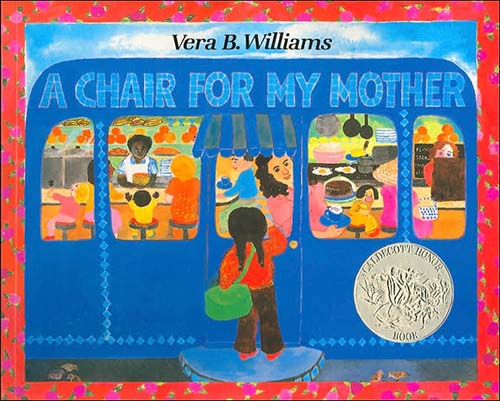
Author and illustrator of 17 children’s books, including Caldecott medal winner, A Chair for My Mother, Vera B. Williams always had a passion for the arts. Williams grew up in the Bronx, NY, and in 1936, when she was nine years old, one of her paintings, called Yentas, opens a new window, was included in an exhibition at the Museum of Modern Art. While Williams is widely known for her children’s books today, this exhibition’s expansive scope highlights unexplored aspects of her artistic practice and eight decades of life. From groundbreaking, powerful covers for Liberation Magazine, to Peace calendar collaborations with writer activist Grace Paley, to scenic sketches for Julian Beck and Judith Malina’s Living Theater, to hundreds of late life “Aging and Illness” cartoons sketches and doodles, Vera never sat still.
Williams arrived at Black Mountain College in 1945. While there, she embraced all aspects of living, working, and learning in the intensely creative college community. She was at BMC during a particularly fertile period, which allowed her to study with faculty members Buckminster Fuller and Josef Albers, and to participate in the famed summer sessions with John Cage, Merce Cunningham, M.C. Richards, and Robert Rauschenberg. In 1948, she graduated with Josef Albers as her advisor and sculptor Richard Lippold as her outside examiner. Forever one of the College’s shining stars, Vera graduated from BMC with just six semesters of coursework, at only twenty-one years old. She continued to visit BMC for years afterward, staying deeply involved with the artistic community that BMC incubated.
Anticipating the eventual closure of BMC, Williams, alongside her husband Paul Williams and a group of influential former BMC figures, founded The Gate Hill Cooperative Artists community located 30 miles north of NYC on the outskirts of Stony Point, NY. The Gate Hill Cooperative, also known as The Land, became an outcropping of Black Mountain College’s experimental ethos. Students and faculty including John Cage, M.C. Richards, David Tudor, Karen Karnes, David Weinrib, Stan VanDerBeek, and Patsy Lynch Wood shaped Gate Hill as founding members of the community. Vera B. Williams raised her three children at Gate Hill while continuing to make work.
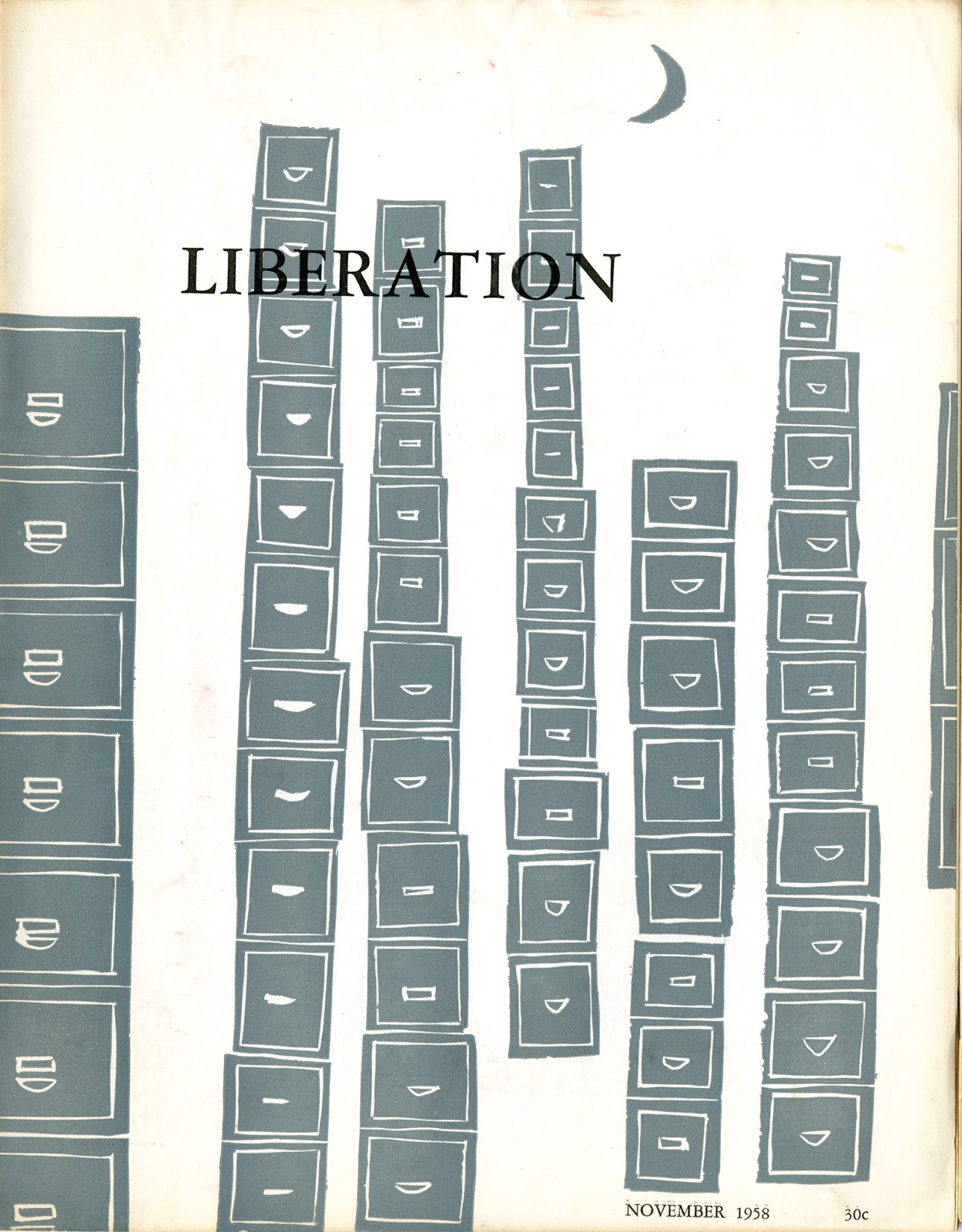
The early Gate Hill era represented an especially creative phase for the BMC group. For Williams, this period saw the creation of 76 covers for Liberation Magazine, a radical, groundbreaking publication. This exhibition will feature some of Williams’ most powerful Liberation covers including a design for the June 1963 edition, which contained the first full publication of MLK’s “Letter from Birmingham Jail.” Williams’ activism work continued throughout her life. As president of PEN’s Children Committee and member of The War Resisters league, she created a wide range of political and educational posters and journal covers. Williams protested the war in Vietnam and nuclear proliferation while supporting women’s causes and racial equality. In 1981, Williams was arrested and spent a month in a federal prison on charges stemming from her political activism.
In her late 40’s, Williams embarked in earnest on her career as a children’s book author and illustrator, a career which garnered the NY Public Library’s recognition of A Chair for My Mother as one of the greatest 100 children’s books of all time. Infinitely curious and always a wanderer at heart, Williams’ personal life was as expansive as her art. In addition to her prolific picture making, Williams started and helped run a Summerhill-based alternative school, canoed the Yukon, and lived alone on a houseboat in Vancouver Harbor. She helped to organize and attended dozens of political demonstrations throughout her adult life.
Her books won many awards including the Caldecott Medal Honor Book for A Chair for My Mother in 1983, the Boston Globe–Horn Book Award– Fiction category– for Scooter in 1994, the Jane Addams Honor for Amber Was Brave, Essie Was Smart in 2002, and the NSK Neustadt Prize for Children’s Literature in 2009. Her books reflected her values, emphasizing love, compassion, kindness, joy, strength, individuality, and courage.
Images:
Cover of Vera B. Williams’ A Chair for My Mother, published in 1982.
Vera B. Williams, Cover for Liberation Magazine, November 1958.
Everyone is invited to our monthly game night. I bring a group of games each month but feel free to bring your own as well. No specific games are set up for the night, we just bring a bunch of stuff from our collections and play some pick-up games. We have the tables and chairs. Bring your own food if you’d like (there is a microwave and fridge). There is also a Chinese place across the street, a convenience store for drinks and snacks, and we’re in walking distance to Hot Dog World. If you have any questions about the types of games we play and basic info about our group, Read our FAQ (https://www.meetup.com/HendoHometownGameGeeks/about/)
NOTE: This event is held at a church but it is not a church event, it is a community event. Everyone is welcome, everyone should feel comfortable attending, and while I’m always happy to privately answer questions about my faith or the church if asked, proselytizing is not the purpose of these gatherings. I hope the location does not make anyone feel uncomfortable and if you have any questions you can message me directly.
Explore the Rich Heritage of Black Communities in Asheville
The Asheville Black Cultural Heritage Trail leads visitors through three areas of Asheville: Downtown, Southside, and the River Area. The entire trail takes approximately 2 hours and 30 minutes to walk and read.
Reflecting on Community Resolve
Did you know that Black people helped create this region’s first non-Indigenous households? Did you know that Black people helped build Asheville and connected Asheville globally? Black entrepreneurs created thriving business districts. Black families cultivated close-knit neighborhoods. Black people from all backgrounds built resilient communities and fostered social change.
Immerse yourself in the history and heroism of Black Ashevillians by walking the Asheville Black Cultural Heritage Trail. Deepen your understanding with articles, videos, and more resources available here on the trail’s website.
Follow the Trail
Experience this trail in pieces as you explore Asheville or start at one of our three introduction kiosks to learn more about how Black people in Asheville negotiated landscapes of unequal power to build resilient communities and foster social change.
Exhibition and Public Programming
Vera B. Williams, an award-winning author and illustrator of children’s books, started making pictures almost as soon as she could walk. She studied at Black Mountain College in a time where summer institutes were held with classes taught by John Cage and Merce Cunningham. Williams studied under the Bauhaus luminary Josef Albers and went on to make art for the rest of her life. At the time of her death, The New York Times wrote: “Her illustrations, known for bold colors and a style reminiscent of folk art, were praised by reviewers for their great tenderness and crackling vitality.” Despite numerous awards and recognition for her children’s books, much of her wider life and work remains unexplored. This retrospective will showcase the complete range of Williams’ life and work. It will highlight her time at Black Mountain College, her political activism, and her establishment, with Paul Williams, of an influential yet little-known artist community, in addition to her work as an author and illustrator.
Author and illustrator of 17 children’s books, including Caldecott medal winner, A Chair for My Mother, Vera B. Williams always had a passion for the arts. Williams grew up in the Bronx, NY, and in 1936, when she was nine years old, one of her paintings, called Yentas, opens a new window, was included in an exhibition at the Museum of Modern Art. While Williams is widely known for her children’s books today, this exhibition’s expansive scope highlights unexplored aspects of her artistic practice and eight decades of life. From groundbreaking, powerful covers for Liberation Magazine, to Peace calendar collaborations with writer activist Grace Paley, to scenic sketches for Julian Beck and Judith Malina’s Living Theater, to hundreds of late life “Aging and Illness” cartoons sketches and doodles, Vera never sat still.
Williams arrived at Black Mountain College in 1945. While there, she embraced all aspects of living, working, and learning in the intensely creative college community. She was at BMC during a particularly fertile period, which allowed her to study with faculty members Buckminster Fuller and Josef Albers, and to participate in the famed summer sessions with John Cage, Merce Cunningham, M.C. Richards, and Robert Rauschenberg. In 1948, she graduated with Josef Albers as her advisor and sculptor Richard Lippold as her outside examiner. Forever one of the College’s shining stars, Vera graduated from BMC with just six semesters of coursework, at only twenty-one years old. She continued to visit BMC for years afterward, staying deeply involved with the artistic community that BMC incubated.
Anticipating the eventual closure of BMC, Williams, alongside her husband Paul Williams and a group of influential former BMC figures, founded The Gate Hill Cooperative Artists community located 30 miles north of NYC on the outskirts of Stony Point, NY. The Gate Hill Cooperative, also known as The Land, became an outcropping of Black Mountain College’s experimental ethos. Students and faculty including John Cage, M.C. Richards, David Tudor, Karen Karnes, David Weinrib, Stan VanDerBeek, and Patsy Lynch Wood shaped Gate Hill as founding members of the community. Vera B. Williams raised her three children at Gate Hill while continuing to make work.
The early Gate Hill era represented an especially creative phase for the BMC group. For Williams, this period saw the creation of 76 covers for Liberation Magazine, a radical, groundbreaking publication. This exhibition will feature some of Williams’ most powerful Liberation covers including a design for the June 1963 edition, which contained the first full publication of MLK’s “Letter from Birmingham Jail.” Williams’ activism work continued throughout her life. As president of PEN’s Children Committee and member of The War Resisters league, she created a wide range of political and educational posters and journal covers. Williams protested the war in Vietnam and nuclear proliferation while supporting women’s causes and racial equality. In 1981, Williams was arrested and spent a month in a federal prison on charges stemming from her political activism.
In her late 40’s, Williams embarked in earnest on her career as a children’s book author and illustrator, a career which garnered the NY Public Library’s recognition of A Chair for My Mother as one of the greatest 100 children’s books of all time. Infinitely curious and always a wanderer at heart, Williams’ personal life was as expansive as her art. In addition to her prolific picture making, Williams started and helped run a Summerhill-based alternative school, canoed the Yukon, and lived alone on a houseboat in Vancouver Harbor. She helped to organize and attended dozens of political demonstrations throughout her adult life.
Her books won many awards including the Caldecott Medal Honor Book for A Chair for My Mother in 1983, the Boston Globe–Horn Book Award– Fiction category– for Scooter in 1994, the Jane Addams Honor for Amber Was Brave, Essie Was Smart in 2002, and the NSK Neustadt Prize for Children’s Literature in 2009. Her books reflected her values, emphasizing love, compassion, kindness, joy, strength, individuality, and courage.
Images:
Cover of Vera B. Williams’ A Chair for My Mother, published in 1982.
Vera B. Williams, Cover for Liberation Magazine, November 1958.
Join Lauren Harr, co-founder of Gold Leaf Literary Services, to ask burning questions about the book world, author events, and the business of writing.
This event is scheduled to occur monthly at the dates and times listed above.
To join, email [email protected] with the subject “I have a question!” and you’ll receive the Zoom link for the upcoming event.
Founded by two long-time booksellers in 2016, Gold Leaf Literary Services is dedicated to educating and assisting authors in various stages of their careers. For more, visit www.goldleafliterary.com.
This is a hybrid event with limited in-store seating and the option to attend online.
The event is free but registration is required for both in-person and virtual attendance.
A powerful, heart-wrenching debut novel about ambition, survival, and our responsibility toward one another
Dixon was once an Olympic-level runner. But he missed the team by two-tenths of a second, and ever since that pain decades ago, he hasn’t allowed a goal to consume him. But when his charming older brother, Nate, suggests that they attempt to be the first Black American men to summit Mount Everest, Dixon can’t refuse. The brothers are determined to prove something—to themselves and to each other.
Dixon interrupts his orderly life as a school psychologist, leaving behind disapproving friends, family, and one particularly fragile student, Marcus. Once on the mountain, they are met with extreme weather conditions, oxygen deprivation, and precarious terrain. But as much as they’ve prepared for this, Mt. Everest is always fickle. And in one devastating moment, Dixon’s world is upended.
Dixon returns home and attempts to resume his job, but things have shifted: for him and for the students he left behind when he chose Mt. Everest. Ultimately, Dixon must confront the truth of what happened on the mountain and come to terms with who can and cannot be saved. DIXON, DESCENDING offers us a captivating, shattering portrait of the ways we’re reshaped by our decisions—and what it takes to angle ourselves, once again, toward hope.
Karen Outen’s fiction has appeared in Glimmer Train, The North American Review, Essence, and elsewhere. She is a 2018 recipient of the Rona Jaffe Foundation Writers Award and has been a fellow at both the Institute for the Humanities at the University of Michigan and the Pew Fellowships in the Arts. She received an MFA from the University of Michigan. She lives in Maryland. Dixon, Descending is her debut novel.
Our Books to Action Book Club will come together in February to examine the issue of poverty. This is the registration link to sign up for our online book discussion of “Poverty, By America” by Matthew Desmond.
Explore the Rich Heritage of Black Communities in Asheville
The Asheville Black Cultural Heritage Trail leads visitors through three areas of Asheville: Downtown, Southside, and the River Area. The entire trail takes approximately 2 hours and 30 minutes to walk and read.
Reflecting on Community Resolve
Did you know that Black people helped create this region’s first non-Indigenous households? Did you know that Black people helped build Asheville and connected Asheville globally? Black entrepreneurs created thriving business districts. Black families cultivated close-knit neighborhoods. Black people from all backgrounds built resilient communities and fostered social change.
Immerse yourself in the history and heroism of Black Ashevillians by walking the Asheville Black Cultural Heritage Trail. Deepen your understanding with articles, videos, and more resources available here on the trail’s website.
Follow the Trail
Experience this trail in pieces as you explore Asheville or start at one of our three introduction kiosks to learn more about how Black people in Asheville negotiated landscapes of unequal power to build resilient communities and foster social change.
The Pack Library Book Club is a book discussion group that meets the second Wednesday of each month at 10:30AM at the library. We read and discuss a variety of book genres. The book for January 2024 is “Solito” by Javier Zamora.
Newcomers are always welcome! If you have any questions about book club, you can email [email protected] .
Exhibition and Public Programming
Vera B. Williams, an award-winning author and illustrator of children’s books, started making pictures almost as soon as she could walk. She studied at Black Mountain College in a time where summer institutes were held with classes taught by John Cage and Merce Cunningham. Williams studied under the Bauhaus luminary Josef Albers and went on to make art for the rest of her life. At the time of her death, The New York Times wrote: “Her illustrations, known for bold colors and a style reminiscent of folk art, were praised by reviewers for their great tenderness and crackling vitality.” Despite numerous awards and recognition for her children’s books, much of her wider life and work remains unexplored. This retrospective will showcase the complete range of Williams’ life and work. It will highlight her time at Black Mountain College, her political activism, and her establishment, with Paul Williams, of an influential yet little-known artist community, in addition to her work as an author and illustrator.
Author and illustrator of 17 children’s books, including Caldecott medal winner, A Chair for My Mother, Vera B. Williams always had a passion for the arts. Williams grew up in the Bronx, NY, and in 1936, when she was nine years old, one of her paintings, called Yentas, opens a new window, was included in an exhibition at the Museum of Modern Art. While Williams is widely known for her children’s books today, this exhibition’s expansive scope highlights unexplored aspects of her artistic practice and eight decades of life. From groundbreaking, powerful covers for Liberation Magazine, to Peace calendar collaborations with writer activist Grace Paley, to scenic sketches for Julian Beck and Judith Malina’s Living Theater, to hundreds of late life “Aging and Illness” cartoons sketches and doodles, Vera never sat still.
Williams arrived at Black Mountain College in 1945. While there, she embraced all aspects of living, working, and learning in the intensely creative college community. She was at BMC during a particularly fertile period, which allowed her to study with faculty members Buckminster Fuller and Josef Albers, and to participate in the famed summer sessions with John Cage, Merce Cunningham, M.C. Richards, and Robert Rauschenberg. In 1948, she graduated with Josef Albers as her advisor and sculptor Richard Lippold as her outside examiner. Forever one of the College’s shining stars, Vera graduated from BMC with just six semesters of coursework, at only twenty-one years old. She continued to visit BMC for years afterward, staying deeply involved with the artistic community that BMC incubated.
Anticipating the eventual closure of BMC, Williams, alongside her husband Paul Williams and a group of influential former BMC figures, founded The Gate Hill Cooperative Artists community located 30 miles north of NYC on the outskirts of Stony Point, NY. The Gate Hill Cooperative, also known as The Land, became an outcropping of Black Mountain College’s experimental ethos. Students and faculty including John Cage, M.C. Richards, David Tudor, Karen Karnes, David Weinrib, Stan VanDerBeek, and Patsy Lynch Wood shaped Gate Hill as founding members of the community. Vera B. Williams raised her three children at Gate Hill while continuing to make work.
The early Gate Hill era represented an especially creative phase for the BMC group. For Williams, this period saw the creation of 76 covers for Liberation Magazine, a radical, groundbreaking publication. This exhibition will feature some of Williams’ most powerful Liberation covers including a design for the June 1963 edition, which contained the first full publication of MLK’s “Letter from Birmingham Jail.” Williams’ activism work continued throughout her life. As president of PEN’s Children Committee and member of The War Resisters league, she created a wide range of political and educational posters and journal covers. Williams protested the war in Vietnam and nuclear proliferation while supporting women’s causes and racial equality. In 1981, Williams was arrested and spent a month in a federal prison on charges stemming from her political activism.
In her late 40’s, Williams embarked in earnest on her career as a children’s book author and illustrator, a career which garnered the NY Public Library’s recognition of A Chair for My Mother as one of the greatest 100 children’s books of all time. Infinitely curious and always a wanderer at heart, Williams’ personal life was as expansive as her art. In addition to her prolific picture making, Williams started and helped run a Summerhill-based alternative school, canoed the Yukon, and lived alone on a houseboat in Vancouver Harbor. She helped to organize and attended dozens of political demonstrations throughout her adult life.
Her books won many awards including the Caldecott Medal Honor Book for A Chair for My Mother in 1983, the Boston Globe–Horn Book Award– Fiction category– for Scooter in 1994, the Jane Addams Honor for Amber Was Brave, Essie Was Smart in 2002, and the NSK Neustadt Prize for Children’s Literature in 2009. Her books reflected her values, emphasizing love, compassion, kindness, joy, strength, individuality, and courage.
Images:
Cover of Vera B. Williams’ A Chair for My Mother, published in 1982.
Vera B. Williams, Cover for Liberation Magazine, November 1958.
Explore the Rich Heritage of Black Communities in Asheville
The Asheville Black Cultural Heritage Trail leads visitors through three areas of Asheville: Downtown, Southside, and the River Area. The entire trail takes approximately 2 hours and 30 minutes to walk and read.
Reflecting on Community Resolve
Did you know that Black people helped create this region’s first non-Indigenous households? Did you know that Black people helped build Asheville and connected Asheville globally? Black entrepreneurs created thriving business districts. Black families cultivated close-knit neighborhoods. Black people from all backgrounds built resilient communities and fostered social change.
Immerse yourself in the history and heroism of Black Ashevillians by walking the Asheville Black Cultural Heritage Trail. Deepen your understanding with articles, videos, and more resources available here on the trail’s website.
Follow the Trail
Experience this trail in pieces as you explore Asheville or start at one of our three introduction kiosks to learn more about how Black people in Asheville negotiated landscapes of unequal power to build resilient communities and foster social change.
There is no better way to DISCOVER and EXPLORE Asheville! Hop-on board one of Gray Line’s nostalgic trolleys for a fully narrated day tour, highlighting the history, homes, hang-outs and hot spots of this “city of surprises.”
Tour Highlights include . . . Downtown Asheville | Montford Historic District | The Grove Park Inn and Grove Park Historic District | Thomas Wolfe District | Pack Square and Asheville Art Museum | Grove Arcade | River Arts District | Biltmore Village
Hop-On and hear the story of a city rich in architecture, history and the arts . . .
Hop-Off and experience its eclectic shops and galleries; its world class culinary and craft brew scenes.
Tour Duration: The complete tour (one loop) lasts approximately 90 to 100 minutes. There is an additional 15 minute stop at the Asheville Visitor Center. The Hop-On/Hop-Off Tour ticket is valid for TWO consecutive days.
Departure Points: Join the Hop-On/Hop-Off Tour at any of the 10 stops. If you’re driving in to join the tour, Stop 1, the Asheville Visitor Center may be your best option. The Visitor Center, located at 36 Montford Ave. just off I-240 at Exit 4C, offers free parking (on a first come-first served basis) and restrooms. The Asheville Visitor Center is the ONLY place to join the Overview Tour.
Join us for a North Carolina winery tour and celebrate a date night, bachelorette party, retirement, family, or a weekend away while sampling our favorite local beverages along the way. Our standard tour includes visits to three Asheville area vineyards. With safe and reliable transportation provided, you can sit back, relax and just have fun.
Included:
- Round trip transportation*
- Three vineyard visits
- Tastings at two of your three stops. Let’s just say that the pours at the first couple of locations are generous so we like to leave the third-stop beverage choice up to you.
- Time commitment = up to 5 hours
Want to include specific vineyards on your Asheville wine tours? If you have “must-see” wineries in mind or want to craft a full day catered to your group’s interests, we’re always happy to create a custom experience. Reach out any time!
Exhibition and Public Programming
Vera B. Williams, an award-winning author and illustrator of children’s books, started making pictures almost as soon as she could walk. She studied at Black Mountain College in a time where summer institutes were held with classes taught by John Cage and Merce Cunningham. Williams studied under the Bauhaus luminary Josef Albers and went on to make art for the rest of her life. At the time of her death, The New York Times wrote: “Her illustrations, known for bold colors and a style reminiscent of folk art, were praised by reviewers for their great tenderness and crackling vitality.” Despite numerous awards and recognition for her children’s books, much of her wider life and work remains unexplored. This retrospective will showcase the complete range of Williams’ life and work. It will highlight her time at Black Mountain College, her political activism, and her establishment, with Paul Williams, of an influential yet little-known artist community, in addition to her work as an author and illustrator.
Author and illustrator of 17 children’s books, including Caldecott medal winner, A Chair for My Mother, Vera B. Williams always had a passion for the arts. Williams grew up in the Bronx, NY, and in 1936, when she was nine years old, one of her paintings, called Yentas, opens a new window, was included in an exhibition at the Museum of Modern Art. While Williams is widely known for her children’s books today, this exhibition’s expansive scope highlights unexplored aspects of her artistic practice and eight decades of life. From groundbreaking, powerful covers for Liberation Magazine, to Peace calendar collaborations with writer activist Grace Paley, to scenic sketches for Julian Beck and Judith Malina’s Living Theater, to hundreds of late life “Aging and Illness” cartoons sketches and doodles, Vera never sat still.
Williams arrived at Black Mountain College in 1945. While there, she embraced all aspects of living, working, and learning in the intensely creative college community. She was at BMC during a particularly fertile period, which allowed her to study with faculty members Buckminster Fuller and Josef Albers, and to participate in the famed summer sessions with John Cage, Merce Cunningham, M.C. Richards, and Robert Rauschenberg. In 1948, she graduated with Josef Albers as her advisor and sculptor Richard Lippold as her outside examiner. Forever one of the College’s shining stars, Vera graduated from BMC with just six semesters of coursework, at only twenty-one years old. She continued to visit BMC for years afterward, staying deeply involved with the artistic community that BMC incubated.
Anticipating the eventual closure of BMC, Williams, alongside her husband Paul Williams and a group of influential former BMC figures, founded The Gate Hill Cooperative Artists community located 30 miles north of NYC on the outskirts of Stony Point, NY. The Gate Hill Cooperative, also known as The Land, became an outcropping of Black Mountain College’s experimental ethos. Students and faculty including John Cage, M.C. Richards, David Tudor, Karen Karnes, David Weinrib, Stan VanDerBeek, and Patsy Lynch Wood shaped Gate Hill as founding members of the community. Vera B. Williams raised her three children at Gate Hill while continuing to make work.
The early Gate Hill era represented an especially creative phase for the BMC group. For Williams, this period saw the creation of 76 covers for Liberation Magazine, a radical, groundbreaking publication. This exhibition will feature some of Williams’ most powerful Liberation covers including a design for the June 1963 edition, which contained the first full publication of MLK’s “Letter from Birmingham Jail.” Williams’ activism work continued throughout her life. As president of PEN’s Children Committee and member of The War Resisters league, she created a wide range of political and educational posters and journal covers. Williams protested the war in Vietnam and nuclear proliferation while supporting women’s causes and racial equality. In 1981, Williams was arrested and spent a month in a federal prison on charges stemming from her political activism.
In her late 40’s, Williams embarked in earnest on her career as a children’s book author and illustrator, a career which garnered the NY Public Library’s recognition of A Chair for My Mother as one of the greatest 100 children’s books of all time. Infinitely curious and always a wanderer at heart, Williams’ personal life was as expansive as her art. In addition to her prolific picture making, Williams started and helped run a Summerhill-based alternative school, canoed the Yukon, and lived alone on a houseboat in Vancouver Harbor. She helped to organize and attended dozens of political demonstrations throughout her adult life.
Her books won many awards including the Caldecott Medal Honor Book for A Chair for My Mother in 1983, the Boston Globe–Horn Book Award– Fiction category– for Scooter in 1994, the Jane Addams Honor for Amber Was Brave, Essie Was Smart in 2002, and the NSK Neustadt Prize for Children’s Literature in 2009. Her books reflected her values, emphasizing love, compassion, kindness, joy, strength, individuality, and courage.
Images:
Cover of Vera B. Williams’ A Chair for My Mother, published in 1982.
Vera B. Williams, Cover for Liberation Magazine, November 1958.
| Find your perfect book match! Rate your first impression of titles that catch your eye. If the book steals your heart after a quick skim, you’ve found a keeper to check out! Grades 6th grade and up. Drop in and play a few rounds. Refreshments will be served. |
Gwenda Bond shares her new romantic, magical heist novel, The Frame-Up, in conversation with Megan Shepherd.
The event is free but registration is required for both in-person and virtual attendance.
Please click here to register for the VIRTUAL event. The link required to attend will be emailed to registrants prior to the event.
Please click here to register for the IN-PERSON event. Note the important event details on the RSVP form.
The Frame-Up
Dani Poissant is the daughter and former accomplice of the world’s most famous art thief. There was no job too big for Maria and her loyal crew. The secret to their success? A little thing called magic, kept rigorously secret from the non-magical world. They seemed unstoppable . . . until a teenage Dani turned her mother over to the FBI.
Ten years later, with Maria still in prison, Dani finds herself approached for a job that only Maria and her crew could pull off . . . if any of them were still speaking to her. But it’s the job of a lifetime and might just be the lure Dani needs to reconcile with her mother and be reunited with her mother’s old gang—including both the love of her life and her former best friend.
The problem is, it’s an impossible task—even with the magical talents of the people she once considered family backing her up. It’s a heist that needs a year to plan, and Dani has just over a week. Worse, the more Dani learns, the more she understands that there’s far more at stake in this job than she ever realized.
Gwenda Bond is the New York Times bestselling author of many novels, including the first official Stranger Things novel, Suspicious Minds, as well as the Match Made in Hell, Lois Lane, and Cirque American series. She lives in a hundred-year-old house in Lexington, Kentucky, with her husband, author Christopher Rowe, and a veritable zoo of adorable doggos and queenly cats.
New York Times bestseller and Carnegie Medal-nominated author Megan Shepherd grew up in her family’s independent bookstore in the Blue Ridge Mountains. She is the author of many acclaimed novels for readers of all ages. She now lives and writes on a haunted 130-year-old farm outside Asheville, North Carolina, with her husband and children, cats, chickens, bees, and an especially scruffy dog.
This event includes a book signing. If you would like a signed book but can’t attend in person, you may order a signed copy online below. If you would like to have your book personalized, please order online or call the store at least two hours before the start of the event. When ordering online, use the comments field to provide a name for personalization, e.g. “To Paul.” NOTE: We do our best to get books personalized when requested but personalization is not guaranteed.
If you decide to attend and to purchase books, we ask that you purchase from Malaprop’s. When you do this you make it possible for us to continue hosting author events and you keep more dollars in our community. You may also support our work by purchasing a gift card or making a donation of any amount below. Thank you!
Explore the Rich Heritage of Black Communities in Asheville
The Asheville Black Cultural Heritage Trail leads visitors through three areas of Asheville: Downtown, Southside, and the River Area. The entire trail takes approximately 2 hours and 30 minutes to walk and read.
Reflecting on Community Resolve
Did you know that Black people helped create this region’s first non-Indigenous households? Did you know that Black people helped build Asheville and connected Asheville globally? Black entrepreneurs created thriving business districts. Black families cultivated close-knit neighborhoods. Black people from all backgrounds built resilient communities and fostered social change.
Immerse yourself in the history and heroism of Black Ashevillians by walking the Asheville Black Cultural Heritage Trail. Deepen your understanding with articles, videos, and more resources available here on the trail’s website.
Follow the Trail
Experience this trail in pieces as you explore Asheville or start at one of our three introduction kiosks to learn more about how Black people in Asheville negotiated landscapes of unequal power to build resilient communities and foster social change.
Sit back if you dare as we illuminate Asheville’s darkest history with astonishing stories of spirits & spies, ghosts & goblins, hauntings & hoodlums and mountain-made murder & mayhem.
Hear stories of . . .
The legendary PINK LADY at the Grove Park Inn
The GHOST of Church Street
The 1936 UNSOLVED MURDER that shook Asheville
The CHILD SPIRITS at the haunted hospital
The architect walled into his own church!
The KILLING SPREE of 1906
NAZI AGENTS based in Asheville
ARSON at hospital that claimed Zelda Fitzgerald
There is no better way to DISCOVER and EXPLORE Asheville! Hop-on board one of Gray Line’s nostalgic trolleys for a fully narrated day tour, highlighting the history, homes, hang-outs and hot spots of this “city of surprises.”
Tour Highlights include . . . Downtown Asheville | Montford Historic District | The Grove Park Inn and Grove Park Historic District | Thomas Wolfe District | Pack Square and Asheville Art Museum | Grove Arcade | River Arts District | Biltmore Village
Hop-On and hear the story of a city rich in architecture, history and the arts . . .
Hop-Off and experience its eclectic shops and galleries; its world class culinary and craft brew scenes.
Tour Duration: The complete tour (one loop) lasts approximately 90 to 100 minutes. There is an additional 15 minute stop at the Asheville Visitor Center. The Hop-On/Hop-Off Tour ticket is valid for TWO consecutive days.
Departure Points: Join the Hop-On/Hop-Off Tour at any of the 10 stops. If you’re driving in to join the tour, Stop 1, the Asheville Visitor Center may be your best option. The Visitor Center, located at 36 Montford Ave. just off I-240 at Exit 4C, offers free parking (on a first come-first served basis) and restrooms. The Asheville Visitor Center is the ONLY place to join the Overview Tour.
Join us for a North Carolina winery tour and celebrate a date night, bachelorette party, retirement, family, or a weekend away while sampling our favorite local beverages along the way. Our standard tour includes visits to three Asheville area vineyards. With safe and reliable transportation provided, you can sit back, relax and just have fun.
Included:
- Round trip transportation*
- Three vineyard visits
- Tastings at two of your three stops. Let’s just say that the pours at the first couple of locations are generous so we like to leave the third-stop beverage choice up to you.
- Time commitment = up to 5 hours
Want to include specific vineyards on your Asheville wine tours? If you have “must-see” wineries in mind or want to craft a full day catered to your group’s interests, we’re always happy to create a custom experience. Reach out any time!
Exhibition and Public Programming
Vera B. Williams, an award-winning author and illustrator of children’s books, started making pictures almost as soon as she could walk. She studied at Black Mountain College in a time where summer institutes were held with classes taught by John Cage and Merce Cunningham. Williams studied under the Bauhaus luminary Josef Albers and went on to make art for the rest of her life. At the time of her death, The New York Times wrote: “Her illustrations, known for bold colors and a style reminiscent of folk art, were praised by reviewers for their great tenderness and crackling vitality.” Despite numerous awards and recognition for her children’s books, much of her wider life and work remains unexplored. This retrospective will showcase the complete range of Williams’ life and work. It will highlight her time at Black Mountain College, her political activism, and her establishment, with Paul Williams, of an influential yet little-known artist community, in addition to her work as an author and illustrator.
Author and illustrator of 17 children’s books, including Caldecott medal winner, A Chair for My Mother, Vera B. Williams always had a passion for the arts. Williams grew up in the Bronx, NY, and in 1936, when she was nine years old, one of her paintings, called Yentas, opens a new window, was included in an exhibition at the Museum of Modern Art. While Williams is widely known for her children’s books today, this exhibition’s expansive scope highlights unexplored aspects of her artistic practice and eight decades of life. From groundbreaking, powerful covers for Liberation Magazine, to Peace calendar collaborations with writer activist Grace Paley, to scenic sketches for Julian Beck and Judith Malina’s Living Theater, to hundreds of late life “Aging and Illness” cartoons sketches and doodles, Vera never sat still.
Williams arrived at Black Mountain College in 1945. While there, she embraced all aspects of living, working, and learning in the intensely creative college community. She was at BMC during a particularly fertile period, which allowed her to study with faculty members Buckminster Fuller and Josef Albers, and to participate in the famed summer sessions with John Cage, Merce Cunningham, M.C. Richards, and Robert Rauschenberg. In 1948, she graduated with Josef Albers as her advisor and sculptor Richard Lippold as her outside examiner. Forever one of the College’s shining stars, Vera graduated from BMC with just six semesters of coursework, at only twenty-one years old. She continued to visit BMC for years afterward, staying deeply involved with the artistic community that BMC incubated.
Anticipating the eventual closure of BMC, Williams, alongside her husband Paul Williams and a group of influential former BMC figures, founded The Gate Hill Cooperative Artists community located 30 miles north of NYC on the outskirts of Stony Point, NY. The Gate Hill Cooperative, also known as The Land, became an outcropping of Black Mountain College’s experimental ethos. Students and faculty including John Cage, M.C. Richards, David Tudor, Karen Karnes, David Weinrib, Stan VanDerBeek, and Patsy Lynch Wood shaped Gate Hill as founding members of the community. Vera B. Williams raised her three children at Gate Hill while continuing to make work.
The early Gate Hill era represented an especially creative phase for the BMC group. For Williams, this period saw the creation of 76 covers for Liberation Magazine, a radical, groundbreaking publication. This exhibition will feature some of Williams’ most powerful Liberation covers including a design for the June 1963 edition, which contained the first full publication of MLK’s “Letter from Birmingham Jail.” Williams’ activism work continued throughout her life. As president of PEN’s Children Committee and member of The War Resisters league, she created a wide range of political and educational posters and journal covers. Williams protested the war in Vietnam and nuclear proliferation while supporting women’s causes and racial equality. In 1981, Williams was arrested and spent a month in a federal prison on charges stemming from her political activism.
In her late 40’s, Williams embarked in earnest on her career as a children’s book author and illustrator, a career which garnered the NY Public Library’s recognition of A Chair for My Mother as one of the greatest 100 children’s books of all time. Infinitely curious and always a wanderer at heart, Williams’ personal life was as expansive as her art. In addition to her prolific picture making, Williams started and helped run a Summerhill-based alternative school, canoed the Yukon, and lived alone on a houseboat in Vancouver Harbor. She helped to organize and attended dozens of political demonstrations throughout her adult life.
Her books won many awards including the Caldecott Medal Honor Book for A Chair for My Mother in 1983, the Boston Globe–Horn Book Award– Fiction category– for Scooter in 1994, the Jane Addams Honor for Amber Was Brave, Essie Was Smart in 2002, and the NSK Neustadt Prize for Children’s Literature in 2009. Her books reflected her values, emphasizing love, compassion, kindness, joy, strength, individuality, and courage.
Images:
Cover of Vera B. Williams’ A Chair for My Mother, published in 1982.
Vera B. Williams, Cover for Liberation Magazine, November 1958.
Explore the dark side of Beer City on LaZoom’s Ghosted Tour!
Duration
1 hour
About
Come enjoy our most popular Asheville tour!
About
Bachelorette/Bachelor Parties are not permitted on this tour. The Fender Bender Bus is bachelorette/bachelor friendly!
Learn about Asheville’s strange, sometimes sordid past from our ghoulish guides. You’ll laugh! You’ll scream! You’ll discover mysteries and chilling tales of scandal and murder on the blood-stained streets of this picturesque town!
Ghosted runs approximately 60 minutes. Beer and wine are welcome onboard, but no open containers, and absolutely no liquor, please! All beer and wine must be purchased from the LaZoom Room. (Passengers must be at least 21 years old to drink on the bus, and must have valid ID.)
Age Restrictions
17 and up. No exceptions.
What’s Included
A bunch of bus seats
History of murders, ghosts and tragedies in the Land of the Sky
Tongue-in-cheek comedy
A live (not dead) tour guide
What’s Not Included
Bathroom breaks (It’s 60 minutes long – plan accordingly!)
Beer or Wine (Purchase at our bar, the LaZoom Room, and take on the bus)
Laughing (we’ll give you the funny, but it’s up to you to laugh)
Gratuity (guides only accept dead president currency)
Waitlist
If your desired time and availability is full, then please give us a call to be added to the waitlist.
Explore the Rich Heritage of Black Communities in Asheville
The Asheville Black Cultural Heritage Trail leads visitors through three areas of Asheville: Downtown, Southside, and the River Area. The entire trail takes approximately 2 hours and 30 minutes to walk and read.
Reflecting on Community Resolve
Did you know that Black people helped create this region’s first non-Indigenous households? Did you know that Black people helped build Asheville and connected Asheville globally? Black entrepreneurs created thriving business districts. Black families cultivated close-knit neighborhoods. Black people from all backgrounds built resilient communities and fostered social change.
Immerse yourself in the history and heroism of Black Ashevillians by walking the Asheville Black Cultural Heritage Trail. Deepen your understanding with articles, videos, and more resources available here on the trail’s website.
Follow the Trail
Experience this trail in pieces as you explore Asheville or start at one of our three introduction kiosks to learn more about how Black people in Asheville negotiated landscapes of unequal power to build resilient communities and foster social change.
Sit back if you dare as we illuminate Asheville’s darkest history with astonishing stories of spirits & spies, ghosts & goblins, hauntings & hoodlums and mountain-made murder & mayhem.
Hear stories of . . .
The legendary PINK LADY at the Grove Park Inn
The GHOST of Church Street
The 1936 UNSOLVED MURDER that shook Asheville
The CHILD SPIRITS at the haunted hospital
The architect walled into his own church!
The KILLING SPREE of 1906
NAZI AGENTS based in Asheville
ARSON at hospital that claimed Zelda Fitzgerald
There is no better way to DISCOVER and EXPLORE Asheville! Hop-on board one of Gray Line’s nostalgic trolleys for a fully narrated day tour, highlighting the history, homes, hang-outs and hot spots of this “city of surprises.”
Tour Highlights include . . . Downtown Asheville | Montford Historic District | The Grove Park Inn and Grove Park Historic District | Thomas Wolfe District | Pack Square and Asheville Art Museum | Grove Arcade | River Arts District | Biltmore Village
Hop-On and hear the story of a city rich in architecture, history and the arts . . .
Hop-Off and experience its eclectic shops and galleries; its world class culinary and craft brew scenes.
Tour Duration: The complete tour (one loop) lasts approximately 90 to 100 minutes. There is an additional 15 minute stop at the Asheville Visitor Center. The Hop-On/Hop-Off Tour ticket is valid for TWO consecutive days.
Departure Points: Join the Hop-On/Hop-Off Tour at any of the 10 stops. If you’re driving in to join the tour, Stop 1, the Asheville Visitor Center may be your best option. The Visitor Center, located at 36 Montford Ave. just off I-240 at Exit 4C, offers free parking (on a first come-first served basis) and restrooms. The Asheville Visitor Center is the ONLY place to join the Overview Tour.
Join us for a North Carolina winery tour and celebrate a date night, bachelorette party, retirement, family, or a weekend away while sampling our favorite local beverages along the way. Our standard tour includes visits to three Asheville area vineyards. With safe and reliable transportation provided, you can sit back, relax and just have fun.
Included:
- Round trip transportation*
- Three vineyard visits
- Tastings at two of your three stops. Let’s just say that the pours at the first couple of locations are generous so we like to leave the third-stop beverage choice up to you.
- Time commitment = up to 5 hours
Want to include specific vineyards on your Asheville wine tours? If you have “must-see” wineries in mind or want to craft a full day catered to your group’s interests, we’re always happy to create a custom experience. Reach out any time!
Exhibition and Public Programming
Vera B. Williams, an award-winning author and illustrator of children’s books, started making pictures almost as soon as she could walk. She studied at Black Mountain College in a time where summer institutes were held with classes taught by John Cage and Merce Cunningham. Williams studied under the Bauhaus luminary Josef Albers and went on to make art for the rest of her life. At the time of her death, The New York Times wrote: “Her illustrations, known for bold colors and a style reminiscent of folk art, were praised by reviewers for their great tenderness and crackling vitality.” Despite numerous awards and recognition for her children’s books, much of her wider life and work remains unexplored. This retrospective will showcase the complete range of Williams’ life and work. It will highlight her time at Black Mountain College, her political activism, and her establishment, with Paul Williams, of an influential yet little-known artist community, in addition to her work as an author and illustrator.
Author and illustrator of 17 children’s books, including Caldecott medal winner, A Chair for My Mother, Vera B. Williams always had a passion for the arts. Williams grew up in the Bronx, NY, and in 1936, when she was nine years old, one of her paintings, called Yentas, opens a new window, was included in an exhibition at the Museum of Modern Art. While Williams is widely known for her children’s books today, this exhibition’s expansive scope highlights unexplored aspects of her artistic practice and eight decades of life. From groundbreaking, powerful covers for Liberation Magazine, to Peace calendar collaborations with writer activist Grace Paley, to scenic sketches for Julian Beck and Judith Malina’s Living Theater, to hundreds of late life “Aging and Illness” cartoons sketches and doodles, Vera never sat still.
Williams arrived at Black Mountain College in 1945. While there, she embraced all aspects of living, working, and learning in the intensely creative college community. She was at BMC during a particularly fertile period, which allowed her to study with faculty members Buckminster Fuller and Josef Albers, and to participate in the famed summer sessions with John Cage, Merce Cunningham, M.C. Richards, and Robert Rauschenberg. In 1948, she graduated with Josef Albers as her advisor and sculptor Richard Lippold as her outside examiner. Forever one of the College’s shining stars, Vera graduated from BMC with just six semesters of coursework, at only twenty-one years old. She continued to visit BMC for years afterward, staying deeply involved with the artistic community that BMC incubated.
Anticipating the eventual closure of BMC, Williams, alongside her husband Paul Williams and a group of influential former BMC figures, founded The Gate Hill Cooperative Artists community located 30 miles north of NYC on the outskirts of Stony Point, NY. The Gate Hill Cooperative, also known as The Land, became an outcropping of Black Mountain College’s experimental ethos. Students and faculty including John Cage, M.C. Richards, David Tudor, Karen Karnes, David Weinrib, Stan VanDerBeek, and Patsy Lynch Wood shaped Gate Hill as founding members of the community. Vera B. Williams raised her three children at Gate Hill while continuing to make work.
The early Gate Hill era represented an especially creative phase for the BMC group. For Williams, this period saw the creation of 76 covers for Liberation Magazine, a radical, groundbreaking publication. This exhibition will feature some of Williams’ most powerful Liberation covers including a design for the June 1963 edition, which contained the first full publication of MLK’s “Letter from Birmingham Jail.” Williams’ activism work continued throughout her life. As president of PEN’s Children Committee and member of The War Resisters league, she created a wide range of political and educational posters and journal covers. Williams protested the war in Vietnam and nuclear proliferation while supporting women’s causes and racial equality. In 1981, Williams was arrested and spent a month in a federal prison on charges stemming from her political activism.
In her late 40’s, Williams embarked in earnest on her career as a children’s book author and illustrator, a career which garnered the NY Public Library’s recognition of A Chair for My Mother as one of the greatest 100 children’s books of all time. Infinitely curious and always a wanderer at heart, Williams’ personal life was as expansive as her art. In addition to her prolific picture making, Williams started and helped run a Summerhill-based alternative school, canoed the Yukon, and lived alone on a houseboat in Vancouver Harbor. She helped to organize and attended dozens of political demonstrations throughout her adult life.
Her books won many awards including the Caldecott Medal Honor Book for A Chair for My Mother in 1983, the Boston Globe–Horn Book Award– Fiction category– for Scooter in 1994, the Jane Addams Honor for Amber Was Brave, Essie Was Smart in 2002, and the NSK Neustadt Prize for Children’s Literature in 2009. Her books reflected her values, emphasizing love, compassion, kindness, joy, strength, individuality, and courage.
Images:
Cover of Vera B. Williams’ A Chair for My Mother, published in 1982.
Vera B. Williams, Cover for Liberation Magazine, November 1958.
