

Calendar of Events
Upcoming events and things to do in Asheville, NC. Below is a list of events for festivals, concerts, art exhibitions, group meetups and more.
Interested in adding an event to our calendar? Please click the green “Post Your Event” button below.

For the past 30 years, the Organic Growers School Spring Conference has served as a gathering place for growers in Appalachia to connect, learn from one another, and deepen connections to land and community. The Spring Conference began as an entirely volunteer-run and free event and has expanded to support an organization of ten staff with year-round programming. As we have grown, we have experimented with different approaches to keeping the event affordable and accessible while also working on compensation for our speakers and supporting our growing staff. We encourage you to check out our recent blog post exploring this in more depth. This year, we are excited to be experimenting with sliding scale ticket pricing for the first time, and we wanted to take some time to explain how this works and why we decided to implement it this year.
Looking beyond scholarships
Over the past several years, we have started implementing different scholarship options. We have set aside around $3000 in our internal budget for scholarships, and we have increased our outreach to other groups in the area who have funding to support individuals to attend conferences. We also offer work-trade opportunities for people who are interested in helping out with our event in exchange for attendance. We have around 100 work-traders access the conference each year through these opportunities, but we have never used up our entire scholarship fund for the event. We know that there are many individuals in our community that we are not reaching through our scholarship opportunities. We began to wonder if scholarship applications were creating a barrier to participation and started researching other options, landing eventually on sliding scale as our preferred model.
How alternative pricing models address accessibility
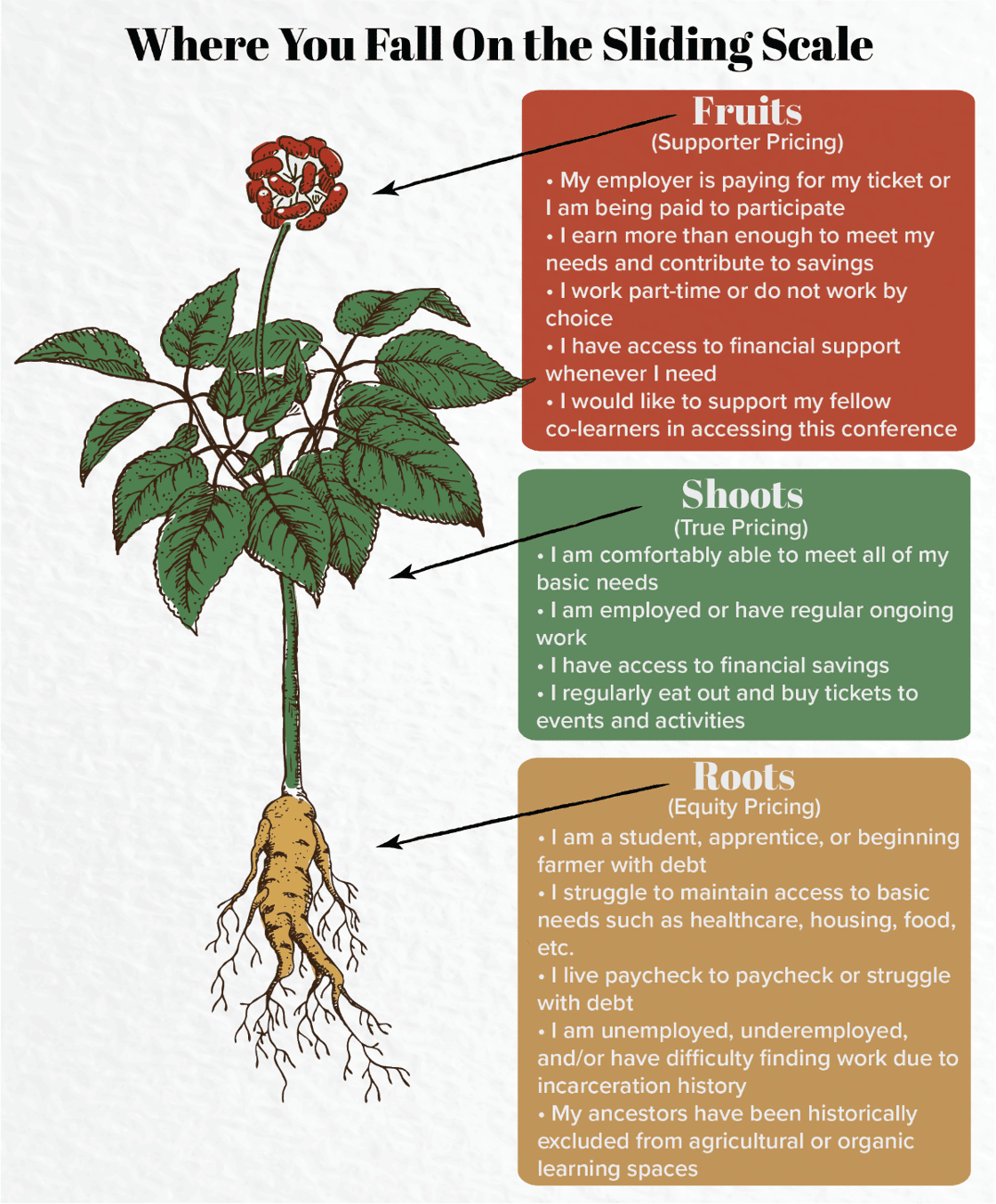
The sliding scale model, which offers the opportunity for participants to select a price to pay for their ticket, meets several of the parameters we were looking for in an accessible pricing model. Most importantly, it is a seamless way for attendees to access the price that meets their needs. So many things are means-tested in our society, and it can be exhausting to justify why one needs a more affordable price point. While many of our community members need financial support, there are also members of this community who have more than enough to share and are excited about supporting their fellow co-learners. These attendees can select the higher end of the sliding scale, which will be set at a price to offset the lower price paid by other attendees. We trust our attendees to select the option that best works for them while also considering how their selection would affect the ability of other participants to access a lower price point.
Accessibility is a priority for OGS, and implementing it is a risk for us as a small non-profit, given that we rely on our large events like the Spring Conference to support our year-round programming and staff salaries. This will certainly be an experimental year, and if we are not able to secure enough income through sliding-scale registrations, we will have to rethink our approach to pricing. We trust that our community will be thoughtful in thinking about the value that this conference has to them and about what they are able to pay for at this time. Thank you for being on this journey of discovery with us!
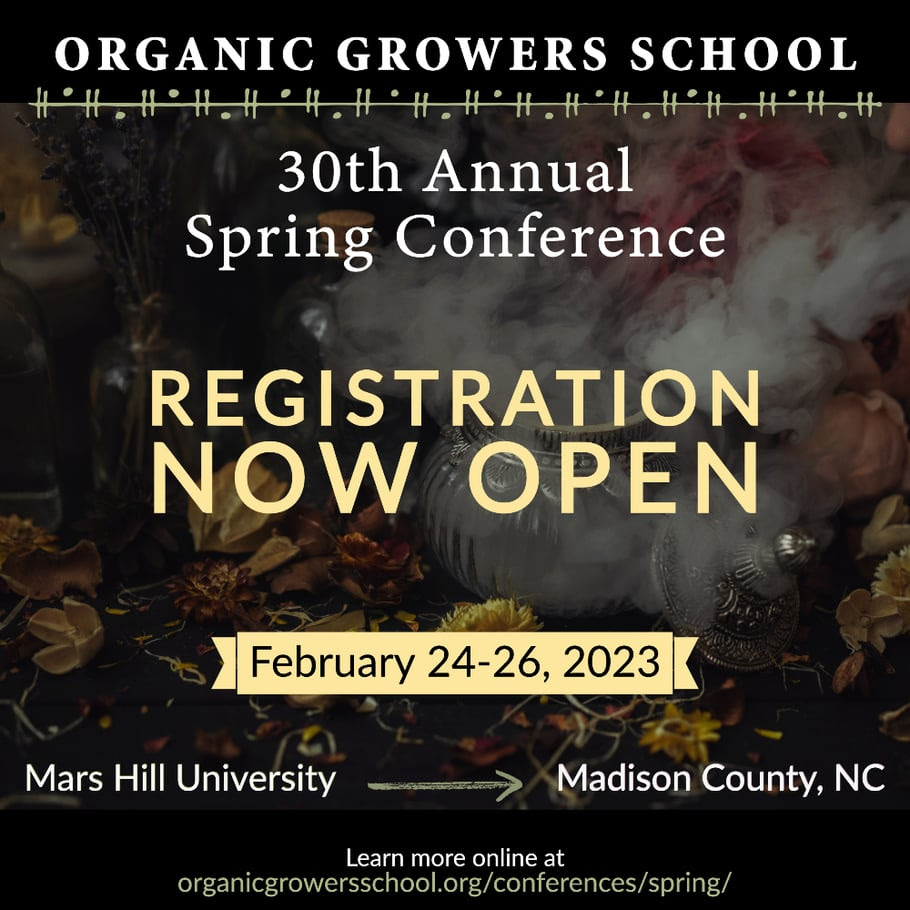
Registration is OPEN!
30th Annual Spring Conference at Mars Hill University
You’re in for a fun-filled weekend of learning and community building. This year our Tracks include Cooking, Food Justice, Farming Business + Production, Herbs, Mushrooms, Forest Farming, Gardening, Holistic Forestry, Livestock & Poultry, Living on the Land, Permaculture, Pests & Pollinators, Soils, & Sustainable Living!For each Track subject, there are 4 different classes to choose from taught by expert educators. There will also be 8 half-day workshops to choose from if you want to dive deep into subjects like Fermentation, Spirulina Cultivation, Invasive Vine Basketry, and more!
View the full Spring Conference schedule here.
Sliding Scale Pricing for Spring Conference
OGS is implementing a Sliding Scale Price model for 2023
So many things are means-tested in our society, and it can be exhausting to justify why one needs a more affordable price point. The sliding scale model, which allows participants to select a price to pay for their ticket, meets several of the parameters we were looking for in an accessible pricing model.
While many of our community members need financial support, some of these community members have more than enough to share and are excited about supporting their fellow co-learners. These attendees can select the higher end of the sliding scale, which will be set at a price to offset the lower price paid by other attendees. We trust our attendees to select the option that best works for them while also considering how their selection would affect the ability of other participants to access a lower price point.
Accessibility is a priority for OGS, and implementing it is a risk for us as a small non-profit, given that we rely on our large events like the Spring Conference to support our year-round programming and staff salaries. This will certainly be an experimental year, and if we cannot secure enough income through sliding-scale registrations, we will have to rethink our approach to pricing. We trust that our community will be thoughtful in thinking about the value this conference has for them and what they can pay for at this time.
-1.png?width=910&upscale=true&name=registration%20open%20SC-1%20(1)-1.png)
USDA, Extension, FSA, NRCS, Rural Development–at times, the acronyms and jargon associated with farming programs can seem overwhelming. Hosted by our partner, Stephen Bishop NC FarmLink Western Director, this presentation will provide a brief overview of the most common government farm assistance programs, as well as tips and advice on applying for assistance and where to get started.
Extension Master GardenerSM Volunteers of Buncombe County are happy to announce for the sixteenth year we are offering School Garden Grants to Asheville City and Buncombe County public schools, including state charter schools.

We provide a notice of the application period along with instructions to all school principals, elementary through senior high. Additional information is available on our website, buncombemastergardener.org, where you can learn more about the guidelines for receiving a grant and get online access to the 2023 School Garden Grants Application.
All applications must be completed online. Completed applications will be accepted beginning January 9, 2023, and must be submitted no later than 9 p.m. on February 3, 2023. If you have any questions, please call the Extension Office at 828-255-5522.
We are proud of our partnership with Asheville City and Buncombe County Schools. Since 2007, we have awarded 52 School Garden Grants totaling over $45,000. These grants have involved more than 16,500 students and hundreds of teachers, parents, and community volunteers.
School gardens grow more than plants. They grow imagination and creativity. They make math and science come alive, and they build community. We hope your school will join us in 2023.
Click on the link below to review the guidelines for school garden grants:
Guidelines for 2023 School Garden Grants
The upcoming Journeyperson course is now available AT NO COST! Due to some timely grant funding, we can offer this in-depth farmer training for farmers in years 3-7 with no associated tuition fee! The course consists of monthly cohort meet-ups and 2-3 in-depth workshops, plus mentorship!
In addition, a select number of participants will also receive matched FUNDS for your farm savings account (Savings Incentive Program) and money to spend on a professional development opportunity of your choosing! Want to attend a workshop on livestock management? OGS will contribute towards that fee! Are you saving money for a farm asset? OGS will contribute up to a certain amount to that investment.
The Journeyperson Program is for farmers who have been independently farming for three or more years and are serious about operating farm businesses in the Southern Appalachian region.
|
|
Register for our Cuba Agroecology Tour!
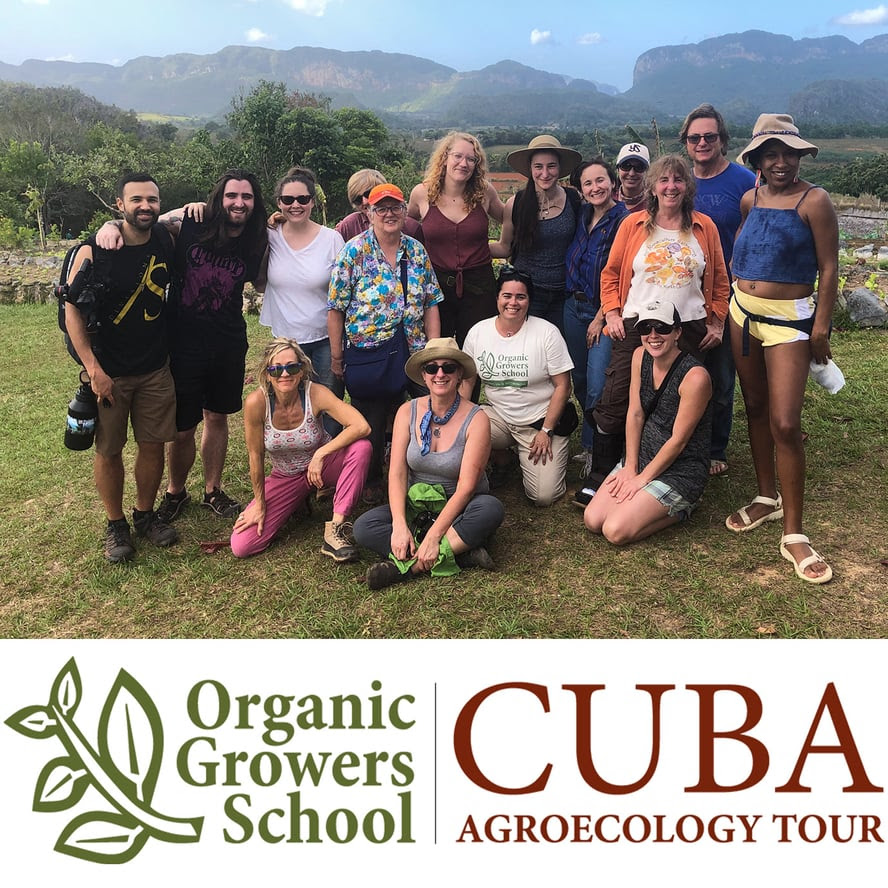
April 4-13, 2023Want to learn from farmers and food activists about Cuba’s transition to agroecological farming practices and its national policies that prioritize sustainable farming and hunger remediation?
This is your opportunity to join our 9-day tour of Cuba’s sustainable farms! On our tour, we visit with farmers, NGOs, policymakers, and experts to learn about the history of Cuba, their transition to organic agriculture, and ongoing initiatives to support farmers and expand agroecological practices.
For the past 30 years, the Organic Growers School Spring Conference has served as a gathering place for growers in Appalachia to connect, learn from one another, and deepen connections to land and community. The Spring Conference began as an entirely volunteer-run and free event and has expanded to support an organization of ten staff with year-round programming. As we have grown, we have experimented with different approaches to keeping the event affordable and accessible while also working on compensation for our speakers and supporting our growing staff. We encourage you to check out our recent blog post exploring this in more depth. This year, we are excited to be experimenting with sliding scale ticket pricing for the first time, and we wanted to take some time to explain how this works and why we decided to implement it this year.
Looking beyond scholarships
Over the past several years, we have started implementing different scholarship options. We have set aside around $3000 in our internal budget for scholarships, and we have increased our outreach to other groups in the area who have funding to support individuals to attend conferences. We also offer work-trade opportunities for people who are interested in helping out with our event in exchange for attendance. We have around 100 work-traders access the conference each year through these opportunities, but we have never used up our entire scholarship fund for the event. We know that there are many individuals in our community that we are not reaching through our scholarship opportunities. We began to wonder if scholarship applications were creating a barrier to participation and started researching other options, landing eventually on sliding scale as our preferred model.
How alternative pricing models address accessibility
The sliding scale model, which offers the opportunity for participants to select a price to pay for their ticket, meets several of the parameters we were looking for in an accessible pricing model. Most importantly, it is a seamless way for attendees to access the price that meets their needs. So many things are means-tested in our society, and it can be exhausting to justify why one needs a more affordable price point. While many of our community members need financial support, there are also members of this community who have more than enough to share and are excited about supporting their fellow co-learners. These attendees can select the higher end of the sliding scale, which will be set at a price to offset the lower price paid by other attendees. We trust our attendees to select the option that best works for them while also considering how their selection would affect the ability of other participants to access a lower price point.
Accessibility is a priority for OGS, and implementing it is a risk for us as a small non-profit, given that we rely on our large events like the Spring Conference to support our year-round programming and staff salaries. This will certainly be an experimental year, and if we are not able to secure enough income through sliding-scale registrations, we will have to rethink our approach to pricing. We trust that our community will be thoughtful in thinking about the value that this conference has to them and about what they are able to pay for at this time. Thank you for being on this journey of discovery with us!
Registration is OPEN!
30th Annual Spring Conference at Mars Hill University
You’re in for a fun-filled weekend of learning and community building. This year our Tracks include Cooking, Food Justice, Farming Business + Production, Herbs, Mushrooms, Forest Farming, Gardening, Holistic Forestry, Livestock & Poultry, Living on the Land, Permaculture, Pests & Pollinators, Soils, & Sustainable Living!For each Track subject, there are 4 different classes to choose from taught by expert educators. There will also be 8 half-day workshops to choose from if you want to dive deep into subjects like Fermentation, Spirulina Cultivation, Invasive Vine Basketry, and more!
View the full Spring Conference schedule here.
Sliding Scale Pricing for Spring Conference
OGS is implementing a Sliding Scale Price model for 2023
So many things are means-tested in our society, and it can be exhausting to justify why one needs a more affordable price point. The sliding scale model, which allows participants to select a price to pay for their ticket, meets several of the parameters we were looking for in an accessible pricing model.
While many of our community members need financial support, some of these community members have more than enough to share and are excited about supporting their fellow co-learners. These attendees can select the higher end of the sliding scale, which will be set at a price to offset the lower price paid by other attendees. We trust our attendees to select the option that best works for them while also considering how their selection would affect the ability of other participants to access a lower price point.
Accessibility is a priority for OGS, and implementing it is a risk for us as a small non-profit, given that we rely on our large events like the Spring Conference to support our year-round programming and staff salaries. This will certainly be an experimental year, and if we cannot secure enough income through sliding-scale registrations, we will have to rethink our approach to pricing. We trust that our community will be thoughtful in thinking about the value this conference has for them and what they can pay for at this time.
Extension Master GardenerSM Volunteers of Buncombe County are happy to announce for the sixteenth year we are offering School Garden Grants to Asheville City and Buncombe County public schools, including state charter schools.
We provide a notice of the application period along with instructions to all school principals, elementary through senior high. Additional information is available on our website, buncombemastergardener.org, where you can learn more about the guidelines for receiving a grant and get online access to the 2023 School Garden Grants Application.
All applications must be completed online. Completed applications will be accepted beginning January 9, 2023, and must be submitted no later than 9 p.m. on February 3, 2023. If you have any questions, please call the Extension Office at 828-255-5522.
We are proud of our partnership with Asheville City and Buncombe County Schools. Since 2007, we have awarded 52 School Garden Grants totaling over $45,000. These grants have involved more than 16,500 students and hundreds of teachers, parents, and community volunteers.
School gardens grow more than plants. They grow imagination and creativity. They make math and science come alive, and they build community. We hope your school will join us in 2023.
Click on the link below to review the guidelines for school garden grants:
Guidelines for 2023 School Garden Grants
Register for our Cuba Agroecology Tour!
April 4-13, 2023Want to learn from farmers and food activists about Cuba’s transition to agroecological farming practices and its national policies that prioritize sustainable farming and hunger remediation?
This is your opportunity to join our 9-day tour of Cuba’s sustainable farms! On our tour, we visit with farmers, NGOs, policymakers, and experts to learn about the history of Cuba, their transition to organic agriculture, and ongoing initiatives to support farmers and expand agroecological practices.
For the past 30 years, the Organic Growers School Spring Conference has served as a gathering place for growers in Appalachia to connect, learn from one another, and deepen connections to land and community. The Spring Conference began as an entirely volunteer-run and free event and has expanded to support an organization of ten staff with year-round programming. As we have grown, we have experimented with different approaches to keeping the event affordable and accessible while also working on compensation for our speakers and supporting our growing staff. We encourage you to check out our recent blog post exploring this in more depth. This year, we are excited to be experimenting with sliding scale ticket pricing for the first time, and we wanted to take some time to explain how this works and why we decided to implement it this year.
Looking beyond scholarships
Over the past several years, we have started implementing different scholarship options. We have set aside around $3000 in our internal budget for scholarships, and we have increased our outreach to other groups in the area who have funding to support individuals to attend conferences. We also offer work-trade opportunities for people who are interested in helping out with our event in exchange for attendance. We have around 100 work-traders access the conference each year through these opportunities, but we have never used up our entire scholarship fund for the event. We know that there are many individuals in our community that we are not reaching through our scholarship opportunities. We began to wonder if scholarship applications were creating a barrier to participation and started researching other options, landing eventually on sliding scale as our preferred model.
How alternative pricing models address accessibility
The sliding scale model, which offers the opportunity for participants to select a price to pay for their ticket, meets several of the parameters we were looking for in an accessible pricing model. Most importantly, it is a seamless way for attendees to access the price that meets their needs. So many things are means-tested in our society, and it can be exhausting to justify why one needs a more affordable price point. While many of our community members need financial support, there are also members of this community who have more than enough to share and are excited about supporting their fellow co-learners. These attendees can select the higher end of the sliding scale, which will be set at a price to offset the lower price paid by other attendees. We trust our attendees to select the option that best works for them while also considering how their selection would affect the ability of other participants to access a lower price point.
Accessibility is a priority for OGS, and implementing it is a risk for us as a small non-profit, given that we rely on our large events like the Spring Conference to support our year-round programming and staff salaries. This will certainly be an experimental year, and if we are not able to secure enough income through sliding-scale registrations, we will have to rethink our approach to pricing. We trust that our community will be thoughtful in thinking about the value that this conference has to them and about what they are able to pay for at this time. Thank you for being on this journey of discovery with us!
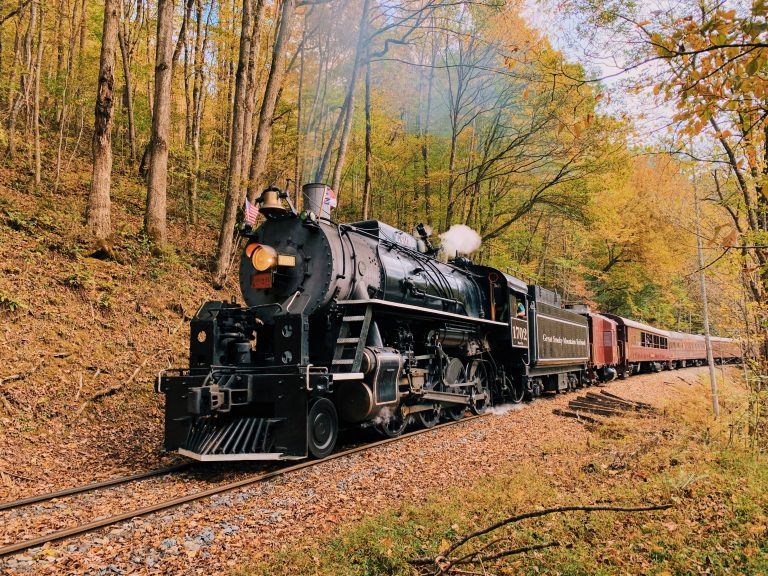
Join us for a relaxing ride through quiet countryside on your way to small town life in western North Carolina on the Tuckasegee River Excursion. Departing from Bryson City, this 4 hour excursion travels 32 miles round-trip to Dillsboro and back to the Bryson City Depot. Pass by the famous movie set of The Fugitive starring Harrison Ford!
- About This Trip
- Things To Do
- Itinerary
- Classes of Service and Pricing
- Class Comparison
- How to Purchase
- Schedule
- The Tuckasegee (tuck-uh-SEE-jee) River Excursion includes an 1 hour and 20 minute layover in the historic town of Dillsboro, where you’ll find more than 50 shops, restaurants, a brewery, and country inns. There is time to shop, snack, and visit the many unique shops before returning to Bryson City.
Extension Master GardenerSM Volunteers of Buncombe County are happy to announce for the sixteenth year we are offering School Garden Grants to Asheville City and Buncombe County public schools, including state charter schools.
We provide a notice of the application period along with instructions to all school principals, elementary through senior high. Additional information is available on our website, buncombemastergardener.org, where you can learn more about the guidelines for receiving a grant and get online access to the 2023 School Garden Grants Application.
All applications must be completed online. Completed applications will be accepted beginning January 9, 2023, and must be submitted no later than 9 p.m. on February 3, 2023. If you have any questions, please call the Extension Office at 828-255-5522.
We are proud of our partnership with Asheville City and Buncombe County Schools. Since 2007, we have awarded 52 School Garden Grants totaling over $45,000. These grants have involved more than 16,500 students and hundreds of teachers, parents, and community volunteers.
School gardens grow more than plants. They grow imagination and creativity. They make math and science come alive, and they build community. We hope your school will join us in 2023.
Click on the link below to review the guidelines for school garden grants:
Guidelines for 2023 School Garden Grants
The upcoming Journeyperson course is now available AT NO COST! Due to some timely grant funding, we can offer this in-depth farmer training for farmers in years 3-7 with no associated tuition fee! The course consists of monthly cohort meet-ups and 2-3 in-depth workshops, plus mentorship!
In addition, a select number of participants will also receive matched FUNDS for your farm savings account (Savings Incentive Program) and money to spend on a professional development opportunity of your choosing! Want to attend a workshop on livestock management? OGS will contribute towards that fee! Are you saving money for a farm asset? OGS will contribute up to a certain amount to that investment.
The Journeyperson Program is for farmers who have been independently farming for three or more years and are serious about operating farm businesses in the Southern Appalachian region.
|
|
Register for our Cuba Agroecology Tour!
April 4-13, 2023Want to learn from farmers and food activists about Cuba’s transition to agroecological farming practices and its national policies that prioritize sustainable farming and hunger remediation?
This is your opportunity to join our 9-day tour of Cuba’s sustainable farms! On our tour, we visit with farmers, NGOs, policymakers, and experts to learn about the history of Cuba, their transition to organic agriculture, and ongoing initiatives to support farmers and expand agroecological practices.
For the past 30 years, the Organic Growers School Spring Conference has served as a gathering place for growers in Appalachia to connect, learn from one another, and deepen connections to land and community. The Spring Conference began as an entirely volunteer-run and free event and has expanded to support an organization of ten staff with year-round programming. As we have grown, we have experimented with different approaches to keeping the event affordable and accessible while also working on compensation for our speakers and supporting our growing staff. We encourage you to check out our recent blog post exploring this in more depth. This year, we are excited to be experimenting with sliding scale ticket pricing for the first time, and we wanted to take some time to explain how this works and why we decided to implement it this year.
Looking beyond scholarships
Over the past several years, we have started implementing different scholarship options. We have set aside around $3000 in our internal budget for scholarships, and we have increased our outreach to other groups in the area who have funding to support individuals to attend conferences. We also offer work-trade opportunities for people who are interested in helping out with our event in exchange for attendance. We have around 100 work-traders access the conference each year through these opportunities, but we have never used up our entire scholarship fund for the event. We know that there are many individuals in our community that we are not reaching through our scholarship opportunities. We began to wonder if scholarship applications were creating a barrier to participation and started researching other options, landing eventually on sliding scale as our preferred model.
How alternative pricing models address accessibility
The sliding scale model, which offers the opportunity for participants to select a price to pay for their ticket, meets several of the parameters we were looking for in an accessible pricing model. Most importantly, it is a seamless way for attendees to access the price that meets their needs. So many things are means-tested in our society, and it can be exhausting to justify why one needs a more affordable price point. While many of our community members need financial support, there are also members of this community who have more than enough to share and are excited about supporting their fellow co-learners. These attendees can select the higher end of the sliding scale, which will be set at a price to offset the lower price paid by other attendees. We trust our attendees to select the option that best works for them while also considering how their selection would affect the ability of other participants to access a lower price point.
Accessibility is a priority for OGS, and implementing it is a risk for us as a small non-profit, given that we rely on our large events like the Spring Conference to support our year-round programming and staff salaries. This will certainly be an experimental year, and if we are not able to secure enough income through sliding-scale registrations, we will have to rethink our approach to pricing. We trust that our community will be thoughtful in thinking about the value that this conference has to them and about what they are able to pay for at this time. Thank you for being on this journey of discovery with us!
Join us for a relaxing ride through quiet countryside on your way to small town life in western North Carolina on the Tuckasegee River Excursion. Departing from Bryson City, this 4 hour excursion travels 32 miles round-trip to Dillsboro and back to the Bryson City Depot. Pass by the famous movie set of The Fugitive starring Harrison Ford!
- About This Trip
- Things To Do
- Itinerary
- Classes of Service and Pricing
- Class Comparison
- How to Purchase
- Schedule
- The Tuckasegee (tuck-uh-SEE-jee) River Excursion includes an 1 hour and 20 minute layover in the historic town of Dillsboro, where you’ll find more than 50 shops, restaurants, a brewery, and country inns. There is time to shop, snack, and visit the many unique shops before returning to Bryson City.
Extension Master GardenerSM Volunteers of Buncombe County are happy to announce for the sixteenth year we are offering School Garden Grants to Asheville City and Buncombe County public schools, including state charter schools.
We provide a notice of the application period along with instructions to all school principals, elementary through senior high. Additional information is available on our website, buncombemastergardener.org, where you can learn more about the guidelines for receiving a grant and get online access to the 2023 School Garden Grants Application.
All applications must be completed online. Completed applications will be accepted beginning January 9, 2023, and must be submitted no later than 9 p.m. on February 3, 2023. If you have any questions, please call the Extension Office at 828-255-5522.
We are proud of our partnership with Asheville City and Buncombe County Schools. Since 2007, we have awarded 52 School Garden Grants totaling over $45,000. These grants have involved more than 16,500 students and hundreds of teachers, parents, and community volunteers.
School gardens grow more than plants. They grow imagination and creativity. They make math and science come alive, and they build community. We hope your school will join us in 2023.
Click on the link below to review the guidelines for school garden grants:
Guidelines for 2023 School Garden Grants
The upcoming Journeyperson course is now available AT NO COST! Due to some timely grant funding, we can offer this in-depth farmer training for farmers in years 3-7 with no associated tuition fee! The course consists of monthly cohort meet-ups and 2-3 in-depth workshops, plus mentorship!
In addition, a select number of participants will also receive matched FUNDS for your farm savings account (Savings Incentive Program) and money to spend on a professional development opportunity of your choosing! Want to attend a workshop on livestock management? OGS will contribute towards that fee! Are you saving money for a farm asset? OGS will contribute up to a certain amount to that investment.
The Journeyperson Program is for farmers who have been independently farming for three or more years and are serious about operating farm businesses in the Southern Appalachian region.
|
|
Register for our Cuba Agroecology Tour!
April 4-13, 2023Want to learn from farmers and food activists about Cuba’s transition to agroecological farming practices and its national policies that prioritize sustainable farming and hunger remediation?
This is your opportunity to join our 9-day tour of Cuba’s sustainable farms! On our tour, we visit with farmers, NGOs, policymakers, and experts to learn about the history of Cuba, their transition to organic agriculture, and ongoing initiatives to support farmers and expand agroecological practices.
For the past 30 years, the Organic Growers School Spring Conference has served as a gathering place for growers in Appalachia to connect, learn from one another, and deepen connections to land and community. The Spring Conference began as an entirely volunteer-run and free event and has expanded to support an organization of ten staff with year-round programming. As we have grown, we have experimented with different approaches to keeping the event affordable and accessible while also working on compensation for our speakers and supporting our growing staff. We encourage you to check out our recent blog post exploring this in more depth. This year, we are excited to be experimenting with sliding scale ticket pricing for the first time, and we wanted to take some time to explain how this works and why we decided to implement it this year.
Looking beyond scholarships
Over the past several years, we have started implementing different scholarship options. We have set aside around $3000 in our internal budget for scholarships, and we have increased our outreach to other groups in the area who have funding to support individuals to attend conferences. We also offer work-trade opportunities for people who are interested in helping out with our event in exchange for attendance. We have around 100 work-traders access the conference each year through these opportunities, but we have never used up our entire scholarship fund for the event. We know that there are many individuals in our community that we are not reaching through our scholarship opportunities. We began to wonder if scholarship applications were creating a barrier to participation and started researching other options, landing eventually on sliding scale as our preferred model.
How alternative pricing models address accessibility
The sliding scale model, which offers the opportunity for participants to select a price to pay for their ticket, meets several of the parameters we were looking for in an accessible pricing model. Most importantly, it is a seamless way for attendees to access the price that meets their needs. So many things are means-tested in our society, and it can be exhausting to justify why one needs a more affordable price point. While many of our community members need financial support, there are also members of this community who have more than enough to share and are excited about supporting their fellow co-learners. These attendees can select the higher end of the sliding scale, which will be set at a price to offset the lower price paid by other attendees. We trust our attendees to select the option that best works for them while also considering how their selection would affect the ability of other participants to access a lower price point.
Accessibility is a priority for OGS, and implementing it is a risk for us as a small non-profit, given that we rely on our large events like the Spring Conference to support our year-round programming and staff salaries. This will certainly be an experimental year, and if we are not able to secure enough income through sliding-scale registrations, we will have to rethink our approach to pricing. We trust that our community will be thoughtful in thinking about the value that this conference has to them and about what they are able to pay for at this time. Thank you for being on this journey of discovery with us!
Extension Master GardenerSM Volunteers of Buncombe County are happy to announce for the sixteenth year we are offering School Garden Grants to Asheville City and Buncombe County public schools, including state charter schools.
We provide a notice of the application period along with instructions to all school principals, elementary through senior high. Additional information is available on our website, buncombemastergardener.org, where you can learn more about the guidelines for receiving a grant and get online access to the 2023 School Garden Grants Application.
All applications must be completed online. Completed applications will be accepted beginning January 9, 2023, and must be submitted no later than 9 p.m. on February 3, 2023. If you have any questions, please call the Extension Office at 828-255-5522.
We are proud of our partnership with Asheville City and Buncombe County Schools. Since 2007, we have awarded 52 School Garden Grants totaling over $45,000. These grants have involved more than 16,500 students and hundreds of teachers, parents, and community volunteers.
School gardens grow more than plants. They grow imagination and creativity. They make math and science come alive, and they build community. We hope your school will join us in 2023.
Click on the link below to review the guidelines for school garden grants:
Guidelines for 2023 School Garden Grants
Register for our Cuba Agroecology Tour!
April 4-13, 2023Want to learn from farmers and food activists about Cuba’s transition to agroecological farming practices and its national policies that prioritize sustainable farming and hunger remediation?
This is your opportunity to join our 9-day tour of Cuba’s sustainable farms! On our tour, we visit with farmers, NGOs, policymakers, and experts to learn about the history of Cuba, their transition to organic agriculture, and ongoing initiatives to support farmers and expand agroecological practices.
For the past 30 years, the Organic Growers School Spring Conference has served as a gathering place for growers in Appalachia to connect, learn from one another, and deepen connections to land and community. The Spring Conference began as an entirely volunteer-run and free event and has expanded to support an organization of ten staff with year-round programming. As we have grown, we have experimented with different approaches to keeping the event affordable and accessible while also working on compensation for our speakers and supporting our growing staff. We encourage you to check out our recent blog post exploring this in more depth. This year, we are excited to be experimenting with sliding scale ticket pricing for the first time, and we wanted to take some time to explain how this works and why we decided to implement it this year.
Looking beyond scholarships
Over the past several years, we have started implementing different scholarship options. We have set aside around $3000 in our internal budget for scholarships, and we have increased our outreach to other groups in the area who have funding to support individuals to attend conferences. We also offer work-trade opportunities for people who are interested in helping out with our event in exchange for attendance. We have around 100 work-traders access the conference each year through these opportunities, but we have never used up our entire scholarship fund for the event. We know that there are many individuals in our community that we are not reaching through our scholarship opportunities. We began to wonder if scholarship applications were creating a barrier to participation and started researching other options, landing eventually on sliding scale as our preferred model.
How alternative pricing models address accessibility
The sliding scale model, which offers the opportunity for participants to select a price to pay for their ticket, meets several of the parameters we were looking for in an accessible pricing model. Most importantly, it is a seamless way for attendees to access the price that meets their needs. So many things are means-tested in our society, and it can be exhausting to justify why one needs a more affordable price point. While many of our community members need financial support, there are also members of this community who have more than enough to share and are excited about supporting their fellow co-learners. These attendees can select the higher end of the sliding scale, which will be set at a price to offset the lower price paid by other attendees. We trust our attendees to select the option that best works for them while also considering how their selection would affect the ability of other participants to access a lower price point.
Accessibility is a priority for OGS, and implementing it is a risk for us as a small non-profit, given that we rely on our large events like the Spring Conference to support our year-round programming and staff salaries. This will certainly be an experimental year, and if we are not able to secure enough income through sliding-scale registrations, we will have to rethink our approach to pricing. We trust that our community will be thoughtful in thinking about the value that this conference has to them and about what they are able to pay for at this time. Thank you for being on this journey of discovery with us!
Registration is OPEN!
30th Annual Spring Conference at Mars Hill University
You’re in for a fun-filled weekend of learning and community building. This year our Tracks include Cooking, Food Justice, Farming Business + Production, Herbs, Mushrooms, Forest Farming, Gardening, Holistic Forestry, Livestock & Poultry, Living on the Land, Permaculture, Pests & Pollinators, Soils, & Sustainable Living!For each Track subject, there are 4 different classes to choose from taught by expert educators. There will also be 8 half-day workshops to choose from if you want to dive deep into subjects like Fermentation, Spirulina Cultivation, Invasive Vine Basketry, and more!
View the full Spring Conference schedule here.
Sliding Scale Pricing for Spring Conference
OGS is implementing a Sliding Scale Price model for 2023
So many things are means-tested in our society, and it can be exhausting to justify why one needs a more affordable price point. The sliding scale model, which allows participants to select a price to pay for their ticket, meets several of the parameters we were looking for in an accessible pricing model.
While many of our community members need financial support, some of these community members have more than enough to share and are excited about supporting their fellow co-learners. These attendees can select the higher end of the sliding scale, which will be set at a price to offset the lower price paid by other attendees. We trust our attendees to select the option that best works for them while also considering how their selection would affect the ability of other participants to access a lower price point.
Accessibility is a priority for OGS, and implementing it is a risk for us as a small non-profit, given that we rely on our large events like the Spring Conference to support our year-round programming and staff salaries. This will certainly be an experimental year, and if we cannot secure enough income through sliding-scale registrations, we will have to rethink our approach to pricing. We trust that our community will be thoughtful in thinking about the value this conference has for them and what they can pay for at this time.
Do you ever think about where and how your clothes are made? What about who makes them? Come see the inside operations of a local sewing studio that’s reinventing the modern day factory! On this 30 minute micro-tour, you will learn about Sew Co.’s sustainable and transparent business practices, hear about our production processes and client collaborations , and receive a 10% day-of discount on our in-house clothing brand Rite of Passage!
Extension Master GardenerSM Volunteers of Buncombe County are happy to announce for the sixteenth year we are offering School Garden Grants to Asheville City and Buncombe County public schools, including state charter schools.
We provide a notice of the application period along with instructions to all school principals, elementary through senior high. Additional information is available on our website, buncombemastergardener.org, where you can learn more about the guidelines for receiving a grant and get online access to the 2023 School Garden Grants Application.
All applications must be completed online. Completed applications will be accepted beginning January 9, 2023, and must be submitted no later than 9 p.m. on February 3, 2023. If you have any questions, please call the Extension Office at 828-255-5522.
We are proud of our partnership with Asheville City and Buncombe County Schools. Since 2007, we have awarded 52 School Garden Grants totaling over $45,000. These grants have involved more than 16,500 students and hundreds of teachers, parents, and community volunteers.
School gardens grow more than plants. They grow imagination and creativity. They make math and science come alive, and they build community. We hope your school will join us in 2023.
Click on the link below to review the guidelines for school garden grants:
Guidelines for 2023 School Garden Grants
The upcoming Journeyperson course is now available AT NO COST! Due to some timely grant funding, we can offer this in-depth farmer training for farmers in years 3-7 with no associated tuition fee! The course consists of monthly cohort meet-ups and 2-3 in-depth workshops, plus mentorship!
In addition, a select number of participants will also receive matched FUNDS for your farm savings account (Savings Incentive Program) and money to spend on a professional development opportunity of your choosing! Want to attend a workshop on livestock management? OGS will contribute towards that fee! Are you saving money for a farm asset? OGS will contribute up to a certain amount to that investment.
The Journeyperson Program is for farmers who have been independently farming for three or more years and are serious about operating farm businesses in the Southern Appalachian region.
|
|
Register for our Cuba Agroecology Tour!
April 4-13, 2023Want to learn from farmers and food activists about Cuba’s transition to agroecological farming practices and its national policies that prioritize sustainable farming and hunger remediation?
This is your opportunity to join our 9-day tour of Cuba’s sustainable farms! On our tour, we visit with farmers, NGOs, policymakers, and experts to learn about the history of Cuba, their transition to organic agriculture, and ongoing initiatives to support farmers and expand agroecological practices.
For the past 30 years, the Organic Growers School Spring Conference has served as a gathering place for growers in Appalachia to connect, learn from one another, and deepen connections to land and community. The Spring Conference began as an entirely volunteer-run and free event and has expanded to support an organization of ten staff with year-round programming. As we have grown, we have experimented with different approaches to keeping the event affordable and accessible while also working on compensation for our speakers and supporting our growing staff. We encourage you to check out our recent blog post exploring this in more depth. This year, we are excited to be experimenting with sliding scale ticket pricing for the first time, and we wanted to take some time to explain how this works and why we decided to implement it this year.
Looking beyond scholarships
Over the past several years, we have started implementing different scholarship options. We have set aside around $3000 in our internal budget for scholarships, and we have increased our outreach to other groups in the area who have funding to support individuals to attend conferences. We also offer work-trade opportunities for people who are interested in helping out with our event in exchange for attendance. We have around 100 work-traders access the conference each year through these opportunities, but we have never used up our entire scholarship fund for the event. We know that there are many individuals in our community that we are not reaching through our scholarship opportunities. We began to wonder if scholarship applications were creating a barrier to participation and started researching other options, landing eventually on sliding scale as our preferred model.
How alternative pricing models address accessibility
The sliding scale model, which offers the opportunity for participants to select a price to pay for their ticket, meets several of the parameters we were looking for in an accessible pricing model. Most importantly, it is a seamless way for attendees to access the price that meets their needs. So many things are means-tested in our society, and it can be exhausting to justify why one needs a more affordable price point. While many of our community members need financial support, there are also members of this community who have more than enough to share and are excited about supporting their fellow co-learners. These attendees can select the higher end of the sliding scale, which will be set at a price to offset the lower price paid by other attendees. We trust our attendees to select the option that best works for them while also considering how their selection would affect the ability of other participants to access a lower price point.
Accessibility is a priority for OGS, and implementing it is a risk for us as a small non-profit, given that we rely on our large events like the Spring Conference to support our year-round programming and staff salaries. This will certainly be an experimental year, and if we are not able to secure enough income through sliding-scale registrations, we will have to rethink our approach to pricing. We trust that our community will be thoughtful in thinking about the value that this conference has to them and about what they are able to pay for at this time. Thank you for being on this journey of discovery with us!