

Calendar of Events
Upcoming events and things to do in Asheville, NC. Below is a list of events for festivals, concerts, art exhibitions, group meetups and more.
Interested in adding an event to our calendar? Please click the green “Post Your Event” button below.

Main Gallery show featuring members of the Southern Highland Craft Guild.
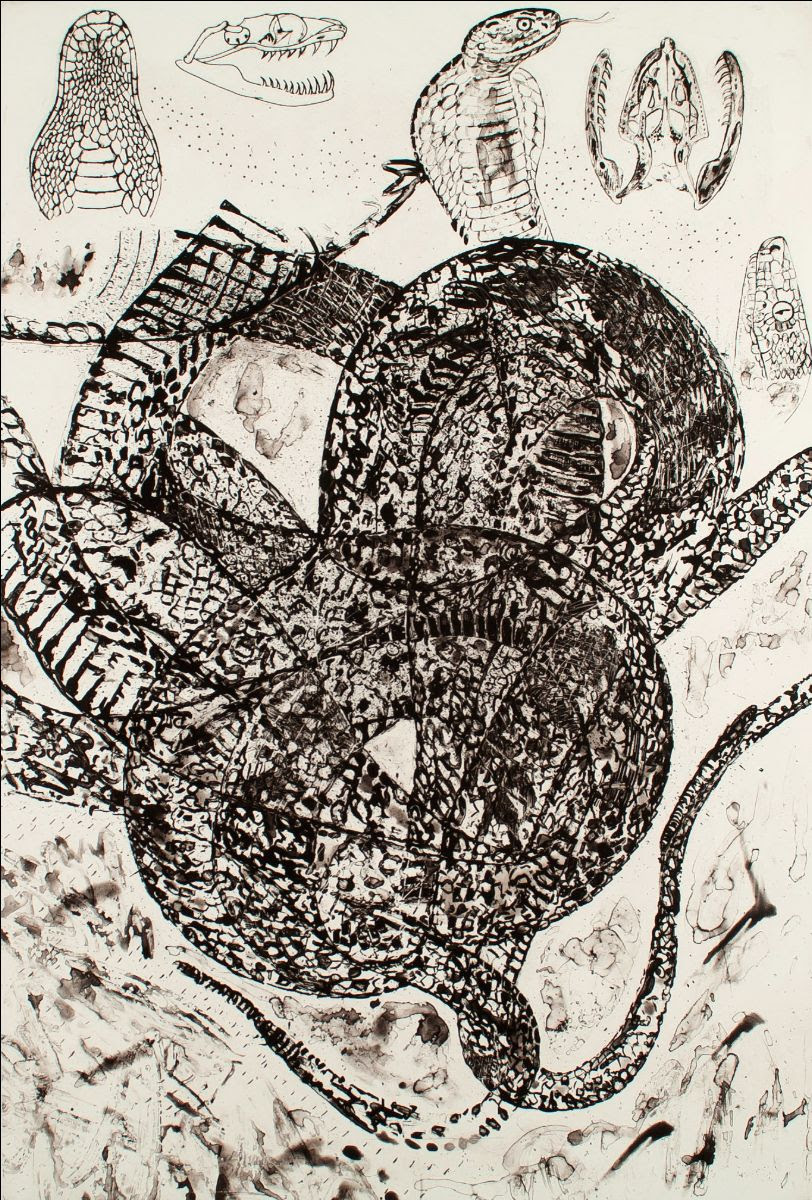 |
| Nancy Graves, Parable of Nostalgia from the Tango portfolio, 1991, intaglio on cotton rag paper, edition 12/26, publisher: Iris Editions, New York, image: 26 × 17 5/8 inches, sheet: 35 3/4 × 26 inches. Asheville Art Museum. © Nancy Graves Foundation, Inc. / Licensed by VAGA at Artists Rights Society (ARS), NY. |
A Dance of Images and Words: The Nancy Graves/Pedro Cuperman Tango Portfolio features a series of eight intaglio prints that depict plants and animals alongside eleven sheets of prose that explore the steps of the Argentinian dance, the tango. Organized by the Asheville Art Museum from the Museum’s Collection and curated by Hilary Schroeder, assistant curator, this exhibition will be on view in The Van Winkle Law Firm Gallery at the Museum from September 29, 2021 through January 10, 2022.
The common idiom “it takes two to tango” is immediately called into question in both the imagery and words of the Tango portfolio. The portfolio is an expression of artist Nancy Graves (Pittsfield, MA 1939–1995 New York, NY) writer Pedro Cuperman’s (1936–2016 Buenos Aires, Argentina) meditations on the dance. Their imagery and words become paired in an illustrated book though their explorations take different formats and directions. Both Graves and Cuperman look towards humankind and nature as a place where beings come together in the experience of living. This exhibition presents Graves’s eight prints alongside the portfolio frontispiece and a page of Cuperman’s text to immerse visitors in the collaborative dance of the tango.
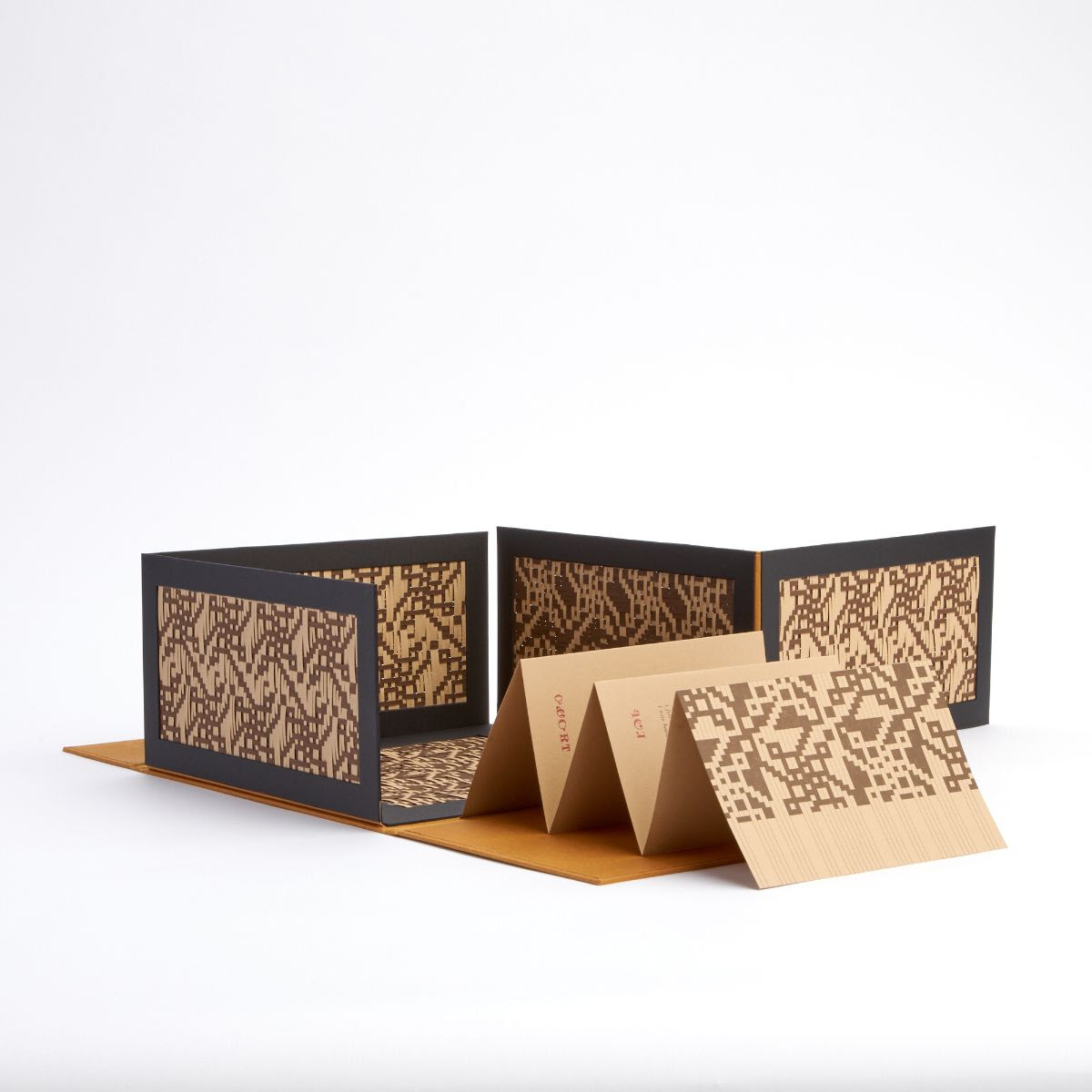
Rhiannon Skye Tafoya (Eastern Band of Cherokee Indians), Ul’nigid’, 2020, letterpress (photopolymer and Bembo & Cherokee Syllabary metal type) printed on handmade & color plan paper with paperweaving, closed: 11 × 11 ¼ inches, assembled: 23 ½ × 11 ¼ × 5 ⁵⁄₈ inches. Courtesy the Artist. © Rhiannon Skye Tafoya, image Rhiannon Skye Tafoya.
Living Language: Cherokee Syllabary and Contemporary Art features over 50 works of art in a variety of media by 30+ Eastern Band of Cherokee Indians (EBCI) and Cherokee Nation artists. The exhibition highlights the use of the written Cherokee language, a syllabary developed by Cherokee innovator Sequoyah (circa 1776–1843). Cherokee syllabary is frequently found in the work of Cherokee artists as a compositional element or the subject matter of the work itself. The exhibition will be on view at the Museum of the Cherokee Indian in Cherokee, NC from June 12, 2021 to October 31, 2021, and in the Asheville Art Museum’s Appleby Foundation Exhibition Hall from November 19, 2021 to March 14, 2022. The Cherokee Syllabary is a system of writing developed by Sequoyah in the early 1800s prior to the Removal period. Through Sequoyah’s innovative work, Cherokee people embraced the writing system as an expedient form of communication and documentation. During the Removal period, the syllabary was used as a tactic to combat land dispossession. Cherokee people continue to use the syllabary as a form of cultural expression and pride, which is showcased in the contemporary artwork of the Cherokee Citizens in this exhibition.
“We’re pleased to host this gathering of works from contemporary Cherokee artists, who perfectly illustrate how our language is a living and evolving part of who we are. It’s moving to see how each artist finds inspiration in their own way from this language that connects us as Cherokee people,” said Shana Bushyhead Condill, executive director of the Museum of the Cherokee Indian.
“The Asheville Art Museum and the Museum of the Cherokee Indian have been long-term collaborators, and we are delighted to further our partnership by working together to manage an open call to Cherokee artists and subsequently curate this exciting exhibition of contemporary works that take inspiration from, celebrate, preserve and interpret the syllabary,” said Pamela L. Myers, executive director of the Asheville Art Museum. “On view at both museums, we hope the exhibition engages a wide and diverse audience in dialogue with these extraordinary works.”
A Living Language: Cherokee Syllabary and Contemporary Art is organized by the Asheville Art Museum and Museum of the Cherokee Indian, and curated by Hilary Schroeder, assistant curator at the Asheville Art Museum, with assistance from curatorial consultant Joshua Adams (Eastern Band of Cherokee Indians). Special thanks to S. Dakota Brown, education director at the Museum of the Cherokee Indian, and Alexis Meldrum, curatorial assistant at the Asheville Art Museum, for their support in the planning of this exhibition. This project is made possible in part by a grant from the Blue Ridge National Heritage Area Partnership, and sponsored in part by the Cherokee Preservation Foundation and Kevin Click & April Liou in memory of Myron E. Click.
Eastern Band of Cherokee Indians artists include Joshua Adams, Jody Lipscomb Bradley, Nathan Bush, Kane Crowe, John Henry Gloyne, Shan Goshorn, Luzene Hill, Christy Long, Louise Bigmeat Maney, Christopher McCoy, Tara McCoy, Joel Queen, Sean Ross, Jakeli Swimmer, Rhiannon Skye Tafoya, Mary Thompson, Stan Tooni Jr., Alica Wildcatt, and Fred Wilnoty.
Cherokee Nation artists include Roy Boney Jr., Jeff Edwards, Joseph Erb, Raychel Foster, Kenny Glass, Camilla McGinty, Jessica Mehta, America Meredith, Jane Osti, Lisa Rutherford, Janet L. Smith, Jennifer Thiessen, and Jennie Wilson.
About the Museum of the Cherokee Indian
Established in 1948, the Museum of the Cherokee Indian is one of the longest operating tribal museums. Recognized for its innovative storytelling, the Museum features exhibits, artwork, and hands-on technology that brings over 15,000 years of Cherokee history to life. Located in Cherokee, NC, the Museum is open daily except Thanksgiving, Christmas, and New Year’s Day. Learn more by visiting
mci.org.
Christopher McCoy, Resilient Times, 2021, non-glare acrylic on DiBond metallic print, 36 × 24 inches. Museum purchase with funds provided by Ray Griffin & Thom Robinson. © Christopher McCoy.
Asheville, N.C.—The generosity of the Museum’s Collectors’ Circle members and additional contributors enabled the Asheville Art Museum to acquire 25 new artworks for its Collection at the end of 2021. The Museum welcomes artworks created throughout the 20th and 21st centuries in a range of media by both regionally and nationally recognized artists. These artists include Peggy Bacon, Lynda Benglis, Sanford Biggers, Terry Haass, George Morrison, Robert Motherwell, Marilyn Pappas, David Stewart, Ansei Uchima, and Asheville-based Liz Williams. A highlight of this year’s Collectors’ Circle acquisitions is a grouping of works by artists featured in the exhibition A Living Language: Cherokee Syllabary and Contemporary Art, on view at the Asheville Art Museum through March 14, 2022. This exhibition was co-organized with the Museum of the Cherokee Indian in Cherokee, NC. The curatorial team identified the 14 artworks by artists of the Cherokee Nation or Eastern Band of Cherokee Indians not yet represented in the Collection to augment not only the Museum’s contemporary holdings but also the holdings of Cherokee artists working today. Artists represented in this acquisition include John Henry Gloyne, Christopher McCoy, Tara McCoy, Rhiannon Skye Tafoya, Jakeli Swimmer, and Alica Murphy Wildcatt of the Eastern Band of Cherokee Indians and Jeff Edwards, Kenny Glass, and Jennie Wilson of the Cherokee Nation. These artworks contribute directly to the Museum’s commitment to collecting from and supporting contemporary Indigenous artists, especially those with connections to the unceded land upon which the Museum sits. “Through a vibrant array of materials, colors, and perspectives, the Cherokee syllabary finds an evocative, contemporary form of expression at the hands of the artists in this exhibition,” said Assistant Curator Hilary Schroeder of this group of work. “There is a power in words, both written and spoken. I often find that power to be amplified in a work of art, when those words are placed in the context of composition, symbolism, and an artist’s intent.” Visit ashevilleart.org/exhibitions/a-living-language to learn more about this exhibition.
The Museum’s Collectors’ Circle is a specialized group formed to encourage the exchange of ideas and interests, art learning, connoisseurship, and collecting. The group supports the proactive development, stewardship, and conservation of the Museum’s Collection. The Museum is grateful for these new year-end acquisitions, which add to the strengths of its holdings, and looks forward to sharing them with the community of Western North Carolina and its visitors in the years to come.
The following 25 works have been acquired for the Museum’s Collection:
Peggy Bacon, Day-Nursery, 1918, drypoint on paper, 6 × 8 inches. Museum purchase with funds provided by 2021 Collectors’ Circle member Susan Holden. © Estate of Peggy Bacon.
Lynda Benglis, Tandem Series #10, 1988, relief, hand-painted watercolor, monoprint on paper, 38 1/2 × 24 1/2 inches. Museum purchase with funds provided by 2021 Collectors’ Circle members Gary Greener & Bret McAllister. © Lynda Benglis.
Sanford Biggers, The Pasts They Brought With Them from The Floating Worlds series, 2013, paper collage and silkscreen with hand-coloring on rag paper, edition 29/30, publisher: LeRoy Neiman Center for Print Studies, 27 1/2 × 24 inches. Museum purchase with funds provided by 2021 Collectors’ Circle members Joey Gigliotti and Steven Gigliotti. © Sanford Biggers.
Featured in A Living Language: Cherokee Syllabary and Contemporary Art
Jeff Edwards, Speaking With Our Ancestors, 2013, archival inkjet print on paper, edition 7/50, 30 × 24 inches. Museum purchase with funds provided by 2021 Collectors’ Circle members Kevin Click & April Liou in memory of Myron E. Click. © Jeff Edwards.Featured in A Living Language: Cherokee Syllabary and Contemporary Art
Jeff Edwards, Tsalagiopoly, 2013, archival inkjet print on paper, edition 6/50, 30 × 24 inches. Museum purchase with funds provided by 2021 Collectors’ Circle members Ladene & Russell Newton. © Jeff Edwards.Featured in A Living Language: Cherokee Syllabary and Contemporary Art
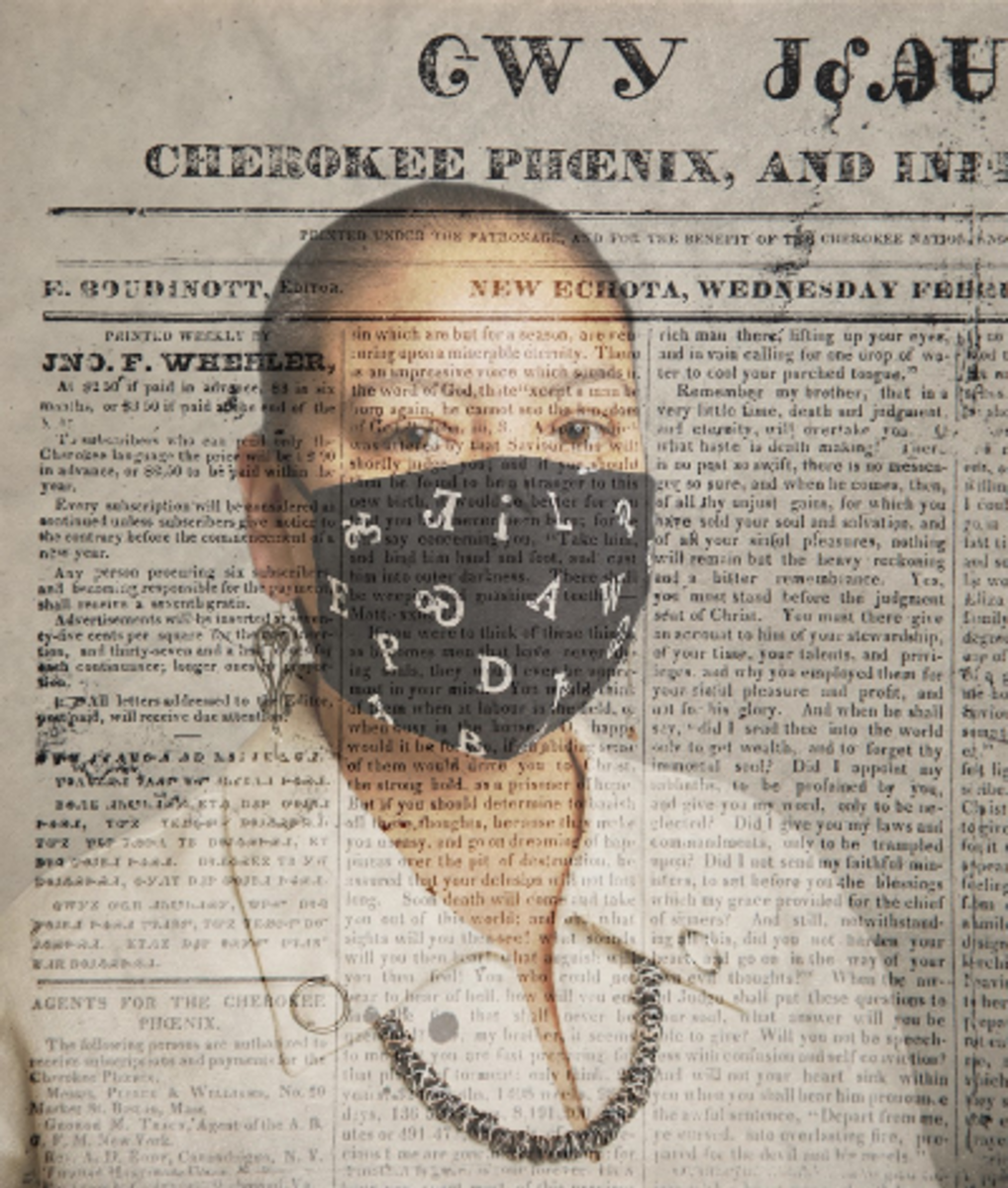
Kenny Glass, ᏕᏣᎵᎬᏚᎴᏍᏗ ᎠᎴ ᏕᏣᎵᏴᏑᎴᏍᏗ (Wear Your Mask), 2020, seed beads, trade beads, brass beads, bias tape, thimbles, wool, and cotton, 42 × 14 1/2 × 5 inches. Museum purchase with funds provided by 2021 Collectors’ Circle members Ann & Jon Kemske. © Kenny Glass.John Henry Gloyne, Osd nvwoti, 2020, acrylic on illustration board, 30 × 24 inches. Museum purchase with funds provided by 2021 Collectors’ Circle members Butch & Kathy Patrick. © John Henry Gloyne.
John Henry Gloyne, Uk’tena, 2020, acrylic on canvas, 24 × 24 × 1 1/2 inches. Museum purchase with funds provided by Ray Griffin & Thom Robinson. © John Henry Gloyne.
Terry Haass, Last Snow, 1949, color woodcut on paper, image: 14 ¼ × 10 5/8 inches. Museum purchase with funds provided by 2021 Collectors’ Circle member Susan Holden. © Estate of Terry Haass.
Featured in A Living Language: Cherokee Syllabary and Contemporary Art
Jody Bradley Lipscomb, A Meeting of Minds, 2020, acrylic on canvas, 10 × 30 inches. Museum purchase with funds provided by 2021 Collectors’ Circle members Ladene & Russell Newton. © Jody Bradley Lipscomb.Featured in A Living Language: Cherokee Syllabary and Contemporary Art
Christopher McCoy, Resilient Times, 2021, non-glare acrylic on DiBond metallic print, 36 × 24 inches. Museum purchase with funds provided by Ray Griffin & Thom Robinson. © Christopher McCoy.Featured in A Living Language: Cherokee Syllabary and Contemporary Art
Tara McCoy, Syllabary Pot, 2021, red earthen clay, 7 × 30 × 7 inches. Museum purchase with funds provided by 2021 Collectors’ Circle members Kevin Click & April Liou in memory of Myron E. Click. © Tara McCoy.George Morrison, Untitled, 1958, gouache on paper, 17 × 22 inches. 2021 Collectors’ Circle purchase with additional funds provided by Bernadette & Miles Bender, Anne & Nat Burkhardt, Jeff & Linda Fromson, Frances Myers, Len & Mary Ellen Porter, Cherry & Paul Lentz Saenger, Judy Upjohn, Barbara & Mike Walker, and Jim Wilson & Lynne Poirier-Wilson. © Estate of George Morrison.
Robert Motherwell, Untitled from Lyric Suite, 1965, black ink with orange bleed on paper, 9 × 11 inches. 2021 Collectors’ Circle purchase with additional funds provided by Bernadette & Miles Bender, Anne & Nat Burkhardt, Jeff & Linda Fromson, Len & Mary Ellen Porter, Cherry & Paul Lentz Saenger, Judy Upjohn, and Jim Wilson & Lynne Poirier-Wilson. © Dedalus Foundation, Inc./Licensed by VAGA at Artists Rights Society (ARS), New York.
Robert Motherwell, Untitled from Lyric Suite, 1965, black ink with blue pigment and orange bleed on paper, 9 × 11 inches. 2021 Collectors’ Circle purchase with additional funds provided by Bernadette & Miles Bender, Anne & Nat Burkhardt, Jeff & Linda Fromson, Len & Mary Ellen Porter, Cherry & Paul Lentz Saenger, Judy Upjohn, and Jim Wilson & Lynne Poirier-Wilson. © Dedalus Foundation, Inc./Licensed by VAGA at Artists Rights Society (ARS), New York.
Marilyn Pappas, Seated Muse with Sphere from Fragments series, 1999, draped and stitched cotton on linen, 30 × 27 inches. Museum purchase with funds provided by 2021 Collectors’ Circle member Steven Gigliotti and Renee Danger James. © Marilyn Pappas.
Featured in A Living Language: Cherokee Syllabary and Contemporary Art
Rhiannon Skye Tafoya, Ul’nigid, 2020, letterpress on handmade and Colorplan paper with paper weaving, closed: 11 x 11 1/4 inches, assembled: 23 1/2 x 11 1/4 x 5 5/8 inches. Museum purchase with funds provided by 2021 Collectors’ Circle members Kevin Click & April Liou in memory of Myron Click. © Rhiannon Skye Tafoya.David Stewart, Saint George and the Dragon, circa 1965, incised and glazed earthenware, 7 5/8 × 10 × 10 inches. Museum purchase with funds provided by 2021 Collectors’ Circle members Olivia & Gary Zahler. © David Stewart.
Featured in A Living Language: Cherokee Syllabary and Contemporary Art
Jakeli Swimmer, EGWA: The Gluttonous Warrior, 2020 (printed 2021), archival inkjet print on paper, edition 1/1, 20 x 16 inches. Museum purchase with funds provided by 2021 Collectors’ Circle members Kevin Click & April Liou in memory of Myron Click. © Jakeli Swimmer.Featured in A Living Language: Cherokee Syllabary and Contemporary Art
Jakeli Swimmer, Missed Me!, 2020 (printed 2021), archival inkjet print on paper, edition 1/1, 20 x 16 inches. Museum purchase with funds provided by 2021 Collectors’ Circle members Kevin Click & April Liou in memory of Myron Click. © Jakeli Swimmer.Ansei Uchima, Descending Moon, 1963, color woodcut on paper, edition: Artist proof, 16 × 4 3/4 inches. Museum purchase with funds provided by 2021 Collectors’ Circle member Lyn McFarland. © Estate of Ansei Uchima.
Featured in A Living Language: Cherokee Syllabary and Contemporary Art
Alica Murphy Wildcatt, Something Else necklace, 2020, hand-sawn sterling silver, 20-inch length chain. Museum purchase with funds provided by M. J. Teaford & R. K. Benites. © Alica Murphy Wildcatt.Liz Williams, Know Your Worth from the Remember to Look Up series, 2020, inkjet archival print on paper, edition 1/10, 24 × 33 inches. Museum purchase with funds provided by 2021 Collectors’ Circle members Tom Butler & Marilyn Laufer in honor of Frances Myers and the Nat C. Myers Fund for Photography. © Liz Williams.
Featured in A Living Language: Cherokee Syllabary and Contemporary Art
Jennie Wilson, ᎣᏪᏅ Ꮢ ᎠᏐᏅ Ꮕ (owenvsv asonvnv), 2020, wood, gourds, cornhusks, fur, wire, sinew, and alcohol inks, 6 1/2 × 15 1/2 × 8 1/2 inches. Museum purchase with funds provided by 2021 Collectors’ Circle members Ladene & Russell Newton. © Jennie Wilson.Featured in A Living Language: Cherokee Syllabary and Contemporary Art
Jennie Wilson, Cherokee Months, 2019, gourds, alcohol inks, copper leaf, and wood burning, 11 1/2 × 9 1/2 × 9 1/2 inches. Museum purchase with funds provided by 2021 Collectors’ Circle members Kevin Click & April Liou in memory of Myron Click. © Jennie Wilson.
Asheville Gallery of Art’s January show, “Mountain Inspirations” will feature works by three new gallery members: Jan Smith, Mandy Kjellstrom, and Raymond Byram. The show will run January 2-31 during gallery hours, 11am-6pm. An event to meet the artists will be held at the gallery on First Friday, January 7, from 5-8pm at 82 Patton Avenue.
Jan has been a professional artist for forty years, and her body of work has evolved over years of experimentation with different materials and techniques. Oil is her medium of choice, and she paints both from photographs and on location. Her style approaches a hybrid impressionistic/realism in her landscapes and traditional realism in her animals, people, and florals. Throughout her career, she has participated in numerous gallery showings. Jan has lived both on the coast and in the mountains of the Carolinas so it comes as no surprise that she transforms the canvas with the familiar beauty of mountain and coastal scenes.
Mandy Kjellstrom commenced her study of art in 2002, and later entered the Fine Arts League of the Carolinas, a school devoted to classical realism. This began her training, with specific interests in the figure, landscapes, and still life, which she continues to study. She finds joy in painting the ordinary things of life in a way that captures their sacredness. Believing that God is present in all things, she considers herself a “co-creator” of the beauty that she experiences as she paints her natural surroundings “en plein air.” Mandy’s preferred medium is oil, in a classical realism style, and she is inspired by the world’s ever-present natural beauty.
Raymond Byram has been painting in oils since 1969. After receiving a Fine Arts degree with a minor in art history, he has devoted his life to his painting and printmaking. Although he has worked in a variety of genres and styles, landscapes in oil are his primary pursuits. Byram’s oils are almost exclusively done with palette knives, rather than brushes. Ray enjoys both an Impressionistic style of painting, as well as the beauty of the mountains and forests. Combined, they have molded his style into what he calls Tight Impressionism. Ray finds his inspiration in the eastern mountains and forests of North Carolina.
For further information about this show, please contact the Asheville Gallery of Art at (828) 251-5796, visit the gallery’s website at www.ashevillegallery-of-art.com, or go to the gallery’s Facebook page.
January 2nd to January 31, Daily from 11am to 6pm
|
|

|
|
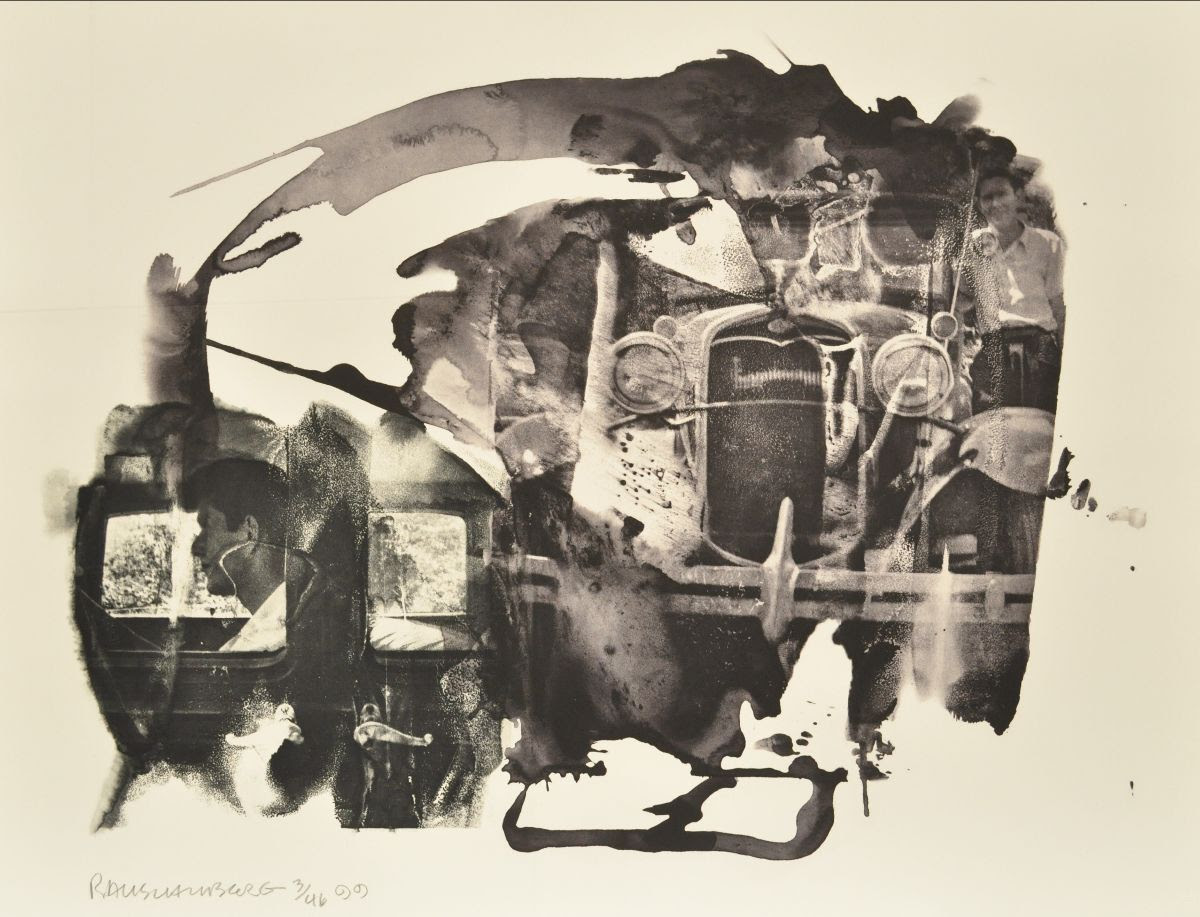 |
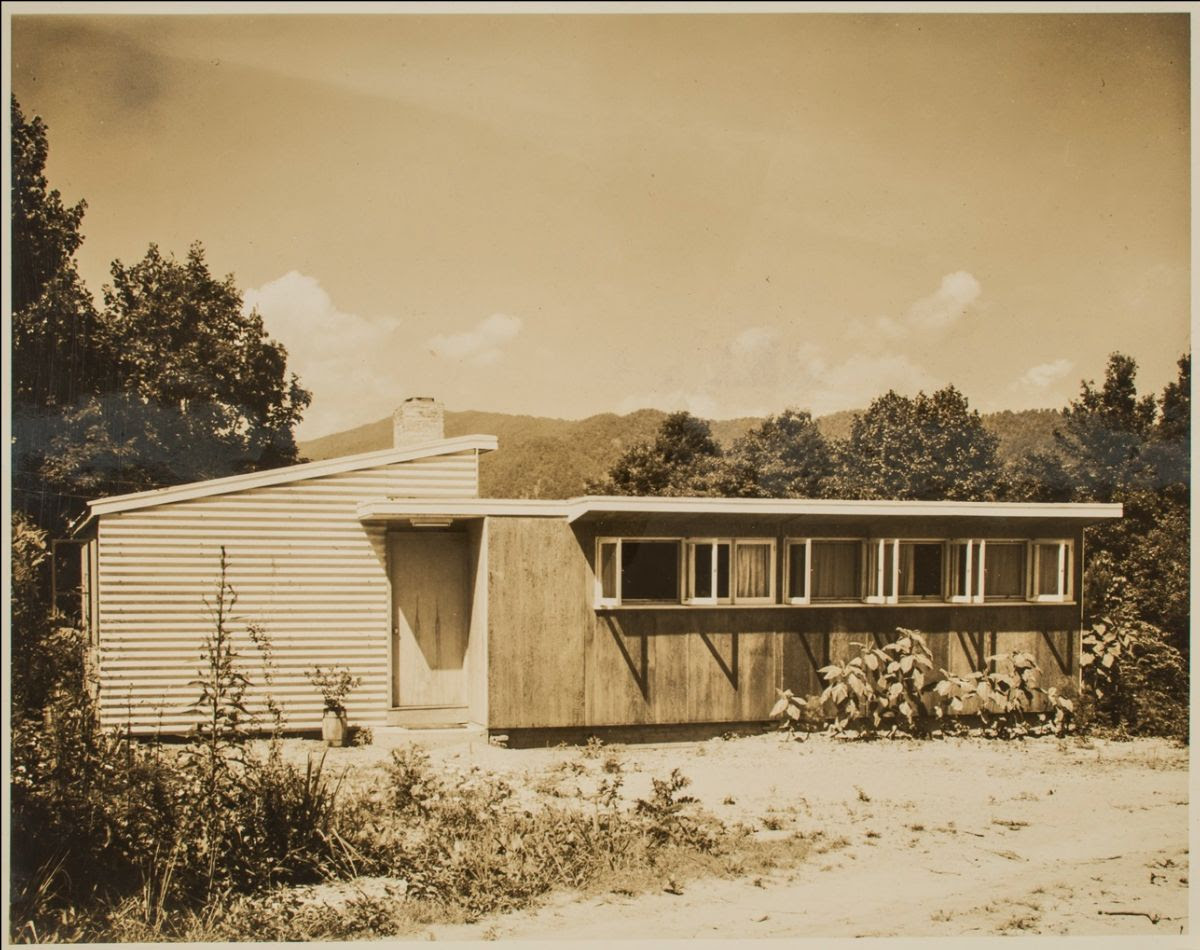
| Robert Rauschenberg, John from the Ruminations series, 1999, photogravure on paper, edition 3/46, publisher: Universal Limited Art Editions, Bay Shore, NY, 29 ½ × 38 7/8 inches. Asheville Art Museum. © Robert Rauschenberg Foundation / VAGA at Artists Rights Society (ARS), New York. |
Ruminations on Memory contends with the act of remembrance and reflection, featuring a rare presentation of all nine prints from Robert Rauschenberg’s Ruminations portfolio, Judy Chicago’s Retrospective in a Box portfolio, and selections from the Museum’s Collection. Organized by the Asheville Art Museum and curated by Hilary Schroeder, assistant curator, this exhibition will be on view in Appleby Foundation Exhibition Hall at the Museum from November 19, 2021 through March 14, 2022 in conjunction with A Living Language: Cherokee Syllabary and Contemporary Art.
Artworks are vessels for processing, recalling, and reflecting on the past. Artists often draw upon materials from their own pasts and grasp at fleeting moments in time in the creation of an object. For the viewer, observation of an artwork can draw out personal memories.
Artworks in a variety of media explore various ways of remembering, including individual memories that focus on the moments from an artist’s past; generational memory that looks back to one’s ancestors, whether recent or long past; and collective memory, wherein in an image might evoke bygone times that balance between constructed and real. Through these artworks that ruminate upon the past, viewers may discover the stirrings of their own thoughts and recollections prompted by the works before them.
Ruminations on Memory offers a unique opportunity to experience the entirety of a major print portfolio by American painter Robert Rauschenberg (Port Arthur, TX 1925–2008 Captiva, FL). Rauschenberg was a student at Black Mountain College in NC for the 1948–1949 and 1951–1952 academic sessions and for the 1951 and 1952 summers. His Ruminations series consists of nine color photogravures which were printed in 1999 and reflect on Rauschenberg’s early life, his friends and family, and the memories he held dear. The series represents especially significant mature work by Rauschenberg that looks back to his most formative moments as an artist including his time at Black Mountain College and the friendships and ideas formed there.
Also presented in the exhibition is an important series of prints by Judy Chicago (born Chicago, IL 1939). Five decades into her career, Chicago stands as one of the foremost artists of the 20th and 21st centuries, having committed to socially minded work, uplifting in particular experiences salient to her feminine and Jewish identities. Retrospective in a Box consists of seven prints and a portfolio created in collaboration with the master printers at Landfall Press, and provides an overview of her major motifs and ideas, including the print Spring the Dinner, a nod to her seminal 1979 work The Dinner Party.
In addition to the artworks from the Museum’s Collection, visitors will be able to experience Felix Gonzales-Torres’s “Untitled” (L.A.), on loan from the Art Bridges collection. “Untitled” (L.A.) is one of the artist’s iconic interactive candy installations where memories are engaged not only through sight but through sound, touch, taste, and smell as well.
Learn more about Ruminations on Memory and A Living Language: Cherokee Syllabary and Contemporary Art at ashevilleart.org.
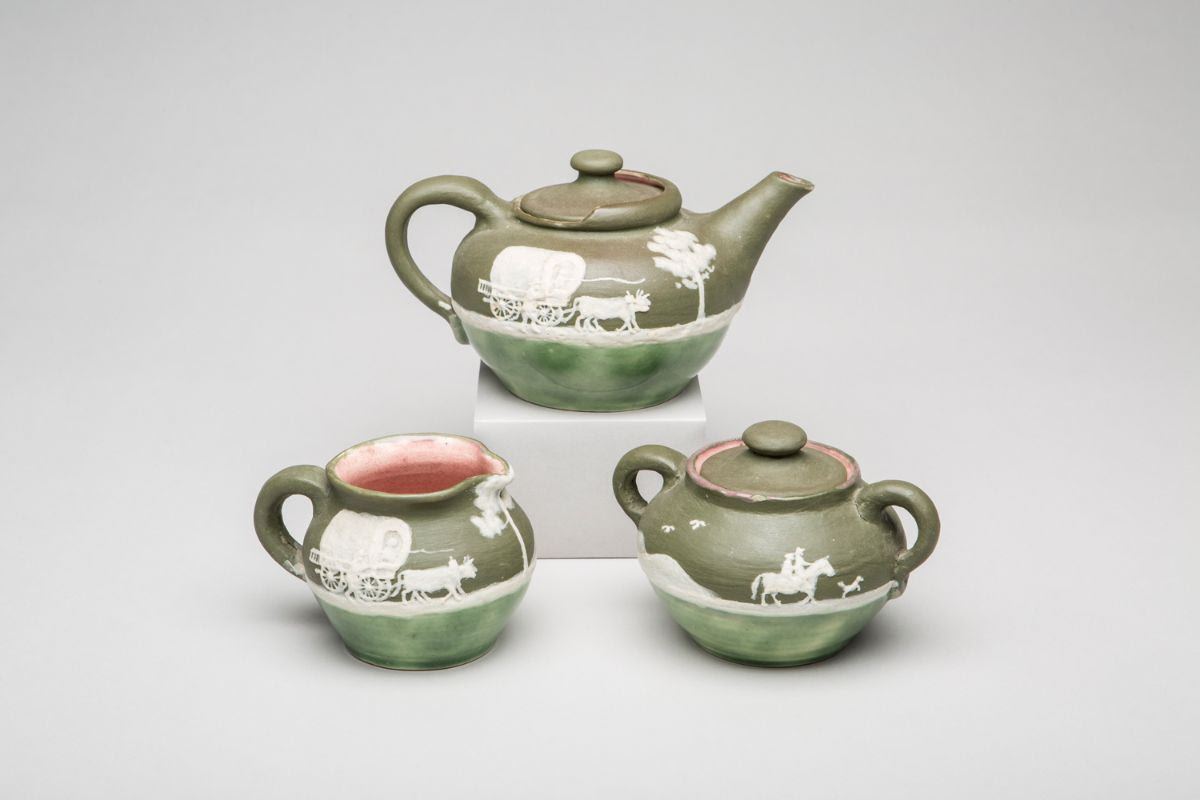
Artist Walter B. Stephen (Clinton, IA 1875–1961 Asheville, NC) contributed to Western North Carolina’s identity as a flourishing site for pottery production and craftsmanship in the early 20th century. Walter B. Stephen Pottery: Cameo to Crystalline features art pottery and functional vessels from each stage of Stephen’s career, from his origins discovering the medium alongside his mother Nellie C. Randall Stephen in Shelby County, TN from 1901 through 1910 to his multi-decade production just outside of Asheville. This exhibition will be on view in the Asheville Art Museum’s Debra McClinton Gallery July 28, 2021 through January 17, 2022.
In 1926, Stephen founded his third and last pottery studio, Pisgah Forest, in Arden, NC, which he operated until his death in 1961. It was at this studio that the artist perfected the “cameo” decoration technique for which he became best known. His hand-painted images, achieved with layers of white translucent clay, often feature American folk imagery, from covered wagons and livestock to cabins and spinning wheels. A selection of works from the Museum’s Collection showcase his innovation in form and in decorative surface details, including experimentation with crystalline glazing.
It’s the Year of the Tree in North Carolina State Parks, and we are encouraging guests to celebrate trees all year long! Start off in the winter months while branches are bare and capture some unique tree shapes or the beauty of frosty evergreens. You may win a prize for your efforts!
GREAT PRIZES WILL BE AWARDED TO 3 WINNING ENTRIES
1st Prize: The winning photo will be our Facebook cover photo for two weeks, and the photographer will receive two annual passes to Chimney Rock State Park, two boat tour tickets from Lake Lure Tours, and dinner for two at the Old Rock Café.
2nd Prize: After the first place photo, the second place photo will be our Facebook cover photo for one week. The photographer will receive two annual passes to Chimney Rock State Park and dinner for two at the Old Rock Café.
3rd Prize: The third place photographer will receive two adult day passes (or one family pack of day passes) to Chimney Rock State Park and dinner for two at the Old Rock Café.
CONTEST RULES:
- There is no fee to enter the contest. All photographs must be taken of Chimney Rock at Chimney Rock State Park only in areas accessible to guests between January 1, 2022 – February 28, 2022.
The contest is open to amateur and professional photographers. - Up to three photos per person can be submitted via any of the following ways to be eligible to win:
- Facebook: First, like the Chimney Rock at Chimney Rock State Park page. Next, send us a private message including your contact information specified in rule #3.
- E-mail: If you don’t have access to social media, you may email your digital photo with your contact information specified in rule #3 to [email protected].
- Every entry should be clearly labeled with the photographer’s name, city & state, a brief photo caption, an email address and the best phone number to reach you.
- Photos should be available at a minimum resolution of 1200 x 1600 pixels (1 MB minimum) to be eligible to win. Photos taken via smart phones, tablets and other mobile devices are welcome if they meet minimum requirements.
- For entries showing human faces, you must list their name(s) and have written permission from any photographed person(s) to use their image.
- Entries should reflect the photographer’s interpretation of the theme. Emphasis will be placed on quality, composition and creativity. All entries may be used in promotions of Chimney Rock and park-related activities.
- Digital images can be optimized but not dramatically altered with photo editing software. Black and white photographs are welcome.
- Finalists will be chosen by Chimney Rock staff and the winner will be voted on by the public. Decisions regarding winners are final.
Winners will be notified personally and announced on Chimney Rock’s social media. For more information, call 1-828-625-9611, ext. 1812 or email us at [email protected].

Fellowship program supporting emerging craft curators to explore and test new ideas about craft.
Details
- Award Amount:
- Up to $5,000
- Grant Period:
- Through 2023
Timeline
- Applications Open:
- Nov 16, 2021
- Orientation:
- January 14, 2022
- Deadline:
- Feb 14, 2022
- Notification:
- Apr 2022
- Grant Period begins:
- May 2022
- Grant Period ends:
- Through 2023
January through April
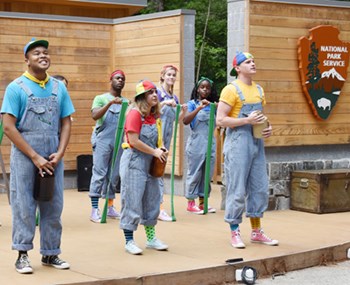 Actors portray characters from Carl Sandburg’s Rootabaga Story “Three Boys with Jugs of Molasses and Secret Ambitions.”
NPS Photo
Educators in grades 3-12 are invited to submit original poems written by their students in February. The poems will be judged and winners announced in April. Find the 2022 Poetry Contest Information and submission guidelines here. The theme “Ambition” is from one of Carl Sandburg’s Rootabaga Stories, to celebrate it’s 100th year of being published. “An ambition…creeps in your heart night and day, singing a little song, ‘Come and find me, come and find me.”
Students are invited to submit a poem to Carl Sandburg Home National Historic Site’s annual Student Poetry Contest. The contest encourages youth to explore writing their own poetry, and is open to students nationwide!
Submissions are accepted from grades 3-12 and must be postmarked by March 1, 2022. See below for submission rules.
Winners will be notified by April 8, 2022, and will be invited to participate in a special virtual program on April 22.
2022 Contest Rules
Theme – “Ambition”
Carl Sandburg wrote millions of words reflecting on the American experience of the 20th century. Though his words often focused on war, labor, and social injustice, as a father of three, he also wrote imaginative, zany, and fantastical children’s stories, called “Rootabaga Stories.” Carl Sandburg’s “Rootabaga Stories” were first published in 1922 and celebrate 100 years of entertaining readers of all ages this year. The theme “Ambition” is from one of these stories. “An ambition…creeps in your heart night and day, singing a little song, ‘Come and find me, come and find me.” Read the story here.
Poems submitted for the 2022 contest should reflect the theme of “Ambition.” By definition, a strong desire to do or to achieve something, typically requiring determination and hard work. Or setting goals to achieve success.
Submission Rules
- Poetry accepted from 3-12th grades only. Poems will be grouped for judging by 3-5th, 6-8th, and 9-12th.
- Poems must be submitted by a teacher (traditional classroom or homeschool teacher).
- No more than three poems per class. Teachers with multiple classes, can submit up to three poems per class period.
- Poem will be judged on its ability to communicate the theme.
- Poem can be written in any style, but must not exceed one-page in length. No illustrations.
- Poems must be typed, no handwritten entries, using standard computer fonts, like Times, Arial, etc…
- Do not place any identifying information (name, school, grade, etc…) on poem sheet, that will go on the accompanying submission form.
- Submission form must be complete to be accepted:
- Paperclipped to poem, no staples
- Must be signed by parent, student and teacher
- Submissions must be postmarked, faxed, or e-mailed to [email protected], by March 1, 2022. Emailed submissions must be docs, .pdfs or scans. Low resolution pictures of the submission will not be accepted.
Judging
Judges from the literary community will make the decision for 1st, 2nd, and 3rd place within each grade category (3-5th, 6-8th, 9-12th).
Poetry Partners
The 2022 Poetry Contest is a result of tremendous community support including the Friends of Carl Sandburg at Connemara, and literary volunteers who serve as judges. Thank you.
Poetry Resources
You may also find curriculum resources to use in the classroom at the park’s website: www.nps.gov/carl/learn/education/index.htm.
Send Submissions to:
Carl Sandburg Home NHS
Attn: Poetry Contest
81 Carl Sandburg Lane
Flat Rock, North Carolina 28731
Fax 828-693-4179
Email: [email protected]
Various times
His masterworks have been displayed around the world for over a century… but never like this. Described as “an unforgettable multi-sensory experience,” Van Gogh Alive is a powerful and vibrant symphony of light, color, sound, and scent that compels you to leave the world behind and immerse yourself in Van Gogh’s paintings. Simultaneously enchanting, entertaining, and educational, Van Gogh Alive stimulates all the senses and opens the mind.

Artist Michael Fowler creates evocative abstract landscape paintings by incorporating vibrant colors with subtle, complex details. His semi-large-scale approach invites viewers to step into his work and build a sense of wonder and contemplation surrounding the natural world. Fowler’s artistic response in contemplating nature is to capture something of a landscape’s pleasantness, which is often unexpected harmonies of color and shape. In his latest exhibit, Arbor Huescapes, Fowler highlights the distinctive vegetation – primarily trees – and topography of North and South Carolina’s midlands and piedmont regions.
Fowler received his Bachelor of Arts from Harding University in Searcy, Arkansas with a focus in Advertising Design. He then attended the University of Nebraska where he received a Master’s degree in Fine Arts in Painting and Drawing with a minor in Art History. From there, he attended the University of Memphis where he earned a Doctorate in Higher Education. Based in North Augusta, South Carolina, Fowler is currently an associate professor of design and computer graphics and serves as the Mary Durban Toole Chair of Art at the University of South Carolina in Aiken. His paintings are in a number of public and private collections nationally, and he actively exhibits in regional and national shows.
Please note: Arbor Huescapes has been rescheduled due to the COVID-19 crisis and will now open in fall 2021. The exhibit is on display daily September 18, 2021 – January 9, 2022, from 9 a.m. to 5 p.m. inside the Baker Exhibit Center. All works are available for purchase and a portion of sales will be donated to The North Carolina Arboretum Society.
Main Gallery show featuring members of the Southern Highland Craft Guild.
|
| Nancy Graves, Parable of Nostalgia from the Tango portfolio, 1991, intaglio on cotton rag paper, edition 12/26, publisher: Iris Editions, New York, image: 26 × 17 5/8 inches, sheet: 35 3/4 × 26 inches. Asheville Art Museum. © Nancy Graves Foundation, Inc. / Licensed by VAGA at Artists Rights Society (ARS), NY. |
A Dance of Images and Words: The Nancy Graves/Pedro Cuperman Tango Portfolio features a series of eight intaglio prints that depict plants and animals alongside eleven sheets of prose that explore the steps of the Argentinian dance, the tango. Organized by the Asheville Art Museum from the Museum’s Collection and curated by Hilary Schroeder, assistant curator, this exhibition will be on view in The Van Winkle Law Firm Gallery at the Museum from September 29, 2021 through January 10, 2022.
The common idiom “it takes two to tango” is immediately called into question in both the imagery and words of the Tango portfolio. The portfolio is an expression of artist Nancy Graves (Pittsfield, MA 1939–1995 New York, NY) writer Pedro Cuperman’s (1936–2016 Buenos Aires, Argentina) meditations on the dance. Their imagery and words become paired in an illustrated book though their explorations take different formats and directions. Both Graves and Cuperman look towards humankind and nature as a place where beings come together in the experience of living. This exhibition presents Graves’s eight prints alongside the portfolio frontispiece and a page of Cuperman’s text to immerse visitors in the collaborative dance of the tango.
Rhiannon Skye Tafoya (Eastern Band of Cherokee Indians), Ul’nigid’, 2020, letterpress (photopolymer and Bembo & Cherokee Syllabary metal type) printed on handmade & color plan paper with paperweaving, closed: 11 × 11 ¼ inches, assembled: 23 ½ × 11 ¼ × 5 ⁵⁄₈ inches. Courtesy the Artist. © Rhiannon Skye Tafoya, image Rhiannon Skye Tafoya.
Living Language: Cherokee Syllabary and Contemporary Art features over 50 works of art in a variety of media by 30+ Eastern Band of Cherokee Indians (EBCI) and Cherokee Nation artists. The exhibition highlights the use of the written Cherokee language, a syllabary developed by Cherokee innovator Sequoyah (circa 1776–1843). Cherokee syllabary is frequently found in the work of Cherokee artists as a compositional element or the subject matter of the work itself. The exhibition will be on view at the Museum of the Cherokee Indian in Cherokee, NC from June 12, 2021 to October 31, 2021, and in the Asheville Art Museum’s Appleby Foundation Exhibition Hall from November 19, 2021 to March 14, 2022. The Cherokee Syllabary is a system of writing developed by Sequoyah in the early 1800s prior to the Removal period. Through Sequoyah’s innovative work, Cherokee people embraced the writing system as an expedient form of communication and documentation. During the Removal period, the syllabary was used as a tactic to combat land dispossession. Cherokee people continue to use the syllabary as a form of cultural expression and pride, which is showcased in the contemporary artwork of the Cherokee Citizens in this exhibition.
“We’re pleased to host this gathering of works from contemporary Cherokee artists, who perfectly illustrate how our language is a living and evolving part of who we are. It’s moving to see how each artist finds inspiration in their own way from this language that connects us as Cherokee people,” said Shana Bushyhead Condill, executive director of the Museum of the Cherokee Indian.
“The Asheville Art Museum and the Museum of the Cherokee Indian have been long-term collaborators, and we are delighted to further our partnership by working together to manage an open call to Cherokee artists and subsequently curate this exciting exhibition of contemporary works that take inspiration from, celebrate, preserve and interpret the syllabary,” said Pamela L. Myers, executive director of the Asheville Art Museum. “On view at both museums, we hope the exhibition engages a wide and diverse audience in dialogue with these extraordinary works.”
A Living Language: Cherokee Syllabary and Contemporary Art is organized by the Asheville Art Museum and Museum of the Cherokee Indian, and curated by Hilary Schroeder, assistant curator at the Asheville Art Museum, with assistance from curatorial consultant Joshua Adams (Eastern Band of Cherokee Indians). Special thanks to S. Dakota Brown, education director at the Museum of the Cherokee Indian, and Alexis Meldrum, curatorial assistant at the Asheville Art Museum, for their support in the planning of this exhibition. This project is made possible in part by a grant from the Blue Ridge National Heritage Area Partnership, and sponsored in part by the Cherokee Preservation Foundation and Kevin Click & April Liou in memory of Myron E. Click.
Eastern Band of Cherokee Indians artists include Joshua Adams, Jody Lipscomb Bradley, Nathan Bush, Kane Crowe, John Henry Gloyne, Shan Goshorn, Luzene Hill, Christy Long, Louise Bigmeat Maney, Christopher McCoy, Tara McCoy, Joel Queen, Sean Ross, Jakeli Swimmer, Rhiannon Skye Tafoya, Mary Thompson, Stan Tooni Jr., Alica Wildcatt, and Fred Wilnoty.
Cherokee Nation artists include Roy Boney Jr., Jeff Edwards, Joseph Erb, Raychel Foster, Kenny Glass, Camilla McGinty, Jessica Mehta, America Meredith, Jane Osti, Lisa Rutherford, Janet L. Smith, Jennifer Thiessen, and Jennie Wilson.
About the Museum of the Cherokee Indian
Established in 1948, the Museum of the Cherokee Indian is one of the longest operating tribal museums. Recognized for its innovative storytelling, the Museum features exhibits, artwork, and hands-on technology that brings over 15,000 years of Cherokee history to life. Located in Cherokee, NC, the Museum is open daily except Thanksgiving, Christmas, and New Year’s Day. Learn more by visiting
mci.org.
Christopher McCoy, Resilient Times, 2021, non-glare acrylic on DiBond metallic print, 36 × 24 inches. Museum purchase with funds provided by Ray Griffin & Thom Robinson. © Christopher McCoy.
Asheville, N.C.—The generosity of the Museum’s Collectors’ Circle members and additional contributors enabled the Asheville Art Museum to acquire 25 new artworks for its Collection at the end of 2021. The Museum welcomes artworks created throughout the 20th and 21st centuries in a range of media by both regionally and nationally recognized artists. These artists include Peggy Bacon, Lynda Benglis, Sanford Biggers, Terry Haass, George Morrison, Robert Motherwell, Marilyn Pappas, David Stewart, Ansei Uchima, and Asheville-based Liz Williams. A highlight of this year’s Collectors’ Circle acquisitions is a grouping of works by artists featured in the exhibition A Living Language: Cherokee Syllabary and Contemporary Art, on view at the Asheville Art Museum through March 14, 2022. This exhibition was co-organized with the Museum of the Cherokee Indian in Cherokee, NC. The curatorial team identified the 14 artworks by artists of the Cherokee Nation or Eastern Band of Cherokee Indians not yet represented in the Collection to augment not only the Museum’s contemporary holdings but also the holdings of Cherokee artists working today. Artists represented in this acquisition include John Henry Gloyne, Christopher McCoy, Tara McCoy, Rhiannon Skye Tafoya, Jakeli Swimmer, and Alica Murphy Wildcatt of the Eastern Band of Cherokee Indians and Jeff Edwards, Kenny Glass, and Jennie Wilson of the Cherokee Nation. These artworks contribute directly to the Museum’s commitment to collecting from and supporting contemporary Indigenous artists, especially those with connections to the unceded land upon which the Museum sits. “Through a vibrant array of materials, colors, and perspectives, the Cherokee syllabary finds an evocative, contemporary form of expression at the hands of the artists in this exhibition,” said Assistant Curator Hilary Schroeder of this group of work. “There is a power in words, both written and spoken. I often find that power to be amplified in a work of art, when those words are placed in the context of composition, symbolism, and an artist’s intent.” Visit ashevilleart.org/exhibitions/a-living-language to learn more about this exhibition.
The Museum’s Collectors’ Circle is a specialized group formed to encourage the exchange of ideas and interests, art learning, connoisseurship, and collecting. The group supports the proactive development, stewardship, and conservation of the Museum’s Collection. The Museum is grateful for these new year-end acquisitions, which add to the strengths of its holdings, and looks forward to sharing them with the community of Western North Carolina and its visitors in the years to come.
The following 25 works have been acquired for the Museum’s Collection:
Peggy Bacon, Day-Nursery, 1918, drypoint on paper, 6 × 8 inches. Museum purchase with funds provided by 2021 Collectors’ Circle member Susan Holden. © Estate of Peggy Bacon.
Lynda Benglis, Tandem Series #10, 1988, relief, hand-painted watercolor, monoprint on paper, 38 1/2 × 24 1/2 inches. Museum purchase with funds provided by 2021 Collectors’ Circle members Gary Greener & Bret McAllister. © Lynda Benglis.
Sanford Biggers, The Pasts They Brought With Them from The Floating Worlds series, 2013, paper collage and silkscreen with hand-coloring on rag paper, edition 29/30, publisher: LeRoy Neiman Center for Print Studies, 27 1/2 × 24 inches. Museum purchase with funds provided by 2021 Collectors’ Circle members Joey Gigliotti and Steven Gigliotti. © Sanford Biggers.
Featured in A Living Language: Cherokee Syllabary and Contemporary Art
Jeff Edwards, Speaking With Our Ancestors, 2013, archival inkjet print on paper, edition 7/50, 30 × 24 inches. Museum purchase with funds provided by 2021 Collectors’ Circle members Kevin Click & April Liou in memory of Myron E. Click. © Jeff Edwards.Featured in A Living Language: Cherokee Syllabary and Contemporary Art
Jeff Edwards, Tsalagiopoly, 2013, archival inkjet print on paper, edition 6/50, 30 × 24 inches. Museum purchase with funds provided by 2021 Collectors’ Circle members Ladene & Russell Newton. © Jeff Edwards.Featured in A Living Language: Cherokee Syllabary and Contemporary Art
Kenny Glass, ᏕᏣᎵᎬᏚᎴᏍᏗ ᎠᎴ ᏕᏣᎵᏴᏑᎴᏍᏗ (Wear Your Mask), 2020, seed beads, trade beads, brass beads, bias tape, thimbles, wool, and cotton, 42 × 14 1/2 × 5 inches. Museum purchase with funds provided by 2021 Collectors’ Circle members Ann & Jon Kemske. © Kenny Glass.John Henry Gloyne, Osd nvwoti, 2020, acrylic on illustration board, 30 × 24 inches. Museum purchase with funds provided by 2021 Collectors’ Circle members Butch & Kathy Patrick. © John Henry Gloyne.
John Henry Gloyne, Uk’tena, 2020, acrylic on canvas, 24 × 24 × 1 1/2 inches. Museum purchase with funds provided by Ray Griffin & Thom Robinson. © John Henry Gloyne.
Terry Haass, Last Snow, 1949, color woodcut on paper, image: 14 ¼ × 10 5/8 inches. Museum purchase with funds provided by 2021 Collectors’ Circle member Susan Holden. © Estate of Terry Haass.
Featured in A Living Language: Cherokee Syllabary and Contemporary Art
Jody Bradley Lipscomb, A Meeting of Minds, 2020, acrylic on canvas, 10 × 30 inches. Museum purchase with funds provided by 2021 Collectors’ Circle members Ladene & Russell Newton. © Jody Bradley Lipscomb.Featured in A Living Language: Cherokee Syllabary and Contemporary Art
Christopher McCoy, Resilient Times, 2021, non-glare acrylic on DiBond metallic print, 36 × 24 inches. Museum purchase with funds provided by Ray Griffin & Thom Robinson. © Christopher McCoy.Featured in A Living Language: Cherokee Syllabary and Contemporary Art
Tara McCoy, Syllabary Pot, 2021, red earthen clay, 7 × 30 × 7 inches. Museum purchase with funds provided by 2021 Collectors’ Circle members Kevin Click & April Liou in memory of Myron E. Click. © Tara McCoy.George Morrison, Untitled, 1958, gouache on paper, 17 × 22 inches. 2021 Collectors’ Circle purchase with additional funds provided by Bernadette & Miles Bender, Anne & Nat Burkhardt, Jeff & Linda Fromson, Frances Myers, Len & Mary Ellen Porter, Cherry & Paul Lentz Saenger, Judy Upjohn, Barbara & Mike Walker, and Jim Wilson & Lynne Poirier-Wilson. © Estate of George Morrison.
Robert Motherwell, Untitled from Lyric Suite, 1965, black ink with orange bleed on paper, 9 × 11 inches. 2021 Collectors’ Circle purchase with additional funds provided by Bernadette & Miles Bender, Anne & Nat Burkhardt, Jeff & Linda Fromson, Len & Mary Ellen Porter, Cherry & Paul Lentz Saenger, Judy Upjohn, and Jim Wilson & Lynne Poirier-Wilson. © Dedalus Foundation, Inc./Licensed by VAGA at Artists Rights Society (ARS), New York.
Robert Motherwell, Untitled from Lyric Suite, 1965, black ink with blue pigment and orange bleed on paper, 9 × 11 inches. 2021 Collectors’ Circle purchase with additional funds provided by Bernadette & Miles Bender, Anne & Nat Burkhardt, Jeff & Linda Fromson, Len & Mary Ellen Porter, Cherry & Paul Lentz Saenger, Judy Upjohn, and Jim Wilson & Lynne Poirier-Wilson. © Dedalus Foundation, Inc./Licensed by VAGA at Artists Rights Society (ARS), New York.
Marilyn Pappas, Seated Muse with Sphere from Fragments series, 1999, draped and stitched cotton on linen, 30 × 27 inches. Museum purchase with funds provided by 2021 Collectors’ Circle member Steven Gigliotti and Renee Danger James. © Marilyn Pappas.
Featured in A Living Language: Cherokee Syllabary and Contemporary Art
Rhiannon Skye Tafoya, Ul’nigid, 2020, letterpress on handmade and Colorplan paper with paper weaving, closed: 11 x 11 1/4 inches, assembled: 23 1/2 x 11 1/4 x 5 5/8 inches. Museum purchase with funds provided by 2021 Collectors’ Circle members Kevin Click & April Liou in memory of Myron Click. © Rhiannon Skye Tafoya.David Stewart, Saint George and the Dragon, circa 1965, incised and glazed earthenware, 7 5/8 × 10 × 10 inches. Museum purchase with funds provided by 2021 Collectors’ Circle members Olivia & Gary Zahler. © David Stewart.
Featured in A Living Language: Cherokee Syllabary and Contemporary Art
Jakeli Swimmer, EGWA: The Gluttonous Warrior, 2020 (printed 2021), archival inkjet print on paper, edition 1/1, 20 x 16 inches. Museum purchase with funds provided by 2021 Collectors’ Circle members Kevin Click & April Liou in memory of Myron Click. © Jakeli Swimmer.Featured in A Living Language: Cherokee Syllabary and Contemporary Art
Jakeli Swimmer, Missed Me!, 2020 (printed 2021), archival inkjet print on paper, edition 1/1, 20 x 16 inches. Museum purchase with funds provided by 2021 Collectors’ Circle members Kevin Click & April Liou in memory of Myron Click. © Jakeli Swimmer.Ansei Uchima, Descending Moon, 1963, color woodcut on paper, edition: Artist proof, 16 × 4 3/4 inches. Museum purchase with funds provided by 2021 Collectors’ Circle member Lyn McFarland. © Estate of Ansei Uchima.
Featured in A Living Language: Cherokee Syllabary and Contemporary Art
Alica Murphy Wildcatt, Something Else necklace, 2020, hand-sawn sterling silver, 20-inch length chain. Museum purchase with funds provided by M. J. Teaford & R. K. Benites. © Alica Murphy Wildcatt.Liz Williams, Know Your Worth from the Remember to Look Up series, 2020, inkjet archival print on paper, edition 1/10, 24 × 33 inches. Museum purchase with funds provided by 2021 Collectors’ Circle members Tom Butler & Marilyn Laufer in honor of Frances Myers and the Nat C. Myers Fund for Photography. © Liz Williams.
Featured in A Living Language: Cherokee Syllabary and Contemporary Art
Jennie Wilson, ᎣᏪᏅ Ꮢ ᎠᏐᏅ Ꮕ (owenvsv asonvnv), 2020, wood, gourds, cornhusks, fur, wire, sinew, and alcohol inks, 6 1/2 × 15 1/2 × 8 1/2 inches. Museum purchase with funds provided by 2021 Collectors’ Circle members Ladene & Russell Newton. © Jennie Wilson.Featured in A Living Language: Cherokee Syllabary and Contemporary Art
Jennie Wilson, Cherokee Months, 2019, gourds, alcohol inks, copper leaf, and wood burning, 11 1/2 × 9 1/2 × 9 1/2 inches. Museum purchase with funds provided by 2021 Collectors’ Circle members Kevin Click & April Liou in memory of Myron Click. © Jennie Wilson.
Asheville Gallery of Art’s January show, “Mountain Inspirations” will feature works by three new gallery members: Jan Smith, Mandy Kjellstrom, and Raymond Byram. The show will run January 2-31 during gallery hours, 11am-6pm. An event to meet the artists will be held at the gallery on First Friday, January 7, from 5-8pm at 82 Patton Avenue.
Jan has been a professional artist for forty years, and her body of work has evolved over years of experimentation with different materials and techniques. Oil is her medium of choice, and she paints both from photographs and on location. Her style approaches a hybrid impressionistic/realism in her landscapes and traditional realism in her animals, people, and florals. Throughout her career, she has participated in numerous gallery showings. Jan has lived both on the coast and in the mountains of the Carolinas so it comes as no surprise that she transforms the canvas with the familiar beauty of mountain and coastal scenes.
Mandy Kjellstrom commenced her study of art in 2002, and later entered the Fine Arts League of the Carolinas, a school devoted to classical realism. This began her training, with specific interests in the figure, landscapes, and still life, which she continues to study. She finds joy in painting the ordinary things of life in a way that captures their sacredness. Believing that God is present in all things, she considers herself a “co-creator” of the beauty that she experiences as she paints her natural surroundings “en plein air.” Mandy’s preferred medium is oil, in a classical realism style, and she is inspired by the world’s ever-present natural beauty.
Raymond Byram has been painting in oils since 1969. After receiving a Fine Arts degree with a minor in art history, he has devoted his life to his painting and printmaking. Although he has worked in a variety of genres and styles, landscapes in oil are his primary pursuits. Byram’s oils are almost exclusively done with palette knives, rather than brushes. Ray enjoys both an Impressionistic style of painting, as well as the beauty of the mountains and forests. Combined, they have molded his style into what he calls Tight Impressionism. Ray finds his inspiration in the eastern mountains and forests of North Carolina.
For further information about this show, please contact the Asheville Gallery of Art at (828) 251-5796, visit the gallery’s website at www.ashevillegallery-of-art.com, or go to the gallery’s Facebook page.
January 2nd to January 31, Daily from 11am to 6pm
|
|
|
|
|
| Robert Rauschenberg, John from the Ruminations series, 1999, photogravure on paper, edition 3/46, publisher: Universal Limited Art Editions, Bay Shore, NY, 29 ½ × 38 7/8 inches. Asheville Art Museum. © Robert Rauschenberg Foundation / VAGA at Artists Rights Society (ARS), New York. |
Ruminations on Memory contends with the act of remembrance and reflection, featuring a rare presentation of all nine prints from Robert Rauschenberg’s Ruminations portfolio, Judy Chicago’s Retrospective in a Box portfolio, and selections from the Museum’s Collection. Organized by the Asheville Art Museum and curated by Hilary Schroeder, assistant curator, this exhibition will be on view in Appleby Foundation Exhibition Hall at the Museum from November 19, 2021 through March 14, 2022 in conjunction with A Living Language: Cherokee Syllabary and Contemporary Art.
Artworks are vessels for processing, recalling, and reflecting on the past. Artists often draw upon materials from their own pasts and grasp at fleeting moments in time in the creation of an object. For the viewer, observation of an artwork can draw out personal memories.
Artworks in a variety of media explore various ways of remembering, including individual memories that focus on the moments from an artist’s past; generational memory that looks back to one’s ancestors, whether recent or long past; and collective memory, wherein in an image might evoke bygone times that balance between constructed and real. Through these artworks that ruminate upon the past, viewers may discover the stirrings of their own thoughts and recollections prompted by the works before them.
Ruminations on Memory offers a unique opportunity to experience the entirety of a major print portfolio by American painter Robert Rauschenberg (Port Arthur, TX 1925–2008 Captiva, FL). Rauschenberg was a student at Black Mountain College in NC for the 1948–1949 and 1951–1952 academic sessions and for the 1951 and 1952 summers. His Ruminations series consists of nine color photogravures which were printed in 1999 and reflect on Rauschenberg’s early life, his friends and family, and the memories he held dear. The series represents especially significant mature work by Rauschenberg that looks back to his most formative moments as an artist including his time at Black Mountain College and the friendships and ideas formed there.
Also presented in the exhibition is an important series of prints by Judy Chicago (born Chicago, IL 1939). Five decades into her career, Chicago stands as one of the foremost artists of the 20th and 21st centuries, having committed to socially minded work, uplifting in particular experiences salient to her feminine and Jewish identities. Retrospective in a Box consists of seven prints and a portfolio created in collaboration with the master printers at Landfall Press, and provides an overview of her major motifs and ideas, including the print Spring the Dinner, a nod to her seminal 1979 work The Dinner Party.
In addition to the artworks from the Museum’s Collection, visitors will be able to experience Felix Gonzales-Torres’s “Untitled” (L.A.), on loan from the Art Bridges collection. “Untitled” (L.A.) is one of the artist’s iconic interactive candy installations where memories are engaged not only through sight but through sound, touch, taste, and smell as well.
Learn more about Ruminations on Memory and A Living Language: Cherokee Syllabary and Contemporary Art at ashevilleart.org.
Artist Walter B. Stephen (Clinton, IA 1875–1961 Asheville, NC) contributed to Western North Carolina’s identity as a flourishing site for pottery production and craftsmanship in the early 20th century. Walter B. Stephen Pottery: Cameo to Crystalline features art pottery and functional vessels from each stage of Stephen’s career, from his origins discovering the medium alongside his mother Nellie C. Randall Stephen in Shelby County, TN from 1901 through 1910 to his multi-decade production just outside of Asheville. This exhibition will be on view in the Asheville Art Museum’s Debra McClinton Gallery July 28, 2021 through January 17, 2022.
In 1926, Stephen founded his third and last pottery studio, Pisgah Forest, in Arden, NC, which he operated until his death in 1961. It was at this studio that the artist perfected the “cameo” decoration technique for which he became best known. His hand-painted images, achieved with layers of white translucent clay, often feature American folk imagery, from covered wagons and livestock to cabins and spinning wheels. A selection of works from the Museum’s Collection showcase his innovation in form and in decorative surface details, including experimentation with crystalline glazing.
It’s the Year of the Tree in North Carolina State Parks, and we are encouraging guests to celebrate trees all year long! Start off in the winter months while branches are bare and capture some unique tree shapes or the beauty of frosty evergreens. You may win a prize for your efforts!
GREAT PRIZES WILL BE AWARDED TO 3 WINNING ENTRIES
1st Prize: The winning photo will be our Facebook cover photo for two weeks, and the photographer will receive two annual passes to Chimney Rock State Park, two boat tour tickets from Lake Lure Tours, and dinner for two at the Old Rock Café.
2nd Prize: After the first place photo, the second place photo will be our Facebook cover photo for one week. The photographer will receive two annual passes to Chimney Rock State Park and dinner for two at the Old Rock Café.
3rd Prize: The third place photographer will receive two adult day passes (or one family pack of day passes) to Chimney Rock State Park and dinner for two at the Old Rock Café.
CONTEST RULES:
- There is no fee to enter the contest. All photographs must be taken of Chimney Rock at Chimney Rock State Park only in areas accessible to guests between January 1, 2022 – February 28, 2022.
The contest is open to amateur and professional photographers. - Up to three photos per person can be submitted via any of the following ways to be eligible to win:
- Facebook: First, like the Chimney Rock at Chimney Rock State Park page. Next, send us a private message including your contact information specified in rule #3.
- E-mail: If you don’t have access to social media, you may email your digital photo with your contact information specified in rule #3 to [email protected].
- Every entry should be clearly labeled with the photographer’s name, city & state, a brief photo caption, an email address and the best phone number to reach you.
- Photos should be available at a minimum resolution of 1200 x 1600 pixels (1 MB minimum) to be eligible to win. Photos taken via smart phones, tablets and other mobile devices are welcome if they meet minimum requirements.
- For entries showing human faces, you must list their name(s) and have written permission from any photographed person(s) to use their image.
- Entries should reflect the photographer’s interpretation of the theme. Emphasis will be placed on quality, composition and creativity. All entries may be used in promotions of Chimney Rock and park-related activities.
- Digital images can be optimized but not dramatically altered with photo editing software. Black and white photographs are welcome.
- Finalists will be chosen by Chimney Rock staff and the winner will be voted on by the public. Decisions regarding winners are final.
Winners will be notified personally and announced on Chimney Rock’s social media. For more information, call 1-828-625-9611, ext. 1812 or email us at [email protected].
Fellowship program supporting emerging craft curators to explore and test new ideas about craft.
Details
- Award Amount:
- Up to $5,000
- Grant Period:
- Through 2023
Timeline
- Applications Open:
- Nov 16, 2021
- Orientation:
- January 14, 2022
- Deadline:
- Feb 14, 2022
- Notification:
- Apr 2022
- Grant Period begins:
- May 2022
- Grant Period ends:
- Through 2023
January through April
Actors portray characters from Carl Sandburg’s Rootabaga Story “Three Boys with Jugs of Molasses and Secret Ambitions.”
NPS Photo
Educators in grades 3-12 are invited to submit original poems written by their students in February. The poems will be judged and winners announced in April. Find the 2022 Poetry Contest Information and submission guidelines here. The theme “Ambition” is from one of Carl Sandburg’s Rootabaga Stories, to celebrate it’s 100th year of being published. “An ambition…creeps in your heart night and day, singing a little song, ‘Come and find me, come and find me.”
Students are invited to submit a poem to Carl Sandburg Home National Historic Site’s annual Student Poetry Contest. The contest encourages youth to explore writing their own poetry, and is open to students nationwide!
Submissions are accepted from grades 3-12 and must be postmarked by March 1, 2022. See below for submission rules.
Winners will be notified by April 8, 2022, and will be invited to participate in a special virtual program on April 22.
2022 Contest Rules
Theme – “Ambition”
Carl Sandburg wrote millions of words reflecting on the American experience of the 20th century. Though his words often focused on war, labor, and social injustice, as a father of three, he also wrote imaginative, zany, and fantastical children’s stories, called “Rootabaga Stories.” Carl Sandburg’s “Rootabaga Stories” were first published in 1922 and celebrate 100 years of entertaining readers of all ages this year. The theme “Ambition” is from one of these stories. “An ambition…creeps in your heart night and day, singing a little song, ‘Come and find me, come and find me.” Read the story here.
Poems submitted for the 2022 contest should reflect the theme of “Ambition.” By definition, a strong desire to do or to achieve something, typically requiring determination and hard work. Or setting goals to achieve success.
Submission Rules
- Poetry accepted from 3-12th grades only. Poems will be grouped for judging by 3-5th, 6-8th, and 9-12th.
- Poems must be submitted by a teacher (traditional classroom or homeschool teacher).
- No more than three poems per class. Teachers with multiple classes, can submit up to three poems per class period.
- Poem will be judged on its ability to communicate the theme.
- Poem can be written in any style, but must not exceed one-page in length. No illustrations.
- Poems must be typed, no handwritten entries, using standard computer fonts, like Times, Arial, etc…
- Do not place any identifying information (name, school, grade, etc…) on poem sheet, that will go on the accompanying submission form.
- Submission form must be complete to be accepted:
- Paperclipped to poem, no staples
- Must be signed by parent, student and teacher
- Submissions must be postmarked, faxed, or e-mailed to [email protected], by March 1, 2022. Emailed submissions must be docs, .pdfs or scans. Low resolution pictures of the submission will not be accepted.
Judging
Judges from the literary community will make the decision for 1st, 2nd, and 3rd place within each grade category (3-5th, 6-8th, 9-12th).
Poetry Partners
The 2022 Poetry Contest is a result of tremendous community support including the Friends of Carl Sandburg at Connemara, and literary volunteers who serve as judges. Thank you.
Poetry Resources
You may also find curriculum resources to use in the classroom at the park’s website: www.nps.gov/carl/learn/education/index.htm.
Send Submissions to:
Carl Sandburg Home NHS
Attn: Poetry Contest
81 Carl Sandburg Lane
Flat Rock, North Carolina 28731
Fax 828-693-4179
Email: [email protected]
Various times
His masterworks have been displayed around the world for over a century… but never like this. Described as “an unforgettable multi-sensory experience,” Van Gogh Alive is a powerful and vibrant symphony of light, color, sound, and scent that compels you to leave the world behind and immerse yourself in Van Gogh’s paintings. Simultaneously enchanting, entertaining, and educational, Van Gogh Alive stimulates all the senses and opens the mind.
|
|
|
Main Gallery show featuring members of the Southern Highland Craft Guild.
|
| Nancy Graves, Parable of Nostalgia from the Tango portfolio, 1991, intaglio on cotton rag paper, edition 12/26, publisher: Iris Editions, New York, image: 26 × 17 5/8 inches, sheet: 35 3/4 × 26 inches. Asheville Art Museum. © Nancy Graves Foundation, Inc. / Licensed by VAGA at Artists Rights Society (ARS), NY. |
A Dance of Images and Words: The Nancy Graves/Pedro Cuperman Tango Portfolio features a series of eight intaglio prints that depict plants and animals alongside eleven sheets of prose that explore the steps of the Argentinian dance, the tango. Organized by the Asheville Art Museum from the Museum’s Collection and curated by Hilary Schroeder, assistant curator, this exhibition will be on view in The Van Winkle Law Firm Gallery at the Museum from September 29, 2021 through January 10, 2022.
The common idiom “it takes two to tango” is immediately called into question in both the imagery and words of the Tango portfolio. The portfolio is an expression of artist Nancy Graves (Pittsfield, MA 1939–1995 New York, NY) writer Pedro Cuperman’s (1936–2016 Buenos Aires, Argentina) meditations on the dance. Their imagery and words become paired in an illustrated book though their explorations take different formats and directions. Both Graves and Cuperman look towards humankind and nature as a place where beings come together in the experience of living. This exhibition presents Graves’s eight prints alongside the portfolio frontispiece and a page of Cuperman’s text to immerse visitors in the collaborative dance of the tango.