

Calendar of Events
Upcoming events and things to do in Asheville, NC. Below is a list of events for festivals, concerts, art exhibitions, group meetups and more.
Interested in adding an event to our calendar? Please click the green “Post Your Event” button below.
Tuesday, January
23, 2024
Asheville Black Cultural Heritage Trail
BCAlerts From CodeRED
Stay informed. Get emergency notifications and general Buncombe County information on your smartphone, telephone, or email.
Sign up for BCAlerts today
Qualify Free: Vaccination and Testing, Screening Cervical Cancer
SAHC Winter Hiking Challenge
Kinēsa Class
NC Arboretum Hiking Trails
Explore the Rich Heritage of Black Communities in Asheville
The Asheville Black Cultural Heritage Trail leads visitors through three areas of Asheville: Downtown, Southside, and the River Area. The entire trail takes approximately 2 hours and 30 minutes to walk and read.
Reflecting on Community Resolve
Did you know that Black people helped create this region’s first non-Indigenous households? Did you know that Black people helped build Asheville and connected Asheville globally? Black entrepreneurs created thriving business districts. Black families cultivated close-knit neighborhoods. Black people from all backgrounds built resilient communities and fostered social change.
Immerse yourself in the history and heroism of Black Ashevillians by walking the Asheville Black Cultural Heritage Trail. Deepen your understanding with articles, videos, and more resources available here on the trail’s website.
Follow the Trail
Experience this trail in pieces as you explore Asheville or start at one of our three introduction kiosks to learn more about how Black people in Asheville negotiated landscapes of unequal power to build resilient communities and foster social change.
Sign up for BCAlerts today
Here is what you need to know.
What is CodeRED?
Along with emergency and critical messages, the CodeRED notification system will also enhance community engagement via the release of important but non-emergency information such as vaccine site notifications, inclement weather closures and schedule changes, and other county service information.
Sign up for BC Alerts by texting BCAlert(not case sensitive) to 99411 or visit to sign up for the new system. If residents have previously signed up for Nixle BC Alerts, they will need to re-register in order to continue receiving notifications after June 30.
Alerts to choose from:
- Emergency
- General
- Recreation Services
- Election Reminders
- Governing
- Weather
NOTICE: For CodeRED support, please call 1-866-939-0911. For all other questions email [email protected].
More than 14,000 women in the United States are diagnosed with invasive cervical cancer each year, but the disease is preventable with vaccination and appropriate screening.
January is Cervical Health Awareness Month, a time to learn more about cervical health and cervical cancer prevention and take steps to help eliminate this preventable cancer.
The two most important tools to remember when it comes to cervical health are vaccination and testing.
Vaccination
The HPV vaccine has been around since 2006. In that time, rates of cervical cancer incidence have dropped significantly among vaccinated women. One study from Sweden looked at 11 years (2006 through 2017) and found 90% reduction in cervical cancer incidence compared with the incidence in women who had not been vaccinated.
HPV vaccines help prevent infection from both high-risk HPV types that can lead to cervical cancer and low-risk types that cause genital warts.
The CDC recommends all boys and girls get HPV vaccine at age 11 or 12. The vaccine produces a stronger immune response when taken during the preteen years. For this reason, up until age 14, only two doses are the vaccine are required. Women and men can get the vaccine up to age 45 but for those 15 and older, a full three-dose series is needed.
You can get the vaccine at your doctor’s office or the Buncombe County Health and Human Services Department at 40 Coxe Avenue in Asheville.
Learn more about the HPV vaccine here.
Screening
The goal of cervical cancer screening—Pap tests and HPV tests—is to find problems, like cell changes, so they can be treated before they turn into cancer.
The traditional test for early detection has been the Pap test. For women aged 30 and over, an HPV test is also recommended. HPV tests can find any of the high-risk types of HPV that are commonly found in cervical cancer.
Women should start screening with the Pap test at age 21, according to current guidelines for cervical cancer screening.
Starting at age 30, women have three options available for screening:
- A Pap test alone every three years.
- Co-testing with a Pap and HPV test, every five years.
- An HPV test alone, every five years.
Depending on the results of the Pap and/or HPV tests, a healthcare provider may recommend additional screening or procedures, so some women may be screened more often.
After age 65, women older than 65 who have had adequate prior screening and are not otherwise at high risk can stop screening. Women who have had a hysterectomy (with removal of the cervix) also do not need to be screened, unless they have a have a history of a high-grade precancerous lesions.
To learn more about each type of screening, click here.
Breast And Cervical Cancer Control Program (BCCCP)
The Buncombe County Health and Human Services BCCCP is a program serving women and transgender people providing free chest and cervical exams, pap smears and HPV testing, and mammograms. This program is open to those:
- Between the ages of 40-64.
- Who have no insurance.
- Income below 250% of the federal poverty level.
- A Buncombe County resident. Local NC BCCCP contact information can be found here.
- Other women and transgender people ages 21 to 39 may be eligible.
To learn more about eligibility or schedule an appointment, call (828) 250-6006.
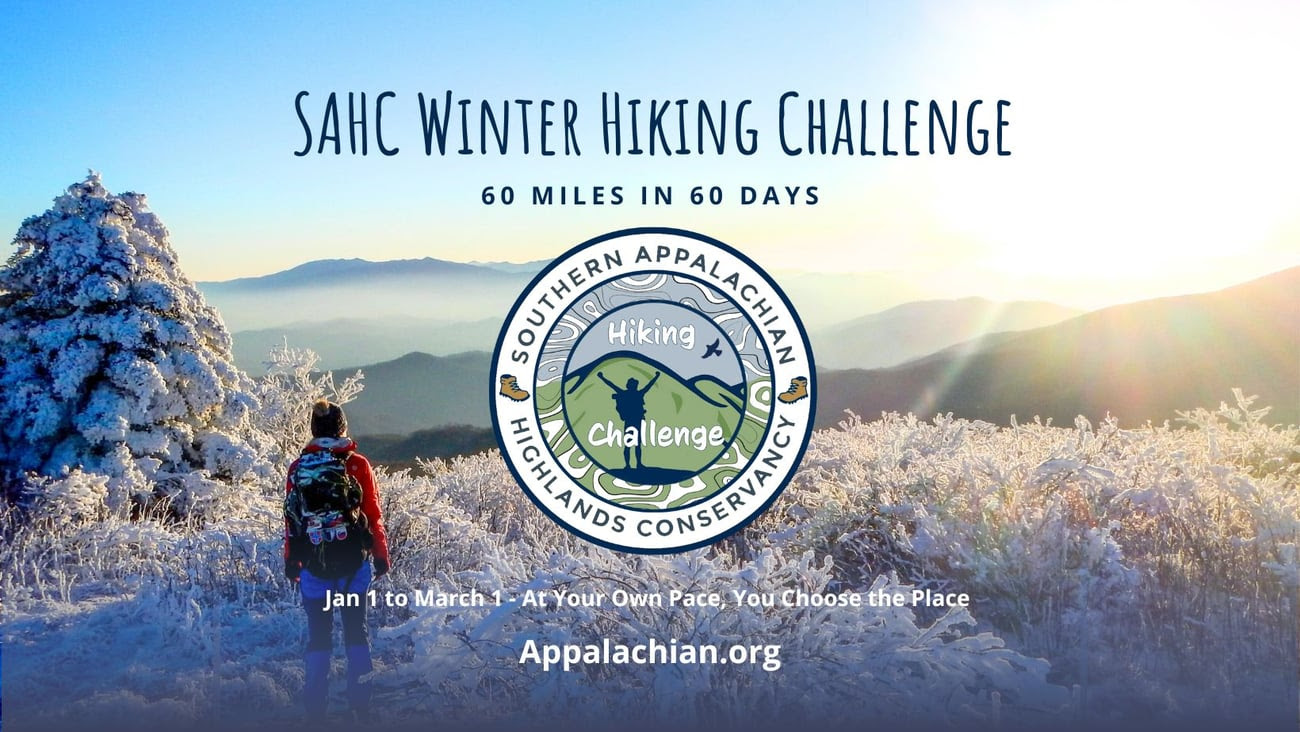
Do you need a little inspiration to get moving after the holiday season? Southern Appalachian Highlands Conservancy is proud to announce our 4th annual Winter Hiking Challenge to get folks out and about – no matter your background or ability this is a project designed to get folks outside to enjoy the great outdoors!
The 2024 Winter Hiking Challenge sets a goal of 60 miles in 60 days, to be completed in your own time and at your own speed. Those can be miles you’ve walked, run or hiked – in your neighborhood, around the block, up a rugged mountain trail, or through the forest. Whatever works for your comfort and skill level – just make it 60 miles within the 60-day challenge time period (January 1st to March 1st, 2024). Sign up early to have more time to complete the Challenge. Registration ends on February 25th. Please note, this is a challenge you set with yourself, it is not a competition. Registration for this challenge is $25 per person and your registration fee directly supports conservation work in the Southern Appalachians. If you cannot afford the registration fee at this time, please use the coupon code: SAHC2024.
All participants will receive informative emails with suggestions for some of our favorite places to hike across the mountains of NC and TN. This special email series will include recommendations to enjoy places that SAHC has protected as well other favorite trails and destinations. Due to overuse of popular trails in the area we will try to share tidbits about some of the lesser-known trails and places to enjoy the great outdoors. Are you a little unsure about hiking in winter? We will share helpful Winter Hiking Tips, for those who haven’t hiked during the winter months. Lastly, those who complete the Winter Hiking Challenge will receive a commemorative SAHC patch after the end of the challenge.
Please note, the Challenge signup fee is a fundraiser to help support conservation efforts; you DO NOT have to pay to hike public trails. Feel free to enter miles at any date during the 60 days, as long as they are all entered before March 1. You can even enter your miles at the end of a certain time period (e.g, entering your miles for the week on Friday, all under one entry).
Time spent outdoors and in nature can help with both mental and physical health. We hope this Challenge will make it interesting for folks to explore places you may not have hiked before, and/or to rediscover the joy of nature in your own backyard.Take the Challenge by yourself, or with friends and family. Please just be safe while doing so!
The Kinēsa Process is an advanced form of the Feldenkrais method. This method incorporates slow subtle movements, unravelling years of habitual patterns that can cause not only bad posture, but chronic conditions. Kinēsa not only guides your attention on how your body moves, but brings inner awareness to the entire structure by creating new pathways of organized movements to help relieve and prevent pain. Through the Kinēsa experience you will find improving the body’s flexibility comes not just from the movements but from the mind. What you will receive from Kinēsa; improved posture, balance, ease from stress and fatigue, and the awareness to form healthier movement patterns enabling the body to navigate freely through life. Kinēsa welcomes those that want to prevent chronic conditions as well as those already suffering from chronic pain.
Located within the wildly-popular and botanically beautiful Southern Appalachian Mountains, The North Carolina Arboretum offers more than 10 miles of hiking trails that connect to many other area attractions such as Lake Powhatan, the Pisgah National Forest and the Blue Ridge Parkway. Visitors of all ages and abilities can enjoy their hiking experience at the Arboretum as trail options include easy, moderate, and difficult challenge levels. All trails are dog-friendly and visitors are asked to adhere to the proper waste disposing procedures for pets.
Part of a running group that would like to use the Arboretum as a starting point or parking location? Please review our Running Group Guidance and email [email protected] with any questions.
Wednesday, January
24, 2024
Asheville Black Cultural Heritage Trail
BCAlerts From CodeRED
Stay informed. Get emergency notifications and general Buncombe County information on your smartphone, telephone, or email.
Sign up for BCAlerts today
Qualify Free: Vaccination and Testing, Screening Cervical Cancer
SAHC Winter Hiking Challenge
NC Arboretum Hiking Trails
Explore the Rich Heritage of Black Communities in Asheville
The Asheville Black Cultural Heritage Trail leads visitors through three areas of Asheville: Downtown, Southside, and the River Area. The entire trail takes approximately 2 hours and 30 minutes to walk and read.
Reflecting on Community Resolve
Did you know that Black people helped create this region’s first non-Indigenous households? Did you know that Black people helped build Asheville and connected Asheville globally? Black entrepreneurs created thriving business districts. Black families cultivated close-knit neighborhoods. Black people from all backgrounds built resilient communities and fostered social change.
Immerse yourself in the history and heroism of Black Ashevillians by walking the Asheville Black Cultural Heritage Trail. Deepen your understanding with articles, videos, and more resources available here on the trail’s website.
Follow the Trail
Experience this trail in pieces as you explore Asheville or start at one of our three introduction kiosks to learn more about how Black people in Asheville negotiated landscapes of unequal power to build resilient communities and foster social change.
Sign up for BCAlerts today
Here is what you need to know.
What is CodeRED?
Along with emergency and critical messages, the CodeRED notification system will also enhance community engagement via the release of important but non-emergency information such as vaccine site notifications, inclement weather closures and schedule changes, and other county service information.
Sign up for BC Alerts by texting BCAlert(not case sensitive) to 99411 or visit to sign up for the new system. If residents have previously signed up for Nixle BC Alerts, they will need to re-register in order to continue receiving notifications after June 30.
Alerts to choose from:
- Emergency
- General
- Recreation Services
- Election Reminders
- Governing
- Weather
NOTICE: For CodeRED support, please call 1-866-939-0911. For all other questions email [email protected].
More than 14,000 women in the United States are diagnosed with invasive cervical cancer each year, but the disease is preventable with vaccination and appropriate screening.
January is Cervical Health Awareness Month, a time to learn more about cervical health and cervical cancer prevention and take steps to help eliminate this preventable cancer.
The two most important tools to remember when it comes to cervical health are vaccination and testing.
Vaccination
The HPV vaccine has been around since 2006. In that time, rates of cervical cancer incidence have dropped significantly among vaccinated women. One study from Sweden looked at 11 years (2006 through 2017) and found 90% reduction in cervical cancer incidence compared with the incidence in women who had not been vaccinated.
HPV vaccines help prevent infection from both high-risk HPV types that can lead to cervical cancer and low-risk types that cause genital warts.
The CDC recommends all boys and girls get HPV vaccine at age 11 or 12. The vaccine produces a stronger immune response when taken during the preteen years. For this reason, up until age 14, only two doses are the vaccine are required. Women and men can get the vaccine up to age 45 but for those 15 and older, a full three-dose series is needed.
You can get the vaccine at your doctor’s office or the Buncombe County Health and Human Services Department at 40 Coxe Avenue in Asheville.
Learn more about the HPV vaccine here.
Screening
The goal of cervical cancer screening—Pap tests and HPV tests—is to find problems, like cell changes, so they can be treated before they turn into cancer.
The traditional test for early detection has been the Pap test. For women aged 30 and over, an HPV test is also recommended. HPV tests can find any of the high-risk types of HPV that are commonly found in cervical cancer.
Women should start screening with the Pap test at age 21, according to current guidelines for cervical cancer screening.
Starting at age 30, women have three options available for screening:
- A Pap test alone every three years.
- Co-testing with a Pap and HPV test, every five years.
- An HPV test alone, every five years.
Depending on the results of the Pap and/or HPV tests, a healthcare provider may recommend additional screening or procedures, so some women may be screened more often.
After age 65, women older than 65 who have had adequate prior screening and are not otherwise at high risk can stop screening. Women who have had a hysterectomy (with removal of the cervix) also do not need to be screened, unless they have a have a history of a high-grade precancerous lesions.
To learn more about each type of screening, click here.
Breast And Cervical Cancer Control Program (BCCCP)
The Buncombe County Health and Human Services BCCCP is a program serving women and transgender people providing free chest and cervical exams, pap smears and HPV testing, and mammograms. This program is open to those:
- Between the ages of 40-64.
- Who have no insurance.
- Income below 250% of the federal poverty level.
- A Buncombe County resident. Local NC BCCCP contact information can be found here.
- Other women and transgender people ages 21 to 39 may be eligible.
To learn more about eligibility or schedule an appointment, call (828) 250-6006.
Do you need a little inspiration to get moving after the holiday season? Southern Appalachian Highlands Conservancy is proud to announce our 4th annual Winter Hiking Challenge to get folks out and about – no matter your background or ability this is a project designed to get folks outside to enjoy the great outdoors!
The 2024 Winter Hiking Challenge sets a goal of 60 miles in 60 days, to be completed in your own time and at your own speed. Those can be miles you’ve walked, run or hiked – in your neighborhood, around the block, up a rugged mountain trail, or through the forest. Whatever works for your comfort and skill level – just make it 60 miles within the 60-day challenge time period (January 1st to March 1st, 2024). Sign up early to have more time to complete the Challenge. Registration ends on February 25th. Please note, this is a challenge you set with yourself, it is not a competition. Registration for this challenge is $25 per person and your registration fee directly supports conservation work in the Southern Appalachians. If you cannot afford the registration fee at this time, please use the coupon code: SAHC2024.
All participants will receive informative emails with suggestions for some of our favorite places to hike across the mountains of NC and TN. This special email series will include recommendations to enjoy places that SAHC has protected as well other favorite trails and destinations. Due to overuse of popular trails in the area we will try to share tidbits about some of the lesser-known trails and places to enjoy the great outdoors. Are you a little unsure about hiking in winter? We will share helpful Winter Hiking Tips, for those who haven’t hiked during the winter months. Lastly, those who complete the Winter Hiking Challenge will receive a commemorative SAHC patch after the end of the challenge.
Please note, the Challenge signup fee is a fundraiser to help support conservation efforts; you DO NOT have to pay to hike public trails. Feel free to enter miles at any date during the 60 days, as long as they are all entered before March 1. You can even enter your miles at the end of a certain time period (e.g, entering your miles for the week on Friday, all under one entry).
Time spent outdoors and in nature can help with both mental and physical health. We hope this Challenge will make it interesting for folks to explore places you may not have hiked before, and/or to rediscover the joy of nature in your own backyard.Take the Challenge by yourself, or with friends and family. Please just be safe while doing so!
Located within the wildly-popular and botanically beautiful Southern Appalachian Mountains, The North Carolina Arboretum offers more than 10 miles of hiking trails that connect to many other area attractions such as Lake Powhatan, the Pisgah National Forest and the Blue Ridge Parkway. Visitors of all ages and abilities can enjoy their hiking experience at the Arboretum as trail options include easy, moderate, and difficult challenge levels. All trails are dog-friendly and visitors are asked to adhere to the proper waste disposing procedures for pets.
Part of a running group that would like to use the Arboretum as a starting point or parking location? Please review our Running Group Guidance and email [email protected] with any questions.
Thursday, January
25, 2024
Asheville Black Cultural Heritage Trail
BCAlerts From CodeRED
Stay informed. Get emergency notifications and general Buncombe County information on your smartphone, telephone, or email.
Sign up for BCAlerts today
Qualify Free: Vaccination and Testing, Screening Cervical Cancer
SAHC Winter Hiking Challenge
Kinēsa Class
NC Arboretum Hiking Trails
Qigong with Allen Horowitz
Healing Sound Bath
Explore the Rich Heritage of Black Communities in Asheville
The Asheville Black Cultural Heritage Trail leads visitors through three areas of Asheville: Downtown, Southside, and the River Area. The entire trail takes approximately 2 hours and 30 minutes to walk and read.
Reflecting on Community Resolve
Did you know that Black people helped create this region’s first non-Indigenous households? Did you know that Black people helped build Asheville and connected Asheville globally? Black entrepreneurs created thriving business districts. Black families cultivated close-knit neighborhoods. Black people from all backgrounds built resilient communities and fostered social change.
Immerse yourself in the history and heroism of Black Ashevillians by walking the Asheville Black Cultural Heritage Trail. Deepen your understanding with articles, videos, and more resources available here on the trail’s website.
Follow the Trail
Experience this trail in pieces as you explore Asheville or start at one of our three introduction kiosks to learn more about how Black people in Asheville negotiated landscapes of unequal power to build resilient communities and foster social change.
Sign up for BCAlerts today
Here is what you need to know.
What is CodeRED?
Along with emergency and critical messages, the CodeRED notification system will also enhance community engagement via the release of important but non-emergency information such as vaccine site notifications, inclement weather closures and schedule changes, and other county service information.
Sign up for BC Alerts by texting BCAlert(not case sensitive) to 99411 or visit to sign up for the new system. If residents have previously signed up for Nixle BC Alerts, they will need to re-register in order to continue receiving notifications after June 30.
Alerts to choose from:
- Emergency
- General
- Recreation Services
- Election Reminders
- Governing
- Weather
NOTICE: For CodeRED support, please call 1-866-939-0911. For all other questions email [email protected].
More than 14,000 women in the United States are diagnosed with invasive cervical cancer each year, but the disease is preventable with vaccination and appropriate screening.
January is Cervical Health Awareness Month, a time to learn more about cervical health and cervical cancer prevention and take steps to help eliminate this preventable cancer.
The two most important tools to remember when it comes to cervical health are vaccination and testing.
Vaccination
The HPV vaccine has been around since 2006. In that time, rates of cervical cancer incidence have dropped significantly among vaccinated women. One study from Sweden looked at 11 years (2006 through 2017) and found 90% reduction in cervical cancer incidence compared with the incidence in women who had not been vaccinated.
HPV vaccines help prevent infection from both high-risk HPV types that can lead to cervical cancer and low-risk types that cause genital warts.
The CDC recommends all boys and girls get HPV vaccine at age 11 or 12. The vaccine produces a stronger immune response when taken during the preteen years. For this reason, up until age 14, only two doses are the vaccine are required. Women and men can get the vaccine up to age 45 but for those 15 and older, a full three-dose series is needed.
You can get the vaccine at your doctor’s office or the Buncombe County Health and Human Services Department at 40 Coxe Avenue in Asheville.
Learn more about the HPV vaccine here.
Screening
The goal of cervical cancer screening—Pap tests and HPV tests—is to find problems, like cell changes, so they can be treated before they turn into cancer.
The traditional test for early detection has been the Pap test. For women aged 30 and over, an HPV test is also recommended. HPV tests can find any of the high-risk types of HPV that are commonly found in cervical cancer.
Women should start screening with the Pap test at age 21, according to current guidelines for cervical cancer screening.
Starting at age 30, women have three options available for screening:
- A Pap test alone every three years.
- Co-testing with a Pap and HPV test, every five years.
- An HPV test alone, every five years.
Depending on the results of the Pap and/or HPV tests, a healthcare provider may recommend additional screening or procedures, so some women may be screened more often.
After age 65, women older than 65 who have had adequate prior screening and are not otherwise at high risk can stop screening. Women who have had a hysterectomy (with removal of the cervix) also do not need to be screened, unless they have a have a history of a high-grade precancerous lesions.
To learn more about each type of screening, click here.
Breast And Cervical Cancer Control Program (BCCCP)
The Buncombe County Health and Human Services BCCCP is a program serving women and transgender people providing free chest and cervical exams, pap smears and HPV testing, and mammograms. This program is open to those:
- Between the ages of 40-64.
- Who have no insurance.
- Income below 250% of the federal poverty level.
- A Buncombe County resident. Local NC BCCCP contact information can be found here.
- Other women and transgender people ages 21 to 39 may be eligible.
To learn more about eligibility or schedule an appointment, call (828) 250-6006.
Do you need a little inspiration to get moving after the holiday season? Southern Appalachian Highlands Conservancy is proud to announce our 4th annual Winter Hiking Challenge to get folks out and about – no matter your background or ability this is a project designed to get folks outside to enjoy the great outdoors!
The 2024 Winter Hiking Challenge sets a goal of 60 miles in 60 days, to be completed in your own time and at your own speed. Those can be miles you’ve walked, run or hiked – in your neighborhood, around the block, up a rugged mountain trail, or through the forest. Whatever works for your comfort and skill level – just make it 60 miles within the 60-day challenge time period (January 1st to March 1st, 2024). Sign up early to have more time to complete the Challenge. Registration ends on February 25th. Please note, this is a challenge you set with yourself, it is not a competition. Registration for this challenge is $25 per person and your registration fee directly supports conservation work in the Southern Appalachians. If you cannot afford the registration fee at this time, please use the coupon code: SAHC2024.
All participants will receive informative emails with suggestions for some of our favorite places to hike across the mountains of NC and TN. This special email series will include recommendations to enjoy places that SAHC has protected as well other favorite trails and destinations. Due to overuse of popular trails in the area we will try to share tidbits about some of the lesser-known trails and places to enjoy the great outdoors. Are you a little unsure about hiking in winter? We will share helpful Winter Hiking Tips, for those who haven’t hiked during the winter months. Lastly, those who complete the Winter Hiking Challenge will receive a commemorative SAHC patch after the end of the challenge.
Please note, the Challenge signup fee is a fundraiser to help support conservation efforts; you DO NOT have to pay to hike public trails. Feel free to enter miles at any date during the 60 days, as long as they are all entered before March 1. You can even enter your miles at the end of a certain time period (e.g, entering your miles for the week on Friday, all under one entry).
Time spent outdoors and in nature can help with both mental and physical health. We hope this Challenge will make it interesting for folks to explore places you may not have hiked before, and/or to rediscover the joy of nature in your own backyard.Take the Challenge by yourself, or with friends and family. Please just be safe while doing so!
The Kinēsa Process is an advanced form of the Feldenkrais method. This method incorporates slow subtle movements, unravelling years of habitual patterns that can cause not only bad posture, but chronic conditions. Kinēsa not only guides your attention on how your body moves, but brings inner awareness to the entire structure by creating new pathways of organized movements to help relieve and prevent pain. Through the Kinēsa experience you will find improving the body’s flexibility comes not just from the movements but from the mind. What you will receive from Kinēsa; improved posture, balance, ease from stress and fatigue, and the awareness to form healthier movement patterns enabling the body to navigate freely through life. Kinēsa welcomes those that want to prevent chronic conditions as well as those already suffering from chronic pain.
Located within the wildly-popular and botanically beautiful Southern Appalachian Mountains, The North Carolina Arboretum offers more than 10 miles of hiking trails that connect to many other area attractions such as Lake Powhatan, the Pisgah National Forest and the Blue Ridge Parkway. Visitors of all ages and abilities can enjoy their hiking experience at the Arboretum as trail options include easy, moderate, and difficult challenge levels. All trails are dog-friendly and visitors are asked to adhere to the proper waste disposing procedures for pets.
Part of a running group that would like to use the Arboretum as a starting point or parking location? Please review our Running Group Guidance and email [email protected] with any questions.
|
Qigong is like Yoga but done standing and with more movement so it creates a flow of energy and gently increases circulation throughout your body. The smooth flowing movements are easy to learn as each exercise is performed 8-10 times before proceeding to the next. It is the grandfather of Tai Chi and other martial arts and is the self-help aspect of Chinese medicine. Suitable for all fitness levels, the benefits of well-being, relaxation, calmness and improved balance are often felt often during the very first lesson. And it can be practiced at home in only a few minutes any time you want to improve how you feel. For information email [email protected] |
Experience the transformative power of sound, intention, and the ancient art of the Cacao Ceremony. Elevate your well-being and connect with your inner self.
Begin with a Cacao Ceremony, fostering emotional release, forgiveness, and gratitude.
Immerse yourself in a short meditation to focus your mind and set intentions for the session.
Allow the resonant frequencies to wash over and through you, bringing harmony and balance. This immersive sound experience is designed to align your energy with your intentions, fostering a deep connection with the self.
Friday, January
26, 2024
Asheville Black Cultural Heritage Trail
BCAlerts From CodeRED
Stay informed. Get emergency notifications and general Buncombe County information on your smartphone, telephone, or email.
Sign up for BCAlerts today
Haunted History + Murder MYstery Tour
Qualify Free: Vaccination and Testing, Screening Cervical Cancer
SAHC Winter Hiking Challenge
NC Arboretum Hiking Trails
Land of the Sky Association of REALTORS® Blood Drive
Ghosted: Comedy Bus Tour
Explore the Rich Heritage of Black Communities in Asheville
The Asheville Black Cultural Heritage Trail leads visitors through three areas of Asheville: Downtown, Southside, and the River Area. The entire trail takes approximately 2 hours and 30 minutes to walk and read.
Reflecting on Community Resolve
Did you know that Black people helped create this region’s first non-Indigenous households? Did you know that Black people helped build Asheville and connected Asheville globally? Black entrepreneurs created thriving business districts. Black families cultivated close-knit neighborhoods. Black people from all backgrounds built resilient communities and fostered social change.
Immerse yourself in the history and heroism of Black Ashevillians by walking the Asheville Black Cultural Heritage Trail. Deepen your understanding with articles, videos, and more resources available here on the trail’s website.
Follow the Trail
Experience this trail in pieces as you explore Asheville or start at one of our three introduction kiosks to learn more about how Black people in Asheville negotiated landscapes of unequal power to build resilient communities and foster social change.
Sign up for BCAlerts today
Here is what you need to know.
What is CodeRED?
Along with emergency and critical messages, the CodeRED notification system will also enhance community engagement via the release of important but non-emergency information such as vaccine site notifications, inclement weather closures and schedule changes, and other county service information.
Sign up for BC Alerts by texting BCAlert(not case sensitive) to 99411 or visit to sign up for the new system. If residents have previously signed up for Nixle BC Alerts, they will need to re-register in order to continue receiving notifications after June 30.
Alerts to choose from:
- Emergency
- General
- Recreation Services
- Election Reminders
- Governing
- Weather
NOTICE: For CodeRED support, please call 1-866-939-0911. For all other questions email [email protected].
Sit back if you dare as we illuminate Asheville’s darkest history with astonishing stories of spirits & spies, ghosts & goblins, hauntings & hoodlums and mountain-made murder & mayhem.
Hear stories of . . .
The legendary PINK LADY at the Grove Park Inn
The GHOST of Church Street
The 1936 UNSOLVED MURDER that shook Asheville
The CHILD SPIRITS at the haunted hospital
The architect walled into his own church!
The KILLING SPREE of 1906
NAZI AGENTS based in Asheville
ARSON at hospital that claimed Zelda Fitzgerald
More than 14,000 women in the United States are diagnosed with invasive cervical cancer each year, but the disease is preventable with vaccination and appropriate screening.
January is Cervical Health Awareness Month, a time to learn more about cervical health and cervical cancer prevention and take steps to help eliminate this preventable cancer.
The two most important tools to remember when it comes to cervical health are vaccination and testing.
Vaccination
The HPV vaccine has been around since 2006. In that time, rates of cervical cancer incidence have dropped significantly among vaccinated women. One study from Sweden looked at 11 years (2006 through 2017) and found 90% reduction in cervical cancer incidence compared with the incidence in women who had not been vaccinated.
HPV vaccines help prevent infection from both high-risk HPV types that can lead to cervical cancer and low-risk types that cause genital warts.
The CDC recommends all boys and girls get HPV vaccine at age 11 or 12. The vaccine produces a stronger immune response when taken during the preteen years. For this reason, up until age 14, only two doses are the vaccine are required. Women and men can get the vaccine up to age 45 but for those 15 and older, a full three-dose series is needed.
You can get the vaccine at your doctor’s office or the Buncombe County Health and Human Services Department at 40 Coxe Avenue in Asheville.
Learn more about the HPV vaccine here.
Screening
The goal of cervical cancer screening—Pap tests and HPV tests—is to find problems, like cell changes, so they can be treated before they turn into cancer.
The traditional test for early detection has been the Pap test. For women aged 30 and over, an HPV test is also recommended. HPV tests can find any of the high-risk types of HPV that are commonly found in cervical cancer.
Women should start screening with the Pap test at age 21, according to current guidelines for cervical cancer screening.
Starting at age 30, women have three options available for screening:
- A Pap test alone every three years.
- Co-testing with a Pap and HPV test, every five years.
- An HPV test alone, every five years.
Depending on the results of the Pap and/or HPV tests, a healthcare provider may recommend additional screening or procedures, so some women may be screened more often.
After age 65, women older than 65 who have had adequate prior screening and are not otherwise at high risk can stop screening. Women who have had a hysterectomy (with removal of the cervix) also do not need to be screened, unless they have a have a history of a high-grade precancerous lesions.
To learn more about each type of screening, click here.
Breast And Cervical Cancer Control Program (BCCCP)
The Buncombe County Health and Human Services BCCCP is a program serving women and transgender people providing free chest and cervical exams, pap smears and HPV testing, and mammograms. This program is open to those:
- Between the ages of 40-64.
- Who have no insurance.
- Income below 250% of the federal poverty level.
- A Buncombe County resident. Local NC BCCCP contact information can be found here.
- Other women and transgender people ages 21 to 39 may be eligible.
To learn more about eligibility or schedule an appointment, call (828) 250-6006.
Do you need a little inspiration to get moving after the holiday season? Southern Appalachian Highlands Conservancy is proud to announce our 4th annual Winter Hiking Challenge to get folks out and about – no matter your background or ability this is a project designed to get folks outside to enjoy the great outdoors!
The 2024 Winter Hiking Challenge sets a goal of 60 miles in 60 days, to be completed in your own time and at your own speed. Those can be miles you’ve walked, run or hiked – in your neighborhood, around the block, up a rugged mountain trail, or through the forest. Whatever works for your comfort and skill level – just make it 60 miles within the 60-day challenge time period (January 1st to March 1st, 2024). Sign up early to have more time to complete the Challenge. Registration ends on February 25th. Please note, this is a challenge you set with yourself, it is not a competition. Registration for this challenge is $25 per person and your registration fee directly supports conservation work in the Southern Appalachians. If you cannot afford the registration fee at this time, please use the coupon code: SAHC2024.
All participants will receive informative emails with suggestions for some of our favorite places to hike across the mountains of NC and TN. This special email series will include recommendations to enjoy places that SAHC has protected as well other favorite trails and destinations. Due to overuse of popular trails in the area we will try to share tidbits about some of the lesser-known trails and places to enjoy the great outdoors. Are you a little unsure about hiking in winter? We will share helpful Winter Hiking Tips, for those who haven’t hiked during the winter months. Lastly, those who complete the Winter Hiking Challenge will receive a commemorative SAHC patch after the end of the challenge.
Please note, the Challenge signup fee is a fundraiser to help support conservation efforts; you DO NOT have to pay to hike public trails. Feel free to enter miles at any date during the 60 days, as long as they are all entered before March 1. You can even enter your miles at the end of a certain time period (e.g, entering your miles for the week on Friday, all under one entry).
Time spent outdoors and in nature can help with both mental and physical health. We hope this Challenge will make it interesting for folks to explore places you may not have hiked before, and/or to rediscover the joy of nature in your own backyard.Take the Challenge by yourself, or with friends and family. Please just be safe while doing so!
Located within the wildly-popular and botanically beautiful Southern Appalachian Mountains, The North Carolina Arboretum offers more than 10 miles of hiking trails that connect to many other area attractions such as Lake Powhatan, the Pisgah National Forest and the Blue Ridge Parkway. Visitors of all ages and abilities can enjoy their hiking experience at the Arboretum as trail options include easy, moderate, and difficult challenge levels. All trails are dog-friendly and visitors are asked to adhere to the proper waste disposing procedures for pets.
Part of a running group that would like to use the Arboretum as a starting point or parking location? Please review our Running Group Guidance and email [email protected] with any questions.
Come give blood to automatically be entered for a chance to win an exciting trip for you & a guest to Super Bowl LVIII in Vegas! Includes travel, hotel, $1,000 gift card, pre-game activities & more!
For an appointment, please visit RedCrossBlood.org
and use the sponsor code “LandOfTheSky”
Or call 1-800-RED CROSS (1-800-733-2767)
Explore the dark side of Beer City on LaZoom’s Ghosted Tour!
Duration
1 hour
About
Come enjoy our most popular Asheville tour!
About
Bachelorette/Bachelor Parties are not permitted on this tour. The Fender Bender Bus is bachelorette/bachelor friendly!
Learn about Asheville’s strange, sometimes sordid past from our ghoulish guides. You’ll laugh! You’ll scream! You’ll discover mysteries and chilling tales of scandal and murder on the blood-stained streets of this picturesque town!
Ghosted runs approximately 60 minutes. Beer and wine are welcome onboard, but no open containers, and absolutely no liquor, please! All beer and wine must be purchased from the LaZoom Room. (Passengers must be at least 21 years old to drink on the bus, and must have valid ID.)
Age Restrictions
17 and up. No exceptions.
What’s Included
A bunch of bus seats
History of murders, ghosts and tragedies in the Land of the Sky
Tongue-in-cheek comedy
A live (not dead) tour guide
What’s Not Included
Bathroom breaks (It’s 60 minutes long – plan accordingly!)
Beer or Wine (Purchase at our bar, the LaZoom Room, and take on the bus)
Laughing (we’ll give you the funny, but it’s up to you to laugh)
Gratuity (guides only accept dead president currency)
Waitlist
If your desired time and availability is full, then please give us a call to be added to the waitlist.
Saturday, January
27, 2024
Asheville Black Cultural Heritage Trail
BCAlerts From CodeRED
Stay informed. Get emergency notifications and general Buncombe County information on your smartphone, telephone, or email.
Sign up for BCAlerts today
Haunted History + Murder MYstery Tour
Explore the Rich Heritage of Black Communities in Asheville
The Asheville Black Cultural Heritage Trail leads visitors through three areas of Asheville: Downtown, Southside, and the River Area. The entire trail takes approximately 2 hours and 30 minutes to walk and read.
Reflecting on Community Resolve
Did you know that Black people helped create this region’s first non-Indigenous households? Did you know that Black people helped build Asheville and connected Asheville globally? Black entrepreneurs created thriving business districts. Black families cultivated close-knit neighborhoods. Black people from all backgrounds built resilient communities and fostered social change.
Immerse yourself in the history and heroism of Black Ashevillians by walking the Asheville Black Cultural Heritage Trail. Deepen your understanding with articles, videos, and more resources available here on the trail’s website.
Follow the Trail
Experience this trail in pieces as you explore Asheville or start at one of our three introduction kiosks to learn more about how Black people in Asheville negotiated landscapes of unequal power to build resilient communities and foster social change.
Sign up for BCAlerts today
Here is what you need to know.
What is CodeRED?
Along with emergency and critical messages, the CodeRED notification system will also enhance community engagement via the release of important but non-emergency information such as vaccine site notifications, inclement weather closures and schedule changes, and other county service information.
Sign up for BC Alerts by texting BCAlert(not case sensitive) to 99411 or visit to sign up for the new system. If residents have previously signed up for Nixle BC Alerts, they will need to re-register in order to continue receiving notifications after June 30.
Alerts to choose from:
- Emergency
- General
- Recreation Services
- Election Reminders
- Governing
- Weather
NOTICE: For CodeRED support, please call 1-866-939-0911. For all other questions email [email protected].
Sit back if you dare as we illuminate Asheville’s darkest history with astonishing stories of spirits & spies, ghosts & goblins, hauntings & hoodlums and mountain-made murder & mayhem.
Hear stories of . . .
The legendary PINK LADY at the Grove Park Inn
The GHOST of Church Street
The 1936 UNSOLVED MURDER that shook Asheville
The CHILD SPIRITS at the haunted hospital
The architect walled into his own church!
The KILLING SPREE of 1906
NAZI AGENTS based in Asheville
ARSON at hospital that claimed Zelda Fitzgerald