

Calendar of Events
Upcoming events and things to do in Asheville, NC. Below is a list of events for festivals, concerts, art exhibitions, group meetups and more.
Interested in adding an event to our calendar? Please click the green “Post Your Event” button below.
The upcoming Journeyperson course is now available AT NO COST! Due to some timely grant funding, we can offer this in-depth farmer training for farmers in years 3-7 with no associated tuition fee! The course consists of monthly cohort meet-ups and 2-3 in-depth workshops, plus mentorship!
In addition, a select number of participants will also receive matched FUNDS for your farm savings account (Savings Incentive Program) and money to spend on a professional development opportunity of your choosing! Want to attend a workshop on livestock management? OGS will contribute towards that fee! Are you saving money for a farm asset? OGS will contribute up to a certain amount to that investment.
The Journeyperson Program is for farmers who have been independently farming for three or more years and are serious about operating farm businesses in the Southern Appalachian region.
|
|
Presenters: Dave Bush, Extension Master GardenerSM Volunteers
See how to take your tubers out of storage and prepare them for sprouting. We will show how to plan for staggered planting, where and when to plant out or pot up, and the first step of pruning your dahlias.
Registration: The talk is free, but seating is limited and registration is required. Please click on the link below to register. If you encounter problems registering or if you have questions, call 828-255-5522.
.jpg?width=1120&upscale=true&name=2023%20Save%20the%20Date%20Spring%20Conference%20Flyer-1%20(2).jpg)
Registration will open on December 1, 2022
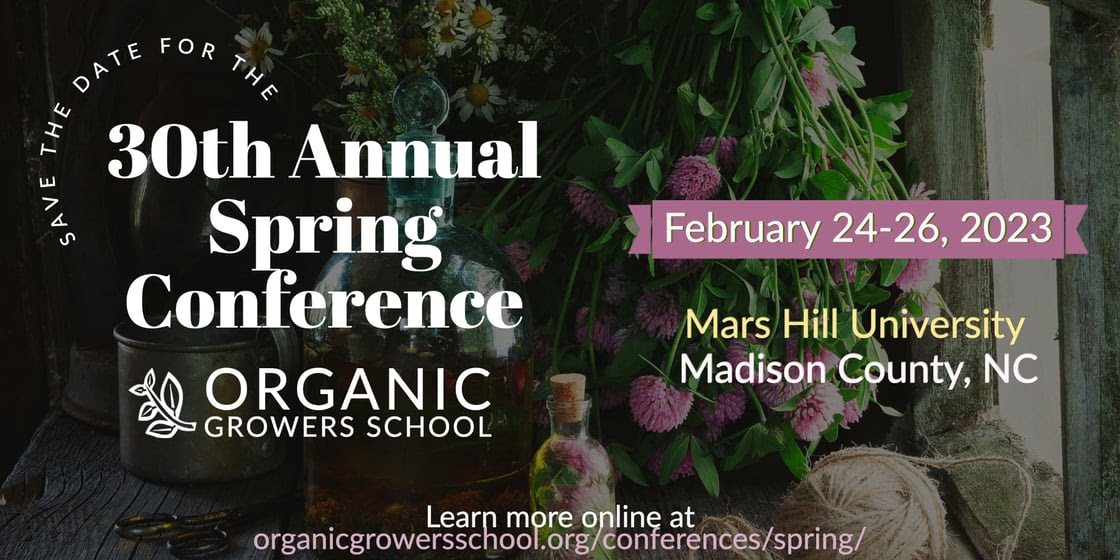
The Organic Growers School is excited to announce the 30th Anniversary of our Spring Conference, which will take place at Mars Hill University on February 24-26, 2023. This year’s conference will continue our non-profit’s mission to support, inspire and educate people to farm, garden, and live organically by providing affordable, practical, and hands-on education.
This three-day event consists of 60 90minute workshops organized into 15 themed tracks, such as Mushrooms, Herbs, Gardening, Farming, and Sustainable Living. The first day is dedicated to day-long workshops at off-campus sites around Western North Carolina.
OGS is excited to announce a sliding-scale ticket price structure for the event! The event has been the most affordable in the region, but investing in continuing education can still be out of reach for farmers and aspiring growers. OGS will also offer a small pool of scholarships if our sliding scale price is not affordable.
Whether you are an enthusiastic local eater, food system advocate, new to growing, or have a few farming years under your belt, we hope you’ll join us to kick off the new season with the growing community!
After six years of hard work, the dream of using The Learning Garden as a hub for public gardening education is finally a reality. The Learning Garden, located at the Extension Office, 49 Mt. Carmel Road, is offering the public the opportunity to Visit and Learn in the garden on selected 2nd and 4th Thursdays, February – October. The Thursday in-person programs will consist of five garden-specific series. Visitors can walk around before or after the program and soak in our lovely gardens. Our gardens will open at 9:00 a.m. and all the demonstration programs run between 10-11:30 a.m. To ensure a good learning experience, attendance will be limited and registration will be required.

Dahlia Series
February 23 – Getting Your Dahlias Ready for Planting
August 3 – Disbudding Dahlias for Better Blooms
October 26 – Dividing and Storing Dahlias

Dye Garden Series
May 4 – Planning Your Dye Garden
June 22 – Introduction to Natural Dyeing
July 27 – Fresh Indigo
August 24 – Botanical Printing: Printing with Leaves and Flowers
September 28 – Dyeing with Hopi Black Sunflower
November 9 – The Magic of Indigo
 Rose Garden Series
March 9 – Pruning Roses
April 6 – Climbing Roses
April 13 – Rose Pests and Pathogens
May 20 – Growing Beautiful Roses (Saturday Seminar)
 Sun & Shade Garden Series
May 11 – Planting a Native Butterfly Host Plant Garden
June 29 – Foodscaping Edible Plants in Flower Beds
August 31 – Dealing with “the Good, the Bad, and the Ugly” Plants
Sept 14 – Native Butterfly Life Cycles in the Fall Garden
 Vegetable Garden Series
March 23 – Building an ADA Compliant Raised Garden
April 26 – Planting Root Crops: Leeks, Onions, Carrots, Parsnips
May 25 – Planting a Seed Saving Garden
June 8 – Common Vegetable Garden Pests
July 13 – Kid Friendly Gardening
August 10 – Preserving Your Vegetable Harvest
In addition to the Thursday programs listed above, The Learning Garden will present a series of ninety minute (+/-) hands-on seminars covering various gardening topics. These in-person programs will be held at The Learning Garden on selected Saturday mornings, February – September.
Saturday Seminars
February 18 – Tool Selection and Sharpening
March 18 – Pruning Trees and Shrubs
April 22 – Gardening for the Birds
May 20 – Growing Beautiful Roses
June 17 – Pollinator Plants in The Learning Garden
September 16 – Bulbs for All Seasons
Each of the programs in The Learning Garden will be announced individually through this blog and on our website two weeks before each program. Each announcement will include instructions on how to register. Mark your calendar and register to attend as many as you can.
The upcoming Journeyperson course is now available AT NO COST! Due to some timely grant funding, we can offer this in-depth farmer training for farmers in years 3-7 with no associated tuition fee! The course consists of monthly cohort meet-ups and 2-3 in-depth workshops, plus mentorship!
In addition, a select number of participants will also receive matched FUNDS for your farm savings account (Savings Incentive Program) and money to spend on a professional development opportunity of your choosing! Want to attend a workshop on livestock management? OGS will contribute towards that fee! Are you saving money for a farm asset? OGS will contribute up to a certain amount to that investment.
The Journeyperson Program is for farmers who have been independently farming for three or more years and are serious about operating farm businesses in the Southern Appalachian region.
|
|
Registration will open on December 1, 2022
The Organic Growers School is excited to announce the 30th Anniversary of our Spring Conference, which will take place at Mars Hill University on February 24-26, 2023. This year’s conference will continue our non-profit’s mission to support, inspire and educate people to farm, garden, and live organically by providing affordable, practical, and hands-on education.
This three-day event consists of 60 90minute workshops organized into 15 themed tracks, such as Mushrooms, Herbs, Gardening, Farming, and Sustainable Living. The first day is dedicated to day-long workshops at off-campus sites around Western North Carolina.
OGS is excited to announce a sliding-scale ticket price structure for the event! The event has been the most affordable in the region, but investing in continuing education can still be out of reach for farmers and aspiring growers. OGS will also offer a small pool of scholarships if our sliding scale price is not affordable.
Whether you are an enthusiastic local eater, food system advocate, new to growing, or have a few farming years under your belt, we hope you’ll join us to kick off the new season with the growing community!
The upcoming Journeyperson course is now available AT NO COST! Due to some timely grant funding, we can offer this in-depth farmer training for farmers in years 3-7 with no associated tuition fee! The course consists of monthly cohort meet-ups and 2-3 in-depth workshops, plus mentorship!
In addition, a select number of participants will also receive matched FUNDS for your farm savings account (Savings Incentive Program) and money to spend on a professional development opportunity of your choosing! Want to attend a workshop on livestock management? OGS will contribute towards that fee! Are you saving money for a farm asset? OGS will contribute up to a certain amount to that investment.
The Journeyperson Program is for farmers who have been independently farming for three or more years and are serious about operating farm businesses in the Southern Appalachian region.
|
|
Registration will open on December 1, 2022
The Organic Growers School is excited to announce the 30th Anniversary of our Spring Conference, which will take place at Mars Hill University on February 24-26, 2023. This year’s conference will continue our non-profit’s mission to support, inspire and educate people to farm, garden, and live organically by providing affordable, practical, and hands-on education.
This three-day event consists of 60 90minute workshops organized into 15 themed tracks, such as Mushrooms, Herbs, Gardening, Farming, and Sustainable Living. The first day is dedicated to day-long workshops at off-campus sites around Western North Carolina.
OGS is excited to announce a sliding-scale ticket price structure for the event! The event has been the most affordable in the region, but investing in continuing education can still be out of reach for farmers and aspiring growers. OGS will also offer a small pool of scholarships if our sliding scale price is not affordable.
Whether you are an enthusiastic local eater, food system advocate, new to growing, or have a few farming years under your belt, we hope you’ll join us to kick off the new season with the growing community!
After six years of hard work, the dream of using The Learning Garden as a hub for public gardening education is finally a reality. The Learning Garden, located at the Extension Office, 49 Mt. Carmel Road, is offering the public the opportunity to Visit and Learn in the garden on selected 2nd and 4th Thursdays, February – October. The Thursday in-person programs will consist of five garden-specific series. Visitors can walk around before or after the program and soak in our lovely gardens. Our gardens will open at 9:00 a.m. and all the demonstration programs run between 10-11:30 a.m. To ensure a good learning experience, attendance will be limited and registration will be required.
Dahlia Series
February 23 – Getting Your Dahlias Ready for Planting
August 3 – Disbudding Dahlias for Better Blooms
October 26 – Dividing and Storing Dahlias
Dye Garden Series
May 4 – Planning Your Dye Garden
June 22 – Introduction to Natural Dyeing
July 27 – Fresh Indigo
August 24 – Botanical Printing: Printing with Leaves and Flowers
September 28 – Dyeing with Hopi Black Sunflower
November 9 – The Magic of Indigo
Rose Garden Series
March 9 – Pruning Roses
April 6 – Climbing Roses
April 13 – Rose Pests and Pathogens
May 20 – Growing Beautiful Roses (Saturday Seminar)
Sun & Shade Garden Series
May 11 – Planting a Native Butterfly Host Plant Garden
June 29 – Foodscaping Edible Plants in Flower Beds
August 31 – Dealing with “the Good, the Bad, and the Ugly” Plants
Sept 14 – Native Butterfly Life Cycles in the Fall Garden
Vegetable Garden Series
March 23 – Building an ADA Compliant Raised Garden
April 26 – Planting Root Crops: Leeks, Onions, Carrots, Parsnips
May 25 – Planting a Seed Saving Garden
June 8 – Common Vegetable Garden Pests
July 13 – Kid Friendly Gardening
August 10 – Preserving Your Vegetable Harvest
In addition to the Thursday programs listed above, The Learning Garden will present a series of ninety minute (+/-) hands-on seminars covering various gardening topics. These in-person programs will be held at The Learning Garden on selected Saturday mornings, February – September.
Saturday Seminars
February 18 – Tool Selection and Sharpening
March 18 – Pruning Trees and Shrubs
April 22 – Gardening for the Birds
May 20 – Growing Beautiful Roses
June 17 – Pollinator Plants in The Learning Garden
September 16 – Bulbs for All Seasons
Each of the programs in The Learning Garden will be announced individually through this blog and on our website two weeks before each program. Each announcement will include instructions on how to register. Mark your calendar and register to attend as many as you can.
Did you know that three Buncombe County Libraries have a seed library so you can check out seeds? Each seed library offers vegetable, herb, and flower seeds that you can take home and plant.
If you’re a gardener or want to be a gardener, you can borrow seeds from the library at planting time. At the end of the growing season, save seeds from the plants and return a portion of the seeds to the library to be loaned out the next year. If you don’t have any seeds at the end of the season, that’s OK too. It’s not a requirement, it just helps the seed libraries grow. There is no charge to use the seed library, just visit the Weaverville, Black Mountain or Leicester Libraries and sign up. You’ll find different seeds at each location and you don’t need a library card to use the seed library.
The benefits of a seed lending library are many: it’s a way to have fun, build community with fellow gardeners, and support people who are new to gardening. It also preserves rare, open-pollinated or heirloom seeds and encourages local gardeners to save quality seeds that are suited to our growing area.
For more information on any of our seed libraries, contact the Black Mountain Library, the Leicester Library, or the Weaverville Library.
The upcoming Journeyperson course is now available AT NO COST! Due to some timely grant funding, we can offer this in-depth farmer training for farmers in years 3-7 with no associated tuition fee! The course consists of monthly cohort meet-ups and 2-3 in-depth workshops, plus mentorship!
In addition, a select number of participants will also receive matched FUNDS for your farm savings account (Savings Incentive Program) and money to spend on a professional development opportunity of your choosing! Want to attend a workshop on livestock management? OGS will contribute towards that fee! Are you saving money for a farm asset? OGS will contribute up to a certain amount to that investment.
The Journeyperson Program is for farmers who have been independently farming for three or more years and are serious about operating farm businesses in the Southern Appalachian region.
|
|
After six years of hard work, the dream of using The Learning Garden as a hub for public gardening education is finally a reality. The Learning Garden, located at the Extension Office, 49 Mt. Carmel Road, is offering the public the opportunity to Visit and Learn in the garden on selected 2nd and 4th Thursdays, February – October. The Thursday in-person programs will consist of five garden-specific series. Visitors can walk around before or after the program and soak in our lovely gardens. Our gardens will open at 9:00 a.m. and all the demonstration programs run between 10-11:30 a.m. To ensure a good learning experience, attendance will be limited and registration will be required.
Dahlia Series
February 23 – Getting Your Dahlias Ready for Planting
August 3 – Disbudding Dahlias for Better Blooms
October 26 – Dividing and Storing Dahlias
Dye Garden Series
May 4 – Planning Your Dye Garden
June 22 – Introduction to Natural Dyeing
July 27 – Fresh Indigo
August 24 – Botanical Printing: Printing with Leaves and Flowers
September 28 – Dyeing with Hopi Black Sunflower
November 9 – The Magic of Indigo
Rose Garden Series
March 9 – Pruning Roses
April 6 – Climbing Roses
April 13 – Rose Pests and Pathogens
May 20 – Growing Beautiful Roses (Saturday Seminar)
Sun & Shade Garden Series
May 11 – Planting a Native Butterfly Host Plant Garden
June 29 – Foodscaping Edible Plants in Flower Beds
August 31 – Dealing with “the Good, the Bad, and the Ugly” Plants
Sept 14 – Native Butterfly Life Cycles in the Fall Garden
Vegetable Garden Series
March 23 – Building an ADA Compliant Raised Garden
April 26 – Planting Root Crops: Leeks, Onions, Carrots, Parsnips
May 25 – Planting a Seed Saving Garden
June 8 – Common Vegetable Garden Pests
July 13 – Kid Friendly Gardening
August 10 – Preserving Your Vegetable Harvest
In addition to the Thursday programs listed above, The Learning Garden will present a series of ninety minute (+/-) hands-on seminars covering various gardening topics. These in-person programs will be held at The Learning Garden on selected Saturday mornings, February – September.
Saturday Seminars
February 18 – Tool Selection and Sharpening
March 18 – Pruning Trees and Shrubs
April 22 – Gardening for the Birds
May 20 – Growing Beautiful Roses
June 17 – Pollinator Plants in The Learning Garden
September 16 – Bulbs for All Seasons
Each of the programs in The Learning Garden will be announced individually through this blog and on our website two weeks before each program. Each announcement will include instructions on how to register. Mark your calendar and register to attend as many as you can.
Did you know that three Buncombe County Libraries have a seed library so you can check out seeds? Each seed library offers vegetable, herb, and flower seeds that you can take home and plant.
If you’re a gardener or want to be a gardener, you can borrow seeds from the library at planting time. At the end of the growing season, save seeds from the plants and return a portion of the seeds to the library to be loaned out the next year. If you don’t have any seeds at the end of the season, that’s OK too. It’s not a requirement, it just helps the seed libraries grow. There is no charge to use the seed library, just visit the Weaverville, Black Mountain or Leicester Libraries and sign up. You’ll find different seeds at each location and you don’t need a library card to use the seed library.
The benefits of a seed lending library are many: it’s a way to have fun, build community with fellow gardeners, and support people who are new to gardening. It also preserves rare, open-pollinated or heirloom seeds and encourages local gardeners to save quality seeds that are suited to our growing area.
For more information on any of our seed libraries, contact the Black Mountain Library, the Leicester Library, or the Weaverville Library.
After six years of hard work, the dream of using The Learning Garden as a hub for public gardening education is finally a reality. The Learning Garden, located at the Extension Office, 49 Mt. Carmel Road, is offering the public the opportunity to Visit and Learn in the garden on selected 2nd and 4th Thursdays, February – October. The Thursday in-person programs will consist of five garden-specific series. Visitors can walk around before or after the program and soak in our lovely gardens. Our gardens will open at 9:00 a.m. and all the demonstration programs run between 10-11:30 a.m. To ensure a good learning experience, attendance will be limited and registration will be required.
Dahlia Series
February 23 – Getting Your Dahlias Ready for Planting
August 3 – Disbudding Dahlias for Better Blooms
October 26 – Dividing and Storing Dahlias
Dye Garden Series
May 4 – Planning Your Dye Garden
June 22 – Introduction to Natural Dyeing
July 27 – Fresh Indigo
August 24 – Botanical Printing: Printing with Leaves and Flowers
September 28 – Dyeing with Hopi Black Sunflower
November 9 – The Magic of Indigo
Rose Garden Series
March 9 – Pruning Roses
April 6 – Climbing Roses
April 13 – Rose Pests and Pathogens
May 20 – Growing Beautiful Roses (Saturday Seminar)
Sun & Shade Garden Series
May 11 – Planting a Native Butterfly Host Plant Garden
June 29 – Foodscaping Edible Plants in Flower Beds
August 31 – Dealing with “the Good, the Bad, and the Ugly” Plants
Sept 14 – Native Butterfly Life Cycles in the Fall Garden
Vegetable Garden Series
March 23 – Building an ADA Compliant Raised Garden
April 26 – Planting Root Crops: Leeks, Onions, Carrots, Parsnips
May 25 – Planting a Seed Saving Garden
June 8 – Common Vegetable Garden Pests
July 13 – Kid Friendly Gardening
August 10 – Preserving Your Vegetable Harvest
In addition to the Thursday programs listed above, The Learning Garden will present a series of ninety minute (+/-) hands-on seminars covering various gardening topics. These in-person programs will be held at The Learning Garden on selected Saturday mornings, February – September.
Saturday Seminars
February 18 – Tool Selection and Sharpening
March 18 – Pruning Trees and Shrubs
April 22 – Gardening for the Birds
May 20 – Growing Beautiful Roses
June 17 – Pollinator Plants in The Learning Garden
September 16 – Bulbs for All Seasons
Each of the programs in The Learning Garden will be announced individually through this blog and on our website two weeks before each program. Each announcement will include instructions on how to register. Mark your calendar and register to attend as many as you can.
Did you know that three Buncombe County Libraries have a seed library so you can check out seeds? Each seed library offers vegetable, herb, and flower seeds that you can take home and plant.
If you’re a gardener or want to be a gardener, you can borrow seeds from the library at planting time. At the end of the growing season, save seeds from the plants and return a portion of the seeds to the library to be loaned out the next year. If you don’t have any seeds at the end of the season, that’s OK too. It’s not a requirement, it just helps the seed libraries grow. There is no charge to use the seed library, just visit the Weaverville, Black Mountain or Leicester Libraries and sign up. You’ll find different seeds at each location and you don’t need a library card to use the seed library.
The benefits of a seed lending library are many: it’s a way to have fun, build community with fellow gardeners, and support people who are new to gardening. It also preserves rare, open-pollinated or heirloom seeds and encourages local gardeners to save quality seeds that are suited to our growing area.
For more information on any of our seed libraries, contact the Black Mountain Library, the Leicester Library, or the Weaverville Library.
It may be winter, but your inner gardener and landscaper is looking forward to spring. And what better way to make plans than getting ready for the Agriculture & Land Resources Bareroot Plant Sale? The popular sale usually sells out quickly, so make your plans to be there on Saturday, March 4 at 10 a.m.
Some of the plants, berries, and grasses for sale include:
- Redbud
- White Oak
- Pink Muhly
- Thornless Blackberry (Triple Crown)
- Yellow Rasberry (Fall Gold)
- See attached flyer for more
- Full catalog coming soon
Native plants support healthy habitats. All proceeds support environmental education.
Distance: 3 miles
Difficulty: Moderate. Several steep inclines are present on the trail.
Cost: Free for Members. $10 for non-members.
Join the Southern Appalachian Highlands Conservancy on our beautiful Community Farm to hike along our Discovery Trail!
Our Community Farm is a 140-acre educational and working farm just outside Asheville. The farm is a continually evolving home for conservation projects and agricultural production. Highlighted by our stream restoration project, shortleaf pine reforestation project, farm incubator program, and education center, there is always something new to see.
Participants will hike The Discovery Trail in a 3-mile loop allowing us to view all of the amazing farm projects before returning to the parking area. Participants are welcome to bring a packed lunch to enjoy while overlooking the farm and surrounding mountains.
Please note that our Community Farm is an active farm not open to the public unless accompanied by SAHC staff. To ensure safety, staff capacity, and a positive experience for everyone involved it is critical that ALL hike participants pre-register for events before visiting the farm. You will receive an email with specific information about where to meet on the farm and other necessary details. If you do not receive this email, as well as a confirmation email following your registration, we do not have you registered for the hike. The majority of this hike is not disability accessible.
If you have any questions, please reach out to [email protected].
Did you know that three Buncombe County Libraries have a seed library so you can check out seeds? Each seed library offers vegetable, herb, and flower seeds that you can take home and plant.
If you’re a gardener or want to be a gardener, you can borrow seeds from the library at planting time. At the end of the growing season, save seeds from the plants and return a portion of the seeds to the library to be loaned out the next year. If you don’t have any seeds at the end of the season, that’s OK too. It’s not a requirement, it just helps the seed libraries grow. There is no charge to use the seed library, just visit the Weaverville, Black Mountain or Leicester Libraries and sign up. You’ll find different seeds at each location and you don’t need a library card to use the seed library.
The benefits of a seed lending library are many: it’s a way to have fun, build community with fellow gardeners, and support people who are new to gardening. It also preserves rare, open-pollinated or heirloom seeds and encourages local gardeners to save quality seeds that are suited to our growing area.
For more information on any of our seed libraries, contact the Black Mountain Library, the Leicester Library, or the Weaverville Library.
After six years of hard work, the dream of using The Learning Garden as a hub for public gardening education is finally a reality. The Learning Garden, located at the Extension Office, 49 Mt. Carmel Road, is offering the public the opportunity to Visit and Learn in the garden on selected 2nd and 4th Thursdays, February – October. The Thursday in-person programs will consist of five garden-specific series. Visitors can walk around before or after the program and soak in our lovely gardens. Our gardens will open at 9:00 a.m. and all the demonstration programs run between 10-11:30 a.m. To ensure a good learning experience, attendance will be limited and registration will be required.
Dahlia Series
February 23 – Getting Your Dahlias Ready for Planting
August 3 – Disbudding Dahlias for Better Blooms
October 26 – Dividing and Storing Dahlias
Dye Garden Series
May 4 – Planning Your Dye Garden
June 22 – Introduction to Natural Dyeing
July 27 – Fresh Indigo
August 24 – Botanical Printing: Printing with Leaves and Flowers
September 28 – Dyeing with Hopi Black Sunflower
November 9 – The Magic of Indigo
Rose Garden Series
March 9 – Pruning Roses
April 6 – Climbing Roses
April 13 – Rose Pests and Pathogens
May 20 – Growing Beautiful Roses (Saturday Seminar)
Sun & Shade Garden Series
May 11 – Planting a Native Butterfly Host Plant Garden
June 29 – Foodscaping Edible Plants in Flower Beds
August 31 – Dealing with “the Good, the Bad, and the Ugly” Plants
Sept 14 – Native Butterfly Life Cycles in the Fall Garden
Vegetable Garden Series
March 23 – Building an ADA Compliant Raised Garden
April 26 – Planting Root Crops: Leeks, Onions, Carrots, Parsnips
May 25 – Planting a Seed Saving Garden
June 8 – Common Vegetable Garden Pests
July 13 – Kid Friendly Gardening
August 10 – Preserving Your Vegetable Harvest
In addition to the Thursday programs listed above, The Learning Garden will present a series of ninety minute (+/-) hands-on seminars covering various gardening topics. These in-person programs will be held at The Learning Garden on selected Saturday mornings, February – September.
Saturday Seminars
February 18 – Tool Selection and Sharpening
March 18 – Pruning Trees and Shrubs
April 22 – Gardening for the Birds
May 20 – Growing Beautiful Roses
June 17 – Pollinator Plants in The Learning Garden
September 16 – Bulbs for All Seasons
Each of the programs in The Learning Garden will be announced individually through this blog and on our website two weeks before each program. Each announcement will include instructions on how to register. Mark your calendar and register to attend as many as you can.
Did you know that three Buncombe County Libraries have a seed library so you can check out seeds? Each seed library offers vegetable, herb, and flower seeds that you can take home and plant.
If you’re a gardener or want to be a gardener, you can borrow seeds from the library at planting time. At the end of the growing season, save seeds from the plants and return a portion of the seeds to the library to be loaned out the next year. If you don’t have any seeds at the end of the season, that’s OK too. It’s not a requirement, it just helps the seed libraries grow. There is no charge to use the seed library, just visit the Weaverville, Black Mountain or Leicester Libraries and sign up. You’ll find different seeds at each location and you don’t need a library card to use the seed library.
The benefits of a seed lending library are many: it’s a way to have fun, build community with fellow gardeners, and support people who are new to gardening. It also preserves rare, open-pollinated or heirloom seeds and encourages local gardeners to save quality seeds that are suited to our growing area.
For more information on any of our seed libraries, contact the Black Mountain Library, the Leicester Library, or the Weaverville Library.
After six years of hard work, the dream of using The Learning Garden as a hub for public gardening education is finally a reality. The Learning Garden, located at the Extension Office, 49 Mt. Carmel Road, is offering the public the opportunity to Visit and Learn in the garden on selected 2nd and 4th Thursdays, February – October. The Thursday in-person programs will consist of five garden-specific series. Visitors can walk around before or after the program and soak in our lovely gardens. Our gardens will open at 9:00 a.m. and all the demonstration programs run between 10-11:30 a.m. To ensure a good learning experience, attendance will be limited and registration will be required.
Dahlia Series
February 23 – Getting Your Dahlias Ready for Planting
August 3 – Disbudding Dahlias for Better Blooms
October 26 – Dividing and Storing Dahlias
Dye Garden Series
May 4 – Planning Your Dye Garden
June 22 – Introduction to Natural Dyeing
July 27 – Fresh Indigo
August 24 – Botanical Printing: Printing with Leaves and Flowers
September 28 – Dyeing with Hopi Black Sunflower
November 9 – The Magic of Indigo
Rose Garden Series
March 9 – Pruning Roses
April 6 – Climbing Roses
April 13 – Rose Pests and Pathogens
May 20 – Growing Beautiful Roses (Saturday Seminar)
Sun & Shade Garden Series
May 11 – Planting a Native Butterfly Host Plant Garden
June 29 – Foodscaping Edible Plants in Flower Beds
August 31 – Dealing with “the Good, the Bad, and the Ugly” Plants
Sept 14 – Native Butterfly Life Cycles in the Fall Garden
Vegetable Garden Series
March 23 – Building an ADA Compliant Raised Garden
April 26 – Planting Root Crops: Leeks, Onions, Carrots, Parsnips
May 25 – Planting a Seed Saving Garden
June 8 – Common Vegetable Garden Pests
July 13 – Kid Friendly Gardening
August 10 – Preserving Your Vegetable Harvest
In addition to the Thursday programs listed above, The Learning Garden will present a series of ninety minute (+/-) hands-on seminars covering various gardening topics. These in-person programs will be held at The Learning Garden on selected Saturday mornings, February – September.
Saturday Seminars
February 18 – Tool Selection and Sharpening
March 18 – Pruning Trees and Shrubs
April 22 – Gardening for the Birds
May 20 – Growing Beautiful Roses
June 17 – Pollinator Plants in The Learning Garden
September 16 – Bulbs for All Seasons
Each of the programs in The Learning Garden will be announced individually through this blog and on our website two weeks before each program. Each announcement will include instructions on how to register. Mark your calendar and register to attend as many as you can.
| The Growing Minds Team will be offering free, virtual trainings for teachers, caregivers, parents, and anyone interested in providing farm to school activities with kids. An entire group can register or you can sign up as an individual. We will alternate between School Garden Trainings and Farm to Preschool Trainings. See below for the descriptions, dates, and times. Trainings are held via Zoom.
School Garden Training |
|
Did you know that three Buncombe County Libraries have a seed library so you can check out seeds? Each seed library offers vegetable, herb, and flower seeds that you can take home and plant.
If you’re a gardener or want to be a gardener, you can borrow seeds from the library at planting time. At the end of the growing season, save seeds from the plants and return a portion of the seeds to the library to be loaned out the next year. If you don’t have any seeds at the end of the season, that’s OK too. It’s not a requirement, it just helps the seed libraries grow. There is no charge to use the seed library, just visit the Weaverville, Black Mountain or Leicester Libraries and sign up. You’ll find different seeds at each location and you don’t need a library card to use the seed library.
The benefits of a seed lending library are many: it’s a way to have fun, build community with fellow gardeners, and support people who are new to gardening. It also preserves rare, open-pollinated or heirloom seeds and encourages local gardeners to save quality seeds that are suited to our growing area.
For more information on any of our seed libraries, contact the Black Mountain Library, the Leicester Library, or the Weaverville Library.

Gardening in the Mountains presents:
Get Going with Grasses!
Presenter: Nancy Duffy – Owner of Muddy Boots Garden Design
Grasses are great garden plants! Learn about specific grasses, their uses, and planting and maintenance.
Based in Asheville, North Carolina, Nancy Duffy is the owner of Muddy Boots Garden Design. Over the last decade she has increasingly focused on natural planting styles and has done many meadow and woodland designs.
Video access:
To access this video on the Buncombe County Master Gardener website, click on the link below:
Get Going with Grasses!
Or go to www.buncombemastergardener.org , click on the ‘Gardening Videos’ tab at the top of the page, and select the video from the list provided.
After six years of hard work, the dream of using The Learning Garden as a hub for public gardening education is finally a reality. The Learning Garden, located at the Extension Office, 49 Mt. Carmel Road, is offering the public the opportunity to Visit and Learn in the garden on selected 2nd and 4th Thursdays, February – October. The Thursday in-person programs will consist of five garden-specific series. Visitors can walk around before or after the program and soak in our lovely gardens. Our gardens will open at 9:00 a.m. and all the demonstration programs run between 10-11:30 a.m. To ensure a good learning experience, attendance will be limited and registration will be required.
Dahlia Series
February 23 – Getting Your Dahlias Ready for Planting
August 3 – Disbudding Dahlias for Better Blooms
October 26 – Dividing and Storing Dahlias
Dye Garden Series
May 4 – Planning Your Dye Garden
June 22 – Introduction to Natural Dyeing
July 27 – Fresh Indigo
August 24 – Botanical Printing: Printing with Leaves and Flowers
September 28 – Dyeing with Hopi Black Sunflower
November 9 – The Magic of Indigo
Rose Garden Series
March 9 – Pruning Roses
April 6 – Climbing Roses
April 13 – Rose Pests and Pathogens
May 20 – Growing Beautiful Roses (Saturday Seminar)
Sun & Shade Garden Series
May 11 – Planting a Native Butterfly Host Plant Garden
June 29 – Foodscaping Edible Plants in Flower Beds
August 31 – Dealing with “the Good, the Bad, and the Ugly” Plants
Sept 14 – Native Butterfly Life Cycles in the Fall Garden
Vegetable Garden Series
March 23 – Building an ADA Compliant Raised Garden
April 26 – Planting Root Crops: Leeks, Onions, Carrots, Parsnips
May 25 – Planting a Seed Saving Garden
June 8 – Common Vegetable Garden Pests
July 13 – Kid Friendly Gardening
August 10 – Preserving Your Vegetable Harvest
In addition to the Thursday programs listed above, The Learning Garden will present a series of ninety minute (+/-) hands-on seminars covering various gardening topics. These in-person programs will be held at The Learning Garden on selected Saturday mornings, February – September.
Saturday Seminars
February 18 – Tool Selection and Sharpening
March 18 – Pruning Trees and Shrubs
April 22 – Gardening for the Birds
May 20 – Growing Beautiful Roses
June 17 – Pollinator Plants in The Learning Garden
September 16 – Bulbs for All Seasons
Each of the programs in The Learning Garden will be announced individually through this blog and on our website two weeks before each program. Each announcement will include instructions on how to register. Mark your calendar and register to attend as many as you can.
Joining a CSA (or Community Supported Agriculture) program connects you directly with local farms in your community. Members buy a “share” of a farm’s harvest upfront and receive a weekly box of fresh produce or other farm goods. The best time to sign up for a CSA is in February and early March. This year, ASAP is expanding on a national “CSA Week” in late February to promote “CSA Month” from Feb. 15 to March 15. CSA Month will include a social media campaign with CSA education and farmer features; digital tools for finding CSA programs; and an in-person CSA Fair at the YWCA of Asheville on March 10 from 3:30 to 6:30 p.m.
In addition to traditional produce CSAs, the fair will include farms with specialty CSA products, such as meat or flowers. The fair is relaxed setting where attendees chat with farmers about their products, growing practices, payment structure, and more. Attendees can sign up for a CSA during the fair or follow up with farmers later. The fair will also feature local food tastings and activities for kids, as well as produce and food products available for purchase. The event is free and open to the public. The YWCA is located at 185 S. French Broad Ave. in Asheville. Participating farms will be announced in late February.
For farmers, the CSA Fair is a chance to build relationships, even if attendees decide not to purchase a share. “[The customers we meet at the CSA Fair] tend to really want to know the farmer and the food, meaning they are a bit more adventurous when it comes to trying new things,” says K.P. Whaley of Tiny Bridge Farm in Hendersonville. “They are interested in knowing how and what we are growing, and really want us to be successful as a farm operation. We may get some customers from the fair and that’s great. But we also start building relationships with future customers.”
For those unable to attend the fair or who are looking for a CSA outside of Buncombe County, online tools at asapconnections.org/csa help customers compare CSAs throughout the Appalachian Grown region, making it easier to choose a program that fits individual needs. The Appalachian Grown region includes Western North Carolina as well as bordering counties in South Carolina, Georgia, Tennessee, and Virginia. Things customers could consider when choosing a CSA include convenient pickup times and locations; the farm’s growing practices; and appropriate share size (i.e., how much food). Some farms offer variations on the traditional CSA model, such as online selection, shorter commitment, or a market share (members pay upfront, but select their own produce at the farmers market each week).
Gardening in the Mountains presents:
Get Going with Grasses!
Presenter: Nancy Duffy – Owner of Muddy Boots Garden Design
Grasses are great garden plants! Learn about specific grasses, their uses, and planting and maintenance.
Based in Asheville, North Carolina, Nancy Duffy is the owner of Muddy Boots Garden Design. Over the last decade she has increasingly focused on natural planting styles and has done many meadow and woodland designs.
Video access:
To access this video on the Buncombe County Master Gardener website, click on the link below:
Get Going with Grasses!
Or go to www.buncombemastergardener.org , click on the ‘Gardening Videos’ tab at the top of the page, and select the video from the list provided.
IN-PERSON DEMONSTRATION
Presenters: Alan Wagner and Ralph Coffey- Extension Master GardenerSM Volunteers
Pruning in the landscape is different from pruning tomatoes or doing bonsai pruning. However, it still requires the use of time-tested techniques, high quality, sharpened tools, and knowledge of the right time to prune a particular plant. And it requires practice.
Join Alan Wagner and Ralph Coffey as they demonstrate the techniques of pruning shrubs and small trees.
Wear comfortable shoes and dress appropriately as part of this presentation will be held outside, weather permitting.