

Calendar of Events
Upcoming events and things to do in Asheville, NC. Below is a list of events for festivals, concerts, art exhibitions, group meetups and more.
Interested in adding an event to our calendar? Please click the green “Post Your Event” button below.
|
|

Across the Atlantic
Across the Atlantic
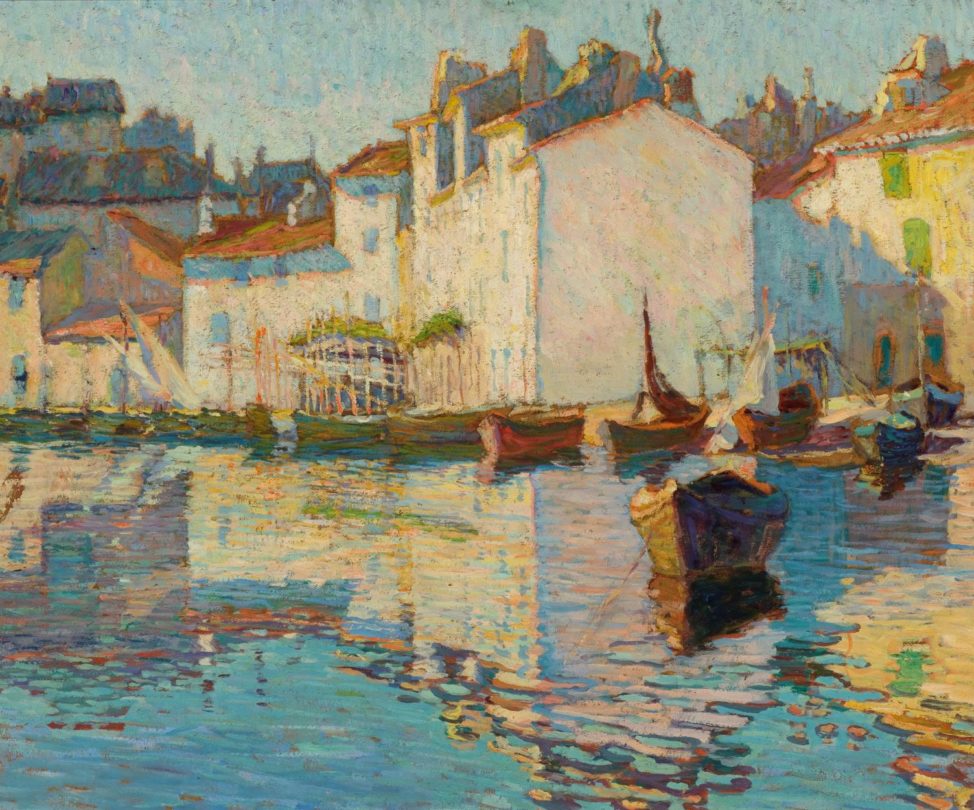
American Impressionism Through the French Lens
This extraordinary exhibition, drawn from the collection of the Reading Public Museum, explores the path to Impressionism through the 19th century in France. The show examines the sometimes complex relationship between French Impressionism of the 1870s and 1880s and the American interpretation of the style in the decades that followed. More than 65 paintings and works on paper help tell the story of the “new style” of painting which developed at the end of the 19th century—one that emphasized light and atmospheric conditions, rapid or loose brushstrokes, and a focus on brightly colored scenes from everyday life, including both urban and rural settings when artists preferred to paint outdoors and capture changing effects of light during different times of day and seasons of the year.
Across the Atlantic: American Impressionism through the French Lens is organized by the Reading Public Museum, Reading, Pennsylvania.
Generous support for this project provided by Art Bridges and The Maurer Family Foundation.
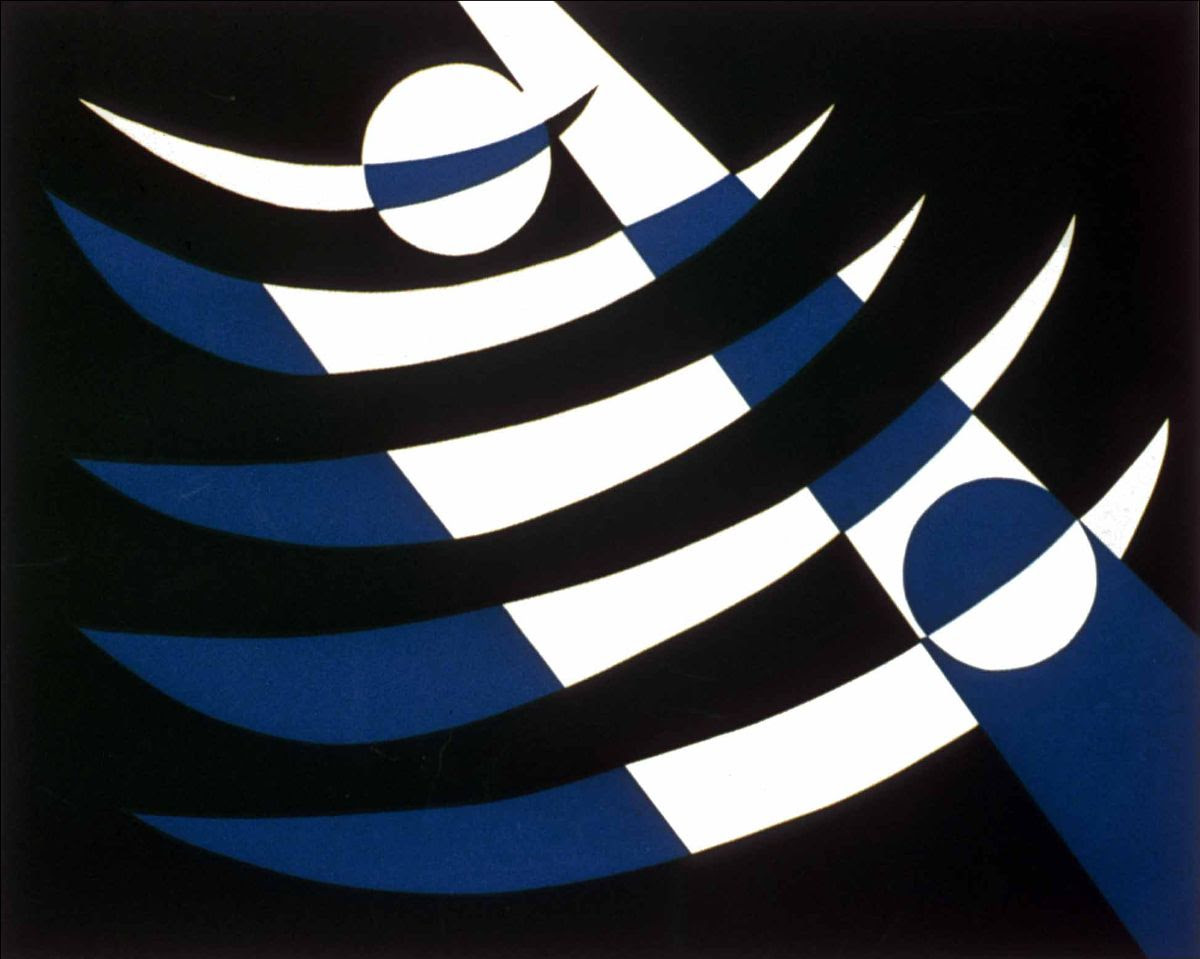
The Asheville Art Museum announces Meeting the Moon, an exhibition featuring prints, photographs, ceramics, sculptures, and more from the Museum’s Collection. This exhibition will be on view in the Asheville Art Museum’s McClinton Gallery February 3 through July 26, 2021.
2021 marks the 60th anniversary of the beginning of the Apollo space program at NASA, but its inception was hardly the beginning of humankind’s fascination with Earth’s only moon. Before space travel existed, the moon—its shape, its mystery, and the face we see in it—inspired countless artists. Once astronauts landed on the moon and we saw our world from a new perspective, a surge of creativity flooded the American art scene, in paintings, prints, sculpture, music, crafts, film, and poetry.
This exhibition, whose title is taken from a 1913 Robert Frost poem, examines artwork in the Asheville Art Museum’s Collection of artists who were inspired by the unknown, then increasingly familiar moon. Meeting the Moon includes works by nationally renowned artists Newcomb Pottery, James Rosenquist, Maltby Sykes, Paul Soldner, John Lewis, Richard Ritter (Bakersville, NC), and Mark Peiser (Penland, NC). Western North Carolina artists include Jane Peiser (Penland, NC), Jak Brewer (Zionville, NC), Dirck Cruser (Asheville, NC), George Peterson (Lake Toxaway, NC), John B. Neff (NC), and Maud Gatewood (Yanceyville, NC).
“Meeting the Moon offers the opportunity to combine science and popular culture with works of art in the Museum’s Collection,” says Whitney Richardson, associate curator. “I think all visitors will find something that draws them into this exhibition, whether it’s the artwork, poetry, music, or science of space travel. It’s such an affirmation of humanity to find these mysteries, like the moon, which enchant us all.”
This exhibition is organized by the Asheville Art Museum and curated by Whitney Richardson, associate curator. Visit ashevilleart.org for more information about this and other exhibitions.
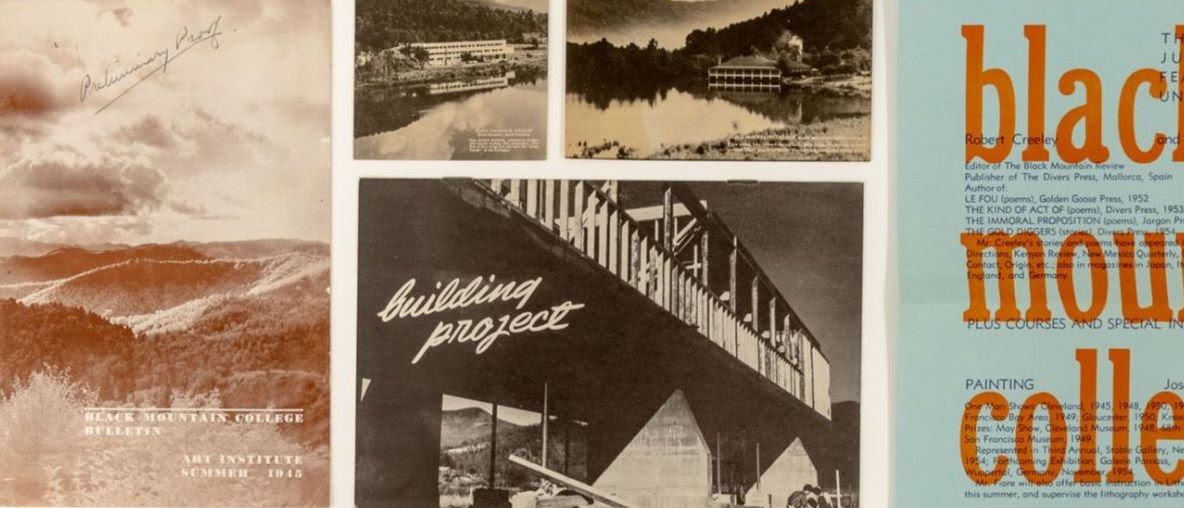
This exhibition features archival objects from the Theodore Dreier Sr. Document Collection presented alongside artworks from the Museum’s Black Mountain College Collection to explore the connections between artworks and ephemera. This exhibition is organized by the Asheville Art Museum and curated by lydia see, fall 2020 curatorial fellow, with support from a Digitizing Hidden Collections grant through the Council on Library and Information Resources.
|
|
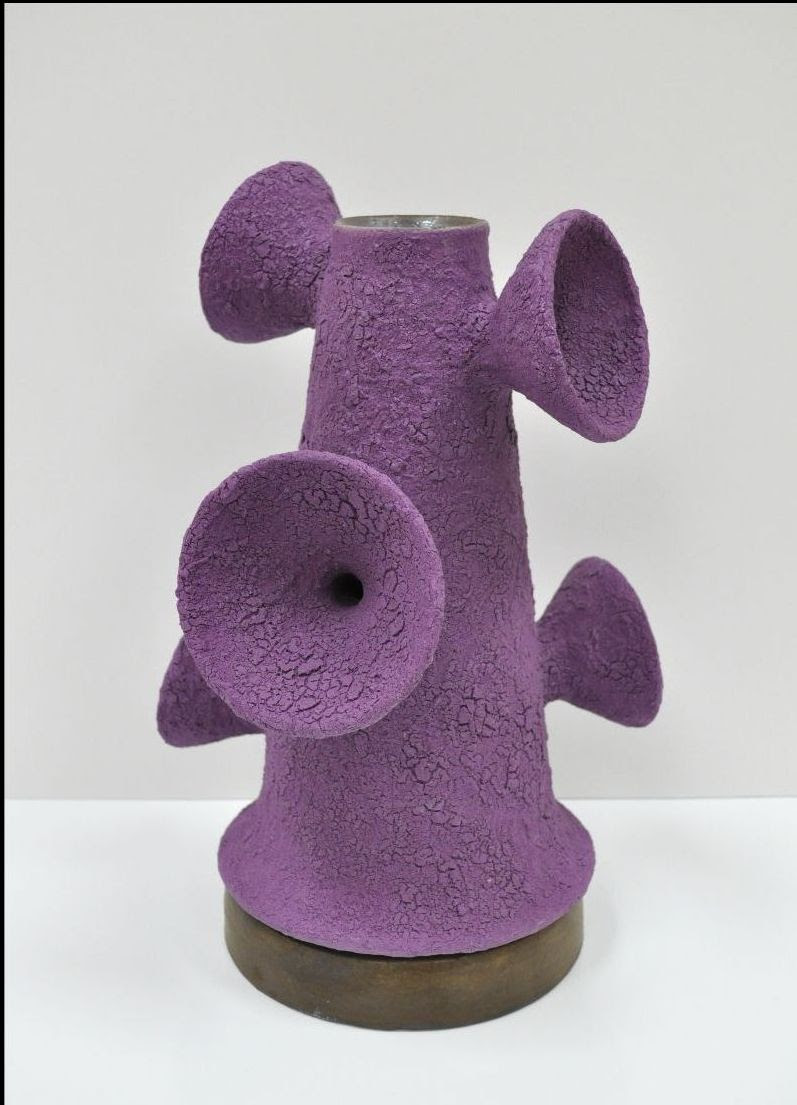
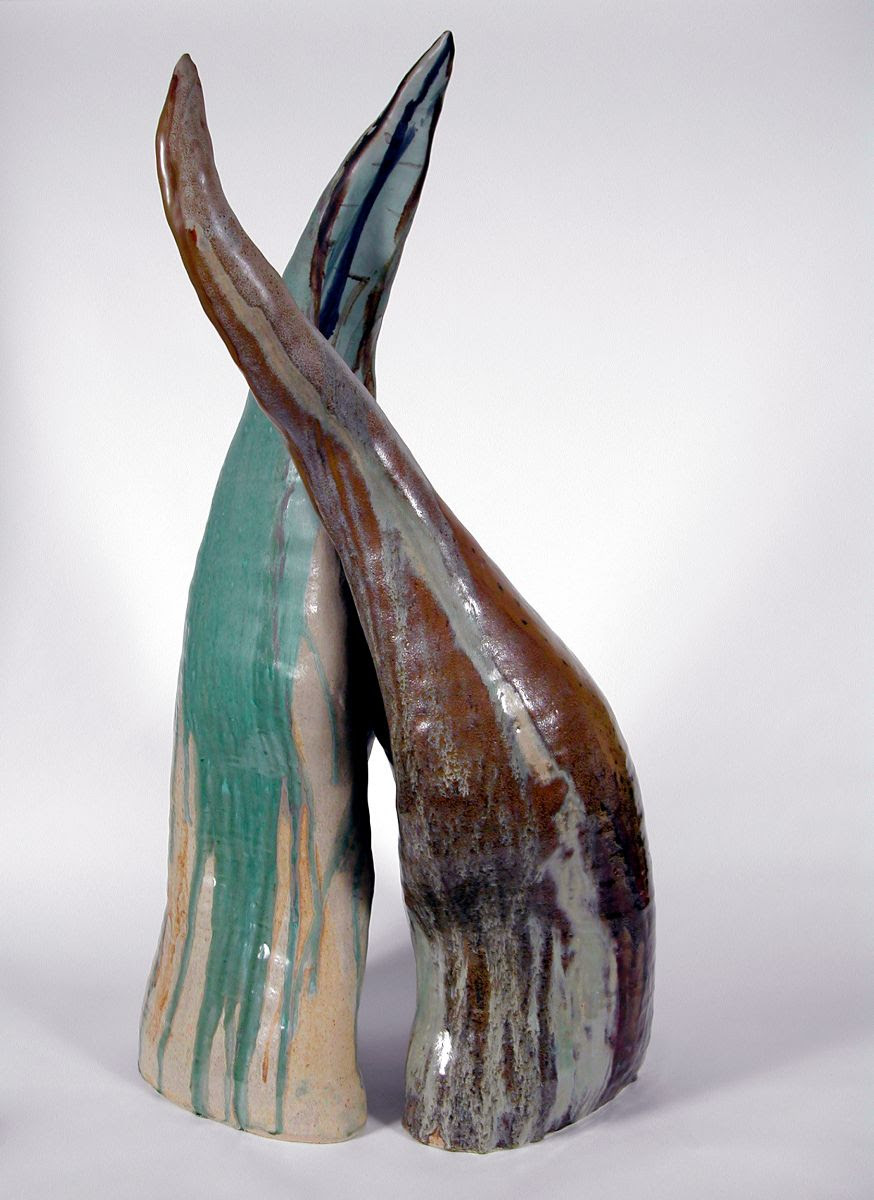
The Asheville Art Museum presents Fantastical Forms: Ceramics as Sculpture on view at the Museum November 4, 2020 through April 5, 2021. The 25 works in this exhibition—curated by associate curator Whitney Richardson—highlight the Museum’s Collection of sculptural ceramics from the last two decades of the 20th century to the present. Each work illustrates the artist’s ability to push beyond the utilitarian and transition ceramics into the world of sculpture.
North and South Carolina artists featured include Elma McBride Johnson, Neil Noland, Norm Schulman, Virginia Scotchie, Cynthia Bringle, Jane Palmer, Michael Sherrill, and Akira Satake. Works by American artists Don Reitz, Robert Chapman Turner, Karen Karnes, Toshiko Takaezu, Bill Griffith, and Xavier Toubes are also featured in the exhibition.
 Into the Light by Cynthia Wilson; one of the many works in this exhibit.
The Gallery at Flat Rock Offers Virtual and In-Person Exhibit
On January 21, The Gallery at Flat Rock opened their latest exhibit, Transcendence: An Artistic Celebration of the U.N. International Year of Peace and Trust. The in-person and virtual exhibit features, “over two dozen Gallery at Flat Rocks artists, who will each provide one artwork for the show that they believe evokes themes of peace and mutual trust among members of humanity.”
Winter Hours:
Wed – Sat 11am – 4pm
Sun 11am – 3pm
Open by appointment
or by chance
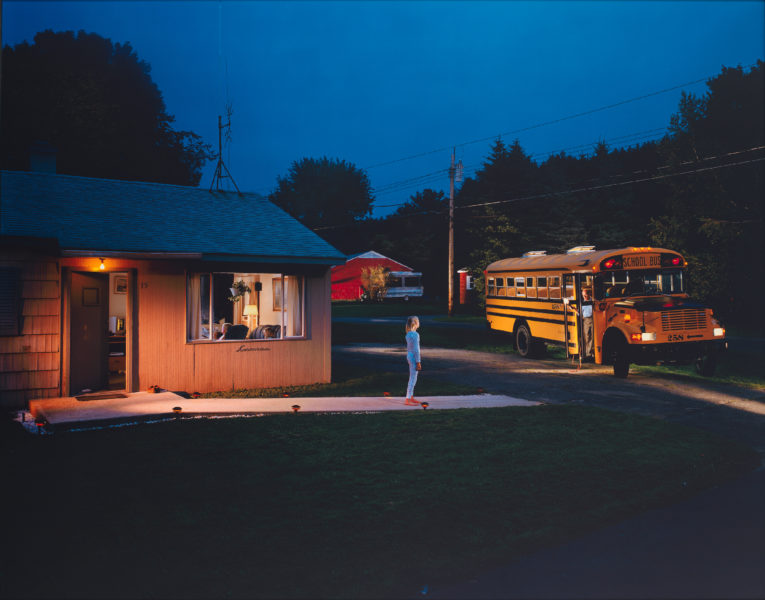
Gregory Crewdson, Untitled, 2001–2002, chromogenic print mounted on aluminum, 47 ⅝ × 59 ½ inches. Whitney Museum of American Art, New York, promised gift of the Fisher Landau Center for Art, P.2010.300. © Gregory Crewdson, image courtesy Whitney Museum of American Art.
Drawing inspiration from Vantage Points, students are challenged to use photography to explore people, places, and storytelling.
Please note:
- Youth Studio is held indoors in the Museum’s Education Center.
- Space is limited to small groups of up to eight students; face coverings and social distancing are required.
Presented in conjunction with Vantage Points: Contemporary Photography from the Whitney Museum of American Art. Generous support for exhibition programming provided by Art Bridges.
YOUTH STUDIO
Youth Studio is the Museum’s new studio program for children and teens! Students experiment and explore a variety of media and techniques through classes and workshops led by visiting artists and Museum educators. Classes meet 2–4 weeks and are designed for a deeper exploration of a specific media; workshops meet 3–5 hours and introduce a new medium or process. All materials are provided by the Museum.
The Museum is committed to making our programs accessible to everyone, regardless of economic means. With support from the Walnut Cove Members Association, we are able to provide a limited amount of financial aid to help students who could not otherwise afford to enroll in our programs. Email Sharon McRorie, education programs manager, or call 828.253.3227 x124 to inquire.
Taught by Tom Chalmers and Kim Mako
This online course is offered as a primer in the craft of scripted performance, exploring the steps to submitting audition tapes, sustaining connected scene work through a screen, and creating three-dimensional characters on a two-dimensional medium. Learn how people see you and what you convey when you are on stage, and now on screen. Armed with that awareness, learn how to best choose and deliver the monologue to land you the parts that are perfect for you. If given material to audition with, learn how to break down the sides, how to discover the beats of the scene, and how to offer varied options. And when you land the part, learn how to attack the script, build the arc of your character, and establish the thoughts behind the lines. This course will culminate with a streamed showcase of the best work created in the class.
A limited number of scholarships are available for this class. CLICK HERE TO APPLY. Please do not purchase registration prior to applying. Applications must be received by 2:00 pm on Monday, January 11, 2021 for consideration. Please contact Amanda at [email protected] with questions.
6 Week Session: January 20 – February 24, 2021
Wednesdays, 6:30-7:45 pm
Law of Attraction (LOA) is a powerful guideline that can be utilized within our lives, and impacts ourselves as well as the collective consciousness. Let’s discuss practical, everyday ways we use and apply these tools in 2020! This session’s discussion will be, “Visualization exercises in LOA.” No advance prep, reading or knowledge required. Come with an open mind and heart, free of judgement, and let’s learn together! This is an inclusive, informal, interactive discussion for people will all levels of LOA understanding.
Some other topics we will cover in future discussions include:
– How to utilize LOA to manifest best case scenarios
– Gratitude practices as a tool in manifestation
– Honoring your own feelings, emotions and well being (and others) as a form of self care while manifesting
– Staying grounded, avoiding toxic positivity and spiritual bypassing when manifesting
– Visualization exercises in LOA
– Manifesting on specific themes (love, money, good health, etc.)
Discussions will be held by Kathryn Brahaney, myself. I’ve utilized Law of Attraction in having a significantly better recovery than anticipated from two major car accidents, in receiving a job offer that allowed me to relocate to Asheville, NC (where I live now) and in finding my favorite apartment to date in a city I wasn’t sure would be in my budget. I started these discussions to share my experience using Law of Attraction and to provide opportunities to learn more that are accessible and affordable. Looking forward to sharing more with you all and chatting about how we can use LOA in navigating the rest of 2020 and beyond!
Opening the Door to Change presents the history of education in Western North Carolina, with a particular emphasis on Madison County, from the mid-nineteenth century through the late twentieth. Here, learning has taken many forms, from in-home instruction, common, subscription, and religious schools, to colleges of farming and craft. The curriculum of these schools, as well as their very construction, and in some cases closing, was deeply entwined with the changing needs and values of the Western North Carolina Appalachian community.
The exhibition focuses on the dynamic relationship between community values and education, with a special focus on how students and their families navigated the economic, geographic, and racial challenges to education. Trends and changes in curriculum, assessment, and classroom design will also be explored.
The virtual exhibition will feature didactic panels showcasing a survey of schools within Madison County and highlighting the effect community values had on the curriculum, function, and format of these institutions. Online visitors may also get a sneak-peak at an original film, produced by the Museum, presenting the oral histories of several Madison County residents sharing their personal recollections and memories of past school-days.
Additional films will spotlight the Historic Mars Hill Anderson Rosenwald School and Laurel School, with first-hand accounts from former students and teachers.
This virtual exhibition is sponsored by the Madison County Tourism and Development Authority.

Hosts Kimala Luna from Dogwood Alliance and Elizabeth Lashay from SlayTheMic talk with artist Allison Maria Rodriguez about her artwork and how she creates immersive experiential spaces to challenge conventional ways of understanding the world. Her work delves into climate change, species extinction, humanity’s relationship to nature, and the pervasive sense of loss for that which can never be recovered.
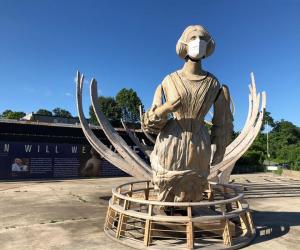
Wake, Mel Chin’s giant animatronic sculpture, installed in New York City’s Times Square last summer, will be on view in Asheville through March 15, 2021, at 44 Collier Avenue. Chin, a WNC based conceptual artist, was named a MacArthur Fellow in September 2019.
Wake was commissioned as part of Mel Chin: All Over the Place, a multi-site survey of his works from across many decades that took place in several New York City locations. A collaborative group, led by UNC Asheville’s STEAM Studio and The Community Foundation of Western North Carolina, formed to plan and raise funds for the sculpture to be seen locally.
Wake – 60 feet long, 34 feet wide and 24 feet high, conceived and designed by the artist – was engineered, sculpted and fabricated by an interdisciplinary team of UNC Asheville students, faculty, staff and community artists led by Chin. The sculpture is interactive and features decks and places to sit and contemplate.
Wake evokes the hull of a shipwreck crossed with the skeletal remains of a marine mammal. The structure is linked with a carved, 21-foot-tall animatronic sculpture, accurately derived from a figurehead of the opera star Jenny Lind that was once mounted on the 19th century clipper ship, USS Nightingale. Jenny Lind moves subtly as she breathes and scans the sky.
Visitors can experience Wake daily from 9 a.m. to 9 p.m. at 44 Collier Avenue. For more details and a schedule of programming, visit ashevillearts.com.
|
|
Across the Atlantic
Across the Atlantic
American Impressionism Through the French Lens
This extraordinary exhibition, drawn from the collection of the Reading Public Museum, explores the path to Impressionism through the 19th century in France. The show examines the sometimes complex relationship between French Impressionism of the 1870s and 1880s and the American interpretation of the style in the decades that followed. More than 65 paintings and works on paper help tell the story of the “new style” of painting which developed at the end of the 19th century—one that emphasized light and atmospheric conditions, rapid or loose brushstrokes, and a focus on brightly colored scenes from everyday life, including both urban and rural settings when artists preferred to paint outdoors and capture changing effects of light during different times of day and seasons of the year.
Across the Atlantic: American Impressionism through the French Lens is organized by the Reading Public Museum, Reading, Pennsylvania.
Generous support for this project provided by Art Bridges and The Maurer Family Foundation.
The Asheville Art Museum announces Meeting the Moon, an exhibition featuring prints, photographs, ceramics, sculptures, and more from the Museum’s Collection. This exhibition will be on view in the Asheville Art Museum’s McClinton Gallery February 3 through July 26, 2021.
2021 marks the 60th anniversary of the beginning of the Apollo space program at NASA, but its inception was hardly the beginning of humankind’s fascination with Earth’s only moon. Before space travel existed, the moon—its shape, its mystery, and the face we see in it—inspired countless artists. Once astronauts landed on the moon and we saw our world from a new perspective, a surge of creativity flooded the American art scene, in paintings, prints, sculpture, music, crafts, film, and poetry.
This exhibition, whose title is taken from a 1913 Robert Frost poem, examines artwork in the Asheville Art Museum’s Collection of artists who were inspired by the unknown, then increasingly familiar moon. Meeting the Moon includes works by nationally renowned artists Newcomb Pottery, James Rosenquist, Maltby Sykes, Paul Soldner, John Lewis, Richard Ritter (Bakersville, NC), and Mark Peiser (Penland, NC). Western North Carolina artists include Jane Peiser (Penland, NC), Jak Brewer (Zionville, NC), Dirck Cruser (Asheville, NC), George Peterson (Lake Toxaway, NC), John B. Neff (NC), and Maud Gatewood (Yanceyville, NC).
“Meeting the Moon offers the opportunity to combine science and popular culture with works of art in the Museum’s Collection,” says Whitney Richardson, associate curator. “I think all visitors will find something that draws them into this exhibition, whether it’s the artwork, poetry, music, or science of space travel. It’s such an affirmation of humanity to find these mysteries, like the moon, which enchant us all.”
This exhibition is organized by the Asheville Art Museum and curated by Whitney Richardson, associate curator. Visit ashevilleart.org for more information about this and other exhibitions.
This exhibition features archival objects from the Theodore Dreier Sr. Document Collection presented alongside artworks from the Museum’s Black Mountain College Collection to explore the connections between artworks and ephemera. This exhibition is organized by the Asheville Art Museum and curated by lydia see, fall 2020 curatorial fellow, with support from a Digitizing Hidden Collections grant through the Council on Library and Information Resources.
|
|
The Asheville Art Museum presents Fantastical Forms: Ceramics as Sculpture on view at the Museum November 4, 2020 through April 5, 2021. The 25 works in this exhibition—curated by associate curator Whitney Richardson—highlight the Museum’s Collection of sculptural ceramics from the last two decades of the 20th century to the present. Each work illustrates the artist’s ability to push beyond the utilitarian and transition ceramics into the world of sculpture.
North and South Carolina artists featured include Elma McBride Johnson, Neil Noland, Norm Schulman, Virginia Scotchie, Cynthia Bringle, Jane Palmer, Michael Sherrill, and Akira Satake. Works by American artists Don Reitz, Robert Chapman Turner, Karen Karnes, Toshiko Takaezu, Bill Griffith, and Xavier Toubes are also featured in the exhibition.
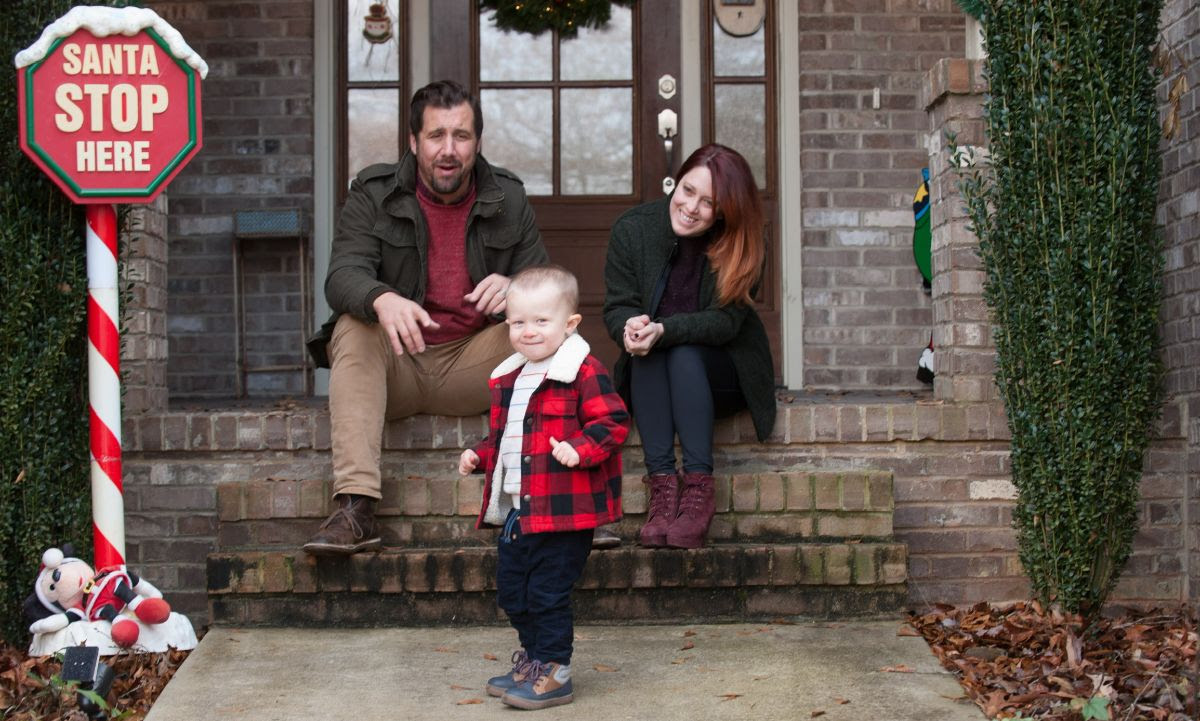 The Goodrum Family, photo by Suzanne Camarata
Thank you Suzanne Camarata of The Gallery at Flat Rock whose Porch Portraits sessions raised $2835 for the Playhouse! Suzanne began this series when the pandemic made traditional photo sessions a challenge and inspired photographers used social distancing to create a new way to capture memories. “Porch Portraits by Suzanne brings the fun of a casual, light-hearted photoshoot right to your home – literally to your front porch or in your front yard. ” Suzanne is continuing her sessions this year, so make sure to visit the link below to get (or gift) a session today.
Into the Light by Cynthia Wilson; one of the many works in this exhibit.
The Gallery at Flat Rock Offers Virtual and In-Person Exhibit
On January 21, The Gallery at Flat Rock opened their latest exhibit, Transcendence: An Artistic Celebration of the U.N. International Year of Peace and Trust. The in-person and virtual exhibit features, “over two dozen Gallery at Flat Rocks artists, who will each provide one artwork for the show that they believe evokes themes of peace and mutual trust among members of humanity.”
Winter Hours:
Wed – Sat 11am – 4pm
Sun 11am – 3pm
Open by appointment
or by chance
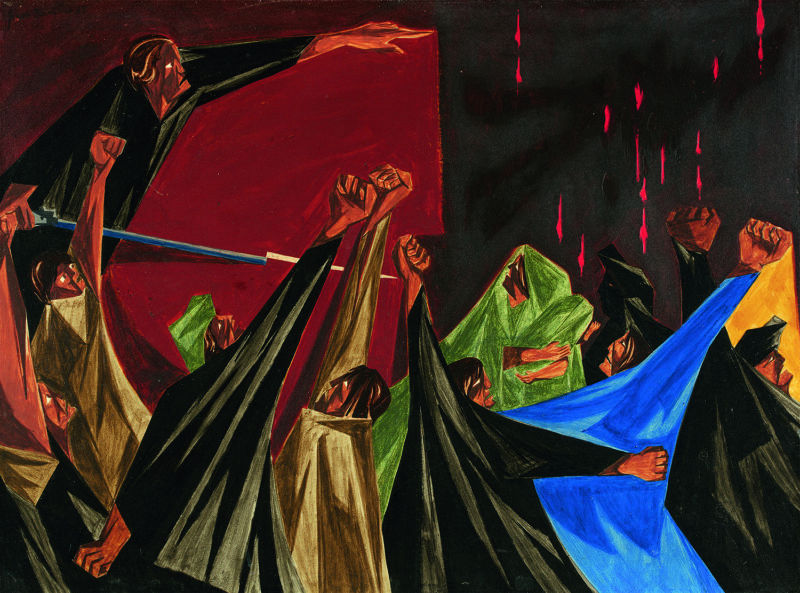
Jacob Lawrence, . . . is life so dear or peace so sweet as to be purchased at the price of chains and slavery? —Patrick Henry, 1775, Panel 1, 1955, from Struggle: From the History of the American People, 1954–56, Collection of Harvey and Harvey-Ann Ross. © 2019 The Jacob and Gwendolyn Knight Lawrence Foundation, Seattle / Artists Rights Society (ARS), New York, courtesy Birmingham Museum of Art.
Until it’s safe to travel together for our popular Art Travels day, overnight, national, and international trips, we’re thrilled to launch virtual trips for armchair travelers each first Thursday evening! This month, we travel to the Birmingham Museum of Art in Birmingham, AL.
Founded in 1951, the BMA has one of the finest collections in the Southeast, with 24,000+ paintings, sculptures, prints, drawings, and decorative arts representing diverse cultures from Africa, the Americas, Asia, and Europe, spanning thousands of years to the present. Among other highlights, the Museum’s collection of Asian art, especially Vietnamese ceramics, is considered the finest and most comprehensive in the Southeast. The Museum is also home to a remarkable Kress collection of Renaissance and Baroque art, and its holdings of European decorative arts comprise superior examples of English ceramics (including the largest collection of Wedgwood ceramics outside of England) and 18th-century French furniture.
For this virtual visit Graham Boettcher, the BMA’s R. Hugh Daniel Director, introduces the beautiful building in downtown Birmingham and the museum’s collection. Then, Curator of American Art Kate Crawford discusses Jacob Lawrence: The American Struggle, an exhibition featuring this iconic American modernist’s painting series Struggle… From the History of the American People (1954–1956). The exhibition reunites the multi-paneled work for the first time in more than half a century. One of the greatest narrative artists of the 20th century, Lawrence (1917–2000) painted the Struggle series to show how women and people of color helped shape the founding of our nation. Originally conceived as a series of 60 paintings spanning subjects from the American Revolution to World War I, Struggle was intended to depict, in the artist’s words, “the struggles of a people to create a nation and their attempt to build a democracy.” Lawrence planned to publish his ambitious project in book form; in the end, he completed 30 panels representing historical moments from 1775 through 1817, from Patrick Henry to westward expansion. The panels feature the words and actions of not only early American politicians but also of enslaved people, women, and Native Americans to address the diverse but mutually linked fortunes of all American constituencies engaged in the struggle. Taken as a whole, this remarkable series interprets and expresses the democratic debates that defined early America and still resonate today.
Desire Paths looks at makers within the discourse of craft and those existing on the periphery of the craftscape who focus on the movement of the body towards something desirable. These desires of the body are in relationship to nature, technology, self, and society. Using architectural theory and queer curatorial strategies, Desire Paths examines the possibilities and futures of bodies, revealing connections between the corporeal and craft.
“Desire paths,” a term taken from urban planning, are lines trodden in the landscape when constructed walkways do not provide a direct or desired route. Through action, repetition, and intentionality, desire paths are crafted modifications to the landscape that allow for a body to move towards a horizon. The format of the works include traditional craft media, performance, video, and interactive web-based work. Through this variety of media and performative tactics the makers in Desire Paths consider how we view, value, and ascribe meaning to a body/the body/the others body. They show us the power and agency held in body and present us with crafted visions of the body that confront and expand expectations
The works in this exhibition reclaim the concept of craft from its historical associations with the decorative, frivolous, feminine, indigenous, and the other. The makers use the medium of craft, and the action of crafting, to produce powerful representations and counter narratives to dominant culture
Opening the Door to Change presents the history of education in Western North Carolina, with a particular emphasis on Madison County, from the mid-nineteenth century through the late twentieth. Here, learning has taken many forms, from in-home instruction, common, subscription, and religious schools, to colleges of farming and craft. The curriculum of these schools, as well as their very construction, and in some cases closing, was deeply entwined with the changing needs and values of the Western North Carolina Appalachian community.
The exhibition focuses on the dynamic relationship between community values and education, with a special focus on how students and their families navigated the economic, geographic, and racial challenges to education. Trends and changes in curriculum, assessment, and classroom design will also be explored.
The virtual exhibition will feature didactic panels showcasing a survey of schools within Madison County and highlighting the effect community values had on the curriculum, function, and format of these institutions. Online visitors may also get a sneak-peak at an original film, produced by the Museum, presenting the oral histories of several Madison County residents sharing their personal recollections and memories of past school-days.
Additional films will spotlight the Historic Mars Hill Anderson Rosenwald School and Laurel School, with first-hand accounts from former students and teachers.
This virtual exhibition is sponsored by the Madison County Tourism and Development Authority.
Wake, Mel Chin’s giant animatronic sculpture, installed in New York City’s Times Square last summer, will be on view in Asheville through March 15, 2021, at 44 Collier Avenue. Chin, a WNC based conceptual artist, was named a MacArthur Fellow in September 2019.
Wake was commissioned as part of Mel Chin: All Over the Place, a multi-site survey of his works from across many decades that took place in several New York City locations. A collaborative group, led by UNC Asheville’s STEAM Studio and The Community Foundation of Western North Carolina, formed to plan and raise funds for the sculpture to be seen locally.
Wake – 60 feet long, 34 feet wide and 24 feet high, conceived and designed by the artist – was engineered, sculpted and fabricated by an interdisciplinary team of UNC Asheville students, faculty, staff and community artists led by Chin. The sculpture is interactive and features decks and places to sit and contemplate.
Wake evokes the hull of a shipwreck crossed with the skeletal remains of a marine mammal. The structure is linked with a carved, 21-foot-tall animatronic sculpture, accurately derived from a figurehead of the opera star Jenny Lind that was once mounted on the 19th century clipper ship, USS Nightingale. Jenny Lind moves subtly as she breathes and scans the sky.
Visitors can experience Wake daily from 9 a.m. to 9 p.m. at 44 Collier Avenue. For more details and a schedule of programming, visit ashevillearts.com.
|
|
Across the Atlantic
Across the Atlantic
American Impressionism Through the French Lens
This extraordinary exhibition, drawn from the collection of the Reading Public Museum, explores the path to Impressionism through the 19th century in France. The show examines the sometimes complex relationship between French Impressionism of the 1870s and 1880s and the American interpretation of the style in the decades that followed. More than 65 paintings and works on paper help tell the story of the “new style” of painting which developed at the end of the 19th century—one that emphasized light and atmospheric conditions, rapid or loose brushstrokes, and a focus on brightly colored scenes from everyday life, including both urban and rural settings when artists preferred to paint outdoors and capture changing effects of light during different times of day and seasons of the year.
Across the Atlantic: American Impressionism through the French Lens is organized by the Reading Public Museum, Reading, Pennsylvania.
Generous support for this project provided by Art Bridges and The Maurer Family Foundation.
The Asheville Art Museum announces Meeting the Moon, an exhibition featuring prints, photographs, ceramics, sculptures, and more from the Museum’s Collection. This exhibition will be on view in the Asheville Art Museum’s McClinton Gallery February 3 through July 26, 2021.
2021 marks the 60th anniversary of the beginning of the Apollo space program at NASA, but its inception was hardly the beginning of humankind’s fascination with Earth’s only moon. Before space travel existed, the moon—its shape, its mystery, and the face we see in it—inspired countless artists. Once astronauts landed on the moon and we saw our world from a new perspective, a surge of creativity flooded the American art scene, in paintings, prints, sculpture, music, crafts, film, and poetry.
This exhibition, whose title is taken from a 1913 Robert Frost poem, examines artwork in the Asheville Art Museum’s Collection of artists who were inspired by the unknown, then increasingly familiar moon. Meeting the Moon includes works by nationally renowned artists Newcomb Pottery, James Rosenquist, Maltby Sykes, Paul Soldner, John Lewis, Richard Ritter (Bakersville, NC), and Mark Peiser (Penland, NC). Western North Carolina artists include Jane Peiser (Penland, NC), Jak Brewer (Zionville, NC), Dirck Cruser (Asheville, NC), George Peterson (Lake Toxaway, NC), John B. Neff (NC), and Maud Gatewood (Yanceyville, NC).
“Meeting the Moon offers the opportunity to combine science and popular culture with works of art in the Museum’s Collection,” says Whitney Richardson, associate curator. “I think all visitors will find something that draws them into this exhibition, whether it’s the artwork, poetry, music, or science of space travel. It’s such an affirmation of humanity to find these mysteries, like the moon, which enchant us all.”
This exhibition is organized by the Asheville Art Museum and curated by Whitney Richardson, associate curator. Visit ashevilleart.org for more information about this and other exhibitions.
This exhibition features archival objects from the Theodore Dreier Sr. Document Collection presented alongside artworks from the Museum’s Black Mountain College Collection to explore the connections between artworks and ephemera. This exhibition is organized by the Asheville Art Museum and curated by lydia see, fall 2020 curatorial fellow, with support from a Digitizing Hidden Collections grant through the Council on Library and Information Resources.

Desire Paths looks at makers within the discourse of craft and those existing on the periphery of the craftscape who focus on the movement of the body towards something desirable. These desires of the body are in relationship to nature, technology, self, and society. Using architectural theory and queer curatorial strategies, Desire Paths examines the possibilities and futures of bodies, revealing connections between the corporeal and craft.
“Desire paths,” a term taken from urban planning, are lines trodden in the landscape when constructed walkways do not provide a direct or desired route. Through action, repetition, and intentionality, desire paths are crafted modifications to the landscape that allow for a body to move towards a horizon. The format of the works include traditional craft media, performance, video, and interactive web-based work. Through this variety of media and performative tactics the makers in Desire Paths consider how we view, value, and ascribe meaning to a body/the body/the others body. They show us the power and agency held in body and present us with crafted visions of the body that confront and expand expectations
The works in this exhibition reclaim the concept of craft from its historical associations with the decorative, frivolous, feminine, indigenous, and the other. The makers use the medium of craft, and the action of crafting, to produce powerful representations and counter narratives to dominant culture.
Two Ways to View
Virtual Tour
Online visitors can register to attend a virtual tour of this exhibition. This is a free event. A $5-10 donation at time of registration is recommended.
In-Person
The Center is offering free, unguided visits and affordable tours of its exhibitions to the public. Guests can reserve a 30-minute visit to explore the current exhibitions, learn more about the Center’s national impact in their Craft Research Fund Study Collection, and enjoy interactive activities. The Center is open to the public Tuesday-Friday, 11 am -5 pm. Hours of operation may be subject to change.
Center for Craft is monitoring the effects of COVID-19 on the community and following the instruction of federal, state, and local health departments. Our top priority is always the health and safety of our staff, coworkers, and visitors. At this time, the Center can only allow a maximum of five guests in its public space at once and will require the use of masks or face coverings by all visitors, including children. The Center reserves the right to refuse entry to any visitor that will not comply.
|
|
The Asheville Art Museum presents Fantastical Forms: Ceramics as Sculpture on view at the Museum November 4, 2020 through April 5, 2021. The 25 works in this exhibition—curated by associate curator Whitney Richardson—highlight the Museum’s Collection of sculptural ceramics from the last two decades of the 20th century to the present. Each work illustrates the artist’s ability to push beyond the utilitarian and transition ceramics into the world of sculpture.
North and South Carolina artists featured include Elma McBride Johnson, Neil Noland, Norm Schulman, Virginia Scotchie, Cynthia Bringle, Jane Palmer, Michael Sherrill, and Akira Satake. Works by American artists Don Reitz, Robert Chapman Turner, Karen Karnes, Toshiko Takaezu, Bill Griffith, and Xavier Toubes are also featured in the exhibition.
The Goodrum Family, photo by Suzanne Camarata
Thank you Suzanne Camarata of The Gallery at Flat Rock whose Porch Portraits sessions raised $2835 for the Playhouse! Suzanne began this series when the pandemic made traditional photo sessions a challenge and inspired photographers used social distancing to create a new way to capture memories. “Porch Portraits by Suzanne brings the fun of a casual, light-hearted photoshoot right to your home – literally to your front porch or in your front yard. ” Suzanne is continuing her sessions this year, so make sure to visit the link below to get (or gift) a session today.