

Calendar of Events
Upcoming events and things to do in Asheville, NC. Below is a list of events for festivals, concerts, art exhibitions, group meetups and more.
Interested in adding an event to our calendar? Please click the green “Post Your Event” button below.
The upcoming Journeyperson course is now available AT NO COST! Due to some timely grant funding, we can offer this in-depth farmer training for farmers in years 3-7 with no associated tuition fee! The course consists of monthly cohort meet-ups and 2-3 in-depth workshops, plus mentorship!
In addition, a select number of participants will also receive matched FUNDS for your farm savings account (Savings Incentive Program) and money to spend on a professional development opportunity of your choosing! Want to attend a workshop on livestock management? OGS will contribute towards that fee! Are you saving money for a farm asset? OGS will contribute up to a certain amount to that investment.
The Journeyperson Program is for farmers who have been independently farming for three or more years and are serious about operating farm businesses in the Southern Appalachian region.
|
|
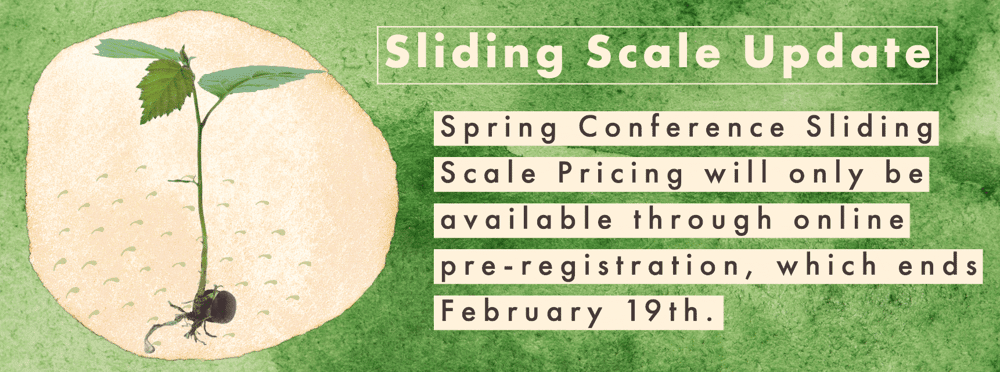
For the past 30 years, the Organic Growers School Spring Conference has served as a gathering place for growers in Appalachia to connect, learn from one another, and deepen connections to land and community. The Spring Conference began as an entirely volunteer-run and free event and has expanded to support an organization of ten staff with year-round programming. As we have grown, we have experimented with different approaches to keeping the event affordable and accessible while also working on compensation for our speakers and supporting our growing staff. We encourage you to check out our recent blog post exploring this in more depth. This year, we are excited to be experimenting with sliding scale ticket pricing for the first time, and we wanted to take some time to explain how this works and why we decided to implement it this year.
Looking beyond scholarships
Over the past several years, we have started implementing different scholarship options. We have set aside around $3000 in our internal budget for scholarships, and we have increased our outreach to other groups in the area who have funding to support individuals to attend conferences. We also offer work-trade opportunities for people who are interested in helping out with our event in exchange for attendance. We have around 100 work-traders access the conference each year through these opportunities, but we have never used up our entire scholarship fund for the event. We know that there are many individuals in our community that we are not reaching through our scholarship opportunities. We began to wonder if scholarship applications were creating a barrier to participation and started researching other options, landing eventually on sliding scale as our preferred model.
How alternative pricing models address accessibility
The sliding scale model, which offers the opportunity for participants to select a price to pay for their ticket, meets several of the parameters we were looking for in an accessible pricing model. Most importantly, it is a seamless way for attendees to access the price that meets their needs. So many things are means-tested in our society, and it can be exhausting to justify why one needs a more affordable price point. While many of our community members need financial support, there are also members of this community who have more than enough to share and are excited about supporting their fellow co-learners. These attendees can select the higher end of the sliding scale, which will be set at a price to offset the lower price paid by other attendees. We trust our attendees to select the option that best works for them while also considering how their selection would affect the ability of other participants to access a lower price point.
Accessibility is a priority for OGS, and implementing it is a risk for us as a small non-profit, given that we rely on our large events like the Spring Conference to support our year-round programming and staff salaries. This will certainly be an experimental year, and if we are not able to secure enough income through sliding-scale registrations, we will have to rethink our approach to pricing. We trust that our community will be thoughtful in thinking about the value that this conference has to them and about what they are able to pay for at this time. Thank you for being on this journey of discovery with us!
|

Presenter: Bruce Appeldoorn – Appeldoorn Landscape Nursery
Bruce Appeldoorn, a life-long nurseryman and the owner of Appeldoorn Landscape Nursery, will share with us some of the best conifers for Western North Carolina gardens. You will see his favorite low-maintenance, long-lived choices based on his 45 years of nursery experience.
After six years of hard work, the dream of using The Learning Garden as a hub for public gardening education is finally a reality. The Learning Garden, located at the Extension Office, 49 Mt. Carmel Road, is offering the public the opportunity to Visit and Learn in the garden on selected 2nd and 4th Thursdays, February – October. The Thursday in-person programs will consist of five garden-specific series. Visitors can walk around before or after the program and soak in our lovely gardens. Our gardens will open at 9:00 a.m. and all the demonstration programs run between 10-11:30 a.m. To ensure a good learning experience, attendance will be limited and registration will be required.

Dahlia Series
February 23 – Getting Your Dahlias Ready for Planting
August 3 – Disbudding Dahlias for Better Blooms
October 26 – Dividing and Storing Dahlias

Dye Garden Series
May 4 – Planning Your Dye Garden
June 22 – Introduction to Natural Dyeing
July 27 – Fresh Indigo
August 24 – Botanical Printing: Printing with Leaves and Flowers
September 28 – Dyeing with Hopi Black Sunflower
November 9 – The Magic of Indigo
 Rose Garden Series
March 9 – Pruning Roses
April 6 – Climbing Roses
April 13 – Rose Pests and Pathogens
May 20 – Growing Beautiful Roses (Saturday Seminar)
 Sun & Shade Garden Series
May 11 – Planting a Native Butterfly Host Plant Garden
June 29 – Foodscaping Edible Plants in Flower Beds
August 31 – Dealing with “the Good, the Bad, and the Ugly” Plants
Sept 14 – Native Butterfly Life Cycles in the Fall Garden
 Vegetable Garden Series
March 23 – Building an ADA Compliant Raised Garden
April 26 – Planting Root Crops: Leeks, Onions, Carrots, Parsnips
May 25 – Planting a Seed Saving Garden
June 8 – Common Vegetable Garden Pests
July 13 – Kid Friendly Gardening
August 10 – Preserving Your Vegetable Harvest
In addition to the Thursday programs listed above, The Learning Garden will present a series of ninety minute (+/-) hands-on seminars covering various gardening topics. These in-person programs will be held at The Learning Garden on selected Saturday mornings, February – September.
Saturday Seminars
February 18 – Tool Selection and Sharpening
March 18 – Pruning Trees and Shrubs
April 22 – Gardening for the Birds
May 20 – Growing Beautiful Roses
June 17 – Pollinator Plants in The Learning Garden
September 16 – Bulbs for All Seasons
Each of the programs in The Learning Garden will be announced individually through this blog and on our website two weeks before each program. Each announcement will include instructions on how to register. Mark your calendar and register to attend as many as you can.
New or early retiree? Young entrepreneur? Like to work outside and with your hands? Learn about farming with the Small Farm Boot Camp!
Objectives for Season Extension:
Understand the advantages and disadvantages of season extension.
Recognize different types of season extension .
Develop base knowledge in management practices (irrigation, fertilization, weeds).
Become familiar with the resources on obtaining and implementing season extension.
|
Presenter: Bruce Appeldoorn – Appeldoorn Landscape Nursery
Bruce Appeldoorn, a life-long nurseryman and the owner of Appeldoorn Landscape Nursery, will share with us some of the best conifers for Western North Carolina gardens. You will see his favorite low-maintenance, long-lived choices based on his 45 years of nursery experience.
The upcoming Journeyperson course is now available AT NO COST! Due to some timely grant funding, we can offer this in-depth farmer training for farmers in years 3-7 with no associated tuition fee! The course consists of monthly cohort meet-ups and 2-3 in-depth workshops, plus mentorship!
In addition, a select number of participants will also receive matched FUNDS for your farm savings account (Savings Incentive Program) and money to spend on a professional development opportunity of your choosing! Want to attend a workshop on livestock management? OGS will contribute towards that fee! Are you saving money for a farm asset? OGS will contribute up to a certain amount to that investment.
The Journeyperson Program is for farmers who have been independently farming for three or more years and are serious about operating farm businesses in the Southern Appalachian region.
|
|
|
After six years of hard work, the dream of using The Learning Garden as a hub for public gardening education is finally a reality. The Learning Garden, located at the Extension Office, 49 Mt. Carmel Road, is offering the public the opportunity to Visit and Learn in the garden on selected 2nd and 4th Thursdays, February – October. The Thursday in-person programs will consist of five garden-specific series. Visitors can walk around before or after the program and soak in our lovely gardens. Our gardens will open at 9:00 a.m. and all the demonstration programs run between 10-11:30 a.m. To ensure a good learning experience, attendance will be limited and registration will be required.
Dahlia Series
February 23 – Getting Your Dahlias Ready for Planting
August 3 – Disbudding Dahlias for Better Blooms
October 26 – Dividing and Storing Dahlias
Dye Garden Series
May 4 – Planning Your Dye Garden
June 22 – Introduction to Natural Dyeing
July 27 – Fresh Indigo
August 24 – Botanical Printing: Printing with Leaves and Flowers
September 28 – Dyeing with Hopi Black Sunflower
November 9 – The Magic of Indigo
Rose Garden Series
March 9 – Pruning Roses
April 6 – Climbing Roses
April 13 – Rose Pests and Pathogens
May 20 – Growing Beautiful Roses (Saturday Seminar)
Sun & Shade Garden Series
May 11 – Planting a Native Butterfly Host Plant Garden
June 29 – Foodscaping Edible Plants in Flower Beds
August 31 – Dealing with “the Good, the Bad, and the Ugly” Plants
Sept 14 – Native Butterfly Life Cycles in the Fall Garden
Vegetable Garden Series
March 23 – Building an ADA Compliant Raised Garden
April 26 – Planting Root Crops: Leeks, Onions, Carrots, Parsnips
May 25 – Planting a Seed Saving Garden
June 8 – Common Vegetable Garden Pests
July 13 – Kid Friendly Gardening
August 10 – Preserving Your Vegetable Harvest
In addition to the Thursday programs listed above, The Learning Garden will present a series of ninety minute (+/-) hands-on seminars covering various gardening topics. These in-person programs will be held at The Learning Garden on selected Saturday mornings, February – September.
Saturday Seminars
February 18 – Tool Selection and Sharpening
March 18 – Pruning Trees and Shrubs
April 22 – Gardening for the Birds
May 20 – Growing Beautiful Roses
June 17 – Pollinator Plants in The Learning Garden
September 16 – Bulbs for All Seasons
Each of the programs in The Learning Garden will be announced individually through this blog and on our website two weeks before each program. Each announcement will include instructions on how to register. Mark your calendar and register to attend as many as you can.
|
The upcoming Journeyperson course is now available AT NO COST! Due to some timely grant funding, we can offer this in-depth farmer training for farmers in years 3-7 with no associated tuition fee! The course consists of monthly cohort meet-ups and 2-3 in-depth workshops, plus mentorship!
In addition, a select number of participants will also receive matched FUNDS for your farm savings account (Savings Incentive Program) and money to spend on a professional development opportunity of your choosing! Want to attend a workshop on livestock management? OGS will contribute towards that fee! Are you saving money for a farm asset? OGS will contribute up to a certain amount to that investment.
The Journeyperson Program is for farmers who have been independently farming for three or more years and are serious about operating farm businesses in the Southern Appalachian region.
|
|
Presenters: Dave Bush, Extension Master GardenerSM Volunteers
See how to take your tubers out of storage and prepare them for sprouting. We will show how to plan for staggered planting, where and when to plant out or pot up, and the first step of pruning your dahlias.
Registration: The talk is free, but seating is limited and registration is required. Please click on the link below to register. If you encounter problems registering or if you have questions, call 828-255-5522.
Join us on February 23, 2023 at the Dana Community Center and register for a health event that can transform your life! Discover the power of a highly effective, simple, and pure diet (not a starvation plan!) as we explore how to reduce cholesterol, blood pressure, and unwanted weight.
Also, you can choose to participate in testing that will show you where you started and how far you progressed during the program. Normally, these tests are pricey, but in the 3R Daniel Fast program you get the initial and final tests for just $15/person.
The full program will include easy-to-follow food demonstrations and recipes, as well as Bible and science-based health lectures given by physicians. Learn how to pray fervently and effectively and take home daily devotional materials to help you grow.
This event is the perfect opportunity to take control of your health and start living your best life. Register at the Dana Community Center on February 23 and don’t miss out on this 21-day, life-changing experience!
.jpg?width=1120&upscale=true&name=2023%20Save%20the%20Date%20Spring%20Conference%20Flyer-1%20(2).jpg)
Registration will open on December 1, 2022
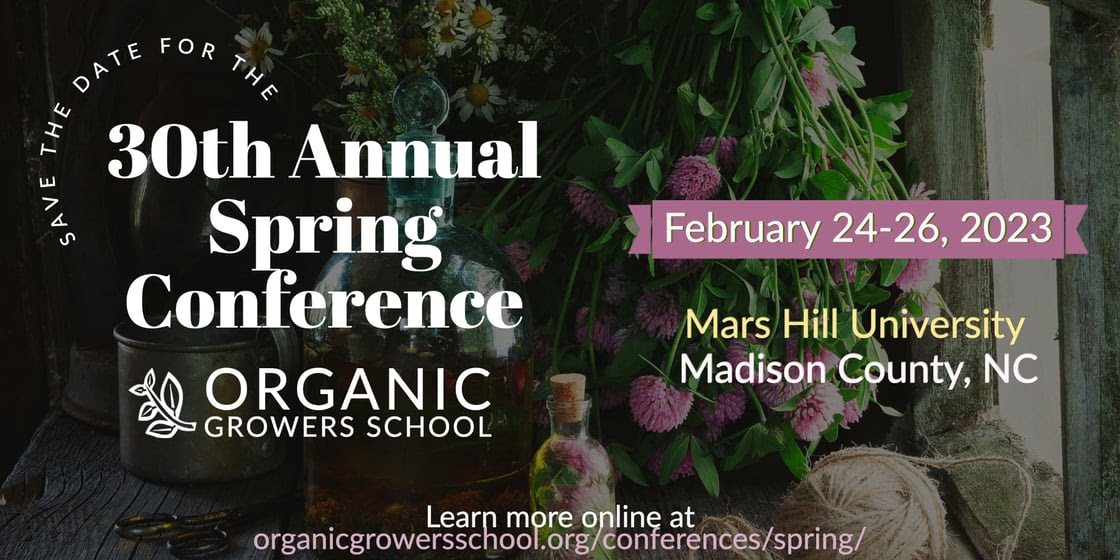
The Organic Growers School is excited to announce the 30th Anniversary of our Spring Conference, which will take place at Mars Hill University on February 24-26, 2023. This year’s conference will continue our non-profit’s mission to support, inspire and educate people to farm, garden, and live organically by providing affordable, practical, and hands-on education.
This three-day event consists of 60 90minute workshops organized into 15 themed tracks, such as Mushrooms, Herbs, Gardening, Farming, and Sustainable Living. The first day is dedicated to day-long workshops at off-campus sites around Western North Carolina.
OGS is excited to announce a sliding-scale ticket price structure for the event! The event has been the most affordable in the region, but investing in continuing education can still be out of reach for farmers and aspiring growers. OGS will also offer a small pool of scholarships if our sliding scale price is not affordable.
Whether you are an enthusiastic local eater, food system advocate, new to growing, or have a few farming years under your belt, we hope you’ll join us to kick off the new season with the growing community!
After six years of hard work, the dream of using The Learning Garden as a hub for public gardening education is finally a reality. The Learning Garden, located at the Extension Office, 49 Mt. Carmel Road, is offering the public the opportunity to Visit and Learn in the garden on selected 2nd and 4th Thursdays, February – October. The Thursday in-person programs will consist of five garden-specific series. Visitors can walk around before or after the program and soak in our lovely gardens. Our gardens will open at 9:00 a.m. and all the demonstration programs run between 10-11:30 a.m. To ensure a good learning experience, attendance will be limited and registration will be required.
Dahlia Series
February 23 – Getting Your Dahlias Ready for Planting
August 3 – Disbudding Dahlias for Better Blooms
October 26 – Dividing and Storing Dahlias
Dye Garden Series
May 4 – Planning Your Dye Garden
June 22 – Introduction to Natural Dyeing
July 27 – Fresh Indigo
August 24 – Botanical Printing: Printing with Leaves and Flowers
September 28 – Dyeing with Hopi Black Sunflower
November 9 – The Magic of Indigo
Rose Garden Series
March 9 – Pruning Roses
April 6 – Climbing Roses
April 13 – Rose Pests and Pathogens
May 20 – Growing Beautiful Roses (Saturday Seminar)
Sun & Shade Garden Series
May 11 – Planting a Native Butterfly Host Plant Garden
June 29 – Foodscaping Edible Plants in Flower Beds
August 31 – Dealing with “the Good, the Bad, and the Ugly” Plants
Sept 14 – Native Butterfly Life Cycles in the Fall Garden
Vegetable Garden Series
March 23 – Building an ADA Compliant Raised Garden
April 26 – Planting Root Crops: Leeks, Onions, Carrots, Parsnips
May 25 – Planting a Seed Saving Garden
June 8 – Common Vegetable Garden Pests
July 13 – Kid Friendly Gardening
August 10 – Preserving Your Vegetable Harvest
In addition to the Thursday programs listed above, The Learning Garden will present a series of ninety minute (+/-) hands-on seminars covering various gardening topics. These in-person programs will be held at The Learning Garden on selected Saturday mornings, February – September.
Saturday Seminars
February 18 – Tool Selection and Sharpening
March 18 – Pruning Trees and Shrubs
April 22 – Gardening for the Birds
May 20 – Growing Beautiful Roses
June 17 – Pollinator Plants in The Learning Garden
September 16 – Bulbs for All Seasons
Each of the programs in The Learning Garden will be announced individually through this blog and on our website two weeks before each program. Each announcement will include instructions on how to register. Mark your calendar and register to attend as many as you can.
The upcoming Journeyperson course is now available AT NO COST! Due to some timely grant funding, we can offer this in-depth farmer training for farmers in years 3-7 with no associated tuition fee! The course consists of monthly cohort meet-ups and 2-3 in-depth workshops, plus mentorship!
In addition, a select number of participants will also receive matched FUNDS for your farm savings account (Savings Incentive Program) and money to spend on a professional development opportunity of your choosing! Want to attend a workshop on livestock management? OGS will contribute towards that fee! Are you saving money for a farm asset? OGS will contribute up to a certain amount to that investment.
The Journeyperson Program is for farmers who have been independently farming for three or more years and are serious about operating farm businesses in the Southern Appalachian region.
|
|
Registration will open on December 1, 2022
The Organic Growers School is excited to announce the 30th Anniversary of our Spring Conference, which will take place at Mars Hill University on February 24-26, 2023. This year’s conference will continue our non-profit’s mission to support, inspire and educate people to farm, garden, and live organically by providing affordable, practical, and hands-on education.
This three-day event consists of 60 90minute workshops organized into 15 themed tracks, such as Mushrooms, Herbs, Gardening, Farming, and Sustainable Living. The first day is dedicated to day-long workshops at off-campus sites around Western North Carolina.
OGS is excited to announce a sliding-scale ticket price structure for the event! The event has been the most affordable in the region, but investing in continuing education can still be out of reach for farmers and aspiring growers. OGS will also offer a small pool of scholarships if our sliding scale price is not affordable.
Whether you are an enthusiastic local eater, food system advocate, new to growing, or have a few farming years under your belt, we hope you’ll join us to kick off the new season with the growing community!
Have you wanted to develop your intuition? Have you experienced psychic phenomenon that you can’t explain? This two-day class will help you understand how to home in on these skills personally or professionally.
This course will be taught by Anthony Mikolojeski/Psychic Medium. He is known as the Asheville Medium. Anthony has trained with some of the best psychic mediums in the United States and the United Kingdom. He has studied at the prestigious Arthur Findlay College in Stansted, England for advanced mediumship training. Now through teaching, Anthony is now sharing his advanced knowledge. You can read more about his story, educational references, and reviews at his website: ashevillemedium.com and his Google Business Page: Anthony Mikolojeski Psychic Medium.
Anthony lives here locally in Hendersonville. He does personal readings in-person or by phone and skype, group readings,
demonstrates mediumship in front of large audiences in the U.S and Canada.
ABOUT THE COURSE
Students will have a complete understanding of the foundation of psychic development. Through guidance and meditations studdents will understand the importance of breathwork, grounding, applying the chakra system and how it relates to the body and how each chakra works in psychic development and the expanding your awareness. Then expanding that awareness to work psychically with each other.
Each student will have the knowledge of all the different psychic modalities and how to use them.
Students will be working with each other and the instructor, in several exercises throughout this two-day course.
An organic lunch will be served for both days.
You can read more about this workshop at; EVENTBRIGHT.COM “INTRODUCTION TO PSYCHIC DEVELOPMENT
The upcoming Journeyperson course is now available AT NO COST! Due to some timely grant funding, we can offer this in-depth farmer training for farmers in years 3-7 with no associated tuition fee! The course consists of monthly cohort meet-ups and 2-3 in-depth workshops, plus mentorship!
In addition, a select number of participants will also receive matched FUNDS for your farm savings account (Savings Incentive Program) and money to spend on a professional development opportunity of your choosing! Want to attend a workshop on livestock management? OGS will contribute towards that fee! Are you saving money for a farm asset? OGS will contribute up to a certain amount to that investment.
The Journeyperson Program is for farmers who have been independently farming for three or more years and are serious about operating farm businesses in the Southern Appalachian region.
|
|
Registration will open on December 1, 2022
The Organic Growers School is excited to announce the 30th Anniversary of our Spring Conference, which will take place at Mars Hill University on February 24-26, 2023. This year’s conference will continue our non-profit’s mission to support, inspire and educate people to farm, garden, and live organically by providing affordable, practical, and hands-on education.
This three-day event consists of 60 90minute workshops organized into 15 themed tracks, such as Mushrooms, Herbs, Gardening, Farming, and Sustainable Living. The first day is dedicated to day-long workshops at off-campus sites around Western North Carolina.
OGS is excited to announce a sliding-scale ticket price structure for the event! The event has been the most affordable in the region, but investing in continuing education can still be out of reach for farmers and aspiring growers. OGS will also offer a small pool of scholarships if our sliding scale price is not affordable.
Whether you are an enthusiastic local eater, food system advocate, new to growing, or have a few farming years under your belt, we hope you’ll join us to kick off the new season with the growing community!
Organic Growers School is now accepting work trade applications for the 30th Annual Spring Conference & Market!
The OGS Spring Conference will be held at Mars Hill University from February 24-26, 2023.
In exchange for each shift worked you will be compensated for the same day of the Conference. For example; if you work trade on Saturday, you will have access to the Conference on Saturday and will be free to attend workshops throughout the day, as long as they don’t conflict with your shift hours.
Work traders can select two shifts if they would like to attend on Saturday and Sunday, or three shifts, if they would like to participate the whole weekend.
General work trade shifts do not require special skills or backgrounds. They do, however, require timeliness and a friendly demeanor. Classroom Assistants/Moderators require training and classroom experience.
You should expect to be working during some of the class time unless you are approved for a pre-or post-conference shift, or come as a paying participant.
Please review the website for shift descriptions and complete the Work Trade Application if you are interested.
Work Trade at Spring Conference – Organic Growers School
We appreciate your interest in work trading for the 30th Annual Spring Conference & Market. Work traders play a vital role in the success of this event!
Thanks for your support,
Work Trade Deposit:
All volunteers are required to submit a $40 deposit. Please complete one registration and submit only one deposit. You may include any additional interest shifts in the additional notes section of the work trade application. Deposits are refunded once you complete your work trade shift. Once your schedule and duties are confirmed, it is up to you to show up for your shifts on time and to complete your shift as asked. In the unfortunate event that you do not fulfill your shift, we will process your credit card for the deposit amount. If providing a deposit is not possible, please email [email protected] so we may consider other options.
After six years of hard work, the dream of using The Learning Garden as a hub for public gardening education is finally a reality. The Learning Garden, located at the Extension Office, 49 Mt. Carmel Road, is offering the public the opportunity to Visit and Learn in the garden on selected 2nd and 4th Thursdays, February – October. The Thursday in-person programs will consist of five garden-specific series. Visitors can walk around before or after the program and soak in our lovely gardens. Our gardens will open at 9:00 a.m. and all the demonstration programs run between 10-11:30 a.m. To ensure a good learning experience, attendance will be limited and registration will be required.
Dahlia Series
February 23 – Getting Your Dahlias Ready for Planting
August 3 – Disbudding Dahlias for Better Blooms
October 26 – Dividing and Storing Dahlias
Dye Garden Series
May 4 – Planning Your Dye Garden
June 22 – Introduction to Natural Dyeing
July 27 – Fresh Indigo
August 24 – Botanical Printing: Printing with Leaves and Flowers
September 28 – Dyeing with Hopi Black Sunflower
November 9 – The Magic of Indigo
Rose Garden Series
March 9 – Pruning Roses
April 6 – Climbing Roses
April 13 – Rose Pests and Pathogens
May 20 – Growing Beautiful Roses (Saturday Seminar)
Sun & Shade Garden Series
May 11 – Planting a Native Butterfly Host Plant Garden
June 29 – Foodscaping Edible Plants in Flower Beds
August 31 – Dealing with “the Good, the Bad, and the Ugly” Plants
Sept 14 – Native Butterfly Life Cycles in the Fall Garden
Vegetable Garden Series
March 23 – Building an ADA Compliant Raised Garden
April 26 – Planting Root Crops: Leeks, Onions, Carrots, Parsnips
May 25 – Planting a Seed Saving Garden
June 8 – Common Vegetable Garden Pests
July 13 – Kid Friendly Gardening
August 10 – Preserving Your Vegetable Harvest
In addition to the Thursday programs listed above, The Learning Garden will present a series of ninety minute (+/-) hands-on seminars covering various gardening topics. These in-person programs will be held at The Learning Garden on selected Saturday mornings, February – September.
Saturday Seminars
February 18 – Tool Selection and Sharpening
March 18 – Pruning Trees and Shrubs
April 22 – Gardening for the Birds
May 20 – Growing Beautiful Roses
June 17 – Pollinator Plants in The Learning Garden
September 16 – Bulbs for All Seasons
Each of the programs in The Learning Garden will be announced individually through this blog and on our website two weeks before each program. Each announcement will include instructions on how to register. Mark your calendar and register to attend as many as you can.
Did you know that three Buncombe County Libraries have a seed library so you can check out seeds? Each seed library offers vegetable, herb, and flower seeds that you can take home and plant.
If you’re a gardener or want to be a gardener, you can borrow seeds from the library at planting time. At the end of the growing season, save seeds from the plants and return a portion of the seeds to the library to be loaned out the next year. If you don’t have any seeds at the end of the season, that’s OK too. It’s not a requirement, it just helps the seed libraries grow. There is no charge to use the seed library, just visit the Weaverville, Black Mountain or Leicester Libraries and sign up. You’ll find different seeds at each location and you don’t need a library card to use the seed library.
The benefits of a seed lending library are many: it’s a way to have fun, build community with fellow gardeners, and support people who are new to gardening. It also preserves rare, open-pollinated or heirloom seeds and encourages local gardeners to save quality seeds that are suited to our growing area.
For more information on any of our seed libraries, contact the Black Mountain Library, the Leicester Library, or the Weaverville Library.
The upcoming Journeyperson course is now available AT NO COST! Due to some timely grant funding, we can offer this in-depth farmer training for farmers in years 3-7 with no associated tuition fee! The course consists of monthly cohort meet-ups and 2-3 in-depth workshops, plus mentorship!
In addition, a select number of participants will also receive matched FUNDS for your farm savings account (Savings Incentive Program) and money to spend on a professional development opportunity of your choosing! Want to attend a workshop on livestock management? OGS will contribute towards that fee! Are you saving money for a farm asset? OGS will contribute up to a certain amount to that investment.
The Journeyperson Program is for farmers who have been independently farming for three or more years and are serious about operating farm businesses in the Southern Appalachian region.
|
|
After six years of hard work, the dream of using The Learning Garden as a hub for public gardening education is finally a reality. The Learning Garden, located at the Extension Office, 49 Mt. Carmel Road, is offering the public the opportunity to Visit and Learn in the garden on selected 2nd and 4th Thursdays, February – October. The Thursday in-person programs will consist of five garden-specific series. Visitors can walk around before or after the program and soak in our lovely gardens. Our gardens will open at 9:00 a.m. and all the demonstration programs run between 10-11:30 a.m. To ensure a good learning experience, attendance will be limited and registration will be required.
Dahlia Series
February 23 – Getting Your Dahlias Ready for Planting
August 3 – Disbudding Dahlias for Better Blooms
October 26 – Dividing and Storing Dahlias
Dye Garden Series
May 4 – Planning Your Dye Garden
June 22 – Introduction to Natural Dyeing
July 27 – Fresh Indigo
August 24 – Botanical Printing: Printing with Leaves and Flowers
September 28 – Dyeing with Hopi Black Sunflower
November 9 – The Magic of Indigo
Rose Garden Series
March 9 – Pruning Roses
April 6 – Climbing Roses
April 13 – Rose Pests and Pathogens
May 20 – Growing Beautiful Roses (Saturday Seminar)
Sun & Shade Garden Series
May 11 – Planting a Native Butterfly Host Plant Garden
June 29 – Foodscaping Edible Plants in Flower Beds
August 31 – Dealing with “the Good, the Bad, and the Ugly” Plants
Sept 14 – Native Butterfly Life Cycles in the Fall Garden
Vegetable Garden Series
March 23 – Building an ADA Compliant Raised Garden
April 26 – Planting Root Crops: Leeks, Onions, Carrots, Parsnips
May 25 – Planting a Seed Saving Garden
June 8 – Common Vegetable Garden Pests
July 13 – Kid Friendly Gardening
August 10 – Preserving Your Vegetable Harvest
In addition to the Thursday programs listed above, The Learning Garden will present a series of ninety minute (+/-) hands-on seminars covering various gardening topics. These in-person programs will be held at The Learning Garden on selected Saturday mornings, February – September.
Saturday Seminars
February 18 – Tool Selection and Sharpening
March 18 – Pruning Trees and Shrubs
April 22 – Gardening for the Birds
May 20 – Growing Beautiful Roses
June 17 – Pollinator Plants in The Learning Garden
September 16 – Bulbs for All Seasons
Each of the programs in The Learning Garden will be announced individually through this blog and on our website two weeks before each program. Each announcement will include instructions on how to register. Mark your calendar and register to attend as many as you can.
Did you know that three Buncombe County Libraries have a seed library so you can check out seeds? Each seed library offers vegetable, herb, and flower seeds that you can take home and plant.
If you’re a gardener or want to be a gardener, you can borrow seeds from the library at planting time. At the end of the growing season, save seeds from the plants and return a portion of the seeds to the library to be loaned out the next year. If you don’t have any seeds at the end of the season, that’s OK too. It’s not a requirement, it just helps the seed libraries grow. There is no charge to use the seed library, just visit the Weaverville, Black Mountain or Leicester Libraries and sign up. You’ll find different seeds at each location and you don’t need a library card to use the seed library.
The benefits of a seed lending library are many: it’s a way to have fun, build community with fellow gardeners, and support people who are new to gardening. It also preserves rare, open-pollinated or heirloom seeds and encourages local gardeners to save quality seeds that are suited to our growing area.
For more information on any of our seed libraries, contact the Black Mountain Library, the Leicester Library, or the Weaverville Library.
After six years of hard work, the dream of using The Learning Garden as a hub for public gardening education is finally a reality. The Learning Garden, located at the Extension Office, 49 Mt. Carmel Road, is offering the public the opportunity to Visit and Learn in the garden on selected 2nd and 4th Thursdays, February – October. The Thursday in-person programs will consist of five garden-specific series. Visitors can walk around before or after the program and soak in our lovely gardens. Our gardens will open at 9:00 a.m. and all the demonstration programs run between 10-11:30 a.m. To ensure a good learning experience, attendance will be limited and registration will be required.
Dahlia Series
February 23 – Getting Your Dahlias Ready for Planting
August 3 – Disbudding Dahlias for Better Blooms
October 26 – Dividing and Storing Dahlias
Dye Garden Series
May 4 – Planning Your Dye Garden
June 22 – Introduction to Natural Dyeing
July 27 – Fresh Indigo
August 24 – Botanical Printing: Printing with Leaves and Flowers
September 28 – Dyeing with Hopi Black Sunflower
November 9 – The Magic of Indigo
Rose Garden Series
March 9 – Pruning Roses
April 6 – Climbing Roses
April 13 – Rose Pests and Pathogens
May 20 – Growing Beautiful Roses (Saturday Seminar)
Sun & Shade Garden Series
May 11 – Planting a Native Butterfly Host Plant Garden
June 29 – Foodscaping Edible Plants in Flower Beds
August 31 – Dealing with “the Good, the Bad, and the Ugly” Plants
Sept 14 – Native Butterfly Life Cycles in the Fall Garden
Vegetable Garden Series
March 23 – Building an ADA Compliant Raised Garden
April 26 – Planting Root Crops: Leeks, Onions, Carrots, Parsnips
May 25 – Planting a Seed Saving Garden
June 8 – Common Vegetable Garden Pests
July 13 – Kid Friendly Gardening
August 10 – Preserving Your Vegetable Harvest
In addition to the Thursday programs listed above, The Learning Garden will present a series of ninety minute (+/-) hands-on seminars covering various gardening topics. These in-person programs will be held at The Learning Garden on selected Saturday mornings, February – September.
Saturday Seminars
February 18 – Tool Selection and Sharpening
March 18 – Pruning Trees and Shrubs
April 22 – Gardening for the Birds
May 20 – Growing Beautiful Roses
June 17 – Pollinator Plants in The Learning Garden
September 16 – Bulbs for All Seasons
Each of the programs in The Learning Garden will be announced individually through this blog and on our website two weeks before each program. Each announcement will include instructions on how to register. Mark your calendar and register to attend as many as you can.