

Calendar of Events
Upcoming events and things to do in Asheville, NC. Below is a list of events for festivals, concerts, art exhibitions, group meetups and more.
Interested in adding an event to our calendar? Please click the green “Post Your Event” button below.

Searching for a romantic idea for your Valentine’s weekend date? Then you’ll be pleased to learn Hearts for Art returns to the Museum again this year. From February 10 to 13, you’re invited to display your love of art by placing a paper heart on the floor in front of the single artwork that truly captures your heart.
The Hearts for Art project began seven years ago at the Oakland Museum of California and Columbus Museum of Art to encourage art appreciation. Join us and many other museums across the country to spread the love of art through Hearts for Art.
Step 1: Pick up your heart at the welcome desk as you enter the Museum.
Step 2: Fall in love with an artwork and make it official by placing your heart on the floor in front of your favorite.
Step 3: Take a photo of your selection with your heart included and share your love on social media with the tags #heartsforart and @ashevilleartmuseum for a chance to be featured on the Museum’s social media pages.
Step 4: Next, escort your date up to the rooftop Perspective Café and Sculpture Terrace to enjoy delicious beverages, local food, delightful conversation, and dramatic views.
Step 5: End your very memorable date by presenting your companion with an annual Museum Membership, showing them you’d love to share many more magical moments moving forward.
Please note: No FLASH photography inside the galleries to protect the artworks!

|
Master Gardener, John Bowen kicks off the opening of the Sowing Circle season! He’ll offer instructions and tips on starting your seeds. **This is an in-person event |

For the past 30 years, the Organic Growers School Spring Conference has served as a gathering place for growers in Appalachia to connect, learn from one another, and deepen connections to land and community. The Spring Conference began as an entirely volunteer-run and free event and has expanded to support an organization of ten staff with year-round programming. As we have grown, we have experimented with different approaches to keeping the event affordable and accessible while also working on compensation for our speakers and supporting our growing staff. We encourage you to check out our recent blog post exploring this in more depth. This year, we are excited to be experimenting with sliding scale ticket pricing for the first time, and we wanted to take some time to explain how this works and why we decided to implement it this year.
Looking beyond scholarships
Over the past several years, we have started implementing different scholarship options. We have set aside around $3000 in our internal budget for scholarships, and we have increased our outreach to other groups in the area who have funding to support individuals to attend conferences. We also offer work-trade opportunities for people who are interested in helping out with our event in exchange for attendance. We have around 100 work-traders access the conference each year through these opportunities, but we have never used up our entire scholarship fund for the event. We know that there are many individuals in our community that we are not reaching through our scholarship opportunities. We began to wonder if scholarship applications were creating a barrier to participation and started researching other options, landing eventually on sliding scale as our preferred model.
How alternative pricing models address accessibility
The sliding scale model, which offers the opportunity for participants to select a price to pay for their ticket, meets several of the parameters we were looking for in an accessible pricing model. Most importantly, it is a seamless way for attendees to access the price that meets their needs. So many things are means-tested in our society, and it can be exhausting to justify why one needs a more affordable price point. While many of our community members need financial support, there are also members of this community who have more than enough to share and are excited about supporting their fellow co-learners. These attendees can select the higher end of the sliding scale, which will be set at a price to offset the lower price paid by other attendees. We trust our attendees to select the option that best works for them while also considering how their selection would affect the ability of other participants to access a lower price point.
Accessibility is a priority for OGS, and implementing it is a risk for us as a small non-profit, given that we rely on our large events like the Spring Conference to support our year-round programming and staff salaries. This will certainly be an experimental year, and if we are not able to secure enough income through sliding-scale registrations, we will have to rethink our approach to pricing. We trust that our community will be thoughtful in thinking about the value that this conference has to them and about what they are able to pay for at this time. Thank you for being on this journey of discovery with us!
After six years of hard work, the dream of using The Learning Garden as a hub for public gardening education is finally a reality. The Learning Garden, located at the Extension Office, 49 Mt. Carmel Road, is offering the public the opportunity to Visit and Learn in the garden on selected 2nd and 4th Thursdays, February – October. The Thursday in-person programs will consist of five garden-specific series. Visitors can walk around before or after the program and soak in our lovely gardens. Our gardens will open at 9:00 a.m. and all the demonstration programs run between 10-11:30 a.m. To ensure a good learning experience, attendance will be limited and registration will be required.

Dahlia Series
February 23 – Getting Your Dahlias Ready for Planting
August 3 – Disbudding Dahlias for Better Blooms
October 26 – Dividing and Storing Dahlias

Dye Garden Series
May 4 – Planning Your Dye Garden
June 22 – Introduction to Natural Dyeing
July 27 – Fresh Indigo
August 24 – Botanical Printing: Printing with Leaves and Flowers
September 28 – Dyeing with Hopi Black Sunflower
November 9 – The Magic of Indigo
 Rose Garden Series
March 9 – Pruning Roses
April 6 – Climbing Roses
April 13 – Rose Pests and Pathogens
May 20 – Growing Beautiful Roses (Saturday Seminar)
 Sun & Shade Garden Series
May 11 – Planting a Native Butterfly Host Plant Garden
June 29 – Foodscaping Edible Plants in Flower Beds
August 31 – Dealing with “the Good, the Bad, and the Ugly” Plants
Sept 14 – Native Butterfly Life Cycles in the Fall Garden
 Vegetable Garden Series
March 23 – Building an ADA Compliant Raised Garden
April 26 – Planting Root Crops: Leeks, Onions, Carrots, Parsnips
May 25 – Planting a Seed Saving Garden
June 8 – Common Vegetable Garden Pests
July 13 – Kid Friendly Gardening
August 10 – Preserving Your Vegetable Harvest
In addition to the Thursday programs listed above, The Learning Garden will present a series of ninety minute (+/-) hands-on seminars covering various gardening topics. These in-person programs will be held at The Learning Garden on selected Saturday mornings, February – September.
Saturday Seminars
February 18 – Tool Selection and Sharpening
March 18 – Pruning Trees and Shrubs
April 22 – Gardening for the Birds
May 20 – Growing Beautiful Roses
June 17 – Pollinator Plants in The Learning Garden
September 16 – Bulbs for All Seasons
Each of the programs in The Learning Garden will be announced individually through this blog and on our website two weeks before each program. Each announcement will include instructions on how to register. Mark your calendar and register to attend as many as you can.
Swing by the Weaverville Library anytime the first two weeks of February and make as many valentines as your heart desires. All supplies are provided. Make a valentine for a local veteran and we’ll deliver it for you! Free and for all ages. Sponsored by the Friends of the Weaverville Library.
Searching for a romantic idea for your Valentine’s weekend date? Then you’ll be pleased to learn Hearts for Art returns to the Museum again this year. From February 10 to 13, you’re invited to display your love of art by placing a paper heart on the floor in front of the single artwork that truly captures your heart.
The Hearts for Art project began seven years ago at the Oakland Museum of California and Columbus Museum of Art to encourage art appreciation. Join us and many other museums across the country to spread the love of art through Hearts for Art.
Step 1: Pick up your heart at the welcome desk as you enter the Museum.
Step 2: Fall in love with an artwork and make it official by placing your heart on the floor in front of your favorite.
Step 3: Take a photo of your selection with your heart included and share your love on social media with the tags #heartsforart and @ashevilleartmuseum for a chance to be featured on the Museum’s social media pages.
Step 4: Next, escort your date up to the rooftop Perspective Café and Sculpture Terrace to enjoy delicious beverages, local food, delightful conversation, and dramatic views.
Step 5: End your very memorable date by presenting your companion with an annual Museum Membership, showing them you’d love to share many more magical moments moving forward.
Please note: No FLASH photography inside the galleries to protect the artworks!
We are hosting another multiple meetup groups event in honor of Valentine’s day. This is for the Singles to Mingle and the couples to support. This is a pressure-free event, so feel free to bring friends! We will be in the indoor space at Capella on 9. They have beer, wine, cocktails along with snacks and tapa dishes.
This event will include the following meetup groups:
Socials for late 20s, 30s and 40s near Asheville
Check out Social Group for late 20s, 30s and 40s https://meetu.ps/c/512Z5/BFgKT/d on Meetup
30s and 40s for singles and couples near Asheville
Check out 30s & 40s Singles and Couples Near Asheville https://meetu.ps/c/4Vc3l/BFgKT/d on Meetup
30s and 40s Women near Asheville
Check out 30’s and 40’s Women Near Asheville https://meetu.ps/c/4RNl7/BFgKT/d on Meetup
Presenter: Bruce Appeldoorn – Appeldoorn Landscape Nursery
Bruce Appeldoorn, a life-long nurseryman and the owner of Appeldoorn Landscape Nursery, will share with us some of the best conifers for Western North Carolina gardens. You will see his favorite low-maintenance, long-lived choices based on his 45 years of nursery experience.
The upcoming Journeyperson course is now available AT NO COST! Due to some timely grant funding, we can offer this in-depth farmer training for farmers in years 3-7 with no associated tuition fee! The course consists of monthly cohort meet-ups and 2-3 in-depth workshops, plus mentorship!
In addition, a select number of participants will also receive matched FUNDS for your farm savings account (Savings Incentive Program) and money to spend on a professional development opportunity of your choosing! Want to attend a workshop on livestock management? OGS will contribute towards that fee! Are you saving money for a farm asset? OGS will contribute up to a certain amount to that investment.
The Journeyperson Program is for farmers who have been independently farming for three or more years and are serious about operating farm businesses in the Southern Appalachian region.
|
|
For the past 30 years, the Organic Growers School Spring Conference has served as a gathering place for growers in Appalachia to connect, learn from one another, and deepen connections to land and community. The Spring Conference began as an entirely volunteer-run and free event and has expanded to support an organization of ten staff with year-round programming. As we have grown, we have experimented with different approaches to keeping the event affordable and accessible while also working on compensation for our speakers and supporting our growing staff. We encourage you to check out our recent blog post exploring this in more depth. This year, we are excited to be experimenting with sliding scale ticket pricing for the first time, and we wanted to take some time to explain how this works and why we decided to implement it this year.
Looking beyond scholarships
Over the past several years, we have started implementing different scholarship options. We have set aside around $3000 in our internal budget for scholarships, and we have increased our outreach to other groups in the area who have funding to support individuals to attend conferences. We also offer work-trade opportunities for people who are interested in helping out with our event in exchange for attendance. We have around 100 work-traders access the conference each year through these opportunities, but we have never used up our entire scholarship fund for the event. We know that there are many individuals in our community that we are not reaching through our scholarship opportunities. We began to wonder if scholarship applications were creating a barrier to participation and started researching other options, landing eventually on sliding scale as our preferred model.
How alternative pricing models address accessibility
The sliding scale model, which offers the opportunity for participants to select a price to pay for their ticket, meets several of the parameters we were looking for in an accessible pricing model. Most importantly, it is a seamless way for attendees to access the price that meets their needs. So many things are means-tested in our society, and it can be exhausting to justify why one needs a more affordable price point. While many of our community members need financial support, there are also members of this community who have more than enough to share and are excited about supporting their fellow co-learners. These attendees can select the higher end of the sliding scale, which will be set at a price to offset the lower price paid by other attendees. We trust our attendees to select the option that best works for them while also considering how their selection would affect the ability of other participants to access a lower price point.
Accessibility is a priority for OGS, and implementing it is a risk for us as a small non-profit, given that we rely on our large events like the Spring Conference to support our year-round programming and staff salaries. This will certainly be an experimental year, and if we are not able to secure enough income through sliding-scale registrations, we will have to rethink our approach to pricing. We trust that our community will be thoughtful in thinking about the value that this conference has to them and about what they are able to pay for at this time. Thank you for being on this journey of discovery with us!
Swing by the Weaverville Library anytime the first two weeks of February and make as many valentines as your heart desires. All supplies are provided. Make a valentine for a local veteran and we’ll deliver it for you! Free and for all ages. Sponsored by the Friends of the Weaverville Library.
Celebrate Valentines Day at Brother Wolf Animal Rescue!
Brother Wolf Animal Rescue’s mission is to better the lives of companion animals through adoption and pet retention programs, a low-cost mobile spay and neuter clinic, lifesaving shelter transfer partnerships, and extensive volunteer and foster networks. Brother Wolf Animal Rescue impacts the lives of thousands of animals each year in the Western North Carolina region.
This Valentine’s Day, Brother Wolf is offering a Puppygram package that includes a miniature succulent from local business B.B. Barns, a delicious cupcake, personalized card, and 20 minutes of snuggle time with one of their rescued puppies. If you are interested in sharing the gift of sweet puppy kisses with your special someone this year, a limited number of Puppygrams are available at $175 with all proceeds going towards Brother Wolf Animal Rescue’s life saving work for homeless animals in the WNC area.
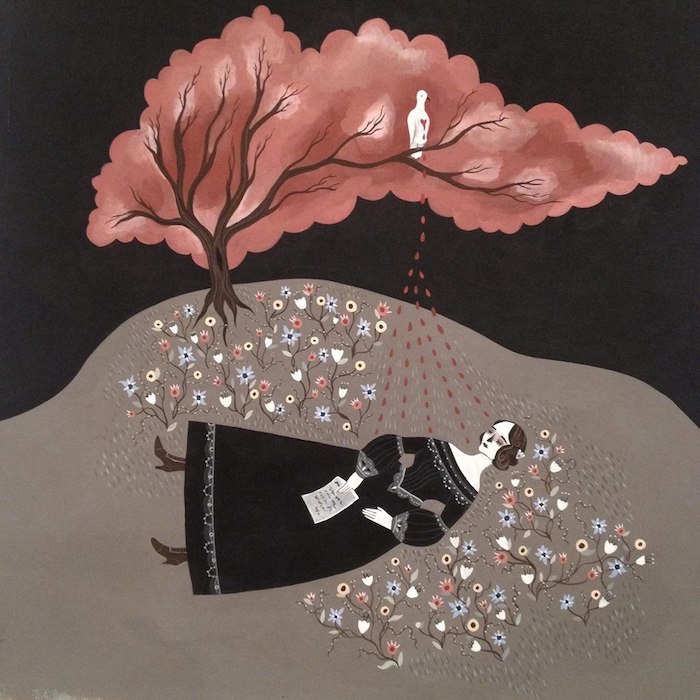
Join Irene Moser and her players for a Rip-roaring, Spine-Tingling Valentine’s Day evening of love and murder ballads
|
Valentine’s Day is just around the corner and we’ve got the perfect lineup of events to celebrate love in all its forms. Whether you’re looking for a nice wine dinner, a night of trivia and laughter, or a chance to listen to some amazing stories, we’ve got something for everyone! 21+
Come join us in The Parlor for a night of delicious food, wine, and community. Local Chef Sam Etheridge will be serving up a five-course menu with hand-crafted recipes inspired by Aphrodite, paired with French wines chosen by Juniper from Mutual Distributing. Tickets will be $135pp + tax and gratuity is included. Treat yourself and your special someone to a night of romance and indulgence! |

Join us for a night of poetry and storytelling all about the pros, cons, and weirdness of sharing your body with others. All donations will be given directly to Asheville Prison Books. “Asheville Prison Books is a volunteer-run collective which has distributed free literature to people incarcerated in the southeast since 1999. We currently distribute books to North and South Carolina.
Fundraiser for Asheville Prison Books, Sliding scale $5-$25 Donation.
Time: Doors 7:00, Show 7:30PM
This event will be taking place in the covered outdoor space, so we suggest people dress warmly.
Valentine’s Day is just around the corner and we’ve got the perfect lineup of events to celebrate love in all its forms. Whether you’re looking for a nice wine dinner, a night of trivia and laughter, or a chance to listen to some amazing stories, we’ve got something for everybody.
Grab your sweethearts, galentines, and mistletoes, because Cupid’s Trivia is coming to the Asheville Beauty Academy and you’re in for a wild ride!
Singles, couples, throuples, oh my! Whether you’re hopefully in love or hopelessly single, this Valentine’s Day celebration is gonna be the bee’s knees. Get ready to giggle, guffaw, and geek out over all things love!
The one and only, Indica Gemini, a dazzling queen, will be your host for the evening. And let us tell ya, with a full bar at your disposal and the most flexible host in town, this Cupid’s Trivia is not one to miss.
So, dust off your love goggles and get ready to put your love smarts to the test! With special prizes up for grabs, you might just win yourself a hot date for next year!
Save the date for February 14th and get ready to fall in love with Cupid’s Trivia. Starting at 8pm, and with no cover charge, this is the perfect excuse to get outta the house and get your game on.
But beware, this event is 21+ only, so leave the kiddos at home and come ready to swoon! See you at the Asheville Beauty Academy in downtown Asheville for a night of love, laughter, and trivia!
Presenter: Bruce Appeldoorn – Appeldoorn Landscape Nursery
Bruce Appeldoorn, a life-long nurseryman and the owner of Appeldoorn Landscape Nursery, will share with us some of the best conifers for Western North Carolina gardens. You will see his favorite low-maintenance, long-lived choices based on his 45 years of nursery experience.
For the past 30 years, the Organic Growers School Spring Conference has served as a gathering place for growers in Appalachia to connect, learn from one another, and deepen connections to land and community. The Spring Conference began as an entirely volunteer-run and free event and has expanded to support an organization of ten staff with year-round programming. As we have grown, we have experimented with different approaches to keeping the event affordable and accessible while also working on compensation for our speakers and supporting our growing staff. We encourage you to check out our recent blog post exploring this in more depth. This year, we are excited to be experimenting with sliding scale ticket pricing for the first time, and we wanted to take some time to explain how this works and why we decided to implement it this year.
Looking beyond scholarships
Over the past several years, we have started implementing different scholarship options. We have set aside around $3000 in our internal budget for scholarships, and we have increased our outreach to other groups in the area who have funding to support individuals to attend conferences. We also offer work-trade opportunities for people who are interested in helping out with our event in exchange for attendance. We have around 100 work-traders access the conference each year through these opportunities, but we have never used up our entire scholarship fund for the event. We know that there are many individuals in our community that we are not reaching through our scholarship opportunities. We began to wonder if scholarship applications were creating a barrier to participation and started researching other options, landing eventually on sliding scale as our preferred model.
How alternative pricing models address accessibility
The sliding scale model, which offers the opportunity for participants to select a price to pay for their ticket, meets several of the parameters we were looking for in an accessible pricing model. Most importantly, it is a seamless way for attendees to access the price that meets their needs. So many things are means-tested in our society, and it can be exhausting to justify why one needs a more affordable price point. While many of our community members need financial support, there are also members of this community who have more than enough to share and are excited about supporting their fellow co-learners. These attendees can select the higher end of the sliding scale, which will be set at a price to offset the lower price paid by other attendees. We trust our attendees to select the option that best works for them while also considering how their selection would affect the ability of other participants to access a lower price point.
Accessibility is a priority for OGS, and implementing it is a risk for us as a small non-profit, given that we rely on our large events like the Spring Conference to support our year-round programming and staff salaries. This will certainly be an experimental year, and if we are not able to secure enough income through sliding-scale registrations, we will have to rethink our approach to pricing. We trust that our community will be thoughtful in thinking about the value that this conference has to them and about what they are able to pay for at this time. Thank you for being on this journey of discovery with us!
After six years of hard work, the dream of using The Learning Garden as a hub for public gardening education is finally a reality. The Learning Garden, located at the Extension Office, 49 Mt. Carmel Road, is offering the public the opportunity to Visit and Learn in the garden on selected 2nd and 4th Thursdays, February – October. The Thursday in-person programs will consist of five garden-specific series. Visitors can walk around before or after the program and soak in our lovely gardens. Our gardens will open at 9:00 a.m. and all the demonstration programs run between 10-11:30 a.m. To ensure a good learning experience, attendance will be limited and registration will be required.
Dahlia Series
February 23 – Getting Your Dahlias Ready for Planting
August 3 – Disbudding Dahlias for Better Blooms
October 26 – Dividing and Storing Dahlias
Dye Garden Series
May 4 – Planning Your Dye Garden
June 22 – Introduction to Natural Dyeing
July 27 – Fresh Indigo
August 24 – Botanical Printing: Printing with Leaves and Flowers
September 28 – Dyeing with Hopi Black Sunflower
November 9 – The Magic of Indigo
Rose Garden Series
March 9 – Pruning Roses
April 6 – Climbing Roses
April 13 – Rose Pests and Pathogens
May 20 – Growing Beautiful Roses (Saturday Seminar)
Sun & Shade Garden Series
May 11 – Planting a Native Butterfly Host Plant Garden
June 29 – Foodscaping Edible Plants in Flower Beds
August 31 – Dealing with “the Good, the Bad, and the Ugly” Plants
Sept 14 – Native Butterfly Life Cycles in the Fall Garden
Vegetable Garden Series
March 23 – Building an ADA Compliant Raised Garden
April 26 – Planting Root Crops: Leeks, Onions, Carrots, Parsnips
May 25 – Planting a Seed Saving Garden
June 8 – Common Vegetable Garden Pests
July 13 – Kid Friendly Gardening
August 10 – Preserving Your Vegetable Harvest
In addition to the Thursday programs listed above, The Learning Garden will present a series of ninety minute (+/-) hands-on seminars covering various gardening topics. These in-person programs will be held at The Learning Garden on selected Saturday mornings, February – September.
Saturday Seminars
February 18 – Tool Selection and Sharpening
March 18 – Pruning Trees and Shrubs
April 22 – Gardening for the Birds
May 20 – Growing Beautiful Roses
June 17 – Pollinator Plants in The Learning Garden
September 16 – Bulbs for All Seasons
Each of the programs in The Learning Garden will be announced individually through this blog and on our website two weeks before each program. Each announcement will include instructions on how to register. Mark your calendar and register to attend as many as you can.
|

Presenter: Bruce Appeldoorn – Appeldoorn Landscape Nursery
Bruce Appeldoorn, a life-long nurseryman and the owner of Appeldoorn Landscape Nursery, will share with us some of the best conifers for Western North Carolina gardens. You will see his favorite low-maintenance, long-lived choices based on his 45 years of nursery experience.
The upcoming Journeyperson course is now available AT NO COST! Due to some timely grant funding, we can offer this in-depth farmer training for farmers in years 3-7 with no associated tuition fee! The course consists of monthly cohort meet-ups and 2-3 in-depth workshops, plus mentorship!
In addition, a select number of participants will also receive matched FUNDS for your farm savings account (Savings Incentive Program) and money to spend on a professional development opportunity of your choosing! Want to attend a workshop on livestock management? OGS will contribute towards that fee! Are you saving money for a farm asset? OGS will contribute up to a certain amount to that investment.
The Journeyperson Program is for farmers who have been independently farming for three or more years and are serious about operating farm businesses in the Southern Appalachian region.
|
|
For the past 30 years, the Organic Growers School Spring Conference has served as a gathering place for growers in Appalachia to connect, learn from one another, and deepen connections to land and community. The Spring Conference began as an entirely volunteer-run and free event and has expanded to support an organization of ten staff with year-round programming. As we have grown, we have experimented with different approaches to keeping the event affordable and accessible while also working on compensation for our speakers and supporting our growing staff. We encourage you to check out our recent blog post exploring this in more depth. This year, we are excited to be experimenting with sliding scale ticket pricing for the first time, and we wanted to take some time to explain how this works and why we decided to implement it this year.
Looking beyond scholarships
Over the past several years, we have started implementing different scholarship options. We have set aside around $3000 in our internal budget for scholarships, and we have increased our outreach to other groups in the area who have funding to support individuals to attend conferences. We also offer work-trade opportunities for people who are interested in helping out with our event in exchange for attendance. We have around 100 work-traders access the conference each year through these opportunities, but we have never used up our entire scholarship fund for the event. We know that there are many individuals in our community that we are not reaching through our scholarship opportunities. We began to wonder if scholarship applications were creating a barrier to participation and started researching other options, landing eventually on sliding scale as our preferred model.
How alternative pricing models address accessibility
The sliding scale model, which offers the opportunity for participants to select a price to pay for their ticket, meets several of the parameters we were looking for in an accessible pricing model. Most importantly, it is a seamless way for attendees to access the price that meets their needs. So many things are means-tested in our society, and it can be exhausting to justify why one needs a more affordable price point. While many of our community members need financial support, there are also members of this community who have more than enough to share and are excited about supporting their fellow co-learners. These attendees can select the higher end of the sliding scale, which will be set at a price to offset the lower price paid by other attendees. We trust our attendees to select the option that best works for them while also considering how their selection would affect the ability of other participants to access a lower price point.
Accessibility is a priority for OGS, and implementing it is a risk for us as a small non-profit, given that we rely on our large events like the Spring Conference to support our year-round programming and staff salaries. This will certainly be an experimental year, and if we are not able to secure enough income through sliding-scale registrations, we will have to rethink our approach to pricing. We trust that our community will be thoughtful in thinking about the value that this conference has to them and about what they are able to pay for at this time. Thank you for being on this journey of discovery with us!
FREE Virtual Event
Presenter: Craig Mauney, Extension Area Specialized Agent, Fruit and Vegetables
Fruit trees are a home garden favorite, and it’s challenging to grow good fruit in our WNC environment. It helps to carefully select smaller, more disease-resistant varieties and consider more unusual fruit like Asian pears, sour cherries, mulberries and pawpaws. Our Presenter,Craig Mauney, is an Extension Area Specialized Agent for fruit production in our Western counties. He has years of experience growing small fruits in his own home landscape, and you’re sure to learn something new to help you grow those little gems of flavor.
Registration: The talk is free but registration is required. Please click on the link below to register. If you encounter problems registering or if you have questions, call 828-255-5522.
Zoom seminar access: After registration, you will receive an email with instructions and a link to join this online live broadcast via Zoom. The ability to access Zoom through a computer, tablet or smartphone with a reliable internet connection is necessary to attend.
Gardening in the Mountains presents:
Fruit Trees for Home Gardens
Virtual attendance via Zoom video and audio internet connection
Presenter: Craig Mauney – NC Cooperative Extension Agent
Fruit trees are a home garden favorite, and it’s challenging to grow good fruit in our WNC environment. It helps to carefully select smaller, more disease-resistant varieties and consider more unusual fruit like Asian pears, sour cherries, mulberries, and pawpaws.
Our presenter, Craig Mauney, is an Extension Area Specialized Agent for commercial vegetable and fruit production in our western counties. He has years of experience growing small fruits in his own home landscape, and you’re sure to learn something new to help you grow those little gems of flavor.
Registration: The talk is free but registration is required. Please click on the link below to register. If you encounter problems registering or if you have questions, call 828-255-5522.
Zoom seminar access: After registration, you will receive an email with instructions and a link to join this online live broadcast via Zoom. The ability to access Zoom through a computer, tablet or smartphone with a reliable internet connection is necessary to attend.