Upcoming events and things to do in Asheville, NC. Below is a list of events for festivals, concerts, art exhibitions, group meetups and more.

Interested in adding an event to our calendar? Please click the green “Post Your Event” button below.

Wednesday, April 6, 2022
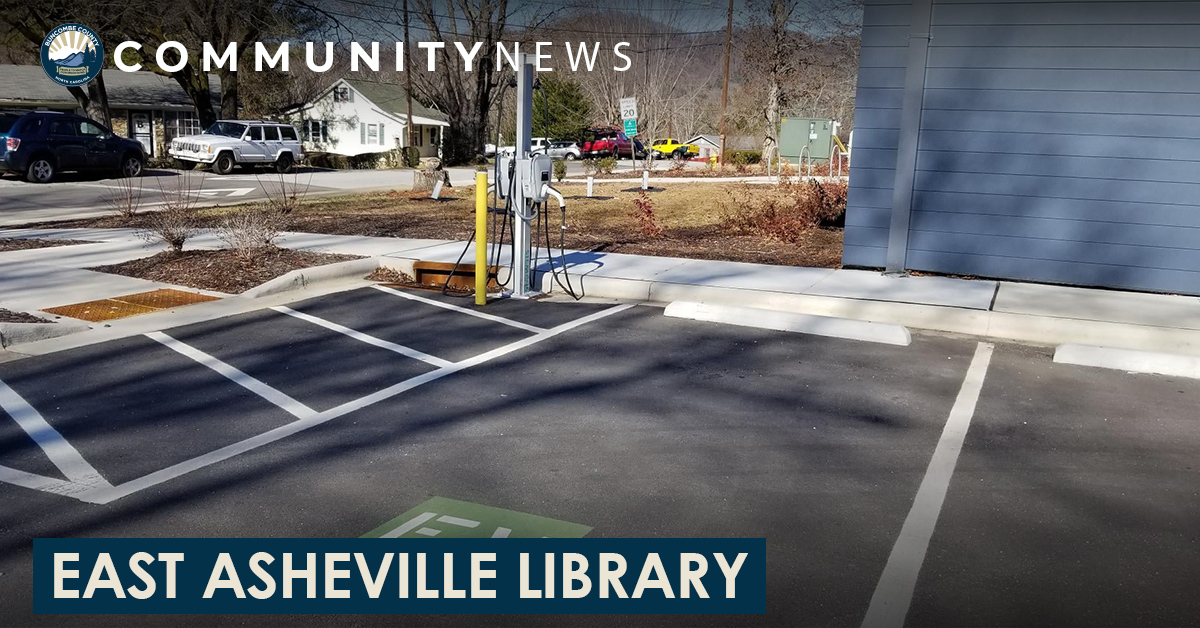
Charge Your Car at the East Asheville Library
Apr 6 all-day
East Asheville Public Library

East Asheville Library electric car charging station.

As part of the East Asheville Library’s LEED certification, the library has two level 2 (240 volt/30 amp) electric car chargers and special parking spots for both electric and other clean air vehicles, such as hybrids. The chargers add about 25 miles of range per hour of charge time and should be able to charge all types of electric vehicles. Tesla vehicles do require an adapter that comes with the vehicle when purchased.

These features are part of Buncombe County’s long-term plan for sustainable and eco-friendly facilities. To learn more about the Library’s LEED certification, stop by the library and ask for more information.

History @ Home – Virtual Exhibits w/ The Western North Carolina Historical Association (WNCHA)
Apr 6 all-day
online
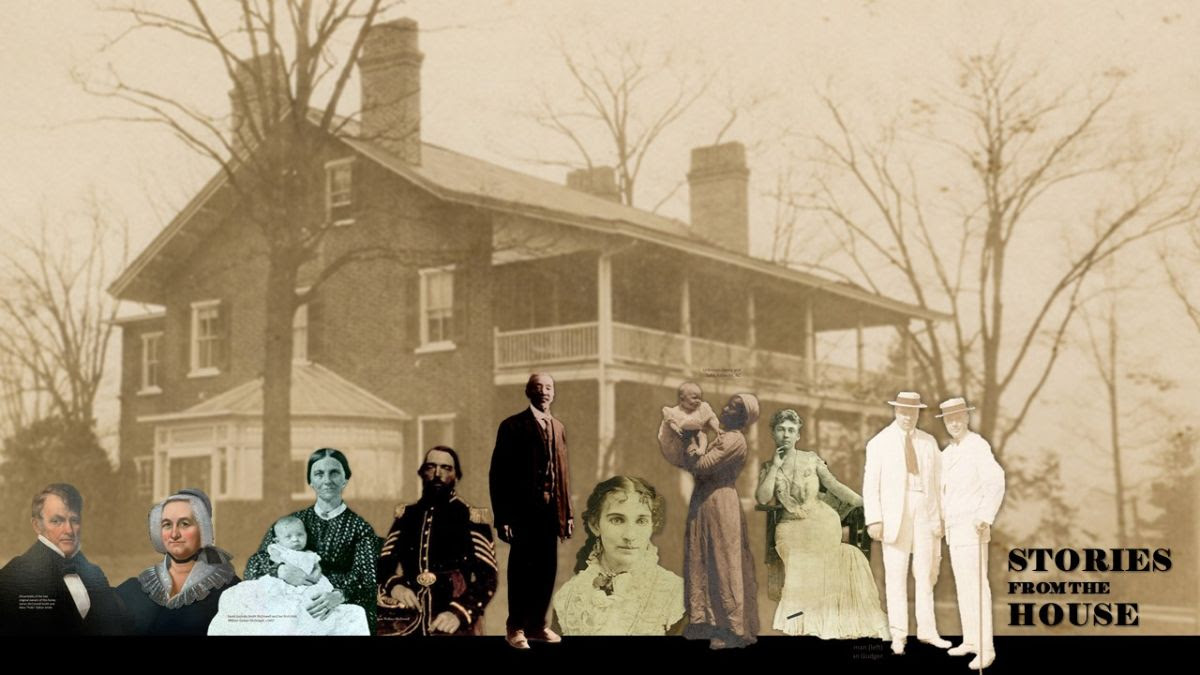
Stories from the House is a virtual tour of our 1840s-era brick mansion as seen through the eyes of many of the people who walked these same hallways over a century ago and whose stories represent a microcosm of the history of western North Carolina.
In 1918 vs. 2020, we took an in-depth look at the 1918 influenza epidemic in Western North Carolina through newspaper clippings, advertisements, ephemera, photographs, and oral history and place the events of 1918 into context with our present-day response to the coronavirus pandemic.

Old Shiloh was one of Asheville’s first communities established by emancipated people. The community moved to its present-day location – New Shiloh – after George Vanderbilt, in an effort to expand his land holdings as he planned to build his Biltmore Estate, purchased the land and buildings and agreed to relocate the Shiloh church and cemetery.

Need Help With Water Bills? New Water Assistance Program Could Offer Help.
Apr 6 all-day
online

If you’re behind on your water bill or afraid your water might get cut off, a new resource might be able to help you. On Jan. 4, the Buncombe County Board of Commissioners approved more than $450,000 in federal funding for the Low-Income Household Water Assistance Program (LIHWAP). The initiative is aimed at preventing water disconnections and helping reconnect drinking and wastewater services.

The LIHWAP will be administered by Buncombe County-based Eblen Charities. The nonprofit will make payments directly to utilities on behalf of qualifying households. The program is slated to run through Sept. 30, 2023 or until funds are exhausted.

Eligibility requirements

Households that currently receive Food and Nutrition Services (FNS), Temporary Assistance for Needy Families (TANF) or Work First services, or those that received Low-Income Energy Assistance Program (LIEAP) services from Oct. 1, 2020-Sept. 30, 2021, are automatically eligible to receive this benefit if their water services have been cut off or are in danger of being cut off.

For additional eligibility information or to apply, please contact Eblen Charities at (828) 255-3066.

Past Programs Available On-Demand from The Western North Carolina Historical Association (WNCHA)
Apr 6 all-day
online
If you are able, consider making a donation to our Community Funded Ticket program, which provides no-cost tickets to our live events to those who could not afford to attend.
Donate Here
Vaccines and Public Health in WNC: Past and Present

In this two-hour event, three historians discuss previous epidemics, pandemics, and public health campaigns in WNC and Appalachia, including the 1918 flu, smallpox, and polio, as well as the community and government efforts to combat these crises. These historians are followed by an immunologist and a virologist—both professors of biology at Appalachian State University— who present information on Covid-19 variants as well as data on lives saved by vaccines.

Watch Now
The Brevard Rosenwald School

Betty J. Reed discusses her research into the Brevard Rosenwald School and other segregated schools in WNC. This school, also funded by Julius Rosenwald, served African American students in Transylvania County from c1923-1966 and, according to Reed, represents “a microcosm of Black education in southern Appalachia.” Reed, a native of Western North Carolina, is an independent scholar who has spent over twenty-five years researching the history of schools in the region, especially those functioning during the era of segregation.

Watch Now
Buncombe Co. Remembrance Project

This project acknowledges the personal and community trauma inflicted on individuals of color after the Civil War, the Equal Justice Initiative’s research related to lynchings, and the three lynchings of record that occurred in Buncombe County, NC. Dr. Joseph Fox is a life-long educator, mentor, and community advocate. He has advocated for students of a darker hue for more than 30 years in his role as a community college instructor, as well as his role as a former Department Chair of Business Administration at Asheville-Buncombe Technical Community College.

Watch Now
Spring Photo Contest – “Trees in Bloom”
Apr 6 @ 12:00 am – 12:45 pm
Chimney Rock State Park

Image result for Chimney Rock Park

NC State Parks’ Year of the Tree continues with a celebration of spring trees. Break out your camera and capture the transformation of trees from winter to spring as they show off their gorgeous blooms throughout the next few months. You may even win a prize for your efforts!

GREAT PRIZES WILL BE AWARDED TO 3 WINNING ENTRIES

1st Prize: The winning photo will be our Facebook cover photo for two weeks, and the photographer will receive two annual passes to Chimney Rock State Park, two boat tour tickets from Lake Lure Tours, and dinner for two at the Old Rock Café.

2nd Prize: After the first place photo, the second place photo will be our Facebook cover photo for one week. The photographer will receive two annual passes to Chimney Rock State Park and dinner for two at the Old Rock Café.

3rd Prize: The third place photographer will receive two adult day passes (or one family pack of day passes) to Chimney Rock State Park and dinner for two at the Old Rock Café.

CONTEST RULES:

  1. There is no fee to enter the contest. All photographs must be taken of Chimney Rock at Chimney Rock State Park only in areas accessible to guests between April 1, 2022 – May 31, 2022.
    The contest is open to amateur and professional photographers.
  2. Up to three photos per person can be submitted via any of the following ways to be eligible to win:
    • Facebook: First, like the Chimney Rock at Chimney Rock State Park page. Next, send us a private message including your contact information specified in rule #3.
    • E-mail: If you don’t have access to social media, you may email your digital photo with your contact information specified in rule #3 to [email protected].
  3. Every entry should be clearly labeled with the photographer’s name, city & state, a brief photo caption, an email address and the best phone number to reach you.
  4. Photos should be available at a minimum resolution of 1200 x 1600 pixels (1 MB minimum) to be eligible to win. Photos taken via smart phones, tablets and other mobile devices are welcome if they meet minimum requirements.
  5. For entries showing human faces, you must list their name(s) and have written permission from any photographed person(s) to use their image.
  6. Entries should reflect the photographer’s interpretation of the theme. Emphasis will be placed on quality, composition and creativity. All entries may be used in promotions of Chimney Rock and park-related activities.
  7. Digital images can be optimized but not dramatically altered with photo editing software. Black and white photographs are welcome.
  8. Finalists will be chosen by Chimney Rock staff and the winner will be voted on by the public. Decisions regarding winners are final.

Winners will be notified personally and announced on Chimney Rock’s social media. For more information, call 1-828-625-9611, ext. 1812 or email us at [email protected].

Red Cross Buncombe County – Blood Drive Volunteer
Apr 6 @ 7:00 am – 3:00 pm
The American Red Cross

Before you even begin thinking about volunteering, ask yourself – Am I well enough to volunteer?

Your safety and limiting the spread of COVID-19 is everyone’s main priority. We encourage you to review and adhere to the recommendations on the Buncombe County readiness site on how best to avoid COVID-19 and what to do if you think you might have it.


The American Red Cross is a nonprofit organization that helps communities prepare for, respond to, and recover from emergencies. Activities of the American Red Cross Western North Carolina Chapter include: Blood Services, Training Services, Disaster Services, and Home Fire Campaign.

Every two seconds someone in the U.S. needs blood and one blood donation can save up to three lives. Help support lives in North Carolina by signing up to become a Blood Drive Volunteer today.  

Time Commitment:

Blood drives occur M-F and volunteers are expected to attend one blood drive a month to remain an active volunteer. This position is flexible as volunteers can sign up for shifts that work for their schedule and instructions for shift selection will be sent after responding to the opportunity.

Volunteer Roles:

  • Warmly greet donors and assist with registration in reception area.
  • Assist with initial intake and hand off through blood donation process.
    • Ensure donors have relevant information and all questions are answered appropriately.
    • Maintain proper sanitizing and cleanliness of reception and hospitality areas.
  • Attend canteen area in support of donors.
    • Thank donors for their contribution.
    • Alert staff immediately if a donor shows signs of feeling unwell.
  • Inform donors of current and upcoming donation promotions.
    • Make reminder/cancellation calls.
    • Reschedule donor appointments.
    • Perform follow-up activities as directed.

Volunteer Requirements:

  • Modeling excellent customer service behaviors.
  • Knowledge of technology needed for position (training provided)
    • Donor checkin, donor tablet, rapid pass, donor app.
  • Comfortable working with people from diverse communities and backgrounds
  • Dependable, punctual, and professional
  • Adhere to all Red Cross guidelines
  • Ability to remain calm in crisis situations
  • Adhere to CDC safety guidelines regarding COVID-19 precautions
  • Safety First! Our need for volunteers is constant and our guidelines reflect the latest CDC safety recommendations and follow the national and local government laws. COVID-19 vaccination will be required for in-person volunteer roles beginning January 3, 2022.
Amazing Scavenger Hunt Adventure – Asheville
Apr 6 @ 8:00 am – 7:00 pm
Vance Memorial

Amazing Scavenger Hunt Adventure - Asheville

Turn the Dallas Asheville into a giant game board with this fun scavenger hunt adventure. Combine the excitement of the Amazing Race with a two and a half-hour city tour. Guided from any smart phone, teams make their way among well-known and overlooked gems of the city, solving clues and completing challenges while learning local history. Start when you want and play at your pace. Price is per team, not per person. Find details and Redeem your ticket as a Prepaid Code online at www.UrbanAdventureQuest.com.

Buncombe County Opens Its First Dog Park
Apr 6 @ 8:00 am – 6:00 pm
Buncombe County Sports Park

It can be ruff out there for our canine companions, but we have pawsitively great news. Buncombe County’s first-ever dog park is now open at our Sports Park in Candler. While this is a soft open, the park features two fenced-in play areas; one for large dogs and one for smaller pups. “We do have plans to add other amenities and water fountains,” exclaims Recreation Services Program Coordinator Mac Stanley. “People are very excited about this new opportunity. Since it was announced, we have gotten letters of support as well as many emails questioning when will the project be completed.”

So join us in a round of apaws as we celebrate the opening of this new venue for hot dogs and cool people. “It’s an amazing place to bring your dog to run free without a leash and interact with other dogs,” says Stanley. “One of my favorite aspects of this new dog park is being able to cultivate a community. Hopefully, this dog park will be instrumental in connecting dogs as well as people within the community.” Paw-yeah, sounds great.

Location: Buncombe County Sports Park, 58 Apac Circle

Hours of operation: Monday-Sunday, 8 a.m.-6 p.m. (same as the Sports Park)

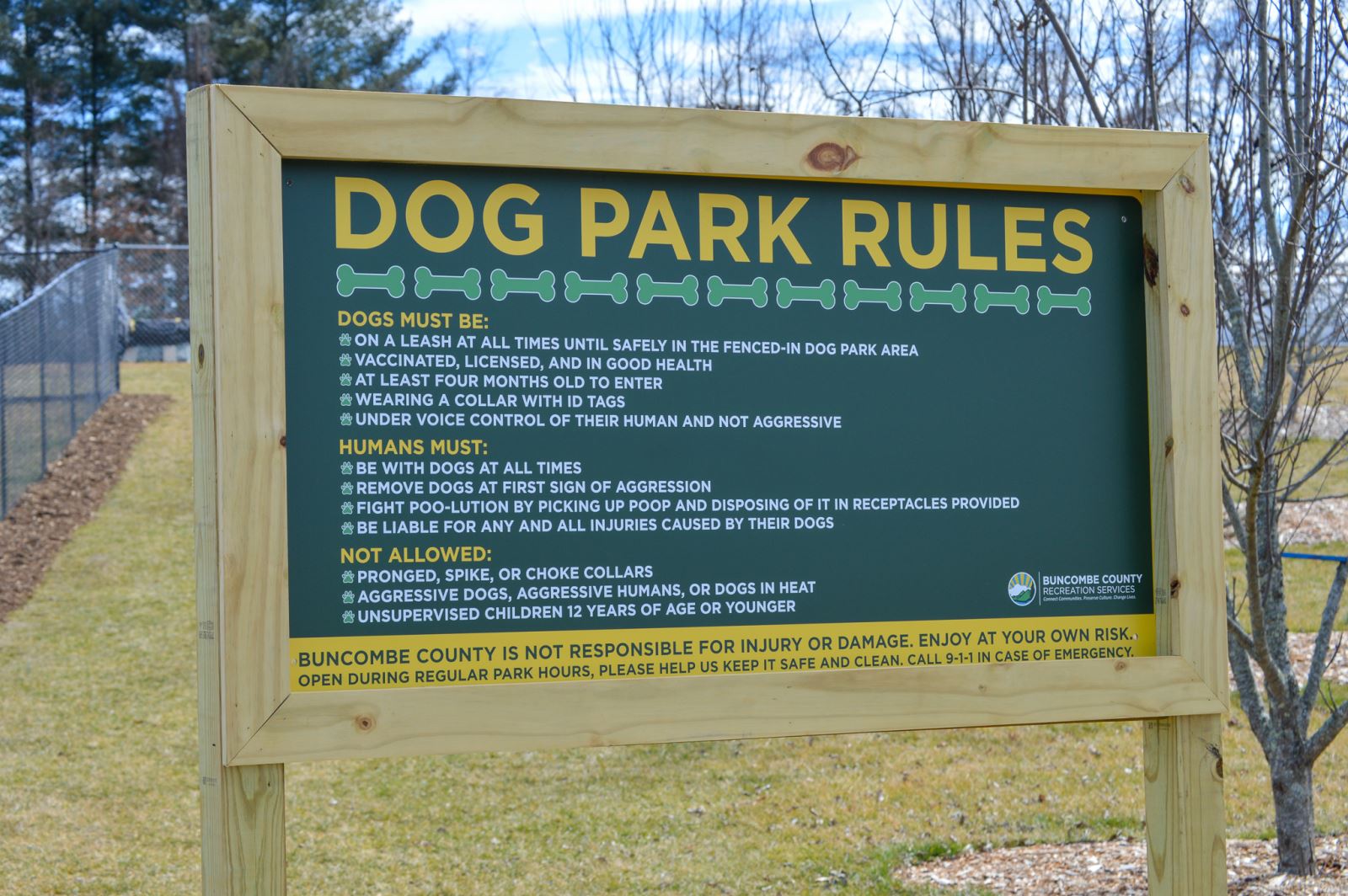
Dog park drools rules
Dogs must be:

  • On a leash at all times until safely in the fenced-in dog park area
  • Vaccinated, licensed, and in good health
  • At least four months old to enter
  • Wearing a collar with ID tags
  • Under voice control of their human and not aggressive

Humans must:

  • Be with dogs at all times
  • Remove dogs at first sign of aggression
  • Pick up poop and dispose of it in receptacles provided
  • Be liable for any and all injuries caused by their dogs

Not Allowed:

  • Pronged, spike or choke collars
  • Aggressive dogs, aggressive humans, or dogs in heat
  • Unsupervised children 12 years of age or younger
New paddle boat fleet at Lake Julian
Apr 6 @ 8:00 am – 7:00 pm
Lake Julian Park

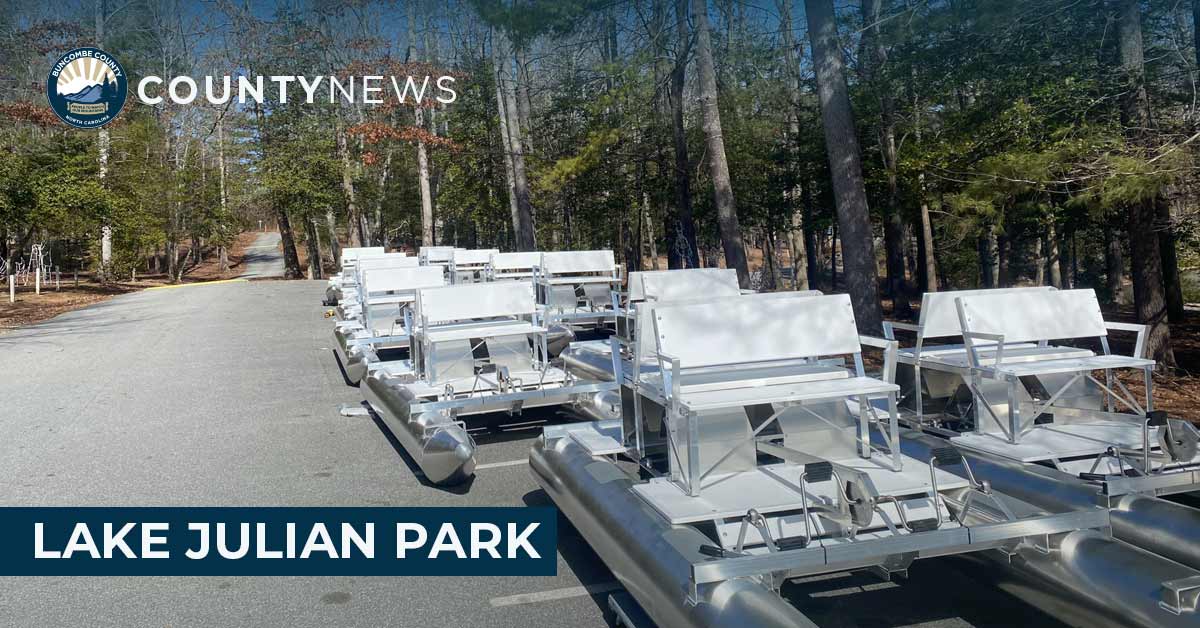
A fleet of new paddle boats are ready to hit the water.

Recreation Services’ Lake Julian Park Rangers have assembled a new paddle boat fleet that is ship-shape and ready to hit the water. “We have received and assembled 17 brand new paddle boats to complete our fleet of 20 boats at Lake Julian Park,” notes Park Ranger Matt Dixon. “This is a great addition to the park and will be an enjoyable amenity for our park patrons for years to come.”

Lake Julian Park offers paddle boat rentals for $12/ hour and $8/half hour. The boats are available to rent every day the park is open (weather permitting), up until 2 hours before park closing time. Head over to the park on the next sunny day and make your own splash. Learn more at buncombecounty.org/parks.

Thanks FLO: Celebrating the Life and Legacy of Frederick Law Olmsted
Apr 6 @ 8:00 am – 9:00 pm
The North Carolina Arboretum

Who was the visionary who designed some of America’s most iconic gardens and parks? Find out at an all-new  exhibit celebrating the life and work of Frederick Law Olmsted (FLO).

The exhibit on the man who planned both Central Park (his first major design) and Biltmore in Asheville (his final one), takes center stage in the Baker Visitor Center Exhibit Hall and at select locations in the landscape on the occasion of his 200th birthday. Thanks FLO features a retrospective of Olmsted’s life through landmarks and key moments and shows off a selection of his most iconic designs through vintage postcards, maps and green screen technology.

Step into the designing game and build a park using interactive tools and take a selfie that puts you front and center in iconic Olmsted parks. Outdoor exhibits await discovery and  illustrate the design principles Olmsted used while designing and building parks, greenways, campuses and private estates across the United States.

The exhibit is created in conjunction with the National Association for Olmsted Parks (NAOP) in celebration of Olmsted’s 200th birthday on April 26, 2022.


Thanks FLO:  Celebrating the Life and Legacy of Frederick Law Olmsted is presented in participation with Olmsted 200, a nationwide celebration taking place in parks and public spaces across the United States.


Mission Accelerator class
Apr 6 @ 8:30 am – 1:00 pm
Blue Ridge Community College

Take your Business to the Next Level with the Mission Accelerator Program
Companies in 2022 will face a business landscape disrupted by a pandemic: staffing issues, supply chain issues, new business models, shift in consumer purchasing patterns, revenue disruptions, and new applications of tech just to name a few.
The 2022 Mission Accelerator class can help organizations you know develop new tools and strategies to proactively successfully navigate the ever changing business environment that 2022 will be.
Registration is open through January 24th. The program begins January 26th and will meet every-other Wednesday from 8:30 am – 1 pm through June 1st. The cost for the program is $295.
Not sure if your business could benefit from this program? Take the self-assessment below to rate your success.

Blue Ridge Community College and the Henderson County Chamber of Commerce have partnered once again to offer the Mission Acceleration Business Accelerator, a five-month, ten-course program.


January 26, 2022
Business Best Practices and KPI (Key Performance Indicators) Checklist by Department Identifying Opportunities for Acceleration

February 9, 2022
Management and Leadership

February 23, 2022
Human Resources, Legal and Insurance

March 9, 2022
Capital and Purchasing

March 23, 2022
Competition and Competitive Advantage

April 6, 2022
Branding, Marketing and Sales

April 20, 2022
Customer Service and Information Technology

May 4, 2022
Business Logistics: Best ways to meet customer needs

May 18, 2022
Accounting and Finance

June 1, 2022
Business Acceleration Plan Presentation and Graduation

Sessions run Wednesdays, from 8:30 a.m. to 1:00 p.m. except 8:30 a.m. to 4:30 p.m. on January 26.
Cost for the course is $295.

Tours: Thomas Wolfe Memorial State Historic Site
Apr 6 @ 9:00 am – 4:30 pm
The Thomas Wolfe Memorial

Old Kentucky Home -The Thomas Wolfe Memorial

American Novelist Thomas Wolfe (1900-1938)

American Novelist Thomas Wolfe (1900-1938)

Considered by many to be one of the giants of 20th-century American literature, Thomas Wolfe immortalized his childhood home in his epic autobiographical novel, Look Homeward, Angel. Wolfe’s colorful portrayal of his family, his hometown of “Altamont” Asheville, North Carolina, and “Dixieland” the Old Kentucky Home boardinghouse, earned the Victorian period house a place as one of American literature’s most famous landmarks.

House tours are offered daily at half past each hour. Last tour leaves at 4:30 pm.
Group tours by reservation.

Adult – $5.00
Student (ages 7-17) – $2.00
Adult Group (10+) – $2.50 each
Student Group – $2.00 each
6 & under – Free

Hours of Operation

9:00am – 5:00pm
Tuesday – Saturday
Sunday & Monday: CLOSED
Closed State Holidays

Biltmore Blooms Tour
Apr 6 @ 9:30 am – 6:00 pm
Biltmore

April 1st through May 26th, 2022

Escape to Biltmore for a unique spring getaway. Immerse yourself in waves of color as Biltmore Blooms transforms our gardens and grounds. Savor complimentary wine tastings at our Winery. All this and more—an array of outdoor activities, shops, and restaurants, and of course, the timeless beauty of Biltmore House—is yours this spring at Biltmore.

Blue Ridge Humane Society Thrift Store Expands Hours
Apr 6 @ 9:30 am – 4:30 pm
Blue Ridge Humane Society Thrift Store

The Blue Ridge Humane Society Thrift Store will be one step closer to pre-pandemic operations beginning on Monday, April 4, 2022. The Thrift Store will be adding Mondays to their weekly schedule to welcome shoppers 6 days a week.

The store hours will expand to Monday-Saturday, 9:30am-4:30pm, and is located at 1214 Greenville Highway in Hendersonville.

The Thrift Store accepts donations Monday-Friday, 9:30am-2pm, so consider donating items when you are downsizing, cleaning out, or replacing gently used items. The Thrift Store also offers free pickup service of furniture or large items. Please call 828-620-3150 to schedule a pickup.

Blue Ridge Humane Society, Inc., is a 501(c)3 animal welfare organization started in 1950 dedicated to ensuring the highest quality of life for animals in Henderson County and our neighboring communities. BRHS cares for pets awaiting adoption and in foster homes; offers low-cost vaccine clinics, animal education programs, pet training classes, and youth education and projects; coordinates community pet food assistance, emergency vet assistance, and the Spay Neuter Incentive Program (SNIP), which is a collaboration with Henderson County, the City of Hendersonville, and the Henderson County Animal Services Center.

“Weaving Across Time”
Apr 6 @ 10:00 am – 6:00 pm
Center for Craft

Bringing thousands of years of tradition into conversation with contemporary practice, the Center for Craft’s exhibition ᎢᏛᏍᎦ ᏫᏥᏤᎢ ᎠᎵᏰᎵᏒ Weaving Across Time showcases the works of nine Eastern Band Cherokee basket makers. Touching on the dynamic evolution of lineage, sustainability, and cultural expression, the exhibition opens on December 13. This exhibition is supported in part by the Cherokee Preservation Foundation, the National Endowment for the Arts, and AARP, Mountain Region North Carolina.

The artists’ work with two of the oldest materials in Cherokee basket making tradition, mountain rivercane and white oak, both of which have been used for thousands of years by Southeastern tribes. The end results are both beautiful and functional – entries in an evolving craft tradition that began tens of thousands of years ago and is experiencing a resurgence. The labor-intensive process of basket making, which includes harvesting materials, gathering plants for dyes, and deciding on intricate patterns, itself becomes a key component of the final object, which interweaves ecology, culture, land, and identity.

These plants, particularly rivercane, are at the heart of Cherokee tradition and culture. The subject of serious conservation efforts, rivercane is also a vital plant for water quality and erosion mitigation, as well as a habitat for riparian species. Despite its importance, the effects of climate change and continually encroaching development in rivercane habitats has contributed to its depletion, both as a material for artists and a plant essential for environmental health. Basket makers harvesting rivercane for splints approach the plant with deep reverence and knowledge of its centrality to the ecosystem, sometimes traveling hundreds of miles to harvest it sustainably.

Other materials, selected with just as much care, reveal elements of process and the natural environment, including the plants available to harvest in particular seasons. White oak can be gathered year-round, but is easiest to process in spring and summer when sap runs up the tree. Dyes used for the baskets, sourced from plants including bloodroot, butternut, and walnut, add rich color to final pieces while also revealing information about harvest time and supply. The laborious, intensive process links generations of basket makers across centuries.

As Cherokee lands have been stolen or transformed beyond recognition, materials are harder to come by, but the rewards are rich. As basket maker ᏚᏍᏓᏯᎫᎾᏱ Gabriel Crow, explains, “When you’re taking that extra step, going out and doing this completely by hand, you’re a basket maker, not just a weaver. My hands are rough and calloused over because I make the splints myself.” Crow makes an average of just 20 baskets a year and, like other basket makers, wastes no scraps, instead making mats, miniature pieces, or, as a last resort, using them for kindling.

The baskets in the exhibition, all of which were created in the last two decades, connect lineages across time and space in a vibrant, living tradition. Patterns based on rhythmic numerical sequences are passed down from teacher to student. Basket makers also borrow from contemporaries and innovate to create pieces in their own recognizable styles. Basket maker ᎺᎵ ᏔᎻᏏᏂ Mary W. Thompson, who is also the consulting artist for The Basket public art parklet, finds inspiration in designs she sees on her travels to visit other tribes in North and South America. For her, baskets are symbolic of Cherokee resilience. “The Cherokee have always been able to change and adapt with time,” she says, “so our artwork and art forms have changed and evolved along with us.”

The exhibition will be on view until April 22. Visitors can reserve 30-minute time slots for unguided visits to explore the current exhibitions, learn more about the Center’s national impact, and enjoy interactive activities. The Center is open to the public Monday – Friday, 10 am – 6 pm. Hours of operation may be subject to change.

Center for Craft is monitoring the effects of COVID-19 on the community and following the instruction of federal, state, and local health departments. Our top priority is always the health and safety of our staff, coworkers, and visitors. At this time, the Center requires the use of masks or face coverings by all visitors, including children. The Center reserves the right to refuse entry to any visitor that will not comply.

Have a Gardening Question? Call the Helpline
Apr 6 @ 10:00 am – 2:00 pm
online

The Garden Helpline is open March 2 through October 27 in 2022.

Extension Master GardenerSM volunteers will be staffing the Helpline as indicated in the schedule below. You may send an email or leave a voicemail at any time and an Extension Master Gardener volunteer will respond during Garden Helpline hours. When emailing, please include a photo if it helps describe your garden question. Soil test kits can be picked up at the Extension office, 24/7, located in a box outside the front door.

Two ways to contact the Garden Helpline
Call 828-255-5522
Email questions and photos to [email protected]

Garden Helpline Hours
March:
  Monday 12:00 – 2:00; Wednesday 10:00 – 12:00
April – September:  Monday and Wednesday 10:00- 2:00; Tuesday 10:00-12:00;
Thursday 12:00-2:00
October:  Tuesday 10:00-12:00; Thursday 12:00-2:00

We are here to help and support you! Please contact us; we look forward to answering your gardening questions.

Need Tax Help? Buncombe Libraries Offer Free Assistance: Pack Memorial Library
Apr 6 @ 10:00 am – 4:00 pm
Pack Memorial Library

Do you need help preparing your taxes? If so, Buncombe County Pubic Libraries can help. AARP Foundation Tax-Aide, in cooperation with the IRS, NC Department of Revenue, Buncombe County Library System, and Council on Aging, Inc. will offer free tax preparations for taxpayers of low and moderate-income, with special attention to those age 60 and older from Feb. 1-April 15.

You will need an appointment to speak with a tax help aide. At your appointment, you can drop off your tax documents and you’ll be given another appointment in about two weeks to pick up your paperwork and completed tax form.

How it works

1. Pick up a tax record envelope and instructions at Black Mountain, West Asheville, Weaverville or Pack Library during library hours.

2. Complete the Intake/Interview Booklet in your envelope by answering all questions. Then sign and date the last 3 pages. Place all your tax forms and any information relating to your tax return in your envelope.

3. Make an appointment to drop off your Tax Record Envelope and meet with a Tax-Aide volunteer.

Wednesdays, appointments available between 10am-4pm
To make an appointment on Wednesday at Pack Library, email [email protected] with your name and telephone number. An AARP volunteer will contact you to set up your appointment. If you don’t have access to email, someone at the library can email AARP for you. At your appointment a tax volunteer will check all documents and give you a follow-up appointment to pick up your completed tax return and documents in 1 or 2 weeks.

Place and Presence: exhibition featuring new works by Asheville artists Linda Gritta and Moni Hill
Apr 6 @ 10:00 am – 6:00 pm
Bender Gallery

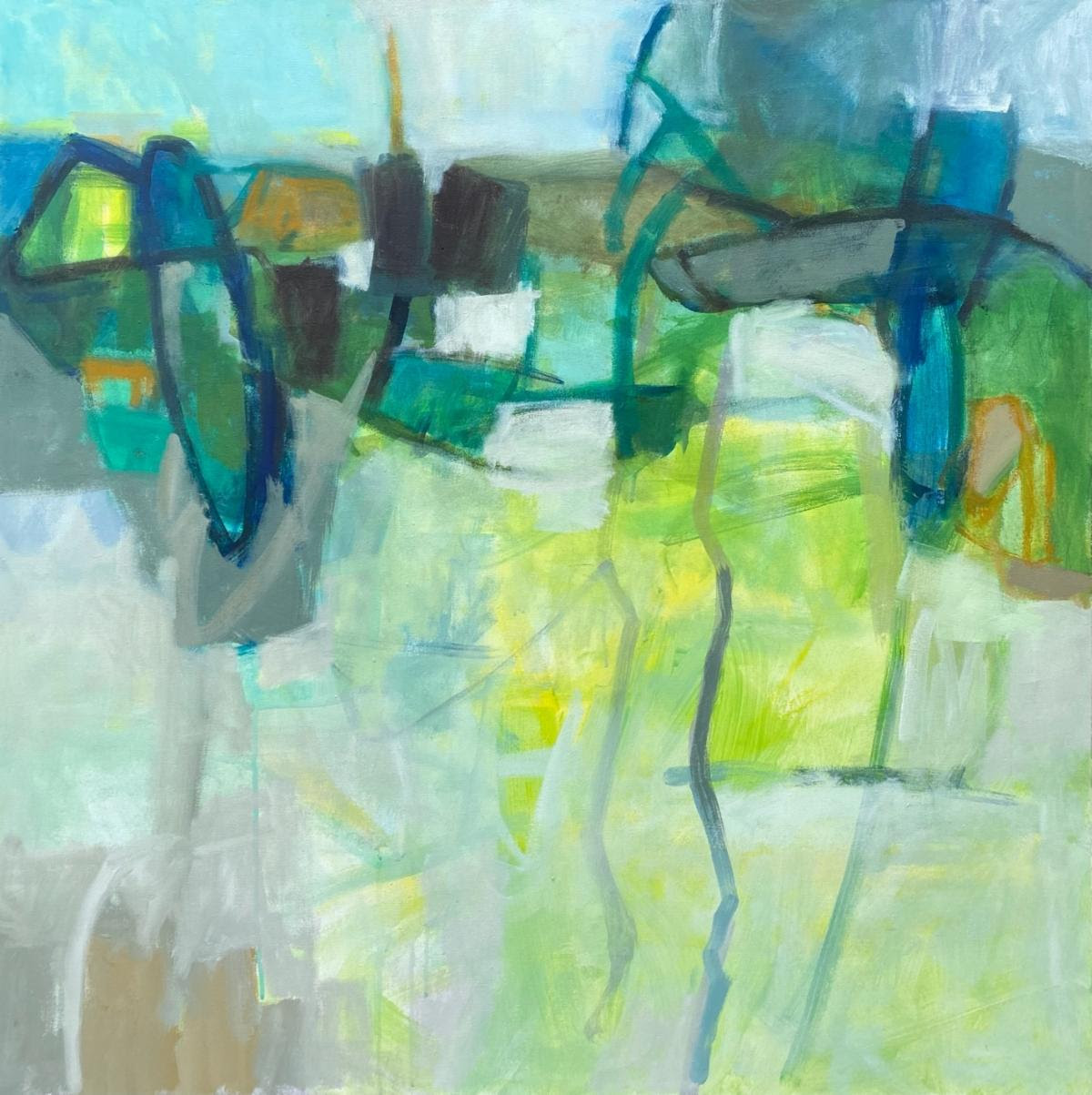
Interesting Finds
Linda Gritta
mixed media on canvas
36 x 36 inches

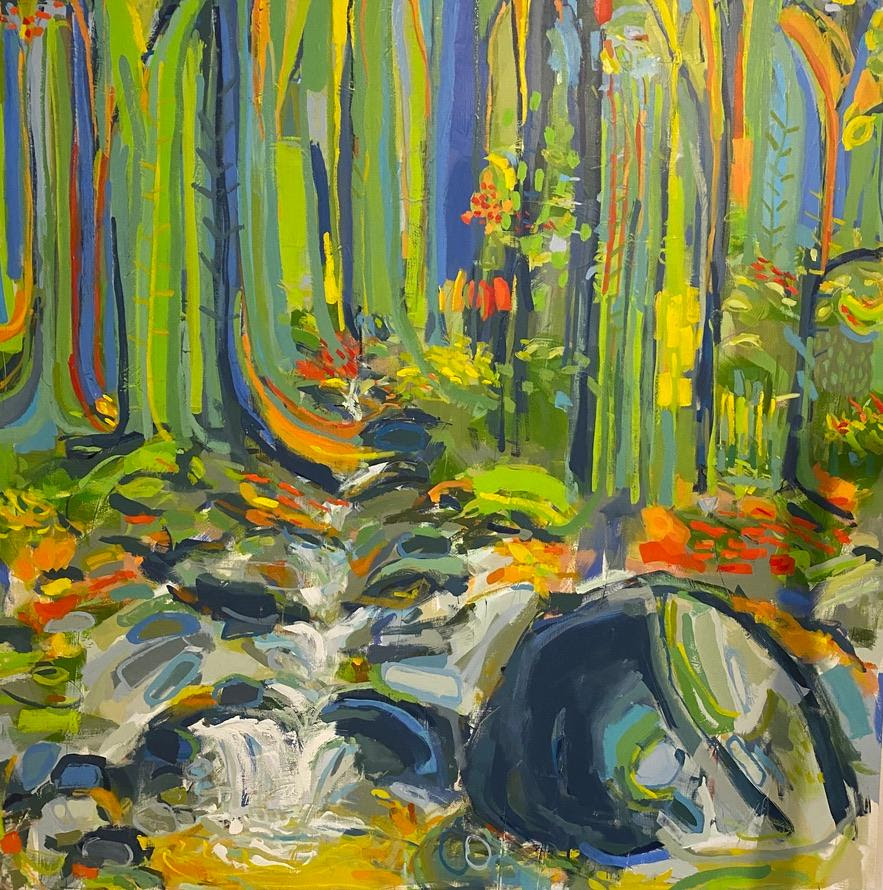
Sweeten Creek on Busbee Mountain
Moni Hill
acrylic on panel
60 x 60 inches
Gritta and Hill are abstract painters with different yet complementary styles reflecting the chaotic nature of the modern world and finding respite in nature and art. The exhibition celebrates the artists’ vibrant abstract work and their interconnection with Western North Carolina and its longstanding arts culture. Place and Presence runs from April 2nd through 30th during Bender Gallery’s regular business hours. There will be an opening reception for Gritta and Hill at the gallery on Saturday April 2nd from 6 to 9 PM at 29 Biltmore Avenue in downtown Asheville. Both artists will be in attendance to discuss their work. We hope to see you there!
Volunteer with Us! Dynamic Docents + Oral History Heroes Needed
Apr 6 @ 10:00 am – 5:00 pm
Swannanoa Valley Museum & History Center
We are looking for volunteers to act as docents in our museum and participate in oral history projects this year. Docents serve a critical role in welcoming guests to our museum and introducing them to Valley history. As the museum expands its hours this spring (Wed-Sat, 10am-5pm), the role of docents is critical. We are also needing volunteers to help us record oral histories from community members and transcribe oral histories that are already a part of our collection. Now is the time to capture the memories of Valley residents on topics including historic African-American communities and schools, covid and more
Volunteering at the WNC Nature Center
Apr 6 @ 10:00 am – 5:00 pm
WNC Nature Center

Volunteering at the WNC Nature Center

Next time you visit the WNC Nature Center, look for the people in the green shirts! These special individuals are Nature Center volunteers.

Serving more than 10,000 hours a year, our team of volunteers can be found prepping meals in the animal kitchen, building bookshelves, tabling at events, pouring drinks at fundraisers, assisting the Membership Office, and kidding around with the goats in the barnyard!

Our Volunteer Coordinator and Animal Care Staff are committed to helping volunteers succeed by providing the tools, resources and training. And we’ll make sure you have fun along the way!

Volunteers must be 18 or older.

We Need Help Building a Block Foundation for our Greenhouse
Apr 6 @ 10:00 am – 4:00 pm
Pearson Garden in Montford
Do you have skills? Or do you want to learn more about Greenhouses and Construction? Please contact [email protected] if you have experience building or would like to learn! In the coming months we will be constructing a donated greenhouse at our Pearson Garden and this is an opportunity to learn and share
YMCA Splash Volunteer Opportunity
Apr 6 @ 10:00 am – 12:30 pm
Corpening YMCA, 348 Grace Corpening Drive, Marion, NC

Y-Splash

child learning how to swim during a swim lesson at the YMCA of Western North Carolina


What: Teach water safety skills, prepare children for drowning emergencies, decrease the number of deaths due to drowning in children and youth. Volunteer in the water or on land.

When: Shifts available from February 23 – April 22, Tuesday thru Friday from 10 AM – 12:30 PM.

The world is 70% water. Children are 100% curious. In an area with so many natural bodies of water, drowning prevention isn’t a luxury. It’s a necessity.

Y Splash is a volunteer-led program that challenges the startling childhood drowning statistics. Between the months of February and April, every public school second grader comes through the Y to participate in critical drowning prevention skills. We are searching for volunteers with a passion for water safety,

working with youth, and serving our local community.

YMCA Mobile Market
Apr 6 @ 10:30 am – 2:00 pm
 Oakley/South Asheville Library

The YMCA Mobile Market will be set up in the lower library parking lot (adjacent to the playground) from 10:30AM-11:30AM. Bring your grocery bags and get fresh food for your family. The market provides fresh produce paired with healthy recipes and a Community Engagement Table.

While you’re here, stop in to get a library card if you don’t have one, pick up a cookbook or two to experiment with your bundle of groceries, or grab a DVD to watch while snacking.

A Hand in Studio Craft: Harvey K. Littleton as Peer and Pioneer Exhibition
Apr 6 @ 11:00 am – 6:00 pm
Asheville Art Museum

Harvey K. Littleton, Amber Maze, 1968, blown glass, 8 3/4 × 10 1/2 × 6 inches. Asheville Art Museum. © Estate of Harvey K. Littleton.
Asheville, N.C.A Hand in Studio Craft: Harvey K. Littleton as Peer and Pioneer highlights recent gifts to the Asheville Art Museum’s Collection and loans from the family of glass artist Harvey K. Littleton. This exhibition places Harvey and Bess Littleton’s collection into the context of their lives, as they moved around the United States, connected with other artists, and developed their own work. This exhibition—organized by the Asheville Art Museum and curated by Whitney Richardson, associate curator—will be on view in the Judith S. Moore Gallery at the Museum from January 19 through June 27, 2022.

Harvey K. Littleton (Corning, NY 1922–2013 Spruce Pine, NC) founded the Studio Glass Movement in the United States in 1962 when, as a teacher, he instituted a glass art program at the University of Wisconsin in Madison, the first of its kind in the United States. He taught the next generation of glass artists—who taught the next—and his influence can still be seen today. But before he dedicated himself to the medium of glass, Littleton studied industrial design, ceramics, and metalwork at the University of Michigan and the Cranbrook Academy of Art in the late 1930s and early 1940s. He met his wife Bess Tamura Littleton, a painting student, at the University of Michigan. Over the course of their careers, Harvey and Bess collected artwork by their fellow artists and amassed an impressive collection from the early days of the Studio Glass Movement and the height of the American mid-century Studio Pottery Movement.

“This exhibition offers the viewer an exciting opportunity to see some of Harvey K. Littleton’s early work in ceramic and metal—directly from his family’s collection—before he began making art in glass,” says Whitney Richardson, associate curator. “Best known for his glassworks, those will be on display alongside the work of his students and his peers making clear the influence he had on them and the Studio Glass Movement.” 

Cook and Serve Meals – ABCCM Transformation Village
Apr 6 @ 11:00 am – 1:00 pm
Transformation Village

Cook teams of 4-6 individuals are invited to bring ingredients and prepare meals onsite or bring meals that have been prepared elsewhere.  To meet our dietary standards, we ask that each meal provides a meat, vegetable and starch.

Requirements:

  • Background Check
  • Brief orientation prior to service
  • Ability to Multi-Task
  • Friendly Demeanor

Health & Safety:

  • We are asking volunteers to wear/bring their own face mask if you have not been fully vaccinated
  • Temperatures will be checked and a COVID-19 disclosure will be signed at the volunteer entrance
  • Before you even begin thinking about volunteering, ask yourself – Am I well enough to volunteer?

    Your safety and limiting the spread of COVID-19 is everyone’s main priority. We encourage you to review and adhere to the recommendations on the Buncombe County readiness site on how best to avoid COVID-19 and what to do if you think you might have it.


    ABCCM Transformation Village provides up to 100 beds of transitional housing and will provide emergency shelter beds, post Covid-19.  Transforming lives is through four developmental phases called Steps to Success including stabilization, life skills, education and reintegration.  We are honored to report that 8 out of 10 leave us with a living wage job and permanent housing.

    Transformation Village gives hope, healing, health and a home to single women, mothers with children, and female Veterans experiencing homelessness.  We provide residents a fresh start and a place to heal surrounded and supported by Christian love, trust, education and companionship.

    We are seeking energetic volunteers to prepare and serve meals for our residents for lunch and dinner. This opportunity provides you with the chance to prepare meals in our commercial kitchen alongside our trained staff while serving the women and children of Transformation Village. 

Gillian Laub’s Southern Rites Exhibit
Apr 6 @ 11:00 am – 6:00 pm
Asheville Art Museum
Gillian Laub, Amber and Reggie, Mount Vernon, Georgia, 2011, inkjet print, 40 × 50 inches. © Gillian Laub, courtesy of Benrubi Gallery.


American photographer Gillian Laub (born New York, 1975) has spent the last two decades investigating political conflicts, exploring family relationships, and challenging assumptions about cultural identity. In Southern Rites, Laub engages her skills as a photographer, filmmaker, and visual activist to examine the realities of racism and raise questions that are simultaneously painful and essential to understanding the American consciousness.

In 2002, Laub was sent on a magazine assignment to Mount Vernon, GA, to document the lives of teenagers in the American South. The town, nestled among fields of Vidalia onions, symbolized the archetype of pastoral, small town American life. The Montgomery County residents Laub encountered were warm, polite, protective of their neighbors, and proud of their history. Yet Laub learned that the joyful adolescent rites of passage celebrated in this rural countryside—high school homecomings and proms—were still racially segregated.

Laub continued to photograph Montgomery County over the following decade, returning even in the face of growing—and eventually violent—resistance from community members and local law enforcement. She documented a town held hostage by the racial tensions and inequities that scar much of the nation’s history. In 2009, a few months after Barack Obama’s first inauguration, Laub’s photographs of segregated proms were published in the New York Times Magazine. The story brought national attention to the town and the following year the proms were finally integrated. The power of her photographic images served as the catalyst and, for a moment, progress seemed inevitable.

Then, in early 2011, tragedy struck the town. Justin Patterson, a twenty-two-year-old unarmed African American man—whose segregated high school homecoming Laub had photographed—was shot and killed by a sixty-two-year-old white man. Laub’s project, which began as an exploration of segregated high school rituals, evolved into an urgent mandate to confront the painful realities of discrimination and structural racism. Laub continued to document the town over the following decade, during which the country re-elected its first African American president and the ubiquity of camera phones gave rise to citizen journalism exposing racially motivated violence. As the Black Lives Matter movement and national protests proliferated, Laub uncovered a complex story about adolescence, race, the legacy of slavery, and the deeply rooted practice of segregation in the American South.

Southern Rites is a specific story about 21st century young people in the American South, yet it poses a universal question about human experience: can a new generation liberate itself from a harrowing and traumatic past to create a different future?

Southern Rites is curated by Maya Benton and organized by the International Center of Photography.

Spring Art Exhibitions at BMCM+AC
Apr 6 @ 11:00 am – 5:00 pm
Black Mountain College Museum + Arts Center

Black Mountain College: Idea + Place

Lower Level Gallery with Companion Digital Exhibition

How can an idea inform a place? How can a place inform an idea? Would Black Mountain College have had the same identity and lifespan if it had been located in the urban Northeast, the desert Southwest, or coastal California? How did BMC’s rather isolated, rural, and mountainous setting during the era of the Great Depression and the Jim Crow South influence the college community’s decision-making and the evolution of ideas upon which it was based?
This exhibition seeks to delve into these questions and others by exploring the places of Black Mountain College: its two very different campuses, its influential predecessor the Bauhaus in Germany, and the post-BMC diaspora.

Curated by Alice Sebrell, Director of Preservation

adVANCE! Modernism, Black Liberation + Black Mountain College

Upper Level Gallery with Companion Digital Exhibition

Featuring the work of contemporary sculptor Larry Paul King in conversation with Black Mountain College modernist masters including Jacob Lawrence, Gwendolyn Knight Lawrence, Josef Albers, Leo Krikorian, and Sewell Sillman. Premiering three Jacob Lawrence lithographs new to the BMCM+AC permanent collection.

adVANCE! celebrates Black Mountain College’s role in early civil rights and the ongoing role of Black, modernist artists in the pursuit of liberation and justice.

Curated by Marie T. Cochran, Founder of the Affrilachian Artist Project
Stained with Glass: Vitreograph Prints from the Studio of Harvey K. Littleton Exhibition
Apr 6 @ 11:00 am – 6:00 pm
Asheville Art Museum
 
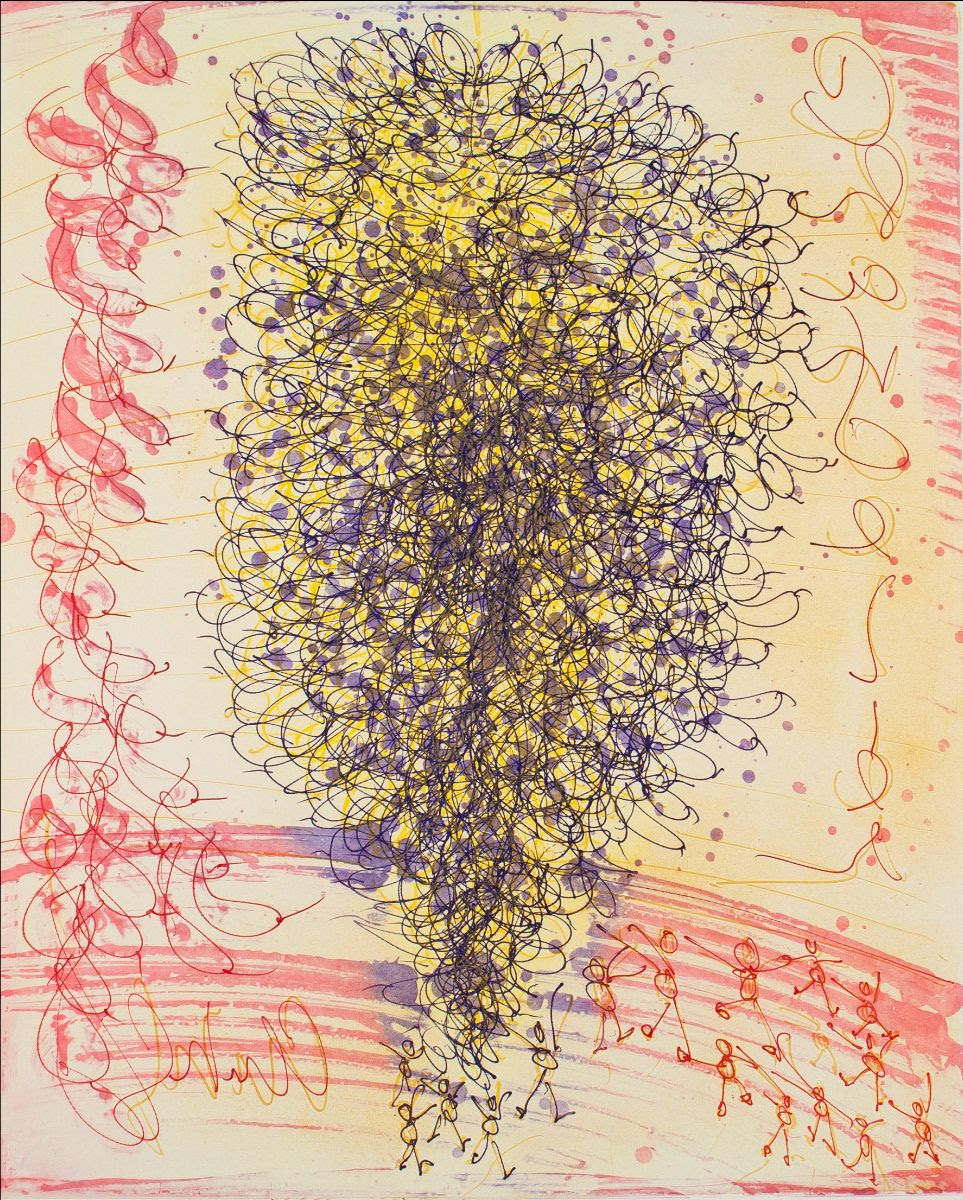
Left: Thermon Statom, Frankincense, 1999, siligraphy from glass plate with digital transfer on BFK Rives paper, edition 50/50, 36 1/4 × 29 3/8 inches. Asheville Art Museum. © Thermon Statom. | Right: Dale Chihuly, Suite of Ten Prints: Chandelier, 1994, 4-color intaglio from glass plate on BRK Rives paper, edition 34/50, image: 29 ½ × 23 ½ inches, sheet: 36 × 29 ½ inches. Asheville Art Museum. © Dale Chihuly / Artists Rights Society (ARS), New York.
Asheville, N.C.—The selection of works from the Asheville Art Museum’s Collection presented in Stained with Glass: Vitreograph Prints from the Studio of Harvey K. Littleton features imagery that recreates the sensation and colors of stained glass. The exhibition showcases Littleton and the range of makers who worked with him, including Dale Chihuly, Cynthia Bringle, Thermon Statom, and more. This exhibition—organized by the Asheville Art Museum and curated by Hilary Schroeder, assistant curator—will be on view in The Van Winkle Law Firm Gallery at the Museum from January 12 through May 23, 2022.

In 1974 Harvey K. Littleton (Corning, NY 1922–2013 Spruce Pine, NC) developed a process for using glass to create prints on paper. Littleton, who began as a ceramicist and became a leading figure in the American Studio Glass Movement, expanded his curiosity around the experimental potential of glass into innovations in the world of printmaking. A wide circle of artists in a variety of media—including glass, ceramics, and painting—were invited to Littleton’s studio in Spruce Pine, NC, to create prints using the vitreograph process developed by Littleton. Upending notions of both traditional glassmaking and printmaking, vitreographs innovatively combine the two into something new. The resulting prints created through a process of etched glass, ink, and paper create rich, colorful scenes reminiscent of luminous stained glass.

“Printmaking is a medium that many artists explore at some point in their career,” says Hilary Schroeder, assistant curator. “The process is often collaborative, as they may find themselves working with a print studio and highly skilled printmaker. The medium can also be quite experimental. Harvey Littleton’s contribution to the field is very much so in this spirit, as seen in his incorporation of glass and his invitation to artists who might otherwise not have explored works on paper. Through this exhibition, we are able to appreciate how the artists bring their work in clay, glass, or paint to ink and paper.” 

The Wyeths: Three Generations | Works from the Bank of America Collection
Apr 6 @ 11:00 am – 6:00 pm
Asheville Art Museum
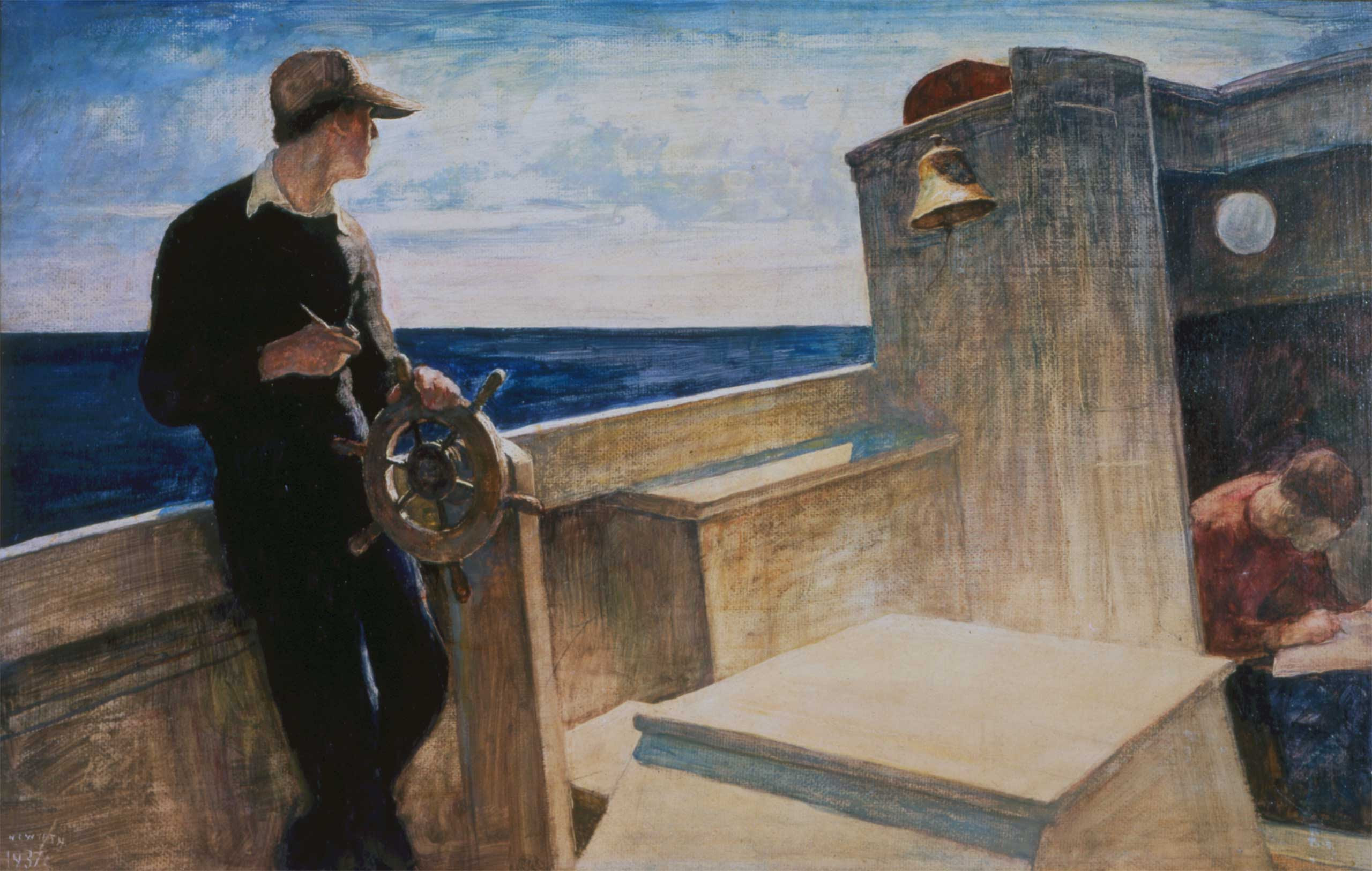
N. C. Wyeth, Eight Bells (Clyde Stanley and Andrew Wyeth aboard Eight Bells), 1937, oil on hardboard, 20 × 30 inches. Bank of America Collection

The Wyeths: Three Generations | Works from the Bank of America Collection provides a comprehensive survey of works by N. C. Wyeth, one of America’s finest illustrators; his son, Andrew, an important realist painter; his eldest daughter, Henriette, a realist painter; and Andrew’s son Jamie, a popular portraitist. Through the works of these artists from three generations of the Wyeth family, themes of American history, artistic techniques, and creative achievements can be explored. This exhibition will be on view in the Asheville Art Museum’s Explore Asheville Exhibition Hall February 12 through May 30, 2022.

N. C. Wyeth (1882–1945) has long been considered one of the nation’s leading illustrators. In the early 1900s, he studied with illustrator Howard Pyle in Delaware. In 1911, he built a house and studio in nearby Chadds Ford, PA. Later, he bought a sea captain’s house in Maine and in 1931 built a small studio, which he shared with his son, Andrew, and his daughters, Henriette and Carolyn. The exhibition includes illustrations for books by Robert Louis Stevenson and Washington Irving as well as historical scenes, seascapes, and landscapes.

Andrew Wyeth (1917–2009) is one of the United States’ most popular artists, and his paintings follow the American Realist tradition. He was influenced by the works of Winslow Homer, whose watercolor technique he admired, as well as by the art of Howard Pyle and his father, N. C. While Andrew painted recognizable images, his use of line and space often imbue his works with an underlying abstract quality. The exhibition includes important works from the 1970s and 1980s as well as recent paintings.

Henriette Wyeth (1907–1997) was the eldest daughter of N.C. Wyeth and an older sister to Andrew Wyeth. Like other members of her family, her painting style was realist in a time when Impressionism and Abstraction were popular in the early 20th century. She studied painting at the Pennsylvania Academy of the Fine Arts and was an acclaimed portraitist, though perhaps not as widely known as her father and brother. Most notably she painted the portrait of First Lady, Pat Nixon, which is in the collection of The White House.

Jamie Wyeth (born 1946), like his father and grandfather, paints subjects of everyday life, in particular the landscapes, animals, and people of Pennsylvania and Maine. In contrast to his father—who painted with watercolor, drybrush, and tempera—Jamie works in oil and mixed media, creating lush painterly surfaces. The 18 paintings in the exhibition represent all periods of his career.

This exhibition has been loaned through the Bank of America Art in our Communities® program.

Useful and Beautiful: Silvercraft by William Waldo Dodge
Apr 6 @ 11:00 am – 6:00 pm
Asheville Art Museum
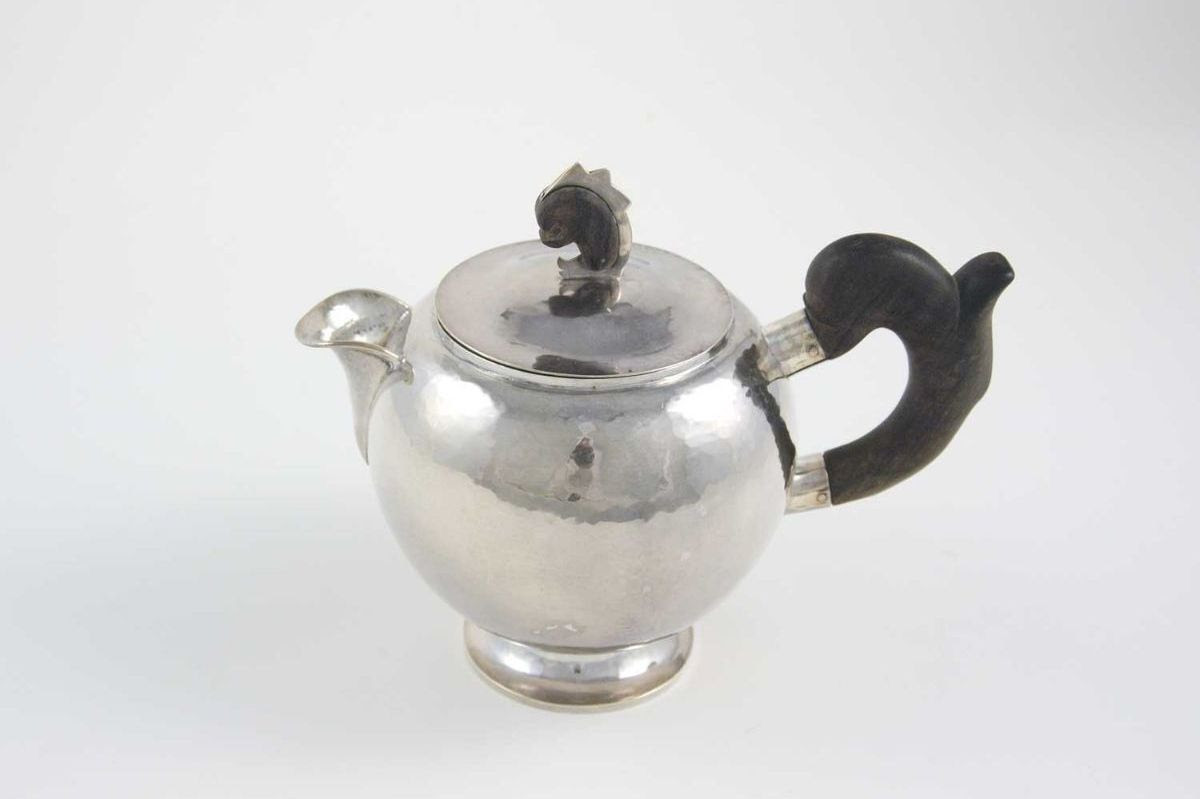
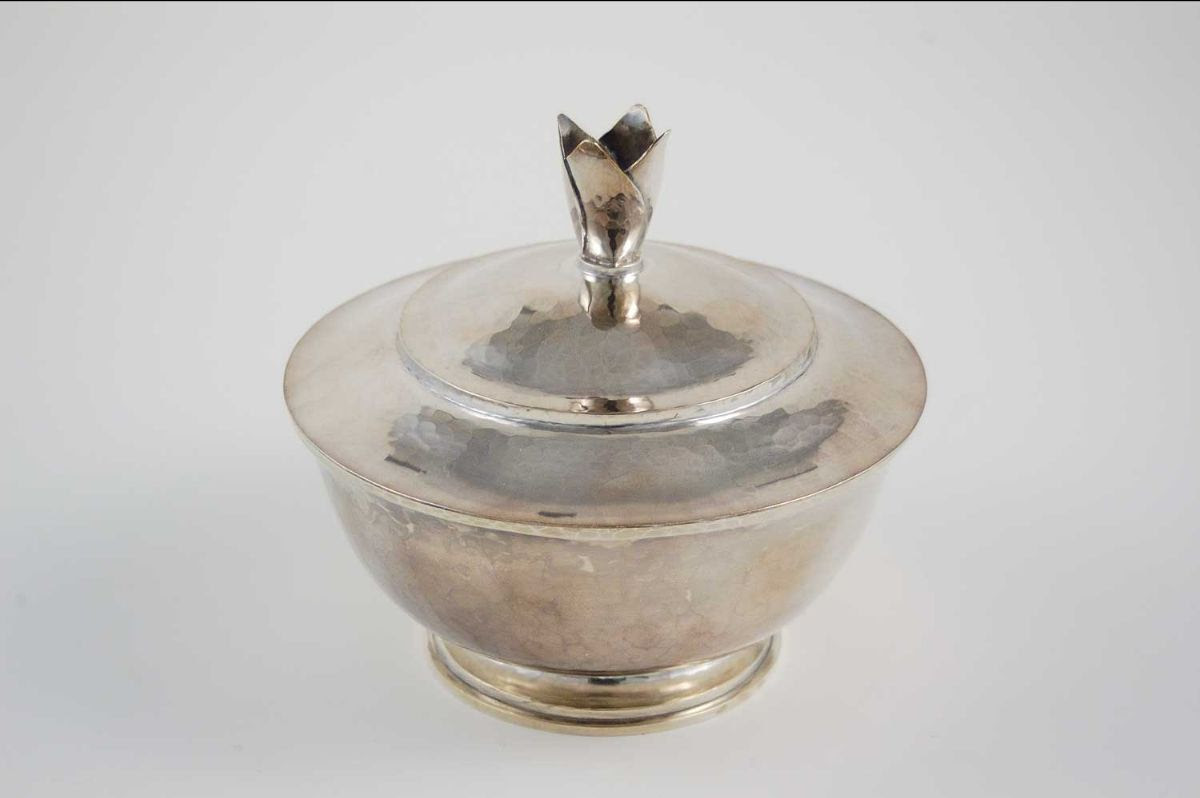
Left to right: William Waldo Dodge Jr., Teapot, 1928, hammered silver and ebony, 8 × 5 3/4 × 9 1/2 inches. Asheville Art Museum. © Estate of William Waldo Dodge Jr. | William Waldo Dodge Jr., Lidded vegetable bowl, 1932, hammered silver, 6 × 6 5/8 × 6 5/8 inches. Asheville Art Museum. © Estate of William Waldo Dodge Jr.

Useful and Beautiful: Silvercraft by William Waldo Dodge features a selection of functional silver works by Dodge drawn from the Museum’s Collection. Organized by the Asheville Art Museum and curated by Whitney Richardson, associate curator, this exhibition will be on view in the Debra McClinton Gallery at the Museum from February 23 through October 17, 2022.

William Waldo Dodge Jr. (Washington, DC 1895–1971 Asheville, NC) moved to Asheville in 1924 as a trained architect and a newly skilled silversmith. When he opened for business promoting his handwrought silver tableware, including plates, candlesticks, flatware (spoons, forks, and knives), and serving dishes, he did so in a true Arts and Crafts tradition. The aesthetics of the style were dictated by its philosophy: an artist’s handmade creation should reflect their hard work and skill, and the resulting artwork should highlight the material from which it was made. Dodge’s silver often displayed his hammer marks and inventive techniques, revealing the beauty of these useful household goods.

The Arts and Crafts style of England became popular in the United States in the early 1900s. Asheville was an early adopter of the movement because of the popularity and abundance of Arts and Crafts architecture in neighborhoods like Biltmore Forest, Biltmore Village, and the area around The Grove Park Inn. The title of this exhibition was taken from the famous quotation by one of the founding members of the English Arts and Crafts Movement, William Morris, who said, “have nothing in your house that you do not know to be useful or believe to be beautiful.” Not only did Dodge follow this suggestion; he contributed to American Arts and Crafts silver’s relevancy persisting almost halfway into the 20th century.

“It has been over 15 years since the Museum exhibited its collection of William Waldo Dodge silver and I am looking forward to displaying it in the new space with some new acquisitions added,” said Whitney Richardson, associate curator. Learn more at ashevilleart.org.