Upcoming events and things to do in Asheville, NC. Below is a list of events for festivals, concerts, art exhibitions, group meetups and more.

Interested in adding an event to our calendar? Please click the green “Post Your Event” button below.

Friday, January 26, 2024
“Cultivating Well-Being: An Introduction to Mindfulness Through Gardening”
Jan 26 @ 2:00 pm – 4:00 pm
Bullington Gardens

In the wake of hectic periods in life, such as the holiday season, finding your way back to tranquility can be a gradual process. One effective path to reducing stress and mastering the art of handling challenges like anxiety is through the practice of mindfulness. Join us as Rosie Reeves, our Education Coordinator and Licensed Clinical Mental Health Counselor Associate, delves into the world of mindfulness. Through her guidance, participants will explore the essence of mindfulness through a series of engaging gardening activities designed to foster a sense of well-being and calm.

Saturday, January 27, 2024
School Garden Grants
Jan 27 all-day
online

Extension Master GardenerSM Volunteers of Buncombe County are happy to announce for the seventeenth year we are offering School Garden Grants to Asheville City and Buncombe County public schools, including state charter schools.

We provide a notice of the application period along with instructions to all school principals, elementary through senior high. Additional information is available on our websitebuncombemastergardener.org where you can learn more about the guidelines for receiving a grant and get access to the online 2024 School Garden Grants Application.

All applications must be completed online. Completed applications will be accepted beginning January 12, 2024, and must be submitted no later than 9 p.m. on February 15, 2024. If you have any questions, please call the Extension Office at 828-255-5522.

We are proud of our partnership with Asheville City and Buncombe County public schools. Since 2007, we have awarded 60 School Garden Grants totaling over $47,000. These grants have involved more than 17,500 students and hundreds of teachers, parents, and community volunteers.

School gardens grow more than plants. They grow imagination and creativity. They make math and science come alive, and they build community. We hope your school will join us in 2024.

Click on the link below to review the guidelines for school garden grants:
Guidelines for 2024 School Garden Grants


Biltmore Estate: Ciao! From Italy Sculptural Postcard Display
Jan 27 @ 8:30 am
Biltmore Estate

Included with admission

Embark on a scenic journey across George Vanderbilt’s Italy with a large-scale outdoor display that combines brilliant botanical designs with authentic messages written by Vanderbilt himself.

Beautifully handcrafted of natural elements, each sculptural postcard depicts a location or landmark Vanderbilt visited more than a century ago. This captivating complement to Biltmore’s Italian Renaissance Alive exhibition reveals Vanderbilt’s passions for travel, culture, architecture, and art as well as his personal experience of such renowned Italian cities as Milan, Florence, Venice, Pisa, and Vatican City.

Adding to the charm and visual appeal of Ciao! From Italy—sure to be a hit among kids of all ages—is the G-scale model train that travels in and out of each postcard in this enlightening display!

Indoor Tropical Bonsai Display
Jan 27 @ 9:00 am – 5:00 pm
NC Arboretum

What is Bonsai?

Bonsai is a challenging and rewarding horticultural activity, in which ordinary plants are grown in an extraordinary way. Through rigorously applied cultivation techniques, trees, shrubs, vines and even herbaceous plants are kept in a miniaturized state, developed into artistic shapes and then displayed in special containers.

What makes the Arboretum’s bonsai endeavor unique among all other public collections in the United States? Regional Interpretation. Visitors will find the Arboretum’s bonsai collection of more than 100 specimens carefully cultivated with a Southern Appalachian accent. The collection draws inspiration from the traditional roots of bonsai, but takes the form of a contemporary, Southern Appalachian influenced American garden. Plantings in the landscape include species and cultivars of American, European and Asian origin.


The Bonsai Exhibition Garden

Established in October 2005, The North Carolina Arboretum’s Bonsai Exhibition Garden is a world renowned garden that displays up to 50 bonsai specimens at a time. Represented are traditional Asian bonsai subjects such as Japanese maple and Chinese elm, tropical plants such as willow-leaf fig and bougainvillea, and American species such as bald cypress and limber pine. Of particular importance are the plants native to the Blue Ridge region, such as American hornbeam and eastern white pine, which enable the Arboretum to bring the thousand-year tradition of bonsai home to the mountains of Western North Carolina. Interpretive signage throughout the garden conveys information about the art and history of bonsai, and the Arboretum’s own creative approach to it.


Outdoor Bonsai Exhibition Garden

  • Bonsai on Display Mid May – November; 9 a.m. – 5 p.m. daily
  • Garden Open Year Round
  • Parking Fees
    • Personal/Standard Vehicle (up to 20′ long): $20
    • Large vehicles (21′-29′ long): $60
    • Busses and Oversize Vehicles (30′ long+): $125
    • Members: Free

    Apart from the parking fee, there is no other admission charge to enter the Arboretum or our facilities, except in the case of advertised ticketed events.

Vera B. Williams / STORIES Eight Decades of Politics and Picture Making
Jan 27 @ 11:00 am – 5:00 pm
Black Mountain College Museum + Arts Center


Exhibition and Public Programming

Vera B. Williams, an award-winning author and illustrator of children’s books, started making pictures almost as soon as she could walk. She studied at Black Mountain College in a time where summer institutes were held with classes taught by John Cage and Merce Cunningham. Williams studied under the Bauhaus luminary Josef Albers and went on to make art for the rest of her life. At the time of her death, The New York Times wrote: “Her illustrations, known for bold colors and a style reminiscent of folk art, were praised by reviewers for their great tenderness and crackling vitality.” Despite numerous awards and recognition for her children’s books, much of her wider life and work remains unexplored. This retrospective will showcase the complete range of Williams’ life and work. It will highlight her time at Black Mountain College, her political activism, and her establishment, with Paul Williams, of an influential yet little-known artist community, in addition to her work as an author and illustrator.
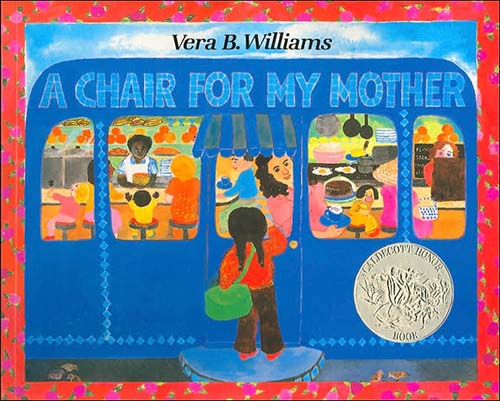
Author and illustrator of 17 children’s books, including Caldecott medal winner, A Chair for My Mother, Vera B. Williams always had a passion for the arts. Williams grew up in the Bronx, NY, and in 1936, when she was nine years old, one of her paintings, called Yentas, opens a new window, was included in an exhibition at the Museum of Modern Art. While Williams is widely known for her children’s books today, this exhibition’s expansive scope highlights unexplored aspects of her artistic practice and eight decades of life. From groundbreaking, powerful covers for Liberation Magazine, to Peace calendar collaborations with writer activist Grace Paley, to scenic sketches for Julian Beck and Judith Malina’s Living Theater, to hundreds of late life “Aging and Illness” cartoons sketches and doodles, Vera never sat still.

Williams arrived at Black Mountain College in 1945. While there, she embraced all aspects of living, working, and learning in the intensely creative college community. She was at BMC during a particularly fertile period, which allowed her to study with faculty members Buckminster Fuller and Josef Albers, and to participate in the famed summer sessions with John Cage, Merce Cunningham, M.C. Richards, and Robert Rauschenberg. In 1948, she graduated with Josef Albers as her advisor and sculptor Richard Lippold as her outside examiner. Forever one of the College’s shining stars, Vera graduated from BMC with just six semesters of coursework, at only twenty-one years old. She continued to visit BMC for years afterward, staying deeply involved with the artistic community that BMC incubated.

Anticipating the eventual closure of BMC, Williams, alongside her husband Paul Williams and a group of influential former BMC figures, founded The Gate Hill Cooperative Artists community located 30 miles north of NYC on the outskirts of Stony Point, NY. The Gate Hill Cooperative, also known as The Land, became an outcropping of Black Mountain College’s experimental ethos. Students and faculty including John Cage, M.C. Richards, David Tudor, Karen Karnes, David Weinrib, Stan VanDerBeek, and Patsy Lynch Wood shaped Gate Hill as founding members of the community. Vera B. Williams raised her three children at Gate Hill while continuing to make work.

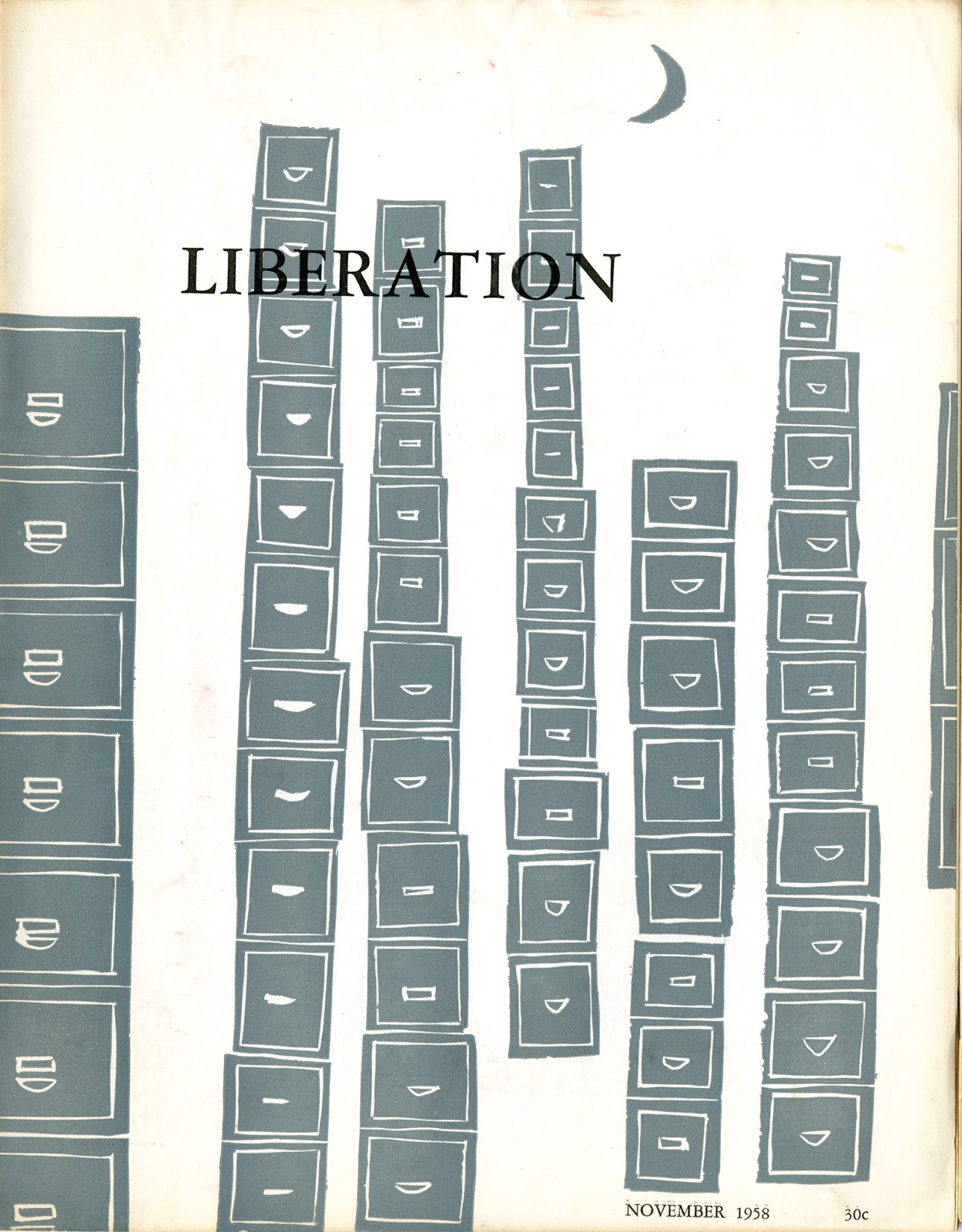
The early Gate Hill era represented an especially creative phase for the BMC group. For Williams, this period saw the creation of 76 covers for Liberation Magazine, a radical, groundbreaking publication. This exhibition will feature some of Williams’ most powerful Liberation covers including a design for the June 1963 edition, which contained the first full publication of MLK’s “Letter from Birmingham Jail.” Williams’ activism work continued throughout her life. As president of PEN’s Children Committee and member of The War Resisters league, she created a wide range of political and educational posters and journal covers. Williams protested the war in Vietnam and nuclear proliferation while supporting women’s causes and racial equality. In 1981, Williams was arrested and spent a month in a federal prison on charges stemming from her political activism.
In her late 40’s, Williams embarked in earnest on her career as a children’s book author and illustrator, a career which garnered the NY Public Library’s recognition of A Chair for My Mother as one of the greatest 100 children’s books of all time. Infinitely curious and always a wanderer at heart, Williams’ personal life was as expansive as her art. In addition to her prolific picture making, Williams started and helped run a Summerhill-based alternative school, canoed the Yukon, and lived alone on a houseboat in Vancouver Harbor. She helped to organize and attended dozens of political demonstrations throughout her adult life.

Her books won many awards including the Caldecott Medal Honor Book for A Chair for My Mother in 1983, the Boston Globe–Horn Book Award– Fiction category– for Scooter in 1994, the Jane Addams Honor for Amber Was Brave, Essie Was Smart in 2002, and the NSK Neustadt Prize for Children’s Literature in 2009. Her books reflected her values, emphasizing love, compassion, kindness, joy, strength, individuality, and courage.

Images:

Cover of Vera B. Williams’ A Chair for My Mother, published in 1982.

Vera B. Williams, Cover for Liberation Magazine, November 1958.

MARCH 10th Anniversary – Co-Author Andrew Aydin in Conversation with Fletcher Mayor Preston Blakely
Jan 27 @ 12:00 pm – 1:00 pm
East Asheville Library

Join us to celebrate the 10th Anniversary of John Lewis’s MARCH Trilogy with co-author Andrew Aydin and Preston Blakely, mayor of Fletcher, NC!

The event is free and open to the public. No registration is required.

Written in collaboration with co-writer Andrew Aydin and New York Times best-selling artist Nate Powell (winner of the Eisner Award and LA Times Book Prize finalist for Swallow Me Whole), March is a vivid first-hand account of John Lewis’ lifelong struggle for civil and human rights, meditating in the modern age on the distance traveled since the days of Jim Crow and segregation. Rooted in Lewis’ personal story, it also reflects on the highs and lows of the broader civil rights movement.

Andrew Aydin is an award-winning comics writer. He was the Digital Director and Policy Advisor to the late Georgia congressman John Lewis, and his coauthor for March. He splits his time between Washington, D.C., and Hendersonville, NC.

Preston Blakely, a lifelong Fletcher resident, currently serves as mayor of the Town of Fletcher and is the youngest sitting mayor in North Carolina at 28-years-old. Prior to serving as mayor, Preston was a Fletcher Town Council member. Preston is an advocate for rural communities, equity, and supporting families. In addition to serving as mayor, Preston works for his family business, Quality Janitorial Group and serves on several boards and commissions including Thrive in Henderson County, Big Brothers Big Sisters of WNC, Land of Sky Regional Council, the Governor’s Task Force for Racial Equity in Criminal Justice, and the Commission on the the Future of NC Elections. He is steadfast and committed to his community and North Carolina.

10th Anniversary of MARCH: Andrew Aydin in conversation with Preston Blakely
Jan 27 @ 3:00 pm
East Asheville Public Library

Join us in person at East Asheville Library to celebrate the 10th Anniversary of John Lewis’s MARCH Trilogy with co-author Andrew Aydin and Preston Blakely, mayor of Fletcher, NC!

The event is free and open to the public. No registration is required.


Written in collaboration with co-writer Andrew Aydin and New York Times best-selling artist Nate Powell (winner of the Eisner Award and LA Times Book Prize finalist for Swallow Me Whole), March is a vivid first-hand account of John Lewis’ lifelong struggle for civil and human rights, meditating in the modern age on the distance traveled since the days of Jim Crow and segregation. Rooted in Lewis’ personal story, it also reflects on the highs and lows of the broader civil rights movement.

Andrew Aydin is an award-winning comics writer. He was the Digital Director and Policy Advisor to the late Georgia congressman John Lewis, and his coauthor for March. He splits his time between Washington, D.C., and Hendersonville, NC.

Preston Blakely, a lifelong Fletcher resident, currently serves as mayor of the Town of Fletcher and is the youngest sitting mayor in North Carolina at 28-years-old. Prior to serving as mayor,  Preston was a Fletcher Town Council member. Preston is an advocate for rural communities,  equity, and supporting families. In addition to serving as mayor, Preston works for his family business, Quality Janitorial Group and serves on several boards and commissions including Thrive in Henderson County, Big  Brothers Big Sisters of WNC, Land of Sky Regional Council, the Governor’s Task Force for Racial  Equity in Criminal Justice, and the Commission on the the Future of NC Elections. He is steadfast and committed to his community and North Carolina.

Sunday, January 28, 2024
School Garden Grants
Jan 28 all-day
online

Extension Master GardenerSM Volunteers of Buncombe County are happy to announce for the seventeenth year we are offering School Garden Grants to Asheville City and Buncombe County public schools, including state charter schools.

We provide a notice of the application period along with instructions to all school principals, elementary through senior high. Additional information is available on our websitebuncombemastergardener.org where you can learn more about the guidelines for receiving a grant and get access to the online 2024 School Garden Grants Application.

All applications must be completed online. Completed applications will be accepted beginning January 12, 2024, and must be submitted no later than 9 p.m. on February 15, 2024. If you have any questions, please call the Extension Office at 828-255-5522.

We are proud of our partnership with Asheville City and Buncombe County public schools. Since 2007, we have awarded 60 School Garden Grants totaling over $47,000. These grants have involved more than 17,500 students and hundreds of teachers, parents, and community volunteers.

School gardens grow more than plants. They grow imagination and creativity. They make math and science come alive, and they build community. We hope your school will join us in 2024.

Click on the link below to review the guidelines for school garden grants:
Guidelines for 2024 School Garden Grants


Biltmore Estate: Ciao! From Italy Sculptural Postcard Display
Jan 28 @ 8:30 am
Biltmore Estate

Included with admission

Embark on a scenic journey across George Vanderbilt’s Italy with a large-scale outdoor display that combines brilliant botanical designs with authentic messages written by Vanderbilt himself.

Beautifully handcrafted of natural elements, each sculptural postcard depicts a location or landmark Vanderbilt visited more than a century ago. This captivating complement to Biltmore’s Italian Renaissance Alive exhibition reveals Vanderbilt’s passions for travel, culture, architecture, and art as well as his personal experience of such renowned Italian cities as Milan, Florence, Venice, Pisa, and Vatican City.

Adding to the charm and visual appeal of Ciao! From Italy—sure to be a hit among kids of all ages—is the G-scale model train that travels in and out of each postcard in this enlightening display!

Indoor Tropical Bonsai Display
Jan 28 @ 9:00 am – 5:00 pm
NC Arboretum

What is Bonsai?

Bonsai is a challenging and rewarding horticultural activity, in which ordinary plants are grown in an extraordinary way. Through rigorously applied cultivation techniques, trees, shrubs, vines and even herbaceous plants are kept in a miniaturized state, developed into artistic shapes and then displayed in special containers.

What makes the Arboretum’s bonsai endeavor unique among all other public collections in the United States? Regional Interpretation. Visitors will find the Arboretum’s bonsai collection of more than 100 specimens carefully cultivated with a Southern Appalachian accent. The collection draws inspiration from the traditional roots of bonsai, but takes the form of a contemporary, Southern Appalachian influenced American garden. Plantings in the landscape include species and cultivars of American, European and Asian origin.


The Bonsai Exhibition Garden

Established in October 2005, The North Carolina Arboretum’s Bonsai Exhibition Garden is a world renowned garden that displays up to 50 bonsai specimens at a time. Represented are traditional Asian bonsai subjects such as Japanese maple and Chinese elm, tropical plants such as willow-leaf fig and bougainvillea, and American species such as bald cypress and limber pine. Of particular importance are the plants native to the Blue Ridge region, such as American hornbeam and eastern white pine, which enable the Arboretum to bring the thousand-year tradition of bonsai home to the mountains of Western North Carolina. Interpretive signage throughout the garden conveys information about the art and history of bonsai, and the Arboretum’s own creative approach to it.


Outdoor Bonsai Exhibition Garden

  • Bonsai on Display Mid May – November; 9 a.m. – 5 p.m. daily
  • Garden Open Year Round
  • Parking Fees
    • Personal/Standard Vehicle (up to 20′ long): $20
    • Large vehicles (21′-29′ long): $60
    • Busses and Oversize Vehicles (30′ long+): $125
    • Members: Free

    Apart from the parking fee, there is no other admission charge to enter the Arboretum or our facilities, except in the case of advertised ticketed events.

2nd Annual Wild Ones WNC Native Seed Swap
Jan 28 @ 2:00 pm – 4:00 pm
Fifth Season Gardening
Native Plant Seed Swap – all are welcome, seeds not required – there will be enough for all. Learn about native plants and how to start them from seeds
We will have information and demonstrations on seed sowing and growing.
The Adventures of Amazing Grace with Erika Ferrari Lopez
Jan 28 @ 5:00 pm
Malaprop's Bookstore

This in-person only event will be held at Malaprop’s. Attendance is free but please click here to RSVP.

If you decide to attend and to purchase books, we ask that you purchase from Malaprop’s. When you do this you make it possible for us to continue hosting author events and you keep more dollars in our community. You may also support our work by purchasing a gift card or making a donation of any amount below. Thank you!


Grace is an ordinary nine-year-old going into 3rd grade when she discovers she’s anything but ordinary. Grace can fly! And when her best friend, Adrian, and the new student, Mia, find out, adventure follows.

Grace, Mia, and Adrian learn about family bonds, friendship, and facing their fears together when their class goes on a field trip to the swimming quarry. But will Grace’s secret be safe or will she risk it all to save a friend?

The Adventures of Amazing Grace includes multi-generational family dynamics, Spanish customs and vocabulary with an accompanying glossary, and a dash of magical realism. The book is the first in a planned series and is written in dyslexic-friendly fonts for accessibility.

Themes include overcoming fear and anxiety to listen to your heart, the importance of parental support of children’s gifts, positive friendships, all with multicultural family customs and dynamics.

Erika Ferrari Lopez was raised in the Virginia suburbs of Washington, D.C. by her mother, an immigrant from Guatemala. She attended schools in Northern Virginia and college at the University of Virginia in Charlottesville. She started her career in finance in Washington D.C. but realized the thing she liked discussing most with her clients was their philanthropic planning. She left finance to work in the non-profit industry for the next twelve years. Erika married her wonderful husband, Len, and together they welcomed a son and then a daughter. The family moved to Charlotte, North Carolina eight years ago. About five years ago, Erika began writing memoir and essays based on her childhood experiences and began sharing her writings on a blog she named Landings. This year, she released her first book, The Adventures of Amazing Grace a children’s chapter book she created with her daughter.  She is thrilled to be living a creative life and encourages everyone to use their gifts in their own way to make an impact in this world.

Monday, January 29, 2024
Growing Minds: “I Tried Local…” free virtual toolkit
Jan 29 all-day
online

Growing Minds has published “I Tried Local…” a Toolkit for Engaging Kids with Local Food and Farms. This resource—intended for early care and education through second grade classrooms—offers an immersive curriculum designed around 10 crops grown in North Carolina. The print toolkit is currently available to educators in North Carolina who participate in a virtual training with Growing Minds. A free digital version is also available to anyone on the Growing Minds website.

Each unit includes an overview of a North Carolina–grown crop, lesson plans, recipes, coloring pages, book recommendations, discussion prompts, and a link to the “Meet Your Farmer” video series featuring North Carolina farmers. The toolkit also offers resources for implementing the core elements of farm to school—gardens, classroom cooking and taste tests, farm field trips and farmer visits, and local foods in meals or snacks.
Growing Minds will host a series of virtual training to support educators interested in using the toolkit. The first will be held on Zoom on Tuesday, Feb. 20, from 3:30 to 4:45 p.m. Register here or contact [email protected] for more information.
School Garden Grants
Jan 29 all-day
online

Extension Master GardenerSM Volunteers of Buncombe County are happy to announce for the seventeenth year we are offering School Garden Grants to Asheville City and Buncombe County public schools, including state charter schools.

We provide a notice of the application period along with instructions to all school principals, elementary through senior high. Additional information is available on our websitebuncombemastergardener.org where you can learn more about the guidelines for receiving a grant and get access to the online 2024 School Garden Grants Application.

All applications must be completed online. Completed applications will be accepted beginning January 12, 2024, and must be submitted no later than 9 p.m. on February 15, 2024. If you have any questions, please call the Extension Office at 828-255-5522.

We are proud of our partnership with Asheville City and Buncombe County public schools. Since 2007, we have awarded 60 School Garden Grants totaling over $47,000. These grants have involved more than 17,500 students and hundreds of teachers, parents, and community volunteers.

School gardens grow more than plants. They grow imagination and creativity. They make math and science come alive, and they build community. We hope your school will join us in 2024.

Click on the link below to review the guidelines for school garden grants:
Guidelines for 2024 School Garden Grants


Biltmore Estate: Ciao! From Italy Sculptural Postcard Display
Jan 29 @ 8:30 am
Biltmore Estate

Included with admission

Embark on a scenic journey across George Vanderbilt’s Italy with a large-scale outdoor display that combines brilliant botanical designs with authentic messages written by Vanderbilt himself.

Beautifully handcrafted of natural elements, each sculptural postcard depicts a location or landmark Vanderbilt visited more than a century ago. This captivating complement to Biltmore’s Italian Renaissance Alive exhibition reveals Vanderbilt’s passions for travel, culture, architecture, and art as well as his personal experience of such renowned Italian cities as Milan, Florence, Venice, Pisa, and Vatican City.

Adding to the charm and visual appeal of Ciao! From Italy—sure to be a hit among kids of all ages—is the G-scale model train that travels in and out of each postcard in this enlightening display!

Indoor Tropical Bonsai Display
Jan 29 @ 9:00 am – 5:00 pm
NC Arboretum

What is Bonsai?

Bonsai is a challenging and rewarding horticultural activity, in which ordinary plants are grown in an extraordinary way. Through rigorously applied cultivation techniques, trees, shrubs, vines and even herbaceous plants are kept in a miniaturized state, developed into artistic shapes and then displayed in special containers.

What makes the Arboretum’s bonsai endeavor unique among all other public collections in the United States? Regional Interpretation. Visitors will find the Arboretum’s bonsai collection of more than 100 specimens carefully cultivated with a Southern Appalachian accent. The collection draws inspiration from the traditional roots of bonsai, but takes the form of a contemporary, Southern Appalachian influenced American garden. Plantings in the landscape include species and cultivars of American, European and Asian origin.


The Bonsai Exhibition Garden

Established in October 2005, The North Carolina Arboretum’s Bonsai Exhibition Garden is a world renowned garden that displays up to 50 bonsai specimens at a time. Represented are traditional Asian bonsai subjects such as Japanese maple and Chinese elm, tropical plants such as willow-leaf fig and bougainvillea, and American species such as bald cypress and limber pine. Of particular importance are the plants native to the Blue Ridge region, such as American hornbeam and eastern white pine, which enable the Arboretum to bring the thousand-year tradition of bonsai home to the mountains of Western North Carolina. Interpretive signage throughout the garden conveys information about the art and history of bonsai, and the Arboretum’s own creative approach to it.


Outdoor Bonsai Exhibition Garden

  • Bonsai on Display Mid May – November; 9 a.m. – 5 p.m. daily
  • Garden Open Year Round
  • Parking Fees
    • Personal/Standard Vehicle (up to 20′ long): $20
    • Large vehicles (21′-29′ long): $60
    • Busses and Oversize Vehicles (30′ long+): $125
    • Members: Free

    Apart from the parking fee, there is no other admission charge to enter the Arboretum or our facilities, except in the case of advertised ticketed events.

Vera B. Williams / STORIES Eight Decades of Politics and Picture Making
Jan 29 @ 11:00 am – 5:00 pm
Black Mountain College Museum + Arts Center


Exhibition and Public Programming

Vera B. Williams, an award-winning author and illustrator of children’s books, started making pictures almost as soon as she could walk. She studied at Black Mountain College in a time where summer institutes were held with classes taught by John Cage and Merce Cunningham. Williams studied under the Bauhaus luminary Josef Albers and went on to make art for the rest of her life. At the time of her death, The New York Times wrote: “Her illustrations, known for bold colors and a style reminiscent of folk art, were praised by reviewers for their great tenderness and crackling vitality.” Despite numerous awards and recognition for her children’s books, much of her wider life and work remains unexplored. This retrospective will showcase the complete range of Williams’ life and work. It will highlight her time at Black Mountain College, her political activism, and her establishment, with Paul Williams, of an influential yet little-known artist community, in addition to her work as an author and illustrator.

Author and illustrator of 17 children’s books, including Caldecott medal winner, A Chair for My Mother, Vera B. Williams always had a passion for the arts. Williams grew up in the Bronx, NY, and in 1936, when she was nine years old, one of her paintings, called Yentas, opens a new window, was included in an exhibition at the Museum of Modern Art. While Williams is widely known for her children’s books today, this exhibition’s expansive scope highlights unexplored aspects of her artistic practice and eight decades of life. From groundbreaking, powerful covers for Liberation Magazine, to Peace calendar collaborations with writer activist Grace Paley, to scenic sketches for Julian Beck and Judith Malina’s Living Theater, to hundreds of late life “Aging and Illness” cartoons sketches and doodles, Vera never sat still.

Williams arrived at Black Mountain College in 1945. While there, she embraced all aspects of living, working, and learning in the intensely creative college community. She was at BMC during a particularly fertile period, which allowed her to study with faculty members Buckminster Fuller and Josef Albers, and to participate in the famed summer sessions with John Cage, Merce Cunningham, M.C. Richards, and Robert Rauschenberg. In 1948, she graduated with Josef Albers as her advisor and sculptor Richard Lippold as her outside examiner. Forever one of the College’s shining stars, Vera graduated from BMC with just six semesters of coursework, at only twenty-one years old. She continued to visit BMC for years afterward, staying deeply involved with the artistic community that BMC incubated.

Anticipating the eventual closure of BMC, Williams, alongside her husband Paul Williams and a group of influential former BMC figures, founded The Gate Hill Cooperative Artists community located 30 miles north of NYC on the outskirts of Stony Point, NY. The Gate Hill Cooperative, also known as The Land, became an outcropping of Black Mountain College’s experimental ethos. Students and faculty including John Cage, M.C. Richards, David Tudor, Karen Karnes, David Weinrib, Stan VanDerBeek, and Patsy Lynch Wood shaped Gate Hill as founding members of the community. Vera B. Williams raised her three children at Gate Hill while continuing to make work.

The early Gate Hill era represented an especially creative phase for the BMC group. For Williams, this period saw the creation of 76 covers for Liberation Magazine, a radical, groundbreaking publication. This exhibition will feature some of Williams’ most powerful Liberation covers including a design for the June 1963 edition, which contained the first full publication of MLK’s “Letter from Birmingham Jail.” Williams’ activism work continued throughout her life. As president of PEN’s Children Committee and member of The War Resisters league, she created a wide range of political and educational posters and journal covers. Williams protested the war in Vietnam and nuclear proliferation while supporting women’s causes and racial equality. In 1981, Williams was arrested and spent a month in a federal prison on charges stemming from her political activism.

In her late 40’s, Williams embarked in earnest on her career as a children’s book author and illustrator, a career which garnered the NY Public Library’s recognition of A Chair for My Mother as one of the greatest 100 children’s books of all time. Infinitely curious and always a wanderer at heart, Williams’ personal life was as expansive as her art. In addition to her prolific picture making, Williams started and helped run a Summerhill-based alternative school, canoed the Yukon, and lived alone on a houseboat in Vancouver Harbor. She helped to organize and attended dozens of political demonstrations throughout her adult life.

Her books won many awards including the Caldecott Medal Honor Book for A Chair for My Mother in 1983, the Boston Globe–Horn Book Award– Fiction category– for Scooter in 1994, the Jane Addams Honor for Amber Was Brave, Essie Was Smart in 2002, and the NSK Neustadt Prize for Children’s Literature in 2009. Her books reflected her values, emphasizing love, compassion, kindness, joy, strength, individuality, and courage.

Images:

Cover of Vera B. Williams’ A Chair for My Mother, published in 1982.

Vera B. Williams, Cover for Liberation Magazine, November 1958.

Tuesday, January 30, 2024
2024 West Asheville Garden Stroll Seed Money Grant
Jan 30 all-day
online

Are you involved in a community-oriented gardening project in West Asheville that needs some extra resources? Or have you been dreaming of a great project that just needs some cash to become a reality? Thanks to the generosity of our sponsors, WAGS has awarded Seed Grants annually since 2014.  We support projects that deepen horticultural & environmental awareness and education, encourage creative landscaping, &/or contribute to the beautification of West Asheville’s public spaces, such as boulevard strips, traffic islands, storefronts, community gardens, schools, etc.

Seed Money Grants

Thanks to the generosity of our sponsors, WAGS offers annual grants for gardening projects, between $100 and $1000 per grant.
The grants are intended to deepen horticultural & environmental awareness and education, encourage creative landscaping, & contribute to the beautification of West Asheville’s public spaces, including boulevard strips, traffic islands, storefronts, community gardens, schools, etc. To be eligible, the following stipulations apply:
· Proposed projects must be submitted by an individual living in West Asheville or by a community group such as a non-profit working in West Asheville, a neighbor collaboration, a faith community, a school, a business, a youth group, etc.
· Proposed projects must be community-oriented (not for individual home projects) & accessible to the public.
· Proposed projects must take place in the area bounded by Patton Avenue/Smokey Park Highway, I-40, & the French Broad River.
We encourage native plantings that support pollinators. (Bee City USA-Asheville has helpful information at https://www.ashevillegreenworks.org/native-pollinator…)
Grant applications are due on February 18. Applicants will be notified by March 18 and a simple report about the project (with in-process and final outcome photos) is due August 15. Grantees must be willing to allow use of photos and project descriptions in WAGS publicity materials.

HOW TO APPLY

To apply for a Seed Grant, go to https://form.jotform.com/223385924338059, fill out the form and submit it. Note that the form allows you to attach documents such as a project description, budget, and letters of support.

Please email us at [email protected] if you have difficulty with the application or need assistance in completing it.

Growing Minds: “I Tried Local…” free virtual toolkit
Jan 30 all-day
online

Growing Minds has published “I Tried Local…” a Toolkit for Engaging Kids with Local Food and Farms. This resource—intended for early care and education through second grade classrooms—offers an immersive curriculum designed around 10 crops grown in North Carolina. The print toolkit is currently available to educators in North Carolina who participate in a virtual training with Growing Minds. A free digital version is also available to anyone on the Growing Minds website.

Each unit includes an overview of a North Carolina–grown crop, lesson plans, recipes, coloring pages, book recommendations, discussion prompts, and a link to the “Meet Your Farmer” video series featuring North Carolina farmers. The toolkit also offers resources for implementing the core elements of farm to school—gardens, classroom cooking and taste tests, farm field trips and farmer visits, and local foods in meals or snacks.
Growing Minds will host a series of virtual training to support educators interested in using the toolkit. The first will be held on Zoom on Tuesday, Feb. 20, from 3:30 to 4:45 p.m. Register here or contact [email protected] for more information.
School Garden Grants
Jan 30 all-day
online

Extension Master GardenerSM Volunteers of Buncombe County are happy to announce for the seventeenth year we are offering School Garden Grants to Asheville City and Buncombe County public schools, including state charter schools.

We provide a notice of the application period along with instructions to all school principals, elementary through senior high. Additional information is available on our websitebuncombemastergardener.org where you can learn more about the guidelines for receiving a grant and get access to the online 2024 School Garden Grants Application.

All applications must be completed online. Completed applications will be accepted beginning January 12, 2024, and must be submitted no later than 9 p.m. on February 15, 2024. If you have any questions, please call the Extension Office at 828-255-5522.

We are proud of our partnership with Asheville City and Buncombe County public schools. Since 2007, we have awarded 60 School Garden Grants totaling over $47,000. These grants have involved more than 17,500 students and hundreds of teachers, parents, and community volunteers.

School gardens grow more than plants. They grow imagination and creativity. They make math and science come alive, and they build community. We hope your school will join us in 2024.

Click on the link below to review the guidelines for school garden grants:
Guidelines for 2024 School Garden Grants


Growing Minds Farm to School Mini-Grant
Jan 30 @ 6:30 am
online
ASAP’s Growing Minds mini-grants help early childhood education (ECE) centers and K-12 schools throughout the 23 westernmost counties of North Carolina provide children positive experiences with healthy local foods through these components of farm to school: school gardens, farm field trips and farmer classroom visits, and local foods served in meals, snacks, and/or taste tests.

Mini-grant applications are available three times during the 2023-2024 school year. You may apply one time during this cycle. Mini-grants must be used within a year after receiving the funding. 

Applications due by:

  • November 30, 2023
  • January 30, 2024
  • March 30, 2024

If you have questions about your eligibility to apply for funding, please email us at [email protected] before submitting your application. We are unable to provide mini-grants to schools located outside of our 23-county service area or to folks who have received a grant from us within the past year. Learn more and apply here!

Biltmore Estate: Ciao! From Italy Sculptural Postcard Display
Jan 30 @ 8:30 am
Biltmore Estate

Included with admission

Embark on a scenic journey across George Vanderbilt’s Italy with a large-scale outdoor display that combines brilliant botanical designs with authentic messages written by Vanderbilt himself.

Beautifully handcrafted of natural elements, each sculptural postcard depicts a location or landmark Vanderbilt visited more than a century ago. This captivating complement to Biltmore’s Italian Renaissance Alive exhibition reveals Vanderbilt’s passions for travel, culture, architecture, and art as well as his personal experience of such renowned Italian cities as Milan, Florence, Venice, Pisa, and Vatican City.

Adding to the charm and visual appeal of Ciao! From Italy—sure to be a hit among kids of all ages—is the G-scale model train that travels in and out of each postcard in this enlightening display!

Indoor Tropical Bonsai Display
Jan 30 @ 9:00 am – 5:00 pm
NC Arboretum

What is Bonsai?

Bonsai is a challenging and rewarding horticultural activity, in which ordinary plants are grown in an extraordinary way. Through rigorously applied cultivation techniques, trees, shrubs, vines and even herbaceous plants are kept in a miniaturized state, developed into artistic shapes and then displayed in special containers.

What makes the Arboretum’s bonsai endeavor unique among all other public collections in the United States? Regional Interpretation. Visitors will find the Arboretum’s bonsai collection of more than 100 specimens carefully cultivated with a Southern Appalachian accent. The collection draws inspiration from the traditional roots of bonsai, but takes the form of a contemporary, Southern Appalachian influenced American garden. Plantings in the landscape include species and cultivars of American, European and Asian origin.


The Bonsai Exhibition Garden

Established in October 2005, The North Carolina Arboretum’s Bonsai Exhibition Garden is a world renowned garden that displays up to 50 bonsai specimens at a time. Represented are traditional Asian bonsai subjects such as Japanese maple and Chinese elm, tropical plants such as willow-leaf fig and bougainvillea, and American species such as bald cypress and limber pine. Of particular importance are the plants native to the Blue Ridge region, such as American hornbeam and eastern white pine, which enable the Arboretum to bring the thousand-year tradition of bonsai home to the mountains of Western North Carolina. Interpretive signage throughout the garden conveys information about the art and history of bonsai, and the Arboretum’s own creative approach to it.


Outdoor Bonsai Exhibition Garden

  • Bonsai on Display Mid May – November; 9 a.m. – 5 p.m. daily
  • Garden Open Year Round
  • Parking Fees
    • Personal/Standard Vehicle (up to 20′ long): $20
    • Large vehicles (21′-29′ long): $60
    • Busses and Oversize Vehicles (30′ long+): $125
    • Members: Free

    Apart from the parking fee, there is no other admission charge to enter the Arboretum or our facilities, except in the case of advertised ticketed events.

Vera B. Williams / STORIES Eight Decades of Politics and Picture Making
Jan 30 @ 11:00 am – 5:00 pm
Black Mountain College Museum + Arts Center


Exhibition and Public Programming

Vera B. Williams, an award-winning author and illustrator of children’s books, started making pictures almost as soon as she could walk. She studied at Black Mountain College in a time where summer institutes were held with classes taught by John Cage and Merce Cunningham. Williams studied under the Bauhaus luminary Josef Albers and went on to make art for the rest of her life. At the time of her death, The New York Times wrote: “Her illustrations, known for bold colors and a style reminiscent of folk art, were praised by reviewers for their great tenderness and crackling vitality.” Despite numerous awards and recognition for her children’s books, much of her wider life and work remains unexplored. This retrospective will showcase the complete range of Williams’ life and work. It will highlight her time at Black Mountain College, her political activism, and her establishment, with Paul Williams, of an influential yet little-known artist community, in addition to her work as an author and illustrator.

Author and illustrator of 17 children’s books, including Caldecott medal winner, A Chair for My Mother, Vera B. Williams always had a passion for the arts. Williams grew up in the Bronx, NY, and in 1936, when she was nine years old, one of her paintings, called Yentas, opens a new window, was included in an exhibition at the Museum of Modern Art. While Williams is widely known for her children’s books today, this exhibition’s expansive scope highlights unexplored aspects of her artistic practice and eight decades of life. From groundbreaking, powerful covers for Liberation Magazine, to Peace calendar collaborations with writer activist Grace Paley, to scenic sketches for Julian Beck and Judith Malina’s Living Theater, to hundreds of late life “Aging and Illness” cartoons sketches and doodles, Vera never sat still.

Williams arrived at Black Mountain College in 1945. While there, she embraced all aspects of living, working, and learning in the intensely creative college community. She was at BMC during a particularly fertile period, which allowed her to study with faculty members Buckminster Fuller and Josef Albers, and to participate in the famed summer sessions with John Cage, Merce Cunningham, M.C. Richards, and Robert Rauschenberg. In 1948, she graduated with Josef Albers as her advisor and sculptor Richard Lippold as her outside examiner. Forever one of the College’s shining stars, Vera graduated from BMC with just six semesters of coursework, at only twenty-one years old. She continued to visit BMC for years afterward, staying deeply involved with the artistic community that BMC incubated.

Anticipating the eventual closure of BMC, Williams, alongside her husband Paul Williams and a group of influential former BMC figures, founded The Gate Hill Cooperative Artists community located 30 miles north of NYC on the outskirts of Stony Point, NY. The Gate Hill Cooperative, also known as The Land, became an outcropping of Black Mountain College’s experimental ethos. Students and faculty including John Cage, M.C. Richards, David Tudor, Karen Karnes, David Weinrib, Stan VanDerBeek, and Patsy Lynch Wood shaped Gate Hill as founding members of the community. Vera B. Williams raised her three children at Gate Hill while continuing to make work.

The early Gate Hill era represented an especially creative phase for the BMC group. For Williams, this period saw the creation of 76 covers for Liberation Magazine, a radical, groundbreaking publication. This exhibition will feature some of Williams’ most powerful Liberation covers including a design for the June 1963 edition, which contained the first full publication of MLK’s “Letter from Birmingham Jail.” Williams’ activism work continued throughout her life. As president of PEN’s Children Committee and member of The War Resisters league, she created a wide range of political and educational posters and journal covers. Williams protested the war in Vietnam and nuclear proliferation while supporting women’s causes and racial equality. In 1981, Williams was arrested and spent a month in a federal prison on charges stemming from her political activism.

In her late 40’s, Williams embarked in earnest on her career as a children’s book author and illustrator, a career which garnered the NY Public Library’s recognition of A Chair for My Mother as one of the greatest 100 children’s books of all time. Infinitely curious and always a wanderer at heart, Williams’ personal life was as expansive as her art. In addition to her prolific picture making, Williams started and helped run a Summerhill-based alternative school, canoed the Yukon, and lived alone on a houseboat in Vancouver Harbor. She helped to organize and attended dozens of political demonstrations throughout her adult life.

Her books won many awards including the Caldecott Medal Honor Book for A Chair for My Mother in 1983, the Boston Globe–Horn Book Award– Fiction category– for Scooter in 1994, the Jane Addams Honor for Amber Was Brave, Essie Was Smart in 2002, and the NSK Neustadt Prize for Children’s Literature in 2009. Her books reflected her values, emphasizing love, compassion, kindness, joy, strength, individuality, and courage.

Images:

Cover of Vera B. Williams’ A Chair for My Mother, published in 1982.

Vera B. Williams, Cover for Liberation Magazine, November 1958.

Online Zoom: West Asheville Library Book Discussion. Travels With Charley by John Steinbeck
Jan 30 @ 4:30 pm – 5:30 pm
online

West Asheville Library Book Discussion group will discuss Travels With Charley  by John Steinbeck. This is an online Zoom event. Please join us! Email [email protected] for the Zoom information.


Consent Book Club
Jan 30 @ 5:30 pm – 7:00 pm
TBA

Register so we can reach out and contact you as we prepare for our first meeting! Books will be distributed at the first meeting. This book club is for adults 18+.

Meetings will be on Tuesday evenings from 5:30-7pm (meeting location will be emailed once attendance is finalized)

Below are all the meeting dates:
December 5th
December 12th
December 19th
Skipping December 26th
January 2nd
January 9th
January 16th
Skipping January 22nd
January 30th

December – January Consent Book Club
Jan 30 @ 5:30 pm – 7:30 pm
tba

Our VOICE will be hosting a book club beginning this winter! Fill out the form to sign up as we have a limited amount of space!. Our first book selection will be Creating Consent Culture by Erica Scott and Marcia Baczynski. Books will be distributed at the first meeting and bus passes will be provided. This club will be offered in English, but we are looking to provide more opportunities in the future!

Books will be distributed at the first meeting. This book club is for adults 18+.

Meetings will be on Tuesday evenings from 5:30-7pm (meeting location will be emailed once attendance is finalized)

Below are all the meeting dates:
December 5th
December 12th
December 19th
Skipping December 26th
January 2nd
January 9th
January 16th
Skipping January 22nd
January 30th

Hybrid | Book Club Fair
Jan 30 @ 6:00 pm
Pack Memorial Library

This free Book Club Fair event has the option to attend either in-person at the Pack Memorial Library (no registration needed) or online.

Registration is required for virtual attendance. 

Please click here to register. The link required to attend will be emailed to registrants prior to the event. 

Local Book Club Fair
Jan 30 @ 6:00 pm
Pack Memorial Library
What: Find the book club that best fits your interests!
Wednesday, January 31, 2024
2024 West Asheville Garden Stroll Seed Money Grant
Jan 31 all-day
online

Are you involved in a community-oriented gardening project in West Asheville that needs some extra resources? Or have you been dreaming of a great project that just needs some cash to become a reality? Thanks to the generosity of our sponsors, WAGS has awarded Seed Grants annually since 2014.  We support projects that deepen horticultural & environmental awareness and education, encourage creative landscaping, &/or contribute to the beautification of West Asheville’s public spaces, such as boulevard strips, traffic islands, storefronts, community gardens, schools, etc.

Seed Money Grants

Thanks to the generosity of our sponsors, WAGS offers annual grants for gardening projects, between $100 and $1000 per grant.
The grants are intended to deepen horticultural & environmental awareness and education, encourage creative landscaping, & contribute to the beautification of West Asheville’s public spaces, including boulevard strips, traffic islands, storefronts, community gardens, schools, etc. To be eligible, the following stipulations apply:
· Proposed projects must be submitted by an individual living in West Asheville or by a community group such as a non-profit working in West Asheville, a neighbor collaboration, a faith community, a school, a business, a youth group, etc.
· Proposed projects must be community-oriented (not for individual home projects) & accessible to the public.
· Proposed projects must take place in the area bounded by Patton Avenue/Smokey Park Highway, I-40, & the French Broad River.
We encourage native plantings that support pollinators. (Bee City USA-Asheville has helpful information at https://www.ashevillegreenworks.org/native-pollinator…)
Grant applications are due on February 18. Applicants will be notified by March 18 and a simple report about the project (with in-process and final outcome photos) is due August 15. Grantees must be willing to allow use of photos and project descriptions in WAGS publicity materials.

HOW TO APPLY

To apply for a Seed Grant, go to https://form.jotform.com/223385924338059, fill out the form and submit it. Note that the form allows you to attach documents such as a project description, budget, and letters of support.

Please email us at [email protected] if you have difficulty with the application or need assistance in completing it.