Upcoming events and things to do in Asheville, NC. Below is a list of events for festivals, concerts, art exhibitions, group meetups and more.

Interested in adding an event to our calendar? Please click the green “Post Your Event” button below.

Wednesday, February 14, 2024
Pack Library Book Club
Feb 14 @ 10:30 am – 11:30 am
Pack Memorial Library

The Pack Library Book Club is a book discussion group that meets the second Wednesday of each month at 10:30AM  at the library. We read and discuss a variety of book genres. The book for January 2024 is “Solito” by Javier Zamora.

Newcomers are always welcome! If you have any questions about book club, you can email [email protected] .

Vera B. Williams / STORIES Eight Decades of Politics and Picture Making
Feb 14 @ 11:00 am – 5:00 pm
Black Mountain College Museum + Arts Center


Exhibition and Public Programming

Vera B. Williams, an award-winning author and illustrator of children’s books, started making pictures almost as soon as she could walk. She studied at Black Mountain College in a time where summer institutes were held with classes taught by John Cage and Merce Cunningham. Williams studied under the Bauhaus luminary Josef Albers and went on to make art for the rest of her life. At the time of her death, The New York Times wrote: “Her illustrations, known for bold colors and a style reminiscent of folk art, were praised by reviewers for their great tenderness and crackling vitality.” Despite numerous awards and recognition for her children’s books, much of her wider life and work remains unexplored. This retrospective will showcase the complete range of Williams’ life and work. It will highlight her time at Black Mountain College, her political activism, and her establishment, with Paul Williams, of an influential yet little-known artist community, in addition to her work as an author and illustrator.
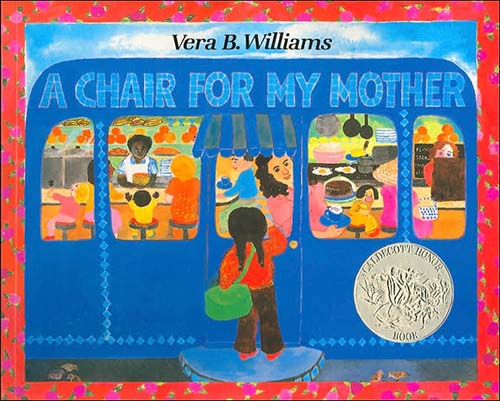
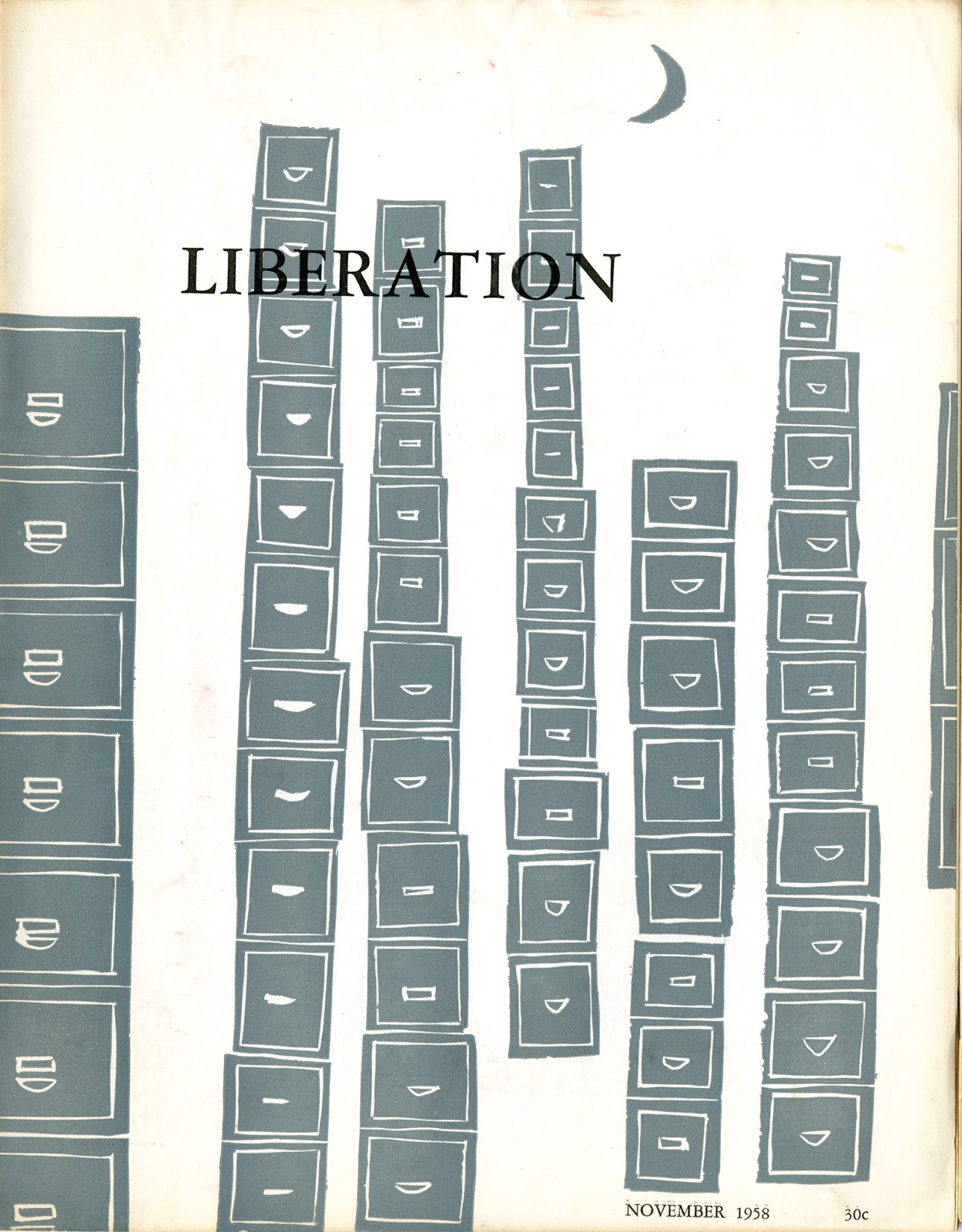
Author and illustrator of 17 children’s books, including Caldecott medal winner, A Chair for My Mother, Vera B. Williams always had a passion for the arts. Williams grew up in the Bronx, NY, and in 1936, when she was nine years old, one of her paintings, called Yentas, opens a new window, was included in an exhibition at the Museum of Modern Art. While Williams is widely known for her children’s books today, this exhibition’s expansive scope highlights unexplored aspects of her artistic practice and eight decades of life. From groundbreaking, powerful covers for Liberation Magazine, to Peace calendar collaborations with writer activist Grace Paley, to scenic sketches for Julian Beck and Judith Malina’s Living Theater, to hundreds of late life “Aging and Illness” cartoons sketches and doodles, Vera never sat still.

Williams arrived at Black Mountain College in 1945. While there, she embraced all aspects of living, working, and learning in the intensely creative college community. She was at BMC during a particularly fertile period, which allowed her to study with faculty members Buckminster Fuller and Josef Albers, and to participate in the famed summer sessions with John Cage, Merce Cunningham, M.C. Richards, and Robert Rauschenberg. In 1948, she graduated with Josef Albers as her advisor and sculptor Richard Lippold as her outside examiner. Forever one of the College’s shining stars, Vera graduated from BMC with just six semesters of coursework, at only twenty-one years old. She continued to visit BMC for years afterward, staying deeply involved with the artistic community that BMC incubated.

Anticipating the eventual closure of BMC, Williams, alongside her husband Paul Williams and a group of influential former BMC figures, founded The Gate Hill Cooperative Artists community located 30 miles north of NYC on the outskirts of Stony Point, NY. The Gate Hill Cooperative, also known as The Land, became an outcropping of Black Mountain College’s experimental ethos. Students and faculty including John Cage, M.C. Richards, David Tudor, Karen Karnes, David Weinrib, Stan VanDerBeek, and Patsy Lynch Wood shaped Gate Hill as founding members of the community. Vera B. Williams raised her three children at Gate Hill while continuing to make work.

The early Gate Hill era represented an especially creative phase for the BMC group. For Williams, this period saw the creation of 76 covers for Liberation Magazine, a radical, groundbreaking publication. This exhibition will feature some of Williams’ most powerful Liberation covers including a design for the June 1963 edition, which contained the first full publication of MLK’s “Letter from Birmingham Jail.” Williams’ activism work continued throughout her life. As president of PEN’s Children Committee and member of The War Resisters league, she created a wide range of political and educational posters and journal covers. Williams protested the war in Vietnam and nuclear proliferation while supporting women’s causes and racial equality. In 1981, Williams was arrested and spent a month in a federal prison on charges stemming from her political activism.
In her late 40’s, Williams embarked in earnest on her career as a children’s book author and illustrator, a career which garnered the NY Public Library’s recognition of A Chair for My Mother as one of the greatest 100 children’s books of all time. Infinitely curious and always a wanderer at heart, Williams’ personal life was as expansive as her art. In addition to her prolific picture making, Williams started and helped run a Summerhill-based alternative school, canoed the Yukon, and lived alone on a houseboat in Vancouver Harbor. She helped to organize and attended dozens of political demonstrations throughout her adult life.

Her books won many awards including the Caldecott Medal Honor Book for A Chair for My Mother in 1983, the Boston Globe–Horn Book Award– Fiction category– for Scooter in 1994, the Jane Addams Honor for Amber Was Brave, Essie Was Smart in 2002, and the NSK Neustadt Prize for Children’s Literature in 2009. Her books reflected her values, emphasizing love, compassion, kindness, joy, strength, individuality, and courage.

Images:

Cover of Vera B. Williams’ A Chair for My Mother, published in 1982.

Vera B. Williams, Cover for Liberation Magazine, November 1958.

Thursday, February 15, 2024
2024 Carl Sandburg Poetry Contest is open with a theme of “Memory”
Feb 15 all-day
online w/ Carl Sandburg Home

Carl Sandburg wrote countless words in an array of different genres, including poetry, children’s stories, journal articles, as well as a biography and autobiography! He wrote of love and nature, dreams and struggles. This year’s theme of “Memory” is echoed in much of his works. ““Under the summer roses, when the flagrant crimson, lurks in the dusk, Of the wild red leaves, Love, with little hands, comes and touches you with a thousand memories, and asks you beautiful, unanswerable questions.” Carl Sandburg

Poems submitted for the 2024 contest should reflect the theme of “Memory.” By definition, “the process or power of recallling something learned or experienced from the past” Note: Poems do NOT need to be titled Memory, as long as the poem itself relates to the theme.

Students are invited to submit a poem to Carl Sandburg Home National Historic Site’s annual Student Poetry Contest. The contest encourages youth to explore writing their own poetry and is open to students nationwide!

  • Submissions are accepted from grades 3-12 and must be submitted by email by Monday March 4, 2024. See below for submission rules.
  • Winners will be notified by April 7, 2024, and will be invited to participate in a virtual celebration program on Sunday, April 28.
2024 West Asheville Garden Stroll Seed Money Grant
Feb 15 all-day
online

Are you involved in a community-oriented gardening project in West Asheville that needs some extra resources? Or have you been dreaming of a great project that just needs some cash to become a reality? Thanks to the generosity of our sponsors, WAGS has awarded Seed Grants annually since 2014.  We support projects that deepen horticultural & environmental awareness and education, encourage creative landscaping, &/or contribute to the beautification of West Asheville’s public spaces, such as boulevard strips, traffic islands, storefronts, community gardens, schools, etc.

Seed Money Grants

Thanks to the generosity of our sponsors, WAGS offers annual grants for gardening projects, between $100 and $1000 per grant.
The grants are intended to deepen horticultural & environmental awareness and education, encourage creative landscaping, & contribute to the beautification of West Asheville’s public spaces, including boulevard strips, traffic islands, storefronts, community gardens, schools, etc. To be eligible, the following stipulations apply:
· Proposed projects must be submitted by an individual living in West Asheville or by a community group such as a non-profit working in West Asheville, a neighbor collaboration, a faith community, a school, a business, a youth group, etc.
· Proposed projects must be community-oriented (not for individual home projects) & accessible to the public.
· Proposed projects must take place in the area bounded by Patton Avenue/Smokey Park Highway, I-40, & the French Broad River.
We encourage native plantings that support pollinators. (Bee City USA-Asheville has helpful information at https://www.ashevillegreenworks.org/native-pollinator…)
Grant applications are due on February 18. Applicants will be notified by March 18 and a simple report about the project (with in-process and final outcome photos) is due August 15. Grantees must be willing to allow use of photos and project descriptions in WAGS publicity materials.

HOW TO APPLY

To apply for a Seed Grant, go to https://form.jotform.com/223385924338059, fill out the form and submit it. Note that the form allows you to attach documents such as a project description, budget, and letters of support.

Please email us at [email protected] if you have difficulty with the application or need assistance in completing it.

Growing Minds: “I Tried Local…” free virtual toolkit
Feb 15 all-day
online

Growing Minds has published “I Tried Local…” a Toolkit for Engaging Kids with Local Food and Farms. This resource—intended for early care and education through second grade classrooms—offers an immersive curriculum designed around 10 crops grown in North Carolina. The print toolkit is currently available to educators in North Carolina who participate in a virtual training with Growing Minds. A free digital version is also available to anyone on the Growing Minds website.

Each unit includes an overview of a North Carolina–grown crop, lesson plans, recipes, coloring pages, book recommendations, discussion prompts, and a link to the “Meet Your Farmer” video series featuring North Carolina farmers. The toolkit also offers resources for implementing the core elements of farm to school—gardens, classroom cooking and taste tests, farm field trips and farmer visits, and local foods in meals or snacks.
Growing Minds will host a series of virtual training to support educators interested in using the toolkit. The first will be held on Zoom on Tuesday, Feb. 20, from 3:30 to 4:45 p.m. Register here or contact [email protected] for more information.
School Garden Grants
Feb 15 all-day
online

Extension Master GardenerSM Volunteers of Buncombe County are happy to announce for the seventeenth year we are offering School Garden Grants to Asheville City and Buncombe County public schools, including state charter schools.

We provide a notice of the application period along with instructions to all school principals, elementary through senior high. Additional information is available on our websitebuncombemastergardener.org where you can learn more about the guidelines for receiving a grant and get access to the online 2024 School Garden Grants Application.

All applications must be completed online. Completed applications will be accepted beginning January 12, 2024, and must be submitted no later than 9 p.m. on February 15, 2024. If you have any questions, please call the Extension Office at 828-255-5522.

We are proud of our partnership with Asheville City and Buncombe County public schools. Since 2007, we have awarded 60 School Garden Grants totaling over $47,000. These grants have involved more than 17,500 students and hundreds of teachers, parents, and community volunteers.

School gardens grow more than plants. They grow imagination and creativity. They make math and science come alive, and they build community. We hope your school will join us in 2024.

Click on the link below to review the guidelines for school garden grants:
Guidelines for 2024 School Garden Grants


Growing Minds Farm to School Mini-Grant
Feb 15 @ 6:30 am
online
ASAP’s Growing Minds mini-grants help early childhood education (ECE) centers and K-12 schools throughout the 23 westernmost counties of North Carolina provide children positive experiences with healthy local foods through these components of farm to school: school gardens, farm field trips and farmer classroom visits, and local foods served in meals, snacks, and/or taste tests.

Mini-grant applications are available three times during the 2023-2024 school year. You may apply one time during this cycle. Mini-grants must be used within a year after receiving the funding. 

Applications due by:

  • November 30, 2023
  • January 30, 2024
  • March 30, 2024

If you have questions about your eligibility to apply for funding, please email us at [email protected] before submitting your application. We are unable to provide mini-grants to schools located outside of our 23-county service area or to folks who have received a grant from us within the past year. Learn more and apply here!

Biltmore Estate: Ciao! From Italy Sculptural Postcard Display
Feb 15 @ 8:30 am
Biltmore Estate

Included with admission

Embark on a scenic journey across George Vanderbilt’s Italy with a large-scale outdoor display that combines brilliant botanical designs with authentic messages written by Vanderbilt himself.

Beautifully handcrafted of natural elements, each sculptural postcard depicts a location or landmark Vanderbilt visited more than a century ago. This captivating complement to Biltmore’s Italian Renaissance Alive exhibition reveals Vanderbilt’s passions for travel, culture, architecture, and art as well as his personal experience of such renowned Italian cities as Milan, Florence, Venice, Pisa, and Vatican City.

Adding to the charm and visual appeal of Ciao! From Italy—sure to be a hit among kids of all ages—is the G-scale model train that travels in and out of each postcard in this enlightening display!

Indoor Tropical Bonsai Display
Feb 15 @ 9:00 am – 5:00 pm
NC Arboretum

What is Bonsai?

Bonsai is a challenging and rewarding horticultural activity, in which ordinary plants are grown in an extraordinary way. Through rigorously applied cultivation techniques, trees, shrubs, vines and even herbaceous plants are kept in a miniaturized state, developed into artistic shapes and then displayed in special containers.

What makes the Arboretum’s bonsai endeavor unique among all other public collections in the United States? Regional Interpretation. Visitors will find the Arboretum’s bonsai collection of more than 100 specimens carefully cultivated with a Southern Appalachian accent. The collection draws inspiration from the traditional roots of bonsai, but takes the form of a contemporary, Southern Appalachian influenced American garden. Plantings in the landscape include species and cultivars of American, European and Asian origin.


The Bonsai Exhibition Garden

Established in October 2005, The North Carolina Arboretum’s Bonsai Exhibition Garden is a world renowned garden that displays up to 50 bonsai specimens at a time. Represented are traditional Asian bonsai subjects such as Japanese maple and Chinese elm, tropical plants such as willow-leaf fig and bougainvillea, and American species such as bald cypress and limber pine. Of particular importance are the plants native to the Blue Ridge region, such as American hornbeam and eastern white pine, which enable the Arboretum to bring the thousand-year tradition of bonsai home to the mountains of Western North Carolina. Interpretive signage throughout the garden conveys information about the art and history of bonsai, and the Arboretum’s own creative approach to it.


Outdoor Bonsai Exhibition Garden

  • Bonsai on Display Mid May – November; 9 a.m. – 5 p.m. daily
  • Garden Open Year Round
  • Parking Fees
    • Personal/Standard Vehicle (up to 20′ long): $20
    • Large vehicles (21′-29′ long): $60
    • Busses and Oversize Vehicles (30′ long+): $125
    • Members: Free

    Apart from the parking fee, there is no other admission charge to enter the Arboretum or our facilities, except in the case of advertised ticketed events.

Gardening in the Mountains: Tomato Varieties for Home Gardens
Feb 15 @ 10:00 am
online

Calling all gardeners crazy about growing tomatoes! Learn best varieties to grow, their culture and disease management.

Gardening in the Mountains presents:

Tomato Varieties for Home Gardens

FREE Virtual Event

Presenters: Phil Roudebush, Extension Master GardenerSM Volunteer and
Dr. Reza Shekasteband, NCSU Horticultural Research Station

Do you love growing tomatoes but find the variety choices overwhelming? Do you know what new varieties are recommended for WNC? Master Gardener Phil Roudebush and Dr. Reza Shekasteband from the NCSU Horticultural Research Station will discuss tomato types and varieties, culture and disease resistance. They will also share new varieties and research from the NCSU Tomato Breeding and Genetics program and give you a glimpse into the future of tomatoes in WNC.

Registration: The talk is free but registration is required. Please click on the link below to register. If you encounter problems registering or if you have questions, call 828-255-5522.

Zoom seminar access: After registration, you will receive an email with instructions and a link to join this online live broadcast via Zoom. The ability to access Zoom through a computer, tablet or smartphone with a reliable internet connection is necessary to attend.

Vera B. Williams / STORIES Eight Decades of Politics and Picture Making
Feb 15 @ 11:00 am – 5:00 pm
Black Mountain College Museum + Arts Center


Exhibition and Public Programming

Vera B. Williams, an award-winning author and illustrator of children’s books, started making pictures almost as soon as she could walk. She studied at Black Mountain College in a time where summer institutes were held with classes taught by John Cage and Merce Cunningham. Williams studied under the Bauhaus luminary Josef Albers and went on to make art for the rest of her life. At the time of her death, The New York Times wrote: “Her illustrations, known for bold colors and a style reminiscent of folk art, were praised by reviewers for their great tenderness and crackling vitality.” Despite numerous awards and recognition for her children’s books, much of her wider life and work remains unexplored. This retrospective will showcase the complete range of Williams’ life and work. It will highlight her time at Black Mountain College, her political activism, and her establishment, with Paul Williams, of an influential yet little-known artist community, in addition to her work as an author and illustrator.

Author and illustrator of 17 children’s books, including Caldecott medal winner, A Chair for My Mother, Vera B. Williams always had a passion for the arts. Williams grew up in the Bronx, NY, and in 1936, when she was nine years old, one of her paintings, called Yentas, opens a new window, was included in an exhibition at the Museum of Modern Art. While Williams is widely known for her children’s books today, this exhibition’s expansive scope highlights unexplored aspects of her artistic practice and eight decades of life. From groundbreaking, powerful covers for Liberation Magazine, to Peace calendar collaborations with writer activist Grace Paley, to scenic sketches for Julian Beck and Judith Malina’s Living Theater, to hundreds of late life “Aging and Illness” cartoons sketches and doodles, Vera never sat still.

Williams arrived at Black Mountain College in 1945. While there, she embraced all aspects of living, working, and learning in the intensely creative college community. She was at BMC during a particularly fertile period, which allowed her to study with faculty members Buckminster Fuller and Josef Albers, and to participate in the famed summer sessions with John Cage, Merce Cunningham, M.C. Richards, and Robert Rauschenberg. In 1948, she graduated with Josef Albers as her advisor and sculptor Richard Lippold as her outside examiner. Forever one of the College’s shining stars, Vera graduated from BMC with just six semesters of coursework, at only twenty-one years old. She continued to visit BMC for years afterward, staying deeply involved with the artistic community that BMC incubated.

Anticipating the eventual closure of BMC, Williams, alongside her husband Paul Williams and a group of influential former BMC figures, founded The Gate Hill Cooperative Artists community located 30 miles north of NYC on the outskirts of Stony Point, NY. The Gate Hill Cooperative, also known as The Land, became an outcropping of Black Mountain College’s experimental ethos. Students and faculty including John Cage, M.C. Richards, David Tudor, Karen Karnes, David Weinrib, Stan VanDerBeek, and Patsy Lynch Wood shaped Gate Hill as founding members of the community. Vera B. Williams raised her three children at Gate Hill while continuing to make work.

The early Gate Hill era represented an especially creative phase for the BMC group. For Williams, this period saw the creation of 76 covers for Liberation Magazine, a radical, groundbreaking publication. This exhibition will feature some of Williams’ most powerful Liberation covers including a design for the June 1963 edition, which contained the first full publication of MLK’s “Letter from Birmingham Jail.” Williams’ activism work continued throughout her life. As president of PEN’s Children Committee and member of The War Resisters league, she created a wide range of political and educational posters and journal covers. Williams protested the war in Vietnam and nuclear proliferation while supporting women’s causes and racial equality. In 1981, Williams was arrested and spent a month in a federal prison on charges stemming from her political activism.

In her late 40’s, Williams embarked in earnest on her career as a children’s book author and illustrator, a career which garnered the NY Public Library’s recognition of A Chair for My Mother as one of the greatest 100 children’s books of all time. Infinitely curious and always a wanderer at heart, Williams’ personal life was as expansive as her art. In addition to her prolific picture making, Williams started and helped run a Summerhill-based alternative school, canoed the Yukon, and lived alone on a houseboat in Vancouver Harbor. She helped to organize and attended dozens of political demonstrations throughout her adult life.

Her books won many awards including the Caldecott Medal Honor Book for A Chair for My Mother in 1983, the Boston Globe–Horn Book Award– Fiction category– for Scooter in 1994, the Jane Addams Honor for Amber Was Brave, Essie Was Smart in 2002, and the NSK Neustadt Prize for Children’s Literature in 2009. Her books reflected her values, emphasizing love, compassion, kindness, joy, strength, individuality, and courage.

Images:

Cover of Vera B. Williams’ A Chair for My Mother, published in 1982.

Vera B. Williams, Cover for Liberation Magazine, November 1958.

Book Speed Dating for Teens
Feb 15 @ 3:30 pm – 5:00 pm
Pack Memorial Library
  Find your perfect book match! Rate your first impression of titles that catch your eye. If the book steals your heart after a quick skim, you’ve found a keeper to check out! Grades 6th grade and up. Drop in and play a few rounds. Refreshments will be served.
Hybrid | Magic + Karma: Jennifer Moorman and Love Hudson-Maggio with Maia Toll
Feb 15 @ 6:00 pm – 7:00 pm
Malaprop's Bookstore

Gwenda Bond shares her new romantic, magical heist novel, The Frame-Up, in conversation with Megan Shepherd.

The event is free but registration is required for both in-person and virtual attendance. 

Please click here to register for the VIRTUAL event. The link required to attend will be emailed to registrants prior to the event. 

Please click here to register for the IN-PERSON event. Note the important event details on the RSVP form.


The Frame-Up
Dani Poissant is the daughter and former accomplice of the world’s most famous art thief. There was no job too big for Maria and her loyal crew. The secret to their success? A little thing called magic, kept rigorously secret from the non-magical world. They seemed unstoppable . . . until a teenage Dani turned her mother over to the FBI.

Ten years later, with Maria still in prison, Dani finds herself approached for a job that only Maria and her crew could pull off . . . if any of them were still speaking to her. But it’s the job of a lifetime and might just be the lure Dani needs to reconcile with her mother and be reunited with her mother’s old gang—including both the love of her life and her former best friend.

The problem is, it’s an impossible task—even with the magical talents of the people she once considered family backing her up. It’s a heist that needs a year to plan, and Dani has just over a week. Worse, the more Dani learns, the more she understands that there’s far more at stake in this job than she ever realized.

Gwenda Bond is the New York Times bestselling author of many novels, including the first official Stranger Things novel, Suspicious Minds, as well as the Match Made in Hell, Lois Lane, and Cirque American series. She lives in a hundred-year-old house in Lexington, Kentucky, with her husband, author Christopher Rowe, and a veritable zoo of adorable doggos and queenly cats.

New York Times bestseller and Carnegie Medal-nominated author Megan Shepherd grew up in her family’s independent bookstore in the Blue Ridge Mountains. She is the author of many acclaimed novels for readers of all ages. She now lives and writes on a haunted 130-year-old farm outside Asheville, North Carolina, with her husband and children, cats, chickens, bees, and an especially scruffy dog.


This event includes a book signing. If you would like a signed book but can’t attend in person, you may order a signed copy online below. If you would like to have your book personalized, please order online or call the store at least two hours before the start of the event. When ordering online, use the comments field to provide a name for personalization, e.g. “To Paul.” NOTE: We do our best to get books personalized when requested but personalization is not guaranteed.

If you decide to attend and to purchase books, we ask that you purchase from Malaprop’s. When you do this you make it possible for us to continue hosting author events and you keep more dollars in our community. You may also support our work by purchasing a gift card or making a donation of any amount below. Thank you!

THE MOTH Presents: Asheville StorySLAM – “LOVE HURTS”
Feb 15 @ 7:30 pm
The Grey Eagle
Doors Open: 6:30 PM
– PARTIALLY SEATED SHOW
– GA SEATING IN FIRST COME, FIRST SERVED. 

THE MOTH resumes their recurring monthly Asheville StorySLAM at The Grey Eagle at 7:30pm! This month’s theme is….


LOVE HURTS:  Prepare a five-minute tale about a love that made you go OUCH. The agony of deferred love! The misery of good love, gone bad! The anguish of one-way love! Bring stories of your heart, kicked to the curb by the people or places or things you love…or used to love. Love that “Hurts So Good” also welcome.
Friday, February 16, 2024
2024 Carl Sandburg Poetry Contest is open with a theme of “Memory”
Feb 16 all-day
online w/ Carl Sandburg Home

Carl Sandburg wrote countless words in an array of different genres, including poetry, children’s stories, journal articles, as well as a biography and autobiography! He wrote of love and nature, dreams and struggles. This year’s theme of “Memory” is echoed in much of his works. ““Under the summer roses, when the flagrant crimson, lurks in the dusk, Of the wild red leaves, Love, with little hands, comes and touches you with a thousand memories, and asks you beautiful, unanswerable questions.” Carl Sandburg

Poems submitted for the 2024 contest should reflect the theme of “Memory.” By definition, “the process or power of recallling something learned or experienced from the past” Note: Poems do NOT need to be titled Memory, as long as the poem itself relates to the theme.

Students are invited to submit a poem to Carl Sandburg Home National Historic Site’s annual Student Poetry Contest. The contest encourages youth to explore writing their own poetry and is open to students nationwide!

  • Submissions are accepted from grades 3-12 and must be submitted by email by Monday March 4, 2024. See below for submission rules.
  • Winners will be notified by April 7, 2024, and will be invited to participate in a virtual celebration program on Sunday, April 28.
2024 West Asheville Garden Stroll Seed Money Grant
Feb 16 all-day
online

Are you involved in a community-oriented gardening project in West Asheville that needs some extra resources? Or have you been dreaming of a great project that just needs some cash to become a reality? Thanks to the generosity of our sponsors, WAGS has awarded Seed Grants annually since 2014.  We support projects that deepen horticultural & environmental awareness and education, encourage creative landscaping, &/or contribute to the beautification of West Asheville’s public spaces, such as boulevard strips, traffic islands, storefronts, community gardens, schools, etc.

Seed Money Grants

Thanks to the generosity of our sponsors, WAGS offers annual grants for gardening projects, between $100 and $1000 per grant.
The grants are intended to deepen horticultural & environmental awareness and education, encourage creative landscaping, & contribute to the beautification of West Asheville’s public spaces, including boulevard strips, traffic islands, storefronts, community gardens, schools, etc. To be eligible, the following stipulations apply:
· Proposed projects must be submitted by an individual living in West Asheville or by a community group such as a non-profit working in West Asheville, a neighbor collaboration, a faith community, a school, a business, a youth group, etc.
· Proposed projects must be community-oriented (not for individual home projects) & accessible to the public.
· Proposed projects must take place in the area bounded by Patton Avenue/Smokey Park Highway, I-40, & the French Broad River.
We encourage native plantings that support pollinators. (Bee City USA-Asheville has helpful information at https://www.ashevillegreenworks.org/native-pollinator…)
Grant applications are due on February 18. Applicants will be notified by March 18 and a simple report about the project (with in-process and final outcome photos) is due August 15. Grantees must be willing to allow use of photos and project descriptions in WAGS publicity materials.

HOW TO APPLY

To apply for a Seed Grant, go to https://form.jotform.com/223385924338059, fill out the form and submit it. Note that the form allows you to attach documents such as a project description, budget, and letters of support.

Please email us at [email protected] if you have difficulty with the application or need assistance in completing it.

Growing Minds Farm to School Mini-Grant
Feb 16 @ 6:30 am
online
ASAP’s Growing Minds mini-grants help early childhood education (ECE) centers and K-12 schools throughout the 23 westernmost counties of North Carolina provide children positive experiences with healthy local foods through these components of farm to school: school gardens, farm field trips and farmer classroom visits, and local foods served in meals, snacks, and/or taste tests.

Mini-grant applications are available three times during the 2023-2024 school year. You may apply one time during this cycle. Mini-grants must be used within a year after receiving the funding. 

Applications due by:

  • November 30, 2023
  • January 30, 2024
  • March 30, 2024

If you have questions about your eligibility to apply for funding, please email us at [email protected] before submitting your application. We are unable to provide mini-grants to schools located outside of our 23-county service area or to folks who have received a grant from us within the past year. Learn more and apply here!

Biltmore Estate: Ciao! From Italy Sculptural Postcard Display
Feb 16 @ 8:30 am
Biltmore Estate

Included with admission

Embark on a scenic journey across George Vanderbilt’s Italy with a large-scale outdoor display that combines brilliant botanical designs with authentic messages written by Vanderbilt himself.

Beautifully handcrafted of natural elements, each sculptural postcard depicts a location or landmark Vanderbilt visited more than a century ago. This captivating complement to Biltmore’s Italian Renaissance Alive exhibition reveals Vanderbilt’s passions for travel, culture, architecture, and art as well as his personal experience of such renowned Italian cities as Milan, Florence, Venice, Pisa, and Vatican City.

Adding to the charm and visual appeal of Ciao! From Italy—sure to be a hit among kids of all ages—is the G-scale model train that travels in and out of each postcard in this enlightening display!

Indoor Tropical Bonsai Display
Feb 16 @ 9:00 am – 5:00 pm
NC Arboretum

What is Bonsai?

Bonsai is a challenging and rewarding horticultural activity, in which ordinary plants are grown in an extraordinary way. Through rigorously applied cultivation techniques, trees, shrubs, vines and even herbaceous plants are kept in a miniaturized state, developed into artistic shapes and then displayed in special containers.

What makes the Arboretum’s bonsai endeavor unique among all other public collections in the United States? Regional Interpretation. Visitors will find the Arboretum’s bonsai collection of more than 100 specimens carefully cultivated with a Southern Appalachian accent. The collection draws inspiration from the traditional roots of bonsai, but takes the form of a contemporary, Southern Appalachian influenced American garden. Plantings in the landscape include species and cultivars of American, European and Asian origin.


The Bonsai Exhibition Garden

Established in October 2005, The North Carolina Arboretum’s Bonsai Exhibition Garden is a world renowned garden that displays up to 50 bonsai specimens at a time. Represented are traditional Asian bonsai subjects such as Japanese maple and Chinese elm, tropical plants such as willow-leaf fig and bougainvillea, and American species such as bald cypress and limber pine. Of particular importance are the plants native to the Blue Ridge region, such as American hornbeam and eastern white pine, which enable the Arboretum to bring the thousand-year tradition of bonsai home to the mountains of Western North Carolina. Interpretive signage throughout the garden conveys information about the art and history of bonsai, and the Arboretum’s own creative approach to it.


Outdoor Bonsai Exhibition Garden

  • Bonsai on Display Mid May – November; 9 a.m. – 5 p.m. daily
  • Garden Open Year Round
  • Parking Fees
    • Personal/Standard Vehicle (up to 20′ long): $20
    • Large vehicles (21′-29′ long): $60
    • Busses and Oversize Vehicles (30′ long+): $125
    • Members: Free

    Apart from the parking fee, there is no other admission charge to enter the Arboretum or our facilities, except in the case of advertised ticketed events.

Vera B. Williams / STORIES Eight Decades of Politics and Picture Making
Feb 16 @ 11:00 am – 5:00 pm
Black Mountain College Museum + Arts Center


Exhibition and Public Programming

Vera B. Williams, an award-winning author and illustrator of children’s books, started making pictures almost as soon as she could walk. She studied at Black Mountain College in a time where summer institutes were held with classes taught by John Cage and Merce Cunningham. Williams studied under the Bauhaus luminary Josef Albers and went on to make art for the rest of her life. At the time of her death, The New York Times wrote: “Her illustrations, known for bold colors and a style reminiscent of folk art, were praised by reviewers for their great tenderness and crackling vitality.” Despite numerous awards and recognition for her children’s books, much of her wider life and work remains unexplored. This retrospective will showcase the complete range of Williams’ life and work. It will highlight her time at Black Mountain College, her political activism, and her establishment, with Paul Williams, of an influential yet little-known artist community, in addition to her work as an author and illustrator.

Author and illustrator of 17 children’s books, including Caldecott medal winner, A Chair for My Mother, Vera B. Williams always had a passion for the arts. Williams grew up in the Bronx, NY, and in 1936, when she was nine years old, one of her paintings, called Yentas, opens a new window, was included in an exhibition at the Museum of Modern Art. While Williams is widely known for her children’s books today, this exhibition’s expansive scope highlights unexplored aspects of her artistic practice and eight decades of life. From groundbreaking, powerful covers for Liberation Magazine, to Peace calendar collaborations with writer activist Grace Paley, to scenic sketches for Julian Beck and Judith Malina’s Living Theater, to hundreds of late life “Aging and Illness” cartoons sketches and doodles, Vera never sat still.

Williams arrived at Black Mountain College in 1945. While there, she embraced all aspects of living, working, and learning in the intensely creative college community. She was at BMC during a particularly fertile period, which allowed her to study with faculty members Buckminster Fuller and Josef Albers, and to participate in the famed summer sessions with John Cage, Merce Cunningham, M.C. Richards, and Robert Rauschenberg. In 1948, she graduated with Josef Albers as her advisor and sculptor Richard Lippold as her outside examiner. Forever one of the College’s shining stars, Vera graduated from BMC with just six semesters of coursework, at only twenty-one years old. She continued to visit BMC for years afterward, staying deeply involved with the artistic community that BMC incubated.

Anticipating the eventual closure of BMC, Williams, alongside her husband Paul Williams and a group of influential former BMC figures, founded The Gate Hill Cooperative Artists community located 30 miles north of NYC on the outskirts of Stony Point, NY. The Gate Hill Cooperative, also known as The Land, became an outcropping of Black Mountain College’s experimental ethos. Students and faculty including John Cage, M.C. Richards, David Tudor, Karen Karnes, David Weinrib, Stan VanDerBeek, and Patsy Lynch Wood shaped Gate Hill as founding members of the community. Vera B. Williams raised her three children at Gate Hill while continuing to make work.

The early Gate Hill era represented an especially creative phase for the BMC group. For Williams, this period saw the creation of 76 covers for Liberation Magazine, a radical, groundbreaking publication. This exhibition will feature some of Williams’ most powerful Liberation covers including a design for the June 1963 edition, which contained the first full publication of MLK’s “Letter from Birmingham Jail.” Williams’ activism work continued throughout her life. As president of PEN’s Children Committee and member of The War Resisters league, she created a wide range of political and educational posters and journal covers. Williams protested the war in Vietnam and nuclear proliferation while supporting women’s causes and racial equality. In 1981, Williams was arrested and spent a month in a federal prison on charges stemming from her political activism.

In her late 40’s, Williams embarked in earnest on her career as a children’s book author and illustrator, a career which garnered the NY Public Library’s recognition of A Chair for My Mother as one of the greatest 100 children’s books of all time. Infinitely curious and always a wanderer at heart, Williams’ personal life was as expansive as her art. In addition to her prolific picture making, Williams started and helped run a Summerhill-based alternative school, canoed the Yukon, and lived alone on a houseboat in Vancouver Harbor. She helped to organize and attended dozens of political demonstrations throughout her adult life.

Her books won many awards including the Caldecott Medal Honor Book for A Chair for My Mother in 1983, the Boston Globe–Horn Book Award– Fiction category– for Scooter in 1994, the Jane Addams Honor for Amber Was Brave, Essie Was Smart in 2002, and the NSK Neustadt Prize for Children’s Literature in 2009. Her books reflected her values, emphasizing love, compassion, kindness, joy, strength, individuality, and courage.

Images:

Cover of Vera B. Williams’ A Chair for My Mother, published in 1982.

Vera B. Williams, Cover for Liberation Magazine, November 1958.

Juniper Bends February Reading
Feb 16 @ 7:00 pm – 9:00 pm
Flatiron Writers Room
Join us for a post-Valentine’s Day exploration of LOVE in all its forms. Our February reading takes place at the Flatiron Writers Room in West Asheville. Doors at 6:30pm, reading starts at 7pm. Free!
Featured readers: • Sebastian Matthews (Creative Nonfiction) • Amy Reed (YA Fiction) • Tony Robles (Poetry) • Kelly Kelbel (Prose) Readers will have their books available for sale.
Saturday, February 17, 2024
2024 Carl Sandburg Poetry Contest is open with a theme of “Memory”
Feb 17 all-day
online w/ Carl Sandburg Home

Carl Sandburg wrote countless words in an array of different genres, including poetry, children’s stories, journal articles, as well as a biography and autobiography! He wrote of love and nature, dreams and struggles. This year’s theme of “Memory” is echoed in much of his works. ““Under the summer roses, when the flagrant crimson, lurks in the dusk, Of the wild red leaves, Love, with little hands, comes and touches you with a thousand memories, and asks you beautiful, unanswerable questions.” Carl Sandburg

Poems submitted for the 2024 contest should reflect the theme of “Memory.” By definition, “the process or power of recallling something learned or experienced from the past” Note: Poems do NOT need to be titled Memory, as long as the poem itself relates to the theme.

Students are invited to submit a poem to Carl Sandburg Home National Historic Site’s annual Student Poetry Contest. The contest encourages youth to explore writing their own poetry and is open to students nationwide!

  • Submissions are accepted from grades 3-12 and must be submitted by email by Monday March 4, 2024. See below for submission rules.
  • Winners will be notified by April 7, 2024, and will be invited to participate in a virtual celebration program on Sunday, April 28.
2024 West Asheville Garden Stroll Seed Money Grant
Feb 17 all-day
online

Are you involved in a community-oriented gardening project in West Asheville that needs some extra resources? Or have you been dreaming of a great project that just needs some cash to become a reality? Thanks to the generosity of our sponsors, WAGS has awarded Seed Grants annually since 2014.  We support projects that deepen horticultural & environmental awareness and education, encourage creative landscaping, &/or contribute to the beautification of West Asheville’s public spaces, such as boulevard strips, traffic islands, storefronts, community gardens, schools, etc.

Seed Money Grants

Thanks to the generosity of our sponsors, WAGS offers annual grants for gardening projects, between $100 and $1000 per grant.
The grants are intended to deepen horticultural & environmental awareness and education, encourage creative landscaping, & contribute to the beautification of West Asheville’s public spaces, including boulevard strips, traffic islands, storefronts, community gardens, schools, etc. To be eligible, the following stipulations apply:
· Proposed projects must be submitted by an individual living in West Asheville or by a community group such as a non-profit working in West Asheville, a neighbor collaboration, a faith community, a school, a business, a youth group, etc.
· Proposed projects must be community-oriented (not for individual home projects) & accessible to the public.
· Proposed projects must take place in the area bounded by Patton Avenue/Smokey Park Highway, I-40, & the French Broad River.
We encourage native plantings that support pollinators. (Bee City USA-Asheville has helpful information at https://www.ashevillegreenworks.org/native-pollinator…)
Grant applications are due on February 18. Applicants will be notified by March 18 and a simple report about the project (with in-process and final outcome photos) is due August 15. Grantees must be willing to allow use of photos and project descriptions in WAGS publicity materials.

HOW TO APPLY

To apply for a Seed Grant, go to https://form.jotform.com/223385924338059, fill out the form and submit it. Note that the form allows you to attach documents such as a project description, budget, and letters of support.

Please email us at [email protected] if you have difficulty with the application or need assistance in completing it.

Biltmore Estate: Ciao! From Italy Sculptural Postcard Display
Feb 17 @ 8:30 am
Biltmore Estate

Included with admission

Embark on a scenic journey across George Vanderbilt’s Italy with a large-scale outdoor display that combines brilliant botanical designs with authentic messages written by Vanderbilt himself.

Beautifully handcrafted of natural elements, each sculptural postcard depicts a location or landmark Vanderbilt visited more than a century ago. This captivating complement to Biltmore’s Italian Renaissance Alive exhibition reveals Vanderbilt’s passions for travel, culture, architecture, and art as well as his personal experience of such renowned Italian cities as Milan, Florence, Venice, Pisa, and Vatican City.

Adding to the charm and visual appeal of Ciao! From Italy—sure to be a hit among kids of all ages—is the G-scale model train that travels in and out of each postcard in this enlightening display!

Indoor Tropical Bonsai Display
Feb 17 @ 9:00 am – 5:00 pm
NC Arboretum

What is Bonsai?

Bonsai is a challenging and rewarding horticultural activity, in which ordinary plants are grown in an extraordinary way. Through rigorously applied cultivation techniques, trees, shrubs, vines and even herbaceous plants are kept in a miniaturized state, developed into artistic shapes and then displayed in special containers.

What makes the Arboretum’s bonsai endeavor unique among all other public collections in the United States? Regional Interpretation. Visitors will find the Arboretum’s bonsai collection of more than 100 specimens carefully cultivated with a Southern Appalachian accent. The collection draws inspiration from the traditional roots of bonsai, but takes the form of a contemporary, Southern Appalachian influenced American garden. Plantings in the landscape include species and cultivars of American, European and Asian origin.


The Bonsai Exhibition Garden

Established in October 2005, The North Carolina Arboretum’s Bonsai Exhibition Garden is a world renowned garden that displays up to 50 bonsai specimens at a time. Represented are traditional Asian bonsai subjects such as Japanese maple and Chinese elm, tropical plants such as willow-leaf fig and bougainvillea, and American species such as bald cypress and limber pine. Of particular importance are the plants native to the Blue Ridge region, such as American hornbeam and eastern white pine, which enable the Arboretum to bring the thousand-year tradition of bonsai home to the mountains of Western North Carolina. Interpretive signage throughout the garden conveys information about the art and history of bonsai, and the Arboretum’s own creative approach to it.


Outdoor Bonsai Exhibition Garden

  • Bonsai on Display Mid May – November; 9 a.m. – 5 p.m. daily
  • Garden Open Year Round
  • Parking Fees
    • Personal/Standard Vehicle (up to 20′ long): $20
    • Large vehicles (21′-29′ long): $60
    • Busses and Oversize Vehicles (30′ long+): $125
    • Members: Free

    Apart from the parking fee, there is no other admission charge to enter the Arboretum or our facilities, except in the case of advertised ticketed events.

Vera B. Williams / STORIES Eight Decades of Politics and Picture Making
Feb 17 @ 11:00 am – 5:00 pm
Black Mountain College Museum + Arts Center


Exhibition and Public Programming

Vera B. Williams, an award-winning author and illustrator of children’s books, started making pictures almost as soon as she could walk. She studied at Black Mountain College in a time where summer institutes were held with classes taught by John Cage and Merce Cunningham. Williams studied under the Bauhaus luminary Josef Albers and went on to make art for the rest of her life. At the time of her death, The New York Times wrote: “Her illustrations, known for bold colors and a style reminiscent of folk art, were praised by reviewers for their great tenderness and crackling vitality.” Despite numerous awards and recognition for her children’s books, much of her wider life and work remains unexplored. This retrospective will showcase the complete range of Williams’ life and work. It will highlight her time at Black Mountain College, her political activism, and her establishment, with Paul Williams, of an influential yet little-known artist community, in addition to her work as an author and illustrator.

Author and illustrator of 17 children’s books, including Caldecott medal winner, A Chair for My Mother, Vera B. Williams always had a passion for the arts. Williams grew up in the Bronx, NY, and in 1936, when she was nine years old, one of her paintings, called Yentas, opens a new window, was included in an exhibition at the Museum of Modern Art. While Williams is widely known for her children’s books today, this exhibition’s expansive scope highlights unexplored aspects of her artistic practice and eight decades of life. From groundbreaking, powerful covers for Liberation Magazine, to Peace calendar collaborations with writer activist Grace Paley, to scenic sketches for Julian Beck and Judith Malina’s Living Theater, to hundreds of late life “Aging and Illness” cartoons sketches and doodles, Vera never sat still.

Williams arrived at Black Mountain College in 1945. While there, she embraced all aspects of living, working, and learning in the intensely creative college community. She was at BMC during a particularly fertile period, which allowed her to study with faculty members Buckminster Fuller and Josef Albers, and to participate in the famed summer sessions with John Cage, Merce Cunningham, M.C. Richards, and Robert Rauschenberg. In 1948, she graduated with Josef Albers as her advisor and sculptor Richard Lippold as her outside examiner. Forever one of the College’s shining stars, Vera graduated from BMC with just six semesters of coursework, at only twenty-one years old. She continued to visit BMC for years afterward, staying deeply involved with the artistic community that BMC incubated.

Anticipating the eventual closure of BMC, Williams, alongside her husband Paul Williams and a group of influential former BMC figures, founded The Gate Hill Cooperative Artists community located 30 miles north of NYC on the outskirts of Stony Point, NY. The Gate Hill Cooperative, also known as The Land, became an outcropping of Black Mountain College’s experimental ethos. Students and faculty including John Cage, M.C. Richards, David Tudor, Karen Karnes, David Weinrib, Stan VanDerBeek, and Patsy Lynch Wood shaped Gate Hill as founding members of the community. Vera B. Williams raised her three children at Gate Hill while continuing to make work.

The early Gate Hill era represented an especially creative phase for the BMC group. For Williams, this period saw the creation of 76 covers for Liberation Magazine, a radical, groundbreaking publication. This exhibition will feature some of Williams’ most powerful Liberation covers including a design for the June 1963 edition, which contained the first full publication of MLK’s “Letter from Birmingham Jail.” Williams’ activism work continued throughout her life. As president of PEN’s Children Committee and member of The War Resisters league, she created a wide range of political and educational posters and journal covers. Williams protested the war in Vietnam and nuclear proliferation while supporting women’s causes and racial equality. In 1981, Williams was arrested and spent a month in a federal prison on charges stemming from her political activism.

In her late 40’s, Williams embarked in earnest on her career as a children’s book author and illustrator, a career which garnered the NY Public Library’s recognition of A Chair for My Mother as one of the greatest 100 children’s books of all time. Infinitely curious and always a wanderer at heart, Williams’ personal life was as expansive as her art. In addition to her prolific picture making, Williams started and helped run a Summerhill-based alternative school, canoed the Yukon, and lived alone on a houseboat in Vancouver Harbor. She helped to organize and attended dozens of political demonstrations throughout her adult life.

Her books won many awards including the Caldecott Medal Honor Book for A Chair for My Mother in 1983, the Boston Globe–Horn Book Award– Fiction category– for Scooter in 1994, the Jane Addams Honor for Amber Was Brave, Essie Was Smart in 2002, and the NSK Neustadt Prize for Children’s Literature in 2009. Her books reflected her values, emphasizing love, compassion, kindness, joy, strength, individuality, and courage.

Images:

Cover of Vera B. Williams’ A Chair for My Mother, published in 1982.

Vera B. Williams, Cover for Liberation Magazine, November 1958.

Sunday, February 18, 2024
2024 Carl Sandburg Poetry Contest is open with a theme of “Memory”
Feb 18 all-day
online w/ Carl Sandburg Home

Carl Sandburg wrote countless words in an array of different genres, including poetry, children’s stories, journal articles, as well as a biography and autobiography! He wrote of love and nature, dreams and struggles. This year’s theme of “Memory” is echoed in much of his works. ““Under the summer roses, when the flagrant crimson, lurks in the dusk, Of the wild red leaves, Love, with little hands, comes and touches you with a thousand memories, and asks you beautiful, unanswerable questions.” Carl Sandburg

Poems submitted for the 2024 contest should reflect the theme of “Memory.” By definition, “the process or power of recallling something learned or experienced from the past” Note: Poems do NOT need to be titled Memory, as long as the poem itself relates to the theme.

Students are invited to submit a poem to Carl Sandburg Home National Historic Site’s annual Student Poetry Contest. The contest encourages youth to explore writing their own poetry and is open to students nationwide!

  • Submissions are accepted from grades 3-12 and must be submitted by email by Monday March 4, 2024. See below for submission rules.
  • Winners will be notified by April 7, 2024, and will be invited to participate in a virtual celebration program on Sunday, April 28.
2024 West Asheville Garden Stroll Seed Money Grant
Feb 18 all-day
online

Are you involved in a community-oriented gardening project in West Asheville that needs some extra resources? Or have you been dreaming of a great project that just needs some cash to become a reality? Thanks to the generosity of our sponsors, WAGS has awarded Seed Grants annually since 2014.  We support projects that deepen horticultural & environmental awareness and education, encourage creative landscaping, &/or contribute to the beautification of West Asheville’s public spaces, such as boulevard strips, traffic islands, storefronts, community gardens, schools, etc.

Seed Money Grants

Thanks to the generosity of our sponsors, WAGS offers annual grants for gardening projects, between $100 and $1000 per grant.
The grants are intended to deepen horticultural & environmental awareness and education, encourage creative landscaping, & contribute to the beautification of West Asheville’s public spaces, including boulevard strips, traffic islands, storefronts, community gardens, schools, etc. To be eligible, the following stipulations apply:
· Proposed projects must be submitted by an individual living in West Asheville or by a community group such as a non-profit working in West Asheville, a neighbor collaboration, a faith community, a school, a business, a youth group, etc.
· Proposed projects must be community-oriented (not for individual home projects) & accessible to the public.
· Proposed projects must take place in the area bounded by Patton Avenue/Smokey Park Highway, I-40, & the French Broad River.
We encourage native plantings that support pollinators. (Bee City USA-Asheville has helpful information at https://www.ashevillegreenworks.org/native-pollinator…)
Grant applications are due on February 18. Applicants will be notified by March 18 and a simple report about the project (with in-process and final outcome photos) is due August 15. Grantees must be willing to allow use of photos and project descriptions in WAGS publicity materials.

HOW TO APPLY

To apply for a Seed Grant, go to https://form.jotform.com/223385924338059, fill out the form and submit it. Note that the form allows you to attach documents such as a project description, budget, and letters of support.

Please email us at [email protected] if you have difficulty with the application or need assistance in completing it.

Biltmore Estate: Ciao! From Italy Sculptural Postcard Display
Feb 18 @ 8:30 am
Biltmore Estate

Included with admission

Embark on a scenic journey across George Vanderbilt’s Italy with a large-scale outdoor display that combines brilliant botanical designs with authentic messages written by Vanderbilt himself.

Beautifully handcrafted of natural elements, each sculptural postcard depicts a location or landmark Vanderbilt visited more than a century ago. This captivating complement to Biltmore’s Italian Renaissance Alive exhibition reveals Vanderbilt’s passions for travel, culture, architecture, and art as well as his personal experience of such renowned Italian cities as Milan, Florence, Venice, Pisa, and Vatican City.

Adding to the charm and visual appeal of Ciao! From Italy—sure to be a hit among kids of all ages—is the G-scale model train that travels in and out of each postcard in this enlightening display!

Indoor Tropical Bonsai Display
Feb 18 @ 9:00 am – 5:00 pm
NC Arboretum

What is Bonsai?

Bonsai is a challenging and rewarding horticultural activity, in which ordinary plants are grown in an extraordinary way. Through rigorously applied cultivation techniques, trees, shrubs, vines and even herbaceous plants are kept in a miniaturized state, developed into artistic shapes and then displayed in special containers.

What makes the Arboretum’s bonsai endeavor unique among all other public collections in the United States? Regional Interpretation. Visitors will find the Arboretum’s bonsai collection of more than 100 specimens carefully cultivated with a Southern Appalachian accent. The collection draws inspiration from the traditional roots of bonsai, but takes the form of a contemporary, Southern Appalachian influenced American garden. Plantings in the landscape include species and cultivars of American, European and Asian origin.


The Bonsai Exhibition Garden

Established in October 2005, The North Carolina Arboretum’s Bonsai Exhibition Garden is a world renowned garden that displays up to 50 bonsai specimens at a time. Represented are traditional Asian bonsai subjects such as Japanese maple and Chinese elm, tropical plants such as willow-leaf fig and bougainvillea, and American species such as bald cypress and limber pine. Of particular importance are the plants native to the Blue Ridge region, such as American hornbeam and eastern white pine, which enable the Arboretum to bring the thousand-year tradition of bonsai home to the mountains of Western North Carolina. Interpretive signage throughout the garden conveys information about the art and history of bonsai, and the Arboretum’s own creative approach to it.


Outdoor Bonsai Exhibition Garden

  • Bonsai on Display Mid May – November; 9 a.m. – 5 p.m. daily
  • Garden Open Year Round
  • Parking Fees
    • Personal/Standard Vehicle (up to 20′ long): $20
    • Large vehicles (21′-29′ long): $60
    • Busses and Oversize Vehicles (30′ long+): $125
    • Members: Free

    Apart from the parking fee, there is no other admission charge to enter the Arboretum or our facilities, except in the case of advertised ticketed events.