

Calendar of Events
Upcoming events and things to do in Asheville, NC. Below is a list of events for festivals, concerts, art exhibitions, group meetups and more.
Interested in adding an event to our calendar? Please click the green “Post Your Event” button below.
Pieces made from nylon fabric ripstop, which keeps tears from spreading, invite viewers into created, fantastical worlds, only to highlight the complex—even impossible—architectures of their construction. Before the pandemic, Adrian primarily focused on personal experiences and interrogations of queerness, identity, and sexuality. Since then, the work has zoomed out in its scope, still centering identity but placed in larger infrastructure and surveillance systems that mediate, manipulate, and control desire.
Adrian counts queer fiber art, BDSM and kink culture, theatre, camp horror, puppetry, and drag among his many influences. Works in RIPSTOP, like the modernist bounce house sculpture A Fallible Complex (2021), evoke spaces for play, beckoning visitors in through their alluring aesthetic and then blocking their entrance or revealing structural instabilities, like missing floors. Others, like The Sensational Inflatable Furry Divines (2017-19), use sensual materials, like faux fur, spandex, and pleather, which connect to theatrical performance and counterculture. The materials “play on people’s initial associations and serve as a gateway into greater conversations about identity construction, performance, desire, and technology,” he shares.Pieces also nod to the history of quilting, including the AIDS Memorial Quilt, another influence on Adrian’s work. “Even when pieces aren’t explicitly making quilt references, I want the history of quilting and sewing-based craft to be part of the conversation of the work,” he says. “Craft is so much about the processes and histories behind materials. It’s about connecting with communities of people who practice those techniques. It’s about material and technique being a doorway into a greater relationship with an object.”
Themes of transformation—of structures, identities, and bodies—run throughout the show. “What I love about drag and puppetry is the sense of transformation and play, specifically with bodies,” Adrian says. “Within these art forms, a body can become mutable and capable of performing and becoming in unexpected states.” The sculptures also transform throughout viewers’ experiences, going through stages of inflation and deflation and existing in many different states.
RIPSTOP’s constant interplay between surface and depth, assumption and reality, are all a part of what Adrian describes as “looking behind the curtain,” which they trace back to the theatre. “When I’m thinking about systems, and the systems desire fits into, I’m thinking of stage construction, the backstage, the things that go on behind the show, and performance of our desires,” they explain.
As a craft artist, Adrian’s philosophy “comes down to having an intentional relationship with material, process, and technique,” he says. “Those aspects of art making are just as – if not more – important than an intellectualized concept being illustrated by an artwork.”
“Broadened definitions of craft that highlight communities of practice are foundational for the Center for Craft’s new strategic direction,” explains Executive Director Stephanie Moore. “Max Adrian’s work in RIPSTOP exemplifies the expansive and meaningful forms craft can take.” The Center for Craft is an institution Adrian credits for their professional growth. “The Center for Craft has felt like such a supporting institution for me specifically and for so many other craft artists I know,” they note. “To be able to bring this amount of work to Asheville is pretty cool.”
See Max Adrian: RIPSTOP at the Center for Craft Beginning July 26. A reception will be held on August 15. RIPSTOP is organized by Houston Center for Contemporary Craft and curated by Sarah Darro.
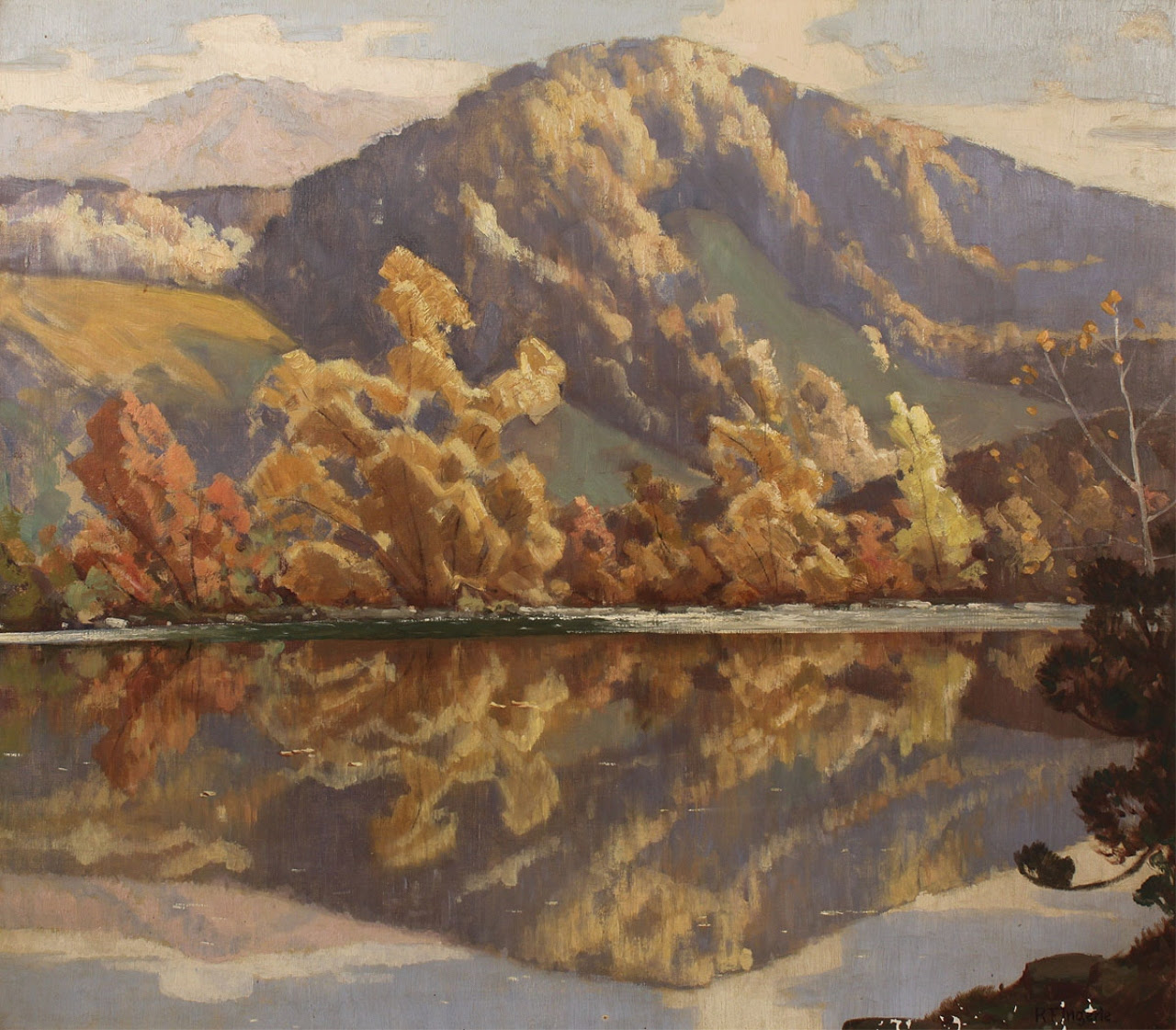
In the early 1900s, travel by train and automobile became more accessible in the United States, leading to an increase in tourism and a revitalized interest in landscape painting. The relative ease of transportation, as well as the creation of National Parks, allowed people to experience the breathtaking landscapes of the United States in new ways. Artists traveled along popular routes, recording the terrain they encountered.
This exhibition explores the sublime natural landscapes of the Smokey Mountains of Western North Carolina and Tennessee. While there were several regional schools of painting around this time, this group is largely from the Midwest and many of the artists trained at the Art Institute of Chicago or in New York City. Through their travels, they captured waterfalls, sunsets, thunderstorms, autumn foliage, lush green summers, and snow-covered mountains—elements that were novel for viewers from cities and rural areas. Though some of these paintings include people, they are usually used for scale and painted with little to no detail, highlighting the magnificence of nature.
 |
|
Rudolph F. Ingerle, Mirrored Mountain, not dated, oil on canvas, 28 × 32 inches. Courtesy of Allen & Barry Huffman, Asheville Art Museum. |
Check Out Our New Arts Discounts Page
We have exciting news! The ArtsAVL website has a new feature: a discounts page!
At any time, you can head on over to artsavl.org/discounts to see special discount offers our members are offering.
View Offerings

|
|
|
|
 |
|
|
|
|
|
|
|
|
|
Artists are invited to create artworks with the theme of “Red, White and Blue.“ Apply these patriotic colors at the center of your subjects, however there are no limits to your creativity, your artworks don’t need to be primarily patriotic theme, but viewers should be able to spot the use of recognizable amount of red, white and blue colors.
Pieces made from nylon fabric ripstop, which keeps tears from spreading, invite viewers into created, fantastical worlds, only to highlight the complex—even impossible—architectures of their construction. Before the pandemic, Adrian primarily focused on personal experiences and interrogations of queerness, identity, and sexuality. Since then, the work has zoomed out in its scope, still centering identity but placed in larger infrastructure and surveillance systems that mediate, manipulate, and control desire.
Adrian counts queer fiber art, BDSM and kink culture, theatre, camp horror, puppetry, and drag among his many influences. Works in RIPSTOP, like the modernist bounce house sculpture A Fallible Complex (2021), evoke spaces for play, beckoning visitors in through their alluring aesthetic and then blocking their entrance or revealing structural instabilities, like missing floors. Others, like The Sensational Inflatable Furry Divines (2017-19), use sensual materials, like faux fur, spandex, and pleather, which connect to theatrical performance and counterculture. The materials “play on people’s initial associations and serve as a gateway into greater conversations about identity construction, performance, desire, and technology,” he shares.Pieces also nod to the history of quilting, including the AIDS Memorial Quilt, another influence on Adrian’s work. “Even when pieces aren’t explicitly making quilt references, I want the history of quilting and sewing-based craft to be part of the conversation of the work,” he says. “Craft is so much about the processes and histories behind materials. It’s about connecting with communities of people who practice those techniques. It’s about material and technique being a doorway into a greater relationship with an object.”
Themes of transformation—of structures, identities, and bodies—run throughout the show. “What I love about drag and puppetry is the sense of transformation and play, specifically with bodies,” Adrian says. “Within these art forms, a body can become mutable and capable of performing and becoming in unexpected states.” The sculptures also transform throughout viewers’ experiences, going through stages of inflation and deflation and existing in many different states.
RIPSTOP’s constant interplay between surface and depth, assumption and reality, are all a part of what Adrian describes as “looking behind the curtain,” which they trace back to the theatre. “When I’m thinking about systems, and the systems desire fits into, I’m thinking of stage construction, the backstage, the things that go on behind the show, and performance of our desires,” they explain.
As a craft artist, Adrian’s philosophy “comes down to having an intentional relationship with material, process, and technique,” he says. “Those aspects of art making are just as – if not more – important than an intellectualized concept being illustrated by an artwork.”
“Broadened definitions of craft that highlight communities of practice are foundational for the Center for Craft’s new strategic direction,” explains Executive Director Stephanie Moore. “Max Adrian’s work in RIPSTOP exemplifies the expansive and meaningful forms craft can take.” The Center for Craft is an institution Adrian credits for their professional growth. “The Center for Craft has felt like such a supporting institution for me specifically and for so many other craft artists I know,” they note. “To be able to bring this amount of work to Asheville is pretty cool.”
See Max Adrian: RIPSTOP at the Center for Craft Beginning July 26. A reception will be held on August 15. RIPSTOP is organized by Houston Center for Contemporary Craft and curated by Sarah Darro.
In the early 1900s, travel by train and automobile became more accessible in the United States, leading to an increase in tourism and a revitalized interest in landscape painting. The relative ease of transportation, as well as the creation of National Parks, allowed people to experience the breathtaking landscapes of the United States in new ways. Artists traveled along popular routes, recording the terrain they encountered.
This exhibition explores the sublime natural landscapes of the Smokey Mountains of Western North Carolina and Tennessee. While there were several regional schools of painting around this time, this group is largely from the Midwest and many of the artists trained at the Art Institute of Chicago or in New York City. Through their travels, they captured waterfalls, sunsets, thunderstorms, autumn foliage, lush green summers, and snow-covered mountains—elements that were novel for viewers from cities and rural areas. Though some of these paintings include people, they are usually used for scale and painted with little to no detail, highlighting the magnificence of nature.
|
|
Rudolph F. Ingerle, Mirrored Mountain, not dated, oil on canvas, 28 × 32 inches. Courtesy of Allen & Barry Huffman, Asheville Art Museum. |
We have exciting news! The ArtsAVL website has a new feature: a discounts page!
At any time, you can head on over to artsavl.org/discounts to see special discount offers our members are offering.
View Offerings
|
|
|
|
|
|
|
|
|
|
|
|
|
|
Artists are invited to create artworks with the theme of “Red, White and Blue.“ Apply these patriotic colors at the center of your subjects, however there are no limits to your creativity, your artworks don’t need to be primarily patriotic theme, but viewers should be able to spot the use of recognizable amount of red, white and blue colors.
Pieces made from nylon fabric ripstop, which keeps tears from spreading, invite viewers into created, fantastical worlds, only to highlight the complex—even impossible—architectures of their construction. Before the pandemic, Adrian primarily focused on personal experiences and interrogations of queerness, identity, and sexuality. Since then, the work has zoomed out in its scope, still centering identity but placed in larger infrastructure and surveillance systems that mediate, manipulate, and control desire.
Adrian counts queer fiber art, BDSM and kink culture, theatre, camp horror, puppetry, and drag among his many influences. Works in RIPSTOP, like the modernist bounce house sculpture A Fallible Complex (2021), evoke spaces for play, beckoning visitors in through their alluring aesthetic and then blocking their entrance or revealing structural instabilities, like missing floors. Others, like The Sensational Inflatable Furry Divines (2017-19), use sensual materials, like faux fur, spandex, and pleather, which connect to theatrical performance and counterculture. The materials “play on people’s initial associations and serve as a gateway into greater conversations about identity construction, performance, desire, and technology,” he shares.Pieces also nod to the history of quilting, including the AIDS Memorial Quilt, another influence on Adrian’s work. “Even when pieces aren’t explicitly making quilt references, I want the history of quilting and sewing-based craft to be part of the conversation of the work,” he says. “Craft is so much about the processes and histories behind materials. It’s about connecting with communities of people who practice those techniques. It’s about material and technique being a doorway into a greater relationship with an object.”
Themes of transformation—of structures, identities, and bodies—run throughout the show. “What I love about drag and puppetry is the sense of transformation and play, specifically with bodies,” Adrian says. “Within these art forms, a body can become mutable and capable of performing and becoming in unexpected states.” The sculptures also transform throughout viewers’ experiences, going through stages of inflation and deflation and existing in many different states.
RIPSTOP’s constant interplay between surface and depth, assumption and reality, are all a part of what Adrian describes as “looking behind the curtain,” which they trace back to the theatre. “When I’m thinking about systems, and the systems desire fits into, I’m thinking of stage construction, the backstage, the things that go on behind the show, and performance of our desires,” they explain.
As a craft artist, Adrian’s philosophy “comes down to having an intentional relationship with material, process, and technique,” he says. “Those aspects of art making are just as – if not more – important than an intellectualized concept being illustrated by an artwork.”
“Broadened definitions of craft that highlight communities of practice are foundational for the Center for Craft’s new strategic direction,” explains Executive Director Stephanie Moore. “Max Adrian’s work in RIPSTOP exemplifies the expansive and meaningful forms craft can take.” The Center for Craft is an institution Adrian credits for their professional growth. “The Center for Craft has felt like such a supporting institution for me specifically and for so many other craft artists I know,” they note. “To be able to bring this amount of work to Asheville is pretty cool.”
See Max Adrian: RIPSTOP at the Center for Craft Beginning July 26. A reception will be held on August 15. RIPSTOP is organized by Houston Center for Contemporary Craft and curated by Sarah Darro.
In the early 1900s, travel by train and automobile became more accessible in the United States, leading to an increase in tourism and a revitalized interest in landscape painting. The relative ease of transportation, as well as the creation of National Parks, allowed people to experience the breathtaking landscapes of the United States in new ways. Artists traveled along popular routes, recording the terrain they encountered.
This exhibition explores the sublime natural landscapes of the Smokey Mountains of Western North Carolina and Tennessee. While there were several regional schools of painting around this time, this group is largely from the Midwest and many of the artists trained at the Art Institute of Chicago or in New York City. Through their travels, they captured waterfalls, sunsets, thunderstorms, autumn foliage, lush green summers, and snow-covered mountains—elements that were novel for viewers from cities and rural areas. Though some of these paintings include people, they are usually used for scale and painted with little to no detail, highlighting the magnificence of nature.
|
|
Rudolph F. Ingerle, Mirrored Mountain, not dated, oil on canvas, 28 × 32 inches. Courtesy of Allen & Barry Huffman, Asheville Art Museum. |
Fire cider is a great herbal tonic used to support the immune system, especially during the fall and winter season. It has been a traditional medicine of various cultures over the centuries. Come learn about the history of fire cider and make your own to take home with Education Coordinator Rosie Reeves. The information presented in this class is intended for educational purposes and should not be considered an endorsement of or recommendation for any medical treatment. Please consult your health care provider before pursuing any herbal or homemade treatments.
September 20, 2-4
$20 public/$15 friends. 20 person limit.
We have exciting news! The ArtsAVL website has a new feature: a discounts page!
At any time, you can head on over to artsavl.org/discounts to see special discount offers our members are offering.
View Offerings
|
|
|
|
|
|
|
|
|
|
|
|
|
|
Artists are invited to create artworks with the theme of “Red, White and Blue.“ Apply these patriotic colors at the center of your subjects, however there are no limits to your creativity, your artworks don’t need to be primarily patriotic theme, but viewers should be able to spot the use of recognizable amount of red, white and blue colors.
Join us on Saturday from 10 am-4 pm and Sunday from 12pm-4pm for a celebration of Southern Appalachian culture on the Blue Ridge Parkway. This festival has old-time music and demonstrations of the crafts of yesteryear. Chairmaking, quilting, heirloom apples, sheep shearing, cornshuck dolls, woodcarving, blacksmithing, weaving, stone carving, soap making, crocheting, knitting, spinning, rifle making, natural dyeing, basketry. Don’t Miss the World Gee Haw Whimmy Diddle Competition at 2:00 pm!!
Pieces made from nylon fabric ripstop, which keeps tears from spreading, invite viewers into created, fantastical worlds, only to highlight the complex—even impossible—architectures of their construction. Before the pandemic, Adrian primarily focused on personal experiences and interrogations of queerness, identity, and sexuality. Since then, the work has zoomed out in its scope, still centering identity but placed in larger infrastructure and surveillance systems that mediate, manipulate, and control desire.
Adrian counts queer fiber art, BDSM and kink culture, theatre, camp horror, puppetry, and drag among his many influences. Works in RIPSTOP, like the modernist bounce house sculpture A Fallible Complex (2021), evoke spaces for play, beckoning visitors in through their alluring aesthetic and then blocking their entrance or revealing structural instabilities, like missing floors. Others, like The Sensational Inflatable Furry Divines (2017-19), use sensual materials, like faux fur, spandex, and pleather, which connect to theatrical performance and counterculture. The materials “play on people’s initial associations and serve as a gateway into greater conversations about identity construction, performance, desire, and technology,” he shares.Pieces also nod to the history of quilting, including the AIDS Memorial Quilt, another influence on Adrian’s work. “Even when pieces aren’t explicitly making quilt references, I want the history of quilting and sewing-based craft to be part of the conversation of the work,” he says. “Craft is so much about the processes and histories behind materials. It’s about connecting with communities of people who practice those techniques. It’s about material and technique being a doorway into a greater relationship with an object.”
Themes of transformation—of structures, identities, and bodies—run throughout the show. “What I love about drag and puppetry is the sense of transformation and play, specifically with bodies,” Adrian says. “Within these art forms, a body can become mutable and capable of performing and becoming in unexpected states.” The sculptures also transform throughout viewers’ experiences, going through stages of inflation and deflation and existing in many different states.
RIPSTOP’s constant interplay between surface and depth, assumption and reality, are all a part of what Adrian describes as “looking behind the curtain,” which they trace back to the theatre. “When I’m thinking about systems, and the systems desire fits into, I’m thinking of stage construction, the backstage, the things that go on behind the show, and performance of our desires,” they explain.
As a craft artist, Adrian’s philosophy “comes down to having an intentional relationship with material, process, and technique,” he says. “Those aspects of art making are just as – if not more – important than an intellectualized concept being illustrated by an artwork.”
“Broadened definitions of craft that highlight communities of practice are foundational for the Center for Craft’s new strategic direction,” explains Executive Director Stephanie Moore. “Max Adrian’s work in RIPSTOP exemplifies the expansive and meaningful forms craft can take.” The Center for Craft is an institution Adrian credits for their professional growth. “The Center for Craft has felt like such a supporting institution for me specifically and for so many other craft artists I know,” they note. “To be able to bring this amount of work to Asheville is pretty cool.”
See Max Adrian: RIPSTOP at the Center for Craft Beginning July 26. A reception will be held on August 15. RIPSTOP is organized by Houston Center for Contemporary Craft and curated by Sarah Darro.
Saturdays from 10:30 AM – 12 PM
In the early 1900s, travel by train and automobile became more accessible in the United States, leading to an increase in tourism and a revitalized interest in landscape painting. The relative ease of transportation, as well as the creation of National Parks, allowed people to experience the breathtaking landscapes of the United States in new ways. Artists traveled along popular routes, recording the terrain they encountered.
This exhibition explores the sublime natural landscapes of the Smokey Mountains of Western North Carolina and Tennessee. While there were several regional schools of painting around this time, this group is largely from the Midwest and many of the artists trained at the Art Institute of Chicago or in New York City. Through their travels, they captured waterfalls, sunsets, thunderstorms, autumn foliage, lush green summers, and snow-covered mountains—elements that were novel for viewers from cities and rural areas. Though some of these paintings include people, they are usually used for scale and painted with little to no detail, highlighting the magnificence of nature.
|
|
Rudolph F. Ingerle, Mirrored Mountain, not dated, oil on canvas, 28 × 32 inches. Courtesy of Allen & Barry Huffman, Asheville Art Museum. |
Join us on Saturday from 10 am-4 pm and Sunday from 12pm-4pm for a celebration of Southern Appalachian culture on the Blue Ridge Parkway. This festival has old-time music and demonstrations of the crafts of yesteryear. Chairmaking, quilting, heirloom apples, sheep shearing, cornshuck dolls, woodcarving, blacksmithing, weaving, stone carving, soap making, crocheting, knitting, spinning, rifle making, natural dyeing, basketry. Don’t Miss the World Gee Haw Whimmy Diddle Competition at 2:00 pm!!
In the early 1900s, travel by train and automobile became more accessible in the United States, leading to an increase in tourism and a revitalized interest in landscape painting. The relative ease of transportation, as well as the creation of National Parks, allowed people to experience the breathtaking landscapes of the United States in new ways. Artists traveled along popular routes, recording the terrain they encountered.
This exhibition explores the sublime natural landscapes of the Smokey Mountains of Western North Carolina and Tennessee. While there were several regional schools of painting around this time, this group is largely from the Midwest and many of the artists trained at the Art Institute of Chicago or in New York City. Through their travels, they captured waterfalls, sunsets, thunderstorms, autumn foliage, lush green summers, and snow-covered mountains—elements that were novel for viewers from cities and rural areas. Though some of these paintings include people, they are usually used for scale and painted with little to no detail, highlighting the magnificence of nature.
|
|
Rudolph F. Ingerle, Mirrored Mountain, not dated, oil on canvas, 28 × 32 inches. Courtesy of Allen & Barry Huffman, Asheville Art Museum. |
Artists are invited to create artworks with the theme of “Red, White and Blue.“ Apply these patriotic colors at the center of your subjects, however there are no limits to your creativity, your artworks don’t need to be primarily patriotic theme, but viewers should be able to spot the use of recognizable amount of red, white and blue colors.
Pieces made from nylon fabric ripstop, which keeps tears from spreading, invite viewers into created, fantastical worlds, only to highlight the complex—even impossible—architectures of their construction. Before the pandemic, Adrian primarily focused on personal experiences and interrogations of queerness, identity, and sexuality. Since then, the work has zoomed out in its scope, still centering identity but placed in larger infrastructure and surveillance systems that mediate, manipulate, and control desire.
Adrian counts queer fiber art, BDSM and kink culture, theatre, camp horror, puppetry, and drag among his many influences. Works in RIPSTOP, like the modernist bounce house sculpture A Fallible Complex (2021), evoke spaces for play, beckoning visitors in through their alluring aesthetic and then blocking their entrance or revealing structural instabilities, like missing floors. Others, like The Sensational Inflatable Furry Divines (2017-19), use sensual materials, like faux fur, spandex, and pleather, which connect to theatrical performance and counterculture. The materials “play on people’s initial associations and serve as a gateway into greater conversations about identity construction, performance, desire, and technology,” he shares.Pieces also nod to the history of quilting, including the AIDS Memorial Quilt, another influence on Adrian’s work. “Even when pieces aren’t explicitly making quilt references, I want the history of quilting and sewing-based craft to be part of the conversation of the work,” he says. “Craft is so much about the processes and histories behind materials. It’s about connecting with communities of people who practice those techniques. It’s about material and technique being a doorway into a greater relationship with an object.”
Themes of transformation—of structures, identities, and bodies—run throughout the show. “What I love about drag and puppetry is the sense of transformation and play, specifically with bodies,” Adrian says. “Within these art forms, a body can become mutable and capable of performing and becoming in unexpected states.” The sculptures also transform throughout viewers’ experiences, going through stages of inflation and deflation and existing in many different states.
RIPSTOP’s constant interplay between surface and depth, assumption and reality, are all a part of what Adrian describes as “looking behind the curtain,” which they trace back to the theatre. “When I’m thinking about systems, and the systems desire fits into, I’m thinking of stage construction, the backstage, the things that go on behind the show, and performance of our desires,” they explain.
As a craft artist, Adrian’s philosophy “comes down to having an intentional relationship with material, process, and technique,” he says. “Those aspects of art making are just as – if not more – important than an intellectualized concept being illustrated by an artwork.”
“Broadened definitions of craft that highlight communities of practice are foundational for the Center for Craft’s new strategic direction,” explains Executive Director Stephanie Moore. “Max Adrian’s work in RIPSTOP exemplifies the expansive and meaningful forms craft can take.” The Center for Craft is an institution Adrian credits for their professional growth. “The Center for Craft has felt like such a supporting institution for me specifically and for so many other craft artists I know,” they note. “To be able to bring this amount of work to Asheville is pretty cool.”
See Max Adrian: RIPSTOP at the Center for Craft Beginning July 26. A reception will be held on August 15. RIPSTOP is organized by Houston Center for Contemporary Craft and curated by Sarah Darro.
In the early 1900s, travel by train and automobile became more accessible in the United States, leading to an increase in tourism and a revitalized interest in landscape painting. The relative ease of transportation, as well as the creation of National Parks, allowed people to experience the breathtaking landscapes of the United States in new ways. Artists traveled along popular routes, recording the terrain they encountered.
This exhibition explores the sublime natural landscapes of the Smokey Mountains of Western North Carolina and Tennessee. While there were several regional schools of painting around this time, this group is largely from the Midwest and many of the artists trained at the Art Institute of Chicago or in New York City. Through their travels, they captured waterfalls, sunsets, thunderstorms, autumn foliage, lush green summers, and snow-covered mountains—elements that were novel for viewers from cities and rural areas. Though some of these paintings include people, they are usually used for scale and painted with little to no detail, highlighting the magnificence of nature.
|
|
Rudolph F. Ingerle, Mirrored Mountain, not dated, oil on canvas, 28 × 32 inches. Courtesy of Allen & Barry Huffman, Asheville Art Museum. |