

Calendar of Events
Upcoming events and things to do in Asheville, NC. Below is a list of events for festivals, concerts, art exhibitions, group meetups and more.
Interested in adding an event to our calendar? Please click the green “Post Your Event” button below.
Saturday, May
18, 2024
The AgSouth Growing Our Communities Grant
The Arts for Schools Grant
Black Mountain Beautification Committee Garden Sale
Black Mountain Beautification Committee Garden Sale
Outdoor Bonsai Exhibition Garden
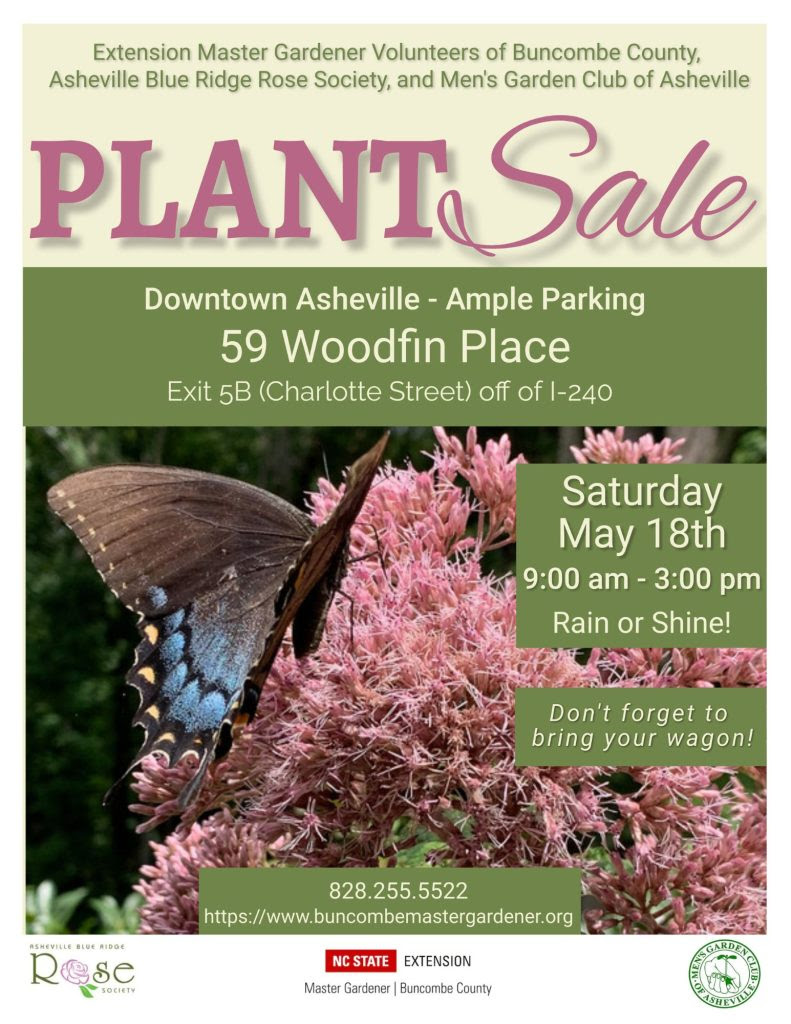
Spring Plant Sale
Keeping the future of agriculture bright
Each year, AgSouth Farm Credit supports non-profit organizations and farmers markets with grants of up to $5,000 to help in their endeavors and to further the future of agriculture in our region of Georgia, North Carolina, and South Carolina.
Grant Mission & Objectives
The AgSouth Growing Our Communities Grant’s mission is to build strong partnerships and alliances, leveraging the resources within our grant program to preserve and promote the farmer, the family, and our communities. The grant has three main objectives:
- Invest in the future of agriculture.
- Enhance and impact the quality of life in the AgSouth territory.
- Be recognized as a leading corporate citizen in the AgSouth territory.
Applications
The AgSouth Growing Our Communities Grant operates on an application-based grant system. Grants will be awarded for up to $5,000 per organization per year. To be considered for funding, organizations’ values and purpose must align with the grant program’s mission. Applications must be submitted online. You will be asked to attach a copy of your organization’s W9 to the application prior to submission. Incomplete applications cannot be accepted. Please make sure you complete all fields prior to submission.
Project Guidance
As part of the application, organizations must submit a project the grant will help fund. Examples of previously funded projects include but are not limited to:
• Providing farmers market programming for children
• Purchasing fans for a livestock arena to help cool the animals
• Developing a comprehensive chick hatching program to give tools and resources to those wanting to raise backyard flocks
• Opening a demonstration farm in conjunction with a local school district
• Purchasing grain bin rescue equipment for fire and rescue teams
• Funding a bee-keeping education program for vulnerable youths
• Purchasing an irrigation system at a local Farmers Market
• Expanding a local church garden space and adding fencing
• Hosting an annual agricultural event
• Purchasing a cargo trailer to transport livestock equipment
• Building a school greenhouse
Eligibility Considerations
Grants will be considered for programs only in the 147 counties and geographic areas where AgSouth Farm Credit conducts business. Grants will only be awarded to non-profit organizations and farmers markets and will not be awarded to individuals or private farms.
Funding Cycle
Grant applications will be accepted from April 1 to June 30th, 2024. Proposals will be reviewed and grants will be awarded in Nov-Dec of 2024. Funds awarded maybe utilized by recipients during the 2025 calendar year.
Application Deadline
The 2025 Grant Application period is now open. Applications can be received from April 1 to June 30th, 2024.
The Arts for Schools Grant supports nonprofit arts organizations and qualified teaching artists in Buncombe County, enabling them to provide arts-focused performances, residencies, workshops, and field trips for students in K-12 public schools. Through 2027, grants will also support arts-focused afterschool programs and camps thanks to an investment from Dogwood Health Trust, which awarded $15 million in multi-year funding grants to support organizations across the region providing high-quality, evidence-based out-of-school-time (OST) programs that have a high impact on young people. Grants for in-school programs range from $500-$2,000, and grants for out-of-school programs (including afterschool and camps) range from $500-$5,000. The application cycle opens May 13 and closes June 17.
Nineteen vendors will include prized annuals, carnivorous plants, cut flowers, edible shrubs, herbs, native plants, perennials, shrubs, trees, and vegetable starts from specialty plant vendors. Garden-related items will include garden décor, bee cabins, garden art and containers, wood carvings, and other special items. Members Market with home and garden related goods and services, yummy bake sale, raffle for free plants, and tons of good spirit for this important fundraiser.
A gardener’s dream sale. All are welcome to purchase from a wide variety of plant and garden vendors as well as baked goods and services from members.
Meet us in the Black Mountain Town Square parking lot from 3 to 7pm on May 17 and
from 9am to 3:30pm on May 18.
This year’s sale will feature prized annuals, carnivorous plants, cut flowers, edible shrubs, herbs, native plants, perennials, shrubs, trees, and vegetable starts from specialty plant vendors. Garden-related items will include garden décor, bee cabins, garden art and containers, wood carvings, and other special items.
What is Bonsai?
Bonsai is a challenging and rewarding horticultural activity, in which ordinary plants are grown in an extraordinary way. Through rigorously applied cultivation techniques, trees, shrubs, vines and even herbaceous plants are kept in a miniaturized state, developed into artistic shapes and then displayed in special containers.
What makes the Arboretum’s bonsai endeavor unique among all other public collections in the United States? Regional Interpretation. Visitors will find the Arboretum’s bonsai collection of more than 100 specimens carefully cultivated with a Southern Appalachian accent. The collection draws inspiration from the traditional roots of bonsai, but takes the form of a contemporary, Southern Appalachian influenced American garden. Plantings in the landscape include species and cultivars of American, European and Asian origin.
The Bonsai Exhibition Garden
Established in October 2005, The North Carolina Arboretum’s Bonsai Exhibition Garden is a world renowned garden that displays up to 50 bonsai specimens at a time. Represented are traditional Asian bonsai subjects such as Japanese maple and Chinese elm, tropical plants such as willow-leaf fig and bougainvillea, and American species such as bald cypress and limber pine. Of particular importance are the plants native to the Blue Ridge region, such as American hornbeam and eastern white pine, which enable the Arboretum to bring the thousand-year tradition of bonsai home to the mountains of Western North Carolina. Interpretive signage throughout the garden conveys information about the art and history of bonsai, and the Arboretum’s own creative approach to it.
Outdoor Bonsai Exhibition Garden
- Bonsai on Display Mid May – November; 9 a.m. – 5 p.m. daily
- Garden Open Year Round
- Parking Fees
- Personal/Standard Vehicle (up to 20′ long): $20
-
Large vehicles (21′-29′ long): $60
-
Busses and Oversize Vehicles (30′ long+): $125
- Members: Free
Apart from the parking fee, there is no other admission charge to enter the Arboretum or our facilities, except in the case of advertised ticketed events.
Sunday, May
19, 2024
Call for Grant Panelists
The AgSouth Growing Our Communities Grant
The Arts for Schools Grant
Outdoor Bonsai Exhibition Garden
GRANT SELECTION PANELS
ArtsAVL seeks reliable community members knowledgeable about Buncombe County’s arts and cultural organizations, local arts resources, and arts needs to volunteer to serve on ArtsAVL grant review panels.
ArtsAVL has 5 grant programs each fiscal year (July 1-June 30), with grant panels occurring throughout the year. Participating as a grant review panelist is a 2-4 week commitment depending on the number of applications submitted in the grant category. Applications vary based on grant program, and can range from 20-50 applications.
Panelists work with ArtsAVL staff and other panelists to evaluate grant applications, ensuring an equitable, transparent, and thorough review and ranking process. Panelists are offered a modest honorarium for their service and will be provided with detailed instructions and guidelines for review and scoring. Sufficient time is allocated for application review and scoring prior to a panelist meeting (either virtual or in person) to review scoring with ArtsAVL staff and make final recommendations.
Please note: All panelists will be required to disclose any connections to applicants and will have to recuse themselves from decisions around grant funding to those applicants. However, this does not prevent panelists from reviewing other applicants. Panelists must be 18+ and live or work in Buncombe County.
Keeping the future of agriculture bright
Each year, AgSouth Farm Credit supports non-profit organizations and farmers markets with grants of up to $5,000 to help in their endeavors and to further the future of agriculture in our region of Georgia, North Carolina, and South Carolina.
Grant Mission & Objectives
The AgSouth Growing Our Communities Grant’s mission is to build strong partnerships and alliances, leveraging the resources within our grant program to preserve and promote the farmer, the family, and our communities. The grant has three main objectives:
- Invest in the future of agriculture.
- Enhance and impact the quality of life in the AgSouth territory.
- Be recognized as a leading corporate citizen in the AgSouth territory.
Applications
The AgSouth Growing Our Communities Grant operates on an application-based grant system. Grants will be awarded for up to $5,000 per organization per year. To be considered for funding, organizations’ values and purpose must align with the grant program’s mission. Applications must be submitted online. You will be asked to attach a copy of your organization’s W9 to the application prior to submission. Incomplete applications cannot be accepted. Please make sure you complete all fields prior to submission.
Project Guidance
As part of the application, organizations must submit a project the grant will help fund. Examples of previously funded projects include but are not limited to:
• Providing farmers market programming for children
• Purchasing fans for a livestock arena to help cool the animals
• Developing a comprehensive chick hatching program to give tools and resources to those wanting to raise backyard flocks
• Opening a demonstration farm in conjunction with a local school district
• Purchasing grain bin rescue equipment for fire and rescue teams
• Funding a bee-keeping education program for vulnerable youths
• Purchasing an irrigation system at a local Farmers Market
• Expanding a local church garden space and adding fencing
• Hosting an annual agricultural event
• Purchasing a cargo trailer to transport livestock equipment
• Building a school greenhouse
Eligibility Considerations
Grants will be considered for programs only in the 147 counties and geographic areas where AgSouth Farm Credit conducts business. Grants will only be awarded to non-profit organizations and farmers markets and will not be awarded to individuals or private farms.
Funding Cycle
Grant applications will be accepted from April 1 to June 30th, 2024. Proposals will be reviewed and grants will be awarded in Nov-Dec of 2024. Funds awarded maybe utilized by recipients during the 2025 calendar year.
Application Deadline
The 2025 Grant Application period is now open. Applications can be received from April 1 to June 30th, 2024.
The Arts for Schools Grant supports nonprofit arts organizations and qualified teaching artists in Buncombe County, enabling them to provide arts-focused performances, residencies, workshops, and field trips for students in K-12 public schools. Through 2027, grants will also support arts-focused afterschool programs and camps thanks to an investment from Dogwood Health Trust, which awarded $15 million in multi-year funding grants to support organizations across the region providing high-quality, evidence-based out-of-school-time (OST) programs that have a high impact on young people. Grants for in-school programs range from $500-$2,000, and grants for out-of-school programs (including afterschool and camps) range from $500-$5,000. The application cycle opens May 13 and closes June 17.
What is Bonsai?
Bonsai is a challenging and rewarding horticultural activity, in which ordinary plants are grown in an extraordinary way. Through rigorously applied cultivation techniques, trees, shrubs, vines and even herbaceous plants are kept in a miniaturized state, developed into artistic shapes and then displayed in special containers.
What makes the Arboretum’s bonsai endeavor unique among all other public collections in the United States? Regional Interpretation. Visitors will find the Arboretum’s bonsai collection of more than 100 specimens carefully cultivated with a Southern Appalachian accent. The collection draws inspiration from the traditional roots of bonsai, but takes the form of a contemporary, Southern Appalachian influenced American garden. Plantings in the landscape include species and cultivars of American, European and Asian origin.
The Bonsai Exhibition Garden
Established in October 2005, The North Carolina Arboretum’s Bonsai Exhibition Garden is a world renowned garden that displays up to 50 bonsai specimens at a time. Represented are traditional Asian bonsai subjects such as Japanese maple and Chinese elm, tropical plants such as willow-leaf fig and bougainvillea, and American species such as bald cypress and limber pine. Of particular importance are the plants native to the Blue Ridge region, such as American hornbeam and eastern white pine, which enable the Arboretum to bring the thousand-year tradition of bonsai home to the mountains of Western North Carolina. Interpretive signage throughout the garden conveys information about the art and history of bonsai, and the Arboretum’s own creative approach to it.
Outdoor Bonsai Exhibition Garden
- Bonsai on Display Mid May – November; 9 a.m. – 5 p.m. daily
- Garden Open Year Round
- Parking Fees
- Personal/Standard Vehicle (up to 20′ long): $20
-
Large vehicles (21′-29′ long): $60
-
Busses and Oversize Vehicles (30′ long+): $125
- Members: Free
Apart from the parking fee, there is no other admission charge to enter the Arboretum or our facilities, except in the case of advertised ticketed events.
Monday, May
20, 2024
Call for Grant Panelists
The AgSouth Growing Our Communities Grant
The Arts for Schools Grant
Volunteer: Grace Covenant Community Garden
Outdoor Bonsai Exhibition Garden
GRANT SELECTION PANELS
ArtsAVL seeks reliable community members knowledgeable about Buncombe County’s arts and cultural organizations, local arts resources, and arts needs to volunteer to serve on ArtsAVL grant review panels.
ArtsAVL has 5 grant programs each fiscal year (July 1-June 30), with grant panels occurring throughout the year. Participating as a grant review panelist is a 2-4 week commitment depending on the number of applications submitted in the grant category. Applications vary based on grant program, and can range from 20-50 applications.
Panelists work with ArtsAVL staff and other panelists to evaluate grant applications, ensuring an equitable, transparent, and thorough review and ranking process. Panelists are offered a modest honorarium for their service and will be provided with detailed instructions and guidelines for review and scoring. Sufficient time is allocated for application review and scoring prior to a panelist meeting (either virtual or in person) to review scoring with ArtsAVL staff and make final recommendations.
Please note: All panelists will be required to disclose any connections to applicants and will have to recuse themselves from decisions around grant funding to those applicants. However, this does not prevent panelists from reviewing other applicants. Panelists must be 18+ and live or work in Buncombe County.
Keeping the future of agriculture bright
Each year, AgSouth Farm Credit supports non-profit organizations and farmers markets with grants of up to $5,000 to help in their endeavors and to further the future of agriculture in our region of Georgia, North Carolina, and South Carolina.
Grant Mission & Objectives
The AgSouth Growing Our Communities Grant’s mission is to build strong partnerships and alliances, leveraging the resources within our grant program to preserve and promote the farmer, the family, and our communities. The grant has three main objectives:
- Invest in the future of agriculture.
- Enhance and impact the quality of life in the AgSouth territory.
- Be recognized as a leading corporate citizen in the AgSouth territory.
Applications
The AgSouth Growing Our Communities Grant operates on an application-based grant system. Grants will be awarded for up to $5,000 per organization per year. To be considered for funding, organizations’ values and purpose must align with the grant program’s mission. Applications must be submitted online. You will be asked to attach a copy of your organization’s W9 to the application prior to submission. Incomplete applications cannot be accepted. Please make sure you complete all fields prior to submission.
Project Guidance
As part of the application, organizations must submit a project the grant will help fund. Examples of previously funded projects include but are not limited to:
• Providing farmers market programming for children
• Purchasing fans for a livestock arena to help cool the animals
• Developing a comprehensive chick hatching program to give tools and resources to those wanting to raise backyard flocks
• Opening a demonstration farm in conjunction with a local school district
• Purchasing grain bin rescue equipment for fire and rescue teams
• Funding a bee-keeping education program for vulnerable youths
• Purchasing an irrigation system at a local Farmers Market
• Expanding a local church garden space and adding fencing
• Hosting an annual agricultural event
• Purchasing a cargo trailer to transport livestock equipment
• Building a school greenhouse
Eligibility Considerations
Grants will be considered for programs only in the 147 counties and geographic areas where AgSouth Farm Credit conducts business. Grants will only be awarded to non-profit organizations and farmers markets and will not be awarded to individuals or private farms.
Funding Cycle
Grant applications will be accepted from April 1 to June 30th, 2024. Proposals will be reviewed and grants will be awarded in Nov-Dec of 2024. Funds awarded maybe utilized by recipients during the 2025 calendar year.
Application Deadline
The 2025 Grant Application period is now open. Applications can be received from April 1 to June 30th, 2024.
The Arts for Schools Grant supports nonprofit arts organizations and qualified teaching artists in Buncombe County, enabling them to provide arts-focused performances, residencies, workshops, and field trips for students in K-12 public schools. Through 2027, grants will also support arts-focused afterschool programs and camps thanks to an investment from Dogwood Health Trust, which awarded $15 million in multi-year funding grants to support organizations across the region providing high-quality, evidence-based out-of-school-time (OST) programs that have a high impact on young people. Grants for in-school programs range from $500-$2,000, and grants for out-of-school programs (including afterschool and camps) range from $500-$5,000. The application cycle opens May 13 and closes June 17.
Spring has sprung, and at the YWCA that means that our talented Nutrition team is cooking up new ways to serve fresh, in-season fruits and vegetables to the children in our Early Learning and Empowerment Child Care programs. We are so grateful to be partnering with the wonderful volunteers who operate Grace Covenant’s Community Garden to receive produce grown specifically for our kitchen! The YWCA has been partnering with Grace Covenant for three years, and we have received over 1000 pounds of healthy, local produce from the garden.
YWCA Nutrition Specialist Melinda Aponte works hard to make the most of the bounty from Grace Covenant, and she also nurtures our own YWCA garden to teach kiddos in our childcare programs healthy habits and get them in the garden. Love the idea of helping to feed children fresh, healthy foods? Volunteer with the YWCA Nutrition team this spring and summer to help out in the YW garden space.
What is Bonsai?
Bonsai is a challenging and rewarding horticultural activity, in which ordinary plants are grown in an extraordinary way. Through rigorously applied cultivation techniques, trees, shrubs, vines and even herbaceous plants are kept in a miniaturized state, developed into artistic shapes and then displayed in special containers.
What makes the Arboretum’s bonsai endeavor unique among all other public collections in the United States? Regional Interpretation. Visitors will find the Arboretum’s bonsai collection of more than 100 specimens carefully cultivated with a Southern Appalachian accent. The collection draws inspiration from the traditional roots of bonsai, but takes the form of a contemporary, Southern Appalachian influenced American garden. Plantings in the landscape include species and cultivars of American, European and Asian origin.
The Bonsai Exhibition Garden
Established in October 2005, The North Carolina Arboretum’s Bonsai Exhibition Garden is a world renowned garden that displays up to 50 bonsai specimens at a time. Represented are traditional Asian bonsai subjects such as Japanese maple and Chinese elm, tropical plants such as willow-leaf fig and bougainvillea, and American species such as bald cypress and limber pine. Of particular importance are the plants native to the Blue Ridge region, such as American hornbeam and eastern white pine, which enable the Arboretum to bring the thousand-year tradition of bonsai home to the mountains of Western North Carolina. Interpretive signage throughout the garden conveys information about the art and history of bonsai, and the Arboretum’s own creative approach to it.
Outdoor Bonsai Exhibition Garden
- Bonsai on Display Mid May – November; 9 a.m. – 5 p.m. daily
- Garden Open Year Round
- Parking Fees
- Personal/Standard Vehicle (up to 20′ long): $20
-
Large vehicles (21′-29′ long): $60
-
Busses and Oversize Vehicles (30′ long+): $125
- Members: Free
Apart from the parking fee, there is no other admission charge to enter the Arboretum or our facilities, except in the case of advertised ticketed events.
Tuesday, May
21, 2024
Call for Grant Panelists
The AgSouth Growing Our Communities Grant
The Arts for Schools Grant
Outdoor Bonsai Exhibition Garden
Sand Hill Nursery Workday
SAHC Community Farm Volunteer Work Day
GRANT SELECTION PANELS
ArtsAVL seeks reliable community members knowledgeable about Buncombe County’s arts and cultural organizations, local arts resources, and arts needs to volunteer to serve on ArtsAVL grant review panels.
ArtsAVL has 5 grant programs each fiscal year (July 1-June 30), with grant panels occurring throughout the year. Participating as a grant review panelist is a 2-4 week commitment depending on the number of applications submitted in the grant category. Applications vary based on grant program, and can range from 20-50 applications.
Panelists work with ArtsAVL staff and other panelists to evaluate grant applications, ensuring an equitable, transparent, and thorough review and ranking process. Panelists are offered a modest honorarium for their service and will be provided with detailed instructions and guidelines for review and scoring. Sufficient time is allocated for application review and scoring prior to a panelist meeting (either virtual or in person) to review scoring with ArtsAVL staff and make final recommendations.
Please note: All panelists will be required to disclose any connections to applicants and will have to recuse themselves from decisions around grant funding to those applicants. However, this does not prevent panelists from reviewing other applicants. Panelists must be 18+ and live or work in Buncombe County.
Keeping the future of agriculture bright
Each year, AgSouth Farm Credit supports non-profit organizations and farmers markets with grants of up to $5,000 to help in their endeavors and to further the future of agriculture in our region of Georgia, North Carolina, and South Carolina.
Grant Mission & Objectives
The AgSouth Growing Our Communities Grant’s mission is to build strong partnerships and alliances, leveraging the resources within our grant program to preserve and promote the farmer, the family, and our communities. The grant has three main objectives:
- Invest in the future of agriculture.
- Enhance and impact the quality of life in the AgSouth territory.
- Be recognized as a leading corporate citizen in the AgSouth territory.
Applications
The AgSouth Growing Our Communities Grant operates on an application-based grant system. Grants will be awarded for up to $5,000 per organization per year. To be considered for funding, organizations’ values and purpose must align with the grant program’s mission. Applications must be submitted online. You will be asked to attach a copy of your organization’s W9 to the application prior to submission. Incomplete applications cannot be accepted. Please make sure you complete all fields prior to submission.
Project Guidance
As part of the application, organizations must submit a project the grant will help fund. Examples of previously funded projects include but are not limited to:
• Providing farmers market programming for children
• Purchasing fans for a livestock arena to help cool the animals
• Developing a comprehensive chick hatching program to give tools and resources to those wanting to raise backyard flocks
• Opening a demonstration farm in conjunction with a local school district
• Purchasing grain bin rescue equipment for fire and rescue teams
• Funding a bee-keeping education program for vulnerable youths
• Purchasing an irrigation system at a local Farmers Market
• Expanding a local church garden space and adding fencing
• Hosting an annual agricultural event
• Purchasing a cargo trailer to transport livestock equipment
• Building a school greenhouse
Eligibility Considerations
Grants will be considered for programs only in the 147 counties and geographic areas where AgSouth Farm Credit conducts business. Grants will only be awarded to non-profit organizations and farmers markets and will not be awarded to individuals or private farms.
Funding Cycle
Grant applications will be accepted from April 1 to June 30th, 2024. Proposals will be reviewed and grants will be awarded in Nov-Dec of 2024. Funds awarded maybe utilized by recipients during the 2025 calendar year.
Application Deadline
The 2025 Grant Application period is now open. Applications can be received from April 1 to June 30th, 2024.
The Arts for Schools Grant supports nonprofit arts organizations and qualified teaching artists in Buncombe County, enabling them to provide arts-focused performances, residencies, workshops, and field trips for students in K-12 public schools. Through 2027, grants will also support arts-focused afterschool programs and camps thanks to an investment from Dogwood Health Trust, which awarded $15 million in multi-year funding grants to support organizations across the region providing high-quality, evidence-based out-of-school-time (OST) programs that have a high impact on young people. Grants for in-school programs range from $500-$2,000, and grants for out-of-school programs (including afterschool and camps) range from $500-$5,000. The application cycle opens May 13 and closes June 17.
What is Bonsai?
Bonsai is a challenging and rewarding horticultural activity, in which ordinary plants are grown in an extraordinary way. Through rigorously applied cultivation techniques, trees, shrubs, vines and even herbaceous plants are kept in a miniaturized state, developed into artistic shapes and then displayed in special containers.
What makes the Arboretum’s bonsai endeavor unique among all other public collections in the United States? Regional Interpretation. Visitors will find the Arboretum’s bonsai collection of more than 100 specimens carefully cultivated with a Southern Appalachian accent. The collection draws inspiration from the traditional roots of bonsai, but takes the form of a contemporary, Southern Appalachian influenced American garden. Plantings in the landscape include species and cultivars of American, European and Asian origin.
The Bonsai Exhibition Garden
Established in October 2005, The North Carolina Arboretum’s Bonsai Exhibition Garden is a world renowned garden that displays up to 50 bonsai specimens at a time. Represented are traditional Asian bonsai subjects such as Japanese maple and Chinese elm, tropical plants such as willow-leaf fig and bougainvillea, and American species such as bald cypress and limber pine. Of particular importance are the plants native to the Blue Ridge region, such as American hornbeam and eastern white pine, which enable the Arboretum to bring the thousand-year tradition of bonsai home to the mountains of Western North Carolina. Interpretive signage throughout the garden conveys information about the art and history of bonsai, and the Arboretum’s own creative approach to it.
Outdoor Bonsai Exhibition Garden
- Bonsai on Display Mid May – November; 9 a.m. – 5 p.m. daily
- Garden Open Year Round
- Parking Fees
- Personal/Standard Vehicle (up to 20′ long): $20
-
Large vehicles (21′-29′ long): $60
-
Busses and Oversize Vehicles (30′ long+): $125
- Members: Free
Apart from the parking fee, there is no other admission charge to enter the Arboretum or our facilities, except in the case of advertised ticketed events.
Join us for weekly workdays in the Sand Hill native tree nursery. Tasks vary and often include repotting, weeding, mulching, and other special projects to improve infrastructure and function.
Need to know
Please come dressed in work clothes with close toed shoes. Bring water and sun protection. All other gear and supplies are provided.
Join us for a public volunteer workday at the SAHC Community Farm, nestled in the pastoral community of Alexander, North Carolina. As the splendor of spring unfolds, we invite you to roll up your sleeves and help us to steward our beautiful farm.
We welcome volunteers of all ages and backgrounds to join us for a day of camaraderie, purposeful work, and connection with nature. Our public volunteer workday offers a hands-on opportunity to engage with the land, learn sustainable farming practices, and make a tangible impact on our local ecosystem.
Activities may include:
- Planting: Embrace the rhythm of the season as we sow seeds, transplant seedlings, and nurture the growth of vibrant crops that will sustain our community.
- Weeding and Mulching: Partner with fellow volunteers to tend to the soil, clearing away invasive species and spreading nourishing mulch to promote healthy plant growth.
- Trail Maintenance: Explore the beauty of our farm while contributing to its upkeep by maintaining trails, clearing debris, and enhancing accessibility for visitors.
- Environmental Restoration: Engage in projects aimed at restoring native habitats, protecting wildlife corridors, and fostering biodiversity within our landscape.
- Community Building: Forge meaningful connections with fellow volunteers as we work together towards a shared vision of environmental stewardship and community resilience.
No prior experience is necessary – just bring your enthusiasm, a willingness to learn, and a spirit of collaboration. Gloves, tools, will be provided.
Wednesday, May
22, 2024
Call for Grant Panelists
The AgSouth Growing Our Communities Grant
The Arts for Schools Grant
Volunteer: Grace Covenant Community Garden
Outdoor Bonsai Exhibition Garden
GRANT SELECTION PANELS
ArtsAVL seeks reliable community members knowledgeable about Buncombe County’s arts and cultural organizations, local arts resources, and arts needs to volunteer to serve on ArtsAVL grant review panels.
ArtsAVL has 5 grant programs each fiscal year (July 1-June 30), with grant panels occurring throughout the year. Participating as a grant review panelist is a 2-4 week commitment depending on the number of applications submitted in the grant category. Applications vary based on grant program, and can range from 20-50 applications.
Panelists work with ArtsAVL staff and other panelists to evaluate grant applications, ensuring an equitable, transparent, and thorough review and ranking process. Panelists are offered a modest honorarium for their service and will be provided with detailed instructions and guidelines for review and scoring. Sufficient time is allocated for application review and scoring prior to a panelist meeting (either virtual or in person) to review scoring with ArtsAVL staff and make final recommendations.
Please note: All panelists will be required to disclose any connections to applicants and will have to recuse themselves from decisions around grant funding to those applicants. However, this does not prevent panelists from reviewing other applicants. Panelists must be 18+ and live or work in Buncombe County.
Keeping the future of agriculture bright
Each year, AgSouth Farm Credit supports non-profit organizations and farmers markets with grants of up to $5,000 to help in their endeavors and to further the future of agriculture in our region of Georgia, North Carolina, and South Carolina.
Grant Mission & Objectives
The AgSouth Growing Our Communities Grant’s mission is to build strong partnerships and alliances, leveraging the resources within our grant program to preserve and promote the farmer, the family, and our communities. The grant has three main objectives:
- Invest in the future of agriculture.
- Enhance and impact the quality of life in the AgSouth territory.
- Be recognized as a leading corporate citizen in the AgSouth territory.
Applications
The AgSouth Growing Our Communities Grant operates on an application-based grant system. Grants will be awarded for up to $5,000 per organization per year. To be considered for funding, organizations’ values and purpose must align with the grant program’s mission. Applications must be submitted online. You will be asked to attach a copy of your organization’s W9 to the application prior to submission. Incomplete applications cannot be accepted. Please make sure you complete all fields prior to submission.
Project Guidance
As part of the application, organizations must submit a project the grant will help fund. Examples of previously funded projects include but are not limited to:
• Providing farmers market programming for children
• Purchasing fans for a livestock arena to help cool the animals
• Developing a comprehensive chick hatching program to give tools and resources to those wanting to raise backyard flocks
• Opening a demonstration farm in conjunction with a local school district
• Purchasing grain bin rescue equipment for fire and rescue teams
• Funding a bee-keeping education program for vulnerable youths
• Purchasing an irrigation system at a local Farmers Market
• Expanding a local church garden space and adding fencing
• Hosting an annual agricultural event
• Purchasing a cargo trailer to transport livestock equipment
• Building a school greenhouse
Eligibility Considerations
Grants will be considered for programs only in the 147 counties and geographic areas where AgSouth Farm Credit conducts business. Grants will only be awarded to non-profit organizations and farmers markets and will not be awarded to individuals or private farms.
Funding Cycle
Grant applications will be accepted from April 1 to June 30th, 2024. Proposals will be reviewed and grants will be awarded in Nov-Dec of 2024. Funds awarded maybe utilized by recipients during the 2025 calendar year.
Application Deadline
The 2025 Grant Application period is now open. Applications can be received from April 1 to June 30th, 2024.
The Arts for Schools Grant supports nonprofit arts organizations and qualified teaching artists in Buncombe County, enabling them to provide arts-focused performances, residencies, workshops, and field trips for students in K-12 public schools. Through 2027, grants will also support arts-focused afterschool programs and camps thanks to an investment from Dogwood Health Trust, which awarded $15 million in multi-year funding grants to support organizations across the region providing high-quality, evidence-based out-of-school-time (OST) programs that have a high impact on young people. Grants for in-school programs range from $500-$2,000, and grants for out-of-school programs (including afterschool and camps) range from $500-$5,000. The application cycle opens May 13 and closes June 17.
Spring has sprung, and at the YWCA that means that our talented Nutrition team is cooking up new ways to serve fresh, in-season fruits and vegetables to the children in our Early Learning and Empowerment Child Care programs. We are so grateful to be partnering with the wonderful volunteers who operate Grace Covenant’s Community Garden to receive produce grown specifically for our kitchen! The YWCA has been partnering with Grace Covenant for three years, and we have received over 1000 pounds of healthy, local produce from the garden.
YWCA Nutrition Specialist Melinda Aponte works hard to make the most of the bounty from Grace Covenant, and she also nurtures our own YWCA garden to teach kiddos in our childcare programs healthy habits and get them in the garden. Love the idea of helping to feed children fresh, healthy foods? Volunteer with the YWCA Nutrition team this spring and summer to help out in the YW garden space.
What is Bonsai?
Bonsai is a challenging and rewarding horticultural activity, in which ordinary plants are grown in an extraordinary way. Through rigorously applied cultivation techniques, trees, shrubs, vines and even herbaceous plants are kept in a miniaturized state, developed into artistic shapes and then displayed in special containers.
What makes the Arboretum’s bonsai endeavor unique among all other public collections in the United States? Regional Interpretation. Visitors will find the Arboretum’s bonsai collection of more than 100 specimens carefully cultivated with a Southern Appalachian accent. The collection draws inspiration from the traditional roots of bonsai, but takes the form of a contemporary, Southern Appalachian influenced American garden. Plantings in the landscape include species and cultivars of American, European and Asian origin.
The Bonsai Exhibition Garden
Established in October 2005, The North Carolina Arboretum’s Bonsai Exhibition Garden is a world renowned garden that displays up to 50 bonsai specimens at a time. Represented are traditional Asian bonsai subjects such as Japanese maple and Chinese elm, tropical plants such as willow-leaf fig and bougainvillea, and American species such as bald cypress and limber pine. Of particular importance are the plants native to the Blue Ridge region, such as American hornbeam and eastern white pine, which enable the Arboretum to bring the thousand-year tradition of bonsai home to the mountains of Western North Carolina. Interpretive signage throughout the garden conveys information about the art and history of bonsai, and the Arboretum’s own creative approach to it.
Outdoor Bonsai Exhibition Garden
- Bonsai on Display Mid May – November; 9 a.m. – 5 p.m. daily
- Garden Open Year Round
- Parking Fees
- Personal/Standard Vehicle (up to 20′ long): $20
-
Large vehicles (21′-29′ long): $60
-
Busses and Oversize Vehicles (30′ long+): $125
- Members: Free
Apart from the parking fee, there is no other admission charge to enter the Arboretum or our facilities, except in the case of advertised ticketed events.
Thursday, May
23, 2024
Call for Grant Panelists
The AgSouth Growing Our Communities Grant
The Arts for Schools Grant
Outdoor Bonsai Exhibition Garden
GRANT SELECTION PANELS
ArtsAVL seeks reliable community members knowledgeable about Buncombe County’s arts and cultural organizations, local arts resources, and arts needs to volunteer to serve on ArtsAVL grant review panels.
ArtsAVL has 5 grant programs each fiscal year (July 1-June 30), with grant panels occurring throughout the year. Participating as a grant review panelist is a 2-4 week commitment depending on the number of applications submitted in the grant category. Applications vary based on grant program, and can range from 20-50 applications.
Panelists work with ArtsAVL staff and other panelists to evaluate grant applications, ensuring an equitable, transparent, and thorough review and ranking process. Panelists are offered a modest honorarium for their service and will be provided with detailed instructions and guidelines for review and scoring. Sufficient time is allocated for application review and scoring prior to a panelist meeting (either virtual or in person) to review scoring with ArtsAVL staff and make final recommendations.
Please note: All panelists will be required to disclose any connections to applicants and will have to recuse themselves from decisions around grant funding to those applicants. However, this does not prevent panelists from reviewing other applicants. Panelists must be 18+ and live or work in Buncombe County.
Keeping the future of agriculture bright
Each year, AgSouth Farm Credit supports non-profit organizations and farmers markets with grants of up to $5,000 to help in their endeavors and to further the future of agriculture in our region of Georgia, North Carolina, and South Carolina.
Grant Mission & Objectives
The AgSouth Growing Our Communities Grant’s mission is to build strong partnerships and alliances, leveraging the resources within our grant program to preserve and promote the farmer, the family, and our communities. The grant has three main objectives:
- Invest in the future of agriculture.
- Enhance and impact the quality of life in the AgSouth territory.
- Be recognized as a leading corporate citizen in the AgSouth territory.
Applications
The AgSouth Growing Our Communities Grant operates on an application-based grant system. Grants will be awarded for up to $5,000 per organization per year. To be considered for funding, organizations’ values and purpose must align with the grant program’s mission. Applications must be submitted online. You will be asked to attach a copy of your organization’s W9 to the application prior to submission. Incomplete applications cannot be accepted. Please make sure you complete all fields prior to submission.
Project Guidance
As part of the application, organizations must submit a project the grant will help fund. Examples of previously funded projects include but are not limited to:
• Providing farmers market programming for children
• Purchasing fans for a livestock arena to help cool the animals
• Developing a comprehensive chick hatching program to give tools and resources to those wanting to raise backyard flocks
• Opening a demonstration farm in conjunction with a local school district
• Purchasing grain bin rescue equipment for fire and rescue teams
• Funding a bee-keeping education program for vulnerable youths
• Purchasing an irrigation system at a local Farmers Market
• Expanding a local church garden space and adding fencing
• Hosting an annual agricultural event
• Purchasing a cargo trailer to transport livestock equipment
• Building a school greenhouse
Eligibility Considerations
Grants will be considered for programs only in the 147 counties and geographic areas where AgSouth Farm Credit conducts business. Grants will only be awarded to non-profit organizations and farmers markets and will not be awarded to individuals or private farms.
Funding Cycle
Grant applications will be accepted from April 1 to June 30th, 2024. Proposals will be reviewed and grants will be awarded in Nov-Dec of 2024. Funds awarded maybe utilized by recipients during the 2025 calendar year.
Application Deadline
The 2025 Grant Application period is now open. Applications can be received from April 1 to June 30th, 2024.
The Arts for Schools Grant supports nonprofit arts organizations and qualified teaching artists in Buncombe County, enabling them to provide arts-focused performances, residencies, workshops, and field trips for students in K-12 public schools. Through 2027, grants will also support arts-focused afterschool programs and camps thanks to an investment from Dogwood Health Trust, which awarded $15 million in multi-year funding grants to support organizations across the region providing high-quality, evidence-based out-of-school-time (OST) programs that have a high impact on young people. Grants for in-school programs range from $500-$2,000, and grants for out-of-school programs (including afterschool and camps) range from $500-$5,000. The application cycle opens May 13 and closes June 17.
What is Bonsai?
Bonsai is a challenging and rewarding horticultural activity, in which ordinary plants are grown in an extraordinary way. Through rigorously applied cultivation techniques, trees, shrubs, vines and even herbaceous plants are kept in a miniaturized state, developed into artistic shapes and then displayed in special containers.
What makes the Arboretum’s bonsai endeavor unique among all other public collections in the United States? Regional Interpretation. Visitors will find the Arboretum’s bonsai collection of more than 100 specimens carefully cultivated with a Southern Appalachian accent. The collection draws inspiration from the traditional roots of bonsai, but takes the form of a contemporary, Southern Appalachian influenced American garden. Plantings in the landscape include species and cultivars of American, European and Asian origin.
The Bonsai Exhibition Garden
Established in October 2005, The North Carolina Arboretum’s Bonsai Exhibition Garden is a world renowned garden that displays up to 50 bonsai specimens at a time. Represented are traditional Asian bonsai subjects such as Japanese maple and Chinese elm, tropical plants such as willow-leaf fig and bougainvillea, and American species such as bald cypress and limber pine. Of particular importance are the plants native to the Blue Ridge region, such as American hornbeam and eastern white pine, which enable the Arboretum to bring the thousand-year tradition of bonsai home to the mountains of Western North Carolina. Interpretive signage throughout the garden conveys information about the art and history of bonsai, and the Arboretum’s own creative approach to it.
Outdoor Bonsai Exhibition Garden
- Bonsai on Display Mid May – November; 9 a.m. – 5 p.m. daily
- Garden Open Year Round
- Parking Fees
- Personal/Standard Vehicle (up to 20′ long): $20
-
Large vehicles (21′-29′ long): $60
-
Busses and Oversize Vehicles (30′ long+): $125
- Members: Free
Apart from the parking fee, there is no other admission charge to enter the Arboretum or our facilities, except in the case of advertised ticketed events.