
Being a mile high has its advantages. From atop Grandfather Mountain, visitors can grab a front-row seat to one of nature’s most stunning spectacles — thousands of raptors migrating over the mountains and heading south toward their wintering grounds. Observe the raptors during the annual Hawk Watch, in which official counters and volunteers note the number of passersby in the sky throughout the entire month of September.
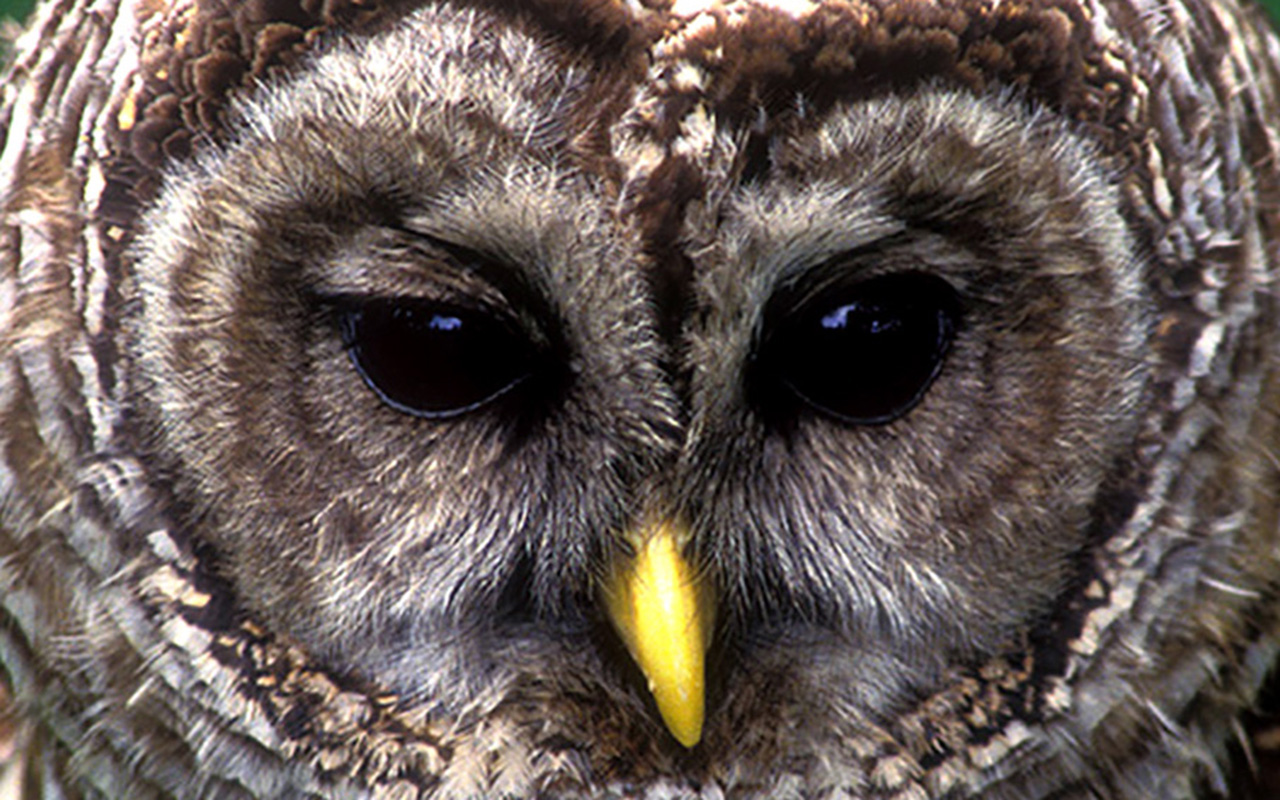
Raptors are birds of prey, such as hawks, eagles, owls and vultures. The telltale signs of the raptor are sharp talons, a hooked upper bill and incredible eyesight. While some raptors remain in place during winter, most will travel south, where food is more abundant.
Raptor migration looks very different from what many might imagine. Spectators will not see the “flying V” formation, as with geese, for instance. Instead of flapping, raptors spread their wings and soar by catching the warm updrafts that rise from the mountains.
Grandfather Mountain is a prime spot for viewing this phenomena, because it sits along the eastern escarpment of the Appalachian Mountains, and its rocky peaks generate strong thermal uplifts and allow prime visibility. Perhaps the most astounding visual display is the broad-winged hawk, which migrates in groups of hundreds or thousands, called kettles. Those sightings are most common around the second to third week of September.
During 2015’s Hawk Watch, Grandfather Mountain president and executive director Jesse Pope spotted a kettle of some 4,800 broad-wings passing over in less than 30 minutes, along with numerous other kettles of considerable size, amounting to nearly 10,000 raptors in one day. Read about the 2022 Hawk Watch.
Aside from offering a visual spectacle, Hawk Watch serves an important purpose. The annual counts from Grandfather Mountain and other locations help track hawk populations and migration routes over time and provide important data to inform land management decisions. In fact, Grandfather Mountain is one of more than 300 Hawk Watch sites officially designated by the Hawk Migration Association of North America.
Hawk Watch runs throughout the entire month of September, and counts are conducted every day the weather permits — hawks don’t typically fly in fog or storms — on Linville Peak (across the Mile High Swinging Bridge) and Half-Moon Overlook and will be posted daily at HawkCount.org.
Spectators are welcome to observe the migration for free during their visit to Grandfather Mountain. Park staff and Hawk Watch counters are on hand to answer any questions and provide additional information.





 Gary Malvern, professor of music at Furman University, is a native of Buffalo, New York. He received a bachelor’s degree in performance and music history from Oberlin College Conservatory, and a master’s and doctoral degrees from Yale University. Dr. Malvern has served as principal trumpet of the National Repertory Orchestra and the American Wind Symphony, and he served for 25 years as principal trumpet of the Greenville Symphony Orchestra. Malvern has been artist in residence at universities in Western Australia, and at conservatories in Northern Italy. Dr. Malvern frequently records for Nuovo Musiche per Tromba (New Music for Trumpet).
 Bronwen Forbay
 Keith Jameson has enjoyed a 28-year career as a professional opera and concert singer. He has been heard nationally at the Metropolitan Opera, Lyric Opera of Chicago, San Francisco Opera, Houston Grand Opera, Los Angeles Opera, New York City Opera, The Santa Fe Opera; and internationally with opera companies in Italy, Spain, Belgium, Brazil, England, and Japan. He can be seen in Carmen and Falstaff, on DVD with the Metropolitan Opera, and heard with Boston Baroque in Haydn’s The Creation and Lord Nelson Mass, on CD. He is a graduate of Furman University and the Eastman School of Music.
 Bruce Schoonmaker