Upcoming events and things to do in Asheville, NC. Below is a list of events for festivals, concerts, art exhibitions, group meetups and more.

Interested in adding an event to our calendar? Please click the green “Post Your Event” button below.

Saturday, July 17, 2021
The North Carolina Arboretum: Guided Trail Walk
Jul 17 @ 10:00 am – 12:00 pm
The North Carolina Arboretum

Hit the trails and learn more about The North Carolina Arboretum’s botanically diverse forest with the return of guided trail walks in 2021! From April — October, this free hiking program is led by trained volunteer guides who take small groups of participants along woodland trails and through a variety of forest types. Depending on the season and each guide’s area of expertise, topics of discussion may include wildflowers, plant and tree identification, natural history and more.

Guided trail walks are limited to 10 people, including the guide, and are not recommended for guests under 16 years of age. Groups depart from the Baker Visitor Center Lobby on Tuesdays at 1 p.m. and Saturdays at 10 a.m. and 1 p.m..

Walks last 1.5 – 2.5 hours, are approximately one to two miles in length. As this program is held rain or shine, all participants should dress appropriately for the weather.

Register In Advance

Space is limited and advance registration is encouraged. Pre-registered participants must check in at the Baker Information Desk no later than 10 minutes before the scheduled program to keep their spot. Unclaimed spots will be offered to other guests.

Guests may sign up for trail walks in the following ways:

  • Pre-register online, using the the link below.
  • Sign up in-person at the Baker Information Desk.


Walks are FREE; however, donations to The North Carolina Arboretum Society are appreciated. Regular parking fees apply. Arboretum Society Members always park free.

Sunday, July 18, 2021
Organic Growers School Journeyperson Program
Jul 18 all-day
Organic Growers School

A year-long program

Individualized to meet you where you are
in your farm business journey

Applications are due by September 18, 2021.

Starting a farm is a formidable challenge, but keeping a farm business going, growing and thriving is even harder! The Journeyperson Program is designed for farmers who have been independently farming for 3 or more years, and are serious about operating farm businesses in the Southern Appalachian region. This program will give you the space and time to work on your business while making connections that deepen your peer-to-peer support.


 This 12-month program starts in November 2021 and ends in October 2022.

What is unique about this program?

Participants can use this program as a tangible step toward achieving their farm goals, and make significant contributions to the agricultural community and economy. This program is designed to give tailored guidance and support for your farm business to answer questions of: scale, market access, land access, risk management, understanding cash flow, and enterprise innovation. You will leave this program with a responsive, adaptable business plan to help your farm achieve long-term farm viability and resilience.

Organic Growers School Mentor Services
Jul 18 all-day
Organic Growers School

Mentor Services

Our Mentor Services help support beginning and intermediate farmers by pairing them with experienced, regional farmers who can provide them with one-on-one practical planning skills.
These skills include systems management, marketing and business development, farm design and production, and connecting to the regional farming community
Vegetable Gardening: Harvesting Tips!
Jul 18 all-day
Online

Your vegetable garden is likely approaching peak production time—but when and how to harvest? Even if you are a pro, here’s how to make sure those caring for your precious crops while you’re away know when to pick!

What matters about harvest time?

  • Harvest stage affects flavor and yields:
    • Picking too soon not only reduces the amount of food your garden produces but also may mean missing that perfectly ripened taste—although not all vegetables lose flavor after picking.
    • Waiting too long definitely means missing the best flavor—think sweet corn turned starchy—and your produce actually spoils. Crops literally go to seed have accomplished their goal and will stop producing!
  • Factors that affect harvest and storage.
    • Warmer temperatures after picking can affect flavor—crops like peas and sweet corn that turn starchy, for example, need immediate cooling. Joseph Masabni of Texas A&M Extension, advises “harvest these vegetables early in the morning or right before you intend to use them.”
    • Not all crops benefit from refrigeration, however! And humidity levels and air circulation are important, too! If you’re not going to use your bounty immediately, some crops, such as garlic, dry onions, potatoes, and tomatoes are best stored only at room temperature, according to UC-Davis Post Harvest Technology specialists (see below). They also recommend that cucumbers, eggplants, and peppers be refrigerated only for 1 to 3 days and then used as soon as you remove them from the cold.
    • Advise those harvesting in your absence how often you check your crops, and which are most time-sensitive!

 Things to look for when you harvest

Harvesting takes more time than you’d expect—look carefully for items to pick amongst all those leaves and vines. This makes harvesting a great time to give your garden plants a quick check-up!

  • Size matters!
    • Jokes abound about baseball-bat-size zucchini, but squash aren’t the only crops that can grow out of useful size.
    • If you intend to eat fresh beans rather than saving them to use dry, the beans need to just start to fill out their pods. 
      These red noodle beans need picking!


  • Color changes are usually important, too.
    • Tomatoes turning red are an obvious example, but how red is the best time for picking? Maybe earlier than you think! Picking at the “breaker” stage rather than fully red means your tomatoes will continue to ripen indoors, taste vine-ripened, but won’t suffer sunscald, or damage from insects or birds. 
      Tomatoes will develop full flavor ripened indoors if picked once they begin to show some color.


    • Cucumbers should still be uniformly green, not starting to yellow. 
      Cucumbers are best picked green rather than starting to yellow.


    •  Eggplants should be purple (light or dark depending on the variety), but still glossy, not dull 
      Pick eggplants while the skin is still glossy.


    • Watermelons, on the other hand, should develop a duller, rougher surface and the spot touching the ground should be yellowing, not white 
      Ripe watermelon skin should be starting to dull and roughen and the ground spot turning yellow.


    • .Detecting defects may mean removing fruits before they take any more resources from the plant—think blossom-end rot on tomatoes or peppers—or harvesting while part of the crop is still salvageable—such as a nip out of an otherwise healthy tomato.
    • Damage may alert you to insect infestations—minimize or eliminate, by hand-picking the culprits—such as snails or slugs—or treating to prevent further damage—wash away aphids on greens or treating pickleworm infestations of cucumbers and squash with pesticides, for example. Learn which “bugs” you see are pests and which are helpful predators!
    • Harvest “helpers” will be more eager to volunteer if they pick at the right time—and you won’t find all your tomatoes gone despite their size or plants loaded with overripe items bringing production to a halt. Alerting you to any emerging problems is another bonus.

“Harvesting” spent plants?

While picking your crops pick off dead leaves, spent blossoms, and trim errant runners to keep plants looking good and productive. Knowledgeable helpers can perform these tasks.

In WNC, most vegetable garden plants are annuals, or treated as such, so when you harvest, evaluate when it’s time to pull the whole plant—it may be too risky to ask short-term caregivers to make this decision!

  • Is the plant diseased? If there are signs of disease, either do what you can to remove diseased portions, treat the problem, or remove the entire plant.
  • Is production slowing?
    • Review fertilizing or watering practices to improve yields. Most crops need an inch of rain a week to prosper—water established plants deeply once a week if rains are insufficient. Check your crops’ needs for fertilizer and the application rates recommended for the fertilizers you are using.
    • Extreme temperatures may interfere with fruit set or how your crops ripen. Be patient if better weather will solve the problem! Note, though, that spring crops that fade with high temperatures are long gone; so too, frosts will damage tender crops, so harvest these before freezing temperatures.
    • Once you’ve decided your plants have passed peak production, pull the plants and consider planting a fall crop. See the calendar below for all the crops you can plant in August for a bountiful autumn harvest!

 Article by Buncombe County Extension Master GardenerSM Volunteers

 For more information:

When to harvest specific crops: https://content.ces.ncsu.edu/extension-gardener-handbook/16-vegetable-gardening#vegetableharvestingguidelines

https://agrilifeextension.tamu.edu/library/gardening/harvesting-handling-vegetables-garden/

Ripening after harvest:

https://gardenprofessors.com/ripening/

https://www.johnson.k-state.edu/lawn-garden/agent-articles/vegetables/harvest-ripen-tomatoes.html

Storing produce:

http://postharvest.ucdavis.edu/files/230110.pdf

Planting times for WNC:

https://content.ces.ncsu.edu/western-north-carolina-planting-calendar-for-annual-vegetables-fruits-and-herbs

Wild Art Sculpture Showcase
Jul 18 @ 8:00 am – 9:00 pm
NC Arboretum

The North Carolina Arboretum is going wild for art and nature in 2021 with Wild Art! On view April 1 through September 26, this outdoor sculpture exhibition features works by 17 local and national artists drawing inspiration from the natural environment. Situated throughout the Arboretum’s spacious, open-air gardens, the show offers guests a doorway into the wild world from the comfort and safety of cultivated landscapes transformed by art.

The 18 sculptures on display represent a variety of approaches to the theme of “wild art,” from the literal to the abstract, and are crafted from a diverse array of materials that will delight and inspire. Let your imagination take you on a wild journey into the world of plants and animals near and far with Wild Art at The North Carolina Arboretum.

The exhibit is available to all guests during normal Arboretum hours, and there is no admission cost to view the sculptures beyond our usual parking fee of $16 per personal vehicle.

Biltmore Gardens Railway
Jul 18 @ 9:30 am – 6:00 pm
Biltmore

Included with admission

Our fun-for-all-ages botanical model train displays invite you to experience our grounds in an engaging new way. Located in the Conservatory in the Walled Garden, the displays feature replicas of structures connected with Biltmore and its founder George Vanderbilt. Each beautifully executed piece was handcrafted from such natural elements as leaves, bark, and twigs.

In compliance with state and local mandates related to COVID-19, all guests must enter the Conservatory via the ADA entrance in the back and follow a one-way route.

Monday, July 19, 2021
Gardening Video: Introduction to Botanical Dyeing
Jul 19 all-day
Online

The Learning Garden presents:
Introduction to Botanical Dyeing

Pat Strang, EMGV
Joyce Trumba, EMGV

Learn the basic techniques for turning common plants into pigments to dye any kind of natural fiber. Pat and Joyce’s presentation includes a short history of botanical dyeing and a discussion of easy plants to grow in your garden to get a variety of colors. Using common equipment you have around the house, you will learn how to prepare fiber to get the most long-lasting color. Pat and Joyce will demonstrate the dyeing technique and show the finished results at the end of the presentation.

Vegetable Gardening: Harvesting Tips!
Jul 19 all-day
Online

Your vegetable garden is likely approaching peak production time—but when and how to harvest? Even if you are a pro, here’s how to make sure those caring for your precious crops while you’re away know when to pick!

What matters about harvest time?

  • Harvest stage affects flavor and yields:
    • Picking too soon not only reduces the amount of food your garden produces but also may mean missing that perfectly ripened taste—although not all vegetables lose flavor after picking.
    • Waiting too long definitely means missing the best flavor—think sweet corn turned starchy—and your produce actually spoils. Crops literally go to seed have accomplished their goal and will stop producing!
  • Factors that affect harvest and storage.
    • Warmer temperatures after picking can affect flavor—crops like peas and sweet corn that turn starchy, for example, need immediate cooling. Joseph Masabni of Texas A&M Extension, advises “harvest these vegetables early in the morning or right before you intend to use them.”
    • Not all crops benefit from refrigeration, however! And humidity levels and air circulation are important, too! If you’re not going to use your bounty immediately, some crops, such as garlic, dry onions, potatoes, and tomatoes are best stored only at room temperature, according to UC-Davis Post Harvest Technology specialists (see below). They also recommend that cucumbers, eggplants, and peppers be refrigerated only for 1 to 3 days and then used as soon as you remove them from the cold.
    • Advise those harvesting in your absence how often you check your crops, and which are most time-sensitive!

 Things to look for when you harvest

Harvesting takes more time than you’d expect—look carefully for items to pick amongst all those leaves and vines. This makes harvesting a great time to give your garden plants a quick check-up!

  • Size matters!
    • Jokes abound about baseball-bat-size zucchini, but squash aren’t the only crops that can grow out of useful size.
    • If you intend to eat fresh beans rather than saving them to use dry, the beans need to just start to fill out their pods. 
      These red noodle beans need picking!


  • Color changes are usually important, too.
    • Tomatoes turning red are an obvious example, but how red is the best time for picking? Maybe earlier than you think! Picking at the “breaker” stage rather than fully red means your tomatoes will continue to ripen indoors, taste vine-ripened, but won’t suffer sunscald, or damage from insects or birds. 
      Tomatoes will develop full flavor ripened indoors if picked once they begin to show some color.


    • Cucumbers should still be uniformly green, not starting to yellow. 
      Cucumbers are best picked green rather than starting to yellow.


    •  Eggplants should be purple (light or dark depending on the variety), but still glossy, not dull 
      Pick eggplants while the skin is still glossy.


    • Watermelons, on the other hand, should develop a duller, rougher surface and the spot touching the ground should be yellowing, not white 
      Ripe watermelon skin should be starting to dull and roughen and the ground spot turning yellow.


    • .Detecting defects may mean removing fruits before they take any more resources from the plant—think blossom-end rot on tomatoes or peppers—or harvesting while part of the crop is still salvageable—such as a nip out of an otherwise healthy tomato.
    • Damage may alert you to insect infestations—minimize or eliminate, by hand-picking the culprits—such as snails or slugs—or treating to prevent further damage—wash away aphids on greens or treating pickleworm infestations of cucumbers and squash with pesticides, for example. Learn which “bugs” you see are pests and which are helpful predators!
    • Harvest “helpers” will be more eager to volunteer if they pick at the right time—and you won’t find all your tomatoes gone despite their size or plants loaded with overripe items bringing production to a halt. Alerting you to any emerging problems is another bonus.

“Harvesting” spent plants?

While picking your crops pick off dead leaves, spent blossoms, and trim errant runners to keep plants looking good and productive. Knowledgeable helpers can perform these tasks.

In WNC, most vegetable garden plants are annuals, or treated as such, so when you harvest, evaluate when it’s time to pull the whole plant—it may be too risky to ask short-term caregivers to make this decision!

  • Is the plant diseased? If there are signs of disease, either do what you can to remove diseased portions, treat the problem, or remove the entire plant.
  • Is production slowing?
    • Review fertilizing or watering practices to improve yields. Most crops need an inch of rain a week to prosper—water established plants deeply once a week if rains are insufficient. Check your crops’ needs for fertilizer and the application rates recommended for the fertilizers you are using.
    • Extreme temperatures may interfere with fruit set or how your crops ripen. Be patient if better weather will solve the problem! Note, though, that spring crops that fade with high temperatures are long gone; so too, frosts will damage tender crops, so harvest these before freezing temperatures.
    • Once you’ve decided your plants have passed peak production, pull the plants and consider planting a fall crop. See the calendar below for all the crops you can plant in August for a bountiful autumn harvest!

 Article by Buncombe County Extension Master GardenerSM Volunteers

 For more information:

When to harvest specific crops: https://content.ces.ncsu.edu/extension-gardener-handbook/16-vegetable-gardening#vegetableharvestingguidelines

https://agrilifeextension.tamu.edu/library/gardening/harvesting-handling-vegetables-garden/

Ripening after harvest:

https://gardenprofessors.com/ripening/

https://www.johnson.k-state.edu/lawn-garden/agent-articles/vegetables/harvest-ripen-tomatoes.html

Storing produce:

http://postharvest.ucdavis.edu/files/230110.pdf

Planting times for WNC:

https://content.ces.ncsu.edu/western-north-carolina-planting-calendar-for-annual-vegetables-fruits-and-herbs

Wild Art Sculpture Showcase
Jul 19 @ 8:00 am – 9:00 pm
NC Arboretum

The North Carolina Arboretum is going wild for art and nature in 2021 with Wild Art! On view April 1 through September 26, this outdoor sculpture exhibition features works by 17 local and national artists drawing inspiration from the natural environment. Situated throughout the Arboretum’s spacious, open-air gardens, the show offers guests a doorway into the wild world from the comfort and safety of cultivated landscapes transformed by art.

The 18 sculptures on display represent a variety of approaches to the theme of “wild art,” from the literal to the abstract, and are crafted from a diverse array of materials that will delight and inspire. Let your imagination take you on a wild journey into the world of plants and animals near and far with Wild Art at The North Carolina Arboretum.

The exhibit is available to all guests during normal Arboretum hours, and there is no admission cost to view the sculptures beyond our usual parking fee of $16 per personal vehicle.

Fairy Trail 2021
Jul 19 @ 9:00 am – 4:00 pm
Bullington Gardens

Fairy Trail 2021

Join us on the magical Fairy Trail where your imagination is the only limit.

Developed by Fairies and dedicated volunteers, Bullington Gardens’ Fairy Trail is a whimsical treat for the young and the young at heart. Featuring playful vignettes and villages, the fairy trail will charm you with its thoughtful design, eye catching displays and secret woodland trail.

Rules of the trail:

Do not move or rearrange fairy displays. The fairies are very fond of their own decorating.

Do not leave trash on the trail. Fairies do not like litter in their town.

Please ensure children and pets are supervised at all times. Dogs and loud noises can scare the fairies into hiding.

Do not disturb wildlife or vegetation. The fairies depend on the vegetation to build their homes.

The trail is one way only. Please stay on the trail at all times.

P.S. the Fairies would like us to remind you that we are a non-profit and donations are greatly appreciated. Help us keep the fairies living in the style with which they’ve become accustomed.

Bullington Gardens and the Fairy Trail are closed on Sundays.

Biltmore Gardens Railway
Jul 19 @ 9:30 am – 6:00 pm
Biltmore

Included with admission

Our fun-for-all-ages botanical model train displays invite you to experience our grounds in an engaging new way. Located in the Conservatory in the Walled Garden, the displays feature replicas of structures connected with Biltmore and its founder George Vanderbilt. Each beautifully executed piece was handcrafted from such natural elements as leaves, bark, and twigs.

In compliance with state and local mandates related to COVID-19, all guests must enter the Conservatory via the ADA entrance in the back and follow a one-way route.

Tuesday, July 20, 2021
Gardening Video: Introduction to Botanical Dyeing
Jul 20 all-day
Online

The Learning Garden presents:
Introduction to Botanical Dyeing

Pat Strang, EMGV
Joyce Trumba, EMGV

Learn the basic techniques for turning common plants into pigments to dye any kind of natural fiber. Pat and Joyce’s presentation includes a short history of botanical dyeing and a discussion of easy plants to grow in your garden to get a variety of colors. Using common equipment you have around the house, you will learn how to prepare fiber to get the most long-lasting color. Pat and Joyce will demonstrate the dyeing technique and show the finished results at the end of the presentation.

Vegetable Gardening: Harvesting Tips!
Jul 20 all-day
Online

Your vegetable garden is likely approaching peak production time—but when and how to harvest? Even if you are a pro, here’s how to make sure those caring for your precious crops while you’re away know when to pick!

What matters about harvest time?

  • Harvest stage affects flavor and yields:
    • Picking too soon not only reduces the amount of food your garden produces but also may mean missing that perfectly ripened taste—although not all vegetables lose flavor after picking.
    • Waiting too long definitely means missing the best flavor—think sweet corn turned starchy—and your produce actually spoils. Crops literally go to seed have accomplished their goal and will stop producing!
  • Factors that affect harvest and storage.
    • Warmer temperatures after picking can affect flavor—crops like peas and sweet corn that turn starchy, for example, need immediate cooling. Joseph Masabni of Texas A&M Extension, advises “harvest these vegetables early in the morning or right before you intend to use them.”
    • Not all crops benefit from refrigeration, however! And humidity levels and air circulation are important, too! If you’re not going to use your bounty immediately, some crops, such as garlic, dry onions, potatoes, and tomatoes are best stored only at room temperature, according to UC-Davis Post Harvest Technology specialists (see below). They also recommend that cucumbers, eggplants, and peppers be refrigerated only for 1 to 3 days and then used as soon as you remove them from the cold.
    • Advise those harvesting in your absence how often you check your crops, and which are most time-sensitive!

 Things to look for when you harvest

Harvesting takes more time than you’d expect—look carefully for items to pick amongst all those leaves and vines. This makes harvesting a great time to give your garden plants a quick check-up!

  • Size matters!
    • Jokes abound about baseball-bat-size zucchini, but squash aren’t the only crops that can grow out of useful size.
    • If you intend to eat fresh beans rather than saving them to use dry, the beans need to just start to fill out their pods. 
      These red noodle beans need picking!


  • Color changes are usually important, too.
    • Tomatoes turning red are an obvious example, but how red is the best time for picking? Maybe earlier than you think! Picking at the “breaker” stage rather than fully red means your tomatoes will continue to ripen indoors, taste vine-ripened, but won’t suffer sunscald, or damage from insects or birds. 
      Tomatoes will develop full flavor ripened indoors if picked once they begin to show some color.


    • Cucumbers should still be uniformly green, not starting to yellow. 
      Cucumbers are best picked green rather than starting to yellow.


    •  Eggplants should be purple (light or dark depending on the variety), but still glossy, not dull 
      Pick eggplants while the skin is still glossy.


    • Watermelons, on the other hand, should develop a duller, rougher surface and the spot touching the ground should be yellowing, not white 
      Ripe watermelon skin should be starting to dull and roughen and the ground spot turning yellow.


    • .Detecting defects may mean removing fruits before they take any more resources from the plant—think blossom-end rot on tomatoes or peppers—or harvesting while part of the crop is still salvageable—such as a nip out of an otherwise healthy tomato.
    • Damage may alert you to insect infestations—minimize or eliminate, by hand-picking the culprits—such as snails or slugs—or treating to prevent further damage—wash away aphids on greens or treating pickleworm infestations of cucumbers and squash with pesticides, for example. Learn which “bugs” you see are pests and which are helpful predators!
    • Harvest “helpers” will be more eager to volunteer if they pick at the right time—and you won’t find all your tomatoes gone despite their size or plants loaded with overripe items bringing production to a halt. Alerting you to any emerging problems is another bonus.

“Harvesting” spent plants?

While picking your crops pick off dead leaves, spent blossoms, and trim errant runners to keep plants looking good and productive. Knowledgeable helpers can perform these tasks.

In WNC, most vegetable garden plants are annuals, or treated as such, so when you harvest, evaluate when it’s time to pull the whole plant—it may be too risky to ask short-term caregivers to make this decision!

  • Is the plant diseased? If there are signs of disease, either do what you can to remove diseased portions, treat the problem, or remove the entire plant.
  • Is production slowing?
    • Review fertilizing or watering practices to improve yields. Most crops need an inch of rain a week to prosper—water established plants deeply once a week if rains are insufficient. Check your crops’ needs for fertilizer and the application rates recommended for the fertilizers you are using.
    • Extreme temperatures may interfere with fruit set or how your crops ripen. Be patient if better weather will solve the problem! Note, though, that spring crops that fade with high temperatures are long gone; so too, frosts will damage tender crops, so harvest these before freezing temperatures.
    • Once you’ve decided your plants have passed peak production, pull the plants and consider planting a fall crop. See the calendar below for all the crops you can plant in August for a bountiful autumn harvest!

 Article by Buncombe County Extension Master GardenerSM Volunteers

 For more information:

When to harvest specific crops: https://content.ces.ncsu.edu/extension-gardener-handbook/16-vegetable-gardening#vegetableharvestingguidelines

https://agrilifeextension.tamu.edu/library/gardening/harvesting-handling-vegetables-garden/

Ripening after harvest:

https://gardenprofessors.com/ripening/

https://www.johnson.k-state.edu/lawn-garden/agent-articles/vegetables/harvest-ripen-tomatoes.html

Storing produce:

http://postharvest.ucdavis.edu/files/230110.pdf

Planting times for WNC:

https://content.ces.ncsu.edu/western-north-carolina-planting-calendar-for-annual-vegetables-fruits-and-herbs

Wild Art Sculpture Showcase
Jul 20 @ 8:00 am – 9:00 pm
NC Arboretum

The North Carolina Arboretum is going wild for art and nature in 2021 with Wild Art! On view April 1 through September 26, this outdoor sculpture exhibition features works by 17 local and national artists drawing inspiration from the natural environment. Situated throughout the Arboretum’s spacious, open-air gardens, the show offers guests a doorway into the wild world from the comfort and safety of cultivated landscapes transformed by art.

The 18 sculptures on display represent a variety of approaches to the theme of “wild art,” from the literal to the abstract, and are crafted from a diverse array of materials that will delight and inspire. Let your imagination take you on a wild journey into the world of plants and animals near and far with Wild Art at The North Carolina Arboretum.

The exhibit is available to all guests during normal Arboretum hours, and there is no admission cost to view the sculptures beyond our usual parking fee of $16 per personal vehicle.

Fairy Trail 2021
Jul 20 @ 9:00 am – 4:00 pm
Bullington Gardens

Fairy Trail 2021

Join us on the magical Fairy Trail where your imagination is the only limit.

Developed by Fairies and dedicated volunteers, Bullington Gardens’ Fairy Trail is a whimsical treat for the young and the young at heart. Featuring playful vignettes and villages, the fairy trail will charm you with its thoughtful design, eye catching displays and secret woodland trail.

Rules of the trail:

Do not move or rearrange fairy displays. The fairies are very fond of their own decorating.

Do not leave trash on the trail. Fairies do not like litter in their town.

Please ensure children and pets are supervised at all times. Dogs and loud noises can scare the fairies into hiding.

Do not disturb wildlife or vegetation. The fairies depend on the vegetation to build their homes.

The trail is one way only. Please stay on the trail at all times.

P.S. the Fairies would like us to remind you that we are a non-profit and donations are greatly appreciated. Help us keep the fairies living in the style with which they’ve become accustomed.

Bullington Gardens and the Fairy Trail are closed on Sundays.

Biltmore Gardens Railway
Jul 20 @ 9:30 am – 6:00 pm
Biltmore

Included with admission

Our fun-for-all-ages botanical model train displays invite you to experience our grounds in an engaging new way. Located in the Conservatory in the Walled Garden, the displays feature replicas of structures connected with Biltmore and its founder George Vanderbilt. Each beautifully executed piece was handcrafted from such natural elements as leaves, bark, and twigs.

In compliance with state and local mandates related to COVID-19, all guests must enter the Conservatory via the ADA entrance in the back and follow a one-way route.

Woody Plants of the Blue Ridge
Jul 20 @ 10:00 am – 12:00 pm
online w/ The North Carolina Arboretum

The Southern Appalachians are home to dozens of shrubs and woody vines, many of which are often overlooked and unknown by the average person. This online class helps students gain the skills to identify many of these plants and learn about their importance to the ecology of mountain forests. Registration includes a copy of the field guide Woody Plants of the Blue Ridge by Ron Lance.


Carlton Burke is a naturalist and educator who operates Carolina Mountain Naturalists, an educational service which offers wildlife and nature educational programs throughout western North Carolina. He also was on the staff of the western North Carolina Nature Center in Asheville for over 25 years as the Curator of Exhibits. Carlton co-hosts a weekly radio program NATURE NEWS and is also a NC state and federally licensed wildlife rehabilitator.


*Instructions for joining via Zoom will be included in a reminder email sent to registrants by the day prior to the event. Please add [email protected] to your contacts to ensure our emails do not end up in your spam folder. A recording of the class will be made available to registered participants for a limited period following the session for review and to provide access to those with scheduling conflicts.


***Upon registration, participants will be asked to identify if they are seeking certificate credit through Arboretum certificate of merit programs or NC Environmental Education. Responses will prompt further communication regarding requirements and reporting for credit.


Arboretum Members: Please sign in above in the top right-hand corner before adding classes to your shopping cart. Your member discount will be applied on the checkout page. Click here for membership discount instructions. To become an Arboretum Member and receive discounts on all classes, go to our Membership page.

The North Carolina Arboretum: Guided Trail Walk
Jul 20 @ 1:00 pm – 3:00 pm
The North Carolina Arboretum

Hit the trails and learn more about The North Carolina Arboretum’s botanically diverse forest with the return of guided trail walks in 2021! From April — October, this free hiking program is led by trained volunteer guides who take small groups of participants along woodland trails and through a variety of forest types. Depending on the season and each guide’s area of expertise, topics of discussion may include wildflowers, plant and tree identification, natural history and more.

Guided trail walks are limited to 10 people, including the guide, and are not recommended for guests under 16 years of age. Groups depart from the Baker Visitor Center Lobby on Tuesdays at 1 p.m. and Saturdays at 10 a.m. and 1 p.m..

Walks last 1.5 – 2.5 hours, are approximately one to two miles in length. As this program is held rain or shine, all participants should dress appropriately for the weather.

Register In Advance

Space is limited and advance registration is encouraged. Pre-registered participants must check in at the Baker Information Desk no later than 10 minutes before the scheduled program to keep their spot. Unclaimed spots will be offered to other guests.

Guests may sign up for trail walks in the following ways:

  • Pre-register online, using the the link below.
  • Sign up in-person at the Baker Information Desk.


Walks are FREE; however, donations to The North Carolina Arboretum Society are appreciated. Regular parking fees apply. Arboretum Society Members always park free.

Wednesday, July 21, 2021
Gardening Video: Introduction to Botanical Dyeing
Jul 21 all-day
Online

The Learning Garden presents:
Introduction to Botanical Dyeing

Pat Strang, EMGV
Joyce Trumba, EMGV

Learn the basic techniques for turning common plants into pigments to dye any kind of natural fiber. Pat and Joyce’s presentation includes a short history of botanical dyeing and a discussion of easy plants to grow in your garden to get a variety of colors. Using common equipment you have around the house, you will learn how to prepare fiber to get the most long-lasting color. Pat and Joyce will demonstrate the dyeing technique and show the finished results at the end of the presentation.

Vegetable Gardening: Harvesting Tips!
Jul 21 all-day
Online

Your vegetable garden is likely approaching peak production time—but when and how to harvest? Even if you are a pro, here’s how to make sure those caring for your precious crops while you’re away know when to pick!

What matters about harvest time?

  • Harvest stage affects flavor and yields:
    • Picking too soon not only reduces the amount of food your garden produces but also may mean missing that perfectly ripened taste—although not all vegetables lose flavor after picking.
    • Waiting too long definitely means missing the best flavor—think sweet corn turned starchy—and your produce actually spoils. Crops literally go to seed have accomplished their goal and will stop producing!
  • Factors that affect harvest and storage.
    • Warmer temperatures after picking can affect flavor—crops like peas and sweet corn that turn starchy, for example, need immediate cooling. Joseph Masabni of Texas A&M Extension, advises “harvest these vegetables early in the morning or right before you intend to use them.”
    • Not all crops benefit from refrigeration, however! And humidity levels and air circulation are important, too! If you’re not going to use your bounty immediately, some crops, such as garlic, dry onions, potatoes, and tomatoes are best stored only at room temperature, according to UC-Davis Post Harvest Technology specialists (see below). They also recommend that cucumbers, eggplants, and peppers be refrigerated only for 1 to 3 days and then used as soon as you remove them from the cold.
    • Advise those harvesting in your absence how often you check your crops, and which are most time-sensitive!

 Things to look for when you harvest

Harvesting takes more time than you’d expect—look carefully for items to pick amongst all those leaves and vines. This makes harvesting a great time to give your garden plants a quick check-up!

  • Size matters!
    • Jokes abound about baseball-bat-size zucchini, but squash aren’t the only crops that can grow out of useful size.
    • If you intend to eat fresh beans rather than saving them to use dry, the beans need to just start to fill out their pods. 
      These red noodle beans need picking!


  • Color changes are usually important, too.
    • Tomatoes turning red are an obvious example, but how red is the best time for picking? Maybe earlier than you think! Picking at the “breaker” stage rather than fully red means your tomatoes will continue to ripen indoors, taste vine-ripened, but won’t suffer sunscald, or damage from insects or birds. 
      Tomatoes will develop full flavor ripened indoors if picked once they begin to show some color.


    • Cucumbers should still be uniformly green, not starting to yellow. 
      Cucumbers are best picked green rather than starting to yellow.


    •  Eggplants should be purple (light or dark depending on the variety), but still glossy, not dull 
      Pick eggplants while the skin is still glossy.


    • Watermelons, on the other hand, should develop a duller, rougher surface and the spot touching the ground should be yellowing, not white 
      Ripe watermelon skin should be starting to dull and roughen and the ground spot turning yellow.


    • .Detecting defects may mean removing fruits before they take any more resources from the plant—think blossom-end rot on tomatoes or peppers—or harvesting while part of the crop is still salvageable—such as a nip out of an otherwise healthy tomato.
    • Damage may alert you to insect infestations—minimize or eliminate, by hand-picking the culprits—such as snails or slugs—or treating to prevent further damage—wash away aphids on greens or treating pickleworm infestations of cucumbers and squash with pesticides, for example. Learn which “bugs” you see are pests and which are helpful predators!
    • Harvest “helpers” will be more eager to volunteer if they pick at the right time—and you won’t find all your tomatoes gone despite their size or plants loaded with overripe items bringing production to a halt. Alerting you to any emerging problems is another bonus.

“Harvesting” spent plants?

While picking your crops pick off dead leaves, spent blossoms, and trim errant runners to keep plants looking good and productive. Knowledgeable helpers can perform these tasks.

In WNC, most vegetable garden plants are annuals, or treated as such, so when you harvest, evaluate when it’s time to pull the whole plant—it may be too risky to ask short-term caregivers to make this decision!

  • Is the plant diseased? If there are signs of disease, either do what you can to remove diseased portions, treat the problem, or remove the entire plant.
  • Is production slowing?
    • Review fertilizing or watering practices to improve yields. Most crops need an inch of rain a week to prosper—water established plants deeply once a week if rains are insufficient. Check your crops’ needs for fertilizer and the application rates recommended for the fertilizers you are using.
    • Extreme temperatures may interfere with fruit set or how your crops ripen. Be patient if better weather will solve the problem! Note, though, that spring crops that fade with high temperatures are long gone; so too, frosts will damage tender crops, so harvest these before freezing temperatures.
    • Once you’ve decided your plants have passed peak production, pull the plants and consider planting a fall crop. See the calendar below for all the crops you can plant in August for a bountiful autumn harvest!

 Article by Buncombe County Extension Master GardenerSM Volunteers

 For more information:

When to harvest specific crops: https://content.ces.ncsu.edu/extension-gardener-handbook/16-vegetable-gardening#vegetableharvestingguidelines

https://agrilifeextension.tamu.edu/library/gardening/harvesting-handling-vegetables-garden/

Ripening after harvest:

https://gardenprofessors.com/ripening/

https://www.johnson.k-state.edu/lawn-garden/agent-articles/vegetables/harvest-ripen-tomatoes.html

Storing produce:

http://postharvest.ucdavis.edu/files/230110.pdf

Planting times for WNC:

https://content.ces.ncsu.edu/western-north-carolina-planting-calendar-for-annual-vegetables-fruits-and-herbs

Wild Art Sculpture Showcase
Jul 21 @ 8:00 am – 9:00 pm
NC Arboretum

The North Carolina Arboretum is going wild for art and nature in 2021 with Wild Art! On view April 1 through September 26, this outdoor sculpture exhibition features works by 17 local and national artists drawing inspiration from the natural environment. Situated throughout the Arboretum’s spacious, open-air gardens, the show offers guests a doorway into the wild world from the comfort and safety of cultivated landscapes transformed by art.

The 18 sculptures on display represent a variety of approaches to the theme of “wild art,” from the literal to the abstract, and are crafted from a diverse array of materials that will delight and inspire. Let your imagination take you on a wild journey into the world of plants and animals near and far with Wild Art at The North Carolina Arboretum.

The exhibit is available to all guests during normal Arboretum hours, and there is no admission cost to view the sculptures beyond our usual parking fee of $16 per personal vehicle.

Fairy Trail 2021
Jul 21 @ 9:00 am – 4:00 pm
Bullington Gardens

Fairy Trail 2021

Join us on the magical Fairy Trail where your imagination is the only limit.

Developed by Fairies and dedicated volunteers, Bullington Gardens’ Fairy Trail is a whimsical treat for the young and the young at heart. Featuring playful vignettes and villages, the fairy trail will charm you with its thoughtful design, eye catching displays and secret woodland trail.

Rules of the trail:

Do not move or rearrange fairy displays. The fairies are very fond of their own decorating.

Do not leave trash on the trail. Fairies do not like litter in their town.

Please ensure children and pets are supervised at all times. Dogs and loud noises can scare the fairies into hiding.

Do not disturb wildlife or vegetation. The fairies depend on the vegetation to build their homes.

The trail is one way only. Please stay on the trail at all times.

P.S. the Fairies would like us to remind you that we are a non-profit and donations are greatly appreciated. Help us keep the fairies living in the style with which they’ve become accustomed.

Bullington Gardens and the Fairy Trail are closed on Sundays.

Biltmore Gardens Railway
Jul 21 @ 9:30 am – 6:00 pm
Biltmore

Included with admission

Our fun-for-all-ages botanical model train displays invite you to experience our grounds in an engaging new way. Located in the Conservatory in the Walled Garden, the displays feature replicas of structures connected with Biltmore and its founder George Vanderbilt. Each beautifully executed piece was handcrafted from such natural elements as leaves, bark, and twigs.

In compliance with state and local mandates related to COVID-19, all guests must enter the Conservatory via the ADA entrance in the back and follow a one-way route.

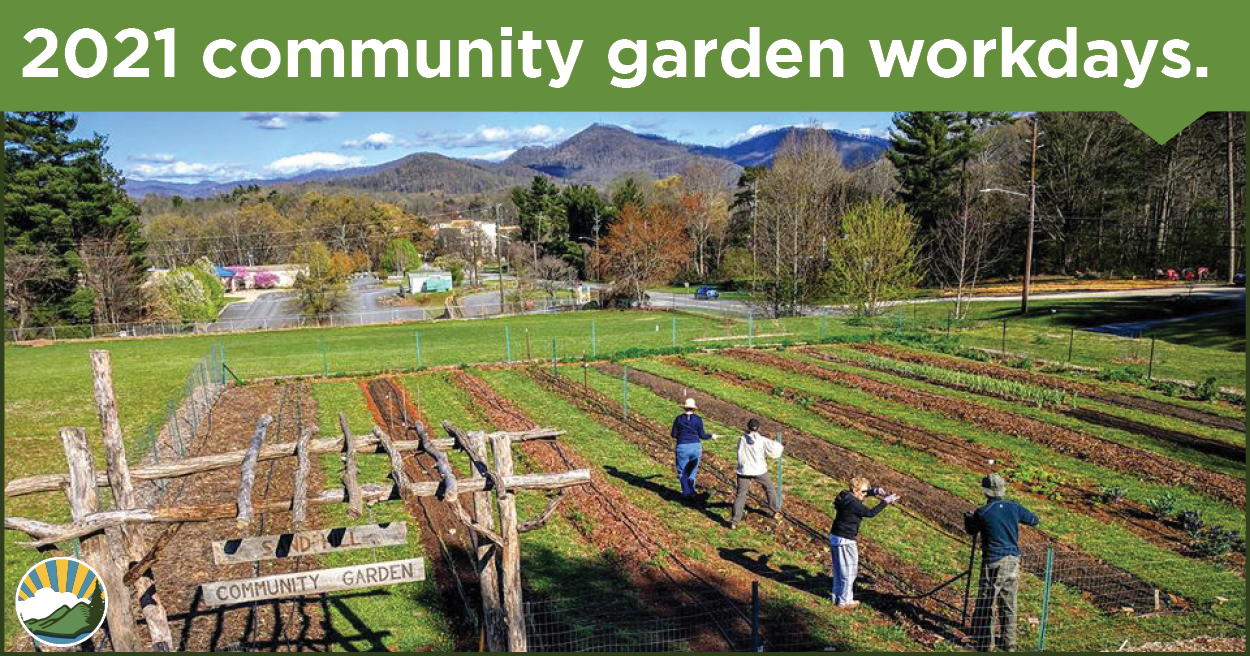
Sand Hill Community Garden Workdays
Jul 21 @ 6:00 pm – 8:00 pm
Buncombe County Sports Park

Volunteers at Sand Hill Community Garden

Looking to get involved, stay active, and meet some new friends? Sand Hill Community Garden workdays take place on Wednesdays (6-8 p.m.) and Saturdays (10 a.m.-noon) from Feb. 27-Oct. 30, 2021, at Buncombe County Sports Park. The garden is located on 16 Apac Dr. in West Asheville/Enka-Candler.

Join friends and neighbors as they come together on common ground to raise fresh, organic vegetables and fruits for the Enka community.

Expect to wear a mask and maintain social distance throughout. Tools and hand sanitizer are available, but any gloves, loppers, pruners, or gardening tools you can bring will decrease the amount of contact between volunteers. Please wear work clothes to get dirty and closed-toe shoes. Sunscreen, water, and a hat are also handy items to have on hand.

Sand Hill Community Garden has been growing fresh produce since 2011 and raised over 1,200 lbs. of organic produce last year.

NOTE: Community workdays are weather dependent. Please join the community garden email list (send your info to [email protected]) to stay up on workday tasks and other garden news.

To receive the I Heart Parks monthly newsletter, sign up online. Follow Buncombe County Recreation on Facebook and Instagram for the latest updates.

Thursday, July 22, 2021
Gardening Video: Introduction to Botanical Dyeing
Jul 22 all-day
Online

The Learning Garden presents:
Introduction to Botanical Dyeing

Pat Strang, EMGV
Joyce Trumba, EMGV

Learn the basic techniques for turning common plants into pigments to dye any kind of natural fiber. Pat and Joyce’s presentation includes a short history of botanical dyeing and a discussion of easy plants to grow in your garden to get a variety of colors. Using common equipment you have around the house, you will learn how to prepare fiber to get the most long-lasting color. Pat and Joyce will demonstrate the dyeing technique and show the finished results at the end of the presentation.

Vegetable Gardening: Harvesting Tips!
Jul 22 all-day
Online

Your vegetable garden is likely approaching peak production time—but when and how to harvest? Even if you are a pro, here’s how to make sure those caring for your precious crops while you’re away know when to pick!

What matters about harvest time?

  • Harvest stage affects flavor and yields:
    • Picking too soon not only reduces the amount of food your garden produces but also may mean missing that perfectly ripened taste—although not all vegetables lose flavor after picking.
    • Waiting too long definitely means missing the best flavor—think sweet corn turned starchy—and your produce actually spoils. Crops literally go to seed have accomplished their goal and will stop producing!
  • Factors that affect harvest and storage.
    • Warmer temperatures after picking can affect flavor—crops like peas and sweet corn that turn starchy, for example, need immediate cooling. Joseph Masabni of Texas A&M Extension, advises “harvest these vegetables early in the morning or right before you intend to use them.”
    • Not all crops benefit from refrigeration, however! And humidity levels and air circulation are important, too! If you’re not going to use your bounty immediately, some crops, such as garlic, dry onions, potatoes, and tomatoes are best stored only at room temperature, according to UC-Davis Post Harvest Technology specialists (see below). They also recommend that cucumbers, eggplants, and peppers be refrigerated only for 1 to 3 days and then used as soon as you remove them from the cold.
    • Advise those harvesting in your absence how often you check your crops, and which are most time-sensitive!

 Things to look for when you harvest

Harvesting takes more time than you’d expect—look carefully for items to pick amongst all those leaves and vines. This makes harvesting a great time to give your garden plants a quick check-up!

  • Size matters!
    • Jokes abound about baseball-bat-size zucchini, but squash aren’t the only crops that can grow out of useful size.
    • If you intend to eat fresh beans rather than saving them to use dry, the beans need to just start to fill out their pods. 
      These red noodle beans need picking!


  • Color changes are usually important, too.
    • Tomatoes turning red are an obvious example, but how red is the best time for picking? Maybe earlier than you think! Picking at the “breaker” stage rather than fully red means your tomatoes will continue to ripen indoors, taste vine-ripened, but won’t suffer sunscald, or damage from insects or birds. 
      Tomatoes will develop full flavor ripened indoors if picked once they begin to show some color.


    • Cucumbers should still be uniformly green, not starting to yellow. 
      Cucumbers are best picked green rather than starting to yellow.


    •  Eggplants should be purple (light or dark depending on the variety), but still glossy, not dull 
      Pick eggplants while the skin is still glossy.


    • Watermelons, on the other hand, should develop a duller, rougher surface and the spot touching the ground should be yellowing, not white 
      Ripe watermelon skin should be starting to dull and roughen and the ground spot turning yellow.


    • .Detecting defects may mean removing fruits before they take any more resources from the plant—think blossom-end rot on tomatoes or peppers—or harvesting while part of the crop is still salvageable—such as a nip out of an otherwise healthy tomato.
    • Damage may alert you to insect infestations—minimize or eliminate, by hand-picking the culprits—such as snails or slugs—or treating to prevent further damage—wash away aphids on greens or treating pickleworm infestations of cucumbers and squash with pesticides, for example. Learn which “bugs” you see are pests and which are helpful predators!
    • Harvest “helpers” will be more eager to volunteer if they pick at the right time—and you won’t find all your tomatoes gone despite their size or plants loaded with overripe items bringing production to a halt. Alerting you to any emerging problems is another bonus.

“Harvesting” spent plants?

While picking your crops pick off dead leaves, spent blossoms, and trim errant runners to keep plants looking good and productive. Knowledgeable helpers can perform these tasks.

In WNC, most vegetable garden plants are annuals, or treated as such, so when you harvest, evaluate when it’s time to pull the whole plant—it may be too risky to ask short-term caregivers to make this decision!

  • Is the plant diseased? If there are signs of disease, either do what you can to remove diseased portions, treat the problem, or remove the entire plant.
  • Is production slowing?
    • Review fertilizing or watering practices to improve yields. Most crops need an inch of rain a week to prosper—water established plants deeply once a week if rains are insufficient. Check your crops’ needs for fertilizer and the application rates recommended for the fertilizers you are using.
    • Extreme temperatures may interfere with fruit set or how your crops ripen. Be patient if better weather will solve the problem! Note, though, that spring crops that fade with high temperatures are long gone; so too, frosts will damage tender crops, so harvest these before freezing temperatures.
    • Once you’ve decided your plants have passed peak production, pull the plants and consider planting a fall crop. See the calendar below for all the crops you can plant in August for a bountiful autumn harvest!

 Article by Buncombe County Extension Master GardenerSM Volunteers

 For more information:

When to harvest specific crops: https://content.ces.ncsu.edu/extension-gardener-handbook/16-vegetable-gardening#vegetableharvestingguidelines

https://agrilifeextension.tamu.edu/library/gardening/harvesting-handling-vegetables-garden/

Ripening after harvest:

https://gardenprofessors.com/ripening/

https://www.johnson.k-state.edu/lawn-garden/agent-articles/vegetables/harvest-ripen-tomatoes.html

Storing produce:

http://postharvest.ucdavis.edu/files/230110.pdf

Planting times for WNC:

https://content.ces.ncsu.edu/western-north-carolina-planting-calendar-for-annual-vegetables-fruits-and-herbs

Wild Art Sculpture Showcase
Jul 22 @ 8:00 am – 9:00 pm
NC Arboretum

The North Carolina Arboretum is going wild for art and nature in 2021 with Wild Art! On view April 1 through September 26, this outdoor sculpture exhibition features works by 17 local and national artists drawing inspiration from the natural environment. Situated throughout the Arboretum’s spacious, open-air gardens, the show offers guests a doorway into the wild world from the comfort and safety of cultivated landscapes transformed by art.

The 18 sculptures on display represent a variety of approaches to the theme of “wild art,” from the literal to the abstract, and are crafted from a diverse array of materials that will delight and inspire. Let your imagination take you on a wild journey into the world of plants and animals near and far with Wild Art at The North Carolina Arboretum.

The exhibit is available to all guests during normal Arboretum hours, and there is no admission cost to view the sculptures beyond our usual parking fee of $16 per personal vehicle.

Fairy Trail 2021
Jul 22 @ 9:00 am – 4:00 pm
Bullington Gardens

Fairy Trail 2021

Join us on the magical Fairy Trail where your imagination is the only limit.

Developed by Fairies and dedicated volunteers, Bullington Gardens’ Fairy Trail is a whimsical treat for the young and the young at heart. Featuring playful vignettes and villages, the fairy trail will charm you with its thoughtful design, eye catching displays and secret woodland trail.

Rules of the trail:

Do not move or rearrange fairy displays. The fairies are very fond of their own decorating.

Do not leave trash on the trail. Fairies do not like litter in their town.

Please ensure children and pets are supervised at all times. Dogs and loud noises can scare the fairies into hiding.

Do not disturb wildlife or vegetation. The fairies depend on the vegetation to build their homes.

The trail is one way only. Please stay on the trail at all times.

P.S. the Fairies would like us to remind you that we are a non-profit and donations are greatly appreciated. Help us keep the fairies living in the style with which they’ve become accustomed.

Bullington Gardens and the Fairy Trail are closed on Sundays.

Biltmore Gardens Railway
Jul 22 @ 9:30 am – 6:00 pm
Biltmore

Included with admission

Our fun-for-all-ages botanical model train displays invite you to experience our grounds in an engaging new way. Located in the Conservatory in the Walled Garden, the displays feature replicas of structures connected with Biltmore and its founder George Vanderbilt. Each beautifully executed piece was handcrafted from such natural elements as leaves, bark, and twigs.

In compliance with state and local mandates related to COVID-19, all guests must enter the Conservatory via the ADA entrance in the back and follow a one-way route.

Friday, July 23, 2021
Gardening Video: Introduction to Botanical Dyeing
Jul 23 all-day
Online

The Learning Garden presents:
Introduction to Botanical Dyeing

Pat Strang, EMGV
Joyce Trumba, EMGV

Learn the basic techniques for turning common plants into pigments to dye any kind of natural fiber. Pat and Joyce’s presentation includes a short history of botanical dyeing and a discussion of easy plants to grow in your garden to get a variety of colors. Using common equipment you have around the house, you will learn how to prepare fiber to get the most long-lasting color. Pat and Joyce will demonstrate the dyeing technique and show the finished results at the end of the presentation.