

Calendar of Events
Upcoming events and things to do in Asheville, NC. Below is a list of events for festivals, concerts, art exhibitions, group meetups and more.
Interested in adding an event to our calendar? Please click the green “Post Your Event” button below.
Get Started
Dance can be life-changing. We want to show you how. Come try two weeks of classes for just $29.99

Fall/Winter Schedule 2021/2022
Additional Information
ATTD New Fall 2021-2022 Class Schedule – August 22, 2021- May 27, 2022
*Note that ages serve only as a guideline. Below represents our Curriculum based ballet programs. Look for additional class offerings of Int/Adv Tap, Jazz & Hip- Hop TBA. Combo I – Elementary II placement is based on age. Level 1 and above are skill based placement. All schedules are subject to change.
Combo I : Pre- Ballet/Pre- Tap Curriculum (Age 3-4 )
Monday 4:00-5:00
OR
Wednesday 5:00-6:00
OR
Saturday 9:45-10:45
OR
Saturday11:00-12:00
Combo II : Ballet/Tap Curriculum Age (5-6)
Monday 4:00-5:00
OR
Wednesday 5:00-6:00
OR
Saturday 9:45-10:45
OR
Saturday 11:00-12:00
Elementary I : Introduction to Classical Technique w/Tap & Jazz (Age 6-7)
Monday 5:00-5:45 Ballet: Section A
5:45-6:30 Tap & Jazz : Section A
Wednesday 5:00-5:45 Ballet: Section B
5:45-6:30 Tap & Jazz : Section B
Elementary II: Introduction to Classical Technique w/ Tap, Jazz & Repertoire(Age 7-8)
Monday 5:00-5:45 Ballet:
5:45-6:30 Tap / Jazz
Thursday 5:00-6:15 Ballet
6:15-7:00 Repertoire
Boys Class:
Wednesday 6:00-6:45 w/Mr. Merz Elementary I- Level II
Level I : Classical Ballet Technique, with Repertoire and one enrichment class (Age 8-10 placement required)
Tuesday 4:30-5:30 Conditioning w/ Jazz Contemporary
5:30-6:30 Ballet Technique
Thursday 5:00-6:15 Ballet
6:15-7:00 Repertoire
Level II : Classical Ballet Technique, w/ Repertoire and 2 enrichment classes (Age 9-11 placement required)
Tuesday 4:30-5:30 Conditioning w/ Jazz Contemporary
5:30-6:30 Ballet Technique
Thursday 5:00-6:15 Ballet
Friday 4:00-5:30 Ballet Technique
5:30-6:30 Repertoire
Level III : Classical Ballet Technique w/Repertoire, pre-pointe, conditioning, specialty classes (Age 10-12 placement required)
Monday 5:00-6:30 Ballet Technique
6:30-7:15 Pre- Pointe/Variations
Tuesday 4:30-5:30 Conditioning w/ Jazz Contemporary
5:30-6:30 Ballet Technique
Friday 4:30-5:30 Ballet Technique
5:30-6:15 Repertoire
Level IV/V : Classical Ballet Technique w/ Repertoire, pointe, conditioning, specialty classes ( Placement required)
Monday 4:30-6:00 Ballet Technique
6:00-7:00 Repertoire
Tuesday 4:30-6:00 Ballet Technique
6:00-7:00 Modern
Wednesday 4:30-6:00 Ballet Technique
6:00-7:00 Pointe/Conditioning
Thursday 4:30-6:00 Ballet Technique
6:00-6:45 Pointe
*Saturday 11:00-12:15 Warm-up Technique **ONLY WHEN CALLED**
12:30-2pm Rehearsal **ONLY WHEN CALLED**
PreProfessional Day Program : Vocational Ballet Training ( Age 14- audition required)
Monday: 2:00-3:30 Ballet Technique
3:30-4:30 Pointe-Conditioning/Pointe
4:30-6:00 2nd Technique barre en pointe
Tuesday 2:00-3:30 Ballet Technique center en pointe
3:30-4:30 Modern
4:30-6:00 2nd Technique barre en pointe
Wednesday 2:00-3:30 Ballet Technique
3:30-4:30 Pointe/Repertoire
4:30-6:00 2nd Technique
Thursday 2:00-3:30 Ballet Technique
3:30-4:30 Pointe Variations
4:30-6:00 2nd Technique
Friday 2:00-3:30 Ballet Technique
3:30-4:30 Pas de Deux
*Saturday 11:00-12:15 Warm-up Technique
12:30-2pm Rehearsal

This will be a virtual talk.
 |
|
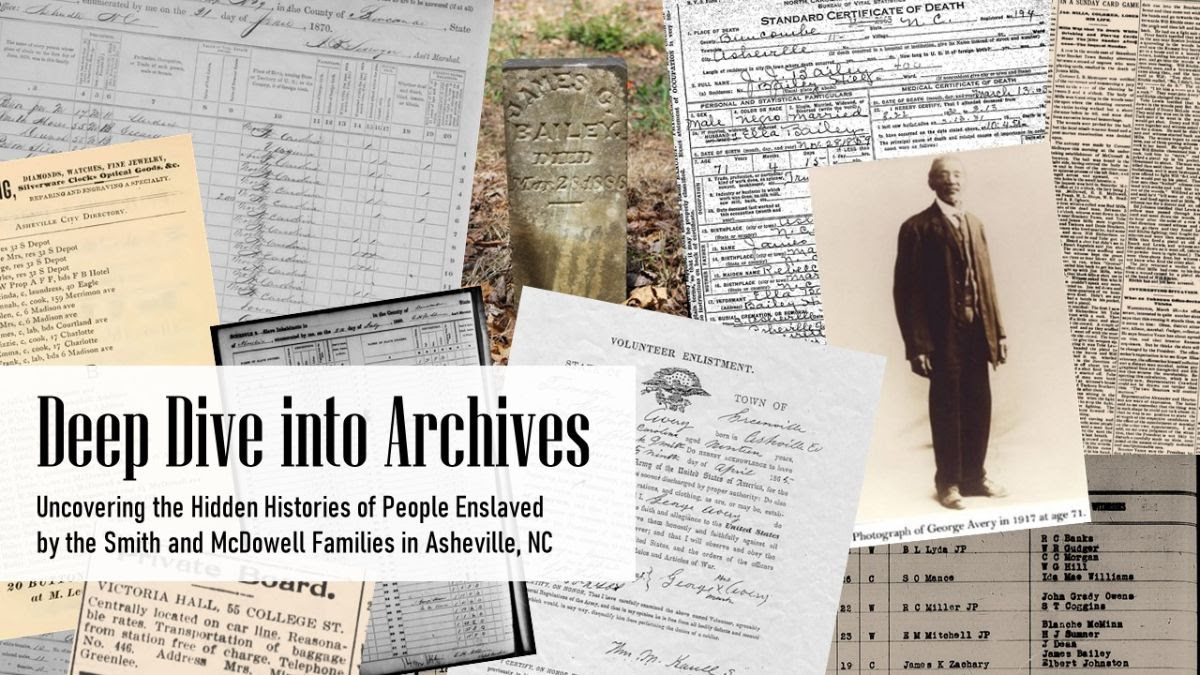
Deep Dive into Archives is a living exhibit shining a light on the individuals who were once enslaved at the Smith-McDowell House through primary documentation.
|
|

|

|

Mon-Fri from 2-5pm. You have access to high speed internet, work space and HALF-OFF pastries when you present your college ID.
No cost due to sponsor support
Speaker(s): SBA
Co-Sponsor(s): Henderson County Chamber of Commerce, Brevard/Transylvania Chamber of Commerce
Webinar info will be emailed after registration
|


|
Mon-Fri from 2-5pm. You have access to high speed internet, work space and HALF-OFF pastries when you present your college ID.
Our Foundations business planning class helps guide ideas from concept to reality in a participatory, supportive learning environment.
Join a cohort of aspiring and existing entrepreneurs to gain an aerial perspective of your vision and the comprehensive business skills necessary to help bring your visions into reality. Participants will gain a clear aerial perspective of their business operations, financials, research and development, and marketing strategies. They will leave the course with a comprehensive business plan, a clear vision for their business, and concrete tasks for future work.
Throughout the class, emphasis will be placed on developing the social capital of the group. Participants will be encouraged to gather feedback from their peers, creating a strong network of deep support and synergy. For more info, visit the Foundations Business Planning overview page.
|
|
Deep Dive into Archives is a living exhibit shining a light on the individuals who were once enslaved at the Smith-McDowell House through primary documentation.
|
|
|
|
Mon-Fri from 2-5pm. You have access to high speed internet, work space and HALF-OFF pastries when you present your college ID.

|
|
Get Started
Dance can be life-changing. We want to show you how. Come try two weeks of classes for just $29.99
Fall/Winter Schedule 2021/2022
Additional Information
ATTD New Fall 2021-2022 Class Schedule – August 22, 2021- May 27, 2022
*Note that ages serve only as a guideline. Below represents our Curriculum based ballet programs. Look for additional class offerings of Int/Adv Tap, Jazz & Hip- Hop TBA. Combo I – Elementary II placement is based on age. Level 1 and above are skill based placement. All schedules are subject to change.
Combo I : Pre- Ballet/Pre- Tap Curriculum (Age 3-4 )
Monday 4:00-5:00
OR
Wednesday 5:00-6:00
OR
Saturday 9:45-10:45
OR
Saturday11:00-12:00
Combo II : Ballet/Tap Curriculum Age (5-6)
Monday 4:00-5:00
OR
Wednesday 5:00-6:00
OR
Saturday 9:45-10:45
OR
Saturday 11:00-12:00
Elementary I : Introduction to Classical Technique w/Tap & Jazz (Age 6-7)
Monday 5:00-5:45 Ballet: Section A
5:45-6:30 Tap & Jazz : Section A
Wednesday 5:00-5:45 Ballet: Section B
5:45-6:30 Tap & Jazz : Section B
Elementary II: Introduction to Classical Technique w/ Tap, Jazz & Repertoire(Age 7-8)
Monday 5:00-5:45 Ballet:
5:45-6:30 Tap / Jazz
Thursday 5:00-6:15 Ballet
6:15-7:00 Repertoire
Boys Class:
Wednesday 6:00-6:45 w/Mr. Merz Elementary I- Level II
Level I : Classical Ballet Technique, with Repertoire and one enrichment class (Age 8-10 placement required)
Tuesday 4:30-5:30 Conditioning w/ Jazz Contemporary
5:30-6:30 Ballet Technique
Thursday 5:00-6:15 Ballet
6:15-7:00 Repertoire
Level II : Classical Ballet Technique, w/ Repertoire and 2 enrichment classes (Age 9-11 placement required)
Tuesday 4:30-5:30 Conditioning w/ Jazz Contemporary
5:30-6:30 Ballet Technique
Thursday 5:00-6:15 Ballet
Friday 4:00-5:30 Ballet Technique
5:30-6:30 Repertoire
Level III : Classical Ballet Technique w/Repertoire, pre-pointe, conditioning, specialty classes (Age 10-12 placement required)
Monday 5:00-6:30 Ballet Technique
6:30-7:15 Pre- Pointe/Variations
Tuesday 4:30-5:30 Conditioning w/ Jazz Contemporary
5:30-6:30 Ballet Technique
Friday 4:30-5:30 Ballet Technique
5:30-6:15 Repertoire
Level IV/V : Classical Ballet Technique w/ Repertoire, pointe, conditioning, specialty classes ( Placement required)
Monday 4:30-6:00 Ballet Technique
6:00-7:00 Repertoire
Tuesday 4:30-6:00 Ballet Technique
6:00-7:00 Modern
Wednesday 4:30-6:00 Ballet Technique
6:00-7:00 Pointe/Conditioning
Thursday 4:30-6:00 Ballet Technique
6:00-6:45 Pointe
*Saturday 11:00-12:15 Warm-up Technique **ONLY WHEN CALLED**
12:30-2pm Rehearsal **ONLY WHEN CALLED**
PreProfessional Day Program : Vocational Ballet Training ( Age 14- audition required)
Monday: 2:00-3:30 Ballet Technique
3:30-4:30 Pointe-Conditioning/Pointe
4:30-6:00 2nd Technique barre en pointe
Tuesday 2:00-3:30 Ballet Technique center en pointe
3:30-4:30 Modern
4:30-6:00 2nd Technique barre en pointe
Wednesday 2:00-3:30 Ballet Technique
3:30-4:30 Pointe/Repertoire
4:30-6:00 2nd Technique
Thursday 2:00-3:30 Ballet Technique
3:30-4:30 Pointe Variations
4:30-6:00 2nd Technique
Friday 2:00-3:30 Ballet Technique
3:30-4:30 Pas de Deux
*Saturday 11:00-12:15 Warm-up Technique
12:30-2pm Rehearsal
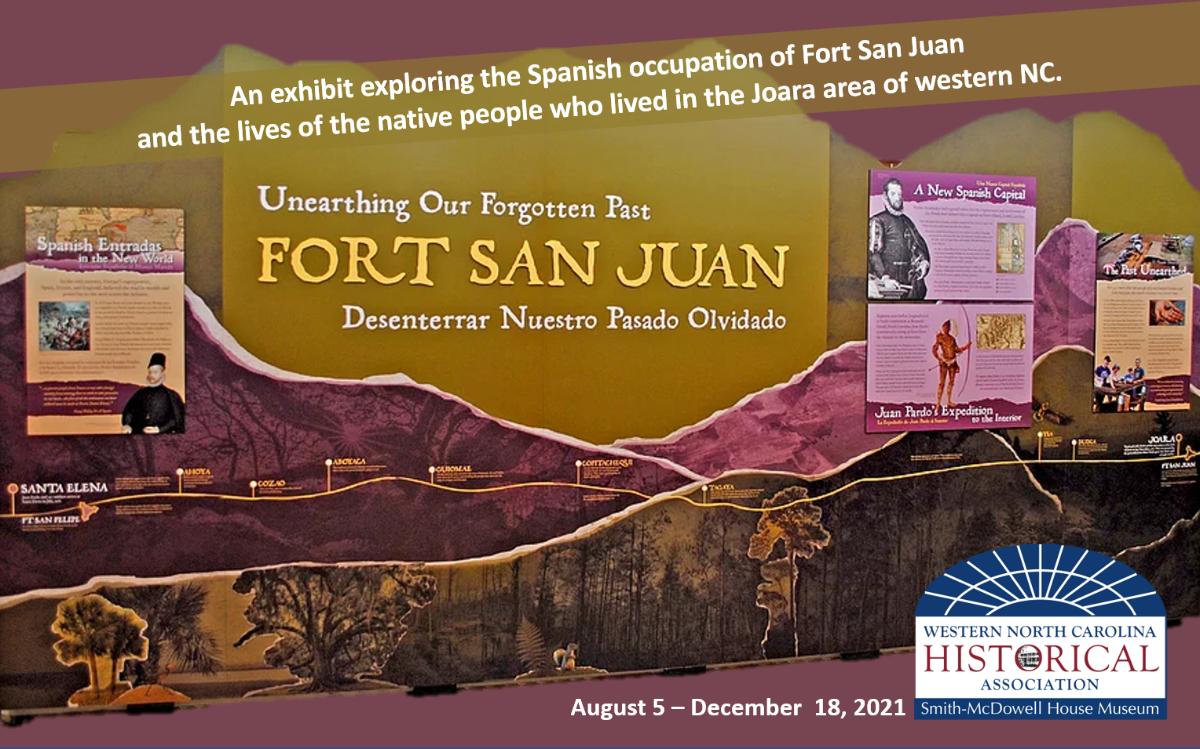
The exhibit was developed as part of the celebration of the 450th anniversary of the Juan Pardo expeditions. Several years ago, archaeologists identified a site near Morganton as the location of Joara, one of the largest Native American towns in what is today Western North Carolina.
Joara was occupied from approximately 1400-1600 A.D. Two Spanish expeditions led respectively by Hernando de Soto and Juan Pardo visited the town in the 1500s. The Pardo expedition was part of a larger effort to establish a string of forts from the coast of present-day South Carolina all the way to Mexico. In 2013, archaeologists confirmed that Joara was also the site of Fort San Juan, established by Pardo in 1567, nearly 20 years before the English settlement at Roanoke on the coast of North Carolina and 40 years before the settlement at Jamestown.
Through various artifacts uncovered by the archaeology, the exhibit showcases the Spanish occupation of Fort San Juan and the lives of the native people who lived in the Joara area.
The exhibit is on loan from the Exploring Joara Foundation Inc. Exploring Joara engages the public in archaeology in the Carolinas, and emphasizes the discovery of the Native American town of Joara and Fort San Juan. The exhibit will be on display at the Western North Carolina Historical Association’s gallery inside the Smith-McDowell House through December 15.
The gallery is open for visitation Thursday, Friday, and Saturday between 10:30am and 4:00pm. Reservations are recommended.
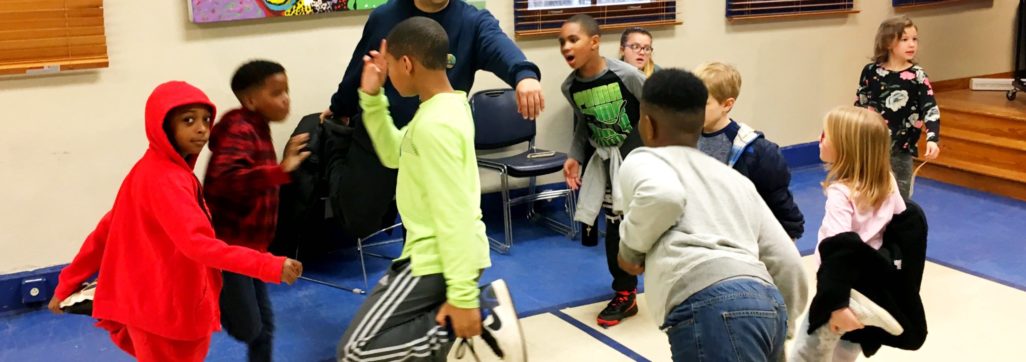
Join us for this fun Hip Hop Dance class with LEAF Resident Teaching Artist Otto Vazquez!
Mon-Fri from 2-5pm. You have access to high speed internet, work space and HALF-OFF pastries when you present your college ID.

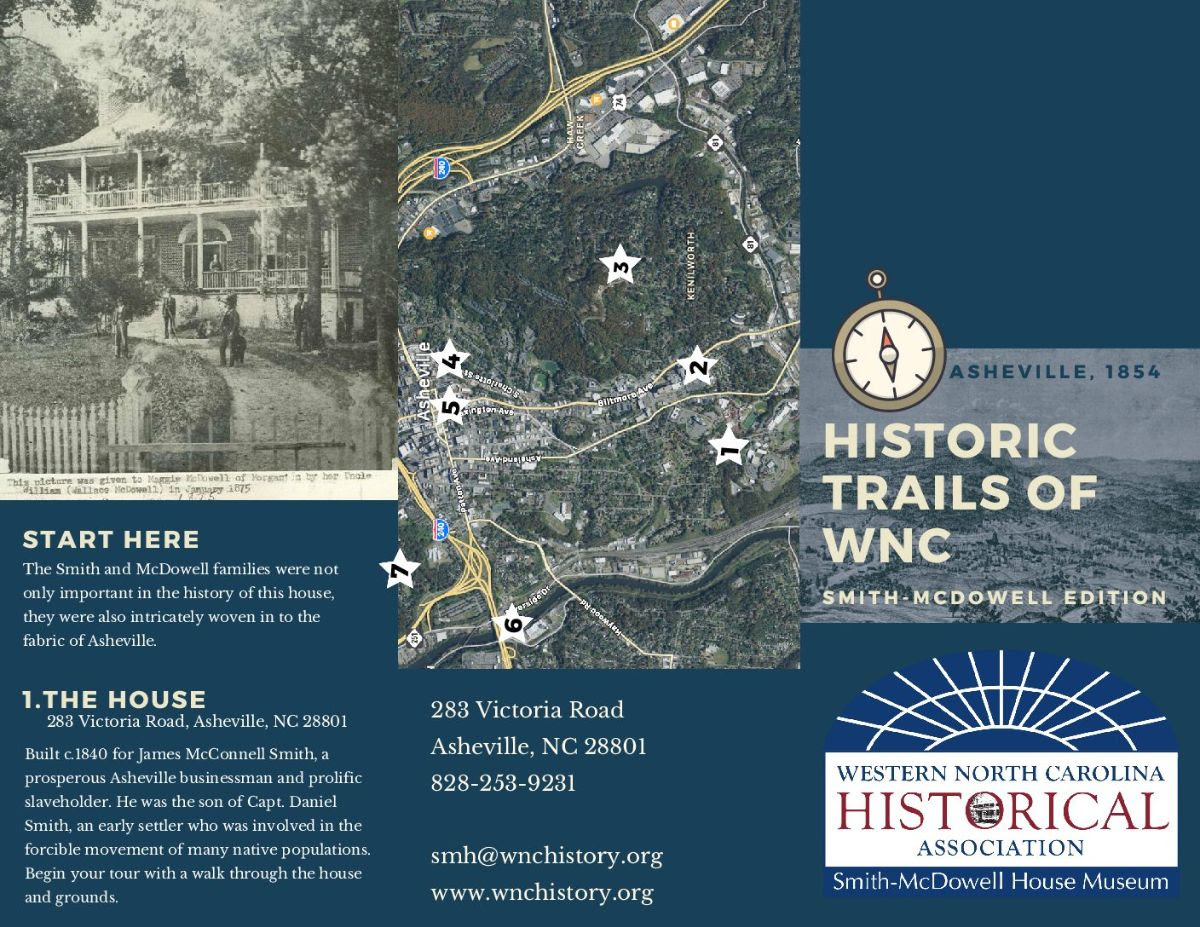 |
| The residents of the Smith-McDowell House and grounds were woven in to the fabric of Asheville.
This driving tour begins at the Smith-McDowell House Museum on the campus of A-B Tech and continues through historic sites related to early occupants of the house. |
|
|
Deep Dive into Archives is a living exhibit shining a light on the individuals who were once enslaved at the Smith-McDowell House through primary documentation.
|
|
|
|
Western North Carolina has a rich assortment of county historical societies, archives, and museums. The Western North Carolina Historical Association seeks to help researchers, historians, genealogists, and the general public take full advantage of these resources.
|

|
Get Started
Dance can be life-changing. We want to show you how. Come try two weeks of classes for just $29.99
Fall/Winter Schedule 2021/2022
Additional Information
ATTD New Fall 2021-2022 Class Schedule – August 22, 2021- May 27, 2022
*Note that ages serve only as a guideline. Below represents our Curriculum based ballet programs. Look for additional class offerings of Int/Adv Tap, Jazz & Hip- Hop TBA. Combo I – Elementary II placement is based on age. Level 1 and above are skill based placement. All schedules are subject to change.
Combo I : Pre- Ballet/Pre- Tap Curriculum (Age 3-4 )
Monday 4:00-5:00
OR
Wednesday 5:00-6:00
OR
Saturday 9:45-10:45
OR
Saturday11:00-12:00
Combo II : Ballet/Tap Curriculum Age (5-6)
Monday 4:00-5:00
OR
Wednesday 5:00-6:00
OR
Saturday 9:45-10:45
OR
Saturday 11:00-12:00
Elementary I : Introduction to Classical Technique w/Tap & Jazz (Age 6-7)
Monday 5:00-5:45 Ballet: Section A
5:45-6:30 Tap & Jazz : Section A
Wednesday 5:00-5:45 Ballet: Section B
5:45-6:30 Tap & Jazz : Section B
Elementary II: Introduction to Classical Technique w/ Tap, Jazz & Repertoire(Age 7-8)
Monday 5:00-5:45 Ballet:
5:45-6:30 Tap / Jazz
Thursday 5:00-6:15 Ballet
6:15-7:00 Repertoire
Boys Class:
Wednesday 6:00-6:45 w/Mr. Merz Elementary I- Level II
Level I : Classical Ballet Technique, with Repertoire and one enrichment class (Age 8-10 placement required)
Tuesday 4:30-5:30 Conditioning w/ Jazz Contemporary
5:30-6:30 Ballet Technique
Thursday 5:00-6:15 Ballet
6:15-7:00 Repertoire
Level II : Classical Ballet Technique, w/ Repertoire and 2 enrichment classes (Age 9-11 placement required)
Tuesday 4:30-5:30 Conditioning w/ Jazz Contemporary
5:30-6:30 Ballet Technique
Thursday 5:00-6:15 Ballet
Friday 4:00-5:30 Ballet Technique
5:30-6:30 Repertoire
Level III : Classical Ballet Technique w/Repertoire, pre-pointe, conditioning, specialty classes (Age 10-12 placement required)
Monday 5:00-6:30 Ballet Technique
6:30-7:15 Pre- Pointe/Variations
Tuesday 4:30-5:30 Conditioning w/ Jazz Contemporary
5:30-6:30 Ballet Technique
Friday 4:30-5:30 Ballet Technique
5:30-6:15 Repertoire
Level IV/V : Classical Ballet Technique w/ Repertoire, pointe, conditioning, specialty classes ( Placement required)
Monday 4:30-6:00 Ballet Technique
6:00-7:00 Repertoire
Tuesday 4:30-6:00 Ballet Technique
6:00-7:00 Modern
Wednesday 4:30-6:00 Ballet Technique
6:00-7:00 Pointe/Conditioning
Thursday 4:30-6:00 Ballet Technique
6:00-6:45 Pointe
*Saturday 11:00-12:15 Warm-up Technique **ONLY WHEN CALLED**
12:30-2pm Rehearsal **ONLY WHEN CALLED**
PreProfessional Day Program : Vocational Ballet Training ( Age 14- audition required)
Monday: 2:00-3:30 Ballet Technique
3:30-4:30 Pointe-Conditioning/Pointe
4:30-6:00 2nd Technique barre en pointe
Tuesday 2:00-3:30 Ballet Technique center en pointe
3:30-4:30 Modern
4:30-6:00 2nd Technique barre en pointe
Wednesday 2:00-3:30 Ballet Technique
3:30-4:30 Pointe/Repertoire
4:30-6:00 2nd Technique
Thursday 2:00-3:30 Ballet Technique
3:30-4:30 Pointe Variations
4:30-6:00 2nd Technique
Friday 2:00-3:30 Ballet Technique
3:30-4:30 Pas de Deux
*Saturday 11:00-12:15 Warm-up Technique
12:30-2pm Rehearsal
The exhibit was developed as part of the celebration of the 450th anniversary of the Juan Pardo expeditions. Several years ago, archaeologists identified a site near Morganton as the location of Joara, one of the largest Native American towns in what is today Western North Carolina.
Joara was occupied from approximately 1400-1600 A.D. Two Spanish expeditions led respectively by Hernando de Soto and Juan Pardo visited the town in the 1500s. The Pardo expedition was part of a larger effort to establish a string of forts from the coast of present-day South Carolina all the way to Mexico. In 2013, archaeologists confirmed that Joara was also the site of Fort San Juan, established by Pardo in 1567, nearly 20 years before the English settlement at Roanoke on the coast of North Carolina and 40 years before the settlement at Jamestown.
Through various artifacts uncovered by the archaeology, the exhibit showcases the Spanish occupation of Fort San Juan and the lives of the native people who lived in the Joara area.
The exhibit is on loan from the Exploring Joara Foundation Inc. Exploring Joara engages the public in archaeology in the Carolinas, and emphasizes the discovery of the Native American town of Joara and Fort San Juan. The exhibit will be on display at the Western North Carolina Historical Association’s gallery inside the Smith-McDowell House through December 15.
The gallery is open for visitation Thursday, Friday, and Saturday between 10:30am and 4:00pm. Reservations are recommended.
Mon-Fri from 2-5pm. You have access to high speed internet, work space and HALF-OFF pastries when you present your college ID.
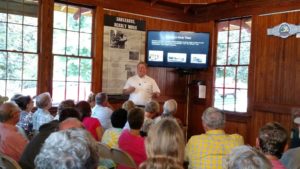
Saluda Train Tales is a free monthly event to educate the community of the importance of Saluda’s railroad history and the Saluda Grade, the steepest, standard gauge, mainline railroad in the US. Storytelling is the third Friday of the month at 7pm, March through December.
|
| The residents of the Smith-McDowell House and grounds were woven in to the fabric of Asheville.
This driving tour begins at the Smith-McDowell House Museum on the campus of A-B Tech and continues through historic sites related to early occupants of the house. |
|
|
Deep Dive into Archives is a living exhibit shining a light on the individuals who were once enslaved at the Smith-McDowell House through primary documentation.
|
|
|
|
|
|