

Calendar of Events
Upcoming events and things to do in Asheville, NC. Below is a list of events for festivals, concerts, art exhibitions, group meetups and more.
Interested in adding an event to our calendar? Please click the green “Post Your Event” button below.
Saturday, September
30, 2023
Special Olympics Fall Sports Registration is OPEN
Asheville Parks + Recreation Adult fall athletic programs + sports leagues
Asheville Parks + Recreation Youth Fall + Winter athletic programs + sports leagues
Biltmore Estate: Ciao! From Italy Sculptural Postcard Display
Therapeutic Recreation: Tennis + Bowling
Therapeutic Recreation (TR)
15th Annual Flock to the Rock
Art Exhibition: Eden Revisited
Exhibition: NEO MINERALIA
.jpg) Exhibition: Something earned, Something left behind
Exhibition: Something earned, Something left behind
 Exhibition: Crafting Denim
 Ooh La La Curiosity Market
Pop-Up Bike Parks
Ooh La La Curiosity Market
Pop-Up Bike Parks
Gatherings of Artists + Writers Coffee
Beyond the Lens: Photorealist Perspectives on Looking, Seeing, and Painting
Romare Bearden: Ways of Working Exhibition
The Art of Food: From the Collections of Jordan D. Schnitzer and His Family Foundation
Western North Carolina Glass: Selections from the Collection
Krafthouse 2023: Forest of the New Trees
Krafthouse 2023: Forest of the New Trees–immersive art installation
Opening reception: Eden Revisited
Krafthouse 2023: Forest of the New Trees
Special Olympics Fall sports registration is now OPEN!
Choose your sport and join the fun! Athletes can pick from soccer, bocce, basketball, and tennis. For any questions, please email [email protected]!
With multiple parks featuring ballfields and volleyball, pickleball, tennis, and basketball courts, Asheville has plenty of opportunities to join pick-up games or play with organized sports leagues. Asheville Parks & Recreation (APR) offers a broad line-up of youth athletics programs, adult sports leagues, and special events throughout the year with an emphasis on fair play and enjoyment for any level of experience, including the fall opportunities below.
Search Current Asheville Sports and Athletics
Limited spots available, so advance registration at AVLREC.com required. Some activities offer discounted registration for early sign ups. Most team sports also offer “looking for a team” options for free agents. Some activities charge a higher rate for participants who do not live in Asheville.
Leagues
6v6 Indoor Volleyball League, $200 per team
Registration opens November 27, games begin January 16 for winter season
Upper, middle, and lower divisions play at Tempie Avery Montford Community Center.
Over 40 Basketball League, $60 per player
Registration ends August 24, games begin September 12
Asheville’s newest team sports league provides an opportunity for community members over 40 who want to get back into the game or prefer to play with others around the same age. Sign up as an individual to be placed on a team based on height, position, and skill level for games played at Linwood Crump Shiloh Community Center.
Flag Football League, $600 per team
Registration opens August 30, games begin October 17
Upper, middle, and lower divisions play at Asheville Middle School on 211 South French Broad Avenue.
Winter Basketball League, $600 per team
Registration opens October 10, games begin November 27
Upper and lower divisions play at Linwood Crump Shiloh Community Center. Middle division plays at Stephens-Lee Community Center.
Clinics and Tournaments
Tennis Clinic, $20 per player
Registration ends September 6, clinics held each Tuesday and Thursday from September 12-21
Instructional clinics for beginners and intermediate players teach the basics and build on skills each class at Murphy-Oakley Park.
Doubles Grass Volleyball Tournament, $20 per team
Registration ends September 5, tournament on September 16
Six sets to 21 in pool play for advance and intermediate divisions in which all teams advance to the playoffs on a day of music, fun, and volleyball at Carrier Park.
Intro to Golf, $10 for series with players responsible for their own green fees
Registration ends September 28, games played each Wednesday from October 4-25
Travel to a different golf course each week for one-on-one coaching to learn the game. For more info, contact Colt Miller at [email protected] or (828) 707-2376.
Pumpkin Ball Softball Bash Tournament, $150 per team
Registration ends September 30, tournament on October 7
All players hit a 16-inch softball in games played on a 200-foot distance field with unlimited home runs with a three-game guarantee. Winning teams receive prizes and trophies. For more info, contact Zack Stewart at [email protected] or (828) 545-1644.
Late Night Wiffleball Tournament, $5 per team
Registration ends November 9, tournament on November 16
Five-player teams play in this two-game guarantee tournament at Tempie Avery Montford Community Center. For more info, contact Kiley Pritchard at [email protected] or (828) 507-3357.
Flag Football, $15 per player
Registration ends August 30, games begin September 9
Teams divided by ages 6-8, 9-10, 11-12, and 14-16 practice drills for 30 minutes prior to weekly games with two 20 minute halves at Asheville Middle School on 211 South French Broad Avenue.
Softball Clinic, $10 per player
Registration ends September 3, clinics begin September 11
Instructional five-week clinic with divisions for 6-8, 9-10, and 11-12 year-olds teaches fundamentals through drills and scrimmages at Asheville Middle School on 211 South French Broad Avenue with the intent of building a youth softball program in the future.
Youth Archery Class, $25 per archer
Registration ends October 10, class held each Thursday from October 26-November 16
This introductory course teaches individuals 9-12 years-old range safety and proper shooting techniques.
Winter Basketball League, $35 per player
Registration ends October 31, evaluations begin November 6
Age divisions include 5-6 (instructional), 9-10, 11-12, and 13-15.
Fling the Fletch Junior Disc Golf Open, $5 for beginner and $20 for advanced competitive
A local pro teaches a clinic followed by a nine-hole family fun tournament for beginners ages 8-18 and an 18-hole competitive round for advanced players ages 12-16.
Turkey Tee Off Family Mini Golf Tournament, free
Registration ends November 10, tournament on November 18
Enjoy friendly competition with friends and family at Lakeview Putt and Play on 2245 Hendersonville Road.
Included with admission
Embark on a scenic journey across George Vanderbilt’s Italy with a large-scale outdoor display that combines brilliant botanical designs with authentic messages written by Vanderbilt himself.
Beautifully handcrafted of natural elements, each sculptural postcard depicts a location or landmark Vanderbilt visited more than a century ago. This captivating complement to Biltmore’s Italian Renaissance Alive exhibition reveals Vanderbilt’s passions for travel, culture, architecture, and art as well as his personal experience of such renowned Italian cities as Milan, Florence, Venice, Pisa, and Vatican City.
Adding to the charm and visual appeal of Ciao! From Italy—sure to be a hit among kids of all ages—is the G-scale model train that travels in and out of each postcard in this enlightening display!
Therapeutic Recreation (TR)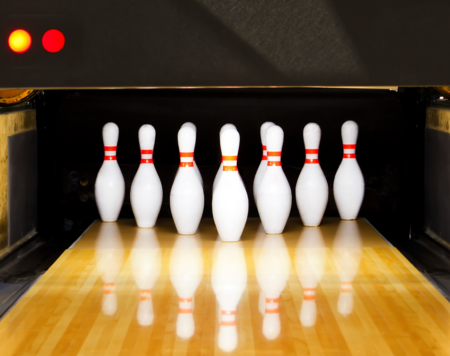
For more info, contact Lori Long at [email protected] or (828) 232-4529. TR sports are designed for kids, teens, and adults who may excel with additional support. For TR social opportunities and movement, hiking, cooking, and crafting classes, check out more programs online.
TR Tennis Clinic, free
Registration ends September 5, clinics held each Saturday from September 9-30
Open to individuals ages 8 and older, Asheville Tennis Association and Abilities Tennis pros teach basics and players practice skills on the courts at Omni Grove Park Inn on 290 Macon Avenue.
TR Bowling, $35 per player
Registration ends September 30, games played each Saturday from October 7-November 4
Strikers 6 years-old and over play games adapted with ramps and bumpers in this five-week league at Sky Lanes on 1477 Patton Avenue.
For more info, contact Lori Long at [email protected] or (828) 232-4529. TR sports are designed for kids, teens, and adults who may excel with additional support. For TR social opportunities and movement, hiking, cooking, and crafting classes, check out more programs online.
Break out the binoculars and get ready for our annual feathered frenzy. Flock to the Rock was designed so birders of all skill sets can enjoy one of the country’s fastest growing hobbies – bird watching! This event is held during fall migration for birds and monarch butterflies. As a spot on the NC Birding Trail and a Monarch Waystation, there’s no better place than Chimney Rock to experience these incredible natural phenomena. Bring the whole family for live raptor programs, bird and pollinator activities, intro to birding hikes, and the annual hawk watch from the Chimney. This year we’re celebrating 15 amazing years of Flock to the Rock!
Schedule of Events
10am – 3pm: Birding and Pollinator Activities
Top Parking Lot
Measure your wingspan against some of our local raptors, get creative with a bird-themed craft, and learn about the magic of monarch migration. Plus, meet a Chimney Rock Ranger and get an up-close look at some taxidermies.
10am – 3pm: Hawk Watch
Top of the Chimney
Join us to see how many raptors you can spot over Lake Lure and the surrounding mountains.
10 – 11am: Chimney Rock’s Raptors (Live Bird Program)
Outcroppings Deck
Meet the Park’s five feathered ambassadors and learn about the vital role raptors play in the ecosystem. Plus, find out which of them might be hanging out in your backyard.
11 – 11:30am: Beginning Birding
Meet in front of Cliff Dwellers Gifts
This family-friendly bird walk led by a naturalist is the perfect way to get everyone outdoors, no matter your birding experience level.
12 – 12:45pm: Birds of Prey (Live Bird Program)
Outcroppings Deck
Meet raptors of all shapes and sizes in this program presented by Wings to S.O.A.R, a non-profit that cares for non-releasable birds of prey.
1 – 1:30pm: Beginning Birding
Meet in front of Cliff Dwellers Gifts
This family-friendly bird walk led by a naturalist is the perfect way to get everyone outdoors, no matter your birding experience level.
2 – 2:45pm: Birds of Prey (Live Bird Program)
Outcroppings Deck
Meet raptors of all shapes and sizes in this program presented by Wings to S.O.A.R, a non-profit that cares for non-releasable birds of prey.
2:30 – 3:00pm: Beginning Birding
Meet in front of Cliff Dwellers Gifts
This family-friendly bird walk led by a naturalist is the perfect way to get everyone outdoors, no matter your birding experience level.

|
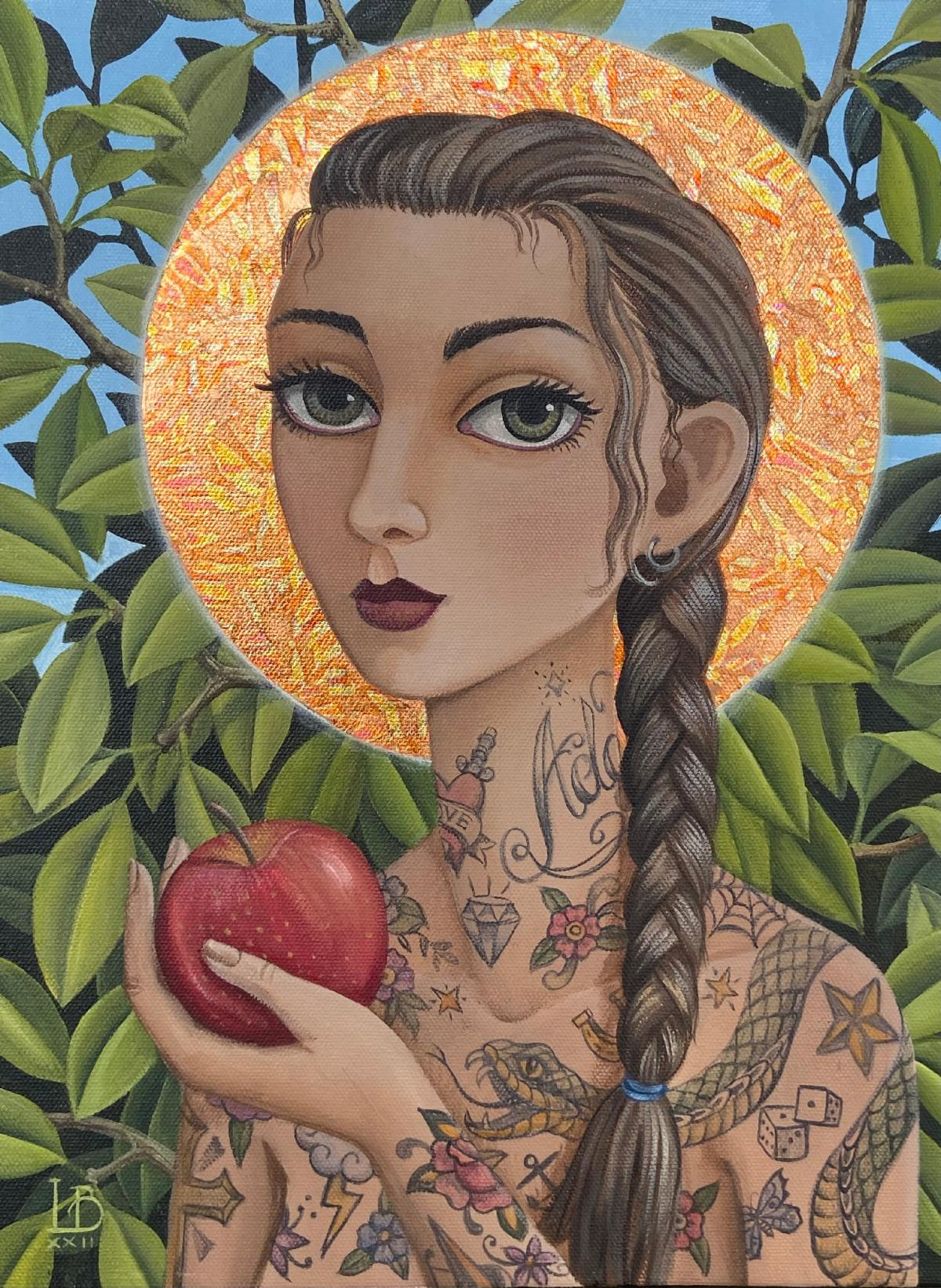
Photo credit:
Sae Honda. Courtesy of the Artist.
NEO MINERALIA suggests that recent rock formations no longer fit within the traditional groups: Igneous, Metamorphic, and Sedimentary. Instead, the Anthropocene, the era of human influence on the climate and environment, has introduced two post-natural rocks: Synthetic and Digital.
NEO MINERALIA presents a selection of new geological specimens crafted by ten international artists exploring rocks as reflections of our effects on human and nonhuman ecologies. By embedding synthetic materials (plastics, e-waste) and layers of data points (critical, financial, social) into the craftsmanship of these artifacts, the artists transgress the definition of rocks, turning them from passive aggregates of minerals into metaphorical aggregates of data. Within their apparent “rockness” we can decode hopes, warnings, and speculative future scenarios.
The featured works stemming from places as varied as Mexico, Japan, Poland, and Australia (including a curated artists’ books library), collectively signal a new era of planetary and geological consciousness where we are asked to read, feel, and listen to rocks in new ways.
Photo credit:
J Diamond, “Pony II,” 2022. Courtesy of the Artist
Something earned, Something left behind is an exhibition of objecthood; a critical analysis of the transactional and political languages of everyday and culturally significant objects. This exhibition challenges a history of exclusion and inclusion of People of Color (POC) and their narratives from the canon of craft based on subject matter. It dissects this history’s origins and precedent as an economic transaction to gain access to white spaces.
Racial and ethnic identity influences the way individuals perceive themselves, the way others perceive them, and the way they choose to behave. For this reason, People of Color are expected to perform certain roles in order to fit into hegemonic institutions. These roles can be an active shrinking of themselves and the racialized part of them, or a personal exploitation of their racialized selves. This exhibition addresses and redresses the ways narrowed populations have been included, and the ways in which they have been asked to participate.
Together, this work creates space for and legitimizes POC narratives with depth and care. The exhibiting artists’ practices work against institutionalized expectations of POC work, expanding discourse and inserting new subjectivity into the canon of craft art. It engages with a community hungry for the revitalization and resuscitation of non-Western voices within art spaces. This exhibition challenges the expectations of art from artists of marginalized backgrounds and embraces a new subjectivity of interrogating one’s inherited experiences.
Photo credit:
Photograph by Bowery Blue Makers
Jeans – with their standardized pockets, rivets, and denim – are so much a part of everyday wardrobes that they are easy to overlook. Yet, in workshops across the nation, independent makers are reevaluating the garment and creating jeans by hand, using antiquated equipment and denim woven on midcentury looms. Crafting Denim explores how and why jeans have come to exist at the intersections of industry and craft, modernity, and tradition.
A product of industrial factory production for over a century, jeans are being recast by a new cohort of small-scale makers including craftspeople like Ryan Martin of W.H. Ranch Dungarees, Takayuki Echigoya of Bowery Blue Makers, and Sarah Yarborough and Victor Lytvinenko of Raleigh Denim, who favor choice materials and small-batch fabrication. The jeans they make merge craft traditions with industry and extend the conversation between hand and machine.
Each maker creates a distinctive product but shares a deep appreciation for materials, tools, history, and denim. These jeans are in dialogue with the past and in line with contemporary interests in sustainability. The small workshops featured here are sites of innovation and preservation, and visitors are invited to take a close look at an everyday item and imagine alternative contexts for making and living in our own clothes.
Ooh La La Curiosity Market is an artist’s market that takes place in Pritchard Park, located in the center of beautiful downtown Asheville and will showcase the work of more than a dozen local artists. Taking place on Saturdays throughout Summer and every Saturday in October. Ooh La La will feature works by local painters, leather smiths, jewelry makers, potters, up-cycled crafters, and other curious delights, all beneath the colored canopies of large market umbrellas. In addition to the artists, the market will also feature live local music with three musical acts performing each Saturday and will include everything from a solo saxophonist to folk, blues, acoustic and jazz acts.
|
|
|

TFAC invites all artists: painters, sculptors, writers, performers & more — to a casual weekly drop-in gathering on Saturday mornings at 9 AM to share your works in progress, alert others, and chat about art and what’s happening in your community.
The first weekly Coffee is Saturday, August 20 at 9 am.
No RSVP needed, just drop by!
Free parking available on Melrose Avenue, behind and alongside TFAC.
Throughout the history of painting from the mid-19th century forward, artists have used an
endless variety of approaches to record their world. Beyond the Lens: Photorealist Perspectives on Looking, Seeing, and Painting continues this thread, offering an opportunity to explore a singular and still forceful aspect of American art. Photorealism shares many of the approaches of historical and modernist realism, with a twist. The use of the camera as a basic tool for organizing visual information in advance of painterly expression is now quite common, but Photorealists embraced the camera as the focal point in their creative process.
Beyond the Lens presents key works from the collection of Louis K. and Susan Pear Meisel,
bringing together paintings and works on paper dating from the 1970s to the present to focus on this profoundly influential art movement. The exhibition includes work by highly acclaimed formative artists of the movement such as Charles Bell, Robert Bechtle, Tom Blackwell, Richard Estes, Audrey Flack, and Ralph Goings as well as paintings by the successive generations of Photorealist artists Anthony Brunelli, Davis Cone, Bertrand Meniel, Rod Penner, and Raphaella Spence. Featured artworks in the exhibition include diverse subject matters, but the primary focus is on the common and every day: urban scenes, “portraits” of cars, trucks, and motorcycles, still life compositions using toys, food, candy wrappers, and salt and pepper shakers. All provide opportunities for virtuoso studies in how light, reflection, and the camera as intermediary shapes our perception of the material world.
This multigenerational survey demonstrates how the 35-mm camera, and later technological
advances in digital image-making, informed and impacted the painterly gesture. Taken together, the paintings and works on paper in Beyond the Lens show how simply spellbinding these virtuosic works of art can be.
“Beyond the Lens offers a fascinating look into the Photorealism movement and delves into the profound connection between the artists’ observation and creative process,” says Pamela L. Myers, Executive Director of Asheville Art Museum. “We are delighted to present this curated collection of artworks encapsulating the creative vision and technical precision that defines this artistic genre.”
Photorealism found its roots in the late 1960s in California and New York, coexisting with an explosion of new ideas in art-making that included Conceptual, Pop, Minimalism, Land and Performance Art. At first, representational realism coexisted with the thematic and conceptual explosion but was eventually relegated to the margins regarding critical and curatorial attention. Often misunderstood and sometimes negatively criticized or lampooned as a betrayal of modernism’s commitment to abstraction, the artists involved in Photorealism remained committed explorers of the trail they had blazed. In the decades of the late twentieth century and early twenty-first century, realistic and symbolic painting experienced a renaissance, as contemporary artists are increasingly drawn to narrative and storytelling. Concurrently, using a camera as a preparatory tool equally legitimate and valuable as pencils and pens has made the rubric of Photorealism increasingly relevant.
This exhibition is organized by the Asheville Art Museum and guest curated by Terrie Sultan.
This exhibition is sponsored in part by Jim and Julia Calkins Peterson.
Romare Bearden (Charlotte, NC 1911–1988 New York, NY), African American writer and artist, is renowned for his collages. He constantly experimented with various techniques to achieve his artistic goals throughout his career. This exhibition highlights works on paper and explores his most frequently used mediums, including screen-printing, lithography, hand-colored etching, collagraph, monotype, relief print, photomontage, and collage.
Bearden’s work reflects his improvisational approach to his practice. He considered his process akin to that of jazz and blues composers. Starting with an open mind, he would let an idea evolve spontaneously.
“Romare Bearden: Ways of Working highlights Bearden’s unique artistic practice and masterful storytelling through art,” says Pamela L. Myers, Executive Director of the Asheville Art Museum. “We are thrilled to collaborate with Jerald Melberg Gallery to present these extraordinary works on paper in conversation with Bearden’s collage Sunset Express, 1984 in the Museum Collection (on view in the Museum’s SECU Collection Hall). This exhibition will also provide a glimpse into the cultural histories and personal interests that influenced his art-making practice, and we hope it encourages introspection and dialogue with our visitors.”
Jerald Melberg states, “Romare Bearden’s groundbreaking artistic practice continues to captivate audiences worldwide. With an unparalleled legacy of creativity and innovation, Bearden’s contributions to art remain deeply influential years beyond his life.” We have enjoyed organizing this exhibition with the Asheville Art Museum to showcase his artistic genius and inspire visitors from the Western North Carolina region and beyond.”
This exhibition is made possible in part by the Judy Appleton Fund. Many thanks to the Jerald Melberg Gallery for the loan of these important artworks and to Mary and Jerald Melberg for their long-standing support of the arts, artists, and the Asheville Art Museum.
The Art of Food features works from important postwar artists, like Robert Rauschenberg, Roy Lichtenstein, John Baldessari, Wayne Thiebaud, Ed Ruscha, Andy Warhol, David Hockney, and Jasper Johns, alongside the work of contemporary artists, like Alison Saar, Lorna Simpson, Enrique Chagoya, Rachel Whiteread, and Jenny Holzer, among others.
The Art of Food features more than 100 works in mediums that include drawings, paintings, photographs, prints, sculptures, and ceramics by 37 artists.
Each artist has a unique means of depicting food in their work that, when seen alongside others, creates a nuanced representation of the complex place food holds in everyday life. Cross-historical resonances between artists in the exhibition spark novel meditations on food and its discontents, while speaking to a broad range of audiences.
|
Western North Carolina is important in the history of American glass art. Several artists of the Studio Glass Movement came to the region, including its founder Harvey K. Littleton. Begun in 1962 in Wisconsin, it was a student of Littleton’s that first came to the area in 1965 and set up a glass studio at the Penland School of Craft in Penland, North Carolina. By 1967, Mark Peiser was the first glass artist resident at the school and taught many notable artists, like Jak Brewer in 1968 and Richard Ritter who came to study in 1971. By 1977, Littleton retired from teaching and moved to nearby Spruce Pine, North Carolina and set up a glass studio at his home. Since that time, glass artists like Ken Carder, Rick and Valerie Beck, Shane Fero, and Yaffa Sikorsky and Jeff Todd—to name only a few—have flocked to the area to reside, collaborate, and teach, making it a significant place for experimentation and education in glass. The next generation of artists like Hayden Wilson and Alex Bernstein continue to create here. The Museum is dedicated to collecting American studio glass and within that umbrella, explores the work of Artists connected to Western North Carolina. Exhibitions, including Intersections of American Art, explore glass art in the context of American Art of the 20th and 21st centuries. A variety of techniques and a willingness to push boundaries of the medium can be seen in this selection of works from the Museum’s Collection. |
|
Center for Craft’s immersive installation asks:
What will Appalachia be in a post-major event future? – The Center for Craft is thrilled to announce Krafthouse, a new immersive art installation, made for and by the community, that will evolve and change each year in their historic building at 67 Broadway in downtown Asheville.Local artist Jeannie Regan leads the inaugural year as Creative Director with the vision for Krafthouse 2023: Forest of the New Trees. Between September 28 and October 13, the curious will be rewarded with a ticketed installation that changes nightly, as artist and audience participation weave a story of radical collaboration in Appalachia in the aftermath of a mysterious, world-changing event.
In the spirit of immersive performances, events, and installations like Meow Wolf, Punchdrunk’s Sleep No More, and Burning Man, Krafthouse 2023: Forest of the New Trees invites self-guided exploration of a strange, new landscape and its imagined ecologies and societies, including cultures, customs, and micro currencies. Return visits will reward guests with new perspectives and illuminate new paths through the experience. Selected local artists working with Center staff and Regan will each interpret the theme in their own way. The end result will be the creation of a small, self-sustaining community that has made itself anew. A night market atmosphere will welcome visitors, who will be able to make, gift, and trade goods with the artists and each other, with the opportunity to take home keepsakes – as well as leave their own imprint on the space. The installation asks visitors to participate and collaborate to the extent they wish. Guests are invited to come in costume to share their own interpretation of the post-major event, and to bring any of their own offerings for the space. Costumes and materials will also be available onsite for people who would like to step into this new reality more fully when they arrive. In her exploration of the theme, Regan researched the centuries-old craft traditions of Appalachia, including their relationship to Indigenous wisdom, hillfolks’ lore, and the ancient wildness of the Blue Ridge Mountains. An undercurrent of the installation is the generational resilience of local peoples facing their own “post-major events” and collaborating radically to survive – and thrive – in their aftermath. The varied lived experiences of people during the early days of the Covid-19 pandemic, when a multitude of realities existed simultaneously, also informed the theme. “There was no united experience in that major event that happened, because we all experienced it very differently,” Regan shares. But it was also a world where, she notes, “multiple realities intersected and radical community collaboration was the only way to survive.” She continues, “Craft plays into all of that, because what we make says so much about us as individuals. What we make says something about what we want the future to be.” |
Krafthouse 2023: Forest of the New Trees
an immersive art installation made by Asheville
creative direction by Jeannie Regan
Visit the Center for Craft at 67 Broadway in downtown Asheville, North Carolina, to discover an imagined post-major event Appalachia. You will descend into the basement to enter a world imagined by artists where craft is the only way to survive and thrive.
Guests will abide by the rules of the forest – to learn to trade without currency – and see, hear, touch, and wear what artists have crafted as a way to ensure our collective future. Each experience is unrepeatable, creating an impulse to return to explore the world anew.
Special thanks to Jeannie Regan, Creative Director and Futures Bright, Graphic Design.
General admission tickets are $15 and provide guests with a self-guided tour of the immersive installation that runs for approximately 3 weeks between September 28 – October 13 on Thursdays and Fridays from 5 – 8 pm, and on Saturdays from 2 – 4 pm and 6 – 9 pm.
Ticketed tours depart every 10 minutes, and the experience takes approximately 30 minutes. After the experience, guests will be invited to mingle and grab a beverage or snack.
Reservation Start Time indicates the time your group will be escorted from the main level down to the Krafthouse installation experience.
Please plan to arrive at the Center for Craft main entrance at 67 Broadway Street at least 15 minutes prior to your reservation start time.
Eve acrylic on canvas
16 x 12 inches
LAINE BACHMAN
Eden Revisited
September 30 – October 30
Bender Gallery is excited to present Eden Revisited, a solo exhibition of thirty-plus lush, botanical paintings by popular artist Laine Bachman featuring real and imaginary creatures and goddess-like women with a deep connection to the natural world. Often inspired by myths, folklore, and nature, Bachman infuses the colorful worlds she creates with verdant foliage, archetypal imagery, underlying themes, exotic fauna, and meticulous detail. The exhibition opens Saturday, September 30, and runs through October 30.
|
Center for Craft’s immersive installation asks:
What will Appalachia be in a post-major event future? – The Center for Craft is thrilled to announce Krafthouse, a new immersive art installation, made for and by the community, that will evolve and change each year in their historic building at 67 Broadway in downtown Asheville.Local artist Jeannie Regan leads the inaugural year as Creative Director with the vision for Krafthouse 2023: Forest of the New Trees. Between September 28 and October 13, the curious will be rewarded with a ticketed installation that changes nightly, as artist and audience participation weave a story of radical collaboration in Appalachia in the aftermath of a mysterious, world-changing event. In the spirit of immersive performances, events, and installations like Meow Wolf, Punchdrunk’s Sleep No More, and Burning Man, Krafthouse 2023: Forest of the New Trees invites self-guided exploration of a strange, new landscape and its imagined ecologies and societies, including cultures, customs, and micro currencies. Return visits will reward guests with new perspectives and illuminate new paths through the experience. Selected local artists working with Center staff and Regan will each interpret the theme in their own way. The end result will be the creation of a small, self-sustaining community that has made itself anew. A night market atmosphere will welcome visitors, who will be able to make, gift, and trade goods with the artists and each other, with the opportunity to take home keepsakes – as well as leave their own imprint on the space. The installation asks visitors to participate and collaborate to the extent they wish. Guests are invited to come in costume to share their own interpretation of the post-major event, and to bring any of their own offerings for the space. Costumes and materials will also be available onsite for people who would like to step into this new reality more fully when they arrive. In her exploration of the theme, Regan researched the centuries-old craft traditions of Appalachia, including their relationship to Indigenous wisdom, hillfolks’ lore, and the ancient wildness of the Blue Ridge Mountains. An undercurrent of the installation is the generational resilience of local peoples facing their own “post-major events” and collaborating radically to survive – and thrive – in their aftermath. The varied lived experiences of people during the early days of the Covid-19 pandemic, when a multitude of realities existed simultaneously, also informed the theme. “There was no united experience in that major event that happened, because we all experienced it very differently,” Regan shares. But it was also a world where, she notes, “multiple realities intersected and radical community collaboration was the only way to survive.” She continues, “Craft plays into all of that, because what we make says so much about us as individuals. What we make says something about what we want the future to be.” |
Sunday, October
1, 2023
ArtsAVL’s: Thomas Wolfe Auditorium FAQ is Now Live
Buncombe County Special Collections call for proposals
Asheville Parks + Recreation Adult fall athletic programs + sports leagues
Asheville Parks + Recreation Youth Fall + Winter athletic programs + sports leagues
Biltmore Estate: Ciao! From Italy Sculptural Postcard Display
Beyond the Lens: Photorealist Perspectives on Looking, Seeing, and Painting
Romare Bearden: Ways of Working Exhibition
The Art of Food: From the Collections of Jordan D. Schnitzer and His Family Foundation
Western North Carolina Glass: Selections from the Collection
|
ArtsAVL’s first Town Hall of 2023-24, focused on the current state and future possibilities for Thomas Wolfe Auditorium, drew over 400 attendees. ArtsAVL collected your questions after the event for an FAQ page. This page will continue to be updated as the discussion evolves. Answered questions include possible next steps, details of non-ticketed events that happen in the auditorium, the economic impact of the space’s closure, and much more.
Missed the Town Hall? Read our article here, and watch the video here.
Immediate Next Steps: City Council will hold a special meeting on Tues, Sept 26 at 3pm |
|
|
Buncombe County Special Collections is excited to announce a call for proposals for the third year of its creative residency program.
This is an annual opportunity for artists in Buncombe County to create new, research-driven creative work using BCSC’s historic resources as source material and/or inspiration, and to present their work in the Carolina Record Shop, a dedicated exhibition space in the BCSC reading room. Artists age 18 and up, based in Buncombe County, working in any creative discipline are invited to apply.
Buncombe County Special Collections is looking for projects that will:
- Offer new, diverse perspectives on our shared history
- Identify and address gaps and/or amplify narratives that are historically underrepresented in the collection
- Educate and inspire non-traditional users of archives and special collections to engage with the collection in new ways.
More information (including the PDF of the call for proposals) is available at here. The 2024 Creative Residency is made possible in part by the Trust Fund for Buncombe County Public Libraries.
You can also visit Buncombe County Special Collections in the lower level of Pack Memorial to view the current exhibition in the Carolina Record Shop, “Belonging & Non-Belonging: The History and Future of Zines in Western North Carolina,” curated by 2023 resident Miles Lamberson.
With multiple parks featuring ballfields and volleyball, pickleball, tennis, and basketball courts, Asheville has plenty of opportunities to join pick-up games or play with organized sports leagues. Asheville Parks & Recreation (APR) offers a broad line-up of youth athletics programs, adult sports leagues, and special events throughout the year with an emphasis on fair play and enjoyment for any level of experience, including the fall opportunities below.
Search Current Asheville Sports and Athletics
Limited spots available, so advance registration at AVLREC.com required. Some activities offer discounted registration for early sign ups. Most team sports also offer “looking for a team” options for free agents. Some activities charge a higher rate for participants who do not live in Asheville.
Leagues
6v6 Indoor Volleyball League, $200 per team
Registration opens November 27, games begin January 16 for winter season
Upper, middle, and lower divisions play at Tempie Avery Montford Community Center.
Over 40 Basketball League, $60 per player
Registration ends August 24, games begin September 12
Asheville’s newest team sports league provides an opportunity for community members over 40 who want to get back into the game or prefer to play with others around the same age. Sign up as an individual to be placed on a team based on height, position, and skill level for games played at Linwood Crump Shiloh Community Center.
Flag Football League, $600 per team
Registration opens August 30, games begin October 17
Upper, middle, and lower divisions play at Asheville Middle School on 211 South French Broad Avenue.
Winter Basketball League, $600 per team
Registration opens October 10, games begin November 27
Upper and lower divisions play at Linwood Crump Shiloh Community Center. Middle division plays at Stephens-Lee Community Center.
Clinics and Tournaments
Tennis Clinic, $20 per player
Registration ends September 6, clinics held each Tuesday and Thursday from September 12-21
Instructional clinics for beginners and intermediate players teach the basics and build on skills each class at Murphy-Oakley Park.
Doubles Grass Volleyball Tournament, $20 per team
Registration ends September 5, tournament on September 16
Six sets to 21 in pool play for advance and intermediate divisions in which all teams advance to the playoffs on a day of music, fun, and volleyball at Carrier Park.
Intro to Golf, $10 for series with players responsible for their own green fees
Registration ends September 28, games played each Wednesday from October 4-25
Travel to a different golf course each week for one-on-one coaching to learn the game. For more info, contact Colt Miller at [email protected] or (828) 707-2376.
Pumpkin Ball Softball Bash Tournament, $150 per team
Registration ends September 30, tournament on October 7
All players hit a 16-inch softball in games played on a 200-foot distance field with unlimited home runs with a three-game guarantee. Winning teams receive prizes and trophies. For more info, contact Zack Stewart at [email protected] or (828) 545-1644.
Late Night Wiffleball Tournament, $5 per team
Registration ends November 9, tournament on November 16
Five-player teams play in this two-game guarantee tournament at Tempie Avery Montford Community Center. For more info, contact Kiley Pritchard at [email protected] or (828) 507-3357.
Flag Football, $15 per player
Registration ends August 30, games begin September 9
Teams divided by ages 6-8, 9-10, 11-12, and 14-16 practice drills for 30 minutes prior to weekly games with two 20 minute halves at Asheville Middle School on 211 South French Broad Avenue.
Softball Clinic, $10 per player
Registration ends September 3, clinics begin September 11
Instructional five-week clinic with divisions for 6-8, 9-10, and 11-12 year-olds teaches fundamentals through drills and scrimmages at Asheville Middle School on 211 South French Broad Avenue with the intent of building a youth softball program in the future.
Youth Archery Class, $25 per archer
Registration ends October 10, class held each Thursday from October 26-November 16
This introductory course teaches individuals 9-12 years-old range safety and proper shooting techniques.
Winter Basketball League, $35 per player
Registration ends October 31, evaluations begin November 6
Age divisions include 5-6 (instructional), 9-10, 11-12, and 13-15.
Fling the Fletch Junior Disc Golf Open, $5 for beginner and $20 for advanced competitive
A local pro teaches a clinic followed by a nine-hole family fun tournament for beginners ages 8-18 and an 18-hole competitive round for advanced players ages 12-16.
Turkey Tee Off Family Mini Golf Tournament, free
Registration ends November 10, tournament on November 18
Enjoy friendly competition with friends and family at Lakeview Putt and Play on 2245 Hendersonville Road.
Included with admission
Embark on a scenic journey across George Vanderbilt’s Italy with a large-scale outdoor display that combines brilliant botanical designs with authentic messages written by Vanderbilt himself.
Beautifully handcrafted of natural elements, each sculptural postcard depicts a location or landmark Vanderbilt visited more than a century ago. This captivating complement to Biltmore’s Italian Renaissance Alive exhibition reveals Vanderbilt’s passions for travel, culture, architecture, and art as well as his personal experience of such renowned Italian cities as Milan, Florence, Venice, Pisa, and Vatican City.
Adding to the charm and visual appeal of Ciao! From Italy—sure to be a hit among kids of all ages—is the G-scale model train that travels in and out of each postcard in this enlightening display!
Throughout the history of painting from the mid-19th century forward, artists have used an
endless variety of approaches to record their world. Beyond the Lens: Photorealist Perspectives on Looking, Seeing, and Painting continues this thread, offering an opportunity to explore a singular and still forceful aspect of American art. Photorealism shares many of the approaches of historical and modernist realism, with a twist. The use of the camera as a basic tool for organizing visual information in advance of painterly expression is now quite common, but Photorealists embraced the camera as the focal point in their creative process.
Beyond the Lens presents key works from the collection of Louis K. and Susan Pear Meisel,
bringing together paintings and works on paper dating from the 1970s to the present to focus on this profoundly influential art movement. The exhibition includes work by highly acclaimed formative artists of the movement such as Charles Bell, Robert Bechtle, Tom Blackwell, Richard Estes, Audrey Flack, and Ralph Goings as well as paintings by the successive generations of Photorealist artists Anthony Brunelli, Davis Cone, Bertrand Meniel, Rod Penner, and Raphaella Spence. Featured artworks in the exhibition include diverse subject matters, but the primary focus is on the common and every day: urban scenes, “portraits” of cars, trucks, and motorcycles, still life compositions using toys, food, candy wrappers, and salt and pepper shakers. All provide opportunities for virtuoso studies in how light, reflection, and the camera as intermediary shapes our perception of the material world.
This multigenerational survey demonstrates how the 35-mm camera, and later technological
advances in digital image-making, informed and impacted the painterly gesture. Taken together, the paintings and works on paper in Beyond the Lens show how simply spellbinding these virtuosic works of art can be.
“Beyond the Lens offers a fascinating look into the Photorealism movement and delves into the profound connection between the artists’ observation and creative process,” says Pamela L. Myers, Executive Director of Asheville Art Museum. “We are delighted to present this curated collection of artworks encapsulating the creative vision and technical precision that defines this artistic genre.”
Photorealism found its roots in the late 1960s in California and New York, coexisting with an explosion of new ideas in art-making that included Conceptual, Pop, Minimalism, Land and Performance Art. At first, representational realism coexisted with the thematic and conceptual explosion but was eventually relegated to the margins regarding critical and curatorial attention. Often misunderstood and sometimes negatively criticized or lampooned as a betrayal of modernism’s commitment to abstraction, the artists involved in Photorealism remained committed explorers of the trail they had blazed. In the decades of the late twentieth century and early twenty-first century, realistic and symbolic painting experienced a renaissance, as contemporary artists are increasingly drawn to narrative and storytelling. Concurrently, using a camera as a preparatory tool equally legitimate and valuable as pencils and pens has made the rubric of Photorealism increasingly relevant.
This exhibition is organized by the Asheville Art Museum and guest curated by Terrie Sultan.
This exhibition is sponsored in part by Jim and Julia Calkins Peterson.
Romare Bearden (Charlotte, NC 1911–1988 New York, NY), African American writer and artist, is renowned for his collages. He constantly experimented with various techniques to achieve his artistic goals throughout his career. This exhibition highlights works on paper and explores his most frequently used mediums, including screen-printing, lithography, hand-colored etching, collagraph, monotype, relief print, photomontage, and collage.
Bearden’s work reflects his improvisational approach to his practice. He considered his process akin to that of jazz and blues composers. Starting with an open mind, he would let an idea evolve spontaneously.
“Romare Bearden: Ways of Working highlights Bearden’s unique artistic practice and masterful storytelling through art,” says Pamela L. Myers, Executive Director of the Asheville Art Museum. “We are thrilled to collaborate with Jerald Melberg Gallery to present these extraordinary works on paper in conversation with Bearden’s collage Sunset Express, 1984 in the Museum Collection (on view in the Museum’s SECU Collection Hall). This exhibition will also provide a glimpse into the cultural histories and personal interests that influenced his art-making practice, and we hope it encourages introspection and dialogue with our visitors.”
Jerald Melberg states, “Romare Bearden’s groundbreaking artistic practice continues to captivate audiences worldwide. With an unparalleled legacy of creativity and innovation, Bearden’s contributions to art remain deeply influential years beyond his life.” We have enjoyed organizing this exhibition with the Asheville Art Museum to showcase his artistic genius and inspire visitors from the Western North Carolina region and beyond.”
This exhibition is made possible in part by the Judy Appleton Fund. Many thanks to the Jerald Melberg Gallery for the loan of these important artworks and to Mary and Jerald Melberg for their long-standing support of the arts, artists, and the Asheville Art Museum.
The Art of Food features works from important postwar artists, like Robert Rauschenberg, Roy Lichtenstein, John Baldessari, Wayne Thiebaud, Ed Ruscha, Andy Warhol, David Hockney, and Jasper Johns, alongside the work of contemporary artists, like Alison Saar, Lorna Simpson, Enrique Chagoya, Rachel Whiteread, and Jenny Holzer, among others.
The Art of Food features more than 100 works in mediums that include drawings, paintings, photographs, prints, sculptures, and ceramics by 37 artists.
Each artist has a unique means of depicting food in their work that, when seen alongside others, creates a nuanced representation of the complex place food holds in everyday life. Cross-historical resonances between artists in the exhibition spark novel meditations on food and its discontents, while speaking to a broad range of audiences.
|
Western North Carolina is important in the history of American glass art. Several artists of the Studio Glass Movement came to the region, including its founder Harvey K. Littleton. Begun in 1962 in Wisconsin, it was a student of Littleton’s that first came to the area in 1965 and set up a glass studio at the Penland School of Craft in Penland, North Carolina. By 1967, Mark Peiser was the first glass artist resident at the school and taught many notable artists, like Jak Brewer in 1968 and Richard Ritter who came to study in 1971. By 1977, Littleton retired from teaching and moved to nearby Spruce Pine, North Carolina and set up a glass studio at his home. Since that time, glass artists like Ken Carder, Rick and Valerie Beck, Shane Fero, and Yaffa Sikorsky and Jeff Todd—to name only a few—have flocked to the area to reside, collaborate, and teach, making it a significant place for experimentation and education in glass. The next generation of artists like Hayden Wilson and Alex Bernstein continue to create here. The Museum is dedicated to collecting American studio glass and within that umbrella, explores the work of Artists connected to Western North Carolina. Exhibitions, including Intersections of American Art, explore glass art in the context of American Art of the 20th and 21st centuries. A variety of techniques and a willingness to push boundaries of the medium can be seen in this selection of works from the Museum’s Collection. |