

Calendar of Events
Upcoming events and things to do in Asheville, NC. Below is a list of events for festivals, concerts, art exhibitions, group meetups and more.
Interested in adding an event to our calendar? Please click the green “Post Your Event” button below.
Tuesday, January
16, 2024
Biltmore Estate: Ciao! From Italy Sculptural Postcard Display
NC Arboretum Hiking Trails
WNC Nature Center: Celebrate New Animals
Included with admission
Embark on a scenic journey across George Vanderbilt’s Italy with a large-scale outdoor display that combines brilliant botanical designs with authentic messages written by Vanderbilt himself.
Beautifully handcrafted of natural elements, each sculptural postcard depicts a location or landmark Vanderbilt visited more than a century ago. This captivating complement to Biltmore’s Italian Renaissance Alive exhibition reveals Vanderbilt’s passions for travel, culture, architecture, and art as well as his personal experience of such renowned Italian cities as Milan, Florence, Venice, Pisa, and Vatican City.
Adding to the charm and visual appeal of Ciao! From Italy—sure to be a hit among kids of all ages—is the G-scale model train that travels in and out of each postcard in this enlightening display!
Located within the wildly-popular and botanically beautiful Southern Appalachian Mountains, The North Carolina Arboretum offers more than 10 miles of hiking trails that connect to many other area attractions such as Lake Powhatan, the Pisgah National Forest and the Blue Ridge Parkway. Visitors of all ages and abilities can enjoy their hiking experience at the Arboretum as trail options include easy, moderate, and difficult challenge levels. All trails are dog-friendly and visitors are asked to adhere to the proper waste disposing procedures for pets.
Part of a running group that would like to use the Arboretum as a starting point or parking location? Please review our Running Group Guidance and email [email protected] with any questions.
Guests visiting the WNC Nature Center this spring and summer have seen many new animals! Over the past six months, 19 animals representing seven species have been born or brought to the Nature Center.
Come and See
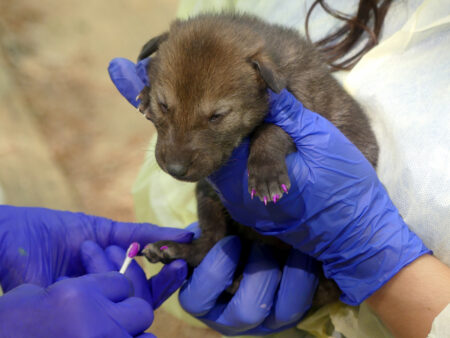
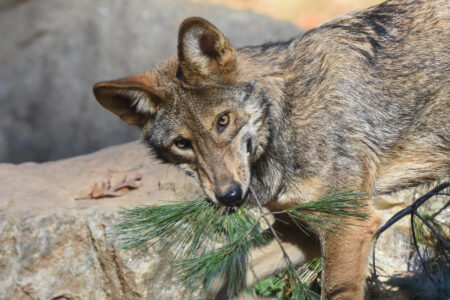
In late April, the WNC Nature Center announced the birth of a large litter of critically endangered red wolf puppies. Six females (Babs, Bonnie, Ruby, Rufina, Sienna, and Toto)and one male (Tony) have grown up in front of guests and visitors and are now almost indistinguishable in size from their parents, Gloria and Oak. The WNC Nature Center anticipates that the red wolf pups will remain in Asheville for the next two years.
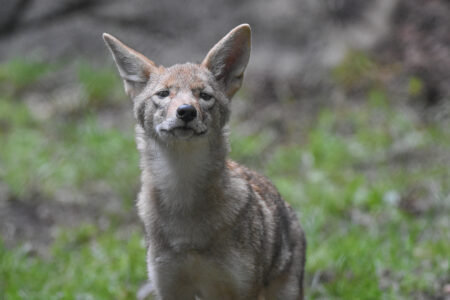
On the heels of the red wolf births came two coyote pups, Cal and Walker. They were also born in April and came to the Nature Center in late July from Izzie’s Pond Sanctuary in South Carolina. While Cal and Walker are not biological brothers, they were introduced to each other at a very young age, so they have bonded and will be companions. These coyotes are incredibly shy and are usually spotted by guests behind their open den shelter.
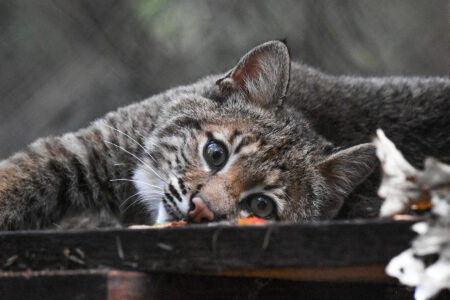
Quickly becoming a guest-favorite, bobcat kitten Tufts joined the Nature Center in early August. He came from the May Wildlife Rehabilitation Center in Banner Elk, North Carolina, and was named after Edgar Tufts, the founder of Lees-McRae College. The latest bobcat addition was Kohana in late November, a female bobcat who was found in the wild by the West Virginia Department of Natural Resources, she was born around the same time as Tufts, and the two will
be non-breeding companions.
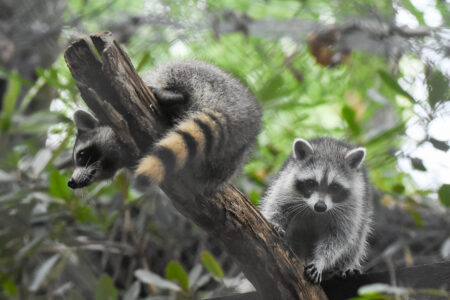
Raccoons Grace and Frankie came to the WNC Nature Center in late September from Appalachian Wildlife Refuge. These kits have acclimated quickly with their curious behaviors and tactile foraging skills.
In our Care
To say the least, animal keepers and the veterinary care team at the WNC Nature Center have been busy keeping up with vaccines and immunizations, introducing the animals to their new habitats, and encouraging behaviors that will help with their care as they grow into adulthood.
“When you visit and see our animals, it’s important to understand why they are here with us,” says Erin Oldread. Animal Curator at the Nature Center. “Sometimes they were born under human care, like our red wolves. Other animals were permanently injured in the wild and need ongoing veterinary care. In the case of our new coyotes, bobcats, and raccoons, they were found to be unreleasable by the sanctuaries who received them. Oftentimes when you are rehabilitating a very young animal and feeding them from a bottle, they very quickly become dependent on and overly comfortable around humans. It can be harmful to them and humans if they were released back into the wild, so the WNC Nature Center is happy to give them a home.”
In the case of WNC Nature Center’s last collection of baby animals, sometimes the Center serves as a holding ground as animals develop and prepare to be released back into the wild. Appalachian Station, the Nature Center’s indoor exhibit for reptiles and amphibians, is currently housing two baby box turtles and two baby snapping turtles, all four of which are overwintering and will be released in spring 2024.

Also joining the WNC Nature Center this year are adult animals, Suli the Black Vulture and Morticia the Turkey Vulture. Suli was born in the wild but came under human care after a wing injury. She came to the Nature Center in late March from the NC Aquarium at Pine Knolls Shores. Morticia arrived from Hershey Park Zoo/Zoo America in October and joined the habitat next to Buzz, the longest living resident at the Nature Center at 33 years, in December.
Great time for a visit
Typically, the WNC Nature Center sees less crowds as Asheville enters the colder weather seasons. However, the animals who call the Nature Center home are generally more active during this time of year, and visitors can enjoy watching all the new additions encounter their first winter in Western North Carolina.
Check out the WNC Nature Center’s holiday gift guide at wildwnc.org/gift-guide to see all the ways you can support the animals who call the Nature Center home, including symbolic adoptions and purchasing items from the Animal Wishlist and Holiday Giving Tree.
About the Friends
The Friends of the WNC Nature Center are a vital partner with the WNC Nature Center. With their donors and members, the Friends enrich the Nature Center’s mission to connect people with the plants and animals of the Southern Appalachian Mountains. As a conservation organization, the Friends inspires a passion to know more, care more, and do more for the wildlife of the Southern Appalachian Mountains. They advance the critical work of the WNC Nature Center by supporting its growth and development through fundraising, membership, outreach education, marketing, and volunteer services.
About the WNC Nature Center
The Nature Center connects people of all ages with the plants and animals of the Southern Appalachian Mountains. Asheville’s wildlife park is located on 42 acres and is home to more than 60 species of animals, including red pandas, river otters, black bears, red and gray wolves, and bobcats. For more information, please visit www.wildwnc.org.
Wednesday, January
17, 2024
BCAlerts From CodeRED
Stay informed. Get emergency notifications and general Buncombe County information on your smartphone, telephone, or email.
Sign up for BCAlerts today
Qualify Free: Vaccination and Testing, Screening Cervical Cancer
Winter Hiking Challenge
Biltmore Estate: Ciao! From Italy Sculptural Postcard Display
NC Arboretum Hiking Trails
WNC Nature Center: Celebrate New Animals
Mindful Meditation: Goal Setting
Sign up for BCAlerts today
Here is what you need to know.
What is CodeRED?
Along with emergency and critical messages, the CodeRED notification system will also enhance community engagement via the release of important but non-emergency information such as vaccine site notifications, inclement weather closures and schedule changes, and other county service information.
Sign up for BC Alerts by texting BCAlert(not case sensitive) to 99411 or visit to sign up for the new system. If residents have previously signed up for Nixle BC Alerts, they will need to re-register in order to continue receiving notifications after June 30.
Alerts to choose from:
- Emergency
- General
- Recreation Services
- Election Reminders
- Governing
- Weather
NOTICE: For CodeRED support, please call 1-866-939-0911. For all other questions email [email protected].
More than 14,000 women in the United States are diagnosed with invasive cervical cancer each year, but the disease is preventable with vaccination and appropriate screening.
January is Cervical Health Awareness Month, a time to learn more about cervical health and cervical cancer prevention and take steps to help eliminate this preventable cancer.
The two most important tools to remember when it comes to cervical health are vaccination and testing.
Vaccination
The HPV vaccine has been around since 2006. In that time, rates of cervical cancer incidence have dropped significantly among vaccinated women. One study from Sweden looked at 11 years (2006 through 2017) and found 90% reduction in cervical cancer incidence compared with the incidence in women who had not been vaccinated.
HPV vaccines help prevent infection from both high-risk HPV types that can lead to cervical cancer and low-risk types that cause genital warts.
The CDC recommends all boys and girls get HPV vaccine at age 11 or 12. The vaccine produces a stronger immune response when taken during the preteen years. For this reason, up until age 14, only two doses are the vaccine are required. Women and men can get the vaccine up to age 45 but for those 15 and older, a full three-dose series is needed.
You can get the vaccine at your doctor’s office or the Buncombe County Health and Human Services Department at 40 Coxe Avenue in Asheville.
Learn more about the HPV vaccine here.
Screening
The goal of cervical cancer screening—Pap tests and HPV tests—is to find problems, like cell changes, so they can be treated before they turn into cancer.
The traditional test for early detection has been the Pap test. For women aged 30 and over, an HPV test is also recommended. HPV tests can find any of the high-risk types of HPV that are commonly found in cervical cancer.
Women should start screening with the Pap test at age 21, according to current guidelines for cervical cancer screening.
Starting at age 30, women have three options available for screening:
- A Pap test alone every three years.
- Co-testing with a Pap and HPV test, every five years.
- An HPV test alone, every five years.
Depending on the results of the Pap and/or HPV tests, a healthcare provider may recommend additional screening or procedures, so some women may be screened more often.
After age 65, women older than 65 who have had adequate prior screening and are not otherwise at high risk can stop screening. Women who have had a hysterectomy (with removal of the cervix) also do not need to be screened, unless they have a have a history of a high-grade precancerous lesions.
To learn more about each type of screening, click here.
Breast And Cervical Cancer Control Program (BCCCP)
The Buncombe County Health and Human Services BCCCP is a program serving women and transgender people providing free chest and cervical exams, pap smears and HPV testing, and mammograms. This program is open to those:
- Between the ages of 40-64.
- Who have no insurance.
- Income below 250% of the federal poverty level.
- A Buncombe County resident. Local NC BCCCP contact information can be found here.
- Other women and transgender people ages 21 to 39 may be eligible.
To learn more about eligibility or schedule an appointment, call (828) 250-6006.
Do you need a little inspiration to get moving after the holiday season? Southern Appalachian Highlands Conservancy is proud to announce our 4th annual Winter Hiking Challenge to get folks out and about – no matter your background or ability this is a project designed to get folks outside to enjoy the great outdoors!
The 2024 Winter Hiking Challenge sets a goal of 60 miles in 60 days, to be completed in your own time and at your own speed. Those can be miles you’ve walked, run or hiked – in your neighborhood, around the block, up a rugged mountain trail, or through the forest. Whatever works for your comfort and skill level – just make it 60 miles within the 60-day challenge time period (January 1st to March 1st, 2024). Sign up early to have more time to complete the Challenge. Registration ends on February 25th. Please note, this is a challenge you set with yourself, it is not a competition. Registration for this challenge is $25 per person and your registration fee directly supports conservation work in the Southern Appalachians. If you cannot afford the registration fee at this time, please use the coupon code: SAHC2024.
All participants will receive informative emails with suggestions for some of our favorite places to hike across the mountains of NC and TN. This special email series will include recommendations to enjoy places that SAHC has protected as well other favorite trails and destinations. Due to overuse of popular trails in the area we will try to share tidbits about some of the lesser-known trails and places to enjoy the great outdoors. Are you a little unsure about hiking in winter? We will share helpful Winter Hiking Tips, for those who haven’t hiked during the winter months. Lastly, those who complete the Winter Hiking Challenge will receive a commemorative SAHC patch after the end of the challenge.
Please note, the Challenge signup fee is a fundraiser to help support conservation efforts; you DO NOT have to pay to hike public trails. Feel free to enter miles at any date during the 60 days, as long as they are all entered before March 1. You can even enter your miles at the end of a certain time period (e.g, entering your miles for the week on Friday, all under one entry).
Time spent outdoors and in nature can help with both mental and physical health. We hope this Challenge will make it interesting for folks to explore places you may not have hiked before, and/or to rediscover the joy of nature in your own backyard.Take the Challenge by yourself, or with friends and family. Please just be safe while doing so!
Challenge Contact Info
If you have any questions about this Challenge, please contact the Challenge director at [email protected]
Included with admission
Embark on a scenic journey across George Vanderbilt’s Italy with a large-scale outdoor display that combines brilliant botanical designs with authentic messages written by Vanderbilt himself.
Beautifully handcrafted of natural elements, each sculptural postcard depicts a location or landmark Vanderbilt visited more than a century ago. This captivating complement to Biltmore’s Italian Renaissance Alive exhibition reveals Vanderbilt’s passions for travel, culture, architecture, and art as well as his personal experience of such renowned Italian cities as Milan, Florence, Venice, Pisa, and Vatican City.
Adding to the charm and visual appeal of Ciao! From Italy—sure to be a hit among kids of all ages—is the G-scale model train that travels in and out of each postcard in this enlightening display!
Located within the wildly-popular and botanically beautiful Southern Appalachian Mountains, The North Carolina Arboretum offers more than 10 miles of hiking trails that connect to many other area attractions such as Lake Powhatan, the Pisgah National Forest and the Blue Ridge Parkway. Visitors of all ages and abilities can enjoy their hiking experience at the Arboretum as trail options include easy, moderate, and difficult challenge levels. All trails are dog-friendly and visitors are asked to adhere to the proper waste disposing procedures for pets.
Part of a running group that would like to use the Arboretum as a starting point or parking location? Please review our Running Group Guidance and email [email protected] with any questions.
Guests visiting the WNC Nature Center this spring and summer have seen many new animals! Over the past six months, 19 animals representing seven species have been born or brought to the Nature Center.
Come and See
In late April, the WNC Nature Center announced the birth of a large litter of critically endangered red wolf puppies. Six females (Babs, Bonnie, Ruby, Rufina, Sienna, and Toto)and one male (Tony) have grown up in front of guests and visitors and are now almost indistinguishable in size from their parents, Gloria and Oak. The WNC Nature Center anticipates that the red wolf pups will remain in Asheville for the next two years.
On the heels of the red wolf births came two coyote pups, Cal and Walker. They were also born in April and came to the Nature Center in late July from Izzie’s Pond Sanctuary in South Carolina. While Cal and Walker are not biological brothers, they were introduced to each other at a very young age, so they have bonded and will be companions. These coyotes are incredibly shy and are usually spotted by guests behind their open den shelter.
Quickly becoming a guest-favorite, bobcat kitten Tufts joined the Nature Center in early August. He came from the May Wildlife Rehabilitation Center in Banner Elk, North Carolina, and was named after Edgar Tufts, the founder of Lees-McRae College. The latest bobcat addition was Kohana in late November, a female bobcat who was found in the wild by the West Virginia Department of Natural Resources, she was born around the same time as Tufts, and the two will
be non-breeding companions.
Raccoons Grace and Frankie came to the WNC Nature Center in late September from Appalachian Wildlife Refuge. These kits have acclimated quickly with their curious behaviors and tactile foraging skills.
In our Care
To say the least, animal keepers and the veterinary care team at the WNC Nature Center have been busy keeping up with vaccines and immunizations, introducing the animals to their new habitats, and encouraging behaviors that will help with their care as they grow into adulthood.
“When you visit and see our animals, it’s important to understand why they are here with us,” says Erin Oldread. Animal Curator at the Nature Center. “Sometimes they were born under human care, like our red wolves. Other animals were permanently injured in the wild and need ongoing veterinary care. In the case of our new coyotes, bobcats, and raccoons, they were found to be unreleasable by the sanctuaries who received them. Oftentimes when you are rehabilitating a very young animal and feeding them from a bottle, they very quickly become dependent on and overly comfortable around humans. It can be harmful to them and humans if they were released back into the wild, so the WNC Nature Center is happy to give them a home.”
In the case of WNC Nature Center’s last collection of baby animals, sometimes the Center serves as a holding ground as animals develop and prepare to be released back into the wild. Appalachian Station, the Nature Center’s indoor exhibit for reptiles and amphibians, is currently housing two baby box turtles and two baby snapping turtles, all four of which are overwintering and will be released in spring 2024.
Also joining the WNC Nature Center this year are adult animals, Suli the Black Vulture and Morticia the Turkey Vulture. Suli was born in the wild but came under human care after a wing injury. She came to the Nature Center in late March from the NC Aquarium at Pine Knolls Shores. Morticia arrived from Hershey Park Zoo/Zoo America in October and joined the habitat next to Buzz, the longest living resident at the Nature Center at 33 years, in December.
Great time for a visit
Typically, the WNC Nature Center sees less crowds as Asheville enters the colder weather seasons. However, the animals who call the Nature Center home are generally more active during this time of year, and visitors can enjoy watching all the new additions encounter their first winter in Western North Carolina.
Check out the WNC Nature Center’s holiday gift guide at wildwnc.org/gift-guide to see all the ways you can support the animals who call the Nature Center home, including symbolic adoptions and purchasing items from the Animal Wishlist and Holiday Giving Tree.
About the Friends
The Friends of the WNC Nature Center are a vital partner with the WNC Nature Center. With their donors and members, the Friends enrich the Nature Center’s mission to connect people with the plants and animals of the Southern Appalachian Mountains. As a conservation organization, the Friends inspires a passion to know more, care more, and do more for the wildlife of the Southern Appalachian Mountains. They advance the critical work of the WNC Nature Center by supporting its growth and development through fundraising, membership, outreach education, marketing, and volunteer services.
About the WNC Nature Center
The Nature Center connects people of all ages with the plants and animals of the Southern Appalachian Mountains. Asheville’s wildlife park is located on 42 acres and is home to more than 60 species of animals, including red pandas, river otters, black bears, red and gray wolves, and bobcats. For more information, please visit www.wildwnc.org.
Join Cynthia Camp as she leads this workshop on Goal Setting. Reflect back on 2023 and set your 2024 goals with mindful meditation. This two-hour workshop will focus on the stages of reflections and planning for a more joyful life. All that is required is a notebook and a pen, and feel free to bring your favorite mat and blanket.
This event is free and open to everyone!
Thursday, January
18, 2024
BCAlerts From CodeRED
Stay informed. Get emergency notifications and general Buncombe County information on your smartphone, telephone, or email.
Sign up for BCAlerts today
Pilates Reformer Class
Qualify Free: Vaccination and Testing, Screening Cervical Cancer
Winter Hiking Challenge
Biltmore Estate: Ciao! From Italy Sculptural Postcard Display
NC Arboretum Hiking Trails
WNC Nature Center: Celebrate New Animals
Sign up for BCAlerts today
Here is what you need to know.
What is CodeRED?
Along with emergency and critical messages, the CodeRED notification system will also enhance community engagement via the release of important but non-emergency information such as vaccine site notifications, inclement weather closures and schedule changes, and other county service information.
Sign up for BC Alerts by texting BCAlert(not case sensitive) to 99411 or visit to sign up for the new system. If residents have previously signed up for Nixle BC Alerts, they will need to re-register in order to continue receiving notifications after June 30.
Alerts to choose from:
- Emergency
- General
- Recreation Services
- Election Reminders
- Governing
- Weather
NOTICE: For CodeRED support, please call 1-866-939-0911. For all other questions email [email protected].
Our Reformer classes are perfect for all students, but geared toward those who want a beginner to intermediate level class. Enjoy a moderate pacing of exercises to help you practice choreography and work at your own pace. We will layer difficulty levels throughout the class to help meet the needs of beginners and challenge students who are progressing into an intermediate skill level. If you have movement limitations or injuries, instructors will work with these needs.
More than 14,000 women in the United States are diagnosed with invasive cervical cancer each year, but the disease is preventable with vaccination and appropriate screening.
January is Cervical Health Awareness Month, a time to learn more about cervical health and cervical cancer prevention and take steps to help eliminate this preventable cancer.
The two most important tools to remember when it comes to cervical health are vaccination and testing.
Vaccination
The HPV vaccine has been around since 2006. In that time, rates of cervical cancer incidence have dropped significantly among vaccinated women. One study from Sweden looked at 11 years (2006 through 2017) and found 90% reduction in cervical cancer incidence compared with the incidence in women who had not been vaccinated.
HPV vaccines help prevent infection from both high-risk HPV types that can lead to cervical cancer and low-risk types that cause genital warts.
The CDC recommends all boys and girls get HPV vaccine at age 11 or 12. The vaccine produces a stronger immune response when taken during the preteen years. For this reason, up until age 14, only two doses are the vaccine are required. Women and men can get the vaccine up to age 45 but for those 15 and older, a full three-dose series is needed.
You can get the vaccine at your doctor’s office or the Buncombe County Health and Human Services Department at 40 Coxe Avenue in Asheville.
Learn more about the HPV vaccine here.
Screening
The goal of cervical cancer screening—Pap tests and HPV tests—is to find problems, like cell changes, so they can be treated before they turn into cancer.
The traditional test for early detection has been the Pap test. For women aged 30 and over, an HPV test is also recommended. HPV tests can find any of the high-risk types of HPV that are commonly found in cervical cancer.
Women should start screening with the Pap test at age 21, according to current guidelines for cervical cancer screening.
Starting at age 30, women have three options available for screening:
- A Pap test alone every three years.
- Co-testing with a Pap and HPV test, every five years.
- An HPV test alone, every five years.
Depending on the results of the Pap and/or HPV tests, a healthcare provider may recommend additional screening or procedures, so some women may be screened more often.
After age 65, women older than 65 who have had adequate prior screening and are not otherwise at high risk can stop screening. Women who have had a hysterectomy (with removal of the cervix) also do not need to be screened, unless they have a have a history of a high-grade precancerous lesions.
To learn more about each type of screening, click here.
Breast And Cervical Cancer Control Program (BCCCP)
The Buncombe County Health and Human Services BCCCP is a program serving women and transgender people providing free chest and cervical exams, pap smears and HPV testing, and mammograms. This program is open to those:
- Between the ages of 40-64.
- Who have no insurance.
- Income below 250% of the federal poverty level.
- A Buncombe County resident. Local NC BCCCP contact information can be found here.
- Other women and transgender people ages 21 to 39 may be eligible.
To learn more about eligibility or schedule an appointment, call (828) 250-6006.
Do you need a little inspiration to get moving after the holiday season? Southern Appalachian Highlands Conservancy is proud to announce our 4th annual Winter Hiking Challenge to get folks out and about – no matter your background or ability this is a project designed to get folks outside to enjoy the great outdoors!
The 2024 Winter Hiking Challenge sets a goal of 60 miles in 60 days, to be completed in your own time and at your own speed. Those can be miles you’ve walked, run or hiked – in your neighborhood, around the block, up a rugged mountain trail, or through the forest. Whatever works for your comfort and skill level – just make it 60 miles within the 60-day challenge time period (January 1st to March 1st, 2024). Sign up early to have more time to complete the Challenge. Registration ends on February 25th. Please note, this is a challenge you set with yourself, it is not a competition. Registration for this challenge is $25 per person and your registration fee directly supports conservation work in the Southern Appalachians. If you cannot afford the registration fee at this time, please use the coupon code: SAHC2024.
All participants will receive informative emails with suggestions for some of our favorite places to hike across the mountains of NC and TN. This special email series will include recommendations to enjoy places that SAHC has protected as well other favorite trails and destinations. Due to overuse of popular trails in the area we will try to share tidbits about some of the lesser-known trails and places to enjoy the great outdoors. Are you a little unsure about hiking in winter? We will share helpful Winter Hiking Tips, for those who haven’t hiked during the winter months. Lastly, those who complete the Winter Hiking Challenge will receive a commemorative SAHC patch after the end of the challenge.
Please note, the Challenge signup fee is a fundraiser to help support conservation efforts; you DO NOT have to pay to hike public trails. Feel free to enter miles at any date during the 60 days, as long as they are all entered before March 1. You can even enter your miles at the end of a certain time period (e.g, entering your miles for the week on Friday, all under one entry).
Time spent outdoors and in nature can help with both mental and physical health. We hope this Challenge will make it interesting for folks to explore places you may not have hiked before, and/or to rediscover the joy of nature in your own backyard.Take the Challenge by yourself, or with friends and family. Please just be safe while doing so!
Challenge Contact Info
If you have any questions about this Challenge, please contact the Challenge director at [email protected]
Included with admission
Embark on a scenic journey across George Vanderbilt’s Italy with a large-scale outdoor display that combines brilliant botanical designs with authentic messages written by Vanderbilt himself.
Beautifully handcrafted of natural elements, each sculptural postcard depicts a location or landmark Vanderbilt visited more than a century ago. This captivating complement to Biltmore’s Italian Renaissance Alive exhibition reveals Vanderbilt’s passions for travel, culture, architecture, and art as well as his personal experience of such renowned Italian cities as Milan, Florence, Venice, Pisa, and Vatican City.
Adding to the charm and visual appeal of Ciao! From Italy—sure to be a hit among kids of all ages—is the G-scale model train that travels in and out of each postcard in this enlightening display!
Located within the wildly-popular and botanically beautiful Southern Appalachian Mountains, The North Carolina Arboretum offers more than 10 miles of hiking trails that connect to many other area attractions such as Lake Powhatan, the Pisgah National Forest and the Blue Ridge Parkway. Visitors of all ages and abilities can enjoy their hiking experience at the Arboretum as trail options include easy, moderate, and difficult challenge levels. All trails are dog-friendly and visitors are asked to adhere to the proper waste disposing procedures for pets.
Part of a running group that would like to use the Arboretum as a starting point or parking location? Please review our Running Group Guidance and email [email protected] with any questions.
Guests visiting the WNC Nature Center this spring and summer have seen many new animals! Over the past six months, 19 animals representing seven species have been born or brought to the Nature Center.
Come and See
In late April, the WNC Nature Center announced the birth of a large litter of critically endangered red wolf puppies. Six females (Babs, Bonnie, Ruby, Rufina, Sienna, and Toto)and one male (Tony) have grown up in front of guests and visitors and are now almost indistinguishable in size from their parents, Gloria and Oak. The WNC Nature Center anticipates that the red wolf pups will remain in Asheville for the next two years.
On the heels of the red wolf births came two coyote pups, Cal and Walker. They were also born in April and came to the Nature Center in late July from Izzie’s Pond Sanctuary in South Carolina. While Cal and Walker are not biological brothers, they were introduced to each other at a very young age, so they have bonded and will be companions. These coyotes are incredibly shy and are usually spotted by guests behind their open den shelter.
Quickly becoming a guest-favorite, bobcat kitten Tufts joined the Nature Center in early August. He came from the May Wildlife Rehabilitation Center in Banner Elk, North Carolina, and was named after Edgar Tufts, the founder of Lees-McRae College. The latest bobcat addition was Kohana in late November, a female bobcat who was found in the wild by the West Virginia Department of Natural Resources, she was born around the same time as Tufts, and the two will
be non-breeding companions.
Raccoons Grace and Frankie came to the WNC Nature Center in late September from Appalachian Wildlife Refuge. These kits have acclimated quickly with their curious behaviors and tactile foraging skills.
In our Care
To say the least, animal keepers and the veterinary care team at the WNC Nature Center have been busy keeping up with vaccines and immunizations, introducing the animals to their new habitats, and encouraging behaviors that will help with their care as they grow into adulthood.
“When you visit and see our animals, it’s important to understand why they are here with us,” says Erin Oldread. Animal Curator at the Nature Center. “Sometimes they were born under human care, like our red wolves. Other animals were permanently injured in the wild and need ongoing veterinary care. In the case of our new coyotes, bobcats, and raccoons, they were found to be unreleasable by the sanctuaries who received them. Oftentimes when you are rehabilitating a very young animal and feeding them from a bottle, they very quickly become dependent on and overly comfortable around humans. It can be harmful to them and humans if they were released back into the wild, so the WNC Nature Center is happy to give them a home.”
In the case of WNC Nature Center’s last collection of baby animals, sometimes the Center serves as a holding ground as animals develop and prepare to be released back into the wild. Appalachian Station, the Nature Center’s indoor exhibit for reptiles and amphibians, is currently housing two baby box turtles and two baby snapping turtles, all four of which are overwintering and will be released in spring 2024.
Also joining the WNC Nature Center this year are adult animals, Suli the Black Vulture and Morticia the Turkey Vulture. Suli was born in the wild but came under human care after a wing injury. She came to the Nature Center in late March from the NC Aquarium at Pine Knolls Shores. Morticia arrived from Hershey Park Zoo/Zoo America in October and joined the habitat next to Buzz, the longest living resident at the Nature Center at 33 years, in December.
Great time for a visit
Typically, the WNC Nature Center sees less crowds as Asheville enters the colder weather seasons. However, the animals who call the Nature Center home are generally more active during this time of year, and visitors can enjoy watching all the new additions encounter their first winter in Western North Carolina.
Check out the WNC Nature Center’s holiday gift guide at wildwnc.org/gift-guide to see all the ways you can support the animals who call the Nature Center home, including symbolic adoptions and purchasing items from the Animal Wishlist and Holiday Giving Tree.
About the Friends
The Friends of the WNC Nature Center are a vital partner with the WNC Nature Center. With their donors and members, the Friends enrich the Nature Center’s mission to connect people with the plants and animals of the Southern Appalachian Mountains. As a conservation organization, the Friends inspires a passion to know more, care more, and do more for the wildlife of the Southern Appalachian Mountains. They advance the critical work of the WNC Nature Center by supporting its growth and development through fundraising, membership, outreach education, marketing, and volunteer services.
About the WNC Nature Center
The Nature Center connects people of all ages with the plants and animals of the Southern Appalachian Mountains. Asheville’s wildlife park is located on 42 acres and is home to more than 60 species of animals, including red pandas, river otters, black bears, red and gray wolves, and bobcats. For more information, please visit www.wildwnc.org.
Friday, January
19, 2024
BCAlerts From CodeRED
Stay informed. Get emergency notifications and general Buncombe County information on your smartphone, telephone, or email.
Sign up for BCAlerts today
Qualify Free: Vaccination and Testing, Screening Cervical Cancer
Winter Hiking Challenge
Biltmore Estate: Ciao! From Italy Sculptural Postcard Display
Flow + Yin Yoga
NC Arboretum Hiking Trails
WNC Nature Center: Celebrate New Animals
Sign up for BCAlerts today
Here is what you need to know.
What is CodeRED?
Along with emergency and critical messages, the CodeRED notification system will also enhance community engagement via the release of important but non-emergency information such as vaccine site notifications, inclement weather closures and schedule changes, and other county service information.
Sign up for BC Alerts by texting BCAlert(not case sensitive) to 99411 or visit to sign up for the new system. If residents have previously signed up for Nixle BC Alerts, they will need to re-register in order to continue receiving notifications after June 30.
Alerts to choose from:
- Emergency
- General
- Recreation Services
- Election Reminders
- Governing
- Weather
NOTICE: For CodeRED support, please call 1-866-939-0911. For all other questions email [email protected].
More than 14,000 women in the United States are diagnosed with invasive cervical cancer each year, but the disease is preventable with vaccination and appropriate screening.
January is Cervical Health Awareness Month, a time to learn more about cervical health and cervical cancer prevention and take steps to help eliminate this preventable cancer.
The two most important tools to remember when it comes to cervical health are vaccination and testing.
Vaccination
The HPV vaccine has been around since 2006. In that time, rates of cervical cancer incidence have dropped significantly among vaccinated women. One study from Sweden looked at 11 years (2006 through 2017) and found 90% reduction in cervical cancer incidence compared with the incidence in women who had not been vaccinated.
HPV vaccines help prevent infection from both high-risk HPV types that can lead to cervical cancer and low-risk types that cause genital warts.
The CDC recommends all boys and girls get HPV vaccine at age 11 or 12. The vaccine produces a stronger immune response when taken during the preteen years. For this reason, up until age 14, only two doses are the vaccine are required. Women and men can get the vaccine up to age 45 but for those 15 and older, a full three-dose series is needed.
You can get the vaccine at your doctor’s office or the Buncombe County Health and Human Services Department at 40 Coxe Avenue in Asheville.
Learn more about the HPV vaccine here.
Screening
The goal of cervical cancer screening—Pap tests and HPV tests—is to find problems, like cell changes, so they can be treated before they turn into cancer.
The traditional test for early detection has been the Pap test. For women aged 30 and over, an HPV test is also recommended. HPV tests can find any of the high-risk types of HPV that are commonly found in cervical cancer.
Women should start screening with the Pap test at age 21, according to current guidelines for cervical cancer screening.
Starting at age 30, women have three options available for screening:
- A Pap test alone every three years.
- Co-testing with a Pap and HPV test, every five years.
- An HPV test alone, every five years.
Depending on the results of the Pap and/or HPV tests, a healthcare provider may recommend additional screening or procedures, so some women may be screened more often.
After age 65, women older than 65 who have had adequate prior screening and are not otherwise at high risk can stop screening. Women who have had a hysterectomy (with removal of the cervix) also do not need to be screened, unless they have a have a history of a high-grade precancerous lesions.
To learn more about each type of screening, click here.
Breast And Cervical Cancer Control Program (BCCCP)
The Buncombe County Health and Human Services BCCCP is a program serving women and transgender people providing free chest and cervical exams, pap smears and HPV testing, and mammograms. This program is open to those:
- Between the ages of 40-64.
- Who have no insurance.
- Income below 250% of the federal poverty level.
- A Buncombe County resident. Local NC BCCCP contact information can be found here.
- Other women and transgender people ages 21 to 39 may be eligible.
To learn more about eligibility or schedule an appointment, call (828) 250-6006.
Do you need a little inspiration to get moving after the holiday season? Southern Appalachian Highlands Conservancy is proud to announce our 4th annual Winter Hiking Challenge to get folks out and about – no matter your background or ability this is a project designed to get folks outside to enjoy the great outdoors!
The 2024 Winter Hiking Challenge sets a goal of 60 miles in 60 days, to be completed in your own time and at your own speed. Those can be miles you’ve walked, run or hiked – in your neighborhood, around the block, up a rugged mountain trail, or through the forest. Whatever works for your comfort and skill level – just make it 60 miles within the 60-day challenge time period (January 1st to March 1st, 2024). Sign up early to have more time to complete the Challenge. Registration ends on February 25th. Please note, this is a challenge you set with yourself, it is not a competition. Registration for this challenge is $25 per person and your registration fee directly supports conservation work in the Southern Appalachians. If you cannot afford the registration fee at this time, please use the coupon code: SAHC2024.
All participants will receive informative emails with suggestions for some of our favorite places to hike across the mountains of NC and TN. This special email series will include recommendations to enjoy places that SAHC has protected as well other favorite trails and destinations. Due to overuse of popular trails in the area we will try to share tidbits about some of the lesser-known trails and places to enjoy the great outdoors. Are you a little unsure about hiking in winter? We will share helpful Winter Hiking Tips, for those who haven’t hiked during the winter months. Lastly, those who complete the Winter Hiking Challenge will receive a commemorative SAHC patch after the end of the challenge.
Please note, the Challenge signup fee is a fundraiser to help support conservation efforts; you DO NOT have to pay to hike public trails. Feel free to enter miles at any date during the 60 days, as long as they are all entered before March 1. You can even enter your miles at the end of a certain time period (e.g, entering your miles for the week on Friday, all under one entry).
Time spent outdoors and in nature can help with both mental and physical health. We hope this Challenge will make it interesting for folks to explore places you may not have hiked before, and/or to rediscover the joy of nature in your own backyard.Take the Challenge by yourself, or with friends and family. Please just be safe while doing so!
Challenge Contact Info
If you have any questions about this Challenge, please contact the Challenge director at [email protected]
Included with admission
Embark on a scenic journey across George Vanderbilt’s Italy with a large-scale outdoor display that combines brilliant botanical designs with authentic messages written by Vanderbilt himself.
Beautifully handcrafted of natural elements, each sculptural postcard depicts a location or landmark Vanderbilt visited more than a century ago. This captivating complement to Biltmore’s Italian Renaissance Alive exhibition reveals Vanderbilt’s passions for travel, culture, architecture, and art as well as his personal experience of such renowned Italian cities as Milan, Florence, Venice, Pisa, and Vatican City.
Adding to the charm and visual appeal of Ciao! From Italy—sure to be a hit among kids of all ages—is the G-scale model train that travels in and out of each postcard in this enlightening display!
Embark on a harmonious yoga journey that seamlessly integrates the dynamic energy of flow with the restorative tranquility of yin. Delve into the first half of the class with a revitalizing flow, cultivating strength, flexibility, and inner serenity through mindful movement and breath. Transition into the second half to experience the profound stillness and rejuvenation of Yin Yoga, embracing long-held poses for deep relaxation and restoration.
Located within the wildly-popular and botanically beautiful Southern Appalachian Mountains, The North Carolina Arboretum offers more than 10 miles of hiking trails that connect to many other area attractions such as Lake Powhatan, the Pisgah National Forest and the Blue Ridge Parkway. Visitors of all ages and abilities can enjoy their hiking experience at the Arboretum as trail options include easy, moderate, and difficult challenge levels. All trails are dog-friendly and visitors are asked to adhere to the proper waste disposing procedures for pets.
Part of a running group that would like to use the Arboretum as a starting point or parking location? Please review our Running Group Guidance and email [email protected] with any questions.
Guests visiting the WNC Nature Center this spring and summer have seen many new animals! Over the past six months, 19 animals representing seven species have been born or brought to the Nature Center.
Come and See
In late April, the WNC Nature Center announced the birth of a large litter of critically endangered red wolf puppies. Six females (Babs, Bonnie, Ruby, Rufina, Sienna, and Toto)and one male (Tony) have grown up in front of guests and visitors and are now almost indistinguishable in size from their parents, Gloria and Oak. The WNC Nature Center anticipates that the red wolf pups will remain in Asheville for the next two years.
On the heels of the red wolf births came two coyote pups, Cal and Walker. They were also born in April and came to the Nature Center in late July from Izzie’s Pond Sanctuary in South Carolina. While Cal and Walker are not biological brothers, they were introduced to each other at a very young age, so they have bonded and will be companions. These coyotes are incredibly shy and are usually spotted by guests behind their open den shelter.
Quickly becoming a guest-favorite, bobcat kitten Tufts joined the Nature Center in early August. He came from the May Wildlife Rehabilitation Center in Banner Elk, North Carolina, and was named after Edgar Tufts, the founder of Lees-McRae College. The latest bobcat addition was Kohana in late November, a female bobcat who was found in the wild by the West Virginia Department of Natural Resources, she was born around the same time as Tufts, and the two will
be non-breeding companions.
Raccoons Grace and Frankie came to the WNC Nature Center in late September from Appalachian Wildlife Refuge. These kits have acclimated quickly with their curious behaviors and tactile foraging skills.
In our Care
To say the least, animal keepers and the veterinary care team at the WNC Nature Center have been busy keeping up with vaccines and immunizations, introducing the animals to their new habitats, and encouraging behaviors that will help with their care as they grow into adulthood.
“When you visit and see our animals, it’s important to understand why they are here with us,” says Erin Oldread. Animal Curator at the Nature Center. “Sometimes they were born under human care, like our red wolves. Other animals were permanently injured in the wild and need ongoing veterinary care. In the case of our new coyotes, bobcats, and raccoons, they were found to be unreleasable by the sanctuaries who received them. Oftentimes when you are rehabilitating a very young animal and feeding them from a bottle, they very quickly become dependent on and overly comfortable around humans. It can be harmful to them and humans if they were released back into the wild, so the WNC Nature Center is happy to give them a home.”
In the case of WNC Nature Center’s last collection of baby animals, sometimes the Center serves as a holding ground as animals develop and prepare to be released back into the wild. Appalachian Station, the Nature Center’s indoor exhibit for reptiles and amphibians, is currently housing two baby box turtles and two baby snapping turtles, all four of which are overwintering and will be released in spring 2024.
Also joining the WNC Nature Center this year are adult animals, Suli the Black Vulture and Morticia the Turkey Vulture. Suli was born in the wild but came under human care after a wing injury. She came to the Nature Center in late March from the NC Aquarium at Pine Knolls Shores. Morticia arrived from Hershey Park Zoo/Zoo America in October and joined the habitat next to Buzz, the longest living resident at the Nature Center at 33 years, in December.
Great time for a visit
Typically, the WNC Nature Center sees less crowds as Asheville enters the colder weather seasons. However, the animals who call the Nature Center home are generally more active during this time of year, and visitors can enjoy watching all the new additions encounter their first winter in Western North Carolina.
Check out the WNC Nature Center’s holiday gift guide at wildwnc.org/gift-guide to see all the ways you can support the animals who call the Nature Center home, including symbolic adoptions and purchasing items from the Animal Wishlist and Holiday Giving Tree.
About the Friends
The Friends of the WNC Nature Center are a vital partner with the WNC Nature Center. With their donors and members, the Friends enrich the Nature Center’s mission to connect people with the plants and animals of the Southern Appalachian Mountains. As a conservation organization, the Friends inspires a passion to know more, care more, and do more for the wildlife of the Southern Appalachian Mountains. They advance the critical work of the WNC Nature Center by supporting its growth and development through fundraising, membership, outreach education, marketing, and volunteer services.
About the WNC Nature Center
The Nature Center connects people of all ages with the plants and animals of the Southern Appalachian Mountains. Asheville’s wildlife park is located on 42 acres and is home to more than 60 species of animals, including red pandas, river otters, black bears, red and gray wolves, and bobcats. For more information, please visit www.wildwnc.org.
Saturday, January
20, 2024
BCAlerts From CodeRED
Stay informed. Get emergency notifications and general Buncombe County information on your smartphone, telephone, or email.
Sign up for BCAlerts today
Qualify Free: Vaccination and Testing, Screening Cervical Cancer
Winter Hiking Challenge
Biltmore Estate: Ciao! From Italy Sculptural Postcard Display
NC Arboretum Hiking Trails
WNC Nature Center: Celebrate New Animals
Sign up for BCAlerts today
Here is what you need to know.
What is CodeRED?
Along with emergency and critical messages, the CodeRED notification system will also enhance community engagement via the release of important but non-emergency information such as vaccine site notifications, inclement weather closures and schedule changes, and other county service information.
Sign up for BC Alerts by texting BCAlert(not case sensitive) to 99411 or visit to sign up for the new system. If residents have previously signed up for Nixle BC Alerts, they will need to re-register in order to continue receiving notifications after June 30.
Alerts to choose from:
- Emergency
- General
- Recreation Services
- Election Reminders
- Governing
- Weather
NOTICE: For CodeRED support, please call 1-866-939-0911. For all other questions email [email protected].
More than 14,000 women in the United States are diagnosed with invasive cervical cancer each year, but the disease is preventable with vaccination and appropriate screening.
January is Cervical Health Awareness Month, a time to learn more about cervical health and cervical cancer prevention and take steps to help eliminate this preventable cancer.
The two most important tools to remember when it comes to cervical health are vaccination and testing.
Vaccination
The HPV vaccine has been around since 2006. In that time, rates of cervical cancer incidence have dropped significantly among vaccinated women. One study from Sweden looked at 11 years (2006 through 2017) and found 90% reduction in cervical cancer incidence compared with the incidence in women who had not been vaccinated.
HPV vaccines help prevent infection from both high-risk HPV types that can lead to cervical cancer and low-risk types that cause genital warts.
The CDC recommends all boys and girls get HPV vaccine at age 11 or 12. The vaccine produces a stronger immune response when taken during the preteen years. For this reason, up until age 14, only two doses are the vaccine are required. Women and men can get the vaccine up to age 45 but for those 15 and older, a full three-dose series is needed.
You can get the vaccine at your doctor’s office or the Buncombe County Health and Human Services Department at 40 Coxe Avenue in Asheville.
Learn more about the HPV vaccine here.
Screening
The goal of cervical cancer screening—Pap tests and HPV tests—is to find problems, like cell changes, so they can be treated before they turn into cancer.
The traditional test for early detection has been the Pap test. For women aged 30 and over, an HPV test is also recommended. HPV tests can find any of the high-risk types of HPV that are commonly found in cervical cancer.
Women should start screening with the Pap test at age 21, according to current guidelines for cervical cancer screening.
Starting at age 30, women have three options available for screening:
- A Pap test alone every three years.
- Co-testing with a Pap and HPV test, every five years.
- An HPV test alone, every five years.
Depending on the results of the Pap and/or HPV tests, a healthcare provider may recommend additional screening or procedures, so some women may be screened more often.
After age 65, women older than 65 who have had adequate prior screening and are not otherwise at high risk can stop screening. Women who have had a hysterectomy (with removal of the cervix) also do not need to be screened, unless they have a have a history of a high-grade precancerous lesions.
To learn more about each type of screening, click here.
Breast And Cervical Cancer Control Program (BCCCP)
The Buncombe County Health and Human Services BCCCP is a program serving women and transgender people providing free chest and cervical exams, pap smears and HPV testing, and mammograms. This program is open to those:
- Between the ages of 40-64.
- Who have no insurance.
- Income below 250% of the federal poverty level.
- A Buncombe County resident. Local NC BCCCP contact information can be found here.
- Other women and transgender people ages 21 to 39 may be eligible.
To learn more about eligibility or schedule an appointment, call (828) 250-6006.
Do you need a little inspiration to get moving after the holiday season? Southern Appalachian Highlands Conservancy is proud to announce our 4th annual Winter Hiking Challenge to get folks out and about – no matter your background or ability this is a project designed to get folks outside to enjoy the great outdoors!
The 2024 Winter Hiking Challenge sets a goal of 60 miles in 60 days, to be completed in your own time and at your own speed. Those can be miles you’ve walked, run or hiked – in your neighborhood, around the block, up a rugged mountain trail, or through the forest. Whatever works for your comfort and skill level – just make it 60 miles within the 60-day challenge time period (January 1st to March 1st, 2024). Sign up early to have more time to complete the Challenge. Registration ends on February 25th. Please note, this is a challenge you set with yourself, it is not a competition. Registration for this challenge is $25 per person and your registration fee directly supports conservation work in the Southern Appalachians. If you cannot afford the registration fee at this time, please use the coupon code: SAHC2024.
All participants will receive informative emails with suggestions for some of our favorite places to hike across the mountains of NC and TN. This special email series will include recommendations to enjoy places that SAHC has protected as well other favorite trails and destinations. Due to overuse of popular trails in the area we will try to share tidbits about some of the lesser-known trails and places to enjoy the great outdoors. Are you a little unsure about hiking in winter? We will share helpful Winter Hiking Tips, for those who haven’t hiked during the winter months. Lastly, those who complete the Winter Hiking Challenge will receive a commemorative SAHC patch after the end of the challenge.
Please note, the Challenge signup fee is a fundraiser to help support conservation efforts; you DO NOT have to pay to hike public trails. Feel free to enter miles at any date during the 60 days, as long as they are all entered before March 1. You can even enter your miles at the end of a certain time period (e.g, entering your miles for the week on Friday, all under one entry).
Time spent outdoors and in nature can help with both mental and physical health. We hope this Challenge will make it interesting for folks to explore places you may not have hiked before, and/or to rediscover the joy of nature in your own backyard.Take the Challenge by yourself, or with friends and family. Please just be safe while doing so!
Challenge Contact Info
If you have any questions about this Challenge, please contact the Challenge director at [email protected]
Included with admission
Embark on a scenic journey across George Vanderbilt’s Italy with a large-scale outdoor display that combines brilliant botanical designs with authentic messages written by Vanderbilt himself.
Beautifully handcrafted of natural elements, each sculptural postcard depicts a location or landmark Vanderbilt visited more than a century ago. This captivating complement to Biltmore’s Italian Renaissance Alive exhibition reveals Vanderbilt’s passions for travel, culture, architecture, and art as well as his personal experience of such renowned Italian cities as Milan, Florence, Venice, Pisa, and Vatican City.
Adding to the charm and visual appeal of Ciao! From Italy—sure to be a hit among kids of all ages—is the G-scale model train that travels in and out of each postcard in this enlightening display!
Located within the wildly-popular and botanically beautiful Southern Appalachian Mountains, The North Carolina Arboretum offers more than 10 miles of hiking trails that connect to many other area attractions such as Lake Powhatan, the Pisgah National Forest and the Blue Ridge Parkway. Visitors of all ages and abilities can enjoy their hiking experience at the Arboretum as trail options include easy, moderate, and difficult challenge levels. All trails are dog-friendly and visitors are asked to adhere to the proper waste disposing procedures for pets.
Part of a running group that would like to use the Arboretum as a starting point or parking location? Please review our Running Group Guidance and email [email protected] with any questions.
Guests visiting the WNC Nature Center this spring and summer have seen many new animals! Over the past six months, 19 animals representing seven species have been born or brought to the Nature Center.
Come and See
In late April, the WNC Nature Center announced the birth of a large litter of critically endangered red wolf puppies. Six females (Babs, Bonnie, Ruby, Rufina, Sienna, and Toto)and one male (Tony) have grown up in front of guests and visitors and are now almost indistinguishable in size from their parents, Gloria and Oak. The WNC Nature Center anticipates that the red wolf pups will remain in Asheville for the next two years.
On the heels of the red wolf births came two coyote pups, Cal and Walker. They were also born in April and came to the Nature Center in late July from Izzie’s Pond Sanctuary in South Carolina. While Cal and Walker are not biological brothers, they were introduced to each other at a very young age, so they have bonded and will be companions. These coyotes are incredibly shy and are usually spotted by guests behind their open den shelter.
Quickly becoming a guest-favorite, bobcat kitten Tufts joined the Nature Center in early August. He came from the May Wildlife Rehabilitation Center in Banner Elk, North Carolina, and was named after Edgar Tufts, the founder of Lees-McRae College. The latest bobcat addition was Kohana in late November, a female bobcat who was found in the wild by the West Virginia Department of Natural Resources, she was born around the same time as Tufts, and the two will
be non-breeding companions.
Raccoons Grace and Frankie came to the WNC Nature Center in late September from Appalachian Wildlife Refuge. These kits have acclimated quickly with their curious behaviors and tactile foraging skills.
In our Care
To say the least, animal keepers and the veterinary care team at the WNC Nature Center have been busy keeping up with vaccines and immunizations, introducing the animals to their new habitats, and encouraging behaviors that will help with their care as they grow into adulthood.
“When you visit and see our animals, it’s important to understand why they are here with us,” says Erin Oldread. Animal Curator at the Nature Center. “Sometimes they were born under human care, like our red wolves. Other animals were permanently injured in the wild and need ongoing veterinary care. In the case of our new coyotes, bobcats, and raccoons, they were found to be unreleasable by the sanctuaries who received them. Oftentimes when you are rehabilitating a very young animal and feeding them from a bottle, they very quickly become dependent on and overly comfortable around humans. It can be harmful to them and humans if they were released back into the wild, so the WNC Nature Center is happy to give them a home.”
In the case of WNC Nature Center’s last collection of baby animals, sometimes the Center serves as a holding ground as animals develop and prepare to be released back into the wild. Appalachian Station, the Nature Center’s indoor exhibit for reptiles and amphibians, is currently housing two baby box turtles and two baby snapping turtles, all four of which are overwintering and will be released in spring 2024.
Also joining the WNC Nature Center this year are adult animals, Suli the Black Vulture and Morticia the Turkey Vulture. Suli was born in the wild but came under human care after a wing injury. She came to the Nature Center in late March from the NC Aquarium at Pine Knolls Shores. Morticia arrived from Hershey Park Zoo/Zoo America in October and joined the habitat next to Buzz, the longest living resident at the Nature Center at 33 years, in December.
Great time for a visit
Typically, the WNC Nature Center sees less crowds as Asheville enters the colder weather seasons. However, the animals who call the Nature Center home are generally more active during this time of year, and visitors can enjoy watching all the new additions encounter their first winter in Western North Carolina.
Check out the WNC Nature Center’s holiday gift guide at wildwnc.org/gift-guide to see all the ways you can support the animals who call the Nature Center home, including symbolic adoptions and purchasing items from the Animal Wishlist and Holiday Giving Tree.
About the Friends
The Friends of the WNC Nature Center are a vital partner with the WNC Nature Center. With their donors and members, the Friends enrich the Nature Center’s mission to connect people with the plants and animals of the Southern Appalachian Mountains. As a conservation organization, the Friends inspires a passion to know more, care more, and do more for the wildlife of the Southern Appalachian Mountains. They advance the critical work of the WNC Nature Center by supporting its growth and development through fundraising, membership, outreach education, marketing, and volunteer services.
About the WNC Nature Center
The Nature Center connects people of all ages with the plants and animals of the Southern Appalachian Mountains. Asheville’s wildlife park is located on 42 acres and is home to more than 60 species of animals, including red pandas, river otters, black bears, red and gray wolves, and bobcats. For more information, please visit www.wildwnc.org.