Upcoming events and things to do in Asheville, NC. Below is a list of events for festivals, concerts, art exhibitions, group meetups and more.
Interested in adding an event to our calendar? Please click the green “Post Your Event” button below.
Saturday, July
25, 2020
MANNA’s mission is to involve, educate, and unite people in the work of ending hunger, and an important part of this mission is advocating for those living in and experiencing the effects of poverty.
As a non-partisan organization, dedicated to sharing information about the issues affecting the people we serve together, MANNA does not endorse political parties or candidates. We simply ask people to work with our elected officials to make legislation that works for us all, and makes our region, our state, and our country stronger from the ground up.
If you are interested in receiving advocacy-related emails from MANNA FoodBank, please follow link. By clicking here, you are signing up to receive information from MANNA about ways you can use your voice, and actions you can take, to help work towards our vision of a hunger-free Western North Carolina.
|
|
|
|
|
|
|
Sunday, July
26, 2020
MANNA’s mission is to involve, educate, and unite people in the work of ending hunger, and an important part of this mission is advocating for those living in and experiencing the effects of poverty.
As a non-partisan organization, dedicated to sharing information about the issues affecting the people we serve together, MANNA does not endorse political parties or candidates. We simply ask people to work with our elected officials to make legislation that works for us all, and makes our region, our state, and our country stronger from the ground up.
If you are interested in receiving advocacy-related emails from MANNA FoodBank, please follow link. By clicking here, you are signing up to receive information from MANNA about ways you can use your voice, and actions you can take, to help work towards our vision of a hunger-free Western North Carolina.
|
|
|
|
|
|
|
Monday, July
27, 2020
MANNA’s mission is to involve, educate, and unite people in the work of ending hunger, and an important part of this mission is advocating for those living in and experiencing the effects of poverty.
As a non-partisan organization, dedicated to sharing information about the issues affecting the people we serve together, MANNA does not endorse political parties or candidates. We simply ask people to work with our elected officials to make legislation that works for us all, and makes our region, our state, and our country stronger from the ground up.
If you are interested in receiving advocacy-related emails from MANNA FoodBank, please follow link. By clicking here, you are signing up to receive information from MANNA about ways you can use your voice, and actions you can take, to help work towards our vision of a hunger-free Western North Carolina.
|
|
|
|
|
|
|
Tuesday, July
28, 2020
MANNA’s mission is to involve, educate, and unite people in the work of ending hunger, and an important part of this mission is advocating for those living in and experiencing the effects of poverty.
As a non-partisan organization, dedicated to sharing information about the issues affecting the people we serve together, MANNA does not endorse political parties or candidates. We simply ask people to work with our elected officials to make legislation that works for us all, and makes our region, our state, and our country stronger from the ground up.
If you are interested in receiving advocacy-related emails from MANNA FoodBank, please follow link. By clicking here, you are signing up to receive information from MANNA about ways you can use your voice, and actions you can take, to help work towards our vision of a hunger-free Western North Carolina.
|
|
|
|
|
|
|
Wednesday, July
29, 2020
MANNA’s mission is to involve, educate, and unite people in the work of ending hunger, and an important part of this mission is advocating for those living in and experiencing the effects of poverty.
As a non-partisan organization, dedicated to sharing information about the issues affecting the people we serve together, MANNA does not endorse political parties or candidates. We simply ask people to work with our elected officials to make legislation that works for us all, and makes our region, our state, and our country stronger from the ground up.
If you are interested in receiving advocacy-related emails from MANNA FoodBank, please follow link. By clicking here, you are signing up to receive information from MANNA about ways you can use your voice, and actions you can take, to help work towards our vision of a hunger-free Western North Carolina.
|
|
|
|
|
|
|
Thursday, July
30, 2020
MANNA’s mission is to involve, educate, and unite people in the work of ending hunger, and an important part of this mission is advocating for those living in and experiencing the effects of poverty.
As a non-partisan organization, dedicated to sharing information about the issues affecting the people we serve together, MANNA does not endorse political parties or candidates. We simply ask people to work with our elected officials to make legislation that works for us all, and makes our region, our state, and our country stronger from the ground up.
If you are interested in receiving advocacy-related emails from MANNA FoodBank, please follow link. By clicking here, you are signing up to receive information from MANNA about ways you can use your voice, and actions you can take, to help work towards our vision of a hunger-free Western North Carolina.
|
|
|
|
|
|
|
Friday, July
31, 2020
MANNA’s mission is to involve, educate, and unite people in the work of ending hunger, and an important part of this mission is advocating for those living in and experiencing the effects of poverty.
As a non-partisan organization, dedicated to sharing information about the issues affecting the people we serve together, MANNA does not endorse political parties or candidates. We simply ask people to work with our elected officials to make legislation that works for us all, and makes our region, our state, and our country stronger from the ground up.
If you are interested in receiving advocacy-related emails from MANNA FoodBank, please follow link. By clicking here, you are signing up to receive information from MANNA about ways you can use your voice, and actions you can take, to help work towards our vision of a hunger-free Western North Carolina.
|
|
|
|
|
|
|
Saturday, August
1, 2020
MANNA’s mission is to involve, educate, and unite people in the work of ending hunger, and an important part of this mission is advocating for those living in and experiencing the effects of poverty.
As a non-partisan organization, dedicated to sharing information about the issues affecting the people we serve together, MANNA does not endorse political parties or candidates. We simply ask people to work with our elected officials to make legislation that works for us all, and makes our region, our state, and our country stronger from the ground up.
If you are interested in receiving advocacy-related emails from MANNA FoodBank, please follow link. By clicking here, you are signing up to receive information from MANNA about ways you can use your voice, and actions you can take, to help work towards our vision of a hunger-free Western North Carolina.
|
|
|
|
|
|
|
Sunday, August
2, 2020
MANNA’s mission is to involve, educate, and unite people in the work of ending hunger, and an important part of this mission is advocating for those living in and experiencing the effects of poverty.
As a non-partisan organization, dedicated to sharing information about the issues affecting the people we serve together, MANNA does not endorse political parties or candidates. We simply ask people to work with our elected officials to make legislation that works for us all, and makes our region, our state, and our country stronger from the ground up.
If you are interested in receiving advocacy-related emails from MANNA FoodBank, please follow link. By clicking here, you are signing up to receive information from MANNA about ways you can use your voice, and actions you can take, to help work towards our vision of a hunger-free Western North Carolina.
|
|
|
|
|
|
|
Friday, August
7, 2020
MANNA’s mission is to involve, educate, and unite people in the work of ending hunger, and an important part of this mission is advocating for those living in and experiencing the effects of poverty.
As a non-partisan organization, dedicated to sharing information about the issues affecting the people we serve together, MANNA does not endorse political parties or candidates. We simply ask people to work with our elected officials to make legislation that works for us all, and makes our region, our state, and our country stronger from the ground up.
If you are interested in receiving advocacy-related emails from MANNA FoodBank, please follow link. By clicking here, you are signing up to receive information from MANNA about ways you can use your voice, and actions you can take, to help work towards our vision of a hunger-free Western North Carolina.
|
|
|
|
|
|
|
Saturday, August
8, 2020
From Justice Services:
The Buncombe County Juvenile Crime Prevention Council aims to prevent youth who are at from becoming delinquent and develop community-based delinquency. The North Carolina Department of Public Safety’s Division of Juvenile Justice partners with Juvenile Crime Prevention Councils in each county to galvanize community leaders, locally and statewide, to reduce and prevent juvenile crime. Juvenile Crime Prevention Council board members are appointed by the county Board of Commissioners and meet bi-monthly in each county. The meetings are open to the public, and all business is considered public information. NC DPS Division of Juvenile Justice allocates approximately $23 million dollars to these councils annually—funding is used to subsidize local programs and services.
The primary intent of the JCPC is to develop community-based alternatives to youth development centers and to provide community-based delinquency, substance abuse, and gang prevention strategies and programs. The JCPC provides opportunity for noninstitutional dispositional alternatives that will protect the community and the juveniles.
JCPC meets the 3rd Thursday of every other month (August, October, December, February, April, and June) from 8:30 to 10:00am.
We are currently in need of the following members:
- Two Youth (Ages 16-17)
- One Substance Abuse Professional
- One Business Community
- Two Member-At-Large
How to apply: If you would like to be a part of this council, please apply online by Aug. 14. Click here to apply.
Application are due by Aug. 14, 2020
If you have any questions, please contact Aisha Shepherd at (828) 250-6523 or via email at [email protected].
MANNA’s mission is to involve, educate, and unite people in the work of ending hunger, and an important part of this mission is advocating for those living in and experiencing the effects of poverty.
As a non-partisan organization, dedicated to sharing information about the issues affecting the people we serve together, MANNA does not endorse political parties or candidates. We simply ask people to work with our elected officials to make legislation that works for us all, and makes our region, our state, and our country stronger from the ground up.
If you are interested in receiving advocacy-related emails from MANNA FoodBank, please follow link. By clicking here, you are signing up to receive information from MANNA about ways you can use your voice, and actions you can take, to help work towards our vision of a hunger-free Western North Carolina.
|
|
|
|
|
|
|
Sunday, August
9, 2020
From Justice Services:
The Buncombe County Juvenile Crime Prevention Council aims to prevent youth who are at from becoming delinquent and develop community-based delinquency. The North Carolina Department of Public Safety’s Division of Juvenile Justice partners with Juvenile Crime Prevention Councils in each county to galvanize community leaders, locally and statewide, to reduce and prevent juvenile crime. Juvenile Crime Prevention Council board members are appointed by the county Board of Commissioners and meet bi-monthly in each county. The meetings are open to the public, and all business is considered public information. NC DPS Division of Juvenile Justice allocates approximately $23 million dollars to these councils annually—funding is used to subsidize local programs and services.
The primary intent of the JCPC is to develop community-based alternatives to youth development centers and to provide community-based delinquency, substance abuse, and gang prevention strategies and programs. The JCPC provides opportunity for noninstitutional dispositional alternatives that will protect the community and the juveniles.
JCPC meets the 3rd Thursday of every other month (August, October, December, February, April, and June) from 8:30 to 10:00am.
We are currently in need of the following members:
- Two Youth (Ages 16-17)
- One Substance Abuse Professional
- One Business Community
- Two Member-At-Large
How to apply: If you would like to be a part of this council, please apply online by Aug. 14. Click here to apply.
Application are due by Aug. 14, 2020
If you have any questions, please contact Aisha Shepherd at (828) 250-6523 or via email at [email protected].
MANNA’s mission is to involve, educate, and unite people in the work of ending hunger, and an important part of this mission is advocating for those living in and experiencing the effects of poverty.
As a non-partisan organization, dedicated to sharing information about the issues affecting the people we serve together, MANNA does not endorse political parties or candidates. We simply ask people to work with our elected officials to make legislation that works for us all, and makes our region, our state, and our country stronger from the ground up.
If you are interested in receiving advocacy-related emails from MANNA FoodBank, please follow link. By clicking here, you are signing up to receive information from MANNA about ways you can use your voice, and actions you can take, to help work towards our vision of a hunger-free Western North Carolina.
|
|
|
|
|
|
|
Monday, August
10, 2020
From Justice Services:
The Buncombe County Juvenile Crime Prevention Council aims to prevent youth who are at from becoming delinquent and develop community-based delinquency. The North Carolina Department of Public Safety’s Division of Juvenile Justice partners with Juvenile Crime Prevention Councils in each county to galvanize community leaders, locally and statewide, to reduce and prevent juvenile crime. Juvenile Crime Prevention Council board members are appointed by the county Board of Commissioners and meet bi-monthly in each county. The meetings are open to the public, and all business is considered public information. NC DPS Division of Juvenile Justice allocates approximately $23 million dollars to these councils annually—funding is used to subsidize local programs and services.
The primary intent of the JCPC is to develop community-based alternatives to youth development centers and to provide community-based delinquency, substance abuse, and gang prevention strategies and programs. The JCPC provides opportunity for noninstitutional dispositional alternatives that will protect the community and the juveniles.
JCPC meets the 3rd Thursday of every other month (August, October, December, February, April, and June) from 8:30 to 10:00am.
We are currently in need of the following members:
- Two Youth (Ages 16-17)
- One Substance Abuse Professional
- One Business Community
- Two Member-At-Large
How to apply: If you would like to be a part of this council, please apply online by Aug. 14. Click here to apply.
Application are due by Aug. 14, 2020
If you have any questions, please contact Aisha Shepherd at (828) 250-6523 or via email at [email protected].
Tuesday, August
11, 2020
From Justice Services:
The Buncombe County Juvenile Crime Prevention Council aims to prevent youth who are at from becoming delinquent and develop community-based delinquency. The North Carolina Department of Public Safety’s Division of Juvenile Justice partners with Juvenile Crime Prevention Councils in each county to galvanize community leaders, locally and statewide, to reduce and prevent juvenile crime. Juvenile Crime Prevention Council board members are appointed by the county Board of Commissioners and meet bi-monthly in each county. The meetings are open to the public, and all business is considered public information. NC DPS Division of Juvenile Justice allocates approximately $23 million dollars to these councils annually—funding is used to subsidize local programs and services.
The primary intent of the JCPC is to develop community-based alternatives to youth development centers and to provide community-based delinquency, substance abuse, and gang prevention strategies and programs. The JCPC provides opportunity for noninstitutional dispositional alternatives that will protect the community and the juveniles.
JCPC meets the 3rd Thursday of every other month (August, October, December, February, April, and June) from 8:30 to 10:00am.
We are currently in need of the following members:
- Two Youth (Ages 16-17)
- One Substance Abuse Professional
- One Business Community
- Two Member-At-Large
How to apply: If you would like to be a part of this council, please apply online by Aug. 14. Click here to apply.
Application are due by Aug. 14, 2020
If you have any questions, please contact Aisha Shepherd at (828) 250-6523 or via email at [email protected].
AUDITIONS: August 11, 2020, 10:30 am-2:30 pm
PRODUCTION DATES: August 28-30, 2020
REHEARSALS: August 13, 18, 20, 25, and 27, 2020 from 10:30-2:30
Wednesday, August
12, 2020
From Justice Services:
The Buncombe County Juvenile Crime Prevention Council aims to prevent youth who are at from becoming delinquent and develop community-based delinquency. The North Carolina Department of Public Safety’s Division of Juvenile Justice partners with Juvenile Crime Prevention Councils in each county to galvanize community leaders, locally and statewide, to reduce and prevent juvenile crime. Juvenile Crime Prevention Council board members are appointed by the county Board of Commissioners and meet bi-monthly in each county. The meetings are open to the public, and all business is considered public information. NC DPS Division of Juvenile Justice allocates approximately $23 million dollars to these councils annually—funding is used to subsidize local programs and services.
The primary intent of the JCPC is to develop community-based alternatives to youth development centers and to provide community-based delinquency, substance abuse, and gang prevention strategies and programs. The JCPC provides opportunity for noninstitutional dispositional alternatives that will protect the community and the juveniles.
JCPC meets the 3rd Thursday of every other month (August, October, December, February, April, and June) from 8:30 to 10:00am.
We are currently in need of the following members:
- Two Youth (Ages 16-17)
- One Substance Abuse Professional
- One Business Community
- Two Member-At-Large
How to apply: If you would like to be a part of this council, please apply online by Aug. 14. Click here to apply.
Application are due by Aug. 14, 2020
If you have any questions, please contact Aisha Shepherd at (828) 250-6523 or via email at [email protected].
Thursday, August
13, 2020
From Justice Services:
The Buncombe County Juvenile Crime Prevention Council aims to prevent youth who are at from becoming delinquent and develop community-based delinquency. The North Carolina Department of Public Safety’s Division of Juvenile Justice partners with Juvenile Crime Prevention Councils in each county to galvanize community leaders, locally and statewide, to reduce and prevent juvenile crime. Juvenile Crime Prevention Council board members are appointed by the county Board of Commissioners and meet bi-monthly in each county. The meetings are open to the public, and all business is considered public information. NC DPS Division of Juvenile Justice allocates approximately $23 million dollars to these councils annually—funding is used to subsidize local programs and services.
The primary intent of the JCPC is to develop community-based alternatives to youth development centers and to provide community-based delinquency, substance abuse, and gang prevention strategies and programs. The JCPC provides opportunity for noninstitutional dispositional alternatives that will protect the community and the juveniles.
JCPC meets the 3rd Thursday of every other month (August, October, December, February, April, and June) from 8:30 to 10:00am.
We are currently in need of the following members:
- Two Youth (Ages 16-17)
- One Substance Abuse Professional
- One Business Community
- Two Member-At-Large
How to apply: If you would like to be a part of this council, please apply online by Aug. 14. Click here to apply.
Application are due by Aug. 14, 2020
If you have any questions, please contact Aisha Shepherd at (828) 250-6523 or via email at [email protected].
Friday, August
14, 2020
From Justice Services:
The Buncombe County Juvenile Crime Prevention Council aims to prevent youth who are at from becoming delinquent and develop community-based delinquency. The North Carolina Department of Public Safety’s Division of Juvenile Justice partners with Juvenile Crime Prevention Councils in each county to galvanize community leaders, locally and statewide, to reduce and prevent juvenile crime. Juvenile Crime Prevention Council board members are appointed by the county Board of Commissioners and meet bi-monthly in each county. The meetings are open to the public, and all business is considered public information. NC DPS Division of Juvenile Justice allocates approximately $23 million dollars to these councils annually—funding is used to subsidize local programs and services.
The primary intent of the JCPC is to develop community-based alternatives to youth development centers and to provide community-based delinquency, substance abuse, and gang prevention strategies and programs. The JCPC provides opportunity for noninstitutional dispositional alternatives that will protect the community and the juveniles.
JCPC meets the 3rd Thursday of every other month (August, October, December, February, April, and June) from 8:30 to 10:00am.
We are currently in need of the following members:
- Two Youth (Ages 16-17)
- One Substance Abuse Professional
- One Business Community
- Two Member-At-Large
How to apply: If you would like to be a part of this council, please apply online by Aug. 14. Click here to apply.
Application are due by Aug. 14, 2020
If you have any questions, please contact Aisha Shepherd at (828) 250-6523 or via email at [email protected].
MANNA’s mission is to involve, educate, and unite people in the work of ending hunger, and an important part of this mission is advocating for those living in and experiencing the effects of poverty.
As a non-partisan organization, dedicated to sharing information about the issues affecting the people we serve together, MANNA does not endorse political parties or candidates. We simply ask people to work with our elected officials to make legislation that works for us all, and makes our region, our state, and our country stronger from the ground up.
If you are interested in receiving advocacy-related emails from MANNA FoodBank, please follow link. By clicking here, you are signing up to receive information from MANNA about ways you can use your voice, and actions you can take, to help work towards our vision of a hunger-free Western North Carolina.
|
|
|
|
|
|
|
Saturday, August
15, 2020
MANNA’s mission is to involve, educate, and unite people in the work of ending hunger, and an important part of this mission is advocating for those living in and experiencing the effects of poverty.
As a non-partisan organization, dedicated to sharing information about the issues affecting the people we serve together, MANNA does not endorse political parties or candidates. We simply ask people to work with our elected officials to make legislation that works for us all, and makes our region, our state, and our country stronger from the ground up.
If you are interested in receiving advocacy-related emails from MANNA FoodBank, please follow link. By clicking here, you are signing up to receive information from MANNA about ways you can use your voice, and actions you can take, to help work towards our vision of a hunger-free Western North Carolina.
|
|
|
|
|
|
|
Sunday, August
16, 2020
MANNA’s mission is to involve, educate, and unite people in the work of ending hunger, and an important part of this mission is advocating for those living in and experiencing the effects of poverty.
As a non-partisan organization, dedicated to sharing information about the issues affecting the people we serve together, MANNA does not endorse political parties or candidates. We simply ask people to work with our elected officials to make legislation that works for us all, and makes our region, our state, and our country stronger from the ground up.
If you are interested in receiving advocacy-related emails from MANNA FoodBank, please follow link. By clicking here, you are signing up to receive information from MANNA about ways you can use your voice, and actions you can take, to help work towards our vision of a hunger-free Western North Carolina.
|
|
|
|
|
|
|
Tuesday, August
18, 2020
Equity underlies everything we do. We serve immigrants, low-wealth, and disadvantaged individuals of every age. We know that literacy is the primary determinant of health, employment, income levels, and constructive self-expression. In 2017, the National Assessment of Educational Progress (NAEP) found that sixty percent of children nationwide are not reading proficiently. Without intervention children who do not read proficiently become adults with low literacy and the cycle continues. Our one-on-one and small group tutoring is free and based on students’ schedules, making it accessible to those who would otherwise be unable to afford or attend traditional classroom settings.
Our Ideal Volunteer Tutor
The ideal volunteer tutor is someone seeking to make a one-year commitment of two hours per week to help someone else make the change of a lifetime. For our volunteer tutors, an education background is helpful, but not necessary. The most important qualities are patience, an open mind, and resourcefulness. Tutors also need to be non-judgmental and sensitive to cultural differences. A GED or high school diploma is required. Ideal tutors enjoy seeing concrete outcomes from their efforts and sharing in the life-changing successes of others. See our full tutor position description here.
Wednesday, August
19, 2020
Equity underlies everything we do. We serve immigrants, low-wealth, and disadvantaged individuals of every age. We know that literacy is the primary determinant of health, employment, income levels, and constructive self-expression. In 2017, the National Assessment of Educational Progress (NAEP) found that sixty percent of children nationwide are not reading proficiently. Without intervention children who do not read proficiently become adults with low literacy and the cycle continues. Our one-on-one and small group tutoring is free and based on students’ schedules, making it accessible to those who would otherwise be unable to afford or attend traditional classroom settings.
Our Ideal Volunteer Tutor
The ideal volunteer tutor is someone seeking to make a one-year commitment of two hours per week to help someone else make the change of a lifetime. For our volunteer tutors, an education background is helpful, but not necessary. The most important qualities are patience, an open mind, and resourcefulness. Tutors also need to be non-judgmental and sensitive to cultural differences. A GED or high school diploma is required. Ideal tutors enjoy seeing concrete outcomes from their efforts and sharing in the life-changing successes of others. See our full tutor position description here.
Thursday, August
20, 2020
Equity underlies everything we do. We serve immigrants, low-wealth, and disadvantaged individuals of every age. We know that literacy is the primary determinant of health, employment, income levels, and constructive self-expression. In 2017, the National Assessment of Educational Progress (NAEP) found that sixty percent of children nationwide are not reading proficiently. Without intervention children who do not read proficiently become adults with low literacy and the cycle continues. Our one-on-one and small group tutoring is free and based on students’ schedules, making it accessible to those who would otherwise be unable to afford or attend traditional classroom settings.
Our Ideal Volunteer Tutor
The ideal volunteer tutor is someone seeking to make a one-year commitment of two hours per week to help someone else make the change of a lifetime. For our volunteer tutors, an education background is helpful, but not necessary. The most important qualities are patience, an open mind, and resourcefulness. Tutors also need to be non-judgmental and sensitive to cultural differences. A GED or high school diploma is required. Ideal tutors enjoy seeing concrete outcomes from their efforts and sharing in the life-changing successes of others. See our full tutor position description here.
Friday, August
21, 2020
Equity underlies everything we do. We serve immigrants, low-wealth, and disadvantaged individuals of every age. We know that literacy is the primary determinant of health, employment, income levels, and constructive self-expression. In 2017, the National Assessment of Educational Progress (NAEP) found that sixty percent of children nationwide are not reading proficiently. Without intervention children who do not read proficiently become adults with low literacy and the cycle continues. Our one-on-one and small group tutoring is free and based on students’ schedules, making it accessible to those who would otherwise be unable to afford or attend traditional classroom settings.
Our Ideal Volunteer Tutor
The ideal volunteer tutor is someone seeking to make a one-year commitment of two hours per week to help someone else make the change of a lifetime. For our volunteer tutors, an education background is helpful, but not necessary. The most important qualities are patience, an open mind, and resourcefulness. Tutors also need to be non-judgmental and sensitive to cultural differences. A GED or high school diploma is required. Ideal tutors enjoy seeing concrete outcomes from their efforts and sharing in the life-changing successes of others. See our full tutor position description here.
MANNA’s mission is to involve, educate, and unite people in the work of ending hunger, and an important part of this mission is advocating for those living in and experiencing the effects of poverty.
As a non-partisan organization, dedicated to sharing information about the issues affecting the people we serve together, MANNA does not endorse political parties or candidates. We simply ask people to work with our elected officials to make legislation that works for us all, and makes our region, our state, and our country stronger from the ground up.
If you are interested in receiving advocacy-related emails from MANNA FoodBank, please follow link. By clicking here, you are signing up to receive information from MANNA about ways you can use your voice, and actions you can take, to help work towards our vision of a hunger-free Western North Carolina.
|
|
|
|
|
|
|
Saturday, August
22, 2020
Equity underlies everything we do. We serve immigrants, low-wealth, and disadvantaged individuals of every age. We know that literacy is the primary determinant of health, employment, income levels, and constructive self-expression. In 2017, the National Assessment of Educational Progress (NAEP) found that sixty percent of children nationwide are not reading proficiently. Without intervention children who do not read proficiently become adults with low literacy and the cycle continues. Our one-on-one and small group tutoring is free and based on students’ schedules, making it accessible to those who would otherwise be unable to afford or attend traditional classroom settings.
Our Ideal Volunteer Tutor
The ideal volunteer tutor is someone seeking to make a one-year commitment of two hours per week to help someone else make the change of a lifetime. For our volunteer tutors, an education background is helpful, but not necessary. The most important qualities are patience, an open mind, and resourcefulness. Tutors also need to be non-judgmental and sensitive to cultural differences. A GED or high school diploma is required. Ideal tutors enjoy seeing concrete outcomes from their efforts and sharing in the life-changing successes of others. See our full tutor position description here.
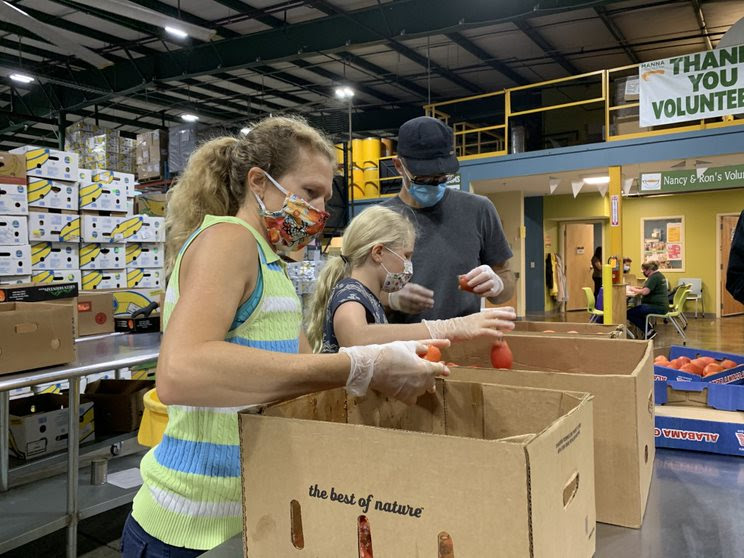
If you’re able to volunteer, all of us at MANNA, as well as recipients of food boxes across WNC, would be incredibly grateful for your support. If you’re unable to volunteer, we would greatly appreciate you spreading the word and letting friends, family members and neighbors know of the need for food assistance that exists right now and how they can help by volunteering with us here at MANNA.
|
|
|
|
|
|
|
MANNA NEEDS VOLUNTEERS
Without Key Groups of Volunteers, MANNA is Straining to Meet the Food Needs for 100,000 People Each Month
|
|
|
|
|
|
|