

Calendar of Events
Upcoming events and things to do in Asheville, NC. Below is a list of events for festivals, concerts, art exhibitions, group meetups and more.
Interested in adding an event to our calendar? Please click the green “Post Your Event” button below.
Opening the Door to Change presents the history of education in Western North Carolina, with a particular emphasis on Madison County, from the mid-nineteenth century through the late twentieth. Here, learning has taken many forms, from in-home instruction, common, subscription, and religious schools, to colleges of farming and craft. The curriculum of these schools, as well as their very construction, and in some cases closing, was deeply entwined with the changing needs and values of the Western North Carolina Appalachian community.
The exhibition focuses on the dynamic relationship between community values and education, with a special focus on how students and their families navigated the economic, geographic, and racial challenges to education. Trends and changes in curriculum, assessment, and classroom design will also be explored.
The virtual exhibition will feature didactic panels showcasing a survey of schools within Madison County and highlighting the effect community values had on the curriculum, function, and format of these institutions. Online visitors may also get a sneak-peak at an original film, produced by the Museum, presenting the oral histories of several Madison County residents sharing their personal recollections and memories of past school-days.
Additional films will spotlight the Historic Mars Hill Anderson Rosenwald School and Laurel School, with first-hand accounts from former students and teachers.
This virtual exhibition is sponsored by the Madison County Tourism and Development Authority.
Show Us What the River Means to You!
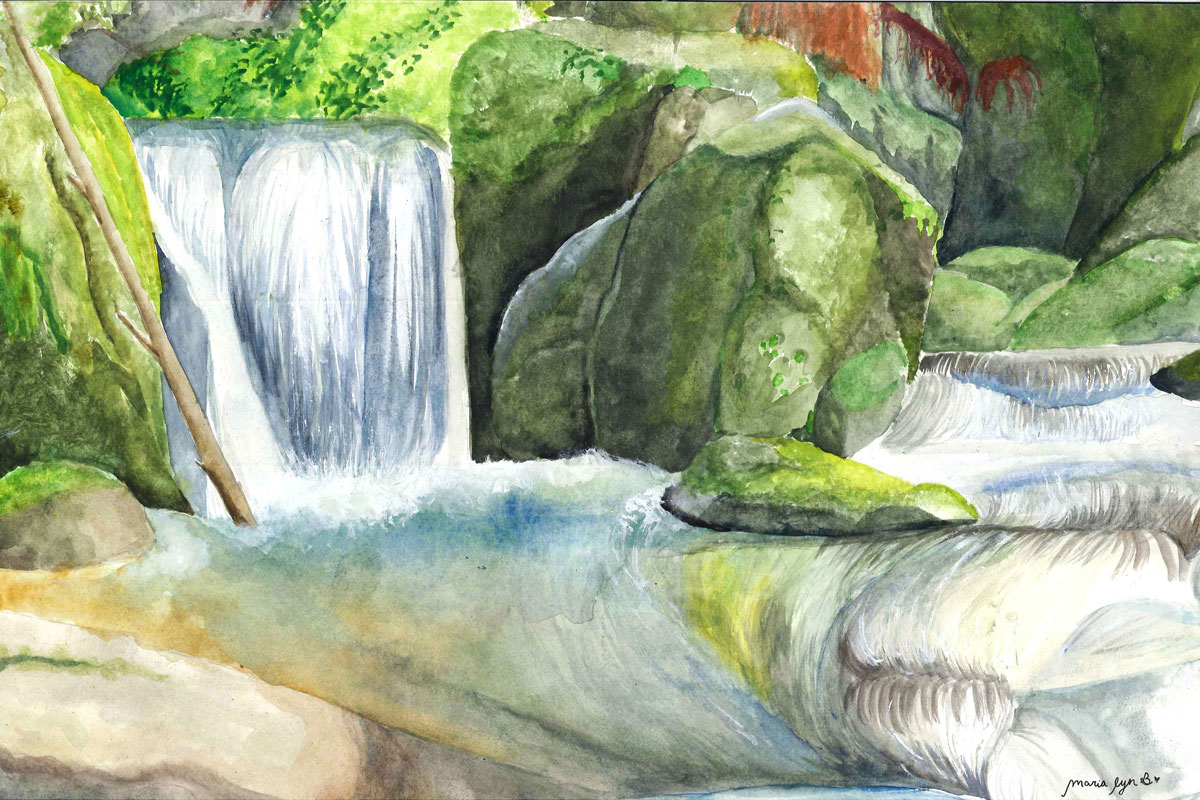
Every spring we host our Voices of the River: Art & Poetry Contest. We ask kids to use the river as a source of inspiration to showcase their creativity. Each year we are so amazed by the talent of these young artists, poets, and performers. Submissions can include 2D and 3D works in various mediums, poems and creative writings, and video compositions of songs, dances, or skits. Winners are selected by a council of judges made up of local artists, writers, and community leaders. Many generous businesses also donate prizes for winners from each age group and category.
This year we want you to show us “How has the river helped you during this time of isolation?”
All entries are due by Thursday April 22nd
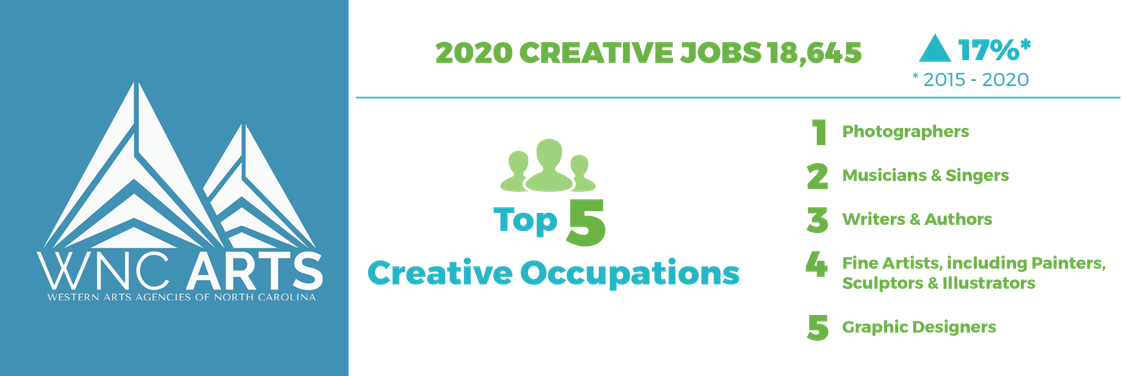
The Western Arts Agencies of North Carolina (WNC Arts) was established in 1980s as a peer support group for arts councils and agencies in WNC. This group is now working to expand their advocacy support for the arts in WNC.

|
Membership is not limited to Henderson County. Artists and art lovers from elsewhere are welcome to join.
|

2021 WNC Regional Scholastic Art Awards
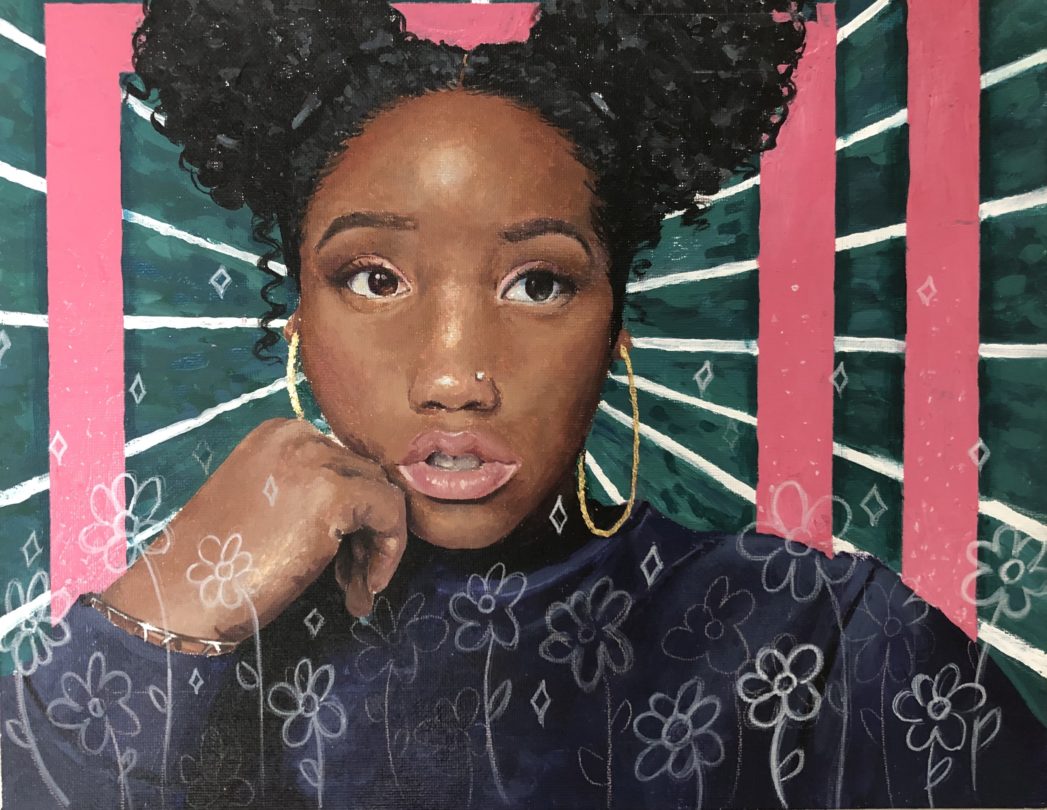
The Museum, with the assistance of its volunteer docents and support from the Asheville Area Section of the American Institute of Architects, is proud to sponsor the WNC Regional Scholastic Art Awards. Students in grades 7–12 from all across our region are invited to submit work for this special juried competition. The Museum works with the Alliance for Young Artists & Writers to facilitate regional judging of student artwork and recognition of our community’s burgeoning artistic talent.
In early spring each year, award winners are featured in an exhibition, and are honored at a ceremony. Regional Gold Key recipients’ work is sent to the National Scholastic Art competition hosted by the Alliance for Young Artists & Writers.
Across the Atlantic
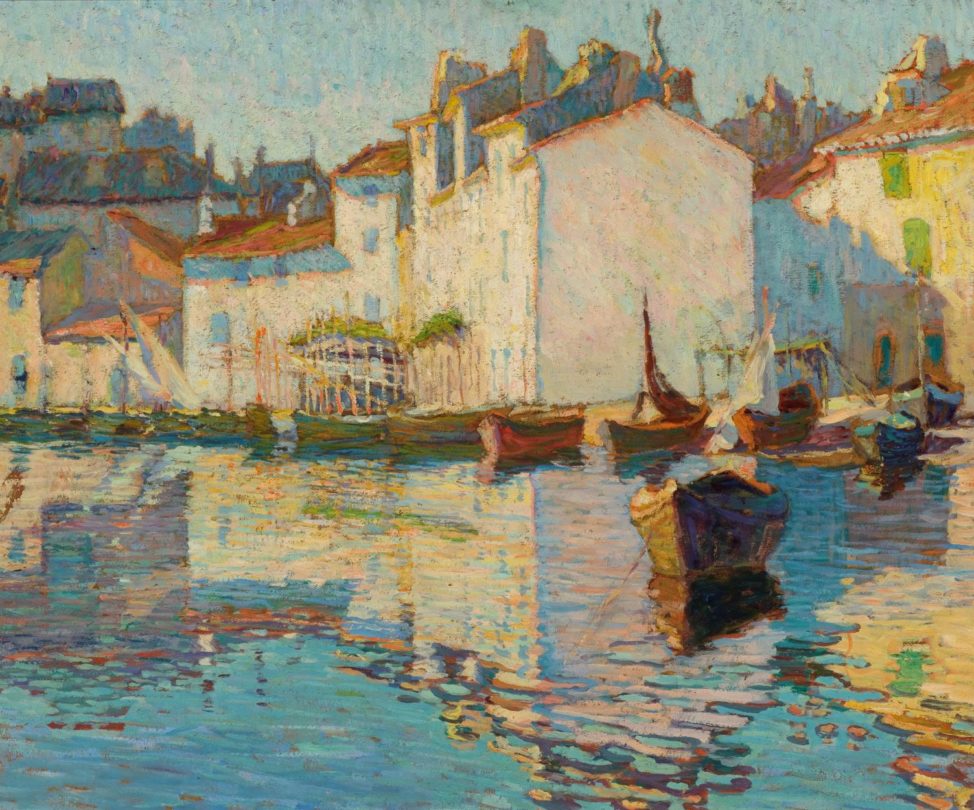
Across the Atlantic
American Impressionism Through the French Lens
This extraordinary exhibition, drawn from the collection of the Reading Public Museum, explores the path to Impressionism through the 19th century in France. The show examines the sometimes complex relationship between French Impressionism of the 1870s and 1880s and the American interpretation of the style in the decades that followed. More than 65 paintings and works on paper help tell the story of the “new style” of painting which developed at the end of the 19th century—one that emphasized light and atmospheric conditions, rapid or loose brushstrokes, and a focus on brightly colored scenes from everyday life, including both urban and rural settings when artists preferred to paint outdoors and capture changing effects of light during different times of day and seasons of the year.
Across the Atlantic: American Impressionism through the French Lens is organized by the Reading Public Museum, Reading, Pennsylvania.
Generous support for this project provided by Art Bridges and The Maurer Family Foundation.
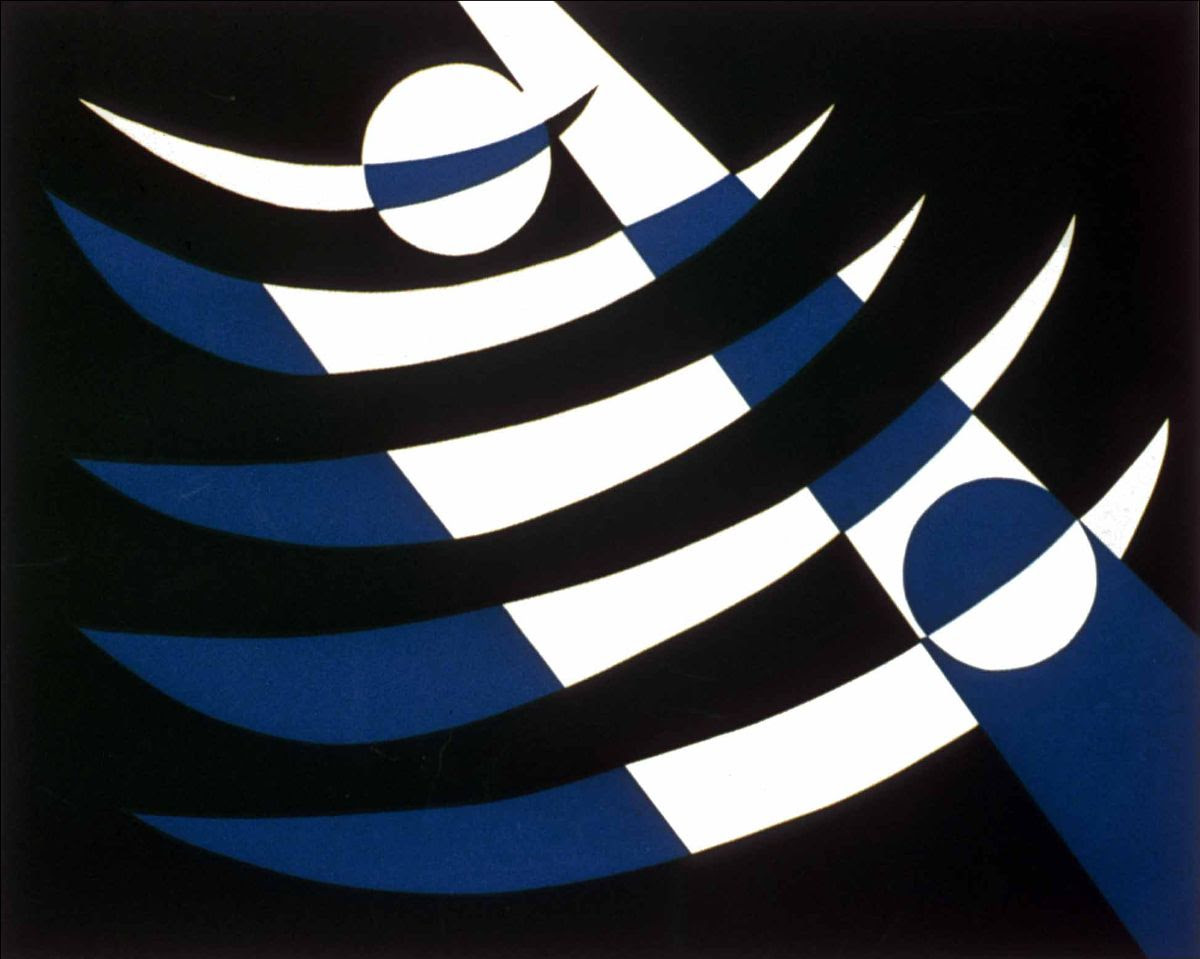
The Asheville Art Museum announces Meeting the Moon, an exhibition featuring prints, photographs, ceramics, sculptures, and more from the Museum’s Collection. This exhibition will be on view in the Asheville Art Museum’s McClinton Gallery February 3 through July 26, 2021.
2021 marks the 60th anniversary of the beginning of the Apollo space program at NASA, but its inception was hardly the beginning of humankind’s fascination with Earth’s only moon. Before space travel existed, the moon—its shape, its mystery, and the face we see in it—inspired countless artists. Once astronauts landed on the moon and we saw our world from a new perspective, a surge of creativity flooded the American art scene, in paintings, prints, sculpture, music, crafts, film, and poetry.
This exhibition, whose title is taken from a 1913 Robert Frost poem, examines artwork in the Asheville Art Museum’s Collection of artists who were inspired by the unknown, then increasingly familiar moon. Meeting the Moon includes works by nationally renowned artists Newcomb Pottery, James Rosenquist, Maltby Sykes, Paul Soldner, John Lewis, Richard Ritter (Bakersville, NC), and Mark Peiser (Penland, NC). Western North Carolina artists include Jane Peiser (Penland, NC), Jak Brewer (Zionville, NC), Dirck Cruser (Asheville, NC), George Peterson (Lake Toxaway, NC), John B. Neff (NC), and Maud Gatewood (Yanceyville, NC).
“Meeting the Moon offers the opportunity to combine science and popular culture with works of art in the Museum’s Collection,” says Whitney Richardson, associate curator. “I think all visitors will find something that draws them into this exhibition, whether it’s the artwork, poetry, music, or science of space travel. It’s such an affirmation of humanity to find these mysteries, like the moon, which enchant us all.”
This exhibition is organized by the Asheville Art Museum and curated by Whitney Richardson, associate curator. Visit ashevilleart.org for more information about this and other exhibitions.
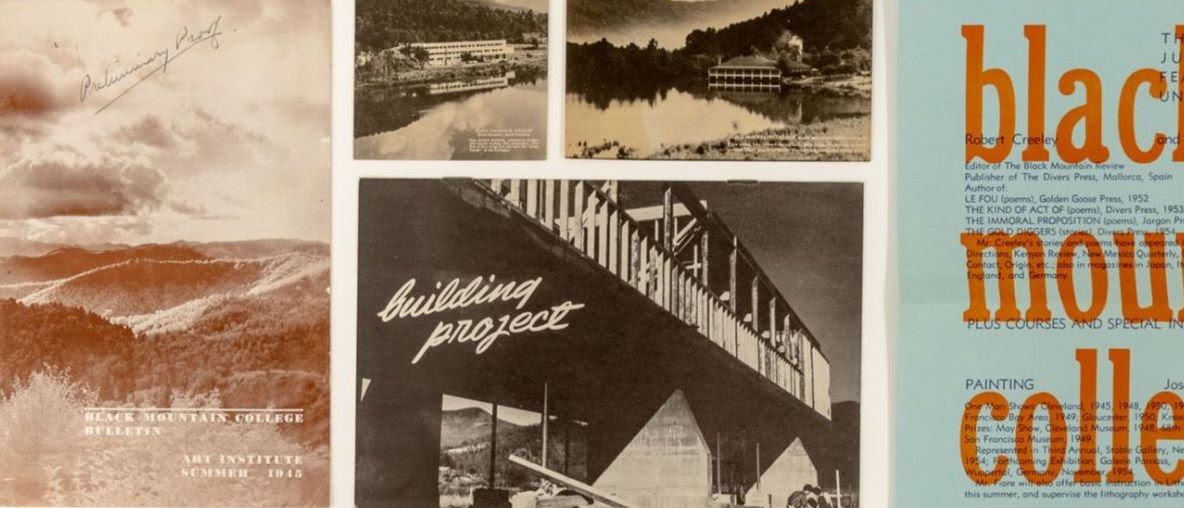
This exhibition features archival objects from the Theodore Dreier Sr. Document Collection presented alongside artworks from the Museum’s Black Mountain College Collection to explore the connections between artworks and ephemera. This exhibition is organized by the Asheville Art Museum and curated by lydia see, fall 2020 curatorial fellow, with support from a Digitizing Hidden Collections grant through the Council on Library and Information Resources.

Desire Paths looks at makers within the discourse of craft and those existing on the periphery of the craftscape who focus on the movement of the body towards something desirable. These desires of the body are in relationship to nature, technology, self, and society. Using architectural theory and queer curatorial strategies, Desire Paths examines the possibilities and futures of bodies, revealing connections between the corporeal and craft.
“Desire paths,” a term taken from urban planning, are lines trodden in the landscape when constructed walkways do not provide a direct or desired route. Through action, repetition, and intentionality, desire paths are crafted modifications to the landscape that allow for a body to move towards a horizon. The format of the works include traditional craft media, performance, video, and interactive web-based work. Through this variety of media and performative tactics the makers in Desire Paths consider how we view, value, and ascribe meaning to a body/the body/the others body. They show us the power and agency held in body and present us with crafted visions of the body that confront and expand expectations
The works in this exhibition reclaim the concept of craft from its historical associations with the decorative, frivolous, feminine, indigenous, and the other. The makers use the medium of craft, and the action of crafting, to produce powerful representations and counter narratives to dominant culture.
Two Ways to View
Virtual Tour
Online visitors can register to attend a virtual tour of this exhibition. This is a free event. A $5-10 donation at time of registration is recommended.
In-Person
The Center is offering free, unguided visits and affordable tours of its exhibitions to the public. Guests can reserve a 30-minute visit to explore the current exhibitions, learn more about the Center’s national impact in their Craft Research Fund Study Collection, and enjoy interactive activities. The Center is open to the public Tuesday-Friday, 11 am -5 pm. Hours of operation may be subject to change.
Center for Craft is monitoring the effects of COVID-19 on the community and following the instruction of federal, state, and local health departments. Our top priority is always the health and safety of our staff, coworkers, and visitors. At this time, the Center can only allow a maximum of five guests in its public space at once and will require the use of masks or face coverings by all visitors, including children. The Center reserves the right to refuse entry to any visitor that will not comply.
|
|
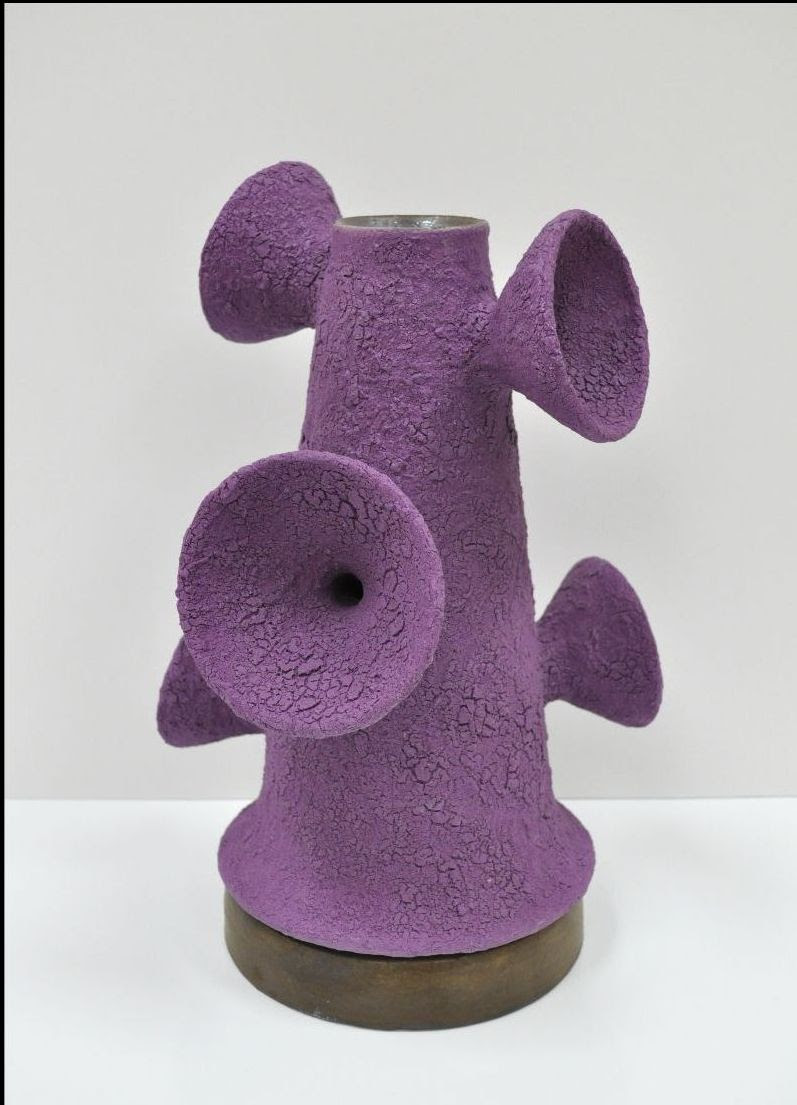
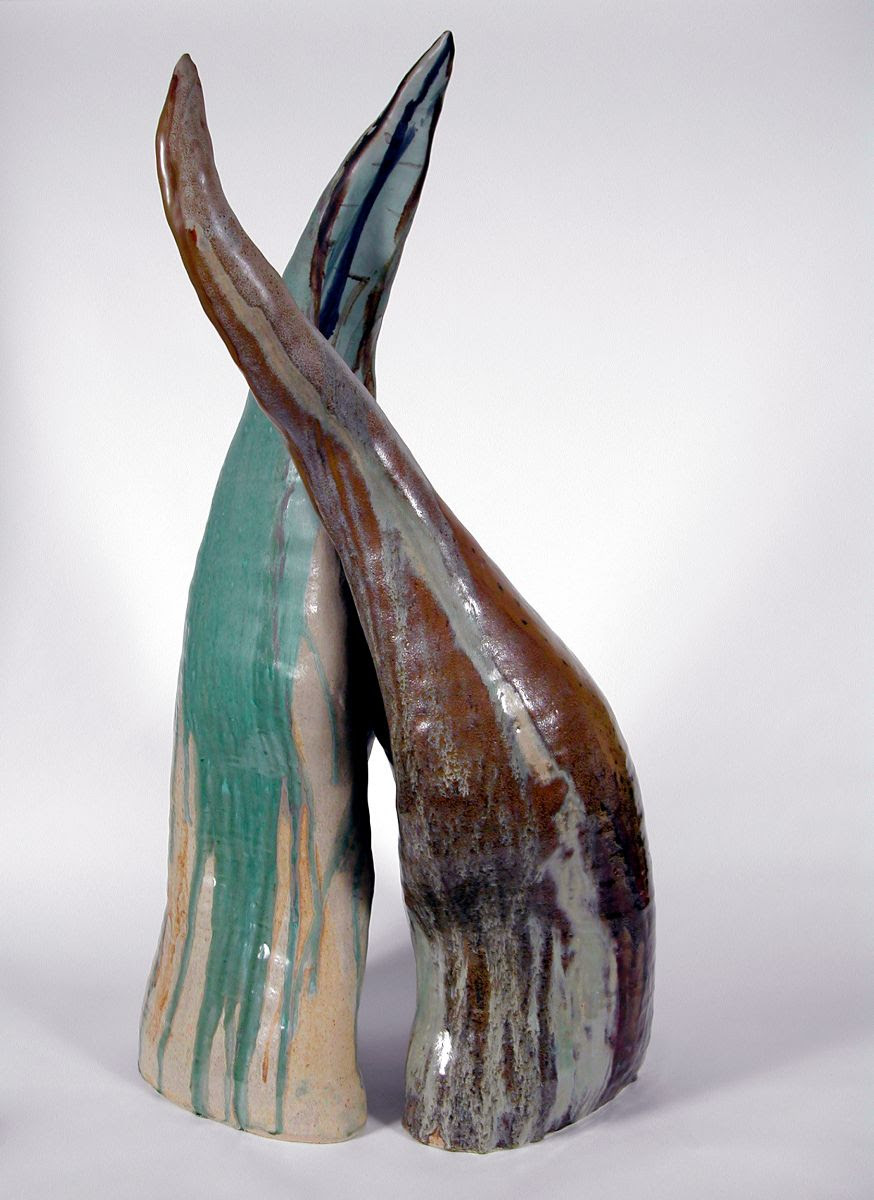
The Asheville Art Museum presents Fantastical Forms: Ceramics as Sculpture on view at the Museum November 4, 2020 through April 5, 2021. The 25 works in this exhibition—curated by associate curator Whitney Richardson—highlight the Museum’s Collection of sculptural ceramics from the last two decades of the 20th century to the present. Each work illustrates the artist’s ability to push beyond the utilitarian and transition ceramics into the world of sculpture.
North and South Carolina artists featured include Elma McBride Johnson, Neil Noland, Norm Schulman, Virginia Scotchie, Cynthia Bringle, Jane Palmer, Michael Sherrill, and Akira Satake. Works by American artists Don Reitz, Robert Chapman Turner, Karen Karnes, Toshiko Takaezu, Bill Griffith, and Xavier Toubes are also featured in the exhibition.
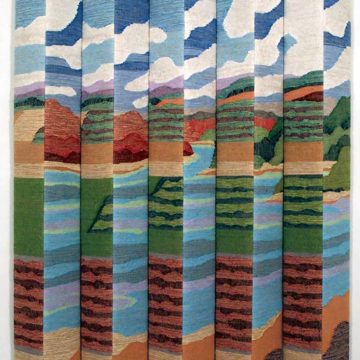
Join Barbara Heller, touring docent, for an interactive conversation about four artworks in our Collection. The goal is simple: slow down, discover the joy of looking at art, and talk about the experience with others. This program takes place via Zoom; space is limited. Generous support for this program is provided by Art Bridges. More info and register at ashevilleart.org/events.

“Guggisberg and Baldwin have laid a new avenue. By joining Italian coldworking to the Swedish overlay, they have embarked upon an innovative sequence of experimentation and research not only on surfaces, but also on color and the interplay of color and texture through surface treatment. These explorations have increasingly drawn them to probe the expressive fields of textural elements. Initially soft and tactile, with the new strong angles, facets and deep cuts, the surface itself takes on a kind of fourth dimension, something sculptural that moves beyond the limits set by height, width, and volume.”
A quote from Louise Berndt, writing in “Battuto 2002: Philip Baldwin and Monica Guggisberg”

Plein Air Painting Tips
Don Osterberg has illustrated some of his advice on plein air painting with step-by-step stages of his pastel “Looking Glass Falls in Pisgah Forest.”
The watermedia and mixed media paintings, drawings, and monotype prints of Costanza Knight, also known as Connie Knight, are contemporary expressions that explore and celebrate the human form and the landscape. Poetry and narratives are often her creative touchstone, but she also takes inspiration from the landscapes she loves. Her diverse interests are evident in her varied styles.
Diane Dean talks about the process of painting a commission painting
Acrylic Painter, Diane Dean teaches her technique for creating heavily textured acrylic paintings using heavy gesso for surface texture, fluid and heavy body acrylics, brushes and palette knives.

Mary Alice Braukman presented “Free Up: Collage Surprise,” a workshop that was videotaped for viewing on the League’s YouTube channel. Students: Lisa Casperson, JoAnn Jenson and Sharon Richmond participated. Lynn Padgett and Diane Dean video recorded this event for publication on the Art League website for all members to view.
Braukman was the Director of the Kanuga Watercolor Workshops for 17 years, held at the Kanuga Conference Center in Hendersonville, North Carolina. She teaches workshops throughout the United States, in experimental water media painting and collage for intermediate and advanced painters, consults on workshops, lectures, serves as juror in national, state and regional water media exhibitions.
Pat has been teaching workshops for over 20 years and has received several local and regional awards and has had solo shows as well as Kindred Spirit exhibits with her friend and colleague Janet Campbell. She is a signature member of the North East Watercolor Society, Audubon Artists, Inc. and a former elected member of the New Jersey Water Color Society and the Salmagundi Club in NYC.
Diane Dean demonstrates using a palette knife to complete a dogwood painting.
Acrylic Painter, Diane Dean teaches her technique for creating heavily textured acrylic paintings using heavy gesso for surface texture, fluid and heavy body acrylics, brushes and palette knives.
|
|
The Asheville Art Museum is the only museum in North Carolina to be selected as a finalist for this award. Chapel Hill Public Library is the only library to be selected in North Carolina.
The National Medal is the nation’s highest honor given to museums and libraries that demonstrate significant impact in their communities. For more than 25 years, the award has honored institutions that demonstrate excellence in service to their communities.
To celebrate this honor, IMLS is encouraging the Asheville Art Museum’s community members to share stories, memories, pictures, and videos on social media as part of the Share Your Story Campaign, using the #IMLSmedals hashtag, and engage with IMLS on Facebook and Twitter. For more information, please visit the IMLS website. The Asheville Art Museum will be featured on IMLS’s social media accounts on Tuesday, March 30, and we invite all to also share the content with the community.
National Medal winners will be announced in late spring. Representatives from winning institutions will be honored for their extraordinary contributions during a virtual National Medal Ceremony this summer.
To see the full list of finalists and learn more about the National Medal, visit the IMLS website.
Opening the Door to Change presents the history of education in Western North Carolina, with a particular emphasis on Madison County, from the mid-nineteenth century through the late twentieth. Here, learning has taken many forms, from in-home instruction, common, subscription, and religious schools, to colleges of farming and craft. The curriculum of these schools, as well as their very construction, and in some cases closing, was deeply entwined with the changing needs and values of the Western North Carolina Appalachian community.
The exhibition focuses on the dynamic relationship between community values and education, with a special focus on how students and their families navigated the economic, geographic, and racial challenges to education. Trends and changes in curriculum, assessment, and classroom design will also be explored.
The virtual exhibition will feature didactic panels showcasing a survey of schools within Madison County and highlighting the effect community values had on the curriculum, function, and format of these institutions. Online visitors may also get a sneak-peak at an original film, produced by the Museum, presenting the oral histories of several Madison County residents sharing their personal recollections and memories of past school-days.
Additional films will spotlight the Historic Mars Hill Anderson Rosenwald School and Laurel School, with first-hand accounts from former students and teachers.
This virtual exhibition is sponsored by the Madison County Tourism and Development Authority.
Show Us What the River Means to You!
Every spring we host our Voices of the River: Art & Poetry Contest. We ask kids to use the river as a source of inspiration to showcase their creativity. Each year we are so amazed by the talent of these young artists, poets, and performers. Submissions can include 2D and 3D works in various mediums, poems and creative writings, and video compositions of songs, dances, or skits. Winners are selected by a council of judges made up of local artists, writers, and community leaders. Many generous businesses also donate prizes for winners from each age group and category.
This year we want you to show us “How has the river helped you during this time of isolation?”
All entries are due by Thursday April 22nd
The Western Arts Agencies of North Carolina (WNC Arts) was established in 1980s as a peer support group for arts councils and agencies in WNC. This group is now working to expand their advocacy support for the arts in WNC.
|
Membership is not limited to Henderson County. Artists and art lovers from elsewhere are welcome to join.
|
2021 WNC Regional Scholastic Art Awards
The Museum, with the assistance of its volunteer docents and support from the Asheville Area Section of the American Institute of Architects, is proud to sponsor the WNC Regional Scholastic Art Awards. Students in grades 7–12 from all across our region are invited to submit work for this special juried competition. The Museum works with the Alliance for Young Artists & Writers to facilitate regional judging of student artwork and recognition of our community’s burgeoning artistic talent.
In early spring each year, award winners are featured in an exhibition, and are honored at a ceremony. Regional Gold Key recipients’ work is sent to the National Scholastic Art competition hosted by the Alliance for Young Artists & Writers.
Across the Atlantic
Across the Atlantic
American Impressionism Through the French Lens
This extraordinary exhibition, drawn from the collection of the Reading Public Museum, explores the path to Impressionism through the 19th century in France. The show examines the sometimes complex relationship between French Impressionism of the 1870s and 1880s and the American interpretation of the style in the decades that followed. More than 65 paintings and works on paper help tell the story of the “new style” of painting which developed at the end of the 19th century—one that emphasized light and atmospheric conditions, rapid or loose brushstrokes, and a focus on brightly colored scenes from everyday life, including both urban and rural settings when artists preferred to paint outdoors and capture changing effects of light during different times of day and seasons of the year.
Across the Atlantic: American Impressionism through the French Lens is organized by the Reading Public Museum, Reading, Pennsylvania.
Generous support for this project provided by Art Bridges and The Maurer Family Foundation.
The Asheville Art Museum announces Meeting the Moon, an exhibition featuring prints, photographs, ceramics, sculptures, and more from the Museum’s Collection. This exhibition will be on view in the Asheville Art Museum’s McClinton Gallery February 3 through July 26, 2021.
2021 marks the 60th anniversary of the beginning of the Apollo space program at NASA, but its inception was hardly the beginning of humankind’s fascination with Earth’s only moon. Before space travel existed, the moon—its shape, its mystery, and the face we see in it—inspired countless artists. Once astronauts landed on the moon and we saw our world from a new perspective, a surge of creativity flooded the American art scene, in paintings, prints, sculpture, music, crafts, film, and poetry.
This exhibition, whose title is taken from a 1913 Robert Frost poem, examines artwork in the Asheville Art Museum’s Collection of artists who were inspired by the unknown, then increasingly familiar moon. Meeting the Moon includes works by nationally renowned artists Newcomb Pottery, James Rosenquist, Maltby Sykes, Paul Soldner, John Lewis, Richard Ritter (Bakersville, NC), and Mark Peiser (Penland, NC). Western North Carolina artists include Jane Peiser (Penland, NC), Jak Brewer (Zionville, NC), Dirck Cruser (Asheville, NC), George Peterson (Lake Toxaway, NC), John B. Neff (NC), and Maud Gatewood (Yanceyville, NC).
“Meeting the Moon offers the opportunity to combine science and popular culture with works of art in the Museum’s Collection,” says Whitney Richardson, associate curator. “I think all visitors will find something that draws them into this exhibition, whether it’s the artwork, poetry, music, or science of space travel. It’s such an affirmation of humanity to find these mysteries, like the moon, which enchant us all.”
This exhibition is organized by the Asheville Art Museum and curated by Whitney Richardson, associate curator. Visit ashevilleart.org for more information about this and other exhibitions.