

Calendar of Events
Upcoming events and things to do in Asheville, NC. Below is a list of events for festivals, concerts, art exhibitions, group meetups and more.
Interested in adding an event to our calendar? Please click the green “Post Your Event” button below.
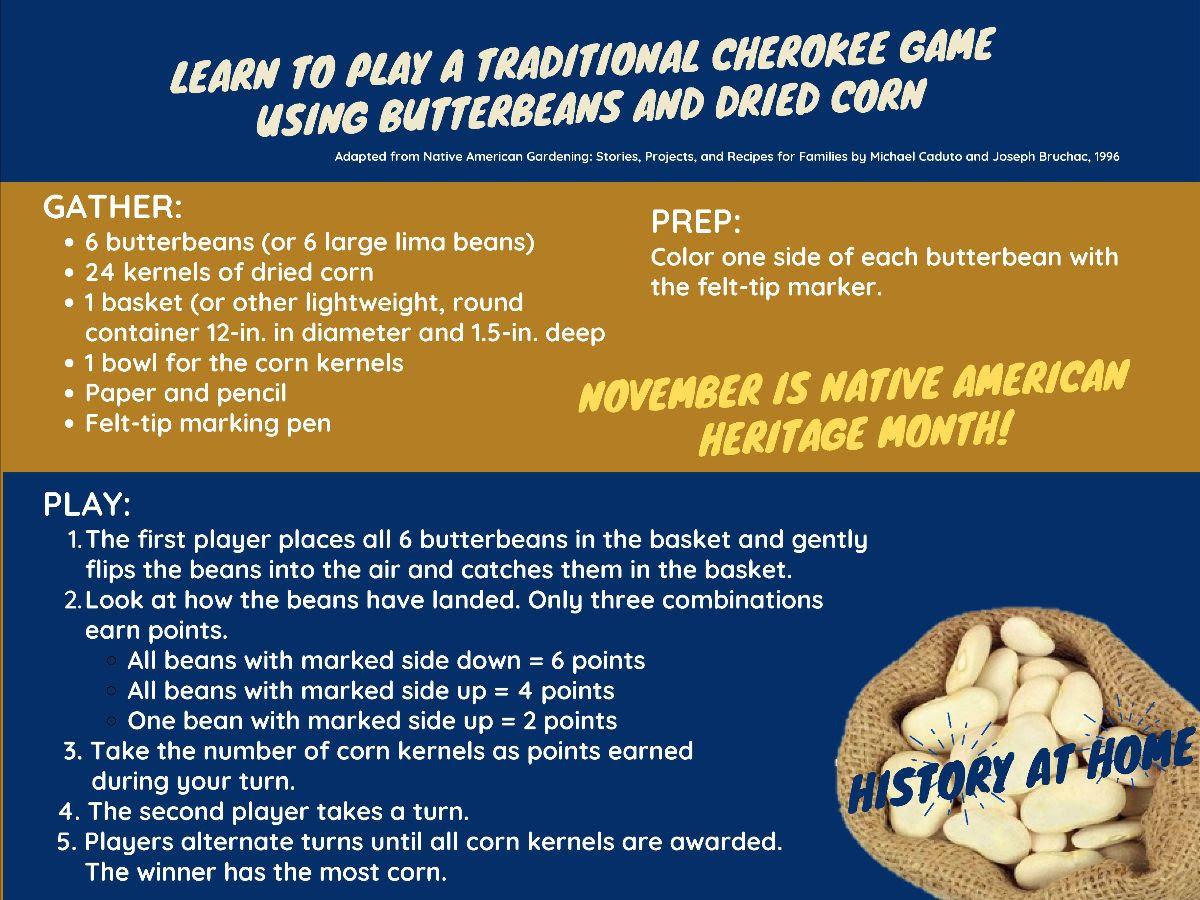
This is a variation on the tradition Cherokee Butterbean Game. It can be played by several individual players or several teams. Traditionally, this game uses three butterbeans that have been split in half. More…
From the Museum of the Cherokee Indian: Cherokee people began growing a form of corn two thousand years ago. By about a thousand years ago, or 1000 AD, they were growing corn and beans, as we know them today. Corn, beans, and squash was always grown together and was known as the “Three Sisters.” Beans restore nitrogen to the soil while corn depletes nitrogen. The vines of the beans and squash twined up the cornstalks. When corn and beans are eaten together, they provide complete proteins and amino acids for our diet.
Corn was so important to the Cherokee that they had important celebrations and ceremonies called “Green Corn Festivals.” The first of these was held in August, before the sweet corn was ready to eat. The last was held in October or November, when the
field corn was ready to be picked. At these ceremonies, people purified themselves physically and spiritually before feasting together. At this time, people got married and divorced. All old scores were settled and everyone started a new year together.
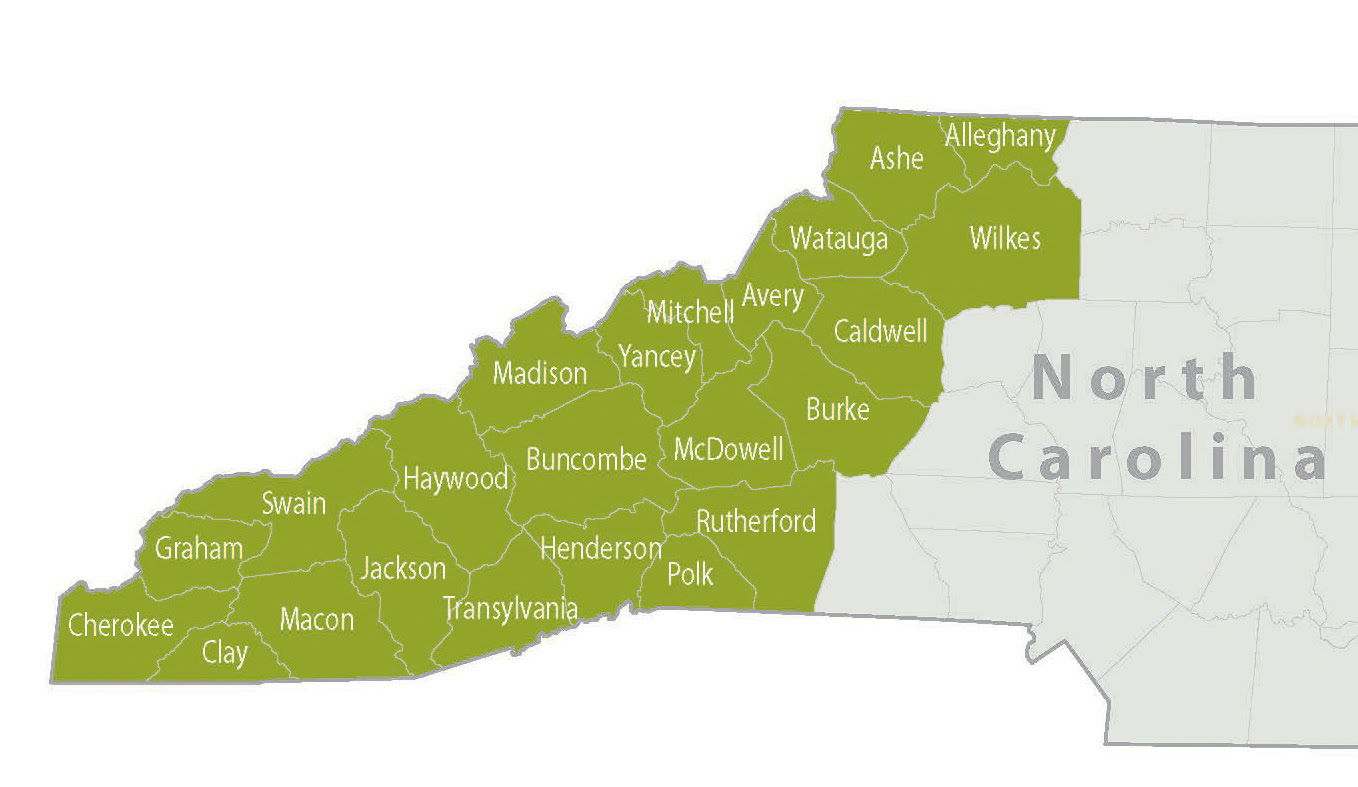 |
| Western North Carolina is defined as much by the various chains and valleys within the Appalachian Mountains as it is by the various people here. The region contains large swaths of national forest lands and the Great Smoky Mountains National Park. It contains old rivers and old folkways, along with an increasingly large stream of transplants and temporary visitors. This virtual tour gives a broad overview of our region. |
This is a variation on the tradition Cherokee Butterbean Game. It can be played by several individual players or several teams. Traditionally, this game uses three butterbeans that have been split in half. More…
From the Museum of the Cherokee Indian: Cherokee people began growing a form of corn two thousand years ago. By about a thousand years ago, or 1000 AD, they were growing corn and beans, as we know them today. Corn, beans, and squash was always grown together and was known as the “Three Sisters.” Beans restore nitrogen to the soil while corn depletes nitrogen. The vines of the beans and squash twined up the cornstalks. When corn and beans are eaten together, they provide complete proteins and amino acids for our diet.
Corn was so important to the Cherokee that they had important celebrations and ceremonies called “Green Corn Festivals.” The first of these was held in August, before the sweet corn was ready to eat. The last was held in October or November, when the
field corn was ready to be picked. At these ceremonies, people purified themselves physically and spiritually before feasting together. At this time, people got married and divorced. All old scores were settled and everyone started a new year together.
|
| Western North Carolina is defined as much by the various chains and valleys within the Appalachian Mountains as it is by the various people here. The region contains large swaths of national forest lands and the Great Smoky Mountains National Park. It contains old rivers and old folkways, along with an increasingly large stream of transplants and temporary visitors. This virtual tour gives a broad overview of our region. |
 |
| VISIT US! To ensure the safety of our visitors, staff, and volunteers, we will reopen for timed, private, self-guided, pre-booked tours of the historic Smith-McDowell House and Western North Carolina exhibit rooms.
Tours are reserved on a first-come, first-served basis: Wednesday – Saturday Tour reservations last for 1 hour to allow time for cleaning between groups. All visitors, staff, and volunteers are required to wear masks while inside the building. |

Join us for a relaxing ride through quiet countryside on your way to small town life in western North Carolina on the Tuckasegee River Excursion. Departing from Bryson City, this 4 hour excursion travels 32 miles round-trip to Dillsboro and back to the Bryson City Depot. Pass by the famous movie set of The Fugitive starring Harrison Ford!
The Tuckasegee (tuck-uh-SEE-jee) River Excursion includes an 1½ hour layover in the historic town of Dillsboro, where you’ll find more than 50 shops, restaurants, bed and breakfasts and country inns. There is time to shop, snack, and visit the many unique shops before returning to Bryson City.
Virtual Visits for Students
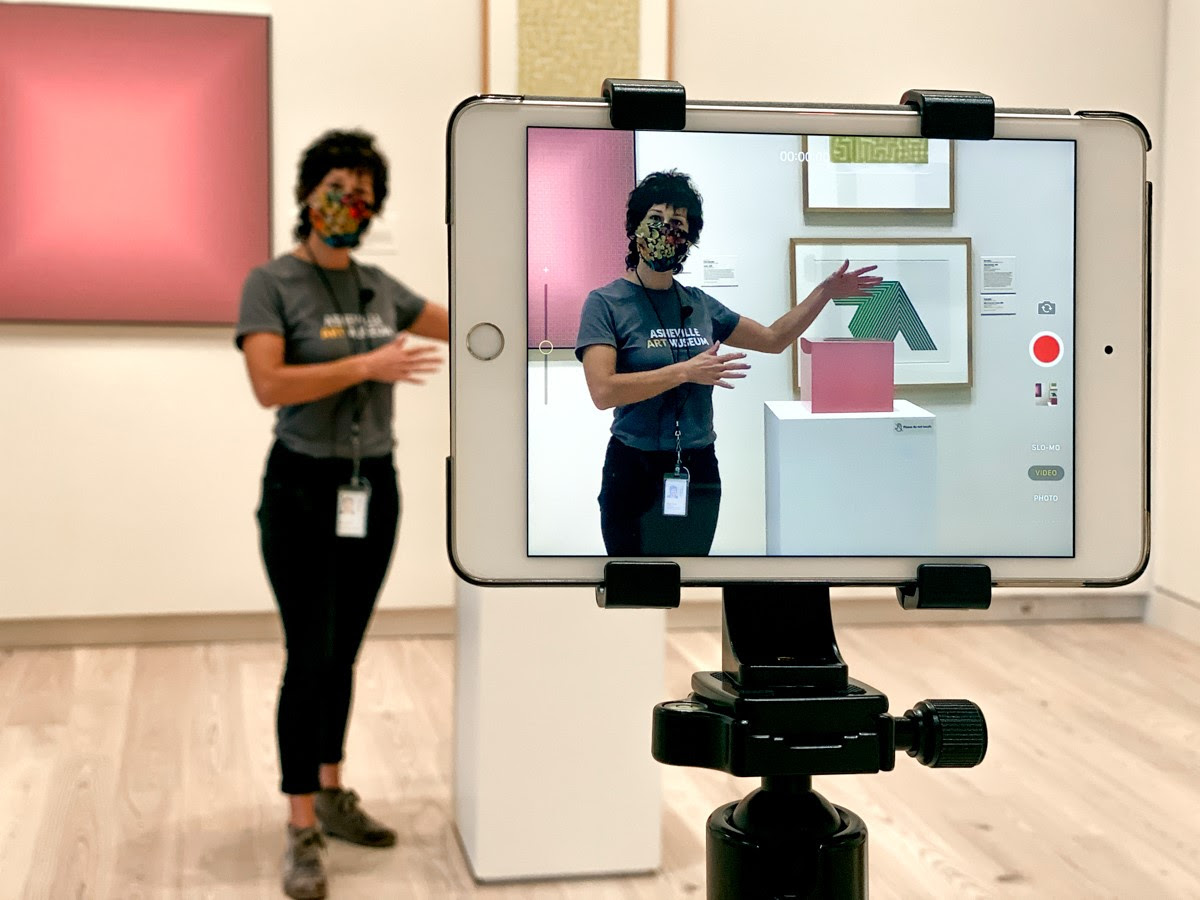
Groups of pre-K–12 students are invited to schedule an interactive Virtual Visit to the Museum! Led by volunteer docents with Museum staff, our inquiry-based, conversational Virtual Visits introduce the Museum’s galleries with a 3D tour and challenge students to hone their observation skills. All pre-K–12 Virtual Visits make connections to the NC Standard Course of Study.
Virtual Visits for pre-K–12 groups are $50 for 5–25 participants from one or multiple devices through Zoom or Google Meet. Virtual Visits are available Monday through Friday from 9am to 4pm, and last 30–45 minutes. At least two weeks’ advanced notice is required.
For more information about Virtual Visits for adults, college, and university students, click here. For Virtual Visits for family and friend groups with children, click here.
This is a variation on the tradition Cherokee Butterbean Game. It can be played by several individual players or several teams. Traditionally, this game uses three butterbeans that have been split in half. More…
From the Museum of the Cherokee Indian: Cherokee people began growing a form of corn two thousand years ago. By about a thousand years ago, or 1000 AD, they were growing corn and beans, as we know them today. Corn, beans, and squash was always grown together and was known as the “Three Sisters.” Beans restore nitrogen to the soil while corn depletes nitrogen. The vines of the beans and squash twined up the cornstalks. When corn and beans are eaten together, they provide complete proteins and amino acids for our diet.
Corn was so important to the Cherokee that they had important celebrations and ceremonies called “Green Corn Festivals.” The first of these was held in August, before the sweet corn was ready to eat. The last was held in October or November, when the
field corn was ready to be picked. At these ceremonies, people purified themselves physically and spiritually before feasting together. At this time, people got married and divorced. All old scores were settled and everyone started a new year together.
|
| Western North Carolina is defined as much by the various chains and valleys within the Appalachian Mountains as it is by the various people here. The region contains large swaths of national forest lands and the Great Smoky Mountains National Park. It contains old rivers and old folkways, along with an increasingly large stream of transplants and temporary visitors. This virtual tour gives a broad overview of our region. |

Immerse yourself in a kaleidoscope of color as George Vanderbilt’s magnificent estate and the surrounding Blue Ridge Mountains are beautifully transformed by autumn’s touch. The arrival of cool weather, an abundance of outdoor activities, plus special harvest-themed dining and Winery offerings make for a truly unique and exceptional fall getaway.
|
| VISIT US! To ensure the safety of our visitors, staff, and volunteers, we will reopen for timed, private, self-guided, pre-booked tours of the historic Smith-McDowell House and Western North Carolina exhibit rooms.
Tours are reserved on a first-come, first-served basis: Wednesday – Saturday Tour reservations last for 1 hour to allow time for cleaning between groups. All visitors, staff, and volunteers are required to wear masks while inside the building. |
Join us for a relaxing ride through quiet countryside on your way to small town life in western North Carolina on the Tuckasegee River Excursion. Departing from Bryson City, this 4 hour excursion travels 32 miles round-trip to Dillsboro and back to the Bryson City Depot. Pass by the famous movie set of The Fugitive starring Harrison Ford!
The Tuckasegee (tuck-uh-SEE-jee) River Excursion includes an 1½ hour layover in the historic town of Dillsboro, where you’ll find more than 50 shops, restaurants, bed and breakfasts and country inns. There is time to shop, snack, and visit the many unique shops before returning to Bryson City.
Virtual Visits for Students
Groups of pre-K–12 students are invited to schedule an interactive Virtual Visit to the Museum! Led by volunteer docents with Museum staff, our inquiry-based, conversational Virtual Visits introduce the Museum’s galleries with a 3D tour and challenge students to hone their observation skills. All pre-K–12 Virtual Visits make connections to the NC Standard Course of Study.
Virtual Visits for pre-K–12 groups are $50 for 5–25 participants from one or multiple devices through Zoom or Google Meet. Virtual Visits are available Monday through Friday from 9am to 4pm, and last 30–45 minutes. At least two weeks’ advanced notice is required.
For more information about Virtual Visits for adults, college, and university students, click here. For Virtual Visits for family and friend groups with children, click here.
Because of the Covid-19 situation, we will book tours on an individual basis. Please contact our office at 828-246-6777 or [email protected]. We will not mix groups with people who do not know each other.
Join us as we explore the history of the French Broad River and its seminal place in the development of Asheville–from the time when Native Americans lived along its banks to the Buncombe Turnpike, the railroad, and industries of yesteryear. On the tour you’ll hear about:
-
- How the river has changed since the days of George Vanderbilt, Thomas Wolfe, and when NASCAR greats Richard Petty and Junior Johnson raced cars in the area.
- The 1950s when Wilma Dykeman asked, “Who poisoned the river?” in her groundbreaking book, “The French Broad.”
- The current-day thriving River Arts District, the beautiful chain of parks along the riverfront greenway, and the recreational opportunities that abound.
- The great work of the RiverLink and our many partners (government, corporations, civic, non-profit conservation groups, and individuals) that have worked together to protect, preserve, and enhance the riverfront area so that locals and visitors alike can enjoy its beauty and grandeur.
If you like history and you appreciate environmental sustainability, this tour is for you.
This is a variation on the tradition Cherokee Butterbean Game. It can be played by several individual players or several teams. Traditionally, this game uses three butterbeans that have been split in half. More…
From the Museum of the Cherokee Indian: Cherokee people began growing a form of corn two thousand years ago. By about a thousand years ago, or 1000 AD, they were growing corn and beans, as we know them today. Corn, beans, and squash was always grown together and was known as the “Three Sisters.” Beans restore nitrogen to the soil while corn depletes nitrogen. The vines of the beans and squash twined up the cornstalks. When corn and beans are eaten together, they provide complete proteins and amino acids for our diet.
Corn was so important to the Cherokee that they had important celebrations and ceremonies called “Green Corn Festivals.” The first of these was held in August, before the sweet corn was ready to eat. The last was held in October or November, when the
field corn was ready to be picked. At these ceremonies, people purified themselves physically and spiritually before feasting together. At this time, people got married and divorced. All old scores were settled and everyone started a new year together.
|
| Western North Carolina is defined as much by the various chains and valleys within the Appalachian Mountains as it is by the various people here. The region contains large swaths of national forest lands and the Great Smoky Mountains National Park. It contains old rivers and old folkways, along with an increasingly large stream of transplants and temporary visitors. This virtual tour gives a broad overview of our region. |
|
| VISIT US! To ensure the safety of our visitors, staff, and volunteers, we will reopen for timed, private, self-guided, pre-booked tours of the historic Smith-McDowell House and Western North Carolina exhibit rooms.
Tours are reserved on a first-come, first-served basis: Wednesday – Saturday Tour reservations last for 1 hour to allow time for cleaning between groups. All visitors, staff, and volunteers are required to wear masks while inside the building. |
Join us for a relaxing ride through quiet countryside on your way to small town life in western North Carolina on the Tuckasegee River Excursion. Departing from Bryson City, this 4 hour excursion travels 32 miles round-trip to Dillsboro and back to the Bryson City Depot. Pass by the famous movie set of The Fugitive starring Harrison Ford!
The Tuckasegee (tuck-uh-SEE-jee) River Excursion includes an 1½ hour layover in the historic town of Dillsboro, where you’ll find more than 50 shops, restaurants, bed and breakfasts and country inns. There is time to shop, snack, and visit the many unique shops before returning to Bryson City.
Virtual Visits for Students
Groups of pre-K–12 students are invited to schedule an interactive Virtual Visit to the Museum! Led by volunteer docents with Museum staff, our inquiry-based, conversational Virtual Visits introduce the Museum’s galleries with a 3D tour and challenge students to hone their observation skills. All pre-K–12 Virtual Visits make connections to the NC Standard Course of Study.
Virtual Visits for pre-K–12 groups are $50 for 5–25 participants from one or multiple devices through Zoom or Google Meet. Virtual Visits are available Monday through Friday from 9am to 4pm, and last 30–45 minutes. At least two weeks’ advanced notice is required.
For more information about Virtual Visits for adults, college, and university students, click here. For Virtual Visits for family and friend groups with children, click here.
This is a variation on the tradition Cherokee Butterbean Game. It can be played by several individual players or several teams. Traditionally, this game uses three butterbeans that have been split in half. More…
From the Museum of the Cherokee Indian: Cherokee people began growing a form of corn two thousand years ago. By about a thousand years ago, or 1000 AD, they were growing corn and beans, as we know them today. Corn, beans, and squash was always grown together and was known as the “Three Sisters.” Beans restore nitrogen to the soil while corn depletes nitrogen. The vines of the beans and squash twined up the cornstalks. When corn and beans are eaten together, they provide complete proteins and amino acids for our diet.
Corn was so important to the Cherokee that they had important celebrations and ceremonies called “Green Corn Festivals.” The first of these was held in August, before the sweet corn was ready to eat. The last was held in October or November, when the
field corn was ready to be picked. At these ceremonies, people purified themselves physically and spiritually before feasting together. At this time, people got married and divorced. All old scores were settled and everyone started a new year together.
|
| Western North Carolina is defined as much by the various chains and valleys within the Appalachian Mountains as it is by the various people here. The region contains large swaths of national forest lands and the Great Smoky Mountains National Park. It contains old rivers and old folkways, along with an increasingly large stream of transplants and temporary visitors. This virtual tour gives a broad overview of our region. |

May 2 – November 21
Now with special COVID-19 procedures, the North Asheville Tailgate Market features local produce direct from area farmers, local baked goods, crafts, music and more.
PLEASE SEE THE NEW PROCEDURES BEFORE COMING TO CAMPUS. You can find information, including about pre-ordering, and changes in payment and shopping procedures on the market’s website.
Open Saturdays 8 a.m.-noon in UNC Asheville Parking Lot P28. maps.unca.edu
For more information, visit northashevilletailgatemarket.com
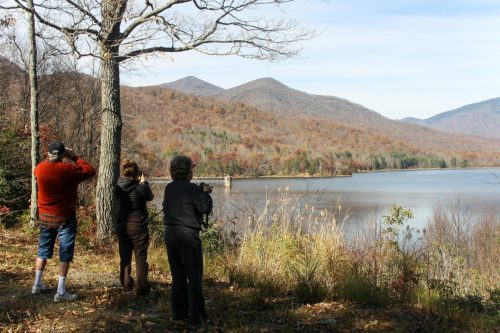
Join us on this exclusive historic driving tour of the west side of the Burnett Reservoir to explore part of the once thriving North Fork Valley community. The caravan will stop for participants to view the impressive chimney that was once part of a large boarding house where travelers on their way to Mt. Mitchell would stay before they began the ascent to the highest peak in eastern North America. The tour will also stop at the former entrance to Governor Zebulon Vance’s estate, Gombroon, as well as the Gombroon wall. Following that, we will pass the Left Hand Fork Intake and head to the Dan Burnett Place. The tour will end with the ruins of Gombroon – to include the foundation, heart-shaped pool, the spring house, and the McGinnis Cabin.
Difficulty: Moderate; There will be some walking on rough terrain. Wear sturdy shoes and dress for the weather.
Pricing: $200 per vehicle. The vehicle may carry as few or as many passengers as the registrant wishes to bring. Only family members or people who are in the same “social pod” should travel in a vehicle together. Drivers who cannot bring a family member or someone in their social pod must drive themselves.
Drivers – Your vehicle must get clearance from our trip leader prior to registering as a driver. Please contact us at [email protected] to get clearance.
COVID Policy
- Only family members or people who are in the same “social pod” may travel in a vehicle together. Drivers who cannot bring a family member or someone in their social pod must drive themselves.
- All attendees, volunteers and hike leaders are required to bring masks and social distancing must be observed. Attendees and hike leaders must wear masks during talks outside the vehicles.
- The sign-in for the event will be conducted outdoors, at the parking lot of the Black Mountain Savings Bank.
|
| VISIT US! To ensure the safety of our visitors, staff, and volunteers, we will reopen for timed, private, self-guided, pre-booked tours of the historic Smith-McDowell House and Western North Carolina exhibit rooms.
Tours are reserved on a first-come, first-served basis: Wednesday – Saturday Tour reservations last for 1 hour to allow time for cleaning between groups. All visitors, staff, and volunteers are required to wear masks while inside the building. |
Join us for a relaxing ride through quiet countryside on your way to small town life in western North Carolina on the Tuckasegee River Excursion. Departing from Bryson City, this 4 hour excursion travels 32 miles round-trip to Dillsboro and back to the Bryson City Depot. Pass by the famous movie set of The Fugitive starring Harrison Ford!
The Tuckasegee (tuck-uh-SEE-jee) River Excursion includes an 1½ hour layover in the historic town of Dillsboro, where you’ll find more than 50 shops, restaurants, bed and breakfasts and country inns. There is time to shop, snack, and visit the many unique shops before returning to Bryson City.
Virtual Visits for Students
Groups of pre-K–12 students are invited to schedule an interactive Virtual Visit to the Museum! Led by volunteer docents with Museum staff, our inquiry-based, conversational Virtual Visits introduce the Museum’s galleries with a 3D tour and challenge students to hone their observation skills. All pre-K–12 Virtual Visits make connections to the NC Standard Course of Study.
Virtual Visits for pre-K–12 groups are $50 for 5–25 participants from one or multiple devices through Zoom or Google Meet. Virtual Visits are available Monday through Friday from 9am to 4pm, and last 30–45 minutes. At least two weeks’ advanced notice is required.
For more information about Virtual Visits for adults, college, and university students, click here. For Virtual Visits for family and friend groups with children, click here.
This is a variation on the tradition Cherokee Butterbean Game. It can be played by several individual players or several teams. Traditionally, this game uses three butterbeans that have been split in half. More…
From the Museum of the Cherokee Indian: Cherokee people began growing a form of corn two thousand years ago. By about a thousand years ago, or 1000 AD, they were growing corn and beans, as we know them today. Corn, beans, and squash was always grown together and was known as the “Three Sisters.” Beans restore nitrogen to the soil while corn depletes nitrogen. The vines of the beans and squash twined up the cornstalks. When corn and beans are eaten together, they provide complete proteins and amino acids for our diet.
Corn was so important to the Cherokee that they had important celebrations and ceremonies called “Green Corn Festivals.” The first of these was held in August, before the sweet corn was ready to eat. The last was held in October or November, when the
field corn was ready to be picked. At these ceremonies, people purified themselves physically and spiritually before feasting together. At this time, people got married and divorced. All old scores were settled and everyone started a new year together.
|
| Western North Carolina is defined as much by the various chains and valleys within the Appalachian Mountains as it is by the various people here. The region contains large swaths of national forest lands and the Great Smoky Mountains National Park. It contains old rivers and old folkways, along with an increasingly large stream of transplants and temporary visitors. This virtual tour gives a broad overview of our region. |
Virtual Visits for Students
Groups of pre-K–12 students are invited to schedule an interactive Virtual Visit to the Museum! Led by volunteer docents with Museum staff, our inquiry-based, conversational Virtual Visits introduce the Museum’s galleries with a 3D tour and challenge students to hone their observation skills. All pre-K–12 Virtual Visits make connections to the NC Standard Course of Study.
Virtual Visits for pre-K–12 groups are $50 for 5–25 participants from one or multiple devices through Zoom or Google Meet. Virtual Visits are available Monday through Friday from 9am to 4pm, and last 30–45 minutes. At least two weeks’ advanced notice is required.
For more information about Virtual Visits for adults, college, and university students, click here. For Virtual Visits for family and friend groups with children, click here.
Virtual Visits for Students
Groups of pre-K–12 students are invited to schedule an interactive Virtual Visit to the Museum! Led by volunteer docents with Museum staff, our inquiry-based, conversational Virtual Visits introduce the Museum’s galleries with a 3D tour and challenge students to hone their observation skills. All pre-K–12 Virtual Visits make connections to the NC Standard Course of Study.
Virtual Visits for pre-K–12 groups are $50 for 5–25 participants from one or multiple devices through Zoom or Google Meet. Virtual Visits are available Monday through Friday from 9am to 4pm, and last 30–45 minutes. At least two weeks’ advanced notice is required.
For more information about Virtual Visits for adults, college, and university students, click here. For Virtual Visits for family and friend groups with children, click here.