Location: Anne Elizabeth Suratt Nature Center at Walnut Creek Preserve

Ad Blocker Detected
It looks like you're using ad blocking technology. We are a local company, and our advertisers are local as well. Please consider allow listing our website in the future.
Upcoming events and things to do in Asheville, NC. Below is a list of events for festivals, concerts, art exhibitions, group meetups and more.
Interested in adding an event to our calendar? Please click the green “Post Your Event” button below.

Location: Anne Elizabeth Suratt Nature Center at Walnut Creek Preserve
Speaker: naturalist and educator, Clint Calhoun
During this presentation, Clint will discuss the reasons why Hickory Nut Gorge is special – focusing on its unusual natural communities and some of the special flora and fauna that make Hickory Nut Gorge their home.
Clint is a native of the foothills of Rutherford County. After graduating high school in 1992, he started his first job at Chimney Rock Park (before it was a state park). He continued to work at Chimney Rock Park while he attended Gardner-Webb University, where he earned a Bachelor of Science in Biology in 1996. After graduation Clint became the Trails Supervisor for Chimney Rock Park and finished his 11 year career there as the Park Naturalist. Clint went on to serve as the Watershed Coordinator for the Upper Broad River Watershed Program and the Environmental Management Officer for the Town of Lake Lure and is currently teaching high school science at Lake Lure Classical Academy. Clint has worked in the Hickory Nut Gorge area for his entire career, spanning 25-plus years, as a biologist, natural resources manager, and environmental educator. During that time he has gained significant knowledge of the plants, animals, and natural communities of Hickory Nut Gorge and often provides professional expertise to organizations such as The Nature Conservancy, Conserving Carolina, and NC State Parks.
BGA BUTLER ROOM & GARDENS
Using native plants in ways that create pleasing and attractive gardens can be as simple as using nature for your inspiration. Combining plants that work together in their natural landscapes, with an eye to what patterns and combinations look just right, with judicious “editing” can elevate both enjoyment of your garden and successful stewardship of your landscape, providing sustenance for you, and fellow inhabitants of your site. The program will include a presentation (1½ hour), followed by an outdoor walk using BGA plantings as examples.
Lisa Wagner served as Director of Education at the South Carolina Botanical Garden, Clemson University for over 20 years. A plant ecologist by background (Ph.D. in Botany, UC Berkeley), she’s interested in native plants, sustainable gardening, public education, and promoting habitat restoration, as well as being a passionate gardener. She gives frequent presentations and classes as a volunteer, on a variety of topics including gardening for nature and creating a native woodland garden. Her blog, Natural Gardening http://www.naturalgardening.blogspot.com reflects her observations about gardening and the natural world.
Participants must pre-register and pre-pay for classes: 828-252-5190.
Limit 30

The Community Garden Network’s Grantwriting 101 workshop is coming back for a 3rd round due to popular demand on Wednesday April 22nd from 1-4pm. We will offer this workshop online through the Google Meet virtual meeting platform. In order to ensure that everyone who wants to participate is able to receive the link, please RSVP for this workshop no later than Monday April 20th. Participants will need access to a computer for this workshop for optimal participation, as the workshop will be utilizing visual slides. This free workshop will offer tools for beginners, and even intermediate grant writers will learn some helpful tips.
https://docs.google.com/forms/d/1Ru1hZnbFLTpaotPrmFYlaO2aNijV_gFZxUbyaLCIQB0/

Join us to celebrate the biggest meteor shower of the spring. As we watch the cosmic fireworks we’ll also learn to find our way around the spring sky and some of the myths and legends of the stars and constellations visible at this time as well.

Ecological gardening is a way of thinking about gardens and landscapes in which gardens are no longer seen as a collection of plants, but a community with complex interdependencies between plants, animals, soils and the environment. This certificate program explores ecological principles for creating and managing a healthy, self-sustaining garden and landscape in a changing climate. Students enrolling in the Certificate of Merit program will work to complete 120 hours in core classes on topics including principles of ecological gardening, seasonal plants and tasks and sustainable landscape design along with electives on hardscape, edibles, seed saving and other subjects of interest to participants. View current class offerings for credit in the Blue Ridge Eco-Gardener program here.
To begin your program, complete an application and return it to the Education Center along with a one-time, non-refundable $55 application fee.

Join over one hundred students on a quest to deepen understanding of the natural sciences through the Blue Ridge Naturalist Certificate of Merit. The program offers adult learners a comprehensive curriculum of study about the natural world of Western North Carolina. Classes meet year round and students work to complete 240 hours in core courses on ecology, botany, geology and plant identification as well as electives on animals, lichens, insects and more. View current class offerings for credit in the Blue Ridge Naturalist program here. All students must complete and present a final project prior to graduation.
To begin your program complete an application and return it to the Education Center along with a a one-time, non-refundable $55 application fee.
|
|||||
|


Your teachers, Natalie Bogwalker and Chloe Lieberman share experience-based, practical instruction for growing their top ten vegetables to really fill your plate, belly, and larder. We put together this class so that you can begin with the crops that are most likely to be successful and rewarding. Or, if you’ve got some experience gardening but want to expand your repertoire, this course will help you do so in a way that makes sense and yields abundantly.
|
|

Get to know the nature near you! This year, as part of the City Nature Challenge, the Arboretum’s ecoEXPLORE program has launched a special BioBlitz Bonus Badge. Children in grades K-8 who complete six “challenges” will earn the BioBlitz Bonus Badge and their adult helpers will also receive a North Carolina BioBlitz patch. ecoEXPLORE is an initiative of The North Carolina Arboretum and is free to all North Carolina residents due to the generous support from the North Carolina GlaxoSmithKline Foundation and the Duke Energy Foundation.
Are you a group or classroom? Choose the “Group” option on the signup form.

For adults looking for an extra challenge this spring, the Arboretum has created the North Carolina BioBlitz patch in conjunction with the 2020 City Nature Challenge (April 24 – 27). To earn the patch, participants will need to create a free iNaturalist account; attend the “Intro to iNaturalist” class on April 9 (or watch the recorded version later); make 50 nature observations during the City Nature Challenge; and help identify 50 species during the Challenge’s “identifying” stage (April 28 – May 3). Students in the Arboretum’s Blue Ridge Naturalist and Blue Ridge Eco-Gardener certificate programs can earn three elective credits if they complete the North Carolina BioBlitz program and one credit if they only take the “Into to iNaturalist” class.
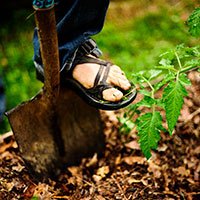
Are you ready to grow some serious food? This six-month online video course will give you the skills and tools you need to be able to grow a garden for yourself, from the ground up. Begins EARTH DAY April 22, 2020!
Natalie is a hide tanner, craftswoman, builder, teacher, mom, and gardener. She founded Wild Abundance 10 years ago because of her passion for sharing real, practical skills that get people closer to the Earth. Hide tanning was one of the first earthskills that she learned, and it changed her life profoundly. That was over 15 years ago! Since then she’s tanned uncountable hides, but more importantly, she’s taught hide tanning to hundreds of students.
Natalie knows what usually trips people up who are new to hide tanning. In this online course she shares a thorough, step-by-step guide to hide tanning, including numerous tips and tricks that will help you succeed.

April 17th – 19th
Friday 6-9pm
Saturday-Sunday 9:30am-4:30pm
Join Tyler and learn the fundamentals of mold making and how to utilize plaster to accentuate your hand building and wheel throwing. Demonstrations will include how to design and cast feet, knobs, handles and other decorative elements for your pots. Students can expect to learn the basics of plaster mold making and how to implement those tools in non-traditional manners, resulting in some truly fun and highly replicable work.
Level: All Levels
Tuition: $275 (all materials included)
We’ve turned some of our youth conservation education programs into videos to share online. Earlier this year, we asked elementary and middle school students what might prevent them from enjoying time outdoors – and many responded “snakes” or “spiders.” So, we developed fun lessons to help dispel myths and fears about snakes and spiders. These video adaptations of our youth education programs include short 5-minute lessons and step-by-step craft activities. Enjoy!
SPIDERS: https://www.youtube.com/watch?v=vRWaw6jPeN8&utm_source=SAHC+Default+MC+List&utm_campaign=6b1835d2ec-February_2018_COPY_01&utm_medium=email&utm_term=0_4717684d09-6b1835d2ec-144635353&ct=t%28February_2018_COPY_01%29&mc_cid=6b1835d2ec&mc_eid=cccced3ffd
SNAKES: https://www.youtube.com/watch?v=QpFcByki9xM&utm_source=SAHC+Default+MC+List&utm_campaign=6b1835d2ec-February_2018_COPY_01&utm_medium=email&utm_term=0_4717684d09-6b1835d2ec-144635353&ct=t%28February_2018_COPY_01%29&mc_cid=6b1835d2ec&mc_eid=cccced3ffd
Join us on a video hike through a protected conservation property to learn about lichens! Do you know the difference between mosses and lichens? AmeriCorps Project Conserve member Shay “Sarge” Sargent leads a virtual adventure to answer this question and more.
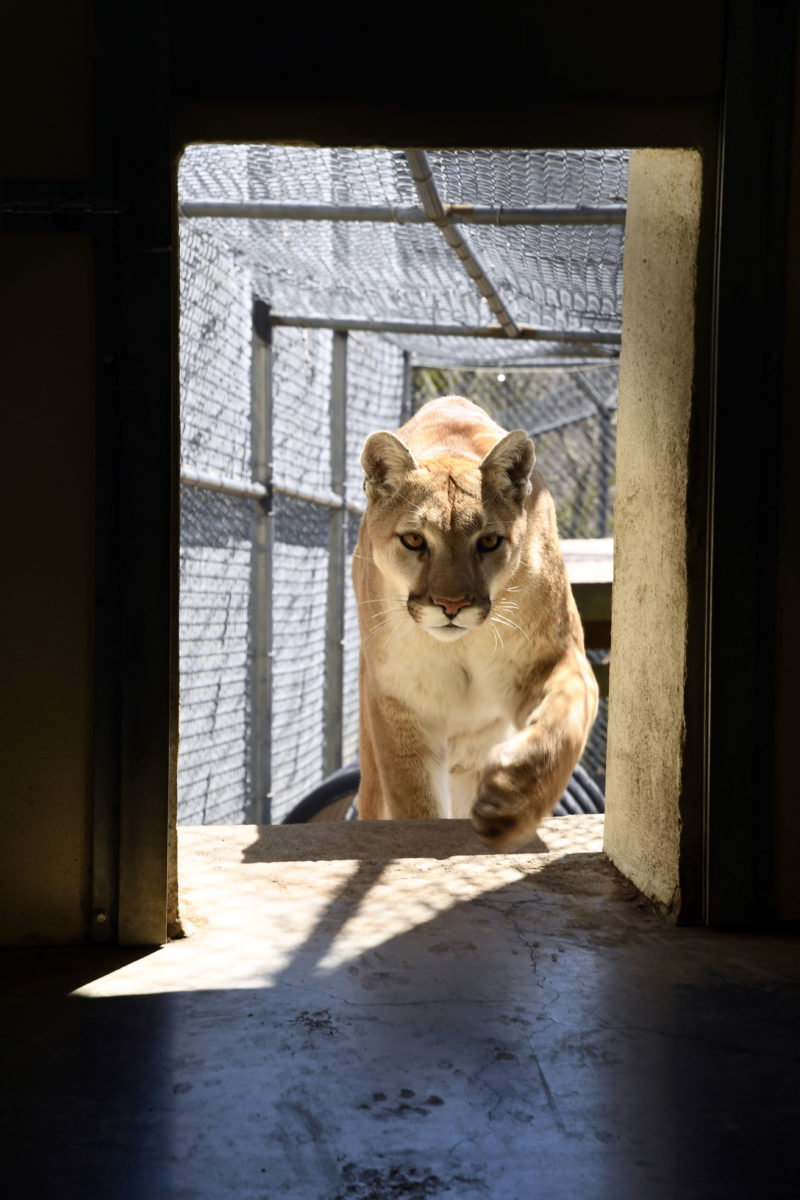
See where the cougars and otters sleep overnight, meet black bears that are not commonly on display, learn the ins and outs of what it takes to care for the animals year-round, observe a training session and find out why the animals call Grandfather Mountain home.
Offered on weekends, April – October.
The Community Garden Network’s Grantwriting 101 workshop is coming back for a 3rd round due to popular demand on Wednesday April 22nd from 1-4pm. We will offer this workshop online through the Google Meet virtual meeting platform. In order to ensure that everyone who wants to participate is able to receive the link, please RSVP for this workshop no later than Monday April 20th. Participants will need access to a computer for this workshop for optimal participation, as the workshop will be utilizing visual slides. This free workshop will offer tools for beginners, and even intermediate grant writers will learn some helpful tips.
https://docs.google.com/forms/d/1Ru1hZnbFLTpaotPrmFYlaO2aNijV_gFZxUbyaLCIQB0/
Your teachers, Natalie Bogwalker and Chloe Lieberman share experience-based, practical instruction for growing their top ten vegetables to really fill your plate, belly, and larder. We put together this class so that you can begin with the crops that are most likely to be successful and rewarding. Or, if you’ve got some experience gardening but want to expand your repertoire, this course will help you do so in a way that makes sense and yields abundantly.
Get to know the nature near you! This year, as part of the City Nature Challenge, the Arboretum’s ecoEXPLORE program has launched a special BioBlitz Bonus Badge. Children in grades K-8 who complete six “challenges” will earn the BioBlitz Bonus Badge and their adult helpers will also receive a North Carolina BioBlitz patch. ecoEXPLORE is an initiative of The North Carolina Arboretum and is free to all North Carolina residents due to the generous support from the North Carolina GlaxoSmithKline Foundation and the Duke Energy Foundation.
Are you a group or classroom? Choose the “Group” option on the signup form.
Are you ready to grow some serious food? This six-month online video course will give you the skills and tools you need to be able to grow a garden for yourself, from the ground up. Begins EARTH DAY April 22, 2020!
The Community Garden Network’s Grantwriting 101 workshop is coming back for a 3rd round due to popular demand on Wednesday April 22nd from 1-4pm. We will offer this workshop online through the Google Meet virtual meeting platform. In order to ensure that everyone who wants to participate is able to receive the link, please RSVP for this workshop no later than Monday April 20th. Participants will need access to a computer for this workshop for optimal participation, as the workshop will be utilizing visual slides. This free workshop will offer tools for beginners, and even intermediate grant writers will learn some helpful tips.
https://docs.google.com/forms/d/1Ru1hZnbFLTpaotPrmFYlaO2aNijV_gFZxUbyaLCIQB0/

https://www.facebook.com/events/200958394535589/
Join us every Monday at 1pm on Facebook Live for Math Mondays with Jess! Enjoy a 30 minute lesson and she’ll also take math-related homework questions. Submit your questions below!
Join over one hundred students on a quest to deepen understanding of the natural sciences through the Blue Ridge Naturalist Certificate of Merit. The program offers adult learners a comprehensive curriculum of study about the natural world of Western North Carolina. Classes meet year round and students work to complete 240 hours in core courses on ecology, botany, geology and plant identification as well as electives on animals, lichens, insects and more. View current class offerings for credit in the Blue Ridge Naturalist program here. All students must complete and present a final project prior to graduation.
To begin your program complete an application and return it to the Education Center along with a a one-time, non-refundable $55 application fee.
If you are reading this, you are most likely a landowner in western North Carolina who is concerned about the future of your land along the French Broad River or one of its tributaries. Perhaps you have a farm or cattle ranch that has been in your family for generations, or maybe you recently purchased your second home in an idyllic rural area. Whatever your situation, many North Carolina landowners face the same dilemma: how do you ensure that the land you love looks the way that it does forever?

Your teachers, Natalie Bogwalker and Chloe Lieberman share experience-based, practical instruction for growing their top ten vegetables to really fill your plate, belly, and larder. We put together this class so that you can begin with the crops that are most likely to be successful and rewarding. Or, if you’ve got some experience gardening but want to expand your repertoire, this course will help you do so in a way that makes sense and yields abundantly.
Get to know the nature near you! This year, as part of the City Nature Challenge, the Arboretum’s ecoEXPLORE program has launched a special BioBlitz Bonus Badge. Children in grades K-8 who complete six “challenges” will earn the BioBlitz Bonus Badge and their adult helpers will also receive a North Carolina BioBlitz patch. ecoEXPLORE is an initiative of The North Carolina Arboretum and is free to all North Carolina residents due to the generous support from the North Carolina GlaxoSmithKline Foundation and the Duke Energy Foundation.
Are you a group or classroom? Choose the “Group” option on the signup form.


Are you ready to grow some serious food? This six-month online video course will give you the skills and tools you need to be able to grow a garden for yourself, from the ground up. Begins EARTH DAY April 22, 2020!
Healthy Rivers equal Healthy Communities. RiverLink’s Watershed Resources program works to improve water quality in the French Broad River and its tributaries. These waterways support critical wildlife habitat for many species, such as the hellbender salamander and rainbow trout. Our local economies thrive on water-based recreational tourism. The French Broad River watershed also provides drinking water for many communities. These things are true only if the water is clean. Our Watershed Resources program uses a combination of initiatives, including on the ground projects and community outreach to improve and protect water quality.