

Calendar of Events
Upcoming events and things to do in Asheville, NC. Below is a list of events for festivals, concerts, art exhibitions, group meetups and more.
Interested in adding an event to our calendar? Please click the green “Post Your Event” button below.
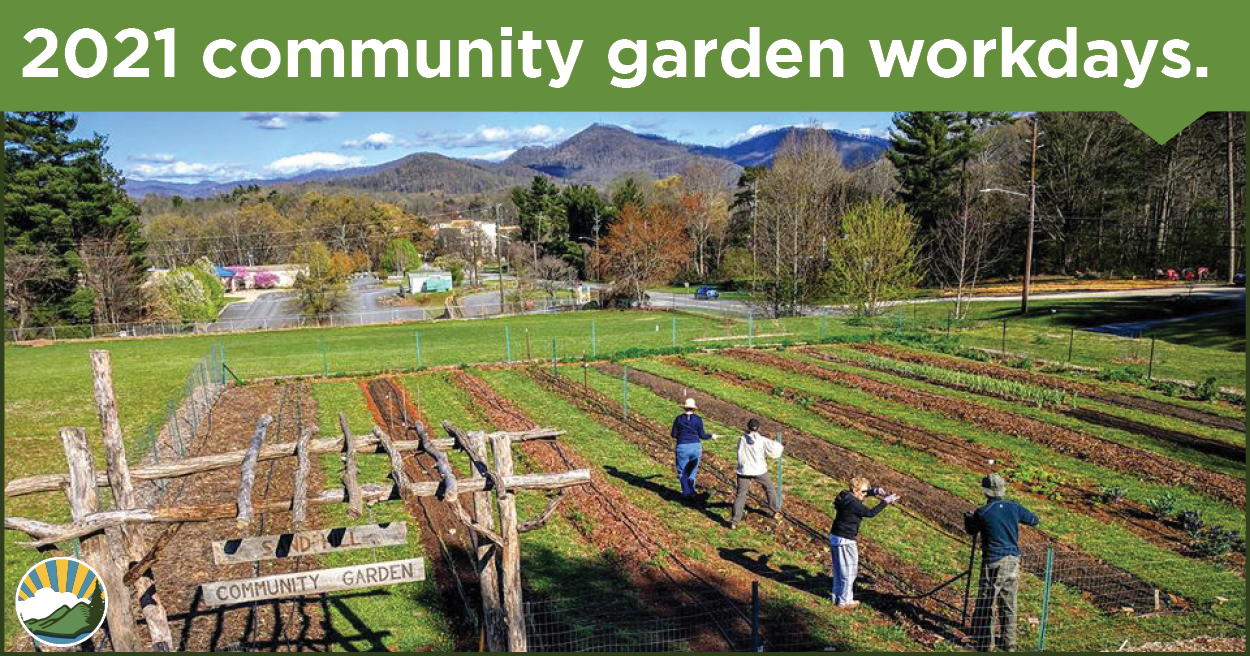
Looking to get involved, stay active, and meet some new friends? Sand Hill Community Garden workdays take place on Wednesdays (6-8 p.m.) and Saturdays (10 a.m.-noon) from Feb. 27-Oct. 30, 2021, at Buncombe County Sports Park. The garden is located on 16 Apac Dr. in West Asheville/Enka-Candler.
Join friends and neighbors as they come together on common ground to raise fresh, organic vegetables and fruits for the Enka community.
Expect to wear a mask and maintain social distance throughout. Tools and hand sanitizer are available, but any gloves, loppers, pruners, or gardening tools you can bring will decrease the amount of contact between volunteers. Please wear work clothes to get dirty and closed-toe shoes. Sunscreen, water, and a hat are also handy items to have on hand.
Sand Hill Community Garden has been growing fresh produce since 2011 and raised over 1,200 lbs. of organic produce last year.
NOTE: Community workdays are weather dependent. Please join the community garden email list (send your info to [email protected]) to stay up on workday tasks and other garden news.
To receive the I Heart Parks monthly newsletter, sign up online. Follow Buncombe County Recreation on Facebook and Instagram for the latest updates.
On-line Saturday Seminar presented by Extension Master Gardeners of Buncombe County
Join Extension Master Gardener Volunteer Phil Roudebush as he explains how to use straw bales and recycled wood pallets for gardening in small spaces. This popular technique is also an easy and economical way to overcome problems gardeners encounter with heavy clay soil. REGISTRATION IS REQUIRED.
Gardening in the Mountains presents:
Creating Deer-Resistant Landscapes
Presenter: Phil Roudebush, Extension Master GardenerSM Volunteer
Deer can quickly devastate a landscape and cause many a headache for gardeners. This video covers the basic techniques used to discourage and cope with this nuisance wildlife. The speaker gives examples of these practices—cultural, mechanical, biological, and chemical—and focuses on deer-resistant plants, ranging from rarely to frequently damaged. He also provides the viewer with several valuable resources to help manage deer in the garden.
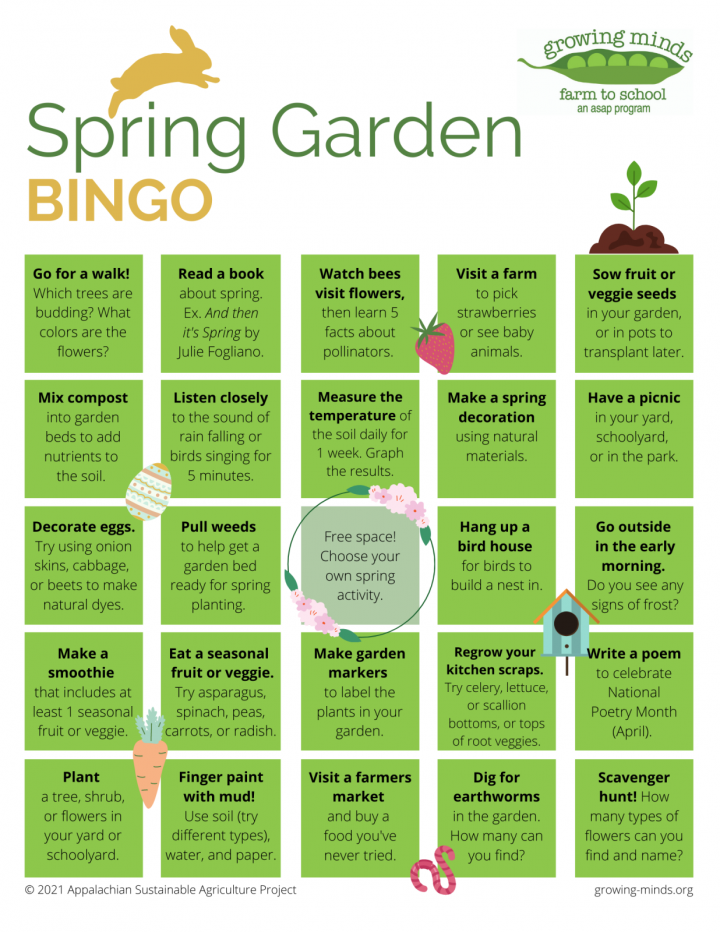
This spring garden bingo card comes from our Growing Minds Farm to School Program, but anyone can play! Get a printable version of the card here or find more spring learning resources for kids here.

Erica was a HUGE supporter of my farm and was a major part in my expansion. Without the support and help from her, I am not sure I could have done this!
The purpose of the Mentor Services program is to support beginning and intermediate farmers by partnering them with experienced regional farmers who can provide them with one-on-one practical planning skills in the areas of:
- farm design and production
- marketing and business development
- systems management
- connecting them to the regional farming community
By serving as Mentors, regional farmers will be able to pass on the skills and knowledge that they possess to other farmers and help to build collaboration and community among the farming community.
Who is eligible to apply
We are looking for farmers who have been farming at least 1 year and/or have worked as a farm manager.
Preference is given to graduates of Farm Beginnings® (or other relevant farmer training programs) and members of CRAFT.
Each applicant will be evaluated on an individual basis. Farming partners who apply jointly will receive one mentor.

We are also offering a limited number of mentorships focused on forest farming, in partnership with Appalachian Beginning Forest Farmer Coalition. These will be offered as free or reduced fee mentorships. If you are interested, you can indicate that on your application.

Need help with your farm, garden, or homestead?
Contact us for a free 20 minute call helping you to identify your needs and goals and assess which service might be right for you. We offer a wide variety of consulting services—with hourly follow-up support and reduced fees available—including:
- Assessment of land that you own or want to purchase.
- Sustainability systems on your farm, garden, or homestead.
- Guidance for your land-based project.
How the process works:
Step 1: We talk on the phone to identify your goals and needs.
Step 2: We select a service and price that best meets your needs.
Step 3: We set up a time for an in-person site visit or video call
Step 4: We coach you through a self-assessment process.
Step 5: We have our virtual or in-person site visit.
Step 6: We invoice you.
Step 7: We follow up with you with next steps, referrals, report, etc.
Projects Suitable for Consulting
Visit Our Gardens This Spring
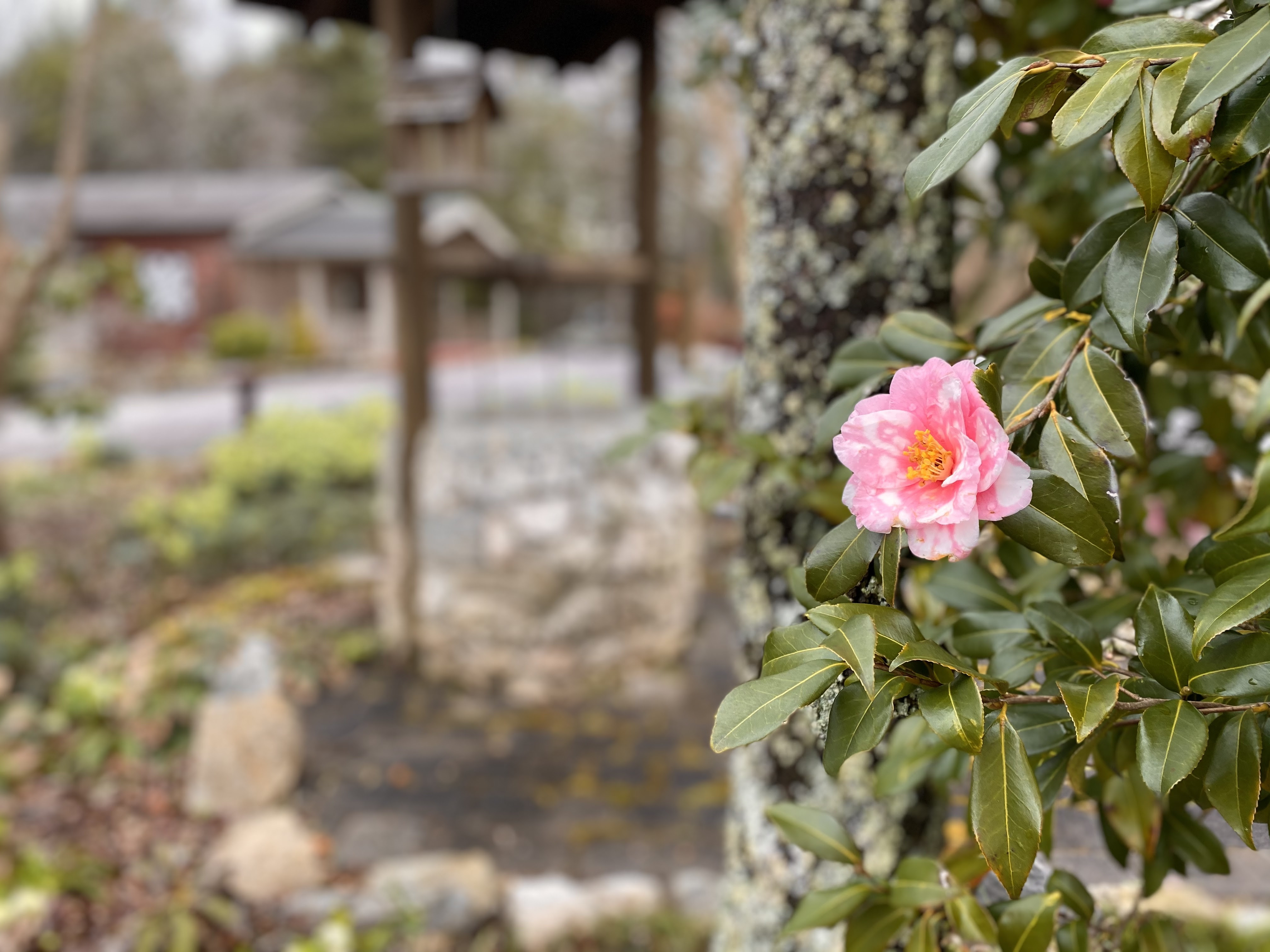
The Playhouse Gardens are open and just in time for spring! Whether you’re going for a stroll, staying for a picnic, or learning about the different flora using the QR codes in each flower bed, we hope you’ll join us at the Playhouse Gardens. Stay tuned for upcoming events and learn about all the hard work that our volunteers do by following them on Instagram.

The Western Arts Agencies of North Carolina (WNC Arts) was established in 1980s as a peer support group for arts councils and agencies in WNC. This group is now working to expand their advocacy support for the arts in WNC.

The North Carolina Arboretum is going wild for art and nature in 2021 with Wild Art! On view April 1 through September 26, this outdoor sculpture exhibition features works by 17 local and national artists drawing inspiration from the natural environment. Situated throughout the Arboretum’s spacious, open-air gardens, the show offers guests a doorway into the wild world from the comfort and safety of cultivated landscapes transformed by art.
The 18 sculptures on display represent a variety of approaches to the theme of “wild art,” from the literal to the abstract, and are crafted from a diverse array of materials that will delight and inspire. Let your imagination take you on a wild journey into the world of plants and animals near and far with Wild Art at The North Carolina Arboretum.
The exhibit is available to all guests during normal Arboretum hours, and there is no admission cost to view the sculptures beyond our usual parking fee of $16 per personal vehicle.
Included with admission
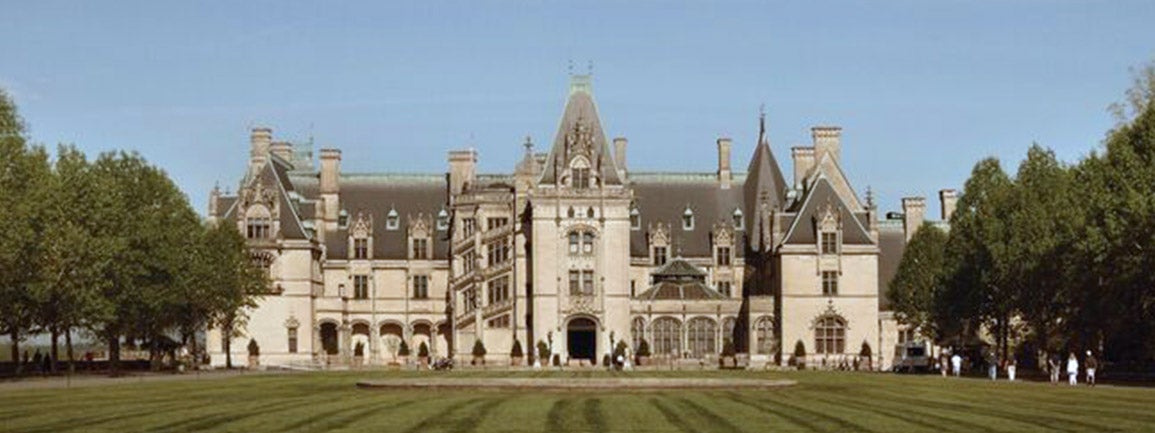
Our fun-for-all-ages botanical model train displays invite you to experience our grounds in an engaging new way. Located in the Conservatory in the Walled Garden, the displays feature replicas of structures connected with Biltmore and its founder George Vanderbilt. Each beautifully executed piece was handcrafted from such natural elements as leaves, bark, and twigs.
In compliance with state and local mandates related to COVID-19, all guests must enter the Conservatory via the ADA entrance in the back and follow a one-way route.
Limit: 8 participants
Let’s enjoy a quiet, mindful stroll through the woods together. Strolling with an eye toward the wonders around you during an otherwise ordinary walk could have significant benefits for your mental health. An interesting new psychological study contends that people who take a fresh look at the objects, moments and vistas that surround them during brief “awe walks” feel more upbeat and hopeful. Bundle up, wear your mask and be awed along with documentary photography Susan Patrice who will help you look at the landscape through new and loving eyes. Participants will be sent meeting instructions for this small-group class stepping off at the Arboretum.
*Participants must adhere to all safety guidelines in the reminder email sent prior to the class. Please add [email protected] to your contacts so our emails do not end up in your spam folder. Masks should be worn at all times out of consideration for all class participants. We ask that you try to keep a distance of at least 6′ between others as much as possible.
Susan Patrice is a documentary photographer, community artist, and founder of Makers Circle. She recently launched the Six Feet Photography Project, a community project that encourages photographers to make and share images of their lived experiences of confinement and social distancing. Susan’s own photography and public installations focus primarily on the Southern Landscape and its people and feature intimate images that touch deeply into the questions of place, gender, and belonging.
he 2021 Local Food Guide, ASAP’s annual free publication for finding local food and farms, hits newsstands this week. This definitive resource lists Appalachian GrownTM certified farms, farmers tailgate markets, restaurants, and travel destinations throughout Western North Carolina and surrounding counties in Virginia, Tennessee, Georgia, and South Carolina. You can also view a digital version of the print Guide at asapconnections.org/guide.
The 2021 print edition of the Local Food Guide includes:
200+ Appalachian Grown farms, plus charts to easily locate farms offering u-pick, farm stands, lodging, visitor activities, and CSAs;
80+ farmers tailgate markets, plus information about holiday markets and a list of markets that operate in the winter;
80+ partner businesses, including restaurants, groceries, wholesalers, artisan producers, and travel destinations.
Articles and photography throughout the Guide highlight the unique farm stories and beauty of the region. This year’s Guide features The AppaLatin Farmstead, Colfax Creek Farm, Headwaters Market Garden, Kituwah Farm, New Roots Market Garden, and TK Family Farm. A primer on eating seasonally includes simple, vegetable-focused recipes.
As part of ASAP’s Appalachian Grown program, staff connects with markets, farms, and businesses to update listings each year. The Local Food Guide offers the most accurate, up-to-date information for consumers. ASAP also maintains the online Local Food Guide at appalachiangrown.org throughout the year. This database, including 1,350 listings, is searchable by products, locations, activities, and more.
Find Local Food Guide copies at farmers markets, visitors centers, libraries, community centers, groceries, restaurants, and other partner businesses throughout the region. They are also available to pick up in the lobby of ASAP’s office in Asheville at 306 W. Haywood St., Monday to Thursday, noon to 4 p.m. Contact ASAP if you need help locating a copy in your area.
The 2021 Local Food Guide is made possible with support from the USDA, Buncombe County Strategic Partnership fund, The Community Foundation of Western North Carolina, Pisgah Health Foundation, and Asheville Regional Airport.
ABOUT ASAP (APPALACHIAN SUSTAINABLE AGRICULTURE PROJECT)
ASAP’s mission is to help local farms thrive, link farmers to markets and supporters, and build healthy communities through connections to local food. To learn more, visit asapconnections.org.
Gardening in the Mountains presents: Presenter: Phil Roudebush, Extension Master GardenerSM Volunteer Products promising to rid your garden of voles, rabbits, deer, raccoons, and snakes fill garden store shelves. But which to use and are they effective? In this 20-minute video, Phil outlines the various types of repellents on the market today. He steps through “best way to use” rules, product content, application methods, and safety for edibles. Phil contrasts product research and development methods with the home garden environment and actively growing plants. He leaves the viewer with an assessment of the most effective repellents and a better understanding of their usefulness.
|
|


The North Carolina Arboretum is going wild for art and nature in 2021 with Wild Art! On view April 1 through September 26, this outdoor sculpture exhibition features works by 17 local and national artists drawing inspiration from the natural environment. Situated throughout the Arboretum’s spacious, open-air gardens, the show offers guests a doorway into the wild world from the comfort and safety of cultivated landscapes transformed by art.
The 18 sculptures on display represent a variety of approaches to the theme of “wild art,” from the literal to the abstract, and are crafted from a diverse array of materials that will delight and inspire. Let your imagination take you on a wild journey into the world of plants and animals near and far with Wild Art at The North Carolina Arboretum.
The exhibit is available to all guests during normal Arboretum hours, and there is no admission cost to view the sculptures beyond our usual parking fee of $16 per personal vehicle.
Included with admission
Our fun-for-all-ages botanical model train displays invite you to experience our grounds in an engaging new way. Located in the Conservatory in the Walled Garden, the displays feature replicas of structures connected with Biltmore and its founder George Vanderbilt. Each beautifully executed piece was handcrafted from such natural elements as leaves, bark, and twigs.
In compliance with state and local mandates related to COVID-19, all guests must enter the Conservatory via the ADA entrance in the back and follow a one-way route.
|

he 2021 Local Food Guide, ASAP’s annual free publication for finding local food and farms, hits newsstands this week. This definitive resource lists Appalachian GrownTM certified farms, farmers tailgate markets, restaurants, and travel destinations throughout Western North Carolina and surrounding counties in Virginia, Tennessee, Georgia, and South Carolina. You can also view a digital version of the print Guide at asapconnections.org/guide.
The 2021 print edition of the Local Food Guide includes:
200+ Appalachian Grown farms, plus charts to easily locate farms offering u-pick, farm stands, lodging, visitor activities, and CSAs;
80+ farmers tailgate markets, plus information about holiday markets and a list of markets that operate in the winter;
80+ partner businesses, including restaurants, groceries, wholesalers, artisan producers, and travel destinations.
Articles and photography throughout the Guide highlight the unique farm stories and beauty of the region. This year’s Guide features The AppaLatin Farmstead, Colfax Creek Farm, Headwaters Market Garden, Kituwah Farm, New Roots Market Garden, and TK Family Farm. A primer on eating seasonally includes simple, vegetable-focused recipes.
As part of ASAP’s Appalachian Grown program, staff connects with markets, farms, and businesses to update listings each year. The Local Food Guide offers the most accurate, up-to-date information for consumers. ASAP also maintains the online Local Food Guide at appalachiangrown.org throughout the year. This database, including 1,350 listings, is searchable by products, locations, activities, and more.
Find Local Food Guide copies at farmers markets, visitors centers, libraries, community centers, groceries, restaurants, and other partner businesses throughout the region. They are also available to pick up in the lobby of ASAP’s office in Asheville at 306 W. Haywood St., Monday to Thursday, noon to 4 p.m. Contact ASAP if you need help locating a copy in your area.
The 2021 Local Food Guide is made possible with support from the USDA, Buncombe County Strategic Partnership fund, The Community Foundation of Western North Carolina, Pisgah Health Foundation, and Asheville Regional Airport.
ABOUT ASAP (APPALACHIAN SUSTAINABLE AGRICULTURE PROJECT)
ASAP’s mission is to help local farms thrive, link farmers to markets and supporters, and build healthy communities through connections to local food. To learn more, visit asapconnections.org.
Gardening in the Mountains presents: Presenter: Phil Roudebush, Extension Master GardenerSM Volunteer Products promising to rid your garden of voles, rabbits, deer, raccoons, and snakes fill garden store shelves. But which to use and are they effective? In this 20-minute video, Phil outlines the various types of repellents on the market today. He steps through “best way to use” rules, product content, application methods, and safety for edibles. Phil contrasts product research and development methods with the home garden environment and actively growing plants. He leaves the viewer with an assessment of the most effective repellents and a better understanding of their usefulness.
|
|

Organic Growers School is excited to offer this curriculum and training opportunity for the second year in partnership with Certified Naturally Grown.
Spring 2021
March 23 – April 27, 2021 • Online – livestream from anywhere!
In response to the need for virtual learning opportunities during the pandemic, we have restructured this curriculum from in-person workshops to a six-part webinar series, which includes a mixture of videos, resources, and live virtual meetings.
March 23 – April 27, 2021 – Online
Workshop Descriptions & Winter Schedule
Session 1: Tools from the Holistic Management Framework
March 23, 2021
Participants will learn how to view the farm as an ecosystem while managing the four ecosystem processes – energy flow, water cycle, nutrient cycle, and community dynamics – in order to establish balance and promote productivity on your farm.
Session 2: A Holistic Approach to Soil Health
March 30, 2021
Soil health, in an agricultural context, can be loosely defined as the combination of soil fertility, soil structure, and the biological activity that enables the production of healthy plants, active nutrient cycling, water infiltration and retention, and minimal soil erosion. Participants will understand and learn to apply the four ecosystem processes, holistic management principles, the basics of soil science, and soil monitoring techniques to help increase their farm’s soil health, productivity, and resilience.
Session 3: Managing Weeds Holistically
April 6, 2021
Effectively managing weeds can be the most labor-intensive task for ecological crop and vegetable production. This session will cover common weed biology, ecology, and identification. Participants will also learn preventative as well as mechanical and cultural practices you can implement on your farm to reduce weed pressure, save time, and money.
Session 4: Managing Pests Holistically
April 13, 2021
In this session, participants will gain an ecological understanding of pests including their biology, how to sample for pest and beneficial insects, and their relationship to soil and nutrient management. You will also learn management strategies that are commonly used to prevent pest damage, promote beneficials, and be equipped to develop a plan to manage pest outbreaks effectively on your farm.
Session 5: Managing Disease Holistically
April 20, 2021
We’ll take a deep dive into ecologically-based preventive, cultural, and integrated practices to reduce the impact of the disease on your farm in this session. You will gain a thorough understanding of what causes disease, identification techniques, and best management practices for reducing the damage that crop disease can cause.
Session 6: Developing Holistic Decision-Making Skills for Your Farm
April 27, 2021
As we work with the land, farmers are subject to many natural factors that are out of our control and we must prepare for the unexpected by being in the constant process of a plan. Viewing the farm through the window of the four ecosystem processes offers us a framework of Observation and Monitoring. In this session, we take that a step further by exploring tools and developing skills for decision-making in order to confidently proceed with a plan of operation rather than having to function within ‘crisis management’.
The North Carolina Arboretum is going wild for art and nature in 2021 with Wild Art! On view April 1 through September 26, this outdoor sculpture exhibition features works by 17 local and national artists drawing inspiration from the natural environment. Situated throughout the Arboretum’s spacious, open-air gardens, the show offers guests a doorway into the wild world from the comfort and safety of cultivated landscapes transformed by art.
The 18 sculptures on display represent a variety of approaches to the theme of “wild art,” from the literal to the abstract, and are crafted from a diverse array of materials that will delight and inspire. Let your imagination take you on a wild journey into the world of plants and animals near and far with Wild Art at The North Carolina Arboretum.
The exhibit is available to all guests during normal Arboretum hours, and there is no admission cost to view the sculptures beyond our usual parking fee of $16 per personal vehicle.
Included with admission
Our fun-for-all-ages botanical model train displays invite you to experience our grounds in an engaging new way. Located in the Conservatory in the Walled Garden, the displays feature replicas of structures connected with Biltmore and its founder George Vanderbilt. Each beautifully executed piece was handcrafted from such natural elements as leaves, bark, and twigs.
In compliance with state and local mandates related to COVID-19, all guests must enter the Conservatory via the ADA entrance in the back and follow a one-way route.
he 2021 Local Food Guide, ASAP’s annual free publication for finding local food and farms, hits newsstands this week. This definitive resource lists Appalachian GrownTM certified farms, farmers tailgate markets, restaurants, and travel destinations throughout Western North Carolina and surrounding counties in Virginia, Tennessee, Georgia, and South Carolina. You can also view a digital version of the print Guide at asapconnections.org/guide.
The 2021 print edition of the Local Food Guide includes:
200+ Appalachian Grown farms, plus charts to easily locate farms offering u-pick, farm stands, lodging, visitor activities, and CSAs;
80+ farmers tailgate markets, plus information about holiday markets and a list of markets that operate in the winter;
80+ partner businesses, including restaurants, groceries, wholesalers, artisan producers, and travel destinations.
Articles and photography throughout the Guide highlight the unique farm stories and beauty of the region. This year’s Guide features The AppaLatin Farmstead, Colfax Creek Farm, Headwaters Market Garden, Kituwah Farm, New Roots Market Garden, and TK Family Farm. A primer on eating seasonally includes simple, vegetable-focused recipes.
As part of ASAP’s Appalachian Grown program, staff connects with markets, farms, and businesses to update listings each year. The Local Food Guide offers the most accurate, up-to-date information for consumers. ASAP also maintains the online Local Food Guide at appalachiangrown.org throughout the year. This database, including 1,350 listings, is searchable by products, locations, activities, and more.
Find Local Food Guide copies at farmers markets, visitors centers, libraries, community centers, groceries, restaurants, and other partner businesses throughout the region. They are also available to pick up in the lobby of ASAP’s office in Asheville at 306 W. Haywood St., Monday to Thursday, noon to 4 p.m. Contact ASAP if you need help locating a copy in your area.
The 2021 Local Food Guide is made possible with support from the USDA, Buncombe County Strategic Partnership fund, The Community Foundation of Western North Carolina, Pisgah Health Foundation, and Asheville Regional Airport.
ABOUT ASAP (APPALACHIAN SUSTAINABLE AGRICULTURE PROJECT)
ASAP’s mission is to help local farms thrive, link farmers to markets and supporters, and build healthy communities through connections to local food. To learn more, visit asapconnections.org.
Gardening in the Mountains presents: Presenter: Phil Roudebush, Extension Master GardenerSM Volunteer Products promising to rid your garden of voles, rabbits, deer, raccoons, and snakes fill garden store shelves. But which to use and are they effective? In this 20-minute video, Phil outlines the various types of repellents on the market today. He steps through “best way to use” rules, product content, application methods, and safety for edibles. Phil contrasts product research and development methods with the home garden environment and actively growing plants. He leaves the viewer with an assessment of the most effective repellents and a better understanding of their usefulness.
|
|
The North Carolina Arboretum is going wild for art and nature in 2021 with Wild Art! On view April 1 through September 26, this outdoor sculpture exhibition features works by 17 local and national artists drawing inspiration from the natural environment. Situated throughout the Arboretum’s spacious, open-air gardens, the show offers guests a doorway into the wild world from the comfort and safety of cultivated landscapes transformed by art.
The 18 sculptures on display represent a variety of approaches to the theme of “wild art,” from the literal to the abstract, and are crafted from a diverse array of materials that will delight and inspire. Let your imagination take you on a wild journey into the world of plants and animals near and far with Wild Art at The North Carolina Arboretum.
The exhibit is available to all guests during normal Arboretum hours, and there is no admission cost to view the sculptures beyond our usual parking fee of $16 per personal vehicle.
Included with admission
Our fun-for-all-ages botanical model train displays invite you to experience our grounds in an engaging new way. Located in the Conservatory in the Walled Garden, the displays feature replicas of structures connected with Biltmore and its founder George Vanderbilt. Each beautifully executed piece was handcrafted from such natural elements as leaves, bark, and twigs.
In compliance with state and local mandates related to COVID-19, all guests must enter the Conservatory via the ADA entrance in the back and follow a one-way route.

Join GreenWorks staff and TreeKeepers at the Sand Hill native tree nursery. Tasks will change week to week and may include mulching, pruning, repotting trees, repairing the hoop house, tending to plants and more!
Bring any snacks, beverages, or personal care items that you need. GreenWorks will provide all other gear and tools. Dress for the weather and make sure to use sun protection!
|