Upcoming events and things to do in Asheville, NC. Below is a list of events for festivals, concerts, art exhibitions, group meetups and more.

Interested in adding an event to our calendar? Please click the green “Post Your Event” button below.

Monday, March 18, 2024
Connie Bostic To Be An Artist Means To Never Avert Your Eyes
Mar 18 @ 9:00 am – 6:00 pm
Owen Hall at UNC Asheville.

“Connie Bostic is one of North Carolina’s most prolific, most important, and most enduring artists,” said Arnold Wengrow, professor emeritus of drama. “Since 1970 she has produced over 600 paintings, drawings, and mixed-media works of great originality.”

Wengrow, alongside Carrie Tomberlin, senior lecturer of art and art history, curated “To Be An Artist Means to Never Avert Your Eyes” for the S. Tucker Cooke gallery in Owen Hall at UNC Asheville.

The exhibit will run from February 23 to March 29, with panel discussion on Connie’s work on February 23 at 5 p.m., followed by an opening reception from 6-8 p.m.

The panel, moderated by Wengrow, includes Margaret Curtis, renowned painter and recipient of the 2021-2016 Joan Mitchell Foundation Fellowship; Alice Sebrell, photographer and director of preservation at Black Mountain College Museum + Arts Center; and Kyle Sherard ’10, former visual arts columnist for the Mountain Xpress and assistant district attorney of Buncombe County.

Bostic grew up in Spindale, North Carolina but relocated to Fairview, just outside of Asheville, in 1970. She passed away early in the morning of January 14, 2024 in her beloved Fairview home, “Mayhem Manor.”

“Much of her work is autobiographical: what it means to grow up — specifically to grow up female — in a small town in North Carolina,” Wengrow wrote about her, “Her two most compelling series, “The Bostic Girls” and the 240-panel “In the Chicken Yard,” capture girlhood in rural Spindale, North Carolina. In both series, full-length figures emerge from a ground of indeterminate space. They are fragile, yet firmly planted. This contradiction—fragility and sturdiness—gives these works tension.”

She had always had a love of art and drawing, and began pursuing it seriously when she enrolled at UNC Asheville, graduating with a bachelor’s in studio art in 1989 before receiving a masters in painting from Western Carolina University in 1990, according to Wengrow’s biography of the artist.

Bostic has been described as the “grandmother of the Asheville art scene,” according to her obituary. In the mid-to-late eighties she established her first studio off Biltmore Avenue, helped administer WCU’s World Gallery, and brought the first contemporary art gallery to Asheville when she established Zone One Contemporary. She worked with the Black Mountain College Museum + Arts Center for over 30 years. She would later establish a studio in Fairview where she taught students.

Bostic committed herself to building community and frequently tackled sociopolitical issues, such a racial injustice, poverty and gun violence in her works.

“I avoid confrontation whenever possible, but I do tend to speak my mind when I think it matters. As for the paintings, they just come. Here’s a quote that I love—and I don’t know who said it—“To be an artist is never to avert your eyes.” I believe that,” Bostic said in an interview with Robert Godfrey. “I tend to think of painting as a form of communication, a way of expressing things that are important to me.”

Indoor Tropical Bonsai Display
Mar 18 @ 9:00 am – 5:00 pm
NC Arboretum

What is Bonsai?

Bonsai is a challenging and rewarding horticultural activity, in which ordinary plants are grown in an extraordinary way. Through rigorously applied cultivation techniques, trees, shrubs, vines and even herbaceous plants are kept in a miniaturized state, developed into artistic shapes and then displayed in special containers.

What makes the Arboretum’s bonsai endeavor unique among all other public collections in the United States? Regional Interpretation. Visitors will find the Arboretum’s bonsai collection of more than 100 specimens carefully cultivated with a Southern Appalachian accent. The collection draws inspiration from the traditional roots of bonsai, but takes the form of a contemporary, Southern Appalachian influenced American garden. Plantings in the landscape include species and cultivars of American, European and Asian origin.


The Bonsai Exhibition Garden

Established in October 2005, The North Carolina Arboretum’s Bonsai Exhibition Garden is a world renowned garden that displays up to 50 bonsai specimens at a time. Represented are traditional Asian bonsai subjects such as Japanese maple and Chinese elm, tropical plants such as willow-leaf fig and bougainvillea, and American species such as bald cypress and limber pine. Of particular importance are the plants native to the Blue Ridge region, such as American hornbeam and eastern white pine, which enable the Arboretum to bring the thousand-year tradition of bonsai home to the mountains of Western North Carolina. Interpretive signage throughout the garden conveys information about the art and history of bonsai, and the Arboretum’s own creative approach to it.


Outdoor Bonsai Exhibition Garden

  • Bonsai on Display Mid May – November; 9 a.m. – 5 p.m. daily
  • Garden Open Year Round
  • Parking Fees
    • Personal/Standard Vehicle (up to 20′ long): $20
    • Large vehicles (21′-29′ long): $60
    • Busses and Oversize Vehicles (30′ long+): $125
    • Members: Free

    Apart from the parking fee, there is no other admission charge to enter the Arboretum or our facilities, except in the case of advertised ticketed events.

Art Exhibition: Hammer and Hope
Mar 18 @ 10:00 am – 6:00 pm
Center for Craft

Historians estimate that skilled Black artisans outnumbered their white counterparts in the antebellum South by a margin of five to one. However, despite their presence and prevalence in all corners of the pre-industrial trade and craft fields, the stories of these skilled workers go largely unacknowledged.

Borrowing its title from a Black culture and politics magazine of the same name, Hammer and Hope celebrates the life and labor of Black chairmakers in early America. Featuring the work of two contemporary furniture makers – Robell Awake and Charlie Ryland – the pieces in this exhibition are based on the artists’ research into ladderback chairs created by the Poynors, a multigenerational family of free and enslaved craftspeople working in central Tennessee between the early nineteenth and early twentieth centuries.

Through the objects featured in Hammer and Hope, Awake and Ryland explore, reinterpret, and reimagine what the field of furniture-making today would look like had the history and legacy of the Poynors – and countless others that have been subject to a similar pattern of erasure – been celebrated rather than hidden. Hammer and Hope represents Awake and Ryland’s attempts, in their own words,  “at fighting erasure by making objects that engage with these long-suppressed stories.”

Robell Awake and Charlie Ryland are recipients of the Center for Craft’s 2022 Craft Research Fund Artist Fellowship. This substantial mid-career grant is awarded to two artists to support research projects that advance, expand, and support the creation of new research and knowledge through craft practice.

Preservers, Innovators, and Rescuers of Culture in Chiapas
Mar 18 @ 10:00 am – 6:00 pm
Center for Craft

Preservers, Innovators, and Rescuers of Culture in Chiapas features eleven textiles by acclaimed Indigenous artisanas  (artists) from Chiapas, Mexico commissioned by US-based fiber artists and activist Aram Han Sifuentes. As part of their 2022 Craft Research Fund Artist Fellowship, Han Sifuentes traveled to Chiapas to understand the function of garments and textiles within the social and cultural context of the area and to learn the traditional practice of backstrap weaving. Through the works on view, combined with a series of interviews Han Sifuentes conducted during her research, visitors learn about the artisanas and their role as preservers, rescuers, and innovators of culture and as protectors of Mayan ancestral knowledge. Together, these works present an approach to connecting and learning about culture through craft practices

Han Sifuentes is interested in backstrap weaving because it is one of the oldest forms used across cultures. The vibrant hues and elaborate designs of each textile express the artisanas identities and medium to tell their stories. To understand how these values manifested in textiles made in Chiapas, Han Sifuentes invited the artisanas to create whatever weaving they desired over the course of three months.  This is unique because most textiles in the area are created to meet tourist-driven and marketplace demands. Incorporating traditional backstrap weaving and natural dye techniques, some artisans created textiles to rescue or reintroduce weaving practices that are almost or completely lost in their communities, while others were created through material and conceptual experimentation. This range of approaches reflects how artistanas are constantly innovating while at the same time honoring and keeping to tradition.

Preservers, Innovators, and Rescuers of Culture in Chiapas is on view from November 17, 2023 to July 13, 2024.

Aram Han Sifuentes is a recipient of the Center for Craft’s 2022 Craft Research Fund Artist Fellowship. This substantial mid-career grant is awarded to two artists to support research projects that advance, expand, and support the creation of new research and knowledge through craft practice.

The featured artisanas include: Juana Victoria Hernandez Gomez from San Juan Cancuc, Maria Josefina Gómez Sanchez and Maria de Jesus Gómez Sanchez from Oxchujk (Oxchuc), Marcela Gómez Diaz and Cecilia Gómez Diaz from San Andrés Larráinzar, Rosa Margarita Enríquez Bolóm from Huixtán, Cristina García Pérez from Chalchihuitán, Susana Maria Gómez Gonzalez, Maria Gonzalez Guillén, and Anastacia Juana Gómez Gonzalez from Zinacantán, Angelica Leticia Gómez Santiz from Pantelhó, and Susana Guadalupe Méndez Santiz from Aldama


2024 WNC Regional Scholastic Art Awards Exhibition
Mar 18 @ 11:00 am – 6:00 pm
Asheville Art Museum

The Museum recognizes Western North Carolina youth for their original artworks

Award winners will be featured in a student exhibition in the Museum’s Van Winkle Law Firm Gallery and Multipurpose Space from January 24–March 25, 2024. All regional award recipients will be honored at a closing reception on March 21.

The Asheville Art Museum and the Asheville Area Section of the American Institute of Architects (AIA) are the Western North Carolina (WNC) regional Affiliate Partners of the National Scholastic Art Awards. This ongoing community partnership has supported the creative talents of our region’s youth for 44 years. The WNC regional program is open to students in grades 7–12, ages 13-18, across 24 counties.

“I’m thrilled to witness the incredible talent showcased in the 2024 Western North Carolina Scholastic Art Awards exhibition,” said Susan Hendley, School & Teacher Programs Manager at the Asheville Art Museum.  “This is a celebration of original works by students across the WNC region and highlights the profound impact of arts education.”

The regional program is judged in two groups: Group I, grades 7–9 and Group II, grades 10–12. Out of more than 500 total art entries, over 200 works have been recognized by the judges; Gold and Silver Key awards are featured in this exhibition, with select Honorable Mentions displayed digitally. The 2024 regional judges include Victoria Bradbury, Associate Professor and Chair of New Media at UNC Asheville, Andrew Davis, Studio Technician and instructor at Winthrop University, and Jenny Pickens, a native Asheville artist and educator.

Those works receiving Gold Keys have been submitted to compete in the 101st Annual National Scholastic Art Awards Program in New York City. Of the Gold Key Award recipients, five students have also been nominated for American Visions, indicating their work is the Best in Show of the regional awards. One of these American Visions Nominees will receive an American Visions Medal at the 2024 National Scholastic Art Awards.

Visit the Museum’s website for more information about the student exhibition.

Thanks to our sponsors, Jon and Ann Kemske, Russell and Ladene Newton, and Frugal Framer.

Download Student Artworks
American Art in the Atomic Age: 1940-1960
Mar 18 @ 11:00 am – 6:00 pm
Asheville Art Museum
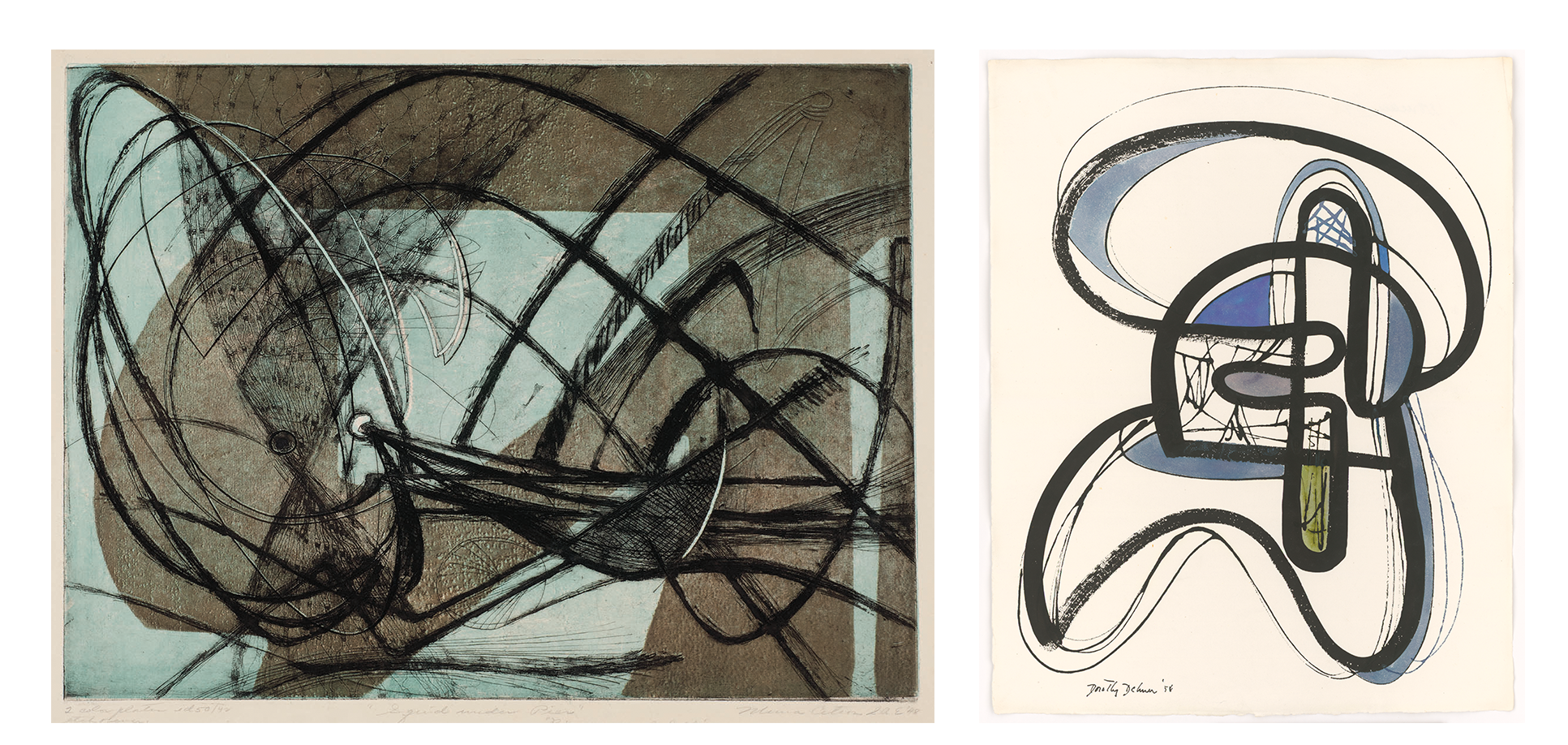
Images: Left: Minna Wright Citron, Squid Under Pier, 1948, color etching, soft-ground, and engraving on paper, edition 42/50, 15 x 17 7/8 inches, 2010 Collections Circle purchase, Asheville Art Museum. © Estate of Minna Citron/Licensed by VAGA at ARS, New York. Right: Dorothy Dehner, Woman #2, 1954, watercolor and ink on paper, 22 3/4 x 18”, courtesy of Dolan Maxwell.

The Asheville Art Museum is pleased to announce the upcoming exhibition American Art in the Atomic Age: 1940–1960, which explores the groundbreaking contributions of artists who worked at the experimental printmaking studio Atelier 17 in the wake of World War II. Co-curated by Marilyn Laufer and Tom Butler, American Art in the Atomic Age which draws from the holdings of Dolan/Maxwell, the Asheville Art Museum Collection, and private collections will be on view from November 10, 2023–April 29, 2024.

Atelier 17 operated in New York for fifteen years, between 1940 and 1955. The studio’s founder, Stanley William Hayter (1901–1988) established the workshop in Paris but relocated to New York just as the Nazi occupation of Paris began in 1940. Hayter’s new studio attracted European emigrants like André Masson, Yves Tanguy, and Joan Miró, as well as American artists like Dorothy Dehner, Judith Rothschild, and Karl Schrag, allowing for an exchange of artistic ideas and processes between European and American artists.

The Asheville Art Museum will present over 100 works that exemplify the cross-cultural exchange and profound social and political impact of Atelier 17 on American art. Prints made at Atelier 17—including those by Stanley William Hayter, Louise Nevelson, and Perle Fine—will be in conversation with works by European Surrealists who were working at the studio in the 1940s and 1950s. The exhibition will also feature a selection of domestic mid-century objects that exemplify how the ideas and aesthetics of post-war abstraction became a part of everyday life.

The New Salon: A Contemporary View
Mar 18 @ 11:00 am – 6:00 pm
Asheville Art Museum
Bender Gallery Artists

Featured in

Asheville Art Museum Exhibition

The New Salon: A Contemporary View

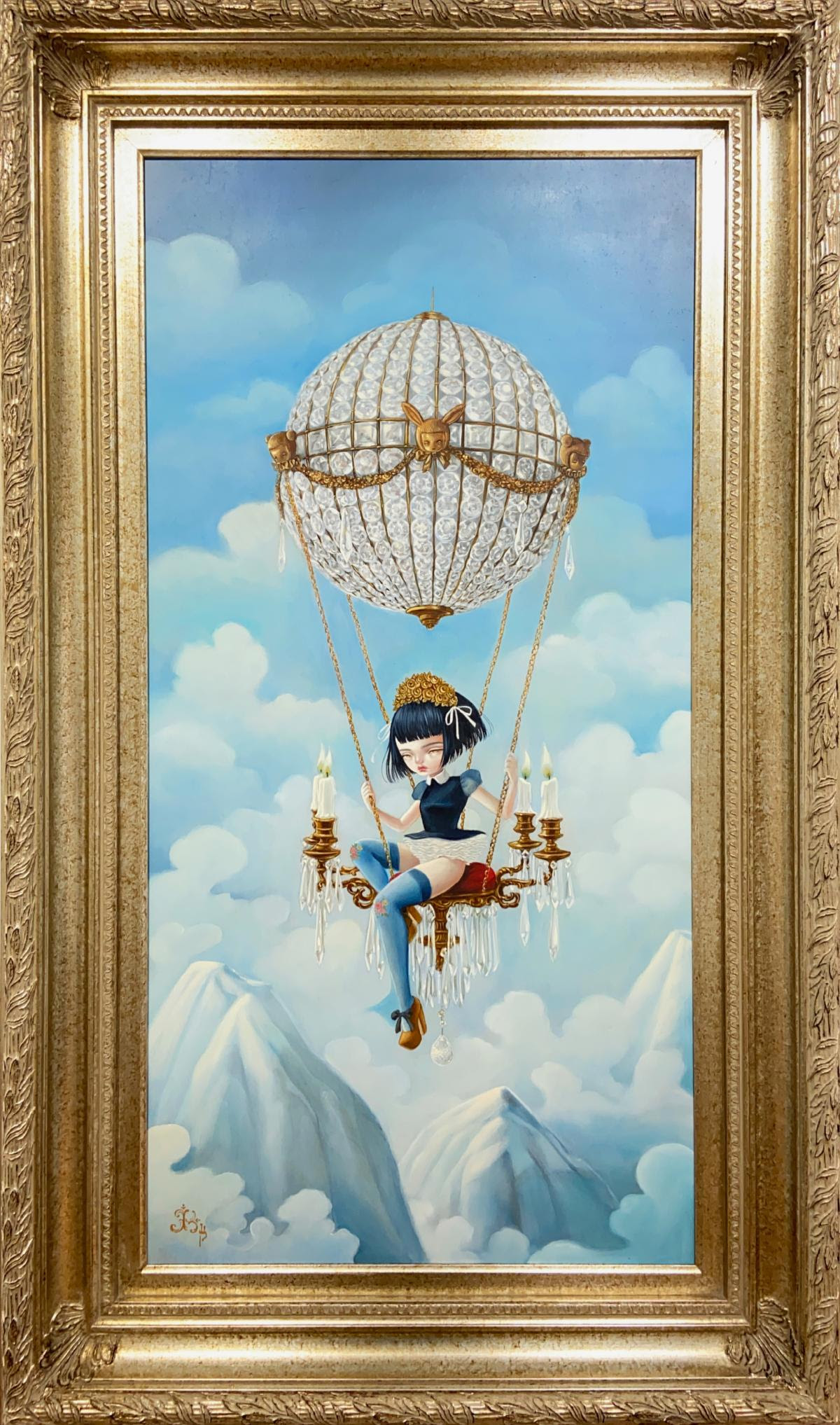
The Asheville Art Museum will be opening their exhibit, The New Salon: A Contemporary View, on March 8 and it will run until August 19, 2024. The New Salon offers a modern take on the prestigious tradition of the Parisian Salon with the diversity and innovation of today’s art world. Guest-curated by Gabriel Shaffer, the show will include works from Pop Surrealism, Outsider Art, Street Art, and Graffiti genres.


Bender Gallery has been collaborating with the Asheville Art Museum to loan four paintings from three of our artists. The artists are Laine Bachman, Kukula, and Yui Sakamoto. Be sure to check out this special exhibition in downtown Asheville.

Learn More

Kukula, Impossible Voyage, oil on board, 48 x 24 inches

Kukula (b. 1980, Israel)

Nataly Abramovitch, better known in the art world as, Kukula, paints imagined worlds filled with elaborately dressed women in fanciful settings. The artist does extensive research on the layouts of paintings from the Renaissance and Rococo periods. Kukula subverts these images by depicting women characters in place of traditionally male positions and settings. Her characters are powerful, commanding, and have an air of indifference.

Available Work

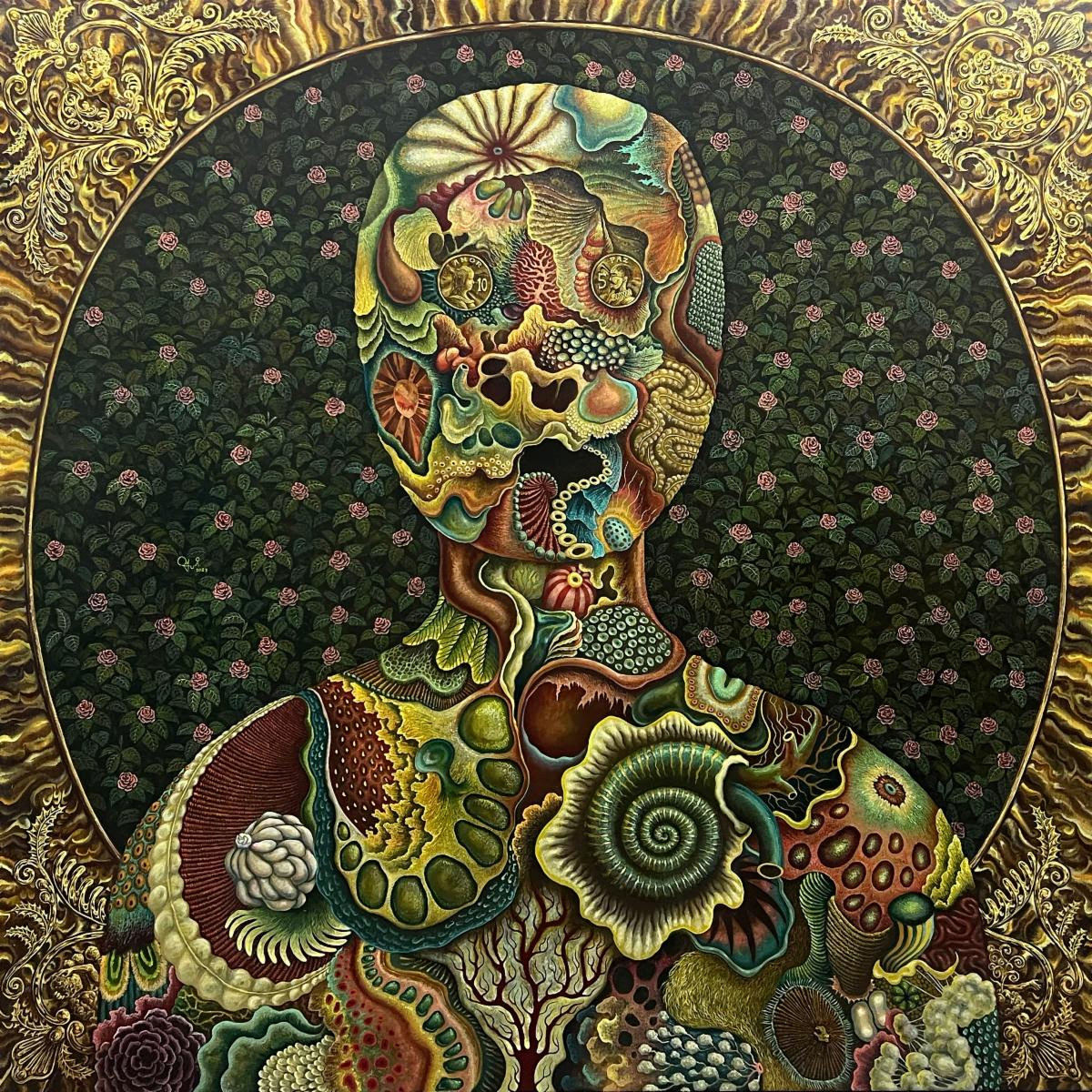
Yui Sakamoto, Self Portrait, oil on canvas, 63 x 63 inches

Yui Sakamoto (b. 1981, Japan)

Our surrealist artist, Yui Sakamoto, will have two paintings featured including My Soul and Self Portrait. Self Portrait is still available from his recent solo exhibition at Bender Gallery. Standing in front of Self Portrait, one is immersed in the dual-worlds of Sakamoto’s Japanese and Mexican cultures. There is a sense of calm reflected in the repeating rose pattern, mixed with the uneasy realization that the coral, fungi, and otherworldly forms are what makeup the figure.

Available Work

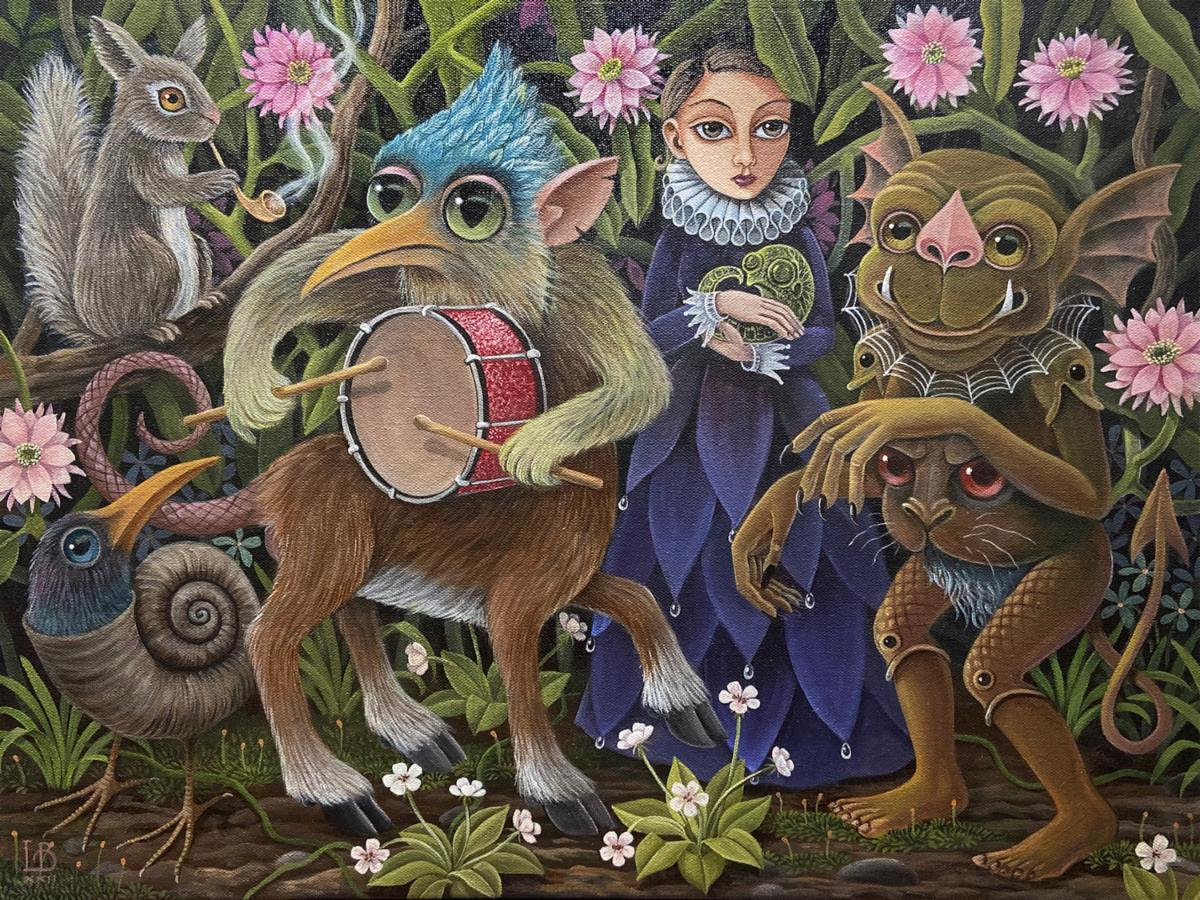
Laine Bachman, Night Bloomers, acrylic on canvas, 18 x 24 inches

Laine Bachman (b. 1974, USA)

Our prolific Magical Realism artist, Laine Bachman, makes a feature in the exhibition with her painting, Night Bloomers. She has been hard at work making 17 new pieces for her solo exhibition at the Canton Art Museum in Canton, Ohio. The Canton show opens on April 28 and continues through to July 28, 2024.

Available Work
Vera B. Williams / STORIES Eight Decades of Politics and Picture Making
Mar 18 @ 11:00 am – 5:00 pm
Black Mountain College Museum + Arts Center


Exhibition and Public Programming

Vera B. Williams, an award-winning author and illustrator of children’s books, started making pictures almost as soon as she could walk. She studied at Black Mountain College in a time where summer institutes were held with classes taught by John Cage and Merce Cunningham. Williams studied under the Bauhaus luminary Josef Albers and went on to make art for the rest of her life. At the time of her death, The New York Times wrote: “Her illustrations, known for bold colors and a style reminiscent of folk art, were praised by reviewers for their great tenderness and crackling vitality.” Despite numerous awards and recognition for her children’s books, much of her wider life and work remains unexplored. This retrospective will showcase the complete range of Williams’ life and work. It will highlight her time at Black Mountain College, her political activism, and her establishment, with Paul Williams, of an influential yet little-known artist community, in addition to her work as an author and illustrator.
Author and illustrator of 17 children’s books, including Caldecott medal winner, A Chair for My Mother, Vera B. Williams always had a passion for the arts. Williams grew up in the Bronx, NY, and in 1936, when she was nine years old, one of her paintings, called Yentas, opens a new window, was included in an exhibition at the Museum of Modern Art. While Williams is widely known for her children’s books today, this exhibition’s expansive scope highlights unexplored aspects of her artistic practice and eight decades of life. From groundbreaking, powerful covers for Liberation Magazine, to Peace calendar collaborations with writer activist Grace Paley, to scenic sketches for Julian Beck and Judith Malina’s Living Theater, to hundreds of late life “Aging and Illness” cartoons sketches and doodles, Vera never sat still.

Williams arrived at Black Mountain College in 1945. While there, she embraced all aspects of living, working, and learning in the intensely creative college community. She was at BMC during a particularly fertile period, which allowed her to study with faculty members Buckminster Fuller and Josef Albers, and to participate in the famed summer sessions with John Cage, Merce Cunningham, M.C. Richards, and Robert Rauschenberg. In 1948, she graduated with Josef Albers as her advisor and sculptor Richard Lippold as her outside examiner. Forever one of the College’s shining stars, Vera graduated from BMC with just six semesters of coursework, at only twenty-one years old. She continued to visit BMC for years afterward, staying deeply involved with the artistic community that BMC incubated.

Anticipating the eventual closure of BMC, Williams, alongside her husband Paul Williams and a group of influential former BMC figures, founded The Gate Hill Cooperative Artists community located 30 miles north of NYC on the outskirts of Stony Point, NY. The Gate Hill Cooperative, also known as The Land, became an outcropping of Black Mountain College’s experimental ethos. Students and faculty including John Cage, M.C. Richards, David Tudor, Karen Karnes, David Weinrib, Stan VanDerBeek, and Patsy Lynch Wood shaped Gate Hill as founding members of the community. Vera B. Williams raised her three children at Gate Hill while continuing to make work.

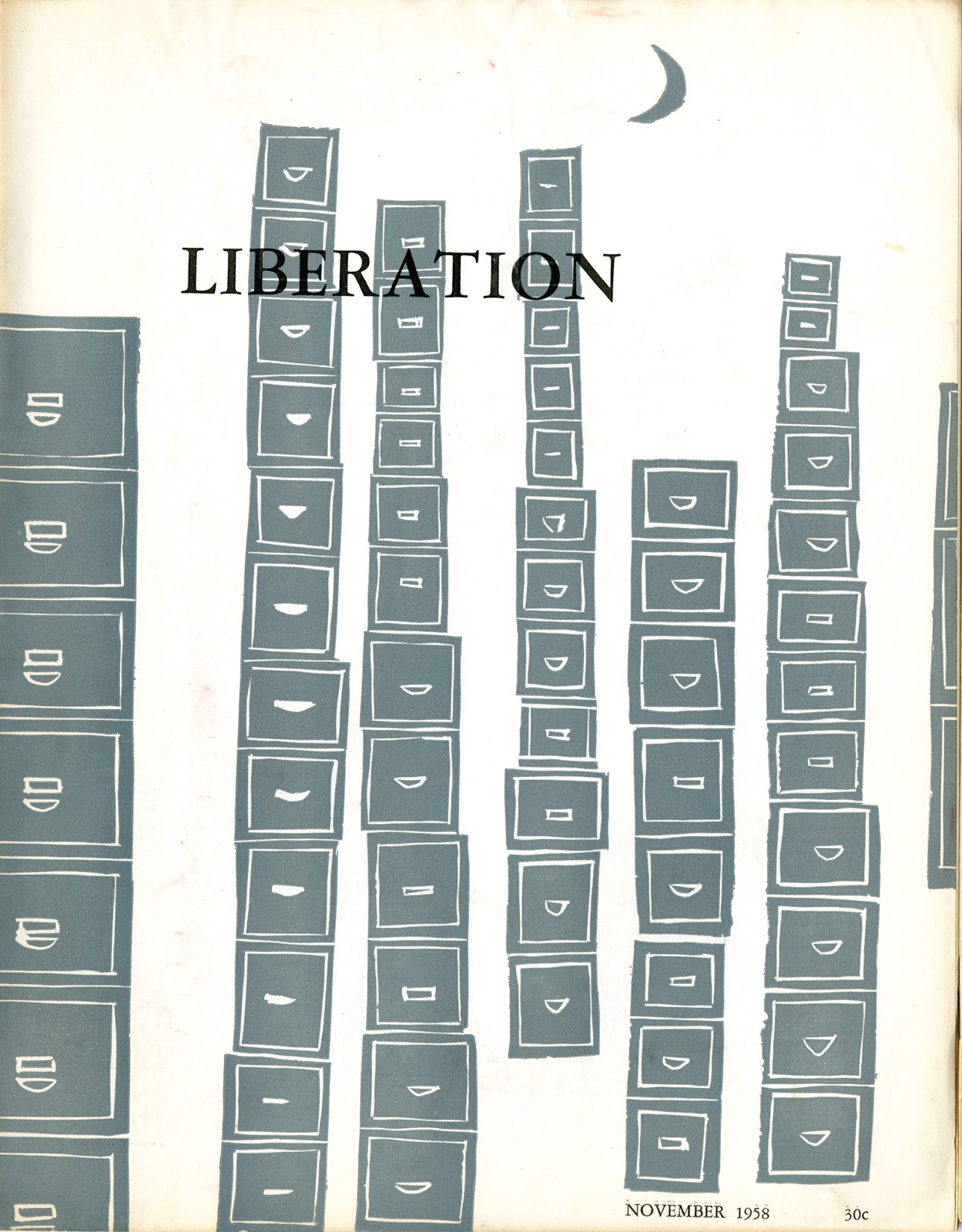
The early Gate Hill era represented an especially creative phase for the BMC group. For Williams, this period saw the creation of 76 covers for Liberation Magazine, a radical, groundbreaking publication. This exhibition will feature some of Williams’ most powerful Liberation covers including a design for the June 1963 edition, which contained the first full publication of MLK’s “Letter from Birmingham Jail.” Williams’ activism work continued throughout her life. As president of PEN’s Children Committee and member of The War Resisters league, she created a wide range of political and educational posters and journal covers. Williams protested the war in Vietnam and nuclear proliferation while supporting women’s causes and racial equality. In 1981, Williams was arrested and spent a month in a federal prison on charges stemming from her political activism.
In her late 40’s, Williams embarked in earnest on her career as a children’s book author and illustrator, a career which garnered the NY Public Library’s recognition of A Chair for My Mother as one of the greatest 100 children’s books of all time. Infinitely curious and always a wanderer at heart, Williams’ personal life was as expansive as her art. In addition to her prolific picture making, Williams started and helped run a Summerhill-based alternative school, canoed the Yukon, and lived alone on a houseboat in Vancouver Harbor. She helped to organize and attended dozens of political demonstrations throughout her adult life.

Her books won many awards including the Caldecott Medal Honor Book for A Chair for My Mother in 1983, the Boston Globe–Horn Book Award– Fiction category– for Scooter in 1994, the Jane Addams Honor for Amber Was Brave, Essie Was Smart in 2002, and the NSK Neustadt Prize for Children’s Literature in 2009. Her books reflected her values, emphasizing love, compassion, kindness, joy, strength, individuality, and courage.

Images:

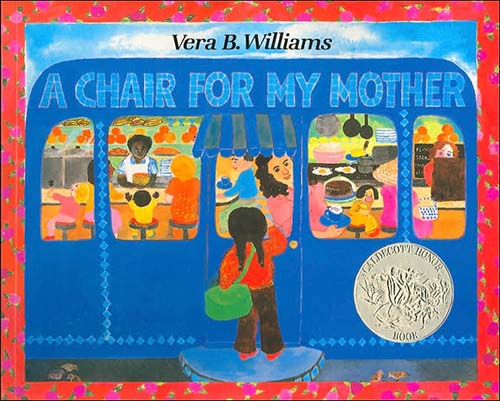
Cover of Vera B. Williams’ A Chair for My Mother, published in 1982.

Vera B. Williams, Cover for Liberation Magazine, November 1958.

Western North Carolina Glass: Selections from the Collection
Mar 18 @ 11:00 am – 6:00 pm
Asheville Art Museum

Western North Carolina is important in the history of American glass art. Several artists of the Studio Glass Movement came to the region, including its founder Harvey K. Littleton. Begun in 1962 in Wisconsin, it was a student of Littleton’s that first came to the area in 1965 and set up a glass studio at the Penland School of Craft in Penland, North Carolina. By 1967, Mark Peiser was the first glass artist resident at the school and taught many notable artists, like Jak Brewer in 1968 and Richard Ritter who came to study in 1971. By 1977, Littleton retired from teaching and moved to nearby Spruce Pine, North Carolina and set up a glass studio at his home.

Since that time, glass artists like Ken Carder, Rick and Valerie Beck, Shane Fero, and Yaffa Sikorsky and Jeff Todd—to name only a few—have flocked to the area to reside, collaborate, and teach, making it a significant place for experimentation and education in glass. The next generation of artists like Hayden Wilson and Alex Bernstein continue to create here. The Museum is dedicated to collecting American studio glass and within that umbrella, explores the work of Artists connected to Western North Carolina. Exhibitions, including Intersections of American Art, explore glass art in the context of American Art of the 20th and 21st centuries. A variety of techniques and a willingness to push boundaries of the medium can be seen in this selection of works from the Museum’s Collection.

22nd Asheville Fringe Festival: Film Shorts
Mar 18 @ 7:00 pm – 8:00 pm
Grail Moviehouse
Tuesday, March 19, 2024
Buncombe Extension Master GardenerSM Helpline Opens for 2024 Gardening Season
Mar 19 all-day
NC Cooperative Extension Master Gardener

Have your garden and plant questions answered. There are three ways to contact the Master Gardener Helpline:

Call 828-255-5522

Email questions and photos to [email protected] or stop by the extension office hours:

Mondays – 10:00 a.m. – 2:00 p.m.
Tuesdays – 11:00 a.m. – 1:00 p.m.
Thursdays – 11:00 a.m. – 2:00 p.m.

VOICES OF THE RIVER CONTEST
Mar 19 all-day
online

Calling All Young Artists, Poets, and Creative Souls

We invite you to get inspired by the French Broad River and her watershed. Show off your creativity by submitting 2D art, 3D art, and poetry that reflect your connection with nature. Your work serves as a reminder of the beauty of Western NC and the impact it can have on us all.

We are now accepting submissions for our 17th annual Voices of the River Art and Poetry Contest. Children in grades K-12 are invited to submit original creative works that reflect their personal experiences, observations, and/or feelings regarding the river.

Local environmental advocates, artists, and poets will review entries and select three winners from each category and age group. The winners will receive prizes from some generous local businesses. All submissions will be displayed at a special gallery event on May 11 from 10 AM – 1 PM at Black Wall Street AVL.

Growing Minds Farm to School Mini-Grant
Mar 19 @ 6:30 am
online
ASAP’s Growing Minds mini-grants help early childhood education (ECE) centers and K-12 schools throughout the 23 westernmost counties of North Carolina provide children positive experiences with healthy local foods through these components of farm to school: school gardens, farm field trips and farmer classroom visits, and local foods served in meals, snacks, and/or taste tests.

Mini-grant applications are available three times during the 2023-2024 school year. You may apply one time during this cycle. Mini-grants must be used within a year after receiving the funding. 

Applications due by:

  • November 30, 2023
  • January 30, 2024
  • March 30, 2024

If you have questions about your eligibility to apply for funding, please email us at [email protected] before submitting your application. We are unable to provide mini-grants to schools located outside of our 23-county service area or to folks who have received a grant from us within the past year. Learn more and apply here!

Nature’s Blueprints: Biomimicry in Art and Design
Mar 19 @ 8:00 am – 7:00 pm
NC Arboretum

Baker Exhibit Center

In an age of complex environmental challenges, why not look to the ingenuity of nature for solutions? The forms, patterns, and processes found in the natural world—refined by 3.8 billion years of evolution—can inspire our design of everything from clothing to skyscrapers. This approach to innovation, called biomimicry, is becoming increasingly popular.

Nature’s Blueprints is supported in part by The North Carolina Arboretum Society, The Laurel of Asheville, RomanticAsheville.com Travel Guide, and Smoky Mountain Living Magazine.

Connie Bostic To Be An Artist Means To Never Avert Your Eyes
Mar 19 @ 9:00 am – 6:00 pm
Owen Hall at UNC Asheville.

“Connie Bostic is one of North Carolina’s most prolific, most important, and most enduring artists,” said Arnold Wengrow, professor emeritus of drama. “Since 1970 she has produced over 600 paintings, drawings, and mixed-media works of great originality.”

Wengrow, alongside Carrie Tomberlin, senior lecturer of art and art history, curated “To Be An Artist Means to Never Avert Your Eyes” for the S. Tucker Cooke gallery in Owen Hall at UNC Asheville.

The exhibit will run from February 23 to March 29, with panel discussion on Connie’s work on February 23 at 5 p.m., followed by an opening reception from 6-8 p.m.

The panel, moderated by Wengrow, includes Margaret Curtis, renowned painter and recipient of the 2021-2016 Joan Mitchell Foundation Fellowship; Alice Sebrell, photographer and director of preservation at Black Mountain College Museum + Arts Center; and Kyle Sherard ’10, former visual arts columnist for the Mountain Xpress and assistant district attorney of Buncombe County.

Bostic grew up in Spindale, North Carolina but relocated to Fairview, just outside of Asheville, in 1970. She passed away early in the morning of January 14, 2024 in her beloved Fairview home, “Mayhem Manor.”

“Much of her work is autobiographical: what it means to grow up — specifically to grow up female — in a small town in North Carolina,” Wengrow wrote about her, “Her two most compelling series, “The Bostic Girls” and the 240-panel “In the Chicken Yard,” capture girlhood in rural Spindale, North Carolina. In both series, full-length figures emerge from a ground of indeterminate space. They are fragile, yet firmly planted. This contradiction—fragility and sturdiness—gives these works tension.”

She had always had a love of art and drawing, and began pursuing it seriously when she enrolled at UNC Asheville, graduating with a bachelor’s in studio art in 1989 before receiving a masters in painting from Western Carolina University in 1990, according to Wengrow’s biography of the artist.

Bostic has been described as the “grandmother of the Asheville art scene,” according to her obituary. In the mid-to-late eighties she established her first studio off Biltmore Avenue, helped administer WCU’s World Gallery, and brought the first contemporary art gallery to Asheville when she established Zone One Contemporary. She worked with the Black Mountain College Museum + Arts Center for over 30 years. She would later establish a studio in Fairview where she taught students.

Bostic committed herself to building community and frequently tackled sociopolitical issues, such a racial injustice, poverty and gun violence in her works.

“I avoid confrontation whenever possible, but I do tend to speak my mind when I think it matters. As for the paintings, they just come. Here’s a quote that I love—and I don’t know who said it—“To be an artist is never to avert your eyes.” I believe that,” Bostic said in an interview with Robert Godfrey. “I tend to think of painting as a form of communication, a way of expressing things that are important to me.”

Indoor Tropical Bonsai Display
Mar 19 @ 9:00 am – 5:00 pm
NC Arboretum

What is Bonsai?

Bonsai is a challenging and rewarding horticultural activity, in which ordinary plants are grown in an extraordinary way. Through rigorously applied cultivation techniques, trees, shrubs, vines and even herbaceous plants are kept in a miniaturized state, developed into artistic shapes and then displayed in special containers.

What makes the Arboretum’s bonsai endeavor unique among all other public collections in the United States? Regional Interpretation. Visitors will find the Arboretum’s bonsai collection of more than 100 specimens carefully cultivated with a Southern Appalachian accent. The collection draws inspiration from the traditional roots of bonsai, but takes the form of a contemporary, Southern Appalachian influenced American garden. Plantings in the landscape include species and cultivars of American, European and Asian origin.


The Bonsai Exhibition Garden

Established in October 2005, The North Carolina Arboretum’s Bonsai Exhibition Garden is a world renowned garden that displays up to 50 bonsai specimens at a time. Represented are traditional Asian bonsai subjects such as Japanese maple and Chinese elm, tropical plants such as willow-leaf fig and bougainvillea, and American species such as bald cypress and limber pine. Of particular importance are the plants native to the Blue Ridge region, such as American hornbeam and eastern white pine, which enable the Arboretum to bring the thousand-year tradition of bonsai home to the mountains of Western North Carolina. Interpretive signage throughout the garden conveys information about the art and history of bonsai, and the Arboretum’s own creative approach to it.


Outdoor Bonsai Exhibition Garden

  • Bonsai on Display Mid May – November; 9 a.m. – 5 p.m. daily
  • Garden Open Year Round
  • Parking Fees
    • Personal/Standard Vehicle (up to 20′ long): $20
    • Large vehicles (21′-29′ long): $60
    • Busses and Oversize Vehicles (30′ long+): $125
    • Members: Free

    Apart from the parking fee, there is no other admission charge to enter the Arboretum or our facilities, except in the case of advertised ticketed events.

Art Exhibition: Hammer and Hope
Mar 19 @ 10:00 am – 6:00 pm
Center for Craft

Historians estimate that skilled Black artisans outnumbered their white counterparts in the antebellum South by a margin of five to one. However, despite their presence and prevalence in all corners of the pre-industrial trade and craft fields, the stories of these skilled workers go largely unacknowledged.

Borrowing its title from a Black culture and politics magazine of the same name, Hammer and Hope celebrates the life and labor of Black chairmakers in early America. Featuring the work of two contemporary furniture makers – Robell Awake and Charlie Ryland – the pieces in this exhibition are based on the artists’ research into ladderback chairs created by the Poynors, a multigenerational family of free and enslaved craftspeople working in central Tennessee between the early nineteenth and early twentieth centuries.

Through the objects featured in Hammer and Hope, Awake and Ryland explore, reinterpret, and reimagine what the field of furniture-making today would look like had the history and legacy of the Poynors – and countless others that have been subject to a similar pattern of erasure – been celebrated rather than hidden. Hammer and Hope represents Awake and Ryland’s attempts, in their own words,  “at fighting erasure by making objects that engage with these long-suppressed stories.”

Robell Awake and Charlie Ryland are recipients of the Center for Craft’s 2022 Craft Research Fund Artist Fellowship. This substantial mid-career grant is awarded to two artists to support research projects that advance, expand, and support the creation of new research and knowledge through craft practice.

Preservers, Innovators, and Rescuers of Culture in Chiapas
Mar 19 @ 10:00 am – 6:00 pm
Center for Craft

Preservers, Innovators, and Rescuers of Culture in Chiapas features eleven textiles by acclaimed Indigenous artisanas  (artists) from Chiapas, Mexico commissioned by US-based fiber artists and activist Aram Han Sifuentes. As part of their 2022 Craft Research Fund Artist Fellowship, Han Sifuentes traveled to Chiapas to understand the function of garments and textiles within the social and cultural context of the area and to learn the traditional practice of backstrap weaving. Through the works on view, combined with a series of interviews Han Sifuentes conducted during her research, visitors learn about the artisanas and their role as preservers, rescuers, and innovators of culture and as protectors of Mayan ancestral knowledge. Together, these works present an approach to connecting and learning about culture through craft practices

Han Sifuentes is interested in backstrap weaving because it is one of the oldest forms used across cultures. The vibrant hues and elaborate designs of each textile express the artisanas identities and medium to tell their stories. To understand how these values manifested in textiles made in Chiapas, Han Sifuentes invited the artisanas to create whatever weaving they desired over the course of three months.  This is unique because most textiles in the area are created to meet tourist-driven and marketplace demands. Incorporating traditional backstrap weaving and natural dye techniques, some artisans created textiles to rescue or reintroduce weaving practices that are almost or completely lost in their communities, while others were created through material and conceptual experimentation. This range of approaches reflects how artistanas are constantly innovating while at the same time honoring and keeping to tradition.

Preservers, Innovators, and Rescuers of Culture in Chiapas is on view from November 17, 2023 to July 13, 2024.

Aram Han Sifuentes is a recipient of the Center for Craft’s 2022 Craft Research Fund Artist Fellowship. This substantial mid-career grant is awarded to two artists to support research projects that advance, expand, and support the creation of new research and knowledge through craft practice.

The featured artisanas include: Juana Victoria Hernandez Gomez from San Juan Cancuc, Maria Josefina Gómez Sanchez and Maria de Jesus Gómez Sanchez from Oxchujk (Oxchuc), Marcela Gómez Diaz and Cecilia Gómez Diaz from San Andrés Larráinzar, Rosa Margarita Enríquez Bolóm from Huixtán, Cristina García Pérez from Chalchihuitán, Susana Maria Gómez Gonzalez, Maria Gonzalez Guillén, and Anastacia Juana Gómez Gonzalez from Zinacantán, Angelica Leticia Gómez Santiz from Pantelhó, and Susana Guadalupe Méndez Santiz from Aldama


Sand Hill Nursery Workday
Mar 19 @ 10:00 am – 12:00 pm
Sand Hill Nursery at the Buncombe County Sports Park

Join us for weekly workdays in the Sand Hill native tree nursery. Tasks vary and often include repotting, weeding, mulching, and other special projects to improve infrastructure and function.

Need to know

Please come dressed in work clothes with close toed shoes. Bring water and sun protection. All other gear and supplies are provided.

Joseph Fiore: Black Mountain College Paintings
Mar 19 @ 11:00 am – 5:00 pm
Black Mountain College Museum + Arts Center

 11am – 5pm Tuesday through Saturday

Born in Cleveland, Ohio, Joseph Fiore (1925-2008) first enrolled at Black Mountain College for the Summer Session of 1946, the summer that Josef Albers invited Jacob Lawrence to teach painting at BMC. Over the next three years, Fiore also studied with Ilya Bolotowsky, Willem de Kooning, and Jean Varda. In 1949, after Josef and Anni Albers’ departure, Joe was invited to join the faculty, and he taught painting and drawing until 1956 when the college leaders decided to close.

After BMC closed, Joe and his wife Mary, whom he met and married at BMC, moved to New York City. There he became involved with the 10th Street art scene of the late 1950s and 1960s, a group of galleries that exhibited the work of young artists on the rise. Eventually he resumed his teaching career at the Philadelphia College of Art, Maryland Institute College of Art, and the National Academy.

In May of 2001, Joseph Fiore was awarded the Andrew Carnegie Prize at the National Academy of Design in New York. The Carnegie Prize is awarded “for painting” at the National Academy’s Members’ Show.

This exhibition consists of paintings in our collection donated by the artist and by The Falcon Foundation. All of the paintings were made at Black Mountain College and show Fiore’s distinctive use of color and his ability to work comfortably in the spaces between abstraction and representation.

Curated by Alice Sebrell, Director of Preservation

Vera B. Williams / STORIES Eight Decades of Politics and Picture Making
Mar 19 @ 11:00 am – 5:00 pm
Black Mountain College Museum + Arts Center


Exhibition and Public Programming

Vera B. Williams, an award-winning author and illustrator of children’s books, started making pictures almost as soon as she could walk. She studied at Black Mountain College in a time where summer institutes were held with classes taught by John Cage and Merce Cunningham. Williams studied under the Bauhaus luminary Josef Albers and went on to make art for the rest of her life. At the time of her death, The New York Times wrote: “Her illustrations, known for bold colors and a style reminiscent of folk art, were praised by reviewers for their great tenderness and crackling vitality.” Despite numerous awards and recognition for her children’s books, much of her wider life and work remains unexplored. This retrospective will showcase the complete range of Williams’ life and work. It will highlight her time at Black Mountain College, her political activism, and her establishment, with Paul Williams, of an influential yet little-known artist community, in addition to her work as an author and illustrator.

Author and illustrator of 17 children’s books, including Caldecott medal winner, A Chair for My Mother, Vera B. Williams always had a passion for the arts. Williams grew up in the Bronx, NY, and in 1936, when she was nine years old, one of her paintings, called Yentas, opens a new window, was included in an exhibition at the Museum of Modern Art. While Williams is widely known for her children’s books today, this exhibition’s expansive scope highlights unexplored aspects of her artistic practice and eight decades of life. From groundbreaking, powerful covers for Liberation Magazine, to Peace calendar collaborations with writer activist Grace Paley, to scenic sketches for Julian Beck and Judith Malina’s Living Theater, to hundreds of late life “Aging and Illness” cartoons sketches and doodles, Vera never sat still.

Williams arrived at Black Mountain College in 1945. While there, she embraced all aspects of living, working, and learning in the intensely creative college community. She was at BMC during a particularly fertile period, which allowed her to study with faculty members Buckminster Fuller and Josef Albers, and to participate in the famed summer sessions with John Cage, Merce Cunningham, M.C. Richards, and Robert Rauschenberg. In 1948, she graduated with Josef Albers as her advisor and sculptor Richard Lippold as her outside examiner. Forever one of the College’s shining stars, Vera graduated from BMC with just six semesters of coursework, at only twenty-one years old. She continued to visit BMC for years afterward, staying deeply involved with the artistic community that BMC incubated.

Anticipating the eventual closure of BMC, Williams, alongside her husband Paul Williams and a group of influential former BMC figures, founded The Gate Hill Cooperative Artists community located 30 miles north of NYC on the outskirts of Stony Point, NY. The Gate Hill Cooperative, also known as The Land, became an outcropping of Black Mountain College’s experimental ethos. Students and faculty including John Cage, M.C. Richards, David Tudor, Karen Karnes, David Weinrib, Stan VanDerBeek, and Patsy Lynch Wood shaped Gate Hill as founding members of the community. Vera B. Williams raised her three children at Gate Hill while continuing to make work.

The early Gate Hill era represented an especially creative phase for the BMC group. For Williams, this period saw the creation of 76 covers for Liberation Magazine, a radical, groundbreaking publication. This exhibition will feature some of Williams’ most powerful Liberation covers including a design for the June 1963 edition, which contained the first full publication of MLK’s “Letter from Birmingham Jail.” Williams’ activism work continued throughout her life. As president of PEN’s Children Committee and member of The War Resisters league, she created a wide range of political and educational posters and journal covers. Williams protested the war in Vietnam and nuclear proliferation while supporting women’s causes and racial equality. In 1981, Williams was arrested and spent a month in a federal prison on charges stemming from her political activism.

In her late 40’s, Williams embarked in earnest on her career as a children’s book author and illustrator, a career which garnered the NY Public Library’s recognition of A Chair for My Mother as one of the greatest 100 children’s books of all time. Infinitely curious and always a wanderer at heart, Williams’ personal life was as expansive as her art. In addition to her prolific picture making, Williams started and helped run a Summerhill-based alternative school, canoed the Yukon, and lived alone on a houseboat in Vancouver Harbor. She helped to organize and attended dozens of political demonstrations throughout her adult life.

Her books won many awards including the Caldecott Medal Honor Book for A Chair for My Mother in 1983, the Boston Globe–Horn Book Award– Fiction category– for Scooter in 1994, the Jane Addams Honor for Amber Was Brave, Essie Was Smart in 2002, and the NSK Neustadt Prize for Children’s Literature in 2009. Her books reflected her values, emphasizing love, compassion, kindness, joy, strength, individuality, and courage.

Images:

Cover of Vera B. Williams’ A Chair for My Mother, published in 1982.

Vera B. Williams, Cover for Liberation Magazine, November 1958.

Restoring And Planting American Chestnuts Tree Planting Workshop
Mar 19 @ 4:00 pm – 5:30 pm
West Asheville Edible Park

Attend this FREE Workshop

Restoring And Planting American Chestnuts

with

Bountiful Cities Community Garden Network and

The American Chestnut Foundation

Curious about American chestnuts?
Come learn how to plant and care for American chestnut seedlings as we add to a small demonstration orchard in Asheville’s city parks!
You will hear about The American Chestnut Foundation’s current strategies on how to restore this once prolific tree.
No supplies needed, just bring yourself and any questions you may have.
This workshop will be led by Jamie Van Clief, Southern Regional Coordinator with The American Chestnut Foundation.
Dark City Poet’s Society
Mar 19 @ 6:00 pm – 7:30 pm
Black Mountain Library

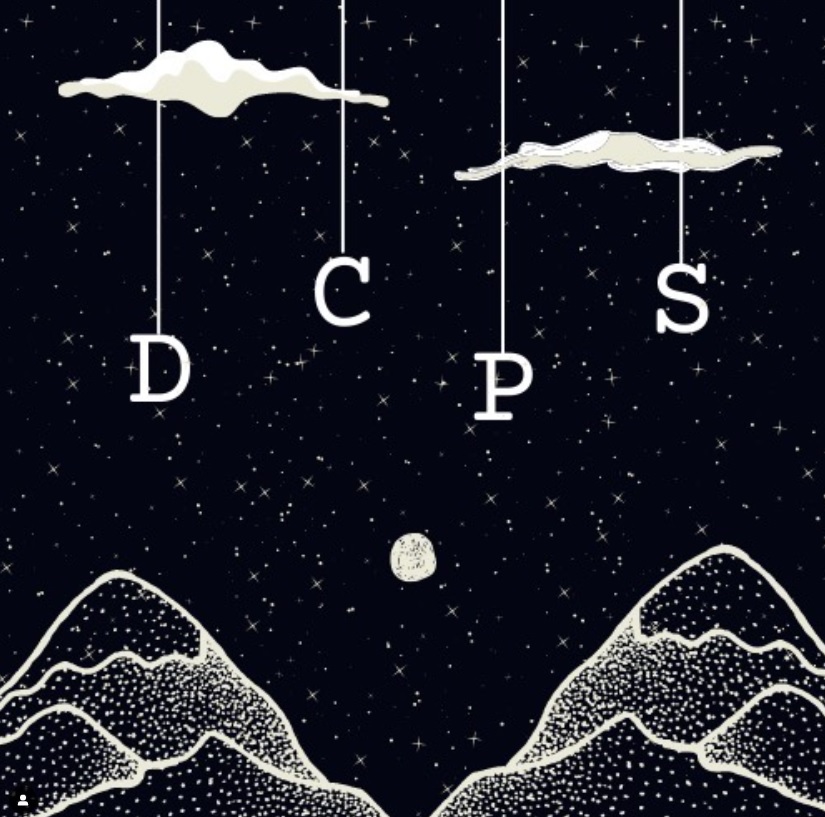
Great news for poets and poetry lovers: Dark City Poet’s Society is returning to the Black Mountain Library. DCPS is a completely free poetry group that is open to poets of all ages and experience levels. Join us at the Black Mountain Library from 6-7:30 p.m. on the first Tuesday of every month for our (respectful) critique group. DCPS will meet at BAD Craft from 6-7 p.m. on the third Tuesday for our monthly open mic Poetry Night. Find out more on Instagram @darkcitypoetssociety or contact the Black Mountain Library.

Wednesday, March 20, 2024
LEAF SUMMER CAMPS registration open
Mar 20 – Mar 19 all-day
LEAF Global Arts

LEAF Schools & Streets invites your students to join us at LEAF Global Arts for summer camps, which run June 17-August 23 at 19 Eagle Street downtown. Registration is open!

Most camps are for rising first-graders through rising sixth-graders, with the addition of the ‘Making a Music Video’ and ‘Songwriting and Recording’ camps for middleschoolers and highschoolers.

SUMMER CAMPS

• June 17-21 – World Dance

• June 24-28 – West African Culture: Drumming, Dance, Clothing & Food

• July 8-12 – Blues

• July 15-19 – LEAF International Haiti

• July 22-25 – Making a Music Video: Songwriting, Recording, and Film-Making*

• July 29-August 2 – Stop Motion Animation

• August 12-15 – Songwriting and Recording*

• August 19-23 – World-Changing Visual Art

*middle and high school, all others are rising 1st-6th

Learn + Grow ADULT + CONTINUING EDUCATION PROGRAMS
Mar 20 all-day
NC Arboretum

Plants Connect Us in Place

Throughout Southern Appalachia this month, the first spring ephemerals — floral harbingers of the colorful season to come — begin their journey toward the light. Trillium, Trout Lily, Bloodroot, Dicentra: All appear the most delicate of flowers, yet they are mighty enough to push through heavy layers of damp leaf duff to reach the sun’s rays. Usher in the brightening days like these first flowers with courses that extend the Arboretum’s mission to connect people with plants and learn more about what roots us in our special place in nature.

Eco Gardening: Principles in Practice | In Person Version – ONSITE, Three Sessions: Wednesdays, March 6, 20 & April 3, 10 a.m. – 1 p.m. Or  Asynchronous Version – Open March 6 through May 31.


Emergence: Spring Wildflower Walk | ONSITE | Saturday, March 9, 1 – 3 p.m. or Saturday, March 16, 1 – 3 p.m.


Lifelong Gardening | ONSITE | Wednesday, March 13, 10 a.m. – 2 p.m.


Free! Lunch & Learn: Previewing the Cullowhee Native Plants Conference | ONSITE | Thursday, March 14, 11:30 a.m. – 1 p.m.


Native Plants for the Vegetable Garden | ONSITE | Thursday, March 14, 1:30 – 3:30 p.m.


Botany Basics | In Person Version – ONSITE, Six Sessions: Tuesdays & Thursdays, March 19 – April 4, 1 – 3 p.m. Or Asynchronous Version – Open April 4 through June 30.


Soil Health Check Up | ONSITE | Wednesday, March 27, 1:30 – 4 p.m.


Free! Arboretum Reads Nature’s Best Hope by Doug Tallamy | ONSITE | Two Sessions: Thursday, April 4 & 18, 3:30 – 5 p.m.


Registration is also open for our signature plant-based core classes in April. Join us for Spring Native Flora ID (field and blended field/online sections), Spring Native Tree ID (online, field and intensive versions). Plan ahead in April to learn about exotics at the Orchid Festival, April 12 – 14, held at the Arboretum, then return to learn about our native azaleas at the Native Azalea Day, April 27. 

small group tour Chihuly’s Artwork
Mar 20 all-day
Tour in Asheville Area
Dale Chihuly

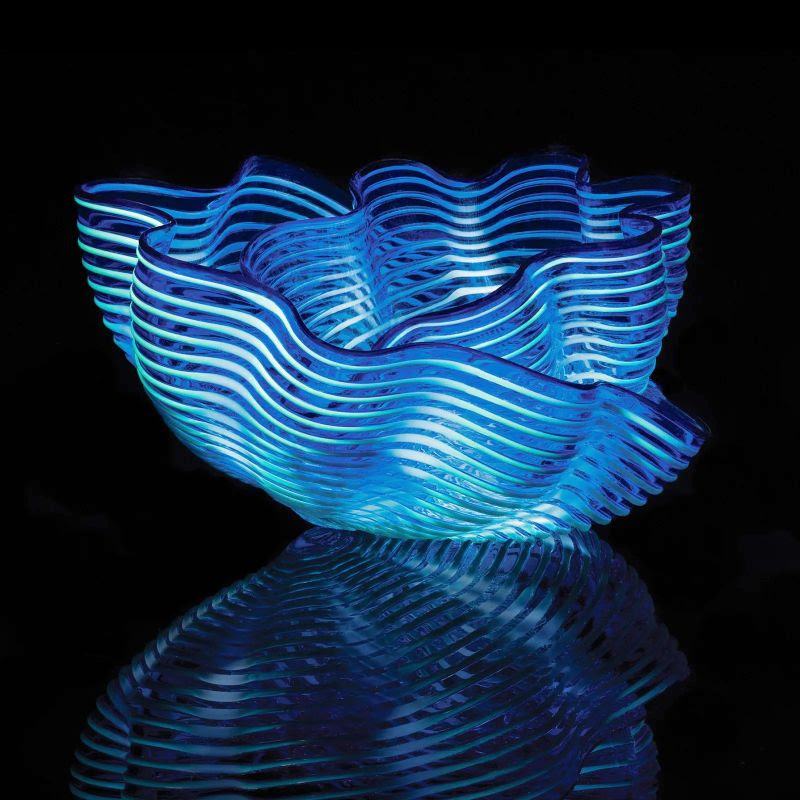
Capri Blue Seaform

Handblown glass

7 x 10 x 8 inches

last available!

Join Momentum Gallery in celebrating the artist’s return to Asheville with an encore exhibition at the Biltmore Estate opening on March 25th.

The gallery is pleased to share a selection of Chihuly‘s available editioned artworks.  Known for his dynamic and exuberant marriage of color and form, these highly collectible sculptures and two-dimensional, hand-embellished Fine Art Prints will bring a vibrancy to any space within your home or office.  Special pricing is available for Momentum collectors.

Experience an intimate group tour led by Chihuly experts!

Momentum Gallery will be offering unique and personalized small group tour packages of this impressive exhibition. Hosted by Paula Jacobson, who worked closely with Chihuly and his team for over twenty-five years, and Mickey Trittis, formerly the Fine Art Specialist at Chihuly Gardens and Glass, these tours will provide a rich and intimate experience of Chihuly’s work and vision, followed by a reception at Momentum Gallery and many other highlights.  If interested in this incredible opportunity to dive deep into the world of glass, please call us at (828) 505-8550 or send us an email to RSVP at [email protected].
Curatorial services are also available.

Selected pairings of Chihuly‘s editioned artwork make a visual statement and create a impactful presentation.  Below are a few examples. We would be happy to provide additional design suggestions.

VOICES OF THE RIVER CONTEST
Mar 20 all-day
online

Calling All Young Artists, Poets, and Creative Souls

We invite you to get inspired by the French Broad River and her watershed. Show off your creativity by submitting 2D art, 3D art, and poetry that reflect your connection with nature. Your work serves as a reminder of the beauty of Western NC and the impact it can have on us all.

We are now accepting submissions for our 17th annual Voices of the River Art and Poetry Contest. Children in grades K-12 are invited to submit original creative works that reflect their personal experiences, observations, and/or feelings regarding the river.

Local environmental advocates, artists, and poets will review entries and select three winners from each category and age group. The winners will receive prizes from some generous local businesses. All submissions will be displayed at a special gallery event on May 11 from 10 AM – 1 PM at Black Wall Street AVL.

Volunteer with United Way at the Mosaic Realty Art Walk
Mar 20 all-day
Asheville Art Museum
Before you begin thinking about volunteering, ask yourself – Am I well enough to volunteer?


On Thursday, May 2, from 5-9 p.m., Mosaic Realty will come together with 14 downtown Asheville galleries for the second annual Mosaic Art Walk and Benefit. This free community fundraiser, open to the public, will be hosted by Mosaic Realty, with each gallery highlighting a different local nonprofit.

United Way of Asheville and Buncombe County is seeking volunteers to assist them at their table which will be stationed at the Asheville Art Museum for this event.

Volunteer Responsibilities:

  • Assist with answering questions and guiding participants to where they need to go
  • Hand out flyers on how to become involved in the raffle
  • Help watch over the car that will be raffled off
  • Aid in keeping spaces free of plates and drinks left unattended

Requirements:

  • Volunteers must be 21 years old or older
  • Volunteers will be stationed inside and outside of the museum
  • All volunteers will need to sign a UWABC waiver when they check in

Skills Required: 

  • Positive and compassionate customer service skills
  • Excellent verbal and non-verbal communication skills
  • Ability to remain standing for long periods

Attire:

  • Black pants and a black shirt
  • Comfortable, close-toed shoes

Location:

  • Asheville Art Museum, 2 S Pack Square, Asheville, NC 28801
Growing Minds Farm to School Mini-Grant
Mar 20 @ 6:30 am
online
ASAP’s Growing Minds mini-grants help early childhood education (ECE) centers and K-12 schools throughout the 23 westernmost counties of North Carolina provide children positive experiences with healthy local foods through these components of farm to school: school gardens, farm field trips and farmer classroom visits, and local foods served in meals, snacks, and/or taste tests.

Mini-grant applications are available three times during the 2023-2024 school year. You may apply one time during this cycle. Mini-grants must be used within a year after receiving the funding. 

Applications due by:

  • November 30, 2023
  • January 30, 2024
  • March 30, 2024

If you have questions about your eligibility to apply for funding, please email us at [email protected] before submitting your application. We are unable to provide mini-grants to schools located outside of our 23-county service area or to folks who have received a grant from us within the past year. Learn more and apply here!

Nature’s Blueprints: Biomimicry in Art and Design
Mar 20 @ 8:00 am – 7:00 pm
NC Arboretum

Baker Exhibit Center

In an age of complex environmental challenges, why not look to the ingenuity of nature for solutions? The forms, patterns, and processes found in the natural world—refined by 3.8 billion years of evolution—can inspire our design of everything from clothing to skyscrapers. This approach to innovation, called biomimicry, is becoming increasingly popular.

Nature’s Blueprints is supported in part by The North Carolina Arboretum Society, The Laurel of Asheville, RomanticAsheville.com Travel Guide, and Smoky Mountain Living Magazine.