Upcoming events and things to do in Asheville, NC. Below is a list of events for festivals, concerts, art exhibitions, group meetups and more.

Interested in adding an event to our calendar? Please click the green “Post Your Event” button below.

Wednesday, February 21, 2024
Growing Minds Farm to School Mini-Grant
Feb 21 @ 6:30 am
online
ASAP’s Growing Minds mini-grants help early childhood education (ECE) centers and K-12 schools throughout the 23 westernmost counties of North Carolina provide children positive experiences with healthy local foods through these components of farm to school: school gardens, farm field trips and farmer classroom visits, and local foods served in meals, snacks, and/or taste tests.

Mini-grant applications are available three times during the 2023-2024 school year. You may apply one time during this cycle. Mini-grants must be used within a year after receiving the funding. 

Applications due by:

  • November 30, 2023
  • January 30, 2024
  • March 30, 2024

If you have questions about your eligibility to apply for funding, please email us at [email protected] before submitting your application. We are unable to provide mini-grants to schools located outside of our 23-county service area or to folks who have received a grant from us within the past year. Learn more and apply here!

Vera B. Williams / STORIES Eight Decades of Politics and Picture Making
Feb 21 @ 11:00 am – 5:00 pm
Black Mountain College Museum + Arts Center


Exhibition and Public Programming

Vera B. Williams, an award-winning author and illustrator of children’s books, started making pictures almost as soon as she could walk. She studied at Black Mountain College in a time where summer institutes were held with classes taught by John Cage and Merce Cunningham. Williams studied under the Bauhaus luminary Josef Albers and went on to make art for the rest of her life. At the time of her death, The New York Times wrote: “Her illustrations, known for bold colors and a style reminiscent of folk art, were praised by reviewers for their great tenderness and crackling vitality.” Despite numerous awards and recognition for her children’s books, much of her wider life and work remains unexplored. This retrospective will showcase the complete range of Williams’ life and work. It will highlight her time at Black Mountain College, her political activism, and her establishment, with Paul Williams, of an influential yet little-known artist community, in addition to her work as an author and illustrator.
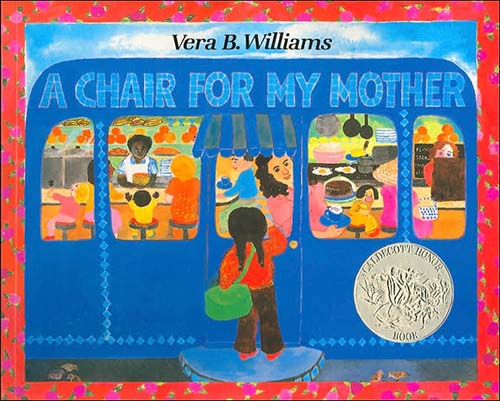
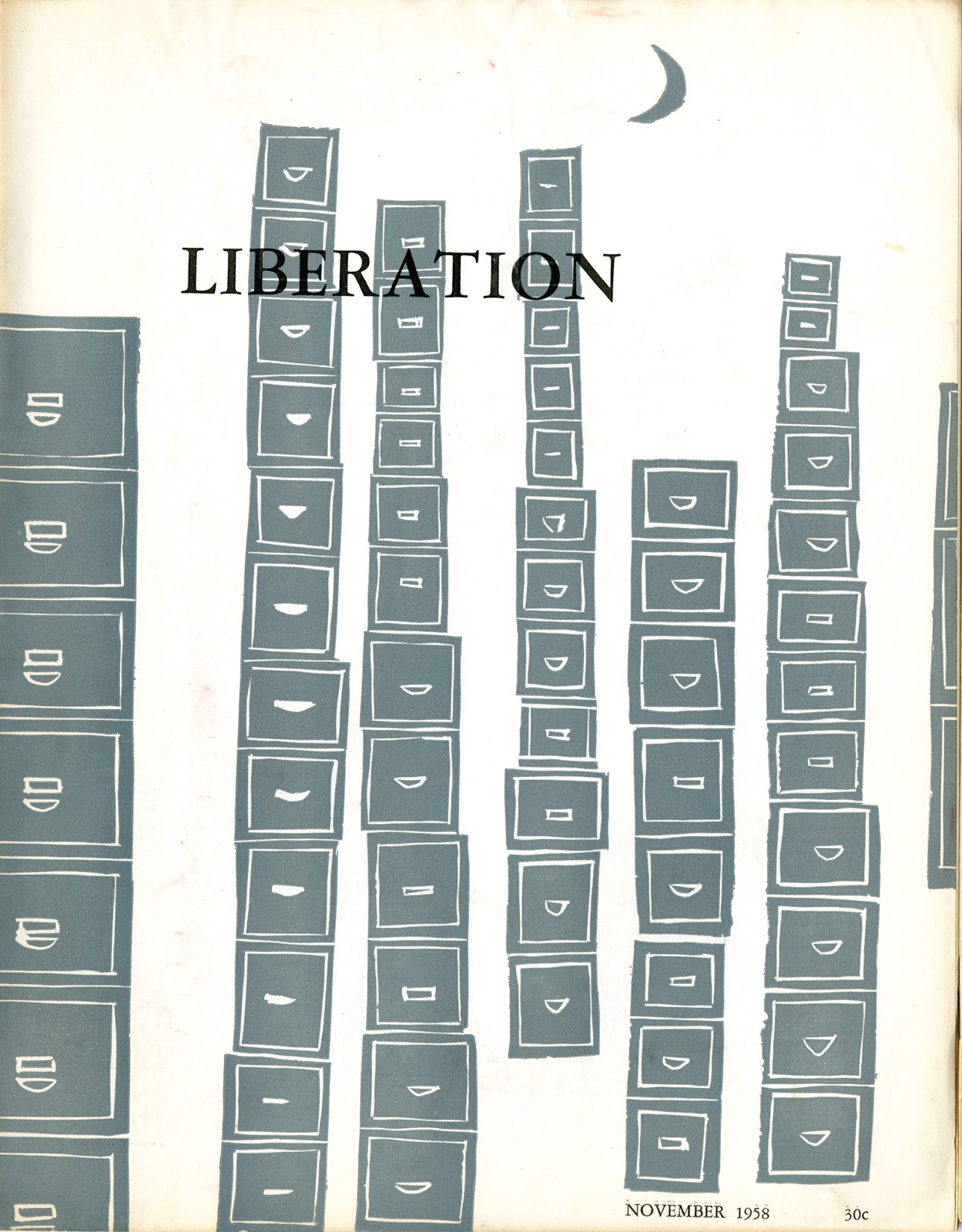
Author and illustrator of 17 children’s books, including Caldecott medal winner, A Chair for My Mother, Vera B. Williams always had a passion for the arts. Williams grew up in the Bronx, NY, and in 1936, when she was nine years old, one of her paintings, called Yentas, opens a new window, was included in an exhibition at the Museum of Modern Art. While Williams is widely known for her children’s books today, this exhibition’s expansive scope highlights unexplored aspects of her artistic practice and eight decades of life. From groundbreaking, powerful covers for Liberation Magazine, to Peace calendar collaborations with writer activist Grace Paley, to scenic sketches for Julian Beck and Judith Malina’s Living Theater, to hundreds of late life “Aging and Illness” cartoons sketches and doodles, Vera never sat still.

Williams arrived at Black Mountain College in 1945. While there, she embraced all aspects of living, working, and learning in the intensely creative college community. She was at BMC during a particularly fertile period, which allowed her to study with faculty members Buckminster Fuller and Josef Albers, and to participate in the famed summer sessions with John Cage, Merce Cunningham, M.C. Richards, and Robert Rauschenberg. In 1948, she graduated with Josef Albers as her advisor and sculptor Richard Lippold as her outside examiner. Forever one of the College’s shining stars, Vera graduated from BMC with just six semesters of coursework, at only twenty-one years old. She continued to visit BMC for years afterward, staying deeply involved with the artistic community that BMC incubated.

Anticipating the eventual closure of BMC, Williams, alongside her husband Paul Williams and a group of influential former BMC figures, founded The Gate Hill Cooperative Artists community located 30 miles north of NYC on the outskirts of Stony Point, NY. The Gate Hill Cooperative, also known as The Land, became an outcropping of Black Mountain College’s experimental ethos. Students and faculty including John Cage, M.C. Richards, David Tudor, Karen Karnes, David Weinrib, Stan VanDerBeek, and Patsy Lynch Wood shaped Gate Hill as founding members of the community. Vera B. Williams raised her three children at Gate Hill while continuing to make work.

The early Gate Hill era represented an especially creative phase for the BMC group. For Williams, this period saw the creation of 76 covers for Liberation Magazine, a radical, groundbreaking publication. This exhibition will feature some of Williams’ most powerful Liberation covers including a design for the June 1963 edition, which contained the first full publication of MLK’s “Letter from Birmingham Jail.” Williams’ activism work continued throughout her life. As president of PEN’s Children Committee and member of The War Resisters league, she created a wide range of political and educational posters and journal covers. Williams protested the war in Vietnam and nuclear proliferation while supporting women’s causes and racial equality. In 1981, Williams was arrested and spent a month in a federal prison on charges stemming from her political activism.
In her late 40’s, Williams embarked in earnest on her career as a children’s book author and illustrator, a career which garnered the NY Public Library’s recognition of A Chair for My Mother as one of the greatest 100 children’s books of all time. Infinitely curious and always a wanderer at heart, Williams’ personal life was as expansive as her art. In addition to her prolific picture making, Williams started and helped run a Summerhill-based alternative school, canoed the Yukon, and lived alone on a houseboat in Vancouver Harbor. She helped to organize and attended dozens of political demonstrations throughout her adult life.

Her books won many awards including the Caldecott Medal Honor Book for A Chair for My Mother in 1983, the Boston Globe–Horn Book Award– Fiction category– for Scooter in 1994, the Jane Addams Honor for Amber Was Brave, Essie Was Smart in 2002, and the NSK Neustadt Prize for Children’s Literature in 2009. Her books reflected her values, emphasizing love, compassion, kindness, joy, strength, individuality, and courage.

Images:

Cover of Vera B. Williams’ A Chair for My Mother, published in 1982.

Vera B. Williams, Cover for Liberation Magazine, November 1958.

Hybrid | Sex Romp Gone Wrong: Julia Ridley Smith in conversation with Meagan Lucas
Feb 21 @ 6:00 pm
Malaprop's Bookstore

Malaprop’s welcomes Julia Ridley Smith in conversation with Meagan Lucas to discuss Sex Romp Gone Wrong: Stories. 

The event is free but registration is required for both in-person and virtual attendance. 

Please click here to register for the VIRTUAL event. The link required to attend will be emailed to registrants prior to the event.

Please click here to register for the IN-PERSON event. Note the important event details on the RSVP form.


In her debut story collection, Julia Ridley Smith navigates the currents and eddies of desire, sex, love, and relationships.

These twelve highly accomplished stories are witty and accessible, intelligent and thought-provoking. A girls’ week at the beach prompts hot tub drinking, awkward confessions, and a poignant reconsideration of friendship. A caregiver extracts a small repayment from her elderly patient for his long-forgotten role in the demise of her family. A young woman, new to New York City, finds herself in a complex but tacky love affair and reckons with the unfolding plot of her life. In the title story, a woman plots to conceive a second child while at a convention hotel with her husband and teenage daughter, both of whom have other plans. Smith’s stories will beguile and delight readers while at the same time exploring the deep and often difficult ties of family, marriage, and romantic love in modern life.

Sex Romp Gone Wrong is Julia Ridley Smith’s first story collection. Her first book, The Sum of Trifles, is a memoir published by the University of Georgia Press (2021) as a title in their Crux literary nonfiction series. Julia’s short stories and essays have appeared in the Alaska Quarterly Review, American Literary ReviewArts and Letters, the Carolina Quarterly, Chelsea, Ecotone, Electric Literature, the Greensboro Review, the New England Review, Southern Cultures, and The Southern Review, among other places. Julia teaches creative writing at UNC Chapel Hill.

Meagan Lucas is the author of the award-winning novel, Songbirds and Stray Dogs and the collection, Here in the Dark. Meagan is Pushcart, Best of the Net, Derringer, and Canadian Crime Writers’ Award of Excellence nominated, and won the 2017 Scythe Prize for Fiction. Her short story “The Monster Beneath” was noted as Distinguished in 2023 Best American Mystery and Suspense and Songbirds and Stray Dogs was North Carolina’s selection for the Library of Congress Center for the Book’s 2022 Route 1 Reads program. She teaches Creative Writing at Robert Morris University and in the Great Smokies Writing Program at UNC-A. She is the Editor-in-Chief of Reckon Review. Born and raised on a small island in Northern Ontario, she now lives in Flat Rock, NC.


This event includes a book signing. If you would like a signed book but can’t attend in person, you may order a signed copy online below. If you would like to have your book personalized, please order online or call the store at least two hours before the start of the event. When ordering online, use the comments field to provide a name for personalization, e.g. “To Carla.” NOTE: We do our best to get books personalized when requested but personalization is not guaranteed.

If you decide to attend and to purchase books, we ask that you purchase from Malaprop’s. When you do this you make it possible for us to continue hosting author events and you keep more dollars in our community. You may also support our work by purchasing a gift card or making a donation of any amount below. Thank you!

Thursday, February 22, 2024
Growing Minds Farm to School Mini-Grant
Feb 22 @ 6:30 am
online
ASAP’s Growing Minds mini-grants help early childhood education (ECE) centers and K-12 schools throughout the 23 westernmost counties of North Carolina provide children positive experiences with healthy local foods through these components of farm to school: school gardens, farm field trips and farmer classroom visits, and local foods served in meals, snacks, and/or taste tests.

Mini-grant applications are available three times during the 2023-2024 school year. You may apply one time during this cycle. Mini-grants must be used within a year after receiving the funding. 

Applications due by:

  • November 30, 2023
  • January 30, 2024
  • March 30, 2024

If you have questions about your eligibility to apply for funding, please email us at [email protected] before submitting your application. We are unable to provide mini-grants to schools located outside of our 23-county service area or to folks who have received a grant from us within the past year. Learn more and apply here!

Vera B. Williams / STORIES Eight Decades of Politics and Picture Making
Feb 22 @ 11:00 am – 5:00 pm
Black Mountain College Museum + Arts Center


Exhibition and Public Programming

Vera B. Williams, an award-winning author and illustrator of children’s books, started making pictures almost as soon as she could walk. She studied at Black Mountain College in a time where summer institutes were held with classes taught by John Cage and Merce Cunningham. Williams studied under the Bauhaus luminary Josef Albers and went on to make art for the rest of her life. At the time of her death, The New York Times wrote: “Her illustrations, known for bold colors and a style reminiscent of folk art, were praised by reviewers for their great tenderness and crackling vitality.” Despite numerous awards and recognition for her children’s books, much of her wider life and work remains unexplored. This retrospective will showcase the complete range of Williams’ life and work. It will highlight her time at Black Mountain College, her political activism, and her establishment, with Paul Williams, of an influential yet little-known artist community, in addition to her work as an author and illustrator.

Author and illustrator of 17 children’s books, including Caldecott medal winner, A Chair for My Mother, Vera B. Williams always had a passion for the arts. Williams grew up in the Bronx, NY, and in 1936, when she was nine years old, one of her paintings, called Yentas, opens a new window, was included in an exhibition at the Museum of Modern Art. While Williams is widely known for her children’s books today, this exhibition’s expansive scope highlights unexplored aspects of her artistic practice and eight decades of life. From groundbreaking, powerful covers for Liberation Magazine, to Peace calendar collaborations with writer activist Grace Paley, to scenic sketches for Julian Beck and Judith Malina’s Living Theater, to hundreds of late life “Aging and Illness” cartoons sketches and doodles, Vera never sat still.

Williams arrived at Black Mountain College in 1945. While there, she embraced all aspects of living, working, and learning in the intensely creative college community. She was at BMC during a particularly fertile period, which allowed her to study with faculty members Buckminster Fuller and Josef Albers, and to participate in the famed summer sessions with John Cage, Merce Cunningham, M.C. Richards, and Robert Rauschenberg. In 1948, she graduated with Josef Albers as her advisor and sculptor Richard Lippold as her outside examiner. Forever one of the College’s shining stars, Vera graduated from BMC with just six semesters of coursework, at only twenty-one years old. She continued to visit BMC for years afterward, staying deeply involved with the artistic community that BMC incubated.

Anticipating the eventual closure of BMC, Williams, alongside her husband Paul Williams and a group of influential former BMC figures, founded The Gate Hill Cooperative Artists community located 30 miles north of NYC on the outskirts of Stony Point, NY. The Gate Hill Cooperative, also known as The Land, became an outcropping of Black Mountain College’s experimental ethos. Students and faculty including John Cage, M.C. Richards, David Tudor, Karen Karnes, David Weinrib, Stan VanDerBeek, and Patsy Lynch Wood shaped Gate Hill as founding members of the community. Vera B. Williams raised her three children at Gate Hill while continuing to make work.

The early Gate Hill era represented an especially creative phase for the BMC group. For Williams, this period saw the creation of 76 covers for Liberation Magazine, a radical, groundbreaking publication. This exhibition will feature some of Williams’ most powerful Liberation covers including a design for the June 1963 edition, which contained the first full publication of MLK’s “Letter from Birmingham Jail.” Williams’ activism work continued throughout her life. As president of PEN’s Children Committee and member of The War Resisters league, she created a wide range of political and educational posters and journal covers. Williams protested the war in Vietnam and nuclear proliferation while supporting women’s causes and racial equality. In 1981, Williams was arrested and spent a month in a federal prison on charges stemming from her political activism.

In her late 40’s, Williams embarked in earnest on her career as a children’s book author and illustrator, a career which garnered the NY Public Library’s recognition of A Chair for My Mother as one of the greatest 100 children’s books of all time. Infinitely curious and always a wanderer at heart, Williams’ personal life was as expansive as her art. In addition to her prolific picture making, Williams started and helped run a Summerhill-based alternative school, canoed the Yukon, and lived alone on a houseboat in Vancouver Harbor. She helped to organize and attended dozens of political demonstrations throughout her adult life.

Her books won many awards including the Caldecott Medal Honor Book for A Chair for My Mother in 1983, the Boston Globe–Horn Book Award– Fiction category– for Scooter in 1994, the Jane Addams Honor for Amber Was Brave, Essie Was Smart in 2002, and the NSK Neustadt Prize for Children’s Literature in 2009. Her books reflected her values, emphasizing love, compassion, kindness, joy, strength, individuality, and courage.

Images:

Cover of Vera B. Williams’ A Chair for My Mother, published in 1982.

Vera B. Williams, Cover for Liberation Magazine, November 1958.

Virtual | HEROES with Alan Gratz
Feb 22 @ 1:00 pm
online

Join New York Times bestselling author Alan Gratz to hear about his new book, Heroes!

This virtual event is free and will be live streamed on Crowdcast. Please click here to register. If you’re not familiar with Crowdcast, or if you’re a teacher who would like to bring your class to this virtual talk, click here for helpful information on Alan’s website.

PLUS: In-Person Signing at The Hop Ice Cream on Merrimon – February 24: 2 to 4 PM
If you’re in the Asheville area you can also meet Alan in person and get your book(s) signed! This will be Alan’s last in-person appearance in Asheville for a while and we hope to see you there!


Told with the immediacy, high-stakes action, and inventive storytelling that make Alan Gratz one of today’s biggest authors, this riveting look at the attack on Pearl Harbor explores themes of prejudice, power, and what it truly means to be a hero. Plus: The book ends with an all-original, 10-page black & white comic that brings to life the comic book idea that Frank and Stanley brainstorm in the novel. The comic is written by Alan Gratz and illustrated by Judit Tondora.

Alan Gratz is the #1 New York Times bestselling author of nineteen novels and graphic novels for young readers, including Two DegreesCaptain America: The Ghost Army, Ground ZeroRefugee, Allies, Prisoner B-3087, and Ban This Book. A Knoxville, Tennessee native, Alan is now a full-time writer living in Asheville, North Carolina with his wife and daughter. Learn more about him online at www.alangratz.com.


Malaprop’s is proud to be Alan Gratz’s home bookstore and we thank you for purchasing his books from us! You may also support our work by purchasing a gift card or making a donation of any amount below. Thank you!

Friday, February 23, 2024
Neighborhood Matching Grants
Feb 23 all-day

The City’s Neighborhood Matching Grant program is now accepting applications for the 2024 calendar year. Neighborhood organizations can apply for up to $5,000 in funds to be matched with volunteer time, fundraising and in-kind donations.

The biggest change to the program in 2024 is a transition to rolling applications. Previously, neighborhoods had to meet a hard application deadline. Now, applications will be accepted throughout the calendar year or until a maximum of 14 projects are awarded.


What kinds of projects can the Neighborhood Matching Grant program fund?

The program supports a wide range of imaginative projects, giving neighborhood organizations an opportunity to improve the quality of life in their community in ways that are most important to them. Projects that address a neighborhood issue or need in one of the following categories are eligible. This list is not exhaustive.

  • Physical improvement 

  • Neighborhood identity 

  • Community building events

  • Public safety 

  • Marketing and branding

  • Organizational development and capacity building

  • Programming (cannot be programming that is currently ongoing)

  • Kickstart funding for new neighborhood organizations

A snapshot of past projects is available in the Spotlight Projects Guide.

“The grant-funded improvements to our park have really improved our neighborhood’s sense of community,” says Rob Patete of Kenilworth Forest.

Want to learn more?

The City will host a drop-in workshop:

  • February 19, 2024
  • 4-6 p.m.
  • Dr. Wesley Grant Sr. Southside Center. 


Background 

Established in 2021 by City Council, the Neighborhood Matching Grant program is designed to strengthen relationships between neighbors, cultivate the spirit of volunteerism, and help communities accomplish self-determined goals. The program has so far awarded 36 projects, resulting in $159,110 in City funds and an estimated 2,500 volunteer hours invested in Asheville’s neighborhoods.

The City’s Neighborhood Services Specialist, Meredith Friedheim, hopes to continue this impact with a few minor improvements in 2024. “We’ve had three years to see the potential that can be reached with this program as well as to understand how best to manage it on the back-end. Our neighborhoods have shown us that they are ready and willing to invest their time and resources in projects that are important to them. For me, there is exciting momentum going into this fourth year.”

The Neighborhood Matching Grant program is administered by the Community Engagement Division of the Communication and Public Engagement Department. To find out more about the Neighborhood Matching Grant Program and to apply, visit the program webpage.

Growing Minds Farm to School Mini-Grant
Feb 23 @ 6:30 am
online
ASAP’s Growing Minds mini-grants help early childhood education (ECE) centers and K-12 schools throughout the 23 westernmost counties of North Carolina provide children positive experiences with healthy local foods through these components of farm to school: school gardens, farm field trips and farmer classroom visits, and local foods served in meals, snacks, and/or taste tests.

Mini-grant applications are available three times during the 2023-2024 school year. You may apply one time during this cycle. Mini-grants must be used within a year after receiving the funding. 

Applications due by:

  • November 30, 2023
  • January 30, 2024
  • March 30, 2024

If you have questions about your eligibility to apply for funding, please email us at [email protected] before submitting your application. We are unable to provide mini-grants to schools located outside of our 23-county service area or to folks who have received a grant from us within the past year. Learn more and apply here!

Vera B. Williams / STORIES Eight Decades of Politics and Picture Making
Feb 23 @ 11:00 am – 5:00 pm
Black Mountain College Museum + Arts Center


Exhibition and Public Programming

Vera B. Williams, an award-winning author and illustrator of children’s books, started making pictures almost as soon as she could walk. She studied at Black Mountain College in a time where summer institutes were held with classes taught by John Cage and Merce Cunningham. Williams studied under the Bauhaus luminary Josef Albers and went on to make art for the rest of her life. At the time of her death, The New York Times wrote: “Her illustrations, known for bold colors and a style reminiscent of folk art, were praised by reviewers for their great tenderness and crackling vitality.” Despite numerous awards and recognition for her children’s books, much of her wider life and work remains unexplored. This retrospective will showcase the complete range of Williams’ life and work. It will highlight her time at Black Mountain College, her political activism, and her establishment, with Paul Williams, of an influential yet little-known artist community, in addition to her work as an author and illustrator.

Author and illustrator of 17 children’s books, including Caldecott medal winner, A Chair for My Mother, Vera B. Williams always had a passion for the arts. Williams grew up in the Bronx, NY, and in 1936, when she was nine years old, one of her paintings, called Yentas, opens a new window, was included in an exhibition at the Museum of Modern Art. While Williams is widely known for her children’s books today, this exhibition’s expansive scope highlights unexplored aspects of her artistic practice and eight decades of life. From groundbreaking, powerful covers for Liberation Magazine, to Peace calendar collaborations with writer activist Grace Paley, to scenic sketches for Julian Beck and Judith Malina’s Living Theater, to hundreds of late life “Aging and Illness” cartoons sketches and doodles, Vera never sat still.

Williams arrived at Black Mountain College in 1945. While there, she embraced all aspects of living, working, and learning in the intensely creative college community. She was at BMC during a particularly fertile period, which allowed her to study with faculty members Buckminster Fuller and Josef Albers, and to participate in the famed summer sessions with John Cage, Merce Cunningham, M.C. Richards, and Robert Rauschenberg. In 1948, she graduated with Josef Albers as her advisor and sculptor Richard Lippold as her outside examiner. Forever one of the College’s shining stars, Vera graduated from BMC with just six semesters of coursework, at only twenty-one years old. She continued to visit BMC for years afterward, staying deeply involved with the artistic community that BMC incubated.

Anticipating the eventual closure of BMC, Williams, alongside her husband Paul Williams and a group of influential former BMC figures, founded The Gate Hill Cooperative Artists community located 30 miles north of NYC on the outskirts of Stony Point, NY. The Gate Hill Cooperative, also known as The Land, became an outcropping of Black Mountain College’s experimental ethos. Students and faculty including John Cage, M.C. Richards, David Tudor, Karen Karnes, David Weinrib, Stan VanDerBeek, and Patsy Lynch Wood shaped Gate Hill as founding members of the community. Vera B. Williams raised her three children at Gate Hill while continuing to make work.

The early Gate Hill era represented an especially creative phase for the BMC group. For Williams, this period saw the creation of 76 covers for Liberation Magazine, a radical, groundbreaking publication. This exhibition will feature some of Williams’ most powerful Liberation covers including a design for the June 1963 edition, which contained the first full publication of MLK’s “Letter from Birmingham Jail.” Williams’ activism work continued throughout her life. As president of PEN’s Children Committee and member of The War Resisters league, she created a wide range of political and educational posters and journal covers. Williams protested the war in Vietnam and nuclear proliferation while supporting women’s causes and racial equality. In 1981, Williams was arrested and spent a month in a federal prison on charges stemming from her political activism.

In her late 40’s, Williams embarked in earnest on her career as a children’s book author and illustrator, a career which garnered the NY Public Library’s recognition of A Chair for My Mother as one of the greatest 100 children’s books of all time. Infinitely curious and always a wanderer at heart, Williams’ personal life was as expansive as her art. In addition to her prolific picture making, Williams started and helped run a Summerhill-based alternative school, canoed the Yukon, and lived alone on a houseboat in Vancouver Harbor. She helped to organize and attended dozens of political demonstrations throughout her adult life.

Her books won many awards including the Caldecott Medal Honor Book for A Chair for My Mother in 1983, the Boston Globe–Horn Book Award– Fiction category– for Scooter in 1994, the Jane Addams Honor for Amber Was Brave, Essie Was Smart in 2002, and the NSK Neustadt Prize for Children’s Literature in 2009. Her books reflected her values, emphasizing love, compassion, kindness, joy, strength, individuality, and courage.

Images:

Cover of Vera B. Williams’ A Chair for My Mother, published in 1982.

Vera B. Williams, Cover for Liberation Magazine, November 1958.

Saturday, February 24, 2024
Vera B. Williams / STORIES Eight Decades of Politics and Picture Making
Feb 24 @ 11:00 am – 5:00 pm
Black Mountain College Museum + Arts Center


Exhibition and Public Programming

Vera B. Williams, an award-winning author and illustrator of children’s books, started making pictures almost as soon as she could walk. She studied at Black Mountain College in a time where summer institutes were held with classes taught by John Cage and Merce Cunningham. Williams studied under the Bauhaus luminary Josef Albers and went on to make art for the rest of her life. At the time of her death, The New York Times wrote: “Her illustrations, known for bold colors and a style reminiscent of folk art, were praised by reviewers for their great tenderness and crackling vitality.” Despite numerous awards and recognition for her children’s books, much of her wider life and work remains unexplored. This retrospective will showcase the complete range of Williams’ life and work. It will highlight her time at Black Mountain College, her political activism, and her establishment, with Paul Williams, of an influential yet little-known artist community, in addition to her work as an author and illustrator.

Author and illustrator of 17 children’s books, including Caldecott medal winner, A Chair for My Mother, Vera B. Williams always had a passion for the arts. Williams grew up in the Bronx, NY, and in 1936, when she was nine years old, one of her paintings, called Yentas, opens a new window, was included in an exhibition at the Museum of Modern Art. While Williams is widely known for her children’s books today, this exhibition’s expansive scope highlights unexplored aspects of her artistic practice and eight decades of life. From groundbreaking, powerful covers for Liberation Magazine, to Peace calendar collaborations with writer activist Grace Paley, to scenic sketches for Julian Beck and Judith Malina’s Living Theater, to hundreds of late life “Aging and Illness” cartoons sketches and doodles, Vera never sat still.

Williams arrived at Black Mountain College in 1945. While there, she embraced all aspects of living, working, and learning in the intensely creative college community. She was at BMC during a particularly fertile period, which allowed her to study with faculty members Buckminster Fuller and Josef Albers, and to participate in the famed summer sessions with John Cage, Merce Cunningham, M.C. Richards, and Robert Rauschenberg. In 1948, she graduated with Josef Albers as her advisor and sculptor Richard Lippold as her outside examiner. Forever one of the College’s shining stars, Vera graduated from BMC with just six semesters of coursework, at only twenty-one years old. She continued to visit BMC for years afterward, staying deeply involved with the artistic community that BMC incubated.

Anticipating the eventual closure of BMC, Williams, alongside her husband Paul Williams and a group of influential former BMC figures, founded The Gate Hill Cooperative Artists community located 30 miles north of NYC on the outskirts of Stony Point, NY. The Gate Hill Cooperative, also known as The Land, became an outcropping of Black Mountain College’s experimental ethos. Students and faculty including John Cage, M.C. Richards, David Tudor, Karen Karnes, David Weinrib, Stan VanDerBeek, and Patsy Lynch Wood shaped Gate Hill as founding members of the community. Vera B. Williams raised her three children at Gate Hill while continuing to make work.

The early Gate Hill era represented an especially creative phase for the BMC group. For Williams, this period saw the creation of 76 covers for Liberation Magazine, a radical, groundbreaking publication. This exhibition will feature some of Williams’ most powerful Liberation covers including a design for the June 1963 edition, which contained the first full publication of MLK’s “Letter from Birmingham Jail.” Williams’ activism work continued throughout her life. As president of PEN’s Children Committee and member of The War Resisters league, she created a wide range of political and educational posters and journal covers. Williams protested the war in Vietnam and nuclear proliferation while supporting women’s causes and racial equality. In 1981, Williams was arrested and spent a month in a federal prison on charges stemming from her political activism.

In her late 40’s, Williams embarked in earnest on her career as a children’s book author and illustrator, a career which garnered the NY Public Library’s recognition of A Chair for My Mother as one of the greatest 100 children’s books of all time. Infinitely curious and always a wanderer at heart, Williams’ personal life was as expansive as her art. In addition to her prolific picture making, Williams started and helped run a Summerhill-based alternative school, canoed the Yukon, and lived alone on a houseboat in Vancouver Harbor. She helped to organize and attended dozens of political demonstrations throughout her adult life.

Her books won many awards including the Caldecott Medal Honor Book for A Chair for My Mother in 1983, the Boston Globe–Horn Book Award– Fiction category– for Scooter in 1994, the Jane Addams Honor for Amber Was Brave, Essie Was Smart in 2002, and the NSK Neustadt Prize for Children’s Literature in 2009. Her books reflected her values, emphasizing love, compassion, kindness, joy, strength, individuality, and courage.

Images:

Cover of Vera B. Williams’ A Chair for My Mother, published in 1982.

Vera B. Williams, Cover for Liberation Magazine, November 1958.

Off-Site | Book Signing with Alan Gratz
Feb 24 @ 2:00 pm – 4:00 pm
The Hop Ice Cream

Join us at The Hop Ice Cream (and Pop Bubble Tea) for an exciting drop-in signing and meet & greet with Alan Gratz as he signs his new book HEROES, and others! This will be Alan’s last in-person appearance in Asheville for a while and we hope you can stop by.

Books will be available to purchase on site in addition to delicious ice cream and bubble tea.

Monday, February 26, 2024
Neighborhood Matching Grants
Feb 26 all-day

The City’s Neighborhood Matching Grant program is now accepting applications for the 2024 calendar year. Neighborhood organizations can apply for up to $5,000 in funds to be matched with volunteer time, fundraising and in-kind donations.

The biggest change to the program in 2024 is a transition to rolling applications. Previously, neighborhoods had to meet a hard application deadline. Now, applications will be accepted throughout the calendar year or until a maximum of 14 projects are awarded.


What kinds of projects can the Neighborhood Matching Grant program fund?

The program supports a wide range of imaginative projects, giving neighborhood organizations an opportunity to improve the quality of life in their community in ways that are most important to them. Projects that address a neighborhood issue or need in one of the following categories are eligible. This list is not exhaustive.

  • Physical improvement 

  • Neighborhood identity 

  • Community building events

  • Public safety 

  • Marketing and branding

  • Organizational development and capacity building

  • Programming (cannot be programming that is currently ongoing)

  • Kickstart funding for new neighborhood organizations

A snapshot of past projects is available in the Spotlight Projects Guide.

“The grant-funded improvements to our park have really improved our neighborhood’s sense of community,” says Rob Patete of Kenilworth Forest.

Want to learn more?

The City will host a drop-in workshop:

  • February 19, 2024
  • 4-6 p.m.
  • Dr. Wesley Grant Sr. Southside Center. 


Background 

Established in 2021 by City Council, the Neighborhood Matching Grant program is designed to strengthen relationships between neighbors, cultivate the spirit of volunteerism, and help communities accomplish self-determined goals. The program has so far awarded 36 projects, resulting in $159,110 in City funds and an estimated 2,500 volunteer hours invested in Asheville’s neighborhoods.

The City’s Neighborhood Services Specialist, Meredith Friedheim, hopes to continue this impact with a few minor improvements in 2024. “We’ve had three years to see the potential that can be reached with this program as well as to understand how best to manage it on the back-end. Our neighborhoods have shown us that they are ready and willing to invest their time and resources in projects that are important to them. For me, there is exciting momentum going into this fourth year.”

The Neighborhood Matching Grant program is administered by the Community Engagement Division of the Communication and Public Engagement Department. To find out more about the Neighborhood Matching Grant Program and to apply, visit the program webpage.

Vera B. Williams / STORIES Eight Decades of Politics and Picture Making
Feb 26 @ 11:00 am – 5:00 pm
Black Mountain College Museum + Arts Center


Exhibition and Public Programming

Vera B. Williams, an award-winning author and illustrator of children’s books, started making pictures almost as soon as she could walk. She studied at Black Mountain College in a time where summer institutes were held with classes taught by John Cage and Merce Cunningham. Williams studied under the Bauhaus luminary Josef Albers and went on to make art for the rest of her life. At the time of her death, The New York Times wrote: “Her illustrations, known for bold colors and a style reminiscent of folk art, were praised by reviewers for their great tenderness and crackling vitality.” Despite numerous awards and recognition for her children’s books, much of her wider life and work remains unexplored. This retrospective will showcase the complete range of Williams’ life and work. It will highlight her time at Black Mountain College, her political activism, and her establishment, with Paul Williams, of an influential yet little-known artist community, in addition to her work as an author and illustrator.

Author and illustrator of 17 children’s books, including Caldecott medal winner, A Chair for My Mother, Vera B. Williams always had a passion for the arts. Williams grew up in the Bronx, NY, and in 1936, when she was nine years old, one of her paintings, called Yentas, opens a new window, was included in an exhibition at the Museum of Modern Art. While Williams is widely known for her children’s books today, this exhibition’s expansive scope highlights unexplored aspects of her artistic practice and eight decades of life. From groundbreaking, powerful covers for Liberation Magazine, to Peace calendar collaborations with writer activist Grace Paley, to scenic sketches for Julian Beck and Judith Malina’s Living Theater, to hundreds of late life “Aging and Illness” cartoons sketches and doodles, Vera never sat still.

Williams arrived at Black Mountain College in 1945. While there, she embraced all aspects of living, working, and learning in the intensely creative college community. She was at BMC during a particularly fertile period, which allowed her to study with faculty members Buckminster Fuller and Josef Albers, and to participate in the famed summer sessions with John Cage, Merce Cunningham, M.C. Richards, and Robert Rauschenberg. In 1948, she graduated with Josef Albers as her advisor and sculptor Richard Lippold as her outside examiner. Forever one of the College’s shining stars, Vera graduated from BMC with just six semesters of coursework, at only twenty-one years old. She continued to visit BMC for years afterward, staying deeply involved with the artistic community that BMC incubated.

Anticipating the eventual closure of BMC, Williams, alongside her husband Paul Williams and a group of influential former BMC figures, founded The Gate Hill Cooperative Artists community located 30 miles north of NYC on the outskirts of Stony Point, NY. The Gate Hill Cooperative, also known as The Land, became an outcropping of Black Mountain College’s experimental ethos. Students and faculty including John Cage, M.C. Richards, David Tudor, Karen Karnes, David Weinrib, Stan VanDerBeek, and Patsy Lynch Wood shaped Gate Hill as founding members of the community. Vera B. Williams raised her three children at Gate Hill while continuing to make work.

The early Gate Hill era represented an especially creative phase for the BMC group. For Williams, this period saw the creation of 76 covers for Liberation Magazine, a radical, groundbreaking publication. This exhibition will feature some of Williams’ most powerful Liberation covers including a design for the June 1963 edition, which contained the first full publication of MLK’s “Letter from Birmingham Jail.” Williams’ activism work continued throughout her life. As president of PEN’s Children Committee and member of The War Resisters league, she created a wide range of political and educational posters and journal covers. Williams protested the war in Vietnam and nuclear proliferation while supporting women’s causes and racial equality. In 1981, Williams was arrested and spent a month in a federal prison on charges stemming from her political activism.

In her late 40’s, Williams embarked in earnest on her career as a children’s book author and illustrator, a career which garnered the NY Public Library’s recognition of A Chair for My Mother as one of the greatest 100 children’s books of all time. Infinitely curious and always a wanderer at heart, Williams’ personal life was as expansive as her art. In addition to her prolific picture making, Williams started and helped run a Summerhill-based alternative school, canoed the Yukon, and lived alone on a houseboat in Vancouver Harbor. She helped to organize and attended dozens of political demonstrations throughout her adult life.

Her books won many awards including the Caldecott Medal Honor Book for A Chair for My Mother in 1983, the Boston Globe–Horn Book Award– Fiction category– for Scooter in 1994, the Jane Addams Honor for Amber Was Brave, Essie Was Smart in 2002, and the NSK Neustadt Prize for Children’s Literature in 2009. Her books reflected her values, emphasizing love, compassion, kindness, joy, strength, individuality, and courage.

Images:

Cover of Vera B. Williams’ A Chair for My Mother, published in 1982.

Vera B. Williams, Cover for Liberation Magazine, November 1958.

Tuesday, February 27, 2024
Garden Grant Program
Feb 27 all-day
online

At Whole Kids, we know that the more kids know and feel connected to their food, the more curious they become about how things grow or taste, and the more willing they are to try new foods. This is why we believe in edible garden learning spaces!

Our Garden Grant program provides a $3,000 monetary grant to support a new or existing edible educational garden located at either a:

  • K–12 School
  • Non-profit organization (501(c)(3) in the US/Registered Charity in Canada) that serves children in the K-12 grade range

ELIGIBILITY

To be eligible to apply for this grant, the school or organization must meet the below criteria:

  • Be a charter or public school including tribally controlled and Bureau of Indian Education schools, non-profit private school, a non-profit organization or a tribal entity that serves children in the K-12 age range, or a government entity
  • Engage at least 10 children on a regular basis
  • Be growing edible plants in your garden
  • Eligible to re-apply for a second grant if your previous funds were received in 2022 or earlier. Completion of Progress Report on previous grant required to apply again.
  • Be located in the United States (including US controlled territories) or Canada

*Recipients can only receive a total of two Garden Grants.

TO PREPARE

You can find a copy of the 2024 Garden Grant application here. All final applications MUST be submitted online but we share the application PDF as a way for you to prepare and get started!

Growing Minds Farm to School Mini-Grant
Feb 27 @ 6:30 am
online
ASAP’s Growing Minds mini-grants help early childhood education (ECE) centers and K-12 schools throughout the 23 westernmost counties of North Carolina provide children positive experiences with healthy local foods through these components of farm to school: school gardens, farm field trips and farmer classroom visits, and local foods served in meals, snacks, and/or taste tests.

Mini-grant applications are available three times during the 2023-2024 school year. You may apply one time during this cycle. Mini-grants must be used within a year after receiving the funding. 

Applications due by:

  • November 30, 2023
  • January 30, 2024
  • March 30, 2024

If you have questions about your eligibility to apply for funding, please email us at [email protected] before submitting your application. We are unable to provide mini-grants to schools located outside of our 23-county service area or to folks who have received a grant from us within the past year. Learn more and apply here!

Vera B. Williams / STORIES Eight Decades of Politics and Picture Making
Feb 27 @ 11:00 am – 5:00 pm
Black Mountain College Museum + Arts Center


Exhibition and Public Programming

Vera B. Williams, an award-winning author and illustrator of children’s books, started making pictures almost as soon as she could walk. She studied at Black Mountain College in a time where summer institutes were held with classes taught by John Cage and Merce Cunningham. Williams studied under the Bauhaus luminary Josef Albers and went on to make art for the rest of her life. At the time of her death, The New York Times wrote: “Her illustrations, known for bold colors and a style reminiscent of folk art, were praised by reviewers for their great tenderness and crackling vitality.” Despite numerous awards and recognition for her children’s books, much of her wider life and work remains unexplored. This retrospective will showcase the complete range of Williams’ life and work. It will highlight her time at Black Mountain College, her political activism, and her establishment, with Paul Williams, of an influential yet little-known artist community, in addition to her work as an author and illustrator.

Author and illustrator of 17 children’s books, including Caldecott medal winner, A Chair for My Mother, Vera B. Williams always had a passion for the arts. Williams grew up in the Bronx, NY, and in 1936, when she was nine years old, one of her paintings, called Yentas, opens a new window, was included in an exhibition at the Museum of Modern Art. While Williams is widely known for her children’s books today, this exhibition’s expansive scope highlights unexplored aspects of her artistic practice and eight decades of life. From groundbreaking, powerful covers for Liberation Magazine, to Peace calendar collaborations with writer activist Grace Paley, to scenic sketches for Julian Beck and Judith Malina’s Living Theater, to hundreds of late life “Aging and Illness” cartoons sketches and doodles, Vera never sat still.

Williams arrived at Black Mountain College in 1945. While there, she embraced all aspects of living, working, and learning in the intensely creative college community. She was at BMC during a particularly fertile period, which allowed her to study with faculty members Buckminster Fuller and Josef Albers, and to participate in the famed summer sessions with John Cage, Merce Cunningham, M.C. Richards, and Robert Rauschenberg. In 1948, she graduated with Josef Albers as her advisor and sculptor Richard Lippold as her outside examiner. Forever one of the College’s shining stars, Vera graduated from BMC with just six semesters of coursework, at only twenty-one years old. She continued to visit BMC for years afterward, staying deeply involved with the artistic community that BMC incubated.

Anticipating the eventual closure of BMC, Williams, alongside her husband Paul Williams and a group of influential former BMC figures, founded The Gate Hill Cooperative Artists community located 30 miles north of NYC on the outskirts of Stony Point, NY. The Gate Hill Cooperative, also known as The Land, became an outcropping of Black Mountain College’s experimental ethos. Students and faculty including John Cage, M.C. Richards, David Tudor, Karen Karnes, David Weinrib, Stan VanDerBeek, and Patsy Lynch Wood shaped Gate Hill as founding members of the community. Vera B. Williams raised her three children at Gate Hill while continuing to make work.

The early Gate Hill era represented an especially creative phase for the BMC group. For Williams, this period saw the creation of 76 covers for Liberation Magazine, a radical, groundbreaking publication. This exhibition will feature some of Williams’ most powerful Liberation covers including a design for the June 1963 edition, which contained the first full publication of MLK’s “Letter from Birmingham Jail.” Williams’ activism work continued throughout her life. As president of PEN’s Children Committee and member of The War Resisters league, she created a wide range of political and educational posters and journal covers. Williams protested the war in Vietnam and nuclear proliferation while supporting women’s causes and racial equality. In 1981, Williams was arrested and spent a month in a federal prison on charges stemming from her political activism.

In her late 40’s, Williams embarked in earnest on her career as a children’s book author and illustrator, a career which garnered the NY Public Library’s recognition of A Chair for My Mother as one of the greatest 100 children’s books of all time. Infinitely curious and always a wanderer at heart, Williams’ personal life was as expansive as her art. In addition to her prolific picture making, Williams started and helped run a Summerhill-based alternative school, canoed the Yukon, and lived alone on a houseboat in Vancouver Harbor. She helped to organize and attended dozens of political demonstrations throughout her adult life.

Her books won many awards including the Caldecott Medal Honor Book for A Chair for My Mother in 1983, the Boston Globe–Horn Book Award– Fiction category– for Scooter in 1994, the Jane Addams Honor for Amber Was Brave, Essie Was Smart in 2002, and the NSK Neustadt Prize for Children’s Literature in 2009. Her books reflected her values, emphasizing love, compassion, kindness, joy, strength, individuality, and courage.

Images:

Cover of Vera B. Williams’ A Chair for My Mother, published in 1982.

Vera B. Williams, Cover for Liberation Magazine, November 1958.

Revisiting the Classics Book Club
Feb 27 @ 6:00 pm
Weaverville Public Library

Join Librarian and Friend, Jill Totman, to discuss “Books I Swore I’d Never Read Again!” This mid-winter series highlights 20th Century Authors.  The group meets in person at the Weaverville Library. Copies of the titles are available at the Weaverville Library. No registration necessary.

Wednesday, February 28, 2024
Garden Grant Program
Feb 28 all-day
online

At Whole Kids, we know that the more kids know and feel connected to their food, the more curious they become about how things grow or taste, and the more willing they are to try new foods. This is why we believe in edible garden learning spaces!

Our Garden Grant program provides a $3,000 monetary grant to support a new or existing edible educational garden located at either a:

  • K–12 School
  • Non-profit organization (501(c)(3) in the US/Registered Charity in Canada) that serves children in the K-12 grade range

ELIGIBILITY

To be eligible to apply for this grant, the school or organization must meet the below criteria:

  • Be a charter or public school including tribally controlled and Bureau of Indian Education schools, non-profit private school, a non-profit organization or a tribal entity that serves children in the K-12 age range, or a government entity
  • Engage at least 10 children on a regular basis
  • Be growing edible plants in your garden
  • Eligible to re-apply for a second grant if your previous funds were received in 2022 or earlier. Completion of Progress Report on previous grant required to apply again.
  • Be located in the United States (including US controlled territories) or Canada

*Recipients can only receive a total of two Garden Grants.

TO PREPARE

You can find a copy of the 2024 Garden Grant application here. All final applications MUST be submitted online but we share the application PDF as a way for you to prepare and get started!

Neighborhood Matching Grants
Feb 28 all-day

The City’s Neighborhood Matching Grant program is now accepting applications for the 2024 calendar year. Neighborhood organizations can apply for up to $5,000 in funds to be matched with volunteer time, fundraising and in-kind donations.

The biggest change to the program in 2024 is a transition to rolling applications. Previously, neighborhoods had to meet a hard application deadline. Now, applications will be accepted throughout the calendar year or until a maximum of 14 projects are awarded.


What kinds of projects can the Neighborhood Matching Grant program fund?

The program supports a wide range of imaginative projects, giving neighborhood organizations an opportunity to improve the quality of life in their community in ways that are most important to them. Projects that address a neighborhood issue or need in one of the following categories are eligible. This list is not exhaustive.

  • Physical improvement 

  • Neighborhood identity 

  • Community building events

  • Public safety 

  • Marketing and branding

  • Organizational development and capacity building

  • Programming (cannot be programming that is currently ongoing)

  • Kickstart funding for new neighborhood organizations

A snapshot of past projects is available in the Spotlight Projects Guide.

“The grant-funded improvements to our park have really improved our neighborhood’s sense of community,” says Rob Patete of Kenilworth Forest.

Want to learn more?

The City will host a drop-in workshop:

  • February 19, 2024
  • 4-6 p.m.
  • Dr. Wesley Grant Sr. Southside Center. 


Background 

Established in 2021 by City Council, the Neighborhood Matching Grant program is designed to strengthen relationships between neighbors, cultivate the spirit of volunteerism, and help communities accomplish self-determined goals. The program has so far awarded 36 projects, resulting in $159,110 in City funds and an estimated 2,500 volunteer hours invested in Asheville’s neighborhoods.

The City’s Neighborhood Services Specialist, Meredith Friedheim, hopes to continue this impact with a few minor improvements in 2024. “We’ve had three years to see the potential that can be reached with this program as well as to understand how best to manage it on the back-end. Our neighborhoods have shown us that they are ready and willing to invest their time and resources in projects that are important to them. For me, there is exciting momentum going into this fourth year.”

The Neighborhood Matching Grant program is administered by the Community Engagement Division of the Communication and Public Engagement Department. To find out more about the Neighborhood Matching Grant Program and to apply, visit the program webpage.

Growing Minds Farm to School Mini-Grant
Feb 28 @ 6:30 am
online
ASAP’s Growing Minds mini-grants help early childhood education (ECE) centers and K-12 schools throughout the 23 westernmost counties of North Carolina provide children positive experiences with healthy local foods through these components of farm to school: school gardens, farm field trips and farmer classroom visits, and local foods served in meals, snacks, and/or taste tests.

Mini-grant applications are available three times during the 2023-2024 school year. You may apply one time during this cycle. Mini-grants must be used within a year after receiving the funding. 

Applications due by:

  • November 30, 2023
  • January 30, 2024
  • March 30, 2024

If you have questions about your eligibility to apply for funding, please email us at [email protected] before submitting your application. We are unable to provide mini-grants to schools located outside of our 23-county service area or to folks who have received a grant from us within the past year. Learn more and apply here!

Vera B. Williams / STORIES Eight Decades of Politics and Picture Making
Feb 28 @ 11:00 am – 5:00 pm
Black Mountain College Museum + Arts Center


Exhibition and Public Programming

Vera B. Williams, an award-winning author and illustrator of children’s books, started making pictures almost as soon as she could walk. She studied at Black Mountain College in a time where summer institutes were held with classes taught by John Cage and Merce Cunningham. Williams studied under the Bauhaus luminary Josef Albers and went on to make art for the rest of her life. At the time of her death, The New York Times wrote: “Her illustrations, known for bold colors and a style reminiscent of folk art, were praised by reviewers for their great tenderness and crackling vitality.” Despite numerous awards and recognition for her children’s books, much of her wider life and work remains unexplored. This retrospective will showcase the complete range of Williams’ life and work. It will highlight her time at Black Mountain College, her political activism, and her establishment, with Paul Williams, of an influential yet little-known artist community, in addition to her work as an author and illustrator.

Author and illustrator of 17 children’s books, including Caldecott medal winner, A Chair for My Mother, Vera B. Williams always had a passion for the arts. Williams grew up in the Bronx, NY, and in 1936, when she was nine years old, one of her paintings, called Yentas, opens a new window, was included in an exhibition at the Museum of Modern Art. While Williams is widely known for her children’s books today, this exhibition’s expansive scope highlights unexplored aspects of her artistic practice and eight decades of life. From groundbreaking, powerful covers for Liberation Magazine, to Peace calendar collaborations with writer activist Grace Paley, to scenic sketches for Julian Beck and Judith Malina’s Living Theater, to hundreds of late life “Aging and Illness” cartoons sketches and doodles, Vera never sat still.

Williams arrived at Black Mountain College in 1945. While there, she embraced all aspects of living, working, and learning in the intensely creative college community. She was at BMC during a particularly fertile period, which allowed her to study with faculty members Buckminster Fuller and Josef Albers, and to participate in the famed summer sessions with John Cage, Merce Cunningham, M.C. Richards, and Robert Rauschenberg. In 1948, she graduated with Josef Albers as her advisor and sculptor Richard Lippold as her outside examiner. Forever one of the College’s shining stars, Vera graduated from BMC with just six semesters of coursework, at only twenty-one years old. She continued to visit BMC for years afterward, staying deeply involved with the artistic community that BMC incubated.

Anticipating the eventual closure of BMC, Williams, alongside her husband Paul Williams and a group of influential former BMC figures, founded The Gate Hill Cooperative Artists community located 30 miles north of NYC on the outskirts of Stony Point, NY. The Gate Hill Cooperative, also known as The Land, became an outcropping of Black Mountain College’s experimental ethos. Students and faculty including John Cage, M.C. Richards, David Tudor, Karen Karnes, David Weinrib, Stan VanDerBeek, and Patsy Lynch Wood shaped Gate Hill as founding members of the community. Vera B. Williams raised her three children at Gate Hill while continuing to make work.

The early Gate Hill era represented an especially creative phase for the BMC group. For Williams, this period saw the creation of 76 covers for Liberation Magazine, a radical, groundbreaking publication. This exhibition will feature some of Williams’ most powerful Liberation covers including a design for the June 1963 edition, which contained the first full publication of MLK’s “Letter from Birmingham Jail.” Williams’ activism work continued throughout her life. As president of PEN’s Children Committee and member of The War Resisters league, she created a wide range of political and educational posters and journal covers. Williams protested the war in Vietnam and nuclear proliferation while supporting women’s causes and racial equality. In 1981, Williams was arrested and spent a month in a federal prison on charges stemming from her political activism.

In her late 40’s, Williams embarked in earnest on her career as a children’s book author and illustrator, a career which garnered the NY Public Library’s recognition of A Chair for My Mother as one of the greatest 100 children’s books of all time. Infinitely curious and always a wanderer at heart, Williams’ personal life was as expansive as her art. In addition to her prolific picture making, Williams started and helped run a Summerhill-based alternative school, canoed the Yukon, and lived alone on a houseboat in Vancouver Harbor. She helped to organize and attended dozens of political demonstrations throughout her adult life.

Her books won many awards including the Caldecott Medal Honor Book for A Chair for My Mother in 1983, the Boston Globe–Horn Book Award– Fiction category– for Scooter in 1994, the Jane Addams Honor for Amber Was Brave, Essie Was Smart in 2002, and the NSK Neustadt Prize for Children’s Literature in 2009. Her books reflected her values, emphasizing love, compassion, kindness, joy, strength, individuality, and courage.

Images:

Cover of Vera B. Williams’ A Chair for My Mother, published in 1982.

Vera B. Williams, Cover for Liberation Magazine, November 1958.

Thursday, February 29, 2024
Garden Grant Program
Feb 29 all-day
online

At Whole Kids, we know that the more kids know and feel connected to their food, the more curious they become about how things grow or taste, and the more willing they are to try new foods. This is why we believe in edible garden learning spaces!

Our Garden Grant program provides a $3,000 monetary grant to support a new or existing edible educational garden located at either a:

  • K–12 School
  • Non-profit organization (501(c)(3) in the US/Registered Charity in Canada) that serves children in the K-12 grade range

ELIGIBILITY

To be eligible to apply for this grant, the school or organization must meet the below criteria:

  • Be a charter or public school including tribally controlled and Bureau of Indian Education schools, non-profit private school, a non-profit organization or a tribal entity that serves children in the K-12 age range, or a government entity
  • Engage at least 10 children on a regular basis
  • Be growing edible plants in your garden
  • Eligible to re-apply for a second grant if your previous funds were received in 2022 or earlier. Completion of Progress Report on previous grant required to apply again.
  • Be located in the United States (including US controlled territories) or Canada

*Recipients can only receive a total of two Garden Grants.

TO PREPARE

You can find a copy of the 2024 Garden Grant application here. All final applications MUST be submitted online but we share the application PDF as a way for you to prepare and get started!

Growing Minds Farm to School Mini-Grant
Feb 29 @ 6:30 am
online
ASAP’s Growing Minds mini-grants help early childhood education (ECE) centers and K-12 schools throughout the 23 westernmost counties of North Carolina provide children positive experiences with healthy local foods through these components of farm to school: school gardens, farm field trips and farmer classroom visits, and local foods served in meals, snacks, and/or taste tests.

Mini-grant applications are available three times during the 2023-2024 school year. You may apply one time during this cycle. Mini-grants must be used within a year after receiving the funding. 

Applications due by:

  • November 30, 2023
  • January 30, 2024
  • March 30, 2024

If you have questions about your eligibility to apply for funding, please email us at [email protected] before submitting your application. We are unable to provide mini-grants to schools located outside of our 23-county service area or to folks who have received a grant from us within the past year. Learn more and apply here!

Vera B. Williams / STORIES Eight Decades of Politics and Picture Making
Feb 29 @ 11:00 am – 5:00 pm
Black Mountain College Museum + Arts Center


Exhibition and Public Programming

Vera B. Williams, an award-winning author and illustrator of children’s books, started making pictures almost as soon as she could walk. She studied at Black Mountain College in a time where summer institutes were held with classes taught by John Cage and Merce Cunningham. Williams studied under the Bauhaus luminary Josef Albers and went on to make art for the rest of her life. At the time of her death, The New York Times wrote: “Her illustrations, known for bold colors and a style reminiscent of folk art, were praised by reviewers for their great tenderness and crackling vitality.” Despite numerous awards and recognition for her children’s books, much of her wider life and work remains unexplored. This retrospective will showcase the complete range of Williams’ life and work. It will highlight her time at Black Mountain College, her political activism, and her establishment, with Paul Williams, of an influential yet little-known artist community, in addition to her work as an author and illustrator.

Author and illustrator of 17 children’s books, including Caldecott medal winner, A Chair for My Mother, Vera B. Williams always had a passion for the arts. Williams grew up in the Bronx, NY, and in 1936, when she was nine years old, one of her paintings, called Yentas, opens a new window, was included in an exhibition at the Museum of Modern Art. While Williams is widely known for her children’s books today, this exhibition’s expansive scope highlights unexplored aspects of her artistic practice and eight decades of life. From groundbreaking, powerful covers for Liberation Magazine, to Peace calendar collaborations with writer activist Grace Paley, to scenic sketches for Julian Beck and Judith Malina’s Living Theater, to hundreds of late life “Aging and Illness” cartoons sketches and doodles, Vera never sat still.

Williams arrived at Black Mountain College in 1945. While there, she embraced all aspects of living, working, and learning in the intensely creative college community. She was at BMC during a particularly fertile period, which allowed her to study with faculty members Buckminster Fuller and Josef Albers, and to participate in the famed summer sessions with John Cage, Merce Cunningham, M.C. Richards, and Robert Rauschenberg. In 1948, she graduated with Josef Albers as her advisor and sculptor Richard Lippold as her outside examiner. Forever one of the College’s shining stars, Vera graduated from BMC with just six semesters of coursework, at only twenty-one years old. She continued to visit BMC for years afterward, staying deeply involved with the artistic community that BMC incubated.

Anticipating the eventual closure of BMC, Williams, alongside her husband Paul Williams and a group of influential former BMC figures, founded The Gate Hill Cooperative Artists community located 30 miles north of NYC on the outskirts of Stony Point, NY. The Gate Hill Cooperative, also known as The Land, became an outcropping of Black Mountain College’s experimental ethos. Students and faculty including John Cage, M.C. Richards, David Tudor, Karen Karnes, David Weinrib, Stan VanDerBeek, and Patsy Lynch Wood shaped Gate Hill as founding members of the community. Vera B. Williams raised her three children at Gate Hill while continuing to make work.

The early Gate Hill era represented an especially creative phase for the BMC group. For Williams, this period saw the creation of 76 covers for Liberation Magazine, a radical, groundbreaking publication. This exhibition will feature some of Williams’ most powerful Liberation covers including a design for the June 1963 edition, which contained the first full publication of MLK’s “Letter from Birmingham Jail.” Williams’ activism work continued throughout her life. As president of PEN’s Children Committee and member of The War Resisters league, she created a wide range of political and educational posters and journal covers. Williams protested the war in Vietnam and nuclear proliferation while supporting women’s causes and racial equality. In 1981, Williams was arrested and spent a month in a federal prison on charges stemming from her political activism.

In her late 40’s, Williams embarked in earnest on her career as a children’s book author and illustrator, a career which garnered the NY Public Library’s recognition of A Chair for My Mother as one of the greatest 100 children’s books of all time. Infinitely curious and always a wanderer at heart, Williams’ personal life was as expansive as her art. In addition to her prolific picture making, Williams started and helped run a Summerhill-based alternative school, canoed the Yukon, and lived alone on a houseboat in Vancouver Harbor. She helped to organize and attended dozens of political demonstrations throughout her adult life.

Her books won many awards including the Caldecott Medal Honor Book for A Chair for My Mother in 1983, the Boston Globe–Horn Book Award– Fiction category– for Scooter in 1994, the Jane Addams Honor for Amber Was Brave, Essie Was Smart in 2002, and the NSK Neustadt Prize for Children’s Literature in 2009. Her books reflected her values, emphasizing love, compassion, kindness, joy, strength, individuality, and courage.

Images:

Cover of Vera B. Williams’ A Chair for My Mother, published in 1982.

Vera B. Williams, Cover for Liberation Magazine, November 1958.

Jason Reynolds – Look Both Ways: Progress And Resistance In Creating Equitable Education
Feb 29 @ 6:30 pm – 8:30 pm
AB Tech Conference Center

Off-Site TICKETED | ACSF Presents: Jason Reynolds – Look Both Ways: Progress and Resistance in Creating Equitable Education

Asheville City Schools Foundation presents:
Jason Reynolds – Look Both Ways: Progress and Resistance in Creating Equitable Education

Join Asheville City Schools Foundation for an evening with Jason Reynolds and Asheville High/ SILSA high school student artists as they explore Looking Both Ways.

TICKETS: CLICK HERE to purchase on the ACS website and find more details.

Two ticket options:
~ $26.00 (1 Attendee)
~ $78.00 (1 Attendee) Includes a copy of “Look Both Ways” to be signed by Jason Reynolds.

Doors will open at 6:15 PM for our 6:30 student art show entitled Look Both Ways: How You See Me and How I See Myself. Participants are invited to stroll the art show while enjoying complimentary ice cream from The Hop and popcorn from Poppy.

At 7 PM, our first speakers will be student winners from our spoken word contest followed by a 40 minute presentation and reading from Jason Reynolds and a 20 minute Q&A.
There will be a book signing at 8:15 PM for those who purchased the event/book signing ticket which will include the Jason Reynolds book “Look Both Ways”.
 (No other books will be signed.)

Friday, March 1, 2024
Garden Grant Program
Mar 1 all-day
online

At Whole Kids, we know that the more kids know and feel connected to their food, the more curious they become about how things grow or taste, and the more willing they are to try new foods. This is why we believe in edible garden learning spaces!

Our Garden Grant program provides a $3,000 monetary grant to support a new or existing edible educational garden located at either a:

  • K–12 School
  • Non-profit organization (501(c)(3) in the US/Registered Charity in Canada) that serves children in the K-12 grade range

ELIGIBILITY

To be eligible to apply for this grant, the school or organization must meet the below criteria:

  • Be a charter or public school including tribally controlled and Bureau of Indian Education schools, non-profit private school, a non-profit organization or a tribal entity that serves children in the K-12 age range, or a government entity
  • Engage at least 10 children on a regular basis
  • Be growing edible plants in your garden
  • Eligible to re-apply for a second grant if your previous funds were received in 2022 or earlier. Completion of Progress Report on previous grant required to apply again.
  • Be located in the United States (including US controlled territories) or Canada

*Recipients can only receive a total of two Garden Grants.

TO PREPARE

You can find a copy of the 2024 Garden Grant application here. All final applications MUST be submitted online but we share the application PDF as a way for you to prepare and get started!

Growing Minds Farm to School Mini-Grant
Mar 1 @ 6:30 am
online
ASAP’s Growing Minds mini-grants help early childhood education (ECE) centers and K-12 schools throughout the 23 westernmost counties of North Carolina provide children positive experiences with healthy local foods through these components of farm to school: school gardens, farm field trips and farmer classroom visits, and local foods served in meals, snacks, and/or taste tests.

Mini-grant applications are available three times during the 2023-2024 school year. You may apply one time during this cycle. Mini-grants must be used within a year after receiving the funding. 

Applications due by:

  • November 30, 2023
  • January 30, 2024
  • March 30, 2024

If you have questions about your eligibility to apply for funding, please email us at [email protected] before submitting your application. We are unable to provide mini-grants to schools located outside of our 23-county service area or to folks who have received a grant from us within the past year. Learn more and apply here!

Vera B. Williams / STORIES Eight Decades of Politics and Picture Making
Mar 1 @ 11:00 am – 5:00 pm
Black Mountain College Museum + Arts Center


Exhibition and Public Programming

Vera B. Williams, an award-winning author and illustrator of children’s books, started making pictures almost as soon as she could walk. She studied at Black Mountain College in a time where summer institutes were held with classes taught by John Cage and Merce Cunningham. Williams studied under the Bauhaus luminary Josef Albers and went on to make art for the rest of her life. At the time of her death, The New York Times wrote: “Her illustrations, known for bold colors and a style reminiscent of folk art, were praised by reviewers for their great tenderness and crackling vitality.” Despite numerous awards and recognition for her children’s books, much of her wider life and work remains unexplored. This retrospective will showcase the complete range of Williams’ life and work. It will highlight her time at Black Mountain College, her political activism, and her establishment, with Paul Williams, of an influential yet little-known artist community, in addition to her work as an author and illustrator.

Author and illustrator of 17 children’s books, including Caldecott medal winner, A Chair for My Mother, Vera B. Williams always had a passion for the arts. Williams grew up in the Bronx, NY, and in 1936, when she was nine years old, one of her paintings, called Yentas, opens a new window, was included in an exhibition at the Museum of Modern Art. While Williams is widely known for her children’s books today, this exhibition’s expansive scope highlights unexplored aspects of her artistic practice and eight decades of life. From groundbreaking, powerful covers for Liberation Magazine, to Peace calendar collaborations with writer activist Grace Paley, to scenic sketches for Julian Beck and Judith Malina’s Living Theater, to hundreds of late life “Aging and Illness” cartoons sketches and doodles, Vera never sat still.

Williams arrived at Black Mountain College in 1945. While there, she embraced all aspects of living, working, and learning in the intensely creative college community. She was at BMC during a particularly fertile period, which allowed her to study with faculty members Buckminster Fuller and Josef Albers, and to participate in the famed summer sessions with John Cage, Merce Cunningham, M.C. Richards, and Robert Rauschenberg. In 1948, she graduated with Josef Albers as her advisor and sculptor Richard Lippold as her outside examiner. Forever one of the College’s shining stars, Vera graduated from BMC with just six semesters of coursework, at only twenty-one years old. She continued to visit BMC for years afterward, staying deeply involved with the artistic community that BMC incubated.

Anticipating the eventual closure of BMC, Williams, alongside her husband Paul Williams and a group of influential former BMC figures, founded The Gate Hill Cooperative Artists community located 30 miles north of NYC on the outskirts of Stony Point, NY. The Gate Hill Cooperative, also known as The Land, became an outcropping of Black Mountain College’s experimental ethos. Students and faculty including John Cage, M.C. Richards, David Tudor, Karen Karnes, David Weinrib, Stan VanDerBeek, and Patsy Lynch Wood shaped Gate Hill as founding members of the community. Vera B. Williams raised her three children at Gate Hill while continuing to make work.

The early Gate Hill era represented an especially creative phase for the BMC group. For Williams, this period saw the creation of 76 covers for Liberation Magazine, a radical, groundbreaking publication. This exhibition will feature some of Williams’ most powerful Liberation covers including a design for the June 1963 edition, which contained the first full publication of MLK’s “Letter from Birmingham Jail.” Williams’ activism work continued throughout her life. As president of PEN’s Children Committee and member of The War Resisters league, she created a wide range of political and educational posters and journal covers. Williams protested the war in Vietnam and nuclear proliferation while supporting women’s causes and racial equality. In 1981, Williams was arrested and spent a month in a federal prison on charges stemming from her political activism.

In her late 40’s, Williams embarked in earnest on her career as a children’s book author and illustrator, a career which garnered the NY Public Library’s recognition of A Chair for My Mother as one of the greatest 100 children’s books of all time. Infinitely curious and always a wanderer at heart, Williams’ personal life was as expansive as her art. In addition to her prolific picture making, Williams started and helped run a Summerhill-based alternative school, canoed the Yukon, and lived alone on a houseboat in Vancouver Harbor. She helped to organize and attended dozens of political demonstrations throughout her adult life.

Her books won many awards including the Caldecott Medal Honor Book for A Chair for My Mother in 1983, the Boston Globe–Horn Book Award– Fiction category– for Scooter in 1994, the Jane Addams Honor for Amber Was Brave, Essie Was Smart in 2002, and the NSK Neustadt Prize for Children’s Literature in 2009. Her books reflected her values, emphasizing love, compassion, kindness, joy, strength, individuality, and courage.

Images:

Cover of Vera B. Williams’ A Chair for My Mother, published in 1982.

Vera B. Williams, Cover for Liberation Magazine, November 1958.

Saturday, March 2, 2024
Vera B. Williams / STORIES Eight Decades of Politics and Picture Making
Mar 2 @ 11:00 am – 5:00 pm
Black Mountain College Museum + Arts Center


Exhibition and Public Programming

Vera B. Williams, an award-winning author and illustrator of children’s books, started making pictures almost as soon as she could walk. She studied at Black Mountain College in a time where summer institutes were held with classes taught by John Cage and Merce Cunningham. Williams studied under the Bauhaus luminary Josef Albers and went on to make art for the rest of her life. At the time of her death, The New York Times wrote: “Her illustrations, known for bold colors and a style reminiscent of folk art, were praised by reviewers for their great tenderness and crackling vitality.” Despite numerous awards and recognition for her children’s books, much of her wider life and work remains unexplored. This retrospective will showcase the complete range of Williams’ life and work. It will highlight her time at Black Mountain College, her political activism, and her establishment, with Paul Williams, of an influential yet little-known artist community, in addition to her work as an author and illustrator.

Author and illustrator of 17 children’s books, including Caldecott medal winner, A Chair for My Mother, Vera B. Williams always had a passion for the arts. Williams grew up in the Bronx, NY, and in 1936, when she was nine years old, one of her paintings, called Yentas, opens a new window, was included in an exhibition at the Museum of Modern Art. While Williams is widely known for her children’s books today, this exhibition’s expansive scope highlights unexplored aspects of her artistic practice and eight decades of life. From groundbreaking, powerful covers for Liberation Magazine, to Peace calendar collaborations with writer activist Grace Paley, to scenic sketches for Julian Beck and Judith Malina’s Living Theater, to hundreds of late life “Aging and Illness” cartoons sketches and doodles, Vera never sat still.

Williams arrived at Black Mountain College in 1945. While there, she embraced all aspects of living, working, and learning in the intensely creative college community. She was at BMC during a particularly fertile period, which allowed her to study with faculty members Buckminster Fuller and Josef Albers, and to participate in the famed summer sessions with John Cage, Merce Cunningham, M.C. Richards, and Robert Rauschenberg. In 1948, she graduated with Josef Albers as her advisor and sculptor Richard Lippold as her outside examiner. Forever one of the College’s shining stars, Vera graduated from BMC with just six semesters of coursework, at only twenty-one years old. She continued to visit BMC for years afterward, staying deeply involved with the artistic community that BMC incubated.

Anticipating the eventual closure of BMC, Williams, alongside her husband Paul Williams and a group of influential former BMC figures, founded The Gate Hill Cooperative Artists community located 30 miles north of NYC on the outskirts of Stony Point, NY. The Gate Hill Cooperative, also known as The Land, became an outcropping of Black Mountain College’s experimental ethos. Students and faculty including John Cage, M.C. Richards, David Tudor, Karen Karnes, David Weinrib, Stan VanDerBeek, and Patsy Lynch Wood shaped Gate Hill as founding members of the community. Vera B. Williams raised her three children at Gate Hill while continuing to make work.

The early Gate Hill era represented an especially creative phase for the BMC group. For Williams, this period saw the creation of 76 covers for Liberation Magazine, a radical, groundbreaking publication. This exhibition will feature some of Williams’ most powerful Liberation covers including a design for the June 1963 edition, which contained the first full publication of MLK’s “Letter from Birmingham Jail.” Williams’ activism work continued throughout her life. As president of PEN’s Children Committee and member of The War Resisters league, she created a wide range of political and educational posters and journal covers. Williams protested the war in Vietnam and nuclear proliferation while supporting women’s causes and racial equality. In 1981, Williams was arrested and spent a month in a federal prison on charges stemming from her political activism.

In her late 40’s, Williams embarked in earnest on her career as a children’s book author and illustrator, a career which garnered the NY Public Library’s recognition of A Chair for My Mother as one of the greatest 100 children’s books of all time. Infinitely curious and always a wanderer at heart, Williams’ personal life was as expansive as her art. In addition to her prolific picture making, Williams started and helped run a Summerhill-based alternative school, canoed the Yukon, and lived alone on a houseboat in Vancouver Harbor. She helped to organize and attended dozens of political demonstrations throughout her adult life.

Her books won many awards including the Caldecott Medal Honor Book for A Chair for My Mother in 1983, the Boston Globe–Horn Book Award– Fiction category– for Scooter in 1994, the Jane Addams Honor for Amber Was Brave, Essie Was Smart in 2002, and the NSK Neustadt Prize for Children’s Literature in 2009. Her books reflected her values, emphasizing love, compassion, kindness, joy, strength, individuality, and courage.

Images:

Cover of Vera B. Williams’ A Chair for My Mother, published in 1982.

Vera B. Williams, Cover for Liberation Magazine, November 1958.

Sunday, March 3, 2024
East Asheville Library Book Club
Mar 3 @ 10:30 am – 11:30 am
East Asheville Library

Join other literature lovers to discuss your favorite books at the library! This month’s pick is Poster Girls, by Meredith Ritchie.