Upcoming events and things to do in Asheville, NC. Below is a list of events for festivals, concerts, art exhibitions, group meetups and more.

Interested in adding an event to our calendar? Please click the green “Post Your Event” button below.

Tuesday, July 13, 2021
The 2021 Summer Learning Program: Tails + Tales – an exploration of wildlife and fantastical folktales
Jul 13 all-day
Online

Illustration of animals reading book.

Get ready to go wild at the library for our annual Summer Learning Program. Join us for Tails & Tales – an exploration of wildlife and fantastical folktales. We’ll have an activity sheet with lots of fun adventures for all ages. You can pick up a sheet at any library starting June 1, or download it HERE. Check our calendar to find our most up to date list of programs all summer long.


The 2021 Summer Learning Program is open to young people, preschool through teen, with books and activities for every age. All library programs are free and open to children of all abilities. Come in and see what the library has for you!

Vegetable Gardening: Harvesting Tips!
Jul 13 all-day
Online

Your vegetable garden is likely approaching peak production time—but when and how to harvest? Even if you are a pro, here’s how to make sure those caring for your precious crops while you’re away know when to pick!

What matters about harvest time?

  • Harvest stage affects flavor and yields:
    • Picking too soon not only reduces the amount of food your garden produces but also may mean missing that perfectly ripened taste—although not all vegetables lose flavor after picking.
    • Waiting too long definitely means missing the best flavor—think sweet corn turned starchy—and your produce actually spoils. Crops literally go to seed have accomplished their goal and will stop producing!
  • Factors that affect harvest and storage.
    • Warmer temperatures after picking can affect flavor—crops like peas and sweet corn that turn starchy, for example, need immediate cooling. Joseph Masabni of Texas A&M Extension, advises “harvest these vegetables early in the morning or right before you intend to use them.”
    • Not all crops benefit from refrigeration, however! And humidity levels and air circulation are important, too! If you’re not going to use your bounty immediately, some crops, such as garlic, dry onions, potatoes, and tomatoes are best stored only at room temperature, according to UC-Davis Post Harvest Technology specialists (see below). They also recommend that cucumbers, eggplants, and peppers be refrigerated only for 1 to 3 days and then used as soon as you remove them from the cold.
    • Advise those harvesting in your absence how often you check your crops, and which are most time-sensitive!

 Things to look for when you harvest

Harvesting takes more time than you’d expect—look carefully for items to pick amongst all those leaves and vines. This makes harvesting a great time to give your garden plants a quick check-up!

  • Size matters!
    • Jokes abound about baseball-bat-size zucchini, but squash aren’t the only crops that can grow out of useful size.
    • If you intend to eat fresh beans rather than saving them to use dry, the beans need to just start to fill out their pods. 
      These red noodle beans need picking!


  • Color changes are usually important, too.
    • Tomatoes turning red are an obvious example, but how red is the best time for picking? Maybe earlier than you think! Picking at the “breaker” stage rather than fully red means your tomatoes will continue to ripen indoors, taste vine-ripened, but won’t suffer sunscald, or damage from insects or birds. 
      Tomatoes will develop full flavor ripened indoors if picked once they begin to show some color.


    • Cucumbers should still be uniformly green, not starting to yellow. 
      Cucumbers are best picked green rather than starting to yellow.


    •  Eggplants should be purple (light or dark depending on the variety), but still glossy, not dull 
      Pick eggplants while the skin is still glossy.


    • Watermelons, on the other hand, should develop a duller, rougher surface and the spot touching the ground should be yellowing, not white 
      Ripe watermelon skin should be starting to dull and roughen and the ground spot turning yellow.


    • .Detecting defects may mean removing fruits before they take any more resources from the plant—think blossom-end rot on tomatoes or peppers—or harvesting while part of the crop is still salvageable—such as a nip out of an otherwise healthy tomato.
    • Damage may alert you to insect infestations—minimize or eliminate, by hand-picking the culprits—such as snails or slugs—or treating to prevent further damage—wash away aphids on greens or treating pickleworm infestations of cucumbers and squash with pesticides, for example. Learn which “bugs” you see are pests and which are helpful predators!
    • Harvest “helpers” will be more eager to volunteer if they pick at the right time—and you won’t find all your tomatoes gone despite their size or plants loaded with overripe items bringing production to a halt. Alerting you to any emerging problems is another bonus.

“Harvesting” spent plants?

While picking your crops pick off dead leaves, spent blossoms, and trim errant runners to keep plants looking good and productive. Knowledgeable helpers can perform these tasks.

In WNC, most vegetable garden plants are annuals, or treated as such, so when you harvest, evaluate when it’s time to pull the whole plant—it may be too risky to ask short-term caregivers to make this decision!

  • Is the plant diseased? If there are signs of disease, either do what you can to remove diseased portions, treat the problem, or remove the entire plant.
  • Is production slowing?
    • Review fertilizing or watering practices to improve yields. Most crops need an inch of rain a week to prosper—water established plants deeply once a week if rains are insufficient. Check your crops’ needs for fertilizer and the application rates recommended for the fertilizers you are using.
    • Extreme temperatures may interfere with fruit set or how your crops ripen. Be patient if better weather will solve the problem! Note, though, that spring crops that fade with high temperatures are long gone; so too, frosts will damage tender crops, so harvest these before freezing temperatures.
    • Once you’ve decided your plants have passed peak production, pull the plants and consider planting a fall crop. See the calendar below for all the crops you can plant in August for a bountiful autumn harvest!

 Article by Buncombe County Extension Master GardenerSM Volunteers

 For more information:

When to harvest specific crops: https://content.ces.ncsu.edu/extension-gardener-handbook/16-vegetable-gardening#vegetableharvestingguidelines

https://agrilifeextension.tamu.edu/library/gardening/harvesting-handling-vegetables-garden/

Ripening after harvest:

https://gardenprofessors.com/ripening/

https://www.johnson.k-state.edu/lawn-garden/agent-articles/vegetables/harvest-ripen-tomatoes.html

Storing produce:

http://postharvest.ucdavis.edu/files/230110.pdf

Planting times for WNC:

https://content.ces.ncsu.edu/western-north-carolina-planting-calendar-for-annual-vegetables-fruits-and-herbs

Wild Art Sculpture Showcase
Jul 13 @ 8:00 am – 9:00 pm
NC Arboretum

The North Carolina Arboretum is going wild for art and nature in 2021 with Wild Art! On view April 1 through September 26, this outdoor sculpture exhibition features works by 17 local and national artists drawing inspiration from the natural environment. Situated throughout the Arboretum’s spacious, open-air gardens, the show offers guests a doorway into the wild world from the comfort and safety of cultivated landscapes transformed by art.

The 18 sculptures on display represent a variety of approaches to the theme of “wild art,” from the literal to the abstract, and are crafted from a diverse array of materials that will delight and inspire. Let your imagination take you on a wild journey into the world of plants and animals near and far with Wild Art at The North Carolina Arboretum.

The exhibit is available to all guests during normal Arboretum hours, and there is no admission cost to view the sculptures beyond our usual parking fee of $16 per personal vehicle.

Mission Acceleration Business Accelerator
Jul 13 @ 8:30 am – 12:30 pm
Blue Ridge Community College

Mission Acceleration Business Accelerator Businessman's hand points up along graph line going up

Take your business to the next level.

A comprehensive business innovation program designed to assist for profit, not-for-profit and family owned businesses to take them to the next level of success and sustainability.

August 25 – December 15, 2021

Registration for the 2021 Program now open.
Registration accepted through August 23, 2021.

Blue Ridge Community College and the Henderson County Chamber of Commerce have partnered once again to offer the Mission Acceleration Business Accelerator, a five-month, ten-course program.


August 25, 2021
Business Best Practices and KPI (Key Performance Indicators) Checklist by Department Identifying Opportunities for Acceleration

September 8, 2021
Management and Leadership

September 15, 2021
Human Resources, Legal and Insurance

September 29, 2021
Capital and Purchasing

October 13, 2021
Competition and Competitive Advantage

October 27, 2021
Branding, Marketing and Sales

November 10, 2021
Customer Service and Information Technology

November 17, 2021
Business Logistics: Best ways to meet customer needs

December 1, 2021
Accounting and Finance

December 15, 2021
Business Acceleration Plan Presentation and Graduation

Sessions run Wednesdays, from 8:30 a.m. to 12:30 p.m. except 8:30 a.m. to 4:30 p.m. on August 25 and December 15, 2021.

A Life in the Wild Art Exhibit
Jul 13 @ 9:00 am – 5:00 pm
The North Carolina Arboretum

A Life in the Wild  features more than 30 large-format images from award-winning nature photographer Thomas D. Mangelsen, who has devoted decades of his life to documenting wild places across the globe and the remarkable creatures that inhabit them. For this traveling retrospective exhibition of his works, Mangelsen has hand-selected several legacy photographs from his portfolio of more than 40 years, during which time he has captured thousands of breathtaking images of wildlife under natural — and sometimes harsh — conditions. With subjects ranging from black bears in the Great Smoky Mountains to plains zebras in the savannas of East Africa, this collection of photographs serves to remind us all to slow down and take a moment to connect with nature near and far. Named the 2011 Conservation Photographer of the Year by Nature’s Best Photography, among other accolades, Mangelsen has his work featured in the permanent collection at the Smithsonian’s National Museum of Natural History in Washington, D.C..

A Life in the Wild is on display daily, May 15 – September 5, 2021, from 9 a.m. to 5 p.m. inside the Baker Exhibit Center. Face coverings are required for visitors ages 5 years and older.

Exhibit support for A Life in the Wild is provided in part by The North Carolina Arboretum SocietyAsheville Citizen-TimesBiltmore Farms HotelsGasperson Moving & StorageRomanticAsheville.com Travel Guide and Smoky Mountain Living Magazine

THOMAS D. MANGELSEN – A LIFE IN THE WILD, produced by David J. Wagner, L.L.C., David J. Wagner, Ph.D., Curator/Tour Director.

Biltmore: Stickwork by Patrick Dougherty
Jul 13 @ 9:30 am – 6:00 pm
Biltmore

Image result for Stickwork by Patrick Dougherty

Included with admission

A unique-to-Biltmore, large-scale outdoor sculpture will be crafted and installed in Antler Hill Village this spring by Patrick Dougherty. Over the last three decades, this internationally-acclaimed artist has combined his carpentry skills and love of nature to build over 300 of these wondrous works, captivating the hearts and imaginations of viewers worldwide.

Image: Close Ties (2006) Scottish Basketmakers Circle, Dingwall, Scotland. Photo: Fin Macrae
NOTE: This is an example of Patrick Dougherty’s work; the artist will create Biltmore’s unique structure in Antler Hill Village this spring.

One Day I Will Disappear, a solo exhibition
Jul 13 @ 10:00 am – 6:00 pm
Bender Gallery

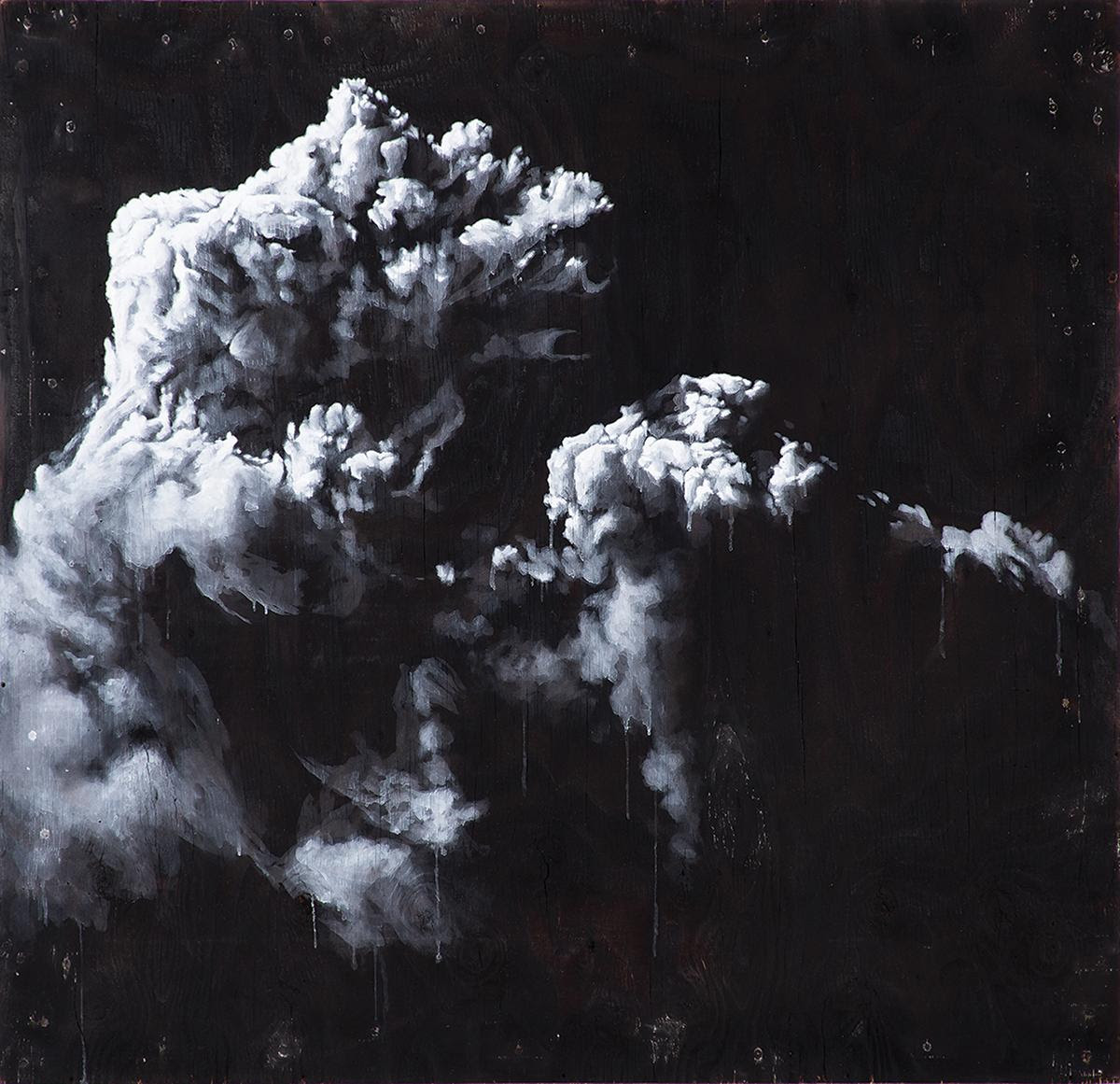
Bender Gallery is honored to present One Day I Will Disappear, a solo exhibition of current paintings by Czech American artist Tom Pazderka. His captivating work is deeply personal and is an elegant metaphor for life’s darker side: of landscape, of nature, of memory. The exhibition runs from July 3 through August 31 during regular business hours. There will be an opening reception for Pazderka on Saturday July 3, from 6 to 9 PM by RSVP only.

Pazderka is a painter, an installation artist, an intellectual, and a writer who spent his undergraduate years in the Asheville area. He was born near Prague in 1981 during the waning of the Communist era in Czechoslovakia. He lived in a panelák, a Soviet-style concrete apartment block, until emigrating to the US in 1994 at the age of twelve. Contrary to what we may envision in America, Pazderka has fond memories of his time there. Although life was basic and creativity was not encouraged, his family was never in need and they enjoyed regular visits to their family cottage in the country. However, most of Pazderka’s life has been lived in the US and he also considers himself American. His work and life are deeply influenced by what he describes as the “incompleteness of the immigrant experience”. Pazderka explores humanity’s quest for a universal truth. The work reflects his reverence for history and the failed Soviet promise of utopia of his native land. It is thus a balancing act between this history and his assimilation into the capitalist consumer culture of the United States.

The works shown in One Day I Will Disappear consist of oil, ash, and charcoal paintings on burned panel and paper. They feature clouds, mountains, portraits, ephemera, and remnants of nature. They are conceptually dark, yet haunting and beautiful at the same time. Pazderka uses humble materials such as found plywood panels that he burns with a torch before beginning the painting process. He transforms the painting surface with the destructive, yet creative power of fire. He states, “Materials and process are components of the work that are as important as the image and what the work is about”.

Pazderka chooses to work in a colorless palette reminiscent of aged black and white photographs. He explains, “Photographs interest me because it is a tangible memory, but photographs are really residue of the photographic process.”  They are themselves a memory of a memory. Much of Pazderka’s work is based on old family photographs and photos taken from nature and architecture relaying the past, the present, and the hope of a better future. The work appears otherworldly and fleeting, like ghosts of his memories. In Pazderka’s words, “The present is all there is in the end.”

Pazderka holds a BFA from Western Carolina University and an MFA from U.C. Santa Barbara. He has received many awards and fellowships and has held residencies in the US, France, and the Czech Republic. He lives and works in Ojai, CA.

Guided Trail Walk
Jul 13 @ 1:00 pm – 3:00 pm
NC Arboretum

Hit the trails and learn more about the Arboretum’s botanically diverse forest with the return of guided trail walks in 2021! In response to COVID-19, new safety measures have been put in place to protect our guests, members, volunteers and staff: Walks will be limited to 10 people, including the guide, and all participants will be required to wear face coverings for the duration of the walk.

This free hiking program is led by trained volunteer guides who take small groups of participants along woodland trails and through a variety of forest types. Depending on the season, topics of discussion may include wildflowers, plant and tree identification, natural history and more.

Guided trail walks depart from the Baker Exhibit Center Lobby every Tuesday and Saturday at 1 p.m. through the month of October. Walks last 1.5- 2.5 hours and are approximately one to two miles in length, and as such are recommended for guests 14 years or older. Walks are held rain or shine, so all participants should dress appropriately for the weather.

Register In Advance

Space is limited and advance registration is encouraged. Pre-registered participants must check in at the Baker Information Desk no later than 10 minutes before the scheduled program to keep their spot. Unclaimed spots will be offered to other guests.

Guests may sign up for trail walks in the following ways:

  • Pre-register online
  • Sign up in-person at the Baker Information Desk.
COLLEGE STUDY HALL
Jul 13 @ 2:00 pm – 5:00 pm
Grind Coffee House

 Mon-Fri from 2-5pm. You have access to high speed internet, work space and HALF-OFF pastries when you present your college ID.

CATAWBA BREWING: PAINTING + PINTS
Jul 13 @ 6:30 pm – 8:30 pm
Catawba Brewing Company - South Slope

Catawba Brewing: Painting & Pints

Get Your Art Buzz On at Catawba Brewing! No artistic talent needed, just the desire to have fun! We take the time to guide you step by step to complete your very own take-home masterpiece. Catawba has a variety of drinks to choose from (beer, wine, cider, and non-alcoholic drinks.) Feel free to bring your own food to this event.

Please arrive 15 minutes early to get signed in and find your seat.

Coupons not valid for this class. Anyone under the age of 18, MUST be accompanied by an adult!

Wednesday, July 14, 2021
2021 Annual Juried Exhibition Calling Visual Artists
Jul 14 all-day
Online w/ Artists Collective | Spartanburg

The prospectus for our 2021 Annual Juried Exhibition is now available for download.
Hillbillyland: Myth + Reality of Appalachian Culture
Jul 14 all-day
Online w/ Western North Carolina Historical Association (WNCHA)
Nominations for Thomas Wolfe Memorial Literary Award
Jul 14 all-day
Online

NOMINATIONS BEING ACCEPTED FOR THE

2021 THOMAS WOLFE MEMORIAL LITERARY AWARD

The Western North Carolina Historical Association is now accepting nominations for the Thomas Wolfe Memorial Literary Award. Originated by the Louis Lipinsky family and now supported by Michael Sartisky, PhD, the Award is a partnership between WNCHA and the Thomas Wolfe Memorial Advisory Committee. It has been presented by WNCHA since 1955. The award comes with a $2,500 cash prize.

The deadline for submission of nominated works is July 31, 2021. Anyone with knowledge of an author who meets the qualification criteria may nominate the author for the award. To be considered, an entry must be a published work of fiction, nonfiction, drama or poetry and meet the following criteria:

  1. It must be a first edition work; revised editions of published works will not be considered for the Award.
  2. The publication date must be between July 1, 2020 and July 1, 2021.
  3. The author must be a native of western North Carolina or a resident of western North Carolina for at least twelve months prior to the closing date for the Award.
  4. An author may also qualify if the work submitted has a focus on or setting in western North Carolina.


Western North Carolina includes the Qualla Boundary and the following 25 counties: Alleghany, Ashe, Avery, Buncombe, Burke, Caldwell, Cherokee, Clay, Graham, Haywood, Henderson, Jackson, Macon, Madison, McDowell, Mitchell, Polk, Rutherford, Surry, Swain, Transylvania, Watauga, Wilkes, Yadkin, and Yancey.

The Award Panel this year consists of: Catherine Frank, Chair, Director, Osher Lifelong Learning Institute at UNC Asheville; Dee James, retired Director of the First-Year Writing Program at UNC Asheville; Tom Muir, Historic Site Manager, Thomas Wolfe Memorial; Gordon McKinney, PhD, former president, Appalachian Studies Association; Terry Roberts, PhD, Director, National Paideia Center; Jim Stokely, President, Wilma Dykeman Legacy.

Nomination letters must specify the following eligibility criteria:

  1. date of publication
  2. birthplace or residence of author
  3. setting of work


Nominators should submit a cover letter along with three copies of the work postmarked no later than July 31, 2021 to:

Wolfe Award Committee

℅ Anne Chesky Smith

WNC Historical Association

283 Victoria Road

Asheville, NC  28801


An awards ceremony and reception, in honor of the finalists and 2021 Award recipient, will be held in early December 2021.

The Association presented the first Thomas Wolfe Memorial Literary Award to Wilma Dykeman in 1955 for The French Broad. The Award has continued to be funded, in part, by Mrs. E. Frank Edwin, a member of the Lipinsky family and for the last three years by WNCHA, and the Thomas Wolfe Memorial Advisory Board, both with support from Michael Sartisky, PhD. Other recipients of this prestigious Award include Robert Morgan, Gail Godwin, John Ehle, Robert Brunk, Michael McFee, Lee Smith, Ron Rash, Wayne Caldwell, and Terry Roberts. Sandra Muse Isaacs was the recipient of the 2020 Thomas Wolfe Memorial Literary Award for her book: Eastern Cherokee Stories: A Living Oral Tradition and Its Cultural Continuance.

Organic Growers School Mentor Services
Jul 14 all-day
Organic Growers School

Mentor Services

Our Mentor Services help support beginning and intermediate farmers by pairing them with experienced, regional farmers who can provide them with one-on-one practical planning skills.
These skills include systems management, marketing and business development, farm design and production, and connecting to the regional farming community
Stickwork by Patrick Dougherty at Biltmore Estate
Jul 14 all-day
Biltmore

Unique outdoor sculptural works by environmental artist Patrick Dougherty, known as “Stick Man,” will reside in Antler Hill Village. Renowned worldwide for his monumental creations, Dougherty weaves saplings and branches into intricate artworks, fashioning whimsical forms ranging from gigantic snares and cocoons to sculptural interpretations of notable buildings. The visual appeal of these large-scale artworks may be appreciated up close as guests are encouraged to walk through and around the creations, affording the opportunity to admire the artistry and technical skills required to make the sculptures.

The 2021 Summer Learning Program: Tails + Tales – an exploration of wildlife and fantastical folktales
Jul 14 all-day
Online

Illustration of animals reading book.

Get ready to go wild at the library for our annual Summer Learning Program. Join us for Tails & Tales – an exploration of wildlife and fantastical folktales. We’ll have an activity sheet with lots of fun adventures for all ages. You can pick up a sheet at any library starting June 1, or download it HERE. Check our calendar to find our most up to date list of programs all summer long.


The 2021 Summer Learning Program is open to young people, preschool through teen, with books and activities for every age. All library programs are free and open to children of all abilities. Come in and see what the library has for you!

Vegetable Gardening: Harvesting Tips!
Jul 14 all-day
Online

Your vegetable garden is likely approaching peak production time—but when and how to harvest? Even if you are a pro, here’s how to make sure those caring for your precious crops while you’re away know when to pick!

What matters about harvest time?

  • Harvest stage affects flavor and yields:
    • Picking too soon not only reduces the amount of food your garden produces but also may mean missing that perfectly ripened taste—although not all vegetables lose flavor after picking.
    • Waiting too long definitely means missing the best flavor—think sweet corn turned starchy—and your produce actually spoils. Crops literally go to seed have accomplished their goal and will stop producing!
  • Factors that affect harvest and storage.
    • Warmer temperatures after picking can affect flavor—crops like peas and sweet corn that turn starchy, for example, need immediate cooling. Joseph Masabni of Texas A&M Extension, advises “harvest these vegetables early in the morning or right before you intend to use them.”
    • Not all crops benefit from refrigeration, however! And humidity levels and air circulation are important, too! If you’re not going to use your bounty immediately, some crops, such as garlic, dry onions, potatoes, and tomatoes are best stored only at room temperature, according to UC-Davis Post Harvest Technology specialists (see below). They also recommend that cucumbers, eggplants, and peppers be refrigerated only for 1 to 3 days and then used as soon as you remove them from the cold.
    • Advise those harvesting in your absence how often you check your crops, and which are most time-sensitive!

 Things to look for when you harvest

Harvesting takes more time than you’d expect—look carefully for items to pick amongst all those leaves and vines. This makes harvesting a great time to give your garden plants a quick check-up!

  • Size matters!
    • Jokes abound about baseball-bat-size zucchini, but squash aren’t the only crops that can grow out of useful size.
    • If you intend to eat fresh beans rather than saving them to use dry, the beans need to just start to fill out their pods. 
      These red noodle beans need picking!


  • Color changes are usually important, too.
    • Tomatoes turning red are an obvious example, but how red is the best time for picking? Maybe earlier than you think! Picking at the “breaker” stage rather than fully red means your tomatoes will continue to ripen indoors, taste vine-ripened, but won’t suffer sunscald, or damage from insects or birds. 
      Tomatoes will develop full flavor ripened indoors if picked once they begin to show some color.


    • Cucumbers should still be uniformly green, not starting to yellow. 
      Cucumbers are best picked green rather than starting to yellow.


    •  Eggplants should be purple (light or dark depending on the variety), but still glossy, not dull 
      Pick eggplants while the skin is still glossy.


    • Watermelons, on the other hand, should develop a duller, rougher surface and the spot touching the ground should be yellowing, not white 
      Ripe watermelon skin should be starting to dull and roughen and the ground spot turning yellow.


    • .Detecting defects may mean removing fruits before they take any more resources from the plant—think blossom-end rot on tomatoes or peppers—or harvesting while part of the crop is still salvageable—such as a nip out of an otherwise healthy tomato.
    • Damage may alert you to insect infestations—minimize or eliminate, by hand-picking the culprits—such as snails or slugs—or treating to prevent further damage—wash away aphids on greens or treating pickleworm infestations of cucumbers and squash with pesticides, for example. Learn which “bugs” you see are pests and which are helpful predators!
    • Harvest “helpers” will be more eager to volunteer if they pick at the right time—and you won’t find all your tomatoes gone despite their size or plants loaded with overripe items bringing production to a halt. Alerting you to any emerging problems is another bonus.

“Harvesting” spent plants?

While picking your crops pick off dead leaves, spent blossoms, and trim errant runners to keep plants looking good and productive. Knowledgeable helpers can perform these tasks.

In WNC, most vegetable garden plants are annuals, or treated as such, so when you harvest, evaluate when it’s time to pull the whole plant—it may be too risky to ask short-term caregivers to make this decision!

  • Is the plant diseased? If there are signs of disease, either do what you can to remove diseased portions, treat the problem, or remove the entire plant.
  • Is production slowing?
    • Review fertilizing or watering practices to improve yields. Most crops need an inch of rain a week to prosper—water established plants deeply once a week if rains are insufficient. Check your crops’ needs for fertilizer and the application rates recommended for the fertilizers you are using.
    • Extreme temperatures may interfere with fruit set or how your crops ripen. Be patient if better weather will solve the problem! Note, though, that spring crops that fade with high temperatures are long gone; so too, frosts will damage tender crops, so harvest these before freezing temperatures.
    • Once you’ve decided your plants have passed peak production, pull the plants and consider planting a fall crop. See the calendar below for all the crops you can plant in August for a bountiful autumn harvest!

 Article by Buncombe County Extension Master GardenerSM Volunteers

 For more information:

When to harvest specific crops: https://content.ces.ncsu.edu/extension-gardener-handbook/16-vegetable-gardening#vegetableharvestingguidelines

https://agrilifeextension.tamu.edu/library/gardening/harvesting-handling-vegetables-garden/

Ripening after harvest:

https://gardenprofessors.com/ripening/

https://www.johnson.k-state.edu/lawn-garden/agent-articles/vegetables/harvest-ripen-tomatoes.html

Storing produce:

http://postharvest.ucdavis.edu/files/230110.pdf

Planting times for WNC:

https://content.ces.ncsu.edu/western-north-carolina-planting-calendar-for-annual-vegetables-fruits-and-herbs

Virtual Exhibit: Douglas Ellington
Jul 14 all-day
Online w/ Western North Carolina Historical Association

Asheville’s economic and building boom of the 1920s created a rarified atmosphere unique within Western North Carolina.  Douglas Ellington is known as the architect who changed Asheville into an Art Deco showplace. With his ability to combine architectural styles he produced a series of one of a kind buildings—buildings which changed the face of Asheville—the City Building, Asheville High School, First Baptist Church and S&W Cafeteria. Douglas Ellington: Asheville’s Boomtown Architect presents a look at his iconic Asheville creations along with other buildings he completed throughout his career in other cities.


WINNER of a 2014 Griffin Award for Excellence in Education from the Preservation Society of Asheville and Buncombe County

Business Morning Update
Jul 14 @ 8:00 am – 9:00 am
Online w/ Henderson County Chamber of Commerce
Wild Art Sculpture Showcase
Jul 14 @ 8:00 am – 9:00 pm
NC Arboretum

The North Carolina Arboretum is going wild for art and nature in 2021 with Wild Art! On view April 1 through September 26, this outdoor sculpture exhibition features works by 17 local and national artists drawing inspiration from the natural environment. Situated throughout the Arboretum’s spacious, open-air gardens, the show offers guests a doorway into the wild world from the comfort and safety of cultivated landscapes transformed by art.

The 18 sculptures on display represent a variety of approaches to the theme of “wild art,” from the literal to the abstract, and are crafted from a diverse array of materials that will delight and inspire. Let your imagination take you on a wild journey into the world of plants and animals near and far with Wild Art at The North Carolina Arboretum.

The exhibit is available to all guests during normal Arboretum hours, and there is no admission cost to view the sculptures beyond our usual parking fee of $16 per personal vehicle.

Mission Acceleration Business Accelerator
Jul 14 @ 8:30 am – 12:30 pm
Blue Ridge Community College

Mission Acceleration Business Accelerator Businessman's hand points up along graph line going up

Take your business to the next level.

A comprehensive business innovation program designed to assist for profit, not-for-profit and family owned businesses to take them to the next level of success and sustainability.

August 25 – December 15, 2021

Registration for the 2021 Program now open.
Registration accepted through August 23, 2021.

Blue Ridge Community College and the Henderson County Chamber of Commerce have partnered once again to offer the Mission Acceleration Business Accelerator, a five-month, ten-course program.


August 25, 2021
Business Best Practices and KPI (Key Performance Indicators) Checklist by Department Identifying Opportunities for Acceleration

September 8, 2021
Management and Leadership

September 15, 2021
Human Resources, Legal and Insurance

September 29, 2021
Capital and Purchasing

October 13, 2021
Competition and Competitive Advantage

October 27, 2021
Branding, Marketing and Sales

November 10, 2021
Customer Service and Information Technology

November 17, 2021
Business Logistics: Best ways to meet customer needs

December 1, 2021
Accounting and Finance

December 15, 2021
Business Acceleration Plan Presentation and Graduation

Sessions run Wednesdays, from 8:30 a.m. to 12:30 p.m. except 8:30 a.m. to 4:30 p.m. on August 25 and December 15, 2021.

A Life in the Wild Art Exhibit
Jul 14 @ 9:00 am – 5:00 pm
The North Carolina Arboretum

A Life in the Wild  features more than 30 large-format images from award-winning nature photographer Thomas D. Mangelsen, who has devoted decades of his life to documenting wild places across the globe and the remarkable creatures that inhabit them. For this traveling retrospective exhibition of his works, Mangelsen has hand-selected several legacy photographs from his portfolio of more than 40 years, during which time he has captured thousands of breathtaking images of wildlife under natural — and sometimes harsh — conditions. With subjects ranging from black bears in the Great Smoky Mountains to plains zebras in the savannas of East Africa, this collection of photographs serves to remind us all to slow down and take a moment to connect with nature near and far. Named the 2011 Conservation Photographer of the Year by Nature’s Best Photography, among other accolades, Mangelsen has his work featured in the permanent collection at the Smithsonian’s National Museum of Natural History in Washington, D.C..

A Life in the Wild is on display daily, May 15 – September 5, 2021, from 9 a.m. to 5 p.m. inside the Baker Exhibit Center. Face coverings are required for visitors ages 5 years and older.

Exhibit support for A Life in the Wild is provided in part by The North Carolina Arboretum SocietyAsheville Citizen-TimesBiltmore Farms HotelsGasperson Moving & StorageRomanticAsheville.com Travel Guide and Smoky Mountain Living Magazine

THOMAS D. MANGELSEN – A LIFE IN THE WILD, produced by David J. Wagner, L.L.C., David J. Wagner, Ph.D., Curator/Tour Director.

Biltmore: Stickwork by Patrick Dougherty
Jul 14 @ 9:30 am – 6:00 pm
Biltmore

Image result for Stickwork by Patrick Dougherty

Included with admission

A unique-to-Biltmore, large-scale outdoor sculpture will be crafted and installed in Antler Hill Village this spring by Patrick Dougherty. Over the last three decades, this internationally-acclaimed artist has combined his carpentry skills and love of nature to build over 300 of these wondrous works, captivating the hearts and imaginations of viewers worldwide.

Image: Close Ties (2006) Scottish Basketmakers Circle, Dingwall, Scotland. Photo: Fin Macrae
NOTE: This is an example of Patrick Dougherty’s work; the artist will create Biltmore’s unique structure in Antler Hill Village this spring.

One Day I Will Disappear, a solo exhibition
Jul 14 @ 10:00 am – 6:00 pm
Bender Gallery

Bender Gallery is honored to present One Day I Will Disappear, a solo exhibition of current paintings by Czech American artist Tom Pazderka. His captivating work is deeply personal and is an elegant metaphor for life’s darker side: of landscape, of nature, of memory. The exhibition runs from July 3 through August 31 during regular business hours. There will be an opening reception for Pazderka on Saturday July 3, from 6 to 9 PM by RSVP only.

Pazderka is a painter, an installation artist, an intellectual, and a writer who spent his undergraduate years in the Asheville area. He was born near Prague in 1981 during the waning of the Communist era in Czechoslovakia. He lived in a panelák, a Soviet-style concrete apartment block, until emigrating to the US in 1994 at the age of twelve. Contrary to what we may envision in America, Pazderka has fond memories of his time there. Although life was basic and creativity was not encouraged, his family was never in need and they enjoyed regular visits to their family cottage in the country. However, most of Pazderka’s life has been lived in the US and he also considers himself American. His work and life are deeply influenced by what he describes as the “incompleteness of the immigrant experience”. Pazderka explores humanity’s quest for a universal truth. The work reflects his reverence for history and the failed Soviet promise of utopia of his native land. It is thus a balancing act between this history and his assimilation into the capitalist consumer culture of the United States.

The works shown in One Day I Will Disappear consist of oil, ash, and charcoal paintings on burned panel and paper. They feature clouds, mountains, portraits, ephemera, and remnants of nature. They are conceptually dark, yet haunting and beautiful at the same time. Pazderka uses humble materials such as found plywood panels that he burns with a torch before beginning the painting process. He transforms the painting surface with the destructive, yet creative power of fire. He states, “Materials and process are components of the work that are as important as the image and what the work is about”.

Pazderka chooses to work in a colorless palette reminiscent of aged black and white photographs. He explains, “Photographs interest me because it is a tangible memory, but photographs are really residue of the photographic process.”  They are themselves a memory of a memory. Much of Pazderka’s work is based on old family photographs and photos taken from nature and architecture relaying the past, the present, and the hope of a better future. The work appears otherworldly and fleeting, like ghosts of his memories. In Pazderka’s words, “The present is all there is in the end.”

Pazderka holds a BFA from Western Carolina University and an MFA from U.C. Santa Barbara. He has received many awards and fellowships and has held residencies in the US, France, and the Czech Republic. He lives and works in Ojai, CA.

Asheville Art Museum Presents Huffman Gifts of Contemporary Southern Folk Art
Jul 14 @ 11:00 am – 6:00 pm
Asheville Art Museum
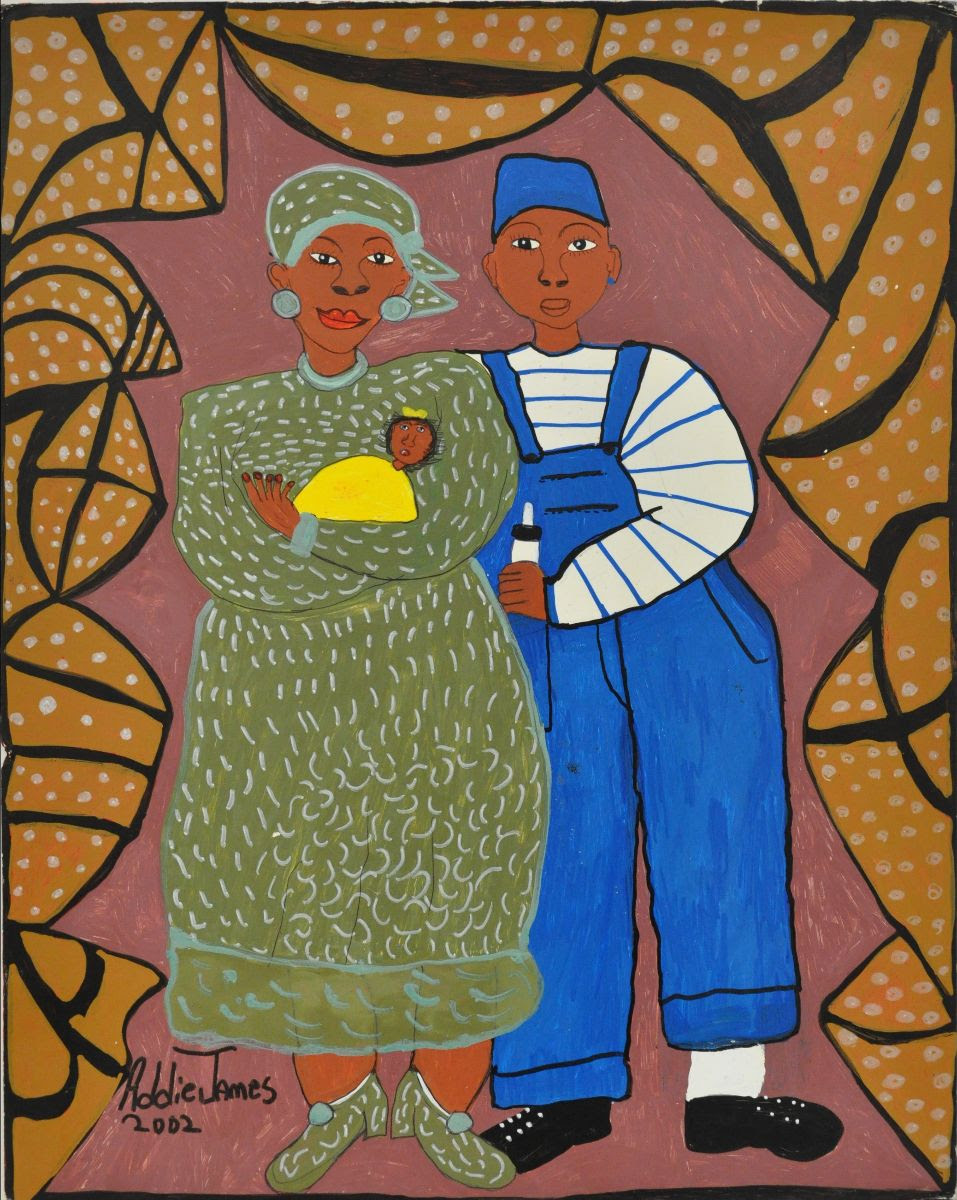
Addie James, Big Mama Demp, 2002, acrylic and pen on foamcore, 20 × 16 inches. Asheville Art Museum. © Estate of Addie James.
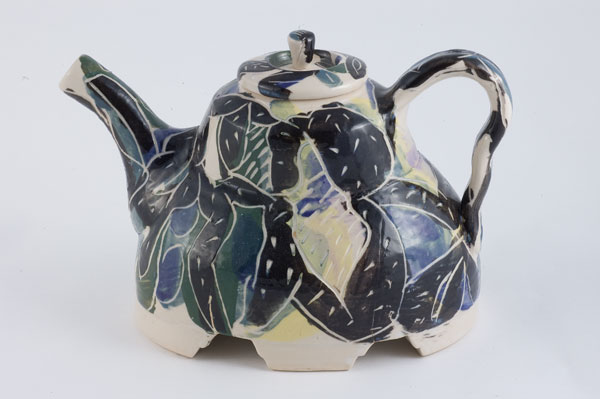
Asheville, N.C.Huffman Gifts of Contemporary Southern Folk Art features gifts of contemporary southern folk art including paintings, ceramics, and more from the collection of Allen and Barry Huffman. The exhibition will be on view in the Asheville Art Museum’s Judith S. Moore Gallery from April 7 through September 13, 2021.

Allen and Barry Huffman have been collecting contemporary southern folk art for the past 40 years. Both collectors are originally from the South, and their journey together has led them around the southeastern United States, from Florida to Alabama to their hometown of Hickory, NC. In each place, they formed bonds with regional artists and learned first-hand the narratives of each artwork. Within their collection are subsets of folk art, including self-taught artists driven to share their messages, crafts for the tourist market, and southern pottery. The guiding principle evident throughout their collection and the generous donation of contemporary southern folk art that they have gifted to the Asheville Art Museum is the story told by each of these artists through their artworks.

“The Asheville Art Museum is fortunate to have friends like the Huffmans; not only are they prolific collectors who have generously shared gifts with the Museum, but their knowledge about southern contemporary folk art and its artists enriches the region,” says Whitney Richardson, associate curator. “I have such respect for the curious nature with which Allen and Barry have approached adding each artwork to their collection. They formed a friendship with almost every artist they bought from and have a genuine interest in the stories being told by the art and its artist.”

Artists featured include Barry Gurley Huffman (GA, 1943–Present Hickory, NC), James Cook (Glen Alpine, NC 1934–1984 Lawndale, NC), Albert Hodge (Vale, NC 1941—Present Vale, NC), Howard Finster (Valley Mead, AL 1916–2001 Rome, GA), Addie James (SC 1943–2011 Statesville, NC), James Harold Jennings (Pinnacle, NC 1931–1999 Pinnacle, NC), LaVon Van Williams Jr. (Lakeland, FL 1958–Present Lexington, KY), and more.

This exhibition is organized by the Asheville Art Museum and curated by Whitney Richardson, associate curator. For more information, visit ashevilleart.org/exhibitions/huffman-gifts-of-contemporary-southern-folk-art.

Asheville Art Museum Presents Olympics-Themed Exhibitions for Summer 2021
Jul 14 @ 11:00 am – 6:00 pm
Asheville Art Museum
Walter Iooss Jr., Carl Lewis, Houston, TX, 1991, archival pigment print on paper, 23 ¼ × 29 inches. Asheville Art Museum. © Walter Iooss Jr.
Asheville, N.C.—The Asheville Art Museum is organizing a group of three exhibitions drawn from the Musem’s Collection in conjunction with the 2021 Summer Olympics in Tokyo. They will be on view in the Explore Asheville Exhibition Hall from July 9 through October 4, 2021.

“With these three exhibitions, the Asheville Art Museum is looking froward to bringing the Olympics to Asheville,” says Whitney Richardson, associate curator. “Athletes, sports fanatics, and those who enjoy art that captures the human athletic form will, I hope, all find something valuable in visiting these exhibitions. Some of the artworks are by renowned artists and some depict world-famous athletes, but it all speaks to the importance of the Olympics—and sports in general—in our lives and how we honor our athletes.”

Golden Hour: Olympians Photographed by Walter Iooss Jr. highlights dozens of photographer Walter Iooss Jr.’s images from the Museum’s Collection. Over his 60-year career, Iooss (Temple, TX 1943–Present NY) has captured portraits of hundreds of celebrated American athletes in action, and a select few as they prepared for the 1984 Summer Olympics in Los Angeles. He began his career shooting for Sports Illustrated and has contributed to the magazine for more than 50 years.

Artistic Tribute: Representation of the Athlete pays homage to the historic Olympic tradition of including the arts as a competition. Until 1948, the modern Olympics included artistic representations of the athletes in painting and sculpture, among other media, as the ancient Olympics had done. This exhibition features artworks from the Museum’s Collection that follow this custom by artists including Robert Rauschenberg (Port Arthur, TX 1925–2008 Captiva, FL), Dox Thrash (Griffin, GA 1893–1965 Philadelphia, PA), Gerald van de Wiele (Detroit, MI 1932–Present New York, NY), Ward H. Nichols (Welch, WV 1930–Present NC), Marvin Lipofsky (Elgin, IL 1938–2016 Berkeley, CA), David Levinthal (San Francisco, CA 1949–Present New York, NY), and more.

Precious Medals: Gold, Silver & Bronze highlights works from the Museum’s Collection including glass, ceramic, fashion, and sculpture that use the same metals that are given to the top three placing athletes in an Olympic competition. The precious nature of these three metals is examined in relation to the artworks shown. Artists featured in this exhibition include Virginia Scotchie (Portsmouth, VA 1955–Present Columbia, SC), Mark Stanitz (1949–Present Northern California), William Waldo Dodge Jr. (Washington, D.C. 1895–1971 Asheville, NC), Richard Ritter (Detroit, MI 1940–Present Bakersville, NC), Jan Williams (Bucks County, PA–Present Bakersville, NC), and more.

These three exhibitions are organized by the Asheville Art Museum and curated by Whitney Richardson, associate curator.

Asheville Art Museum: New Exhibition— Meeting the Moon
Jul 14 @ 11:00 am – 6:00 pm
Asheville Art Museum

The Asheville Art Museum announces Meeting the Moon, an exhibition featuring prints, photographs, ceramics, sculptures, and more from the Museum’s Collection. This exhibition will be on view in the Asheville Art Museum’s McClinton Gallery February 3 through July 26, 2021.

2021 marks the 60th anniversary of the beginning of the Apollo space program at NASA, but its inception was hardly the beginning of humankind’s fascination with Earth’s only moon. Before space travel existed, the moon—its shape, its mystery, and the face we see in it—inspired countless artists. Once astronauts landed on the moon and we saw our world from a new perspective, a surge of creativity flooded the American art scene, in paintings, prints, sculpture, music, crafts, film, and poetry.

This exhibition, whose title is taken from a 1913 Robert Frost poem, examines artwork in the Asheville Art Museum’s Collection of artists who were inspired by the unknown, then increasingly familiar moon. Meeting the Moon includes works by nationally renowned artists Newcomb Pottery, James Rosenquist, Maltby Sykes, Paul Soldner, John Lewis, Richard Ritter (Bakersville, NC), and Mark Peiser (Penland, NC). Western North Carolina artists include Jane Peiser (Penland, NC), Jak Brewer (Zionville, NC), Dirck Cruser (Asheville, NC), George Peterson (Lake Toxaway, NC), John B. Neff (NC), and Maud Gatewood (Yanceyville, NC).

Meeting the Moon offers the opportunity to combine science and popular culture with works of art in the Museum’s Collection,” says Whitney Richardson, associate curator. “I think all visitors will find something that draws them into this exhibition, whether it’s the artwork, poetry, music, or science of space travel. It’s such an affirmation of humanity to find these mysteries, like the moon, which enchant us all.”

This exhibition is organized by the Asheville Art Museum and curated by Whitney Richardson, associate curator. Visit ashevilleart.org for more information about this and other exhibitions.

Old World/New Soil Art Exhibit
Jul 14 @ 11:00 am – 6:00 pm
Asheville Art Museum

Old World/New Soil

Foreign-Born American Artists from the Asheville Art Museum Collection

DATES:
May 7–August 2, 2021
LOCATION:
Appleby Foundation Exhibition Hall

Inspired by Allen H. Eaton’s book from 1932, Immigrant Gifts to American Life: Some Experiments in Appreciation of the Contributions of Our Foreign-Born Citizens to American Culture, this exhibition focuses on those artists in the Asheville Art Museum Collection who were born outside of the United States of America. As an American art museum, the exhibition calls attention to the fact that we have decided to collect those artists who came to this country – either at their own prompting or out of necessity. As they adopted America as their new home, we have, in turn, embraced them, their creative output, and their artwork.

Old World/New Soil: Foreign-Born American Artists from the Asheville Art Museum Collection is curated by Assistant Curator Whitney Richardson.

Our Strength Is Our People Art Exhibit
Jul 14 @ 11:00 am – 6:00 pm
Asheville Art Museum

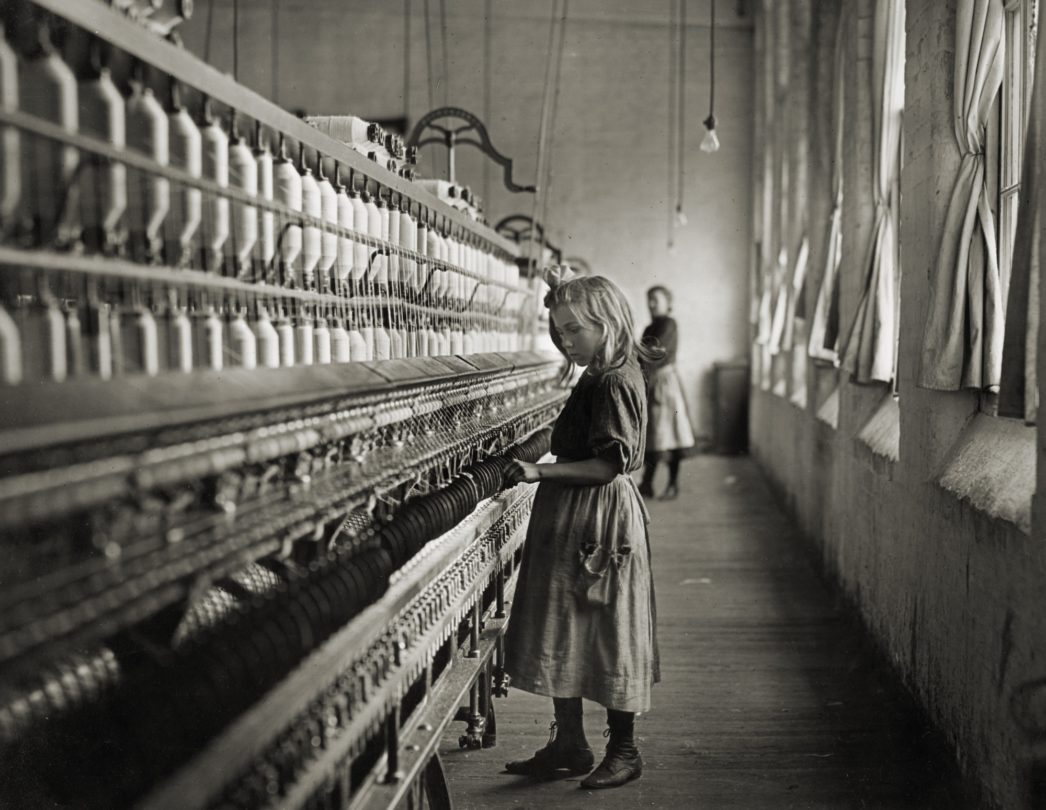
Sadie, a Cotton Mill Spinner, Lancaster, South Carolina

May 7–August 2, 2021

Our Strength Is Our People

The Humanist Photographs of Lewis Hine

DATES:
May 7–August 2, 2021
LOCATION:
Appleby Foundation Exhibition Hall

This exhibition surveys the life’s work of Lewis Wickes Hine (1874–1940), the father of American documentary photography. Consisting entirely of rare vintage prints, it covers the three overarching themes of Hine’s three-decade career—the immigrant experience, child labor, and the American worker—and culminates in his magnificent studies of the construction of the Empire State Building.

Our Strength Is Our People is organized by art2art Circulating Exhibitions, LLC. All works are from the private collection of Michael Mattis and Judith Hochberg.

.

Public Domain: Photography and the Preservation of Public Lands Exhibition
Jul 14 @ 11:00 am – 6:00 pm
Asheville Art Museum

11am–6pm. Late-night Thursdays until 9pm; closed Tuesdays.

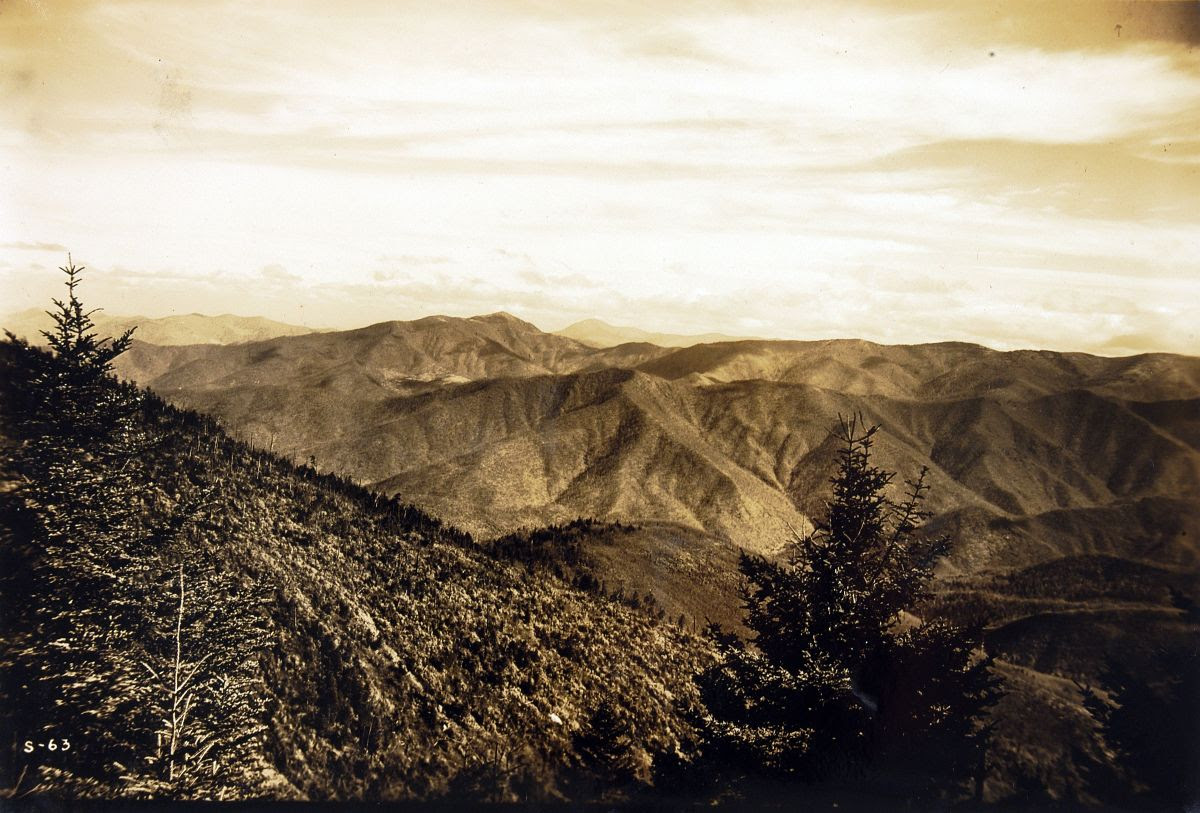
Public Domain: Photography and the Preservation of Public Lands presents works drawn from the Asheville Art Museum’s Collection by artists looking both regionally and nationally at lands that are either state or federally managed or have become so. This exhibition will be on view in the Asheville Art Museum’s Van Winkle Law Firm Gallery May 19 through August 30, 2021. 

“The Asheville Art Museum’s growing collection of photography features a variety of artworks that consider humankind’s impact on our environment and world,” said Hilary Schroeder, assistant curator. “The imagery featured in Public Domain reminds us of the critical role that artists play in environmental activism and preservation, affecting change at a range of levels”. 

Through images capturing the beauty, changes, and even devastation to the American landscape, photographers have played a vital role in advocating for the preservation of nature via the establishment and maintenance of state parks, national parks and monuments, and other federally protected lands. From George Masa and Timothy McCoy’s photographs of Great Smoky Mountains National Park to a selection of works from Robert Glenn Ketchum’s Overlooked in America: The Success and Failure of Federal Land Management series, these artworks provoke contemplation of both nature’s beauty and a calling to protect it. This year marks the 75th anniversary of the Bureau of Land Management whose mission is to sustain the health, diversity, and productivity of the public lands for the use and enjoyment of present and future generations. 

Photographers include Robert Glenn Ketchum, George Masa, Timothy McCoy, Benjamin Porter, Sally Gall, and more. 

This exhibition is organized by the Asheville Art Museum and curated by Hilary Schroeder, assistant curator.