Upcoming events and things to do in Asheville, NC. Below is a list of events for festivals, concerts, art exhibitions, group meetups and more.
Interested in adding an event to our calendar? Please click the green “Post Your Event” button below.
Saturday, November
7, 2020
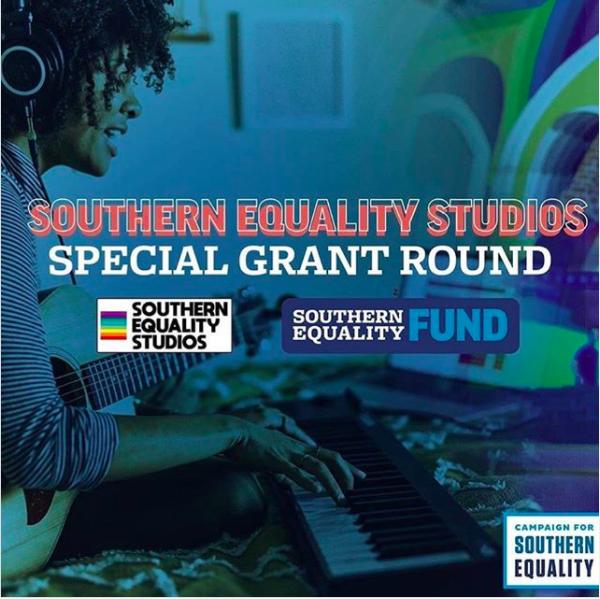
The Southern Equality Studios special grant round is dedicated to resourcing and celebrating LGBTQ artists and creatives across the LGBTQ South who are BIPOC (Black, Indigenous, or people of color). Grants of up to $500 will support BIPOC LGBTQ Southern artists working on a wide range of creative projects.
These new grant rounds are part of CSE’s Southern Equality Fund, which has been making grassroots grants across the LGBTQ South since 2015. Since its inception, the Southern Equality Fund has prioritized supporting work led by BIPOC, transgender, and rural organizers.
Have you seen an inspiring BIPOC LGBTQ artists in your community, or are you a creative who could use grant support? If so, we want to hear from you!
We are specifically seeking nominations for artists or creatives efforts who are:
- Based in the South.
- Black, Indigenous, or people of color (BIPOC).
- LGBTQ people.
- Funds can be used to support a wide range of artistic endeavors.
- Nominees are eligible to receive this grant even if they have received a previous Southern Equality Fund grant; however, priority will be given to nominees who have not yet received a grant.
- Anyone is welcome and encouraged to nominate an artist for a grant and artists may also nominate themselves.
- There are no grant reports, budgets or supplemental materials required in this process. However, if selected, applicants will have to fill out and return a W9 form to receive their funding.
Sunday, November
8, 2020
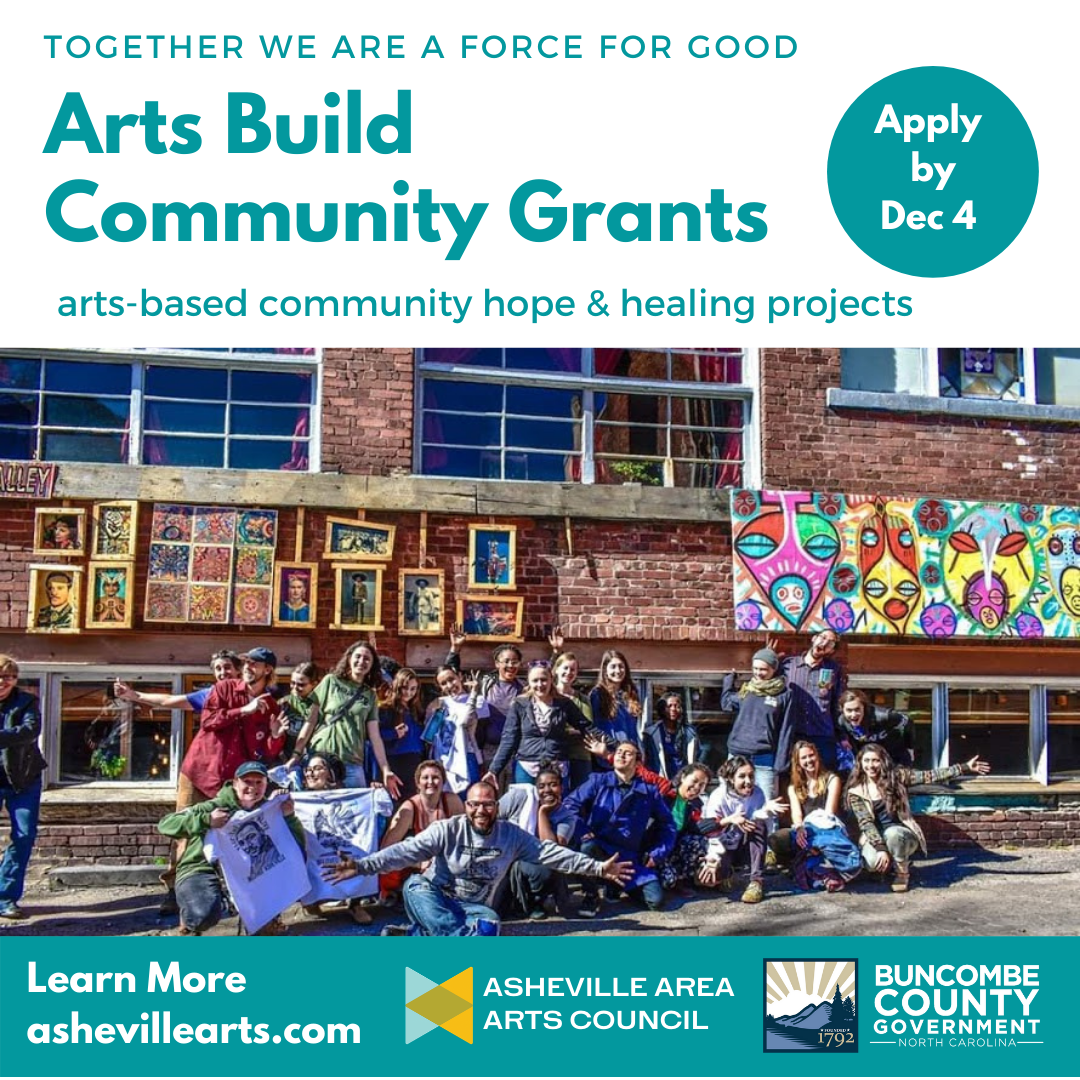
This year the Asheville Area Arts Council is offering $500 micro-grants for arts-based projects specifically focused on community hope and healing. These can be projects that bring joy to our local community, and/or projects that actively engage community members in safe activities following state and local health restrictions.
Arts and culture are a fundamental part of our community. They help us connect with one another and better understand history, people, and new ideas. When people become involved in the design, creation, and upkeep of places, they develop a vested interest in using and maintaining these spaces. When neighbors have a true sense of “ownership” or connection to the places they frequent, the community becomes a better place to live, work, and visit. According to Americans for the Arts (AFTA), “86% of participants who took part in community-based art want to be involved in future projects, and people living where these art projects occurred were more than twice as likely to be civically engaged as those whose neighborhoods did not have projects.”
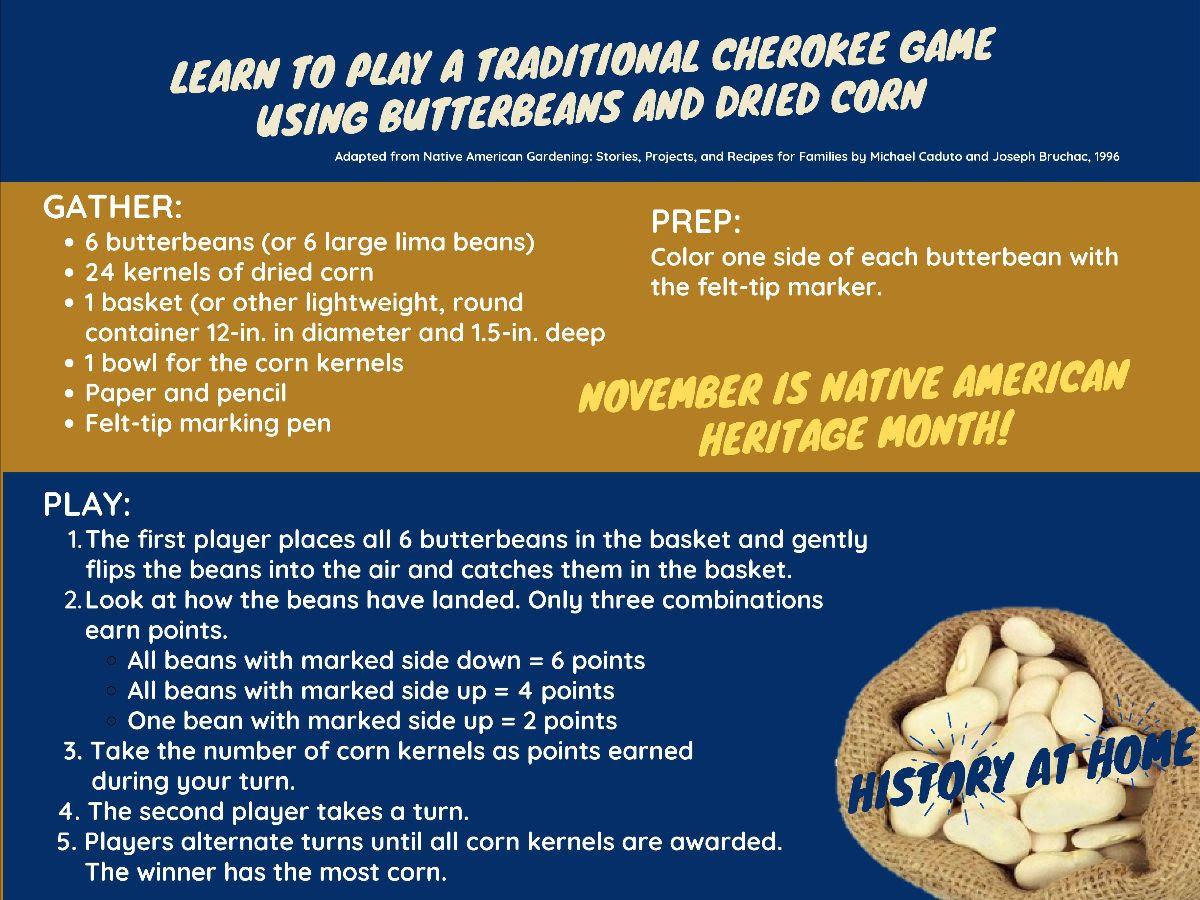
This is a variation on the tradition Cherokee Butterbean Game. It can be played by several individual players or several teams. Traditionally, this game uses three butterbeans that have been split in half. More…
From the Museum of the Cherokee Indian: Cherokee people began growing a form of corn two thousand years ago. By about a thousand years ago, or 1000 AD, they were growing corn and beans, as we know them today. Corn, beans, and squash was always grown together and was known as the “Three Sisters.” Beans restore nitrogen to the soil while corn depletes nitrogen. The vines of the beans and squash twined up the cornstalks. When corn and beans are eaten together, they provide complete proteins and amino acids for our diet.
Corn was so important to the Cherokee that they had important celebrations and ceremonies called “Green Corn Festivals.” The first of these was held in August, before the sweet corn was ready to eat. The last was held in October or November, when the
field corn was ready to be picked. At these ceremonies, people purified themselves physically and spiritually before feasting together. At this time, people got married and divorced. All old scores were settled and everyone started a new year together.

As part of the state’s spending plan for federal CARES Act funding, $9.4 million was designated to provide direct aid to arts councils and arts organizations in an effort to mitigate business disruptions caused by COVID-19. These funds will be distributed on a per-capita basis to all North Carolina counties with a population less than 1 million people. Buncombe County received an allocation of $299,212.42, which will be distributed by the Asheville Area Arts Council.
The Southern Equality Studios special grant round is dedicated to resourcing and celebrating LGBTQ artists and creatives across the LGBTQ South who are BIPOC (Black, Indigenous, or people of color). Grants of up to $500 will support BIPOC LGBTQ Southern artists working on a wide range of creative projects.
These new grant rounds are part of CSE’s Southern Equality Fund, which has been making grassroots grants across the LGBTQ South since 2015. Since its inception, the Southern Equality Fund has prioritized supporting work led by BIPOC, transgender, and rural organizers.
Have you seen an inspiring BIPOC LGBTQ artists in your community, or are you a creative who could use grant support? If so, we want to hear from you!
We are specifically seeking nominations for artists or creatives efforts who are:
- Based in the South.
- Black, Indigenous, or people of color (BIPOC).
- LGBTQ people.
- Funds can be used to support a wide range of artistic endeavors.
- Nominees are eligible to receive this grant even if they have received a previous Southern Equality Fund grant; however, priority will be given to nominees who have not yet received a grant.
- Anyone is welcome and encouraged to nominate an artist for a grant and artists may also nominate themselves.
- There are no grant reports, budgets or supplemental materials required in this process. However, if selected, applicants will have to fill out and return a W9 form to receive their funding.
Monday, November
9, 2020
This year the Asheville Area Arts Council is offering $500 micro-grants for arts-based projects specifically focused on community hope and healing. These can be projects that bring joy to our local community, and/or projects that actively engage community members in safe activities following state and local health restrictions.
Arts and culture are a fundamental part of our community. They help us connect with one another and better understand history, people, and new ideas. When people become involved in the design, creation, and upkeep of places, they develop a vested interest in using and maintaining these spaces. When neighbors have a true sense of “ownership” or connection to the places they frequent, the community becomes a better place to live, work, and visit. According to Americans for the Arts (AFTA), “86% of participants who took part in community-based art want to be involved in future projects, and people living where these art projects occurred were more than twice as likely to be civically engaged as those whose neighborhoods did not have projects.”
As part of the state’s spending plan for federal CARES Act funding, $9.4 million was designated to provide direct aid to arts councils and arts organizations in an effort to mitigate business disruptions caused by COVID-19. These funds will be distributed on a per-capita basis to all North Carolina counties with a population less than 1 million people. Buncombe County received an allocation of $299,212.42, which will be distributed by the Asheville Area Arts Council.
The Southern Equality Studios special grant round is dedicated to resourcing and celebrating LGBTQ artists and creatives across the LGBTQ South who are BIPOC (Black, Indigenous, or people of color). Grants of up to $500 will support BIPOC LGBTQ Southern artists working on a wide range of creative projects.
These new grant rounds are part of CSE’s Southern Equality Fund, which has been making grassroots grants across the LGBTQ South since 2015. Since its inception, the Southern Equality Fund has prioritized supporting work led by BIPOC, transgender, and rural organizers.
Have you seen an inspiring BIPOC LGBTQ artists in your community, or are you a creative who could use grant support? If so, we want to hear from you!
We are specifically seeking nominations for artists or creatives efforts who are:
- Based in the South.
- Black, Indigenous, or people of color (BIPOC).
- LGBTQ people.
- Funds can be used to support a wide range of artistic endeavors.
- Nominees are eligible to receive this grant even if they have received a previous Southern Equality Fund grant; however, priority will be given to nominees who have not yet received a grant.
- Anyone is welcome and encouraged to nominate an artist for a grant and artists may also nominate themselves.
- There are no grant reports, budgets or supplemental materials required in this process. However, if selected, applicants will have to fill out and return a W9 form to receive their funding.
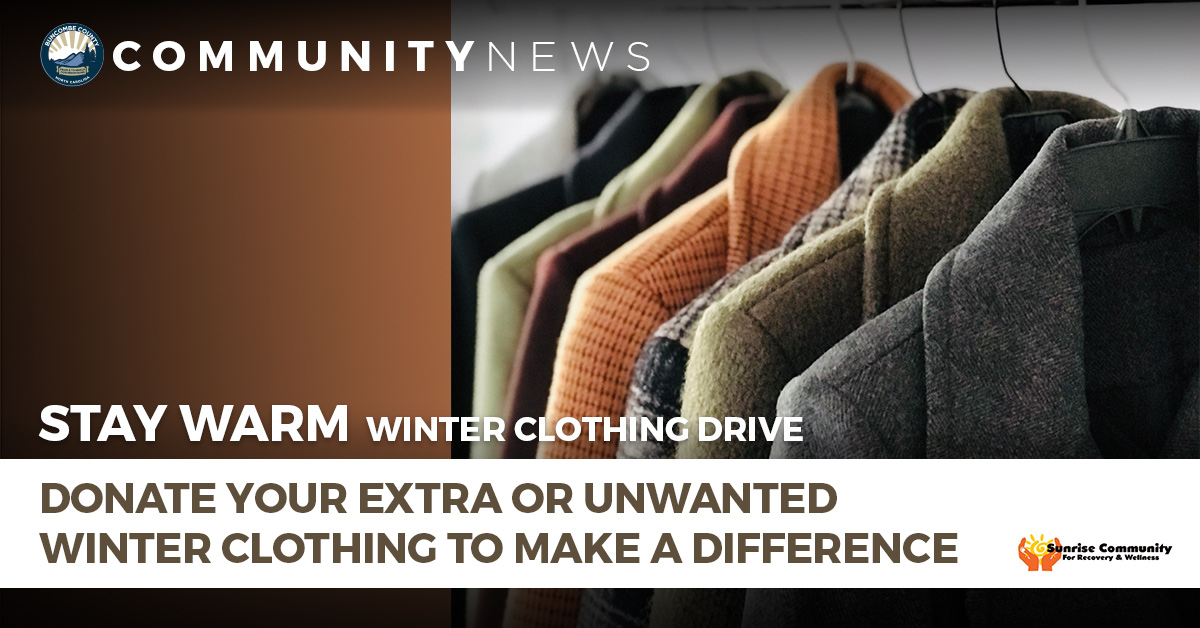
Is it time to give your winter wardrobe an upgrade? Do you have more winter clothing than you want or need? Are some of your winter clothes too small or too big? If you answered yes to any of these questions, consider donating your extra or unwanted winter clothing items to the Stay Warm Winter Clothing Drive hosted by Buncombe County Health and Human Services in partnership with Sunrise Community for Recovery and Wellness.
Donations will be accepted Nov. 1-30, Monday-Friday from noon-4 p.m. in our Syringe Service Program (Disease Control) located at 40 Coxe Ave. We will accept gently used donations of the following items:
- Winter coats
- Scarves
- Socks
- Gloves
- Shoes/Boots (no sandals)
- Blankets
For your safety and ours, we are offering no contact donation drop off. We have donation bins located at The Syringe Service Program (Disease Control). Donations will be collected daily by our Harm Reduction Coordinator, cleaned, and prepared to be distributed to clients in need of warm clothing this winter.
Tuesday, November
10, 2020
This year the Asheville Area Arts Council is offering $500 micro-grants for arts-based projects specifically focused on community hope and healing. These can be projects that bring joy to our local community, and/or projects that actively engage community members in safe activities following state and local health restrictions.
Arts and culture are a fundamental part of our community. They help us connect with one another and better understand history, people, and new ideas. When people become involved in the design, creation, and upkeep of places, they develop a vested interest in using and maintaining these spaces. When neighbors have a true sense of “ownership” or connection to the places they frequent, the community becomes a better place to live, work, and visit. According to Americans for the Arts (AFTA), “86% of participants who took part in community-based art want to be involved in future projects, and people living where these art projects occurred were more than twice as likely to be civically engaged as those whose neighborhoods did not have projects.”
The Southern Equality Studios special grant round is dedicated to resourcing and celebrating LGBTQ artists and creatives across the LGBTQ South who are BIPOC (Black, Indigenous, or people of color). Grants of up to $500 will support BIPOC LGBTQ Southern artists working on a wide range of creative projects.
These new grant rounds are part of CSE’s Southern Equality Fund, which has been making grassroots grants across the LGBTQ South since 2015. Since its inception, the Southern Equality Fund has prioritized supporting work led by BIPOC, transgender, and rural organizers.
Have you seen an inspiring BIPOC LGBTQ artists in your community, or are you a creative who could use grant support? If so, we want to hear from you!
We are specifically seeking nominations for artists or creatives efforts who are:
- Based in the South.
- Black, Indigenous, or people of color (BIPOC).
- LGBTQ people.
- Funds can be used to support a wide range of artistic endeavors.
- Nominees are eligible to receive this grant even if they have received a previous Southern Equality Fund grant; however, priority will be given to nominees who have not yet received a grant.
- Anyone is welcome and encouraged to nominate an artist for a grant and artists may also nominate themselves.
- There are no grant reports, budgets or supplemental materials required in this process. However, if selected, applicants will have to fill out and return a W9 form to receive their funding.
Is it time to give your winter wardrobe an upgrade? Do you have more winter clothing than you want or need? Are some of your winter clothes too small or too big? If you answered yes to any of these questions, consider donating your extra or unwanted winter clothing items to the Stay Warm Winter Clothing Drive hosted by Buncombe County Health and Human Services in partnership with Sunrise Community for Recovery and Wellness.
Donations will be accepted Nov. 1-30, Monday-Friday from noon-4 p.m. in our Syringe Service Program (Disease Control) located at 40 Coxe Ave. We will accept gently used donations of the following items:
- Winter coats
- Scarves
- Socks
- Gloves
- Shoes/Boots (no sandals)
- Blankets
For your safety and ours, we are offering no contact donation drop off. We have donation bins located at The Syringe Service Program (Disease Control). Donations will be collected daily by our Harm Reduction Coordinator, cleaned, and prepared to be distributed to clients in need of warm clothing this winter.
Wednesday, November
11, 2020
This year the Asheville Area Arts Council is offering $500 micro-grants for arts-based projects specifically focused on community hope and healing. These can be projects that bring joy to our local community, and/or projects that actively engage community members in safe activities following state and local health restrictions.
Arts and culture are a fundamental part of our community. They help us connect with one another and better understand history, people, and new ideas. When people become involved in the design, creation, and upkeep of places, they develop a vested interest in using and maintaining these spaces. When neighbors have a true sense of “ownership” or connection to the places they frequent, the community becomes a better place to live, work, and visit. According to Americans for the Arts (AFTA), “86% of participants who took part in community-based art want to be involved in future projects, and people living where these art projects occurred were more than twice as likely to be civically engaged as those whose neighborhoods did not have projects.”
The Southern Equality Studios special grant round is dedicated to resourcing and celebrating LGBTQ artists and creatives across the LGBTQ South who are BIPOC (Black, Indigenous, or people of color). Grants of up to $500 will support BIPOC LGBTQ Southern artists working on a wide range of creative projects.
These new grant rounds are part of CSE’s Southern Equality Fund, which has been making grassroots grants across the LGBTQ South since 2015. Since its inception, the Southern Equality Fund has prioritized supporting work led by BIPOC, transgender, and rural organizers.
Have you seen an inspiring BIPOC LGBTQ artists in your community, or are you a creative who could use grant support? If so, we want to hear from you!
We are specifically seeking nominations for artists or creatives efforts who are:
- Based in the South.
- Black, Indigenous, or people of color (BIPOC).
- LGBTQ people.
- Funds can be used to support a wide range of artistic endeavors.
- Nominees are eligible to receive this grant even if they have received a previous Southern Equality Fund grant; however, priority will be given to nominees who have not yet received a grant.
- Anyone is welcome and encouraged to nominate an artist for a grant and artists may also nominate themselves.
- There are no grant reports, budgets or supplemental materials required in this process. However, if selected, applicants will have to fill out and return a W9 form to receive their funding.
Is it time to give your winter wardrobe an upgrade? Do you have more winter clothing than you want or need? Are some of your winter clothes too small or too big? If you answered yes to any of these questions, consider donating your extra or unwanted winter clothing items to the Stay Warm Winter Clothing Drive hosted by Buncombe County Health and Human Services in partnership with Sunrise Community for Recovery and Wellness.
Donations will be accepted Nov. 1-30, Monday-Friday from noon-4 p.m. in our Syringe Service Program (Disease Control) located at 40 Coxe Ave. We will accept gently used donations of the following items:
- Winter coats
- Scarves
- Socks
- Gloves
- Shoes/Boots (no sandals)
- Blankets
For your safety and ours, we are offering no contact donation drop off. We have donation bins located at The Syringe Service Program (Disease Control). Donations will be collected daily by our Harm Reduction Coordinator, cleaned, and prepared to be distributed to clients in need of warm clothing this winter.
Thursday, November
12, 2020
This year the Asheville Area Arts Council is offering $500 micro-grants for arts-based projects specifically focused on community hope and healing. These can be projects that bring joy to our local community, and/or projects that actively engage community members in safe activities following state and local health restrictions.
Arts and culture are a fundamental part of our community. They help us connect with one another and better understand history, people, and new ideas. When people become involved in the design, creation, and upkeep of places, they develop a vested interest in using and maintaining these spaces. When neighbors have a true sense of “ownership” or connection to the places they frequent, the community becomes a better place to live, work, and visit. According to Americans for the Arts (AFTA), “86% of participants who took part in community-based art want to be involved in future projects, and people living where these art projects occurred were more than twice as likely to be civically engaged as those whose neighborhoods did not have projects.”
The Southern Equality Studios special grant round is dedicated to resourcing and celebrating LGBTQ artists and creatives across the LGBTQ South who are BIPOC (Black, Indigenous, or people of color). Grants of up to $500 will support BIPOC LGBTQ Southern artists working on a wide range of creative projects.
These new grant rounds are part of CSE’s Southern Equality Fund, which has been making grassroots grants across the LGBTQ South since 2015. Since its inception, the Southern Equality Fund has prioritized supporting work led by BIPOC, transgender, and rural organizers.
Have you seen an inspiring BIPOC LGBTQ artists in your community, or are you a creative who could use grant support? If so, we want to hear from you!
We are specifically seeking nominations for artists or creatives efforts who are:
- Based in the South.
- Black, Indigenous, or people of color (BIPOC).
- LGBTQ people.
- Funds can be used to support a wide range of artistic endeavors.
- Nominees are eligible to receive this grant even if they have received a previous Southern Equality Fund grant; however, priority will be given to nominees who have not yet received a grant.
- Anyone is welcome and encouraged to nominate an artist for a grant and artists may also nominate themselves.
- There are no grant reports, budgets or supplemental materials required in this process. However, if selected, applicants will have to fill out and return a W9 form to receive their funding.
Is it time to give your winter wardrobe an upgrade? Do you have more winter clothing than you want or need? Are some of your winter clothes too small or too big? If you answered yes to any of these questions, consider donating your extra or unwanted winter clothing items to the Stay Warm Winter Clothing Drive hosted by Buncombe County Health and Human Services in partnership with Sunrise Community for Recovery and Wellness.
Donations will be accepted Nov. 1-30, Monday-Friday from noon-4 p.m. in our Syringe Service Program (Disease Control) located at 40 Coxe Ave. We will accept gently used donations of the following items:
- Winter coats
- Scarves
- Socks
- Gloves
- Shoes/Boots (no sandals)
- Blankets
For your safety and ours, we are offering no contact donation drop off. We have donation bins located at The Syringe Service Program (Disease Control). Donations will be collected daily by our Harm Reduction Coordinator, cleaned, and prepared to be distributed to clients in need of warm clothing this winter.
Friday, November
13, 2020
This year the Asheville Area Arts Council is offering $500 micro-grants for arts-based projects specifically focused on community hope and healing. These can be projects that bring joy to our local community, and/or projects that actively engage community members in safe activities following state and local health restrictions.
Arts and culture are a fundamental part of our community. They help us connect with one another and better understand history, people, and new ideas. When people become involved in the design, creation, and upkeep of places, they develop a vested interest in using and maintaining these spaces. When neighbors have a true sense of “ownership” or connection to the places they frequent, the community becomes a better place to live, work, and visit. According to Americans for the Arts (AFTA), “86% of participants who took part in community-based art want to be involved in future projects, and people living where these art projects occurred were more than twice as likely to be civically engaged as those whose neighborhoods did not have projects.”
This is a variation on the tradition Cherokee Butterbean Game. It can be played by several individual players or several teams. Traditionally, this game uses three butterbeans that have been split in half. More…
From the Museum of the Cherokee Indian: Cherokee people began growing a form of corn two thousand years ago. By about a thousand years ago, or 1000 AD, they were growing corn and beans, as we know them today. Corn, beans, and squash was always grown together and was known as the “Three Sisters.” Beans restore nitrogen to the soil while corn depletes nitrogen. The vines of the beans and squash twined up the cornstalks. When corn and beans are eaten together, they provide complete proteins and amino acids for our diet.
Corn was so important to the Cherokee that they had important celebrations and ceremonies called “Green Corn Festivals.” The first of these was held in August, before the sweet corn was ready to eat. The last was held in October or November, when the
field corn was ready to be picked. At these ceremonies, people purified themselves physically and spiritually before feasting together. At this time, people got married and divorced. All old scores were settled and everyone started a new year together.
The Southern Equality Studios special grant round is dedicated to resourcing and celebrating LGBTQ artists and creatives across the LGBTQ South who are BIPOC (Black, Indigenous, or people of color). Grants of up to $500 will support BIPOC LGBTQ Southern artists working on a wide range of creative projects.
These new grant rounds are part of CSE’s Southern Equality Fund, which has been making grassroots grants across the LGBTQ South since 2015. Since its inception, the Southern Equality Fund has prioritized supporting work led by BIPOC, transgender, and rural organizers.
Have you seen an inspiring BIPOC LGBTQ artists in your community, or are you a creative who could use grant support? If so, we want to hear from you!
We are specifically seeking nominations for artists or creatives efforts who are:
- Based in the South.
- Black, Indigenous, or people of color (BIPOC).
- LGBTQ people.
- Funds can be used to support a wide range of artistic endeavors.
- Nominees are eligible to receive this grant even if they have received a previous Southern Equality Fund grant; however, priority will be given to nominees who have not yet received a grant.
- Anyone is welcome and encouraged to nominate an artist for a grant and artists may also nominate themselves.
- There are no grant reports, budgets or supplemental materials required in this process. However, if selected, applicants will have to fill out and return a W9 form to receive their funding.
Is it time to give your winter wardrobe an upgrade? Do you have more winter clothing than you want or need? Are some of your winter clothes too small or too big? If you answered yes to any of these questions, consider donating your extra or unwanted winter clothing items to the Stay Warm Winter Clothing Drive hosted by Buncombe County Health and Human Services in partnership with Sunrise Community for Recovery and Wellness.
Donations will be accepted Nov. 1-30, Monday-Friday from noon-4 p.m. in our Syringe Service Program (Disease Control) located at 40 Coxe Ave. We will accept gently used donations of the following items:
- Winter coats
- Scarves
- Socks
- Gloves
- Shoes/Boots (no sandals)
- Blankets
For your safety and ours, we are offering no contact donation drop off. We have donation bins located at The Syringe Service Program (Disease Control). Donations will be collected daily by our Harm Reduction Coordinator, cleaned, and prepared to be distributed to clients in need of warm clothing this winter.
Saturday, November
14, 2020
This year the Asheville Area Arts Council is offering $500 micro-grants for arts-based projects specifically focused on community hope and healing. These can be projects that bring joy to our local community, and/or projects that actively engage community members in safe activities following state and local health restrictions.
Arts and culture are a fundamental part of our community. They help us connect with one another and better understand history, people, and new ideas. When people become involved in the design, creation, and upkeep of places, they develop a vested interest in using and maintaining these spaces. When neighbors have a true sense of “ownership” or connection to the places they frequent, the community becomes a better place to live, work, and visit. According to Americans for the Arts (AFTA), “86% of participants who took part in community-based art want to be involved in future projects, and people living where these art projects occurred were more than twice as likely to be civically engaged as those whose neighborhoods did not have projects.”
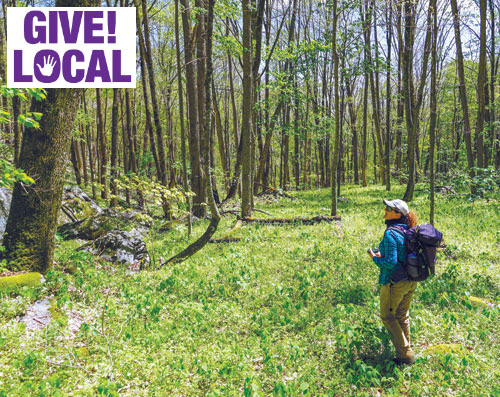
Give!Local for SAHC
From farmland to fragile ecosystems to pristine mountains streams, with your help we protect critical land and water resources in the mountains of NC and TN – for present AND future generations. This year, a generous anonymous donor is matching all donations to SAHC up to $5,000 in the Mountain Xpress Give!Local campaign. Plus, there are fun incentives for donations of $25, $100, and up (including a gift card from our partners at Wicked Weed Brewing). Please join us in preserving the places you love!
Southern Appalachian Highlands Conservancy
WHAT THEY DO: We permanently protect and steward our region’s most beloved natural areas. When you support local land and water conservation, you ensure our lands, our waters, our wildlife, our farms and our way of life will be there for future generations. By preserving vital resources, you improve the quality of life and continue building healthy and vibrant communities, forever.
IEvery person donating $100 or more to Southern Appalachian Highland Conservancy will receive a $10 gift card from Wicked Weed.
MATCHES
- A generous, anonymous gift will match all donations up to $5,000.
|
|
This is a variation on the tradition Cherokee Butterbean Game. It can be played by several individual players or several teams. Traditionally, this game uses three butterbeans that have been split in half. More…
From the Museum of the Cherokee Indian: Cherokee people began growing a form of corn two thousand years ago. By about a thousand years ago, or 1000 AD, they were growing corn and beans, as we know them today. Corn, beans, and squash was always grown together and was known as the “Three Sisters.” Beans restore nitrogen to the soil while corn depletes nitrogen. The vines of the beans and squash twined up the cornstalks. When corn and beans are eaten together, they provide complete proteins and amino acids for our diet.
Corn was so important to the Cherokee that they had important celebrations and ceremonies called “Green Corn Festivals.” The first of these was held in August, before the sweet corn was ready to eat. The last was held in October or November, when the
field corn was ready to be picked. At these ceremonies, people purified themselves physically and spiritually before feasting together. At this time, people got married and divorced. All old scores were settled and everyone started a new year together.
The Southern Equality Studios special grant round is dedicated to resourcing and celebrating LGBTQ artists and creatives across the LGBTQ South who are BIPOC (Black, Indigenous, or people of color). Grants of up to $500 will support BIPOC LGBTQ Southern artists working on a wide range of creative projects.
These new grant rounds are part of CSE’s Southern Equality Fund, which has been making grassroots grants across the LGBTQ South since 2015. Since its inception, the Southern Equality Fund has prioritized supporting work led by BIPOC, transgender, and rural organizers.
Have you seen an inspiring BIPOC LGBTQ artists in your community, or are you a creative who could use grant support? If so, we want to hear from you!
We are specifically seeking nominations for artists or creatives efforts who are:
- Based in the South.
- Black, Indigenous, or people of color (BIPOC).
- LGBTQ people.
- Funds can be used to support a wide range of artistic endeavors.
- Nominees are eligible to receive this grant even if they have received a previous Southern Equality Fund grant; however, priority will be given to nominees who have not yet received a grant.
- Anyone is welcome and encouraged to nominate an artist for a grant and artists may also nominate themselves.
- There are no grant reports, budgets or supplemental materials required in this process. However, if selected, applicants will have to fill out and return a W9 form to receive their funding.
Sunday, November
15, 2020
This year the Asheville Area Arts Council is offering $500 micro-grants for arts-based projects specifically focused on community hope and healing. These can be projects that bring joy to our local community, and/or projects that actively engage community members in safe activities following state and local health restrictions.
Arts and culture are a fundamental part of our community. They help us connect with one another and better understand history, people, and new ideas. When people become involved in the design, creation, and upkeep of places, they develop a vested interest in using and maintaining these spaces. When neighbors have a true sense of “ownership” or connection to the places they frequent, the community becomes a better place to live, work, and visit. According to Americans for the Arts (AFTA), “86% of participants who took part in community-based art want to be involved in future projects, and people living where these art projects occurred were more than twice as likely to be civically engaged as those whose neighborhoods did not have projects.”
Give!Local for SAHC
From farmland to fragile ecosystems to pristine mountains streams, with your help we protect critical land and water resources in the mountains of NC and TN – for present AND future generations. This year, a generous anonymous donor is matching all donations to SAHC up to $5,000 in the Mountain Xpress Give!Local campaign. Plus, there are fun incentives for donations of $25, $100, and up (including a gift card from our partners at Wicked Weed Brewing). Please join us in preserving the places you love!
Southern Appalachian Highlands Conservancy
WHAT THEY DO: We permanently protect and steward our region’s most beloved natural areas. When you support local land and water conservation, you ensure our lands, our waters, our wildlife, our farms and our way of life will be there for future generations. By preserving vital resources, you improve the quality of life and continue building healthy and vibrant communities, forever.
IEvery person donating $100 or more to Southern Appalachian Highland Conservancy will receive a $10 gift card from Wicked Weed.
MATCHES
- A generous, anonymous gift will match all donations up to $5,000.
|
|
This is a variation on the tradition Cherokee Butterbean Game. It can be played by several individual players or several teams. Traditionally, this game uses three butterbeans that have been split in half. More…
From the Museum of the Cherokee Indian: Cherokee people began growing a form of corn two thousand years ago. By about a thousand years ago, or 1000 AD, they were growing corn and beans, as we know them today. Corn, beans, and squash was always grown together and was known as the “Three Sisters.” Beans restore nitrogen to the soil while corn depletes nitrogen. The vines of the beans and squash twined up the cornstalks. When corn and beans are eaten together, they provide complete proteins and amino acids for our diet.
Corn was so important to the Cherokee that they had important celebrations and ceremonies called “Green Corn Festivals.” The first of these was held in August, before the sweet corn was ready to eat. The last was held in October or November, when the
field corn was ready to be picked. At these ceremonies, people purified themselves physically and spiritually before feasting together. At this time, people got married and divorced. All old scores were settled and everyone started a new year together.
The Southern Equality Studios special grant round is dedicated to resourcing and celebrating LGBTQ artists and creatives across the LGBTQ South who are BIPOC (Black, Indigenous, or people of color). Grants of up to $500 will support BIPOC LGBTQ Southern artists working on a wide range of creative projects.
These new grant rounds are part of CSE’s Southern Equality Fund, which has been making grassroots grants across the LGBTQ South since 2015. Since its inception, the Southern Equality Fund has prioritized supporting work led by BIPOC, transgender, and rural organizers.
Have you seen an inspiring BIPOC LGBTQ artists in your community, or are you a creative who could use grant support? If so, we want to hear from you!
We are specifically seeking nominations for artists or creatives efforts who are:
- Based in the South.
- Black, Indigenous, or people of color (BIPOC).
- LGBTQ people.
- Funds can be used to support a wide range of artistic endeavors.
- Nominees are eligible to receive this grant even if they have received a previous Southern Equality Fund grant; however, priority will be given to nominees who have not yet received a grant.
- Anyone is welcome and encouraged to nominate an artist for a grant and artists may also nominate themselves.
- There are no grant reports, budgets or supplemental materials required in this process. However, if selected, applicants will have to fill out and return a W9 form to receive their funding.