

Calendar of Events
Upcoming events and things to do in Asheville, NC. Below is a list of events for festivals, concerts, art exhibitions, group meetups and more.
Interested in adding an event to our calendar? Please click the green “Post Your Event” button below.
Have your garden and plant questions answered. There are three ways to contact the Master Gardener Helpline:
Call 828-255-5522
Email questions and photos to [email protected] or stop by the extension office hours:
Mondays – 10:00 a.m. – 2:00 p.m.
Tuesdays – 11:00 a.m. – 1:00 p.m.
Thursdays – 11:00 a.m. – 2:00 p.m.
Joining a CSA (or Community Supported Agriculture) program connects you directly with local farms in your community. Members buy a “share” of a farm’s harvest upfront and receive a weekly box of fresh produce or other farm goods. The best time to sign up for a CSA is in February and early March—prompting ASAP to declare Feb. 15 to March 15 to be CSA Month. CSA Month will include a social media campaign with CSA education and farmer features; digital tools for finding CSA programs; and an in-person CSA Fair at the YWCA of Asheville on March 8 from 3 to 5:30 p.m.
The CSA Fair on March 8 highlights farms with a CSA pickup location in Buncombe County. In addition to traditional produce CSAs, the fair includes farms with specialty CSA products, such as meat or flowers. The fair is a relaxed, family-friendly setting where attendees chat with farmers about their products, growing practices, payment structure, and more. Attendees can sign up for a CSA during the fair or follow up with farmers later. The fair also features local food tastings and activities for kids, as well as produce and food products available for purchase. The event is free and open to the public. The YWCA is located at 185 S. French Broad Ave. in Asheville.
“CSA creates a resilient, family-based network that my farm can rely on year after year,” said Vannah Roddy of Encompass Farm, who has participated in the fair for several years. “Of all the marketing I do for my program, ASAP’s CSA fair is by far the one which provides the most direct results.”
Farms participating in the fair as of press time include A Way of Life Farm, Blazing Star Flowers, Crow Fly Farms, Encompass Farm, Hickory Nut Gap Farm, Oak Holler Farm, Olivette Farm, Seven Seeds Farm, ShipShape Farmer & Chef, and Stump Farms. Farms are subject to change before the event date.
For those unable to attend the fair or who are looking for a CSA outside of Buncombe County, online tools at asapconnections.org/csa help customers compare CSAs throughout the Appalachian Grown region, making it easier to choose a program that fits individual needs. The Appalachian Grown region includes Western North Carolina as well as bordering counties in South Carolina, Georgia, Tennessee, and Virginia.
Things customers could consider when choosing a CSA include convenient pickup times and locations; the farm’s growing practices; and appropriate share size (i.e., how much food). Some farms offer variations on the traditional CSA model, such as online selection, shorter commitment, or a market share (members pay upfront, but select their own produce at the farmers market each week).
ABOUT ASAP (APPALACHIAN SUSTAINABLE AGRICULTURE PROJECT)
ASAP’s mission is to help local farms thrive, link farmers to markets and supporters, and build healthy communities through connections to local food. To learn more, visit asapconnections.org.
Exhibition and Public Programming
Vera B. Williams, an award-winning author and illustrator of children’s books, started making pictures almost as soon as she could walk. She studied at Black Mountain College in a time where summer institutes were held with classes taught by John Cage and Merce Cunningham. Williams studied under the Bauhaus luminary Josef Albers and went on to make art for the rest of her life. At the time of her death, The New York Times wrote: “Her illustrations, known for bold colors and a style reminiscent of folk art, were praised by reviewers for their great tenderness and crackling vitality.” Despite numerous awards and recognition for her children’s books, much of her wider life and work remains unexplored. This retrospective will showcase the complete range of Williams’ life and work. It will highlight her time at Black Mountain College, her political activism, and her establishment, with Paul Williams, of an influential yet little-known artist community, in addition to her work as an author and illustrator.
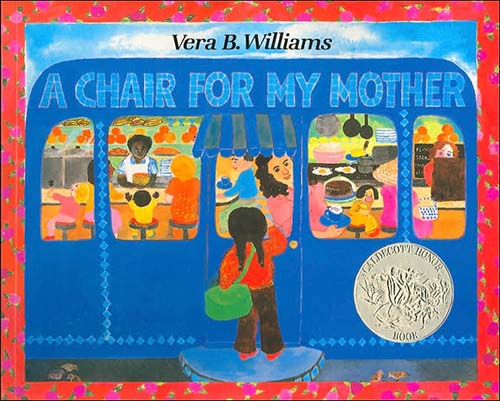
Author and illustrator of 17 children’s books, including Caldecott medal winner, A Chair for My Mother, Vera B. Williams always had a passion for the arts. Williams grew up in the Bronx, NY, and in 1936, when she was nine years old, one of her paintings, called Yentas, opens a new window, was included in an exhibition at the Museum of Modern Art. While Williams is widely known for her children’s books today, this exhibition’s expansive scope highlights unexplored aspects of her artistic practice and eight decades of life. From groundbreaking, powerful covers for Liberation Magazine, to Peace calendar collaborations with writer activist Grace Paley, to scenic sketches for Julian Beck and Judith Malina’s Living Theater, to hundreds of late life “Aging and Illness” cartoons sketches and doodles, Vera never sat still.
Williams arrived at Black Mountain College in 1945. While there, she embraced all aspects of living, working, and learning in the intensely creative college community. She was at BMC during a particularly fertile period, which allowed her to study with faculty members Buckminster Fuller and Josef Albers, and to participate in the famed summer sessions with John Cage, Merce Cunningham, M.C. Richards, and Robert Rauschenberg. In 1948, she graduated with Josef Albers as her advisor and sculptor Richard Lippold as her outside examiner. Forever one of the College’s shining stars, Vera graduated from BMC with just six semesters of coursework, at only twenty-one years old. She continued to visit BMC for years afterward, staying deeply involved with the artistic community that BMC incubated.
Anticipating the eventual closure of BMC, Williams, alongside her husband Paul Williams and a group of influential former BMC figures, founded The Gate Hill Cooperative Artists community located 30 miles north of NYC on the outskirts of Stony Point, NY. The Gate Hill Cooperative, also known as The Land, became an outcropping of Black Mountain College’s experimental ethos. Students and faculty including John Cage, M.C. Richards, David Tudor, Karen Karnes, David Weinrib, Stan VanDerBeek, and Patsy Lynch Wood shaped Gate Hill as founding members of the community. Vera B. Williams raised her three children at Gate Hill while continuing to make work.
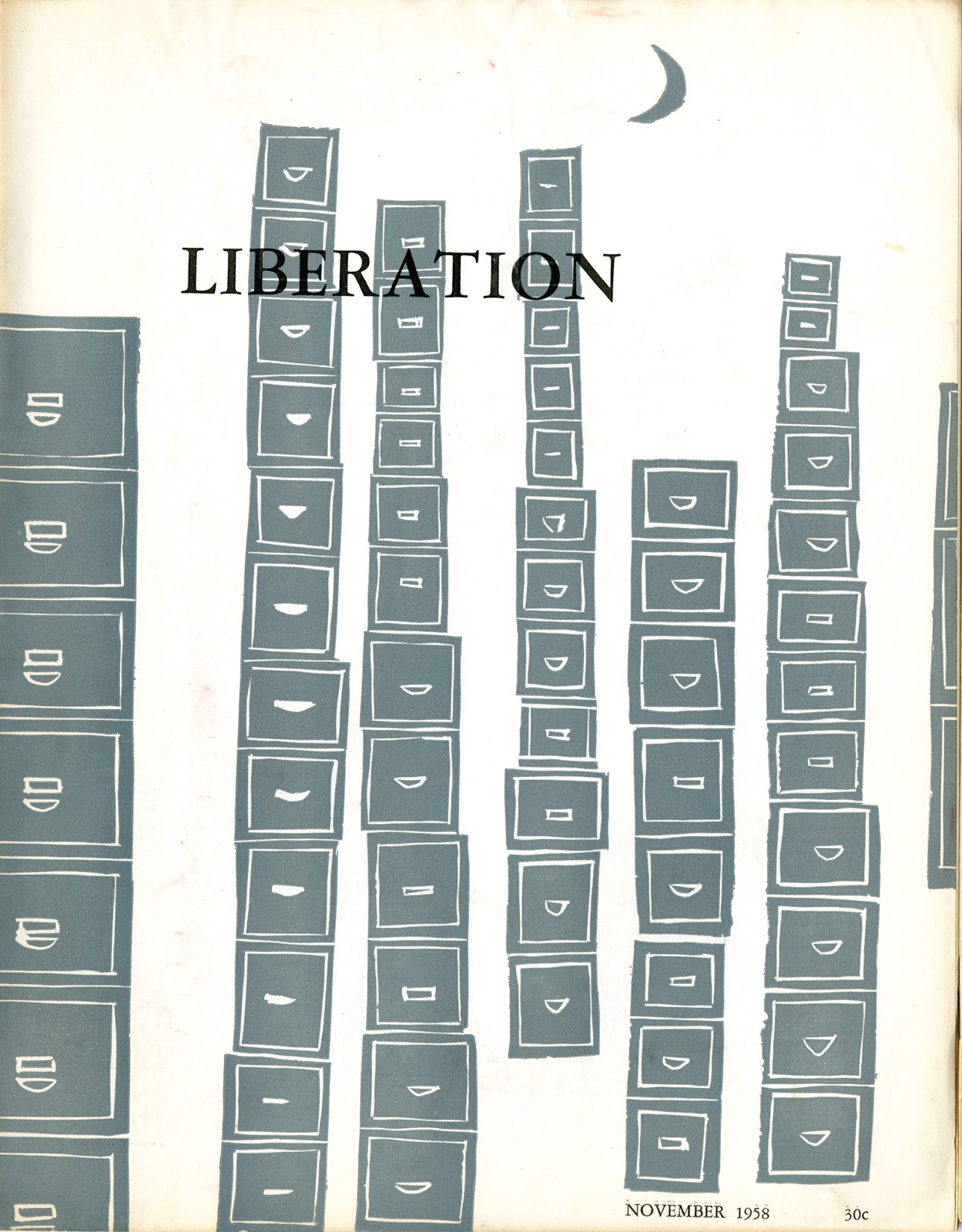
The early Gate Hill era represented an especially creative phase for the BMC group. For Williams, this period saw the creation of 76 covers for Liberation Magazine, a radical, groundbreaking publication. This exhibition will feature some of Williams’ most powerful Liberation covers including a design for the June 1963 edition, which contained the first full publication of MLK’s “Letter from Birmingham Jail.” Williams’ activism work continued throughout her life. As president of PEN’s Children Committee and member of The War Resisters league, she created a wide range of political and educational posters and journal covers. Williams protested the war in Vietnam and nuclear proliferation while supporting women’s causes and racial equality. In 1981, Williams was arrested and spent a month in a federal prison on charges stemming from her political activism.
In her late 40’s, Williams embarked in earnest on her career as a children’s book author and illustrator, a career which garnered the NY Public Library’s recognition of A Chair for My Mother as one of the greatest 100 children’s books of all time. Infinitely curious and always a wanderer at heart, Williams’ personal life was as expansive as her art. In addition to her prolific picture making, Williams started and helped run a Summerhill-based alternative school, canoed the Yukon, and lived alone on a houseboat in Vancouver Harbor. She helped to organize and attended dozens of political demonstrations throughout her adult life.
Her books won many awards including the Caldecott Medal Honor Book for A Chair for My Mother in 1983, the Boston Globe–Horn Book Award– Fiction category– for Scooter in 1994, the Jane Addams Honor for Amber Was Brave, Essie Was Smart in 2002, and the NSK Neustadt Prize for Children’s Literature in 2009. Her books reflected her values, emphasizing love, compassion, kindness, joy, strength, individuality, and courage.
Images:
Cover of Vera B. Williams’ A Chair for My Mother, published in 1982.
Vera B. Williams, Cover for Liberation Magazine, November 1958.
Book Club is BAAACK!!
Welcome gathering in the Community Room of the Black Mountain Public Library. We’ll decide on selections for the year and distribute copies of the One Book, One Buncombe novel, The Violin Conspiracy by Brendan Slocumb for our April meeting.
We hope you’ll join us!
Light refreshments will be served. Participants who consume food or beverage items do so at their own risk.
|
Steven Frowine, the author of nine gardening books including the most recent, Houseplants and Succulents for Dummies, will be presenting a program on these popular plants. He will be discussing how to select the plants for your home and will give cultural tips including proper watering and fertilizer techniques, providing the necessary light requirements, and selecting potting mixes and containers. This program is designed to help you be successful in making your home a place where plants thrive. Q & A and book signing to follow. Books will be available to purchase at the program. This program is free to attend and held in the Enka-Candler Library community room. Author Bio: |
Joining a CSA (or Community Supported Agriculture) program connects you directly with local farms in your community. Members buy a “share” of a farm’s harvest upfront and receive a weekly box of fresh produce or other farm goods. The best time to sign up for a CSA is in February and early March—prompting ASAP to declare Feb. 15 to March 15 to be CSA Month. CSA Month will include a social media campaign with CSA education and farmer features; digital tools for finding CSA programs; and an in-person CSA Fair at the YWCA of Asheville on March 8 from 3 to 5:30 p.m.
The CSA Fair on March 8 highlights farms with a CSA pickup location in Buncombe County. In addition to traditional produce CSAs, the fair includes farms with specialty CSA products, such as meat or flowers. The fair is a relaxed, family-friendly setting where attendees chat with farmers about their products, growing practices, payment structure, and more. Attendees can sign up for a CSA during the fair or follow up with farmers later. The fair also features local food tastings and activities for kids, as well as produce and food products available for purchase. The event is free and open to the public. The YWCA is located at 185 S. French Broad Ave. in Asheville.
“CSA creates a resilient, family-based network that my farm can rely on year after year,” said Vannah Roddy of Encompass Farm, who has participated in the fair for several years. “Of all the marketing I do for my program, ASAP’s CSA fair is by far the one which provides the most direct results.”
Farms participating in the fair as of press time include A Way of Life Farm, Blazing Star Flowers, Crow Fly Farms, Encompass Farm, Hickory Nut Gap Farm, Oak Holler Farm, Olivette Farm, Seven Seeds Farm, ShipShape Farmer & Chef, and Stump Farms. Farms are subject to change before the event date.
For those unable to attend the fair or who are looking for a CSA outside of Buncombe County, online tools at asapconnections.org/csa help customers compare CSAs throughout the Appalachian Grown region, making it easier to choose a program that fits individual needs. The Appalachian Grown region includes Western North Carolina as well as bordering counties in South Carolina, Georgia, Tennessee, and Virginia.
Things customers could consider when choosing a CSA include convenient pickup times and locations; the farm’s growing practices; and appropriate share size (i.e., how much food). Some farms offer variations on the traditional CSA model, such as online selection, shorter commitment, or a market share (members pay upfront, but select their own produce at the farmers market each week).
ABOUT ASAP (APPALACHIAN SUSTAINABLE AGRICULTURE PROJECT)
ASAP’s mission is to help local farms thrive, link farmers to markets and supporters, and build healthy communities through connections to local food. To learn more, visit asapconnections.org.
|
|
The Pack Library Book Club is a book discussion group that meets the second Wednesday of each month at 10:30AM at the library. We read and discuss a variety of book genres. The book for January 2024 is “Solito” by Javier Zamora.
Newcomers are always welcome! If you have any questions about book club, you can email [email protected] .
Exhibition and Public Programming
Vera B. Williams, an award-winning author and illustrator of children’s books, started making pictures almost as soon as she could walk. She studied at Black Mountain College in a time where summer institutes were held with classes taught by John Cage and Merce Cunningham. Williams studied under the Bauhaus luminary Josef Albers and went on to make art for the rest of her life. At the time of her death, The New York Times wrote: “Her illustrations, known for bold colors and a style reminiscent of folk art, were praised by reviewers for their great tenderness and crackling vitality.” Despite numerous awards and recognition for her children’s books, much of her wider life and work remains unexplored. This retrospective will showcase the complete range of Williams’ life and work. It will highlight her time at Black Mountain College, her political activism, and her establishment, with Paul Williams, of an influential yet little-known artist community, in addition to her work as an author and illustrator.
Author and illustrator of 17 children’s books, including Caldecott medal winner, A Chair for My Mother, Vera B. Williams always had a passion for the arts. Williams grew up in the Bronx, NY, and in 1936, when she was nine years old, one of her paintings, called Yentas, opens a new window, was included in an exhibition at the Museum of Modern Art. While Williams is widely known for her children’s books today, this exhibition’s expansive scope highlights unexplored aspects of her artistic practice and eight decades of life. From groundbreaking, powerful covers for Liberation Magazine, to Peace calendar collaborations with writer activist Grace Paley, to scenic sketches for Julian Beck and Judith Malina’s Living Theater, to hundreds of late life “Aging and Illness” cartoons sketches and doodles, Vera never sat still.
Williams arrived at Black Mountain College in 1945. While there, she embraced all aspects of living, working, and learning in the intensely creative college community. She was at BMC during a particularly fertile period, which allowed her to study with faculty members Buckminster Fuller and Josef Albers, and to participate in the famed summer sessions with John Cage, Merce Cunningham, M.C. Richards, and Robert Rauschenberg. In 1948, she graduated with Josef Albers as her advisor and sculptor Richard Lippold as her outside examiner. Forever one of the College’s shining stars, Vera graduated from BMC with just six semesters of coursework, at only twenty-one years old. She continued to visit BMC for years afterward, staying deeply involved with the artistic community that BMC incubated.
Anticipating the eventual closure of BMC, Williams, alongside her husband Paul Williams and a group of influential former BMC figures, founded The Gate Hill Cooperative Artists community located 30 miles north of NYC on the outskirts of Stony Point, NY. The Gate Hill Cooperative, also known as The Land, became an outcropping of Black Mountain College’s experimental ethos. Students and faculty including John Cage, M.C. Richards, David Tudor, Karen Karnes, David Weinrib, Stan VanDerBeek, and Patsy Lynch Wood shaped Gate Hill as founding members of the community. Vera B. Williams raised her three children at Gate Hill while continuing to make work.
The early Gate Hill era represented an especially creative phase for the BMC group. For Williams, this period saw the creation of 76 covers for Liberation Magazine, a radical, groundbreaking publication. This exhibition will feature some of Williams’ most powerful Liberation covers including a design for the June 1963 edition, which contained the first full publication of MLK’s “Letter from Birmingham Jail.” Williams’ activism work continued throughout her life. As president of PEN’s Children Committee and member of The War Resisters league, she created a wide range of political and educational posters and journal covers. Williams protested the war in Vietnam and nuclear proliferation while supporting women’s causes and racial equality. In 1981, Williams was arrested and spent a month in a federal prison on charges stemming from her political activism.
In her late 40’s, Williams embarked in earnest on her career as a children’s book author and illustrator, a career which garnered the NY Public Library’s recognition of A Chair for My Mother as one of the greatest 100 children’s books of all time. Infinitely curious and always a wanderer at heart, Williams’ personal life was as expansive as her art. In addition to her prolific picture making, Williams started and helped run a Summerhill-based alternative school, canoed the Yukon, and lived alone on a houseboat in Vancouver Harbor. She helped to organize and attended dozens of political demonstrations throughout her adult life.
Her books won many awards including the Caldecott Medal Honor Book for A Chair for My Mother in 1983, the Boston Globe–Horn Book Award– Fiction category– for Scooter in 1994, the Jane Addams Honor for Amber Was Brave, Essie Was Smart in 2002, and the NSK Neustadt Prize for Children’s Literature in 2009. Her books reflected her values, emphasizing love, compassion, kindness, joy, strength, individuality, and courage.
Images:
Cover of Vera B. Williams’ A Chair for My Mother, published in 1982.
Vera B. Williams, Cover for Liberation Magazine, November 1958.
Amy Lin discusses her debut memoir Here After. This is a hybrid event with limited in-store seating and the option to attend online.
The event is free but registration is required for both in-person and virtual attendance.
This event includes a book signing. If you would like a signed book but can’t attend in person, you may order a signed copy online below. If you would like to have your book personalized, please order online or call the store at least two hours before the start of the event. When ordering online, use the comments field to provide a name for personalization, e.g. “To Paul.” NOTE: We do our best to get books personalized when requested but personalization is not guaranteed.
If you decide to attend and to purchase books, we ask that you purchase from Malaprop’s. When you do this you make it possible for us to continue hosting author events and you keep more dollars in our community. You may also support our work by purchasing a gift card or making a donation of any amount below. Thank you!
A stunning, taut memoir from debut author Amy Lin about losing her husband at the age of 31, navigating her own health crisis, and finding a way to live with insurmountable grief.
Amy Lin never expected to find a love like the one she shares with her husband, Kurtis, a gifted young architect who pulls her toward joy, adventure, and greater self-acceptance. But on a hot August morning, on the eve of the newlyweds’ big move to Toronto, Kurtis heads out to run a half-marathon with Amy’s family. It’s the last time she sees her husband alive.
Ten days after this seismic loss, Amy is in the hospital, navigating her own shocking medical crisis and making life-or-death decisions about her treatment.
What follows is a rich and unflinchingly honest accounting of her life with Kurtis, the vortex created by such a loss, and the ongoing struggle Amy faces trying to understand her own experience in the context of commonly held “truths” about what the grieving process looks like.
Here After is an intimate story of deep love followed by dizzying loss, a memoir so finely etched and powerful that it will alter readers’ heart.
Amy Lin is a writer and educator who lives in Calgary, Alberta, Canada. Her work has been published in Ploughshares and she has been awarded residencies from Yaddo and Casa Comala. Here After is her first book.
Debra Allbery served as director of The MFA Program for Writers at Warren Wilson College from 2009 to 2023.. She received her MFA from the University of Iowa and her MA from the University of Virginia. Her first collection of poetry, Walking Distance, won the Agnes Lynch Starrett Prize and was published by the University of Pittsburgh Press. Her collection, Fimbul-Winter, was published by Four Way Books in October 2010 and won the Grub Street National Book Prize in poetry. Her poems have appeared in Poetry, Yale Review, Kenyon Review, Iowa Review, New England Review, The Nation, FIELD, TriQuarterly, and elsewhere. She has twice received fellowships from the NEA; other awards include the “Discovery”/The Nation Award, a Hawthornden fellowship, and two grants from the New Hampshire State Council on the Arts. She has taught writing and literature at Phillips Exeter Academy, Interlochen Arts Academy, Randolph College, Dickinson College, and the University of Michigan.
Cultivating Medicinal Mushrooms: Oysters
You may have enjoyed eating delicious oyster mushrooms but did you know they pack a powerful lineup of medicinal properties?
Join us online to discover the hidden side of oyster mushrooms. Native to the Eastern Woodlands they are one of the most abundantly available and grown mushrooms in the world.
Discover the art of growing medicinal mushrooms in your own home from Chris Parker who has 30 years of experience of cultivating and wild foraging in the Southern Appalachians.
You’ll learn:
- Traditoinal uses from various global cultures
- Modern medicinal uses
- Important edicinal compounds
- Their role in holistic healing
- And research with humans looking at their efficacy:
- an anti-viral,
- in reducing blood sugar
- in reducing cholestoral levels
- in diabetes
- and cardiovascular disorders
Whether you’re a seasoned mushroom cultivator or just starting out, this event is perfect for anyone interested in exploring the world of medicinal mushrooms.
Have your garden and plant questions answered. There are three ways to contact the Master Gardener Helpline:
Call 828-255-5522
Email questions and photos to [email protected] or stop by the extension office hours:
Mondays – 10:00 a.m. – 2:00 p.m.
Tuesdays – 11:00 a.m. – 1:00 p.m.
Thursdays – 11:00 a.m. – 2:00 p.m.
Joining a CSA (or Community Supported Agriculture) program connects you directly with local farms in your community. Members buy a “share” of a farm’s harvest upfront and receive a weekly box of fresh produce or other farm goods. The best time to sign up for a CSA is in February and early March—prompting ASAP to declare Feb. 15 to March 15 to be CSA Month. CSA Month will include a social media campaign with CSA education and farmer features; digital tools for finding CSA programs; and an in-person CSA Fair at the YWCA of Asheville on March 8 from 3 to 5:30 p.m.
The CSA Fair on March 8 highlights farms with a CSA pickup location in Buncombe County. In addition to traditional produce CSAs, the fair includes farms with specialty CSA products, such as meat or flowers. The fair is a relaxed, family-friendly setting where attendees chat with farmers about their products, growing practices, payment structure, and more. Attendees can sign up for a CSA during the fair or follow up with farmers later. The fair also features local food tastings and activities for kids, as well as produce and food products available for purchase. The event is free and open to the public. The YWCA is located at 185 S. French Broad Ave. in Asheville.
“CSA creates a resilient, family-based network that my farm can rely on year after year,” said Vannah Roddy of Encompass Farm, who has participated in the fair for several years. “Of all the marketing I do for my program, ASAP’s CSA fair is by far the one which provides the most direct results.”
Farms participating in the fair as of press time include A Way of Life Farm, Blazing Star Flowers, Crow Fly Farms, Encompass Farm, Hickory Nut Gap Farm, Oak Holler Farm, Olivette Farm, Seven Seeds Farm, ShipShape Farmer & Chef, and Stump Farms. Farms are subject to change before the event date.
For those unable to attend the fair or who are looking for a CSA outside of Buncombe County, online tools at asapconnections.org/csa help customers compare CSAs throughout the Appalachian Grown region, making it easier to choose a program that fits individual needs. The Appalachian Grown region includes Western North Carolina as well as bordering counties in South Carolina, Georgia, Tennessee, and Virginia.
Things customers could consider when choosing a CSA include convenient pickup times and locations; the farm’s growing practices; and appropriate share size (i.e., how much food). Some farms offer variations on the traditional CSA model, such as online selection, shorter commitment, or a market share (members pay upfront, but select their own produce at the farmers market each week).
ABOUT ASAP (APPALACHIAN SUSTAINABLE AGRICULTURE PROJECT)
ASAP’s mission is to help local farms thrive, link farmers to markets and supporters, and build healthy communities through connections to local food. To learn more, visit asapconnections.org.
|
|
Learn how to grow a beautiful and productive organic garden by planting flowers and vegetables together. Discover the benefits of companion planting, such as attracting pollinators and other beneficial wildlife to your garden. Find out how to add a cutting garden of colorful annuals to your vegetable patch and enjoy fresh flowers and produce throughout the season.
Portions of this program may be held outside, so please dress appropriately for the weather.
Exhibition and Public Programming
Vera B. Williams, an award-winning author and illustrator of children’s books, started making pictures almost as soon as she could walk. She studied at Black Mountain College in a time where summer institutes were held with classes taught by John Cage and Merce Cunningham. Williams studied under the Bauhaus luminary Josef Albers and went on to make art for the rest of her life. At the time of her death, The New York Times wrote: “Her illustrations, known for bold colors and a style reminiscent of folk art, were praised by reviewers for their great tenderness and crackling vitality.” Despite numerous awards and recognition for her children’s books, much of her wider life and work remains unexplored. This retrospective will showcase the complete range of Williams’ life and work. It will highlight her time at Black Mountain College, her political activism, and her establishment, with Paul Williams, of an influential yet little-known artist community, in addition to her work as an author and illustrator.
Author and illustrator of 17 children’s books, including Caldecott medal winner, A Chair for My Mother, Vera B. Williams always had a passion for the arts. Williams grew up in the Bronx, NY, and in 1936, when she was nine years old, one of her paintings, called Yentas, opens a new window, was included in an exhibition at the Museum of Modern Art. While Williams is widely known for her children’s books today, this exhibition’s expansive scope highlights unexplored aspects of her artistic practice and eight decades of life. From groundbreaking, powerful covers for Liberation Magazine, to Peace calendar collaborations with writer activist Grace Paley, to scenic sketches for Julian Beck and Judith Malina’s Living Theater, to hundreds of late life “Aging and Illness” cartoons sketches and doodles, Vera never sat still.
Williams arrived at Black Mountain College in 1945. While there, she embraced all aspects of living, working, and learning in the intensely creative college community. She was at BMC during a particularly fertile period, which allowed her to study with faculty members Buckminster Fuller and Josef Albers, and to participate in the famed summer sessions with John Cage, Merce Cunningham, M.C. Richards, and Robert Rauschenberg. In 1948, she graduated with Josef Albers as her advisor and sculptor Richard Lippold as her outside examiner. Forever one of the College’s shining stars, Vera graduated from BMC with just six semesters of coursework, at only twenty-one years old. She continued to visit BMC for years afterward, staying deeply involved with the artistic community that BMC incubated.
Anticipating the eventual closure of BMC, Williams, alongside her husband Paul Williams and a group of influential former BMC figures, founded The Gate Hill Cooperative Artists community located 30 miles north of NYC on the outskirts of Stony Point, NY. The Gate Hill Cooperative, also known as The Land, became an outcropping of Black Mountain College’s experimental ethos. Students and faculty including John Cage, M.C. Richards, David Tudor, Karen Karnes, David Weinrib, Stan VanDerBeek, and Patsy Lynch Wood shaped Gate Hill as founding members of the community. Vera B. Williams raised her three children at Gate Hill while continuing to make work.
The early Gate Hill era represented an especially creative phase for the BMC group. For Williams, this period saw the creation of 76 covers for Liberation Magazine, a radical, groundbreaking publication. This exhibition will feature some of Williams’ most powerful Liberation covers including a design for the June 1963 edition, which contained the first full publication of MLK’s “Letter from Birmingham Jail.” Williams’ activism work continued throughout her life. As president of PEN’s Children Committee and member of The War Resisters league, she created a wide range of political and educational posters and journal covers. Williams protested the war in Vietnam and nuclear proliferation while supporting women’s causes and racial equality. In 1981, Williams was arrested and spent a month in a federal prison on charges stemming from her political activism.
In her late 40’s, Williams embarked in earnest on her career as a children’s book author and illustrator, a career which garnered the NY Public Library’s recognition of A Chair for My Mother as one of the greatest 100 children’s books of all time. Infinitely curious and always a wanderer at heart, Williams’ personal life was as expansive as her art. In addition to her prolific picture making, Williams started and helped run a Summerhill-based alternative school, canoed the Yukon, and lived alone on a houseboat in Vancouver Harbor. She helped to organize and attended dozens of political demonstrations throughout her adult life.
Her books won many awards including the Caldecott Medal Honor Book for A Chair for My Mother in 1983, the Boston Globe–Horn Book Award– Fiction category– for Scooter in 1994, the Jane Addams Honor for Amber Was Brave, Essie Was Smart in 2002, and the NSK Neustadt Prize for Children’s Literature in 2009. Her books reflected her values, emphasizing love, compassion, kindness, joy, strength, individuality, and courage.
Images:
Cover of Vera B. Williams’ A Chair for My Mother, published in 1982.
Vera B. Williams, Cover for Liberation Magazine, November 1958.
Joining a CSA (or Community Supported Agriculture) program connects you directly with local farms in your community. Members buy a “share” of a farm’s harvest upfront and receive a weekly box of fresh produce or other farm goods. The best time to sign up for a CSA is in February and early March—prompting ASAP to declare Feb. 15 to March 15 to be CSA Month. CSA Month will include a social media campaign with CSA education and farmer features; digital tools for finding CSA programs; and an in-person CSA Fair at the YWCA of Asheville on March 8 from 3 to 5:30 p.m.
The CSA Fair on March 8 highlights farms with a CSA pickup location in Buncombe County. In addition to traditional produce CSAs, the fair includes farms with specialty CSA products, such as meat or flowers. The fair is a relaxed, family-friendly setting where attendees chat with farmers about their products, growing practices, payment structure, and more. Attendees can sign up for a CSA during the fair or follow up with farmers later. The fair also features local food tastings and activities for kids, as well as produce and food products available for purchase. The event is free and open to the public. The YWCA is located at 185 S. French Broad Ave. in Asheville.
“CSA creates a resilient, family-based network that my farm can rely on year after year,” said Vannah Roddy of Encompass Farm, who has participated in the fair for several years. “Of all the marketing I do for my program, ASAP’s CSA fair is by far the one which provides the most direct results.”
Farms participating in the fair as of press time include A Way of Life Farm, Blazing Star Flowers, Crow Fly Farms, Encompass Farm, Hickory Nut Gap Farm, Oak Holler Farm, Olivette Farm, Seven Seeds Farm, ShipShape Farmer & Chef, and Stump Farms. Farms are subject to change before the event date.
For those unable to attend the fair or who are looking for a CSA outside of Buncombe County, online tools at asapconnections.org/csa help customers compare CSAs throughout the Appalachian Grown region, making it easier to choose a program that fits individual needs. The Appalachian Grown region includes Western North Carolina as well as bordering counties in South Carolina, Georgia, Tennessee, and Virginia.
Things customers could consider when choosing a CSA include convenient pickup times and locations; the farm’s growing practices; and appropriate share size (i.e., how much food). Some farms offer variations on the traditional CSA model, such as online selection, shorter commitment, or a market share (members pay upfront, but select their own produce at the farmers market each week).
ABOUT ASAP (APPALACHIAN SUSTAINABLE AGRICULTURE PROJECT)
ASAP’s mission is to help local farms thrive, link farmers to markets and supporters, and build healthy communities through connections to local food. To learn more, visit asapconnections.org.
|
|
Exhibition and Public Programming
Vera B. Williams, an award-winning author and illustrator of children’s books, started making pictures almost as soon as she could walk. She studied at Black Mountain College in a time where summer institutes were held with classes taught by John Cage and Merce Cunningham. Williams studied under the Bauhaus luminary Josef Albers and went on to make art for the rest of her life. At the time of her death, The New York Times wrote: “Her illustrations, known for bold colors and a style reminiscent of folk art, were praised by reviewers for their great tenderness and crackling vitality.” Despite numerous awards and recognition for her children’s books, much of her wider life and work remains unexplored. This retrospective will showcase the complete range of Williams’ life and work. It will highlight her time at Black Mountain College, her political activism, and her establishment, with Paul Williams, of an influential yet little-known artist community, in addition to her work as an author and illustrator.
Author and illustrator of 17 children’s books, including Caldecott medal winner, A Chair for My Mother, Vera B. Williams always had a passion for the arts. Williams grew up in the Bronx, NY, and in 1936, when she was nine years old, one of her paintings, called Yentas, opens a new window, was included in an exhibition at the Museum of Modern Art. While Williams is widely known for her children’s books today, this exhibition’s expansive scope highlights unexplored aspects of her artistic practice and eight decades of life. From groundbreaking, powerful covers for Liberation Magazine, to Peace calendar collaborations with writer activist Grace Paley, to scenic sketches for Julian Beck and Judith Malina’s Living Theater, to hundreds of late life “Aging and Illness” cartoons sketches and doodles, Vera never sat still.
Williams arrived at Black Mountain College in 1945. While there, she embraced all aspects of living, working, and learning in the intensely creative college community. She was at BMC during a particularly fertile period, which allowed her to study with faculty members Buckminster Fuller and Josef Albers, and to participate in the famed summer sessions with John Cage, Merce Cunningham, M.C. Richards, and Robert Rauschenberg. In 1948, she graduated with Josef Albers as her advisor and sculptor Richard Lippold as her outside examiner. Forever one of the College’s shining stars, Vera graduated from BMC with just six semesters of coursework, at only twenty-one years old. She continued to visit BMC for years afterward, staying deeply involved with the artistic community that BMC incubated.
Anticipating the eventual closure of BMC, Williams, alongside her husband Paul Williams and a group of influential former BMC figures, founded The Gate Hill Cooperative Artists community located 30 miles north of NYC on the outskirts of Stony Point, NY. The Gate Hill Cooperative, also known as The Land, became an outcropping of Black Mountain College’s experimental ethos. Students and faculty including John Cage, M.C. Richards, David Tudor, Karen Karnes, David Weinrib, Stan VanDerBeek, and Patsy Lynch Wood shaped Gate Hill as founding members of the community. Vera B. Williams raised her three children at Gate Hill while continuing to make work.
The early Gate Hill era represented an especially creative phase for the BMC group. For Williams, this period saw the creation of 76 covers for Liberation Magazine, a radical, groundbreaking publication. This exhibition will feature some of Williams’ most powerful Liberation covers including a design for the June 1963 edition, which contained the first full publication of MLK’s “Letter from Birmingham Jail.” Williams’ activism work continued throughout her life. As president of PEN’s Children Committee and member of The War Resisters league, she created a wide range of political and educational posters and journal covers. Williams protested the war in Vietnam and nuclear proliferation while supporting women’s causes and racial equality. In 1981, Williams was arrested and spent a month in a federal prison on charges stemming from her political activism.
In her late 40’s, Williams embarked in earnest on her career as a children’s book author and illustrator, a career which garnered the NY Public Library’s recognition of A Chair for My Mother as one of the greatest 100 children’s books of all time. Infinitely curious and always a wanderer at heart, Williams’ personal life was as expansive as her art. In addition to her prolific picture making, Williams started and helped run a Summerhill-based alternative school, canoed the Yukon, and lived alone on a houseboat in Vancouver Harbor. She helped to organize and attended dozens of political demonstrations throughout her adult life.
Her books won many awards including the Caldecott Medal Honor Book for A Chair for My Mother in 1983, the Boston Globe–Horn Book Award– Fiction category– for Scooter in 1994, the Jane Addams Honor for Amber Was Brave, Essie Was Smart in 2002, and the NSK Neustadt Prize for Children’s Literature in 2009. Her books reflected her values, emphasizing love, compassion, kindness, joy, strength, individuality, and courage.
Images:
Cover of Vera B. Williams’ A Chair for My Mother, published in 1982.
Vera B. Williams, Cover for Liberation Magazine, November 1958.
Dolly Parton’s Imagination Library impacts the pre-literacy skills and school readiness of children under the age of 5 in Buncombe County. The program mails a new, free, age-appropriate book to registered children each month until they turn five years old. Dolly Parton’s Imagination Library creates a home library of up to 60 books and instills a love of books and reading from an early age. If you have any questions about the program, please send an email to [email protected].
A national panel of educators selects the Imagination Library titles, which include: The Little Engine that Could, Last Stop on Market Street, Violet the Pilot, As an Oak Tree Grows, The Tale of Peter Rabbit, Llama Llama Red Pajama, Look Out Kindergarten, here I come, and many more (take a look at all the titles).
Register your child now!
Program Launch and Expansions
Literacy Together became a Dolly Parton’s Imagination Library affiliate in November 2015 with support from the Buncombe Partnership for Children. Through this program, registered children in Buncombe County receive a free book in the mail each month. Their parents also have the opportunity to attend workshops to learn how to build their children’s early literacy skills. Parents in need of literacy assistance are encouraged to receive tutoring through Literacy Together’s adult programming.
The program served 200 children during the 2015/16 fiscal year. The program expanded to serve 400 children in July 2016, and 600 in August 2017. In July 2018, capacity increased to 1,900 thanks to a special allocation in the North Carolina state budget. We’re now serving 4,600 kids in Buncombe County.
Join RiverLink, Land of Sky Regional Council, and the Town of Weaverville for a free hands-on workshop on invasive plant management and live staking techniques, happening on Saturday, March 16, 2024 from 10am – 2:30pm. Please register using this link.
IN-PERSON DEMONSTRATION
Location: NC Cooperative Extension , Buncombe County Center, 49 Mount Carmel Road , Asheville, NC 28806
Presenters: Alan Wagner and Ralph Coffey, Extension Master GardenerSM Volunteers
Pruning in the landscape is different from pruning tomatoes or doing bonsai pruning. However, it still requires the use of time-tested techniques, good sharpened tools, and knowledge of the right time to prune a particular plant. And it requires practice.
Join Alan Wagner and Ralph Coffey as they demonstrate the techniques of pruning shrubs and small trees.
Wear comfortable shoes as part of this presentation will be held outside.
Registration: The talk is free, but seating is limited and registration is required. Please click on the link below to register. If you encounter problems registering or if you have questions, call 828-255-5522.
Pruning in the landscape is different from pruning tomatoes or doing bonsai pruning. However, it still requires the use of time-tested techniques, sharpened tools, and knowledge of the right time to prune a particular plant. And it requires practice.
Join Alan Wagner and Ralph Coffey as they demonstrate the techniques of pruning shrubs and small trees.
Portions of this program may be held outside; please wear comfortable shoes and dress appropriately for the weather.
Presentation is free, but attendance is limited and registration with Eventbrite is required.
Come join us as members of the Kudzu Warriors share the knowledge they have gained from their many hours working to remove invasive plants near Tryon, NC. Participants can expect to learn about these plants, especially kudzu and its history, identification, and development, as well as various methods of invasive plant removal. There are many success stories, and native plants are returning to areas where the invasives have been removed.
Exhibition and Public Programming
Vera B. Williams, an award-winning author and illustrator of children’s books, started making pictures almost as soon as she could walk. She studied at Black Mountain College in a time where summer institutes were held with classes taught by John Cage and Merce Cunningham. Williams studied under the Bauhaus luminary Josef Albers and went on to make art for the rest of her life. At the time of her death, The New York Times wrote: “Her illustrations, known for bold colors and a style reminiscent of folk art, were praised by reviewers for their great tenderness and crackling vitality.” Despite numerous awards and recognition for her children’s books, much of her wider life and work remains unexplored. This retrospective will showcase the complete range of Williams’ life and work. It will highlight her time at Black Mountain College, her political activism, and her establishment, with Paul Williams, of an influential yet little-known artist community, in addition to her work as an author and illustrator.
Author and illustrator of 17 children’s books, including Caldecott medal winner, A Chair for My Mother, Vera B. Williams always had a passion for the arts. Williams grew up in the Bronx, NY, and in 1936, when she was nine years old, one of her paintings, called Yentas, opens a new window, was included in an exhibition at the Museum of Modern Art. While Williams is widely known for her children’s books today, this exhibition’s expansive scope highlights unexplored aspects of her artistic practice and eight decades of life. From groundbreaking, powerful covers for Liberation Magazine, to Peace calendar collaborations with writer activist Grace Paley, to scenic sketches for Julian Beck and Judith Malina’s Living Theater, to hundreds of late life “Aging and Illness” cartoons sketches and doodles, Vera never sat still.
Williams arrived at Black Mountain College in 1945. While there, she embraced all aspects of living, working, and learning in the intensely creative college community. She was at BMC during a particularly fertile period, which allowed her to study with faculty members Buckminster Fuller and Josef Albers, and to participate in the famed summer sessions with John Cage, Merce Cunningham, M.C. Richards, and Robert Rauschenberg. In 1948, she graduated with Josef Albers as her advisor and sculptor Richard Lippold as her outside examiner. Forever one of the College’s shining stars, Vera graduated from BMC with just six semesters of coursework, at only twenty-one years old. She continued to visit BMC for years afterward, staying deeply involved with the artistic community that BMC incubated.
Anticipating the eventual closure of BMC, Williams, alongside her husband Paul Williams and a group of influential former BMC figures, founded The Gate Hill Cooperative Artists community located 30 miles north of NYC on the outskirts of Stony Point, NY. The Gate Hill Cooperative, also known as The Land, became an outcropping of Black Mountain College’s experimental ethos. Students and faculty including John Cage, M.C. Richards, David Tudor, Karen Karnes, David Weinrib, Stan VanDerBeek, and Patsy Lynch Wood shaped Gate Hill as founding members of the community. Vera B. Williams raised her three children at Gate Hill while continuing to make work.
The early Gate Hill era represented an especially creative phase for the BMC group. For Williams, this period saw the creation of 76 covers for Liberation Magazine, a radical, groundbreaking publication. This exhibition will feature some of Williams’ most powerful Liberation covers including a design for the June 1963 edition, which contained the first full publication of MLK’s “Letter from Birmingham Jail.” Williams’ activism work continued throughout her life. As president of PEN’s Children Committee and member of The War Resisters league, she created a wide range of political and educational posters and journal covers. Williams protested the war in Vietnam and nuclear proliferation while supporting women’s causes and racial equality. In 1981, Williams was arrested and spent a month in a federal prison on charges stemming from her political activism.
In her late 40’s, Williams embarked in earnest on her career as a children’s book author and illustrator, a career which garnered the NY Public Library’s recognition of A Chair for My Mother as one of the greatest 100 children’s books of all time. Infinitely curious and always a wanderer at heart, Williams’ personal life was as expansive as her art. In addition to her prolific picture making, Williams started and helped run a Summerhill-based alternative school, canoed the Yukon, and lived alone on a houseboat in Vancouver Harbor. She helped to organize and attended dozens of political demonstrations throughout her adult life.
Her books won many awards including the Caldecott Medal Honor Book for A Chair for My Mother in 1983, the Boston Globe–Horn Book Award– Fiction category– for Scooter in 1994, the Jane Addams Honor for Amber Was Brave, Essie Was Smart in 2002, and the NSK Neustadt Prize for Children’s Literature in 2009. Her books reflected her values, emphasizing love, compassion, kindness, joy, strength, individuality, and courage.
Images:
Cover of Vera B. Williams’ A Chair for My Mother, published in 1982.
Vera B. Williams, Cover for Liberation Magazine, November 1958.
Celebrate the release of “Where Monsters Prowl”. Meet the author, Fred von Kamecke, as he reads selections and talks about how the story came about – and get your own signed copy. If you like reading a gripping tale, one that you can’t put down, and one that captures your imagination, then this is the book for you! “Where Monsters Prowl” is a supernatural thriller, a page turner, a keep-the-lights-on read, and it delivers a solid, encouraging message. At its heart it is a story of redemption, but the path to it is long, dark, and terrifying.
Dolly Parton’s Imagination Library impacts the pre-literacy skills and school readiness of children under the age of 5 in Buncombe County. The program mails a new, free, age-appropriate book to registered children each month until they turn five years old. Dolly Parton’s Imagination Library creates a home library of up to 60 books and instills a love of books and reading from an early age. If you have any questions about the program, please send an email to [email protected].
A national panel of educators selects the Imagination Library titles, which include: The Little Engine that Could, Last Stop on Market Street, Violet the Pilot, As an Oak Tree Grows, The Tale of Peter Rabbit, Llama Llama Red Pajama, Look Out Kindergarten, here I come, and many more (take a look at all the titles).
Register your child now!
Program Launch and Expansions
Literacy Together became a Dolly Parton’s Imagination Library affiliate in November 2015 with support from the Buncombe Partnership for Children. Through this program, registered children in Buncombe County receive a free book in the mail each month. Their parents also have the opportunity to attend workshops to learn how to build their children’s early literacy skills. Parents in need of literacy assistance are encouraged to receive tutoring through Literacy Together’s adult programming.
The program served 200 children during the 2015/16 fiscal year. The program expanded to serve 400 children in July 2016, and 600 in August 2017. In July 2018, capacity increased to 1,900 thanks to a special allocation in the North Carolina state budget. We’re now serving 4,600 kids in Buncombe County.
Have your garden and plant questions answered. There are three ways to contact the Master Gardener Helpline:
Call 828-255-5522
Email questions and photos to [email protected] or stop by the extension office hours:
Mondays – 10:00 a.m. – 2:00 p.m.
Tuesdays – 11:00 a.m. – 1:00 p.m.
Thursdays – 11:00 a.m. – 2:00 p.m.
|
|
Exhibition and Public Programming
Vera B. Williams, an award-winning author and illustrator of children’s books, started making pictures almost as soon as she could walk. She studied at Black Mountain College in a time where summer institutes were held with classes taught by John Cage and Merce Cunningham. Williams studied under the Bauhaus luminary Josef Albers and went on to make art for the rest of her life. At the time of her death, The New York Times wrote: “Her illustrations, known for bold colors and a style reminiscent of folk art, were praised by reviewers for their great tenderness and crackling vitality.” Despite numerous awards and recognition for her children’s books, much of her wider life and work remains unexplored. This retrospective will showcase the complete range of Williams’ life and work. It will highlight her time at Black Mountain College, her political activism, and her establishment, with Paul Williams, of an influential yet little-known artist community, in addition to her work as an author and illustrator.
Author and illustrator of 17 children’s books, including Caldecott medal winner, A Chair for My Mother, Vera B. Williams always had a passion for the arts. Williams grew up in the Bronx, NY, and in 1936, when she was nine years old, one of her paintings, called Yentas, opens a new window, was included in an exhibition at the Museum of Modern Art. While Williams is widely known for her children’s books today, this exhibition’s expansive scope highlights unexplored aspects of her artistic practice and eight decades of life. From groundbreaking, powerful covers for Liberation Magazine, to Peace calendar collaborations with writer activist Grace Paley, to scenic sketches for Julian Beck and Judith Malina’s Living Theater, to hundreds of late life “Aging and Illness” cartoons sketches and doodles, Vera never sat still.
Williams arrived at Black Mountain College in 1945. While there, she embraced all aspects of living, working, and learning in the intensely creative college community. She was at BMC during a particularly fertile period, which allowed her to study with faculty members Buckminster Fuller and Josef Albers, and to participate in the famed summer sessions with John Cage, Merce Cunningham, M.C. Richards, and Robert Rauschenberg. In 1948, she graduated with Josef Albers as her advisor and sculptor Richard Lippold as her outside examiner. Forever one of the College’s shining stars, Vera graduated from BMC with just six semesters of coursework, at only twenty-one years old. She continued to visit BMC for years afterward, staying deeply involved with the artistic community that BMC incubated.
Anticipating the eventual closure of BMC, Williams, alongside her husband Paul Williams and a group of influential former BMC figures, founded The Gate Hill Cooperative Artists community located 30 miles north of NYC on the outskirts of Stony Point, NY. The Gate Hill Cooperative, also known as The Land, became an outcropping of Black Mountain College’s experimental ethos. Students and faculty including John Cage, M.C. Richards, David Tudor, Karen Karnes, David Weinrib, Stan VanDerBeek, and Patsy Lynch Wood shaped Gate Hill as founding members of the community. Vera B. Williams raised her three children at Gate Hill while continuing to make work.
The early Gate Hill era represented an especially creative phase for the BMC group. For Williams, this period saw the creation of 76 covers for Liberation Magazine, a radical, groundbreaking publication. This exhibition will feature some of Williams’ most powerful Liberation covers including a design for the June 1963 edition, which contained the first full publication of MLK’s “Letter from Birmingham Jail.” Williams’ activism work continued throughout her life. As president of PEN’s Children Committee and member of The War Resisters league, she created a wide range of political and educational posters and journal covers. Williams protested the war in Vietnam and nuclear proliferation while supporting women’s causes and racial equality. In 1981, Williams was arrested and spent a month in a federal prison on charges stemming from her political activism.
In her late 40’s, Williams embarked in earnest on her career as a children’s book author and illustrator, a career which garnered the NY Public Library’s recognition of A Chair for My Mother as one of the greatest 100 children’s books of all time. Infinitely curious and always a wanderer at heart, Williams’ personal life was as expansive as her art. In addition to her prolific picture making, Williams started and helped run a Summerhill-based alternative school, canoed the Yukon, and lived alone on a houseboat in Vancouver Harbor. She helped to organize and attended dozens of political demonstrations throughout her adult life.
Her books won many awards including the Caldecott Medal Honor Book for A Chair for My Mother in 1983, the Boston Globe–Horn Book Award– Fiction category– for Scooter in 1994, the Jane Addams Honor for Amber Was Brave, Essie Was Smart in 2002, and the NSK Neustadt Prize for Children’s Literature in 2009. Her books reflected her values, emphasizing love, compassion, kindness, joy, strength, individuality, and courage.
Images:
Cover of Vera B. Williams’ A Chair for My Mother, published in 1982.
Vera B. Williams, Cover for Liberation Magazine, November 1958.