It looks like you're using ad blocking technology. We are a local company, and our advertisers are local as well. Please consider allow listing our website in the future.
Etowah Lions Club Farmers Market, 3-6pm, On Wednesdays through October, check out the Etowah Lions Club Farmers Market,
which showcases local farmers, vendors and artisans and the delicious produce the area is known for, all items sold here are
made by or grown by the vendor
River Arts District Farmers Market
Jun 5 @ 3:00 pm – 6:00 pm
River Arts District Farmers Market
Located in the River Arts District, and surrounded by art galleries and breweries, come find out about Asheville’s favourite mid-week market!
Buncombe County will continue to offer ASAP’s Double SNAP for Fruits and Vegetables and Farm Fresh Produce Prescription.
Buncombe County will continue to offer ASAP’s Double SNAP for Fruits and Vegetables and Farm Fresh Produce Prescription
Proudly serving the Weaverville community since 2009
MUSIC TO YOUR EARS: This is Spinal Tap
Jun 5 @ 7:00 pm – 8:30 pm
Asheville Guitar Bar
With special co-host Stephen Goldman, MTYE goes to 11 for a celebration of one of the loudest bands of all time. Discussion, live music, listening, and sing-along. Dress code: none more black!
ABOUT THE DISCUSSION SERIES
Music to Your Ears is Bill Kopp’s monthly discussion series hosted by Asheville Guitar Bar and sponsored by AshevilleFM. On the first Wednesday of each month, music enthusiasts gather to discuss an important album, artist or musical movement. An interactive evening, Music to Your Ears isn’t a lecture; it’s a discussion led by experts and designed to enrich the listening experience. The character of each session is defined by the participants (that’s you). The conversation goes where the attendees take it: the person seated next to you might have attended Woodstock or seen The Beatles in concert. The insights of everyone in the room are what make each and every Music to Your Ears a unique experience.
ABOUT BILL KOPP
With over 500 bylines in Western North Carolina publications (Mountain Xpress, Bold Life, WNC Magazine and more), Asheville-based author and music journalist is an acknowledged expert on popular music. Author of two books – Reinventing Pink Floyd: From Syd Barrett to The Dark Side of the Moon and Disturbing the Peace: 415 Records and the Rise of New Wave – Bill Kopp writes for publications across the country and abroad. A contributing editor at Goldmine Magazine and contributing writer at GRAMMY.com, he has authored more than 30 album liner note essays and conducted more than 1100 interviews. He regularly hosts lecture/discussions on artists and albums of historical importance, and is a frequent guest on music-focused radio programs and podcasts.
ASAP’s Local Food Guide, the annual free publication for finding local food and farms, is updated for the 2024–25 season. This definitive resource lists hundreds of Appalachian GrownTM certified farms, farmers markets, restaurants, groceries, artisan producers, and more throughout Western North Carolina and surrounding counties in Virginia, Tennessee, Georgia, and South Carolina. A digital version of the print Guide may be viewed at asapconnections.org/guide.
In addition to listing content, the 2024–25 edition features stories that highlight the variety of farming across the region. Delia Jovel Dubón of Tierra Fértil Coop (pictured on the cover) talks about creating a sense of belonging for the Hispanic immigrant community in Henderson County. Lyric and Noah East of Wild East Farm in McDowell County detail the journey through their first full year of farming and how they’ve arrived at “a rough draft that’s working.” Kaci Nidiffer of The Liar’s Table in Avery County shares how scaling up and opening several retail spaces have created stronger connections with customers and community. Rounding out the issue are recipes from farmers at Two Trees Farm (Sustainabillies), Lee’s One Fortune Farm, Two Stones Farm + Mill, Carringer Farms, and Terra Lingua Growers.
“The Local Food Guide is such a beautiful way to share the stories of this place,” said Sarah Hart, ASAP’s Communications and Engagement Director. “To emphasize that sense of place, listings in this year’s Guide are organized into nine subregions with a short intro on what makes local farms in each area unique.”
Look for the Guide at farmers markets, visitors centers, libraries, groceries, restaurants, and other partner businesses throughout the region. Copies of the Guide are also available to pick up in the lobby of ASAP’s office in Asheville at 306 W. Haywood St., Tuesday to Thursday, 9 a.m. to 5 p.m. Contact ASAP if you need help locating a copy in your area or if you are interested in distributing Guides at your business.
In addition to the print Guide, ASAP maintains the online Local Food Guide at appalachiangrown.org. This database, with more than 1,400 listings, is updated throughout the year and is searchable by products, location, activities, and more.
Funding for the Local Food Guide was made possible in part by the U.S. Department of Agriculture (USDA) through the Agricultural Marketing Service, National Institute of Food and Agriculture’s Beginning Farmer Rancher Development Program, Gus Schumacher Nutrition Incentive Program, and Southern Sustainable Agriculture Research and Education program. Support was also provided by Dogwood Health Trust, the Community Foundation of Western North Carolina, and Asheville Regional Airport.
Flat Rock Farmers Market
Jun 6 @ 3:00 pm – 6:00 pm
Pinecrest Presbyterian Church
Bringing Local Farm Fresh Food to your Table
Opening Day- 5/4/23
Join us on Thursdays from 3-6 pm through October
Celebrating over 15 years of bringing fresh, local produce and handcrafted goods to the community of Flat Rock NC.
Join us every Thursday, May – October at our location at Pinecrest Presbyterian Church at the corner of Upward Rd and Greenville Hwy.
The Biltmore Park Farmers Market
Jun 6 @ 3:00 pm – 6:00 pm
Biltmore Park Farmers Market
Enjoy an abundant selection of products provided by farmers and creators based in the greater Asheville and Western North Carolina area. From farm fresh seasonal produce, eggs, honey, handcrafted teas and foraged mushrooms to artisan baked goods, organic body care, flowers and more, this market promises to fulfill your shopping list with healthy, delicious, and local goods.
Share in the spirit of community and support local farmers, artisans, and crafters in Biltmore Park Town Square. Follow our socials for more Farmers Market updates!
View the full list of 2024 Biltmore Park Farmers Market vendors:
Black Dog Flowers – Fresh cut, Appalachian-grown flowers and arrangements
Bobian Designs – Handmade textiles and fabrics including reversible hats, stoles and shawls
Bonny Bath – Organic body care including salt scrubs, magnesium sprays, deodorant and more
Brooms Blooms – Cut flowers, bouquets and dried flower arrangements, seasonal vegetables, watermelons and peppers
Conjure Craft Chocolate – Chocolate baked goods and bean to bar chocolate roasted and ground in the foothills of the Smoky Mountains
Country Fields Greenhouse – Fresh fruits and vegetables, grass-fed beef; perennials and annuals, shrubs, hanging baskets and trees
Hillbilly Shrimp Market – Wide variety of fish and seafood fresh-caught of the coast of NC; seafood products including fish batter, tartar sauce, cocktail sauce and hot sauce
McConnell Farms – Fruit ciders, hand pies and pastries, greenhouse plants and seasonal fruits and vegetables including peaches, apples, blackberries, cherries, figs, strawberries, squash, potatoes, beans and sweet corn
Personalized Herbals – Candles and candle wick clippers; take home herbal tea, cups of tea and tea infusers, herbal baths
Raspberry Fields & Mini Batch Bakery – Seasonal, fresh picked raspberries; baked goods including bread, cakes, pies, cookies, pastries, raspberry jam and vinegar, raspberry shrub beverages and lemonade
Riverview Farms – Seasonal fruits and vegetables and fresh cut flowers
Sugar Creek Meat – Heritage breed red waddle pork, infused salts, barrel-aged soy sauce, dog treats
Tryon Mountain Farms – Simple syrups including kudzu blossom and blueberry prickly pear and flavored salts from hibiscus chili garlic to lavender white wine and more
Wild Goods – Foraged mushrooms and mushroom logs and seeds, ramps and ramp vinegar, wild greens and wild fruits and nuts; mushroom salts, seasonings and teas; tinctures and tonics, truffle salt and freeze-dried slices, grass fed butters, handmade artistic brand apparel
Enka-Candler Farmer’s Market
Jun 6 @ 3:30 pm – 6:30 pm
Enka-Candler Farmer’s Market
Buncombe County farmers markets are opening throughout April and May—or, for year-round markets, shifting back to regular season hours. Spring markets offer an array of produce as well as meat, cheese, eggs, bread, prepared foods, and a wide selection of plant starts.
Nine markets in Buncombe County will continue to offer ASAP’s Double SNAP for Fruits and Vegetables and Farm Fresh Produce Prescription.
ASAP’s Local Food Guide, the annual free publication for finding local food and farms, is updated for the 2024–25 season. This definitive resource lists hundreds of Appalachian GrownTM certified farms, farmers markets, restaurants, groceries, artisan producers, and more throughout Western North Carolina and surrounding counties in Virginia, Tennessee, Georgia, and South Carolina. A digital version of the print Guide may be viewed at asapconnections.org/guide.
In addition to listing content, the 2024–25 edition features stories that highlight the variety of farming across the region. Delia Jovel Dubón of Tierra Fértil Coop (pictured on the cover) talks about creating a sense of belonging for the Hispanic immigrant community in Henderson County. Lyric and Noah East of Wild East Farm in McDowell County detail the journey through their first full year of farming and how they’ve arrived at “a rough draft that’s working.” Kaci Nidiffer of The Liar’s Table in Avery County shares how scaling up and opening several retail spaces have created stronger connections with customers and community. Rounding out the issue are recipes from farmers at Two Trees Farm (Sustainabillies), Lee’s One Fortune Farm, Two Stones Farm + Mill, Carringer Farms, and Terra Lingua Growers.
“The Local Food Guide is such a beautiful way to share the stories of this place,” said Sarah Hart, ASAP’s Communications and Engagement Director. “To emphasize that sense of place, listings in this year’s Guide are organized into nine subregions with a short intro on what makes local farms in each area unique.”
Look for the Guide at farmers markets, visitors centers, libraries, groceries, restaurants, and other partner businesses throughout the region. Copies of the Guide are also available to pick up in the lobby of ASAP’s office in Asheville at 306 W. Haywood St., Tuesday to Thursday, 9 a.m. to 5 p.m. Contact ASAP if you need help locating a copy in your area or if you are interested in distributing Guides at your business.
In addition to the print Guide, ASAP maintains the online Local Food Guide at appalachiangrown.org. This database, with more than 1,400 listings, is updated throughout the year and is searchable by products, location, activities, and more.
Funding for the Local Food Guide was made possible in part by the U.S. Department of Agriculture (USDA) through the Agricultural Marketing Service, National Institute of Food and Agriculture’s Beginning Farmer Rancher Development Program, Gus Schumacher Nutrition Incentive Program, and Southern Sustainable Agriculture Research and Education program. Support was also provided by Dogwood Health Trust, the Community Foundation of Western North Carolina, and Asheville Regional Airport.
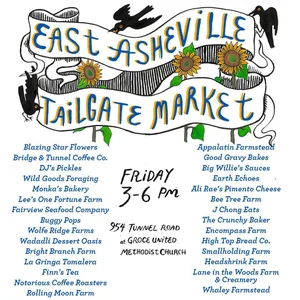
East Asheville Tailgate Market
Jun 7 @ 3:00 pm – 6:00 pm
East Asheville Tailgate Market
Buncombe County will continue to offer ASAP’s Double SNAP for Fruits and Vegetables and Farm Fresh Produce Prescription.
Connect Beyond Festival: FILM SCREENING: “Step” and Paula Dofat Q+A
Jun 7 @ 7:30 pm – 10:00 pm
Diana Wortham Theatre
Join us for a FREE film screening of the Sundance Award-winning documentary, Step, and a Q&A with cast member, HBCU advocate & national speaker Paula Dofat and hosted by Slay The Mic’s Elizabeth Lashay Garland. Even though this event is free, registration is required. Head to our tickets link to save your seats! STEP is the true-life story of a girls’ high-school step team set against the background of the heart of Baltimore. These young women learn to laugh, love and thrive – on and off the stage – even when the world seems to work against them. Empowered by their teachers, teammates, counselors, coaches and families, they chase their ultimate dreams: to win a step championship and to be accepted into college
ASAP’s Local Food Guide, the annual free publication for finding local food and farms, is updated for the 2024–25 season. This definitive resource lists hundreds of Appalachian GrownTM certified farms, farmers markets, restaurants, groceries, artisan producers, and more throughout Western North Carolina and surrounding counties in Virginia, Tennessee, Georgia, and South Carolina. A digital version of the print Guide may be viewed at asapconnections.org/guide.
In addition to listing content, the 2024–25 edition features stories that highlight the variety of farming across the region. Delia Jovel Dubón of Tierra Fértil Coop (pictured on the cover) talks about creating a sense of belonging for the Hispanic immigrant community in Henderson County. Lyric and Noah East of Wild East Farm in McDowell County detail the journey through their first full year of farming and how they’ve arrived at “a rough draft that’s working.” Kaci Nidiffer of The Liar’s Table in Avery County shares how scaling up and opening several retail spaces have created stronger connections with customers and community. Rounding out the issue are recipes from farmers at Two Trees Farm (Sustainabillies), Lee’s One Fortune Farm, Two Stones Farm + Mill, Carringer Farms, and Terra Lingua Growers.
“The Local Food Guide is such a beautiful way to share the stories of this place,” said Sarah Hart, ASAP’s Communications and Engagement Director. “To emphasize that sense of place, listings in this year’s Guide are organized into nine subregions with a short intro on what makes local farms in each area unique.”
Look for the Guide at farmers markets, visitors centers, libraries, groceries, restaurants, and other partner businesses throughout the region. Copies of the Guide are also available to pick up in the lobby of ASAP’s office in Asheville at 306 W. Haywood St., Tuesday to Thursday, 9 a.m. to 5 p.m. Contact ASAP if you need help locating a copy in your area or if you are interested in distributing Guides at your business.
In addition to the print Guide, ASAP maintains the online Local Food Guide at appalachiangrown.org. This database, with more than 1,400 listings, is updated throughout the year and is searchable by products, location, activities, and more.
Funding for the Local Food Guide was made possible in part by the U.S. Department of Agriculture (USDA) through the Agricultural Marketing Service, National Institute of Food and Agriculture’s Beginning Farmer Rancher Development Program, Gus Schumacher Nutrition Incentive Program, and Southern Sustainable Agriculture Research and Education program. Support was also provided by Dogwood Health Trust, the Community Foundation of Western North Carolina, and Asheville Regional Airport.
Henderson County Tailgate Market
Jun 8 @ 8:00 am – 12:00 pm
Henderson County Tailgate Market
Every Saturday from 8am-12pm, This is the 44th year for this
weekly tailgate market, where vendors sell fresh-picked seasonal vegetables and fruit, local honey, cut flowers, plant starts and
more, The market will be open through October. L
Hendersonville Farmers Market
Jun 8 @ 8:00 am – 1:00 pm
Historic Train Depot
Hendersonville Farmers Market in front of the Historic Train Depot, 8am-1pm, Hendersonville Farmers Market aims to be a world-class market that contributes to the success of local producers and growers, expands access to farm fresh foods, and creates a
vibrant community gathering space. With fresh produce, meats, baked goods, crafts, live entertainment, food trucks, and more,
it’s a weekly outing with something for everybody! Visitors can expect a lively atmosphere celebrating food, farm and family with
live music every Saturday! At least 30 vendors from within a 60-mile radius participate in each market, offering produce, meat,
eggs, dairy, honey, baked goods, crafts, beverages, and more. Special events such as Tomato Day, Wellness Day and
Juneteenth Celebration will occur at the market regularly throughout the season. Food trucks will also be a staple, allowing
visitors to enjoy breakfast or lunch on their farmers market adventure
North Asheville Tailgate Market
Jun 8 @ 8:00 am – 12:00 pm
North Asheville Tailgate Market
Welcome to Western NC’s most premier farmers market!
Since 1980, we have been providing Asheville and the surrounding area with a full range of local, sustainably produced produce, meats, eggs, cheeses, breads, plants, prepared foods and crafts. Day vendors complement the members’ offerings with additional products and services.
The North Asheville Tailgate Market is a weekly, Saturday morning gathering of the best farmers, craftsmen, and bakers. With over 40 vendors and more than 40,000 annual customers, the market’s energetic and warm environment welcomes all.
Asheville City Market
Jun 8 @ 9:00 am – 12:00 pm
Asheville City Market
Buncombe County will continue to offer ASAP’s Double SNAP for Fruits and Vegetables and Farm Fresh Produce Prescription. Both programs expand access to fresh fruits and vegetables to more people in the community that might not otherwise be able to afford them. Learn more about how these programs work at asapconnections.org/farmersmarkets.
Visit the Market
WHEN:Saturday mornings, 9 a.m.–12 p.m., April–Dec. Winter market hours: 10 a.m.–1 p.m., Jan.–March. No market the last two weeks of the year.
WHERE: North Market Street between Woodfin and Walnut streets in downtown Asheville. The street is closed to traffic during market times.
GETTING HERE: Free parking for customers is available at the HomeTrust Bank lot and at the Family Justice Center lot across from the YMCA at 35 Woodfin Street. Handicapped parking is available. There is a bus stop on the N1 and N2 routes one block away, on Broadway. Buses stop at both Woodfin and Walnut streets.
Asheville City Market is a producer-only market, which means that all farm vendors grow or raise the products they are selling themselves. For non-farm vendors (such as prepared food, seafood, coffee), preference is given to products and foods prepared or processed locally or made with locally sourced ingredients.
The list below reflects vendors for the entire season, but not all will attend market each week. Sign up for the Asheville City Market e-newsletter to see the weekly vendor schedule.
Black Mountain Tailgate Market
Jun 8 @ 9:00 am – 12:00 pm
Black Mountain Tailgate Market
COME CELEBRATE!
OPEN FROM MAY – NOVEMBER :: 9AM – NOON
Our market is a seasonal Saturday morning community event featuring organic and sustainably grown produce, plants, cut flowers, herbs, locally raised meats, seafood, breads, pastries, cheeses, eggs and local arts and handcrafted items. A family event every Saturday from May through November.
Film Screening: “Hometown Habitat, Stories of Bringing Nature Home” (Pollination Celebration)
Jun 8 @ 11:00 am – 12:45 pm
Pack Memorial Library
Environmental documentary featuring Dr. Doug Tallamy focused on why native plants are critical to the survival and vitality of local ecosystems with a goal to inspire people to plant native plants, providing a call to action to change our garden choices to include native plants.
This film screening is part of a community-wide Pollination Celebration! that will be taking place throughout June 2024. For information about other events, go to: beecityasheville.org/pollination-celebration
ASAP’s Local Food Guide, the annual free publication for finding local food and farms, is updated for the 2024–25 season. This definitive resource lists hundreds of Appalachian GrownTM certified farms, farmers markets, restaurants, groceries, artisan producers, and more throughout Western North Carolina and surrounding counties in Virginia, Tennessee, Georgia, and South Carolina. A digital version of the print Guide may be viewed at asapconnections.org/guide.
In addition to listing content, the 2024–25 edition features stories that highlight the variety of farming across the region. Delia Jovel Dubón of Tierra Fértil Coop (pictured on the cover) talks about creating a sense of belonging for the Hispanic immigrant community in Henderson County. Lyric and Noah East of Wild East Farm in McDowell County detail the journey through their first full year of farming and how they’ve arrived at “a rough draft that’s working.” Kaci Nidiffer of The Liar’s Table in Avery County shares how scaling up and opening several retail spaces have created stronger connections with customers and community. Rounding out the issue are recipes from farmers at Two Trees Farm (Sustainabillies), Lee’s One Fortune Farm, Two Stones Farm + Mill, Carringer Farms, and Terra Lingua Growers.
“The Local Food Guide is such a beautiful way to share the stories of this place,” said Sarah Hart, ASAP’s Communications and Engagement Director. “To emphasize that sense of place, listings in this year’s Guide are organized into nine subregions with a short intro on what makes local farms in each area unique.”
Look for the Guide at farmers markets, visitors centers, libraries, groceries, restaurants, and other partner businesses throughout the region. Copies of the Guide are also available to pick up in the lobby of ASAP’s office in Asheville at 306 W. Haywood St., Tuesday to Thursday, 9 a.m. to 5 p.m. Contact ASAP if you need help locating a copy in your area or if you are interested in distributing Guides at your business.
In addition to the print Guide, ASAP maintains the online Local Food Guide at appalachiangrown.org. This database, with more than 1,400 listings, is updated throughout the year and is searchable by products, location, activities, and more.
Funding for the Local Food Guide was made possible in part by the U.S. Department of Agriculture (USDA) through the Agricultural Marketing Service, National Institute of Food and Agriculture’s Beginning Farmer Rancher Development Program, Gus Schumacher Nutrition Incentive Program, and Southern Sustainable Agriculture Research and Education program. Support was also provided by Dogwood Health Trust, the Community Foundation of Western North Carolina, and Asheville Regional Airport.
Connect Beyond Festival
Jun 9 @ 12:00 pm – 10:00 pm
Thomas Wolfe Auditorium
Connect Beyond Festival returns to downtown Asheville, N.C. on June 7-9, 2024 for a weekend of performances, panels, film screenings and workshops with award-winning artists and thought leaders, exploring how the intersection of music, art, film and storytelling can inspire positive change. This year’s festival, dubbed by Ashvegas as “Asheville’s version of SXSW,” is themed around Connection To Deepen Resilience and Keep Moving Forward. Connect Beyond will be partnering with Slay The Mic Media to co-curate programs centered around youth empowerment. Tickets for the Connect Beyond Festival are slated to go on sale by May 13th. To optimize community accessibility, options include individual event tickets or a full weekend pass.
Southside Community Farmers Market
Jun 9 @ 12:00 pm – 3:00 pm
Southside Community Farmers Market
About Southside Community Farmers Market
Buncombe County will continue to offer ASAP’s Double SNAP for Fruits and Vegetables and Farm Fresh Produce Prescription.
Southside Community Farm hosts a farmers market featuring all BIPOC (Black, Indigenous, and people of color) vendors on the first Sunday of every month, May-Oct. from 12-3 PM. The market is EBT accessible. Come enjoy delicious patties, hot sauces, veggies, fruit, flowers, medicines, crafts and more!
ASAP’s Local Food Guide, the annual free publication for finding local food and farms, is updated for the 2024–25 season. This definitive resource lists hundreds of Appalachian GrownTM certified farms, farmers markets, restaurants, groceries, artisan producers, and more throughout Western North Carolina and surrounding counties in Virginia, Tennessee, Georgia, and South Carolina. A digital version of the print Guide may be viewed at asapconnections.org/guide.
In addition to listing content, the 2024–25 edition features stories that highlight the variety of farming across the region. Delia Jovel Dubón of Tierra Fértil Coop (pictured on the cover) talks about creating a sense of belonging for the Hispanic immigrant community in Henderson County. Lyric and Noah East of Wild East Farm in McDowell County detail the journey through their first full year of farming and how they’ve arrived at “a rough draft that’s working.” Kaci Nidiffer of The Liar’s Table in Avery County shares how scaling up and opening several retail spaces have created stronger connections with customers and community. Rounding out the issue are recipes from farmers at Two Trees Farm (Sustainabillies), Lee’s One Fortune Farm, Two Stones Farm + Mill, Carringer Farms, and Terra Lingua Growers.
“The Local Food Guide is such a beautiful way to share the stories of this place,” said Sarah Hart, ASAP’s Communications and Engagement Director. “To emphasize that sense of place, listings in this year’s Guide are organized into nine subregions with a short intro on what makes local farms in each area unique.”
Look for the Guide at farmers markets, visitors centers, libraries, groceries, restaurants, and other partner businesses throughout the region. Copies of the Guide are also available to pick up in the lobby of ASAP’s office in Asheville at 306 W. Haywood St., Tuesday to Thursday, 9 a.m. to 5 p.m. Contact ASAP if you need help locating a copy in your area or if you are interested in distributing Guides at your business.
In addition to the print Guide, ASAP maintains the online Local Food Guide at appalachiangrown.org. This database, with more than 1,400 listings, is updated throughout the year and is searchable by products, location, activities, and more.
Funding for the Local Food Guide was made possible in part by the U.S. Department of Agriculture (USDA) through the Agricultural Marketing Service, National Institute of Food and Agriculture’s Beginning Farmer Rancher Development Program, Gus Schumacher Nutrition Incentive Program, and Southern Sustainable Agriculture Research and Education program. Support was also provided by Dogwood Health Trust, the Community Foundation of Western North Carolina, and Asheville Regional Airport.
Music Movie Mondays: LITTLE RICHARD: I AM EVERYTHING
Jun 10 @ 7:00 pm
Grail Moviehouse
Music Movie Monday Special Screening –
Asheville-based author and music journalist Bill Kopp will be introducing the film and leading a moderated, interactive discussion following the movie.
All tickets are $15 and include General Admission Ticket plus Introduction and Moderated Discussion with Bill Kopp
Sponsored by Asheville FM
LITTLE RICHARD: I AM EVERYTHING tells the story of the Black queer origins of rock n’ roll, exploding the whitewashed canon of American pop music to reveal the innovator – the originator – Richard Penniman. Through a wealth of archive and performance that brings us into Richard’s complicated inner world, the film unspools the icon’s life story with all its switchbacks and contradictions. In interviews with family, musicians, and cutting-edge Black and queer scholars, the film reveals how Richard created an art form for ultimate self-expression, yet what he gave to the world he was never able to give to himself. Throughout his life, Richard careened like a shiny cracked pinball between God, sex and rock n’ roll. The world tried to put him in a box, but Richard was an omni being who contained multitudes – he was unabashedly everything.
Conversations in Film: The Post
Jun 10 @ 7:15 pm – 10:15 pm
Story Parlor
Join Story Medicine Worldwide for a screening of Steven Spielberg’s The Post, followed by a post-viewing conversation facilitated by local author, Meta Commerse.
ASAP’s Local Food Guide, the annual free publication for finding local food and farms, is updated for the 2024–25 season. This definitive resource lists hundreds of Appalachian GrownTM certified farms, farmers markets, restaurants, groceries, artisan producers, and more throughout Western North Carolina and surrounding counties in Virginia, Tennessee, Georgia, and South Carolina. A digital version of the print Guide may be viewed at asapconnections.org/guide.
In addition to listing content, the 2024–25 edition features stories that highlight the variety of farming across the region. Delia Jovel Dubón of Tierra Fértil Coop (pictured on the cover) talks about creating a sense of belonging for the Hispanic immigrant community in Henderson County. Lyric and Noah East of Wild East Farm in McDowell County detail the journey through their first full year of farming and how they’ve arrived at “a rough draft that’s working.” Kaci Nidiffer of The Liar’s Table in Avery County shares how scaling up and opening several retail spaces have created stronger connections with customers and community. Rounding out the issue are recipes from farmers at Two Trees Farm (Sustainabillies), Lee’s One Fortune Farm, Two Stones Farm + Mill, Carringer Farms, and Terra Lingua Growers.
“The Local Food Guide is such a beautiful way to share the stories of this place,” said Sarah Hart, ASAP’s Communications and Engagement Director. “To emphasize that sense of place, listings in this year’s Guide are organized into nine subregions with a short intro on what makes local farms in each area unique.”
Look for the Guide at farmers markets, visitors centers, libraries, groceries, restaurants, and other partner businesses throughout the region. Copies of the Guide are also available to pick up in the lobby of ASAP’s office in Asheville at 306 W. Haywood St., Tuesday to Thursday, 9 a.m. to 5 p.m. Contact ASAP if you need help locating a copy in your area or if you are interested in distributing Guides at your business.
In addition to the print Guide, ASAP maintains the online Local Food Guide at appalachiangrown.org. This database, with more than 1,400 listings, is updated throughout the year and is searchable by products, location, activities, and more.
Funding for the Local Food Guide was made possible in part by the U.S. Department of Agriculture (USDA) through the Agricultural Marketing Service, National Institute of Food and Agriculture’s Beginning Farmer Rancher Development Program, Gus Schumacher Nutrition Incentive Program, and Southern Sustainable Agriculture Research and Education program. Support was also provided by Dogwood Health Trust, the Community Foundation of Western North Carolina, and Asheville Regional Airport.
ASAP’s Local Food Guide, the annual free publication for finding local food and farms, is updated for the 2024–25 season. This definitive resource lists hundreds of Appalachian GrownTM certified farms, farmers markets, restaurants, groceries, artisan producers, and more throughout Western North Carolina and surrounding counties in Virginia, Tennessee, Georgia, and South Carolina. A digital version of the print Guide may be viewed at asapconnections.org/guide.
In addition to listing content, the 2024–25 edition features stories that highlight the variety of farming across the region. Delia Jovel Dubón of Tierra Fértil Coop (pictured on the cover) talks about creating a sense of belonging for the Hispanic immigrant community in Henderson County. Lyric and Noah East of Wild East Farm in McDowell County detail the journey through their first full year of farming and how they’ve arrived at “a rough draft that’s working.” Kaci Nidiffer of The Liar’s Table in Avery County shares how scaling up and opening several retail spaces have created stronger connections with customers and community. Rounding out the issue are recipes from farmers at Two Trees Farm (Sustainabillies), Lee’s One Fortune Farm, Two Stones Farm + Mill, Carringer Farms, and Terra Lingua Growers.
“The Local Food Guide is such a beautiful way to share the stories of this place,” said Sarah Hart, ASAP’s Communications and Engagement Director. “To emphasize that sense of place, listings in this year’s Guide are organized into nine subregions with a short intro on what makes local farms in each area unique.”
Look for the Guide at farmers markets, visitors centers, libraries, groceries, restaurants, and other partner businesses throughout the region. Copies of the Guide are also available to pick up in the lobby of ASAP’s office in Asheville at 306 W. Haywood St., Tuesday to Thursday, 9 a.m. to 5 p.m. Contact ASAP if you need help locating a copy in your area or if you are interested in distributing Guides at your business.
In addition to the print Guide, ASAP maintains the online Local Food Guide at appalachiangrown.org. This database, with more than 1,400 listings, is updated throughout the year and is searchable by products, location, activities, and more.
Funding for the Local Food Guide was made possible in part by the U.S. Department of Agriculture (USDA) through the Agricultural Marketing Service, National Institute of Food and Agriculture’s Beginning Farmer Rancher Development Program, Gus Schumacher Nutrition Incentive Program, and Southern Sustainable Agriculture Research and Education program. Support was also provided by Dogwood Health Trust, the Community Foundation of Western North Carolina, and Asheville Regional Airport.
Etowah Lions Club Farmers Market
Jun 12 @ 3:00 pm – 6:00 pm
Etowah Lions Club Farmers Market
Etowah Lions Club Farmers Market, 3-6pm, On Wednesdays through October, check out the Etowah Lions Club Farmers Market,
which showcases local farmers, vendors and artisans and the delicious produce the area is known for, all items sold here are
made by or grown by the vendor
River Arts District Farmers Market
Jun 12 @ 3:00 pm – 6:00 pm
River Arts District Farmers Market
Located in the River Arts District, and surrounded by art galleries and breweries, come find out about Asheville’s favourite mid-week market!
Buncombe County will continue to offer ASAP’s Double SNAP for Fruits and Vegetables and Farm Fresh Produce Prescription.
ASAP’s Local Food Guide, the annual free publication for finding local food and farms, is updated for the 2024–25 season. This definitive resource lists hundreds of Appalachian GrownTM certified farms, farmers markets, restaurants, groceries, artisan producers, and more throughout Western North Carolina and surrounding counties in Virginia, Tennessee, Georgia, and South Carolina. A digital version of the print Guide may be viewed at asapconnections.org/guide.
In addition to listing content, the 2024–25 edition features stories that highlight the variety of farming across the region. Delia Jovel Dubón of Tierra Fértil Coop (pictured on the cover) talks about creating a sense of belonging for the Hispanic immigrant community in Henderson County. Lyric and Noah East of Wild East Farm in McDowell County detail the journey through their first full year of farming and how they’ve arrived at “a rough draft that’s working.” Kaci Nidiffer of The Liar’s Table in Avery County shares how scaling up and opening several retail spaces have created stronger connections with customers and community. Rounding out the issue are recipes from farmers at Two Trees Farm (Sustainabillies), Lee’s One Fortune Farm, Two Stones Farm + Mill, Carringer Farms, and Terra Lingua Growers.
“The Local Food Guide is such a beautiful way to share the stories of this place,” said Sarah Hart, ASAP’s Communications and Engagement Director. “To emphasize that sense of place, listings in this year’s Guide are organized into nine subregions with a short intro on what makes local farms in each area unique.”
Look for the Guide at farmers markets, visitors centers, libraries, groceries, restaurants, and other partner businesses throughout the region. Copies of the Guide are also available to pick up in the lobby of ASAP’s office in Asheville at 306 W. Haywood St., Tuesday to Thursday, 9 a.m. to 5 p.m. Contact ASAP if you need help locating a copy in your area or if you are interested in distributing Guides at your business.
In addition to the print Guide, ASAP maintains the online Local Food Guide at appalachiangrown.org. This database, with more than 1,400 listings, is updated throughout the year and is searchable by products, location, activities, and more.
Funding for the Local Food Guide was made possible in part by the U.S. Department of Agriculture (USDA) through the Agricultural Marketing Service, National Institute of Food and Agriculture’s Beginning Farmer Rancher Development Program, Gus Schumacher Nutrition Incentive Program, and Southern Sustainable Agriculture Research and Education program. Support was also provided by Dogwood Health Trust, the Community Foundation of Western North Carolina, and Asheville Regional Airport.