

Calendar of Events
Upcoming events and things to do in Asheville, NC. Below is a list of events for festivals, concerts, art exhibitions, group meetups and more.
Interested in adding an event to our calendar? Please click the green “Post Your Event” button below.
Check Out Our New Arts Discounts Page
We have exciting news! The ArtsAVL website has a new feature: a discounts page!
At any time, you can head on over to artsavl.org/discounts to see special discount offers our members are offering.
View Offerings

Artists are invited to create artworks with the theme of “Red, White and Blue.“ Apply these patriotic colors at the center of your subjects, however there are no limits to your creativity, your artworks don’t need to be primarily patriotic theme, but viewers should be able to spot the use of recognizable amount of red, white and blue colors.
Pieces made from nylon fabric ripstop, which keeps tears from spreading, invite viewers into created, fantastical worlds, only to highlight the complex—even impossible—architectures of their construction. Before the pandemic, Adrian primarily focused on personal experiences and interrogations of queerness, identity, and sexuality. Since then, the work has zoomed out in its scope, still centering identity but placed in larger infrastructure and surveillance systems that mediate, manipulate, and control desire.
Adrian counts queer fiber art, BDSM and kink culture, theatre, camp horror, puppetry, and drag among his many influences. Works in RIPSTOP, like the modernist bounce house sculpture A Fallible Complex (2021), evoke spaces for play, beckoning visitors in through their alluring aesthetic and then blocking their entrance or revealing structural instabilities, like missing floors. Others, like The Sensational Inflatable Furry Divines (2017-19), use sensual materials, like faux fur, spandex, and pleather, which connect to theatrical performance and counterculture. The materials “play on people’s initial associations and serve as a gateway into greater conversations about identity construction, performance, desire, and technology,” he shares.Pieces also nod to the history of quilting, including the AIDS Memorial Quilt, another influence on Adrian’s work. “Even when pieces aren’t explicitly making quilt references, I want the history of quilting and sewing-based craft to be part of the conversation of the work,” he says. “Craft is so much about the processes and histories behind materials. It’s about connecting with communities of people who practice those techniques. It’s about material and technique being a doorway into a greater relationship with an object.”
Themes of transformation—of structures, identities, and bodies—run throughout the show. “What I love about drag and puppetry is the sense of transformation and play, specifically with bodies,” Adrian says. “Within these art forms, a body can become mutable and capable of performing and becoming in unexpected states.” The sculptures also transform throughout viewers’ experiences, going through stages of inflation and deflation and existing in many different states.
RIPSTOP’s constant interplay between surface and depth, assumption and reality, are all a part of what Adrian describes as “looking behind the curtain,” which they trace back to the theatre. “When I’m thinking about systems, and the systems desire fits into, I’m thinking of stage construction, the backstage, the things that go on behind the show, and performance of our desires,” they explain.
As a craft artist, Adrian’s philosophy “comes down to having an intentional relationship with material, process, and technique,” he says. “Those aspects of art making are just as – if not more – important than an intellectualized concept being illustrated by an artwork.”
“Broadened definitions of craft that highlight communities of practice are foundational for the Center for Craft’s new strategic direction,” explains Executive Director Stephanie Moore. “Max Adrian’s work in RIPSTOP exemplifies the expansive and meaningful forms craft can take.” The Center for Craft is an institution Adrian credits for their professional growth. “The Center for Craft has felt like such a supporting institution for me specifically and for so many other craft artists I know,” they note. “To be able to bring this amount of work to Asheville is pretty cool.”
See Max Adrian: RIPSTOP at the Center for Craft Beginning July 26. A reception will be held on August 15. RIPSTOP is organized by Houston Center for Contemporary Craft and curated by Sarah Darro.
ASAP (Appalachian Sustainable Agriculture Project) has released a survey to learn more about how people in Western North Carolina shop for food and why they choose the food they do. The survey, part of a three-year project by ASAP’s Local Food Research Center, is for any resident of Western North Carolina over the age of 18, no matter where or how they shop for food. It can be completed online at surveymonkey.com/r/WNCFoodASAP or over the phone by calling ASAP at 828-236-1282. It should take approximately 8 to 12 minutes to complete and will be open through Oct. 31, 2024. Respondents are encouraged to share the survey widely with families, friends, and co-workers.
“By completing this survey, you are helping local farmers understand and connect with consumers,” said Amy Marion, ASAP Associate Director and lead researcher. “The challenges of our food system are constantly evolving. Improving it requires active participation from all community members. With this research we can better understand consumer values and the barriers they face, and help farmers and food producers improve communications with their customers and their communities.”
The survey is part of a three-year research project, “Connections in Direct Markets: Assessing the feedback loop between consumer values and farmers’ marketing strategies,” which will examine and improve communication and alignment between farmers and consumers in Western North Carolina. The research phase will also employ consumer focus groups, farmer interviews and case studies, and more targeted surveying. The broad consumer survey provides an update to the last consumer survey conducted by the Local Food Research Center in 2014. Results from the current research project will be shared in 2025.
ASAP founded the Local Food Research Center in 2011 to study the economic, environmental, and social impacts of localizing food systems. From its inception, ASAP’s programs and services have been grounded in research and evaluation, adjusting based on a strong feedback loop and observation of current conditions in the food system.
This project is supported in part by the National Institute of Food and Agriculture, U.S. Department of Agriculture, under award number 2022-38640-37488 through the Southern Sustainable Agriculture Research and Education program under subaward number LS23-382. USDA is an equal opportunity employer and service provider.
Artists are invited to create artworks with the theme of “Red, White and Blue.“ Apply these patriotic colors at the center of your subjects, however there are no limits to your creativity, your artworks don’t need to be primarily patriotic theme, but viewers should be able to spot the use of recognizable amount of red, white and blue colors.
Pieces made from nylon fabric ripstop, which keeps tears from spreading, invite viewers into created, fantastical worlds, only to highlight the complex—even impossible—architectures of their construction. Before the pandemic, Adrian primarily focused on personal experiences and interrogations of queerness, identity, and sexuality. Since then, the work has zoomed out in its scope, still centering identity but placed in larger infrastructure and surveillance systems that mediate, manipulate, and control desire.
Adrian counts queer fiber art, BDSM and kink culture, theatre, camp horror, puppetry, and drag among his many influences. Works in RIPSTOP, like the modernist bounce house sculpture A Fallible Complex (2021), evoke spaces for play, beckoning visitors in through their alluring aesthetic and then blocking their entrance or revealing structural instabilities, like missing floors. Others, like The Sensational Inflatable Furry Divines (2017-19), use sensual materials, like faux fur, spandex, and pleather, which connect to theatrical performance and counterculture. The materials “play on people’s initial associations and serve as a gateway into greater conversations about identity construction, performance, desire, and technology,” he shares.Pieces also nod to the history of quilting, including the AIDS Memorial Quilt, another influence on Adrian’s work. “Even when pieces aren’t explicitly making quilt references, I want the history of quilting and sewing-based craft to be part of the conversation of the work,” he says. “Craft is so much about the processes and histories behind materials. It’s about connecting with communities of people who practice those techniques. It’s about material and technique being a doorway into a greater relationship with an object.”
Themes of transformation—of structures, identities, and bodies—run throughout the show. “What I love about drag and puppetry is the sense of transformation and play, specifically with bodies,” Adrian says. “Within these art forms, a body can become mutable and capable of performing and becoming in unexpected states.” The sculptures also transform throughout viewers’ experiences, going through stages of inflation and deflation and existing in many different states.
RIPSTOP’s constant interplay between surface and depth, assumption and reality, are all a part of what Adrian describes as “looking behind the curtain,” which they trace back to the theatre. “When I’m thinking about systems, and the systems desire fits into, I’m thinking of stage construction, the backstage, the things that go on behind the show, and performance of our desires,” they explain.
As a craft artist, Adrian’s philosophy “comes down to having an intentional relationship with material, process, and technique,” he says. “Those aspects of art making are just as – if not more – important than an intellectualized concept being illustrated by an artwork.”
“Broadened definitions of craft that highlight communities of practice are foundational for the Center for Craft’s new strategic direction,” explains Executive Director Stephanie Moore. “Max Adrian’s work in RIPSTOP exemplifies the expansive and meaningful forms craft can take.” The Center for Craft is an institution Adrian credits for their professional growth. “The Center for Craft has felt like such a supporting institution for me specifically and for so many other craft artists I know,” they note. “To be able to bring this amount of work to Asheville is pretty cool.”
See Max Adrian: RIPSTOP at the Center for Craft Beginning July 26. A reception will be held on August 15. RIPSTOP is organized by Houston Center for Contemporary Craft and curated by Sarah Darro.
In the early 1900s, travel by train and automobile became more accessible in the United States, leading to an increase in tourism and a revitalized interest in landscape painting. The relative ease of transportation, as well as the creation of National Parks, allowed people to experience the breathtaking landscapes of the United States in new ways. Artists traveled along popular routes, recording the terrain they encountered.
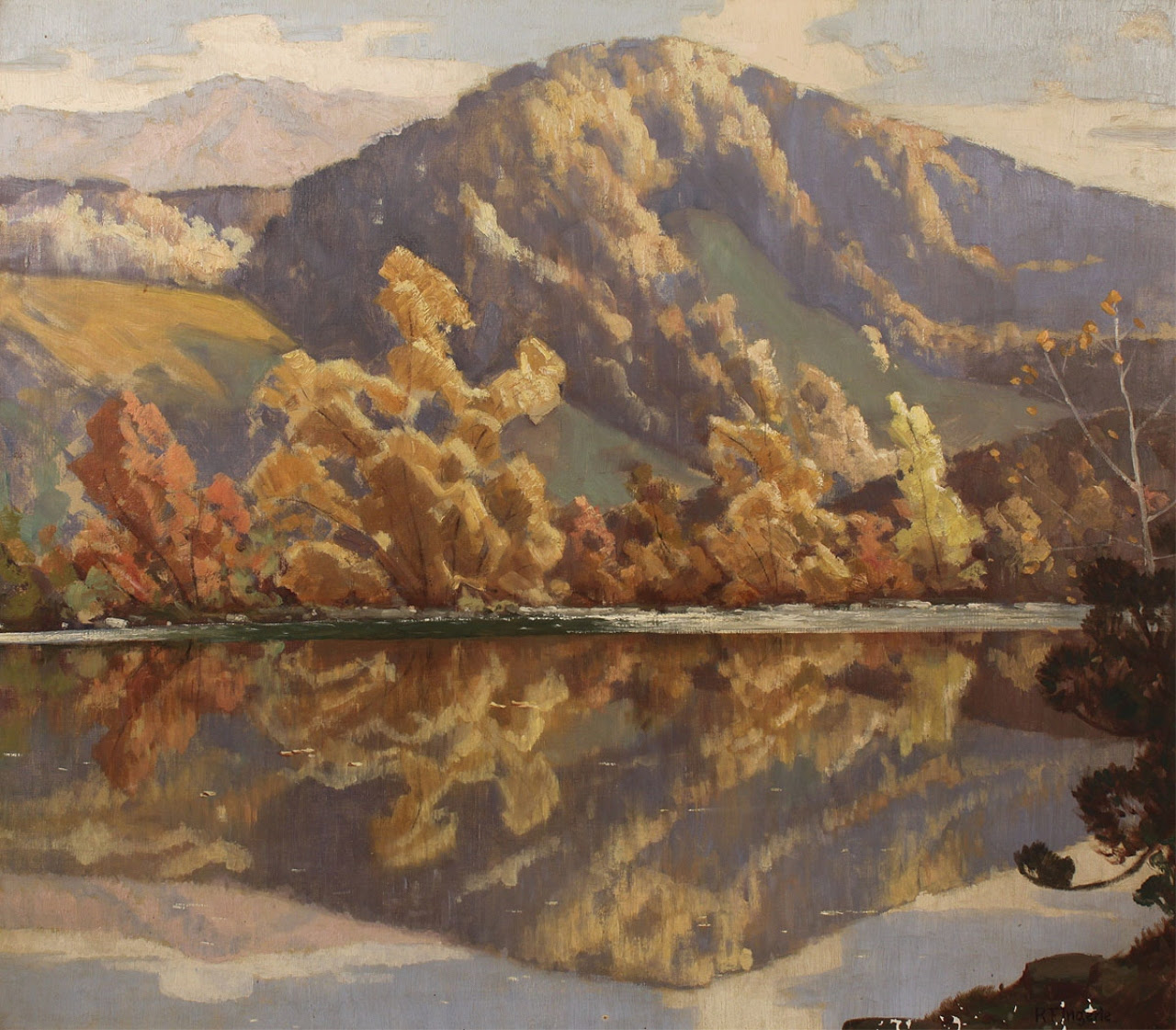
This exhibition explores the sublime natural landscapes of the Smokey Mountains of Western North Carolina and Tennessee. While there were several regional schools of painting around this time, this group is largely from the Midwest and many of the artists trained at the Art Institute of Chicago or in New York City. Through their travels, they captured waterfalls, sunsets, thunderstorms, autumn foliage, lush green summers, and snow-covered mountains—elements that were novel for viewers from cities and rural areas. Though some of these paintings include people, they are usually used for scale and painted with little to no detail, highlighting the magnificence of nature.
 |
|
Rudolph F. Ingerle, Mirrored Mountain, not dated, oil on canvas, 28 × 32 inches. Courtesy of Allen & Barry Huffman, Asheville Art Museum. |
We have exciting news! The ArtsAVL website has a new feature: a discounts page!
At any time, you can head on over to artsavl.org/discounts to see special discount offers our members are offering.
View Offerings
Featuring over 300 beautiful quilts made by national, regional and local quilter makers, the Asheville Quilt Guild will showcase this unique Appalachian craft Thursday and Friday, September 26 and 27 from 9am-5pm and Saturday, September 28 from 9am-4pm. Fulfilling its mission to preserve and advance the tradition and art of quilting. The Quilt Show will give visitors the opportunity to get an up-close look at how quilters have creatively transformed fabrics and threads into works of art and admire the prize winning- works selected by professional quilt judges in an array of quilting styles and designs.
In addition, visitors can:
Attend free demonstrations of quilting techniques and new quilting products/machines
View Special Exhibits such as quilts by Mountain Art Quilters on the theme of “Reflections: Connecting to Nature” and special Ruby Anniversary Quilts made by Guild members
Peruse the Gift Shop and Gallery brimming with handcrafted quilted items to enhance their homes
Shop for the latest quilting and sewing products being sold by 27 regional vendors
Get a real bargain for gently used sewing/quilting supplies, fabrics and books/patterns at the What’s Old Is New booth
Take a $1 chance to win the exciting Opportunity Quilt made by the PhD (Projects Half Done) Bee
Enjoy the odds at the Product Raffle that gives away prizes donated by sponsors and vendors many times each day
To encourage the next generation of quilters the Guild offers a Kids Sewing Area where children from 4-12 years old create their own sewn projects to take home with them.
Held at the WNC Agricultural Center, Davis Event Center, 765 Boylston Hwy, Fletcher, NC 28732, the Quilt Show offers ample free parking and a cafeteria offering lunch and snacks. Groups of 10 or more people get a discount off the $10 admission price by contacting NancyLynn at [email protected] prior to the show.
Made possible by generous support from sponsors, including Moda Fabrics, Explore Asheville, and Aurifil Threads, the Quilt Show will award $12,000 in prize money to the winners. This elevates the show beyond what most quilt shows of 300+ quilts, 350 members and 3,000 visitors are able to offer. Further enhancing the show is the cadre of guild members who volunteer to help set up, operate and take down the show. Asheville Quilt Guild has helped develop and maintain Asheville’s reputation as a city known for its breadth and excellence in artistic and cultural achievements and welcomes visitors to explore this exciting Quilt Show.
Artists are invited to create artworks with the theme of “Red, White and Blue.“ Apply these patriotic colors at the center of your subjects, however there are no limits to your creativity, your artworks don’t need to be primarily patriotic theme, but viewers should be able to spot the use of recognizable amount of red, white and blue colors.
Pieces made from nylon fabric ripstop, which keeps tears from spreading, invite viewers into created, fantastical worlds, only to highlight the complex—even impossible—architectures of their construction. Before the pandemic, Adrian primarily focused on personal experiences and interrogations of queerness, identity, and sexuality. Since then, the work has zoomed out in its scope, still centering identity but placed in larger infrastructure and surveillance systems that mediate, manipulate, and control desire.
Adrian counts queer fiber art, BDSM and kink culture, theatre, camp horror, puppetry, and drag among his many influences. Works in RIPSTOP, like the modernist bounce house sculpture A Fallible Complex (2021), evoke spaces for play, beckoning visitors in through their alluring aesthetic and then blocking their entrance or revealing structural instabilities, like missing floors. Others, like The Sensational Inflatable Furry Divines (2017-19), use sensual materials, like faux fur, spandex, and pleather, which connect to theatrical performance and counterculture. The materials “play on people’s initial associations and serve as a gateway into greater conversations about identity construction, performance, desire, and technology,” he shares.Pieces also nod to the history of quilting, including the AIDS Memorial Quilt, another influence on Adrian’s work. “Even when pieces aren’t explicitly making quilt references, I want the history of quilting and sewing-based craft to be part of the conversation of the work,” he says. “Craft is so much about the processes and histories behind materials. It’s about connecting with communities of people who practice those techniques. It’s about material and technique being a doorway into a greater relationship with an object.”
Themes of transformation—of structures, identities, and bodies—run throughout the show. “What I love about drag and puppetry is the sense of transformation and play, specifically with bodies,” Adrian says. “Within these art forms, a body can become mutable and capable of performing and becoming in unexpected states.” The sculptures also transform throughout viewers’ experiences, going through stages of inflation and deflation and existing in many different states.
RIPSTOP’s constant interplay between surface and depth, assumption and reality, are all a part of what Adrian describes as “looking behind the curtain,” which they trace back to the theatre. “When I’m thinking about systems, and the systems desire fits into, I’m thinking of stage construction, the backstage, the things that go on behind the show, and performance of our desires,” they explain.
As a craft artist, Adrian’s philosophy “comes down to having an intentional relationship with material, process, and technique,” he says. “Those aspects of art making are just as – if not more – important than an intellectualized concept being illustrated by an artwork.”
“Broadened definitions of craft that highlight communities of practice are foundational for the Center for Craft’s new strategic direction,” explains Executive Director Stephanie Moore. “Max Adrian’s work in RIPSTOP exemplifies the expansive and meaningful forms craft can take.” The Center for Craft is an institution Adrian credits for their professional growth. “The Center for Craft has felt like such a supporting institution for me specifically and for so many other craft artists I know,” they note. “To be able to bring this amount of work to Asheville is pretty cool.”
See Max Adrian: RIPSTOP at the Center for Craft Beginning July 26. A reception will be held on August 15. RIPSTOP is organized by Houston Center for Contemporary Craft and curated by Sarah Darro.
In the early 1900s, travel by train and automobile became more accessible in the United States, leading to an increase in tourism and a revitalized interest in landscape painting. The relative ease of transportation, as well as the creation of National Parks, allowed people to experience the breathtaking landscapes of the United States in new ways. Artists traveled along popular routes, recording the terrain they encountered.
This exhibition explores the sublime natural landscapes of the Smokey Mountains of Western North Carolina and Tennessee. While there were several regional schools of painting around this time, this group is largely from the Midwest and many of the artists trained at the Art Institute of Chicago or in New York City. Through their travels, they captured waterfalls, sunsets, thunderstorms, autumn foliage, lush green summers, and snow-covered mountains—elements that were novel for viewers from cities and rural areas. Though some of these paintings include people, they are usually used for scale and painted with little to no detail, highlighting the magnificence of nature.
|
|
Rudolph F. Ingerle, Mirrored Mountain, not dated, oil on canvas, 28 × 32 inches. Courtesy of Allen & Barry Huffman, Asheville Art Museum. |
We have exciting news! The ArtsAVL website has a new feature: a discounts page!
At any time, you can head on over to artsavl.org/discounts to see special discount offers our members are offering.
View Offerings
ASAP (Appalachian Sustainable Agriculture Project) has released a survey to learn more about how people in Western North Carolina shop for food and why they choose the food they do. The survey, part of a three-year project by ASAP’s Local Food Research Center, is for any resident of Western North Carolina over the age of 18, no matter where or how they shop for food. It can be completed online at surveymonkey.com/r/WNCFoodASAP or over the phone by calling ASAP at 828-236-1282. It should take approximately 8 to 12 minutes to complete and will be open through Oct. 31, 2024. Respondents are encouraged to share the survey widely with families, friends, and co-workers.
“By completing this survey, you are helping local farmers understand and connect with consumers,” said Amy Marion, ASAP Associate Director and lead researcher. “The challenges of our food system are constantly evolving. Improving it requires active participation from all community members. With this research we can better understand consumer values and the barriers they face, and help farmers and food producers improve communications with their customers and their communities.”
The survey is part of a three-year research project, “Connections in Direct Markets: Assessing the feedback loop between consumer values and farmers’ marketing strategies,” which will examine and improve communication and alignment between farmers and consumers in Western North Carolina. The research phase will also employ consumer focus groups, farmer interviews and case studies, and more targeted surveying. The broad consumer survey provides an update to the last consumer survey conducted by the Local Food Research Center in 2014. Results from the current research project will be shared in 2025.
ASAP founded the Local Food Research Center in 2011 to study the economic, environmental, and social impacts of localizing food systems. From its inception, ASAP’s programs and services have been grounded in research and evaluation, adjusting based on a strong feedback loop and observation of current conditions in the food system.
This project is supported in part by the National Institute of Food and Agriculture, U.S. Department of Agriculture, under award number 2022-38640-37488 through the Southern Sustainable Agriculture Research and Education program under subaward number LS23-382. USDA is an equal opportunity employer and service provider.
Featuring over 300 beautiful quilts made by national, regional and local quilter makers, the Asheville Quilt Guild will showcase this unique Appalachian craft Thursday and Friday, September 26 and 27 from 9am-5pm and Saturday, September 28 from 9am-4pm. Fulfilling its mission to preserve and advance the tradition and art of quilting. The Quilt Show will give visitors the opportunity to get an up-close look at how quilters have creatively transformed fabrics and threads into works of art and admire the prize winning- works selected by professional quilt judges in an array of quilting styles and designs.
In addition, visitors can:
Attend free demonstrations of quilting techniques and new quilting products/machines
View Special Exhibits such as quilts by Mountain Art Quilters on the theme of “Reflections: Connecting to Nature” and special Ruby Anniversary Quilts made by Guild members
Peruse the Gift Shop and Gallery brimming with handcrafted quilted items to enhance their homes
Shop for the latest quilting and sewing products being sold by 27 regional vendors
Get a real bargain for gently used sewing/quilting supplies, fabrics and books/patterns at the What’s Old Is New booth
Take a $1 chance to win the exciting Opportunity Quilt made by the PhD (Projects Half Done) Bee
Enjoy the odds at the Product Raffle that gives away prizes donated by sponsors and vendors many times each day
To encourage the next generation of quilters the Guild offers a Kids Sewing Area where children from 4-12 years old create their own sewn projects to take home with them.
Held at the WNC Agricultural Center, Davis Event Center, 765 Boylston Hwy, Fletcher, NC 28732, the Quilt Show offers ample free parking and a cafeteria offering lunch and snacks. Groups of 10 or more people get a discount off the $10 admission price by contacting NancyLynn at [email protected] prior to the show.
Made possible by generous support from sponsors, including Moda Fabrics, Explore Asheville, and Aurifil Threads, the Quilt Show will award $12,000 in prize money to the winners. This elevates the show beyond what most quilt shows of 300+ quilts, 350 members and 3,000 visitors are able to offer. Further enhancing the show is the cadre of guild members who volunteer to help set up, operate and take down the show. Asheville Quilt Guild has helped develop and maintain Asheville’s reputation as a city known for its breadth and excellence in artistic and cultural achievements and welcomes visitors to explore this exciting Quilt Show.
Artists are invited to create artworks with the theme of “Red, White and Blue.“ Apply these patriotic colors at the center of your subjects, however there are no limits to your creativity, your artworks don’t need to be primarily patriotic theme, but viewers should be able to spot the use of recognizable amount of red, white and blue colors.
Pieces made from nylon fabric ripstop, which keeps tears from spreading, invite viewers into created, fantastical worlds, only to highlight the complex—even impossible—architectures of their construction. Before the pandemic, Adrian primarily focused on personal experiences and interrogations of queerness, identity, and sexuality. Since then, the work has zoomed out in its scope, still centering identity but placed in larger infrastructure and surveillance systems that mediate, manipulate, and control desire.
Adrian counts queer fiber art, BDSM and kink culture, theatre, camp horror, puppetry, and drag among his many influences. Works in RIPSTOP, like the modernist bounce house sculpture A Fallible Complex (2021), evoke spaces for play, beckoning visitors in through their alluring aesthetic and then blocking their entrance or revealing structural instabilities, like missing floors. Others, like The Sensational Inflatable Furry Divines (2017-19), use sensual materials, like faux fur, spandex, and pleather, which connect to theatrical performance and counterculture. The materials “play on people’s initial associations and serve as a gateway into greater conversations about identity construction, performance, desire, and technology,” he shares.Pieces also nod to the history of quilting, including the AIDS Memorial Quilt, another influence on Adrian’s work. “Even when pieces aren’t explicitly making quilt references, I want the history of quilting and sewing-based craft to be part of the conversation of the work,” he says. “Craft is so much about the processes and histories behind materials. It’s about connecting with communities of people who practice those techniques. It’s about material and technique being a doorway into a greater relationship with an object.”
Themes of transformation—of structures, identities, and bodies—run throughout the show. “What I love about drag and puppetry is the sense of transformation and play, specifically with bodies,” Adrian says. “Within these art forms, a body can become mutable and capable of performing and becoming in unexpected states.” The sculptures also transform throughout viewers’ experiences, going through stages of inflation and deflation and existing in many different states.
RIPSTOP’s constant interplay between surface and depth, assumption and reality, are all a part of what Adrian describes as “looking behind the curtain,” which they trace back to the theatre. “When I’m thinking about systems, and the systems desire fits into, I’m thinking of stage construction, the backstage, the things that go on behind the show, and performance of our desires,” they explain.
As a craft artist, Adrian’s philosophy “comes down to having an intentional relationship with material, process, and technique,” he says. “Those aspects of art making are just as – if not more – important than an intellectualized concept being illustrated by an artwork.”
“Broadened definitions of craft that highlight communities of practice are foundational for the Center for Craft’s new strategic direction,” explains Executive Director Stephanie Moore. “Max Adrian’s work in RIPSTOP exemplifies the expansive and meaningful forms craft can take.” The Center for Craft is an institution Adrian credits for their professional growth. “The Center for Craft has felt like such a supporting institution for me specifically and for so many other craft artists I know,” they note. “To be able to bring this amount of work to Asheville is pretty cool.”
See Max Adrian: RIPSTOP at the Center for Craft Beginning July 26. A reception will be held on August 15. RIPSTOP is organized by Houston Center for Contemporary Craft and curated by Sarah Darro.
In the early 1900s, travel by train and automobile became more accessible in the United States, leading to an increase in tourism and a revitalized interest in landscape painting. The relative ease of transportation, as well as the creation of National Parks, allowed people to experience the breathtaking landscapes of the United States in new ways. Artists traveled along popular routes, recording the terrain they encountered.
This exhibition explores the sublime natural landscapes of the Smokey Mountains of Western North Carolina and Tennessee. While there were several regional schools of painting around this time, this group is largely from the Midwest and many of the artists trained at the Art Institute of Chicago or in New York City. Through their travels, they captured waterfalls, sunsets, thunderstorms, autumn foliage, lush green summers, and snow-covered mountains—elements that were novel for viewers from cities and rural areas. Though some of these paintings include people, they are usually used for scale and painted with little to no detail, highlighting the magnificence of nature.
|
|
Rudolph F. Ingerle, Mirrored Mountain, not dated, oil on canvas, 28 × 32 inches. Courtesy of Allen & Barry Huffman, Asheville Art Museum. |
Join the circle: the Asheville Women’s Breathwork Circle! This monthly two hour in-person event is designed exclusively for women, providing a safe and supportive space to explore the transformative power of breathwork with the strength and healing of sisterhood.
Join us where the rhythmic dance of breathing unites us in the journey of inner peace and harmony, healing, growth, and profound self-discovery.
A sanctuary for your evolution as a woman, we’ll gather in community to connect with ourselves and one another and breathe into our true nature (hello, the real you!), so that we can go on living a more joyful, happy, free life that we love.
During breathwork, you’ll release stress, quiet the chatter of your mind, increase self-awareness, and cultivate a deeper connection with yourself and others.
To maintain the intimacy of this event, space is limited to 15 women. No prior experience is necessary. Must be 18+.
We have exciting news! The ArtsAVL website has a new feature: a discounts page!
At any time, you can head on over to artsavl.org/discounts to see special discount offers our members are offering.
View Offerings
Featuring over 300 beautiful quilts made by national, regional and local quilter makers, the Asheville Quilt Guild will showcase this unique Appalachian craft Thursday and Friday, September 26 and 27 from 9am-5pm and Saturday, September 28 from 9am-4pm. Fulfilling its mission to preserve and advance the tradition and art of quilting. The Quilt Show will give visitors the opportunity to get an up-close look at how quilters have creatively transformed fabrics and threads into works of art and admire the prize winning- works selected by professional quilt judges in an array of quilting styles and designs.
In addition, visitors can:
Attend free demonstrations of quilting techniques and new quilting products/machines
View Special Exhibits such as quilts by Mountain Art Quilters on the theme of “Reflections: Connecting to Nature” and special Ruby Anniversary Quilts made by Guild members
Peruse the Gift Shop and Gallery brimming with handcrafted quilted items to enhance their homes
Shop for the latest quilting and sewing products being sold by 27 regional vendors
Get a real bargain for gently used sewing/quilting supplies, fabrics and books/patterns at the What’s Old Is New booth
Take a $1 chance to win the exciting Opportunity Quilt made by the PhD (Projects Half Done) Bee
Enjoy the odds at the Product Raffle that gives away prizes donated by sponsors and vendors many times each day
To encourage the next generation of quilters the Guild offers a Kids Sewing Area where children from 4-12 years old create their own sewn projects to take home with them.
Held at the WNC Agricultural Center, Davis Event Center, 765 Boylston Hwy, Fletcher, NC 28732, the Quilt Show offers ample free parking and a cafeteria offering lunch and snacks. Groups of 10 or more people get a discount off the $10 admission price by contacting NancyLynn at [email protected] prior to the show.
Made possible by generous support from sponsors, including Moda Fabrics, Explore Asheville, and Aurifil Threads, the Quilt Show will award $12,000 in prize money to the winners. This elevates the show beyond what most quilt shows of 300+ quilts, 350 members and 3,000 visitors are able to offer. Further enhancing the show is the cadre of guild members who volunteer to help set up, operate and take down the show. Asheville Quilt Guild has helped develop and maintain Asheville’s reputation as a city known for its breadth and excellence in artistic and cultural achievements and welcomes visitors to explore this exciting Quilt Show.
Pieces made from nylon fabric ripstop, which keeps tears from spreading, invite viewers into created, fantastical worlds, only to highlight the complex—even impossible—architectures of their construction. Before the pandemic, Adrian primarily focused on personal experiences and interrogations of queerness, identity, and sexuality. Since then, the work has zoomed out in its scope, still centering identity but placed in larger infrastructure and surveillance systems that mediate, manipulate, and control desire.
Adrian counts queer fiber art, BDSM and kink culture, theatre, camp horror, puppetry, and drag among his many influences. Works in RIPSTOP, like the modernist bounce house sculpture A Fallible Complex (2021), evoke spaces for play, beckoning visitors in through their alluring aesthetic and then blocking their entrance or revealing structural instabilities, like missing floors. Others, like The Sensational Inflatable Furry Divines (2017-19), use sensual materials, like faux fur, spandex, and pleather, which connect to theatrical performance and counterculture. The materials “play on people’s initial associations and serve as a gateway into greater conversations about identity construction, performance, desire, and technology,” he shares.Pieces also nod to the history of quilting, including the AIDS Memorial Quilt, another influence on Adrian’s work. “Even when pieces aren’t explicitly making quilt references, I want the history of quilting and sewing-based craft to be part of the conversation of the work,” he says. “Craft is so much about the processes and histories behind materials. It’s about connecting with communities of people who practice those techniques. It’s about material and technique being a doorway into a greater relationship with an object.”
Themes of transformation—of structures, identities, and bodies—run throughout the show. “What I love about drag and puppetry is the sense of transformation and play, specifically with bodies,” Adrian says. “Within these art forms, a body can become mutable and capable of performing and becoming in unexpected states.” The sculptures also transform throughout viewers’ experiences, going through stages of inflation and deflation and existing in many different states.
RIPSTOP’s constant interplay between surface and depth, assumption and reality, are all a part of what Adrian describes as “looking behind the curtain,” which they trace back to the theatre. “When I’m thinking about systems, and the systems desire fits into, I’m thinking of stage construction, the backstage, the things that go on behind the show, and performance of our desires,” they explain.
As a craft artist, Adrian’s philosophy “comes down to having an intentional relationship with material, process, and technique,” he says. “Those aspects of art making are just as – if not more – important than an intellectualized concept being illustrated by an artwork.”
“Broadened definitions of craft that highlight communities of practice are foundational for the Center for Craft’s new strategic direction,” explains Executive Director Stephanie Moore. “Max Adrian’s work in RIPSTOP exemplifies the expansive and meaningful forms craft can take.” The Center for Craft is an institution Adrian credits for their professional growth. “The Center for Craft has felt like such a supporting institution for me specifically and for so many other craft artists I know,” they note. “To be able to bring this amount of work to Asheville is pretty cool.”
See Max Adrian: RIPSTOP at the Center for Craft Beginning July 26. A reception will be held on August 15. RIPSTOP is organized by Houston Center for Contemporary Craft and curated by Sarah Darro.
Saturdays from 10:30 AM – 12 PM
🍁 Embrace the autumn vibes at our 1st Happy Fall Y’all Art and Framers Market in beautiful Asheville, NC! 🎨✨ Enter our pumpkin carving contest for a chance to win ‘vendor bucks’ redeemable at any booth! 🎃🛍️ Enjoy live music, delicious food, adult beverages, and more. Join the fall fun with us! 🍂🎶
September, 28th (10AM-5PM)
A-B Tech Conference Center
340 Victoria Road Asheville, NC 28801
In the early 1900s, travel by train and automobile became more accessible in the United States, leading to an increase in tourism and a revitalized interest in landscape painting. The relative ease of transportation, as well as the creation of National Parks, allowed people to experience the breathtaking landscapes of the United States in new ways. Artists traveled along popular routes, recording the terrain they encountered.
This exhibition explores the sublime natural landscapes of the Smokey Mountains of Western North Carolina and Tennessee. While there were several regional schools of painting around this time, this group is largely from the Midwest and many of the artists trained at the Art Institute of Chicago or in New York City. Through their travels, they captured waterfalls, sunsets, thunderstorms, autumn foliage, lush green summers, and snow-covered mountains—elements that were novel for viewers from cities and rural areas. Though some of these paintings include people, they are usually used for scale and painted with little to no detail, highlighting the magnificence of nature.
|
|
Rudolph F. Ingerle, Mirrored Mountain, not dated, oil on canvas, 28 × 32 inches. Courtesy of Allen & Barry Huffman, Asheville Art Museum. |
Venture into creative alchemy and redefine what it means to live well in every dimension of being – personally, socially, ecologically, and cosmologically. With perspectives from Jungian and transpersonal psychology along with ancient wisdom traditions, we learn how to unlock the full spectrum of our co-creator capacity. Through somatic visualization and storytelling, uncover your unique role in shaping our collective narrative. Guided by intuitive Self-expression, we explore playful invitations to author your cosmic story, nurture embodied wisdom, and weave wholeness practices that reconnect us to ourselves, others, and the larger world around us. You’ll walk away with insightful resources and practical tools for navigating the art of co-creation through creativity, synchronicity, and sustainability.
Embark with us on an experiential learning journey to integrate personal and planetary well-being!
The Arts Council of Henderson County presents the 65th annual Art on Main fine art / fine craft festival on September 28 & 29, 2024, 10-5pm both days, on Downtown Hendersonville, NC’s Main Street.
Art on Main is a juried and judged fine art and fine craft show which brings high quality local and regional artist vendors to Hendersonville, NC, with works in clay, fiber, glass, jewelry, metal, wood, painting, photography, and more.
Enjoy meeting the artists, and shopping for fine art and exquisite craft in Hendersonville, NC, nestled in the Blue Ridge Mountains of Western North Carolina. Watch live demonstrations of various artist’s creative processes while discovering Hendersonville’s charming and historic Main Street, with its own unique shops and restaurants.
Free and open to the public.
In the early 1900s, travel by train and automobile became more accessible in the United States, leading to an increase in tourism and a revitalized interest in landscape painting. The relative ease of transportation, as well as the creation of National Parks, allowed people to experience the breathtaking landscapes of the United States in new ways. Artists traveled along popular routes, recording the terrain they encountered.
This exhibition explores the sublime natural landscapes of the Smokey Mountains of Western North Carolina and Tennessee. While there were several regional schools of painting around this time, this group is largely from the Midwest and many of the artists trained at the Art Institute of Chicago or in New York City. Through their travels, they captured waterfalls, sunsets, thunderstorms, autumn foliage, lush green summers, and snow-covered mountains—elements that were novel for viewers from cities and rural areas. Though some of these paintings include people, they are usually used for scale and painted with little to no detail, highlighting the magnificence of nature.
|
|
Rudolph F. Ingerle, Mirrored Mountain, not dated, oil on canvas, 28 × 32 inches. Courtesy of Allen & Barry Huffman, Asheville Art Museum. |
Show & Tell returns to Rabbit Rabbit for a monthly Sunday Market celebrating and supporting local + indie craft, design, and vintage. Gather with friends and family in the open air at this one-of-a-kind outdoor venue in Downtown Asheville and shop 50+ vendors rotating monthly.
Featuring housewares, decor, art, jewelry, ceramics, apparel, vintage clothes, candles, plants, and more! Meet makers and collectors and shop directly or at the curated pop up shop.
Enjoy bites and bevs from AVL Tacos and Asheville Pizza & Brewing.
Sundays, September 29, October 20
12-5pm
Rabbit Rabbit
75 Coxe Ave, Asheville, NC 28801
Free and open to the public. The outdoor market runs rain or shine. No dogs allowed. Street parking is free all day Sunday along with paid parking options in nearby lots and garages.
For more info, visit showandtellpopupshop.com