

Calendar of Events
Upcoming events and things to do in Asheville, NC. Below is a list of events for festivals, concerts, art exhibitions, group meetups and more.
Interested in adding an event to our calendar? Please click the green “Post Your Event” button below.

ASAP’s Annual Business of Farming Conference brings together professional farmers from across the Southeast region to network and share resources to grow their farm businesses. Farmers learn about marketing, business planning, and financial management from regional experts and innovative peers. The conference is designed for beginning and established farmers as well as those seriously considering farming as a profession. Scholarships are available for BIPOC and limited-resource farmers. Find out more and apply.
Interested in sponsoring the conference? Sponsorships are a great way to get your product or services in front of farmers and establish you as a leader of the local food movement. Contact Nora Scheff for details.
Interested in being an exhibitor at the conference? Exhibitors can connect directly with more than 200 farmers and agricultural professionals. Fill out an exhibitor application.
Workshops for Beginning and Established Farmers
Choose from workshops on business planning, farm financials, marketing, branding, legal considerations, and much more, led by regional business and marketing professionals and innovative farmers. Workshops are rotated regularly with some new workshops offered each year. See a preview of 2023 workshops here (additional workshops and speakers will be added).
Grower-Buyer Meeting
Meet with restaurant owners, chefs, distributors, and grocers to discuss sourcing and possible matches between what you produce and what each buyer needs. (It’s like speed dating for local sourcing!) Many farmers have made connections with participating buyers, and many more have improved their ability to serve wholesale accounts. Find out more.
Farmers Market Summit
The summit brings together farmers market managers from across the Appalachian Grown region for peer-sharing, technical assistance support, and annual planning. The summit is free for market leadership, but does require pre-registration. Each market may send two representatives to the summit. Contact Mike McCreary to learn more.
Networking and 1:1 Consulting
Attendees have the opportunity to meet, connect, and form supportive relationships. Experts are available to provide your farm with individual support on a variety of business, legal, marketing, and management topics.
Exhibitors Hall
Connect with representatives from a variety of regional agricultural and business services in our exhibitor hall.
If you’re in the exploratory stages of starting your own farm, this entry-level workshop is designed just for you.
You will receive practical, common-sense information on sustainable farming and how to move forward.
Learn about sustainable farming careers in Western North Carolina.
Discover and assess your resources, skills and farming intentions.
Begin to develop an educational plan toward farming.
Connect with regional training opportunities and support networks.
Prioritize your next steps toward your farming goals.
Hear from experienced farmers running successful farms in WNC.
Gina has worked in agriculture for over 15 years and has spent seven years as an experiential educator for North Carolina Outward Bound and other schools. Along the way, she earned a master’s in environmental studies focused on sustainable agriculture and has Master Gardener, Permaculture Design, and Master Meat Goat Producer certifications. Combining her knowledge in experiential education and sustainable agriculture, she found a niche working with colleges wishing to create educational farms and curricula in sustainable agriculture.
She has a depth of experience raising grass-fed cattle, sheep, goats, and laying hens for the institutions she has worked for and her own farm. Gina has owned and operated Sparrow Hill Farm since 2016 in Candler, where she lives with her daughter and raises heritage breed sheep. She also offers coaching services for beginning farmers.

Searching for a romantic idea for your Valentine’s weekend date? Then you’ll be pleased to learn Hearts for Art returns to the Museum again this year. From February 10 to 13, you’re invited to display your love of art by placing a paper heart on the floor in front of the single artwork that truly captures your heart.
The Hearts for Art project began seven years ago at the Oakland Museum of California and Columbus Museum of Art to encourage art appreciation. Join us and many other museums across the country to spread the love of art through Hearts for Art.
Step 1: Pick up your heart at the welcome desk as you enter the Museum.
Step 2: Fall in love with an artwork and make it official by placing your heart on the floor in front of your favorite.
Step 3: Take a photo of your selection with your heart included and share your love on social media with the tags #heartsforart and @ashevilleartmuseum for a chance to be featured on the Museum’s social media pages.
Step 4: Next, escort your date up to the rooftop Perspective Café and Sculpture Terrace to enjoy delicious beverages, local food, delightful conversation, and dramatic views.
Step 5: End your very memorable date by presenting your companion with an annual Museum Membership, showing them you’d love to share many more magical moments moving forward.
Please note: No FLASH photography inside the galleries to protect the artworks!
Are you interested in establishing a meadow, pocket prairie, or native grassland themed planting on your property? Nathan Buchanan, of Wildbud Natives, will cover the whys, wheres, and hows of establishing a meadow-themed planting. From planning, plant selection, preparation approaches, and ways to plant and manage, we’ll give you a basic toolkit to be ready to establish a beautiful, vibrant, and living habitat on your property. This will be a great way to figure out how to incorporate the beautiful native grasses that will be offered at the upcoming Buncombe County Soil and Water seedling sale!
Note: Please be prepared to spend a portion of the session outside and dress comfortably for the weather.
Come join Pillar for a Valentine’s party to remember! The event will be from 4PM to 1AM, with food from 4PM to 9PM. Once the food goes away, the DJ comes out. Enjoy some fresh mixes from DJ Fresh Rosé 9PM – 1AM. On the menu will be special valentine’s themed cocktails, desserts, and a steak special.
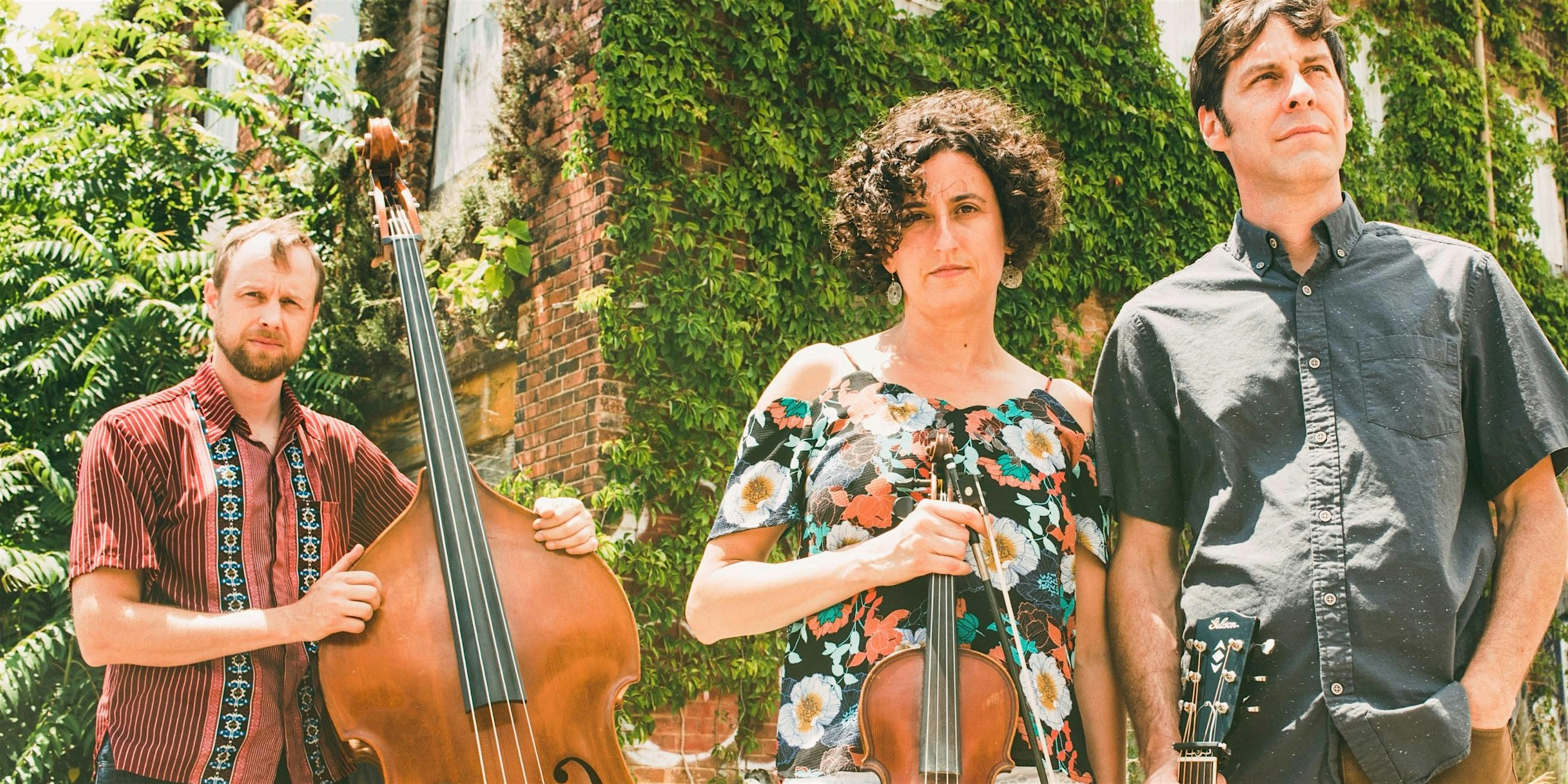
The upcoming Journeyperson course is now available AT NO COST! Due to some timely grant funding, we can offer this in-depth farmer training for farmers in years 3-7 with no associated tuition fee! The course consists of monthly cohort meet-ups and 2-3 in-depth workshops, plus mentorship!
In addition, a select number of participants will also receive matched FUNDS for your farm savings account (Savings Incentive Program) and money to spend on a professional development opportunity of your choosing! Want to attend a workshop on livestock management? OGS will contribute towards that fee! Are you saving money for a farm asset? OGS will contribute up to a certain amount to that investment.
The Journeyperson Program is for farmers who have been independently farming for three or more years and are serious about operating farm businesses in the Southern Appalachian region.
|
|
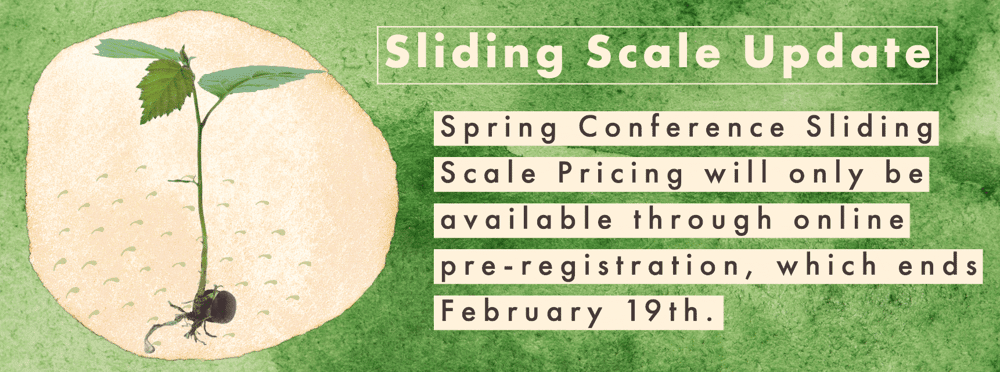
For the past 30 years, the Organic Growers School Spring Conference has served as a gathering place for growers in Appalachia to connect, learn from one another, and deepen connections to land and community. The Spring Conference began as an entirely volunteer-run and free event and has expanded to support an organization of ten staff with year-round programming. As we have grown, we have experimented with different approaches to keeping the event affordable and accessible while also working on compensation for our speakers and supporting our growing staff. We encourage you to check out our recent blog post exploring this in more depth. This year, we are excited to be experimenting with sliding scale ticket pricing for the first time, and we wanted to take some time to explain how this works and why we decided to implement it this year.
Looking beyond scholarships
Over the past several years, we have started implementing different scholarship options. We have set aside around $3000 in our internal budget for scholarships, and we have increased our outreach to other groups in the area who have funding to support individuals to attend conferences. We also offer work-trade opportunities for people who are interested in helping out with our event in exchange for attendance. We have around 100 work-traders access the conference each year through these opportunities, but we have never used up our entire scholarship fund for the event. We know that there are many individuals in our community that we are not reaching through our scholarship opportunities. We began to wonder if scholarship applications were creating a barrier to participation and started researching other options, landing eventually on sliding scale as our preferred model.
How alternative pricing models address accessibility
The sliding scale model, which offers the opportunity for participants to select a price to pay for their ticket, meets several of the parameters we were looking for in an accessible pricing model. Most importantly, it is a seamless way for attendees to access the price that meets their needs. So many things are means-tested in our society, and it can be exhausting to justify why one needs a more affordable price point. While many of our community members need financial support, there are also members of this community who have more than enough to share and are excited about supporting their fellow co-learners. These attendees can select the higher end of the sliding scale, which will be set at a price to offset the lower price paid by other attendees. We trust our attendees to select the option that best works for them while also considering how their selection would affect the ability of other participants to access a lower price point.
Accessibility is a priority for OGS, and implementing it is a risk for us as a small non-profit, given that we rely on our large events like the Spring Conference to support our year-round programming and staff salaries. This will certainly be an experimental year, and if we are not able to secure enough income through sliding-scale registrations, we will have to rethink our approach to pricing. We trust that our community will be thoughtful in thinking about the value that this conference has to them and about what they are able to pay for at this time. Thank you for being on this journey of discovery with us!
Swing by the Weaverville Library anytime the first two weeks of February and make as many valentines as your heart desires. All supplies are provided. Make a valentine for a local veteran and we’ll deliver it for you! Free and for all ages. Sponsored by the Friends of the Weaverville Library.
Searching for a romantic idea for your Valentine’s weekend date? Then you’ll be pleased to learn Hearts for Art returns to the Museum again this year. From February 10 to 13, you’re invited to display your love of art by placing a paper heart on the floor in front of the single artwork that truly captures your heart.
The Hearts for Art project began seven years ago at the Oakland Museum of California and Columbus Museum of Art to encourage art appreciation. Join us and many other museums across the country to spread the love of art through Hearts for Art.
Step 1: Pick up your heart at the welcome desk as you enter the Museum.
Step 2: Fall in love with an artwork and make it official by placing your heart on the floor in front of your favorite.
Step 3: Take a photo of your selection with your heart included and share your love on social media with the tags #heartsforart and @ashevilleartmuseum for a chance to be featured on the Museum’s social media pages.
Step 4: Next, escort your date up to the rooftop Perspective Café and Sculpture Terrace to enjoy delicious beverages, local food, delightful conversation, and dramatic views.
Step 5: End your very memorable date by presenting your companion with an annual Museum Membership, showing them you’d love to share many more magical moments moving forward.
Please note: No FLASH photography inside the galleries to protect the artworks!
This is a hybrid event, meaning there is an option to attend virtually and a limited number of seats are available to attend the event in-store. The event is free but registration is required for both in-person and virtual attendance.
Please click here to register for the VIRTUAL event. The link required to attend will be emailed to registrants prior to the event.
Please click here to register for the IN-PERSON event. Note the important event details on the RSVP form.
This event includes a book signing. If you would like a signed book but can’t attend in person, use the order comments field when you order below to request a signed copy and tell us to whom the book should be personalized.
If you decide to attend and to purchase books, we ask that you purchase from Malaprop’s. When you do this you make it possible for us to continue hosting author events and you keep more dollars in our community. You may also support our work by purchasing a gift card or making a donation of any amount below. Thank you!
Making Our Future: Visionary Folklore and Everyday Culture in Appalachia
Drawing from her work as state folklorist, Emily Hilliard explores contemporary folklife in West Virginia and challenges the common perception of both folklore and Appalachian culture as static, antiquated forms, offering instead the concept of “visionary folklore” as a future-focused, materialist, and collaborative approach to cultural work.
With chapters on the expressive culture of the West Virginia teachers’ strike, the cultural significance of the West Virginia hot dog, the tradition of independent pro wrestling in Appalachia, the practice of nonprofessional women songwriters, the collective counternarrative of a multiracial coal camp community, the invisible landscape of writer Breece D’J Pancake’s hometown, the foodways of an Appalachian Swiss community, the postapocalyptic vision presented in the video game Fallout 76, and more, the book centers the collective nature of folklife and examines the role of the public folklorist in collaborative engagements with communities and culture. Hilliard argues that folklore is a unifying concept that puts diverse cultural forms in conversation, as well as a framework that helps us reckon with the past, understand the present, and collectively shape the future.
Emily Hilliard is a folklorist and writer based in central Appalachia. She is the former West Virginia state folklorist and the founding director of the West Virginia Folklife Program. Find more of her work at emilyehilliard.com.
Erica Abrams Locklear is a professor of English and the Thomas Howerton Distinguished Professor of Humanities at the University of North Carolina Asheville. She is the author of Appalachia on the Table: Representing Mountain Food and People (forthcoming April, 2023 from University of Georgia Press) and Negotiating a Perilous Empowerment: Appalachian Women’s Literacies (Ohio University Press). She is a seventh-generation Western North Carolinian who loves good food, books, and conversation.

|
Master Gardener, John Bowen kicks off the opening of the Sowing Circle season! He’ll offer instructions and tips on starting your seeds. **This is an in-person event |
Join us throughout February as we celebrate Black Legacy Month with programs and events for all ages! In addition to the programs listed below, we will have special story times and exhibits at most of our libraries.
- Bright Star Touring Theatre: African Folktales – February 1 at 4pm at the Weaverville Library (for children ages 3 and up)
- Book Club: Jazz by Toni Morrison – Thursday, February 2 a 3pm at the Weaverville Library
- Book Club: The Vanishing Half by Brit Bennett – Tuesday, February 7 at 6pm
- Book Club: The Personal Librarian by Marie Benedict Tuesday, February 14 at 1pm at the Leicester Library
- Book Club: Life in Motion: An Unlikely Ballerina by Misty Copeland – February 16 at 2:30pm at the Skyland/South Buncombe Library
- Book Club: The Vanishing Half by Brit Bennett – February 21 at 7pm at the Fairview Library
- Black Experience Book Club: The Furrows by Namwali Serpell – February 23 at 6:30pm at the Noir Collective, co-sponsored by the East Asheville library
Drop by your local library and check us out. Email or call if you have any questions.
Our librarians have also put together a Black Legacy Month reading list for all ages.
Black Legacy Month Reading List 2023
Books for Adults
Adult Fiction
- Parable of the Sower by Octavia Butler
- On Girlhood: 15 Stories from the Well-Read Black Girl Library edited by Glory Edim
- What the Fireflies Knew by Kai Harries
- Black Leopard, Red Wolf by Marlon James
- The Love Songs of W.E.B. Dubois by Honoree Fannone Jeffers
- How Long ‘Til Black Future Month? by N.K. Jemison
- Deacon King Kong by James McBride
- Take My Hand by Dolen Perkins-Valdez
- Black Bottom Saints by Alice Randall
- The Violin Conspiracy by Brendan Slocumb
- Harlem Shuffle by Colson Whitehead
- Seven Days in June by Tia Williams
- Red at the Bone by Jacqueline Woodson
Adult nonfiction
- Uncomfortable Conversations with a Black Man by Emmanuel Acho
- Carefree Black Girls: A Celebration of Black women in Popular Culture by Zeba Blay
- The 1619 Project edited by Nikole Hannah-Jones
- Rest is Resistance by Tricia Hersey
- Wow, No Thank You by Samantha Irby*
- The Sum of Us by Heather McGhee
- All That She Carried by Tiya Miles
- Please Don’t Sit On My Bed In Your Outside Clothes by Phoebe Robinson*
- You’ll Never Believe What Happened to Lacey by Amber Ruffin*
- Counting Descent by Clint Smith
- The Body Is Not an Apology by Sonya Renee Taylor
- Here For It by R. Eric Thomas*
- Koshersoul: the faith and food journey of an African American Jew by Michael W. Twitty
*especially good on audio because the authors read their work!
Picture books for families to share
- My Heart Flies Open by Omileye Achikeobi-Lewis
- Only the Best: The Exceptional Life and Fashion of Ann Lowe by Kate Messner
- My N.C. From A to Z by Michelle Lanier
- Shhh! The Baby’s Asleep by JaNay Brown-Wood
- Curls by Ruth Forman
- Fly by Brittany J. Thurman
- Opal Lee and What it Means to be Free: The True Story of the Grandmother of Juneteenth by Alice Faye Duncan
- Build a House by Rhiannon Giddens
- Bright Brown Baby, A Treasury by Andrea Davis Pinkney
- Born on the Water by Nikole Hannah-Jones and Renee Watson
Chapter books for older kids
- Isaiah Dunn is My Hero by Kelly J. BaptistBlended by Sharon Draper
- Ikenga by Nnedi Okorafor
- Stamped: Racism, Antiracism, and You by Jason Reynolds and Ibram X. Kendi
- Tristan Strong Trilogy (Tristan Strong Punches a Hole in the Sky, Tristan Strong Destroys the World, and Tristan Strong Keeps Punching) by Kwame Mbalia
- From the Desk of Zoe Washington by Janae Marks
- Black Boy Joy: 17 Stories Celebrating Black Boyhood edited by Kwame Mbalia
- Freewater by Amina Luqman-Dawson
- Operation Sisterhood by Olugbemisola Rhuday-Perkovich
- The Door of No Return by Alexander Kwame
Books for teens
- Quincredible by Rodney Barnes
- The Legendborn Cycle (Legendborn and Bloodmarked) by Tracy Deonn
- All Boys Aren’t Blue by George M. Johnson
- You Should See Me in a Crown by Leah Johnson
- Survive the Dome by Kosoko Jackson
- Revolution in Our Time: The Black Panther’s Promise to the People by Kekla Magoon
- Ain’t Burned All the Bright by Jason Reynolds
- Bitter by Akwaeke Emezi
- On the Come Up by Angie Thomas
- Okoye to the People by Ibi Zoboi
For the past 30 years, the Organic Growers School Spring Conference has served as a gathering place for growers in Appalachia to connect, learn from one another, and deepen connections to land and community. The Spring Conference began as an entirely volunteer-run and free event and has expanded to support an organization of ten staff with year-round programming. As we have grown, we have experimented with different approaches to keeping the event affordable and accessible while also working on compensation for our speakers and supporting our growing staff. We encourage you to check out our recent blog post exploring this in more depth. This year, we are excited to be experimenting with sliding scale ticket pricing for the first time, and we wanted to take some time to explain how this works and why we decided to implement it this year.
Looking beyond scholarships
Over the past several years, we have started implementing different scholarship options. We have set aside around $3000 in our internal budget for scholarships, and we have increased our outreach to other groups in the area who have funding to support individuals to attend conferences. We also offer work-trade opportunities for people who are interested in helping out with our event in exchange for attendance. We have around 100 work-traders access the conference each year through these opportunities, but we have never used up our entire scholarship fund for the event. We know that there are many individuals in our community that we are not reaching through our scholarship opportunities. We began to wonder if scholarship applications were creating a barrier to participation and started researching other options, landing eventually on sliding scale as our preferred model.
How alternative pricing models address accessibility
The sliding scale model, which offers the opportunity for participants to select a price to pay for their ticket, meets several of the parameters we were looking for in an accessible pricing model. Most importantly, it is a seamless way for attendees to access the price that meets their needs. So many things are means-tested in our society, and it can be exhausting to justify why one needs a more affordable price point. While many of our community members need financial support, there are also members of this community who have more than enough to share and are excited about supporting their fellow co-learners. These attendees can select the higher end of the sliding scale, which will be set at a price to offset the lower price paid by other attendees. We trust our attendees to select the option that best works for them while also considering how their selection would affect the ability of other participants to access a lower price point.
Accessibility is a priority for OGS, and implementing it is a risk for us as a small non-profit, given that we rely on our large events like the Spring Conference to support our year-round programming and staff salaries. This will certainly be an experimental year, and if we are not able to secure enough income through sliding-scale registrations, we will have to rethink our approach to pricing. We trust that our community will be thoughtful in thinking about the value that this conference has to them and about what they are able to pay for at this time. Thank you for being on this journey of discovery with us!
After six years of hard work, the dream of using The Learning Garden as a hub for public gardening education is finally a reality. The Learning Garden, located at the Extension Office, 49 Mt. Carmel Road, is offering the public the opportunity to Visit and Learn in the garden on selected 2nd and 4th Thursdays, February – October. The Thursday in-person programs will consist of five garden-specific series. Visitors can walk around before or after the program and soak in our lovely gardens. Our gardens will open at 9:00 a.m. and all the demonstration programs run between 10-11:30 a.m. To ensure a good learning experience, attendance will be limited and registration will be required.

Dahlia Series
February 23 – Getting Your Dahlias Ready for Planting
August 3 – Disbudding Dahlias for Better Blooms
October 26 – Dividing and Storing Dahlias

Dye Garden Series
May 4 – Planning Your Dye Garden
June 22 – Introduction to Natural Dyeing
July 27 – Fresh Indigo
August 24 – Botanical Printing: Printing with Leaves and Flowers
September 28 – Dyeing with Hopi Black Sunflower
November 9 – The Magic of Indigo
 Rose Garden Series
March 9 – Pruning Roses
April 6 – Climbing Roses
April 13 – Rose Pests and Pathogens
May 20 – Growing Beautiful Roses (Saturday Seminar)
 Sun & Shade Garden Series
May 11 – Planting a Native Butterfly Host Plant Garden
June 29 – Foodscaping Edible Plants in Flower Beds
August 31 – Dealing with “the Good, the Bad, and the Ugly” Plants
Sept 14 – Native Butterfly Life Cycles in the Fall Garden
 Vegetable Garden Series
March 23 – Building an ADA Compliant Raised Garden
April 26 – Planting Root Crops: Leeks, Onions, Carrots, Parsnips
May 25 – Planting a Seed Saving Garden
June 8 – Common Vegetable Garden Pests
July 13 – Kid Friendly Gardening
August 10 – Preserving Your Vegetable Harvest
In addition to the Thursday programs listed above, The Learning Garden will present a series of ninety minute (+/-) hands-on seminars covering various gardening topics. These in-person programs will be held at The Learning Garden on selected Saturday mornings, February – September.
Saturday Seminars
February 18 – Tool Selection and Sharpening
March 18 – Pruning Trees and Shrubs
April 22 – Gardening for the Birds
May 20 – Growing Beautiful Roses
June 17 – Pollinator Plants in The Learning Garden
September 16 – Bulbs for All Seasons
Each of the programs in The Learning Garden will be announced individually through this blog and on our website two weeks before each program. Each announcement will include instructions on how to register. Mark your calendar and register to attend as many as you can.
Swing by the Weaverville Library anytime the first two weeks of February and make as many valentines as your heart desires. All supplies are provided. Make a valentine for a local veteran and we’ll deliver it for you! Free and for all ages. Sponsored by the Friends of the Weaverville Library.
Searching for a romantic idea for your Valentine’s weekend date? Then you’ll be pleased to learn Hearts for Art returns to the Museum again this year. From February 10 to 13, you’re invited to display your love of art by placing a paper heart on the floor in front of the single artwork that truly captures your heart.
The Hearts for Art project began seven years ago at the Oakland Museum of California and Columbus Museum of Art to encourage art appreciation. Join us and many other museums across the country to spread the love of art through Hearts for Art.
Step 1: Pick up your heart at the welcome desk as you enter the Museum.
Step 2: Fall in love with an artwork and make it official by placing your heart on the floor in front of your favorite.
Step 3: Take a photo of your selection with your heart included and share your love on social media with the tags #heartsforart and @ashevilleartmuseum for a chance to be featured on the Museum’s social media pages.
Step 4: Next, escort your date up to the rooftop Perspective Café and Sculpture Terrace to enjoy delicious beverages, local food, delightful conversation, and dramatic views.
Step 5: End your very memorable date by presenting your companion with an annual Museum Membership, showing them you’d love to share many more magical moments moving forward.
Please note: No FLASH photography inside the galleries to protect the artworks!
We are hosting another multiple meetup groups event in honor of Valentine’s day. This is for the Singles to Mingle and the couples to support. This is a pressure-free event, so feel free to bring friends! We will be in the indoor space at Capella on 9. They have beer, wine, cocktails along with snacks and tapa dishes.
This event will include the following meetup groups:
Socials for late 20s, 30s and 40s near Asheville
Check out Social Group for late 20s, 30s and 40s https://meetu.ps/c/512Z5/BFgKT/d on Meetup
30s and 40s for singles and couples near Asheville
Check out 30s & 40s Singles and Couples Near Asheville https://meetu.ps/c/4Vc3l/BFgKT/d on Meetup
30s and 40s Women near Asheville
Check out 30’s and 40’s Women Near Asheville https://meetu.ps/c/4RNl7/BFgKT/d on Meetup
Join us throughout February as we celebrate Black Legacy Month with programs and events for all ages! In addition to the programs listed below, we will have special story times and exhibits at most of our libraries.
- Bright Star Touring Theatre: African Folktales – February 1 at 4pm at the Weaverville Library (for children ages 3 and up)
- Book Club: Jazz by Toni Morrison – Thursday, February 2 a 3pm at the Weaverville Library
- Book Club: The Vanishing Half by Brit Bennett – Tuesday, February 7 at 6pm
- Book Club: The Personal Librarian by Marie Benedict Tuesday, February 14 at 1pm at the Leicester Library
- Book Club: Life in Motion: An Unlikely Ballerina by Misty Copeland – February 16 at 2:30pm at the Skyland/South Buncombe Library
- Book Club: The Vanishing Half by Brit Bennett – February 21 at 7pm at the Fairview Library
- Black Experience Book Club: The Furrows by Namwali Serpell – February 23 at 6:30pm at the Noir Collective, co-sponsored by the East Asheville library
Drop by your local library and check us out. Email or call if you have any questions.
Our librarians have also put together a Black Legacy Month reading list for all ages.
Black Legacy Month Reading List 2023
Books for Adults
Adult Fiction
- Parable of the Sower by Octavia Butler
- On Girlhood: 15 Stories from the Well-Read Black Girl Library edited by Glory Edim
- What the Fireflies Knew by Kai Harries
- Black Leopard, Red Wolf by Marlon James
- The Love Songs of W.E.B. Dubois by Honoree Fannone Jeffers
- How Long ‘Til Black Future Month? by N.K. Jemison
- Deacon King Kong by James McBride
- Take My Hand by Dolen Perkins-Valdez
- Black Bottom Saints by Alice Randall
- The Violin Conspiracy by Brendan Slocumb
- Harlem Shuffle by Colson Whitehead
- Seven Days in June by Tia Williams
- Red at the Bone by Jacqueline Woodson
Adult nonfiction
- Uncomfortable Conversations with a Black Man by Emmanuel Acho
- Carefree Black Girls: A Celebration of Black women in Popular Culture by Zeba Blay
- The 1619 Project edited by Nikole Hannah-Jones
- Rest is Resistance by Tricia Hersey
- Wow, No Thank You by Samantha Irby*
- The Sum of Us by Heather McGhee
- All That She Carried by Tiya Miles
- Please Don’t Sit On My Bed In Your Outside Clothes by Phoebe Robinson*
- You’ll Never Believe What Happened to Lacey by Amber Ruffin*
- Counting Descent by Clint Smith
- The Body Is Not an Apology by Sonya Renee Taylor
- Here For It by R. Eric Thomas*
- Koshersoul: the faith and food journey of an African American Jew by Michael W. Twitty
*especially good on audio because the authors read their work!
Picture books for families to share
- My Heart Flies Open by Omileye Achikeobi-Lewis
- Only the Best: The Exceptional Life and Fashion of Ann Lowe by Kate Messner
- My N.C. From A to Z by Michelle Lanier
- Shhh! The Baby’s Asleep by JaNay Brown-Wood
- Curls by Ruth Forman
- Fly by Brittany J. Thurman
- Opal Lee and What it Means to be Free: The True Story of the Grandmother of Juneteenth by Alice Faye Duncan
- Build a House by Rhiannon Giddens
- Bright Brown Baby, A Treasury by Andrea Davis Pinkney
- Born on the Water by Nikole Hannah-Jones and Renee Watson
Chapter books for older kids
- Isaiah Dunn is My Hero by Kelly J. BaptistBlended by Sharon Draper
- Ikenga by Nnedi Okorafor
- Stamped: Racism, Antiracism, and You by Jason Reynolds and Ibram X. Kendi
- Tristan Strong Trilogy (Tristan Strong Punches a Hole in the Sky, Tristan Strong Destroys the World, and Tristan Strong Keeps Punching) by Kwame Mbalia
- From the Desk of Zoe Washington by Janae Marks
- Black Boy Joy: 17 Stories Celebrating Black Boyhood edited by Kwame Mbalia
- Freewater by Amina Luqman-Dawson
- Operation Sisterhood by Olugbemisola Rhuday-Perkovich
- The Door of No Return by Alexander Kwame
Books for teens
- Quincredible by Rodney Barnes
- The Legendborn Cycle (Legendborn and Bloodmarked) by Tracy Deonn
- All Boys Aren’t Blue by George M. Johnson
- You Should See Me in a Crown by Leah Johnson
- Survive the Dome by Kosoko Jackson
- Revolution in Our Time: The Black Panther’s Promise to the People by Kekla Magoon
- Ain’t Burned All the Bright by Jason Reynolds
- Bitter by Akwaeke Emezi
- On the Come Up by Angie Thomas
- Okoye to the People by Ibi Zoboi
Presenter: Bruce Appeldoorn – Appeldoorn Landscape Nursery
Bruce Appeldoorn, a life-long nurseryman and the owner of Appeldoorn Landscape Nursery, will share with us some of the best conifers for Western North Carolina gardens. You will see his favorite low-maintenance, long-lived choices based on his 45 years of nursery experience.
The upcoming Journeyperson course is now available AT NO COST! Due to some timely grant funding, we can offer this in-depth farmer training for farmers in years 3-7 with no associated tuition fee! The course consists of monthly cohort meet-ups and 2-3 in-depth workshops, plus mentorship!
In addition, a select number of participants will also receive matched FUNDS for your farm savings account (Savings Incentive Program) and money to spend on a professional development opportunity of your choosing! Want to attend a workshop on livestock management? OGS will contribute towards that fee! Are you saving money for a farm asset? OGS will contribute up to a certain amount to that investment.
The Journeyperson Program is for farmers who have been independently farming for three or more years and are serious about operating farm businesses in the Southern Appalachian region.
|
|
For the past 30 years, the Organic Growers School Spring Conference has served as a gathering place for growers in Appalachia to connect, learn from one another, and deepen connections to land and community. The Spring Conference began as an entirely volunteer-run and free event and has expanded to support an organization of ten staff with year-round programming. As we have grown, we have experimented with different approaches to keeping the event affordable and accessible while also working on compensation for our speakers and supporting our growing staff. We encourage you to check out our recent blog post exploring this in more depth. This year, we are excited to be experimenting with sliding scale ticket pricing for the first time, and we wanted to take some time to explain how this works and why we decided to implement it this year.
Looking beyond scholarships
Over the past several years, we have started implementing different scholarship options. We have set aside around $3000 in our internal budget for scholarships, and we have increased our outreach to other groups in the area who have funding to support individuals to attend conferences. We also offer work-trade opportunities for people who are interested in helping out with our event in exchange for attendance. We have around 100 work-traders access the conference each year through these opportunities, but we have never used up our entire scholarship fund for the event. We know that there are many individuals in our community that we are not reaching through our scholarship opportunities. We began to wonder if scholarship applications were creating a barrier to participation and started researching other options, landing eventually on sliding scale as our preferred model.
How alternative pricing models address accessibility
The sliding scale model, which offers the opportunity for participants to select a price to pay for their ticket, meets several of the parameters we were looking for in an accessible pricing model. Most importantly, it is a seamless way for attendees to access the price that meets their needs. So many things are means-tested in our society, and it can be exhausting to justify why one needs a more affordable price point. While many of our community members need financial support, there are also members of this community who have more than enough to share and are excited about supporting their fellow co-learners. These attendees can select the higher end of the sliding scale, which will be set at a price to offset the lower price paid by other attendees. We trust our attendees to select the option that best works for them while also considering how their selection would affect the ability of other participants to access a lower price point.
Accessibility is a priority for OGS, and implementing it is a risk for us as a small non-profit, given that we rely on our large events like the Spring Conference to support our year-round programming and staff salaries. This will certainly be an experimental year, and if we are not able to secure enough income through sliding-scale registrations, we will have to rethink our approach to pricing. We trust that our community will be thoughtful in thinking about the value that this conference has to them and about what they are able to pay for at this time. Thank you for being on this journey of discovery with us!
Swing by the Weaverville Library anytime the first two weeks of February and make as many valentines as your heart desires. All supplies are provided. Make a valentine for a local veteran and we’ll deliver it for you! Free and for all ages. Sponsored by the Friends of the Weaverville Library.
Celebrate Valentines Day at Brother Wolf Animal Rescue!
Brother Wolf Animal Rescue’s mission is to better the lives of companion animals through adoption and pet retention programs, a low-cost mobile spay and neuter clinic, lifesaving shelter transfer partnerships, and extensive volunteer and foster networks. Brother Wolf Animal Rescue impacts the lives of thousands of animals each year in the Western North Carolina region.
This Valentine’s Day, Brother Wolf is offering a Puppygram package that includes a miniature succulent from local business B.B. Barns, a delicious cupcake, personalized card, and 20 minutes of snuggle time with one of their rescued puppies. If you are interested in sharing the gift of sweet puppy kisses with your special someone this year, a limited number of Puppygrams are available at $175 with all proceeds going towards Brother Wolf Animal Rescue’s life saving work for homeless animals in the WNC area.
|
This month we’re discussing The Personal Librarian by Marie Benedict. The Leicester Library Book Discussion Group meets the second Tuesday of each month at 1 pm in the Community Room at the library. Newcomers welcome! |