

Calendar of Events
Upcoming events and things to do in Asheville, NC. Below is a list of events for festivals, concerts, art exhibitions, group meetups and more.
Interested in adding an event to our calendar? Please click the green “Post Your Event” button below.

If you’re behind on your water bill or afraid your water might get cut off, a new resource might be able to help you. On Jan. 4, the Buncombe County Board of Commissioners approved more than $450,000 in federal funding for the Low-Income Household Water Assistance Program (LIHWAP). The initiative is aimed at preventing water disconnections and helping reconnect drinking and wastewater services.
The LIHWAP will be administered by Buncombe County-based Eblen Charities. The nonprofit will make payments directly to utilities on behalf of qualifying households. The program is slated to run through Sept. 30, 2023 or until funds are exhausted.
Eligibility requirements
Households that currently receive Food and Nutrition Services (FNS), Temporary Assistance for Needy Families (TANF) or Work First services, or those that received Low-Income Energy Assistance Program (LIEAP) services from Oct. 1, 2020-Sept. 30, 2021, are automatically eligible to receive this benefit if their water services have been cut off or are in danger of being cut off.
For additional eligibility information or to apply, please contact Eblen Charities at (828) 255-3066.
Not Enough O Negative Blood Available to Sustain Local Hospitals, Program to Help Victims of Uvalde Shooting Also Announced
The Blood Connection’s O negative blood supply has now reached a critical level. Because The Blood Connection (TBC) is the primary blood provider for hospitals in this region, the need for O negative blood donations is dire. The combination of already low supply, the approaching summer season, and sustained low donor turnout could result in an O negative blood shortage soon, which could disrupt patient care.
Last week, TBC was activated through the Blood Emergency Readiness Corps (BERC), to send O negative blood to South Texas after the devastating school shooting. The need for O negative blood has since been highlighted by that tragedy but has unfortunately not resulted in an increase in O negative donations. Adding to the issue, the summer months are usually the hardest season to collect enough, exacerbated by an increase in travel and traumas. It is estimated that summer travel will increase by 16% and 75% of Americans are expected to take a summer vacation, indicating this travel season is set to be the busiest since the pandemic – a sign that people are returning to normal. As that happens, the fear is that patients like Kristen Odom will continue to be overlooked.
“During my labor, unbeknownst to anyone…I was bleeding internally but no one knew it and it was not discovered until immediately after our daughter was born,” says Odom. “I will never forget one anesthesiologist yelling over the team, referring to blood, ‘I don’t care where you get it, but I need it, and I need it now.’ After I came out of ICU, my husband and I realized how much blood I needed, and the fact that donated blood was the key factor that turned everything around.”
O negative blood is the most transfused blood type for traumas and emergencies, so the demand never wavers. O negative blood donors are often referred to as the “universal donor” since everyone, no matter their blood type, can receive O negative blood. TBC aims to have a 5-7 day supply of O negative blood but has recently had a one day supply. In some instances, one trauma case alone can use up that supply.
TBC has also announced a program that uses blood donations to help victims of the Uvalde shooting. TBC blood donors now have the option to convert their reward points into a monetary donation to the Robb School Memorial Fund (One Star Foundation) through the TBC online store. These funds will be used locally to support the families and community affected in Uvalde, Texas.
The blood from BERC Network blood banks is being sent to South Texas Blood and Tissue, the steward of the local blood supply in that part of Texas. TBC has more blood in reserve to send if called upon again. In order to help other communities, the local blood supply must be stable. It’s important to have an available day-to-day blood supply on the shelves in the event of any emergencies – locally or BERC-assisted – when blood and time are critical. The community is urged to donate blood now at any TBC center or bloodmobile.
|

|
|
|
||||||||||||

The WNC Farmers Market is the premier destination for buying and selling the region’s best agriculture products directly from farmers & food producers to household & wholesale customers in an environment that celebrates the region’s diverse culture, food & heritage.
House of Operation:
WNC Farmers Market: 24/7, 361 days a year market access for farmers
Office: Monday- Friday, 8am-5pm
Market Shops: 7 days a week, 8 am-5 pm
Wholesale and Truck Sheds: 7 days a week
|

Join us on the magical Fairy Trail where your imagination is the only limit.
Developed by Fairies and dedicated volunteers, Bullington Gardens’ Fairy Trail is a whimsical treat for the young and the young at heart. Featuring charming vignettes and villages, the fairy trail will charm you with its thoughtful design, eye catching displays and secret woodland trail.
Rules of the trail:
Do not move or rearrange fairy displays. The fairies are very fond of their own decorating.
Do not leave trash on the trail. Fairies do not like litter in their town.
Please ensure children and pets are supervised at all times. Dogs and loud noises can scare the fairies into hiding.
Do not disturb wildlife or vegetation. The fairies depend on the vegetation to build their homes.
The trail is one way only. Please stay on the trail at all times.
P.S. the Fairies would like us to remind you that we are a non-profit and donations are greatly appreciated. Help us keep the fairies living in the style with which they’ve become accustomed.

We recently wrapped up our 21-Day Stand Against Racism Challenge in April. The conversation moves forward with continuing the challenge because the work is far from over! As we became aware of the leaked Supreme Court draft opinion to overturn Roe v. Wade, it is again evident that the systems in place that already harm young women of color the most can be regressed even more by those with power today. In these crucial moments and always, knowledge is a way to take back power.
WE CHALLENGE YOU TO…
2 mins
Watch Our Own Voice: National Black Women’s Reproductive Justice shares The History of Reproductive Justice (RJ), a powerful video clearly communicating the definition of RJ, watch here.
10 mins
Check out Planned Parenthood’s article, Roe v. Wade at Risk: Nationwide Legal Abortion May Be a Thing of the Past. Access the article here.
13 mins
Consider this from NPR, which featured an article titled, Roe’s Legal Fate is Unclear. But Studies already Show Who’d Likely Be Hit the Hardest, read here.
42 mins
Listen. Parenting and Politics host Monica Simpson, a North Carolina Native and Executive Director of Sister Song. Sister Song is a Southern-based, national membership organization; our purpose is to build an effective network of individuals and organizations to improve institutional policies and systems that impact the reproductive lives of marginalized communities. Listen to the podcast here.
For more Continuing the Challenge resources click below:


What is the Stand Against Racism Challenge?
Many people are becoming newly aware of how systemic racism and violence are impacting people of color. Even if you are new to the conversation, that is OK. Our STand against racism challenge, formerly the 21 Day Challenge is designed to create dedicated time and space to build more effective social justice habits, particularly those dealing with issues of race, power, privilege, and leadership. Participants who sign up for the Challenge will receive daily tasks via email to help foster their understanding and awareness, with activities such as reading an article, listening to a podcast, or reflecting on personal experience. If you’ve already completed this challenge with us in the past please know that our challenge is designed to be taken multiple times by selecting different daily challenges in order to expand what you have previously learned. Follow this link for the resources.
Dates: July 11 – 16, 2022
Application: Available now through MyBMC
Cost: A $600 fee covers all housing, meals, classes, materials, and concert tickets. Spots are limited and applications will be reviewed on a rolling basis.
Please note: Proof of COVID-19 vaccination is required for all students, faculty, and summer staff for the 2022 season. Please see our FAQ page for more information.
Program Summary
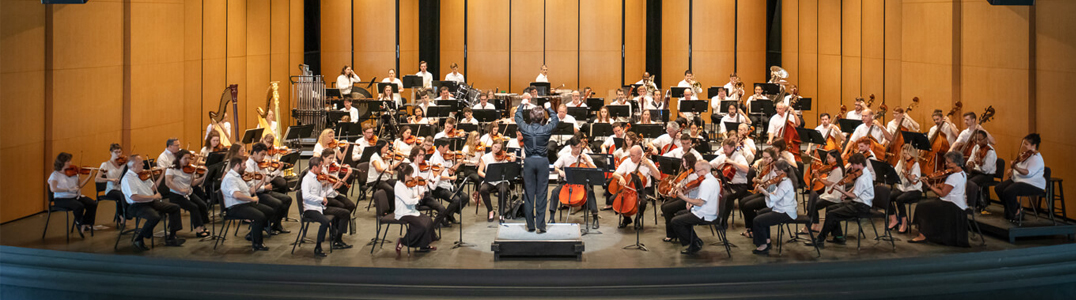
Brevard Music Center (BMC) presents The Brevard Project: Reimagining the Future of Orchestral Programming, a six-day intensive seminar and think-tank on orchestral programming intended for professionals and influencers in the orchestral field. Presented by Brevard Music Center in partnership with Bard College, the Blair School of Music at Vanderbilt University, the Chicago Sinfonietta, the South Dakota Symphony, the University of Michigan School of Music, and Project Director Joseph Horowitz, The Brevard Project takes place July 11-16, 2022. The central goals of The Brevard Project are to re-evaluate the artistic mission of the American orchestra and to share the skills needed to curate a more comprehensive, more inclusive American orchestral repertoire.
Curriculum
The Brevard Project: Reimagining the Future of Orchestral Programing complements Brevard Music Center’s week-long “Dvořák’s Prophecy” festival from July 11-16 and is inspired by Joseph Horowitz’s acclaimed new book Dvořák’s Prophecy and the Vexed Fate of Black Classical Music. Part think-tank, part seminar, this inaugural Project gathering equips practitioners and scholars alike to begin to answer questions about the dense nexus of culture and race, of historical, political, and moral reckonings surrounding the story of American orchestral music. The central goals of this program are to re-evaluate the artistic mission of the American orchestra and to share the skills needed to curate a more comprehensive, more inclusive American orchestral repertoire. The Brevard Project is designed for conductors, artistic administrators, executive directors, community engagement specialists, conservatory students, and engaged orchestra Board members.
Moving forward requires a fresh and closer look at our musical past – and to the lagging formation of an American symphonic canon. A new narrative of American classical music will be proposed that explores timely and topical issues that impact present and future orchestral programming. Why did our repertoire remain so stubbornly Eurocentric? What can we learn from this history? What can be mined from the treasure trove of long-hidden indigenous and Black music that can help to pave the future?
Classroom sessions will be highly interactive, drawing upon first-hand accounts of humanities-infused approaches to programming and community engagement. Topics of exploration include creating a “new paradigm” for American orchestral repertoire, rethinking the concert experience, and redefining the role of the music director. Participants will be challenged to envision programming and organizational initiatives to promote symphonic events grounded in the American experience, past and present.
The Faculty
A remarkable faculty has been assembled for this groundbreaking exercise.
*virtual participant
Joseph Horowitz, Project Director
Leon Botstein, President, Bard College; Music Director, American Symphony; Founder, Bard Festival and The Orchestra Now
Lorenzo Candelaria, Dean, Blair School of Music at Vanderbilt University
Mark Clague, Music Historian, University of Michigan
JoAnn Falletta*, Music Director, Buffalo Philharmonic Orchestra
Christopher Gibbs*, Music Historian, Bard Conservatory; Artistic Co-Director, Bard Festival
Delta David Gier, Music Director, South Dakota Symphony
Blake-Anthony Johnson, CEO, Chicago Sinfonietta
Keith Lockhart*, Artistic Director, Brevard Music Center
Douglas McLennan, Founder/Editor, ArtsJournal
Jason Posnock, Chief Artistic Officer, Brevard Music Center
Jesse Rosen, Former CEO, League of American Orchestras
Larry Tamburri, CEO, Newark School of the Arts (former CEO, Pittsburgh and New Jersey Symphonies)
The Performers
Lara Downes, Pianist, producer, arts advocate
Sidney Outlaw, Baritone/pedagogue, Ithaca College
George Shirley, Tenor/pedagogue, University of Michigan
Enrollment Information
Conductors, artistic administrators, executive directors, community engagement specialists, conservatory students, and Board members are all encouraged to apply for The Brevard Project.
Capacity is limited. A $600 fee covers all housing, meals, classes, materials, and concert tickets for the week. Applications will be reviewed on a rolling basis. Apply now through MyBMC.
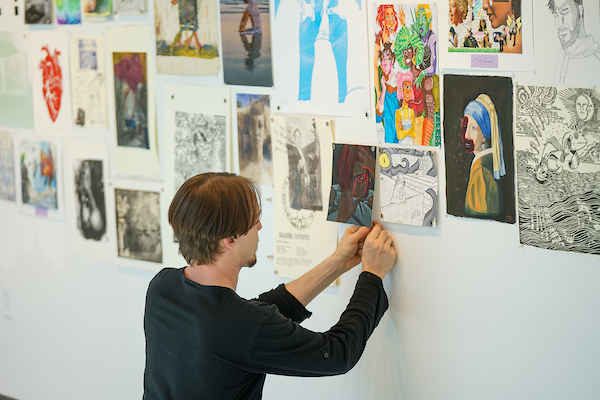
Current students, alumni, staff, faculty, and faculty emeriti of the UNC Asheville Department of Art & Art History are participating in THRIVE ! – an invitational exhibition of small works on paper.
“I wanted to express this idea that despite COVID, and despite our department’s relocation during renovation – art thrives here, it is the constant that cannot be disrupted,” says THRIVE ! curator Leisa Rundquist, professor of art history and curator of art collections at UNC Asheville.
The informal arrangement installation will be displayed in the hallway gallery next to the S. Tucker Cooke Gallery in Owen Hall through August 1.
Viewing is available during open Owen Hall hours. 9:00 AM – 5:00 PM (M – F)
Community Expectations
As members of this community, we care about everyone. Faculty, staff, students, and visitors have a shared commitment to take the necessary precautions to avoid spreading COVID-19 while following all recommended health guidelines. Please see UNC Asheville’s Community Expectations. Be respectful of individual choice to wear or not wear a mask in any situation; wear a mask when and where encouraged, following guidelines and precautions outlined by the CDC.
Accessibility
Find accessibility information for campus buildings at maps.unca.edu. For accessibility questions or to request event accommodations, please contact [email protected] or 828.250.3832.
Visitor Parking
Visitors must have a permit to park on campus — please visit the Transportation website to register.
Old Kentucky Home -The Thomas Wolfe Memorial
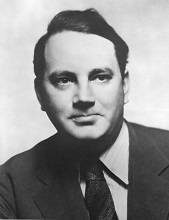
American Novelist Thomas Wolfe (1900-1938)
Considered by many to be one of the giants of 20th-century American literature, Thomas Wolfe immortalized his childhood home in his epic autobiographical novel, Look Homeward, Angel. Wolfe’s colorful portrayal of his family, his hometown of “Altamont” Asheville, North Carolina, and “Dixieland” the Old Kentucky Home boardinghouse, earned the Victorian period house a place as one of American literature’s most famous landmarks.
House tours are offered daily at half past each hour. Last tour leaves at 4:30 pm.
Group tours by reservation.
Adult – $5.00
Student (ages 7-17) – $2.00
Adult Group (10+) – $2.50 each
Student Group – $2.00 each
6 & under – Free
Hours of Operation

Featured Artists: Jude Stuecker (fiber) Erica Bailey (jewelry) Mary Dashiell (clay) Steve Miller (wood) Rex Redd (clay)

Floralia
Share this event:
From April 29 through June 20, 2022, North Carolina Glass Center will present Floralia, an exhibition to celebrate the birth of Spring. In ancient Rome, the celebration of Flora, the goddess of flowering plants, included games and festivities. Our seasonal show will capture the beauty of new beginnings with glass vessels, botanical sculpture and mixed media, all with a nature theme.
All displayed art is for sale. The purchase of art from Floralia will support local artists and the nonprofit North Carolina Glass Center.
Open daily 10am-5pm. Closed Tuesdays. Free admission.


Did you know that Buncombe County Special Collections collects, preserves, and provides access not only to photos, documents, books, and letters but also to audiovisual materials such as event recordings and oral history interviews? In order to increase access to these materials, BCSC has been hard at work digitizing audiocassettes, migrating CDs/DVDs, and uploading digitized or born-digital recordings to a dedicated page on the Internet Archive.
Volunteers are needed to make sure that these resources are transcribed so that researchers can more easily find and search for the topics they need. Contact BCSC to learn how you can help by transcribing interviews from home!
|

|
|

“My work focuses on deteriorating architecture. These structures, designed to be huge forces of permanence, are continually being challenged, destroyed and forgotten. I see an inherent honesty in the face of my subject. Among all of the clutter—the shards of wood and layers of rubble—there remains a gentle resolve. As I work, I study these structures incessantly. The buildings, often on the brink of ruin, have something very energized and present trying to escape from their fragmented reality.” –Seth Clark
This first solo show of Seth’s work at Momentum’s new space features large-scale works from his Barn, Ghost, and Aerial View Series. The collection also includes some of the artist’s sculptural objects in wood. Abstract works, which still reference weathered architecture, such as Lath Study and Vinyl Study, round out the exhibition.

The synergy of vibrant outsider art created locally and shared with Tryon Fine Arts has resulted
in a one-of-a-kind art exhibit opening June 1, 2022. The Skateboard: Re-purposed includes
works from North Carolina, Oregon, California, England and Germany. Seven artists are
featured, including Tryon’s own Jonathan Caple, Nicholas Harding (England), Matt Mercurio,
George Rocha, Michael Mauney, Paris Evans and Folk Dunker (Gemany).
Skateboarding has been popular for over a century and is now experiencing a resurgence in both
the sports arena and the art world—it became an Olympic sport in 2020 and was part of a
successful 2019 Sotheby’s auction, with boards by, among others, Damien Hirst and Marilyn
Minter.
Skateboards re-purposed as art will be on exhibit in TFAC’s Parker Gallery beginning June 1,
2022. The exhibit will feature skateboard art in many sizes and forms including graceful
sculptures, nature art, chairs, wall art, a crocheted piece, photographs, and more. Several of the
exhibit pieces will be for sale, supporting both the artists and TFAC as the exhibit sponsor.
The public is invited to attend the opening reception on June 9 from 5 – 7 PM, where they can
also meet local skateboard artist, Jonathan Caple. The exhibit will be on display through to the
end of July 2022.
To access the gallery, plan to enter through the Pavilion at the rear of Tryon Fine Arts Center.
Free parking is available behind TFAC and on surrounding side streets. For more information,
call 828-859-8322 or visit www.tryonarts.org.
.gif)
RiverLink is honored to be the beneficiary of the community giving program at High Five Coffee in June and July! Stop by for a beverage and add a $5 donation at the register—100% of your gift goes to RiverLink! In addition, 10% of branded merchandise sales will support our efforts to restore the French Broad. Three locations to serve you: 13 Rankin Ave., 190 Broadway St., or (our favorite) the 2000 Riverside Drive location in Woodfin, offering coffee drinks, pastries and smoothies plus outdoor seating and walking trails on the bank of the river. Now that’s a coffee stop!
Of course, you can always donate directly from this newsletter. Thank you for considering a gift today!
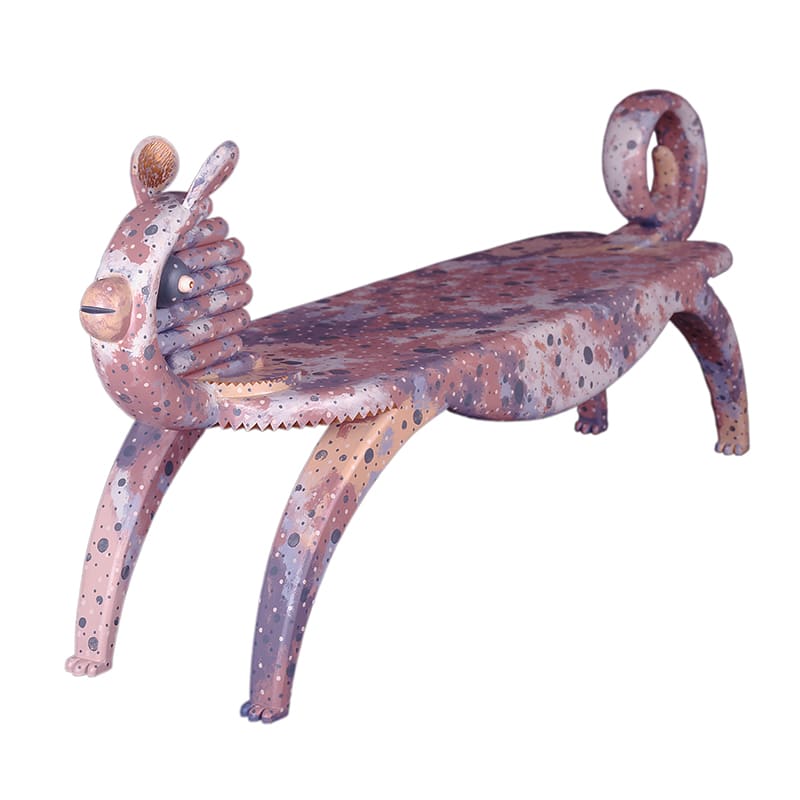
Simpson is an imaginist who has worked in nearly every medium, including woodworking, painting, printmaking, ceramics, bookmaking, jewelry, and writing. Whether it’s a painting or sculptural object, in each of Simpson’s works there is an identifiable style that puzzles together the artist’s personal and cultural references into a signature blend of joyfulness and subtle commentary. On describing Simpson’s sensibility, Karen S. Chambers comments, “It’s whimsical and wry, naive yet saavy, inteligent but not cerebral.” Edward S. Cooke, Jr. (Yale University) wrote, “Simpson is simply a maker who deftly blends utility, memory, irony, and spirituality in his accomplishments. Fundemental to his life has been a conviction that ‘art can be meaningful and still give joy.’ He makes faciful, whimsical objects that incorporate verbal and visual puns and probe the meanings of cultural icons, but undertakes such commentary wthin comfortable settings. His works possess an engaging tension that employs friendly humor or familiar details and conventions to inspire long-lasting thoughtfulness.”
The collection presented at Momentum spans the past 30 years, and focuses on Simpson’s sculptural furniture including cabinets, clocks, and benches, paintings, whimsical wood sculptures, pottery, and works on paper. Tommy Simpson’s work is included in numerous public collections including the Renwick Gallery and the American Art Museum at the Smithsonian Institute, DC; and the Museum of Art and Design, NY.
Fe Anam Avis author of Parents of Estranged Adult Kids and therapist Keli Rugenstein, PhD are conveners. They will offer support on parental estrangement.
There is no fee for this group, though participants should purchase PEAK book on Amazon – PEAK Fe Anam Avis
Learn the history & technique of the origami peace crane. This is a drop in event and all supplies are provided. Come anytime between 10-NOON.
All ages are welcome. Children must have adult partners. The crane is a lovely but complicated fold – ideal for children 10 and up. There will be simpler designs for younger children to try.
See you at the Library!
The YMCA Mobile Market will be set up in the lower library parking lot (adjacent to the playground) from 10:30AM-11:30AM. Bring your grocery bags and get fresh food for your family. The market provides fresh produce paired with healthy recipes and a Community Engagement Table.
While you’re here, stop in to get a library card if you don’t have one, pick up a cookbook or two to experiment with your bundle of groceries, or grab a DVD to watch while snacking.
Distributions are FREE. ALL community members are welcome.

|
|
Cook teams of 4-6 individuals are invited to bring ingredients and prepare meals onsite or bring meals that have been prepared elsewhere. To meet our dietary standards, we ask that each meal provides a meat, vegetable and starch.
Requirements:
- Background Check
- Brief orientation prior to service
- Ability to Multi-Task
- Friendly Demeanor
Health & Safety:
- We are asking volunteers to wear/bring their own face mask if you have not been fully vaccinated
- Temperatures will be checked and a COVID-19 disclosure will be signed at the volunteer entrance
-
Before you even begin thinking about volunteering, ask yourself – Am I well enough to volunteer?
Your safety and limiting the spread of COVID-19 is everyone’s main priority. We encourage you to review and adhere to the recommendations on the Buncombe County readiness site on how best to avoid COVID-19 and what to do if you think you might have it.
ABCCM Transformation Village provides up to 100 beds of transitional housing and will provide emergency shelter beds, post Covid-19. Transforming lives is through four developmental phases called Steps to Success including stabilization, life skills, education and reintegration. We are honored to report that 8 out of 10 leave us with a living wage job and permanent housing.
Transformation Village gives hope, healing, health and a home to single women, mothers with children, and female Veterans experiencing homelessness. We provide residents a fresh start and a place to heal surrounded and supported by Christian love, trust, education and companionship.
We are seeking energetic volunteers to prepare and serve meals for our residents for lunch and dinner. This opportunity provides you with the chance to prepare meals in our commercial kitchen alongside our trained staff while serving the women and children of Transformation Village.
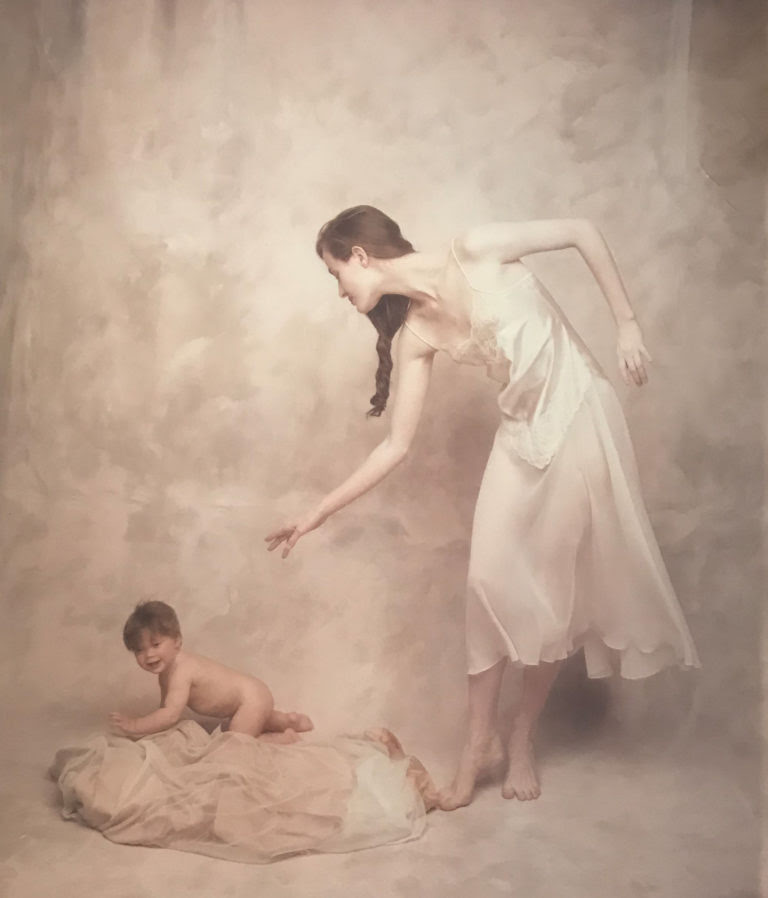 |
| Draped and Veiled: 20×24 Polaroid Photographs by Joyce Tenneson showcases Joyce Tenneson’s Transformations series, which she began in 1985 and engaged with through 2005. Transformations features partially or fully nude figures poetically presented; Tenneson’s photographs have always been interested in the magic of the human figure, contained within bodies of all ages and emotions in a broad range that are both vulnerable and bold. This exhibition features 12 large Polaroids from the poetic series. Draped and Veiled will be on view May 25–October 10, 2022. |
 |
| Gillian Laub, Amber and Reggie, Mount Vernon, Georgia, 2011, inkjet print, 40 × 50 inches. © Gillian Laub, courtesy of Benrubi Gallery. |
American photographer Gillian Laub (born New York, 1975) has spent the last two decades investigating political conflicts, exploring family relationships, and challenging assumptions about cultural identity. In Southern Rites, Laub engages her skills as a photographer, filmmaker, and visual activist to examine the realities of racism and raise questions that are simultaneously painful and essential to understanding the American consciousness.
In 2002, Laub was sent on a magazine assignment to Mount Vernon, GA, to document the lives of teenagers in the American South. The town, nestled among fields of Vidalia onions, symbolized the archetype of pastoral, small town American life. The Montgomery County residents Laub encountered were warm, polite, protective of their neighbors, and proud of their history. Yet Laub learned that the joyful adolescent rites of passage celebrated in this rural countryside—high school homecomings and proms—were still racially segregated.
Laub continued to photograph Montgomery County over the following decade, returning even in the face of growing—and eventually violent—resistance from community members and local law enforcement. She documented a town held hostage by the racial tensions and inequities that scar much of the nation’s history. In 2009, a few months after Barack Obama’s first inauguration, Laub’s photographs of segregated proms were published in the New York Times Magazine. The story brought national attention to the town and the following year the proms were finally integrated. The power of her photographic images served as the catalyst and, for a moment, progress seemed inevitable.
Then, in early 2011, tragedy struck the town. Justin Patterson, a twenty-two-year-old unarmed African American man—whose segregated high school homecoming Laub had photographed—was shot and killed by a sixty-two-year-old white man. Laub’s project, which began as an exploration of segregated high school rituals, evolved into an urgent mandate to confront the painful realities of discrimination and structural racism. Laub continued to document the town over the following decade, during which the country re-elected its first African American president and the ubiquity of camera phones gave rise to citizen journalism exposing racially motivated violence. As the Black Lives Matter movement and national protests proliferated, Laub uncovered a complex story about adolescence, race, the legacy of slavery, and the deeply rooted practice of segregation in the American South.
Southern Rites is a specific story about 21st century young people in the American South, yet it poses a universal question about human experience: can a new generation liberate itself from a harrowing and traumatic past to create a different future?
Southern Rites is curated by Maya Benton and organized by the International Center of Photography.