

Calendar of Events
Upcoming events and things to do in Asheville, NC. Below is a list of events for festivals, concerts, art exhibitions, group meetups and more.
Interested in adding an event to our calendar? Please click the green “Post Your Event” button below.
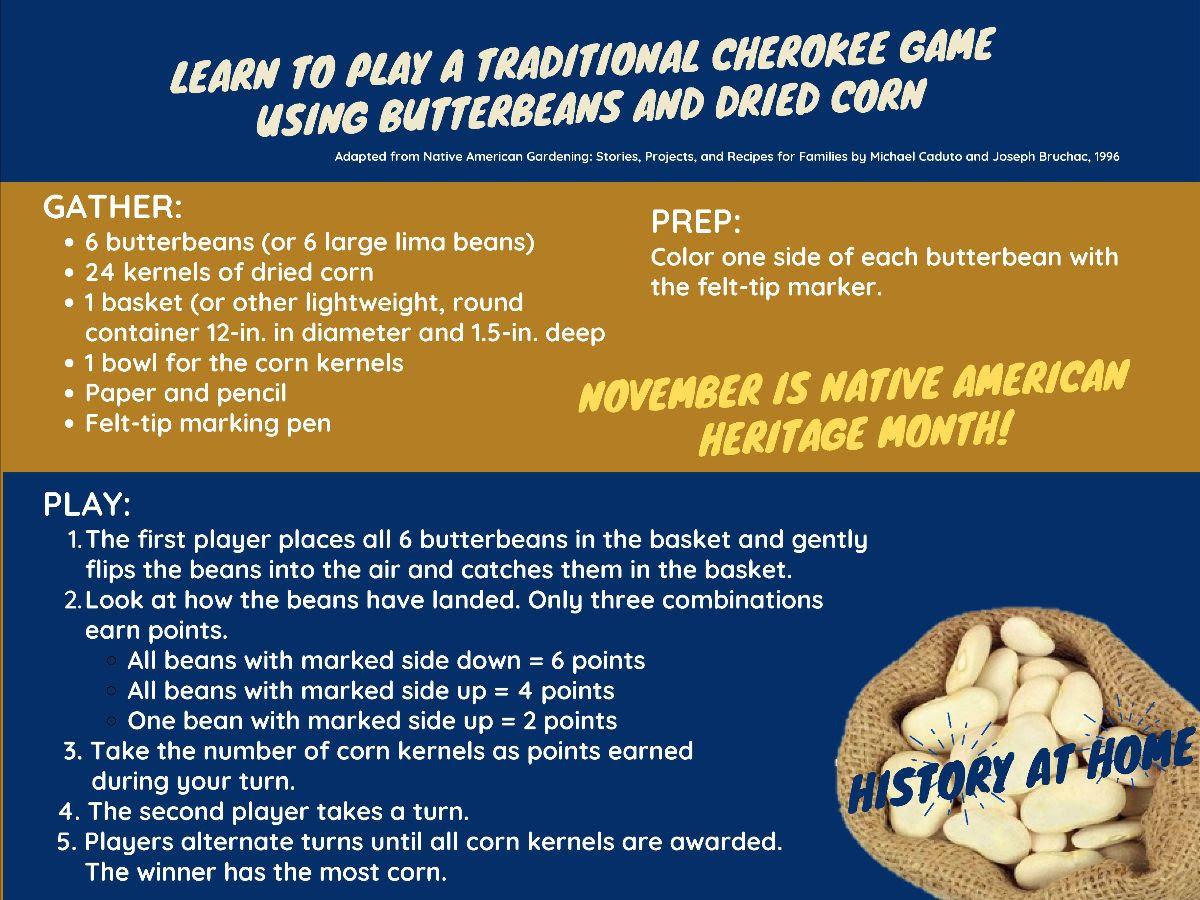
This is a variation on the tradition Cherokee Butterbean Game. It can be played by several individual players or several teams. Traditionally, this game uses three butterbeans that have been split in half. More…
From the Museum of the Cherokee Indian: Cherokee people began growing a form of corn two thousand years ago. By about a thousand years ago, or 1000 AD, they were growing corn and beans, as we know them today. Corn, beans, and squash was always grown together and was known as the “Three Sisters.” Beans restore nitrogen to the soil while corn depletes nitrogen. The vines of the beans and squash twined up the cornstalks. When corn and beans are eaten together, they provide complete proteins and amino acids for our diet.
Corn was so important to the Cherokee that they had important celebrations and ceremonies called “Green Corn Festivals.” The first of these was held in August, before the sweet corn was ready to eat. The last was held in October or November, when the
field corn was ready to be picked. At these ceremonies, people purified themselves physically and spiritually before feasting together. At this time, people got married and divorced. All old scores were settled and everyone started a new year together.
Staff Picks From Around the Web
 The Royal Ballet:
Alice in Wonderland
Enjoy a behind-the-scenes glimpse into the rehearsal of the Royal Ballet’s Alice’s Adventures in Wonderland.
Staff Picks From Around the Web
The Royal Ballet:Alice in Wonderland
Enjoy a behind-the-scenes glimpse into the rehearsal of the Royal Ballet’s Alice’s Adventures in Wonderland.
Staff Picks From Around the Web
The Royal Ballet:Alice in Wonderland
Enjoy a behind-the-scenes glimpse into the rehearsal of the Royal Ballet’s Alice’s Adventures in Wonderland.
Staff Picks From Around the Web
The Royal Ballet:Alice in Wonderland
Enjoy a behind-the-scenes glimpse into the rehearsal of the Royal Ballet’s Alice’s Adventures in Wonderland.
Staff Picks From Around the Web
The Royal Ballet:Alice in Wonderland
Enjoy a behind-the-scenes glimpse into the rehearsal of the Royal Ballet’s Alice’s Adventures in Wonderland.
This is a variation on the tradition Cherokee Butterbean Game. It can be played by several individual players or several teams. Traditionally, this game uses three butterbeans that have been split in half. More…
From the Museum of the Cherokee Indian: Cherokee people began growing a form of corn two thousand years ago. By about a thousand years ago, or 1000 AD, they were growing corn and beans, as we know them today. Corn, beans, and squash was always grown together and was known as the “Three Sisters.” Beans restore nitrogen to the soil while corn depletes nitrogen. The vines of the beans and squash twined up the cornstalks. When corn and beans are eaten together, they provide complete proteins and amino acids for our diet.
Corn was so important to the Cherokee that they had important celebrations and ceremonies called “Green Corn Festivals.” The first of these was held in August, before the sweet corn was ready to eat. The last was held in October or November, when the
field corn was ready to be picked. At these ceremonies, people purified themselves physically and spiritually before feasting together. At this time, people got married and divorced. All old scores were settled and everyone started a new year together.
Staff Picks From Around the Web
The Royal Ballet:Alice in Wonderland
Enjoy a behind-the-scenes glimpse into the rehearsal of the Royal Ballet’s Alice’s Adventures in Wonderland.
This is a variation on the tradition Cherokee Butterbean Game. It can be played by several individual players or several teams. Traditionally, this game uses three butterbeans that have been split in half. More…
From the Museum of the Cherokee Indian: Cherokee people began growing a form of corn two thousand years ago. By about a thousand years ago, or 1000 AD, they were growing corn and beans, as we know them today. Corn, beans, and squash was always grown together and was known as the “Three Sisters.” Beans restore nitrogen to the soil while corn depletes nitrogen. The vines of the beans and squash twined up the cornstalks. When corn and beans are eaten together, they provide complete proteins and amino acids for our diet.
Corn was so important to the Cherokee that they had important celebrations and ceremonies called “Green Corn Festivals.” The first of these was held in August, before the sweet corn was ready to eat. The last was held in October or November, when the
field corn was ready to be picked. At these ceremonies, people purified themselves physically and spiritually before feasting together. At this time, people got married and divorced. All old scores were settled and everyone started a new year together.
This is a variation on the tradition Cherokee Butterbean Game. It can be played by several individual players or several teams. Traditionally, this game uses three butterbeans that have been split in half. More…
From the Museum of the Cherokee Indian: Cherokee people began growing a form of corn two thousand years ago. By about a thousand years ago, or 1000 AD, they were growing corn and beans, as we know them today. Corn, beans, and squash was always grown together and was known as the “Three Sisters.” Beans restore nitrogen to the soil while corn depletes nitrogen. The vines of the beans and squash twined up the cornstalks. When corn and beans are eaten together, they provide complete proteins and amino acids for our diet.
Corn was so important to the Cherokee that they had important celebrations and ceremonies called “Green Corn Festivals.” The first of these was held in August, before the sweet corn was ready to eat. The last was held in October or November, when the
field corn was ready to be picked. At these ceremonies, people purified themselves physically and spiritually before feasting together. At this time, people got married and divorced. All old scores were settled and everyone started a new year together.
- 18 +
- SEATED SHOW
- 11 AM DOORS/ 12 PM
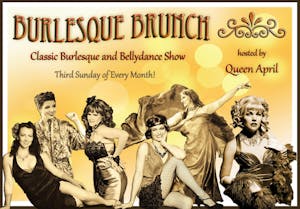
Burlesque Brunch is a monthly burlesque and belly dance show with a classic speakeasy feel. Join us every month and relax and enjoy our dancing dames and dandies in an up close and intimate setting. It’s a Sunday afternoon to delight the senses!

ECD AnneMarie Walter, Leader. Music: Cathy Arps, fiddle; Suzanne Hosch, flute; Janet Muse, piano.
3:30pm-4:00pm, Pre-Dance Workshop – Regular dancers assisting Beginners with basic ECD dance figures.
4:00pm-6:30pm, Dance
All are welcome; no partner necessary; wear comfortable clothes and shoes; bring a snack from time to time to share at the break; fragrance-free dance.
Come play with us at the Museum’s next game night! Stop by the welcome desk or café counter to pick up some socially distanced fun activities for individuals, pairs, or small groups. No reservations needed.
THIRD THURSDAYS
Each third Thursday, the Museum and community partners offer fun events for adults to socialize through interactive art-related activities, delicious drinks, and tasty treats.
Generous support for this program is provided by Art Bridges.
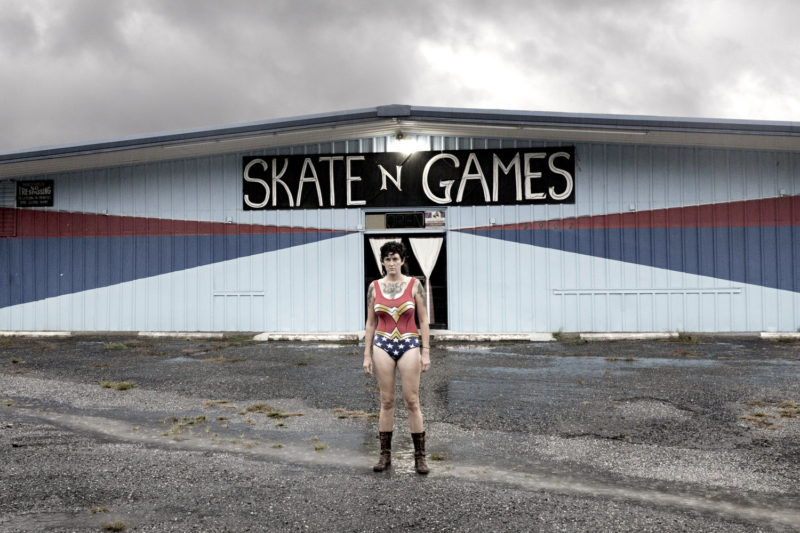
Cornwagon Thunder, SkateNGames from the Wonder Series, 2017, archival print on Epson Ultra Premium Presentation Matte paper, 10 × 15 inches. Museum purchase with funds provided by the 2019 Collectors’ Circle, 2020.02.01. © Cornwagon Thunder.
This is a variation on the tradition Cherokee Butterbean Game. It can be played by several individual players or several teams. Traditionally, this game uses three butterbeans that have been split in half. More…
From the Museum of the Cherokee Indian: Cherokee people began growing a form of corn two thousand years ago. By about a thousand years ago, or 1000 AD, they were growing corn and beans, as we know them today. Corn, beans, and squash was always grown together and was known as the “Three Sisters.” Beans restore nitrogen to the soil while corn depletes nitrogen. The vines of the beans and squash twined up the cornstalks. When corn and beans are eaten together, they provide complete proteins and amino acids for our diet.
Corn was so important to the Cherokee that they had important celebrations and ceremonies called “Green Corn Festivals.” The first of these was held in August, before the sweet corn was ready to eat. The last was held in October or November, when the
field corn was ready to be picked. At these ceremonies, people purified themselves physically and spiritually before feasting together. At this time, people got married and divorced. All old scores were settled and everyone started a new year together.

Join us for the virtual event of the year:
United Way’s Carpool Karaoke Challenge
The Fall Community Engagement Event is the one night a year when the community comes together in a fun, friendly competition to help raise awareness of our collective work to reduce the root causes and consequences of poverty. The event also serves as a call-to-action for both businesses and individuals to pledge their time and financial resources in support of the LIVE UNITED Fund.
Because of health concerns, this year’s event (The Carpool Karaoke Challenge) is being held virtually. Ten teams have pre-submitted their Carpool Karaoke videos, and each submission will be shown during the event. The kicker? This year you, the audience, will vote to decide 1st, 2nd, and 3rd place winners.
YOU’RE INVITED
WHO: You, your friends, family, and neighbors
WHAT: United Way’s Carpool Karaoke Challenge Event
WHERE: Virtual
WHEN: Friday, November 20, 4:30 pm-5:45 pm
COST: FREE. You’ll also be eligible to win cash door-prizes just for attending
*Seating for this event is limited, so don’t wait, register below — you must register to attend the event. A link will be shared with registered attendees the day before the event and will allow you access.
This is the one virtual event you’ll actually want to attend this year! Ten teams, 10 Carpool Karaoke submissions, 1 champion: YOU DECIDE!

Still: Life is a beautiful and poignant journey of dance and spoken word vignettes set in five out-of-the-ordinary performance locations at the Wortham Center. Audiences travel with a guide in small, physically distanced groups. Masks are required and capacity is limited.
Please call the box office to purchase for groups larger than 10 guests.

Come boogie to a Friday night dance mix featuring some amazing visuals on the outdoor big screen.
This is a variation on the tradition Cherokee Butterbean Game. It can be played by several individual players or several teams. Traditionally, this game uses three butterbeans that have been split in half. More…
From the Museum of the Cherokee Indian: Cherokee people began growing a form of corn two thousand years ago. By about a thousand years ago, or 1000 AD, they were growing corn and beans, as we know them today. Corn, beans, and squash was always grown together and was known as the “Three Sisters.” Beans restore nitrogen to the soil while corn depletes nitrogen. The vines of the beans and squash twined up the cornstalks. When corn and beans are eaten together, they provide complete proteins and amino acids for our diet.
Corn was so important to the Cherokee that they had important celebrations and ceremonies called “Green Corn Festivals.” The first of these was held in August, before the sweet corn was ready to eat. The last was held in October or November, when the
field corn was ready to be picked. At these ceremonies, people purified themselves physically and spiritually before feasting together. At this time, people got married and divorced. All old scores were settled and everyone started a new year together.
Still: Life is a beautiful and poignant journey of dance and spoken word vignettes set in five out-of-the-ordinary performance locations at the Wortham Center. Audiences travel with a guide in small, physically distanced groups. Masks are required and capacity is limited.
Please call the box office to purchase for groups larger than 10 guests.
Still: Life is a beautiful and poignant journey of dance and spoken word vignettes set in five out-of-the-ordinary performance locations at the Wortham Center. Audiences travel with a guide in small, physically distanced groups. Masks are required and capacity is limited.
Please call the box office to purchase for groups larger than 10 guests.
This is a variation on the tradition Cherokee Butterbean Game. It can be played by several individual players or several teams. Traditionally, this game uses three butterbeans that have been split in half. More…
From the Museum of the Cherokee Indian: Cherokee people began growing a form of corn two thousand years ago. By about a thousand years ago, or 1000 AD, they were growing corn and beans, as we know them today. Corn, beans, and squash was always grown together and was known as the “Three Sisters.” Beans restore nitrogen to the soil while corn depletes nitrogen. The vines of the beans and squash twined up the cornstalks. When corn and beans are eaten together, they provide complete proteins and amino acids for our diet.
Corn was so important to the Cherokee that they had important celebrations and ceremonies called “Green Corn Festivals.” The first of these was held in August, before the sweet corn was ready to eat. The last was held in October or November, when the
field corn was ready to be picked. At these ceremonies, people purified themselves physically and spiritually before feasting together. At this time, people got married and divorced. All old scores were settled and everyone started a new year together.
Still: Life is a beautiful and poignant journey of dance and spoken word vignettes set in five out-of-the-ordinary performance locations at the Wortham Center. Audiences travel with a guide in small, physically distanced groups. Masks are required and capacity is limited.
Please call the box office to purchase for groups larger than 10 guests.
Still: Life is a beautiful and poignant journey of dance and spoken word vignettes set in five out-of-the-ordinary performance locations at the Wortham Center. Audiences travel with a guide in small, physically distanced groups. Masks are required and capacity is limited.
Please call the box office to purchase for groups larger than 10 guests.
Beginner’s workshop lesson at 7:30 P.M., then 8-11 P.M. Contra Dance with Country Waltzing at the break and the final dance. This is a partner dance but it’s not necessary to come with a partner. We have different live bands and callers.
This is a variation on the tradition Cherokee Butterbean Game. It can be played by several individual players or several teams. Traditionally, this game uses three butterbeans that have been split in half. More…
From the Museum of the Cherokee Indian: Cherokee people began growing a form of corn two thousand years ago. By about a thousand years ago, or 1000 AD, they were growing corn and beans, as we know them today. Corn, beans, and squash was always grown together and was known as the “Three Sisters.” Beans restore nitrogen to the soil while corn depletes nitrogen. The vines of the beans and squash twined up the cornstalks. When corn and beans are eaten together, they provide complete proteins and amino acids for our diet.
Corn was so important to the Cherokee that they had important celebrations and ceremonies called “Green Corn Festivals.” The first of these was held in August, before the sweet corn was ready to eat. The last was held in October or November, when the
field corn was ready to be picked. At these ceremonies, people purified themselves physically and spiritually before feasting together. At this time, people got married and divorced. All old scores were settled and everyone started a new year together.

 We’re kicking off Black Friday with out Black Watch Double Chocolate Milk Stout release. This popular limited-release brew is basically a brownie in a glass, overflowing with smooth and rich chocolatey flavors.
This is a variation on the tradition Cherokee Butterbean Game. It can be played by several individual players or several teams. Traditionally, this game uses three butterbeans that have been split in half. More…
From the Museum of the Cherokee Indian: Cherokee people began growing a form of corn two thousand years ago. By about a thousand years ago, or 1000 AD, they were growing corn and beans, as we know them today. Corn, beans, and squash was always grown together and was known as the “Three Sisters.” Beans restore nitrogen to the soil while corn depletes nitrogen. The vines of the beans and squash twined up the cornstalks. When corn and beans are eaten together, they provide complete proteins and amino acids for our diet.
Corn was so important to the Cherokee that they had important celebrations and ceremonies called “Green Corn Festivals.” The first of these was held in August, before the sweet corn was ready to eat. The last was held in October or November, when the
field corn was ready to be picked. At these ceremonies, people purified themselves physically and spiritually before feasting together. At this time, people got married and divorced. All old scores were settled and everyone started a new year together.
This is a variation on the tradition Cherokee Butterbean Game. It can be played by several individual players or several teams. Traditionally, this game uses three butterbeans that have been split in half. More…
From the Museum of the Cherokee Indian: Cherokee people began growing a form of corn two thousand years ago. By about a thousand years ago, or 1000 AD, they were growing corn and beans, as we know them today. Corn, beans, and squash was always grown together and was known as the “Three Sisters.” Beans restore nitrogen to the soil while corn depletes nitrogen. The vines of the beans and squash twined up the cornstalks. When corn and beans are eaten together, they provide complete proteins and amino acids for our diet.
Corn was so important to the Cherokee that they had important celebrations and ceremonies called “Green Corn Festivals.” The first of these was held in August, before the sweet corn was ready to eat. The last was held in October or November, when the
field corn was ready to be picked. At these ceremonies, people purified themselves physically and spiritually before feasting together. At this time, people got married and divorced. All old scores were settled and everyone started a new year together.

Next Stage Arts Project and the Putney Historical Society present “Hoedowns, Reels, and Frolics: Roots and Branches of Southern Appalachian Dance,” a virtual lecture by scholar of traditional music and dance, Phil Jamison, on Thursday, December 3 at 7:30 p.m.
The southern Appalachian square dance is a hybrid dance form that developed in the American South during the nineteenth century, and like the Appalachian musical traditions, these dances reflect the racial and ethnic diversity of the region. In this Zoom event, Phil examines the multicultural roots and historical development of these dances and identifies the components of earlier European, African, and Native American dance forms that combined to make them uniquely American. He will also discuss African-American and native American musicians and callers who at one time were present in New England. These include African-American musician and barber John Putnam (1825–1895), who was active as a fiddler and dance prompter in Greenfield, Massachusetts during the nineteenth century. Proceeds from this event will benefit the Putney Historical Society. For more information and to register for the Zoom, visit www.nextstagearts.org.
Phil Jamison is nationally known as a dance caller, old-time musician, flatfoot dancer, and scholar of traditional Appalachian dance. A 2017 inductee to the Blue Ridge Music Hall of Fame, he has called dances, performed, and taught at music festivals and dance events throughout the U.S. and overseas since the early 1970s, including forty years as a member of the Green Grass Cloggers. Over the last thirty years, Jamison has done extensive research in the area of Appalachian dance, and his book Hoedowns, Reels, and Frolics: Roots and Branches of Southern Appalachian Dance(University of Illinois Press, 2015) tells the story behind the square dances, step dances, reels, and other forms of dance practiced in southern Appalachia. He has given numerous presentations on Appalachian dance – from the Smithsonian Institution to Beijing, China – and he teaches Appalachian music and dance at Warren Wilson College, in Asheville, North Carolina, where for twenty-five years, he served as coordinator of the Old-Time Music and Dance Week at the Swannanoa Gathering. http://www.philjamison.com/
Brevard Music Center Staff Picks From Around the Web
Royal Opera House:
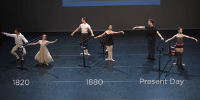
Ballet Evolved
Through demonstrations, discover how barre work has changed considerably over the last 200 years.