

Calendar of Events
Upcoming events and things to do in Asheville, NC. Below is a list of events for festivals, concerts, art exhibitions, group meetups and more.
Interested in adding an event to our calendar? Please click the green “Post Your Event” button below.
SATURDAY
11:00 AM Show Open
1:30 PM Reggie Bügmüncher
2:30 PM Heavy Metal Magician Nigel Blackstorm
3:30 PM The Daredevil from Down Under Alakazam
5:00 PM Tattoo Contests
7:00 PM Heavy Metal Magician Nigel Blackstorm
7:45 PM The Daredevil from Down Under Alakazam
8:30 PM Reggie Bügmüncher
9:15 PM Verona Fink Burlesque Sideshow and Suspension
10:00 PM Tattoo of the Day
11:00 PM Show Close
SUNDAY
11:00 AM Show Open
1:30 PM Reggie Bügmüncher
2:30 PM Heavy Metal Magician Nigel Blackstorm
3:30 PM The Daredevil from Down Under Alakazam
5:00 PM Tattoo Contests
7:00 PM Tattoo of the Day and Best of Show
8:00 PM Show Close
|
Western North Carolina is important in the history of American glass art. Several artists of the Studio Glass Movement came to the region, including its founder Harvey K. Littleton. Begun in 1962 in Wisconsin, it was a student of Littleton’s that first came to the area in 1965 and set up a glass studio at the Penland School of Craft in Penland, North Carolina. By 1967, Mark Peiser was the first glass artist resident at the school and taught many notable artists, like Jak Brewer in 1968 and Richard Ritter who came to study in 1971. By 1977, Littleton retired from teaching and moved to nearby Spruce Pine, North Carolina and set up a glass studio at his home. Since that time, glass artists like Ken Carder, Rick and Valerie Beck, Shane Fero, and Yaffa Sikorsky and Jeff Todd—to name only a few—have flocked to the area to reside, collaborate, and teach, making it a significant place for experimentation and education in glass. The next generation of artists like Hayden Wilson and Alex Bernstein continue to create here. The Museum is dedicated to collecting American studio glass and within that umbrella, explores the work of Artists connected to Western North Carolina. Exhibitions, including Intersections of American Art, explore glass art in the context of American Art of the 20th and 21st centuries. A variety of techniques and a willingness to push boundaries of the medium can be seen in this selection of works from the Museum’s Collection. |
WELCOME TO MUSICAL COMEDY HEAVEN!
Featuring one of the most iconic scores of all time by Jule Styne and Bob Merrill, an updated book from Harvey Fierstein based on the original classic by Isobel Lennart, tap choreography by Ayodele Casel, choreography by Ellenore Scott, and direction from Michael Mayer, this love letter to the theatre has the whole shebang!
The sensational Broadway revival dazzles with celebrated classic songs, including “Don’t Rain On My Parade,” “I’m the Greatest Star,” and “People.” This bittersweet comedy is the story of the indomitable Fanny Brice, a girl from the Lower East Side who dreamed of a life on the stage. Everyone told her she’d never be a star, but then something funny happened—she became one of the most beloved performers in history, shining brighter than the brightest lights of Broadway.
Jack of the Wood : Sunday-Irish Session
Sundays
1 till who knows when?
Traditional Irish music is kept alive at Jack of the Wood with our unplugged Sunday session.
Jack of the Wood
95 Patton ave
Asheville, NC 28801
(828) 252.5445
WELCOME TO MUSICAL COMEDY HEAVEN!
Featuring one of the most iconic scores of all time by Jule Styne and Bob Merrill, an updated book from Harvey Fierstein based on the original classic by Isobel Lennart, tap choreography by Ayodele Casel, choreography by Ellenore Scott, and direction from Michael Mayer, this love letter to the theatre has the whole shebang!
The sensational Broadway revival dazzles with celebrated classic songs, including “Don’t Rain On My Parade,” “I’m the Greatest Star,” and “People.” This bittersweet comedy is the story of the indomitable Fanny Brice, a girl from the Lower East Side who dreamed of a life on the stage. Everyone told her she’d never be a star, but then something funny happened—she became one of the most beloved performers in history, shining brighter than the brightest lights of Broadway.
R.Carlos Nakai, of Navajo-Ute heritage, the world’s premier performer of the Native American flute, joins pianist/composer Peter Kater for two evening performances, possibly their last live performance together. Piano and Native American Flute, however an unlikely combination of instruments, when performed by two of the worlds most sensitive performers of those instruments, produces a powerful and profound musical chemistry, of an almost spiritual nature, and unlike any two instruments ever played together! Their music has been described to be of a sacred quality. Kater with two recent Grammy wins for best New Age album, produces a sound on piano often described as hypnotic and healing. Nakai approaches each performance in a ceremonial manner, singing ancient Navajo chants while playing his flutes and blowing his Eagle Bone whistle. “Every concert they have played together in Asheville, leaves audiences in absolute awe. The chemistry of these two musicians and their instruments does something to us all that is impossible to describe in words”. They have numerous recordings together over the last 30 years and have performed in Asheville 10 previous times to always SOLD OUT audiences. Their recording “Improvisations In Concert” was recorded live at their breathtaking 1995 performance at Diana Wortham Theatre. You can find samples of their music on Spotify and Amazon. Their award winning albums, Migration, Natives and Improvisations in Concert are great examples of the music you will experience at their performances.
Buncombe County Special Collections is excited to announce a call for proposals for the third year of its creative residency program.
This is an annual opportunity for artists in Buncombe County to create new, research-driven creative work using BCSC’s historic resources as source material and/or inspiration, and to present their work in the Carolina Record Shop, a dedicated exhibition space in the BCSC reading room. Artists age 18 and up, based in Buncombe County, working in any creative discipline are invited to apply.
Buncombe County Special Collections is looking for projects that will:
- Offer new, diverse perspectives on our shared history
- Identify and address gaps and/or amplify narratives that are historically underrepresented in the collection
- Educate and inspire non-traditional users of archives and special collections to engage with the collection in new ways.
More information (including the PDF of the call for proposals) is available at here. The 2024 Creative Residency is made possible in part by the Trust Fund for Buncombe County Public Libraries.
You can also visit Buncombe County Special Collections in the lower level of Pack Memorial to view the current exhibition in the Carolina Record Shop, “Belonging & Non-Belonging: The History and Future of Zines in Western North Carolina,” curated by 2023 resident Miles Lamberson.
Included with admission
Embark on a scenic journey across George Vanderbilt’s Italy with a large-scale outdoor display that combines brilliant botanical designs with authentic messages written by Vanderbilt himself.
Beautifully handcrafted of natural elements, each sculptural postcard depicts a location or landmark Vanderbilt visited more than a century ago. This captivating complement to Biltmore’s Italian Renaissance Alive exhibition reveals Vanderbilt’s passions for travel, culture, architecture, and art as well as his personal experience of such renowned Italian cities as Milan, Florence, Venice, Pisa, and Vatican City.
Adding to the charm and visual appeal of Ciao! From Italy—sure to be a hit among kids of all ages—is the G-scale model train that travels in and out of each postcard in this enlightening display!
Throughout the history of painting from the mid-19th century forward, artists have used an
endless variety of approaches to record their world. Beyond the Lens: Photorealist Perspectives on Looking, Seeing, and Painting continues this thread, offering an opportunity to explore a singular and still forceful aspect of American art. Photorealism shares many of the approaches of historical and modernist realism, with a twist. The use of the camera as a basic tool for organizing visual information in advance of painterly expression is now quite common, but Photorealists embraced the camera as the focal point in their creative process.
Beyond the Lens presents key works from the collection of Louis K. and Susan Pear Meisel,
bringing together paintings and works on paper dating from the 1970s to the present to focus on this profoundly influential art movement. The exhibition includes work by highly acclaimed formative artists of the movement such as Charles Bell, Robert Bechtle, Tom Blackwell, Richard Estes, Audrey Flack, and Ralph Goings as well as paintings by the successive generations of Photorealist artists Anthony Brunelli, Davis Cone, Bertrand Meniel, Rod Penner, and Raphaella Spence. Featured artworks in the exhibition include diverse subject matters, but the primary focus is on the common and every day: urban scenes, “portraits” of cars, trucks, and motorcycles, still life compositions using toys, food, candy wrappers, and salt and pepper shakers. All provide opportunities for virtuoso studies in how light, reflection, and the camera as intermediary shapes our perception of the material world.
This multigenerational survey demonstrates how the 35-mm camera, and later technological
advances in digital image-making, informed and impacted the painterly gesture. Taken together, the paintings and works on paper in Beyond the Lens show how simply spellbinding these virtuosic works of art can be.
“Beyond the Lens offers a fascinating look into the Photorealism movement and delves into the profound connection between the artists’ observation and creative process,” says Pamela L. Myers, Executive Director of Asheville Art Museum. “We are delighted to present this curated collection of artworks encapsulating the creative vision and technical precision that defines this artistic genre.”
Photorealism found its roots in the late 1960s in California and New York, coexisting with an explosion of new ideas in art-making that included Conceptual, Pop, Minimalism, Land and Performance Art. At first, representational realism coexisted with the thematic and conceptual explosion but was eventually relegated to the margins regarding critical and curatorial attention. Often misunderstood and sometimes negatively criticized or lampooned as a betrayal of modernism’s commitment to abstraction, the artists involved in Photorealism remained committed explorers of the trail they had blazed. In the decades of the late twentieth century and early twenty-first century, realistic and symbolic painting experienced a renaissance, as contemporary artists are increasingly drawn to narrative and storytelling. Concurrently, using a camera as a preparatory tool equally legitimate and valuable as pencils and pens has made the rubric of Photorealism increasingly relevant.
This exhibition is organized by the Asheville Art Museum and guest curated by Terrie Sultan.
This exhibition is sponsored in part by Jim and Julia Calkins Peterson.
Romare Bearden (Charlotte, NC 1911–1988 New York, NY), African American writer and artist, is renowned for his collages. He constantly experimented with various techniques to achieve his artistic goals throughout his career. This exhibition highlights works on paper and explores his most frequently used mediums, including screen-printing, lithography, hand-colored etching, collagraph, monotype, relief print, photomontage, and collage.
Bearden’s work reflects his improvisational approach to his practice. He considered his process akin to that of jazz and blues composers. Starting with an open mind, he would let an idea evolve spontaneously.
“Romare Bearden: Ways of Working highlights Bearden’s unique artistic practice and masterful storytelling through art,” says Pamela L. Myers, Executive Director of the Asheville Art Museum. “We are thrilled to collaborate with Jerald Melberg Gallery to present these extraordinary works on paper in conversation with Bearden’s collage Sunset Express, 1984 in the Museum Collection (on view in the Museum’s SECU Collection Hall). This exhibition will also provide a glimpse into the cultural histories and personal interests that influenced his art-making practice, and we hope it encourages introspection and dialogue with our visitors.”
Jerald Melberg states, “Romare Bearden’s groundbreaking artistic practice continues to captivate audiences worldwide. With an unparalleled legacy of creativity and innovation, Bearden’s contributions to art remain deeply influential years beyond his life.” We have enjoyed organizing this exhibition with the Asheville Art Museum to showcase his artistic genius and inspire visitors from the Western North Carolina region and beyond.”
This exhibition is made possible in part by the Judy Appleton Fund. Many thanks to the Jerald Melberg Gallery for the loan of these important artworks and to Mary and Jerald Melberg for their long-standing support of the arts, artists, and the Asheville Art Museum.
|
Western North Carolina is important in the history of American glass art. Several artists of the Studio Glass Movement came to the region, including its founder Harvey K. Littleton. Begun in 1962 in Wisconsin, it was a student of Littleton’s that first came to the area in 1965 and set up a glass studio at the Penland School of Craft in Penland, North Carolina. By 1967, Mark Peiser was the first glass artist resident at the school and taught many notable artists, like Jak Brewer in 1968 and Richard Ritter who came to study in 1971. By 1977, Littleton retired from teaching and moved to nearby Spruce Pine, North Carolina and set up a glass studio at his home. Since that time, glass artists like Ken Carder, Rick and Valerie Beck, Shane Fero, and Yaffa Sikorsky and Jeff Todd—to name only a few—have flocked to the area to reside, collaborate, and teach, making it a significant place for experimentation and education in glass. The next generation of artists like Hayden Wilson and Alex Bernstein continue to create here. The Museum is dedicated to collecting American studio glass and within that umbrella, explores the work of Artists connected to Western North Carolina. Exhibitions, including Intersections of American Art, explore glass art in the context of American Art of the 20th and 21st centuries. A variety of techniques and a willingness to push boundaries of the medium can be seen in this selection of works from the Museum’s Collection. |
Curb Records artist Dylan Scott is headed to Spartanburg, SC on Nov. 16 at Spartanburg Memorial Auditorium at 7:30 pm ET on his This Town’s Been Too Good To Us Tour with rising artists Matt Schuster and Tayler Holder.
Buncombe County Special Collections is excited to announce a call for proposals for the third year of its creative residency program.
This is an annual opportunity for artists in Buncombe County to create new, research-driven creative work using BCSC’s historic resources as source material and/or inspiration, and to present their work in the Carolina Record Shop, a dedicated exhibition space in the BCSC reading room. Artists age 18 and up, based in Buncombe County, working in any creative discipline are invited to apply.
Buncombe County Special Collections is looking for projects that will:
- Offer new, diverse perspectives on our shared history
- Identify and address gaps and/or amplify narratives that are historically underrepresented in the collection
- Educate and inspire non-traditional users of archives and special collections to engage with the collection in new ways.
More information (including the PDF of the call for proposals) is available at here. The 2024 Creative Residency is made possible in part by the Trust Fund for Buncombe County Public Libraries.
You can also visit Buncombe County Special Collections in the lower level of Pack Memorial to view the current exhibition in the Carolina Record Shop, “Belonging & Non-Belonging: The History and Future of Zines in Western North Carolina,” curated by 2023 resident Miles Lamberson.
Included with admission
Embark on a scenic journey across George Vanderbilt’s Italy with a large-scale outdoor display that combines brilliant botanical designs with authentic messages written by Vanderbilt himself.
Beautifully handcrafted of natural elements, each sculptural postcard depicts a location or landmark Vanderbilt visited more than a century ago. This captivating complement to Biltmore’s Italian Renaissance Alive exhibition reveals Vanderbilt’s passions for travel, culture, architecture, and art as well as his personal experience of such renowned Italian cities as Milan, Florence, Venice, Pisa, and Vatican City.
Adding to the charm and visual appeal of Ciao! From Italy—sure to be a hit among kids of all ages—is the G-scale model train that travels in and out of each postcard in this enlightening display!
Tyger Tyger Gallery is pleased to present Reckoning: Adornment as Narrative, a group exhibition curated by Asheville-based artist and curator Erika Diamond.
Reckoning: Adornment as Narrative is an exhibition of diverse practices, anchored at three points: methods of reckoning; the function of adornment; and the fusing of personal and cultural narrative. It features acts of glitz, embellishment, and homage by Shae Bishop, David Harper Clemons, Kashif Dennis, Annie Evelyn, Margaret Jacobs, Julia Kwon, Katrina Majkut, Heather Mackenzie, and Luis Sahagun. Through material language, each artist tells the story of their identity. Inherent to these stories are contradictions—between labor and value, feminine and masculine, natural and fabricated.
Opening Reception for the Artist Nov. 3, 6-8PM.
Tracey Morgan Gallery is pleased to present A Mirror, Not a Window, an exhibition of new and recent work by artist Hannah Cole. This is Cole’s second solo exhibition with the gallery. A reception for the artist will be held Friday, November 3 from 6-8PM.
This collection of paintings and sculptures continues Cole’s interest in creating, completely by hand, reproductions of small details and objects culled from her everyday life, turning the viewer’s attention to often overlooked aspects of our surrounding environment and reframing the very definition of representational art. With nods to pop art, trompe l’oeil, and modern American painters, Cole poses big questions about the nature of the artist’s hand, and the drive to (re)create.
A grouping of wall sculptures of nearly exact replicas of books which are hand-painted on wood blocks are included in the exhibition. These books are all non-fiction, mostly art related, though now un-readable. Instead of looking to books for answers, these objects force the viewer to provide the substance. The most self-referential of the group is Jean Baudrillard’s Simulacra and Simulation in which the French philosopher talks in dense prose about our culture of signs and signals eventually becoming copies without any originals. In Cole’s tongue-in-cheek nod, her faithful replica of Baudriallard’s philosophical work becomes an art object whose meaning has shifted completely from the original. Cole’s painted wood block cannot be read and has no actual utility at all, except as an object to contemplate.
A recurring element in Cole’s paintings is a hand-rendered tape measure running along the edge of her canvases. By including this common, easily recognizable object, Cole calls to question the “truth” of representation. Can we trust these measurements simply because they have identifiable markings? Other paintings on Styrofoam show painted wood grain edges, subverting the viewer’s expectation of where the painting itself is, and what it’s made of. We expect a painting to be on the outward-facing surface, but what if the faithful representation is painted on the sides?
In this contemporary age of Artificial Intelligence flooding us with copies, reproductions, fakes, and deliberate decep-tions, anxieties regarding authenticity and authorship run high. Cole’s work invites contemplation of these deeply philosophical issues with a playful tone, presenting serious questions by way of common objects.
Hannah Cole studied at Yale University and Boston University. Her work has been exhibited at The Turchin Center for Visual Arts, NC; the Drawing Center, NY; the University of Maine Museum of Art; the Sherman Gallery at Boston University, MA; Tiger Strikes Asteroid, Greenville, NC; and the North Carolina Museum of Art, Raleigh, among other national and international institutions. She currently lives and works in Asheville, NC.
Tracey Morgan Gallery is pleased to present an exhibition of paintings by artist Stella Alesi in our project space. This is Alesi’s first exhibition with the gallery and is presented in conjunction with Hannah Cole: A Mirror, Not a Window in our main gallery space. A reception for both artists will be held Friday, November 3 from 6-8PM.
The works on view are from the SQUISHY series, a group of geometric, abstract oil on oil paper paintings. With the use of simple shapes and a limited color palette, these works explore the visceral experience of living at this current moment. Alesi’s colorful, “squishy” shapes bend to the demands placed on them by their seemingly heavy, unforgiving counterparts. With this work, Alesi confronts contemporary issues such as climate change and political turmoil, as well as personal trials, using basic shapes, both hard and malleable to express a state of being. The shapes are gestural, fluid, and animated – sometimes resembling body parts even in their minimalism. The effect is a playful interpretation of heavy topics – a visual play on the deep and multi-layer well of human emotions.
Stella Alesi works across several styles and mediums, including drawing, painting, photography, collage, and large wall works. Their practice is characterized by a willingness to try new approaches in the ongoing investigation into new materials and visual languages, always exploring new ways to represent the visceral nature of the human experience. Born on Long Island, New York in 1963, Alesi was raised in New Jersey. They studied at Parsons School of Design, New York City; University Hampshire, Durham; and University of Massachusetts, Amherst. Their work has been purchased by many private and commercial collections. Career highlights include a recent solo exhibit (spring of 2023) at the Northern-Southern gallery, Austin, TX and a large-scale permanent installation in the lobby of The Foundry, Austin TX. Alesi currently lives and works in both Austin, TX and Asheville, NC.
LEAF isn’t just for kids! Join us in the Mezzanine while you wait for your youth to finish their class or just to hang out!
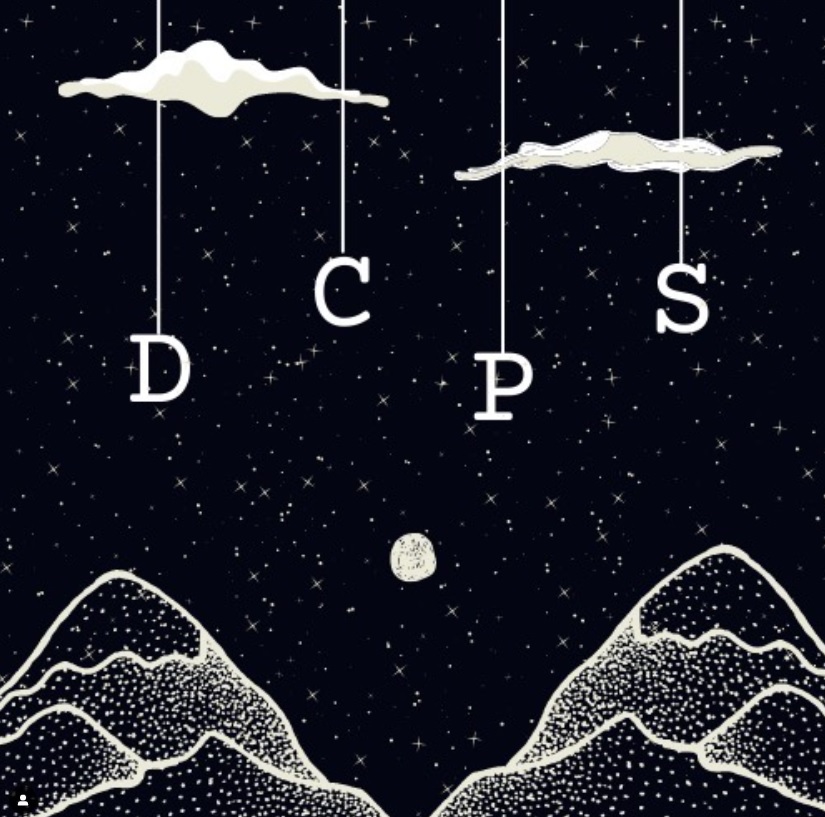
Great news for poets and poetry lovers: Dark City Poet’s Society is returning to the Black Mountain Library. DCPS is a completely free poetry group that is open to poets of all ages and experience levels. Join us at the Black Mountain Library from 6-7:30 p.m. on the first Tuesday of every month for our (respectful) critique group. DCPS will meet at BAD Craft from 6-7 p.m. on the third Tuesday for our monthly open mic Poetry Night. Find out more on Instagram @darkcitypoetssociety or contact the Black Mountain Library.
Buncombe County Special Collections is excited to announce a call for proposals for the third year of its creative residency program.
This is an annual opportunity for artists in Buncombe County to create new, research-driven creative work using BCSC’s historic resources as source material and/or inspiration, and to present their work in the Carolina Record Shop, a dedicated exhibition space in the BCSC reading room. Artists age 18 and up, based in Buncombe County, working in any creative discipline are invited to apply.
Buncombe County Special Collections is looking for projects that will:
- Offer new, diverse perspectives on our shared history
- Identify and address gaps and/or amplify narratives that are historically underrepresented in the collection
- Educate and inspire non-traditional users of archives and special collections to engage with the collection in new ways.
More information (including the PDF of the call for proposals) is available at here. The 2024 Creative Residency is made possible in part by the Trust Fund for Buncombe County Public Libraries.
You can also visit Buncombe County Special Collections in the lower level of Pack Memorial to view the current exhibition in the Carolina Record Shop, “Belonging & Non-Belonging: The History and Future of Zines in Western North Carolina,” curated by 2023 resident Miles Lamberson.
Included with admission
Embark on a scenic journey across George Vanderbilt’s Italy with a large-scale outdoor display that combines brilliant botanical designs with authentic messages written by Vanderbilt himself.
Beautifully handcrafted of natural elements, each sculptural postcard depicts a location or landmark Vanderbilt visited more than a century ago. This captivating complement to Biltmore’s Italian Renaissance Alive exhibition reveals Vanderbilt’s passions for travel, culture, architecture, and art as well as his personal experience of such renowned Italian cities as Milan, Florence, Venice, Pisa, and Vatican City.
Adding to the charm and visual appeal of Ciao! From Italy—sure to be a hit among kids of all ages—is the G-scale model train that travels in and out of each postcard in this enlightening display!
Tyger Tyger Gallery is pleased to present Reckoning: Adornment as Narrative, a group exhibition curated by Asheville-based artist and curator Erika Diamond.
Reckoning: Adornment as Narrative is an exhibition of diverse practices, anchored at three points: methods of reckoning; the function of adornment; and the fusing of personal and cultural narrative. It features acts of glitz, embellishment, and homage by Shae Bishop, David Harper Clemons, Kashif Dennis, Annie Evelyn, Margaret Jacobs, Julia Kwon, Katrina Majkut, Heather Mackenzie, and Luis Sahagun. Through material language, each artist tells the story of their identity. Inherent to these stories are contradictions—between labor and value, feminine and masculine, natural and fabricated.
Imaginations will soar in this new musical based on Peter H. Reynolds’ best-selling book, The Dot.
DOT DOT DOT: A New Musical is an exciting new musical based on the Creatrilogy trio of award-winning picture books by New York Times bestselling author Peter H. Reynolds (The Dot, Ish and Sky Color). Adapted by Composers Keelay Gipson and Sam Salmond, the musical, like the series, celebrates the power of originality, self-expression, and opening our eyes to look beyond the expected.
When Marisol (Sky Color), a young artist and curator of the Musee de Marisol, decides that her gallery requires more than her own art, her search for emerging talent leads her to Vashti (The Dot), whose dots inspire Ramon (Ish) to become an artist in his own right.
The musical follows Marisol’s journey to help her new friends, and her entire community, break free from self-criticism and learn to let their imaginations soar. Recommended for grades 1-4.
The Student Series is open to school groups, homeschoolers, community groups and families.
Throughout the history of painting from the mid-19th century forward, artists have used an
endless variety of approaches to record their world. Beyond the Lens: Photorealist Perspectives on Looking, Seeing, and Painting continues this thread, offering an opportunity to explore a singular and still forceful aspect of American art. Photorealism shares many of the approaches of historical and modernist realism, with a twist. The use of the camera as a basic tool for organizing visual information in advance of painterly expression is now quite common, but Photorealists embraced the camera as the focal point in their creative process.
Beyond the Lens presents key works from the collection of Louis K. and Susan Pear Meisel,
bringing together paintings and works on paper dating from the 1970s to the present to focus on this profoundly influential art movement. The exhibition includes work by highly acclaimed formative artists of the movement such as Charles Bell, Robert Bechtle, Tom Blackwell, Richard Estes, Audrey Flack, and Ralph Goings as well as paintings by the successive generations of Photorealist artists Anthony Brunelli, Davis Cone, Bertrand Meniel, Rod Penner, and Raphaella Spence. Featured artworks in the exhibition include diverse subject matters, but the primary focus is on the common and every day: urban scenes, “portraits” of cars, trucks, and motorcycles, still life compositions using toys, food, candy wrappers, and salt and pepper shakers. All provide opportunities for virtuoso studies in how light, reflection, and the camera as intermediary shapes our perception of the material world.
This multigenerational survey demonstrates how the 35-mm camera, and later technological
advances in digital image-making, informed and impacted the painterly gesture. Taken together, the paintings and works on paper in Beyond the Lens show how simply spellbinding these virtuosic works of art can be.
“Beyond the Lens offers a fascinating look into the Photorealism movement and delves into the profound connection between the artists’ observation and creative process,” says Pamela L. Myers, Executive Director of Asheville Art Museum. “We are delighted to present this curated collection of artworks encapsulating the creative vision and technical precision that defines this artistic genre.”
Photorealism found its roots in the late 1960s in California and New York, coexisting with an explosion of new ideas in art-making that included Conceptual, Pop, Minimalism, Land and Performance Art. At first, representational realism coexisted with the thematic and conceptual explosion but was eventually relegated to the margins regarding critical and curatorial attention. Often misunderstood and sometimes negatively criticized or lampooned as a betrayal of modernism’s commitment to abstraction, the artists involved in Photorealism remained committed explorers of the trail they had blazed. In the decades of the late twentieth century and early twenty-first century, realistic and symbolic painting experienced a renaissance, as contemporary artists are increasingly drawn to narrative and storytelling. Concurrently, using a camera as a preparatory tool equally legitimate and valuable as pencils and pens has made the rubric of Photorealism increasingly relevant.
This exhibition is organized by the Asheville Art Museum and guest curated by Terrie Sultan.
This exhibition is sponsored in part by Jim and Julia Calkins Peterson.
Opening Reception for the Artist Nov. 3, 6-8PM.
Tracey Morgan Gallery is pleased to present A Mirror, Not a Window, an exhibition of new and recent work by artist Hannah Cole. This is Cole’s second solo exhibition with the gallery. A reception for the artist will be held Friday, November 3 from 6-8PM.
This collection of paintings and sculptures continues Cole’s interest in creating, completely by hand, reproductions of small details and objects culled from her everyday life, turning the viewer’s attention to often overlooked aspects of our surrounding environment and reframing the very definition of representational art. With nods to pop art, trompe l’oeil, and modern American painters, Cole poses big questions about the nature of the artist’s hand, and the drive to (re)create.
A grouping of wall sculptures of nearly exact replicas of books which are hand-painted on wood blocks are included in the exhibition. These books are all non-fiction, mostly art related, though now un-readable. Instead of looking to books for answers, these objects force the viewer to provide the substance. The most self-referential of the group is Jean Baudrillard’s Simulacra and Simulation in which the French philosopher talks in dense prose about our culture of signs and signals eventually becoming copies without any originals. In Cole’s tongue-in-cheek nod, her faithful replica of Baudriallard’s philosophical work becomes an art object whose meaning has shifted completely from the original. Cole’s painted wood block cannot be read and has no actual utility at all, except as an object to contemplate.
A recurring element in Cole’s paintings is a hand-rendered tape measure running along the edge of her canvases. By including this common, easily recognizable object, Cole calls to question the “truth” of representation. Can we trust these measurements simply because they have identifiable markings? Other paintings on Styrofoam show painted wood grain edges, subverting the viewer’s expectation of where the painting itself is, and what it’s made of. We expect a painting to be on the outward-facing surface, but what if the faithful representation is painted on the sides?
In this contemporary age of Artificial Intelligence flooding us with copies, reproductions, fakes, and deliberate decep-tions, anxieties regarding authenticity and authorship run high. Cole’s work invites contemplation of these deeply philosophical issues with a playful tone, presenting serious questions by way of common objects.
Hannah Cole studied at Yale University and Boston University. Her work has been exhibited at The Turchin Center for Visual Arts, NC; the Drawing Center, NY; the University of Maine Museum of Art; the Sherman Gallery at Boston University, MA; Tiger Strikes Asteroid, Greenville, NC; and the North Carolina Museum of Art, Raleigh, among other national and international institutions. She currently lives and works in Asheville, NC.
Romare Bearden (Charlotte, NC 1911–1988 New York, NY), African American writer and artist, is renowned for his collages. He constantly experimented with various techniques to achieve his artistic goals throughout his career. This exhibition highlights works on paper and explores his most frequently used mediums, including screen-printing, lithography, hand-colored etching, collagraph, monotype, relief print, photomontage, and collage.
Bearden’s work reflects his improvisational approach to his practice. He considered his process akin to that of jazz and blues composers. Starting with an open mind, he would let an idea evolve spontaneously.
“Romare Bearden: Ways of Working highlights Bearden’s unique artistic practice and masterful storytelling through art,” says Pamela L. Myers, Executive Director of the Asheville Art Museum. “We are thrilled to collaborate with Jerald Melberg Gallery to present these extraordinary works on paper in conversation with Bearden’s collage Sunset Express, 1984 in the Museum Collection (on view in the Museum’s SECU Collection Hall). This exhibition will also provide a glimpse into the cultural histories and personal interests that influenced his art-making practice, and we hope it encourages introspection and dialogue with our visitors.”
Jerald Melberg states, “Romare Bearden’s groundbreaking artistic practice continues to captivate audiences worldwide. With an unparalleled legacy of creativity and innovation, Bearden’s contributions to art remain deeply influential years beyond his life.” We have enjoyed organizing this exhibition with the Asheville Art Museum to showcase his artistic genius and inspire visitors from the Western North Carolina region and beyond.”
This exhibition is made possible in part by the Judy Appleton Fund. Many thanks to the Jerald Melberg Gallery for the loan of these important artworks and to Mary and Jerald Melberg for their long-standing support of the arts, artists, and the Asheville Art Museum.
Tracey Morgan Gallery is pleased to present an exhibition of paintings by artist Stella Alesi in our project space. This is Alesi’s first exhibition with the gallery and is presented in conjunction with Hannah Cole: A Mirror, Not a Window in our main gallery space. A reception for both artists will be held Friday, November 3 from 6-8PM.
The works on view are from the SQUISHY series, a group of geometric, abstract oil on oil paper paintings. With the use of simple shapes and a limited color palette, these works explore the visceral experience of living at this current moment. Alesi’s colorful, “squishy” shapes bend to the demands placed on them by their seemingly heavy, unforgiving counterparts. With this work, Alesi confronts contemporary issues such as climate change and political turmoil, as well as personal trials, using basic shapes, both hard and malleable to express a state of being. The shapes are gestural, fluid, and animated – sometimes resembling body parts even in their minimalism. The effect is a playful interpretation of heavy topics – a visual play on the deep and multi-layer well of human emotions.
Stella Alesi works across several styles and mediums, including drawing, painting, photography, collage, and large wall works. Their practice is characterized by a willingness to try new approaches in the ongoing investigation into new materials and visual languages, always exploring new ways to represent the visceral nature of the human experience. Born on Long Island, New York in 1963, Alesi was raised in New Jersey. They studied at Parsons School of Design, New York City; University Hampshire, Durham; and University of Massachusetts, Amherst. Their work has been purchased by many private and commercial collections. Career highlights include a recent solo exhibit (spring of 2023) at the Northern-Southern gallery, Austin, TX and a large-scale permanent installation in the lobby of The Foundry, Austin TX. Alesi currently lives and works in both Austin, TX and Asheville, NC.
|
Western North Carolina is important in the history of American glass art. Several artists of the Studio Glass Movement came to the region, including its founder Harvey K. Littleton. Begun in 1962 in Wisconsin, it was a student of Littleton’s that first came to the area in 1965 and set up a glass studio at the Penland School of Craft in Penland, North Carolina. By 1967, Mark Peiser was the first glass artist resident at the school and taught many notable artists, like Jak Brewer in 1968 and Richard Ritter who came to study in 1971. By 1977, Littleton retired from teaching and moved to nearby Spruce Pine, North Carolina and set up a glass studio at his home. Since that time, glass artists like Ken Carder, Rick and Valerie Beck, Shane Fero, and Yaffa Sikorsky and Jeff Todd—to name only a few—have flocked to the area to reside, collaborate, and teach, making it a significant place for experimentation and education in glass. The next generation of artists like Hayden Wilson and Alex Bernstein continue to create here. The Museum is dedicated to collecting American studio glass and within that umbrella, explores the work of Artists connected to Western North Carolina. Exhibitions, including Intersections of American Art, explore glass art in the context of American Art of the 20th and 21st centuries. A variety of techniques and a willingness to push boundaries of the medium can be seen in this selection of works from the Museum’s Collection. |
Imaginations will soar in this new musical based on Peter H. Reynolds’ best-selling book, The Dot.
DOT DOT DOT: A New Musical is an exciting new musical based on the Creatrilogy trio of award-winning picture books by New York Times bestselling author Peter H. Reynolds (The Dot, Ish and Sky Color). Adapted by Composers Keelay Gipson and Sam Salmond, the musical, like the series, celebrates the power of originality, self-expression, and opening our eyes to look beyond the expected.
When Marisol (Sky Color), a young artist and curator of the Musee de Marisol, decides that her gallery requires more than her own art, her search for emerging talent leads her to Vashti (The Dot), whose dots inspire Ramon (Ish) to become an artist in his own right.
The musical follows Marisol’s journey to help her new friends, and her entire community, break free from self-criticism and learn to let their imaginations soar. Recommended for grades K-4.
The Student Series is open to school groups, homeschoolers, community groups and families.
Join us for this fun filled “Make and take” seminar that will provide you with all the materials for a lasting and ever changing table design from Thanksgiving all through the holiday season! Unleash your creativity as we teach all the tricks to design your own unique table arrangement, using a variety of natural fresh and dried components that you will enjoy transforming throughout your holiday season. Wine and snacks provided.