

Calendar of Events
Upcoming events and things to do in Asheville, NC. Below is a list of events for festivals, concerts, art exhibitions, group meetups and more.
Interested in adding an event to our calendar? Please click the green “Post Your Event” button below.
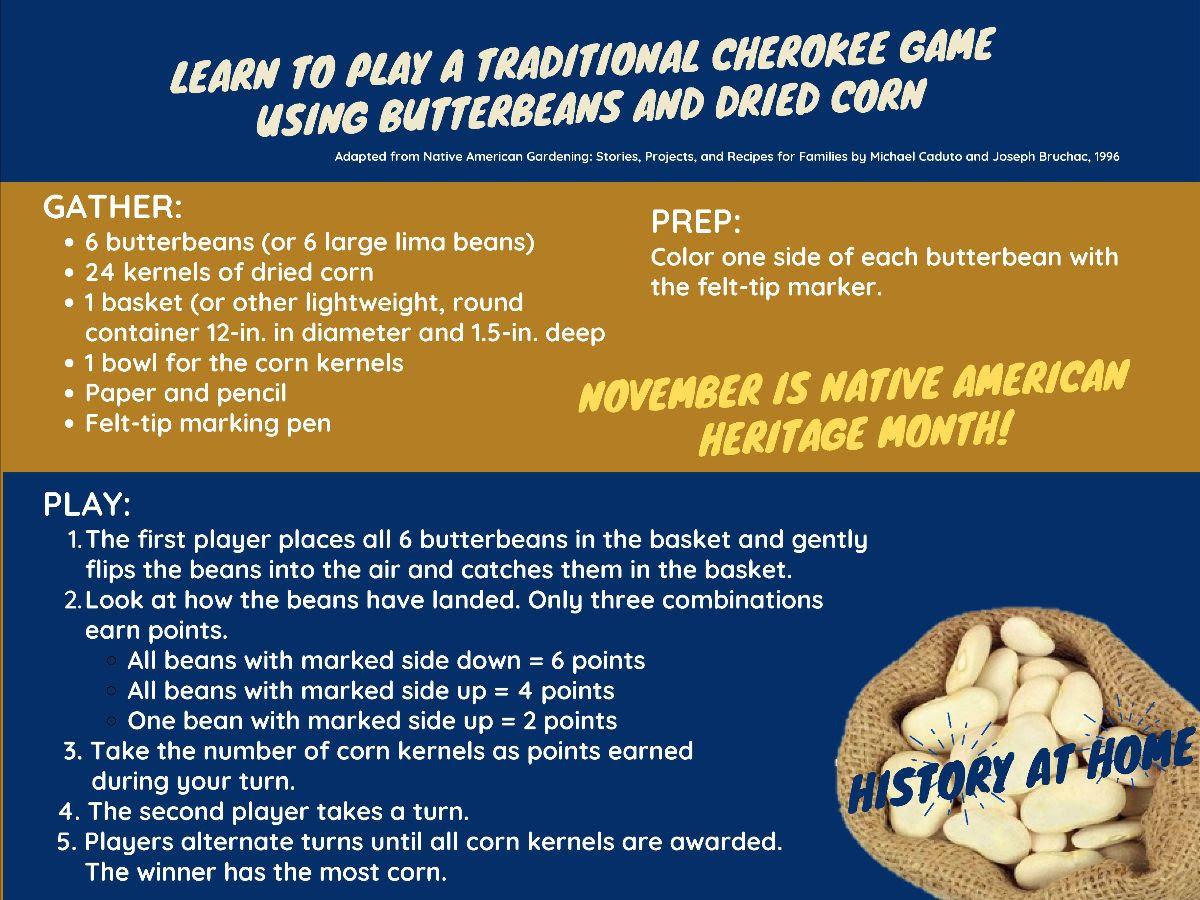
This is a variation on the tradition Cherokee Butterbean Game. It can be played by several individual players or several teams. Traditionally, this game uses three butterbeans that have been split in half. More…
From the Museum of the Cherokee Indian: Cherokee people began growing a form of corn two thousand years ago. By about a thousand years ago, or 1000 AD, they were growing corn and beans, as we know them today. Corn, beans, and squash was always grown together and was known as the “Three Sisters.” Beans restore nitrogen to the soil while corn depletes nitrogen. The vines of the beans and squash twined up the cornstalks. When corn and beans are eaten together, they provide complete proteins and amino acids for our diet.
Corn was so important to the Cherokee that they had important celebrations and ceremonies called “Green Corn Festivals.” The first of these was held in August, before the sweet corn was ready to eat. The last was held in October or November, when the
field corn was ready to be picked. At these ceremonies, people purified themselves physically and spiritually before feasting together. At this time, people got married and divorced. All old scores were settled and everyone started a new year together.
This is a variation on the tradition Cherokee Butterbean Game. It can be played by several individual players or several teams. Traditionally, this game uses three butterbeans that have been split in half. More…
From the Museum of the Cherokee Indian: Cherokee people began growing a form of corn two thousand years ago. By about a thousand years ago, or 1000 AD, they were growing corn and beans, as we know them today. Corn, beans, and squash was always grown together and was known as the “Three Sisters.” Beans restore nitrogen to the soil while corn depletes nitrogen. The vines of the beans and squash twined up the cornstalks. When corn and beans are eaten together, they provide complete proteins and amino acids for our diet.
Corn was so important to the Cherokee that they had important celebrations and ceremonies called “Green Corn Festivals.” The first of these was held in August, before the sweet corn was ready to eat. The last was held in October or November, when the
field corn was ready to be picked. At these ceremonies, people purified themselves physically and spiritually before feasting together. At this time, people got married and divorced. All old scores were settled and everyone started a new year together.
This is a variation on the tradition Cherokee Butterbean Game. It can be played by several individual players or several teams. Traditionally, this game uses three butterbeans that have been split in half. More…
From the Museum of the Cherokee Indian: Cherokee people began growing a form of corn two thousand years ago. By about a thousand years ago, or 1000 AD, they were growing corn and beans, as we know them today. Corn, beans, and squash was always grown together and was known as the “Three Sisters.” Beans restore nitrogen to the soil while corn depletes nitrogen. The vines of the beans and squash twined up the cornstalks. When corn and beans are eaten together, they provide complete proteins and amino acids for our diet.
Corn was so important to the Cherokee that they had important celebrations and ceremonies called “Green Corn Festivals.” The first of these was held in August, before the sweet corn was ready to eat. The last was held in October or November, when the
field corn was ready to be picked. At these ceremonies, people purified themselves physically and spiritually before feasting together. At this time, people got married and divorced. All old scores were settled and everyone started a new year together.
This is a variation on the tradition Cherokee Butterbean Game. It can be played by several individual players or several teams. Traditionally, this game uses three butterbeans that have been split in half. More…
From the Museum of the Cherokee Indian: Cherokee people began growing a form of corn two thousand years ago. By about a thousand years ago, or 1000 AD, they were growing corn and beans, as we know them today. Corn, beans, and squash was always grown together and was known as the “Three Sisters.” Beans restore nitrogen to the soil while corn depletes nitrogen. The vines of the beans and squash twined up the cornstalks. When corn and beans are eaten together, they provide complete proteins and amino acids for our diet.
Corn was so important to the Cherokee that they had important celebrations and ceremonies called “Green Corn Festivals.” The first of these was held in August, before the sweet corn was ready to eat. The last was held in October or November, when the
field corn was ready to be picked. At these ceremonies, people purified themselves physically and spiritually before feasting together. At this time, people got married and divorced. All old scores were settled and everyone started a new year together.
This is a variation on the tradition Cherokee Butterbean Game. It can be played by several individual players or several teams. Traditionally, this game uses three butterbeans that have been split in half. More…
From the Museum of the Cherokee Indian: Cherokee people began growing a form of corn two thousand years ago. By about a thousand years ago, or 1000 AD, they were growing corn and beans, as we know them today. Corn, beans, and squash was always grown together and was known as the “Three Sisters.” Beans restore nitrogen to the soil while corn depletes nitrogen. The vines of the beans and squash twined up the cornstalks. When corn and beans are eaten together, they provide complete proteins and amino acids for our diet.
Corn was so important to the Cherokee that they had important celebrations and ceremonies called “Green Corn Festivals.” The first of these was held in August, before the sweet corn was ready to eat. The last was held in October or November, when the
field corn was ready to be picked. At these ceremonies, people purified themselves physically and spiritually before feasting together. At this time, people got married and divorced. All old scores were settled and everyone started a new year together.
This is a variation on the tradition Cherokee Butterbean Game. It can be played by several individual players or several teams. Traditionally, this game uses three butterbeans that have been split in half. More…
From the Museum of the Cherokee Indian: Cherokee people began growing a form of corn two thousand years ago. By about a thousand years ago, or 1000 AD, they were growing corn and beans, as we know them today. Corn, beans, and squash was always grown together and was known as the “Three Sisters.” Beans restore nitrogen to the soil while corn depletes nitrogen. The vines of the beans and squash twined up the cornstalks. When corn and beans are eaten together, they provide complete proteins and amino acids for our diet.
Corn was so important to the Cherokee that they had important celebrations and ceremonies called “Green Corn Festivals.” The first of these was held in August, before the sweet corn was ready to eat. The last was held in October or November, when the
field corn was ready to be picked. At these ceremonies, people purified themselves physically and spiritually before feasting together. At this time, people got married and divorced. All old scores were settled and everyone started a new year together.
This is a variation on the tradition Cherokee Butterbean Game. It can be played by several individual players or several teams. Traditionally, this game uses three butterbeans that have been split in half. More…
From the Museum of the Cherokee Indian: Cherokee people began growing a form of corn two thousand years ago. By about a thousand years ago, or 1000 AD, they were growing corn and beans, as we know them today. Corn, beans, and squash was always grown together and was known as the “Three Sisters.” Beans restore nitrogen to the soil while corn depletes nitrogen. The vines of the beans and squash twined up the cornstalks. When corn and beans are eaten together, they provide complete proteins and amino acids for our diet.
Corn was so important to the Cherokee that they had important celebrations and ceremonies called “Green Corn Festivals.” The first of these was held in August, before the sweet corn was ready to eat. The last was held in October or November, when the
field corn was ready to be picked. At these ceremonies, people purified themselves physically and spiritually before feasting together. At this time, people got married and divorced. All old scores were settled and everyone started a new year together.
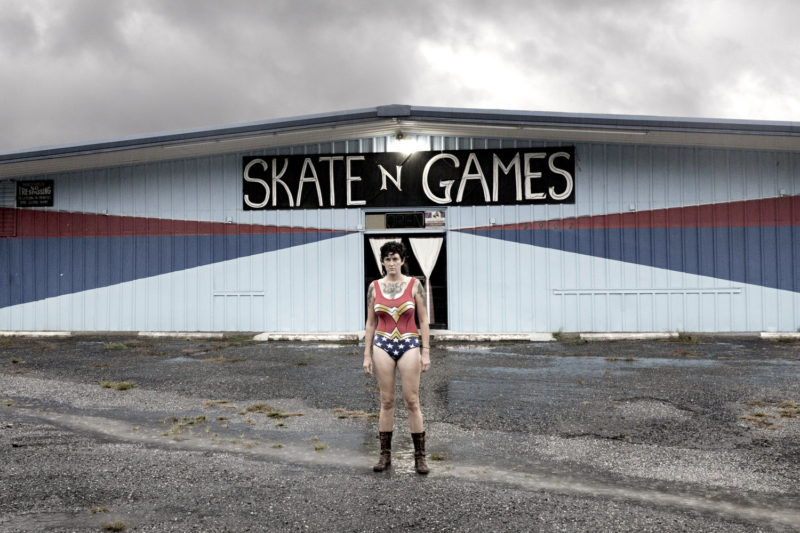
Come play with us at the Museum’s next game night! Stop by the welcome desk or café counter to pick up some socially distanced fun activities for individuals, pairs, or small groups. No reservations needed.
THIRD THURSDAYS
Each third Thursday, the Museum and community partners offer fun events for adults to socialize through interactive art-related activities, delicious drinks, and tasty treats.
Generous support for this program is provided by Art Bridges.
Cornwagon Thunder, SkateNGames from the Wonder Series, 2017, archival print on Epson Ultra Premium Presentation Matte paper, 10 × 15 inches. Museum purchase with funds provided by the 2019 Collectors’ Circle, 2020.02.01. © Cornwagon Thunder.
This is a variation on the tradition Cherokee Butterbean Game. It can be played by several individual players or several teams. Traditionally, this game uses three butterbeans that have been split in half. More…
From the Museum of the Cherokee Indian: Cherokee people began growing a form of corn two thousand years ago. By about a thousand years ago, or 1000 AD, they were growing corn and beans, as we know them today. Corn, beans, and squash was always grown together and was known as the “Three Sisters.” Beans restore nitrogen to the soil while corn depletes nitrogen. The vines of the beans and squash twined up the cornstalks. When corn and beans are eaten together, they provide complete proteins and amino acids for our diet.
Corn was so important to the Cherokee that they had important celebrations and ceremonies called “Green Corn Festivals.” The first of these was held in August, before the sweet corn was ready to eat. The last was held in October or November, when the
field corn was ready to be picked. At these ceremonies, people purified themselves physically and spiritually before feasting together. At this time, people got married and divorced. All old scores were settled and everyone started a new year together.

Join us for the virtual event of the year:
United Way’s Carpool Karaoke Challenge
The Fall Community Engagement Event is the one night a year when the community comes together in a fun, friendly competition to help raise awareness of our collective work to reduce the root causes and consequences of poverty. The event also serves as a call-to-action for both businesses and individuals to pledge their time and financial resources in support of the LIVE UNITED Fund.
Because of health concerns, this year’s event (The Carpool Karaoke Challenge) is being held virtually. Ten teams have pre-submitted their Carpool Karaoke videos, and each submission will be shown during the event. The kicker? This year you, the audience, will vote to decide 1st, 2nd, and 3rd place winners.
YOU’RE INVITED
WHO: You, your friends, family, and neighbors
WHAT: United Way’s Carpool Karaoke Challenge Event
WHERE: Virtual
WHEN: Friday, November 20, 4:30 pm-5:45 pm
COST: FREE. You’ll also be eligible to win cash door-prizes just for attending
*Seating for this event is limited, so don’t wait, register below — you must register to attend the event. A link will be shared with registered attendees the day before the event and will allow you access.
This is the one virtual event you’ll actually want to attend this year! Ten teams, 10 Carpool Karaoke submissions, 1 champion: YOU DECIDE!
This is a variation on the tradition Cherokee Butterbean Game. It can be played by several individual players or several teams. Traditionally, this game uses three butterbeans that have been split in half. More…
From the Museum of the Cherokee Indian: Cherokee people began growing a form of corn two thousand years ago. By about a thousand years ago, or 1000 AD, they were growing corn and beans, as we know them today. Corn, beans, and squash was always grown together and was known as the “Three Sisters.” Beans restore nitrogen to the soil while corn depletes nitrogen. The vines of the beans and squash twined up the cornstalks. When corn and beans are eaten together, they provide complete proteins and amino acids for our diet.
Corn was so important to the Cherokee that they had important celebrations and ceremonies called “Green Corn Festivals.” The first of these was held in August, before the sweet corn was ready to eat. The last was held in October or November, when the
field corn was ready to be picked. At these ceremonies, people purified themselves physically and spiritually before feasting together. At this time, people got married and divorced. All old scores were settled and everyone started a new year together.
This is a variation on the tradition Cherokee Butterbean Game. It can be played by several individual players or several teams. Traditionally, this game uses three butterbeans that have been split in half. More…
From the Museum of the Cherokee Indian: Cherokee people began growing a form of corn two thousand years ago. By about a thousand years ago, or 1000 AD, they were growing corn and beans, as we know them today. Corn, beans, and squash was always grown together and was known as the “Three Sisters.” Beans restore nitrogen to the soil while corn depletes nitrogen. The vines of the beans and squash twined up the cornstalks. When corn and beans are eaten together, they provide complete proteins and amino acids for our diet.
Corn was so important to the Cherokee that they had important celebrations and ceremonies called “Green Corn Festivals.” The first of these was held in August, before the sweet corn was ready to eat. The last was held in October or November, when the
field corn was ready to be picked. At these ceremonies, people purified themselves physically and spiritually before feasting together. At this time, people got married and divorced. All old scores were settled and everyone started a new year together.
This is a variation on the tradition Cherokee Butterbean Game. It can be played by several individual players or several teams. Traditionally, this game uses three butterbeans that have been split in half. More…
From the Museum of the Cherokee Indian: Cherokee people began growing a form of corn two thousand years ago. By about a thousand years ago, or 1000 AD, they were growing corn and beans, as we know them today. Corn, beans, and squash was always grown together and was known as the “Three Sisters.” Beans restore nitrogen to the soil while corn depletes nitrogen. The vines of the beans and squash twined up the cornstalks. When corn and beans are eaten together, they provide complete proteins and amino acids for our diet.
Corn was so important to the Cherokee that they had important celebrations and ceremonies called “Green Corn Festivals.” The first of these was held in August, before the sweet corn was ready to eat. The last was held in October or November, when the
field corn was ready to be picked. At these ceremonies, people purified themselves physically and spiritually before feasting together. At this time, people got married and divorced. All old scores were settled and everyone started a new year together.

 We’re kicking off Black Friday with out Black Watch Double Chocolate Milk Stout release. This popular limited-release brew is basically a brownie in a glass, overflowing with smooth and rich chocolatey flavors.
This is a variation on the tradition Cherokee Butterbean Game. It can be played by several individual players or several teams. Traditionally, this game uses three butterbeans that have been split in half. More…
From the Museum of the Cherokee Indian: Cherokee people began growing a form of corn two thousand years ago. By about a thousand years ago, or 1000 AD, they were growing corn and beans, as we know them today. Corn, beans, and squash was always grown together and was known as the “Three Sisters.” Beans restore nitrogen to the soil while corn depletes nitrogen. The vines of the beans and squash twined up the cornstalks. When corn and beans are eaten together, they provide complete proteins and amino acids for our diet.
Corn was so important to the Cherokee that they had important celebrations and ceremonies called “Green Corn Festivals.” The first of these was held in August, before the sweet corn was ready to eat. The last was held in October or November, when the
field corn was ready to be picked. At these ceremonies, people purified themselves physically and spiritually before feasting together. At this time, people got married and divorced. All old scores were settled and everyone started a new year together.
This is a variation on the tradition Cherokee Butterbean Game. It can be played by several individual players or several teams. Traditionally, this game uses three butterbeans that have been split in half. More…
From the Museum of the Cherokee Indian: Cherokee people began growing a form of corn two thousand years ago. By about a thousand years ago, or 1000 AD, they were growing corn and beans, as we know them today. Corn, beans, and squash was always grown together and was known as the “Three Sisters.” Beans restore nitrogen to the soil while corn depletes nitrogen. The vines of the beans and squash twined up the cornstalks. When corn and beans are eaten together, they provide complete proteins and amino acids for our diet.
Corn was so important to the Cherokee that they had important celebrations and ceremonies called “Green Corn Festivals.” The first of these was held in August, before the sweet corn was ready to eat. The last was held in October or November, when the
field corn was ready to be picked. At these ceremonies, people purified themselves physically and spiritually before feasting together. At this time, people got married and divorced. All old scores were settled and everyone started a new year together.
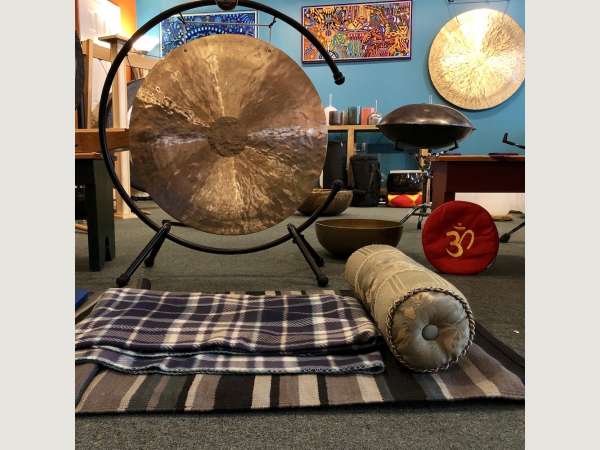
Weekly sound healing sessions are held here at Skinny Beats Sound Shop (4 Eagle St – Asheville, NC) every Saturday and Sunday at 11:00 AM. We lay yoga mats on the floor and lower the blinds to create a meditative space that helps you clear your mind and relax to our unique soundscape of crystal singing bowls, expansive gongs, handpans, didgeridoos, rainsticks, and more. We are currently limiting public sessions to 10 people. Please call for info regarding private sessions.
Weekly sound healing sessions are held here at Skinny Beats Sound Shop (4 Eagle St – Asheville, NC) every Saturday and Sunday at 11:00 AM. We lay yoga mats on the floor and lower the blinds to create a meditative space that helps you clear your mind and relax to our unique soundscape of crystal singing bowls, expansive gongs, handpans, didgeridoos, rainsticks, and more. We are currently limiting public sessions to 10 people. Please call for info regarding private sessions.
Law of Attraction (LOA) is a powerful guideline that can be utilized within our lives, and impacts ourselves as well as the collective consciousness. Let’s discuss practical, everyday ways we use and apply these tools in 2020! This session’s discussion will be, “Visualization exercises in LOA.” No advance prep, reading or knowledge required. Come with an open mind and heart, free of judgement, and let’s learn together! This is an inclusive, informal, interactive discussion for people will all levels of LOA understanding.
Some other topics we will cover in future discussions include:
– How to utilize LOA to manifest best case scenarios
– Gratitude practices as a tool in manifestation
– Honoring your own feelings, emotions and well being (and others) as a form of self care while manifesting
– Staying grounded, avoiding toxic positivity and spiritual bypassing when manifesting
– Visualization exercises in LOA
– Manifesting on specific themes (love, money, good health, etc.)
Discussions will be held by Kathryn Brahaney, myself. I’ve utilized Law of Attraction in having a significantly better recovery than anticipated from two major car accidents, in receiving a job offer that allowed me to relocate to Asheville, NC (where I live now) and in finding my favorite apartment to date in a city I wasn’t sure would be in my budget. I started these discussions to share my experience using Law of Attraction and to provide opportunities to learn more that are accessible and affordable. Looking forward to sharing more with you all and chatting about how we can use LOA in navigating the rest of 2020 and beyond!
Each month Adora will explore alchemical interventions and lead a guided meditation for healing and empowerment.
Pre-registration required:
https://www.eventbrite.com/e/mary-magdalene-monthly-sacred-circle-tickets-129486689173
Join us virtually on Discord. This week we will meet online in the meetup group’s Discord Server.
This group is for anyone interested in game development, 2D/3D graphics, animation, virtual reality, etc with the Unity game engine. All skills levels are welcome!

Weekly sound healing sessions are held here at Skinny Beats Sound Shop (4 Eagle St – Asheville, NC) every Saturday and Sunday at 11:00 AM. We lay yoga mats on the floor and lower the blinds to create a meditative space that helps you clear your mind and relax to our unique soundscape of crystal singing bowls, expansive gongs, handpans, didgeridoos, rainsticks, and more. We are currently limiting public sessions to 10 people. Please call for info regarding private sessions.
Weekly sound healing sessions are held here at Skinny Beats Sound Shop (4 Eagle St – Asheville, NC) every Saturday and Sunday at 11:00 AM. We lay yoga mats on the floor and lower the blinds to create a meditative space that helps you clear your mind and relax to our unique soundscape of crystal singing bowls, expansive gongs, handpans, didgeridoos, rainsticks, and more. We are currently limiting public sessions to 10 people. Please call for info regarding private sessions.
Taught by Amanda Klinikowski
Come play fun and socially distanced theatre games with Amanda on ACT’s Mainstage!
The safety of all students and teachers is important to ACT. Masks will be required at all times during the class and everyone will remain socially distanced for all games while inside on the ACT Mainstage with added ventilation. Parents are asked to remain in their cars nearby for the duration of class. We ask that all students arrive 10-15 minutes before their class time to accommodate temperature checks. This class is in-person, with no virtual option. If your child is medically unable to wear a mask for 50 minutes, please check out one of ACT’s many virtual class options instead!
Student Ages: 10-11 (Or with prior permission from Amanda Klinikowski. Please reach out to Amanda BEFORE registering for class!)
Weekly sound healing sessions are held here at Skinny Beats Sound Shop (4 Eagle St – Asheville, NC) every Saturday and Sunday at 11:00 AM. We lay yoga mats on the floor and lower the blinds to create a meditative space that helps you clear your mind and relax to our unique soundscape of crystal singing bowls, expansive gongs, handpans, didgeridoos, rainsticks, and more. We are currently limiting public sessions to 10 people. Please call for info regarding private sessions.
Taught by Amanda Klinikowski
Come play fun and socially distanced theatre games with Amanda on ACT’s Mainstage!
The safety of all students and teachers is important to ACT. Masks will be required at all times during the class and everyone will remain socially distanced for all games while inside on the ACT Mainstage with added ventilation. Parents are asked to remain in their cars nearby for the duration of class. We ask that all students arrive 10-15 minutes before their class time to accommodate temperature checks. This class is in-person, with no virtual option. If your child is medically unable to wear a mask for 50 minutes, please check out one of ACT’s many virtual class options instead!
Weekly sound healing sessions are held here at Skinny Beats Sound Shop (4 Eagle St – Asheville, NC) every Saturday and Sunday at 11:00 AM. We lay yoga mats on the floor and lower the blinds to create a meditative space that helps you clear your mind and relax to our unique soundscape of crystal singing bowls, expansive gongs, handpans, didgeridoos, rainsticks, and more. We are currently limiting public sessions to 10 people. Please call for info regarding private sessions.
The Rec n Roll mobile recreation unit is headed to your neighborhood! This free program offers all sorts of games and activities the whole family can enjoy. Come out and Play! *Weather Permitting.

Law of Attraction (LOA) is a powerful guideline that can be utilized within our lives, and impacts ourselves as well as the collective consciousness. Let’s discuss practical, everyday ways we use and apply these tools in 2020! This session’s discussion will be, “Visualization exercises in LOA.” No advance prep, reading or knowledge required. Come with an open mind and heart, free of judgement, and let’s learn together! This is an inclusive, informal, interactive discussion for people will all levels of LOA understanding.
Some other topics we will cover in future discussions include:
– How to utilize LOA to manifest best case scenarios
– Gratitude practices as a tool in manifestation
– Honoring your own feelings, emotions and well being (and others) as a form of self care while manifesting
– Staying grounded, avoiding toxic positivity and spiritual bypassing when manifesting
– Visualization exercises in LOA
– Manifesting on specific themes (love, money, good health, etc.)
Discussions will be held by Kathryn Brahaney, myself. I’ve utilized Law of Attraction in having a significantly better recovery than anticipated from two major car accidents, in receiving a job offer that allowed me to relocate to Asheville, NC (where I live now) and in finding my favorite apartment to date in a city I wasn’t sure would be in my budget. I started these discussions to share my experience using Law of Attraction and to provide opportunities to learn more that are accessible and affordable. Looking forward to sharing more with you all and chatting about how we can use LOA in navigating the rest of 2020 and beyond!