

Calendar of Events
Upcoming events and things to do in Asheville, NC. Below is a list of events for festivals, concerts, art exhibitions, group meetups and more.
Interested in adding an event to our calendar? Please click the green “Post Your Event” button below.
Monday, October
2, 2023
Buncombe County Special Collections call for proposals
Buncombe County Special Collections is excited to announce a call for proposals for the third year of its creative residency program.
This is an annual opportunity for artists in Buncombe County to create new, research-driven creative work using BCSC’s historic resources as source material and/or inspiration, and to present their work in the Carolina Record Shop, a dedicated exhibition space in the BCSC reading room. Artists age 18 and up, based in Buncombe County, working in any creative discipline are invited to apply.
Buncombe County Special Collections is looking for projects that will:
- Offer new, diverse perspectives on our shared history
- Identify and address gaps and/or amplify narratives that are historically underrepresented in the collection
- Educate and inspire non-traditional users of archives and special collections to engage with the collection in new ways.
More information (including the PDF of the call for proposals) is available at here. The 2024 Creative Residency is made possible in part by the Trust Fund for Buncombe County Public Libraries.
You can also visit Buncombe County Special Collections in the lower level of Pack Memorial to view the current exhibition in the Carolina Record Shop, “Belonging & Non-Belonging: The History and Future of Zines in Western North Carolina,” curated by 2023 resident Miles Lamberson.
Tuesday, October
3, 2023
Buncombe County Special Collections call for proposals
Biltmore Estate: Ciao! From Italy Sculptural Postcard Display
Art Exhibition: Eden Revisited
Exhibition: NEO MINERALIA
.jpg) Exhibition: Something earned, Something left behind
Exhibition: Something earned, Something left behind
 Exhibition: Crafting Denim
 A Stitch in Crime: Fiber Artist Circle and a True Crime Podcast
PARENTS LOUNGE LEAF Global Experience
Dark City Poet’s Society
TASH SULTANA: NORTH AMERICAN TOUR 2023
Opening Night with Johannes Moser and Marc-André Hamelin
Buncombe County Special Collections is excited to announce a call for proposals for the third year of its creative residency program.
This is an annual opportunity for artists in Buncombe County to create new, research-driven creative work using BCSC’s historic resources as source material and/or inspiration, and to present their work in the Carolina Record Shop, a dedicated exhibition space in the BCSC reading room. Artists age 18 and up, based in Buncombe County, working in any creative discipline are invited to apply.
Buncombe County Special Collections is looking for projects that will:
- Offer new, diverse perspectives on our shared history
- Identify and address gaps and/or amplify narratives that are historically underrepresented in the collection
- Educate and inspire non-traditional users of archives and special collections to engage with the collection in new ways.
More information (including the PDF of the call for proposals) is available at here. The 2024 Creative Residency is made possible in part by the Trust Fund for Buncombe County Public Libraries.
You can also visit Buncombe County Special Collections in the lower level of Pack Memorial to view the current exhibition in the Carolina Record Shop, “Belonging & Non-Belonging: The History and Future of Zines in Western North Carolina,” curated by 2023 resident Miles Lamberson.
Included with admission
Embark on a scenic journey across George Vanderbilt’s Italy with a large-scale outdoor display that combines brilliant botanical designs with authentic messages written by Vanderbilt himself.
Beautifully handcrafted of natural elements, each sculptural postcard depicts a location or landmark Vanderbilt visited more than a century ago. This captivating complement to Biltmore’s Italian Renaissance Alive exhibition reveals Vanderbilt’s passions for travel, culture, architecture, and art as well as his personal experience of such renowned Italian cities as Milan, Florence, Venice, Pisa, and Vatican City.
Adding to the charm and visual appeal of Ciao! From Italy—sure to be a hit among kids of all ages—is the G-scale model train that travels in and out of each postcard in this enlightening display!
|
Photo credit:
Sae Honda. Courtesy of the Artist.
NEO MINERALIA suggests that recent rock formations no longer fit within the traditional groups: Igneous, Metamorphic, and Sedimentary. Instead, the Anthropocene, the era of human influence on the climate and environment, has introduced two post-natural rocks: Synthetic and Digital.
NEO MINERALIA presents a selection of new geological specimens crafted by ten international artists exploring rocks as reflections of our effects on human and nonhuman ecologies. By embedding synthetic materials (plastics, e-waste) and layers of data points (critical, financial, social) into the craftsmanship of these artifacts, the artists transgress the definition of rocks, turning them from passive aggregates of minerals into metaphorical aggregates of data. Within their apparent “rockness” we can decode hopes, warnings, and speculative future scenarios.
The featured works stemming from places as varied as Mexico, Japan, Poland, and Australia (including a curated artists’ books library), collectively signal a new era of planetary and geological consciousness where we are asked to read, feel, and listen to rocks in new ways.
Photo credit:
J Diamond, “Pony II,” 2022. Courtesy of the Artist
Something earned, Something left behind is an exhibition of objecthood; a critical analysis of the transactional and political languages of everyday and culturally significant objects. This exhibition challenges a history of exclusion and inclusion of People of Color (POC) and their narratives from the canon of craft based on subject matter. It dissects this history’s origins and precedent as an economic transaction to gain access to white spaces.
Racial and ethnic identity influences the way individuals perceive themselves, the way others perceive them, and the way they choose to behave. For this reason, People of Color are expected to perform certain roles in order to fit into hegemonic institutions. These roles can be an active shrinking of themselves and the racialized part of them, or a personal exploitation of their racialized selves. This exhibition addresses and redresses the ways narrowed populations have been included, and the ways in which they have been asked to participate.
Together, this work creates space for and legitimizes POC narratives with depth and care. The exhibiting artists’ practices work against institutionalized expectations of POC work, expanding discourse and inserting new subjectivity into the canon of craft art. It engages with a community hungry for the revitalization and resuscitation of non-Western voices within art spaces. This exhibition challenges the expectations of art from artists of marginalized backgrounds and embraces a new subjectivity of interrogating one’s inherited experiences.
Photo credit:
Photograph by Bowery Blue Makers
Jeans – with their standardized pockets, rivets, and denim – are so much a part of everyday wardrobes that they are easy to overlook. Yet, in workshops across the nation, independent makers are reevaluating the garment and creating jeans by hand, using antiquated equipment and denim woven on midcentury looms. Crafting Denim explores how and why jeans have come to exist at the intersections of industry and craft, modernity, and tradition.
A product of industrial factory production for over a century, jeans are being recast by a new cohort of small-scale makers including craftspeople like Ryan Martin of W.H. Ranch Dungarees, Takayuki Echigoya of Bowery Blue Makers, and Sarah Yarborough and Victor Lytvinenko of Raleigh Denim, who favor choice materials and small-batch fabrication. The jeans they make merge craft traditions with industry and extend the conversation between hand and machine.
Each maker creates a distinctive product but shares a deep appreciation for materials, tools, history, and denim. These jeans are in dialogue with the past and in line with contemporary interests in sustainability. The small workshops featured here are sites of innovation and preservation, and visitors are invited to take a close look at an everyday item and imagine alternative contexts for making and living in our own clothes.
|
Calling all yarn/fiber/needlework artists! A Stitch in Crime |
LEAF isn’t just for kids! Join us in the Mezzanine while you wait for your youth to finish their class or just to hang out!
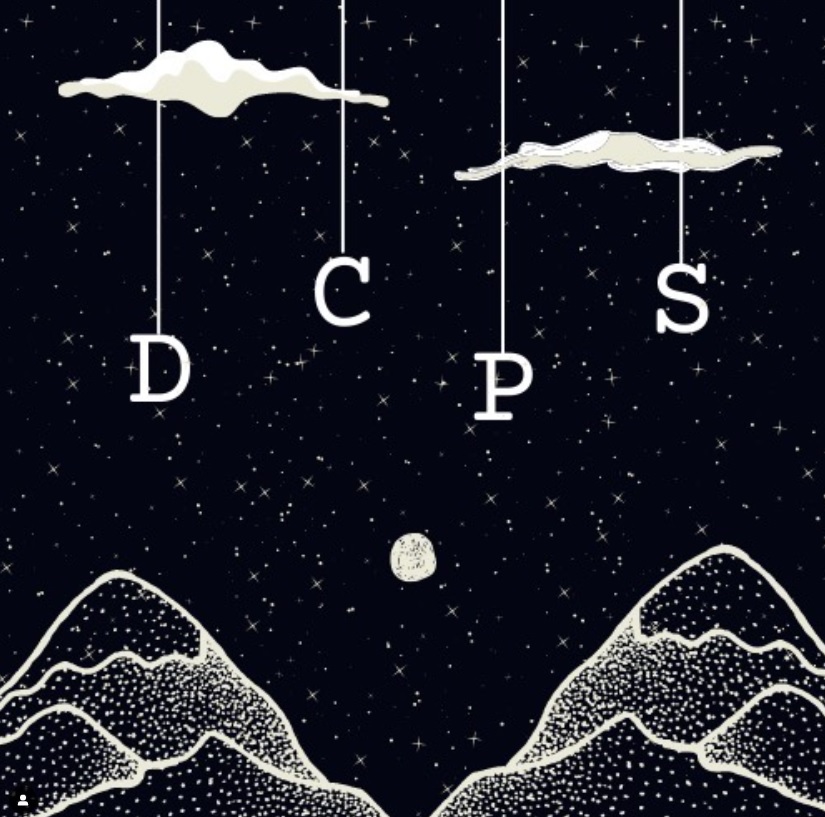
Great news for poets and poetry lovers: Dark City Poet’s Society is returning to the Black Mountain Library. DCPS is a completely free poetry group that is open to poets of all ages and experience levels. Join us at the Black Mountain Library from 6-7:30 p.m. on the first Tuesday of every month for our (respectful) critique group. DCPS will meet at BAD Craft from 6-7 p.m. on the third Tuesday for our monthly open mic Poetry Night. Find out more on Instagram @darkcitypoetssociety or contact the Black Mountain Library.

Gates open at 5:30pm
All Ages – not recommended for children under 4
RAIN OR SHINE
CLEAR BAGS ONLY
Artistic powerhouses cellist Johannes Moser, “radiant playing” (The Baltimore Sun), and pianist Marc-André Hamelin, praised for his “Near superhuman technical prowess” (New York Times), join forces for a memorable and illuminating duo recital. They perform works by Hamelin himself and Nadia Boulanger, a paragon of 20th century classical music, plus sonatas by Claude Debussy and César Franck, two of the great masterworks of the cello-piano repertoire.
Canadian cellist Johannes Moser won silver at the 2002 International Tchaikovsky Competition and has since had a phenomenal touring career, from soloing with the New York, Los Angeles, and BBC Philharmonics, as well as the orchestras of Chicago, London, Tokyo NHK, and Bayerischen Rundfunks, to chamber appearances with the likes of Emanuel Ax, Joshua Bell, Midori, and Menahem Pressler. He’s also a prolific recording artist and a champion of new music who is heavily involved in commissioning.
Marc-André Hamelin is not only a pianist known worldwide for his unrivaled blend of consummate musicianship and brilliant technique who has performed wide-ranging repertoire in the world’s great halls, he is a well-known composer with more than 30 pieces to his name, including the commissioned work for the 2017 Cliburn Competition (where he was also a juror). His discography spans more than 70 recordings which have earned him 11 Grammy® nominations, seven Juno Awards, and a Lifetime Achievement Award from the German Record Critics’ Association.
PROGRAM
Nadia Boulanger (1887-1979) 3 Pieces for Cello and Piano
Marc-André Hamelin (b.1961) Four Perspectives for Cello and Piano
Claude Debussy (1862-1918) Cello Sonata
— Intermission —
César Franck (1822-1890) Sonata in A major for Cello and Piano
Auditorium seating is reserved.
Wednesday, October
4, 2023
Buncombe County Special Collections call for proposals
Biltmore Estate: Ciao! From Italy Sculptural Postcard Display
Art Exhibition: Eden Revisited
Exhibition: NEO MINERALIA
Exhibition: Something earned, Something left behind
Exhibition: Crafting Denim
Beyond the Lens: Photorealist Perspectives on Looking, Seeing, and Painting
Romare Bearden: Ways of Working Exhibition
The Art of Food: From the Collections of Jordan D. Schnitzer and His Family Foundation
Western North Carolina Glass: Selections from the Collection
Family Ukulele Lessons with Asheville Ukulele Society
Evolution of Modular Synthesis w/ Chris Meyer and Dave Rossum
Music to Your Ears Discussion Series: Led Zeppelin’s HOUSES OF THE HOLY
The Last Revel
Buncombe County Special Collections is excited to announce a call for proposals for the third year of its creative residency program.
This is an annual opportunity for artists in Buncombe County to create new, research-driven creative work using BCSC’s historic resources as source material and/or inspiration, and to present their work in the Carolina Record Shop, a dedicated exhibition space in the BCSC reading room. Artists age 18 and up, based in Buncombe County, working in any creative discipline are invited to apply.
Buncombe County Special Collections is looking for projects that will:
- Offer new, diverse perspectives on our shared history
- Identify and address gaps and/or amplify narratives that are historically underrepresented in the collection
- Educate and inspire non-traditional users of archives and special collections to engage with the collection in new ways.
More information (including the PDF of the call for proposals) is available at here. The 2024 Creative Residency is made possible in part by the Trust Fund for Buncombe County Public Libraries.
You can also visit Buncombe County Special Collections in the lower level of Pack Memorial to view the current exhibition in the Carolina Record Shop, “Belonging & Non-Belonging: The History and Future of Zines in Western North Carolina,” curated by 2023 resident Miles Lamberson.
Included with admission
Embark on a scenic journey across George Vanderbilt’s Italy with a large-scale outdoor display that combines brilliant botanical designs with authentic messages written by Vanderbilt himself.
Beautifully handcrafted of natural elements, each sculptural postcard depicts a location or landmark Vanderbilt visited more than a century ago. This captivating complement to Biltmore’s Italian Renaissance Alive exhibition reveals Vanderbilt’s passions for travel, culture, architecture, and art as well as his personal experience of such renowned Italian cities as Milan, Florence, Venice, Pisa, and Vatican City.
Adding to the charm and visual appeal of Ciao! From Italy—sure to be a hit among kids of all ages—is the G-scale model train that travels in and out of each postcard in this enlightening display!
|
Photo credit:
Sae Honda. Courtesy of the Artist.
NEO MINERALIA suggests that recent rock formations no longer fit within the traditional groups: Igneous, Metamorphic, and Sedimentary. Instead, the Anthropocene, the era of human influence on the climate and environment, has introduced two post-natural rocks: Synthetic and Digital.
NEO MINERALIA presents a selection of new geological specimens crafted by ten international artists exploring rocks as reflections of our effects on human and nonhuman ecologies. By embedding synthetic materials (plastics, e-waste) and layers of data points (critical, financial, social) into the craftsmanship of these artifacts, the artists transgress the definition of rocks, turning them from passive aggregates of minerals into metaphorical aggregates of data. Within their apparent “rockness” we can decode hopes, warnings, and speculative future scenarios.
The featured works stemming from places as varied as Mexico, Japan, Poland, and Australia (including a curated artists’ books library), collectively signal a new era of planetary and geological consciousness where we are asked to read, feel, and listen to rocks in new ways.
Photo credit:
J Diamond, “Pony II,” 2022. Courtesy of the Artist
Something earned, Something left behind is an exhibition of objecthood; a critical analysis of the transactional and political languages of everyday and culturally significant objects. This exhibition challenges a history of exclusion and inclusion of People of Color (POC) and their narratives from the canon of craft based on subject matter. It dissects this history’s origins and precedent as an economic transaction to gain access to white spaces.
Racial and ethnic identity influences the way individuals perceive themselves, the way others perceive them, and the way they choose to behave. For this reason, People of Color are expected to perform certain roles in order to fit into hegemonic institutions. These roles can be an active shrinking of themselves and the racialized part of them, or a personal exploitation of their racialized selves. This exhibition addresses and redresses the ways narrowed populations have been included, and the ways in which they have been asked to participate.
Together, this work creates space for and legitimizes POC narratives with depth and care. The exhibiting artists’ practices work against institutionalized expectations of POC work, expanding discourse and inserting new subjectivity into the canon of craft art. It engages with a community hungry for the revitalization and resuscitation of non-Western voices within art spaces. This exhibition challenges the expectations of art from artists of marginalized backgrounds and embraces a new subjectivity of interrogating one’s inherited experiences.
Photo credit:
Photograph by Bowery Blue Makers
Jeans – with their standardized pockets, rivets, and denim – are so much a part of everyday wardrobes that they are easy to overlook. Yet, in workshops across the nation, independent makers are reevaluating the garment and creating jeans by hand, using antiquated equipment and denim woven on midcentury looms. Crafting Denim explores how and why jeans have come to exist at the intersections of industry and craft, modernity, and tradition.
A product of industrial factory production for over a century, jeans are being recast by a new cohort of small-scale makers including craftspeople like Ryan Martin of W.H. Ranch Dungarees, Takayuki Echigoya of Bowery Blue Makers, and Sarah Yarborough and Victor Lytvinenko of Raleigh Denim, who favor choice materials and small-batch fabrication. The jeans they make merge craft traditions with industry and extend the conversation between hand and machine.
Each maker creates a distinctive product but shares a deep appreciation for materials, tools, history, and denim. These jeans are in dialogue with the past and in line with contemporary interests in sustainability. The small workshops featured here are sites of innovation and preservation, and visitors are invited to take a close look at an everyday item and imagine alternative contexts for making and living in our own clothes.
Throughout the history of painting from the mid-19th century forward, artists have used an
endless variety of approaches to record their world. Beyond the Lens: Photorealist Perspectives on Looking, Seeing, and Painting continues this thread, offering an opportunity to explore a singular and still forceful aspect of American art. Photorealism shares many of the approaches of historical and modernist realism, with a twist. The use of the camera as a basic tool for organizing visual information in advance of painterly expression is now quite common, but Photorealists embraced the camera as the focal point in their creative process.
Beyond the Lens presents key works from the collection of Louis K. and Susan Pear Meisel,
bringing together paintings and works on paper dating from the 1970s to the present to focus on this profoundly influential art movement. The exhibition includes work by highly acclaimed formative artists of the movement such as Charles Bell, Robert Bechtle, Tom Blackwell, Richard Estes, Audrey Flack, and Ralph Goings as well as paintings by the successive generations of Photorealist artists Anthony Brunelli, Davis Cone, Bertrand Meniel, Rod Penner, and Raphaella Spence. Featured artworks in the exhibition include diverse subject matters, but the primary focus is on the common and every day: urban scenes, “portraits” of cars, trucks, and motorcycles, still life compositions using toys, food, candy wrappers, and salt and pepper shakers. All provide opportunities for virtuoso studies in how light, reflection, and the camera as intermediary shapes our perception of the material world.
This multigenerational survey demonstrates how the 35-mm camera, and later technological
advances in digital image-making, informed and impacted the painterly gesture. Taken together, the paintings and works on paper in Beyond the Lens show how simply spellbinding these virtuosic works of art can be.
“Beyond the Lens offers a fascinating look into the Photorealism movement and delves into the profound connection between the artists’ observation and creative process,” says Pamela L. Myers, Executive Director of Asheville Art Museum. “We are delighted to present this curated collection of artworks encapsulating the creative vision and technical precision that defines this artistic genre.”
Photorealism found its roots in the late 1960s in California and New York, coexisting with an explosion of new ideas in art-making that included Conceptual, Pop, Minimalism, Land and Performance Art. At first, representational realism coexisted with the thematic and conceptual explosion but was eventually relegated to the margins regarding critical and curatorial attention. Often misunderstood and sometimes negatively criticized or lampooned as a betrayal of modernism’s commitment to abstraction, the artists involved in Photorealism remained committed explorers of the trail they had blazed. In the decades of the late twentieth century and early twenty-first century, realistic and symbolic painting experienced a renaissance, as contemporary artists are increasingly drawn to narrative and storytelling. Concurrently, using a camera as a preparatory tool equally legitimate and valuable as pencils and pens has made the rubric of Photorealism increasingly relevant.
This exhibition is organized by the Asheville Art Museum and guest curated by Terrie Sultan.
This exhibition is sponsored in part by Jim and Julia Calkins Peterson.
Romare Bearden (Charlotte, NC 1911–1988 New York, NY), African American writer and artist, is renowned for his collages. He constantly experimented with various techniques to achieve his artistic goals throughout his career. This exhibition highlights works on paper and explores his most frequently used mediums, including screen-printing, lithography, hand-colored etching, collagraph, monotype, relief print, photomontage, and collage.
Bearden’s work reflects his improvisational approach to his practice. He considered his process akin to that of jazz and blues composers. Starting with an open mind, he would let an idea evolve spontaneously.
“Romare Bearden: Ways of Working highlights Bearden’s unique artistic practice and masterful storytelling through art,” says Pamela L. Myers, Executive Director of the Asheville Art Museum. “We are thrilled to collaborate with Jerald Melberg Gallery to present these extraordinary works on paper in conversation with Bearden’s collage Sunset Express, 1984 in the Museum Collection (on view in the Museum’s SECU Collection Hall). This exhibition will also provide a glimpse into the cultural histories and personal interests that influenced his art-making practice, and we hope it encourages introspection and dialogue with our visitors.”
Jerald Melberg states, “Romare Bearden’s groundbreaking artistic practice continues to captivate audiences worldwide. With an unparalleled legacy of creativity and innovation, Bearden’s contributions to art remain deeply influential years beyond his life.” We have enjoyed organizing this exhibition with the Asheville Art Museum to showcase his artistic genius and inspire visitors from the Western North Carolina region and beyond.”
This exhibition is made possible in part by the Judy Appleton Fund. Many thanks to the Jerald Melberg Gallery for the loan of these important artworks and to Mary and Jerald Melberg for their long-standing support of the arts, artists, and the Asheville Art Museum.
The Art of Food features works from important postwar artists, like Robert Rauschenberg, Roy Lichtenstein, John Baldessari, Wayne Thiebaud, Ed Ruscha, Andy Warhol, David Hockney, and Jasper Johns, alongside the work of contemporary artists, like Alison Saar, Lorna Simpson, Enrique Chagoya, Rachel Whiteread, and Jenny Holzer, among others.
The Art of Food features more than 100 works in mediums that include drawings, paintings, photographs, prints, sculptures, and ceramics by 37 artists.
Each artist has a unique means of depicting food in their work that, when seen alongside others, creates a nuanced representation of the complex place food holds in everyday life. Cross-historical resonances between artists in the exhibition spark novel meditations on food and its discontents, while speaking to a broad range of audiences.
|
Western North Carolina is important in the history of American glass art. Several artists of the Studio Glass Movement came to the region, including its founder Harvey K. Littleton. Begun in 1962 in Wisconsin, it was a student of Littleton’s that first came to the area in 1965 and set up a glass studio at the Penland School of Craft in Penland, North Carolina. By 1967, Mark Peiser was the first glass artist resident at the school and taught many notable artists, like Jak Brewer in 1968 and Richard Ritter who came to study in 1971. By 1977, Littleton retired from teaching and moved to nearby Spruce Pine, North Carolina and set up a glass studio at his home. Since that time, glass artists like Ken Carder, Rick and Valerie Beck, Shane Fero, and Yaffa Sikorsky and Jeff Todd—to name only a few—have flocked to the area to reside, collaborate, and teach, making it a significant place for experimentation and education in glass. The next generation of artists like Hayden Wilson and Alex Bernstein continue to create here. The Museum is dedicated to collecting American studio glass and within that umbrella, explores the work of Artists connected to Western North Carolina. Exhibitions, including Intersections of American Art, explore glass art in the context of American Art of the 20th and 21st centuries. A variety of techniques and a willingness to push boundaries of the medium can be seen in this selection of works from the Museum’s Collection. |
|
Come learn to play the ukulele with the Asheville Ukulele Society. Lessons are free, but space is limited. To register, sign up at the library front desk or call 828-250-4738. Open to everyone elementary school-age & up. Parents of children ages 15 & under must attend with their children. Parents of teens are encouraged to come learn together! |
The Bob Moog Foundation is excited to announce our upcoming event, The Evolution of Modular Synthesis, featuring modular synthesis educator, musician, and inventor of vector synthesis, Chris Meyer, and legendary synthesizer pioneer and innovator Dave Rossum!
The event will feature Michelle Moog-Koussa, Executive Director of the Bob Moog Foundation, interviewing Meyer and Rossum about the fascinating evolution and recent resurgence of modular synthesis from 1960s to present, followed by a concert with Meyer using his contemporary modular setup and a question and answer session with the audience.
Due to current ticket demand, the event will take place on Wednesday, October 4, 2023 at 7pm at the Citizen Vinyl i n Asheville, NC. Tickets for the Asheville event are $20.
SPACE IS LIMITED.
A livestream of the event will also be offered.
Access to the livestream will be pay-what-you-can, starting at $10. Tickets to the livestream can be purchased here: https://liveatmoogseum.org/livestream. A recording of the livestream will be available for 72 hours after the event for all livestream ticket holders.
More details from our press release:
Chris Meyer has led three lives in the music industry: creating electronic music instruments and tools for companies like Sequential, Digidesign, and Roland (including inventing Vector Synthesis); teaching electronic music synthesis through numerous magazine articles, online courses, and his website LearningModular.com; and now performing his own unique vision of emotional, impressionistic electronic music under the name Alias Zone. He is also the co-author of the acclaimed, Patch & Tweak with Kim Bjørn.
Each of Chris’ compositions is based on a story that informs its creation. He starts with a sonic image that captures his imagination: a complex sound, an alluring rhythm, or a field recording that documents a specific time and place. The story they hint at then becomes the touchstone that determines each layer Chris adds to the piece, be they richly textured ambient environments, unique sounds he programs on his modular synthesizers, exotic percussion, and more. His goal is to convey emotions of mystery, longing, and joy, creating a deeply human experience. In contrast to many electronic music composers who focus primarily on studio work, virtually all Alias Zone tracks are conceived as live performances, and are then later edited into album form.
Fifty years ago, Dave Rossum dropped out of graduate school to found E-mu Systems. In his role as E-mu’s Chief Wizard, he invented numerous modular synthesis technologies including ultra-stable oscillators, modular sequencers, polyphonic keyboards and analog synthesizer chips, before pioneering Digital Sampling Synthesis with the Emulator, and later the Drumulator, the SP-1200, and the Proteus. Dave also assisted other companies in their groundbreaking products, such as the Oberheim 4-voice and the Sequential Prophet 5.
In 1994, E-mu was acquired by Creative Labs, and Dave became their Chief Scientist. During the Creative years, E-mu produced the E-64, ESI, Emulator IV, and other well known samplers. Dave left Creative in 2011 for a 5 year stint as the architect of DSP ICs for cell phone audio. Then in 2016, Dave founded Rossum Electro-Music, signed on as a Technical Fellow at Universal Audio, and began designing analog integrated circuits for Sound Semiconductor. When he’s not inventing new synthesis technologies, you’ll find Dave running marathons, SCUBA diving, or backpacking in the High Sierra with his standard poodle, Lily.
________________________
Bob Moog was an innovator in the field of modular synthesis and beyond. The Bob Moog Foundation celebrates synthesis in all of its forms, and through this event celebrates the renaissance of modular synthesis. The organization’s interactive Moogseum, located in Asheville, NC, recently added Patching Sound, an exhibit that teaches visitors of all ages how to create sound with a modular synthesizer.
“The Bob Moog Foundation is thrilled to provide this unique opportunity for people from all over the world to delve into the foundational aspects of modular synthesis, trace its use over many decades, and to explore the music that results from it,” noted Michelle Moog-Koussa, Executive Director of the Bob Moog Foundation. “We are honored to be examining this subject with two renowned figures from synthesizer industry. The pairing of Chris Meyer and Dave Rossum will provide for unique insights and reflections into this fascinating realm of sonic expression.”
TWO SPECIAL EVENTS –
MUSIC TO YOUR EARS: Houses of the Holy
MUSIC MOVIE MONDAY: The Song Remains the Same
For Immediate Release: Two special events in Asheville’s River Arts District celebrate
peak-period Led Zeppelin. On Wednesday October 4, Asheville Guitar Bar hosts the
latest entry in Bill Kopp’s Music to Your Ears discussion series, featuring Led
Zeppelin’s landmark 1973 LP Houses of the Holy. And on Monday October 9, Kopp’s Music Movie Monday series at Grail
Movie House will feature a screening of the Led Zeppelin concert film The Song Remains the Same, with a discussion to
follow.
In the early to mid 1970s, Led Zeppelin reigned supreme in the world of rock. Rising
from the ashes of seminal ‘60s band the Yardbirds, Led Zeppelin drew upon classic
American blues for its sound, but added levels of power, sophistication, nuance and
(sometimes) malevolence to create something remarkable and new. Every one of their
studio albums – eight released between 1969 and 1979 – went multi-platinum, often many
times over. Led Zeppelin concert tours were emblematic of the era, with the band playing
ot packed arenas across the globe. The excess of that era was on full display: the group
traveled in its own branded jet, and tales of backstage and hotel room mayhem were
legion.
But at the center of it all was the music. And While most all of Led Zeppelin’s music
enjoys critical acclaim commensurate with its commercial appeal, the band was arguably
at the pinnacle of its creativity on 1973’s Houses of the Holy. The music effectively
melded the subtlety and grace of Jimmy Page’s acoustic guitar with the crushing roar of
his electric work, and it all worked closely with Robert Plant’s distinctive vocals, John
Paul Jones’ underrated bass and keyboard playing, and the thunderous, commanding
percussion of John Bonham.
Houses of the Holy features several hit album tracks including “No Quarter,” “The Rain Song, “D’yer Maker” and “Over the
Hills and Far Away.” And the record holds together as a cohesive, complete work as well.
Touring in support of Houses of the Holy, Led Zeppelin would document its live show by filming a documentary, The Song
Remains the Same. Crews captured the sound and visuals of the band’s multi-night engagement at New York City’s Madison
Square Garden. The film was released to theaters in 1976; directed by Peter Clifton and Joe Massot, the film also included
arty, impressionistic fantasy sequences; it’s very much an artifact of the hedonistic 1970s.
The October 4 event at Asheville Guitar Bar will feature a discussion of Houses of the Holy, led by author, speaker and
music journalist Bill Kopp, joined by special guest Christopher Everett, lead guitarist with Hustle Souls. And the October 9
screening of The Song Remains the Same will include a moderated discussion led by Kopp. Both events are sponsored by
AshevilleFM. Don’t miss this special opportunity to convene with your fellow rock fans for these two interactive evenings.
The Last Revel
After a 5 year hiatus, The original trio has reunited to produce new music with a revitalized appreciation for camaraderie and creativity. Now living in three different cities across the US, these three independently talented singer-songwriters bring together the sounds of Nashville TN, Minneapolis MN, & Bozeman MT to create Front Porch Americana soundscapes that are equally original as they are timeless. Drawing influence from their salt-of-the-earth Midwest ethos the band’s songs so naturally blend the genres of Folk, Old Time String-Band, and Indie Rock to create a sound that echoes the current heartbeat of America.
The Last Revel utilizes their multi-instrumental abilities to bring the full spectrum of modern Americana to life with lush arrangements of three-part vocal harmonies, acoustic and electric guitars, upright bass, fiddle, and 5-string banjo to consistently support impassioned performances of their honest and heartfelt songwriting.
Thursday, October
5, 2023
Buncombe County Special Collections call for proposals
Slice of Life Comedy Open Mic + Feature Comedy at Pulp Lounge
Weaverville Art Safari
Biltmore Estate: Ciao! From Italy Sculptural Postcard Display
Buncombe County Special Collections is excited to announce a call for proposals for the third year of its creative residency program.
This is an annual opportunity for artists in Buncombe County to create new, research-driven creative work using BCSC’s historic resources as source material and/or inspiration, and to present their work in the Carolina Record Shop, a dedicated exhibition space in the BCSC reading room. Artists age 18 and up, based in Buncombe County, working in any creative discipline are invited to apply.
Buncombe County Special Collections is looking for projects that will:
- Offer new, diverse perspectives on our shared history
- Identify and address gaps and/or amplify narratives that are historically underrepresented in the collection
- Educate and inspire non-traditional users of archives and special collections to engage with the collection in new ways.
More information (including the PDF of the call for proposals) is available at here. The 2024 Creative Residency is made possible in part by the Trust Fund for Buncombe County Public Libraries.
You can also visit Buncombe County Special Collections in the lower level of Pack Memorial to view the current exhibition in the Carolina Record Shop, “Belonging & Non-Belonging: The History and Future of Zines in Western North Carolina,” curated by 2023 resident Miles Lamberson.
10.05.23 The Orange Peel’s Comedy Basement PULP
What: Stand up Comedy at The Orange Peel’s Pulp Lounge
When: Thursday October 5, 2023. 8p-10p, doors at 7:30p
Where: The Orange Peel’s Comedy Basement, Pulp Lounge103 Hilliard Ave, Downtown Asheville
Tickets: $15 (available at door or The Orange Peel website)
Cocktails available while you laugh the night away to some of the area’s best Stand Up Comics in a ridiculously fun adult environment!! Free snacks while availability lasts!
There is a comedy open mic! [Performing comics get 3-5m of stage time, FREE entry and FREE snacks. Contact Michele Scheve at [email protected] for info! ]
Hilliary will make you cry with laughter with her larger than life personality!! Voted Asheville’s Favorite comic in the Mountain Xpress. Film debut in the Netflix original Dumplin’ as Aunt Lucy, or “Jennifer Anniston’s fat sister,” In Austin Film Festival winning movie When We Last Spoke with Cloris Leachman, now streaming on Amazon Prime. https ://youtu.be/legRwEg4j-o
Guest host for this show is the fantastic Peter Smith-McDowell!! Petey was voted one of Asheville’s favorite comics in the Mountain Xpress! He has been tr aveling around the country telling jokes since 2009. Besides his standup comedy, Petey is Asheville native and known for his hysterical Asheville memes on Instagram : instagram.com/peteysmithmcdowell
The Weaverville Art Safari is one of the original studio tours in the Asheville Area and one of the longest-running such events in Western North Carolina. It is a juried studio tour that takes place twice a year during the last weekend of April and the first weekend of November. It is widely recognized for both the quality of work on display and for the unique opportunity it provides the public to ramble through this beautiful area, meeting our artists and seeing the spaces where they work and live. It is a favorite of both locals and visitors and draws thousands of art lovers to our area each year!
Included with admission
Embark on a scenic journey across George Vanderbilt’s Italy with a large-scale outdoor display that combines brilliant botanical designs with authentic messages written by Vanderbilt himself.
Beautifully handcrafted of natural elements, each sculptural postcard depicts a location or landmark Vanderbilt visited more than a century ago. This captivating complement to Biltmore’s Italian Renaissance Alive exhibition reveals Vanderbilt’s passions for travel, culture, architecture, and art as well as his personal experience of such renowned Italian cities as Milan, Florence, Venice, Pisa, and Vatican City.
Adding to the charm and visual appeal of Ciao! From Italy—sure to be a hit among kids of all ages—is the G-scale model train that travels in and out of each postcard in this enlightening display!