

Calendar of Events
Upcoming events and things to do in Asheville, NC. Below is a list of events for festivals, concerts, art exhibitions, group meetups and more.
Interested in adding an event to our calendar? Please click the green “Post Your Event” button below.
Buncombe County’s residents, especially those living in and at the edge of poverty, have been able to access valuable, life-saving emergency assistance benefits through Eblen Charities. For many years now, Eblen Charities has partnered with Buncombe County Health and Human Services (BCHHS) to administer the Emergency Assistance, Crisis Intervention, and Low Income Energy Assistance programs. Due to an increase in need from our neighbors and challenges with processing benefits between state and partner agency systems, BCHHS transitioned the administration of these programs from Eblen Charities to the County on November 13, 2023.
We recognize that this a change for our community as Eblen Charities has provided this assistance for many years and has been a vital resource for our neighbors in crisis. BCHHS began answering calls and processing online applications on November 13, 2023. Beginning December 1, 2023, with the start of Low Income Energy Assistance application processing, BCHHS will start taking in-person requests at 40 Coxe Ave. in downtown Asheville.
Low Income Energy Assistance provides a one-time annual vendor payment to help eligible families pay their heating expense. Households containing a person age 60 or older or disabled receiving services can apply starting December 1, 2023. All households can apply starting January 1, 2024. Low Income Energy Assistance applications are accepted until March 31, 2024 or until funds are exhausted.
To qualify for the Low Income Energy Assistance Program, households that meet the following criteria may be eligible:
- Have at least one U.S. citizen or non-citizen who meets the eligibility criteria.
- Meet income requirements.
- Be responsible for its heating costs.
The Crisis Intervention Program serves individuals and families who are experiencing or are in danger of experiencing a heating- or cooling-related crisis.
To qualify for the Crisis Intervention Program, households that meet the following criteria may be eligible:
- Have at least one U.S. citizen or non-citizen who meets the eligibility criteria.
- Meet the income requirements.
- Have an energy related crisis.
- Have a utility statement that shows how much is owed to alleviate the crisis.
For those who have previously received Low Income Energy Assistance Program assistance, the North Carolina Department of Health and Human Services will begin notifying eligible households by mail beginning November 19, 2023. Households will have 10 days to report any changes to their household. Applicants can report changes by contacting the BCHHS office or by making changes to the form that was mailed to you and return it to BCHHS, located at 40 Coxe Ave. in Downtown Asheville. If no changes are reported, the information from last year will be used to process this year’s automated Low Income Energy Assistance payment.
If you are interested in applying for these Energy Assistance benefits, you can quickly apply online at www.epass.nc.gov. If you would like to apply over the phone, have general questions about energy assistance, or need to check on the status of your case, please call us at (828) 250-6330. Beginning December 1, 2023, you may also visit us in person at 40 Coxe Ave. in downtown Asheville. Please bring your parking ticket with you inside of the building for free parking.
Buncombe County also will administer Emergency Assistance, which Buncombe County Social Work Services distributes as funds become available to our community. To apply for Emergency Assistance, go online to epass.nc.gov, call Buncombe County at 828-250-6330, or apply in person at 40 Coxe Ave.
BCHHS will continue to partner with Eblen Charities to assist families and individuals in our community during times of crisis and hardship. For more information on the services that are available in our community, visit www.buncombecounty.org/hhs.
Food Scraps Drop Off
The City of Asheville, in partnership with Buncombe County and the Natural Resources Defense Council, is offering a FREE Food Scrap Drop-Off program in two locations for all Buncombe County residents. This organic matter will be collected and turned into good clean compost, keeping it OUT of our landfill and reducing greenhouse gas emissions.
Register for Food Scraps Drop Off


Need a handy kitchen countertop food scrap bin? Let us know on the registration form! We’ll be having bin giveaways at city and county facilities and would love to give you one.
Locations
Buncombe County Landfill – Convenience Center
85 Panther Branch Road, Alexander
-
- Monday-Friday, 8 a.m. – 4:30 p.m.
- Saturday, 8 a.m. – 12:30 pm
Murphy Oakley Community Center and Library – “Food Scrap Bin Shelters” on the east side of the parking lot
749 Fairview Road, Asheville
-
- Dawn – Dusk
Stephens-Lee Recreation Center “Food Scrap Shed” next to the Community Garden on the North side of the parking lot
30 Washington Carver Avenue, Asheville
-
- Monday – Friday, 7 a.m. – 6 p.m.
- Saturday, 8 a.m. – 2 p.m.
- Sunday, 12 – 4 p.m.
West Asheville Library – “Food Scrap Bin Shelters” on the south side of the building
942 Haywood Road, Asheville
-
- Library open hours
Food Scraps Drop Off
The City of Asheville, in partnership with Buncombe County and the Natural Resources Defense Council, is offering a FREE Food Scrap Drop-Off program in
two locations for all Buncombe County residents. This organic matter will be collected and turned into good clean compost, keeping it OUT of our landfill and reducing greenhouse gas emissions.
Register for Food Scraps Drop Off
Need a handy kitchen countertop food scrap bin? Let us know on the registration form! We’ll be having bin giveaways at city and county facilities and would love to give you one.
Locations
Stephens-Lee Recreation Center “Food Scrap Shed” next to the Community Garden on the North side of the parking lot
30 Washington Carver Avenue, Asheville
-
- Monday – Friday, 7 a.m. – 6 p.m.
- Saturday, 8 a.m. – 2 p.m.
- Sunday, 12 – 4 p.m.
Murphy Oakley Community Center and Library – “Food Scrap Bin Shelters” on the east side of the parking lot
749 Fairview Road, Asheville
-
- Dawn – Dusk
West Asheville Library – “Food Scrap Bin Shelters” on the south side of the building
942 Haywood Road, Asheville
Library open hours
Buncombe County Landfill – Convenience Center85 Panther Branch Road, Alexander
-
-
-
- Monday-Friday, 8 a.m. – 4:30 p.m.
- Saturday, 8 a.m. – 12:30 pm
-
-
Included with admission
Embark on a scenic journey across George Vanderbilt’s Italy with a large-scale outdoor display that combines brilliant botanical designs with authentic messages written by Vanderbilt himself.
Beautifully handcrafted of natural elements, each sculptural postcard depicts a location or landmark Vanderbilt visited more than a century ago. This captivating complement to Biltmore’s Italian Renaissance Alive exhibition reveals Vanderbilt’s passions for travel, culture, architecture, and art as well as his personal experience of such renowned Italian cities as Milan, Florence, Venice, Pisa, and Vatican City.
Adding to the charm and visual appeal of Ciao! From Italy—sure to be a hit among kids of all ages—is the G-scale model train that travels in and out of each postcard in this enlightening display!
Join us on a journey into the world of butterflies and plants, and see the complex relationship between monarchs and milkweed. “Monarchs and Milkweed” explores how very survival of these majestic creatures has been shaped over time by one another, traveling through the seasons of a calendar year and revealing how both insect and plant grow and interact, culminating in a massive migration that crosses a continent.
Historians estimate that skilled Black artisans outnumbered their white counterparts in the antebellum South by a margin of five to one. However, despite their presence and prevalence in all corners of the pre-industrial trade and craft fields, the stories of these skilled workers go largely unacknowledged.
Borrowing its title from a Black culture and politics magazine of the same name, Hammer and Hope celebrates the life and labor of Black chairmakers in early America. Featuring the work of two contemporary furniture makers – Robell Awake and Charlie Ryland – the pieces in this exhibition are based on the artists’ research into ladderback chairs created by the Poynors, a multigenerational family of free and enslaved craftspeople working in central Tennessee between the early nineteenth and early twentieth centuries.
Through the objects featured in Hammer and Hope, Awake and Ryland explore, reinterpret, and reimagine what the field of furniture-making today would look like had the history and legacy of the Poynors – and countless others that have been subject to a similar pattern of erasure – been celebrated rather than hidden. Hammer and Hope represents Awake and Ryland’s attempts, in their own words, “at fighting erasure by making objects that engage with these long-suppressed stories.”
Robell Awake and Charlie Ryland are recipients of the Center for Craft’s 2022 Craft Research Fund Artist Fellowship. This substantial mid-career grant is awarded to two artists to support research projects that advance, expand, and support the creation of new research and knowledge through craft practice.
Our FEAST cooking and gardening program offers public school students the opportunity to learn food security skills that will last a lifetime. Not only that, we tailor our classes to grade level standard course of study and incorporate science, math, reading and history. Students get to taste and have hands on experience and we could use some supplies to help! Please let us know if you have any of the following you’d like to contribute:
Metal spoons and forks for tasting
Small one ounce Dixie cups – paper or reusable plastic
Mini Silicone Pinch Bowls
Soil for raised garden beds
Compost Now – donate your compost to us HERE
Kid friendly can opener
Cans of Black Eyed Peas
Honey
Tamari
Extra Virgin Olive Oil
Please reach out to [email protected] for more information or if you’d like to drop things off. Amazon items can be ordered directly with the links above.
Start 2024 with a clean slate! Haul out your half-done quilts and barely-started cross-stitch samplers. We’re swapping UFOs (Unfinished Objects) at the Weaverville Library this January. Bring unfinished craft projects or craft supplies to the Weaverville Library to trade or donate. Declutter or refresh your material stash with fellow crafters. The swap is free for everyone and available anytime during Library hours from Dec.30-Jan. 13.
HOURS:
Tuesday
10:00 a.m. – 8:00 p.m.
Wednesday
10:00 a.m. – 6:00 p.m.
Thursday
10:00 a.m. – 6:00 p.m.
Friday
10:00 a.m. – 6:00 p.m.
Saturday
10:00 am – 5:00 pm
Ticket price includes applicable sales tax.
Preservers, Innovators, and Rescuers of Culture in Chiapas features eleven textiles by acclaimed Indigenous artisanas (artists) from Chiapas, Mexico commissioned by US-based fiber artists and activist Aram Han Sifuentes. As part of their 2022 Craft Research Fund Artist Fellowship, Han Sifuentes traveled to Chiapas to understand the function of garments and textiles within the social and cultural context of the area and to learn the traditional practice of backstrap weaving. Through the works on view, combined with a series of interviews Han Sifuentes conducted during her research, visitors learn about the artisanas and their role as preservers, rescuers, and innovators of culture and as protectors of Mayan ancestral knowledge. Together, these works present an approach to connecting and learning about culture through craft practices.
Han Sifuentes is interested in backstrap weaving because it is one of the oldest forms used across cultures. The vibrant hues and elaborate designs of each textile express the artisanas identities and medium to tell their stories. To understand how these values manifested in textiles made in Chiapas, Han Sifuentes invited the artisanas to create whatever weaving they desired over the course of three months. This is unique because most textiles in the area are created to meet tourist-driven and marketplace demands. Incorporating traditional backstrap weaving and natural dye techniques, some artisans created textiles to rescue or reintroduce weaving practices that are almost or completely lost in their communities, while others were created through material and conceptual experimentation. This range of approaches reflects how artistanas are constantly innovating while at the same time honoring and keeping to tradition.
Preservers, Innovators, and Rescuers of Culture in Chiapas is on view from November 17, 2023 to July 13, 2024.
Aram Han Sifuentes is a recipient of the Center for Craft’s 2022 Craft Research Fund Artist Fellowship. This substantial mid-career grant is awarded to two artists to support research projects that advance, expand, and support the creation of new research and knowledge through craft practice.
The featured artisanas include: Juana Victoria Hernandez Gomez from San Juan Cancuc, Maria Josefina Gómez Sanchez and Maria de Jesus Gómez Sanchez from Oxchujk (Oxchuc), Marcela Gómez Diaz and Cecilia Gómez Diaz from San Andrés Larráinzar, Rosa Margarita Enríquez Bolóm from Huixtán, Cristina García Pérez from Chalchihuitán, Susana Maria Gómez Gonzalez, Maria Gonzalez Guillén, and Anastacia Juana Gómez Gonzalez from Zinacantán, Angelica Leticia Gómez Santiz from Pantelhó, and Susana Guadalupe Méndez Santiz from Aldama
Beginning in January 2024, ASAP (Appalachian
Sustainable Agriculture Project) will partner with Blue Ridge Women in Agriculture and MountainWise
to expand Double SNAP for Fruits and Vegetables programs to more farmers markets, farmstands,
and groceries in Western North Carolina. This group has established the WNC Double SNAP Network
in order to bring together existing programs and expand to new sites, making SNAP incentives more
accessible throughout the region.
SNAP programs that center local food and farms can significantly improve individual and community
health. They make fresh fruits and vegetables more accessible, keep food dollars in the local
economy, and connect participants with positive food and social environments in their communities.
“ASAP, Mountainwise, and Blue Ridge Women in Agriculture currently operate successful SNAP
incentive programs at 26 sites, which connect participants with fresh food and farms in their
communities,” said Mike McCreary, ASAP’s Farmers Market Program Manager. “By combining efforts
and resources, we’ll not only be able to deepen the impact of our existing programs, but also create
adaptive programs that meet the needs of communities that don’t currently have access.”
The first phase of the project focuses on strengthening existing programs across sites operating
January through March, including:
● Asheville City Winter Market, 52 N. Market St., Saturdays, 10 a.m.–1 p.m.
● Winter King Street Market, 252 Poplar Grove Rd., Saturdays, 10 a.m.–1 p.m.
● Columbus Winter Market, 35 Locust St., 1st and 3rd Saturdays, 10 a.m.–1 p.m.
● High Country Food Hub, 252 Poplar Grove Rd., Boone, online ordering with Wednesday pick-up,
12–6:30 p.m.
● Jackson County Winter Farmers Market, 110 Railroad Ave., Sylva, 10 a.m.–1 p.m.
● Jarrett Brothers IGA, 191 Main St., Rosman, daily, 7 a.m.–9 p.m.
● North Asheville Tailgate Market, 275 Edgewood Rd., Saturdays, 10 a.m.–1 p.m.
● River Arts District Farmers Market, 350 Riverside Dr., Asheville, 3–5:30 p.m.
● Rutherford County Winter Farmers Market, 146 North Main St., Rutherfordton, 1st and 3rd
Saturdays, 10 a.m.–1 p.m.
● Saluda Winter Market, 64 Greenville St., 2nd and 4th Saturdays, 10 a.m.–1 p.m.
● Transylvania Farmers Market, 200 E. Main St., Brevard, Saturdays, 10 a.m.–12 p.m.
● Weaverville Tailgate Market, 60 Lakeshore Dr., Saturdays, 3–6 p.m
Beginning in January 2024, ASAP (Appalachian
Sustainable Agriculture Project) will partner with Blue Ridge Women in Agriculture and MountainWise
to expand Double SNAP for Fruits and Vegetables programs to more farmers markets, farmstands,
and groceries in Western North Carolina. This group has established the WNC Double SNAP Network
in order to bring together existing programs and expand to new sites, making SNAP incentives more
accessible throughout the region.
SNAP programs that center local food and farms can significantly improve individual and community
health. They make fresh fruits and vegetables more accessible, keep food dollars in the local
economy, and connect participants with positive food and social environments in their communities.
“ASAP, Mountainwise, and Blue Ridge Women in Agriculture currently operate successful SNAP
incentive programs at 26 sites, which connect participants with fresh food and farms in their
communities,” said Mike McCreary, ASAP’s Farmers Market Program Manager. “By combining efforts
and resources, we’ll not only be able to deepen the impact of our existing programs, but also create
adaptive programs that meet the needs of communities that don’t currently have access.”
The first phase of the project focuses on strengthening existing programs across sites operating
January through March, including:
● Asheville City Winter Market, 52 N. Market St., Saturdays, 10 a.m.–1 p.m.
● Winter King Street Market, 252 Poplar Grove Rd., Saturdays, 10 a.m.–1 p.m.
● Columbus Winter Market, 35 Locust St., 1st and 3rd Saturdays, 10 a.m.–1 p.m.
● High Country Food Hub, 252 Poplar Grove Rd., Boone, online ordering with Wednesday pick-up,
12–6:30 p.m.
● Jackson County Winter Farmers Market, 110 Railroad Ave., Sylva, 10 a.m.–1 p.m.
● Jarrett Brothers IGA, 191 Main St., Rosman, daily, 7 a.m.–9 p.m.
● North Asheville Tailgate Market, 275 Edgewood Rd., Saturdays, 10 a.m.–1 p.m.
● River Arts District Farmers Market, 350 Riverside Dr., Asheville, 3–5:30 p.m.
● Rutherford County Winter Farmers Market, 146 North Main St., Rutherfordton, 1st and 3rd
Saturdays, 10 a.m.–1 p.m.
● Saluda Winter Market, 64 Greenville St., 2nd and 4th Saturdays, 10 a.m.–1 p.m.
● Transylvania Farmers Market, 200 E. Main St., Brevard, Saturdays, 10 a.m.–12 p.m.
● Weaverville Tailgate Market, 60 Lakeshore Dr., Saturdays, 3–6 p.m.
Guests visiting the WNC Nature Center this spring and summer have seen many new animals! Over the past six months, 19 animals representing seven species have been born or brought to the Nature Center.
Come and See
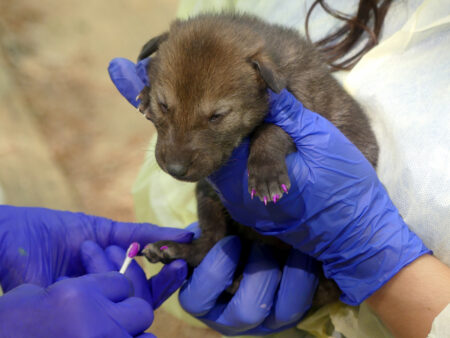
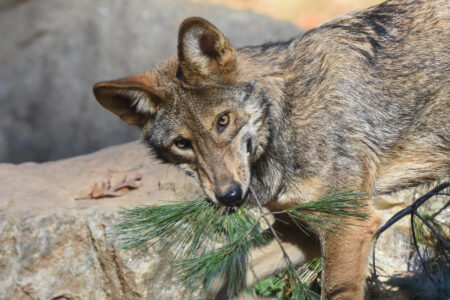
In late April, the WNC Nature Center announced the birth of a large litter of critically endangered red wolf puppies. Six females (Babs, Bonnie, Ruby, Rufina, Sienna, and Toto)and one male (Tony) have grown up in front of guests and visitors and are now almost indistinguishable in size from their parents, Gloria and Oak. The WNC Nature Center anticipates that the red wolf pups will remain in Asheville for the next two years.
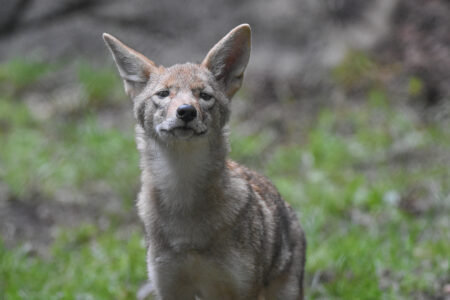
On the heels of the red wolf births came two coyote pups, Cal and Walker. They were also born in April and came to the Nature Center in late July from Izzie’s Pond Sanctuary in South Carolina. While Cal and Walker are not biological brothers, they were introduced to each other at a very young age, so they have bonded and will be companions. These coyotes are incredibly shy and are usually spotted by guests behind their open den shelter.
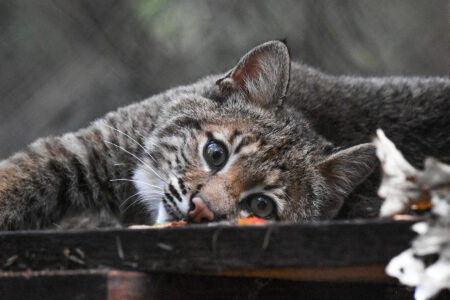
Quickly becoming a guest-favorite, bobcat kitten Tufts joined the Nature Center in early August. He came from the May Wildlife Rehabilitation Center in Banner Elk, North Carolina, and was named after Edgar Tufts, the founder of Lees-McRae College. The latest bobcat addition was Kohana in late November, a female bobcat who was found in the wild by the West Virginia Department of Natural Resources, she was born around the same time as Tufts, and the two will
be non-breeding companions.
Raccoons Grace and Frankie came to the WNC Nature Center in late September from Appalachian Wildlife Refuge. These kits have acclimated quickly with their curious behaviors and tactile foraging skills.

In our Care
To say the least, animal keepers and the veterinary care team at the WNC Nature Center have been busy keeping up with vaccines and immunizations, introducing the animals to their new habitats, and encouraging behaviors that will help with their care as they grow into adulthood.
“When you visit and see our animals, it’s important to understand why they are here with us,” says Erin Oldread. Animal Curator at the Nature Center. “Sometimes they were born under human care, like our red wolves. Other animals were permanently injured in the wild and need ongoing veterinary care. In the case of our new coyotes, bobcats, and raccoons, they were found to be unreleasable by the sanctuaries who received them. Oftentimes when you are rehabilitating a very young animal and feeding them from a bottle, they very quickly become dependent on and overly comfortable around humans. It can be harmful to them and humans if they were released back into the wild, so the WNC Nature Center is happy to give them a home.”
In the case of WNC Nature Center’s last collection of baby animals, sometimes the Center serves as a holding ground as animals develop and prepare to be released back into the wild. Appalachian Station, the Nature Center’s indoor exhibit for reptiles and amphibians, is currently housing two baby box turtles and two baby snapping turtles, all four of which are overwintering and will be released in spring 2024.

Also joining the WNC Nature Center this year are adult animals, Suli the Black Vulture and Morticia the Turkey Vulture. Suli was born in the wild but came under human care after a wing injury. She came to the Nature Center in late March from the NC Aquarium at Pine Knolls Shores. Morticia arrived from Hershey Park Zoo/Zoo America in October and joined the habitat next to Buzz, the longest living resident at the Nature Center at 33 years, in December.
Great time for a visit
Typically, the WNC Nature Center sees less crowds as Asheville enters the colder weather seasons. However, the animals who call the Nature Center home are generally more active during this time of year, and visitors can enjoy watching all the new additions encounter their first winter in Western North Carolina.
Check out the WNC Nature Center’s holiday gift guide at wildwnc.org/gift-guide to see all the ways you can support the animals who call the Nature Center home, including symbolic adoptions and purchasing items from the Animal Wishlist and Holiday Giving Tree.
About the Friends
The Friends of the WNC Nature Center are a vital partner with the WNC Nature Center. With their donors and members, the Friends enrich the Nature Center’s mission to connect people with the plants and animals of the Southern Appalachian Mountains. As a conservation organization, the Friends inspires a passion to know more, care more, and do more for the wildlife of the Southern Appalachian Mountains. They advance the critical work of the WNC Nature Center by supporting its growth and development through fundraising, membership, outreach education, marketing, and volunteer services.
About the WNC Nature Center
The Nature Center connects people of all ages with the plants and animals of the Southern Appalachian Mountains. Asheville’s wildlife park is located on 42 acres and is home to more than 60 species of animals, including red pandas, river otters, black bears, red and gray wolves, and bobcats. For more information, please visit www.wildwnc.org.
Sigal Music Museum’s current special exhibition, Worlds Apart: Musical Instruments from Secular to Sacred, highlights items from the JoAnn and Frank Edwinn Collection, which hails from all over the world. Showing November 2023 – May 2024, Worlds Apart uses a diverse range of historical instruments, objects, and visuals to bring together musical narratives from seemingly disparate parts of the globe.
Worlds Apart: Musical Instruments from Secular to Sacred aims to increase public access to historical instruments from around the world and improve visitors’ understanding of musical traditions at the global level. Expanding beyond the typical parameters of the Western musical canon, Worlds Apart seeks to expose audiences to musical instruments and customs that are often overlooked or exotified. The instruments and other exhibit materials will offer visitors new perspectives on global music and a chance to consider how music is used for prayer and leisure in cultures around the world. By celebrating these stories, the museum intends to further its mission to collect and preserve historical musical instruments, objects, and information, which engage and enrich people of all ages through exhibits, performances, and experiential programs.
Displaying various objects from the JoAnn and Frank Edwinn Collection, Worlds Apart: Musical Instruments from Secular to Sacred focuses on international musical instruments and cultures, celebrating rites and traditions with ancient histories and contemporary legacies. Frank Edwinn, a successful basso in the mid-20th century, studied and toured internationally, eventually settling in North Carolina, where he taught music at the University of North Carolina Asheville. Throughout his life, he purchased various objects from around the world, aiming to expose students, and himself, to the wide and wonderful world of musical instruments. This impressive collection occupies a unique position for educating audiences unfamiliar with the vast scope of global music.
And, UNCA’s Ramsey Library Special Collections is now processing the Edwinn’s papers and a few recordings that will be accessible next semester!
Saturdays from 10:30 AM – 12 PM
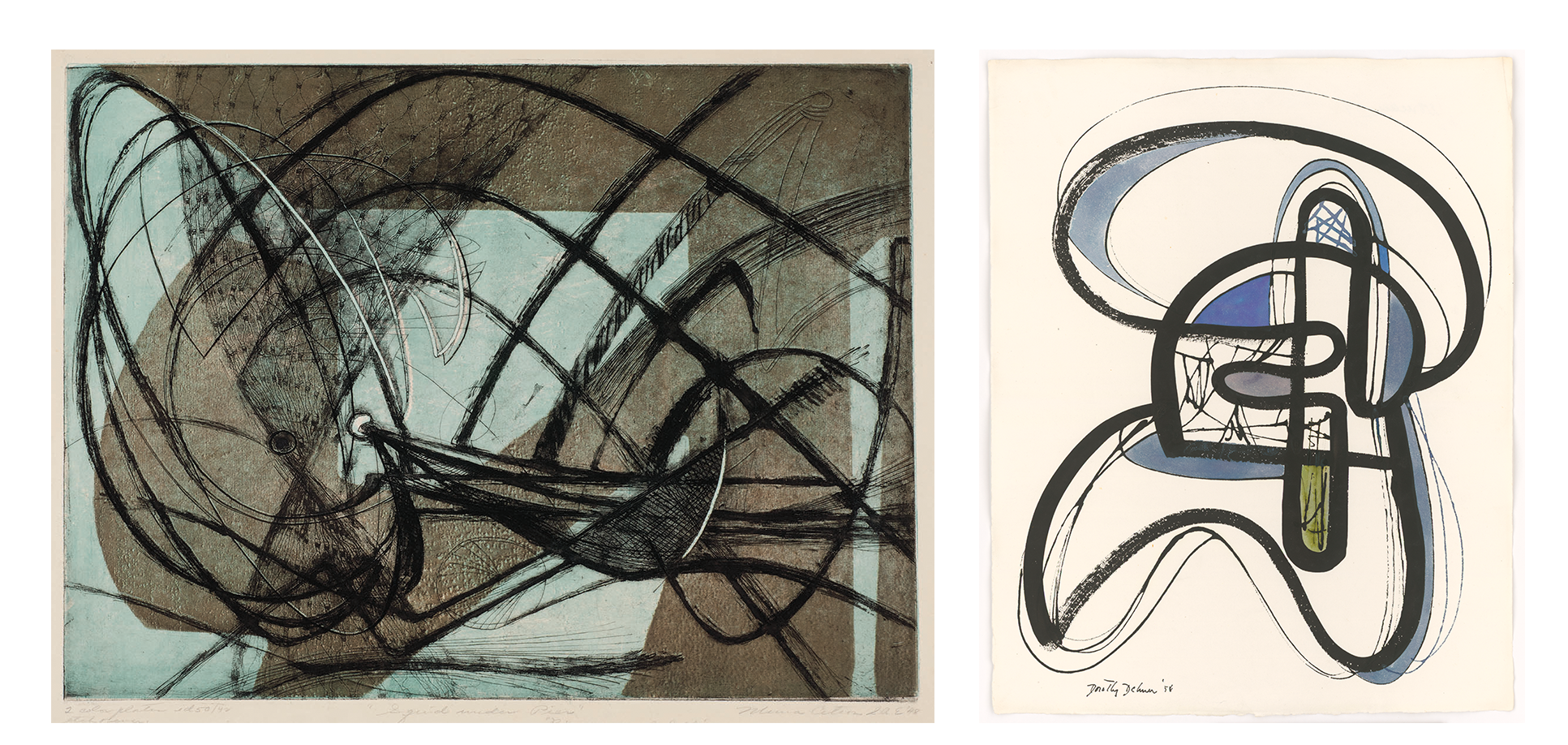 |
| Images: Left: Minna Wright Citron, Squid Under Pier, 1948, color etching, soft-ground, and engraving on paper, edition 42/50, 15 x 17 7/8 inches, 2010 Collections Circle purchase, Asheville Art Museum. © Estate of Minna Citron/Licensed by VAGA at ARS, New York. Right: Dorothy Dehner, Woman #2, 1954, watercolor and ink on paper, 22 3/4 x 18”, courtesy of Dolan Maxwell. |
The Asheville Art Museum is pleased to announce the upcoming exhibition American Art in the Atomic Age: 1940–1960, which explores the groundbreaking contributions of artists who worked at the experimental printmaking studio Atelier 17 in the wake of World War II. Co-curated by Marilyn Laufer and Tom Butler, American Art in the Atomic Age which draws from the holdings of Dolan/Maxwell, the Asheville Art Museum Collection, and private collections will be on view from November 10, 2023–April 29, 2024.
Atelier 17 operated in New York for fifteen years, between 1940 and 1955. The studio’s founder, Stanley William Hayter (1901–1988) established the workshop in Paris but relocated to New York just as the Nazi occupation of Paris began in 1940. Hayter’s new studio attracted European emigrants like André Masson, Yves Tanguy, and Joan Miró, as well as American artists like Dorothy Dehner, Judith Rothschild, and Karl Schrag, allowing for an exchange of artistic ideas and processes between European and American artists.
The Asheville Art Museum will present over 100 works that exemplify the cross-cultural exchange and profound social and political impact of Atelier 17 on American art. Prints made at Atelier 17—including those by Stanley William Hayter, Louise Nevelson, and Perle Fine—will be in conversation with works by European Surrealists who were working at the studio in the 1940s and 1950s. The exhibition will also feature a selection of domestic mid-century objects that exemplify how the ideas and aesthetics of post-war abstraction became a part of everyday life.
Throughout the history of painting from the mid-19th century forward, artists have used an
endless variety of approaches to record their world. Beyond the Lens: Photorealist Perspectives on Looking, Seeing, and Painting continues this thread, offering an opportunity to explore a singular and still forceful aspect of American art. Photorealism shares many of the approaches of historical and modernist realism, with a twist. The use of the camera as a basic tool for organizing visual information in advance of painterly expression is now quite common, but Photorealists embraced the camera as the focal point in their creative process.
Beyond the Lens presents key works from the collection of Louis K. and Susan Pear Meisel,
bringing together paintings and works on paper dating from the 1970s to the present to focus on this profoundly influential art movement. The exhibition includes work by highly acclaimed formative artists of the movement such as Charles Bell, Robert Bechtle, Tom Blackwell, Richard Estes, Audrey Flack, and Ralph Goings as well as paintings by the successive generations of Photorealist artists Anthony Brunelli, Davis Cone, Bertrand Meniel, Rod Penner, and Raphaella Spence. Featured artworks in the exhibition include diverse subject matters, but the primary focus is on the common and every day: urban scenes, “portraits” of cars, trucks, and motorcycles, still life compositions using toys, food, candy wrappers, and salt and pepper shakers. All provide opportunities for virtuoso studies in how light, reflection, and the camera as intermediary shapes our perception of the material world.
This multigenerational survey demonstrates how the 35-mm camera, and later technological
advances in digital image-making, informed and impacted the painterly gesture. Taken together, the paintings and works on paper in Beyond the Lens show how simply spellbinding these virtuosic works of art can be.
“Beyond the Lens offers a fascinating look into the Photorealism movement and delves into the profound connection between the artists’ observation and creative process,” says Pamela L. Myers, Executive Director of Asheville Art Museum. “We are delighted to present this curated collection of artworks encapsulating the creative vision and technical precision that defines this artistic genre.”
Photorealism found its roots in the late 1960s in California and New York, coexisting with an explosion of new ideas in art-making that included Conceptual, Pop, Minimalism, Land and Performance Art. At first, representational realism coexisted with the thematic and conceptual explosion but was eventually relegated to the margins regarding critical and curatorial attention. Often misunderstood and sometimes negatively criticized or lampooned as a betrayal of modernism’s commitment to abstraction, the artists involved in Photorealism remained committed explorers of the trail they had blazed. In the decades of the late twentieth century and early twenty-first century, realistic and symbolic painting experienced a renaissance, as contemporary artists are increasingly drawn to narrative and storytelling. Concurrently, using a camera as a preparatory tool equally legitimate and valuable as pencils and pens has made the rubric of Photorealism increasingly relevant.
This exhibition is organized by the Asheville Art Museum and guest curated by Terrie Sultan.
This exhibition is sponsored in part by Jim and Julia Calkins Peterson.
|
Make your own hot cocoa creation in Perspective Café |
|
Every weekend in December
Unlock the joy and creative spirit of the holidays while also supporting the Museum’s mission! Start your winter cocoa creation by choosing between traditional or white hot chocolate as your base. Next, decorate your creation with all kinds of toppings, including crushed peppermints, butterscotches, caramel syrup, mini marshmallows, candy canes, sprinkles, and more. |
Romare Bearden (Charlotte, NC 1911–1988 New York, NY), African American writer and artist, is renowned for his collages. He constantly experimented with various techniques to achieve his artistic goals throughout his career. This exhibition highlights works on paper and explores his most frequently used mediums, including screen-printing, lithography, hand-colored etching, collagraph, monotype, relief print, photomontage, and collage.
Bearden’s work reflects his improvisational approach to his practice. He considered his process akin to that of jazz and blues composers. Starting with an open mind, he would let an idea evolve spontaneously.
“Romare Bearden: Ways of Working highlights Bearden’s unique artistic practice and masterful storytelling through art,” says Pamela L. Myers, Executive Director of the Asheville Art Museum. “We are thrilled to collaborate with Jerald Melberg Gallery to present these extraordinary works on paper in conversation with Bearden’s collage Sunset Express, 1984 in the Museum Collection (on view in the Museum’s SECU Collection Hall). This exhibition will also provide a glimpse into the cultural histories and personal interests that influenced his art-making practice, and we hope it encourages introspection and dialogue with our visitors.”
Jerald Melberg states, “Romare Bearden’s groundbreaking artistic practice continues to captivate audiences worldwide. With an unparalleled legacy of creativity and innovation, Bearden’s contributions to art remain deeply influential years beyond his life.” We have enjoyed organizing this exhibition with the Asheville Art Museum to showcase his artistic genius and inspire visitors from the Western North Carolina region and beyond.”
This exhibition is made possible in part by the Judy Appleton Fund. Many thanks to the Jerald Melberg Gallery for the loan of these important artworks and to Mary and Jerald Melberg for their long-standing support of the arts, artists, and the Asheville Art Museum.
|
Western North Carolina is important in the history of American glass art. Several artists of the Studio Glass Movement came to the region, including its founder Harvey K. Littleton. Begun in 1962 in Wisconsin, it was a student of Littleton’s that first came to the area in 1965 and set up a glass studio at the Penland School of Craft in Penland, North Carolina. By 1967, Mark Peiser was the first glass artist resident at the school and taught many notable artists, like Jak Brewer in 1968 and Richard Ritter who came to study in 1971. By 1977, Littleton retired from teaching and moved to nearby Spruce Pine, North Carolina and set up a glass studio at his home. Since that time, glass artists like Ken Carder, Rick and Valerie Beck, Shane Fero, and Yaffa Sikorsky and Jeff Todd—to name only a few—have flocked to the area to reside, collaborate, and teach, making it a significant place for experimentation and education in glass. The next generation of artists like Hayden Wilson and Alex Bernstein continue to create here. The Museum is dedicated to collecting American studio glass and within that umbrella, explores the work of Artists connected to Western North Carolina. Exhibitions, including Intersections of American Art, explore glass art in the context of American Art of the 20th and 21st centuries. A variety of techniques and a willingness to push boundaries of the medium can be seen in this selection of works from the Museum’s Collection. |
Please join us for lunch at Twisted Laurel in downtown Asheville, then let’s walk the short distance to the Asheville Art Museum, where they are having a special exhibition on photorealistic perspective.
For those that RSVP to this event, please purchase your museum tickets prior to attending. The museum states they release their tickets on the 15th of each month for the coming month, so please consider reserving your ticket on or around December 15th for the January 6th meetup. Here’s a link to help direct you to the museums website.
Join us for an inspiring and uplifting 2-hour workshop to kickstart your New Year with purpose and creativity! Get ready to manifest your dreams and set powerful intentions through the art of vision boarding.
Begin with a guided meditation to tap into your inner desires and aspirations for the upcoming year.
Engage in thought-provoking activities and discussions to help clarify your vision and goals. Share your aspirations with like-minded individuals and gain valuable insights.
Get creative with fun materials and build a vision board that aligns with your goals.
We’ll supply all the materials you need – from magazines and scissors to boards and glue. Feel free to bring personal items that hold special meaning to you.
Enjoy light refreshments, fostering a relaxed and enjoyable atmosphere for creativity and connection.
Calling adventurous tweens/teens! Join us for Dungeons & Dragons at the Weaverville Library! This program is open to tweens and teens ages 12+.
All skill levels are welcome.
Space for this program is limited. Registration is required. Please stop by the Weaverville Library or call 828-250-6482 to reserve your space!
Kick off the year with a focus on health and wellness at our event featuring SAVOR Shrub Bitters. Join us for a class and tasting session with SAVOR owner Kat, who will showcase the aperitif-inspired fruit-forward bitters and discuss the health benefits of ingredients. Learn to craft cocktails and mocktails, and discover the joy of making mixers and bitters for health. SAVOR’s unique flavors shine in classic drinks, adding a twist to your favorites. Kat, a herbalism expert, created these bitters with a commitment to joyful self-care, emphasizing the importance of savoring the moment. Cheers to a vibrant and nourishing start to the year!
Beginning in January 2024, ASAP (Appalachian
Sustainable Agriculture Project) will partner with Blue Ridge Women in Agriculture and MountainWise
to expand Double SNAP for Fruits and Vegetables programs to more farmers markets, farmstands,
and groceries in Western North Carolina. This group has established the WNC Double SNAP Network
in order to bring together existing programs and expand to new sites, making SNAP incentives more
accessible throughout the region.
SNAP programs that center local food and farms can significantly improve individual and community
health. They make fresh fruits and vegetables more accessible, keep food dollars in the local
economy, and connect participants with positive food and social environments in their communities.
“ASAP, Mountainwise, and Blue Ridge Women in Agriculture currently operate successful SNAP
incentive programs at 26 sites, which connect participants with fresh food and farms in their
communities,” said Mike McCreary, ASAP’s Farmers Market Program Manager. “By combining efforts
and resources, we’ll not only be able to deepen the impact of our existing programs, but also create
adaptive programs that meet the needs of communities that don’t currently have access.”
The first phase of the project focuses on strengthening existing programs across sites operating
January through March, including:
● Asheville City Winter Market, 52 N. Market St., Saturdays, 10 a.m.–1 p.m.
● Winter King Street Market, 252 Poplar Grove Rd., Saturdays, 10 a.m.–1 p.m.
● Columbus Winter Market, 35 Locust St., 1st and 3rd Saturdays, 10 a.m.–1 p.m.
● High Country Food Hub, 252 Poplar Grove Rd., Boone, online ordering with Wednesday pick-up,
12–6:30 p.m.
● Jackson County Winter Farmers Market, 110 Railroad Ave., Sylva, 10 a.m.–1 p.m.
● Jarrett Brothers IGA, 191 Main St., Rosman, daily, 7 a.m.–9 p.m.
● North Asheville Tailgate Market, 275 Edgewood Rd., Saturdays, 10 a.m.–1 p.m.
● River Arts District Farmers Market, 350 Riverside Dr., Asheville, 3–5:30 p.m.
● Rutherford County Winter Farmers Market, 146 North Main St., Rutherfordton, 1st and 3rd
Saturdays, 10 a.m.–1 p.m.
● Saluda Winter Market, 64 Greenville St., 2nd and 4th Saturdays, 10 a.m.–1 p.m.
● Transylvania Farmers Market, 200 E. Main St., Brevard, Saturdays, 10 a.m.–12 p.m.
● Weaverville Tailgate Market, 60 Lakeshore Dr., Saturdays, 3–6 p.m


Carolina Hurricanes vs. St. Louis Blues
HARDWIRED – THE TRIBUTE TO METALLICA
The Pantera Experience
Ages 18+
– STANDING ROOM ONLY
You’ve never “herd” anything like them. Grassroots music at its finest, Pretty Little Goat formed in 2013 through their common grounding in the deep well of tradition found in the mountains of Western North Carolina. As young lovers of old-time music, Pretty Little Goat began winning string band competitions right away with their hard driving style. Since then, they have been drawing inspiration from a diverse array of sources, coupled with a lifestyle close to the land, to create a unique collection of timeless original music. Pretty Little Goat sees traditional music is a living art form – vibrant and evolving – and their energy and creativity on stage reflect that. They will get you dancing with a diverse array of old-time fiddle tunes, swingy country two-step numbers, and rollicking mountain hoedowns, while in turn offering heartfelt ballads and sweet harmonies. Pushing out a sound unidentifiable by time, their music is “as close as we will ever be to our past while being as current as we need it to be” (Mike Ashworth, Steep Canyon Rangers). Don’t miss the Goats!
The Wilder Flower hails from Pickens SC & Brevard NC. We grew up in the thick of Appalachian bluegrass and old time music, fiddling and picking in the Y/JAM programs and with friends. As young musicians, we worked our ways onto stages at IBMA, MerleFest, and America’s Got Talent, and won blue ribbons at the South Carolina Old Time Fiddler’s Convention and beyond. We finally met in 2020 at Hagood Mill, where Madeline won the South Carolina State Fiddler’s Championship. Grounded in the language of our instrumental training, our collaboration flexes between folk, Americana, bluegrass, and Old-time tunes. Vocally, we thrive on three-part harmonies, whether a two-chord old-time ballad, or a modern, minor-filled melody, and instrumentally, we feature bluegrass banjo tunes, fiddle and clawhammer string-band songs, flat-picking guitar tunes, and everything in between. The Wilder Flower continues to write and tour throughout Appalachia and around the south eastern United States.