

Calendar of Events
Upcoming events and things to do in Asheville, NC. Below is a list of events for festivals, concerts, art exhibitions, group meetups and more.
Interested in adding an event to our calendar? Please click the green “Post Your Event” button below.
Ever wondered what it’s like to drive a racecar? Buncombe County Public Libraries has added The Track at Asheville as a new ZOOM partner. Each ZOOM pass will give up to four drivers 30 minutes of hot laps in a standard rig (race simulator) at The Track. Utilizing state-of-the-art hardware and software, you can choose your car, track, and conditions to experience the thrill of driving racecars around simulated tracks all over the world. No experience is necessary.
ZOOM passes at The Track require two things:
- You need to book a ZOOM pass on the Library’s website.
- You will also need to visit The Track’s website and use the reservation code provided to reserve your seat.
You are responsible for booking your timed reservation and you will need to bring your ZOOM pass to The Track to use your reservation. You can only drive if you have a ZOOM pass and a reservation. ZOOM passes for The Track are for ages 8 and up.
If you have any questions or need a library card to start ZOOMing, just let us know.
NOW until January 1, 2024- NOT REAL ART Grant for Artists is a $12,000 bi-annual award
designed to empower the practice of 6 contemporary artists, each of whom receive $2,000 plus
thousands of dollars in FREE marketing exposure worldwide. ArtsvilleUSA’s West Coast affiliate
Not Real Art encourages WNC visual artists, 2-D and 3-D, to apply by January 1, 2024. Learn more
and apply at https://notrealart.com/grant/
About Our Grant
Founded in 2019 and powered by Arterial, the NOT REAL ART Grant for Artists is a $12,000 annual award designed to empower the practice of 6 contemporary artists, each of whom receive $2,000. But, NOT REAL ART Grant winners get more than money. Each recipient gets to share their story and promote with exclusive, in-depth featured interviews on the NOT REAL ART podcast and blog. And, whether or not you receive our grant, every applicant automatically qualifies to be included in future blog stories, newsletters and our artist marketing database!

A Helping of Graditude
River lovers are encouraged to support RiverLink and other community nonprofits through Give!Local, the annual philanthropy program organized by MountainXpress. The first 10 donors of $100 or more to RiverLink will be entered into a drawing for a kayak tour on the French Broad River with Renee Fortner, RiverLink’s expert water resources manager. First Bank is waiving transaction fees, so 100 percent of your donation goes to the nonprofits you select.
Participate in Give!Local
RiverLink deeply appreciates the contributions this community makes directly to the organization — whether as gifts of stock, required IRA distributions, donor-advised funds, donations made in memory of others, and all the ways you give. Please reach out to Susan Andrew at [email protected] for assistance with any of these giving modes. And anyone can use the handy Donate button at the bottom of our newsletters. Thank you! Sincere gratitude to RiverLink’s recent business supporters — we are honored by your contributions:
- Astral
- Bottle Riot
- Burial Beer Co.
- Cedar Rock Adventures
- Curtis Wright Outfitters
- East Fork Pottery
- Edgewater Resources
- Ferguson Waterworks
- Fresh Market
- Hellbender Paddleboards
- High Five Coffee
- Preserving a Picturesque America
- Whole Foods
- Wrong Way River Lodge & Cabins
Daily | November 17-January 1
Load up your vehicle with friends and family and take a cruise through the fan-favorite Shadrack’s Christmas Wonderland Drive-Thru Light Show! Featuring hundreds of thousands of dazzling lights dancing to the tune of holiday classics on your car radio, this immersive experience has become a holiday tradition for many. Tickets are per carload, available online or at the gate.
Save the date for our 31st Annual Spring Conference, March 8-10, 2024, at Mars Hill University. Registration opens Wednesday, December 6, 2023.
Friday pre-conferences in 2024 will include full-day workshops from JM Fortier (founder of Jardins de la Grelinette and the Market Gardener Institute), Jeannie Dunne (director of Red Moon Herbs), and Ember Phoenix (Soul Thrive Apothecary).
Our main conference program will feature over 60 classes on 13 learning tracks, including Cooking, Earth Stewardship, Farming Business, Farming Production, Forest Farming, Food Justice, Gardening, Herbs, Living on the Land, Mushrooms, Permaculture, Pollinators & Pests, and Soils. For a deeper dive into these fields, the conference will also include nine half-day classes including speakers like Jesse Frost of the No-Till Market Garden Podcast and workshops exploring fermentation on the farm and in the kitchen, lean farming, seed saving, building your farm brand, fruit tree propagation, and more.
The State Board of Elections invites the public to comment on two proposed permanent rules for implementing the photo ID requirement for in-person and absentee-by-mail voters in North Carolina.
The photo ID requirement was enacted into law by the General Assembly in 2018.
These rules are necessary to ensure uniform implementation of the photo ID requirement by all 100 county boards of elections and in all 3,000-plus polling locations. They are similar to rules adopted by the State Board and approved by the Rules Review Commission in prior iterations of the photo ID law.
The public comment period opens Wednesday, Nov. 15, 2023, and closes on Jan. 16, 2024.
Members of the public may comment on the rules in any of the following ways through Jan. 16:
- Online: Public Comment Portal: Permanent Photo ID Rules
- Email: [email protected]
- Mail: Attn: Rulemaking Coordinator, PO Box 27255, Raleigh, NC 27611-7255
An in-person public hearing will be held at 11 a.m. Dec. 13, 2023, at the State Board of Elections Office on the Third Floor of the Dobbs Building at 430 N. Salisbury St., Raleigh, NC 27603.
Information and links to the two proposed rules are below:
- Verification of Photo Identification During In-Person Voting 08 NCAC 17 .0101 (PDF): This proposed rule describes how election officials must determine whether the photograph on the ID reasonably resembles the voter and whether the name is the same as or substantially equivalent to the voter’s name in their registration record. It also addresses voting options for voters who are unable to present photo identification.
- Photo Identification for Absentee-By-Mail Ballots 08 NCAC 17 .0109 (PDF): This proposed rule provides details about the requirement for absentee-by-mail voters to provide a copy of an acceptable photo ID with their ballot return envelope, or to complete a photo ID exception form. It also describes the process county boards of elections must follow in reviewing copies of IDs or exception forms returned with absentee ballots.
The Board also proposes to repeal four previous photo ID rules adopted under a different law, which is now obsolete, to avoid any misunderstanding about what rules should be followed by election officials and the public. View the text of the four rules proposed for temporary repeal (PDF).
Submitted comments will be compiled and provided to the State Board before its final consideration of the proposed temporary rules, which will take place at a public meeting after the end of the comment period. The Rules Review Commission would then consider the proposed rules.
For more information about the rulemaking process, please visit Rulemaking.
Background
Voters will be asked to show photo ID when voting in North Carolina. Most voters will simply show their driver’s license. But there are many other acceptable photo IDs. See Acceptable Photo IDs for Voting.
If a voter does not have an acceptable photo ID, they can get one for free from their county board of elections. For details, see Get a Free Voter Photo ID.
All voters will be allowed to vote with or without a photo ID. If a voter cannot show photo ID when voting in person, they can still vote by filling out an ID Exception Form, explaining why they are unable to show ID. Or they can vote a provisional ballot and return to the office of the county board of elections with their photo ID. If an absentee-by-mail voter is unable to include a photocopy of their photo ID with their ballot return envelope, they can also fill out an ID Exception Form with their ballot.
For more information on the photo ID requirement, see Voter ID.

Registration is ongoing through the year. Get new updates and access all previous entries in a convenient online library.
The Curator’s Journal by Bonsai Curator Arthur Joura is a year-long course offering the ultimate insider’s view of bonsai at The North Carolina Arboretum. Regular entries chronicle growing an art and growing an enterprise. Some journal entries will be long and others more brief; some will be mostly words and others mostly pictures; some will be close-up studies of detail and others will step back to take in the wider scene. The path will not be linear, but all the entries will be steps along a journey.
You’re invited to come along.
Come pick up a bingo card and do the many HARD tasks (like taking a nap or reading a book). One row gets you a fun sticker. Three rows and you’re entered for our grand prize drawing.
Do you need a little inspiration to get moving after the holiday season? Southern Appalachian Highlands Conservancy is proud to announce our 4th annual Winter Hiking Challenge to get folks out and about – no matter your background or ability this is a project designed to get folks outside to enjoy the great outdoors!
The 2024 Winter Hiking Challenge sets a goal of 60 miles in 60 days, to be completed in your own time and at your own speed. Those can be miles you’ve walked, run or hiked – in your neighborhood, around the block, up a rugged mountain trail, or through the forest. Whatever works for your comfort and skill level – just make it 60 miles within the 60-day challenge time period (January 1st to March 1st, 2024). Sign up early to have more time to complete the Challenge. Registration ends on February 25th. Please note, this is a challenge you set with yourself, it is not a competition. Registration for this challenge is $25 per person and your registration fee directly supports conservation work in the Southern Appalachians. If you cannot afford the registration fee at this time, please use the coupon code: SAHC2024.
All participants will receive informative emails with suggestions for some of our favorite places to hike across the mountains of NC and TN. This special email series will include recommendations to enjoy places that SAHC has protected as well other favorite trails and destinations. Due to overuse of popular trails in the area we will try to share tidbits about some of the lesser-known trails and places to enjoy the great outdoors. Are you a little unsure about hiking in winter? We will share helpful Winter Hiking Tips, for those who haven’t hiked during the winter months. Lastly, those who complete the Winter Hiking Challenge will receive a commemorative SAHC patch after the end of the challenge.
Please note, the Challenge signup fee is a fundraiser to help support conservation efforts; you DO NOT have to pay to hike public trails. Feel free to enter miles at any date during the 60 days, as long as they are all entered before March 1. You can even enter your miles at the end of a certain time period (e.g, entering your miles for the week on Friday, all under one entry).
Time spent outdoors and in nature can help with both mental and physical health. We hope this Challenge will make it interesting for folks to explore places you may not have hiked before, and/or to rediscover the joy of nature in your own backyard.Take the Challenge by yourself, or with friends and family. Please just be safe while doing so!
Challenge Contact Info
Buncombe County’s residents, especially those living in and at the edge of poverty, have been able to access valuable, life-saving emergency assistance benefits through Eblen Charities. For many years now, Eblen Charities has partnered with Buncombe County Health and Human Services (BCHHS) to administer the Emergency Assistance, Crisis Intervention, and Low Income Energy Assistance programs. Due to an increase in need from our neighbors and challenges with processing benefits between state and partner agency systems, BCHHS transitioned the administration of these programs from Eblen Charities to the County on November 13, 2023.
We recognize that this a change for our community as Eblen Charities has provided this assistance for many years and has been a vital resource for our neighbors in crisis. BCHHS began answering calls and processing online applications on November 13, 2023. Beginning December 1, 2023, with the start of Low Income Energy Assistance application processing, BCHHS will start taking in-person requests at 40 Coxe Ave. in downtown Asheville.
Low Income Energy Assistance provides a one-time annual vendor payment to help eligible families pay their heating expense. Households containing a person age 60 or older or disabled receiving services can apply starting December 1, 2023. All households can apply starting January 1, 2024. Low Income Energy Assistance applications are accepted until March 31, 2024 or until funds are exhausted.
To qualify for the Low Income Energy Assistance Program, households that meet the following criteria may be eligible:
- Have at least one U.S. citizen or non-citizen who meets the eligibility criteria.
- Meet income requirements.
- Be responsible for its heating costs.
The Crisis Intervention Program serves individuals and families who are experiencing or are in danger of experiencing a heating- or cooling-related crisis.
To qualify for the Crisis Intervention Program, households that meet the following criteria may be eligible:
- Have at least one U.S. citizen or non-citizen who meets the eligibility criteria.
- Meet the income requirements.
- Have an energy related crisis.
- Have a utility statement that shows how much is owed to alleviate the crisis.
For those who have previously received Low Income Energy Assistance Program assistance, the North Carolina Department of Health and Human Services will begin notifying eligible households by mail beginning November 19, 2023. Households will have 10 days to report any changes to their household. Applicants can report changes by contacting the BCHHS office or by making changes to the form that was mailed to you and return it to BCHHS, located at 40 Coxe Ave. in Downtown Asheville. If no changes are reported, the information from last year will be used to process this year’s automated Low Income Energy Assistance payment.
If you are interested in applying for these Energy Assistance benefits, you can quickly apply online at www.epass.nc.gov. If you would like to apply over the phone, have general questions about energy assistance, or need to check on the status of your case, please call us at (828) 250-6330. Beginning December 1, 2023, you may also visit us in person at 40 Coxe Ave. in downtown Asheville. Please bring your parking ticket with you inside of the building for free parking.
Buncombe County also will administer Emergency Assistance, which Buncombe County Social Work Services distributes as funds become available to our community. To apply for Emergency Assistance, go online to epass.nc.gov, call Buncombe County at 828-250-6330, or apply in person at 40 Coxe Ave.
BCHHS will continue to partner with Eblen Charities to assist families and individuals in our community during times of crisis and hardship. For more information on the services that are available in our community, visit www.buncombecounty.org/hhs.
-
WNC Farmers Market, 570 Brevard Rd., Farmers Truck Shed #1, daily, 8 a.m.–5 p.m.
- Even though it’s getting colder, you can still find fresh, local food at area farmers markets. Nine markets in Buncombe County will offer extended seasons or special holiday dates in November and December. In addition to seasonal produce, meats, cheeses, eggs, and bread, these markets will feature local artists and handmade goods, such as wreaths, pottery, jewelry, and more.
- ASAP’s Double SNAP for Fruits and Vegetables and Farm Fresh Produce Prescription. Both programs offer participants free market tokens that can be spent on fresh fruits and vegetables. That includes in-season fall produce such as root veggies (including carrots, beets, radishes, and turnips), tubers (potatoes and sweet potatoes), brassicas (broccoli, cauliflower, and cabbage), winter squash, greens, and fruits like apples and persimmons.

The WNC Farmers Market is the premier destination for buying and selling the region’s best agriculture products directly from farmers & food producers to household & wholesale customers in an environment that celebrates the region’s diverse culture, food & heritage.
House of Operation:
WNC Farmers Market: 24/7, 361 days a year market access for farmers
Office: Monday- Friday, 8am-5pm
Market Shops: 7 days a week, 8 am-5 pm
Wholesale and Truck Sheds: 7 days a week
Included with admission
Embark on a scenic journey across George Vanderbilt’s Italy with a large-scale outdoor display that combines brilliant botanical designs with authentic messages written by Vanderbilt himself.
Beautifully handcrafted of natural elements, each sculptural postcard depicts a location or landmark Vanderbilt visited more than a century ago. This captivating complement to Biltmore’s Italian Renaissance Alive exhibition reveals Vanderbilt’s passions for travel, culture, architecture, and art as well as his personal experience of such renowned Italian cities as Milan, Florence, Venice, Pisa, and Vatican City.
Adding to the charm and visual appeal of Ciao! From Italy—sure to be a hit among kids of all ages—is the G-scale model train that travels in and out of each postcard in this enlightening display!
Join us on a journey into the world of butterflies and plants, and see the complex relationship between monarchs and milkweed. “Monarchs and Milkweed” explores how very survival of these majestic creatures has been shaped over time by one another, traveling through the seasons of a calendar year and revealing how both insect and plant grow and interact, culminating in a massive migration that crosses a continent.
Our FEAST cooking and gardening program offers public school students the opportunity to learn food security skills that will last a lifetime. Not only that, we tailor our classes to grade level standard course of study and incorporate science, math, reading and history. Students get to taste and have hands on experience and we could use some supplies to help! Please let us know if you have any of the following you’d like to contribute:
Metal spoons and forks for tasting
Small one ounce Dixie cups – paper or reusable plastic
Mini Silicone Pinch Bowls
Soil for raised garden beds
Compost Now – donate your compost to us HERE
Kid friendly can opener
Cans of Black Eyed Peas
Honey
Tamari
Extra Virgin Olive Oil
Please reach out to [email protected] for more information or if you’d like to drop things off. Amazon items can be ordered directly with the links above.
Let’s grab coffee and walk the River Arts Greenway. Rain or shine. If raining we will stay at the coffee shop.
This is a great opportunity to meet the organizers (Maria & Amanda) and new people.
Choose your adventure:
RAD loop – 3 miles
To Craven Street Bridge & back – 2 miles RT
Gentle Reminder: This isn’t a 12-step or recovery group, just some people hanging out without the booze!!
If your plans change, please update your RSVP status as soon as possible.
Dogs are welcome but keep in mind they won’t be allowed inside the coffee shop.
Can’t wait to meet you all!!
Guests visiting the WNC Nature Center this spring and summer have seen many new animals! Over the past six months, 19 animals representing seven species have been born or brought to the Nature Center.
Come and See
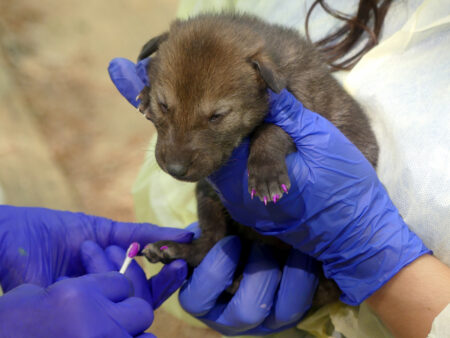
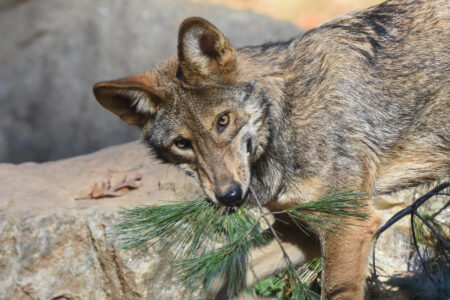
In late April, the WNC Nature Center announced the birth of a large litter of critically endangered red wolf puppies. Six females (Babs, Bonnie, Ruby, Rufina, Sienna, and Toto)and one male (Tony) have grown up in front of guests and visitors and are now almost indistinguishable in size from their parents, Gloria and Oak. The WNC Nature Center anticipates that the red wolf pups will remain in Asheville for the next two years.
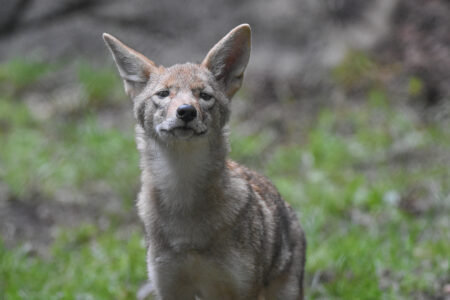
On the heels of the red wolf births came two coyote pups, Cal and Walker. They were also born in April and came to the Nature Center in late July from Izzie’s Pond Sanctuary in South Carolina. While Cal and Walker are not biological brothers, they were introduced to each other at a very young age, so they have bonded and will be companions. These coyotes are incredibly shy and are usually spotted by guests behind their open den shelter.
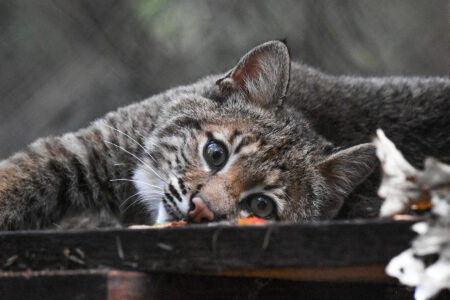
Quickly becoming a guest-favorite, bobcat kitten Tufts joined the Nature Center in early August. He came from the May Wildlife Rehabilitation Center in Banner Elk, North Carolina, and was named after Edgar Tufts, the founder of Lees-McRae College. The latest bobcat addition was Kohana in late November, a female bobcat who was found in the wild by the West Virginia Department of Natural Resources, she was born around the same time as Tufts, and the two will
be non-breeding companions.
Raccoons Grace and Frankie came to the WNC Nature Center in late September from Appalachian Wildlife Refuge. These kits have acclimated quickly with their curious behaviors and tactile foraging skills.

In our Care
To say the least, animal keepers and the veterinary care team at the WNC Nature Center have been busy keeping up with vaccines and immunizations, introducing the animals to their new habitats, and encouraging behaviors that will help with their care as they grow into adulthood.
“When you visit and see our animals, it’s important to understand why they are here with us,” says Erin Oldread. Animal Curator at the Nature Center. “Sometimes they were born under human care, like our red wolves. Other animals were permanently injured in the wild and need ongoing veterinary care. In the case of our new coyotes, bobcats, and raccoons, they were found to be unreleasable by the sanctuaries who received them. Oftentimes when you are rehabilitating a very young animal and feeding them from a bottle, they very quickly become dependent on and overly comfortable around humans. It can be harmful to them and humans if they were released back into the wild, so the WNC Nature Center is happy to give them a home.”
In the case of WNC Nature Center’s last collection of baby animals, sometimes the Center serves as a holding ground as animals develop and prepare to be released back into the wild. Appalachian Station, the Nature Center’s indoor exhibit for reptiles and amphibians, is currently housing two baby box turtles and two baby snapping turtles, all four of which are overwintering and will be released in spring 2024.

Also joining the WNC Nature Center this year are adult animals, Suli the Black Vulture and Morticia the Turkey Vulture. Suli was born in the wild but came under human care after a wing injury. She came to the Nature Center in late March from the NC Aquarium at Pine Knolls Shores. Morticia arrived from Hershey Park Zoo/Zoo America in October and joined the habitat next to Buzz, the longest living resident at the Nature Center at 33 years, in December.
Great time for a visit
Typically, the WNC Nature Center sees less crowds as Asheville enters the colder weather seasons. However, the animals who call the Nature Center home are generally more active during this time of year, and visitors can enjoy watching all the new additions encounter their first winter in Western North Carolina.
Check out the WNC Nature Center’s holiday gift guide at wildwnc.org/gift-guide to see all the ways you can support the animals who call the Nature Center home, including symbolic adoptions and purchasing items from the Animal Wishlist and Holiday Giving Tree.
About the Friends
The Friends of the WNC Nature Center are a vital partner with the WNC Nature Center. With their donors and members, the Friends enrich the Nature Center’s mission to connect people with the plants and animals of the Southern Appalachian Mountains. As a conservation organization, the Friends inspires a passion to know more, care more, and do more for the wildlife of the Southern Appalachian Mountains. They advance the critical work of the WNC Nature Center by supporting its growth and development through fundraising, membership, outreach education, marketing, and volunteer services.
About the WNC Nature Center
The Nature Center connects people of all ages with the plants and animals of the Southern Appalachian Mountains. Asheville’s wildlife park is located on 42 acres and is home to more than 60 species of animals, including red pandas, river otters, black bears, red and gray wolves, and bobcats. For more information, please visit www.wildwnc.org.
Levels 1+
Get ready for 2024. Set your intentions and release what needs to stay in 2023. This class includes an extra 30 minutes of chakra balancing, while you lie back or sit in meditation.
Pre-registration required.
In Ayurveda, the kapha dosha is cold, heavy, wet, thick, and slow, among other things. This dosha tends to be most present in winter and early spring. As a practice, we challenge that in yoga by building heat in the body and releasing excess water, so we can be our strongest and fittest, boosting our immune system and staving off depression.
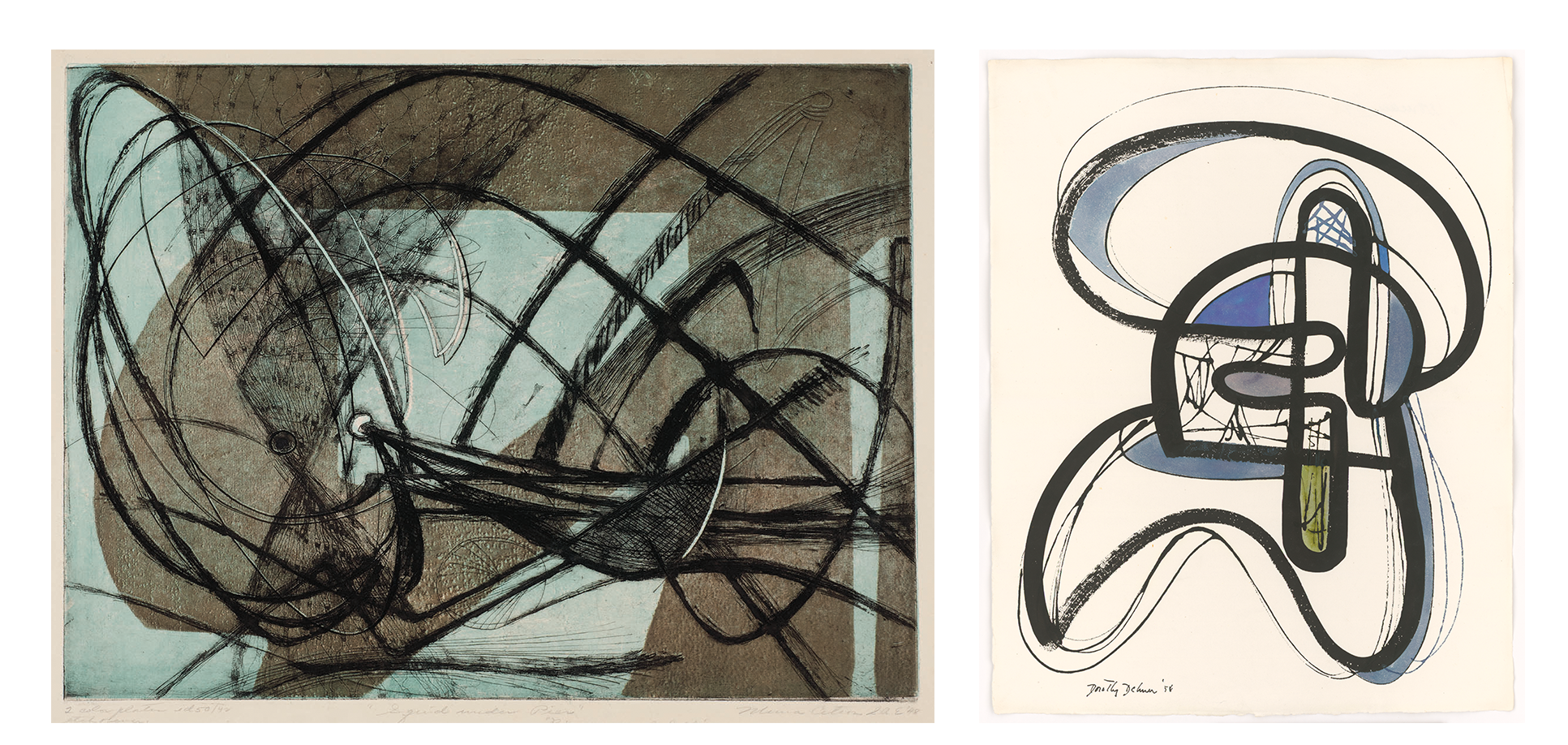 |
| Images: Left: Minna Wright Citron, Squid Under Pier, 1948, color etching, soft-ground, and engraving on paper, edition 42/50, 15 x 17 7/8 inches, 2010 Collections Circle purchase, Asheville Art Museum. © Estate of Minna Citron/Licensed by VAGA at ARS, New York. Right: Dorothy Dehner, Woman #2, 1954, watercolor and ink on paper, 22 3/4 x 18”, courtesy of Dolan Maxwell. |
The Asheville Art Museum is pleased to announce the upcoming exhibition American Art in the Atomic Age: 1940–1960, which explores the groundbreaking contributions of artists who worked at the experimental printmaking studio Atelier 17 in the wake of World War II. Co-curated by Marilyn Laufer and Tom Butler, American Art in the Atomic Age which draws from the holdings of Dolan/Maxwell, the Asheville Art Museum Collection, and private collections will be on view from November 10, 2023–April 29, 2024.
Atelier 17 operated in New York for fifteen years, between 1940 and 1955. The studio’s founder, Stanley William Hayter (1901–1988) established the workshop in Paris but relocated to New York just as the Nazi occupation of Paris began in 1940. Hayter’s new studio attracted European emigrants like André Masson, Yves Tanguy, and Joan Miró, as well as American artists like Dorothy Dehner, Judith Rothschild, and Karl Schrag, allowing for an exchange of artistic ideas and processes between European and American artists.
The Asheville Art Museum will present over 100 works that exemplify the cross-cultural exchange and profound social and political impact of Atelier 17 on American art. Prints made at Atelier 17—including those by Stanley William Hayter, Louise Nevelson, and Perle Fine—will be in conversation with works by European Surrealists who were working at the studio in the 1940s and 1950s. The exhibition will also feature a selection of domestic mid-century objects that exemplify how the ideas and aesthetics of post-war abstraction became a part of everyday life.
Throughout the history of painting from the mid-19th century forward, artists have used an
endless variety of approaches to record their world. Beyond the Lens: Photorealist Perspectives on Looking, Seeing, and Painting continues this thread, offering an opportunity to explore a singular and still forceful aspect of American art. Photorealism shares many of the approaches of historical and modernist realism, with a twist. The use of the camera as a basic tool for organizing visual information in advance of painterly expression is now quite common, but Photorealists embraced the camera as the focal point in their creative process.
Beyond the Lens presents key works from the collection of Louis K. and Susan Pear Meisel,
bringing together paintings and works on paper dating from the 1970s to the present to focus on this profoundly influential art movement. The exhibition includes work by highly acclaimed formative artists of the movement such as Charles Bell, Robert Bechtle, Tom Blackwell, Richard Estes, Audrey Flack, and Ralph Goings as well as paintings by the successive generations of Photorealist artists Anthony Brunelli, Davis Cone, Bertrand Meniel, Rod Penner, and Raphaella Spence. Featured artworks in the exhibition include diverse subject matters, but the primary focus is on the common and every day: urban scenes, “portraits” of cars, trucks, and motorcycles, still life compositions using toys, food, candy wrappers, and salt and pepper shakers. All provide opportunities for virtuoso studies in how light, reflection, and the camera as intermediary shapes our perception of the material world.
This multigenerational survey demonstrates how the 35-mm camera, and later technological
advances in digital image-making, informed and impacted the painterly gesture. Taken together, the paintings and works on paper in Beyond the Lens show how simply spellbinding these virtuosic works of art can be.
“Beyond the Lens offers a fascinating look into the Photorealism movement and delves into the profound connection between the artists’ observation and creative process,” says Pamela L. Myers, Executive Director of Asheville Art Museum. “We are delighted to present this curated collection of artworks encapsulating the creative vision and technical precision that defines this artistic genre.”
Photorealism found its roots in the late 1960s in California and New York, coexisting with an explosion of new ideas in art-making that included Conceptual, Pop, Minimalism, Land and Performance Art. At first, representational realism coexisted with the thematic and conceptual explosion but was eventually relegated to the margins regarding critical and curatorial attention. Often misunderstood and sometimes negatively criticized or lampooned as a betrayal of modernism’s commitment to abstraction, the artists involved in Photorealism remained committed explorers of the trail they had blazed. In the decades of the late twentieth century and early twenty-first century, realistic and symbolic painting experienced a renaissance, as contemporary artists are increasingly drawn to narrative and storytelling. Concurrently, using a camera as a preparatory tool equally legitimate and valuable as pencils and pens has made the rubric of Photorealism increasingly relevant.
This exhibition is organized by the Asheville Art Museum and guest curated by Terrie Sultan.
This exhibition is sponsored in part by Jim and Julia Calkins Peterson.
|
Make your own hot cocoa creation in Perspective Café |
|
Every weekend in December
Unlock the joy and creative spirit of the holidays while also supporting the Museum’s mission! Start your winter cocoa creation by choosing between traditional or white hot chocolate as your base. Next, decorate your creation with all kinds of toppings, including crushed peppermints, butterscotches, caramel syrup, mini marshmallows, candy canes, sprinkles, and more. |
Romare Bearden (Charlotte, NC 1911–1988 New York, NY), African American writer and artist, is renowned for his collages. He constantly experimented with various techniques to achieve his artistic goals throughout his career. This exhibition highlights works on paper and explores his most frequently used mediums, including screen-printing, lithography, hand-colored etching, collagraph, monotype, relief print, photomontage, and collage.
Bearden’s work reflects his improvisational approach to his practice. He considered his process akin to that of jazz and blues composers. Starting with an open mind, he would let an idea evolve spontaneously.
“Romare Bearden: Ways of Working highlights Bearden’s unique artistic practice and masterful storytelling through art,” says Pamela L. Myers, Executive Director of the Asheville Art Museum. “We are thrilled to collaborate with Jerald Melberg Gallery to present these extraordinary works on paper in conversation with Bearden’s collage Sunset Express, 1984 in the Museum Collection (on view in the Museum’s SECU Collection Hall). This exhibition will also provide a glimpse into the cultural histories and personal interests that influenced his art-making practice, and we hope it encourages introspection and dialogue with our visitors.”
Jerald Melberg states, “Romare Bearden’s groundbreaking artistic practice continues to captivate audiences worldwide. With an unparalleled legacy of creativity and innovation, Bearden’s contributions to art remain deeply influential years beyond his life.” We have enjoyed organizing this exhibition with the Asheville Art Museum to showcase his artistic genius and inspire visitors from the Western North Carolina region and beyond.”
This exhibition is made possible in part by the Judy Appleton Fund. Many thanks to the Jerald Melberg Gallery for the loan of these important artworks and to Mary and Jerald Melberg for their long-standing support of the arts, artists, and the Asheville Art Museum.
|
Western North Carolina is important in the history of American glass art. Several artists of the Studio Glass Movement came to the region, including its founder Harvey K. Littleton. Begun in 1962 in Wisconsin, it was a student of Littleton’s that first came to the area in 1965 and set up a glass studio at the Penland School of Craft in Penland, North Carolina. By 1967, Mark Peiser was the first glass artist resident at the school and taught many notable artists, like Jak Brewer in 1968 and Richard Ritter who came to study in 1971. By 1977, Littleton retired from teaching and moved to nearby Spruce Pine, North Carolina and set up a glass studio at his home. Since that time, glass artists like Ken Carder, Rick and Valerie Beck, Shane Fero, and Yaffa Sikorsky and Jeff Todd—to name only a few—have flocked to the area to reside, collaborate, and teach, making it a significant place for experimentation and education in glass. The next generation of artists like Hayden Wilson and Alex Bernstein continue to create here. The Museum is dedicated to collecting American studio glass and within that umbrella, explores the work of Artists connected to Western North Carolina. Exhibitions, including Intersections of American Art, explore glass art in the context of American Art of the 20th and 21st centuries. A variety of techniques and a willingness to push boundaries of the medium can be seen in this selection of works from the Museum’s Collection. |
Food Scraps Drop Off
The City of Asheville, in partnership with Buncombe County and the Natural Resources Defense Council, is offering a FREE Food Scrap Drop-Off program in
two locations for all Buncombe County residents. This organic matter will be collected and turned into good clean compost, keeping it OUT of our landfill and reducing greenhouse gas emissions.
Register for Food Scraps Drop Off


Need a handy kitchen countertop food scrap bin? Let us know on the registration form! We’ll be having bin giveaways at city and county facilities and would love to give you one.
Locations
Stephens-Lee Recreation Center “Food Scrap Shed” next to the Community Garden on the North side of the parking lot
30 Washington Carver Avenue, Asheville
-
- Monday – Friday, 7 a.m. – 6 p.m.
- Saturday, 8 a.m. – 2 p.m.
- Sunday, 12 – 4 p.m.
Murphy Oakley Community Center and Library – “Food Scrap Bin Shelters” on the east side of the parking lot
749 Fairview Road, Asheville
-
- Dawn – Dusk
West Asheville Library – “Food Scrap Bin Shelters” on the south side of the building
942 Haywood Road, Asheville
Library open hours
Buncombe County Landfill – Convenience Center85 Panther Branch Road, Alexander
-
-
-
- Monday-Friday, 8 a.m. – 4:30 p.m.
- Saturday, 8 a.m. – 12:30 pm
-
-
Based on interviews and photographs of native American people, The Awakening of Turtle Island: Portraits of Native Americans — an award-winning touring exhibition created and designed by photographer Tracey Schmidt — has toured regionally to more than 16 museums and cultural centers since its premiere in Atlanta in 1996. At its premiere, The Awakening of Turtle Island won the coveted Regional Designation Award in the Humanities, along with the Gwinnett Fine Arts Center, as part of the Cultural Olympiad.
The exhibition is on display at LEAF Global Arts in downtown Asheville, through December 31.
From the artist: “Seeking to create an intimate glimpse into native people’s lives, this exhibit explores the beauty, sacredness, and spiritual re-awakening of people struggling to revitalize and preserve their important and immense gifts. Turtle Island is the Iroquois name for the North American continent. The name The Awakening of Turtle Island therefore means the awakening of America.
“The impetus for The Awakening of Turtle Island is based on the observation that there is in America today a growing awareness both of our delicate relationship with the environment and of the original Native Americans who viewed themselves as an integral part of nature and as its stewards. This awareness is a part of the rebirth we are all experiencing, as we discover that our present day dilemma leaves us searching for something real, inclusive, and whole.”
Pictured: R. Teesatuskie, Eastern Band Cherokee, photo by Tracey Schmidt
Fun for All Ages! Bring the family, and prepare to ring in the New Year at an afternoon show on Dec. 31.
The Billy Jonas Band loves to engage and delight both young and adult audiences. Whether performing for adults, families, school groups, faith communities, or a mix, they strive for a musical excellence that inspires, entertains, and moves people literally and figuratively. With “wild winded word magic” (Dirty Linen Magazine), homemade “industrial re-percussion” instruments, exquisite 3 and 4 part vocal harmonies, plus guitar and bass, they love to create community through song and story. Their specialty: finding and pushing your “wonder” button.
In 2010, the Billy Jonas Band was honored with a performance at the White House!
Sigal Music Museum’s current special exhibition, Worlds Apart: Musical Instruments from Secular to Sacred, highlights items from the JoAnn and Frank Edwinn Collection, which hails from all over the world. Showing November 2023 – May 2024, Worlds Apart uses a diverse range of historical instruments, objects, and visuals to bring together musical narratives from seemingly disparate parts of the globe.
Worlds Apart: Musical Instruments from Secular to Sacred aims to increase public access to historical instruments from around the world and improve visitors’ understanding of musical traditions at the global level. Expanding beyond the typical parameters of the Western musical canon, Worlds Apart seeks to expose audiences to musical instruments and customs that are often overlooked or exotified. The instruments and other exhibit materials will offer visitors new perspectives on global music and a chance to consider how music is used for prayer and leisure in cultures around the world. By celebrating these stories, the museum intends to further its mission to collect and preserve historical musical instruments, objects, and information, which engage and enrich people of all ages through exhibits, performances, and experiential programs.
Displaying various objects from the JoAnn and Frank Edwinn Collection, Worlds Apart: Musical Instruments from Secular to Sacred focuses on international musical instruments and cultures, celebrating rites and traditions with ancient histories and contemporary legacies. Frank Edwinn, a successful basso in the mid-20th century, studied and toured internationally, eventually settling in North Carolina, where he taught music at the University of North Carolina Asheville. Throughout his life, he purchased various objects from around the world, aiming to expose students, and himself, to the wide and wonderful world of musical instruments. This impressive collection occupies a unique position for educating audiences unfamiliar with the vast scope of global music.
And, UNCA’s Ramsey Library Special Collections is now processing the Edwinn’s papers and a few recordings that will be accessible next semester!
The Perspective Café is kicking off 2023 with a classic bang! Grab your friends and join us each Sunday from 2pm to 5pm in the Perspective Café to play an assortment of board and card games. You can even bring your own favorite games from home to share with new friends.
The Perspective Café will be offering special snacks and cocktails to savor while you play and make a memorable afternoon! Enjoy the galleries and then head up to the rooftop.