

We invite you to embark on a journey that transcends the ordinary. Our webinar, “Unlocking the Power of Scent: Aromatherapy through the Lens of Ayurveda,” is a gateway to a world where the ancient wisdom of Ayurveda meets the therapeutic art of aromatherapy. In this enriching two-hour live session with Ayurvedic physician Vasant Lad, BAM&S, MASc we will explore the profound connection between scent, healing, and whole mind-body balance. Discover how the therapeutic effects of smell can elevate your life, and gain the skills to incorporate these ancient sciences into your modern-day existence.
Calendar of Events
Upcoming events and things to do in Asheville, NC. Below is a list of events for festivals, concerts, art exhibitions, group meetups and more.
Interested in adding an event to our calendar? Please click the green “Post Your Event” button below.
Saturday, April
20, 2024
Pilates – Online or In Person at the Library
Vera B. Williams / STORIES Eight Decades of Politics and Picture Making
One Book One Buncombe: Pages in the Park
|
Join Alexis from Cisco Pilates Asheville for a free Pilates mat class! The class is beginner friendly. This will be offered in-person at Pack Library or from the comfort of your own home. You choose! To register for these classes, please go to: www.ciscopilates.com… These classes are offered to the public free of charge. We will have some yoga mats on hand for the in-person participants, but feel free to bring your own equipment and water bottle! If you have any questions, please call Jen at 828-250-4700 or email [email protected]. |
Exhibition and Public Programming
Vera B. Williams, an award-winning author and illustrator of children’s books, started making pictures almost as soon as she could walk. She studied at Black Mountain College in a time where summer institutes were held with classes taught by John Cage and Merce Cunningham. Williams studied under the Bauhaus luminary Josef Albers and went on to make art for the rest of her life. At the time of her death, The New York Times wrote: “Her illustrations, known for bold colors and a style reminiscent of folk art, were praised by reviewers for their great tenderness and crackling vitality.” Despite numerous awards and recognition for her children’s books, much of her wider life and work remains unexplored. This retrospective will showcase the complete range of Williams’ life and work. It will highlight her time at Black Mountain College, her political activism, and her establishment, with Paul Williams, of an influential yet little-known artist community, in addition to her work as an author and illustrator.
Author and illustrator of 17 children’s books, including Caldecott medal winner, A Chair for My Mother, Vera B. Williams always had a passion for the arts. Williams grew up in the Bronx, NY, and in 1936, when she was nine years old, one of her paintings, called Yentas, opens a new window, was included in an exhibition at the Museum of Modern Art. While Williams is widely known for her children’s books today, this exhibition’s expansive scope highlights unexplored aspects of her artistic practice and eight decades of life. From groundbreaking, powerful covers for Liberation Magazine, to Peace calendar collaborations with writer activist Grace Paley, to scenic sketches for Julian Beck and Judith Malina’s Living Theater, to hundreds of late life “Aging and Illness” cartoons sketches and doodles, Vera never sat still.
Williams arrived at Black Mountain College in 1945. While there, she embraced all aspects of living, working, and learning in the intensely creative college community. She was at BMC during a particularly fertile period, which allowed her to study with faculty members Buckminster Fuller and Josef Albers, and to participate in the famed summer sessions with John Cage, Merce Cunningham, M.C. Richards, and Robert Rauschenberg. In 1948, she graduated with Josef Albers as her advisor and sculptor Richard Lippold as her outside examiner. Forever one of the College’s shining stars, Vera graduated from BMC with just six semesters of coursework, at only twenty-one years old. She continued to visit BMC for years afterward, staying deeply involved with the artistic community that BMC incubated.
Anticipating the eventual closure of BMC, Williams, alongside her husband Paul Williams and a group of influential former BMC figures, founded The Gate Hill Cooperative Artists community located 30 miles north of NYC on the outskirts of Stony Point, NY. The Gate Hill Cooperative, also known as The Land, became an outcropping of Black Mountain College’s experimental ethos. Students and faculty including John Cage, M.C. Richards, David Tudor, Karen Karnes, David Weinrib, Stan VanDerBeek, and Patsy Lynch Wood shaped Gate Hill as founding members of the community. Vera B. Williams raised her three children at Gate Hill while continuing to make work.
The early Gate Hill era represented an especially creative phase for the BMC group. For Williams, this period saw the creation of 76 covers for Liberation Magazine, a radical, groundbreaking publication. This exhibition will feature some of Williams’ most powerful Liberation covers including a design for the June 1963 edition, which contained the first full publication of MLK’s “Letter from Birmingham Jail.” Williams’ activism work continued throughout her life. As president of PEN’s Children Committee and member of The War Resisters league, she created a wide range of political and educational posters and journal covers. Williams protested the war in Vietnam and nuclear proliferation while supporting women’s causes and racial equality. In 1981, Williams was arrested and spent a month in a federal prison on charges stemming from her political activism.
In her late 40’s, Williams embarked in earnest on her career as a children’s book author and illustrator, a career which garnered the NY Public Library’s recognition of A Chair for My Mother as one of the greatest 100 children’s books of all time. Infinitely curious and always a wanderer at heart, Williams’ personal life was as expansive as her art. In addition to her prolific picture making, Williams started and helped run a Summerhill-based alternative school, canoed the Yukon, and lived alone on a houseboat in Vancouver Harbor. She helped to organize and attended dozens of political demonstrations throughout her adult life.
Her books won many awards including the Caldecott Medal Honor Book for A Chair for My Mother in 1983, the Boston Globe–Horn Book Award– Fiction category– for Scooter in 1994, the Jane Addams Honor for Amber Was Brave, Essie Was Smart in 2002, and the NSK Neustadt Prize for Children’s Literature in 2009. Her books reflected her values, emphasizing love, compassion, kindness, joy, strength, individuality, and courage.
Images:
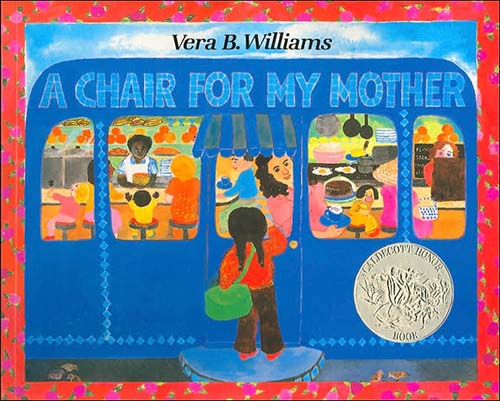
Cover of Vera B. Williams’ A Chair for My Mother, published in 1982.
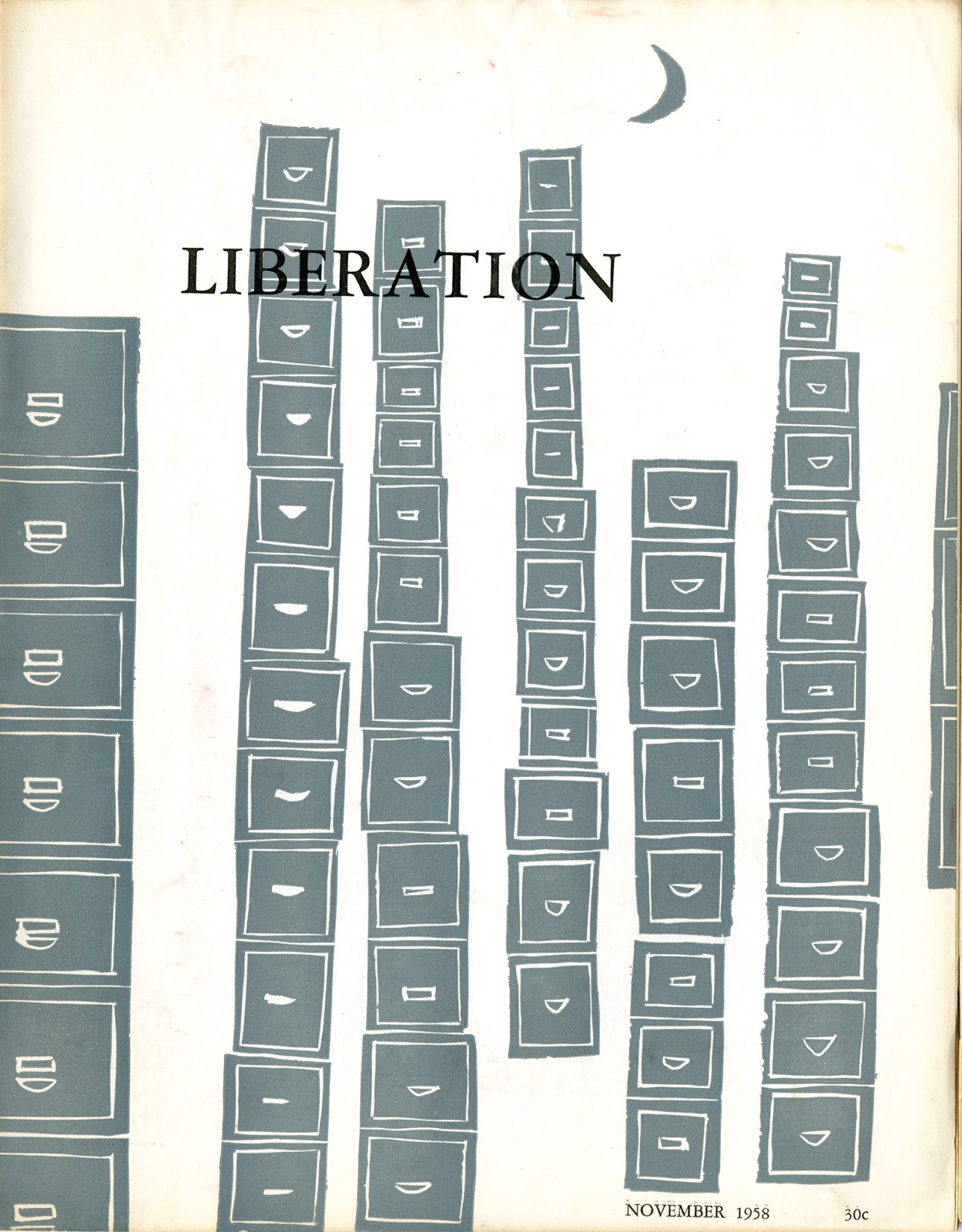
Vera B. Williams, Cover for Liberation Magazine, November 1958.
|
Sunday, April
21, 2024
Dolly Parton’s Imagination Library Free Books for Children ages 0-5
Dolly Parton’s Imagination Library impacts the pre-literacy skills and school readiness of children under the age of 5 in Buncombe County. The program mails a new, free, age-appropriate book to registered children each month until they turn five years old. Dolly Parton’s Imagination Library creates a home library of up to 60 books and instills a love of books and reading from an early age. If you have any questions about the program, please send an email to [email protected].
A national panel of educators selects the Imagination Library titles, which include: The Little Engine that Could, Last Stop on Market Street, Violet the Pilot, As an Oak Tree Grows, The Tale of Peter Rabbit, Llama Llama Red Pajama, Look Out Kindergarten, here I come, and many more (take a look at all the titles).
Register your child now!
Program Launch and Expansions
Literacy Together became a Dolly Parton’s Imagination Library affiliate in November 2015 with support from the Buncombe Partnership for Children. Through this program, registered children in Buncombe County receive a free book in the mail each month. Their parents also have the opportunity to attend workshops to learn how to build their children’s early literacy skills. Parents in need of literacy assistance are encouraged to receive tutoring through Literacy Together’s adult programming.
The program served 200 children during the 2015/16 fiscal year. The program expanded to serve 400 children in July 2016, and 600 in August 2017. In July 2018, capacity increased to 1,900 thanks to a special allocation in the North Carolina state budget. We’re now serving 4,600 kids in Buncombe County.
Monday, April
22, 2024
Vera B. Williams / STORIES Eight Decades of Politics and Picture Making
Exhibition and Public Programming
Vera B. Williams, an award-winning author and illustrator of children’s books, started making pictures almost as soon as she could walk. She studied at Black Mountain College in a time where summer institutes were held with classes taught by John Cage and Merce Cunningham. Williams studied under the Bauhaus luminary Josef Albers and went on to make art for the rest of her life. At the time of her death, The New York Times wrote: “Her illustrations, known for bold colors and a style reminiscent of folk art, were praised by reviewers for their great tenderness and crackling vitality.” Despite numerous awards and recognition for her children’s books, much of her wider life and work remains unexplored. This retrospective will showcase the complete range of Williams’ life and work. It will highlight her time at Black Mountain College, her political activism, and her establishment, with Paul Williams, of an influential yet little-known artist community, in addition to her work as an author and illustrator.
Author and illustrator of 17 children’s books, including Caldecott medal winner, A Chair for My Mother, Vera B. Williams always had a passion for the arts. Williams grew up in the Bronx, NY, and in 1936, when she was nine years old, one of her paintings, called Yentas, opens a new window, was included in an exhibition at the Museum of Modern Art. While Williams is widely known for her children’s books today, this exhibition’s expansive scope highlights unexplored aspects of her artistic practice and eight decades of life. From groundbreaking, powerful covers for Liberation Magazine, to Peace calendar collaborations with writer activist Grace Paley, to scenic sketches for Julian Beck and Judith Malina’s Living Theater, to hundreds of late life “Aging and Illness” cartoons sketches and doodles, Vera never sat still.
Williams arrived at Black Mountain College in 1945. While there, she embraced all aspects of living, working, and learning in the intensely creative college community. She was at BMC during a particularly fertile period, which allowed her to study with faculty members Buckminster Fuller and Josef Albers, and to participate in the famed summer sessions with John Cage, Merce Cunningham, M.C. Richards, and Robert Rauschenberg. In 1948, she graduated with Josef Albers as her advisor and sculptor Richard Lippold as her outside examiner. Forever one of the College’s shining stars, Vera graduated from BMC with just six semesters of coursework, at only twenty-one years old. She continued to visit BMC for years afterward, staying deeply involved with the artistic community that BMC incubated.
Anticipating the eventual closure of BMC, Williams, alongside her husband Paul Williams and a group of influential former BMC figures, founded The Gate Hill Cooperative Artists community located 30 miles north of NYC on the outskirts of Stony Point, NY. The Gate Hill Cooperative, also known as The Land, became an outcropping of Black Mountain College’s experimental ethos. Students and faculty including John Cage, M.C. Richards, David Tudor, Karen Karnes, David Weinrib, Stan VanDerBeek, and Patsy Lynch Wood shaped Gate Hill as founding members of the community. Vera B. Williams raised her three children at Gate Hill while continuing to make work.
The early Gate Hill era represented an especially creative phase for the BMC group. For Williams, this period saw the creation of 76 covers for Liberation Magazine, a radical, groundbreaking publication. This exhibition will feature some of Williams’ most powerful Liberation covers including a design for the June 1963 edition, which contained the first full publication of MLK’s “Letter from Birmingham Jail.” Williams’ activism work continued throughout her life. As president of PEN’s Children Committee and member of The War Resisters league, she created a wide range of political and educational posters and journal covers. Williams protested the war in Vietnam and nuclear proliferation while supporting women’s causes and racial equality. In 1981, Williams was arrested and spent a month in a federal prison on charges stemming from her political activism.
In her late 40’s, Williams embarked in earnest on her career as a children’s book author and illustrator, a career which garnered the NY Public Library’s recognition of A Chair for My Mother as one of the greatest 100 children’s books of all time. Infinitely curious and always a wanderer at heart, Williams’ personal life was as expansive as her art. In addition to her prolific picture making, Williams started and helped run a Summerhill-based alternative school, canoed the Yukon, and lived alone on a houseboat in Vancouver Harbor. She helped to organize and attended dozens of political demonstrations throughout her adult life.
Her books won many awards including the Caldecott Medal Honor Book for A Chair for My Mother in 1983, the Boston Globe–Horn Book Award– Fiction category– for Scooter in 1994, the Jane Addams Honor for Amber Was Brave, Essie Was Smart in 2002, and the NSK Neustadt Prize for Children’s Literature in 2009. Her books reflected her values, emphasizing love, compassion, kindness, joy, strength, individuality, and courage.
Images:
Cover of Vera B. Williams’ A Chair for My Mother, published in 1982.
Vera B. Williams, Cover for Liberation Magazine, November 1958.
Tuesday, April
23, 2024
Vera B. Williams / STORIES Eight Decades of Politics and Picture Making
Revisiting the Classics Book Club
Exhibition and Public Programming
Vera B. Williams, an award-winning author and illustrator of children’s books, started making pictures almost as soon as she could walk. She studied at Black Mountain College in a time where summer institutes were held with classes taught by John Cage and Merce Cunningham. Williams studied under the Bauhaus luminary Josef Albers and went on to make art for the rest of her life. At the time of her death, The New York Times wrote: “Her illustrations, known for bold colors and a style reminiscent of folk art, were praised by reviewers for their great tenderness and crackling vitality.” Despite numerous awards and recognition for her children’s books, much of her wider life and work remains unexplored. This retrospective will showcase the complete range of Williams’ life and work. It will highlight her time at Black Mountain College, her political activism, and her establishment, with Paul Williams, of an influential yet little-known artist community, in addition to her work as an author and illustrator.
Author and illustrator of 17 children’s books, including Caldecott medal winner, A Chair for My Mother, Vera B. Williams always had a passion for the arts. Williams grew up in the Bronx, NY, and in 1936, when she was nine years old, one of her paintings, called Yentas, opens a new window, was included in an exhibition at the Museum of Modern Art. While Williams is widely known for her children’s books today, this exhibition’s expansive scope highlights unexplored aspects of her artistic practice and eight decades of life. From groundbreaking, powerful covers for Liberation Magazine, to Peace calendar collaborations with writer activist Grace Paley, to scenic sketches for Julian Beck and Judith Malina’s Living Theater, to hundreds of late life “Aging and Illness” cartoons sketches and doodles, Vera never sat still.
Williams arrived at Black Mountain College in 1945. While there, she embraced all aspects of living, working, and learning in the intensely creative college community. She was at BMC during a particularly fertile period, which allowed her to study with faculty members Buckminster Fuller and Josef Albers, and to participate in the famed summer sessions with John Cage, Merce Cunningham, M.C. Richards, and Robert Rauschenberg. In 1948, she graduated with Josef Albers as her advisor and sculptor Richard Lippold as her outside examiner. Forever one of the College’s shining stars, Vera graduated from BMC with just six semesters of coursework, at only twenty-one years old. She continued to visit BMC for years afterward, staying deeply involved with the artistic community that BMC incubated.
Anticipating the eventual closure of BMC, Williams, alongside her husband Paul Williams and a group of influential former BMC figures, founded The Gate Hill Cooperative Artists community located 30 miles north of NYC on the outskirts of Stony Point, NY. The Gate Hill Cooperative, also known as The Land, became an outcropping of Black Mountain College’s experimental ethos. Students and faculty including John Cage, M.C. Richards, David Tudor, Karen Karnes, David Weinrib, Stan VanDerBeek, and Patsy Lynch Wood shaped Gate Hill as founding members of the community. Vera B. Williams raised her three children at Gate Hill while continuing to make work.
The early Gate Hill era represented an especially creative phase for the BMC group. For Williams, this period saw the creation of 76 covers for Liberation Magazine, a radical, groundbreaking publication. This exhibition will feature some of Williams’ most powerful Liberation covers including a design for the June 1963 edition, which contained the first full publication of MLK’s “Letter from Birmingham Jail.” Williams’ activism work continued throughout her life. As president of PEN’s Children Committee and member of The War Resisters league, she created a wide range of political and educational posters and journal covers. Williams protested the war in Vietnam and nuclear proliferation while supporting women’s causes and racial equality. In 1981, Williams was arrested and spent a month in a federal prison on charges stemming from her political activism.
In her late 40’s, Williams embarked in earnest on her career as a children’s book author and illustrator, a career which garnered the NY Public Library’s recognition of A Chair for My Mother as one of the greatest 100 children’s books of all time. Infinitely curious and always a wanderer at heart, Williams’ personal life was as expansive as her art. In addition to her prolific picture making, Williams started and helped run a Summerhill-based alternative school, canoed the Yukon, and lived alone on a houseboat in Vancouver Harbor. She helped to organize and attended dozens of political demonstrations throughout her adult life.
Her books won many awards including the Caldecott Medal Honor Book for A Chair for My Mother in 1983, the Boston Globe–Horn Book Award– Fiction category– for Scooter in 1994, the Jane Addams Honor for Amber Was Brave, Essie Was Smart in 2002, and the NSK Neustadt Prize for Children’s Literature in 2009. Her books reflected her values, emphasizing love, compassion, kindness, joy, strength, individuality, and courage.
Images:
Cover of Vera B. Williams’ A Chair for My Mother, published in 1982.
Vera B. Williams, Cover for Liberation Magazine, November 1958.
| Join Librarian and Friend, Jill Totman, to discuss “Books I Swore I’d Never Read Again!” This mid-winter series highlights 20th Century Authors. The group meets in person at the Weaverville Library. Copies of the titles are available at the Weaverville Library. No registration necessary. Newcomers welcome. |
Wednesday, April
24, 2024
Vera B. Williams / STORIES Eight Decades of Politics and Picture Making
Exhibition and Public Programming
Vera B. Williams, an award-winning author and illustrator of children’s books, started making pictures almost as soon as she could walk. She studied at Black Mountain College in a time where summer institutes were held with classes taught by John Cage and Merce Cunningham. Williams studied under the Bauhaus luminary Josef Albers and went on to make art for the rest of her life. At the time of her death, The New York Times wrote: “Her illustrations, known for bold colors and a style reminiscent of folk art, were praised by reviewers for their great tenderness and crackling vitality.” Despite numerous awards and recognition for her children’s books, much of her wider life and work remains unexplored. This retrospective will showcase the complete range of Williams’ life and work. It will highlight her time at Black Mountain College, her political activism, and her establishment, with Paul Williams, of an influential yet little-known artist community, in addition to her work as an author and illustrator.
Author and illustrator of 17 children’s books, including Caldecott medal winner, A Chair for My Mother, Vera B. Williams always had a passion for the arts. Williams grew up in the Bronx, NY, and in 1936, when she was nine years old, one of her paintings, called Yentas, opens a new window, was included in an exhibition at the Museum of Modern Art. While Williams is widely known for her children’s books today, this exhibition’s expansive scope highlights unexplored aspects of her artistic practice and eight decades of life. From groundbreaking, powerful covers for Liberation Magazine, to Peace calendar collaborations with writer activist Grace Paley, to scenic sketches for Julian Beck and Judith Malina’s Living Theater, to hundreds of late life “Aging and Illness” cartoons sketches and doodles, Vera never sat still.
Williams arrived at Black Mountain College in 1945. While there, she embraced all aspects of living, working, and learning in the intensely creative college community. She was at BMC during a particularly fertile period, which allowed her to study with faculty members Buckminster Fuller and Josef Albers, and to participate in the famed summer sessions with John Cage, Merce Cunningham, M.C. Richards, and Robert Rauschenberg. In 1948, she graduated with Josef Albers as her advisor and sculptor Richard Lippold as her outside examiner. Forever one of the College’s shining stars, Vera graduated from BMC with just six semesters of coursework, at only twenty-one years old. She continued to visit BMC for years afterward, staying deeply involved with the artistic community that BMC incubated.
Anticipating the eventual closure of BMC, Williams, alongside her husband Paul Williams and a group of influential former BMC figures, founded The Gate Hill Cooperative Artists community located 30 miles north of NYC on the outskirts of Stony Point, NY. The Gate Hill Cooperative, also known as The Land, became an outcropping of Black Mountain College’s experimental ethos. Students and faculty including John Cage, M.C. Richards, David Tudor, Karen Karnes, David Weinrib, Stan VanDerBeek, and Patsy Lynch Wood shaped Gate Hill as founding members of the community. Vera B. Williams raised her three children at Gate Hill while continuing to make work.
The early Gate Hill era represented an especially creative phase for the BMC group. For Williams, this period saw the creation of 76 covers for Liberation Magazine, a radical, groundbreaking publication. This exhibition will feature some of Williams’ most powerful Liberation covers including a design for the June 1963 edition, which contained the first full publication of MLK’s “Letter from Birmingham Jail.” Williams’ activism work continued throughout her life. As president of PEN’s Children Committee and member of The War Resisters league, she created a wide range of political and educational posters and journal covers. Williams protested the war in Vietnam and nuclear proliferation while supporting women’s causes and racial equality. In 1981, Williams was arrested and spent a month in a federal prison on charges stemming from her political activism.
In her late 40’s, Williams embarked in earnest on her career as a children’s book author and illustrator, a career which garnered the NY Public Library’s recognition of A Chair for My Mother as one of the greatest 100 children’s books of all time. Infinitely curious and always a wanderer at heart, Williams’ personal life was as expansive as her art. In addition to her prolific picture making, Williams started and helped run a Summerhill-based alternative school, canoed the Yukon, and lived alone on a houseboat in Vancouver Harbor. She helped to organize and attended dozens of political demonstrations throughout her adult life.
Her books won many awards including the Caldecott Medal Honor Book for A Chair for My Mother in 1983, the Boston Globe–Horn Book Award– Fiction category– for Scooter in 1994, the Jane Addams Honor for Amber Was Brave, Essie Was Smart in 2002, and the NSK Neustadt Prize for Children’s Literature in 2009. Her books reflected her values, emphasizing love, compassion, kindness, joy, strength, individuality, and courage.
Images:
Cover of Vera B. Williams’ A Chair for My Mother, published in 1982.
Vera B. Williams, Cover for Liberation Magazine, November 1958.
Thursday, April
25, 2024
ASAP: How Does Western North Carolina Shop for Food SURVEY
Vera B. Williams / STORIES Eight Decades of Politics and Picture Making
“The Last Ecstatic Days” Film Screening and Discussion
ASAP (Appalachian Sustainable Agriculture Project) has released a survey to learn more about how people in Western North Carolina shop for food and why they choose the food they do. The survey, part of a three-year project by ASAP’s Local Food Research Center, is for any resident of Western North Carolina over the age of 18, no matter where or how they shop for food. It can be completed online at surveymonkey.com/r/WNCFoodASAP or over the phone by calling ASAP at 828-236-1282. It should take approximately 8 to 12 minutes to complete and will be open through Oct. 31, 2024. Respondents are encouraged to share the survey widely with families, friends, and co-workers.
“By completing this survey, you are helping local farmers understand and connect with consumers,” said Amy Marion, ASAP Associate Director and lead researcher. “The challenges of our food system are constantly evolving. Improving it requires active participation from all community members. With this research we can better understand consumer values and the barriers they face, and help farmers and food producers improve communications with their customers and their communities.”
The survey is part of a three-year research project, “Connections in Direct Markets: Assessing the feedback loop between consumer values and farmers’ marketing strategies,” which will examine and improve communication and alignment between farmers and consumers in Western North Carolina. The research phase will also employ consumer focus groups, farmer interviews and case studies, and more targeted surveying. The broad consumer survey provides an update to the last consumer survey conducted by the Local Food Research Center in 2014. Results from the current research project will be shared in 2025.
ASAP founded the Local Food Research Center in 2011 to study the economic, environmental, and social impacts of localizing food systems. From its inception, ASAP’s programs and services have been grounded in research and evaluation, adjusting based on a strong feedback loop and observation of current conditions in the food system.
This project is supported in part by the National Institute of Food and Agriculture, U.S. Department of Agriculture, under award number 2022-38640-37488 through the Southern Sustainable Agriculture Research and Education program under subaward number LS23-382. USDA is an equal opportunity employer and service provider.
Exhibition and Public Programming
Vera B. Williams, an award-winning author and illustrator of children’s books, started making pictures almost as soon as she could walk. She studied at Black Mountain College in a time where summer institutes were held with classes taught by John Cage and Merce Cunningham. Williams studied under the Bauhaus luminary Josef Albers and went on to make art for the rest of her life. At the time of her death, The New York Times wrote: “Her illustrations, known for bold colors and a style reminiscent of folk art, were praised by reviewers for their great tenderness and crackling vitality.” Despite numerous awards and recognition for her children’s books, much of her wider life and work remains unexplored. This retrospective will showcase the complete range of Williams’ life and work. It will highlight her time at Black Mountain College, her political activism, and her establishment, with Paul Williams, of an influential yet little-known artist community, in addition to her work as an author and illustrator.
Author and illustrator of 17 children’s books, including Caldecott medal winner, A Chair for My Mother, Vera B. Williams always had a passion for the arts. Williams grew up in the Bronx, NY, and in 1936, when she was nine years old, one of her paintings, called Yentas, opens a new window, was included in an exhibition at the Museum of Modern Art. While Williams is widely known for her children’s books today, this exhibition’s expansive scope highlights unexplored aspects of her artistic practice and eight decades of life. From groundbreaking, powerful covers for Liberation Magazine, to Peace calendar collaborations with writer activist Grace Paley, to scenic sketches for Julian Beck and Judith Malina’s Living Theater, to hundreds of late life “Aging and Illness” cartoons sketches and doodles, Vera never sat still.
Williams arrived at Black Mountain College in 1945. While there, she embraced all aspects of living, working, and learning in the intensely creative college community. She was at BMC during a particularly fertile period, which allowed her to study with faculty members Buckminster Fuller and Josef Albers, and to participate in the famed summer sessions with John Cage, Merce Cunningham, M.C. Richards, and Robert Rauschenberg. In 1948, she graduated with Josef Albers as her advisor and sculptor Richard Lippold as her outside examiner. Forever one of the College’s shining stars, Vera graduated from BMC with just six semesters of coursework, at only twenty-one years old. She continued to visit BMC for years afterward, staying deeply involved with the artistic community that BMC incubated.
Anticipating the eventual closure of BMC, Williams, alongside her husband Paul Williams and a group of influential former BMC figures, founded The Gate Hill Cooperative Artists community located 30 miles north of NYC on the outskirts of Stony Point, NY. The Gate Hill Cooperative, also known as The Land, became an outcropping of Black Mountain College’s experimental ethos. Students and faculty including John Cage, M.C. Richards, David Tudor, Karen Karnes, David Weinrib, Stan VanDerBeek, and Patsy Lynch Wood shaped Gate Hill as founding members of the community. Vera B. Williams raised her three children at Gate Hill while continuing to make work.
The early Gate Hill era represented an especially creative phase for the BMC group. For Williams, this period saw the creation of 76 covers for Liberation Magazine, a radical, groundbreaking publication. This exhibition will feature some of Williams’ most powerful Liberation covers including a design for the June 1963 edition, which contained the first full publication of MLK’s “Letter from Birmingham Jail.” Williams’ activism work continued throughout her life. As president of PEN’s Children Committee and member of The War Resisters league, she created a wide range of political and educational posters and journal covers. Williams protested the war in Vietnam and nuclear proliferation while supporting women’s causes and racial equality. In 1981, Williams was arrested and spent a month in a federal prison on charges stemming from her political activism.
In her late 40’s, Williams embarked in earnest on her career as a children’s book author and illustrator, a career which garnered the NY Public Library’s recognition of A Chair for My Mother as one of the greatest 100 children’s books of all time. Infinitely curious and always a wanderer at heart, Williams’ personal life was as expansive as her art. In addition to her prolific picture making, Williams started and helped run a Summerhill-based alternative school, canoed the Yukon, and lived alone on a houseboat in Vancouver Harbor. She helped to organize and attended dozens of political demonstrations throughout her adult life.
Her books won many awards including the Caldecott Medal Honor Book for A Chair for My Mother in 1983, the Boston Globe–Horn Book Award– Fiction category– for Scooter in 1994, the Jane Addams Honor for Amber Was Brave, Essie Was Smart in 2002, and the NSK Neustadt Prize for Children’s Literature in 2009. Her books reflected her values, emphasizing love, compassion, kindness, joy, strength, individuality, and courage.
Images:
Cover of Vera B. Williams’ A Chair for My Mother, published in 1982.
Vera B. Williams, Cover for Liberation Magazine, November 1958.
On Thursday, April 25, 2024, Stillpoint Wellness will host an in-person screening of “The Last Ecstatic Days.” Doors will open at 5:30 and the screening will begin at 6:00 pm.
After the screening will be a community discussion facilitated by Tiffany Sauls and Tandy Wells, which will wrap around 8:00 – 8:30 pm.
Come early to find parking!
Friday, April
26, 2024
ASAP: How Does Western North Carolina Shop for Food SURVEY
Swannanoa Valley Book Club
Dance your way to health with Zumba Gold
Vera B. Williams / STORIES Eight Decades of Politics and Picture Making
ASAP (Appalachian Sustainable Agriculture Project) has released a survey to learn more about how people in Western North Carolina shop for food and why they choose the food they do. The survey, part of a three-year project by ASAP’s Local Food Research Center, is for any resident of Western North Carolina over the age of 18, no matter where or how they shop for food. It can be completed online at surveymonkey.com/r/WNCFoodASAP or over the phone by calling ASAP at 828-236-1282. It should take approximately 8 to 12 minutes to complete and will be open through Oct. 31, 2024. Respondents are encouraged to share the survey widely with families, friends, and co-workers.
“By completing this survey, you are helping local farmers understand and connect with consumers,” said Amy Marion, ASAP Associate Director and lead researcher. “The challenges of our food system are constantly evolving. Improving it requires active participation from all community members. With this research we can better understand consumer values and the barriers they face, and help farmers and food producers improve communications with their customers and their communities.”
The survey is part of a three-year research project, “Connections in Direct Markets: Assessing the feedback loop between consumer values and farmers’ marketing strategies,” which will examine and improve communication and alignment between farmers and consumers in Western North Carolina. The research phase will also employ consumer focus groups, farmer interviews and case studies, and more targeted surveying. The broad consumer survey provides an update to the last consumer survey conducted by the Local Food Research Center in 2014. Results from the current research project will be shared in 2025.
ASAP founded the Local Food Research Center in 2011 to study the economic, environmental, and social impacts of localizing food systems. From its inception, ASAP’s programs and services have been grounded in research and evaluation, adjusting based on a strong feedback loop and observation of current conditions in the food system.
This project is supported in part by the National Institute of Food and Agriculture, U.S. Department of Agriculture, under award number 2022-38640-37488 through the Southern Sustainable Agriculture Research and Education program under subaward number LS23-382. USDA is an equal opportunity employer and service provider.
| We’ll discuss The World Beyond the Redbud Tree by local author Madison Brightwell. After a short break, Madison Brightwell will join us to offer insights into the book.
FULL INFORMATION HERE This is a partnership with the Swannanoa Valley Museum & History Center. FREE. Refreshments will be served. |
Zumba Gold is a low-impact class recommended for seniors or people just getting started or getting back to exercise. This class is taught by Trish Howey, a senior Zumba instructor with years of experience. Zumba Gold uses Latin and Pop music with choreography to increase strength for body, brain, and balance. The goal is to be fit and to have FUN while exercising. Base strength is recommended.
Space is limited so registration is required.
Exhibition and Public Programming
Vera B. Williams, an award-winning author and illustrator of children’s books, started making pictures almost as soon as she could walk. She studied at Black Mountain College in a time where summer institutes were held with classes taught by John Cage and Merce Cunningham. Williams studied under the Bauhaus luminary Josef Albers and went on to make art for the rest of her life. At the time of her death, The New York Times wrote: “Her illustrations, known for bold colors and a style reminiscent of folk art, were praised by reviewers for their great tenderness and crackling vitality.” Despite numerous awards and recognition for her children’s books, much of her wider life and work remains unexplored. This retrospective will showcase the complete range of Williams’ life and work. It will highlight her time at Black Mountain College, her political activism, and her establishment, with Paul Williams, of an influential yet little-known artist community, in addition to her work as an author and illustrator.
Author and illustrator of 17 children’s books, including Caldecott medal winner, A Chair for My Mother, Vera B. Williams always had a passion for the arts. Williams grew up in the Bronx, NY, and in 1936, when she was nine years old, one of her paintings, called Yentas, opens a new window, was included in an exhibition at the Museum of Modern Art. While Williams is widely known for her children’s books today, this exhibition’s expansive scope highlights unexplored aspects of her artistic practice and eight decades of life. From groundbreaking, powerful covers for Liberation Magazine, to Peace calendar collaborations with writer activist Grace Paley, to scenic sketches for Julian Beck and Judith Malina’s Living Theater, to hundreds of late life “Aging and Illness” cartoons sketches and doodles, Vera never sat still.
Williams arrived at Black Mountain College in 1945. While there, she embraced all aspects of living, working, and learning in the intensely creative college community. She was at BMC during a particularly fertile period, which allowed her to study with faculty members Buckminster Fuller and Josef Albers, and to participate in the famed summer sessions with John Cage, Merce Cunningham, M.C. Richards, and Robert Rauschenberg. In 1948, she graduated with Josef Albers as her advisor and sculptor Richard Lippold as her outside examiner. Forever one of the College’s shining stars, Vera graduated from BMC with just six semesters of coursework, at only twenty-one years old. She continued to visit BMC for years afterward, staying deeply involved with the artistic community that BMC incubated.
Anticipating the eventual closure of BMC, Williams, alongside her husband Paul Williams and a group of influential former BMC figures, founded The Gate Hill Cooperative Artists community located 30 miles north of NYC on the outskirts of Stony Point, NY. The Gate Hill Cooperative, also known as The Land, became an outcropping of Black Mountain College’s experimental ethos. Students and faculty including John Cage, M.C. Richards, David Tudor, Karen Karnes, David Weinrib, Stan VanDerBeek, and Patsy Lynch Wood shaped Gate Hill as founding members of the community. Vera B. Williams raised her three children at Gate Hill while continuing to make work.
The early Gate Hill era represented an especially creative phase for the BMC group. For Williams, this period saw the creation of 76 covers for Liberation Magazine, a radical, groundbreaking publication. This exhibition will feature some of Williams’ most powerful Liberation covers including a design for the June 1963 edition, which contained the first full publication of MLK’s “Letter from Birmingham Jail.” Williams’ activism work continued throughout her life. As president of PEN’s Children Committee and member of The War Resisters league, she created a wide range of political and educational posters and journal covers. Williams protested the war in Vietnam and nuclear proliferation while supporting women’s causes and racial equality. In 1981, Williams was arrested and spent a month in a federal prison on charges stemming from her political activism.
In her late 40’s, Williams embarked in earnest on her career as a children’s book author and illustrator, a career which garnered the NY Public Library’s recognition of A Chair for My Mother as one of the greatest 100 children’s books of all time. Infinitely curious and always a wanderer at heart, Williams’ personal life was as expansive as her art. In addition to her prolific picture making, Williams started and helped run a Summerhill-based alternative school, canoed the Yukon, and lived alone on a houseboat in Vancouver Harbor. She helped to organize and attended dozens of political demonstrations throughout her adult life.
Her books won many awards including the Caldecott Medal Honor Book for A Chair for My Mother in 1983, the Boston Globe–Horn Book Award– Fiction category– for Scooter in 1994, the Jane Addams Honor for Amber Was Brave, Essie Was Smart in 2002, and the NSK Neustadt Prize for Children’s Literature in 2009. Her books reflected her values, emphasizing love, compassion, kindness, joy, strength, individuality, and courage.
Images:
Cover of Vera B. Williams’ A Chair for My Mother, published in 1982.
Vera B. Williams, Cover for Liberation Magazine, November 1958.
Saturday, April
27, 2024
Dolly Parton’s Imagination Library Free Books for Children ages 0-5
Equine Yoga + Trail Ride with Cathy Woods
Breakthrough Breathwork Meditation Workshop with Sound Baths
Hybrid: Unlock the Power of Scent: Aromatherapy in Ayurveda
World Tai Chi Day + Qigong Day
Vera B. Williams / STORIES Eight Decades of Politics and Picture Making
One Book, One Buncombe with Bestselling Author Brendan Slocumb
One Book, One Buncombe: Live Stream Watch Party of the Author Talk with Brendan Slocumb
Dolly Parton’s Imagination Library impacts the pre-literacy skills and school readiness of children under the age of 5 in Buncombe County. The program mails a new, free, age-appropriate book to registered children each month until they turn five years old. Dolly Parton’s Imagination Library creates a home library of up to 60 books and instills a love of books and reading from an early age. If you have any questions about the program, please send an email to [email protected].
A national panel of educators selects the Imagination Library titles, which include: The Little Engine that Could, Last Stop on Market Street, Violet the Pilot, As an Oak Tree Grows, The Tale of Peter Rabbit, Llama Llama Red Pajama, Look Out Kindergarten, here I come, and many more (take a look at all the titles).
Register your child now!
Program Launch and Expansions
Literacy Together became a Dolly Parton’s Imagination Library affiliate in November 2015 with support from the Buncombe Partnership for Children. Through this program, registered children in Buncombe County receive a free book in the mail each month. Their parents also have the opportunity to attend workshops to learn how to build their children’s early literacy skills. Parents in need of literacy assistance are encouraged to receive tutoring through Literacy Together’s adult programming.
The program served 200 children during the 2015/16 fiscal year. The program expanded to serve 400 children in July 2016, and 600 in August 2017. In July 2018, capacity increased to 1,900 thanks to a special allocation in the North Carolina state budget. We’re now serving 4,600 kids in Buncombe County.
Join Cathy Woods, Author of “Yoga for Riders,” creator of Body, Mind, Equine™ and international presenter, for a retreat day of yoga, equestrian mindfulness, and trail riding at Tryon International Equestrian Center located in beautiful Western North Carolina.
Embark on a transformative journey of self-discovery and inner healing through our groundbreaking Breathwork Meditation Workshop including 2 Sound Baths! During this immersive experience you will be guided through a powerful Breathwork practice to help you massively release stress, heal past wounds and traumas, access deeper levels of awareness, and connect more profoundly to Source.
Led by two professional highly experienced facilitators with over 50 years experience between them, this workshop will
deepen your connection with your breath and unlock its incredible potential for physical, mental, and emotional well-being.
Join a group of like-minded individuals on the path to self-discovery in a supportive nurturing environment on the beautiful island in Marshall on one of the world’s oldest rivers.
You may come to the full day (10am-4.30pm, $120 ) which includes two Breathwork Meditation Sessions with sound baths and a session of Self-discovery. You may also come to the first Breathwork Meditation Session with sound bath only (10am-1pm, $60) or the second Breathwork Session with sound bath only (1.30pm-4.30pm, $60).
Register at www.breakthroughbreathwork.com/events
In this transformative webinar, you will explore the essence of gandha (Sanskrit for smell) and the profound impact it holds from an Ayurvedic perspective. Together, we will explore a range of herbal and essential oils used in aromatherapy, unlocking the wisdom to discern when and how to use them, tailored to your unique dosha – Vata, Pitta, or Kapha. By the end of this session, you will possess a deeper understanding of the therapeutic potential of scent and how it can enhance your well-being.
What you will learn in this webinar is not just knowledge; it’s the power to heal, rejuvenate, and elevate your consciousness through the wisdom of Ayurveda and aromatherapy.
Topics we will cover in this webinar
In this webinar, we’ll embark on a transformative exploration together:
Gain insight into the profound concept of Ganda and how it influences your senses and overall well-being.
Explore the world of herbal and essential oils, learning when and how to use them to restore balance based on your dosha.
Discover the ancient Tanmatra philosophy and how it shapes your sensory experiences.
Engage in interactive discussions and Q&A sessions with our knowledgeable instructors.
World Tai Chi Day & Qigong Day!
ALL are welcome at this FREE event that is open to the public on April 27th. You’ll meet up with others at the Carrier Park pavilion. Classes will be held from 10am – 3pm. This event is to help introduce new people to the various forms of Tai Chi, or Taiji, practice. Learn why the ancient form of Tai Chi offers benefits for everyone- no experience necessary.
Exhibition and Public Programming
Vera B. Williams, an award-winning author and illustrator of children’s books, started making pictures almost as soon as she could walk. She studied at Black Mountain College in a time where summer institutes were held with classes taught by John Cage and Merce Cunningham. Williams studied under the Bauhaus luminary Josef Albers and went on to make art for the rest of her life. At the time of her death, The New York Times wrote: “Her illustrations, known for bold colors and a style reminiscent of folk art, were praised by reviewers for their great tenderness and crackling vitality.” Despite numerous awards and recognition for her children’s books, much of her wider life and work remains unexplored. This retrospective will showcase the complete range of Williams’ life and work. It will highlight her time at Black Mountain College, her political activism, and her establishment, with Paul Williams, of an influential yet little-known artist community, in addition to her work as an author and illustrator.
Author and illustrator of 17 children’s books, including Caldecott medal winner, A Chair for My Mother, Vera B. Williams always had a passion for the arts. Williams grew up in the Bronx, NY, and in 1936, when she was nine years old, one of her paintings, called Yentas, opens a new window, was included in an exhibition at the Museum of Modern Art. While Williams is widely known for her children’s books today, this exhibition’s expansive scope highlights unexplored aspects of her artistic practice and eight decades of life. From groundbreaking, powerful covers for Liberation Magazine, to Peace calendar collaborations with writer activist Grace Paley, to scenic sketches for Julian Beck and Judith Malina’s Living Theater, to hundreds of late life “Aging and Illness” cartoons sketches and doodles, Vera never sat still.
Williams arrived at Black Mountain College in 1945. While there, she embraced all aspects of living, working, and learning in the intensely creative college community. She was at BMC during a particularly fertile period, which allowed her to study with faculty members Buckminster Fuller and Josef Albers, and to participate in the famed summer sessions with John Cage, Merce Cunningham, M.C. Richards, and Robert Rauschenberg. In 1948, she graduated with Josef Albers as her advisor and sculptor Richard Lippold as her outside examiner. Forever one of the College’s shining stars, Vera graduated from BMC with just six semesters of coursework, at only twenty-one years old. She continued to visit BMC for years afterward, staying deeply involved with the artistic community that BMC incubated.
Anticipating the eventual closure of BMC, Williams, alongside her husband Paul Williams and a group of influential former BMC figures, founded The Gate Hill Cooperative Artists community located 30 miles north of NYC on the outskirts of Stony Point, NY. The Gate Hill Cooperative, also known as The Land, became an outcropping of Black Mountain College’s experimental ethos. Students and faculty including John Cage, M.C. Richards, David Tudor, Karen Karnes, David Weinrib, Stan VanDerBeek, and Patsy Lynch Wood shaped Gate Hill as founding members of the community. Vera B. Williams raised her three children at Gate Hill while continuing to make work.
The early Gate Hill era represented an especially creative phase for the BMC group. For Williams, this period saw the creation of 76 covers for Liberation Magazine, a radical, groundbreaking publication. This exhibition will feature some of Williams’ most powerful Liberation covers including a design for the June 1963 edition, which contained the first full publication of MLK’s “Letter from Birmingham Jail.” Williams’ activism work continued throughout her life. As president of PEN’s Children Committee and member of The War Resisters league, she created a wide range of political and educational posters and journal covers. Williams protested the war in Vietnam and nuclear proliferation while supporting women’s causes and racial equality. In 1981, Williams was arrested and spent a month in a federal prison on charges stemming from her political activism.
In her late 40’s, Williams embarked in earnest on her career as a children’s book author and illustrator, a career which garnered the NY Public Library’s recognition of A Chair for My Mother as one of the greatest 100 children’s books of all time. Infinitely curious and always a wanderer at heart, Williams’ personal life was as expansive as her art. In addition to her prolific picture making, Williams started and helped run a Summerhill-based alternative school, canoed the Yukon, and lived alone on a houseboat in Vancouver Harbor. She helped to organize and attended dozens of political demonstrations throughout her adult life.
Her books won many awards including the Caldecott Medal Honor Book for A Chair for My Mother in 1983, the Boston Globe–Horn Book Award– Fiction category– for Scooter in 1994, the Jane Addams Honor for Amber Was Brave, Essie Was Smart in 2002, and the NSK Neustadt Prize for Children’s Literature in 2009. Her books reflected her values, emphasizing love, compassion, kindness, joy, strength, individuality, and courage.
Images:
Cover of Vera B. Williams’ A Chair for My Mother, published in 1982.
Vera B. Williams, Cover for Liberation Magazine, November 1958.
Buncombe County Public Library started our inaugural countywide book club called One Book, One Buncombe this spring. The vision for this communal effort is to have as many people as possible read, discuss, meditate, and ultimately have the shared experience of collectively reading the same book this spring.
Our first One Book, One Buncombe selection has been The Violin Conspiracy by North Carolina-based author Brendan Slocumb. Hundreds of people all across the county have been reading this thought provoking novel in March and April, and a wide selection of programs have been well attended.
One Book, One Buncombe 2024 will culminate with a free community event featuring author Brendan Slocumb on Saturday, April 27 at 2 p.m. This event will take place at Ferguson Auditorium at AB Tech. 19 Tech Drive, Asheville, 28801. Admission is free and everyone is welcome! No advance registration is required to attend this program.
Slocumb will speak about the book and sign books after the formal program. Books will also be available for purchase at this event.
If you can’t make it, the event will be streamed on the County’s Facebook page.
Learn more about Brendan Slocumb and The Violin Conspiracy on his author page here.
You can find this book, and lots of other great books, at your local library.
We’ll be live-streaming the Author Talk with Violin Conspiracy author Brendan Slocumb in the Community Room!
Light refreshments will be served.
Sunday, April
28, 2024
ASAP: How Does Western North Carolina Shop for Food SURVEY
Dolly Parton’s Imagination Library Free Books for Children ages 0-5
ASAP (Appalachian Sustainable Agriculture Project) has released a survey to learn more about how people in Western North Carolina shop for food and why they choose the food they do. The survey, part of a three-year project by ASAP’s Local Food Research Center, is for any resident of Western North Carolina over the age of 18, no matter where or how they shop for food. It can be completed online at surveymonkey.com/r/WNCFoodASAP or over the phone by calling ASAP at 828-236-1282. It should take approximately 8 to 12 minutes to complete and will be open through Oct. 31, 2024. Respondents are encouraged to share the survey widely with families, friends, and co-workers.
“By completing this survey, you are helping local farmers understand and connect with consumers,” said Amy Marion, ASAP Associate Director and lead researcher. “The challenges of our food system are constantly evolving. Improving it requires active participation from all community members. With this research we can better understand consumer values and the barriers they face, and help farmers and food producers improve communications with their customers and their communities.”
The survey is part of a three-year research project, “Connections in Direct Markets: Assessing the feedback loop between consumer values and farmers’ marketing strategies,” which will examine and improve communication and alignment between farmers and consumers in Western North Carolina. The research phase will also employ consumer focus groups, farmer interviews and case studies, and more targeted surveying. The broad consumer survey provides an update to the last consumer survey conducted by the Local Food Research Center in 2014. Results from the current research project will be shared in 2025.
ASAP founded the Local Food Research Center in 2011 to study the economic, environmental, and social impacts of localizing food systems. From its inception, ASAP’s programs and services have been grounded in research and evaluation, adjusting based on a strong feedback loop and observation of current conditions in the food system.
This project is supported in part by the National Institute of Food and Agriculture, U.S. Department of Agriculture, under award number 2022-38640-37488 through the Southern Sustainable Agriculture Research and Education program under subaward number LS23-382. USDA is an equal opportunity employer and service provider.
Dolly Parton’s Imagination Library impacts the pre-literacy skills and school readiness of children under the age of 5 in Buncombe County. The program mails a new, free, age-appropriate book to registered children each month until they turn five years old. Dolly Parton’s Imagination Library creates a home library of up to 60 books and instills a love of books and reading from an early age. If you have any questions about the program, please send an email to [email protected].
A national panel of educators selects the Imagination Library titles, which include: The Little Engine that Could, Last Stop on Market Street, Violet the Pilot, As an Oak Tree Grows, The Tale of Peter Rabbit, Llama Llama Red Pajama, Look Out Kindergarten, here I come, and many more (take a look at all the titles).
Register your child now!
Program Launch and Expansions
Literacy Together became a Dolly Parton’s Imagination Library affiliate in November 2015 with support from the Buncombe Partnership for Children. Through this program, registered children in Buncombe County receive a free book in the mail each month. Their parents also have the opportunity to attend workshops to learn how to build their children’s early literacy skills. Parents in need of literacy assistance are encouraged to receive tutoring through Literacy Together’s adult programming.
The program served 200 children during the 2015/16 fiscal year. The program expanded to serve 400 children in July 2016, and 600 in August 2017. In July 2018, capacity increased to 1,900 thanks to a special allocation in the North Carolina state budget. We’re now serving 4,600 kids in Buncombe County.
Monday, April
29, 2024
ASAP: How Does Western North Carolina Shop for Food SURVEY
Vera B. Williams / STORIES Eight Decades of Politics and Picture Making
ASAP (Appalachian Sustainable Agriculture Project) has released a survey to learn more about how people in Western North Carolina shop for food and why they choose the food they do. The survey, part of a three-year project by ASAP’s Local Food Research Center, is for any resident of Western North Carolina over the age of 18, no matter where or how they shop for food. It can be completed online at surveymonkey.com/r/WNCFoodASAP or over the phone by calling ASAP at 828-236-1282. It should take approximately 8 to 12 minutes to complete and will be open through Oct. 31, 2024. Respondents are encouraged to share the survey widely with families, friends, and co-workers.
“By completing this survey, you are helping local farmers understand and connect with consumers,” said Amy Marion, ASAP Associate Director and lead researcher. “The challenges of our food system are constantly evolving. Improving it requires active participation from all community members. With this research we can better understand consumer values and the barriers they face, and help farmers and food producers improve communications with their customers and their communities.”
The survey is part of a three-year research project, “Connections in Direct Markets: Assessing the feedback loop between consumer values and farmers’ marketing strategies,” which will examine and improve communication and alignment between farmers and consumers in Western North Carolina. The research phase will also employ consumer focus groups, farmer interviews and case studies, and more targeted surveying. The broad consumer survey provides an update to the last consumer survey conducted by the Local Food Research Center in 2014. Results from the current research project will be shared in 2025.
ASAP founded the Local Food Research Center in 2011 to study the economic, environmental, and social impacts of localizing food systems. From its inception, ASAP’s programs and services have been grounded in research and evaluation, adjusting based on a strong feedback loop and observation of current conditions in the food system.
This project is supported in part by the National Institute of Food and Agriculture, U.S. Department of Agriculture, under award number 2022-38640-37488 through the Southern Sustainable Agriculture Research and Education program under subaward number LS23-382. USDA is an equal opportunity employer and service provider.
Exhibition and Public Programming
Vera B. Williams, an award-winning author and illustrator of children’s books, started making pictures almost as soon as she could walk. She studied at Black Mountain College in a time where summer institutes were held with classes taught by John Cage and Merce Cunningham. Williams studied under the Bauhaus luminary Josef Albers and went on to make art for the rest of her life. At the time of her death, The New York Times wrote: “Her illustrations, known for bold colors and a style reminiscent of folk art, were praised by reviewers for their great tenderness and crackling vitality.” Despite numerous awards and recognition for her children’s books, much of her wider life and work remains unexplored. This retrospective will showcase the complete range of Williams’ life and work. It will highlight her time at Black Mountain College, her political activism, and her establishment, with Paul Williams, of an influential yet little-known artist community, in addition to her work as an author and illustrator.
Author and illustrator of 17 children’s books, including Caldecott medal winner, A Chair for My Mother, Vera B. Williams always had a passion for the arts. Williams grew up in the Bronx, NY, and in 1936, when she was nine years old, one of her paintings, called Yentas, opens a new window, was included in an exhibition at the Museum of Modern Art. While Williams is widely known for her children’s books today, this exhibition’s expansive scope highlights unexplored aspects of her artistic practice and eight decades of life. From groundbreaking, powerful covers for Liberation Magazine, to Peace calendar collaborations with writer activist Grace Paley, to scenic sketches for Julian Beck and Judith Malina’s Living Theater, to hundreds of late life “Aging and Illness” cartoons sketches and doodles, Vera never sat still.
Williams arrived at Black Mountain College in 1945. While there, she embraced all aspects of living, working, and learning in the intensely creative college community. She was at BMC during a particularly fertile period, which allowed her to study with faculty members Buckminster Fuller and Josef Albers, and to participate in the famed summer sessions with John Cage, Merce Cunningham, M.C. Richards, and Robert Rauschenberg. In 1948, she graduated with Josef Albers as her advisor and sculptor Richard Lippold as her outside examiner. Forever one of the College’s shining stars, Vera graduated from BMC with just six semesters of coursework, at only twenty-one years old. She continued to visit BMC for years afterward, staying deeply involved with the artistic community that BMC incubated.
Anticipating the eventual closure of BMC, Williams, alongside her husband Paul Williams and a group of influential former BMC figures, founded The Gate Hill Cooperative Artists community located 30 miles north of NYC on the outskirts of Stony Point, NY. The Gate Hill Cooperative, also known as The Land, became an outcropping of Black Mountain College’s experimental ethos. Students and faculty including John Cage, M.C. Richards, David Tudor, Karen Karnes, David Weinrib, Stan VanDerBeek, and Patsy Lynch Wood shaped Gate Hill as founding members of the community. Vera B. Williams raised her three children at Gate Hill while continuing to make work.
The early Gate Hill era represented an especially creative phase for the BMC group. For Williams, this period saw the creation of 76 covers for Liberation Magazine, a radical, groundbreaking publication. This exhibition will feature some of Williams’ most powerful Liberation covers including a design for the June 1963 edition, which contained the first full publication of MLK’s “Letter from Birmingham Jail.” Williams’ activism work continued throughout her life. As president of PEN’s Children Committee and member of The War Resisters league, she created a wide range of political and educational posters and journal covers. Williams protested the war in Vietnam and nuclear proliferation while supporting women’s causes and racial equality. In 1981, Williams was arrested and spent a month in a federal prison on charges stemming from her political activism.
In her late 40’s, Williams embarked in earnest on her career as a children’s book author and illustrator, a career which garnered the NY Public Library’s recognition of A Chair for My Mother as one of the greatest 100 children’s books of all time. Infinitely curious and always a wanderer at heart, Williams’ personal life was as expansive as her art. In addition to her prolific picture making, Williams started and helped run a Summerhill-based alternative school, canoed the Yukon, and lived alone on a houseboat in Vancouver Harbor. She helped to organize and attended dozens of political demonstrations throughout her adult life.
Her books won many awards including the Caldecott Medal Honor Book for A Chair for My Mother in 1983, the Boston Globe–Horn Book Award– Fiction category– for Scooter in 1994, the Jane Addams Honor for Amber Was Brave, Essie Was Smart in 2002, and the NSK Neustadt Prize for Children’s Literature in 2009. Her books reflected her values, emphasizing love, compassion, kindness, joy, strength, individuality, and courage.
Images:
Cover of Vera B. Williams’ A Chair for My Mother, published in 1982.
Vera B. Williams, Cover for Liberation Magazine, November 1958.
Tuesday, April
30, 2024
Adult Mental Health Series: Communication 101
Vera B. Williams / STORIES Eight Decades of Politics and Picture Making
Want to learn more about managing depression and nervous energy? Got questions about medications or emotional implications of chronic illness? Join Vaya Health’s Geriatric and Adult Mental Health Specialty team for a series of classes at the Enka-Candler and Leicester Libraries
Classes are free to attend, but registration is required. Please visit the Vaya Health calendar to register. Everyone is welcome.
Communication is the string that ties us all together. If that string isn’t strong enough or is broken, relationships tend to unravel. Effective communication cultivates strong relationships and supports one’s voice being heard. This curriculum is designed to look at ways to neutralize barriers and methods to enhance clear, concise, and deliberate exchanges.
Exhibition and Public Programming
Vera B. Williams, an award-winning author and illustrator of children’s books, started making pictures almost as soon as she could walk. She studied at Black Mountain College in a time where summer institutes were held with classes taught by John Cage and Merce Cunningham. Williams studied under the Bauhaus luminary Josef Albers and went on to make art for the rest of her life. At the time of her death, The New York Times wrote: “Her illustrations, known for bold colors and a style reminiscent of folk art, were praised by reviewers for their great tenderness and crackling vitality.” Despite numerous awards and recognition for her children’s books, much of her wider life and work remains unexplored. This retrospective will showcase the complete range of Williams’ life and work. It will highlight her time at Black Mountain College, her political activism, and her establishment, with Paul Williams, of an influential yet little-known artist community, in addition to her work as an author and illustrator.
Author and illustrator of 17 children’s books, including Caldecott medal winner, A Chair for My Mother, Vera B. Williams always had a passion for the arts. Williams grew up in the Bronx, NY, and in 1936, when she was nine years old, one of her paintings, called Yentas, opens a new window, was included in an exhibition at the Museum of Modern Art. While Williams is widely known for her children’s books today, this exhibition’s expansive scope highlights unexplored aspects of her artistic practice and eight decades of life. From groundbreaking, powerful covers for Liberation Magazine, to Peace calendar collaborations with writer activist Grace Paley, to scenic sketches for Julian Beck and Judith Malina’s Living Theater, to hundreds of late life “Aging and Illness” cartoons sketches and doodles, Vera never sat still.
Williams arrived at Black Mountain College in 1945. While there, she embraced all aspects of living, working, and learning in the intensely creative college community. She was at BMC during a particularly fertile period, which allowed her to study with faculty members Buckminster Fuller and Josef Albers, and to participate in the famed summer sessions with John Cage, Merce Cunningham, M.C. Richards, and Robert Rauschenberg. In 1948, she graduated with Josef Albers as her advisor and sculptor Richard Lippold as her outside examiner. Forever one of the College’s shining stars, Vera graduated from BMC with just six semesters of coursework, at only twenty-one years old. She continued to visit BMC for years afterward, staying deeply involved with the artistic community that BMC incubated.
Anticipating the eventual closure of BMC, Williams, alongside her husband Paul Williams and a group of influential former BMC figures, founded The Gate Hill Cooperative Artists community located 30 miles north of NYC on the outskirts of Stony Point, NY. The Gate Hill Cooperative, also known as The Land, became an outcropping of Black Mountain College’s experimental ethos. Students and faculty including John Cage, M.C. Richards, David Tudor, Karen Karnes, David Weinrib, Stan VanDerBeek, and Patsy Lynch Wood shaped Gate Hill as founding members of the community. Vera B. Williams raised her three children at Gate Hill while continuing to make work.
The early Gate Hill era represented an especially creative phase for the BMC group. For Williams, this period saw the creation of 76 covers for Liberation Magazine, a radical, groundbreaking publication. This exhibition will feature some of Williams’ most powerful Liberation covers including a design for the June 1963 edition, which contained the first full publication of MLK’s “Letter from Birmingham Jail.” Williams’ activism work continued throughout her life. As president of PEN’s Children Committee and member of The War Resisters league, she created a wide range of political and educational posters and journal covers. Williams protested the war in Vietnam and nuclear proliferation while supporting women’s causes and racial equality. In 1981, Williams was arrested and spent a month in a federal prison on charges stemming from her political activism.
In her late 40’s, Williams embarked in earnest on her career as a children’s book author and illustrator, a career which garnered the NY Public Library’s recognition of A Chair for My Mother as one of the greatest 100 children’s books of all time. Infinitely curious and always a wanderer at heart, Williams’ personal life was as expansive as her art. In addition to her prolific picture making, Williams started and helped run a Summerhill-based alternative school, canoed the Yukon, and lived alone on a houseboat in Vancouver Harbor. She helped to organize and attended dozens of political demonstrations throughout her adult life.
Her books won many awards including the Caldecott Medal Honor Book for A Chair for My Mother in 1983, the Boston Globe–Horn Book Award– Fiction category– for Scooter in 1994, the Jane Addams Honor for Amber Was Brave, Essie Was Smart in 2002, and the NSK Neustadt Prize for Children’s Literature in 2009. Her books reflected her values, emphasizing love, compassion, kindness, joy, strength, individuality, and courage.
Images:
Cover of Vera B. Williams’ A Chair for My Mother, published in 1982.
Vera B. Williams, Cover for Liberation Magazine, November 1958.
Wednesday, May
1, 2024
ASAP: How Does Western North Carolina Shop for Food SURVEY
ASAP (Appalachian Sustainable Agriculture Project) has released a survey to learn more about how people in Western North Carolina shop for food and why they choose the food they do. The survey, part of a three-year project by ASAP’s Local Food Research Center, is for any resident of Western North Carolina over the age of 18, no matter where or how they shop for food. It can be completed online at surveymonkey.com/r/WNCFoodASAP or over the phone by calling ASAP at 828-236-1282. It should take approximately 8 to 12 minutes to complete and will be open through Oct. 31, 2024. Respondents are encouraged to share the survey widely with families, friends, and co-workers.
“By completing this survey, you are helping local farmers understand and connect with consumers,” said Amy Marion, ASAP Associate Director and lead researcher. “The challenges of our food system are constantly evolving. Improving it requires active participation from all community members. With this research we can better understand consumer values and the barriers they face, and help farmers and food producers improve communications with their customers and their communities.”
The survey is part of a three-year research project, “Connections in Direct Markets: Assessing the feedback loop between consumer values and farmers’ marketing strategies,” which will examine and improve communication and alignment between farmers and consumers in Western North Carolina. The research phase will also employ consumer focus groups, farmer interviews and case studies, and more targeted surveying. The broad consumer survey provides an update to the last consumer survey conducted by the Local Food Research Center in 2014. Results from the current research project will be shared in 2025.
ASAP founded the Local Food Research Center in 2011 to study the economic, environmental, and social impacts of localizing food systems. From its inception, ASAP’s programs and services have been grounded in research and evaluation, adjusting based on a strong feedback loop and observation of current conditions in the food system.
This project is supported in part by the National Institute of Food and Agriculture, U.S. Department of Agriculture, under award number 2022-38640-37488 through the Southern Sustainable Agriculture Research and Education program under subaward number LS23-382. USDA is an equal opportunity employer and service provider.