It looks like you're using ad blocking technology. We are a local company, and our advertisers are local as well. Please consider allow listing our website in the future.
The Works Progress Administration (WPA) was an ambitious employment and infrastructure program created by President Roosevelt in 1935, during the bleakest years of the Great Depression. Over its eight years of existence, the WPA put roughly 8.5 million Americans to work. One of these projects was Lake Tomahawk. Learn about this fascinating history while taking a walk around the lake. We will discuss the creation of the lake and its history from its inception in 1936 to the present.
The Swannanoa Valley Museum & History Center’s Walk Through History series is an opportunity for WNC residents to get to know the rich history of the Swannanoa Valley by walking its historic estates, sidewalks and cemeteries with knowledgeable guides. Running from April thru September one Wednesday morning a month (with a break in July), each tour is conducted by local experts who intimately know the history of the individuals and communities who once traversed the valley. Come enjoy a morning stroll through WNC history!
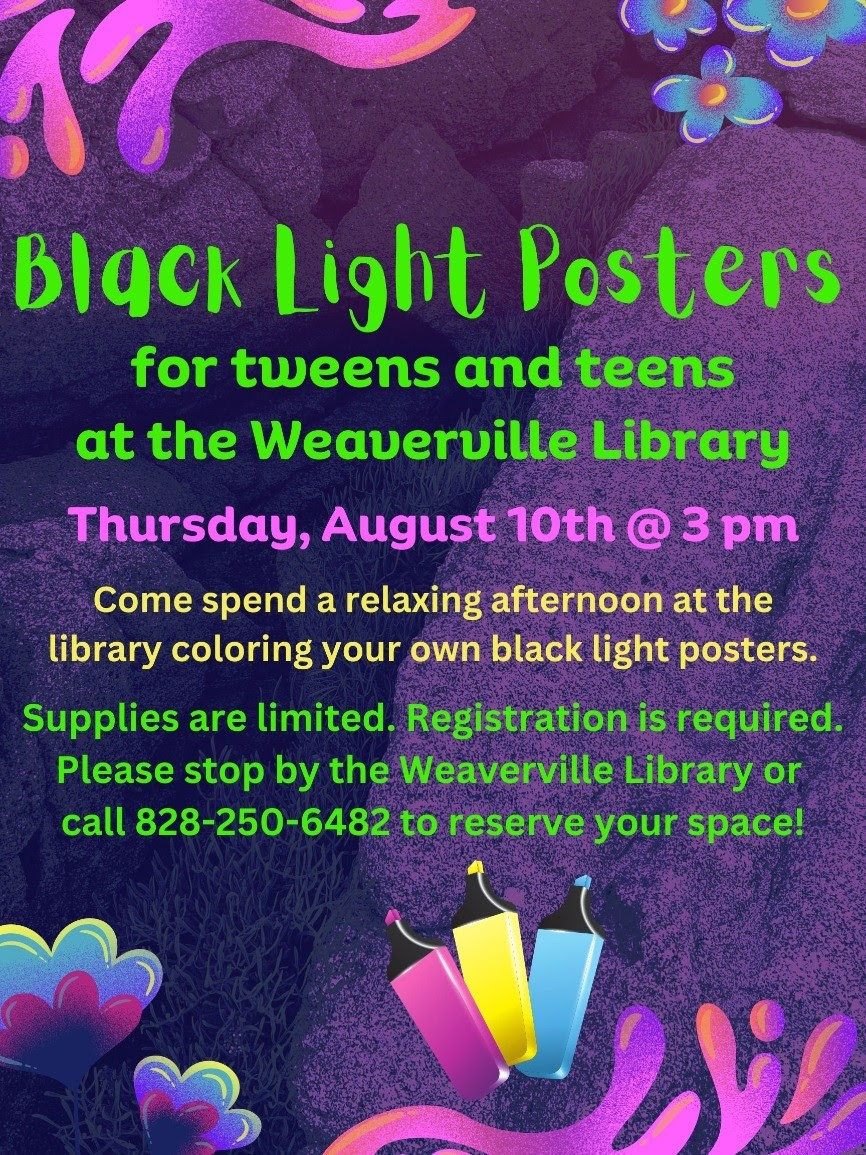
Black Light Posters for Tweens and Teens
Aug 9 @ 3:00 pm – 4:30 pm
Weaverville Public Library
Come spend a relaxing afternoon at the Weaverville Library coloring your own black light posters! Supplies are limited.
Registration is required. Please stop by the Weaverville Library or call 828-250-6482 to reserve your space!
The Rail Project
Aug 9 @ 5:30 pm
Black Mountain Library
Dr. Dan Pierce shares the history of the men who worked, and died, to bring the first trains across the Swannanoa Gap and the project recognizing one of the greatest feats of 19th Century construction in our area.
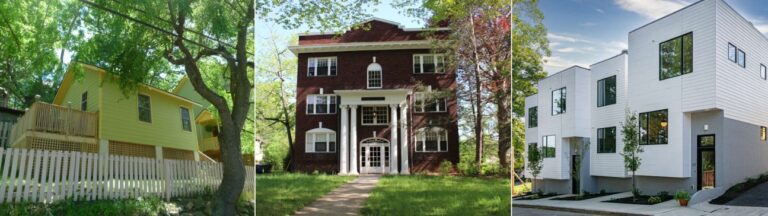
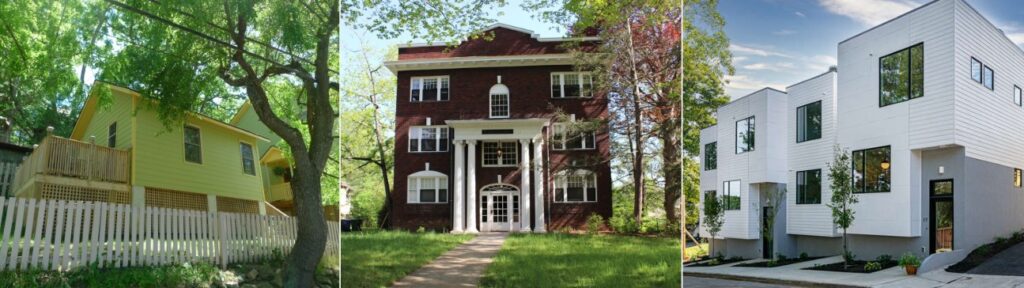
Local examples of Missing Middle Housing including an accessory dwelling unit (left), small apartment house (center), and townhomes (right)
In April 2023 the City began a Missing Middle Housing study to identify barriers that negatively impact the production of housing supply in Asheville. The term “missing middle” is meant to describe a range of house-scale buildings with multiple units that are compatible in scale and form with detached single-family homes, including such examples as duplexes, cottage courts, and fourplexes.
As part of the study, the team is conducting a Renter’s Survey to better understand housing preferences and needs from the perspective of Asheville’s renting population. Anyone wishing to participate in the anonymous survey can access it at the project website or directly by clicking the following link: Renter’s Survey. This survey will be accessible until Friday, August 11, 2023.
Asheville renters’ opportunities to give feedback
Aug 10 all-day
The city of Asheville
Do you live and rent in the City of Asheville?
Do you want an opportunity to share your experience as a renter?
The City wants to hear from you!
Our Community and Economic Development staff is addressing housing in Asheville by looking at what we call “missing middle housing”. “Missing middle housing” refers to housing types, such as duplexes, triplexes, or townhomes, that can be said to have largely been missing from the residential housing market over the last 70 years. You can describe middle residential as housing types that live in the middle of two common and well-known housing options: Single-family homes and large-scale multi-family housing apartment buildings.
Local examples of Missing Middle Housing including an accessory dwelling unit (left), small apartment house (center), and townhomes (right)
In April 2023 the City began a Missing Middle Housing Study to identify barriers that negatively impact the production of housing supply in Asheville. The term “missing middle” is meant to describe a range of house-scale buildings with multiple units that are compatible in scale and form with detached single-family homes, including such examples as duplexes, cottage courts, and fourplexes.
As part of the study, the team is conducting a Renter’s Survey to better understand housing preferences and needs from the perspective of Asheville’s renting population. Anyone wishing to participate in the anonymous survey can access it at the project website or directly by clicking the following link: Renter’s Survey. This survey will be accessible until Friday, August 11, 2023.
Attend a workshop : August 4, 2023
Another approaching engagement opportunity will be a public workshop to be held next month. The free workshop will be an open-house format where attendees can drop in anytime between 4 – 7 p.m. on August 4th at the Harrah’s Cherokee Center’s Banquet Hall (87 Haywood Street, Asheville, NC 28801). Attendees will learn more about missing middle housing and how it can help to expand housing choice, increase entry-level home ownership opportunities, help homeowners to build generational wealth and passive income, and enable local ownership and neighborhood-driven investment.
The workshop is a family-friendly event that will include a series of stations for participants to learn and discuss specific housing-related topics. At each station there will be an opportunity to give feedback that will help guide the final Missing Middle Housing report. This report will ultimately make recommendations to help Asheville prioritize next steps for regulatory changes and strategies that support more housing choices in Asheville. Topics that will be highlighted at the workshop include:
Project Overview: Timeline, engagement opportunities, and next steps
Asheville’s Housing Needs: What are the most significant housing challenges facing Asheville?
Missing Middle Housing Outcomes: What are the benefits of missing middle housing and how have other cities implemented these housing strategies?
MMH Building Types: What are the types of housing included in the study and which missing middle housing types would fit into your neighborhood?
What We’ve Heard So Far: What are the concerns and barriers that exist in Asheville today?
For those who cannot attend the in-person event, all workshop materials and accompanying surveys will be available on the City’s project website.
Feedback Needed: Take Buncombe County’s Primary Election Early Voting Survey
Aug 10 all-day
online
Your voice matters about how the 2024 Primary Election’s Early Voting will be shaped. We want your feedback on the proposed times and locations for Early Voting via our six-question survey. The Buncombe County Board of Elections will take feedback into consideration when determining the locations and weekend hours for Early Voting.
For additional information about the proposed Early Voting dates, times, and locations, read below. And please take the survey here. Thank you for your input, we appreciate your feedback. The Board of Elections will meet on Tuesday, Sep. 12 to discuss public input of the Early Voting plan for the primary election and adopt it at the Oct. 17 meeting. After that, Buncombe County will publicize the finalized locations and hours on our website, through media partners, social media, and other platforms.
Proposed Early Voting information
Early Voting Period:
Feb. 15- March 2
Proposed locations
Black Mountain Library – 105 N. Dougherty St, Black Mountain 28711
East Asheville Library – 3 Avon Rd, Asheville 28805
Enka-Candler Library – 1404 Sand Hill Rd, Candler 28715
Fairview Library – 1 Taylor Rd, Fairview 28730
Leicester Community Center – 2979 New Leicester Hwy, Leicester 28748
North Asheville Location – TBD
South Buncombe Library – 260 Overlook Rd, Asheville 28803
2nd South Asheville Location – TBD
Weaverville Community Center – 60 Lakeshore Dr, Weaverville 28787
Wesley Grant Southside Center (in lieu of BOE) – 285 Livingston St, Asheville 28801
West Asheville Library – 942 Haywood Rd, Asheville 28806
Proposed hours
Please note that voting hours are 8 a.m. to 7:30 p.m., Monday – Friday, and on the last Saturday (March 2) hours are 8 a.m. to 3 p.m.,as mandated by state law. The Board of Elections can set weekend hours and determine the number of early voting sites.
Proposed weekend hours are 10 a.m. to 3 p.m.
Saturday, February 17
Saturday, February 24
Sunday, February 25
Homeowner Grant Program Inquiry Process Open
Aug 10 all-day
online
\
Buncombe County is excited to announce the inquiry process for the 2023 Homeowner Grant Program opens Aug. 1. This program is officially in its third year, and qualified homeowners will have an opportunity to receive financial assistance for housing-related costs. The website buncombecounty.org/homeownergrant will start accepting inquiries Aug. 1-Sept. 30, or homeowners can call (828) 250-5500. You must call or submit an inquiry to determine eligibility.
You may qualify for up to $300 in unincorporated Buncombe County, and up to $500 in City of Asheville. Please note that applicants who received grants last year will need to re-apply.
Through this program, residents who own residential property in Buncombe County that they have lived in as their primary residence for at least five years and who earn at or less than 80% of Area Median Income (AMI) as a household may be eligible to participate.
If eligible, grantees may choose to have grant funds applied to their property tax bill and/or paid and applied to other housing-related obligations such as housing costs, mortgage, or homeowner’s insurance. Payments are made directly to the source of the approved bill. Payments will not be made directly to individuals. There are several new aspects to this year’s program including new eligibility requirements, and now mobile-home owners may receive the grants.
You must have owned and lived in your home for 5 years or more
Your home must by your primary and only residence
Your household income is at or below 80% of area median income (AMI)
Your household cannot already be receiving tax deferment assistance like elderly/disabled, or Veterans exemptions.
You must not have more than $60,000 in liquid resources (for example: your cash on hand, checking & savings accounts combined, or other investments available to you within 7 days)
The inquiry process will be open through Sept. 30. Eligible homeowners can submit an inquiry at buncombecounty.org/homeownergrant after Aug. 1 or call (828) 250-5500 to start the application process. Phone support is available in any language. Please note that we anticipate a high volume of calls and inquiries at the onset, and it may take a few weeks for a case manager to get back with you.
“If you think you may qualify, but you aren’t sure, please give our team a call,” says Economic Services Director Phillip Hardin. “We know there are a number of unique circumstances, and our staff will work with homeowners to help find solutions.”
Need Help With Water Bills? New Water Assistance Program Could Offer Help.
Aug 10 all-day
online
If you’re behind on your water bill or afraid your water might get cut off, a new resource might be able to help you. On Jan. 4, the Buncombe County Board of Commissioners approved more than $450,000 in federal funding for the Low-Income Household Water Assistance Program (LIHWAP). The initiative is aimed at preventing water disconnections and helping reconnect drinking and wastewater services.
The LIHWAP will be administered by Buncombe County-based Eblen Charities. The nonprofit will make payments directly to utilities on behalf of qualifying households. The program is slated to run through Sept. 30, 2023 or until funds are exhausted.
Eligibility requirements
Households that currently receive Food and Nutrition Services (FNS), Temporary Assistance for Needy Families (TANF) or Work First services, or those that received Low-Income Energy Assistance Program (LIEAP) services from Oct. 1, 2020-Sept. 30, 2021, are automatically eligible to receive this benefit if their water services have been cut off or are in danger of being cut off.
For additional eligibility information or to apply, please contact Eblen Charities at (828) 255-3066.
Preservation Grant
Aug 10 all-day
online w/ Preservation Society of Asheville & Buncombe County
The addition of preservation grants to our existing efforts in advocacy, technical support, preservation easements, and education, will allow us to reach a new and diverse audience. This program will allow us to support both large and small projects from downtown Asheville to our rural and under-served communities.
We look forward to helping with emergency stabilization projects and restorations of important places, to helping neighborhoods receive designations such as recognition on the National Register of Historic Places and to encouraging and supporting new and unique education and research opportunities. We want to be surprised and humbled by the projects our community asks us to support!
As our city faces the inevitable challenges of growth, PSABC’s voice and reach must expand. The important addition of this Preservation Grant Program comes in response to the needs of our community.
*Deadline to apply for the current grant round is Friday August 11th*
Preservation grants from $500 – $5000 will be offered to the public in three categories:
Bricks-And-Mortar
Rehabilitation, restoration and repair of structures that are 50 years of age or older
Some examples: Windows and doors • Exterior painting • Porches • Roofs and gutters • Electrical and plumbing • Hardscaping • Foundation • Original exterior or interior details
Public Education
Development of educational materials and programs that advance knowledge of our shared history
Some examples: Research and documentation • Oral histories • Installations specific to buildings, place history, and culture • Exhibitions • K–12 educational publications • Seminars and lectures • Documentary films
Planning, Survey and Designation
Planning and design for building rehabilitation and restoration projects, historic resource surveys and local or national designations
Some examples: Historic building condition reports • Engineering and rehabilitation plans • Feasibility studies • Historic resource surveys • Updates of previous surveys • Local and national historic designations
Food Scraps Drop Off: Stephens-Lee Recreation Center
Aug 10 @ 7:00 am – 6:00 pm
Stephens-Lee Recreation Center
Food Scraps Drop Off
The City of Asheville, in partnership with Buncombe County and the Natural Resources Defense Council, is offering a FREE Food Scrap Drop-Off program in
two locations for all Buncombe County residents. This organic matter will be collected and turned into good clean compost, keeping it OUT of our landfill and reducing greenhouse gas emissions.
Need a handy kitchen countertop food scrap bin? Let us know on the registration form! We’ll be having bin giveaways at city and county facilities and would love to give you one.
Locations
Stephens-Lee Recreation Center “Food Scrap Shed” next to the Community Garden on the North side of the parking lot
The City of Asheville, in partnership with Buncombe County and the Natural Resources Defense Council, is offering a FREE Food Scrap Drop-Off program in two locations for all Buncombe County residents. This organic matter will be collected and turned into good clean compost, keeping it OUT of our landfill and reducing greenhouse gas emissions.
Need a handy kitchen countertop food scrap bin? Let us know on the registration form! We’ll be having bin giveaways at city and county facilities and would love to give you one.
Voters: Free Photo ID Cards from Buncombe County Board of Elections
Aug 10 @ 9:00 am – 5:00 pm
Buncombe County Board of Elections
Registered voters who do not have an acceptable identification card for voting in Buncombe County can now go to the Buncombe County Board of Elections office at 59 Woodfin Place to get a free ID.
For more information about the new state law and photo IDs for voting, click here.
Most voters have a North Carolina driver’s license, which is an acceptable form of photo ID for voting. Those voters do not need to obtain a separate ID from their county board. Other common forms of acceptable ID include military or Veterans ID cards issued by the federal government, and college student and public employer ID cards that the State Board approved for use in voting. For a full list of acceptable forms of photo ID for voting, see the State Board’s website at Voter ID.
Registered voters who do not have an acceptable form of identification for voting purposes can now get a free photo ID from their county board of elections office. No special documents are needed. Voters will simply provide their name, date of birth, and the last four digits of their Social Security number, and have their photo taken. You may also register to vote at that time if needed.
Voters will be able to get an ID printed and given to them on the spot. A free voter photo ID will include the voter’s photo, name, and registration number. They will expire 10 years from the date of issuance. ID cards can be issued at any time during regular business hours, except for the period following the last day of early voting through Election Day.
“Any voter who does not have an acceptable ID card for voting can now get a free ID from their county board of elections,” said Karen Brinson Bell, executive director of the State Board of Elections. “State Board staff has worked diligently with the county boards of elections over the past couple of months to get the necessary software and hardware in place for ID printing.”
Voters also can get a free ID from the N.C. Division of Motor Vehicles (NCDMV). Find more information under “No-Fee ID Cards” at State IDs | NCDMV.
Background on the Voter Photo ID Requirement
Voters will be asked to show photo ID when voting in North Carolina, starting with the Town of Weaverville, Town of Woodfin, and Woodfin Water & Sewer District municipal elections this fall.
All voters will be able to vote with or without an ID. If a voter casting a ballot at the voting site does not provide an acceptable ID, the voter may fill out a Photo ID Exception Form and vote a provisional ballot, or vote a provisional ballot and bring an acceptable ID to the county board of elections office by the day before the county canvass (which is typically 10 days after elections in even-numbered years and seven days after elections in odd-numbered years).
Voters who vote by mail will be asked to include a photocopy of an ID with their ballot or complete a Photo ID Exception Form for Absentee Voting. The photocopy will be mailed in a special envelope to protect the voter’s personal information on their ID.
For more information on the photo ID requirement, see Voter ID.
Food Scraps Drop Off: West Asheville Library
Aug 10 @ 10:00 am – 5:00 pm
West Asheville Library
Food Scraps Drop Off
The City of Asheville, in partnership with Buncombe County and the Natural Resources Defense Council, is offering a FREE Food Scrap Drop-Off program in
two locations for all Buncombe County residents. This organic matter will be collected and turned into good clean compost, keeping it OUT of our landfill and reducing greenhouse gas emissions.
Need a handy kitchen countertop food scrap bin? Let us know on the registration form! We’ll be having bin giveaways at city and county facilities and would love to give you one.
Locations
West Asheville Library – “Food Scrap Bin Shelters” on the south side of the building
Passive Recreation Community Engagement Event at Richmond Hill Park
Aug 10 @ 4:00 pm – 7:00 pm
Richmond Hill Park
Join the Buncombe County Open Space Bond team and Parks & Recreation department for an informational event at Richmond Hill Park on Thursday, Aug. 10th, from 4-7 p.m. Anyone interested in attending can experience passive recreation opportunities firsthand and engage with the Open Space Bond team. Share your thoughts on the future of Open Space in Buncombe County and gain deeper insights into passive recreation.
In November 2022, Buncombe County voters approved a general obligation bond to allocate $30 million towards Open Space projects, including greenways, conservation easements, and passive recreation lands.
The Open Space Bond team is currently seeking valuable input from the community, aiming to understand the collective vision for the future of passive recreation lands in Buncombe County. These conversations will help shape the County’s process for evaluating and selecting projects to receive bond funding.
Passive recreation lands promote healthy lifestyles and social outlets for residents, while also boasting long-term cost-effectiveness due to their minimal upkeep requirements. In addition, passive recreation areas play a vital role in minimizing impacts on the natural environment when compared to traditional park developments.
“The people of Buncombe County have shown that they want to see more opportunities that combine conservation and recreation, so we want to know what passive recreation means to you,” explains Jill Carter, the Open Space Bond Project Manager. “This event gives us a great chance to talk with the community and hear what kinds of projects they’d like to see become a reality and how they think these bond funds can best be put to work.”
For more information and to participate in the Passive Recreation survey, click here.
Neighbors for More Neighbors Kickoff Party
Aug 10 @ 5:00 pm – 7:00 pm
Wedge Brewery at Foundation
Neighbors for More Neighbors Kickoff PartyIn response to both a severe housing shortage in our region and also the climate crisis, regional environmental organization MountainTrue is launching a new pro-housing program called Neighbors for More Neighbors WNC. The free kickoff party for this new program will be on Thursday, August 10th from 5 – 7pm at the Wedge Brewery at Foundation. We invite everyone who celebrates neighbors and walkable communities to come out and share your vision for a welcoming future for Western North Carolina! The event will feature games, interactive elements, inspiring speakers, and more.
Queer Music Exploration
Aug 10 @ 5:00 pm – 6:00 pm
LEAF Global Arts
Queer Music Exploration – Students will explore guitar, bass, drums, singing and piano with a focus on learning music by artists from the LGBTQ+ community. Students will have the chance to interact with their peers and share their experiences through music.
Rhythm + Percussion Class with The Rhythmic Arts Project (TRAP) AVL
Join us for a fun hour of drumming! This class with The Rhythmic Arts Project is for teens and adults.
This program is free, but registration is required and class size is limited.
Please register so our instructor can provide enough percussion instruments. Attendees are encouraged to bring their own drums if they are able.
Code with Asheville Monthly Meeting
Aug 10 @ 7:00 pm – 8:30 pm
online
Are you curious or even passionate about using advocacy, technology and sensible design to create more equitable social and civic structures in Western North Carolina?
Whether you call yourself an organizer, a technologist, a designer, planner, concerned resident, all of the above or something else entirely, we want to be in relationship and build community together with you.
Check out a list of our current projects: https://github.com/CodeForAsheville/projects
What to expect:
Since project work takes place asynchronously—individually and in smaller squads—the goals of our monthly gatherings are to:
build relationships and learn about each other’s skills, interests and goals,
learn what we are doing across the organization (project updates),
provide opportunities to get involved with and/or initiate projects, and
shape where we are going as an organization, co-creating the culture and course of our work together.
In this meeting, we will:
gather virtually using Zoom for group video chat,
do brief introductions, with a prompt,
share updates about the projects that we’re working on, highlighting deliverables for the next month and areas where additional resources would be useful, and
discuss proposals and new opportunities to engage with local government and community organizations.
It isn’t all glamorous, but the stakes are low for showing up and we’d be delighted to join together with you in this work.
Dr. Mona Hanna-Attisha, Live and In-Conversation With Blue Ridge Health CEO Dr. Richard Hudspeth
Aug 10 @ 7:30 pm
Bo Thomas Auditorium at Blue Ridge Community College in Flat Rock, NC
Pediatrician Dr. Mona Hanna-Attisha who exposed the Flint, Michigan water crisis will be in conversation
with Blue Ridge Health’s CEO Dr. Richard Hudspeth and Pediatric Neurologist Dr. Lisa
Abraham as she shares her moving, personal story of research, heartbreaking discovery, and
moral outrage while caring for the children of one of Michigan’s poorest cities.
“Dr. Mona” is the author of the 2018 book What the Eyes Don't See, which The New York Times
listed as as one of the 100 Most Notable Books of the Year. She was named one of Time
Magazine’s 100 Most Influential People in the World and one of USA Today’s Women of the
Century. The event is a gift to the community in celebration of Blue Ridge Health’s 60 th
anniversary of service to the WNC region. All who attend will receive a complimentary copy of
Dr. Mona’s book, while supplies last.
Local examples of Missing Middle Housing including an accessory dwelling unit (left), small apartment house (center), and townhomes (right)
In April 2023 the City began a Missing Middle Housing study to identify barriers that negatively impact the production of housing supply in Asheville. The term “missing middle” is meant to describe a range of house-scale buildings with multiple units that are compatible in scale and form with detached single-family homes, including such examples as duplexes, cottage courts, and fourplexes.
As part of the study, the team is conducting a Renter’s Survey to better understand housing preferences and needs from the perspective of Asheville’s renting population. Anyone wishing to participate in the anonymous survey can access it at the project website or directly by clicking the following link: Renter’s Survey. This survey will be accessible until Friday, August 11, 2023.
Asheville renters’ opportunities to give feedback
Aug 11 all-day
The city of Asheville
Do you live and rent in the City of Asheville?
Do you want an opportunity to share your experience as a renter?
The City wants to hear from you!
Our Community and Economic Development staff is addressing housing in Asheville by looking at what we call “missing middle housing”. “Missing middle housing” refers to housing types, such as duplexes, triplexes, or townhomes, that can be said to have largely been missing from the residential housing market over the last 70 years. You can describe middle residential as housing types that live in the middle of two common and well-known housing options: Single-family homes and large-scale multi-family housing apartment buildings.
Local examples of Missing Middle Housing including an accessory dwelling unit (left), small apartment house (center), and townhomes (right)
In April 2023 the City began a Missing Middle Housing Study to identify barriers that negatively impact the production of housing supply in Asheville. The term “missing middle” is meant to describe a range of house-scale buildings with multiple units that are compatible in scale and form with detached single-family homes, including such examples as duplexes, cottage courts, and fourplexes.
As part of the study, the team is conducting a Renter’s Survey to better understand housing preferences and needs from the perspective of Asheville’s renting population. Anyone wishing to participate in the anonymous survey can access it at the project website or directly by clicking the following link: Renter’s Survey. This survey will be accessible until Friday, August 11, 2023.
Attend a workshop : August 4, 2023
Another approaching engagement opportunity will be a public workshop to be held next month. The free workshop will be an open-house format where attendees can drop in anytime between 4 – 7 p.m. on August 4th at the Harrah’s Cherokee Center’s Banquet Hall (87 Haywood Street, Asheville, NC 28801). Attendees will learn more about missing middle housing and how it can help to expand housing choice, increase entry-level home ownership opportunities, help homeowners to build generational wealth and passive income, and enable local ownership and neighborhood-driven investment.
The workshop is a family-friendly event that will include a series of stations for participants to learn and discuss specific housing-related topics. At each station there will be an opportunity to give feedback that will help guide the final Missing Middle Housing report. This report will ultimately make recommendations to help Asheville prioritize next steps for regulatory changes and strategies that support more housing choices in Asheville. Topics that will be highlighted at the workshop include:
Project Overview: Timeline, engagement opportunities, and next steps
Asheville’s Housing Needs: What are the most significant housing challenges facing Asheville?
Missing Middle Housing Outcomes: What are the benefits of missing middle housing and how have other cities implemented these housing strategies?
MMH Building Types: What are the types of housing included in the study and which missing middle housing types would fit into your neighborhood?
What We’ve Heard So Far: What are the concerns and barriers that exist in Asheville today?
For those who cannot attend the in-person event, all workshop materials and accompanying surveys will be available on the City’s project website.
Feedback Needed: Take Buncombe County’s Primary Election Early Voting Survey
Aug 11 all-day
online
Your voice matters about how the 2024 Primary Election’s Early Voting will be shaped. We want your feedback on the proposed times and locations for Early Voting via our six-question survey. The Buncombe County Board of Elections will take feedback into consideration when determining the locations and weekend hours for Early Voting.
For additional information about the proposed Early Voting dates, times, and locations, read below. And please take the survey here. Thank you for your input, we appreciate your feedback. The Board of Elections will meet on Tuesday, Sep. 12 to discuss public input of the Early Voting plan for the primary election and adopt it at the Oct. 17 meeting. After that, Buncombe County will publicize the finalized locations and hours on our website, through media partners, social media, and other platforms.
Proposed Early Voting information
Early Voting Period:
Feb. 15- March 2
Proposed locations
Black Mountain Library – 105 N. Dougherty St, Black Mountain 28711
East Asheville Library – 3 Avon Rd, Asheville 28805
Enka-Candler Library – 1404 Sand Hill Rd, Candler 28715
Fairview Library – 1 Taylor Rd, Fairview 28730
Leicester Community Center – 2979 New Leicester Hwy, Leicester 28748
North Asheville Location – TBD
South Buncombe Library – 260 Overlook Rd, Asheville 28803
2nd South Asheville Location – TBD
Weaverville Community Center – 60 Lakeshore Dr, Weaverville 28787
Wesley Grant Southside Center (in lieu of BOE) – 285 Livingston St, Asheville 28801
West Asheville Library – 942 Haywood Rd, Asheville 28806
Proposed hours
Please note that voting hours are 8 a.m. to 7:30 p.m., Monday – Friday, and on the last Saturday (March 2) hours are 8 a.m. to 3 p.m.,as mandated by state law. The Board of Elections can set weekend hours and determine the number of early voting sites.
Proposed weekend hours are 10 a.m. to 3 p.m.
Saturday, February 17
Saturday, February 24
Sunday, February 25
Have a Gardening Question? Contact the Helpline! 2023 Schedule
Aug 11 all-day
Extension Office
Extension Master GardenerSM volunteers will be staffing the Helpline as indicated in the schedule below. You may send an email or leave a voicemail at any time and an Extension Master Gardener volunteer will respond during Garden Helpline hours. When emailing, please include a photo if it helps describe your garden question. Soil test kits can be picked up at the Extension office, 24/7. The kits are located in a box outside the front door.
Three ways to contact the Garden Helpline
Call 828-255-5522
Email questions and photos to [email protected]
Visit the Extension Office at 49 Mt. Carmel Road during Helpline hours, listed below.
Garden Helpline Hours
March – (starts March 6) Monday 10:00 a.m. – 12:00 Noon
Thursday 11:00 a.m. – 2:00 p.m.
October – (ends October 26th) Monday 10:00 a.m. – 12:00 Noon
Thursday 11:00 a.m. – 2:00 p.m.
We are here to help and support you! Please contact us. We look forward to answering your gardening questions.
Homeowner Grant Program Inquiry Process Open
Aug 11 all-day
online
\
Buncombe County is excited to announce the inquiry process for the 2023 Homeowner Grant Program opens Aug. 1. This program is officially in its third year, and qualified homeowners will have an opportunity to receive financial assistance for housing-related costs. The website buncombecounty.org/homeownergrant will start accepting inquiries Aug. 1-Sept. 30, or homeowners can call (828) 250-5500. You must call or submit an inquiry to determine eligibility.
You may qualify for up to $300 in unincorporated Buncombe County, and up to $500 in City of Asheville. Please note that applicants who received grants last year will need to re-apply.
Through this program, residents who own residential property in Buncombe County that they have lived in as their primary residence for at least five years and who earn at or less than 80% of Area Median Income (AMI) as a household may be eligible to participate.
If eligible, grantees may choose to have grant funds applied to their property tax bill and/or paid and applied to other housing-related obligations such as housing costs, mortgage, or homeowner’s insurance. Payments are made directly to the source of the approved bill. Payments will not be made directly to individuals. There are several new aspects to this year’s program including new eligibility requirements, and now mobile-home owners may receive the grants.
You must have owned and lived in your home for 5 years or more
Your home must by your primary and only residence
Your household income is at or below 80% of area median income (AMI)
Your household cannot already be receiving tax deferment assistance like elderly/disabled, or Veterans exemptions.
You must not have more than $60,000 in liquid resources (for example: your cash on hand, checking & savings accounts combined, or other investments available to you within 7 days)
The inquiry process will be open through Sept. 30. Eligible homeowners can submit an inquiry at buncombecounty.org/homeownergrant after Aug. 1 or call (828) 250-5500 to start the application process. Phone support is available in any language. Please note that we anticipate a high volume of calls and inquiries at the onset, and it may take a few weeks for a case manager to get back with you.
“If you think you may qualify, but you aren’t sure, please give our team a call,” says Economic Services Director Phillip Hardin. “We know there are a number of unique circumstances, and our staff will work with homeowners to help find solutions.”
Kiwanis Club of Black Mountain-Swannanoa Field of Honor®
Aug 11 all-day
Black Mountain United Methodist Church
The Kiwanis Club of Black Mountain-Swannanoa is privileged to host a Field of Honor® from September 11 through September 30, 2023 in Black Mountain, NC. The Field of Honor® Project honors our first responders, active-duty military, fallen servicemen and women, and all veterans. Located on State Street between the Black Mountain United Methodist Church and Harwood Home for Funerals, the Field of Honor® will display 100 United States flags plus the Army, Navy, Air Force, Marines, Coast Guard, Space Force, Police and Fire flags. Flags are 3’ x 5′ on 7 1/2’ flagstaffs. Flags are now on sale for $50 per flag. Purchasers will be able to add a personalized tag to each flag including the name of the person being honored. Following the closing ceremony on Saturday, Sept. 30, which will include the proper treatment and disposal of the United States flag, purchasers can pick up their flag to take home at that time.
Need Help With Water Bills? New Water Assistance Program Could Offer Help.
Aug 11 all-day
online
If you’re behind on your water bill or afraid your water might get cut off, a new resource might be able to help you. On Jan. 4, the Buncombe County Board of Commissioners approved more than $450,000 in federal funding for the Low-Income Household Water Assistance Program (LIHWAP). The initiative is aimed at preventing water disconnections and helping reconnect drinking and wastewater services.
The LIHWAP will be administered by Buncombe County-based Eblen Charities. The nonprofit will make payments directly to utilities on behalf of qualifying households. The program is slated to run through Sept. 30, 2023 or until funds are exhausted.
Eligibility requirements
Households that currently receive Food and Nutrition Services (FNS), Temporary Assistance for Needy Families (TANF) or Work First services, or those that received Low-Income Energy Assistance Program (LIEAP) services from Oct. 1, 2020-Sept. 30, 2021, are automatically eligible to receive this benefit if their water services have been cut off or are in danger of being cut off.
For additional eligibility information or to apply, please contact Eblen Charities at (828) 255-3066.
Preservation Grant
Aug 11 all-day
online w/ Preservation Society of Asheville & Buncombe County
The addition of preservation grants to our existing efforts in advocacy, technical support, preservation easements, and education, will allow us to reach a new and diverse audience. This program will allow us to support both large and small projects from downtown Asheville to our rural and under-served communities.
We look forward to helping with emergency stabilization projects and restorations of important places, to helping neighborhoods receive designations such as recognition on the National Register of Historic Places and to encouraging and supporting new and unique education and research opportunities. We want to be surprised and humbled by the projects our community asks us to support!
As our city faces the inevitable challenges of growth, PSABC’s voice and reach must expand. The important addition of this Preservation Grant Program comes in response to the needs of our community.
*Deadline to apply for the current grant round is Friday August 11th*
Preservation grants from $500 – $5000 will be offered to the public in three categories:
Bricks-And-Mortar
Rehabilitation, restoration and repair of structures that are 50 years of age or older
Some examples: Windows and doors • Exterior painting • Porches • Roofs and gutters • Electrical and plumbing • Hardscaping • Foundation • Original exterior or interior details
Public Education
Development of educational materials and programs that advance knowledge of our shared history
Some examples: Research and documentation • Oral histories • Installations specific to buildings, place history, and culture • Exhibitions • K–12 educational publications • Seminars and lectures • Documentary films
Planning, Survey and Designation
Planning and design for building rehabilitation and restoration projects, historic resource surveys and local or national designations
Some examples: Historic building condition reports • Engineering and rehabilitation plans • Feasibility studies • Historic resource surveys • Updates of previous surveys • Local and national historic designations
The City of Asheville, in partnership with Buncombe County and the Natural Resources Defense Council, is offering a FREE Food Scrap Drop-Off program in two locations for all Buncombe County residents. This organic matter will be collected and turned into good clean compost, keeping it OUT of our landfill and reducing greenhouse gas emissions.
Need a handy kitchen countertop food scrap bin? Let us know on the registration form! We’ll be having bin giveaways at city and county facilities and would love to give you one.
Voters: Free Photo ID Cards from Buncombe County Board of Elections
Aug 11 @ 9:00 am – 5:00 pm
Buncombe County Board of Elections
Registered voters who do not have an acceptable identification card for voting in Buncombe County can now go to the Buncombe County Board of Elections office at 59 Woodfin Place to get a free ID.
For more information about the new state law and photo IDs for voting, click here.
Most voters have a North Carolina driver’s license, which is an acceptable form of photo ID for voting. Those voters do not need to obtain a separate ID from their county board. Other common forms of acceptable ID include military or Veterans ID cards issued by the federal government, and college student and public employer ID cards that the State Board approved for use in voting. For a full list of acceptable forms of photo ID for voting, see the State Board’s website at Voter ID.
Registered voters who do not have an acceptable form of identification for voting purposes can now get a free photo ID from their county board of elections office. No special documents are needed. Voters will simply provide their name, date of birth, and the last four digits of their Social Security number, and have their photo taken. You may also register to vote at that time if needed.
Voters will be able to get an ID printed and given to them on the spot. A free voter photo ID will include the voter’s photo, name, and registration number. They will expire 10 years from the date of issuance. ID cards can be issued at any time during regular business hours, except for the period following the last day of early voting through Election Day.
“Any voter who does not have an acceptable ID card for voting can now get a free ID from their county board of elections,” said Karen Brinson Bell, executive director of the State Board of Elections. “State Board staff has worked diligently with the county boards of elections over the past couple of months to get the necessary software and hardware in place for ID printing.”
Voters also can get a free ID from the N.C. Division of Motor Vehicles (NCDMV). Find more information under “No-Fee ID Cards” at State IDs | NCDMV.
Background on the Voter Photo ID Requirement
Voters will be asked to show photo ID when voting in North Carolina, starting with the Town of Weaverville, Town of Woodfin, and Woodfin Water & Sewer District municipal elections this fall.
All voters will be able to vote with or without an ID. If a voter casting a ballot at the voting site does not provide an acceptable ID, the voter may fill out a Photo ID Exception Form and vote a provisional ballot, or vote a provisional ballot and bring an acceptable ID to the county board of elections office by the day before the county canvass (which is typically 10 days after elections in even-numbered years and seven days after elections in odd-numbered years).
Voters who vote by mail will be asked to include a photocopy of an ID with their ballot or complete a Photo ID Exception Form for Absentee Voting. The photocopy will be mailed in a special envelope to protect the voter’s personal information on their ID.
For more information on the photo ID requirement, see Voter ID.
Food Scraps Drop Off: West Asheville Library
Aug 11 @ 10:00 am – 5:00 pm
West Asheville Library
Food Scraps Drop Off
The City of Asheville, in partnership with Buncombe County and the Natural Resources Defense Council, is offering a FREE Food Scrap Drop-Off program in
two locations for all Buncombe County residents. This organic matter will be collected and turned into good clean compost, keeping it OUT of our landfill and reducing greenhouse gas emissions.
Need a handy kitchen countertop food scrap bin? Let us know on the registration form! We’ll be having bin giveaways at city and county facilities and would love to give you one.
Locations
West Asheville Library – “Food Scrap Bin Shelters” on the south side of the building