

Calendar of Events
Upcoming events and things to do in Asheville, NC. Below is a list of events for festivals, concerts, art exhibitions, group meetups and more.
Interested in adding an event to our calendar? Please click the green “Post Your Event” button below.
 |
|
We’re flipping the script on trick or treating this year! Guess Who: A Costume Quest is an outdoor walking tour and interactive game that features costumed actors from past ACT plays and musicals. Guess who’s who, and after you do, there’s a take-home bag of candy and treats for you! This family-friendly night of fun will be held in the parking lots and surrounding grounds of Asheville Community Theatre and the Thomas Wolfe House. Tours will begin at 6:00 pm and start times will be staggered to maintain social distancing. How will this work? Chanda Calentine explains: “You’ll walk on a path around our building and will encounter 12 different characters along the way. They’ll each share a clue or two about themselves, and you’ll try to guess who they are and which show they’re from. These are recognizable characters from our family friendly shows, and even if you haven’t seen these shows at ACT, we think you’ll still be able to make a good guess! And, at the end of the tour, we’ll have treats for you to take home. |
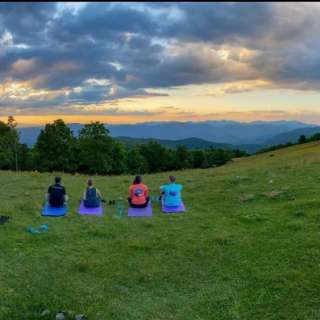
Take a moment away from the busyness of life to breathe in breathtaking vistas as the sun sets before you. Enjoy a 2 mile round trip hike to a mountaintop and sink into a lovely all levels yoga practice on the summit while soaking up the beauty of the Blue Ridge Mountains. A unique way to practice self care and social distancing ;)
Need a different date? Sunset hikes are available daily for private groups of 1-20. Message me with your desired date and group size or visit the website at https://ashevillewellnesstours.com/tour/yoga-hikes/ to browse options.
Covid Considerations: for a detailed rundown of the precautions we’re taking, visit our website at https://ashevillewellnesstours.com/tour/yoga-hikes/
LEAVE IT BETTER SWEEPSTAKES
Enter to win an ENO Leave No Trace Double Nest hammock and suspension system today! ENO and Explore Brevard are excited to partner in the effort to promote our new Leave It Better campaign. Entering is easy. Simply follow these steps and you’ll be automatically entered into the sweepstakes:
STEP 1
Follow ENO Hammocks and Explore Brevard on Instagram or Facebook.
Step 2
Post an example of how you Leave No Trace and go the extra step to Leave It Better on your own social media account with the hashtag #ILeaveItBetter
Step 3
Watch our social media accounts for winner announcements at the end of August, September and October!
Each month will have multiple winners so stay tuned.
See below for official contest rules and alternate form of entry.
Teen – (grades 6-12)

Join us and Bingeable Trivia every Wednesday at 7pm for outdoor trivia night!!
-All trivia players must have a seat outside to play. There are a limited amount of tables outside so get here early to claim your seat
-Tables are spread out 6 feet apart for social distancing
-Players will text in their answers instead of turning in sheets
-And masks are required while ordering beers inside
We will have a theme every other week! Trivia is subject to cancellation depending on the weather.

|
|
We’re flipping the script on trick or treating this year! Guess Who: A Costume Quest is an outdoor walking tour and interactive game that features costumed actors from past ACT plays and musicals. Guess who’s who, and after you do, there’s a take-home bag of candy and treats for you! This family-friendly night of fun will be held in the parking lots and surrounding grounds of Asheville Community Theatre and the Thomas Wolfe House. Tours will begin at 6:00 pm and start times will be staggered to maintain social distancing. How will this work? Chanda Calentine explains: “You’ll walk on a path around our building and will encounter 12 different characters along the way. They’ll each share a clue or two about themselves, and you’ll try to guess who they are and which show they’re from. These are recognizable characters from our family friendly shows, and even if you haven’t seen these shows at ACT, we think you’ll still be able to make a good guess! And, at the end of the tour, we’ll have treats for you to take home. |
Take a moment away from the busyness of life to breathe in breathtaking vistas as the sun sets before you. Enjoy a 2 mile round trip hike to a mountaintop and sink into a lovely all levels yoga practice on the summit while soaking up the beauty of the Blue Ridge Mountains. A unique way to practice self care and social distancing ;)
Need a different date? Sunset hikes are available daily for private groups of 1-20. Message me with your desired date and group size or visit the website at https://ashevillewellnesstours.com/tour/yoga-hikes/ to browse options.
Covid Considerations: for a detailed rundown of the precautions we’re taking, visit our website at https://ashevillewellnesstours.com/tour/yoga-hikes/
|
|
We’re flipping the script on trick or treating this year! Guess Who: A Costume Quest is an outdoor walking tour and interactive game that features costumed actors from past ACT plays and musicals. Guess who’s who, and after you do, there’s a take-home bag of candy and treats for you! This family-friendly night of fun will be held in the parking lots and surrounding grounds of Asheville Community Theatre and the Thomas Wolfe House. Tours will begin at 6:00 pm and start times will be staggered to maintain social distancing. How will this work? Chanda Calentine explains: “You’ll walk on a path around our building and will encounter 12 different characters along the way. They’ll each share a clue or two about themselves, and you’ll try to guess who they are and which show they’re from. These are recognizable characters from our family friendly shows, and even if you haven’t seen these shows at ACT, we think you’ll still be able to make a good guess! And, at the end of the tour, we’ll have treats for you to take home. |
Take a moment away from the busyness of life to breathe in breathtaking vistas as the sun sets before you. Enjoy a 2 mile round trip hike to a mountaintop and sink into a lovely all levels yoga practice on the summit while soaking up the beauty of the Blue Ridge Mountains. A unique way to practice self care and social distancing ;)
Need a different date? Sunset hikes are available daily for private groups of 1-20. Message me with your desired date and group size or visit the website at https://ashevillewellnesstours.com/tour/yoga-hikes/ to browse options.
Covid Considerations: for a detailed rundown of the precautions we’re taking, visit our website at https://ashevillewellnesstours.com/tour/yoga-hikes/

Welcome to Prevent Child Abuse North Carolina’s first-ever 5 Factors (virtual) 5k! Because we cannot safely gather in-person this year, we are expanding our annual, one-day event to AN ENTIRE RACE WEEK (Oct. 24-31), packed with all the family-friendly activities we typically host on race day. That means you get to choose when and where you complete your 5k, AND you will have access to an entire week of fun, virtual activities designed for all ages!
When you register below, you will have access to our race week calendar of activities that will run October 24th through October 31st. We are so excited to feature mini events focused on mental and physical health, education, and family entertainment scheduled at different times throughout the week.
Your VIP Race Week includes:
- Access to more than 20 family-friendly virtual activities (live and pre-recorded) focused on exercise, entertainment, and education
- Pop-up drawings for free swag
- Discounts on featured merchandise
- Printable customized bib
- Printable customized certificate of completion – there is an option for you to submit your time!
VIP Race Week is jam-packed with family fun, all for the low price of $35. We may be physically distant, but we are TOGETHER in preventing child abuse and neglect.
LEAVE IT BETTER SWEEPSTAKES
Enter to win an ENO Leave No Trace Double Nest hammock and suspension system today! ENO and Explore Brevard are excited to partner in the effort to promote our new Leave It Better campaign. Entering is easy. Simply follow these steps and you’ll be automatically entered into the sweepstakes:
STEP 1
Follow ENO Hammocks and Explore Brevard on Instagram or Facebook.
Step 2
Post an example of how you Leave No Trace and go the extra step to Leave It Better on your own social media account with the hashtag #ILeaveItBetter
Step 3
Watch our social media accounts for winner announcements at the end of August, September and October!
Each month will have multiple winners so stay tuned.
See below for official contest rules and alternate form of entry.
|
|
We’re flipping the script on trick or treating this year! Guess Who: A Costume Quest is an outdoor walking tour and interactive game that features costumed actors from past ACT plays and musicals. Guess who’s who, and after you do, there’s a take-home bag of candy and treats for you! This family-friendly night of fun will be held in the parking lots and surrounding grounds of Asheville Community Theatre and the Thomas Wolfe House. Tours will begin at 6:00 pm and start times will be staggered to maintain social distancing. How will this work? Chanda Calentine explains: “You’ll walk on a path around our building and will encounter 12 different characters along the way. They’ll each share a clue or two about themselves, and you’ll try to guess who they are and which show they’re from. These are recognizable characters from our family friendly shows, and even if you haven’t seen these shows at ACT, we think you’ll still be able to make a good guess! And, at the end of the tour, we’ll have treats for you to take home. |
Take a moment away from the busyness of life to breathe in breathtaking vistas as the sun sets before you. Enjoy a 2 mile round trip hike to a mountaintop and sink into a lovely all levels yoga practice on the summit while soaking up the beauty of the Blue Ridge Mountains. A unique way to practice self care and social distancing ;)
Need a different date? Sunset hikes are available daily for private groups of 1-20. Message me with your desired date and group size or visit the website at https://ashevillewellnesstours.com/tour/yoga-hikes/ to browse options.
Covid Considerations: for a detailed rundown of the precautions we’re taking, visit our website at https://ashevillewellnesstours.com/tour/yoga-hikes/

We will meet near the Fresh Market on Highway 25 and walk 2.5 miles in on the MTS trail and then back to the Fresh Market. This trail comes out on the road at least twice, so keep this in mind with dogs on the trail.
Join us for twice weekly hikes that alternate among four fairly standard routes. Typically, we take the same hike twice weekly, three of which are along the mountains-to-sea trail, running alongside the Blue Ridge Parkway in Asheville. Once a month, we go on a hike among the 25 miles of hiking trails within the campus of Warren Wilson College. We focus on weekday hikes, with occasional weekend jaunts.
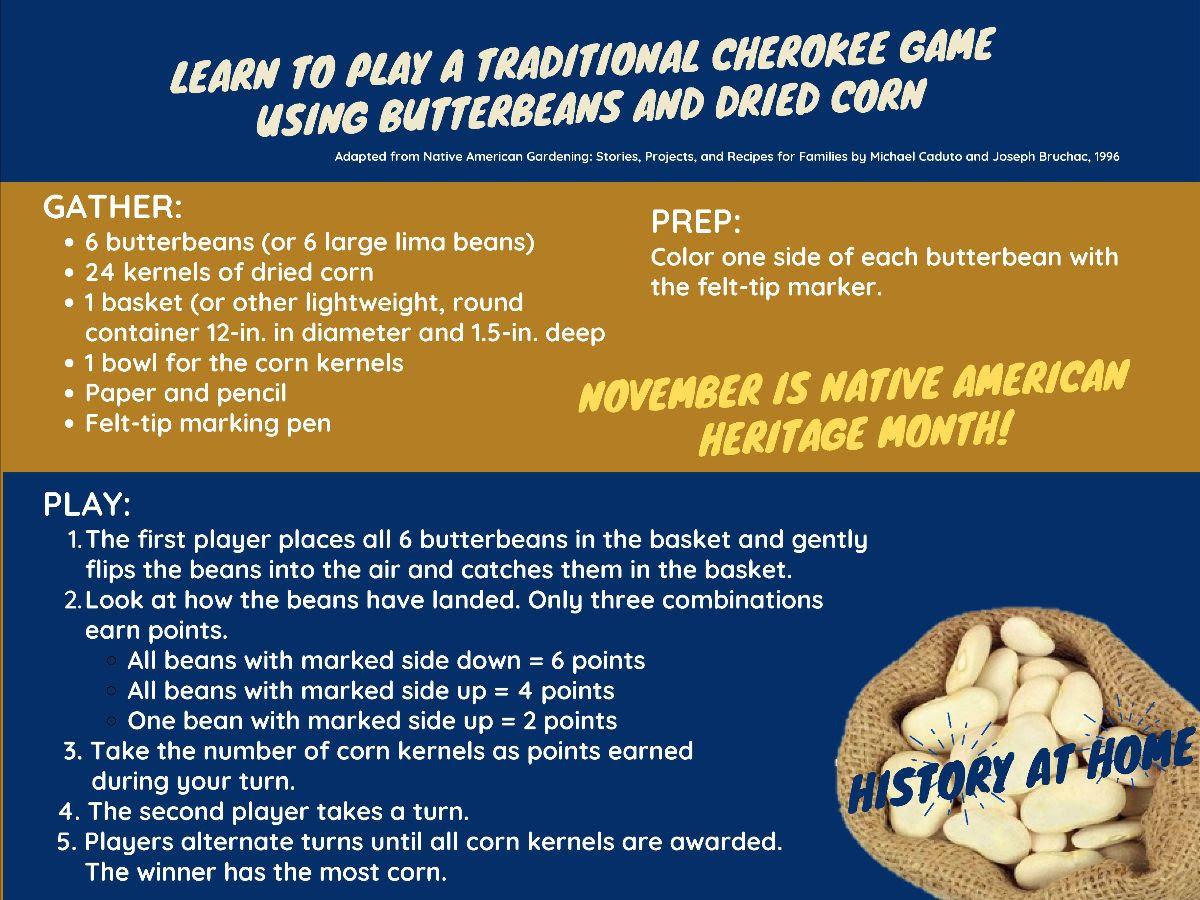
This is a variation on the tradition Cherokee Butterbean Game. It can be played by several individual players or several teams. Traditionally, this game uses three butterbeans that have been split in half. More…
From the Museum of the Cherokee Indian: Cherokee people began growing a form of corn two thousand years ago. By about a thousand years ago, or 1000 AD, they were growing corn and beans, as we know them today. Corn, beans, and squash was always grown together and was known as the “Three Sisters.” Beans restore nitrogen to the soil while corn depletes nitrogen. The vines of the beans and squash twined up the cornstalks. When corn and beans are eaten together, they provide complete proteins and amino acids for our diet.
Corn was so important to the Cherokee that they had important celebrations and ceremonies called “Green Corn Festivals.” The first of these was held in August, before the sweet corn was ready to eat. The last was held in October or November, when the
field corn was ready to be picked. At these ceremonies, people purified themselves physically and spiritually before feasting together. At this time, people got married and divorced. All old scores were settled and everyone started a new year together.
This is a variation on the tradition Cherokee Butterbean Game. It can be played by several individual players or several teams. Traditionally, this game uses three butterbeans that have been split in half. More…
From the Museum of the Cherokee Indian: Cherokee people began growing a form of corn two thousand years ago. By about a thousand years ago, or 1000 AD, they were growing corn and beans, as we know them today. Corn, beans, and squash was always grown together and was known as the “Three Sisters.” Beans restore nitrogen to the soil while corn depletes nitrogen. The vines of the beans and squash twined up the cornstalks. When corn and beans are eaten together, they provide complete proteins and amino acids for our diet.
Corn was so important to the Cherokee that they had important celebrations and ceremonies called “Green Corn Festivals.” The first of these was held in August, before the sweet corn was ready to eat. The last was held in October or November, when the
field corn was ready to be picked. At these ceremonies, people purified themselves physically and spiritually before feasting together. At this time, people got married and divorced. All old scores were settled and everyone started a new year together.
This is a variation on the tradition Cherokee Butterbean Game. It can be played by several individual players or several teams. Traditionally, this game uses three butterbeans that have been split in half. More…
From the Museum of the Cherokee Indian: Cherokee people began growing a form of corn two thousand years ago. By about a thousand years ago, or 1000 AD, they were growing corn and beans, as we know them today. Corn, beans, and squash was always grown together and was known as the “Three Sisters.” Beans restore nitrogen to the soil while corn depletes nitrogen. The vines of the beans and squash twined up the cornstalks. When corn and beans are eaten together, they provide complete proteins and amino acids for our diet.
Corn was so important to the Cherokee that they had important celebrations and ceremonies called “Green Corn Festivals.” The first of these was held in August, before the sweet corn was ready to eat. The last was held in October or November, when the
field corn was ready to be picked. At these ceremonies, people purified themselves physically and spiritually before feasting together. At this time, people got married and divorced. All old scores were settled and everyone started a new year together.
This is a variation on the tradition Cherokee Butterbean Game. It can be played by several individual players or several teams. Traditionally, this game uses three butterbeans that have been split in half. More…
From the Museum of the Cherokee Indian: Cherokee people began growing a form of corn two thousand years ago. By about a thousand years ago, or 1000 AD, they were growing corn and beans, as we know them today. Corn, beans, and squash was always grown together and was known as the “Three Sisters.” Beans restore nitrogen to the soil while corn depletes nitrogen. The vines of the beans and squash twined up the cornstalks. When corn and beans are eaten together, they provide complete proteins and amino acids for our diet.
Corn was so important to the Cherokee that they had important celebrations and ceremonies called “Green Corn Festivals.” The first of these was held in August, before the sweet corn was ready to eat. The last was held in October or November, when the
field corn was ready to be picked. At these ceremonies, people purified themselves physically and spiritually before feasting together. At this time, people got married and divorced. All old scores were settled and everyone started a new year together.
This is a variation on the tradition Cherokee Butterbean Game. It can be played by several individual players or several teams. Traditionally, this game uses three butterbeans that have been split in half. More…
From the Museum of the Cherokee Indian: Cherokee people began growing a form of corn two thousand years ago. By about a thousand years ago, or 1000 AD, they were growing corn and beans, as we know them today. Corn, beans, and squash was always grown together and was known as the “Three Sisters.” Beans restore nitrogen to the soil while corn depletes nitrogen. The vines of the beans and squash twined up the cornstalks. When corn and beans are eaten together, they provide complete proteins and amino acids for our diet.
Corn was so important to the Cherokee that they had important celebrations and ceremonies called “Green Corn Festivals.” The first of these was held in August, before the sweet corn was ready to eat. The last was held in October or November, when the
field corn was ready to be picked. At these ceremonies, people purified themselves physically and spiritually before feasting together. At this time, people got married and divorced. All old scores were settled and everyone started a new year together.
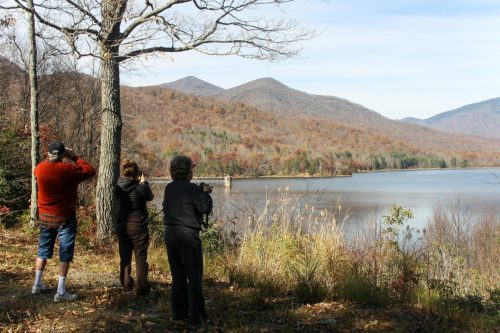
Join us on this exclusive historic driving tour of the west side of the Burnett Reservoir to explore part of the once thriving North Fork Valley community. The caravan will stop for participants to view the impressive chimney that was once part of a large boarding house where travelers on their way to Mt. Mitchell would stay before they began the ascent to the highest peak in eastern North America. The tour will also stop at the former entrance to Governor Zebulon Vance’s estate, Gombroon, as well as the Gombroon wall. Following that, we will pass the Left Hand Fork Intake and head to the Dan Burnett Place. The tour will end with the ruins of Gombroon – to include the foundation, heart-shaped pool, the spring house, and the McGinnis Cabin.
Difficulty: Moderate; There will be some walking on rough terrain. Wear sturdy shoes and dress for the weather.
Pricing: $200 per vehicle. The vehicle may carry as few or as many passengers as the registrant wishes to bring. Only family members or people who are in the same “social pod” should travel in a vehicle together. Drivers who cannot bring a family member or someone in their social pod must drive themselves.
Drivers – Your vehicle must get clearance from our trip leader prior to registering as a driver. Please contact us at [email protected] to get clearance.
COVID Policy
- Only family members or people who are in the same “social pod” may travel in a vehicle together. Drivers who cannot bring a family member or someone in their social pod must drive themselves.
- All attendees, volunteers and hike leaders are required to bring masks and social distancing must be observed. Attendees and hike leaders must wear masks during talks outside the vehicles.
- The sign-in for the event will be conducted outdoors, at the parking lot of the Black Mountain Savings Bank.
This is a variation on the tradition Cherokee Butterbean Game. It can be played by several individual players or several teams. Traditionally, this game uses three butterbeans that have been split in half. More…
From the Museum of the Cherokee Indian: Cherokee people began growing a form of corn two thousand years ago. By about a thousand years ago, or 1000 AD, they were growing corn and beans, as we know them today. Corn, beans, and squash was always grown together and was known as the “Three Sisters.” Beans restore nitrogen to the soil while corn depletes nitrogen. The vines of the beans and squash twined up the cornstalks. When corn and beans are eaten together, they provide complete proteins and amino acids for our diet.
Corn was so important to the Cherokee that they had important celebrations and ceremonies called “Green Corn Festivals.” The first of these was held in August, before the sweet corn was ready to eat. The last was held in October or November, when the
field corn was ready to be picked. At these ceremonies, people purified themselves physically and spiritually before feasting together. At this time, people got married and divorced. All old scores were settled and everyone started a new year together.
This is a variation on the tradition Cherokee Butterbean Game. It can be played by several individual players or several teams. Traditionally, this game uses three butterbeans that have been split in half. More…
From the Museum of the Cherokee Indian: Cherokee people began growing a form of corn two thousand years ago. By about a thousand years ago, or 1000 AD, they were growing corn and beans, as we know them today. Corn, beans, and squash was always grown together and was known as the “Three Sisters.” Beans restore nitrogen to the soil while corn depletes nitrogen. The vines of the beans and squash twined up the cornstalks. When corn and beans are eaten together, they provide complete proteins and amino acids for our diet.
Corn was so important to the Cherokee that they had important celebrations and ceremonies called “Green Corn Festivals.” The first of these was held in August, before the sweet corn was ready to eat. The last was held in October or November, when the
field corn was ready to be picked. At these ceremonies, people purified themselves physically and spiritually before feasting together. At this time, people got married and divorced. All old scores were settled and everyone started a new year together.
This is a variation on the tradition Cherokee Butterbean Game. It can be played by several individual players or several teams. Traditionally, this game uses three butterbeans that have been split in half. More…
From the Museum of the Cherokee Indian: Cherokee people began growing a form of corn two thousand years ago. By about a thousand years ago, or 1000 AD, they were growing corn and beans, as we know them today. Corn, beans, and squash was always grown together and was known as the “Three Sisters.” Beans restore nitrogen to the soil while corn depletes nitrogen. The vines of the beans and squash twined up the cornstalks. When corn and beans are eaten together, they provide complete proteins and amino acids for our diet.
Corn was so important to the Cherokee that they had important celebrations and ceremonies called “Green Corn Festivals.” The first of these was held in August, before the sweet corn was ready to eat. The last was held in October or November, when the
field corn was ready to be picked. At these ceremonies, people purified themselves physically and spiritually before feasting together. At this time, people got married and divorced. All old scores were settled and everyone started a new year together.
This is a variation on the tradition Cherokee Butterbean Game. It can be played by several individual players or several teams. Traditionally, this game uses three butterbeans that have been split in half. More…
From the Museum of the Cherokee Indian: Cherokee people began growing a form of corn two thousand years ago. By about a thousand years ago, or 1000 AD, they were growing corn and beans, as we know them today. Corn, beans, and squash was always grown together and was known as the “Three Sisters.” Beans restore nitrogen to the soil while corn depletes nitrogen. The vines of the beans and squash twined up the cornstalks. When corn and beans are eaten together, they provide complete proteins and amino acids for our diet.
Corn was so important to the Cherokee that they had important celebrations and ceremonies called “Green Corn Festivals.” The first of these was held in August, before the sweet corn was ready to eat. The last was held in October or November, when the
field corn was ready to be picked. At these ceremonies, people purified themselves physically and spiritually before feasting together. At this time, people got married and divorced. All old scores were settled and everyone started a new year together.
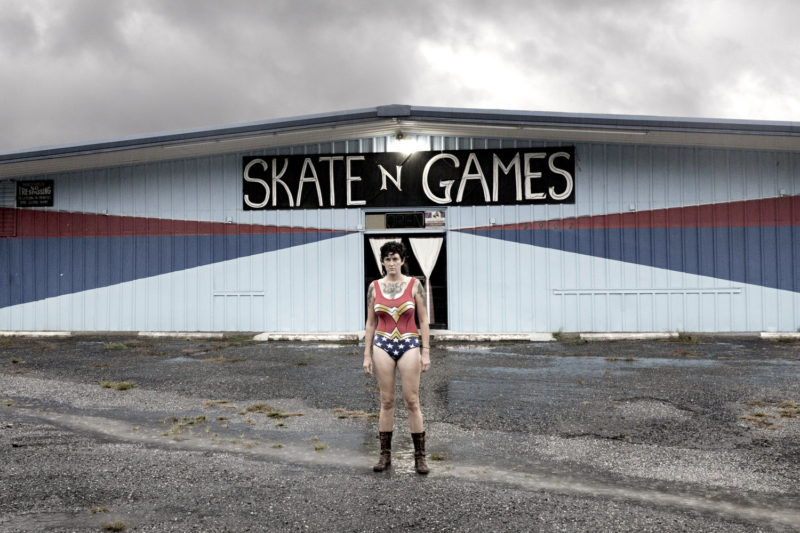
Come play with us at the Museum’s next game night! Stop by the welcome desk or café counter to pick up some socially distanced fun activities for individuals, pairs, or small groups. No reservations needed.
THIRD THURSDAYS
Each third Thursday, the Museum and community partners offer fun events for adults to socialize through interactive art-related activities, delicious drinks, and tasty treats.
Generous support for this program is provided by Art Bridges.
Cornwagon Thunder, SkateNGames from the Wonder Series, 2017, archival print on Epson Ultra Premium Presentation Matte paper, 10 × 15 inches. Museum purchase with funds provided by the 2019 Collectors’ Circle, 2020.02.01. © Cornwagon Thunder.
This is a variation on the tradition Cherokee Butterbean Game. It can be played by several individual players or several teams. Traditionally, this game uses three butterbeans that have been split in half. More…
From the Museum of the Cherokee Indian: Cherokee people began growing a form of corn two thousand years ago. By about a thousand years ago, or 1000 AD, they were growing corn and beans, as we know them today. Corn, beans, and squash was always grown together and was known as the “Three Sisters.” Beans restore nitrogen to the soil while corn depletes nitrogen. The vines of the beans and squash twined up the cornstalks. When corn and beans are eaten together, they provide complete proteins and amino acids for our diet.
Corn was so important to the Cherokee that they had important celebrations and ceremonies called “Green Corn Festivals.” The first of these was held in August, before the sweet corn was ready to eat. The last was held in October or November, when the
field corn was ready to be picked. At these ceremonies, people purified themselves physically and spiritually before feasting together. At this time, people got married and divorced. All old scores were settled and everyone started a new year together.

Join us for the virtual event of the year:
United Way’s Carpool Karaoke Challenge
The Fall Community Engagement Event is the one night a year when the community comes together in a fun, friendly competition to help raise awareness of our collective work to reduce the root causes and consequences of poverty. The event also serves as a call-to-action for both businesses and individuals to pledge their time and financial resources in support of the LIVE UNITED Fund.
Because of health concerns, this year’s event (The Carpool Karaoke Challenge) is being held virtually. Ten teams have pre-submitted their Carpool Karaoke videos, and each submission will be shown during the event. The kicker? This year you, the audience, will vote to decide 1st, 2nd, and 3rd place winners.
YOU’RE INVITED
WHO: You, your friends, family, and neighbors
WHAT: United Way’s Carpool Karaoke Challenge Event
WHERE: Virtual
WHEN: Friday, November 20, 4:30 pm-5:45 pm
COST: FREE. You’ll also be eligible to win cash door-prizes just for attending
*Seating for this event is limited, so don’t wait, register below — you must register to attend the event. A link will be shared with registered attendees the day before the event and will allow you access.
This is the one virtual event you’ll actually want to attend this year! Ten teams, 10 Carpool Karaoke submissions, 1 champion: YOU DECIDE!
This is a variation on the tradition Cherokee Butterbean Game. It can be played by several individual players or several teams. Traditionally, this game uses three butterbeans that have been split in half. More…
From the Museum of the Cherokee Indian: Cherokee people began growing a form of corn two thousand years ago. By about a thousand years ago, or 1000 AD, they were growing corn and beans, as we know them today. Corn, beans, and squash was always grown together and was known as the “Three Sisters.” Beans restore nitrogen to the soil while corn depletes nitrogen. The vines of the beans and squash twined up the cornstalks. When corn and beans are eaten together, they provide complete proteins and amino acids for our diet.
Corn was so important to the Cherokee that they had important celebrations and ceremonies called “Green Corn Festivals.” The first of these was held in August, before the sweet corn was ready to eat. The last was held in October or November, when the
field corn was ready to be picked. At these ceremonies, people purified themselves physically and spiritually before feasting together. At this time, people got married and divorced. All old scores were settled and everyone started a new year together.
This is a variation on the tradition Cherokee Butterbean Game. It can be played by several individual players or several teams. Traditionally, this game uses three butterbeans that have been split in half. More…
From the Museum of the Cherokee Indian: Cherokee people began growing a form of corn two thousand years ago. By about a thousand years ago, or 1000 AD, they were growing corn and beans, as we know them today. Corn, beans, and squash was always grown together and was known as the “Three Sisters.” Beans restore nitrogen to the soil while corn depletes nitrogen. The vines of the beans and squash twined up the cornstalks. When corn and beans are eaten together, they provide complete proteins and amino acids for our diet.
Corn was so important to the Cherokee that they had important celebrations and ceremonies called “Green Corn Festivals.” The first of these was held in August, before the sweet corn was ready to eat. The last was held in October or November, when the
field corn was ready to be picked. At these ceremonies, people purified themselves physically and spiritually before feasting together. At this time, people got married and divorced. All old scores were settled and everyone started a new year together.